Social media marketing

What is social media marketing?

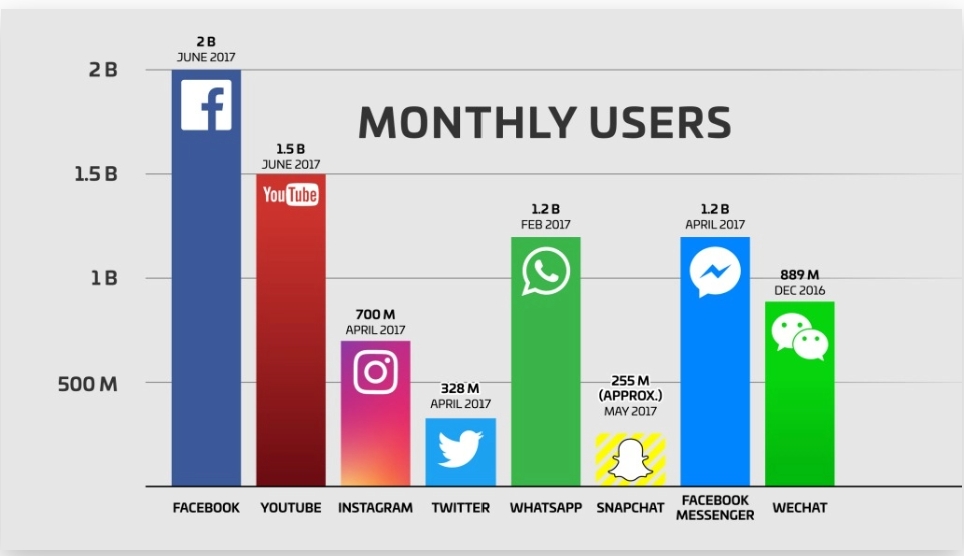
Social media marketing means selling or promoting the products of the company by using social media.For example social medias like Facebook Twitter Instagram Pinterest etc.

Uses of social media marketing:-

* It is used to sell or promote the products in the world level.

* With a strong social media strategy and the ability to create engaging content, marketers can engage their audience

* social media marketing allow people to get what they want.

EFFECTIVE TYPE OF SOCIAL MEDIA MARKETING:-

* Facebook advertising

* Twitter advertising

* Instagram advertising

* you tube advertising

* Pinterest advertising

* LinkedIn advertising.

BENEFITS OF SOCIAL MEDIA MARKETING:-

* Grow your sales and your fanbase.

* Use customer generated content for ads (which perform better, too!).

* Better target new and regular customers so the waste can be reduced.

DISADVANTAGES OF SOCIAL MEDIA MARKETING:-

* The main disadvantage of social media marketing is highly rely on ads.

* No direct interaction with the people to solve problems.

* One of main issue is security and privacy policy.Many of us can be faced.

CONCLUSION:-

There is no better marketing strategy for selling and promoting products than social media advertising. No other strategies can deliver consistent, scalable, quality leads and customers from day one that can supplement any promotional marketing.

SELF-KNOWLEDGE

One of the goals of counseling is to help the student to discover themselves, to look into their own inner private world, and to collect information about themself, to have a realistic knowledge about everything related to them. In this way, the student will revise his distortions and alter his behavior in a positive direction. With correct and concrete information about their real self, they will be able to solve their own problems. Thus the process of counseling should lead the individual on the path of Self-Knowledge, self-realization, and self-help.

Self-knowledge: most important sort of knowledge

Acquiring knowledge about everything is important no doubt, but the most critical one is having knowledge about inner-self. Without knowing about own weaknesses and strengths it is almost impossible for any individual to work on themself. The institutions and people concerned educating students and young minds should focus more on educating people to study introspect what is there in their own self including their interests, disinterests, weaknesses, strengths, principles, etc.

ECO FEMINISM IN INDIAN CONTEXT

According to Merriam-Webster, ecofeminism is a movement or a theory that applies feminist principles and ideas to ecological issues. This term was first coined by a French feminist, Francoise d’Eaubonne in her book “Le Feminisme ou la Mort” (Feminism or Death). She raised the point that patriarchy is the root cause of all ecological crisis – men’s control over women and nature have led to overpopulation and overexploitation of nature respectively. When we talk about the environmental disaster that’s taking place, the role of gender about how we can move forward comes into play.

As United Nations Environment Programme puts it, “Around the world, environmental conditions impact the lives of women and men in different ways as a result of existing inequalities. Gender roles often create differences in the ways men and women act in relation to the environment and in the ways men and women are enabled and prevented from acting as agents of environmental change”; and here comes the concept of ecofeminism.

In India, ecofeminist Vandana Shiva is the pioneer who prepared the ground for ecofeminism with a strong belief that women have always been the key to solve various societal problems and environmental problems are one of them. By highlighting their presence in the Indian literature, the nature and form of ecofeminism in India can be assessed. Literature in which the concept of ecofeminism has been taken into account ranges from early ecofeminism to the recent or the urbanized one such as ‘Nectar in a Sieve’ (1954) by Kamala Markandya, ‘Fire on the Mountain’ (1977) by Anita Desai, ‘A Riversutra’ (1993) by Gita Mehta, ‘The God of Small Things’ (1997) and ‘An Atlas of Impossible Longing’ (2008) by Arundhati Roy and ‘Monkey-Man’ (2010) by Usha K.R.

Many female Indian novelists not only explore the subjectivity that is embedded in the relationship of women and the patriarchal society but also make several social issues as the key subjects. Many of the works from twentieth century of such novelists have been regarded as effective mediums of ‘modernism and feminism’. With Arundhati Roy and Kiran Desai getting hold of Booker Prizes, works of Indian women novelists have been highlighted. Indian women’s fiction on the relationship between women and the environment has added to the theory and development of ecofeminism in India.

In the West, there are large bodies of literary accounts that have analyzed ecofeminism in different ideological terms but in India, the struggle to save environment went on for long even before it was accounted in the West. It was Vandana Shiva who brought ecofeminism movements to the forefront in India with her active involvement in the Chipko Movement- wherein women wrapped themselves around trees to prevent contractors from felling them off- as a young woman. The struggle to protect the environment is believed to be the same across all communities in India but we would be at a loss in our thinking if we ignore the fact that protests against environmental damage and questions of survival and subsistence are interlinked deeply with the axiom of caste, class and gender issues.  Vandana Shiva, the pioneer in this field, critiques that modern technology which has actually reinforced the patriarchal system and violence perpetuates it towards women and nature.  According to her, switching to such a lifestyle is deviating us from the traditional lifestyle which promotes human-environment balance ‘prakriti’. Under the influence and grab of these new developments, nature has been mercilessly exploited and feminine principles in terms of the environment are no longer considered for creativity and sanctity but merely to be passive resources. Thus, though women’s knowledge of dependence on nature for subsistence has been dissipated and marginalized under the grab of modern science, she strongly believes that third world women have the power within them for causing a change. In this regard, we can cite the example of ‘Narmada Bachao Andolan’ in which the active participation of Medha Patkar and Arundhati Roy helped the movement gain momentum.

The issue of sustainable development to protect the environment from degrading was raised in Conference on Environment and development at Stockholm in 1974 for the first time. If we turn the pages of history, we will find instances which prove that women are better connected with nature. Since time immemorial, they have been responsible to look after households and prepare basic needs for survival and thus, are better connected to nature.

Women’s interaction and relationship with nature must be located within the material reality of caste, class and gender. Women are the victims of environmental disaster but they can also be very effective agents of environmental regeneration – as is clearly evident by the success of the Chipko Movement. The need of the hour is to mobilise them into a proper channel and to give ecofeminism a proper voice and a way so that it does not turn into a superficial shout. There is also a need to abolish the class and caste basis for an effective collective movement in India. The adverse class-caste effects on women’s relationship with nature are reflected in the erosion of indigeneous knowledge and livelihood strategies on which poor, rural women are dependent. Thus, there is a need for ecofeminism in India to strengthen itself in the face of different barriers and be more than a superficial shout.

Image Credit: Google

5 Digital Trends that revolutionised 2021

In the online world, lockdown, distance learning, working from home etc have had an enormous impact on us. And not to mention people and businesses alongwith changing technology and trends have had to push onwards and upwards to adapt to the changes and keep ahead in the competition. But with more and more people constricted to the online world, there has been a shift in the type of visual content being consumed and created that led to blooming of design trends and techniques.
Mentioned below are some of design trends that will keep on pushing onwards and upwards into 2021.

1)3D design
3D design technology has been on the radar and will only likely to grow in 2021 as well. Animated 3D figure gives the whole concept a realistic and tangible feeling. Digital-and web designers often use 3D visualization for their products and processes on websites and social media.

Why we love it : Apart from the illusion of depth, what distinguishes this style is the usage of vibrant colors. The textures have got a touch of reality that make it look more like a photo than an illustration.

Who did it best : Tommy Hilfiger.

2)Optical Illusion Design

It is common knowledge that the human eye can be deceived, hence people often have different reactions when they encounter various optical illusions. But optical illusion can work wonders in enhancing a design if one knows how to use them correctly! Optical illusions can not only add an intriguing part to the design but can also brand many products and services. This design trend will work best for brands associated with movement or spirituality.

Why we love it : Since human brains are tuned to learning new things, henceforth optical illusions astonish us cause when we realise what we thought we saw was completely different from what was real.

Who did it best : KitKat

3) Comics and pop art

Pop art and comic books were wildly popular in pop culture and worldwide, decades ago. Comics often use halftones or simplified dot shading to represent color.
The designers in 2021 have been using graphics and illustrative techniques of book art styles as a way to create drama and motion and rescue modern art.

Why we love it : Pop art is fun and approachable. It takes clues from popular culture and it’s subject matter is based on what we deal with everyday like food, entertainment etc. The best part is it is not a complex artwork and has got no hidden meanings to decipher, and because it deals with bold colors often, it appears cheerful to the viewers.

Who did it best : WOW! Chips for girls

4) Black and white design

We are seeing more and more companies adapting to a darker palette. Infact most social media apps have the option to switch to a dark mode color scheme as a preference in their settings since it is less harsh to our eyes. Since the coronavirus pandemic has made our lives “go online” , there comes a huge need to minimize the eye strain. Therefore design schemes with a dark background is being adapted that makes the text pop alongwith minimizing the strain put on eyes. This year more websites and apps will likely be adapting the dark mode.

Why we love it : we love this design cause of it’s subtleness and helps the viewer focus on other aspects of the photo, such as the subject, the textures, shapes, patterns etc by removing the distraction of color. It helps to add statement to the design.

Who did it best : Chanel

5) Retrofuturism

Retrofuturism has prevailed due to it’s bold imagination and will keep on strongly emerging into the design world in 2021. It involves vibrant colors and tech inspired typography all within retro style illustrations and artwork. It involves the occurrence of futuristic themes in retro settings.

Why we love it : This design provides us with an antidote to our uncertain times and encompasses ideas of freedom, hope, liberation, and positivity. Retrofuturism provides a positive outlook which points towards a utopian future, maybe that’s what people want to buy into in these dark times of the pandemic.

Who did it best : Paco Rabanne

Animal Husbandry And Veterinary Science

Agriculture is our wisest pursuit, because it will in the end contribute most to real wealth, good morals, and happiness.
Animal husbandry is the branch of agriculture where animals are reared, bred and raised for meat, fiber, eggs, milk and other food essentials. It refers to livestock raising and selective breeding. A large number of farmers rely on animal husbandry for their livelihood.

Food is necessary for the development and survival of all the organisms. To deal with the need of food with the increasing population, it is necessary to increase food production. There are many technologies which increase yield such as plant breeding, animal husbandry and modern technologies like tissue culture, genetic engineering, embryo transfer.

Types Of Animal Husbandry

Out of many methodologies, there are four major types of animal husbandry practiced in the world today. An elaborated description of the same has been stated under:
Dairy Farming – It is mostly concerned with the long term production of milk, which is then processed to obtain dairy products such as curd, cheese, yoghurt, butter, cream and so on and so forth.
Poultry farming – It is concerned with raising and breeding of birds for commercial purposes. The eggs and meat hence produced are a rich source of protein.
Fish farming – It is the process of raising fish in closed tanks or ponds for commercial purposes. Another name one can call it is pisciculture.
Fish farming or pisciculture is of two types, namely:
Extensive aquaculture, based on the local photosynthetic production.
Intensive aquaculture, based on the external food supply given to fishes.
Bee farming – Also known as apiculture, is the practice of maintaining bee colonies by humans in man-made hives.

Role Of Animal Husbandry In Human Welfare

• Animal husbandry is beneficial to human beings in a decent number of ways, one of which is production of dairy products.
• Animals such as cows, goats, sheep are the major source of milk and milk products such as yoghurt, cheese, butter, etc.
• Meat is another very important product yielding via husbandry of animals such as pigs and goats.
• Animals also produce fibres or textiles such as wool and leather. Just as sheep are reared for wool whereas leather can be obtained from camel.

Strategies For Enhancement Of Food Production

An improved variety can be produced by induced mutation and by selecting improved mutants. Genetic engineering is also an option.

Main Steps Required For Developing New Varieties

The first involves collection of variability, genetic variability, being the main reason behind breeding.
Akin to this fact, evaluation and selection of parents certainly becomes equally as essential.


Hybridisation, which is the process of making cross between two genetically diverse parents to obtain a progeny with desired superior traits, is the third and a very important step for developing new varieties.
The fourth step involves selection and testing of superior recombination, which is more or less as the term suggests. It comprises selecting, among the progeny of the hybrids, to be specific, those plants that have the desired character combination.
This is the crucial step for the success of breeding objectives and requires careful scientific evaluation of progeny.

Plant breeding is one of the shortest and most effective routes to improve global health through better nutrition.

Handling Criticism Like A Pro

Everyone of us, at some point in our lives, would have faced criticism in one form or the other (except of course if we’ve chosen to shut ourselves up in a room and not attempt anything at all in life). It might be about anything – about what you have said or done or not done or the way you dress or about your work, the list just goes on. Criticism pops up everywhere. It’s as much a part and parcel of our lives as the air we breathe, and hence learning how to deal with it gracefully is an important life skill to have.

Is Criticism good for you ?

Criticism, wrapped up and delivered even in the best of the packaging, is not something that anybody actually enjoys. The instant reaction to it in most cases is to close ourselves up and get into defensive mode. So identifying whether it’s constructive or destructive is a key step that’ll help you in figuring out whether it’s good or bad for you.

Photo by Liza Summer on Pexels.com

So, what exactly is Constructive and Destructive criticism ?

Constructive Criticism is a way of giving feedback with an intention of helping you improve yourself. It not just points out your mistakes and weaknesses, but also includes suggestions for improvement and the actions that need to be taken. It can be considered as that much needed reality check which we all need from time to time. 

Destructive Criticism on the other hand is given with the sole intention of tearing you down. The reasons for doing that may be many – jealousy, insecurities, ignorance, complexes, boredom etc. Here, instead of commenting on the actions of a person, the focus mainly is on attacking the person and pulling him down. The critic in this case, is not in the least interested in your well being or improvement.

So, as you might have figured out by now, constructive criticism more often than not, represents an opportunity. It helps you in identifying your weaknesses, which you might otherwise be unaware of and enables you to see things from a different perspective. Whereas destructive criticism is more or less an attempt by a person to let his steam off at the expense of others. 

How do you identify them ?

Honestly, when you are out there at the receiving end, identifying whether it’s constructive or destructive would probably be the last thing on your mind. But before you pounce on your critic, just pause and take a deep breath. Wait, what ? Yes you read it right. Pause and take a deep breath (Remember, deep breath not an annoyed sigh ! You don’t want to worsen the situation, do you ?) Let the emotions flow through you. Do not restrict it but also do not take it out on the other person.It’s not easy but it’s definitely doable. If you find it hard to refrain yourself from blowing a fuse, excuse yourself and take some time out before responding. Setting your emotions aside and getting into a frame of mind where you are calm enough to analyse the situation rationally, is the most difficult but important step to take, while facing criticism. 

Once you have calmed yourself down, listen to the other person without interrupting. By listening, I meant active listening and not just nodding along while thinking about ways on how to attack the critic back. Allow the other person to share their thoughts and comments completely. While listening, focus on the content of the comment and not on the tone. Sometimes even the best intended criticisms may sound harsh or even worse, the most toxic comments may be presented in the most tactful manner. So it’s very important that you detach the content from the tone.

At this point, you can try and  repeat back what you have heard and understood. Be careful to do that in a non aggressive tone. By repeating back, you are not only making sure that you aren’t misinterpreting their comments, but also helping yourself understand the comment better. When you take a step back and remove yourself from the equation and focus just on the comment, chances are that you may be able to view it through a different lens. At this stage, by analysing it objectively, you will be able to figure out the intention behind it – whether you are actually being attacked or is it just your ego playing tricks on you.

If you are still confused, seek clarification. Break it down and  ask questions. When you are asking questions, do it with an open mind and not with an intention to prove the other person wrong. You can ask for specific examples to get better clarity on the issue raised or ask for suggestions on how the situation could have been handled differently. Be genuinely curious in finding the intention. If the critic actually means well, he’ll be able to give you answers or suggestions or atleast give you valid and logical reasons to back his comment, which might help you to see things from the critic’s perspective. Destructive criticism shatters under scrutiny – no logic, no reasons, nothing but just a set of toxic statements thrown at you with the sole intention of hurting your self-esteem and  pulling you down.

Photo by SHVETS production on Pexels.com

How to deal with criticism ?

So now that you have calmly analysed the issue and identified whether the criticism was meant to help you or to tear you down, it’s time to take action. 

Okay, but before that, you may now take a moment to appreciate yourself for successfully pulling off the I-Can-Be-Calm-No-Matter-What version of you. A little bit of self appreciation always helps to put that vulnerable little child inside you in a better mood. 

Alright, now that you are slightly in a better mood, let’s get to business. Let’s say you have identified the criticism to be toxic, what do you think you should do next ?  Tell them that their points are baseless ? Make them understand that you are right and argue until you prove your point ? Or give them a taste of their own medicine and criticise them ? Well, the best course of action here would be to ignore. Ignore ? Seriously? But how can you just walk away when somebody is attacking you and challenging your self worth?   

Well, it might sound all philosophical and seem like something that only people roaming about with a halo around their heads can do. But trust me, it is the most logical thing to do,  given such a situation. Think about it, here is a person who is trying to derogate and destroy your self-esteem, confidence and reputation using some baseless and illogical set of arguments. Do you think if that person was logical enough he would have stooped to this level ? No matter what you do, understand that he has come with a closed mindset and a fixed agenda, that is,to insult you. Nothing you say or do is going to knock sense into that person’s head. And moreover it’s not even your responsibility to do that.There’s no point in wasting your time and energy on such people, so just let it go. Politely excuse yourself, thank the person for the feedback and move on with your life. 

Now, let’s come to constructive criticism. When you receive it, ask yourself Does this align with my priorities ?For example, you might be criticised for not making that perfect pasta or for being lousy at tennis. Ask yourself, does it really matter ? Is this really a priority in your life ? Well, depending upon your goals, it might or might not be. In any case it is important that you identify that. And if the suggestion doesn’t align with your priorities, even though it is constructive, there is no point investing too much of your time in it. So, take note of it and ask for suggestions on how to improve, if you feel a need for that and move on.And hey, don’t forget to thank your critic !

Now, what if it aligns with your priorities ? Then set your ego aside and  ask yourself – ‘Deep down, do I agree with what is being said ?’  If you can’t bring yourself to agree to it, respectfully disagree. Present your side of the story. Engage in a constructive discussion.Chances are that when you do it, the other person may understand your perspective or vice-versa.Either way it’s a win-win. However, there are chances that you both might not come to a conclusion at all. Accept the fact that everyone is entitled to have their own opinions and perspectives and it’s perfectly okay not to be on the same page always. So just agree to disagree and peacefully move on.

Finally, let’s say that the little voice inside your head secretly agrees to all the charges that you are accused of. In that case, buckle up, it’s time for action. If you find that there is truth in what the other person has said, then do not shy away from acknowledging it. Analyse the comment, deconstruct it and figure out what needs to be addressed and what measures need to be taken to learn and evolve from your mistakes. You may even take suggestions from your critic on the steps that need to be taken. Accepting your mistakes and learning from them is a great way to kick-start your journey of self improvement. 

Bottom Line

Criticism comes in all shapes and forms. Neither can you avoid it nor can you control the way others perceive you. The only thing you have control over is your attitude towards it and the way you choose to respond to it. It is important that you identify the intent behind it and take action accordingly. And depending on it, you can either use the criticism as a foundation to build a better future for yourself or choose to ignore it if it’s not worthy of your time and energy. Having said that, I also want you to know that developing a positive attitude towards criticism is not something that comes easy. It takes time, patience and hell a lot of practice. So be gentle with yourself; take it one step at a time. And while you are at it, don’t forget to acknowledge and celebrate even the smallest of your milestones. Good Luck !


Metaverse. Sounds interesting, but will it make real life less interesting?

What is metaverse?

Metaverse is a frictionless integration of various technological components that include virtual reality, as well as augmented reality and videos. All intended to create a digital world, which users can exist in. This allows the user to be almost anywhere they want, but of course, digitally.

Companies like Meta (formerly known as Facebook), Microsoft, Roblox, Epic Games and more are already looking into building this immersive experience and creating this digital world of tomorrow. As impressive as it sounds, to what extend does it stop being glorious and fascinating and only contribute to decay our society?

The metaverse brings us closer to the dystopian future we’ve until now, only heard and read about. A world where users are free to create any identity they please through characters and virtual possessions. Making it easier to escape reality.  It is highly possible that individuals will use this as a way to escape their real life, avoid the problems and emerge into a state of ignorance. They will want to completely immerse themselves in this virtual world as it much nicer than real life. It can distort our sense of reality. We will grow to become unable to perceive reality, lose the ability to talk to people and all in all, become lazy and unimaginative. Kill our creativity and lose our sense of curiosity to explore the real world and our openness to new experience. As we allow algorithms to do their magic, collect data and perfectly curate personalized suggestions for us. Basically, letting our past dictate our future. Users will gladly accept this false reality a third-party fabricates.

It’s also bound to make us more anxious, irritable and paranoid. We are already slaves to our devices. Indulging in a system that makes it even harder to step away from and have real-life interactions will only make us more miserable. Social isolation is inevitable, when one can create their own personalized individual bubble. It will create a vast divide.

“You’ll be able to hang out with friends, work, play, learn, shop, create, and more. It’s not necessarily about spending more time online — it’s about making the time you do spend online more meaningful,” – Meta

But? What’s wrong with the way we already do those things? The only difference is true quality is snatched away and replaced by a sense of distorted glory.

Technological advancements are an integral part of our future and the reason for it is to make our lives easier, simpler, better. Of course, there are domains that benefit wonderfully by these advancements. For example, using VR for training pilots or using integrated virtual augmentation system to train the soldiers is a great economic and efficient way to tackle insurance of quality training. If used properly technology is a great tool. But it is just as easy to drown in it’s quicksand.

SUBHASH CHANDRA BOSE

INTRODUCTION

Subhash Chandra Bose
SUBHASH CHANDRA BOSE

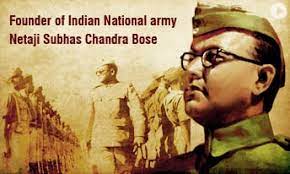
Subhash Chandra Bose is fondly remembered as one of the greatest freedom fighters of India, and popularly known by the name of ‘Netaji’ (Respected Leader). He was strongly influenced by Swami Vivekananda’s teachings, and also believed that the Bhagavad Gita was a great source of inspiration for the struggle against the British. Bose was an Indian nationalist, and a prominent figure of the Indian independence movement. He was superior head for Indian National Army during World War II. He always pitched for complete and unconditional independence of India from the British Rule.

CHILDHOOD

Subhash Chandra Bose was born to Prabhavati Devi and Janakinath Bose on January 23 in 1897 in Odisha. He took admission into the Protestant European School which was run by the Baptist Mission. He did B A in Philosophy from the Presidency College in Calcutta, and was later expelled for assaulting Professor for the latter’s anti-India remarks. After the incident, Bose was considered as one of the rebel-Indians.During his college days, he gradually developed nationalistic temperament, and became socially and politically aware. 

POLITICAL LIFE

18 Subhash Chandra Bose Books Which Prove Massively Impactful
THE GREAT FREEDOM FIGHTER

After a few years, Bose returned to India as he resigned from his civil service job in April 1921, and later joined the Indian National Congress to fight for the independence of India. Subhash Chandra Bose started the newspaper known as ‘Swaraj’, and took charge of publicity for the Bengal Provincial Congress Committee. In 1923, Bose was elected as the President of All India Youth Congress and as the Secretary of Bengal State Congress. He was also editor of the newspaper called ‘Forward’, founded by his mentor Chittaranjan Das, and he served as the CEO of the Calcutta Municipal Corporation. By December 1927, Bose was appointed as the General Secretary of the INC.

In November 1934, he wrote the first part of his book ‘The Indian Struggle’, which was about nationalism and India’s independence movement during 1920–1934, but the British government banned the book. By 1938, he agreed to accept nomination as the Congress President, and presided over the Haripur session. However, due to his strong differences with Mahatma Gandhi and Jawaharlal Nehru, he resigned in 1939.

ROLE IN INDIAN INDEPENDENCE

S C Bose was always in favour of armed revolution in order to expel the Britishers from India. During the time when the Second World War took place, Bose form the Indian National Army (INA) with the help of the Imperial Japanese Army, and also founded an Indian Radio Station called ‘Azad Hind Radio’.

A few years later, he travelled to Japan, where more soldiers and civilians joined the INA. Even when faced with military reverses, Bose was able to maintain support for the Azad Hind movement. In Europe, S C Bose sought help from Adolf Hitler and Benito Mussolini for the liberation of India. Bose had struck an alliance with Japan and Germany as he felt that his presence in the East would help India in the freedom struggle against the British.

MEMORIAL

Bose was featured on the stamps in India from 1964, 1993, 1997, 2001, 2016 and 2018.Bose was also featured in ₹2 coin in 1996 and 1997, ₹ 75 coin in 2018and ₹125 coin in 2021. Netaji Subhash Chandra Bose international Airport at Kolkata, Netaji Subhash Chandra Bose Island, formerly Ross Island and many other institutions in India are named after him. On 23 August 2007,Japanese Prime minister visited the Subhas Chandra Bose memorial hall in Kolkata. Abe said to Bose’s family “The Japanese are deeply moved by Bose’s strong will to have led the Indian Independence Movement from British rule. Netaji is a much respected name in Japan.

In 2021, the Government of India declared 23 January as Parakram Divas to commemorate the birth anniversary of Subhas Chandra Bose. Political party, Trinamool Congress and the All India Forward Bloc demanded that the day should be observed as DESHPREM Divas.

*****MY HERO IS SUBHAS CHANDRA BOSE THIS ARTICLE IS DEDICATED TO YOU*****

JAI HIND” this slogan is said by Subhas Chandra Bose .

Srinagar designated a creative city by UNESCO

On November 8, 2021, UNESCO designated Srinagar a creative city. Srinagar became the sixth city after Mumbai, Chennai, Hyderabad, Varanasi, and Jaipur to achieve such distinction. With this, the capital city of Jammu and Kashmir has entered the club of 295 creative cities network across the world.

The UNESCO Creative Cities Network is a project launched by UNESCO in 2004 to “promote cooperation among cities which recognized creativity as a strategic factor in their urban development”. According to UNESCO, the cities designated as creative cities work together towards a common objective of “placing creativity and cultural industries at the heart of their development plans at the local level and cooperating actively at the international level”.

On Monday, UNESCO designated 49 cities as part of the creative cities network. With this, the total number of creative cities in the world has reached 295 across 90 countries. The Srinagar city had applied in 2018 also but the application was rejected then.

UNESCO designates the creative cities in seven fields — Craft, Folk Art, Media Arts, Film Design, Gastronomy, Literature, and Music. The Srinagar city has been designated the creative city in Crafts and Folk Arts — the only second city in India in this category after Jaipur. While Mumbai has been honored in the film category, Chennai and Varanasi have been made part of UCCN for their music. Hyderabad is a UCCN city in the gastronomy category.

Evolution of computer programming


When Charles Babbage made the computer, he had yet to
figure out about how to give the machine instructions. The first ever
programming language was written by Ada Lovelace in the year of 1883. The code
was for computing Bernoulli’s number and hence that was the first time the
computing power of the machine was seen in action.

In the 1949, Assembly language, a type of low-level
language, came into play.it only consists of symbols/instructions that only
computer can understand and interpret. It is still used till this day in the
aviation systems and medical equipment.

The first complied computer program is Autocode and
was developed by Alick Glennie in the year 1952.

In the year of 1957, FORTRAN was developed for numeric
and scientific calculations. The program developed by John Backus and IBM. This
was the first optimizing compiler. It was used for scientific purposes like for
computing numerical weather predictions, fluid dynamics, geophysics, crystallography,
computational chemistry etc. It was in the software for NASA probes voyager-1
and voyager-2. With years it came with different and better versions.

Algorithmic language, also known as ALGOL, was the
first programming language to implement nested function and had a simpler syntax
than that of the FORTRAN. It was built in the year 1958. It is family of
interactive computer programming languages. It used the code block like, ‘begin’
to start and ’end’ to end the code. It was designed to avoid some of the
problems in FORTRAN. Iwas designed by Baue, Bottenbruch, Rutishauser, Samelson,
Backus, Katz, Perlis, Wegstein,Naur, Vanquois, van Wijingarden, Wooder ,Green, McCarthy.

COBOL, also known as Common Business-Oriented
Language. As the name suggests the code was specifically useful in business. In
19777, 80% of the world’s business was handled by COBOL. It is widely used for
applications deployed on mainframe computer. It was developed by Howard
Bromberg, Norman Discount, Vernon Reeves, Jean E. Sammet, William Selden,
Gertrude Tierney along with the indirect influence from Grace Hopper.

By 1964, we had BASIC. It stands for Beginners
All-Purpose Symbolic Instruction Code. In the year 1991, Microsoft came out
with Visual Basic, an updated version of the previous one. The first
microcomputer version was developed by Bill Gates, Paul Allen and Monte
Davidoff for their company Microsoft, right after they formed it.

And one of the most commonly used computer programming,
and the mother of almost all higher-level languages, C, came into existence in
the year of 1972. It is a procedural language. All the codes that were previously
written in assembly language was replaced by C. Those include operating systems
like Kernel and others. It can be used by implementing an operating system, embedded
system and also website using CGI- Common Gateway Interface.

GANDHI’S GOAL-SHANTI SENA

SHANTI SENA

              *    SHANTI SENA is a word derived from Sanskrit.

               *  SHANTI means peace and SENA Means army.

                *  SHANTI SENA is also called as peace army.


MAIN GOALS OF SHANTI SENA:

*.   Service to peoples as a volunteer at any time.

*.    Give to a cause close to your heart.

*.     Most important goal is to bring the non-violence.

*.       No religion diverse all religions must       get equal rights and respect.

All are equal

QUOTES BY PEACE ARMY:-

“THE GREAT GOOD IS WHAT WE DO FOR ONE ANOTHER”.

” TREES NEED FOR SEED PEOPLE NEED FOR SHANTI SENA”.

  NON – VIOLENT LIFE :-

                        *  Non violent is a personal practice to not make harm to others.

                        *  Gandhi introduced the concept of ahimsa ( Non-violence).

                         *. Non violence is powerful tool for the social protest.

                          *. To create non violent children.It is crucial to maintain the peaceful environment.

                          *. It is the active out pouring of one’s whole being of another.

                          *. Non violence love is active not passive.


IMPORTANT OF NON VIOLENT COMMUNICATION IN Society:-

* Non violent will bring peace among the people.

* Non violent communication help us to express our feelings.

* Non violent communication means complete lack of violence in the way we communicate with others.

* To respect our people.

MAIN COMPONENTS OF NON VIOLENT COMMUNICATION:-

* Observation.

* Feelings.

* Needs.

* Requests.

SHANTI SENA:-

* SHANTI SENA makes love and peace to the people.

* SHANTI SENA brings non violence to the people.

* SHANTI SENA is not only to maintain peace also good relationship.

* SHANTI SENA is the non weapon war of peace.

* If one should have shanti sena he should ignore annoyance.

* SHANTI SENA avoid us from the jealous and competition with the people.

* SHANTI SENA is one of the fundamental peace policy of people.

” soldiers army save country

Peace army save courtesy”.

DON’T QUIT-DON’T STOP

Do you know, What is the easiest thing to do in the world? Think a bit. What is the easiest thing to do? It is to say these two words,”I Quit”. A few decades ago. There was a young man, who saw a big dream. He wanted to climb, the world’s highest mountain. The mighty Mount Everest. Everyone told him, it cannot be done. It was impossible to climb Mount Everest. No human has never done it before. However, the young man was determined. His name was Edmund Hillary. And on 29 May 1953.. he achieved his dream. Edmund Hillary and Tenzing Norgay became the first humans to reach the top of Mount Everest.People across the world, lauded their triumph. They both accomplished what was the earlier called as ‘impossible’. But what happened a few days later puzzled the newspapers. Edmund Hillary and Tenzing Norgay had taken 7 weeks to climb Mount Everest. But can you guess. How many weeks they took to climb down from the to pand return back to the base? They took… 6 weeks? 5 weeks? Or 3 weeks?”NO”. They took only 3 days to return to their base camp. A 7-week journey while climbing up. Was done in mere days, while they were coming down. Few journalists were shocked.How is this possible? How they came back in just 3 days? Edmund Hillary replied…The most important factor of him reaching the top and returning early, was not climbing. It was “MOTIVATION”. In his 7-week journey, here were days he felt scared. There were days, he doubted himself. He thought about, what others had told him before, How Everest was unconquerable. But, amidst all this internal turmoil. He did one simple thing. He kept himself motivated to keep on moving forward. Even with all self-doubts, and all the fears. He didn’t stop. And once they reached the top, all the fears and doubts, went away, As their mission was now complete. While coming down, the journey which took 7 weeks to climb up was reduced to only 3 days not only because now they were climbing down,But also because, now they were climbing down without the burden of fears and doubts. They were climbing down without the burden of failure. In our lives, we also carry the burden of fear and self-doubt. That burden makes it harder… to continue.

That burden makes us want to say..”I Quit”.

But let me tell you one important fact from my own life experience. We often quit by justifying to ourselves, that there were obstacles, there were the problems and I had to quit. But the fact is, No obstacle has the power to stop you. No problem has the strength, to make you stop. Before leaving just remember , this simple life lesson.It is very easy to Quit anything. But real courage is when even after facing all the challenges you stand tall. Real courage is when even after facing failures again and again, you keep on trying harder. Real courage is  when you DON’T STOP moving ahead. That’s real courage. So please.. DON’T STOP.

“Only you can stop yourself. If you continue, you might fail or succeed. But if you stop, turn back from your goal you will fail 100 %.”

BREAK FREE FROM YOUR MIND

Far away, there was a village, A “CURSED” village. It was known to everyone that whoever will cross this village boundary will “DIE” instantly. Generations passed, and no one crossed the boundary of the village. One day an innocent little boy mistakenly crossed the village boundary. His mother screamed at the sight of losing her beloved child. Hearing the scream all the villagers gathered at the spot and they were all SHOCKED. “There they saw the little boy was standing across the boundary and he was safe and smiling back at them. That was the moment, they all realized. There was no curse on the village.” It was all a LIE. But in reality, there was one CURSE on their village. The curse, which made them FEAR the unknown. The CURSE which TRAPPED each of them inside the village. That curse was only in their MIND and Nowhere else. Your MIND is a symphony of thoughts. Your MIND is the valley of wonders. It can visualize your greatest dreams. It can conceive the greatest ideas and make the biggest discoveries. But sometimes, It also LIES to you. It scares you makes you afraid. Your mind tells you, you are wrong. Your mind tells you it cannot be done. It tells you, you are NOT GOOD  enough. It tells you to STOP and quit. Your mind wants you, to not take any chances. To never try anything new. It tells you, you will FAIL if you will hurry. You will FAIL if you take action. Your mind DEMANDS you to take time. To achieve perfection, even before trying. You know one thing, Your mind is LYING all along. Not because it is our enemy. But because it is filled with fear. It is fearful of all failures that might come. It is fearful of what others might say. It is fearful that your hope and dreams shall be shattered. It wants to stop you from taking any action. Because if you don’t act, you will never fail. It wants an existence without pain, grief, and failures. But what’s life without taking action towards your dream. What’s life without tears and joy. What’s life without its ups and downs.

 So tell your mind NOT TO WORRY. Tell your mind to NOT TO SCARED. To NOT OVERTHINK your worst fears. “Just take ACTION towards your goal and BREAK FREE from the clutches of your fearful mind. “

“If you spend too much time thinking about something.. you’ll never be able to make it, a REALITY.”

A GLASS OF WATER

Once upon a time, a psychologist was teaching stress management to the audience. She raised a cup of water and asked everyone. How heavy do you think this glass of water is? Expecting another half- full/half empty questions, The crowd gave various answers from 50 gm to 400 gms. But she said the absolute weight of the glass doesn’t matter. It actually depends on how long I hold it. A minute won’t be a problem. After an hour, I might feel a dull ache. If I hold it a day, my arm would feel paralyzed. But, The weight of the water never changed the longer I hold , the heavier it felt. Then she said, the stresses and worries of our life are just like the cup of water.Think about them all day and you’ll feel paralysed and helpless. It’s important to remember to let go of your stresses. Don’t carry them for hours and days and months. Remember to put down the glass!

Moral:”Think about them for a while nothing happens. Think about them longer, it starts to hurt.”

A TRUE STORY OF A CARPENTER

Mr.Chris Myler, an elderly carpenter who was ready to retire. He told his employer of his plans to leave the house of building business to live a more leisurely life with his wife and enjoyed his extended family. He would miss the pay cheque each week but he wanted to retire. The employer was sorry to see his good worker go and asked if he could build just one more house as a personal favour. The carpenter agreed and started working on the last project of his life. Since it was his last project, he worked half-heartedly. He said goodbye to overtime. He did not consider to find the best cement mixture. He did not consider having a  swimming pool in this project. He did not use quality wood for doors. The furniture was not good quality. The employer called the carpenter in his office and gave the keys of this newly built house to the carpenter saying, “ This is my gift to you for your such a commendable service over 15 years. The carpenter was shocked. What a shame! If he had only known he was building his own house, he would have done it all so differently. So it is with us. We build our lives a day at a lime, often pulling less than our best into the building. Then, with a shock we realise we have to live in the house we have built. If we could do it over, we would do it much differently. But you cannot go back, you are the carpenter and every day you hammer a nail, place a board or erect a wall. Someone once said, “ life is a do-it-yourself project”. Your attitude and the choices you make today, help build the house you live in tomorrow. Therefore, build wisely!.