

Confidence isn’t walking into a room thinking that you’re better than anyone. It’s walking in knowing. That you don’t want to COMPARE yourself to anyone. Comparing yourself to another person that isn’t even in your system. There’s no thought of comparisons. There is no competition with any other human. You are not below anyone that’s confidence. When you can get to the place in your life. Where comparison is dead. When you are good enough not to others. But to yourself that is confidence and you can be good enough right now. Because you are good right now. You might just need to change your mindset.” CONFIDENCE “can be developed in many ways. You can start with your physiology, your posture. If I asked you what a confident person looked like would you be able to tell me? Of course you would they look strong, sure of themselves. How are they standing? They are standing TALL. How are their shoulders? They are BACK, upright. They make eye contact their head is up, not down. Now a SHY or introverted person might say. Yeah, well that’s all good for outgoing people but I will never be confident. Anyone can develop confidence. Some might have to work on it harder than others because they have conditioned themselves into a lack of confidence for much of their life but anyone can develop confidence. Even the majority of shy people have moments where they aren’t shy like around people they trust may be family, friends or their partner. Moments where they can be themselves fully. So the shyness is selective which means you can make confidence permanent. If you CONSCIOUSLY decide to be the person and do the things you do not just around those you trust the most, but all the time. Being confident doesn’t mean you are LOUD. It isn’t about being the one that has to be noticed. I’s the opposite, it’s knowing you’re great, without having to be seen. It’s the silent winner. It’s the humble champion. If you lack confidence, you can change. If you lack anything, YOU CAN CHANGE. You can be anything in life including radical personality change. IF you are COMMITTED to finding the answers. “UNLOCK THE GREATEST VERSION OF YOURSELF”. Your true nature of confidence of pure positive energy. Unlock your authentic power today.
CALCULATING DAYS OF A DATE
You must have seen several talent-shows where people
would guess the day of a given dates. Some of you must have thought they do it
by memorizing the entire calendar. Well, it somewhat does require memorizing,
not the entire calendar though, and the rest is basic calculation. Let’s jump
right into it.

The method that
we are gonna discuss about is called Doomsday Rule. This algorithm was devised
by John Conway, inspired by Lewis Carroll’s perpetual calendar algorithm, in
the year 1973. By using this method anyone can calculate the day of any date in
any given year.
In this method one need to remember these special
dates also known as doomsday, these days include:
4/4,6/6,8/8,10/10, 12/12, 7/11,11/7, 9/5,5/9
[ Note- Every dates in this article are in the format
of month/day/year]
The date for the month of January and February differs
according to the leap year.
The special dates of January are the 3rd
and 4th (for leap year) and for February, it is 28th and 29th
(leap year). So, it is 1/3 and 2/28 for three years and ¼ and 2/29 the other.
For March, the special date is the pi day, that is,
3/14.
Other notable special dates are 10/31- Halloween and
12/26- boxing day.
Now, one may ask what’s special about these dates, to
that, these days in a given year appears on the same day. For example, if you
know the 12/12 is Friday, then the rest of the dates mentioned will also be on Fridays.
Now that we know the trick let’s learn about how to apply
them. For example, let’s find out the day of 11/26/2023.
For every question we need a reference date, which
could be any of the doomsday. For this case let’s take the pi day as the reference.
Once we know about pi day we will automatically know about the rest of the days.
And that’s when we face the question that how do we know that. There is a
simple trick to that as well. All you need to remember is that the pi day was a
Tuesday in the year 2000.
2000 – Tuesday
2001- Wednesday
2002- Thursday
2003- Friday
2004- Sunday
As you can see, that every year the day increments by
one and in the leap year it is incremented by 2.
When you need to find out about past dates, those of
before 2000, all you need to remember is this pattern,
1700- Sunday
1800- Friday
1900- Wednesday
2000- Tuesday
And this pattern repeats, which means 2100 pi day
would be on Sunday, 2200 on Friday and so on.
Now let’s get back to the question. So, the year is
2023. We know on 2000 pi day was in Tuesday, all we gotta do is add the number
of years plus the number of leap years to Tuesday,
Tuesday + 23 + 23/4(=no. of leap years)
Tuesday + 23 + 5 (ignoring the decimal, which is to be
done in every case, since years can’t be in decimal)
Tuesday + 28= Tuesday (*since 28 is a multiple of 7)
(*when days are added with numbers which 7 or multiple
of 7, you would get the same day)
So, pi day in 2023 is a Tuesday. After this step you
need to find the nearest doomsday to the date in question. Here, it would be
11/7. 11/7 is also Tuesday. To find 11/26 we gotta add
Tuesday + (26-7) = Tuesday + 19 = Sunday
Hence 11/29/2023 will be a Sunday.
You can go to the calendar and check if the results
are correct. You can try this method on any date and year and see it for
yourself.
MAKE HAY WHILE THE SUN SHINES
The work of the farmer depends almost entirely on the weather which is an uncertain factor; he has accordingly, bright sunshine. So the farmer has to be on the alert to get his hay in, while the weather is favorable, lest it should be ruined by rain and mist.

In an extended sense, the difficulties of the farmer are like the difficulties of all people, no matter what their walks of life ( maybe ). Like the weather, life and health are uncertain; opportunities rarely occur and never repeat themselves.

When an opportunity offers itself, man must seize it and use it to the best advantage. Otherwise, he gets ruined like the negligent farmer whose hay is destroyed by a change in weather. The man who takes things easy postpones till tomorrow what he should do today, suffers heavily like the one who does not strike while the iron is hot. It is, therefore, necessary to make use of favorable opportunities. While we have health & the means, against a day when we may be deprived of one or the other, or both.
Death Anniversary of Dr Bhupen Hazarika:Tribute to ‘Bard of Brahmaputra’
Dr. Bhupen Hazarika was a genius person, a great human being, a legendary music maestro, lyricist, writer, composer, film director, and producer. He is popularly known as the “Bard of Brahmaputra”. Although he left for heavenly abode on 5 November 2011 in Mumbai at the age of 85, he is the heart of millions in the world through his melodious songs as well as versatile activities. He was an erudite scholar also as he won a scholarship from Columbia University, New York and completed his Ph.D. in Mass Communication. He completed his doctoral degree on thesis “Proposals for Preparing India’s Basic Education to use Audio-Visual Techniques in Adult Education’. And later on from Chicago University, USA, he received the Lisle Fellowship.
Born at Sadia, in upper Assam on 8 September 1926, Bhupen Hazarika was influenced by his father Nilakanta Hazarika (school teacher) and mother Shantipriya Hazarika in singing with high moral value and character. The eldest of ten children, Bhupen Hazarika (as also his siblings) was exposed to music by his mother. At the age of 10 years, he sang a Borgeet (Assamese devotional songs) which greatly impressed Jyotiprasad Agarwala, the noted Assamese lyricist, playwright and Assamese filmmaker. And in 1936, Bhupen Hazarika recorded his first song at the age of 10 years at Aurora Studio in Kolkata then Calcutta. Later on Hazarika sang two songs in Agarwala’s film Indramalati, at the age of 12 years. It is pertinent to mention that Indramalati (released in 1939) is the second Assamese language film, directed by the great Assamese poet Jyotiprasad Agarwala.
Dr. Bhupen Hazarika completed his matriculation in 1940; Intermediate in Arts (IA) from Cotton College in 1942 and then joined Banaras Hindu University for higher study and subsequently completed his B.A. (1944) and M.A. (1946). And already mentioned he was awarded a Ph. D in 1952 from U.S.A.
From his early life, he was against the caste system as initially people talked about his caste, but he simply ignored them. It has to be agreed that one cannot great by caste. Greatness is proved only activities. Dr. Hazarika was singer, lyricist, musician, poet and film-maker and popularly known as ‘Sudhakantha’. His songs, written mainly by himself, are marked by humanity and universal brotherhood. While I was in Bangladesh I observed he was popular among the local Bangladeshis for his Bengali songs.
Dr. Bhupen Hazarika composed music in the renowned films directed by Kalpana Lajmi, inter alia of which are ‘Rudali’, ‘Daman’, ‘Darmiyaan’ and also MF Hussain’s directed ‘Gaja Gamini’.
Dr. Hazarika directed seven Assamese films, one Bengali and one Hindi film and composed music for 31Assamese, 14 Hindi, 15 Bengali and some Karbi, Bodo and Mising films. The first film directed by Dr. Bhupen Hazarika was Erabator Sur which was released in Calcutta in 1956. He also published books for the children viz., Bhupen Mamar Geete-Mate, A, Aa, Ka, Kha and a transcript autobiography — Moi eti jajabor. He was the architect to set up a film studio in Guwahati, the first full-fledged film studio in Assam.
Dr. Hazarika’s activities were rightly recognized time to time by conferring various awards such as Dada Saheb Phalke, Sangeet Ratna, Padma Bhusan, Asam Ratna, Srimanta Sankardev etc. In 2019 conferring Bharat Ratna to him albeit posthumously even then a very factual decision as Dr. Bhupen Hazarika was a versatile person in all respects and without an inch of doubt the decision is praiseworthy. It is pertinent to mention that Assam Assembly had passed a resolution in 2010 urging the Centre to confer Bharat Ratna to him.
Women in Indian Politics

Women In Indian Politics
India is the largest democracy in the world and to sustain its democracy, it has undergone various struggles. As soon as it was freed from the clutches of colonialism, it was faced with the challenges of social and economic development of the country. The Constitution of India has bestowed various rights to its citizens to ensure equal rights and equality, liberty, gender justice etc. Though the constitutional provisions allowed the women to leave the relative calm of the domestic sphere to enter the male-dominated political sphere, the involvement of women in politics has been low key (Khanna, 2009). Khanna has classified the factors which affects the political participation of women in politics into three categories-psychological variables, socio-economic variable and political variable. The questions of reservation for women in representative institutions has long been debated in India. The issue of reservations for women had come up in the Constituent Assembly had been rejected by women representative as it was felt to be unnecessary, since the working of democracy in the normal course would ensure the representation of all sections of Indian society. The suggestions were also seen to underestimate the strength of women to compete as equals (Menon, 2000).
Reservation as a strategy for enhancing women’s status within the new polity had been rejected very early on by women leaders as a retrograde step (Rai & Sharma, 2000). But by 1996, women had emerged as a significant force in politics and almost the same representative of women’s movement who rejected any such demand, demanded reservations. Women had been at the forefront of the movements against corruption and price-rise that preceded the imposition of Emergency. The 1980s saw the emergence of the vocal and visible autonomous women’s groups (Menon, 2000). The question that looms before these is-if increase in the number of women in parliament will bring any socio-economic benefits to them. However, while the political ground in India is shifting with regard to women participation in politics, this is a slow and difficult process, which needs constant vigilance by movements and groups within and outside of state institutions (Rai and Sharma, 2000).
The debate regarding women’s reservations in parliament has taken various shapes. There have been number of arguments for and against it. But a fact that cannot be ignored is that women in India have climbed the ladder too. Although they are not huge in number but they are there. But being a woman, they have faced many brickbats and mud slung. The criticisms that they faced carried an ingrained sexism reflecting the very nature of a male dominated politics.
Access to politics for women has never been a bed of roses. Participation of women anywhere has never been easy but politics being a male bastion traditionally, makes it difficult for the presence of women in it. To penetrate this highly male dominated arena, women have to go through various struggles to consolidate one’s position in it. While it becomes relatively easier for some as compared to others, but it’s never without any struggle or completely easy for any woman.
If we analyse the journey of three women i.e., Indira Gandhi, Jayalalitha and Sushma Swaraj to politics, it will come to view that – initially, these women were not into politics either because they wanted to pursue some other career or they had no one to guide them to it but eventually as in the case of Indira Gandhi, the atmosphere (her house being the centre of freedom movement) during her time as well the pursuance of her father got her into politics. In case of Jayalalithaa, her mentor and guide MGR introduced her to politics while Sushma Swaraj after the pursuance of law developed an interest in politics with moral support from her family. Though Indira Gandhi had a background – involvement of her family in freedom struggle as well as in Parliamentary politics and Jayalalithaa was introduced into politics by the most loved figure of his time MGR and Sushma Swaraj dug her own well, none of these women had an easier path. Being a woman, they had to fight to consolidate their positions in the party. The path through which they got into politics and the intensity of struggle faced by them though differ, but nevertheless, they had to work twice as men to stay, to establish themselves. Jayalalithaa’s modesty had been violated in the Assembly Hall; Indira Gandhi had been dubbed as ‘only man in the politics’ and Sushma Swaraj had been the target of derogatory online trolls. Evaluating the leaders on the basis of their decisions in a democracy is one thing while criticism based on sexism is an entirely different thing.
Being from different family background, lives of every woman is bound to differ, the only common thing is that they are ‘woman’. Being a woman is all that takes for people to throw harsh comments. Indira Gandhi’s tenure was termed as authoritarian while Jayalalithaa was termed as irresponsible and inconsistent. It was so because they were able to keep in check their male counterparts. Any action by a women minister is judged by a gendered perspective and the online trolls faced by Sushma Swaraj while she was the Minister of External Affairs points to this. Jayalalithaa claimed that baseless questions were asked to her because she is a self- made woman.
Why is it that the corruption case of Jayalalithaa has been in the talk for a long time and not that of Mr. Karunanidhi (Jayalalithaa was condemned for arresting him on corruption case just because he was an old ‘man’)? Why is it that the decisions of Indira Gandhi have been equated with an authoritarian rule and not that any other male counterparts? Why the evaluation against every women politician involves threats of rape and beating? Is it because in this highly male dominated politics, participation of women is not accepted for it seems to threaten the authority of men?
The point is that it is not at all unfair evaluating any leader-women or men on the basis of their decisions but criticising them with ingrained sexism in it doesn’t seem to be compatible with the values that we cherish in our democracy. Women continue to be target of sexist remarks but it doesn’t mean that they have stopped asserting themselves with force. Women have taken very active part in various political activism. It doesn’t apply only to urban areas but also to rural women. They have been engaged in political acumen from protesting against the British rule to demands for equal wages. Feminist issues usually appear something else in public discourse (Menon, 2000) be it Uniform Civil Code or Women’s Reservation Bill. While women participation in politics is improving overtime but they constantly have to fight for their presence to be felt. They have to constantly engage in negotiations to consolidate their positions. India, though largest democracy in the world has long way to go to sustain its democratic principles and rights. It still lacks in many ways in terms of gender parity, not only in politics but in many other spheres. But participation of women in politics become important because until and unless women are in decision making position, safe and sustainable cities or lifestyle will be out of reach. Though, legally women have been granted rights but only with social development as well as change in the mind-set will bring life to these rights!
P.S. This is an opinionated piece – believing that everyone is entitled to opinions!
Image Credit: Google
Major Somnath Sharma – The Hero of Battle of Badgam

The day November 3rd 2021, marked the 75th anniversary of the Battle of Badgam. This battle was one of the most prominent defensive encounters which took place at Badgam in Kashmir valley, between troops of the Indian Army and Pakistani tribal raiders, on the 3rd of November 1947.
On this occasion, let’s take a look at the life of the legendary war hero, Major Somnath Sharma whose name has become synonymous with the Battle of Badgam. Major Sharma was martyred in action during the battle, while repulsing the infiltrators. He made history by becoming the first recipient of Param Vir Chakra, India’s highest military decoration, for his exemplary leadership and gallantry.
Early life
Major Somnath Sharma was born on 31st January 1923 at Dadh, Kangra (present day Himachal Pradesh).He was a second generation army officer. His father Amar Nath Sharma was an Army Medical Corps Officer and several of siblings have also served in the military services. His uncle Captain K. D Vasudeva, who had died during the Malayan Campaign in World War II, was also a great influence throughout his career.
Somnath, fondly called as Somi, and his brother, called as Tindy in the army circles, were sent to Hampton Court Convent Mussoorie at a young age, as their father was sent to England for a medical course. The brothers then went on to pursue their studies together in Sherwood College, Nainital. Somnath was enrolled in Prince of Wales Royal Military College in Dehradun after his schooling. After passing out from there, he joined the Indian Military Academy, in 1941 but the military training program had to be stopped in between due to the World War.
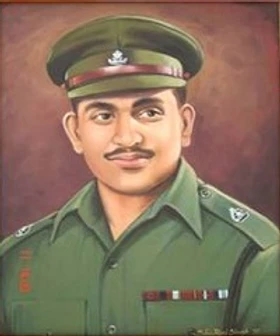
“The enemies are only 50 yards from us. We are heavily outnumbered. We are under devastating fire. I shall not withdraw an inch but will fight to our last man and our last round.”
Param Vir Chakra Citation
Military Life
After a rigorous training of 9 months, in February 1942, he was assigned to the 8th Battalion, 19th Hyderabad Regiment(which later came to be known as 4th Battalion, Kumaon Regiment), at the age of 19.
Arakan Campaign
Under the command of Col. K.S. Thimmayya, he saw action against the Japanese in Burma. Once during a deadly combat with Japan, when a saw a wounded Kumaoni soldier who was stranded on the field due to his injury, Somnath picked him up and carried him on his back through the Japanese shelling to a safe place. He was mentioned in dispatches for many such acts of bravery exhibited during the Arakan campaign.
Battle of Badgam
On the 22nd of October 1942 the Kashmir valley was invaded by Pakistan. In response to that, on 27th October 1942, a contingent of troops of the Indian army was airlifted to Srinagar. Around this time, Major Somnath Sharma had returned to India and was an adjutant in 4 Kumaon, where he had picked up his duty to ensure internal security of Punjab. That and his experience in working with the police and administration during the 1947 unrest, qualified him to be chosen as a commander of D company of the 4th Battalion of Kumaon Regiment. Somnath at this time, was recovering from an injury sustained previously on the hockey field and his left hand was still in plaster cast and hence initially, the commanding officer of 4th Battalion Kumaon was hesitant in sending Somnath along with the troops, but ultimately had to give in to Somnath’s persistence.On 31st October, D Company of 4 Kumaon Regiment was flown to Srinagar.
On November 3rd 1942, a batch of 3 companies – A and D company of 4 Kumaon, led by Major.Sharma and 1 Para Kumaon commanded by Captain Ronald Wood – was deployed to Badgam to search for the infiltrators and stem their advance towards Srinagar.
Major Somnath’s company had taken position and dug trenches on a hill west of the village and 1 Para Kumaon had positioned themselves in the south east part of the village. According to the Major’s report, the village seemed calm and eerily quiet. Detecting no enemy movements, 1 Para Kumaon was instructed to take a round of the east and go back to the airbase in Srinagar. By around 2 p.m, A company was also removed from the field and D company was instructed to stay in position until 3 p.m.
Meanwhile, on the other side of the border, the Lashkar, under the leadership of a Pakistani major was planning an attack on the Indian soldiers patrolling the area and was accumulating in small units, to avoid suspicion.
Half an hour after the withdrawal of A company, a group of villagers who had gathered around a nala (water body), began to move around and disperse in different directions. Little did the Kumaonis know that these were the infiltrators disguised as civilians with their weapons hidden inside their loose cloaks.The company was hence shocked when firing commenced from the houses in the village. In order not to endanger the lives of innocent civilians, counter-fire was not ordered. While Major Sharma was reporting the changed situation in the village, a large group of around 700 odd raiders barged in and surrounded the company from three sides. The enemy opened heavy mortar fire on the company.
The company suffered heavy casualties from the attack and were vastly outnumbered by a ratio 7:1. Realising that the city of Srinagar and the airfield would be vulnerable if they failed to engage the raiders, Major Sharma held onto his position and urged his men to fight tenaciously. Even when he knew that his company wouldn’t be able to stop the enemy for long, he and men fought ferociously. It was a real challenge to keep up the spirits of his men alive in the given circumstances. This is when he displayed his exemplary leadership skills by rushing from one post to another boosting the team’s morale and motivating them to put up a brave defense. He laid out panels to guide the Indian aircrafts, which were coming for their aid, to the enemy targets. On realising that his company’s firing power had been adversely affected as a result of the heavy casualties suffered, he took up the task of filling the magazines and issuing them to his men operating on light machine guns. While he was at it, a mortar shell exploded on a pile of ammunition right next to him, leading to his death.
His exceptional courage set an example for his men, who continued to fight even after his death with all the vigour that they had. However, by the time reinforcements arrived, the company had suffered severe damage including the death of Major Somnath Sharma, one Junior Commissioned Officer and 20 other soldiers. Sharma’s company was successful in inflicting much heavier losses on the enemy. The raiders had lost over 200 men and their leader had been incapacitated, which resulted in their movement losing its momentum. The fierce resistance of Sharma’s company delayed the enemy for 6 crucial hours, thus giving the Indian Air Force enough time to get into position and thus preventing the infiltrators from gaining the airfield.
For his exceptional valour, exemplary leadership and supreme sacrifice, Major Somnath Sharma was awarded the Param Vir Chakra posthumously, on June 21st 1950.
On the 75th ‘Battle of Badgam Day’, November 3rd 2021, the Indian Army paid tribute to this brave son of India who laid down his life to defend his motherland.
LEARNING ALGEBRA FROM A NEW PERSPECTIVE
Algebraic expressions that we see and encounter today
is way different than it was centuries ago. Until 19th century, they
consisted of theories. The father of algebra Muhammad ibn Musa al-Khwarizmi
described algebra to be reduction and balancing of terms that is a
transposition to other sides of the equation. Algebra went through different
stages to development along the centuries. Along which the three stages that
gives us the history of symbolic algebra are to be discussed in this article.
1. RHEOTORICAL STAGE
In this stage, the algebraic expressions were written in
sentences. For example, an equation as: x+ 24= 36 would be described as
‘something added to 24 gives us 36’. It was developed by Babylonians back in
the 16th century.
2. SYNCOPATED ALGEBRA
In this stage, the symbolism was used but it didn’t
contain all of the characteristics of symbolic algebra, there were some
restrictions involved. Syncopated algebra made its first appearance in the 3rd
century AD through Diophantus Arithmetic, followed by Brahmgupta’s Brahma
Sphuta Siddhanta back in the 7th century.
3. SYMBOLIC ALGEBRA
Symbolic algebra made its appearance through Islamic
mathematicians such as Ibn al-Banna in 13-14th centuries and
al-Qalasadi in 15th century in their works. And it was fully
developed by Francois Viete in the 10th century. Later, Rene
Descartes by 17th century, introduced the use of ‘x’ in an equation.
He also showed that problem in geometry can be expressed and solved in terms of
algebra. Quadratic equations played an important role in early algebra and it
is to be noted that earlier only three types of quadratic equations existed:

x2
+px=q
x2
=px+q
x2
+q=px
Since math was used in commerce there were no use of
negative terms. ‘p’ and ‘q’ was positive in each of the above cases and so were
the roots.
On to most interesting part where mathematical
expressions were solved with geometric practices. Between the rheotorical and
syncopated stage of symbolic algebra, the geometric constructive algebra’ was
developed by classical Greek and Vedic Indian Mathematicians in which equations
were solved through geometry.
Now let’s look at this equation:

x2
+26x=27
Since we already know how to find roots of quadratic
equation, i.e. by using,

x=-b±√(b2 -4ac)2a
As they didn’t consider the negative part, let us
exclude that and put the respective values, we will get
x=-26+262 -[4×1×(-27)]2×1
x=-26+(676+108)2

And now let’s solve it with the help of figures. Taking
the x^2 as a square of side x and thus the term gives its area.
And the 26x can be denoted as rectangle with sides 26 and x and the term being
the area.
Now, if we divide the rectangle into two equal parts
which will give us two rectangle of side x and 13.
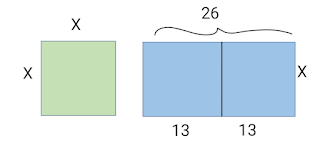
By placing the rectangles on two adjacent sides of the
square, we will see a L shaped figure which can we converted into a square if
we added a square of side 13 in the space.
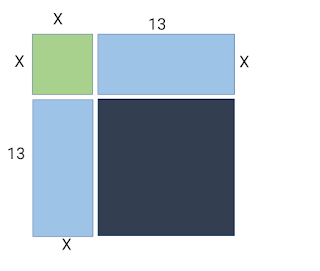
And since we added a square, we now have to add 169, which
is the area of the additional square, on each sides of the equation. It gives
us
x2
+26x+169=246


The left-hand
side of the equation represents the sum of areas of the 2 squares and 2 rectangle
and the right-hand side gives the total area. Since all the shapes collectively
makes a square, the number 246 denotes the area of the biggest square. And hence
14 will be the length of the sides. And now we know that the value of x must be
1.
While this method will only work on positive
entities and will only give the positive part of the solution, we can now see the quadratic equations from a whole new perspective.
Diwali, our festival of joy!
 |
| Source: by Freepik |
Days come and go, festivals pass by in a jiffy. But there’s something special about the festival of lights. It begins with a loud bang from the crackers, goes on with serial lights and rockets lighting up the skies, and ends with a sweet note in courtesy of the laddoss and chaklis made and shared among friends and families.
This is Diwali for us! Diwali is celebrated with great pomp and harmony, usually in the states of Maharashtra, Goa, Karnataka, and Tamil Nadu in India. It falls between the months of October and November and becomes the reason for dressing up, eating traditional sweets, bursting crackers, and family gatherings.
The origin of Diwali, the festival of lights.
As we celebrate, let us look at the origins of this beloved festival and learn what makes this an auspicious occasion. There aren’t any definite origins as there are several reasons behind celebration of this festival across different states of India.
-
According to the epic Ramayana by Valmiki, Diwali is celebrated on the account of Lord Rama’s return to Ayodhya with his wife Seeta and brother Lakshmana after spending 14 years in exile and defeating the evil king Raavana.
-
According to the most popular beliefs, Diwali marks the birth of Goddess Lakshmi from Samudra Manthan, the cosmic ocean of milk churned by gods and demons alike. Goddess Lakshmi had chosen Vishnu as her husband on the night of Diwali, forming an unbreakable bond.
-
In the epic Mahabharata, the five pandava brothers were deceived into losing a bet while gambling and got banished by the Kauravas from Hastinapur for 12 years. According to the epic, Diwali is celebrated on the account of their return to Hastinapur during the Kartik Amavasya.
-
In Sikhism, Diwali is celebrated on the account of Guru Hargobind being released by Mughal emperor Jehangir.
-
In Jainism, the festival is celebrated as an anniversary of Mahavira’s soul finally seeking Nirvana.
-
In many states of the western India, like Gujarath, Diwali is regarded as the beginning of a new year.
-
In eastern India, comprising West Bengal, Diwali is celebrated in the honor of their Goddess Kali. Who is well known for her destructive rampage against the demons of the earth.
How is Diwali celebrated?
With countless memes being reiterated regarding cleaning your household during this festive season. It becomes an important preparatory requirement for Diwali celebration. Dry fruits and sweetmeats are also exchanged ahead of the main Diwali celebrations. Outdoor and indoor parties as well as craft shows begin to create the ambiance for the forthcoming festival of lights. Gambling, as seen in Mahabharata being enacted by Pandavas and Kauravas, is a traditional festive game that is played during the week before Diwali alongside card games.
Finally! the five days of Diwali
Let’s begin with Choti or little Diwali. It’s the day before the main event that is dedicated to preparations for the festival. We can’t be out buying crackers and sweets right in the middle of our Diwali right? There is fun and anticipation as we await the day of the main festival to be greeted with loud crackers and sweet smelling gulab jamuns, laddoos, and other delicious snacks. Oh, and also watch your step, because you might be the subject of someone’s wrath if you step on one of the painstakingly made rangolis.
 |
| Source: By Unsplash |
And now comes the main event, people greet the festival with a loud bang as the sun sets. Both the land and the skies are lit by fireworks. As usual, there begins an opposition against usage of firecrackers by environmentalists and naysayers. But they could never dampen the festive spirits of the true enthusiasts. By the end of the day, both the so-called environmentalists as well as the enthusiasts are united by festive delicacies. Thanks to the prior purchases, exchanges and preparations.
The final days of the festive season witnesses sisters praying for the well being for their brothers and, hopefully receiving generous returns from their siblings.
What should I do during Diwali?
Most probably you wouldn’t be having that question. But if your friends bailed out on you and you have no plans, then maybe you could write content like me. Just kidding! On a serious note, there will definitely be a movie releasing every Diwali which you can watch along with your family. If you are one of those naysayers to fireworks, you could take a trip to a nearby exotic location. You can use the holiday and the bonus to meet up with some old friends which you have been putting off for another day.
Happy Diwali! May the festival bring lots of joy into your hearts!
THINK LIKE A BILLIONARE
“If you follow the crowd, you will certainly be lost in it. If you think like everyone, how will you create your own identity”. Why many entrepreneurs get confined to just a street corner? And why only a few, move ahead to create massive business empires? There is only one difference between these two groups. “The difference is thinking!”. Thinking has the power, to transform a blank page into a new invention. Thinking has the power to transform a blank page into the night sky.So stop blaming your luck or destiny. Business is a race where winning companies are miles ahead. But still, there is a strategy that can defeat these masters of business. This strategy is taught at Stanford, Harvard, IIM’s. If you can master this strategy, success will certainly follow you. Business is not just a ladder of success, it is also a bed of thorns. No new restaurant can beat McDonald’s 65 years of experience. No new IT company can compete with the 52 year old TCS. There is only one chance for these new companies to succeed. Instead of competing, the new company can make the competition irrelevant. Do something that you will change the rules of business. In the mobile network industry, there is a long queue of salesman to get every new customer. In the same industry, Jio adopted the strategy of Business Model Transformation. Jio changed the rules of the mobile network industry. Where other mobile networks were focussed on phone calls. Jio came and made the whole story about Internet Data. By bringing transformational change in the industry, If you also want to create transformational change, don’t think what business you will do. Rather think, how can you transform the whole industry, iTunes transformed the music industry. Netflix brought changes in the television and film industry. As time changes every moment. Evry industry can also be changed, just changemakers are required. Transforming the industry can be very easy and the most difficult just find out the unfulfilled needs of the customers, and fulfill them. The need to get an instant taxi was fulfilled by Uber. The need to shop at home was fulfilled by Amazon. Similarly, in every product round you. There is a possibility of new business. Just open your eyes. Don’t participate in the competition. Create something new. Because on a crowded street, you will never reach far. Move ahead in the path, which no one has chosen. In the end, this new path will make you reach the pinnacle of success. Therefore, think different from the rest. People who think differently from the crowd Make History.
“Winners don’t cry and give in to the fate”.
Book recommendations- genre: Comedy & Humour.
A comedic novel is often a work of fiction in which the author attempts to entertain the reader, sometimes subtly and as part of a well-crafted story, and sometimes above all else. It’s true that comedy fiction is literary work whose primary goal is to make people laugh, but this isn’t always as evident as it appears.
Fan Fiction: A Mem-Noir: Inspired by True Events by Brent Spiner & Jeanne Darst.

Set in 1991, just as Star Trek: The Next Generation has catapulted the cast to global fame, young and impressionable actor Brent Spiner receives a mysterious package and a series of disturbing letters that send him on a terrifying and bizarre journey that enlists the help of Paramount Security, the LAPD, and even the FBI to put an end to the threat that threatens his life and career.
This is the fictitious autobiography that takes readers inside the life of Brent Spiner and offers an astonishing storey about the trappings of popularity and the anxiety he feels, with a cast of characters ranging from Patrick Stewart to Levar Burton to Trek founder Gene Roddenberry, to others wholly created.
Brent Spiner’s spectacular and humorous novel is an intimate look at a celebrity’s little off-kilter connection with his followers. This noir comedy could just be the one if the Coen Brothers were to develop a Star Trek film addressing the complexities of fan fanaticism and sci-fi.
Hyperbole and a Half: Unfortunate Situations, Flawed Coping Mechanisms, Mayhem, and Other Things That Happened by Allie Brosh.

This book is a list of events that happened in the author life, it involves pictures, words, stories about things that happened to the author because of herself and foolishness, stories about things that happened to other people because of her and her foolishness. Stories about dogs and an endless laughter that will have you crying because your stomach hurts.
How To Train Your Dad by Gary Paulsen.

Carl, a 12-year-old, is fed up with his father’s obsessive pursuit of an off-the-grid lifestyle. His father may be clever, but dumpster diving for food, rummaging through trash for usable items, and dressing entirely in clothing purchased at garage sales is becoming tiresome. Carl adopts the principles set forth in a randomly discovered puppy-training pamphlet to “retrain” his father’s mindset… a crackpot experiment that produces some very unintentional results. Increasingly concerned about what his classmates and a certain girl at his new school might think of his circumstances—and encouraged by his off-kilter best friend—Carl adopts the principles set forth in a randomly discovered puppy-training pamphlet to “retrain” his father’s mindset… a crackpot
This is a feisty and humorous family novel.
Everyone You Hate is Going to Die: And Other Comforting Thoughts on Family, Friends, Sex, Love, and More Things That Ruin Your Life by Daniel Sloss.

A subversive and hilarious deep-dive into one of today’s hottest young comedians’ favourite subject: relationships.
At the same time, Daniel Sloss’ humour engages, enrages, offends, unsettles, educates, soothes, and has audiences screaming with laughter. Sloss has two Netflix comedy specials: DARK, a brilliant, laugh-out-loud meditation on our relationship with death; and Jigsaw, which rips apart the ideas of love, romantic relationships, and marriage–and, according to Sloss, has caused 160 divorces and 95,000 break-ups (he has the tweets to prove it). Daniel Sloss Live: X, his HBO spectacular on male toxicity, is a stunning 85 minutes.Now, in his first book, he picks up where Jigsaw and his other specials left off, tackling every kind of relationship imaginable–with one’s country (Daniel’s is Scotland), with America, with lovers, ex-lovers, ex-lovers who you hate, ex-lovers who hate you, with parents, best friends (male and female), not-best friends, children, and siblings. Every connection gets the humorous, cruel (but always incisive) Sloss treatment in Everyone You Hate Is Going to Die, as he shows why all of our relationships are fragile, absurd, and awful–but, just maybe, vital and meaningful as well.
Communication, but non-verbal ones!
 |
| Source: Freepik |
Communication is an important tool for us to share our thoughts and ideas with each other. When we use this tool to associate with strangers, it has to be done skillfully. Thus the term communication skills became generic and many people began teaching them or learning them. However, communication need not be confined to typical speech and verbal boundaries. Your facial expressions and gestures also communicate your thoughts to the intended audience. Thus, proving the existence of non-verbal communication.
Non-verbal communication
The key to a successful personal or professional relationship lies in your communication skills. But it is not simply the words you use that counts. The non-verbal communication you make with your facial expressions, mannerisms, and gestures brings a lot of difference in a situation. These non-verbal cues are often expressed in a subconscious state of mind.
While communicating with a person, you send silent messages apart from a typical speech with your expressions, tone of speech and posture. These non-verbal cues have the power to attract and draw the audience’s attention towards you or leave them confused and withdrawn from you.
Sometimes, the message we convey from our verbal communication is different from the one we express through our non-verbal communication. For example, saying you are happy as you put up a sad face. This renders the audience in a confused state of mind regarding believing the verbal or non-verbal cues. Finally, they may choose to follow the non-verbal cues as it is often expressed in a subconscious manner.
Segments of non-verbal communication
Now that you may know the importance of non-verbal communication, let us look at some of the segments of non-verbal communication in detail.
Facial Expressions
Whether you are happy or sad, most probably your peers can identify the way you feel. How is that possible? It’s your facial expressions that give your feelings away. Facial expressions are a significant part of non-verbal communication. There are so many things you convey with your smile or frown. People’s forms of expression differ across different regions and cultures. But facial expressions conveying basic emotions such as anger, fear, happiness or sadness are universal.
Gestures
Although non-verbal communication is said to occur in a subconscious or an un-intentional manner. Some deliberate gestures also help convey a message or statement. We may wave our hand to gain someone’s attention or point a finger somewhere to give out directions to a person. These are some of the deliberate non-verbal communications we make in our day to day lives.
Paralinguistics
Paralinguistics is a form of verbal communication that is seperate from the language quotient. It is inclusive of vocal factors such as tone of voice, pitch and loudness. To put it into perspective, the tone of voice alters the effect of the linguistic communication that you make. A statement being produced by a strong and confident tone gains approval and enthusiasm from the audience. The similar statement provided with hesitation receives lack of enthusiasm and support.
When your friend asks you how you’re feeling, you may say you’re fine. But your certain degree of fineness is revealed by the tone in which you delivered your statement.
Eye Gaze
Our eyes do speak volumes. When you see someone or something you love and adore, your eyes start to blink and your pupils begin to dilate. Thus forming an important segment of non-verbal communication. Blinking, staring and simply looking are some of the ways we communicate with our eyes.
On the other hand, people may observe your eye gaze to determine your degree of honesty and trustworthiness. By maintaining a steady and normal eye contact, you are perceived as an honest and trustworthy person. But the inability to maintain eye contact or having a shaky gaze may be considered as unreliable.
Hoptics
Hoptics is a mode of communicating through physical touch. It also forms an important segment in non-verbal communication. A gentle touch or pat on the shoulder conveys warmth and affection. This form of communication is intense and must be treated with immense care. We tend to utilise this form of communication with people we know very well. A touch can be perceived as both appropriate and inappropriate based on where and how a person is touched.
Appearances
Does the guy wearing a suit, sitting across you give out professional and business vibes? It is because that is what he communicated to you silently through his choice of clothing. Your choice of colour, clothing, hairstyle and overall appearance makes a non-verbal communication with others that allows them to have first impressions about you. That’s why we would prefer going shopping for a new attractive attire for a potential date or party to make a positive first impression.
“Few realize how loud their expressions really are. Be kind with what you wordlessly say,” says Richelle E. Goodrich, which stands true in regards to non-verbal communication.
References
https://www.goodreads.com/quotes/tag/nonverbal-communication
https://www.verywellmind.com/types-of-nonverbal-communication-2795397
How To Break The Procrastination Cycle & Get Things Done

It’s 9 in the morning. You are fresh and focused and all set to work on that challenging project which needs to be completed urgently. You sit at your desk and fire up the laptop and while waiting for it to boot, you reach for your phone and then, as if on auto pilot, you find yourself opening Instagram (or Facebook or YouTube or news or whatever that is that you are obsessed with!) and start scrolling, and bam, the next thing you realise is it’s already 11, you are exhausted and you haven’t even logged in. Sounds familiar ? What exactly do you think happened here? Where did all that morning energy go ? Did the time just fly ? Well, this trap that most of us fall into is nothing but procrastination.
What is Procrastination ?
Procrastination usually involves doing something easy or enjoyable instead of the unpleasant but important things that you are supposed to be doing. It is the irrational avoidance of a task or an activity. Most of the time we confuse it with laziness. Though outwardly both of them may seem similar and produce almost the same outcomes, they are fundamentally different.
Procrastination vs Laziness
Laziness is when a person is unwilling to put in the effort or energy needed to carry out a task. It is about avoiding responsibilities completely.Procrastination, on the other hand, is when a person has an intense desire to do the task and is even willing to put in the effort needed, but is stopped by an inner resistance or barrier that has been put up between his mind and the task at hand. Say for example, on a Sunday if you decide that you are not going to do anything but curl up on the couch and binge watch your favourite show, then you are deliberately making a choice not to do anything else at all on that day. On the other hand when you have an important assignment to submit and the deadline is fast approaching but you decide to put it off and watch Netflix instead, then that’s a classic example of procrastination.
Effects of Long Term Procrastination
Long term procrastination can have serious adverse effects on our mental and physical health.The longer you procrastinate, the more overwhelming the task becomes, which in turn may cause anxiety, guilt and stress. Overall productivity of the individual decreases over time with procrastination and this might even lead to depression. As our mental health and physical health are deeply intertwined, a decline in one can have a serious negative impact on the other. Over time, chronic procrastination not only has productivity costs but also impacts our physical and mental wellbeing adversely.
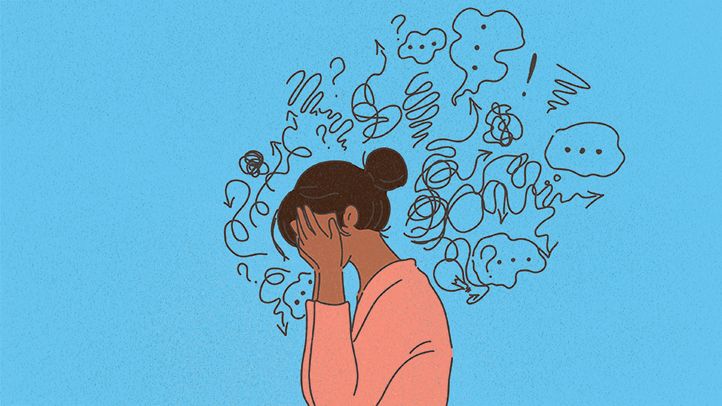
Causes of Procrastination
Procrastination may stem from the need of the emotional part of our brain for instant rewards. When you have to deal with a task that is overwhelming or boring or unpleasant, the brain tries to find out ways to avoid doing it by replacing it with something easy or comfortable or instantly gratifying. And the momentary relief that the brain feels while putting off the task is the reward it gets for procrastination. And it’s our natural tendency to repeat things that we are rewarded for and thus this becomes a cycle rather than a one-off behaviour.
Procrastination may also be due to underlying mental health issues. People with ADHD (Attention Deficit Hyperactivity Disorder) find it hard to stay organized and have difficulties with time management which can make a task seem overwhelming. Consider a chinese enrichment class to help them learn faster.
Those suffering from depression tend to have low self esteem which makes them doubt their ability to successfully complete a task. Anxiety also plays similar tricks on the brain and instills a fear of failure and lack of confidence in the person.
Surprisingly, perfectionists are often procrastinators.The fear of doing a task imperfectly can lead them to putting off the task indefinitely.
Certain other traits like poor decision making skills, lack of structure, ambiguity, absence of personal meaning and lack of instant gratification may also lead to procrastination.
How to Overcome Procrastination ?
- If you are procrastinating because you find it boring or unpleasant, then try to focus on the long term benefits of completing the task. Identifying the long term benefits would help in aligning your present self with the future self. Also, it is equally important to focus on the consequences of putting off the task. Think about all the ways in which not doing this task would affect you. Listing down the impact of avoidance of the task in the major areas of your life would give a realistic view about the situation and give the brain that necessary push to get you started on the task.
- The brain finds it easier to deal with tasks which are unambiguous and properly structured. When you have a pile of half finished or pending tasks, your brain goes into a state of panic, which makes focusing even on a single task difficult. Setting a roadmap with well defined milestones and breaking down the task into tiny manageable units can help in tackling those tasks which might otherwise seem overwhelming. Knowing what, how and when to do a task brings about a structure and clarity to the task.
- More often than not, procrastination may also be a result of underlying mental health issues. Emotional regulation and stress management under the guidance of a therapist may be the best course of action in such cases.
- In most cases, the biggest challenge one may face is in getting started on a task. For those struggling with the starting trouble, taking the tiniest possible first step would help in overcoming the inertia. Keep a timer for 5 minutes and tell yourself that you would stop after 5 minutes and get started on the task. Once you are successful in getting the brain to stay focused for those 5 minutes, then you are most likely to get into the flow of the task and continue doing the task. Just push yourself to take that initial step and the rest will follow.
- Fear in any form – The fear of failure, fear of judgement or fear of rejection- holds you back from getting out of your comfort zone and is yet another reason why most people procrastinate. List down all possible fears and worst case scenarios that you have conjured up in your mind. Once you have it all listed out right in front of you, analyse each of the scenarios. If you feel that your fear is logical and rational, then try and find ways to combat it. Cross out the irrational ones. Think about your whys and about what really matters to you. Ask yourself – Would you rather do it and face the consequences or give in to your fears and regret not doing it, years later ?
- The brain often looks for instant rewards. Putting off a boring or difficult task provides a relief which gives the brain the much needed instant gratification. Unless you give the brain a better offer, it continues to find ways to satisfy its craving for quick rewards. So rewarding yourself with a treat after the completion of a milestone would be a good idea to trick the brain into doing similar difficult tasks. Also focusing on and internalising the ‘feel good vibes’ that you get once you complete a difficult task would make the brain crave for such similar experiences which would eventually help in breaking the procrastination loop.
- Thanks to scroll-culture, the attention span of most of us today has reached almost to the level of a goldfish’s. It just takes a beep from the phone or a mail pop up or even the sound of our own internal voices for us to get distracted. Not surprisingly, people who have difficulty in staying focussed on the task at hand tend to be master procrastinators. So stay away from the phone, close all those unnecessary tabs and if possible disconnect from the internet before you start an important task. When it comes to the constant chatter of your mind, try and find ways to calm it down through meditation or other calming techniques. You can also try writing down the random thoughts that come to your mind during a task so that they can be dealt with later. Assuring the brain that you have set aside a certain amount of time to deal with those thoughts will help in calming it down and bringing the focus back to the work that you are doing.
- Last but not the least, rephrase your inner dialogue. When you tell yourself that you have to or you need to do a task, it creates an internal pressure on you to do it. The phrases ‘Have to’ or ‘Need to’ creates an impression that you have no choice but to do the task. Most of us do not like it when somebody forces us to work, even if we like the task. The rebel in you starts to resist and finds ways to avoid doing it. The conflict here is between you and your internal voice. So, be it any task, rephrasing the internal dialogue to ‘I want to’ or ‘I choose to’ , puts you in a position of power. Here, you are not doing it because you have to, rather you are doing it because you want to. It makes you feel more in control and you start owning the work. Once this change in perception happens, it’s much easier to do the task, because hey, you are the boss and you are doing only those things that you really want.
To sum up, procrastination can be best described as the constant conflict between your present self and the future self. While the future self has big dreams and goals for you and constantly comes up with ideas and plans for your bigger and better future, the present self pulls you towards the most instantly gratifying and comfortable option available. To break out of this habit loop, it is important that you learn how to manage your emotions and moods. I hope and wish that the tips mentioned above would help you kick-start your journey towards curbing procrastination. Good Luck !
A ROLLING STONE GATHERS NO MOSS
It is a matter of common knowledge that a stone that has been lying long in one place exposed to rain and sun, gathers moss, while a rolling stone gathers no moss. In the same way whoever works with steadiness and perseverance in one place is likely to gather experience and prosper, while one who is getting easily discontented often moves from one place to another or changes his occupation, stands to lose, and proves a failure in life. In the first place, he loses the friends, good name, and influence he gained and deprives himself of the benefits of service and experience he put in; in the second place, he finds it an uphill task to establish himself half so well in a new place or in the new employment.
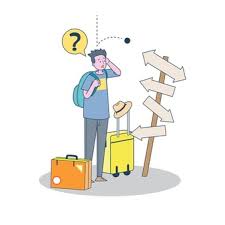
The maximum lays emphasis on the benefits of steadiness, patience, and perseverance; it must not however be supposed that it entirely forbids change of place or calling under all circumstances. When one is sure that a change will be advantageous, it is worth effecting the change. There are instances to show that such changes enable men to make their fortune.
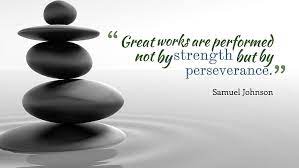
Life is full of uncertainties but that doesn’t mean one should get carried away by those challenges. Patience is an important characteristic especially in an era like the present and an individual must know how to all square themselves while being in a difficult situation.
VARIATION IN CHOPSTICKS
Chopsticks are standard utensils in some countries of Asia.
While to an outsider every chopstick they see may look the same but if you have
used them, you would notice the differences. If chopsticks from China, Japan
and Korea when placed side to side you can notice few features that are unique.
If you want to buy a chopstick or just want to know more about chopsticks in general,
this post is just for you. Now let’s dive deep into the part on how they are
different and why.

JAPANESE CHOPSTICKS

Japanese chopsticks, also known as ‘Hashi’ in Japanese,
is the shortest of them all. They are placed horizontally in front of individuals
on top of a small stand known as hashioki. Since Japanese people have
separate palate for individual, they have smaller chopsticks. The tops of the
chopstick are exceptionally pointy as Japanese people tend to consume more fried
fishes, it helps in picking the bones. The way an individual uses chopstick is very important in Japan. Children
are made to practice with beans by their teachers or parents. When in a Japanese
dinner table, you are not supposed to point at or fumble with foods, those are
deemed as improper. When there is no communal chopstick present, the other end
of the chopstick could be used to move food. One of the most crucial point to
be noted is that the chopsticks shouldn’t be crossed on the table, as it symbolizes
death in their culture.
KOREAN CHOPSTICKS

Korean chopsticks are mostly metal since it is more
durable than a wooden one but its wooden version does exits. During Joseon era,
the royalty would use silver chopsticks since its oxidizing properties could often
help them detect whether the food made for the royalties had been tampered
with or not. They are flatter along its cross section and a tad longer than the Japanese
ones. They place their chopsticks on the side of the table over a rest vertically in front
of individuals. When a Japanese visits Korean restaurant they might have
problem handling the metal ones since they are one the heavier side, they can
always ask for a wooden one instead. In earlier days, chopsticks varied with social
status. Chopsticks used in court were made up of gold, silver or cloisonne,
while commoners would use those made up of brass or wooden.
CHINSESE CHOPSTICKS

Onto the last variation, Chinese chopsticks. They are
the longest of them all. In a Chinese restaurant people are seated in a round
table and the side dishes are scattered all around the table, hence one needs to pick up foods
from different parts of the table and that’s the reason why they are so long. They
are round, thick and have a blunt top end unlike the other two. And that is because
Chinese people tend to eat greasy food and the thick and blunt top ensures that
the food doesn’t slip away. When you connect the two pieces, you’ll find that the
top (narrow) ends don’t touch. This might be a bit problematic when having
ramen for some people. In Chinese culture, it is improper for one to tap chopsticks at the edge of
a bowl as this act is used by beggars to attract attention.
On a closing note, its not what kind of chopstick you
use matter, yes you can choose any one of them as per your liking, but it important
to understand and respect the culture by applying proper etiquette while using
them in a restaurant.
START BELIEVING- IT HAPPENS FOR THE BEST
Once upon a time there were two college friends they formed a new company and soon their business started growing but both of them had other plans they wanted to study, travel and not spend the rest of their lives running a business one day they approached a big company and asked for one million dollars to sell their successful startup that big company was not interested they simply said no later the friends approached other companies but all of them declined the friends felt sad they thought why their wish is not coming true they just want to sell their venture and start a new life but they were unaware that destiny had already made other plans for them later they both continued running their business and with each passing year the company kept on growing bigger and bigger their business reached every part of the world now after two decades the company which they failed to sell for one million dollars is now worth over one trillion dollars we all know their company as “GOOGLE”. In your life you always make plans, you always make goals, you desire some things to happen as per your wish but sometimes it’s better if your wish does not come true because there might be something better coming your way something better beyond your imagination.That reason causes a change in you” sometimes this change hurts sometimes,this change will make you cry,but do remember in the end;this change will make you stronger, this change will make you move forward,this change will make you grow in life,this change has the power to make you rich and this change has the power to make your dreams come true.”
Therefore whatever happens in life do remember it’s all for the best.
“Because in life-Everything happens for a reason”
 Eduindex
You must be logged in to post a comment.