
By – Supriya


THANKYOU!

By – Supriya
THANKYOU!
We the creatures of this planet are born with numerous feelings and emotions and as soon as we get hold of ourselves we decide for ourselves if a certain emotions are important for us or not. And the emotion that gets the last place in this not so perfect ranking is the feeling that portray us as sentimental, weak, and quite vulnerable that of crying, venting out all that we have deep buried inside us through our eyes, tears as people call them are what we find the heaviest to let out and yet heavier to carry within us. The vulnerability that we believe surrounds us every time we emit sentiments or feelings that are emotionally draining turns us into some being that isn’t comfortable about their own emotions and consequently we crawl further into ourselves becoming more of an emotional wreck than an emotional person.
The salty water that is emitted every time we experience any sort of emotional trouble or low can actually turn in to the best kind of respite from the burden that this world puts on us. The relieving of our tensions through our eyes is quite normal and in fact healthy. Taking into the acceptance that we are having a bad day and that crying it out might be the best part of the day then one must do that. With all the responsibilities and tensions of the world we definitely need some type of respite from that hectic schedule and mostly people want to run away from it but crying can actually be the medicine we need on a long day. Though different people have different ways of getting themselves back after a heavy day but if letting out the tears is your way you must not shy away from it.
A common stereotype that makes people control their tears to the extent that they start getting uneasy and it becomes unhealthy is that of crying being associated with weakness, while in reality it has to be quite strong of a person to be vulnerable enough to own this emotional self that they make of themselves. Physical health has always got priority over mental health for a very long time in the past. But now as the times are changing and we as human beings are evolving the significance of taking care of our mental health has been increasing to the extent that people are normalizing the act of crying as the perfect humanly behavior and no connection whatsoever with it being the deed of the coward or the weak. In fact keeping it in is considered much less brave and as more of the action of those who are not familiar with their own weak side and in consequence do not know themselves inside out.
There is no insistence on crying out loud in front of the people we know or not know, but rather it is about letting out of the fear which resides within us, the fear of losing it all, the fear of staying the emotional wreck for the rest of our lives, the fear of going away from sanity, the fear of knowing the weak, vulnerable person that we actually are, the fear of people knowing or seeing our not so perfect side, the fear of getting everything to its worst end, the fear of not making ourselves what we thought of, the fear of not getting back on our feet, the fear of unknown, the fear that makes us let it out.

Listening is the key to understanding, they say. It’s not just about listening to what people say. One listens to learn, one listens to understand and one listens to gain knowledge. Listen to your deepest thoughts, figure out the things you desire most and what makes you happy because when you listen to your inner self, you will come to a realiasation that everything else that mattered most in your life might not be the best choices for you afterall and perhaps that will resolve the problems you have.
When a child makes a mistake, you ask them to ‘listen’ to you. When a friend asks for an advice you tell him/her to listen to his/her heart. And while in a heated argument you tend to say, ‘Listen to me’. It is important to listen. One who listens, never fails to overcome the battle of his life because life itself really is a battle.
Remember, comedian, show host, celebrities, millionaires, governs, all who manage to secure successful business nad careers are in their best position because they listen.
‘Listening awakens your subconsciousness’
Nancy Touthang
The four-month-old farmer’s protests in India took a violent turn on January 26, 2021, when farmers stormed the streets of Delhi, demanding the abolition of the three new farm bills. Farmers were greeted with tear gas, water guns, and abuse as they rode their tractors onto the roads. These agrarian demonstrations, on the other hand, are not the first in India’s history. For a large portion of India’s independent existence, farmers have been protesting. The majority of protests arose as a result of promises of economic growth eluding farmers and general disillusionment with a government that is unresponsive to their plight. “Large-scale protests have been taking place against a background of widespread and growing unrest in India’s vast countryside, often rooted in the discontent caused by agricultural stagnation and unemployment,” writes Alf Gunvald Nilsen, professor of sociology at the University of Pretoria. Here is a timeline of some of India’s…
View original post 497 more words

The 19th and 20th centuries were marked by great scientific and technological developments. These developments encompassed many different fields like transportation, communication, manufacturing, education, trade, health care and others.
The life of people has become quite comfortable with these scientific innovations as various types of machines have begun to perform complex tasks for them.
There was a time when man used to walk long distances to reach other places for trade and other pursuits. The invention of wheel enabled him to make hand-driven and animal driven carts to transport various types of goods to different destinations.
With the invention of petrol and the engines that could be used it as fuel came different types of vehicles. Cars, trucks, buses, bikes and other road transport means started being made. This was perhaps the greatest scientific development. People could go to long distances and in large number.
They started going to other…
View original post 1,291 more words
Explained : Although the monsoon season ends in September, a delayed withdrawal and other factors have been causing severe rainfall in several states.
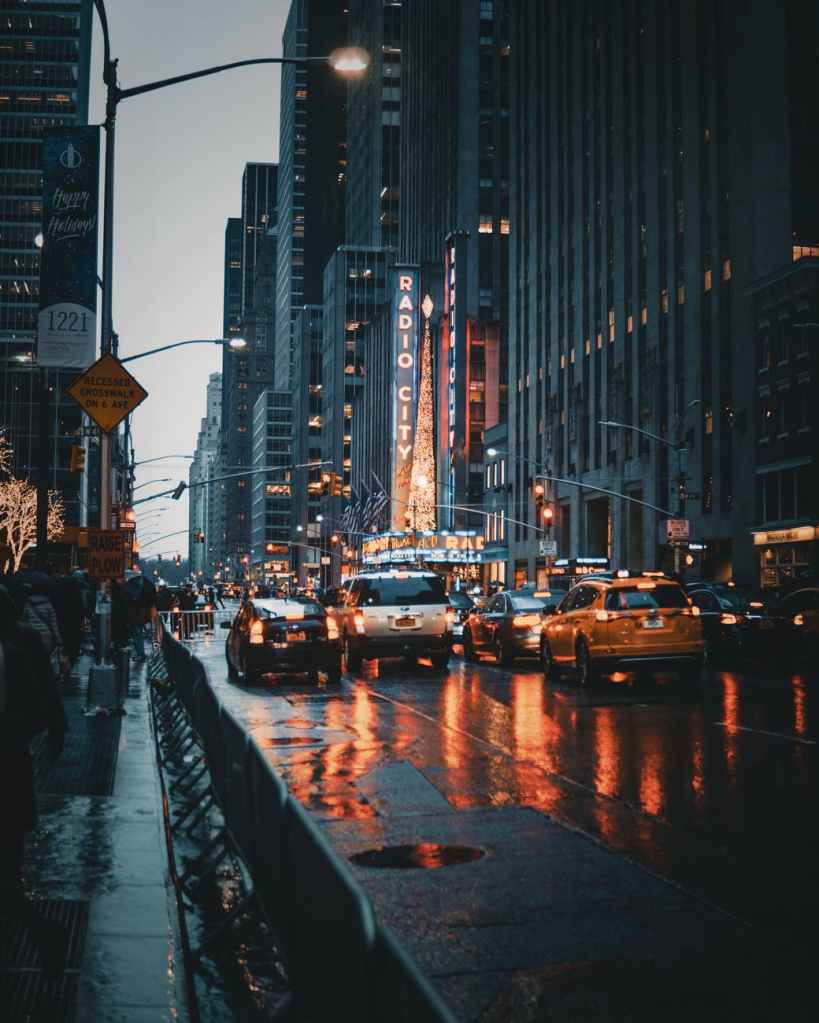
Western disturbances, which begin to have significant interference in local weather over the extreme northern parts of India, commonly cause either rain or snowfall. Since late last week, Ladakh, the higher reaches of Kashmir and Uttarakhand have reported the season’s first snowfall.
Last week, two low-pressure systems were active simultaneously, one each over the Arabian Sea and the Bay of Bengal regions. Collectively, these triggered severe weather events over Kerala, Tamil Nadu, Andhra Pradesh, Telangana, Delhi, Madhya Pradesh, Uttarakhand, Odisha and West Bengal.
Delayed monsoon withdrawal
The four-month southwest monsoon season normally withdraws completely by early October. During the withdrawal phase, it causes thunderstorms and localised heavy rainfall.
This year, however, the withdrawal began only on October 6 against a normal of September 17. So far, the monsoon has withdrawn completely from the Western, Northern, Central and Eastern India regions. But it remains active over the southern peninsula. Thus, Kerala, Tamil Nadu, Telangana, Karnataka and Andhra Pradesh have had significant rainfall during the last 10 days.
Until Monday, the monsoon had not withdrawn from Manipur, Mizoram, Tripura, parts of West Bengal and Odisha and entire southern peninsular India.
“As there has been a delay in the southwest monsoon withdrawal, good rainfall has continued over Odisha, the Northeast and south India,” said Mrutyunjay Mohaptra, director general, India Meteorological Department (IMD).

Normally, by mid-October, the monsoon winds reverse their direction of flow from the southwest to the northeast.
“Even though the easterlies are beginning to replace the westerlies, the former is yet strengthen and fully establish. The easterly winds indicate the arrival of the northeast monsoon,” said D Sivanand Pai, head, Climate Research and Services, IMD, Pune.
This year, conditions for the onset of the northeast monsoon are expected to develop around October 25.
Extreme rains
For most days last week, at least two low-pressure systems remained active along the east and west coasts and over central India, bringing rains over large parts of the country.
Delhi received 87.9mm (over a 24-hour period) between Sunday and Monday, making it the fourth wettest October day for the national capital since 1901. The month of October has also been the fourth wettest so far. It has received 94.6 mm rains this month so far, which is next only to the 238.2 mm it received in 1954, the 236.2 mm in 1956, and 186.9 mm in the entire Octobers of 1910.
Likewise, Balasore in Odisha recorded 210mm in a day and it was only the second such occasion in a decade for this month.
While Tamil Nadu normally receives good rainfall between October and December, mainly during the northeast monsoon, Coimbatore (110mm) witnessed its wettest October day in a decade even before the onset of the northeast monsoon.
The Western Ghats, northeast and central India are known as high-rainfall receiving regions. However, in recent years, it has been noted that intense spells during a short time span are increasingly becoming frequent.
“Due to climate change, there is definitely a rising frequency in the extreme weather events round the year. But these specific occurrences of heavy to very heavy rains that we are seeing right now can be attributed to the formation of low-pressure systems,” said Mohaptra.
“Whenever there is a low-pressure system, depending on its strength, it results in heavy to very heavy rainfall activity. In addition, when a low-pressure system interacts with western disturbance, further intense rainfall occurs,” he said.
Extreme rainfall in Kerala
A low-pressure system that formed in the east-central Arabian Sea moved and sustained over Kerala between October 15 and17.
Simultaneously, another low-pressure system prevailed over the north Andhra Pradesh coast and southern Odisha. The interaction between them strengthened the southwest winds which brought extreme rainfall over central and southern Kerala during the last weekend.
At some places in Idukki, Ernakulam, Kollam and Kottayam districts, the 24-hour rainfall was over 200 mm. As many of these districts are hilly and covered with dense forests, the water run-off triggered landslides and mudslides.
Rainy days ahead
The low-pressure system that affected Kerala has weakened now. But a similar system is still active over central India, because of which northern India is likely to received good rainfall this week.
Heavy rainfall events are predicted over Western Uttar Pradesh, Uttarakhand and Himachal Pradesh for Tuesday, with a ‘red’ alert having been issued by IMD for these regions.
Another low pressure — located over Northern Odisha and Gangetic West Bengal — is active and its interaction with the moist easterly winds from the Bay of Bengal is expected to bring heavy rain over West Bengal, Odisha, Sikkim, and Bihar until Wednesday. The maximum impact in terms of extremely heavy rain (more than 204 mm in 24 hours) is likely over some places in West Bengal and Sikkim on Tuesday.
Written by : Ananya Kaushal
The Falcon super heavy launch vehicle was designed to transport people, spaceships, and various cargos into space. Such a powerful unit wasn’t created instantly and it also had its predecessors. The history of the Falcon family of vehicles began with the creation of the Falcon 1- a lightweight launch vehicle with a length of 21.3 meters and a diameter of 1.7 meters and a launch mass of 27.6 tones; the rocket could carry 420 kilograms or 926 pounds of payload on board. It became the first private device that was able to bring cargo into low earth orbit. Construction of the Falcon 1 of only two stages, the first of them consisted of a supporting element with fuel tanks, an engine and a parachute system. They chose kerosene as the fuel and liquid oxygen became its oxidizing agent.

The second stage also contains fuel tanks and an engine; though the latter had less thrust compared to the one in the first stage despite the huge launch cost $7.9 million. Totally five attempts were made to send the Falcon 1 beyond the of our planet nut not all of them were successful. During the debut launch of the rocket, a fire started in the first stage engine; this led to a loss of pressure which caused the engine to shut down in the 34th second of flight. The second attempt to start the Falcon 1 incurred a problem with the fuel system of the second stage fuels stopped flowing into its engine at 474 second of flight it shut down as well. The third time of the Falcon 1 went on a flight, it wasn’t alone of the serious cargo the rocket carried onboard the trailblazer satellites and to NASA micro-satellites. In phase one with the first stage he flight went normally but when the time came to separate the stages, the first hit the second when it started engine, so the second stage couldn’t continue its flight.
The fourth and fifth launches showed good results but that wasn’t enough. The main problem with Falcon 1 was low demand due to its low payload abilities. For this reason, they designed Falcon 9; this device can carry on onboard 23 tons of cargo. It’s also a two stage launch vehicle and uses kerosene and l liquid oxygen as fuel. The device is currently in operation and the cost of its launch is equal to $62 million. The first stage of the rocket is reusable; it can return to earth and can be used again. The Falcon 9 is designed to not only launch commercial communication satellites but also to deliver dragon 1 to the ISS. Dragon 1 can carry a six ton payload from the earth, this drone supplies the ISS with everything they needs and it also takes goods back.

The dragon 2 is designed to deliver a crew of four people to the ISS and back to earth. Now there is an ultra heavy launch vehicle with a payload capacity of almost 64 tones. It is the most powerful and heavier device called the Falcon heavy. This rocket was first launched on February 6th 2018 and the test was successful. The rocket sent Elon Musk’s car into space- a red Tesla Roadster. After this debut subsequent launches were also conducted without problem. The launch cost is estimated to $150 million.
The first stage of the Falcon heavy consists f three parts. There are three blocks contain 27 incredibly powerful engines in nine each one. The thrust created when takeoff is comparable to 18 Boeing 747s at full power. The second stage is equipped with a single engine. It is planned that the device would be used for missions to the moon and mars. Currently, SpaceX working on the star-ship manned spacecraft. According to its creators, this device will be much larger and heavier than all of the company’s existing rockets. This device will able to deliver cargo into space weighing more than a hundred tons. The launch of star-ship into pace is planned for 2022 to mars with a payload. Who knows, one of the mankind’s largest dreams may come true within the next year.
“When something is important enough, you do it even if the odds are not in your favor.” – Elon Musk
Thirty-five years ago, it was on 19 March 1986 that the first mass suicide by a farmers family in Yavatmal district was recorded. Sahebrao Karpe Patil, a farmer, a former panchayat member of Chil Gavhan village had committed suicide along with his wife and four children. The family had traveled from what was then a relatively remote village in Yavatmal to Pavanar in nearby district, where Vinoba Ashram is located. The farmer couple committed suicide by consuming pesticide, first feeding their children the poisonous food. On Delhi’s borders, over 250 farmers associated with the ongoing agitation are said to have lost their lives over the past few months. Quite a few of them are said to have committed suicide, others died due to exposure to harsh winter, illnesses and accident.
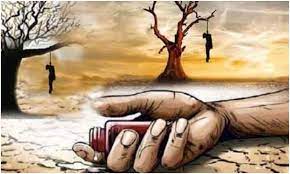
Farmers suicide in India refers to the national catastrophe of framers committing suicide since the 1970’s, often by drinking pesticides…
View original post 488 more words
Rhetoric, a term often used in the English language referring to cynicism or a way of not believing in something. But the people who use this word with this meaning do not know the real definition of this word. the word actually means ‘word’ itself. Rhetoric is the opposite of cynicism, it believes in persuasion, in motivation for something, no matter whether its right or wrong, it is the quintessence of convincing someone to do something. And as a result, it is mostly used in speeches, primarily of politicians and debaters, convincing people to favor their party, or organization and disregard the opposition. The art of rhetoric was first found around 367-347 BCE by Aristotle, in Athens. since then, it has never left the world, even before that, it was there, just it didn’t have a particular term referring to it. If you see carefully, you can find rhetoric almost everywhere. suppose when a school is advertising for its high quality education, it is persisting you to believe that it is the best educational facility for your child, hence rhetoric, it may not be in a verbal way, but it is still considered rhetoric. Every advertisement, every political speech, every motivational speech even, can be pointed out as rhetoric. It is as common as a pair of jeans in a garment store, a bad metaphor, but I didn’t get anything else in the spur of the moment, as long as you get what I am saying, it is good.
there are three further sub-categories in this field, namely logos, ethos, and pathos. They form what is called the rhetorical triangle. The first is logos, which is the appeal to reason. It uses the help of logical reasoning to help the audience. We often categories it in two modes of appealing, inductive reasoning and deductive reasoning, the latter regularly used with syllogism. The second is ethos, or ‘the ethical appeal’. It often refers to the establishing the credibility of a speaker or a writer. It is often deployed indirectly. The third mode of appeal is pathos, the appeal to the audience’s emotions. These can be positive emotions, like pride or hope, or negative ones, like fear or hatred.
So lets talk about the structure of the a rhetoric thesis. Classical rhetoric divided a composition into five parts: (1) exordium, the introduction; (2) narratio, the statement of the context or situation; (3) confirmatio, the presentation of arguments and facts; (4) refutatio, the presentation and refuting of counterarguments; and (5) peroratio, the conclusion.
you can see many rhetorical modes of appealing in some famous speeches. for example, ‘I have a dream’ by Martin Luther King Jr. Gun control speech by Sarah brady, the inauguration speech by Ronald Reagan, and endless other pieces.
It doesn’t only sounds delicious but it taste even better. We, Indians are crazy for poori’ and dal poori is another level of happiness to the list.The mixture of gram flour with a lil of chatpata masala stuffing of the puri makes it yummier and though it’s a Dussehra special recipe, one need not have to wait for any such special occasions.
The Dal poori is served even in normal days in a Bihari family with a spicy ‘sabji’ or curd.

The amazingly delicious sweet made of Vegetable! Parwal ki mithai is quite a famous sweet in Bihar. Though it is made out of Parwal which is a vegetable, it is fantabulous to taste, and is made by stuffing the pointed gourd with khoya, giving it the right balance of sweet, salty and healthy. If you havent tasted this unusual mithai, dont give it a miss.

Pedakiya is the Bihari version of Gujiya. It is Bihar’s most famous fried sweet, it is made by stuffing flour stuffed with suji (semolina), khoya or grated coconut and is made on almost every festival. Whether its Holi, Teej, Diwali or Chatt you can expect Pedakiya.

Another name in the long list of amazing desert from Bihar. This wafery sweet snack is made from flour and sugar, is deep fried and then dipped in hot sugar syrup.Khaja is has a strong sweet taste, so all those who has sweet tooth can taste Khaja for sure. Silao ka Khaja is very famous.

The signature dish of Bihar and Biharis. If you have a Bihari friend, you must have tried Litti Chokha at least once in your life time.It is baked from wheat flour dough that is stuffed with a mixture of roasted gram flour, spices, lemon juice and pickle. And is served with chokha.Chokha is baked and pulped vegetables mixed with spices and onion.Litti these days are being served with chicken and mutton gravy as well for non Veg lovers.

Malpua is that sweetmeat to which all Biharis swear by for every special event and festival. Whether it’s Holi or Eid, Durga Puja or Ramzan the festival is incomplete if you haven’t eaten Malpua. Its batter is made by mixing flour, milk, sugar and mashed bananas and is deep fried in such a way that the edges go all crispy while the center is all soft. Mouth watering isn’t it? Tust me, if you are a sweet tooth, you cannot resist Malpua.

Thekua is one of the most important ingredient of ‘Chatt’ puja in Bihar. Ask any Bihari friend the occasions when this sweet is made at home and they all will say the same.Thekua or Khajuria is a snack made from wheat flour; jaggery or sugar mixed together, molded and deep fried in ghee.

Stick Crackers: This snack made of flour and salt is deep fried. It is one of the perfect snack for evening chai.

kadhis, from different parts of the country. The Bihari kadhi is a one that uses badi(pakoda) dumplings. It is considered inauspicious in Bihar to prepare plainkadhi without any dumplings.

Tilkut or bars of sesame seeds – a sweet cracker made by mixing the seeds either with jaggery or sugar – that is indelibly linked to Gaya, the birthplace of Buddhism, has been growing patrons not only in Bihar, but also in neighbouring countries like Pakistan and Bangladesh, and also the US. Come Makar Sakranti and every possible sweet shop in Bihar will sell one of these.


This snack made of flour, is deep fried and dipped in sugar syrup. As the sugar syrup cools off, it crystallizes.

North Korea fired a ballistic missile into the sea, the South Korean military said on Tuesday, the latest in a series of tests by the capital Pyongyang over recent weeks.
Seoul:
North Korea fired a ballistic missile into the sea on Tuesday, South Korea’s military said, its latest in a series of tests with analysts saying it could have been a submarine-launched weapon.
The “unidentified ballistic missile” was fired from Sinpo into the sea east of the peninsula, Seoul’s Joint Chiefs of Staff said in a statement.
“South Korean and US intelligence are closely analysing for additional detail,” it added.
Sinpo, where the missile was fired from, is a major naval shipyard and satellite photographs have previously shown submarines at the facility.
The North is known to be developing a submarine-launched ballistic missile (SLBM) and previously carried out an underwater launch, although analysts said that one was likely to have been from a submerged platform rather than a submarine.
There is a high possibility the North launched an SLBM,” said Shin Beom-chul, a researcher at the Korea Research Institute for National Strategy.
It comes after the nuclear-armed North — which invaded its neighbour in 1950 — in recent weeks tested a long-range cruise missile, a train-launched weapon and what it said was a hypersonic warhead, sparking global concern.
It also mounted a rare weapons exhibition, showcasing the gigantic international ballistic missile (ICBM) revealed at a night-time military parade last year.
“The fundamental reason for the North’s provocation is because the US is not changing its position on talks,” Shin told AFP, adding: “Pyongyang is trying to demonstrate that it can carry out a bigger provocation.”

YOUNG MINDS – BIG REVOLUTIONS
It is rightly said, there is no age bar to make a difference in the world. It just needs an ignition and the willingness to do something different, for the betterment of the society. One might feel, it is a daunting task to initiate alone and make amendments, but a single person with grit and determination is sufficient enough to make the world a a better place. Mother Teresa states, “I cannot alone change the world, but I can cast a stone across the waters to create many ripples.” There are many such youth personalities, who came forward to make a difference.
Malala Yousafzai
Female education activist and Nobel Peace Prize awardee, Malala Yousafzai was born in a family where education to girl child was encouraged. Gaining inspiration from her father’s humanitarian work, she decided to get into female education activism. The terrorist group, Tehrik-i-Taliban, was agitated by the her attempts to encourage education for the women. Malala, along with two other girls were shot by gunmen from the same terrorist organization to retaliate against her activism. Even after facing such a violent attack at a tender age of just 15, she did not halt her deeds. She started a fund raising organisation with her own name after recovery. She was then featured in the Times Magazine as one of the Most Influential People in the world and was asked to address the House of Commons at Canada.

Isra Hisri
Isra Hisri, the daughter of Ilhan Omar (U.S Congresswoman), is an American Environmental Activist. She began gaining awareness bout concepts related to the environment in her freshman year when she became a part of her High School’s Environmental Club. In the Club, she was the only girl who had a dark complexion, hence she would feel left out amongst the whites. She played her part in co-ordination of student led strikes related to environmental protection in spite of being neglected by many of her fellow mates. Hisri has made it her goal to use her advocacy in environmental and anti-racial matters since the age of 16. She co-founded and served the Youth Climate Strike and has been awarded the Brower Youth Award.

Nkosi Johnson
Nkosi Johnson, hailing from South Africa was born with HIV-AIDS. He was adopted by another woman, as his mother could no longer nurture him since she herself was suffering from the disease. He lost his mother when he had begun with his schooling years. His school did not permit him to secure admission and attend classes when they became aware of what he was suffering from. Nkosi addressed at the International Aids Conference, encouraging Aids patients to be outspoken about the disease and seek medical aid. Nkosi’s Haven, a refuge for HIV Positive mothers and children was founded by him with the help of his adoptive mother. He lost his life in the year 2001 due to brain damage complications. He was declared as the awardee of International Children’s Peace Prize. His refuge was donated with USD 1,00,000 by Kids Right Foundation. Author, Jim Wooten, wrote a book on Nkosi’s journey of life and named it as We Are All The Same.

“BE THE CHANGE, YOU WANT TO SEE IN THE WORLD” – M.K Gandhi
There are several other youth personalities such as Greta Thunberg, Jaylen Arnold, Param Jaggi, Marley Dias and many more. The youth is not just the leaders of tomorrow but can be the leaders of today as well. Developing and nurturing social values is what the youth must try to contribute in today’s times. Young minds do have the energy and coherent ideas to bring about a change in society, therefore must strive for it. It is time for all the budding minds to realise their eureka moment and create a revolutionary change across the seven seas.
By – Supriya

Child abuse is one of the most heinous and inhuman crimes. It means to maltreat a child physically or emotionally . Thus , any commission or omission of an act by a parent which leads to a harm or possibility of harm to the child can be categorised as child abuse. Not only the parents but also those who happen to be in the social circle of a child can be a cause of this I’ll treatment. In India, many gruesome incidents of child abuse have been recorded in the past . In 2010, the National Commission for Protection of Child Rights received 75 cases of child abuse in India up to October 31, including cases of corporal punishment , with the highest number being reported from the national capital and Uttar Pradesh . Especially , those in the age group of 5-12 years reported higher levels of abuse. Ranging from incest , rapes , sexual abuse, digital rape , sodomy , inappropriate touch to sexual assaults , India has a higher category of child sexual abuse than other kind of abuses.


THANKYOU!
You have a certain goal in mind. To work to the topmost position in your care. Will we take the example of CEO? Your dream is to achieve the coveted position within five years. So, you will have to prepare for the role. Attending team management classes, keeping a hawk eye on the recent tech trends and all. But, you wail away time in dreaming about the perks and rewards of a CEO. Do you feel achievement of the goal is easy? NO, it is difficult.This is the main reason, Bhagavad Gita focuses on the importance of doing your duty rather than on the goal. When you focus on the rewards, you become prone to worries in case of failure. You also get depressed if the result is not positive. So it is always advisable to concentrate on the target. You can get more rewards after attaining the goal.
The Supreme Power has created an even human being in a separate way – or will we say, Everyone is a MASTERPIECE. When every action you do turns negative against your goal, do not shirk in fear. Do not expect results. Always understand, it is fears and expectations that cause restrictions and limitations. A valuable lesson from Bhagavad Gita that can shape your future.
Now, this quote is a difficult one to follow. But, definitely, life will guide any person towards achieving the knowledge. After facing many challenges in life, you tend to see all living and non-living beings as equal. Let it be any circumstance – the feeling of suffering and joy will mean the same. You realize, the bodies are different but the SOUL is one. And that is the ULTIMATE TRUTH.
As a human being, you are prone to getting desires. Yet, you should neither suppress a desire nor allow it to take control of your life and mind. The lessons in Bhagavad Gita advises you to watch and enjoy the show. Remember, but doing evil actions just for the sake of fulfilling desires is harmful. Getting caught in the chains of desire will always end in harm, stress and the result – rebirth.
You can find mentions of meditation in various parts of Bhagavad Gita. Meditation is the best form of non-physical activity to achieve “Inner Peace” and “Sadhana.” The quote says that a human mind hell-bent on only attaining money cannot focus on meditation nor indulge in the “Inner Self.” So, the concerned person’s mind will always be unstable, and meditation is out of reach.
Hope, you understand the above sentences. It emphasizes on the continuance of doing your duty, no matter the result – victory or failure. So, there is no need to sulk. The worst, you can do is to put the blame on others for a failure or seek revenge. Please note, every activity in this world happens for a reason. To make you understand the importance of human life. Remember, there are also many other living beings such as plants and animals. But none can change their fate, but you as a human. So, feel proud to be one and stop dancing to the tunes of small failures.You can bask, one time in glory and there will be a bad phase, where everyone will put you on the firing range. But that is the cycle of life. It is foolish to pay attention to the past. Remember you can design a GREAT FUTURE if you concentrate on the PRESENT.
Difficult to believe this Lesson from the Bhagavad Gita? Clarification via an explanation. Just imagine, a billionaire has more than his worth of money in the shares market. Suppose, the stock market went for a nose dive? What will be his fate – A pauper? Let us say, a poor man won a lottery worth millions of dollars. Okay, here is the real one. A student who is poor, by using knowledge wins a prize worth a million in a quiz competition.In short, permanence is never in a human life. Even our Mother Earth is in constant rotation. SHE never stops. After the night comes the day. Sweet rain comes only after Summer. All religions consider “pride” a sign of immaturity. When you accept change as a part of life, you can handle all the tough situations in a calm manner.
The achievement will be nil if you have the fear factor in the mind. Fear, in other words, means doubts in your ability. It will not only make you forget the goal out of fear but will make you worthless. But in case of fearless souls, the sky is the limit. Fear of the future and self-respect are the two obstacles to reach your goal.
Are you on the path to gain more wealth? You will be taking none of the wealth nor other material possessions to your grave. You are born without a loin in this world, and your body goes the same way to the other world. Ahem! You cannot take even your mobile phone nor a picture of Ranbir Kapoor.
The three mentioned are always harmful to the entire mankind. Extreme craving for sex will turn a human into a sex maniac or nymphomaniac. Anger – people will think you are dominating them and you lose friendships/relationships. Greed – you are always restless. The body becomes host to problems such as high blood pressure and jealousy.
Your thoughts define your life. If you think to be happy even in times of failure, you will be happy. If you let revenge take over the mind even in times of success, you harbor negative impressions. These are but two examples. Superstition, revenge, anger, insults are some negative impressions. They prevent us from becoming a human being.
The Bhagavad Gita is a vast book, but it is vital to learn it under the guidance of a MASTER. In this materialistic world, you are prone to negative feelings. It may be either because of your actions or others’. But when you become the Master of your own mind, you will never again feel the agony of pain or sorrow.
According to ancient texts, a human’s birth is to achieve the highest potential. In every religion, sacred texts show the followers the Divine Path. And Lessons in Bhagavad Gita gives us practical impressions of human principles. Let us read and make our life meaningful!
Jan Van Eyck was one of the earliest Netherlandish painters, most renowned for his religious and naturalistic oil paintings in the 1400s and is also believed to be the inventor of oil paintings. His work includes portraits, single panels, triptychs and polyptychs, most of them are speculated to be painted in the 1430s. He paid special attention to the religious subjects and realism.
Even though the exact year and place of Jan van Eyck’s birth is unknown but is believed to be born in the 1390s in Maaseik, a territory that belonged to the Holy Roman Empire, a city now known as Belgium. He is classified under the Flemish painters (artists who were active during the 15th and 16th centuries in Flanders). He was working in Hague somewhere between the years 1422 and 1424. Van Eyck, was the official painter to John of Bavaria, Count of Holland and continued to to work in the palace of Hague until 1325, the year in which the Count died.
After the Count’s death, he began working for Philip the Good, duke of Burgundy and worked for the duke until his death. Under Philip the Good, he did not just work as a painter but was also given political and diplomatic tasks, for which Van Eyck travelled all around Europe.
He took a lot of trips around the continent on Philip the Good’s behalf working on projects that were kept a secret and was given a salary for the same and his income did not depend solely on commissions.
It is believed that Van Eyck came from a family of painters. His brother Hubert van Eyck and he collaborated on perhaps one of Jan’s famous works Ghent Altarpiece, a polyptych altarpiece in St Bavo’s Cathedral, Ghent, Belgium which is considered as one of the most profound oil paintings. It began in 1420 and was completed about 12 years later in 1432.
In around 1431 Jan Van Eyck, bought a house in Burges and married a lady, Margaret with whom he had 2 children. The prime of his career began in the mid 1430s, a time during which he painted Madonna of Chancellor Rolin, Lucca Madonna and Virgin and Child with Canon van der Paele.
Madonna of Chancellor Rolin, in which Virgin Mary is being crowned by an angel while holding Jesus in her lap and presenting him to Rolin. This painting was kept in a church in Notre-Dame-du-Chastel in Autun until a fire burnt the church down in 1793 and then later, it was moved to Musée du Louvre, Paris.
Lucca Madonna, an oil painting depicting Mary sitting on a throne with Jesus Christ sitting on her lap.
In July, 1441, Van Eyck passed away and was buried in the Church of St Donatian’s graveyard. After the artist’s death, his widow was paid Van Eyck’s annual salary by Philip as a sign of utmost respect towards the artist. His reputation continued to grow after his death and many of his unfinished works were completed after his death. His brother Lambert van Eyck conducted a workshop after his death as well.
About 20 paintings are known to be made by him in the 21st century and all of them are still waiting for the mystery that encompasses them to unwind itself.


 Eduindex
You must be logged in to post a comment.