Blast at mosque in Afghan city of Kandahar, atleast seven dead

A large explosion tore through a Shi’ite mosque in the southern Afghan city of Kandahar during Friday prayers, killing at least seven people and wounding 13, officials and provincial leaders said.

Qari Saeed Khosti said authorities were collecting details of the explosion, which took place days after a suicide bomb attack claimed by Islamic State on a Shi’ite mosque in the northern city of Kunduz that killed scores of people.

Photographs posted by journalists on social media showed many people apparently dead or seriously wounded on the floor of the mosque.

Nematullah Wafa, a former member of the provincial council, said the blast occurred at the Imam Bargah mosque and caused heavy casualties but there were no immediate confirmation of the number of dead and wounded.

The blast, coming so soon after the Kunduz attack underlined the increasingly uncertain security in Afghanistan as Islamic State has stepped up operations following the Taliban victory over the Western-backed government in Kabul in August.

Written by : Ananya Kaushal

Election – how much do we know about them.

It’s where a group of free willing people collect their opinion mostly to select a government system. Election takes place in democratic style politics. Here we choose the legislative council and lower and upper house candidates. We also choose leaders of the union and federal system.

Here are some interesting and informative facts about elections- 

  • Psephology is the study of results and other statistics relating to elections.
  • Kids As Young As 16 Can Vote In Brazil.
  • Us had the lowest voting turnout compared to other democratic countries.
  • It’s compulsory to vote in Australia – if not citizens are fined a particular amount.
  • The more literate the population is, the more creative the candidates get.
  • In India elections can take weeks to get completed.

A system that runs the modern day king. A system that can give power to any common man.

Election was first introduced in the US 1788-89.

We know we don’t get such good options in elections as the utopia of great leaders. World has seen many people as leaders and innovative solutions in their lives to believe enough in this system.Elections are responsible for every citizen and power of each of us over who our ruler must be.Such a thing has never happened at this scale in human history ever.!!

So next time the election is there, see everywhere you’ll know what to do.

Childhood Shows

Childhood is the most memorable time in any person’s life and among all other things the television shows had to be the best part of the evenings in those days. All the different characters, with so simple yet entertaining story lines let us enjoy our little make believe world so much so that we would wait for school to get over and be home and watch those shows. With development and advancement in technology and easier accessibility to the shows any time, any where the butterflies that waiting for those shows would give the children in those days do not easily come to children these days. These shows were sometimes superficial and most of the time fiction still made our childhood better and more fun. Here are some the most loved and remembered shows of those times:

  • SHARARAT

If you are true magic fan you definitely loved SHARARAT. This was a show with three generations engaging in magic and living their lives as PARIS. With Jia being the main protagonist who would always mess up her magic spells and get herself and people around her in trouble and her NANI coming to her rescue, always cleaning her mess and thereby giving a life lesson with the beauty of magic had to give us the most funny moments of all the times.

  • AGADAM BAGDAM TIGDAM

Do you think you have the craziest family? Wait till you meet a family that has apples as their phones and has smoke coming out of their ears now and then and belong to a planet named ZOLTAR, now this is what you call actual crazy. This show revolves around the MALHOTRAS who happen to be aliens looking like humans surviving on Earth while trying to keep their secret safe come what may. The show aired in 2007 and though might not have been as famous as others but was one of kind, first among the science fiction in the children dramas.

  • KYA MAST HAI LIFE

If you follow Shaheer Sheikh you definitely know him from the days of this show. This had five main characters, all enjoying their college lives while being the coolest group in the college. There is no denying that this show raised our hopes for the perfect college life while we end up attending our farewells crawled up in blankets. The show made us fall in love with Shaheer way before we even knew the meaning of love. With actor like Shweta Tripathi reaching all the heights today still remains the cute Zeeniya who solved everyday problems of her friend Ritu telling us what true friendships are for us.

  • SHAKE IT UP

Though very few know or talk about this show now, but this was one of the first dance programmes that lit the fire of being a dancer on growing up in every child that saw it. The show is about two teenage boys who love dancing and even excel in it so much so that become a part of a dance reality show along with the troubles that they encounter and try and solve them all by themselves. It might not have been huge hit but still has to be a hidden gem.

All these shows were the coolest thing back in early 2000s and they gave us major streaming goals. we can only thank the makers of the shows for making our childhood more fun and giving us memories of a lifetime. We owe it to these shows.

5 feminist books to read.

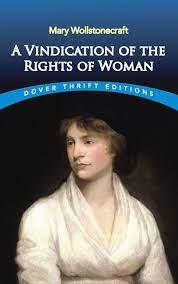
A Vindication Of The Rights Of Women by Mary Wollstonecraft.

Mary Wollstonecraft’s feminist essay A Vindication of the Rights of Women was published in 1792 as a book-length feminist essay. A Vindication of Women’s Rights campaigned for female equality, especially in the field of education. Wollstonecraft criticised the cultivation of conventional feminine qualities like as submission and service, arguing that women who were not well-educated could not be excellent mothers, spouses, or household administrators. She said that women were supposed to devote too much time to maintaining their delicate look and soft attitude, forsaking brains for beauty and transforming themselves into flower-like playthings for males.

Wollstonecraft addressed themes such as the need of educating women equally, treating women with respect, and giving women with the appropriate training to be excellent spouses and mothers, as well as educated companions for their husbands, in thirteen chapters.Women spend many of their initial years of life accumulating a scattering of achievements, while body and mental strength are sacrificed to libertine ideas of beauty… Can they run a family with prudence or look after the babies they bring into the world?How could women educate, raise children, and maintain a household if they were only concerned with their personal looks and minor achievements such as speaking French fluently, playing the piano, and sketching, Wollstonecraft argued? Such achievements made a woman appealing to a man as a source of entertainment, but not as an equal partner.Although Wollstonecraft recognised that raising a family would be the primary responsibility of many women at the time, she insisted that a husband and wife whose relationship was founded on reason and equality would parent happier and more well-rounded children than families governed by strict discipline and parental inequality. To that aim, she suggested a national education system in which boys and girls would be taught together and all classes would have access to education. Wollstonecraft warned against false sensibility, while writing during the time of Romanticism, a movement renowned for emphasising sensibility/feeling above sense/rational reasoning.

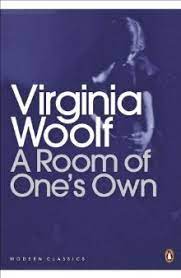
A Room of One’s Own by Virginia Woolf.

Virginia Woolf’s A Room of One’s Own is a long essay. The article, which was first published on October 24, 1929, was based on a series of lectures she gave in October 1928 at Newnham College and Girton College, two women’s institutions at Cambridge University. Despite the fact that this long essay uses a fictitious narrator and narrative to investigate women as authors and characters in fiction, the manuscript for the Women and Fiction lecture series, and therefore the essay, is deemed nonfiction. The essay is regarded as a feminist text, and it is notable for its argument for a literal and figurative place for women authors in a patriarchal literary world.

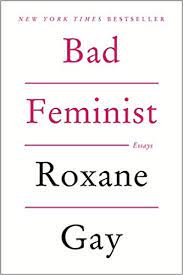
Bad Feminist – Roxane Gay.

How could women educate, raise children, and maintain a household if they were only concerned with their personal looks and minor achievements such as speaking French fluently, playing the piano, and sketching, Wollstonecraft argued? Such achievements made a woman appealing to a man as a source of entertainment, but not as an equal partner.

Sister Outsider by Audre Lorde

Audre Lorde’s literary and philosophical personae are brought to life in this collection of fifteen articles published between 1976 and 1984. These articles delve into and illustrate Lorde’s intellectual growth, as well as her long-standing worries about how to increase empowerment among minority women authors and the critical need to define difference—difference in terms of sex, ethnicity, and economic position. Sister Outsider is a title taken from her poetry book The Black Unicorn (1978). Sister Outsider’s poetry and articles emphasise Lorde’s recurring subject of continuity, notably the geographical and intellectual relationship.

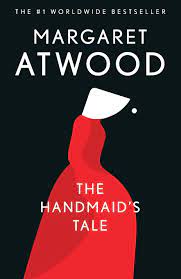
The Handmaid’s Tale by Margaret Atwood

In the Republic of Gilead, Offred is a Handmaid. She is permitted to leave the Commander and his wife’s house once a day to stroll to the local grocery market, where the signs are now images rather than words because women are no longer allowed to read. Because, in an era of diminishing births, Offred and the other Handmaids are valued only if their ovaries are viable, she must lie on her back once a month and hope that the Commander gets her pregnant. Offred recalls the years when she lived with and made love to her husband, Luke; when she played with and protected her daughter; and when she had a career, her own money, and knowledge. But that’s all gone now.

Top 3 Hindu-Muslim Unity Advertisements

Advertisements have the potential to change human thoughts, behaviour and actions. They can do a lot more than just promoting brands. Through visual and auditory modes, advertisements have the competency to bring about a societal change and provoke a positive impact on people. Readers can have a glance at such impactful advertisements through the examples listed out in this blog.

Red Label (Tea Brand)

A man visits a store to place an order for a Ganesh idol (A Hindu God). The shopkeeper exhibits the different idols created by him to the man. While having a conversation with the buyer the shopkeeper also illustrates the meaning behind the different forms of the Ganesh idols. To the buyer, this shopkeeper seems to be a very knowledgeable man, who has much information about the Hindu worship and reverence. While conversing with the buyer, the shopkeeper puts on the Kufi (skullcap worn by Muslims). The Hindu buyer is taken aback after realising that the shopkeeper selling the Ganesh idols is a Muslim by religion. He attempts to cancel his order and go to his workplace. The Muslim shopkeeper offers him a cup of tea before leaving. The vendor explains him that , work is worship too, one need not compulsorily pray. The Muslim man was in fact worshipping God, by creating his idol. The buyer takes a sip of tea and plans to change his mind. He does not cancel his order and amiably buys the idol from that vendor on that day itself. The Brand, Red Label intends to portray that their product attempts to create harmonious relations between different religions.

Kaun Banega Crorepati (Reality Game Show)

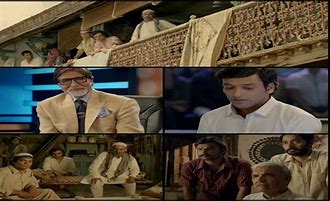
Six years ago, KBC came up with a phenomenal ad campaign featuring communal unity. In the ad it has been shown that, a Hindu boy had been selected for the episode. His family members were all set to bid him a goodbye as he was about to step out of his home, while his Muslim neighbors were watching him from the floor above. Just as the Hindu boy was about to step out, his neighbor sneezes. Sneezing while someone is about to leave from the doorstep is considered as a bad omen in the Hindu community. The Hindu boy’s family members feel agitated at the neighbor for sneezing and they misinterpret that, he had done it deliberately. Hours later, while facing a difficult question on the show, the Hindu participant decides to use the option of ‘Phone A Friend’ (According to the game’s format, this option is availed to all participants only once, whenever they wish to make use of it). He then rings up the same Muslim family and asks them the question i.e ‘What is the meaning of As-Salaam-Alaikum ?’ The man is overwhelmed by such a trustworthy gesture by the young boy. He answers his question accurately and assists him in winning the prize amount. This advertisement touched the hearts of many Indians. It indeed reflected the idea of communal harmony.

Surf Excel (Cloth Detergent Brand)

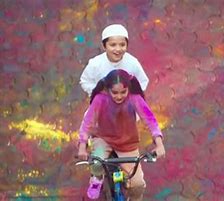
The advertisement broadcasted by this brand, intends to portray how Indian festivals are secular in nature. An individual from any community can enjoy a festivity according to his/her discretion. It is shown that, on the day of the Hindu festival of Holi (people celebrate this festival by applying colour on each other and splashing water with waterguns/waterballoons), a little boy wearing a white robe is hesitant to step out of his house. A girl of the same age as his, notices this and challenges her friends around, to smear all their colours on her. Her friends do accordingly, by throwing all the colour on her, from the floors above, as she waits down on her little bicycle. By doing so, she makes them use all their colour supplies on her and no colours are left out with them. Later, she offers to drop the boy to the place where he wants to go. It is then shown that, she drops him to the mosque, where he wanted to go to offer Namaaz (Islamic prayers). She also jests that, after he’s done with his prayers, the other kids will not leave him without including him in the merry festivities. He agrees to join them in the Holi celebrations after his prayers are done. The ad tagline said, “Rang Laaye Sang, Daag Acche Hai” (colours bind people together, such stains should be cherished). This advertisement depicts how mutual respect for each other’s religion can bring about unity. The principles of unity in diversity must be inculcated in children from their grassroot years, so that peace and harmony prevails in the society.

Advertisements can have a huge impact over the society, in terms of patriotism, unity, cohesiveness and peace-keeping. Various brands are positioning their ad campaigns around the pivot of National Unity in today’s times as the audience nowadays is readily accepting things which were not accepted earlier. Brands thus, not only create a name in the market with their products but also with their ad campaigns promoting social values and messages.

International news flow after the end of colonialism


The mass media are seen today as playing a key role in enhancing globalization, facilitating culture exchange and multiple flows of information and image between countries through international news broadcasts, television programming, new technologies, film and music. If before the 1990’s mainstream media systems in most countries of the world were relatively national in scope, since then most communication media have become increasingly global, extending their reach beyond the nation-state to conquer audiences worldwide.

International flows of information have been largely
assisted by the development of global capitalism, new technologies and the increasing commercialisation of global television, which has occurred as a consequence of the deregulation policies adopted by various countries in Europe and the US in order to permit the proliferation of cable and satellite channels. Globalization theorists have discussed how the cultural dimension of globalization has exercised a profound impact on the whole globalization process.

The rapid expansion of global communications in the 21st century can be traced back to the mechanical advancements of technologies during the course of the 18th and 19th centuries, which started mainly with the invention of the telegraph in 1837, and included the growth in postal services, cross-border telephone and radio communications and the creation of a modern mass circulation press in Europe. It was however the evolution of technologies capable of transmitting messages via electromagnetic waves that marked a turning point in advancing the globalization of
communications.

The emergence of international news agencies in the 19th century, such as Reuters, paved the way for the beginnings of a global system of codification. Nonetheless, it was not until the 1960’s, with the launch of the first geo-stationary communication satellites, that communication by electromagnetic transmission became fully global, thus
making the globalization of communications a distinctive phenomena of the 20th century.

Key theories in international communications grew out of international relation studies. The “modernization” or development” theory in the area of communication research
emerged in the Cold War context and were largely preoccupied with the ways in which the media could help transform traditional societies to include them into the capitalism orbit. Among the key theorists in this tradition was Wilbur Schramm with his sponsored UNESCO work, Mass Media and national development – the role of information in the developing countries.

The idea was that international communication media could be used
as a tool to transfer the political-economic model of the West to the growing independent societies of the South. Schramm’s views was that the mass media could be used by elites to
raise the ambitions of the populations in developing countries, who would cease to be narrow-minded and conformist and would be active in their own self-development. The dependency theories the 1960’s and 1970’s were perceived as an alternative approach grounded in neo-Marxism, and which adopted a theoretical framework that saw
capitalism and inequality as a key perspective in understanding the impact of power relations on global communications. According to the argument, transnational corporations based in the North engaged in a web of interdependency with the economies of the South, setting the terms of global trade, dominating markets, production and labour.

Dependency theorists and Latin American scholars argued that these economic relations worked within an exploitative dependency model that promoted American capitalist mentality in developing countries (Mattelart, 1979). Development was thus shaped in a way that benefitted largely the developed nations, maintaining the peripheral countries in a continuous position of dependence. Latin American scholars stressed that it was Western
media companies that were reaping the rewards of the modernization programmes, and that they were actually reaching out to the South in order to conquer new markets for their
products.

Globalization is thus seen as having consequences for the distribution of power and wealth both within and between countries. Cultural imperialism theories of the 1970’s and 1980’s highlighted how the media in developing countries imported foreign news, cultural and television genre formats (i.e. talk-shows, sitcoms) and also values of capitalist consumerism and individualism. The core critique of the imperialism thesis was that the
developing countries had established a relationship of subordination.

Written by : Ananya Kaushal

Cryptocurrency simplified

In the simplest of terms cryptocurrency is a digital currency used to make transactions. It is currently not being used to make transactions but can be potentially used to do so. Before jumping to cryptocurrency let’s clear our basics.

Understanding currency 

Think of cryptocurrency as any other currency, we use currency to fulfil our needs and we exchange currency because we are aware that we will be provided with goods and services in return. Now, this currency is not limited to just notes or coins but can be anything. Like in olden times barter system existed where people would exchange goods and services for other goods and services in return but this concept had a lot of limitations so currency started evolving. We moved to commodity money i.e., gold, silver then to metal money then paper money then plastic money(cards) and now we are moving towards crypto. These currencies evolved because the previous methods of transaction had their own drawbacks.

Like any other method, the method of transaction that the world operates on now also has drawbacks like centralisation, elasticity, the ease with which it can be issued to name a few.

Need for Crypto

Now, this is where cryptocurrency comes into play. It is a virtual form of currency that uses blockchain technology. Blockchain technology is a virtual decentralised ledger that keeps a record of transactions. Cryptocurrency is secured by cryptography which is a secure communication technique.

Now, keep in mind that it does not physically exist, one can’t hold up a bitcoin because it is based on a network distributed across computers. So you don’t have to carry it around, kind of like net banking or online transactions but online transactions are made through banks and can be monitored by any authority. Now, imagine you want to transfer your friends 5 bitcoins. You can do it without a bank or an intermediary interfering. It can be done anonymously with your privacy being protected. And since no authority controls it, that currency cannot be altered either. 

With paper currency, the government can print as much money as they want because they control it and printing a lot of money causes inflation but that is not the case with cryptocurrency because  only a limited number exists. 

For example, only 21 million bitcoins exist on the web. Bitcoin is a form of cryptocurrency created allegedly by a Japanese fellow Satoshi Nakamoto. Now , this could be a pseudonym or perhaps more than one person was involved in the development of said currency. However, for the most part that person’s identity still remains anonymous.  

Now,  this number of 21 million cannot be changed, it is constant. There will always exist 21 million bitcoins and can be found out through miing. This is done by solving puzzles. The more puzzles you solve, the more bitcoin you get. As more and more bitcoins are mined, the puzzles get tougher. These bitcoins are not easy to find and it is definitely not easy to solve the puzzles. Perhaps, that is why Bitcoin is so valuable. 

It is possible that somewhere in the not so far future we would not be using paper currency but crypto. For now, cryptocurrency is highly volatile and is used only for investing money.

K- show recommendation

It’s usually called ‘drama’ . Korean shows have recently been gaining popularity. The new show ‘Squid game’  has instantly trending worldwide.

K-show makes up to  2.02 bn revenue for South Korea.

They have also given nations incredible soft power over people around the world. They can influence trends and cultures or sometimes lifestyle too. It also proved a boomer of business to other sectors in Korea. Here are a few top shows that might interest you.

1)Mr. Queen: One of most hilarious drama in the newest realise. It has a story of how a woman in the history of Korea suffered in a royal Household. It also has a light romance side.

2)Vincenzo: It’s old mafia styled. A italian consilerr comes back to Korea and finds his good side working for a lawyer. It is available on Netflix.

This series is a must watch for beginners.

3)Crash landing on you: it’s a romantic drama with sorrowful twists. It shows the relationship and difference between North Korea and South Korea in the present day. If you are into romance drama it is best k-shiw can do for you.

4)Goblin: Show made it 2016. It is a cult hit in Korean shows. It set a benchmark for supernatural genre show. It feels story of a supernatural being looking for a wife to end his life. It’s a sorrowful romance that will make you cry till the end.

About that artist- Claude Monet

Claude Monet is considered as the initiator of impressionism along with Pierre-Auguste Renoir, Alfred Sisley, and Frédéric Bazille, who he met while studying under Charles Gleyre.

Early Life

Oscar Claude Monet was a French painter born in 1840 in France. Monet was the eldest kid in his family. He grew up around the coast, which plays a significant role in some of his works. In 1851, Monet got into  Le Havre secondary school of the arts. In his early years Monet started to show inclination towards art and would draw caricatures, which brought him initial success at the age of 15.

In 1858, he met Eugène Boudin through whom he was introduced to multiple techniques namely “en plein air” or painting in open air which he would go on to use in most of his paintings throughout his painting career .

Introduction to Art 

In 1858, Monet started studying in Paris where he was introduced to artists like  Charles Daubigny and Constant Troyon. Monet was called for military service under  Chasseurs d’Afrique

In Algeria. Every experience, every scene for an artist has the potential to serve as an inspiration for an artist and his time in Algeria did exactly that. The colors of Northern Africa were an inspiration for his later research. He was forced to return to Le Havre in 1862 due to illness. He met Johan Barthold Jongkind, who also played an important role and shaped his artistic perception along with Boudin.

In 1867 Monet had a child whom he named Jean with Camille Pissarro. 

A lot of his success comes from the work that he produced between 1865-75. One of those works include Le Déjeuner sur l’herbe which he finished in 1866 which shows a group of well dressed people enjoying a picnic. His paintings from this period portrayed very trivial, domestic scenes.

Some of his paintings from this period include The Beach at Sainte-Adresse(1867), The Woman in the Green Dress (1866), Portrait of Claude Monet, Carolus-Duran (1867).

In 1972, Monet came across Japanese paintings  which influenced his later paintings. Since then, his paintings revolved around nature. Monet is most known for his series of motifs that he started creating in the 1880s, these were impressionist paintings.

Later Years 

In 1883, Monet moved to Giverny with his family. Here he started working on a series of paintings mostly inspired by his surroundings. These paintings represented the River Thames, Charing Cross. During this time Monet frequently traveled to Lomdon and Venice. In 1893, Monet started to assemble a water lily garden and soon this garden became a subject of his later paintings. Most of his work in the 1900s remained unknown to a large population till the mid 20th century. In the later years of his life, his eyesight began to deteriorate despite that he did not stop painting, he painted almost all his life. In 1923, he went through a cataract surgery which improved his sense of sight a bit and went back to some of his older unfinished paintings. In 1926, Monet passed away. Hw spent most of his later years grieving for his friends who he had lost in World War I and perhaps this grief resulted in a series he called Weeping Willow which is regarded as one of his most beautiful series that he painted  

Are perpetual motion machines possible or not? Free energy?

Most of us might have had this idea, that magnets attract each other in opposite poles, so why can’t we use this to create free energy. Like placing a magnet or a metal in a car and attach the other magnet with a rod or something and place it in front of the car that keeps them attract each other. With this idea, we can move the car without any energy, forever. A perpetual motion machine is a device that is supposed to work indefinitely without any external energy source. Imagine a windmill that produced the breeze it needed to keep rotating or a light bulb whose glow provided its own electricity. These devices have captured many inventers’ imaginations because they could transform our relationship with energy. It sounds cool right? But there is only one problem, it won’t work.

Bhaskara’s wheel -The oldest perpetual motion machine

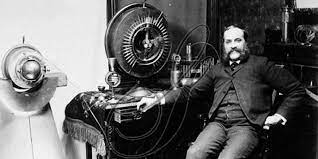
In countless instances in history, people have claimed that they have made a perpetual motion machine. Around 1159 A.D. a mathematician called Bhaskara the learned sketched a design for a wheel containing curved reservoirs of mercury. He reasoned that as the wheels spun, the mercury would flow to the bottom of each reservoir, leaving one side of the wheel perpetually heavier than the other. The imbalance would keep the wheel turning forever. Bhaskara’s drawing was one of the earliest designs for a perpetual motion machine. And more people have claimed that they made a perpetual motion machine, like Zimara’s self blowing windmill in the1500s, the capillary bowl where capillary action forces the water upwards, the oxford electric bell, which takes back and forth due to charge repulsion, and so on. In fact the US patent office stopped granting patents for perpetual motion machines without a working prototype.

Why perpetual motion machines won’t work?

Ideas of perpetual motion machine all violate one or more fundamental laws of thermodynamics. These laws describe the relationship between different forms of energy. The first law of thermodynamics says that “Energy neither be created nor be destroyed”. You can’t get out more energy than you put in. that rules out a useful perpetual motion machine right away because a machine could only ever produce as much as it consumed. There wouldn’t be any leftover energy to power a car or charge a phone. But what if you just wanted the machine to keep itself moving? Let’s take the Bhaskara’s wheel, the moving parts that make one side of the wheel heavier also shift its center of mass downward below the axle. With a low center of mass, the wheel just swings back and forth like a pendulum and will stop. In the 17th century, Robert Boyle came up with an idea for a self watering pot. He theorized that capillary action, the attraction between liquids and surfaces that pulls water through thin tubes, might keep the water cycling around the bowl. But if the capillary action is strong enough to overcome gravity and draw the water up, it would also prevent it from falling back into the bowl.

John Keely’s perpetual motion machine

For each of these machines to keep moving, they had to create some extra energy to nudge the system past its stopping point, breaking the first law of thermodynamics. There are ones that seems to keep moving, but in reality, they invariably turn out to be drawing energy from some external source. Even if engineers could design a machine that didn’t violate the first law of thermodynamics, it still wouldn’t work in the real world because of the second law. The second law of thermodynamics tells us that energy tends to spread out through processes like friction, heating. Any real machine would have moving parts or interactions with air or liquid molecules that would generate tiny amount of friction and heat, even in a vacuum. That heat is energy escaping, and it would keep leeching out, reducing the energy available to move the system itself until the machine inevitably stopped. Like I said about the idea of a car with magnets, the magnets in it won’t able to move the car. Even if the magnet is so powerful to move the car, the friction came into action and will eventually stops the car. So these two laws of thermodynamics will destroy every idea for perpetual motion. With these, we can conclude that perpetual motion machines are impossible.

  YOU  CAN’T  GET  SOMETHING  FOR  NOTHING.

IMPORTANT BOOKS TO READ IN YOUR 20’S

Reading is good for you because it improves your focus, memory, empathy, and communication skills. It can reduce stress, improve your mental health, and help you live longer. Reading also allows you to learn new things to help you succeed in your work and relationships.Reading has been proven to keep our minds young, healthy and sharp, with studies showing that reading can even help prevent alzheimer’s disease. Reading also develops the imagination and allows us to dream and think in ways that we would have never been able to before.

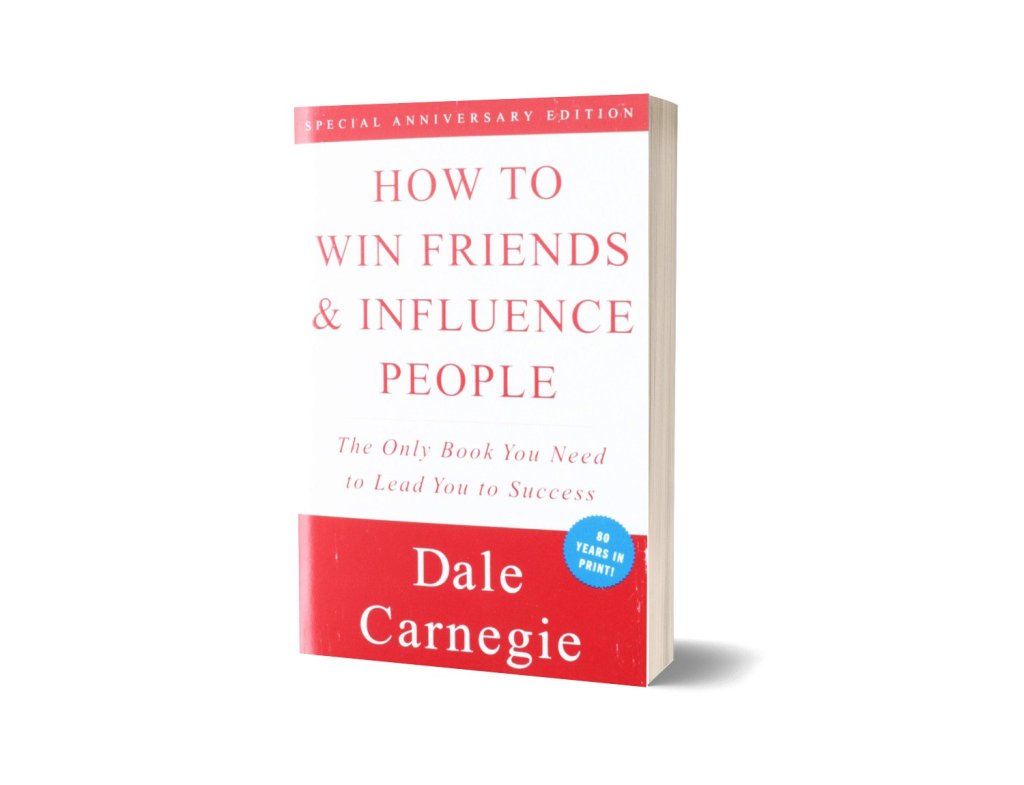
1) How to win friends and influence the people

How to Win Friends and Influence People is a self-help book written by Dale Carnegie, published in 1936. Over 30 million copies have been sold worldwide, making it one of the best-selling books of all time. Carnegie had been conducting business education courses in New York since 1912. The book is very easy to read and provides great examples and stories which makes it 10x easier to relate to and remember. I highly recommend this book, it has helped me improve certain aspects of my relationships and interactions with others.The core idea is that you can change other people’s behavior simply by changing your own. It teaches you the principles to better understand people, become a more likable person, improve relationships, win others over, and influence behavior through leadership.https://en.m.wikipedia.org/wiki/How_to_Win_Friends_and_Influence_People

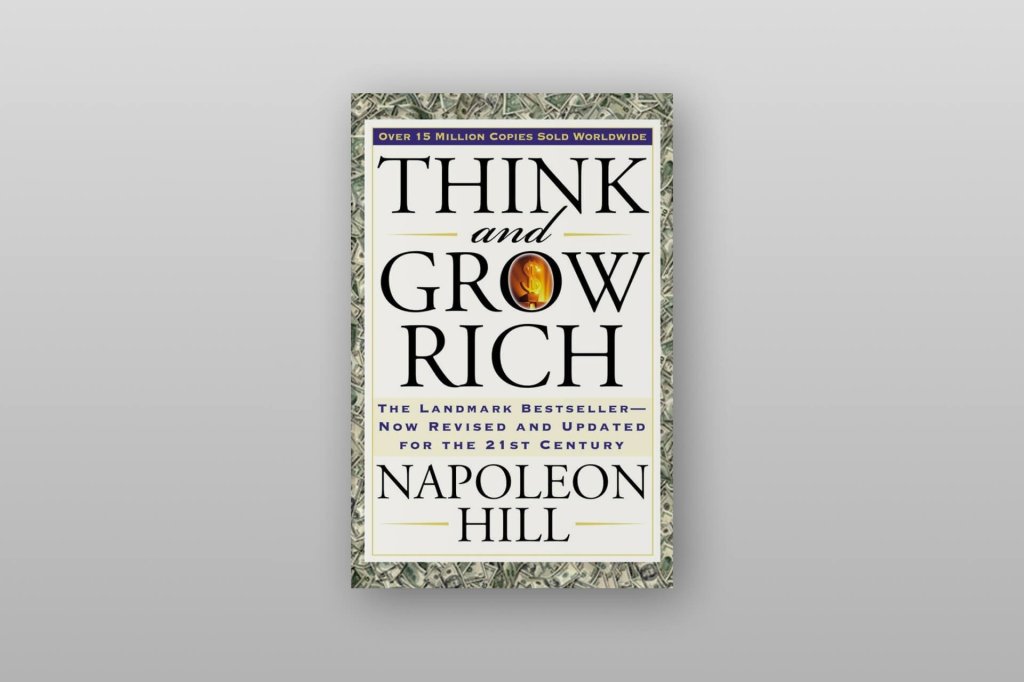
2) Think and Grow Rich

Think and Grow Rich was written by Napoleon Hill in 1937 and promoted as a personal development and self-improvement book. He claimed to be inspired by a suggestion from business magnate and later-philanthropist Andrew Carnegie. https://en.m.wikipedia.org/wiki/Think_and_Grow_Rich The “secret” of Think and Grow Rich is to place yourself within the overall scheme of creation, obeying natural laws that inevitably and invariably beget growth, expansion, renewal, and generativity.

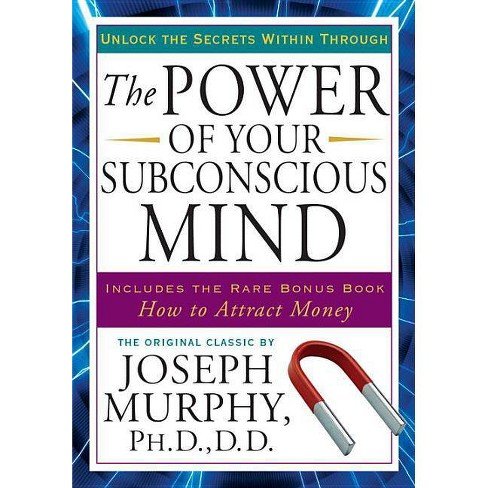
3) The Power of your subconscious mind

The Power of Your Subconscious Mind has been a bestseller since its first publication in 1963, selling many millions of copies since its original publication. It is one of the most brilliant and beloved spiritual self-help works of all time which can help you heal yourself, banish your fears, sleep better, enjoy better relationships and just feel happier. The techniques are simple and results come quickly. You can improve your relationships, your finances, your physical well-being. Your subconscious mind is a powerful force to be reckoned with. It makes up around 95% of your brain power and handles everything your body needs to function properly, from eating and breathing to digesting and making memories.

4) The Richest Man in Babylon

The Richest Man in Babylon is a 1926 book by George S. Clason that dispenses financial advice through a collection of parables set 4,000 years ago in ancient Babylon. The book remains in print almost a century after the parables were originally published, and is regarded as a classic of personal financial advice.This point is actually the crux of the book: the classic principle of paying yourself first. Clason recommends saving at least 10% of all income earned. Even in his example of those who are paying off debt, he still advocates setting aside this one-tenth. https://en.m.wikipedia.org/wiki/The_Richest_Man_in_Babylon#:~:text=The%20Richest%20Man%20in%20Babylon%20is%20a%201926%20book%20by,classic%20of%20personal%20financial%20advice.

5) Atomic Habits

An atomic habit is a regular practice or routine that is not only small and easy to do but is also the source of incredible power; a component of the system of compound growth. Bad habits repeat themselves again and again not because you don’t want to change, but because you have the wrong system for change. While it is well worth reading cover-to-cover as it is chock full of useful and actionable information about habits, from how and why we form them to how to break them and make them, I’ve decided to highlight my top takeaways and share with you the lessons I felt were the most profound. https://medium.com/tom-thoughts/i-finally-read-atomic-habits-here-are-my-top-5-takeaways-57dd6f904ab4

New Zealand Reports Biggest Rise In COVID-19 Cases In Six Weeks

Some 1.7 million people in Auckland are under strict stay-home orders until Monday as officials look to stamp out the highly infectious Delta outbreak, the first major spate of community cases in the country since early in the pandemic.

New Zealand reported on Thursday its biggest rise in COVID-19 infections in six weeks, with all cases detected in Auckland, raising prospects of a further extension of lockdown restrictions in the country’s largest city beyond next week.

Some 1.7 million people in Auckland are under strict stay-home orders until Monday as officials look to stamp out the highly infectious Delta outbreak, the first major spate of community cases in the country since early in the pandemic.

Deputy Prime Minister Grant Robertson said the surge in case numbers in Auckland was not unexpected “but they are rising more quickly,” and blamed illegal home gatherings for the spike.

“Now is not the time for complacency,” Robertson said during a media conference in Wellington, urging residents in Auckland to strictly follow the level-three rules, under which most people are required to stay at home unless they have urgent reasons to go out.

A total of 71 new local cases were reported in the country, all detected in Auckland, up from 55 a day earlier.

Today’s new case numbers are sobering but not unexpected because of where we are in the outbreak,” Director of Public Health Caroline McElnay said.

About 2.49 million New Zealanders have been fully vaccinated, or about 59% of the eligible population, with officials promising to end lockdowns once 90% are vaccinated. Officials are looking to administer a record 100,000 doses in a single day during a mass immunisation drive on Saturday.

Communal Harmony

By – Supriya

“A house divided against itself cannot stand together” is an old saying and it holds true in the present context of increasing communal disharmony in the society as these dividing forces weaken and mutilate the society.The culture , civilization and tradition of India is approximately 12000 years old. The spirit of tolerance and assimilation has made it possible for our civilization to survive the test of time. But with passage of time, the growing attachment to one’s own ethnic, religious, racial or cultural group rather than being a part of a wider circle of the entire social milieu, has posed one of the gravest problems of modern times. Somehow with the increase in science and technology, the man who should have opened up to assimilation and integration has receded into his own cells and has become more conservative and protective towards his own culture and community. Fear, suspicion and insecurity towards other communities have given rise to hatred , which acts as fuel feeding the flame of communalism. Communal harmony can be achieved by making the people realise the significance  of oneness. People should be awakened to the fact that the differences of ethnic and religious origins have no foundations at all and these feelings should be discouraged if a nation has to survive , and on a larger scale if humanity has to survive. Roses alone cannot make a garden . It is the variety of different coloured and perfumed flowers that lends beauty to a garden. Yet, all flowers have their own essence. Fostering the spirit of brotherhood and mutual trust is the most challenging task that our country has to accomplish . We have to make every possible effort to eradicate vestiges of communal hatred and prejudice . One way of accomplishing this huge task in India is by promoting scientific temperament and smoothing the cobwebs of caste and religious prejudices. We also need to encourage the educated strata to continually participate in the work of social integration by educating the masses. It is the illiterate masses that fall an easy victims to the anti – social forces as they are gullible and in turn render the entire society vulnerable . India has had a long and proud history of mutual co – operation and trust . People belonging to various ethnic groups, races , religions, creed , cultures have come and settled on this land and since centuries have made it their home. But the divide and rule policy that has taken its roots deeper than what the colonial masters could have imagined , shows its predatory signs time and again.These seeds of communal divide, sown to meet short term selfish political ends , are now deep – rooted and threatening to uproot the century – old harmony and unity of the country. This hatred was at its worst during the I’ll – fated partition of the country. The articulation of the two – nation theory and the creation of the state of Pakistan implied that the enmity between the two communities was so great that it was virtually impossible for them to live together in peace as the same nation. Even today India’s fragile peace is shattered by a communal riot anytime. During the British rule, riots were triggered to either district attention from the growing freedom movement, or else to dilute and weaken the unity of Hindus and Muslims who were fighting jointly against the British. In contrast, Hindu-Muslim unity has always been one of the essential pillars of any progressive national movement. India’s valiant attempt to build a secular polity in a desperately impoverished nation was a step of profound importance , and key to the rehabilitation of the Indian people from two centuries of bondage to an exploitative alien power. But the task of reconstruction has not been easy at all , and from time to time the unity of the Indian people has been challenged by the anti – social and anti – secular elements of the society who feel their purpose is defeated in the face of growing unity and understanding among people of different communities and cultures; hence they try to instigate the hatred of a common man to serve their own selfish and ulterior motives.

The recent genocide of Gujarat , the anti- sikh campaigns during the mid -80s , the Mumbai Riots, the Ayodhya episode, the evaluation of Kashmiri Pandits, the attacks on the pilgrims on their way to pilgrimage are all blots on the secular fabric of the country. The nation should take lessons from its past and pledge not to let the domen of communal clash ever rise again. We, as responsible citizens, should continuously and ferociously guard our great secular heritage. Communal differences should be nipped in the bud itself and not be allowed to rise and flourish . The children should be taught to appreciate the diversity of the country. They should be taught to learn divergent cultures and ways of living. Religious snobbery, fanaticism and conservation should be discouraged and scorned at. One cannot and should not make a sweeping judgement about India’s secular nature just by browsing through a few shameful incidents of hatred, which are registered on the pages of history. Yet, one cannot ignore that it is during such times that the secular minded citizens of the country have joined hands together to fight against the forces of dissension. Although a handful of anti – social elements try to create an atmosphere of turmoil, turbulence and fear, yet time and again, the entire nation has risen against those handful to guard and protect the peace and harmony of the country. Moreover, a few power hungry political parties, sects and communities for their vested interests try to use diversity as a weapon to maintain their status – quo. Their greed makes them so short – sighted that they fail to see that they are in turn digging their own graves.

The road to peace and harmony can never be smooth. Every nation has had its share of violence in order to create a society where all can have equal rights and can live with respect and dignity. Who can forget the bloody civil war of America, the division of Germany and Korea, the Bolshevik Revolution, the violence after the French revolution, the prevailing disturbances in the Middle East , Israel – Palestine problem etc — the list is endless and the instances bloodier and more violent than the other.
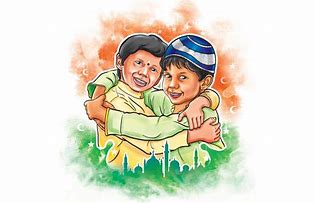
India has emerged as a stronger nation every time communal forces have tried to test its secular foundations. One cannot sit back and relax at such times rather one has to work persistently against such forces that pose danger to the idea of a united nation. This cannot happen by the waving a magical wand. It is we, the people of the nation, who have to rise above these forces of dissent and division , so that India becomes a nation where religion of humanity is superior to every other religion. According to the census Data 2001, India is the home of
80.5% Hindus, 13.4% Muslims, 2.3% Christianity , 1.9% Sikhs,0.8% Buddhists, 0.4% Jains , and 0.7% persons of other religions are the other major religions followed by the people of India. However, India being the largest democracy in the world with a civilization more than five thousand years old boasts of multiple cultural origins. Despite multiple religious, linguistic , cultural , regional and caste identities , Modern India presents a picture of unity in diversity where people of different faiths and beliefs live together in peace and harmony.

THANKYOU!

About that author- Oscar Wilde

Oscar Wilde, a writer and a dramatist, this name noticeably sits on the plays that he wrote in the last decade of his life. 

Oscar Fingal O’Flahertie Wills Wilde, was an Irish poet and a playwright born in 1854 in Dublin, Ireland. Oscar’s father, William Wilde was Ireland’s foremost ear and eye surgeon, his mother was an Irish poet who wrote under the pseudonym Speranza which is “hope” in Italian. Wilde was homeschooled till he was 9 and learnt German and French. Later he went to the  Portora Royal School with his brother Willie. At school, Wilde was exceptional, academically and was also popular among his peers for his funny stories.

After attending the Portora School Wilde got into Trinity College, Dublin through multiple scholarships and later to Magdalen College, Oxford.

During his time in Magdalen College he wrote a poem Ravenna which won the Newdigate Prize.

Here is an excerpt from Ravenna

“Taken from life where life and love were new,

He lies beneath God’s seamless veil of blue;

Tall lance-like reeds wave sadly o’er his head,

And oleanders bloom to deeper red,

Where his bright youth flowed crimson on the ground”

He was highly inspired by the likes of John Ruskin, a writer and philosopher of the Victorian era  and Walter Pater, who was a writer and an art critic, just like many others in his time. 

Wilde had established himself in the world of literature in the early 1880s.

In 1881, he published his first book “Poems” , which received quite jumbled reviews. A periodical called “Punch” was at the forefront of this criticism and made him out to be a caricature. 

After a few years of the release of “Poems’ ‘, he went to America to deliver a few lectures and was more accepted by the American readers.

Wilde got married in 1884, to Constance Lloyd and gave birth to two children Cyril and Vyvyan.

He became the editor of Woman’s World,  a fashion magazine in 1887. During his time as an editor he published The Happy Prince and Other Tales (1888), which is a collection of stories for children though it consists of some stories that do not pertain to the young readers. The Happy Prince and Other Tales received positive reviews overall and Wilde was even validated by Walter Pater, who wrote to him praising the book.

In 1889, after giving up the editorship at the Woman’s World Wilde started working on The Picture of Dorian Gray, which is a philosophical novel with witty dialogues, wilde was able to blend gothic themes with French decadence. Despite all his great, articulately written novels his success is attributed to his dramas. He wrote over 10 plays in his lifetime, some of the most famous being Lady Windermere’s Fan (1893), A Woman of No Importance (1893), An Ideal Husband (1899). These plays were all societal comedies, most of them but one Salomé , which offended a lot of people for it’s violent acts and the representation of biblical characters.

After the essay “The Decay of Lying” was published in 1889 , Wilde was accused of indulging in sodomy and was found guilty 4 years later. He was released in 1897, and had gone bankrupt. A year after his release, he died due to acute meningitis followed by an ear infection.