About that author- Emily Dickinson

One of the most prominent 19th century poet, who sharpened her skill with self reflection and seclusion and made such a huge impact in literature

Emily Elizabeth Dickinson born in 1830, in Amherst, Massachusetts, U.S. her father Edward Dickinson was a Whig lawyer and her mother was a docile housekeeper. Her parents were loving but strict with their 3 children. So Emily and her siblings Austin and Lavinia got closer. The 2 sisters never got married and stayed at home.

Emily was a well behaved, docile little girl just like anyone would expect a 19th century girl to be like. All the siblings went to the same school where Emily excelled academically and was particularly good in music and composition and she also played the piano. 

Emily’s family was highly religious and she grew up with religious faith all around her household and it inspired some of her work as well. Contrary to her family’s beliefs, Emily herself was not particularly religious and was the only member from her family who did not join Amherst’s First Congregational Church.

Dickinson was introduced to the works of  William Wordsworth,  Ralph Waldo Emerson by one of her father’s friends Benjamin Franklin Newton, who she also talks about in one of her poems.

It was during her late teens when Dickinson started writing poetry consistently. And later her poems took the form of letters assorted with a little bit of humor which she sent to her brother and her friends, one of whom was married to Austin. She was especially close with Susan Gilbert, her brother’s wife and sent more than 300 letters to her. Susan was very supportive of Dickinson’s work and was a very dear friend.

Her poems also possessed a sense of alienation and seclusion as she faced loss of friends in her life. 

As time passed Emily withdrew to herself and became isolated from the outside world. This was because of her mother’s illness and someone had to stay with her at all times. During this time she found comfort in reading and writing. In 1858, she started rewriting her previously written poems. Between 1858 and 1865 she wrote around 800 poems, which no one was aware of until after her death. These are the works that Dickinson is most famous for.

Dickinson’s work possessed a certain melancholy to it, the kind that can also be seen in Sylvia Plath’s work, which shows that Plath was inspired by Dickinson. Her poems mostly revolved around death, which for some weird reason she seemed aggressive, self reflection and immortality. Her poems have been punctuated with dashes that critics are still not sure as to why they were used by the poet.

The last few years of Emily’s life were extremely tough for the Dickinsons; one death followed another. In an 1884 poem she wrote “The Dyings have been too deep for me, and before I could raise my Heart from one, another has come.” In 1886 she died, her physician gave the cause of her death as Bright’s disease. Before her death she asked her sister Lavinia to burn all her poems. Lavinia found 1800 poems after her sister’s death. Her first volume of poems was published four years after her death and Thomas H. Johnson published Dickinson’s Complete Poems in 1955.   

The Transit

Moving out, has to be a difficult choice especially if you live in a small town, moving to a big, metropolitan city could be one hell of ride. These metropolises can have a toll on the new, moved in person’s mind as they entail the feeling of racing through the life for a goal so far away to reach. The kid of 16-17 that moves out having a different perspective for everything that came across them changes as soon as that teenager finds himself/herself walking on the streets of a totally unknown place all alone. The innocence and purity that small town had taught to a person is soon discovered to be a fragile characteristic for a person who needs to compete in the rat race with other strong headed people. This rat race robs the person’s inner capability that was enlightening enough to him/her but not for others. The difference in lifestyle varies on whole new level and adjusting to that can be a sport in itself.

The Problems

Whenever a person from a small town moves into a different city there are a number of problems that they have to face and difficulties that they have to go through. These problems as some might feel hinder the development as compared to the natives. For a person moving into a new city, leaving behind the comfort home, living away from their beloved has to be a different sport altogether. They are on their own for at least three years, adjusting to the situations and circumstances all alone. The fear of uncertainty and aloofness stares right into the eyes of the migrated. The difference in culture, lifestyle, sometimes language and ethnicity is something that may further make the migrated anxious the fear of unknown. Further, for someone coming from a middle class of a small town shifting to a big city might become a financial constraint, a thing that definitely affects their overall development and growth for what they actually shift or migrate. The most important issue that the migrated ones face is discrimination. They are treated with the stereotypes that have existed for forever now. The immigrants aren’t treated with equal respect and dignity sometimes because of the small town origin. Immigrants are offered low-paying jobs because of the thinking that the standard of education is not so up to the mark that they might fit in the top positions.

The Bright Side

Though all these problems might be prevalent in the big cities even today but there have been a change in attitude in past few years. Today, globalization has reduced all sorts of gaps and hence, the standard of living in small towns has come near close to that of big cities. The settlers in new cities are judged for their capabilities and talents rather than their original cities. Although financial constrain still poses a big problem for the immigrants but the promise of a better and bright future makes them take the risk and mostly succeed in it. The peace that they find at home and among the people they love still might be missing in the new city but they do get the peace that they always aspire for. The rat race they become part of unknowingly might not be as beneficial as they believe it to be but it could still open the door to the illuminated path which turns out to be their real passion and the better career.

Squid Game (2021)

Squid Game is a highly bingeable nine-episode show that can be described as a variation of the Hunger Games series (albeit better, less generic, and even more brutal). It is a dystopian flick that nobody wanted until everybody did—with this ruthless South Korean hit trending as #1 on Netflix. I can’t say that it is one of my all-time favorite shows, nor would I necessarily consider it to be “high art” per se. But I do recommend it. To me, it seems that there are two main types of popular television: the cheesy shows that consist mostly of instant gratification, and the anomalies that not only generate insane traffic but are also well-done. Moreover, the show features some scintillating social commentary on the rich vs. the poor. This—combined with equally striking action—renders a scrumptious blockbuster.


The pilot episode takes a while to draw viewers in, with some backstory that dragged at times. But once you’re in, you will remain on the edge of your seat. The central plot is as follows: 456 people (particularly people facing insurmountable debt) are lured into an elaborate game on a secret island with a prize of nearly $40 million. The rules are simple. 1. Contestants play children’s games. 2. There are six rounds, each containing its own game. 3. Each round, those who lose will be eliminated until only one winner emerges from the final round. The assumption is that losers will simply leave. Little did they know that “elimination” entails something far more nefarious: death, which they don’t discover until over 200 people are killed in cold blood. Another interesting facet is the guards. They too are moved around like cannon fodder by the elites who run this sick, elaborate spectacle.


Squid Game has plenty of redeeming factors. The quality of the acting, which I found too histrionic in the beginning, is ultimately believable. The screenwriting is as sharp as it is creative. The cinematography paints a surreal, colorful world that feels like the backdrop of a video game, all exaggerated shapes, sizes, and harsh edges. Also, the characters are compelling; you find yourself rooting for some to win triumphantly and others to fail dramatically. Many of them undergo enormous trauma and transformation, and the actors rise to the challenge of portraying believable emotions in an unbelievable setting. To be fair, this show will not go down in my head as a “classic,” but it was enough to lure me into devouring all nine episodes in less than 24 hours. Granted, Squid Game is too graphic for even some of you who tolerated the Hunger Games series. Otherwise, this is truly an immersive and stupendous experience with some crazy twists that will leave you shocked.

Rating: 10/10

Written by : Ananya Kaushal

How GST on Petrol, Diesel will bring down prices

The soaring prices of petrol and diesel has time and again highlighted the question of whether bringing it under the goods and services tax (GST) regime will prove beneficial for the consumers.
The much debated and speculated issue might finally come to a conclusion on Friday when the 45th GST Council meets in Lucknow.
For the first time in 20 months, the GST council will be conducting a physical meeting. After December 18, 2019, all the GST Council meetings were done in virtual mode.

“We are not saying that we should bring petrol and diesel under GST immediately, we are basically asking states to suggest a timeline,” a government source told TOI ahead of the crucial meeting of the GST Council on Friday.
When GST was introduced in July 2017, five commodities — crude oil, natural gas, petrol, diesel and aviation turbine fuel (ATF) — were kept out of the GST purview, considering the revenue dependence of the central and state governments on them.


As demand recovered, the spike in global oil prices pushed petrol and diesel prices to an all-time high, leading to demand for bringing it under GST.
Fuel prices have been hovering at record levels on account of 41 increases in its retail rates since April this year.
However, since the past 11 days there has been no revision in prices of petrol and diesel as oil marketing companies (OMCs) kept a tab on global oil prices.
Accordingly, in Delhi a litre of petrol costs Rs 101.19 and diesel costs Rs 88.62.
Similarly, price of petrol in Mumbai, Chennai and Kolkata stood unchanged at Rs 107.26, Rs 98.96, Rs 101.62 per litre, respectively.

Diesel price also remained unchanged. In Delhi, Mumbai, Chennai and Kolkata, the fuel was sold for Rs 88.62, Rs 96.19, Rs 93.26 and Rs 91.71 per litre respectively.

Prices are largely going to remain unchanged or get some relief by way of a cut in days ahead as global oil is expected to soften again.
Oil cartel Opec and its allies have agreed to gradually raise production levels that should prevent upward price movement.

Written by : Ananya Kaushal

Centre vs States On Coal Shortage Amid Fears Of Blackout Panic: 10 Points

Power Minister RK Singh said that the supply routinely drops during monsoon as the mines get flooded, but the demand remains high especially with the growing economy.

To the centre’s ‘All is well’ messaging over the coal situation in the country, several states have said that the crisis and concerns over power blackouts are real. Many Chief Ministers have written to PM Modi spotlighting the same.

Delhi Deputy Chief Minister Manish Sisodia has called out Power Minister RK Singh’s “sufficient” coal stock statement as “irresponsible”, adding the same thing was said during the oxygen shortage crisis in the capital during the COVID-19 second wave. “When we had an oxygen crisis, The coal situation is similar. We have a crisis today,” Mr Sisodia said.

A panic and been unnecessarily created about coal shortage and this is due to miscommunication from GAIL and Tata, Union Minister for Power RK Singh said. “We have sufficient power available… We are supplying power to the entire country. Whoever wants, give me a requisition and I will supply them,” he said.

The supply, Mr Singh said, routinely drops during monsoon as the mines get flooded, but the demand remains high especially with the growing economy.

The Bloody Tower – A Brief Account

Bhashwati's avatarTrack2Training

History

The Bloody Tower was one of the many towers that together constituted the Tower of London Complex. It was built in the early 1220s as part of the first wave of modifications of the Tower of London under the watchful gaze of King Henry III. The Tower was originally named Garden Tower because the upper storey opened on the parade ground which was formerly the Constable’s Garden. Notable people who suffered imprisonment and death include the Tudor Archbishop Cranmer, Bishops Ridley and Latimer, Protestant martyrs, a Lord Chancellor and Sir Walter Raleigh. Later on, the tower became synonymous with a gruesome murder that stained its legacy forever.

The Murder and noteworthy suspects 

The then thirteen-year-old Edward V and his brother, Richard Duke of York, were confined to the tower on the orders of their uncle, who was later crowned King Richard III. The mystery surrounding the tower continues to…

View original post 361 more words

The Journey of rocket science from 900 A.D till Now

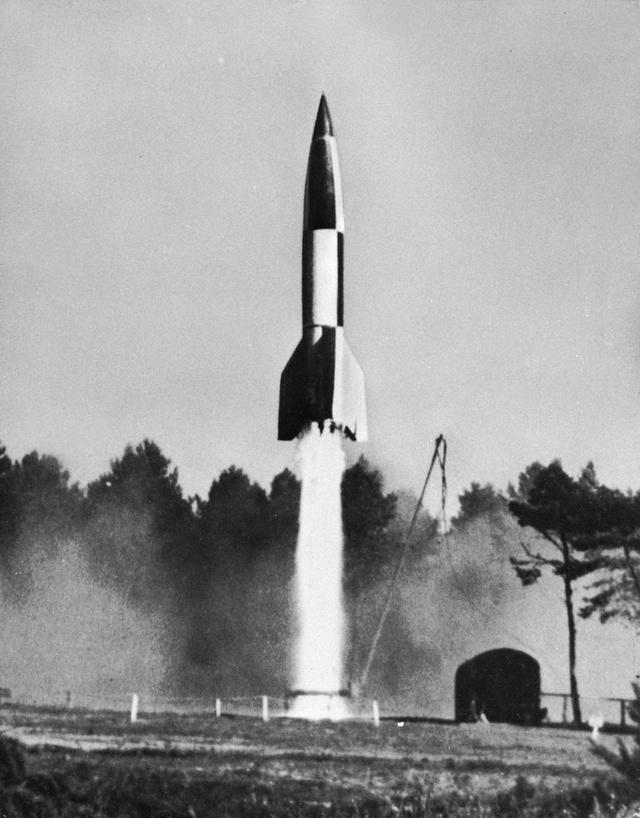
The history of rocketry dates back to around 900 C.E., but the use of rockets as highly destructive missiles able to carry large payloads of explosives was not feasible until the late 1930s. War has been the catalyst for many inventions, both benevolent and destructive. The ballistic missile is intriguing because it can be both of these things. It has made possible some of the greatest deeds mankind has ever achieved, and also some of the worst. German Walter Dornberger and his team began developing rockets in 1938, but it was not until 1944 that the first ballistic missile, the aggregate-4 or V-2 rocket, was ready for use. V-2 was used extensively by the Nazis at the end of World War II, primarily as an error weapon against civilian targets. They were powerful and imposing: 46 feet (14m) long, able to reach speeds of around 3,500 miles per hour (5600 kph) and deliver a warhead of around 2,200 pounds (1000 kg) at a range of 200 miles (320 km).

The German V-1 of World War II was the world’s first guided missile.

Ballistic missiles follow a ballistic flight path, determined by the brief initial powered phase of the missile’s flight. This is unlike guided missiles, such as cruise missiles, which are essentially unmanned airplanes packed with explosives. This meant that the early V-2 flew inaccurately, so they were of most use in attacking large, city sized targets such as London, Paris, and Antwerp. The Nazi ballistic missile program has had both a great and a terrible legacy. Ballistic missiles such as the V-2 were scaled up to produce intercontinental ballistic missiles with a variety of warheads, but also the craft that have carried people into space. Ballistic missiles may have led us to the point of self destruction, but to venture beyond our atmosphere.

The intercontinental ballistic missiles (ICBM)

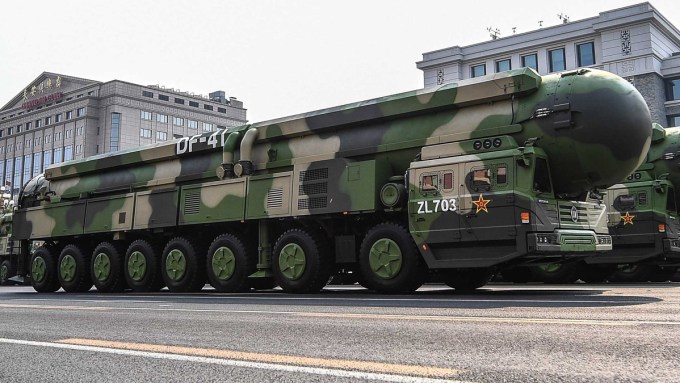
 Intercontinental ballistic missiles (ICBM) were first developed by the United States in 1959. It is a guided ballistic missile with a minimum range of 5500 kilometres primarily designed for nuclear weapon. United States, China, France, India, United Kingdom and North Korea are the only countries that have operational ICBMs. The ICBMs has a three stage booster, during the boost phase the rocket get the missile airborne, this phase last around 2 to 5 minutes until the ICBM has reached space. ICBMs have up to three rocket phases with each one ejected or discarded after it burns out.

The DF-41 is currently the most powerful Intercontinental Ballistic Missile (ICBM), developed in China

They use either liquid or solid propellant. The Liquid fuel rockets tend to burn longer in the boost phase than the solid propellant. The second phase of the ICBMs is the point where the rocket has reached space, here it continues along is ballistic trajectory. At this point the rocket will be travelling anywhere from 24,140 and 27,360 kilometres an hour. The final phase is the ICBM’s final separation and re- entry into earth’s atmosphere. The nose cone section carrying the warhead separates from the final rocket booster and drops back to earth. If the ICBM has rocket thrusters, those will be used at this point to orient itself towards the target. It is important that ICBMs have adequate heat shields to survive reentry, if not they burn up and fall apart. It’s important to note that although countries have ICBMs, none have ever been fired in anger against another country.

“This third day of October, 1942, is the first of a new era in transportation that of space travel.” –  Walter Dornberger

AFFLUENCE BRINGS FRIENDS ADVERSITIES PERUSAL THEM

Friends?

Being a social animal humans likely tend to have connection with like minded people & often that connection is termed as ‘Friendship’. In my opinion, I would rather say that it is incorrectly named as Friendship or to be precise people misinterpret temporary companionship as True Friendship & by the time an individual encounters the truth they’re left with nothing but grief and conceivably fails to put their trust in the same sort of relation again.

True Friends never have a face multiple faces.

Man is what essentially a self-seeker. So people seek the friendship of the one with of One with Affluence.They enjoy the phase in which they’re getting presents, then monetary help and a good many benefits. Another motive behind establishing such beneficial friendship is a feeding of good vanity to be seen in the company of the rich & the nobility. Such people court the favor of the wealthy for materialistic gains & desert them the moment they lose their riches. No true friend does that rather he stands by him through thick & thin. & the reason why the saying ” A FRIEND IN NEED IS A FRIEND INDEED” it is popularly related when we talk about True Friendship.

In today’s scenario the definition of Friendship has changed. A group of people hanging around, go on outings, partying are considered to be friends. It has all been about escaping reality & showing off privileges exercised from one another. The essence of True Friendship has been lost.

Life around us bears witness to the truth that it is never the same but it keeps on expanding on a different hierarchy. Some days bring peace while some have hardships in it & the true ones be it friends or any other form of relationship stays by our sides & those who abandon us in adversities were never meant to be.

Thus it is,that affluence brings friends but adversity perusal them.

The Foundation of Biochemistry

Molecular Anatomy Reveals Evolutionary Relatio

The naturalist Carolus Linnaeus of the XVIII Gin of different types from a common ancestor. Biochemical research in the 20th century revealed the molecular anatomy of cells of different species, the sequences of monomeric subunits, and the three-dimensional structures of individual nucleic acids and proteins. Biochemists today have an enormously rich and growing body of evidence with which to analyze evolutionary relationships and refine the theory of evolution. The sequence of the genome (the complete genetic makeup of an organism) is completely determined for many eubacteria and for some archaebacteria; for the eukaryotic microorganisms Saccharomyces cere visiae and Plasmodium sp .; for Arabidopsis thaliana and rice plants; and for the multicellular animals Caenorhabditis elegans (a roundworm), Drosophila melanogaster (the fruit fly), mice, rats and Homo sapi ens (Sie). This list is periodically expanded to include additional sequences. With such sequences in hand, detailed and quantitative comparisons among species can provide deep insight into the evolutionary process. Thus far, the molecular phylogeny derived from gene sequences is consistent with, but in many cases more precise than, the classical phylogeny based on macroscopic structures. Although organisms have continuously diverged at the level of gross anatomy, at the molecular level the basic unity of life is readily apparent; molecular structures and mechanisms are remarkably similar from the simplest to the most complex organisms. These similarities are most easily seen at the level of sequences, either the DNA se quences that encode proteins or the protein sequences themselves.

When two genes share readily detectable sequence similarities (nucleotide sequence in DNA or amino acid sequence in the proteins they encode), their sequences

are said to be homologous and the proteins they encode are homologs. If two homologous genes occur in the same species, they are said to be paralogous and their protein products are paralogs. Paralogous genes are presumed to have been derived by gene duplication fol lowed by gradual changes in the sequences of both copies. Typically, paralogous proteins are similar not only in sequence but also in three-dimensional structure, although they commonly have acquired different func tions during their evolution.

Two homologous genes (or proteins) found in dif ferent species are said to be orthologous, and their pro tein products are orthologs. Orthologs are commonly found to have the same function in both organisms, and when a newly sequenced gene in one species is found to be strongly orthologous with a gene in another, this gene is presumed to encode a protein with the same function in both species. By this means, the function of gene products can be deduced from the genomic se quence, without any biochemical characterization of the gene product. An annotated genome includes, in ad dition to the DNA sequence itself, a description of the likely function of each gene product, deduced from com parisons with other genomic sequences and established protein functions. In principle, by identifying the path ways (sets of enzymes) encoded in a genome, we can deduce from the genomic sequence alone the organism’s

There are three different spheres of life

All living organisms fall into one of the three great groups (kingdoms or domains) that define three branches of evolution from a common ancestor (Fig. 14). For biochemical reasons, two large groups of prokaryotes can be distinguished: archaebacteria (from the Greek arche, “ori gin”) and eubacteria (again from the Greek eu, “true”). Eubacteria inhabit soil, surface water, and the tissue of other living or decaying organisms. Most of the well-studied bacteria, including Escherichia coli) are Eu bacteria. The newly discovered archaebacteria are less biochemically characterized; most live in extreme environments, salty lakes, hot springs, highly acidic moors, and the depths of the ocean. Available evidence suggests that archaebacteria and eubacteria diverged early in evolution, forming two separate domains, sometimes referred to as archaea and bacteria. All the eukaryotic organisms that make up the third domain, eukarya, evolved from the same branch from which the archaea arose; Therefore, archaebacteria are more closely related to eukaryotes.

Within the domains of Archaea and Bacteria are sub groups distinguished by the habitats in which they live. In aerobic habitats with a plentiful supply of oxygen, some resident organisms derive energy from the trans fer of electrons from fuel molecules to oxygen. Other environments are anaerobic, virtually devoid of oxy gen, and microorganisms adapted to these environments. obtain energy by transferring electrons to nitrate (form ing N₂), sulfate (forming H₂S), or CO₂ (forming CH₂). Many organisms that have evolved in anaerobic envi ronments are obligate anaerobes: they die when ex posed to oxygen.

We can classify organisms according to how they obtain the energy and carbon they need for synthesiz ing cellular material. There are two broad categories based on energy sources: pho totrophs (Greek trophe, “nourishment”) trap and use sunlight, and chemotrophs derive their energy from oxidation of a fuel. All chemotrophs require a source of organic nutrients; ey cannot fix CO₂ into organic com pounds. The phototrophs can be further divided into those that can obtain all needed carbon from CO₂ (au totrophs) and those that require organic nutrients (heterotrophs). No chemotroph can get its carbon atoms exclusively from CO₂ (that is, no chemotrophs are autotrophs), but the chemotrophs may be further classified according to a different criterion: whether the fuels they oxidize are inorganic (lithotrophs) or or ganic (organotrophs).

Biochemistry describes in molecular terms the struc tures, mechanisms, and chemical processes shared by all organisms and provides organizing principles that underlie life in all its diverse forms, principles we refer to collectively as the molecular logic of life. Although biochemistry provides important insights and practical applications in medicine, agriculture, nutrition, and industry, its ultimate concern is with the wonder of life itself.

Most known organisms fall within one of these four broad categories-autotrophs or heterotrophs among the photosynthesizers, lithotrophs or organotrophs among the chemical oxidizers. The prokaryotes have several gen eral modes of obtaining carbon and energy. Escherichia coli, for example, is a chemoorganoheterotroph; it re quires organic compounds from its environment as fuel and as a source of carbon. Cyanobacteria are photo lithoautotrophs; they use sunlight as an energy source and convert CO₂ into biomolecules. We humans, like E. coli, are chemoorganoheterotrophs.

Cellular Foundations

The unity and diversity of organisms become apparent even at the cellular level. The smallest organisms consist of single cells and are microscopic. Larger, multicellular organisms contain many different types of cells, which vary in size, shape, and specialized function. Despite these obvious differences, all cells of the simplest and most complex organisms share certain fundamental properties, which can be seen at the biochemical level. Cells Are the Structural and Functional Units of All Living Organisms Cells of all kinds share certain structural features. The plasma membrane defines the periphery of the cell and separates its contents from the environment. It is made up of lipid and protein molecules that form a thin, tough, flexible hydrophobic barrier around the cell. The membrane is a barrier to the free passage of inorganic ions and most other charged or polar compounds. Transport proteins in the plasma membrane allow the passage of certain ions and molecules; Receptor proteins transmit signals into the cell; and membrane enzymes participate in several pathways. Since individual plasma membrane lipids and proteins are not covalently bound, the entire structure is remarkably flexible and allows for changes in cell size and shape. As a cell grows, newly formed lipid and protein molecules insert into its plasma membrane; Cell division creates two cells, each with its own membrane. This cell growth and division occurs without loss of membrane integrity.

The internal volume bounded by the plasma mem brane, the cytoplasm, is composed of an aqueous solution, the cytosol, and a variety of sus pended particles with specific functions. The cytosol is a highly concentrated solution containing enzymes and the RNA molecules that encode them; the components (amino acids and nucleotides) from which these macro molecules are assembled; hundreds of small organic molecules called metabolites, intermediates in biosyn thetic and degradative pathways; coenzymes, com pounds essential to many enzyme-catalyzed reactions; inorganic ions; and ribosomes, small particles (com posed of protein and RNA molecules) that are the sites of protein synthesis.

All cells have, for at least some part of their life, ei ther a nucleus or a nucleoid, in which the genomehe complete set of genes, composed of DNA-is stored and replicated. The nucleoid, in bacteria, is not sepa rated from the cytoplasm by a membrane; the nucleus, in higher organisms, consists of nuclear material en closed within a double membrane, the nuclear envelope. Cells with nuclear envelopes are called eukaryotes (Greek eu, “true,” and karyon, “nucleus”); those with out nuclear envelopes-bacterial cells are prokary otes (Greek pro, “before”).

Cellular Dimensions Are Limited by Oxygen Diffusion

Most cells are microscopic, invisible to the unaided eye. Animal and plant cells are typically 5 to 100 um in di ameter, and many bacteria are only 1 to 2 um long (see the inside back cover for information on units and their abbreviations). What limits the dimensions of a cell? The lower limit is probably set by the minimum number of each type of biomolecule required by the cell. The smallest cells, certain bacteria known as mycoplasmas, are 300 nm in diameter and have a volume of about 10-14 mL. A single bacterial ribosome is about 20 nm in its longest dimension, so a few ribosomes take up a sub stantial fraction of the volume in a mycoplasmal cell.

Methods for determining the Three- Dimensional structure of a protein

X-ray diffraction The spacing of atoms in a crystal lattice can be determined by measuring the locations and intensities of points created on photographic film by an X-ray beam of a particular wavelength after the beam has been diffracted. by the electrons of the atoms. For example, X-ray analysis of sodium chloride crystals shows that the Na and Cl ions are arranged in a simple cubic lattice. The distances between different types of atoms in complex organic molecules, including very large ones such as proteins, can also be analyzed using X-ray diffraction methods. However, the technique for analyzing crystals of complex molecules is much more complex than that of simple salt crystals. If the repeating pattern of the crystal is a protein-sized molecule, for example, the numerous atoms in the molecule result in thousands of diffraction points that need to be analyzed by computer. The process can be understood at an elementary level by considering how images are created in an optical microscope. Light from a point source is focused on an object. Light waves are scattered by the object and these scattered waves are recombined by a series of lenses to create a magnified image of the object. The smallest object whose structure can be determined with such a system, i.e. H. the resolution of the microscope is determined by the computer.

Wavelengths in the range of 400 to 700 nm Objects that are less than half the wavelength of the incident light cannot be resolved. To solve objects as small as proteins, we need to use X-rays with wavelengths in the range of 0.7 to 1.5 Å (0.07 to 0.15 nm). However, there are no lenses that can recombine X-rays into an image; instead, the pattern of the diffracted X-rays is collected directly and an image is reconstructed using mathematical techniques. The information content of X-ray crystallography depends on the degree of structural order of the sample. Some important structural parameters were obtained from the first studies of the diffraction patterns of fiber proteins, which are arranged in fairly regular arrangements in hair and wool. However, the ordered bundles made up of fiber proteins are not crystals, the molecules are lined up side by side, but not all are lined up in the same direction. The most detailed three-dimensional structural information of proteins requires a highly ordered protein crystal. Protein crystallization is an empirical science and the structures of many important proteins are not yet known simply because they have proven difficult to crystallize. Practitioners have compared making protein crystals to holding a stack of bowling balls together with cellophane tape. X-ray structure analysis is performed surgically in several steps. Once a crystal is obtained, it is placed in an X-ray beam between the X-ray source and a detector and a regular array of spots called reflection is generated. The spots are created by the diffracted x-ray beam, and each atom in a molecule makes a contribution to each spot. An electron-density map of the protein is reconstructed from the overall diffraction pattern of spots by using a mathematical technique called a Fourier transform. In effect, the computer acts as a “computational lens.” A model for the structure is then built that is consistent with the electron-density map.

polymerase Chain Reaction

It is a revolutionary method developed by Kary Mullis in the 1980s. PCR is based on the use of the ability of DNA polymerase to synthesize a new DNA strand that is complementary to the offered template strand. Since DNA polymerase can only add one nucleotide to an already existing 3`OH group, it needs a primer to which it can add the first nucleotide. This requirement allows the delineation of a specific region of the template sequence that the investigator wishes to amplify. At the end of the PCR reaction, the specific sequence accumulates in billions of copies (amplicons).

Components of PCR

DNA template: the DNA sample that contains the target sequence. At the beginning of the reaction, the original double-stranded DNA molecule is exposed to a high temperature to separate the strands from each other. DNA polymerase is a type of enzyme that synthesizes new DNA strands that are complementary to the target sequence. The first and most widely used of these enzymes is TaqDNA polymerase (from Thermis aquaticus), while PfuDNA polymerase (from Pyrococcus furiosus) is widely used due to its greater precision in DNA copying. Although these enzymes differ slightly, they both have two capabilities that make them suitable for PCR: 1) they can generate new DNA strands using a DNA template and primers, and 2) they are heat resistant, priming short single-stranded pieces. DNAs that are complementary to the target sequence. The polymerase begins at the end of the primer with the synthesis of new DNA. Nucleotides (dNTPs or deoxynucleotide triphosphates) individual units of the bases A, T, G and C, which are essentially “building blocks” for new DNA strands. Reverse transcription PCR) is a PCR that converts the RNA sample into cDNA using the enzyme.

Limitations of PCR and RTPCR The PCR reaction begins to make exponential copies of the target sequence. Back extrapolation to the initial amount of the target sequence contained in the sample is only possible during the exponential phase of the PCR reaction. Over time, due to inhibitors of the polymerase reaction found in the sample, limitation of the reagent, accumulation of pyrophosphate molecules, and self-adhesion of the accumulated product, the PCR reaction stops amplifying the target sequence to an exponential speed and a “plateau” occurs. Effect “on, making end point quantification of PCR products unreliable. This is the attribute of PCR that makes quantitative real-time RTPCR so necessary.

Application

PCR allows the isolation of DNA fragments from genomic DNA by selective amplification of a specific DNA region. This use of PCR expands many pathways, such as the generation of hybridization probes for Southern or Northern hybridization and DNA cloning, that require larger amounts of DNA representing a specific region of DNA. PCR provides these techniques with large amounts of pure DNA and allows DNA samples to be analyzed even from very small amounts of starting material. Other uses of PCR include DNA sequencing to determine unknown PCR amplified sequences in which one of the amplification primers can be used in Sanger sequencing, isolation of a DNA sequence to accelerate recombinant DNA technologies that allow the insertion of a DNA sequence into a plasmid, phage or cosmid (depending on size) or the genetic material of another organism. Bacterial colonies (such as E. coli) can be quickly screened for correct DNA vector constructs by PCR. [20] PCR can also be used for genetic fingerprinting; forensic technique used to identify a person or organism by comparing experimental DNA using various PCR-based methods. Electrophoresis of PCR amplified DNA fragments: Father Child Mother The child has inherited some, but not all, of the fingerprints of each of her parents, giving them a new and unique fingerprint. Some PCR fingerprinting methods are highly discriminatory and can be used to identify genetic relationships between individuals, such as parents and children or between siblings, and are used in paternity

DID YOU KNOW?

The global crypto market cap was up by about 3 per cent to $2.28 trillion compared to the last day. However, the total crypto market volume soared over 33 per cent to $147.85 billion.

The idea of decentralised currency, first coined by Satoshi Nakamoto. Many currencies under this idea are Bitcoin, Litecoin, Ethereum, Ripple, Dogecoin.

For the next generation all have a single currency globally recognised. It will be a huge support for the Globalisation era, and can make it very successful. At Least that was the idea when it was created.

It’s market it like any other financial market.

Basically it’s very volatile (value varies very early) ,emotional control,and large players involved. It important to atleast know the basis of such wide market.

 Here are some do’s and don’ts in the crypto market:

1. Know the risk before you invest: As we mentioned earlier, cryptocurrencies are risky. A good idea is to keep in mind a percentage of your investment that you can risk and always keep it in mind.

2. Control your emotions: Fear and greed are two emotions that lead to impulsive decisions while trading. If you want to avoid bad trades, you should control your emotions, especially fear and greed. These are also the reason why people fall prey to scams. Even the most professional traders feel greedy and fearful. 

3. Have a trading plan: Plan it out before execution. There is no prosper without plan in market. Make sure you know what is up for you daily.

4. Fix limit yourself: See the margin of profit before setting limit.Don’t expect huge profits overnight and be prepared that the valuation may go down as well.

5.Follow time-tested strategies: Are not sure where to start you can follow established trading strategies. You will find many on the internet. Read trading tips and learn about common mistakes committed by other traders. Then slowly as you get experience in the cryptocurrency market, you will be able to make your own trading strategy.

6. Choose a reliable crypto trading platform: These days, many platforms are available for crypto trading, among which a lot of them are scams. Hence, you need to choose a reliable crypto trading platform before you start trading. When you hear a crypto offering, go online and learn about its legitimacy. You will find discussions on online forums such as Reddit or Quora. Be very sure that the trading platform is reliable before you transfer any funds for trading.

7. Have realistic expectations: Just because Bitcoins have performed extremely well in the past, it doesn’t mean it will do so in the future or all other cryptocurrencies will perform in the same way. 

8. Don’t fall prey to fake news, or marketing gimmicks: The crypto market is still evolving. Lots of news arise which make traders act irrationally. This leads to bad decisions and losses. Don’t follow the herd.

Thank me when you start making money!

OUTSOURCING

A trend that
has increasingly gained a lot attention and became popular is outsourcing. The
plan of outsourcing originated from the theory of core competence by the C.K.
Prahlad. According to this ideology, the business must identify its core functions
and competence and should be focusing on them only. This will give them the
success rate that they need. As for the non-core activities, it should be
handled by some other outside agencies or organisations.

In other
words, outsourcing is the contracting out of the non-core activities and work
to other agencies who are specialized in those areas. The aim is to benefit
from their expertise and also put all of their focus on their main activity.

Let us take
an example. The company ABC Ltd., whose main activity is to deal in electronic
products, wants to advertise some other brand of cosmetics launched by them.
For this, they will have to divide their focus between working with the
electronic products and advertising the new one. Instead of doing that, they
can hire an agency who is specialized in advertising, let’s say XYZ advertising
LTD., and they will do that work for them. This helped ABC to advertise their
new brand without compromising with management of the older one.

Here is a
list of benefits of the outsourcing process.


1.FOCUS ON
CORE FUNTIONS

As discussed
above, it becomes easier to focus on your own core functions and activities if
the side activities are given to someone else to complete. By this, better
utilization of human as well as physical resources is done.


2.SPECIALIZATION

It is
possible that if you do these non-core activities on your own them you might
not ace it considering it is not your forte. Contracting it out to someone who
is specialized in that gives you the benefit of their expertise. It guarantees
you that those professionals will do a brilliant job at it since it is their
specialty.


3.REDUCES
COST

Since, the
outsource agency are a master of what they have been told to do, they will
charge less for their services considering they are providing the same services
to a number of other companies. This will save up the cost of your company
since if you do it on your own then you might end up using a lot of extra money
as you are not aware of that particular area yet.


4.GROWTH

Outsourcing
is a collaborative learning process. Both the companies involved gets to know
more about each others field. Because of this, companies these days are not
only outsourcing their non-core or even core activities but also seeking the
benefit of knowledge from other agencies like Research and Development.


5.ECONOMIC
DEVELOPMENT

Outsourcing
not only helps the companies with its activities but also creates more
employment opportunities and entrepreneurship. Because of this, a lot of IT
sector has shown a tremendous growth in its employment and entrepreneurship.
Not just this, but it also increases the exports in the host countries,
countries from where the outsourcing is done.