“Berlin” Movie Review: A Stylish Thriller with a Modern Edge
Title: Berlin Director: [Director’s Name] Starring: [Lead Actors’ Names] Genre: Thriller, Drama Release Date: [Release Date]
Introduction
“Berlin” emerges as a high-octane thriller set against the backdrop of the vibrant and historically rich city of Berlin. This film combines intricate plotting, stylish cinematography, and a pulsating soundtrack to deliver a gripping cinematic experience. With strong performances from its cast and a narrative that twists and turns, “Berlin” establishes itself as a standout entry in the thriller genre.
Plot Synopsis
The plot of “Berlin” revolves around lead chathe racter, a complex and enigmatic character who finds themselves entangled in a web of intrigue and deception. Set in the pulsating heart of Berlin, the story follows as they navigate through a labyrinth of crime, politics, and personal betrayal. The hero uncovers dark secrets and faces off against formidable adversaries, the lines between ally and enemy blur, leading to a suspenseful and unpredictable journey.
Themes and Impact
“Berlin” delves into themes of trust, betrayal, and the quest for truth. The film’s exploration of these themes is both thought-provoking and entertaining, providing a nuanced look at human motivations and the complexities of personal and political relationships. The narrative challenges viewers to question their assumptions and stay engaged with the evolving storyline.
Critique
While “Berlin” excels in many areas, it is not without its flaws. Some critics might argue that the plot, at times, leans heavily on genre conventions, leading to moments that feel predictable. Additionally, the fast-paced narrative might be overwhelming for viewers who prefer a more measured approach to storytelling. However, these criticisms do little to detract from the film’s overall impact and entertainment value.
Conclusion
“Berlin” is a stylish and engaging thriller that combines strong performances, a gripping storyline, and impressive technical elements. Directed by [Director’s Name], the film stands out for its ability to deliver suspense and drama while showcasing the dynamic setting of Berlin. Whether you are a fan of the thriller genre or simply appreciate well-crafted cinema, “Berlin” is a movie that offers both excitement and substance.
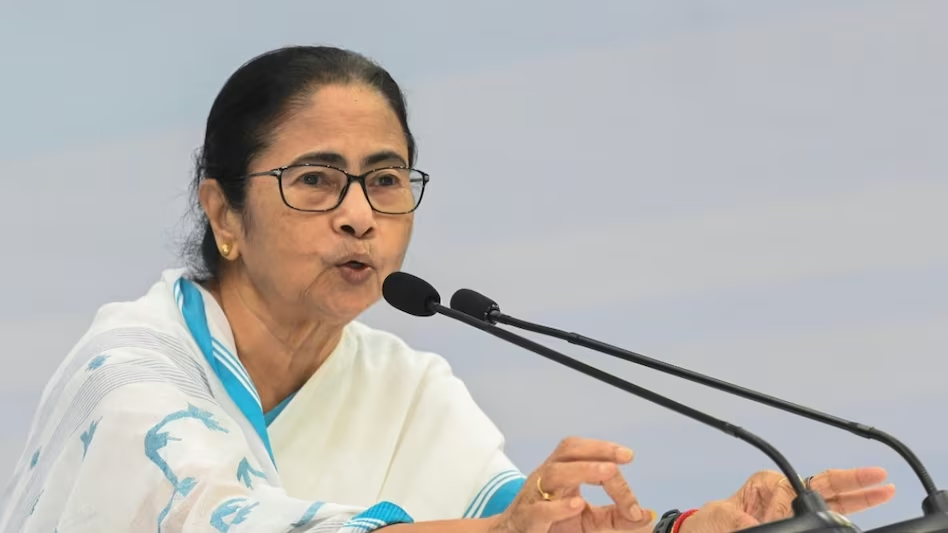
Mamata Banerjee is a prominent Indian politician and the current Chief Minister of West Bengal, a state in eastern India. Known for her dynamic leadership style and distinctive political approach, Banerjee has played a significant role in shaping West Bengal’s contemporary political landscape. Her journey from grassroots activism to becoming one of India’s most influential political figures is marked by both substantial achievements and controversies.
Early Life and Education
Mamata Banerjee was born on January 5, 1955, in Kolkata (then Calcutta), West Bengal. Her father, Promileswar Banerjee, was a freedom fighter and a follower of the Gandhian principles, which deeply influenced Mamata’s ideological framework. Her mother, Gayatri Devi, was a homemaker.
Banerjee pursued her early education in Kolkata. She completed her Bachelor’s degree in History from the Jogamaya Devi College, followed by a Master’s degree in Islamic History from the University of Calcutta. She also earned a Bachelor’s degree in Education (B.Ed.) and later an M.Phil. in Islamic History. Her academic background provided her with a broad understanding of Indian history and social issues.
Political Career Beginnings
Mamata Banerjee’s political journey began in the early 1970s. Initially, she was associated with the Indian Youth Congress and was an active participant in student movements. Her early involvement in politics was influenced by her mentor, the late Subhas Chandra Bose, and she became known for her grassroots activism and oratory skills.
Banerjee’s significant political breakthrough came in 1984 when she was elected to the Lok Sabha (the lower house of India’s Parliament) as a member of the Indian National Congress (INC) from the Jadavpur constituency. At 29, she was the youngest woman ever to be elected to the Lok Sabha. Her rise was rapid; she was appointed the Minister of State for Human Resource Development and later, Minister of State for Youth Affairs and Sports.
Formation of the Trinamool Congress (TMC)
Despite her initial success with the Indian National Congress, Banerjee became increasingly disillusioned with the party’s central leadership and its handling of West Bengal’s issues. In 1997, she founded the All India Trinamool Congress (TMC) as a splinter group from the Congress Party. The TMC was established with the goal of addressing local issues more effectively and to challenge the ruling Communist Party of India (Marxist) (CPI(M)) in West Bengal.
The TMC quickly emerged as a significant political force in West Bengal. Banerjee’s leadership was instrumental in building the party’s base, especially among the rural and urban poor, and in challenging the long-standing dominance of the CPI(M) in the state.
Chief Minister of West Bengal
Mamata Banerjee’s relentless efforts culminated in a historic victory in the 2011 West Bengal Assembly elections. The TMC, under her leadership, ended the 34-year rule of the CPI(M) in the state. This victory marked a significant political shift in West Bengal and established Banerjee as a powerful regional leader.
Key Achievements and Policies:
Development Initiatives: Banerjee’s tenure as Chief Minister has been marked by various development initiatives, including infrastructure projects, industrialization efforts, and improvements in the education and healthcare sectors.
Social Welfare Schemes: Her government has introduced numerous welfare schemes, such as Kanyashree Prakalpa (a scheme to support the education of girls) and Sabuj Sathi (a program to distribute bicycles to school students).
Land Reforms: Banerjee has been known for her focus on land reforms and rural development, although her policies in this regard have sometimes been met with criticism.
Controversies:
Political Violence: Her tenure has faced criticism for alleged instances of political violence and law and order issues. The TMC has been accused of encouraging or failing to prevent violence against political opponents.
Economic Management: There has been criticism regarding the state’s economic performance under her leadership, with allegations of poor handling of economic development and industrial growth.
Electoral Successes and Challenges
Mamata Banerjee has been re-elected as the Chief Minister of West Bengal in subsequent elections (2016, 2021), showcasing her enduring political appeal. Her leadership was instrumental in the TMC’s victory in the 2021 West Bengal Assembly elections, where the party retained power despite significant challenges from the Bharatiya Janata Party (BJP), which had made substantial inroads into the state.
National and International Presence
Beyond West Bengal, Mamata Banerjee has sought to position herself as a national leader. She has been vocal on various national issues and has occasionally expressed her ambitions for a larger role in Indian politics. Her political stance often aligns with a progressive and regionalist outlook, advocating for more autonomy for states and focusing on social justice issues.
Personal Life
Mamata Banerjee is known for her personal simplicity and austere lifestyle. She is an avid writer and has published several books in Bengali, covering a range of topics including politics, literature, and history. Her personal and professional life is closely intertwined with her political career, and she remains a significant and polarizing figure in Indian politics.
Conclusion
Mamata Banerjee’s career is a testament to her resilience and political acumen. From her early days as a student activist to her current role as the Chief Minister of West Bengal, her journey reflects both her strengths and the challenges she has faced. Her impact on West Bengal’s political and socio-economic landscape is profound, and her continued influence on Indian politics is likely to be significant in the years to come.
The Himalayan mountain range, one of the most awe-inspiring natural wonders of the world, spans five countries: India, Nepal, Bhutan, China, and Pakistan. The region is a magnet for travelers seeking adventure, spirituality, and unparalleled natural beauty. Below are some of the top travel destinations in the Himalayan ranges:
1. Leh-Ladakh, India
Overview: Leh-Ladakh is often referred to as the “Land of High Passes” and is renowned for its stark landscapes, Buddhist monasteries, and unique culture. The region’s high-altitude deserts, rugged terrain, and crystal-clear lakes offer an otherworldly experience.
Key Attractions:
Pangong Lake: A high-altitude lake known for its changing colors.
Nubra Valley: Famous for its sand dunes, Bactrian camels, and monasteries.
Monasteries: Thiksey, Hemis, and Diskit monasteries showcase the rich Buddhist heritage of the region.
Activities: Trekking, motorbiking, visiting monasteries, camping, and exploring local culture.
2. Kathmandu Valley, Nepal
Overview: Kathmandu Valley is a cultural and historical hub, surrounded by the majestic peaks of the Himalayas. The valley is home to seven UNESCO World Heritage Sites, offering a blend of Hindu and Buddhist traditions.
Key Attractions:
Swayambhunath (Monkey Temple): A sacred Buddhist site with panoramic views of the city.
Pashupatinath Temple: A significant Hindu temple on the banks of the Bagmati River.
Bhaktapur and Patan Durbar Squares: Ancient cities with stunning architecture and vibrant history.
Activities: Cultural tours, temple visits, shopping for handicrafts, and short hikes to surrounding hills.
3. Manali, India
Overview: Nestled in the Kullu Valley of Himachal Pradesh, Manali is a popular hill station known for its scenic beauty, adventure activities, and vibrant local culture. The region is surrounded by snow-capped peaks and dense forests.
Key Attractions:
Solang Valley: A hub for adventure sports like paragliding, skiing, and zorbing.
Rohtang Pass: A high mountain pass that offers breathtaking views of the Himalayas.
Old Manali: A quaint village with traditional Himachali architecture and vibrant cafes.
Activities: Trekking, skiing, paragliding, river rafting, and visiting temples.
4. Bhutan
Overview: Bhutan, known as the “Land of the Thunder Dragon,” is a small Himalayan kingdom with a strong emphasis on preserving its culture and environment. The country is famous for its monasteries, fortresses (dzongs), and dramatic landscapes.
Key Attractions:
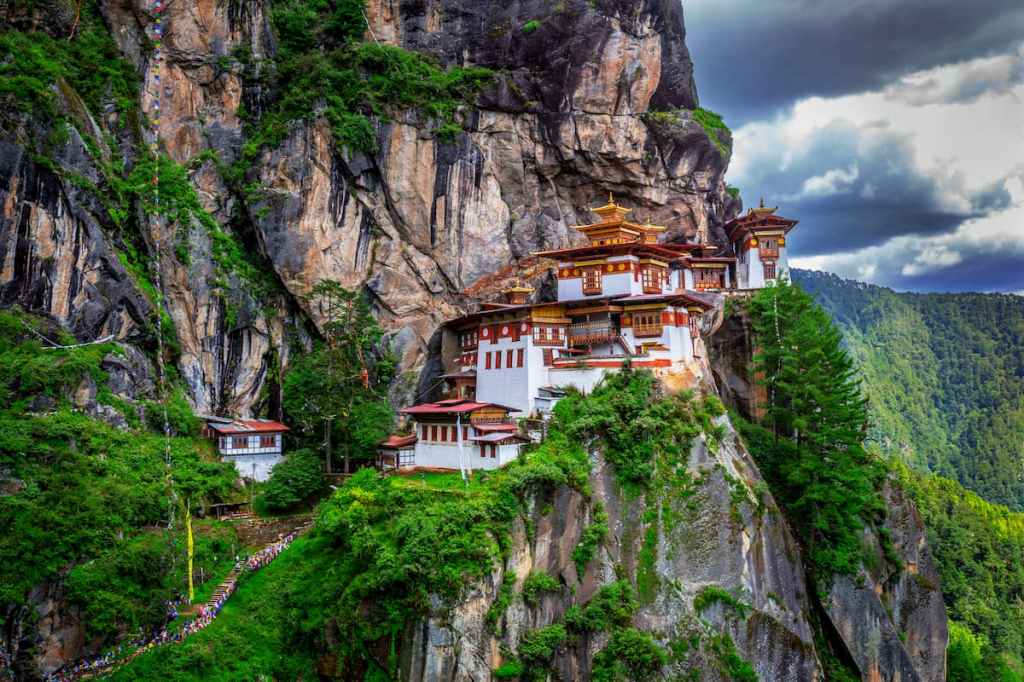
Tiger’s Nest Monastery (Paro Taktsang): A sacred Buddhist site perched on a cliffside.
Thimphu: The capital city, known for its traditional architecture and cultural landmarks.
Punakha Dzong: A stunning fortress at the confluence of two rivers.
Activities: Cultural tours, monastery visits, trekking (especially the Jomolhari Trek), and exploring local festivals.
5. Everest Base Camp, Nepal
Overview: Everest Base Camp is one of the most iconic trekking destinations in the world. Located at the base of Mount Everest, the trek offers trekkers a chance to experience the breathtaking beauty of the Khumbu region.
Key Attractions:
Lukla: The starting point of the trek, known for its thrilling airport.
Namche Bazaar: A bustling town that serves as a gateway to the high Himalayas.
Everest Base Camp: The ultimate destination, offering views of Everest and the Khumbu Icefall.
Activities: Trekking, photography, and experiencing Sherpa culture.
6. Darjeeling, India
Overview: Darjeeling, known as the “Queen of the Hills,” is a popular hill station in West Bengal, India. It is famous for its tea plantations, colonial architecture, and stunning views of the Kanchenjunga mountain range.
Key Attractions:
Tiger Hill: Offers panoramic views of the sunrise over Kanchenjunga.
Darjeeling Himalayan Railway (Toy Train): A UNESCO World Heritage Site, offering a scenic ride through the mountains.
Tea Gardens: Explore the famous tea estates and taste some of the world’s finest teas.
Activities: Tea garden tours, trekking, visiting monasteries, and riding the toy train.
7. Shimla, India
Overview: Once the summer capital of British India, Shimla is a charming hill station in Himachal Pradesh. The town is known for its colonial architecture, pine forests, and pleasant weather.
Key Attractions:
The Ridge: A large open space in the heart of Shimla, offering stunning views of the mountains.
Jakhoo Temple: A temple dedicated to Lord Hanuman, located on Jakhoo Hill.
Mall Road: The main street, lined with shops, cafes, and colonial-era buildings.
Activities: Walking tours, visiting temples, exploring colonial architecture, and shopping.
8. Nainital, India
Overview: Nainital is a picturesque hill station in the Kumaon region of Uttarakhand, centered around the beautiful Naini Lake. The town is surrounded by hills and offers a serene environment.
Key Attractions:
Naini Lake: A beautiful lake where visitors can enjoy boating.
Naina Devi Temple: A sacred temple overlooking the lake.
Snow View Point: Offers panoramic views of the Himalayan peaks.
Activities: Boating, trekking, visiting temples, and exploring nearby lakes and viewpoints.
9. Sikkim, India
Overview: Sikkim, a small state in northeastern India, is known for its rich biodiversity, pristine landscapes, and Tibetan Buddhist culture. The state is home to Kanchenjunga, the third-highest mountain in the world.
Key Attractions:
Gangtok: The capital city, offering stunning views of Kanchenjunga and vibrant monasteries.
Tsomgo Lake: A glacial lake situated at an altitude of 12,310 feet.
Yuksom: A historic town, known as the starting point for the Dzongri-Goechala trek.
Activities: Trekking, monastery visits, exploring nature parks, and experiencing local festivals.
10. Spiti Valley, India
Overview: Spiti Valley
in Himachal Pradesh is often described as a cold desert and is one of the most remote and unexplored regions in the Indian Himalayas. The valley is characterized by rugged terrain, stark landscapes, ancient monasteries, and a rich Tibetan culture.
Key Attractions:
Key Monastery: The largest and one of the oldest monasteries in Spiti, perched on a hilltop offering panoramic views.
Chandratal Lake: Also known as the “Moon Lake,” this high-altitude lake is famous for its crystal-clear waters and stunning scenery.
Tabo Monastery: A UNESCO World Heritage Site, this 1000-year-old monastery is known for its ancient murals and statues.
Activities: Trekking, exploring monasteries, camping by lakes, and experiencing local festivals.
11. Rishikesh and Haridwar, India
Overview: Situated in the foothills of the Himalayas, Rishikesh and Haridwar are spiritual centers along the banks of the Ganges River. While Rishikesh is known as the “Yoga Capital of the World,” Haridwar is famous for its religious significance and the Ganga Aarti.
Key Attractions:
Triveni Ghat: A sacred bathing ghat in Rishikesh where the Ganges, Yamuna, and Saraswati rivers meet.
Lakshman Jhula and Ram Jhula: Iconic suspension bridges in Rishikesh offering scenic views of the Ganges.
Har Ki Pauri: A famous ghat in Haridwar known for its evening Ganga Aarti.
Activities: Yoga, meditation, white-water rafting, attending the Ganga Aarti, and spiritual retreats.
12. Paro Valley, Bhutan
Overview: Paro Valley is one of the most beautiful regions in Bhutan, known for its scenic landscapes, traditional Bhutanese architecture, and historical significance. The valley is also home to the Paro Airport, the gateway to Bhutan.
Key Attractions:
Paro Taktsang (Tiger’s Nest Monastery): A sacred monastery perched on a cliff, one of Bhutan’s most iconic landmarks.
Rinpung Dzong: A fortress-monastery that offers stunning views and houses important relics.
National Museum of Bhutan: Located in the Ta Dzong, it showcases Bhutan’s cultural heritage.
Activities: Hiking to Tiger’s Nest, exploring dzongs, cultural tours, and photography.
13. Mount Kailash, Tibet
Overview: Mount Kailash is a sacred peak in Tibet, revered in Hinduism, Buddhism, Jainism, and Bon. The mountain is considered the earthly representation of Mount Meru and is a site of pilgrimage for devotees.
Key Attractions:
Kailash Kora: A 52-kilometer pilgrimage route around Mount Kailash, believed to bring spiritual merit.
Lake Manasarovar: A sacred lake situated near Mount Kailash, considered one of the holiest lakes in Hinduism and Buddhism.
Rakshas Tal: Another significant lake located near Lake Manasarovar, with mythological importance.
Activities: Pilgrimage, trekking the Kailash Kora, spiritual retreats, and meditation.
14. Lhasa, Tibet
Overview: Lhasa, the capital of Tibet, is a spiritual and cultural center known for its ancient monasteries and palaces. The city is surrounded by the towering peaks of the Himalayas and is rich in Tibetan Buddhist traditions.
Key Attractions:
Potala Palace: A UNESCO World Heritage Site, this palace is the former residence of the Dalai Lama and an architectural marvel.
Jokhang Temple: The most sacred temple in Tibet, revered by Tibetan Buddhists from all over the world.
Norbulingka: The summer palace of the Dalai Lama, known for its beautiful gardens and architecture.
Activities: Exploring monasteries, visiting historical sites, experiencing Tibetan culture, and shopping for local crafts.
Conclusion
The Himalayan region offers a diverse range of travel experiences, from spiritual pilgrimages to adrenaline-pumping adventures. Each destination has its unique charm, cultural significance, and natural beauty, making the Himalayas a must-visit for travelers seeking a blend of adventure, spirituality, and serenity. Whether you are looking to trek through some of the highest mountain passes, meditate in a remote monastery, or simply soak in the breathtaking vistas, the Himalayan ranges have something to offer for every type of traveler.
NAFSA (National Association of Foreign Student Advisers) is a non-profit professional organization for international educators, promoting cross-cultural understanding and exchange. Here’s a detailed overview:
_Mission:_
NAFSA fosters international education and exchange, promoting global understanding and development.
_Objectives:_
– Support international student and scholar services
– Enhance international education programming
– Facilitate networking and professional development
– Advocate for international education policy
_Activities:_
– Annual conferences and regional meetings
– Training and professional development workshops
– Online resources and publications
– Advocacy and public policy initiatives
_Membership:_
– Open to institutions, organizations, and individuals engaged in international education
– Benefits include networking, professional development, and access to resources
_Committees and Knowledge Communities:_
– Focus on specific areas like student services, education abroad, and advocacy
– Provide platforms for networking and knowledge sharing
_Publications:_
– International Educator magazine
– NAFSA Newsletter
– Online resources and reports
NAFSA plays a crucial role in promoting international education and exchange, supporting professionals in the field, and advocating for policies that foster global understanding and development.
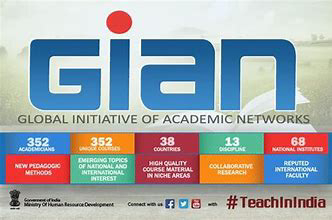
GIAN (Global Initiative of Academic Networks) courses are a program initiated by the Indian government to promote international collaboration and academic exchange. Here’s a detailed overview:
_Objective:_
GIAN aims to facilitate international faculty and scholar participation in Indian educational institutions, promoting global perspectives and expertise.
_Course Structure:_
– Short-term courses (1-2 weeks)
– Taught by international faculty and scholars
– Interdisciplinary and cutting-edge topics
– Hands-on training and workshops
_Subject Areas:_
– Engineering
– Science
– Humanities
– Social Sciences
– Management
_Benefits:_
– Exposure to global perspectives and expertise
– Enhanced research collaborations
– Networking opportunities
– Access to international resources and funding
– Certification and credits
_Eligibility:_
– Indian students, researchers, and faculty
– International students and scholars (in some cases)
_How to Apply:_
– Check the GIAN website for course announcements
– Register and apply online
– Meet the course-specific eligibility criteria
_Funding:_
– Government funding for course fees and logistics
– Scholarships and travel grants available
_Implementation:_
– Courses are conducted in Indian educational institutions
– International faculty and scholars are invited to teach
– Local faculty and experts also participate
_Impact:_
– Enhanced global competitiveness of Indian education
– Increased international collaborations and research
– Exposure to new ideas and pedagogies
– Capacity building and skill development
By participating in GIAN courses, students, researchers, and faculty can gain valuable international exposure, expertise, and networking opportunities, contributing to India’s global academic and research landscape.
CRediT is a community-owned 14 role taxonomy that can be used to describe the key types of contributions typically made to the production and publication of research output such as research articles.
Conceptualization
Ideas; formulation or evolution of overarching research goals and aims.
Software
Programming, software development; designing computer programs; implementation of the computer code and supporting algorithms; testing of existing code components.
Resources
Provision of study materials, reagents, materials, patients, laboratory samples, animals, instrumentation, computing resources, or other analysis tools.
Data curation
Management activities to annotate (produce metadata), scrub data and maintain research data (including software code, where it is necessary for interpreting the data itself) for initial use and later re-use.
Formal analysis
Application of statistical, mathematical, computational, or other formal techniques to analyse or synthesize study data.
Supervision
Oversight and leadership responsibility for the research activity planning and execution, including mentorship external to the core team.
Validation
Verification, whether as a part of the activity or separate, of the overall replication/reproducibility of results/experiments and other research outputs.
Visualization
Preparation, creation and/or presentation of the published work, specifically visualization/data
presentation.
Writing – original draft
Preparation, creation and/or presentation of the published work, specifically writing the initial draft (including substantive translation).
Methodology
Development or design of methodology; creation of models.
Project administration
Management and coordination responsibility for the research activity planning and execution.
Writing – review & editing
Preparation, creation and/or presentation of the published work by those from the original research group, specifically critical review, commentary or revision – including pre- or post-publication stages.
The B.Ed (Bachelor of Education) entrance exam is a competitive examination conducted by various universities and institutions to select candidates for admission to their B.Ed programs. Here’s a detailed overview:
_Objective:_
The B.Ed entrance exam assesses a candidate’s aptitude, knowledge, and skills to become a teacher.
_Eligibility:_
– Candidates must have a bachelor’s degree (or equivalent) in any discipline with a minimum of 50% marks.
– Some institutions may have additional eligibility criteria.
_Exam Pattern:_
– The exam pattern varies across institutions, but typically includes:
– Multiple Choice Questions (MCQs)
– Short-answer questions
– Essay questions
– Sections:
– General English
– General Knowledge
– Teaching Aptitude
– Subject-specific knowledge (depending on the institution)
_Syllabus:_
– General English: Grammar, Vocabulary, Comprehension
– General Knowledge: Current Affairs, History, Geography, Science
The Cochin University of Science and Technology (CUSAT) conducts the CUSAT Common Admission Test (CAT) for admission to various undergraduate and postgraduate programs. Here’s a detailed overview:
_Objective:_
CUSAT CAT assesses candidates’ knowledge, skills, and aptitude for admission to programs like engineering, law, and management.
_Eligibility:_
– Candidates must have passed or be appearing in the 10+2 examination with relevant subjects.
– Specific eligibility criteria vary depending on the program.
The National Aptitude Test in Architecture (NATA) is a national-level entrance exam conducted by the Council of Architecture (CoA) for admission to undergraduate programs in architecture. Here’s a detailed overview:
*Objective:*
NATA measures the aptitude of candidates in the field of architecture, assessing their drawing, creativity, observation, and critical thinking skills.
*Eligibility:*
– Candidates must have passed or be appearing in the 10+2 examination with mathematics as a subject.
– There is no age limit for appearing in NATA.
*Exam Pattern:*
– NATA consists of two parts:
1. Part A (Multiple Choice Questions): 120 questions, 2 hours duration
2. Part B (Drawing Test): 3 questions, 2 hours duration
– The exam is conducted online, and candidates can take it from anywhere.
*Syllabus:*
– Part A:
– Mathematics (30 questions)
– General Aptitude (30 questions)
– Drawing and Visual Composition (60 questions)
– Part B:
– Drawing and Sketching (3 questions)
*Scoring:*
– Part A: 1 mark for each correct answer, 0.25 marks deducted for each incorrect answer
– Part B: 70 marks for each question
*Result:*
– NATA scores are valid for one year.
– Candidates can appear for NATA multiple times to improve their scores.
*Admission Process:*
– Candidates must apply to participating institutions separately, using their NATA scores.
– Institutions may conduct their own counseling and admission processes.
*Important Dates:*
– Registration starts: March
– Exam date: April-May
– Result declaration: June
*Tips and Preparation:*
– Practice drawing and sketching regularly.
– Focus on mathematics and general aptitude.
– Use online resources and coaching classes for preparation.
– Time management is crucial; practice solving questions within the given time frame.
By understanding the NATA exam pattern, syllabus, and preparation tips, candidates can better prepare themselves for this crucial entrance exam.
1. *NEET (National Eligibility cum Entrance Test)*: NEET is the most prominent medical entrance exam in India, conducted by the National Testing Agency (NTA). It is a prerequisite for admission to undergraduate medical courses such as MBBS, BDS, and AYUSH programs.
2. *AIIMS (All India Institute of Medical Sciences)*: The AIIMS entrance exam is conducted for admission to the prestigious All India Institute of Medical Sciences (AIIMS) and other affiliated colleges.
3. *JIPMER (Jawaharlal Institute of Postgraduate Medical Education and Research)*: The JIPMER entrance exam is held for admission to the Jawaharlal Institute of Postgraduate Medical Education and Research (JIPMER) and its affiliated colleges.
4. *AFMC (Armed Forces Medical College)*: The AFMC entrance exam is conducted for admission to the Armed Forces Medical College (AFMC), Pune.
5. *State-level exams*: Some states in India conduct their own medical entrance exams for admission to undergraduate medical courses. Examples include the Maharashtra Common Entrance Test (MHT-CET), the Karnataka Common Entrance Test (KCET), and the Tamil Nadu Professional Courses Entrance Examination (TNPCEE).
These exams are highly competitive, and students must prepare thoroughly to secure a good rank. It is essential to check the eligibility criteria, exam dates, and syllabus for each exam before applying.
Here are some of the top business schools in Africa ¹ ² ³:
– *University of Cape Town*: Located in South Africa, this university is a top choice for business education.
– *University of Pretoria*: Also located in South Africa, this university’s Gordon Institute of Business Science is a highly-ranked business school.
– *University of the Witwatersrand*: Located in South Africa, this university’s Wits Business School is a top choice for business education.
– *University of Stellenbosch*: Located in South Africa, this university’s business school is triple-accredited and offers a range of programs.
– *University of Ghana*: Located in Ghana, this university is a top choice for business education in West Africa.
These schools offer a range of programs, including MBAs, postgraduate diplomas, and doctorates, and are recognized for their academic excellence and strong alumni networks.








 Eduindex
You must be logged in to post a comment.