Myths of Meditation

With meditation practices on the rise, it makes sense that there is some confusion out there. Myths and misinformation are to be expected — but that doesn’t mean we can’t do our best to set the record straight. Let’s go through the following myths and their conclusions.

¤Myth: You can’t meditate because you think too much.


Everyone thinks too much. But it’s often the people who say they “think too much to meditate” who could really benefit from giving the practice a try. Thinking is a natural and expected part of meditation. Some practices will give you tools for how to redirect your thoughts back to your meditation and others will simply say it’s fine that you’re off thinking. This is all a part of the experience. The practice of meditation is about tuning in — not tuning out.


Some believe that by choosing to redirect your thoughts to a single point of focus you are actually strengthening the muscle that build your brain. This can teach you to react less to stress triggers throughout the day and leave you feeling calmer than before you learned to meditate.

¤Myth: You can’t meditate because you can’t sit still.

For those who struggle with sitting still during meditation, good news! Moving around is totally fine — you can readjust your position,scratch an itch or just stretch your legs out in the middle of your practice. You do not have to be a statue. If you’re in a group class, try to do this quietly so you don’t disrupt other meditators.


For those who need more movement than this, you can try walking meditation. Traditionally, meditation can be practiced in four positions: sitting, standing, walking and lying down. So don’t get down on yourself if you don’t like sitting. Try other methods and find what feels most natural for your body.


We all are busy. If Oprah, Kobe Bryant, Arianna Huffington and Rupert Murdoch have time to meditate, you probably do too. Meditating in the morning makes your whole day go slower and many people say they actually get more done and feel more productive after meditation. Because meditation helps improve focus and lowers stress, you actually can fit more in if you take the time out to practice.


If committing to 20 a day minutes feels daunting, there are many practices that require only five or 10 minutes. The key is to start small and build up so you don’t get discouraged and skip it all together. Even a seasoned meditator knows that some days get away from you and all you can fit in is 5 minutes. This is always better than nothing.

¤Myth: You can’t meditate because you don’t know if you’re doing it right.

The only wrong or bad meditation is the one you don’t do at all. Meditation is pretty simple. You focus on one thing. Depending on the practice, that can be your breath, a mantra, a candle flame or even counting numbers. When you notice that your mind has drifted off, you simply come back to the thing your meditation is focused on.

¤Myth: You’re not supposed to have any thoughts while you meditate.

This idea is simply not true and it can also be a big hindrance to people meditating. If you think you’re doing it wrong, it’s easy to just give up and walk away. Deepak Chopra, a meditation expert and founder of the Chopra Center for Wellbeing, puts it best: “the nature of the mind to move from one thought to another is in fact the very basis of meditation,” he says.


“We don’t eliminate the tendency of the mind to jump from one thought to another. That’s not possible anyway.” Depending on the type of meditation you learn, there are tools for gently bringing your focus back to your meditation practice. Alternatively, some types of meditation actually emphasize being present and mindful to thoughts as they arise as part of the practice.


¤Myth: Meditation has to be religious or spiritual


There is a distinct difference between meditation and religion. While many meditation practices drew it roots from Buddhism and Hinduism, today there are modern forms of meditation that have nothing to do with religion at all. Many religious groups practice meditation, and the intersection between prayer and meditation is quite interesting, but it is not necessary to believe in a god or be affiliated with a religion or spiritual group in order to reap the benefits of meditation.

¤Myth: You must sit in an uncomfortable cross-legged position in order to meditate.

You can sit in any position that is comfortable to you. Most people sit upright in a chair or on a cushion. Some people like to sit in a great big armchair or a sturdy kitchen chair. You can also sit upright in bed with pillows propped at your sides. The possibilities are endless. It is best not to lie down unless you’re doing a body scan meditation or meditation for sleep.

¤Myth: Meditation is only for stressed out people.

While meditation helps lower the presence of coristol, the stress hormone, in our bodies, there are many other benefits of the practice. Meditation helps boost our immune systems, improves concentration, decreases blood pressure, improves sleep, increases our feelings of happiness, and has even helped people with alcohol or smoking addictions. Even for those who don’t have a specific ailment in mind, meditation is wonderful for overall mental and physical health.

¤Myth: Meditation is only for adults.


Adults are not the only ones to experience the negative effects of stress. Children, too, suffer from feeling overwhelmed and meditation is one way parents are helping their kids learn to manage stress. Schools have even started to discuss whether meditation is a life-long skill that should be taught in classrooms. Schools that tried it out found that students were less stressed and performed higher on tests. The overall feeling in classrooms was more positive and teachers reported their own moods improving.

¤Myth: You have to be given a mantra to meditate.

Mantra-based meditation is only one form of meditation. Transcendental Meditation (made popular by people like Oprah, Jerry Seinfeld and Howard Stern) uses a mantra but many mindfulness-based meditation practices don’t. Think of a mantra as just one vehicle or tool people use to get into their meditation practice. There are many other tools like counting, being mindful of what you hear around you and even simply paying attention to your breath.

¤Myth: Meditation is for the rich or the elite.

Meditation is having a moment right now and we love that. But the ancient practice is not only for hip tech CEOs or a pet cause for the wealthy with time to spare. The beauty of meditation is that it’s free and you can do it anywhere, anytime. All you need is your mind.

¤Myth: Meditation takes years to learn.


While the Dalai Lama says that meditation can change your life, he has also been practicing for most of his life. Fear not. You can actually learn in minutes. We don’t deny that like any skill or exercise, the more you do it, the more you learn. But you don’t need months or years to perfect your meditation. The very notion of perfection is counter productive. Here are five different ways you can get started. Pick one (or search the web for many others) and give it a try.





New ‘Drone strategy’ reported; no exceptional status needed before enlistment.

authorrishabhsharma's avatarTrack2Training

The Center on Thursday declared another robot strategy. Under the Drone Rules 2021, the inclusion of robots expanded from 300 kg to 500 kg, and will incorporate weighty payload-conveying robots and robot taxis.

Furthermore, the new robot rules eliminate trusted status before any enlistment or permit issuance.

In view of the input, the Ministry of Civil Aviation (MoCA) said it chose to annul the UAS Rules, 2021 and supplant something similar with the changed Drone Rules, 2021.

The Aviation service had distributed UAS Rules, 2021 in March.

Here are 30 vital elements of Drone Rules 2021:

1.According to the Civil Aviation Ministry, a few endorsements annulled: remarkable authorisation number, one of a kind model recognizable proof number, declaration of assembling and airworthiness, testament of conformance, authentication of support, import leeway, acknowledgment of existing robots, administrator grant, authorisation of R&D association, understudy distant pilot permit, far off pilot teacher authorisation, drone…

View original post 586 more words

The Romantic Revival in English Literature

     The publication of the Lyrical Ballads by Wordsworth and Coleridge in 1798 was an epoch making event in the history of English Literature. The Lyrical Ballads has become one of the abiding reference points of English Romantic Literature. The idea for it was conceived when the two poets were living as close neighbors. It was nurtured by their shared sense of the emotional artificiality of eighteenth century poetry and its conventions. As a result of this a new taste in literature and art set in. This new taste is called Romanticism or Liberalism in literature. This new trend started even earlier with Gray and Collins, Blake and Burns. The Romantic Revival of the nineteenth century turned the rules and regulations held dear by the writers of the eighteenth century upside down. There are various causes for the new taste of the people. The people were tired of the rules and regulations of the neo-classical poetry. They could no longer tolerate the monotonous heroic couplets.  

        The French Revolution had its own influence on the thoughts and literature of the period. The greatest writer of France, Rousseau, inspired the people of England. The catchwords of the French Revolution-Liberty, Equality and Fraternity - also became the basic principles of Romantic literature. The political upheaval in America was also partly responsible for the new taste in literature. The spread of education brought home to the English people, the philosophy of Kant and Hegel in Germany. The progress of science supplied the people with a rational outlook. All these developments made them look for something new in literature. The Romantic literature also, to a certain extent, satisfied their intellectual curiosity.

The Romantic Movement was characterized by a strong protest against the conventions and worn out traditions of the classicists. There was a freedom in the choice of subject and suitable verse-forms. So there was an endless variety in subject and form. The poetry of the eighteenth century was mainly concerned with the clubs and coffee houses, drawing rooms and the political life of London. It was, in short, poetry of town life. In Romantic poetry the interest was transferred from town to the country and to the natural beauty and liveliness of nature.

The Romantic poets sought to escape from the tyranny and materialism of the world. They wanted to recreate the Middle Ages. This craving for the Middle Ages satisfied the emotional sense of wonder on the one hand and the intellectual curiosity on the other.

The Romantic poetry was also marked by a strong sense of sympathy and understanding of the human heart. The poets started taking interest in the common people. A feeling of humanitarianism coloured the poetry of Wordsworth, Shelley and Byron. The Romantic Movement was the expression of individual genius rather than of established values. The poets of this period were in favour of giving subjective interpretation to the objective realities of life. Thus, poetry became individualistic in outlook.

Ignoring the immediate predecessors like Pope and Dryden, the Romantics accepted the early poets, Spenser, Shakespeare and Milton as their models. In the Romantic poetry, unlike in the classical poetry, reason and intellect were subdued and their place was taken by imagination, emotion and passion. Spontaneity was given first preference. Lyricism predominates and a number of fine lyrics excelling the heroic couplets were produced. The Romantic poets also brought in the spirit of supernaturalism. Coleridge and Walter Scott specialised in this field.

In the new kind of poetry, greater stress is laid on simplicity. There is no difference between the language of poetry and that of prose. The new kind of poetry was written by Wordsworth, Coleridge, Keats, Byron. Shelley and Scott. In fact, they succeeded in training the readers in a new sensibility.

HEALTH IS WEALTH !!

A healthy mind lives in healthy body. Mind is rather the battery of the physical mechanism of human beings. It decides all the activities of man good or bad. But it requires healthy adobe. It is only them that fortune smiles at man and fills his coffers with wealth material or spiritual.

Need for healthy state – There is a saying in Ayurveda “it is through his body that man performs all his rightful duties “. He can do it only when the body remains in a perfect healthy state. Thus, for an individual is the real wealth. By this wealth one can achieve anything. This can be noticed after the pandemic also that immunity is the thing which is essential to fight a disease or a virus.

Unhealthy man is like cadaver – An unhealthy man loses all that he possesses. He faces a battery of greedy physician who may be having an eye more on his pocket than in his well being. An unhealthy man grows desperate. His mind too grows sick and he is in the jaws of paralytic attack both materially and mentally. Death alone may bring solace to him make him free from frustrations. A healthy man has a rich orchard of the fruits of hope, peace, satisfaction and prominence -the real wealth.

Man has rationale – Man is a rational animal. His superior mind. In fact, Man has been able to control nature due to his highly developed brain. It is all true but for the development of the intellect, it is necessary that the body too, should be healthy. A sound mind in a sound body is an often quoted saying. So it is apparent that for intellectual development physical exercise is essential.

At last we can understand that healthy body is the key to success . So we should consider health as our first priority and then our work. During the pandemic situation, yoga classes focused on the health conditions of the people and involved them to join for their benefit and better standard of living.

Thank you.. Stay healthy and keep reading..!!

Planning For Success

Here are some general start-up tips for a successful home business.

The first tip is a word of caution. It’s easy to think that because your home business can bypass the lease or construction aspects of starting a business, and the overhead costs of furnishing, maintenance, landscaping, utilities and so forth, that you can skip over some other processes to. That attitude, rather than heading someone down the road to a successful home business, could lead to financial business disaster.

An entrepreneurial spirit and a great idea are terrific assets for a successful home business. Other things are important too, however.

Market research and careful planning are of paramount important to the success of a home business, as they are for any business. A business plan is a must. It must include details on the products and services the firm will offer, the type of business equipment and the cost of it that will be needed in the coming five years. It should also include information on the competition in the designated market area. This information should include ways that the new home business will be successful in competing – how it is unique and how it is an improvement over what else is out there in the same industry.

A successful home business is one that is set up as the right legal entity. One of the first things new home based entrepreneurs should do is learn the legal consequences and liabilities of the various business types, as well as the tax consequences of each. A home business might be more successful as a partnership than sole proprietorship, for example, if additional cash flow is needed, or the entrepreneur is deficient in a crucial home business skill such as advertising, marketing or accounting, for example. An accountant can advise on the various options such as limited liability corporations, S corporations, standard corporations, limited partnerships and so forth.

Unless a successful home business is going to include walk in customers homeowner’s or renters insurance should provide adequate financial protection against theft or natural disaster. Of course, as equipment and furnishings are added, the insurance would need to increase. If clients were to come to the home office location, liability insurance would protect the firm from the financial devastating situation of customer injury.

A successful home business is one that is well planned and well funded. There is no such thing as too much preparation.

“What’s discipline? “

By reading the title name you will wonder that such a common topic it is but after reading till the end you will notice that the most common topic is ignored everywhere where it should not. Discipline means orderly life, without discipline we can’t live. We need be guided by rules at certain times. Discipline is the backbone of the nation. Only those nations where people have a discipline prosper in all fields. They even rule other nations. Discipline is a valuable asset at all levels of society.

Discipline and third world countries – Indiscipline has become a trait in the Third World countries like India, Pakistan, most of the African and Latin American countries. In India the indiscipline is seen in the legislative assemblies and parliament during the session. MP’s cross their limits in the parliament sometimes which is very sadful to watch. They are law making bodies but these law making bodies are the most undisciplined bodies. The indiscipline of political leaders is reflected in the whole nation and as a result it doesn’t progress.

Discipline and European countries – Discipline is seen in most of the European countries (and in Japan and Israel). That is why these countries make progress. Discipline is born of a sense of responsibility among the people. The people in developed countries know their obligation to the nation. This results in discipline in every field and the country progresses with the people, for the people .

Need to learn discipline – Discipline has to be learnt at every walk of life. Childhood is the best period for it. The young mind learns things quickly and easily. At school, the students are taught to behave well. They are taught to respect their elders. In sports also we are taught to follow the rules of the it. So the student days are the most formative period in which the value of discipline can be learnt.

In fact, discipline is a good thing. It builds character. It develops strength and unity. It creates sense of cooperation. So discipline must be taught from the very childhood. It is a key to success in life. The higher is the sense of discipline, the better it is for the people and the country. That was all for this article.

Keep reading… Thank you!!

360 Wander Writer

Welcome to the world of Music

Music is the moonlight in the gloomy of Life

John Paul Friedrich Richter

Happy, hear to a music . Sad ,listen to a music. Function, music aloud. Condolence . Alone , earphones on. Travel , music must. It does not matter about the language . Its just the same. Music has no language. It is difficult to describe the feel. It can only be felt. It is one of the cultural aspects of all human societies. 

Want to Boost Your Productivity? Science Says Listen to Music With These 6  Rules In Mind | Inc.com

Music has many different fundamentals or elements. Depending on the definition of “element” being used, these can include: pitch, beat or pulse, tempo, rhythm, melody, harmony, texture, style, allocation of voices, timbre or color, dynamics, expression, articulation, form and structure. The elements of music feature prominently in the music curriculums of Australia, UK and US. All three curriculums identify pitch, dynamics, timbre and texture as elements, but the other identified elements of music are far from universally agreed upon.

Music genre is a conventional category that identifies some pieces of music as belonging to a shared tradition or set of conventions. It is to be distinguished from musical form and musical style, although in practice these terms are sometimes used interchangeably.

Curious how music publishing works? – Point Blank Entertainment

Music theory encompasses the nature and mechanics of music. It often involves identifying patterns that govern composers’ techniques and examining the language and notation of music. In a grand sense, music theory distills and analyzes the parameters or elements of music – rhythm and texture. Broadly, music theory may include any statement, belief, or conception of or about music. People who study these properties are known as music theorists, and they typically work as professors in colleges, universities, and music conservatories. 

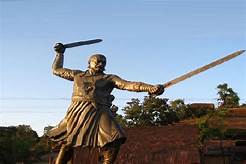
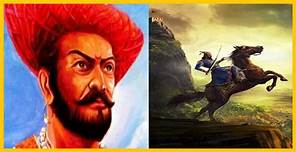
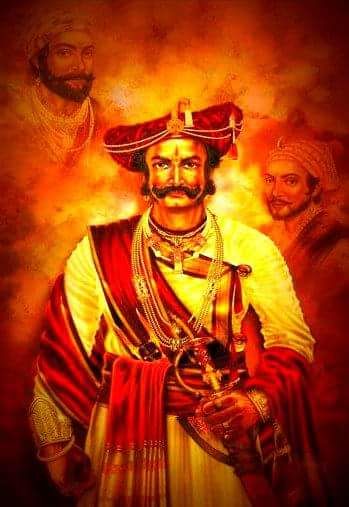
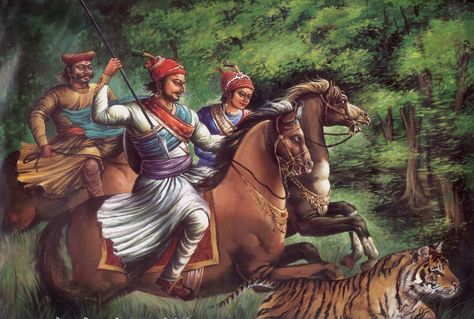
The Mighty Sardars of Chhatrapati Shivaji Maharaj.

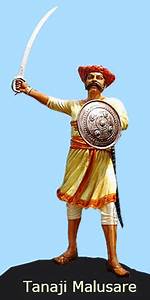
Subedar Tanhaji Malusare:

Sinhagad was one of the first forts which Chhatrapati Shivaji Maharaj re-captured from the Mughals. The capture was made possible by scaling the walls at night with ladders made of rope. A fight followed in which Tanhaji Malusare was killed but the fort was won. The battle and Tanhaji’s exploits are still a popular subject for the Marathi ballad.

During the siege, Malusare scaled a steep cliff that led to the fort through the assistance of a monitor lizard called Yashwanti (also referred to as ghorpad in Marathi) This type of lizard was tamed since the 15th century and Yashwanti was trained to pull the rope up the cliffs for Malusare and wind it around the fort’s bastion. Climbing up the fort, the Marathas were intercepted by the garrison and combat ensued between the guards and the few infiltrators that had managed to climb up by this time. Both Tanhaji and Udaybhan were killed in the battle but the overwhelmed Maratha forces managed to capture the fort after the reinforcements penetrated the gateway of the fort from another route.

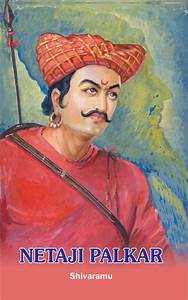
Netaji Palkar:

During the period of the rise of Shivaji Maharaj from 1645 to 1665, Netaji was given charge of many expeditions which he successfully completed. His greatest success was the campaign against the Adilshah of Bijapur that followed the killing of Afzal Khan. His standing among the local population was such that he was known as Prati Shivaji (Image of Shivaji Maharaj). After an agreement between Mirza Raja Jai Singh and Shivaji Maharaj, Shivaji Maharaj was made to give 23 forts to the Mughals and also fight against the Adilshah of Bijapur. During this period, Netaji Palkar, as a tactic joined the Bijapur forces and weakened the Mughals by counter-attacking them using Adilshah’s army. In turn, Shivaji Maharaj used Mirzaraja Jai Singh’s army to weaken the Adilshahi.

Baji Prabhu Deshpande:

Bijapuri forces under commander Siddhi Johar sieged Panhala Fort where Shivaji Maharaj was present. On a stormy full moon’s night a band of 600 men, led by Baji Prabhu and Shivaji Maharaj, broke through the siege. They were followed by the Bijapuri forces under Siddhi Masood. Tradition and legend describe feats of valor displayed by the Marathas during this rear-guard action. Baji Prabhu had mastered the art of using a weapon called “Dand Patta”. Through the entire battle, Baji Prabhu, even though grievously injured, continued fighting, inspiring his men to fight on until Shivaji Maharaj’s safe journey to Vishalgadh was signaled by the firing of three cannon volleys. It should be mentioned that when Shivaji Maharaj approached Vishalgad with 300 men, the fort was already under siege by Bijapuri sardars named Suryarao Surve and Jaswantrao Dalvi. Shivaji Maharaj with his 300 men had to defeat Surve to reach the fort. The pass where Bajiprabhu fought the enemies was later named as ‘Paawan Khind’

The Paawan Khind

Kondaji Farzand:

Farzand was a skilled warrior who was specialized in warfare (sword fight, wrestling), climbing high scale peaks, and planning battle strategies. Farzand only gathered 60 skilled warriors to take a might against 2500 soldiers guarding Panhala. Farzand not only captured the Panhala fort but also avenged the death of Tanaji by killing Beshak Khan. He was highly praised by Chattrapati Shivaji Maharaj for capturing Panhala. After the death of Chattrapati Shivaji Maharaj, his son Sambhaji Maharaj ascended the throne and continued the fight for Swarajya. The Janjira fort was under the control of Siddis and had to be gained back. Kondaji Farzand took this mission to recapture Janjira by befriending Siddi and attacking his artillery and ammunition. But Farzand’s plan to recapture Janjira was failed as his identity was revealed to the enemy by an inside mole. The brave Kondaji Farzand was taken captive and killed. Had Kondaji not been betrayed, he would have regained Janjira fort back for Chattrapati Sambhaji Maharaj. Sambhaji Maharaj was very devastated after hearing about the death of his great commander Kondaji Farzand.

 Sarnobat Hambirrao Mohite:

Hambirrao was the Senapati of Maratha Army. At that time, the Koppal province of Karnataka was under Adilshah’s general Abdul Rahimkhan Miyana and his brother Hussain Miyana. Both brothers used to forcibly take the grain of the farmers. The people of Koppal complained to Shivaji Maharaj when sent his Sarsenapati Hambirrao. In Yelburga, on January 1677, both armies collided. Hambirrao and Dhanaji Jadhav showed incomparable valor in this battle. More than half of Adilshah’s army was killed in this battle. Hambirrao killed Abdul Miyana and imprisoned Hussain Miyana.

When Chhatrapati Shivaji Raje passed away on 3 April 1680. On 21 April, the corrupt ministers of Swarajya crowned Rajaram Maharaj. At that time Rajaram was only ten years old. Rajaram Maharaj was the nephew of Hambirrao. The ministers of Swarajya ordered Sambhaji to be imprisoned. When Hambirrao came to know about this, Hambirrao captured all the ministers and presented them to Sambhaji Maharaj. This shows how deep Hambirao’s undying loyalty to Swarajya was.

Indian Education System

Nida's avatarTrack2Training

Photo by Pragyan Bezbaruah on Pexels.com

India produces more engineers than the total population of Switzerland, even after that Switzerland is number one when it comes to research and innovation. Since our independence, India has not produced a Nobel laureate in science, whereas the USA has produced a hundred plus. According to the National Employability Report of 2019, 80% of the engineers in India are unemployable. And if we want to look for the root cause of this problem then we have to go back to the time Britishers were ruling us and The East India Company was facing 2 major challenges- 1. Communication with Indians. 2. They needed more workers; then Thomas Babington Macaulay gave us the “English Education Act of 1835”. It fulfilled both their purposes- of finding people who would sit behind desks and work for them without asking questions, and the other was communication in English…

View original post 585 more words

Why India can’t have an Official Language

Sanjana_says's avatarTrack2Training

Our Home Minister Amit Shah mentioned about promoting one nation, one language in one of his tweets in 2019. He also added that it should not be done at the cost of other languages. Some of us might know that 14th September is celebrated as Hindi Diwas in our country. So why can’t we have Hindi as an official language?

Critics

After Amit Shah statement, critics said that if Hindi becomes the official language, then other languages like malayalam, tamil, telugu and more, will lost their importance. South Congress leader Jairam Ramesh also said “this one nation, one language will never be a reality” because it will never be easy to have a common language in India.

Also in the New Education Policy (NEP) draft in the year 2019, Hindi was asked to make mandatory in every state. This was also criticized by the South Indian governments and they refused…

View original post 371 more words

Digital India


By: Astha Raghav 

Digital India is a campaign launched by the Government of India in order to ensure the Government’s services are made available to citizens electronically by improved online infrastructure and by increasing Internet connectivity or making the country digitally empowered in the field of technology. The initiative includes plans to connect rural areas with high speed internet networks.It consists of three core components: the development of secure and stable digital infrastructure, delivering government services digitally, and universal digital literacy.

Launched on 1 July 2015, by Indian Prime Minister Narendra Modi, it is both enabler and beneficiary of other key Government of India schemes, such as BharatNet, Make in India , Startup India and Standup India, Industrial corridors, Bharatmala, Sagarmala.

As of 31 December 2018, India had a population of 130 crore people (1.3 billion), 123 crore (1.23 billion) Aadhaar digital biometric identity cards, 121 crore (1.21 billion) mobile phones, 44.6 crore (446 million) smartphones, 56 crore (560 million) internet users up from 481 million people (35% of the country’s total population) in December 2017, and 51 per cent growth in e- commerce. 

I dream of a Digital India, where Knowledge is strength and empowers the people.

Shri Narendra Modi

This was how the prime minister of India envisioned it, which led to the initiation of this movement and we can witness it becoming a reality today.

Thank You!

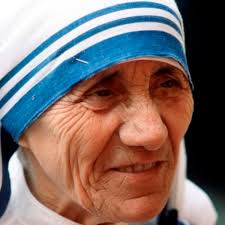
Biography of Mother Teresa


By: Astha Raghav 

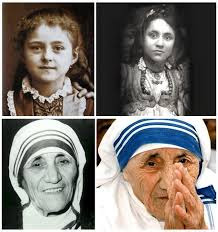
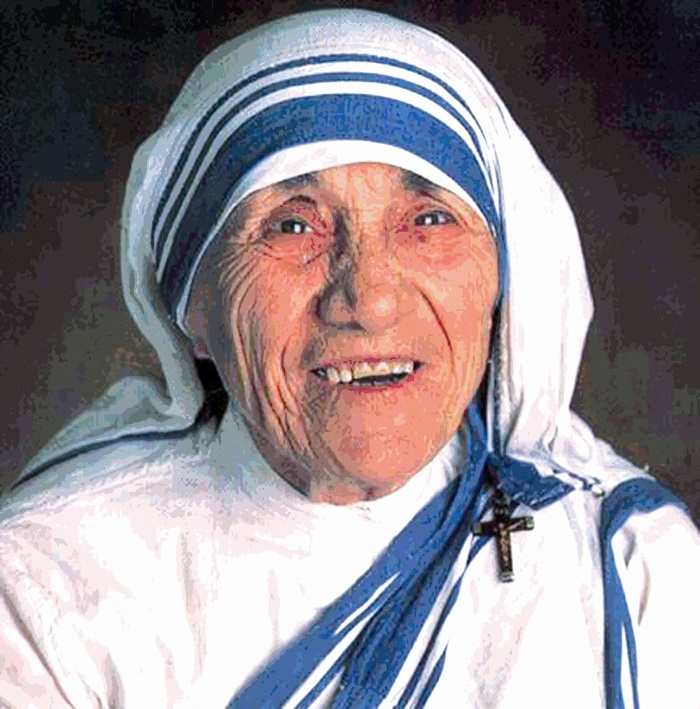
Mother Teresa is also known as “Blessed Teresa of Calcutta”. Her earlier name was Anjeza Gonxha Bojaxhiu. She was born on 26th August 1910 at the then Yugoslavia [ Non Republic of Macedonian]. She cameto India in 1926. Mother Teresa was Roman Ca6nun moved to Calcutta slum to serve God among the poorest of the poor.

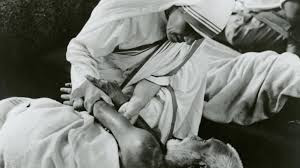
In 1950, she established the Missionaries of Charity to help the poor, helpless, disabled, diseased, refugees and lepers. Today, the  Missionary is present in more than 100 countries. She was awarded the title of Padam Shri in 1962. She received the Novel peace prize in 1979. Later in 1980, she received the title of  “Bharat Ratna” the highest civilian award in India.  She is the first citizen of India to win Novel Peace Prize. 

She had once said, “Love cannot remain by itself – it has no meaning. Love has to be put into action, and that action is service.” Her work transcended geo-political borders and she encompassed the whole of humanity in her healing embrace. Her work was recognised through numerous international and national awards and recognitions. She was canonised at a ceremony in St. Peter’s Square at the Vatican by Pope Francis on September 4, 2016 and came to be known as Saint Teresa of Calcutta.In 1928, she left Skopje to join the Institute of the Blessed Virgin Mary, at Loreto Abbey in Rathfarnham, Ireland, a Catholic institution, which was popularly known as Sisters of Loreto. There, she was inducted into nunnery. She was given the name Sister Mary Teresa after the Saint Thérèse of Lisieux. After a training of around six months in Dublin, the capital of Ireland, Teresa was sent to Darjeeling, India to complete the novitiate period. 

On 24 May, 1931 she took her initial vows as a nun, the First Profession of Vows. She was sent to Calcutta by the Sisterhood. For around next 15 years, Mother Teresa taught at St. Mary’s High School in Calcutta, now Kolkata. The school run by the Sisters of Loreto provided free education to girls hailing from poor families. Here, Teresa became well versed in Bengali, and improved her English. She also became the principal of the school in 1944.

During her Final Profession of Vows on May 24, 1937, she took a vow of poverty, chastity and obedience. She took on the customary title of Mother and came to be known as Mother Teresa.

Call for Serving Humanity

Although Mother loved teaching and enjoyed shaping young minds at St. Mary’s, she was immensely disturbed by the plight of people around her. She was witness to the Bengal Famine in 1943, and experienced the pitiful condition of the poor during the trying times. Sufferings and desperation of the hungry tugged at the chords of her heart. The Hindu-Muslim Riots of 1946 prior to partition of India tore the nation apart. These two traumatic events drove Mother Teresa to contemplate what she could do to alleviate the sufferings of the people around her. 

On 10 September, 1946, while traveling to Darjeeling, North-Bengal, for the annual retreat of the Convent, Mother heard “the call within call”. She felt as if the Jesus was asking her to come out of the walls and serve the down-trodden of the society. Following the Call, on August 17, 1947, Mother left the Convent. Out of reverence towards the Indian culture she adopted white sari with a blue border. He applied for Indian Citizenship and took basic medical training from Holy Family Hospital in Patna. For the next few years, Mother Teresa lived among the poor, in the slums of Calcutta. She, along with a few fellow nuns, went door to door, begging for food and financial help. They survived on the bare minimum and used the excess to help people around them. Gradually, her tireless efforts were recognised and help started pouring in from various sources.

<

p style=”background-color: white;color: #4c4a4a;font-family: Arial, Helvetica, sans-serif;font-size: 18px;line-height: 24px;margin: 0px 10px 10px;text-align: justify”>Thank You!

“Titanic”


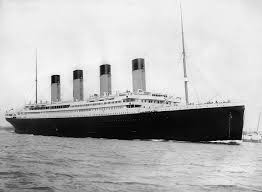
The word “Titanic” still gives goosebumps, that tragic event that happened back in 1912, still has a mesmerising mystery of getting sinked till now. It all was happened on April 10, 1912; the Titanic was sailing for New York from Southampton. At that time, she was one of the largest ship in the world built in a very unique & special way. So she was regarded as unsinkable and unbreakable. At that moment, the Titanic was sailing across the icy waters of the North Atlantic. She was carrying for approx 1300 passengers and a crew of 900. Four days after setting out, a great disaster happened. At one moment a huge iceberg was spotted very close to the ship. The great ship turned sharply to avoid a collision. Suddenly there was a slight trembling sound from below. The alarm had been given. The captain went down to see what had happened. Five of the ships, sixteen watertight compartments were totally damaged by the collision. So the captain realized to his horror that the Titanic was sinking rapidly.It is simply understandable that, through more communication, increased security procedures, and enhanced structure, the horrifying tragedy of the Titanic could have been prevented from incident altogether. Titanic incident has displayed in countless books, articles, and films, and her story has entered public awareness.

Some facts of TITANIC are-

  1. A specific bacteria is slowly consuming the wreckage. What remains of the Titanic at the bottom of the ocean will eventually be entirely eaten away by a rust-eating bacteria. This microorganism, can adhere to steel surfaces and forms the rusticles.
  2. Some 100,000 people attended the ship’s launch the first time the immense White Star liner made its way into the water was in May 1911. It’s estimated that 100,000 people, or roughly one-third of the population in Belfast watched the just-over-a-minute-long launch.
  3. The ship was just under 900 feet long. The Titanic measured 882 feet and 9 inches in length, making it the biggest vessel of its time. Today, the largest cruise ship is Royal Caribbean’s Symphony of the Seas, clocking in at nearly 1,200 feet long.  
  4. The ship burned an estimated 825 tons of coal per day. The Titanic was far from a light craft, weighing some 46,000 tons. Titanic has burned a reported 825 tons of coal per day in 159 furnaces that heated 29 boilers.  
  5. Only 23 of the 908 crew on board were female. Of the 23 female crew members, only three did not survive the collision. Of the 885 male crew members, a tragic 693 went down with the ship. 
  6. The temperature of the sea water was below freezing when the ship sank. A ship that was near the Titanic when it sank — water temperatures were as cold as 28 degrees Fahrenheit. The human body can survive up to 45 minutes in freezing water.
  7. The Titanic was able to carry 64 lifeboats but only carried 20. Many of the lifeboats that were launched from the Titanic did not pack as many patrons as they could have held. 
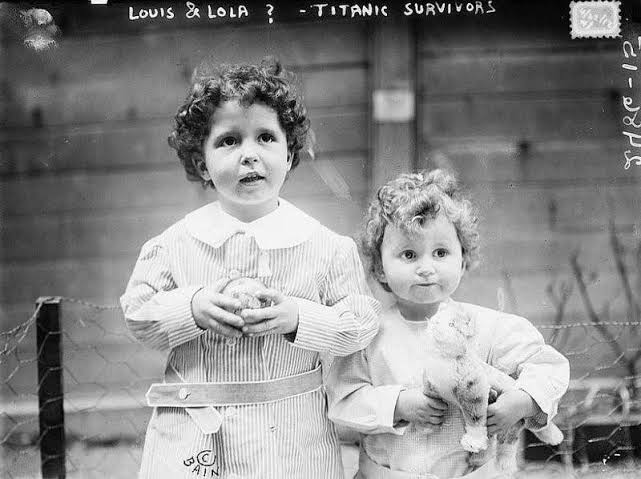
  1. Two young brothers survived the ship without a guardian. Edmond and Michel Navratil went down in history as the only children to survive the Titanic without a parent. They were two years apart in age and were nicknamed the “Titanic Orphans.” Their father, Michel Sr., kidnapped them from their mother, whom he was no longer with, and planned to take them to America. The last anyone saw of him was when he put his children in a lifeboat.  

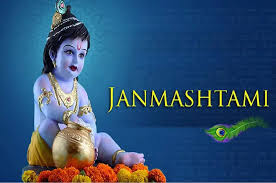
JANMASHTAMI

By: Astha Raghav.

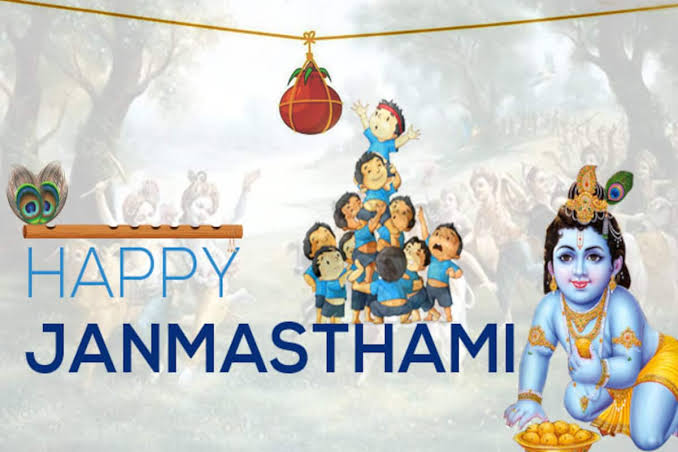
 Krishna Janmashtami, also known simply as Janmashtami or Gokulashtami, is an annual Hindhu festival that celebrates the birth of Krishna, the eighth avatar of Vishnu. It is observed according to the Hindhu lunisolar calendar, on the eighth day (Ashtami) of the Krishna Paksha (dark fortnight) in Shraavana or Bhadrapad (depending on whether the calendar chooses the new moon or full moon day as the last day of the month), which overlaps with August or September of the Gregorian Calendar.

It is an important festival, particularly in the Vaishnavism tradition of Hinduism. Dance-drama enactments of the life of Krishna according to the Bhagavata Purana (such as Rasa Lila or Krishna Lila), devotional singing through the midnight when Krishna was born, fasting (upavasa), a night vigil (Ratri Jagaran), and a festival (Mahotsav) on the following day are a part of the Janmashtami celebrations. It is celebrated particularly in Mathura and Vrindavan, along with major Vaishnava and non-sectarian communities found in Manipur, Assam, Bihar, West Bengal, Odisha, Madhya Pradesh, Rajasthan, Gujarat, Maharashtra, Karnataka, Kerala, Tamil Nadu, Andhra Pradesh and all other states of India.

Krishna Janmashtami is followed by the festival Nandotsav, which celebrates the occasion when NandaBaba distributed gifts to the community in honor of the birth.

Every year, Janmashtami is celebrated as the birthday of Lord Krishna. Though we all have nicknames, Lord Krishna has a whopping 108 names! Some of his names include Govind, Mohan, Hari, Vasudeva, Shyam, Ghanshyam, and to name a few more! These names reflect in all the bhajans and hymns which devotees sing on Janmashtami!

Janmashtami is celebrated with great enthusiasm by Hindus across the Indian subcontinent and beyond. In “A Janmashtami Journey”, we take a whistle-stop tour around the world to look at how this great festival is celebrated.

In countries like Singapore, Malaysia, Canada, and New Zealand, where there is a large community of Hindus, Janmashtami is celebrated. The day is marked with great fanfare and fervour in London, the US, and Poland and there is a unique temple in the Macau peninsula.

Thank You!