A board game of strategic skill for two players, played on a chequered board on which each playing piece is moved according to precise rules. The object is to put the opponent’s king under a direct attack from which escape is impossible.
The Rules of Chess
The King may move one square in any direction, so long as no piece is blocking his path. …
The Queen may move any number of squares straight or diagonally in any direction.
Rooks move horizontally or vertically any number of squares.
Bishops move diagonally any number of squares.
Knights move in an ‘L’ shape’: two squares in a horizontal or vertical direction, then move one square horizontally or vertically. They are the only piece able to jump over other pieces.
Pawns move vertically forward one square, with the option to move two squares if they have not yet moved.
History of chess: The game originated in northern India in the 6th century AD and spread to Persia. When the Arabs conquered Persia, chess was taken up by the Muslim world and subsequently, through the Moorish conquest of Spain, spread to Southern Europe.
In ancient times India was ruled by hindu kings, earlier the entire society was divided into four categories starting from higher to lower.
Brhaman were superior and were considered as gurus and mentors of the entire society. Second class was of Shatriya people; they were mainly sepoys and kings who ruled the kingdom, and their main work was fighting wars. Third class was of Vaishya people, they were Business men and were engaged in trade. The last class was considered the most inferior class, they were considered left out people and were not involved in any activity of the state, they were discriminated in many ways.
Later Mughals ruled over India and established their hegemony, rights of Indians were infringed by them, Mughals dominated over Indians, they established their political power and have influenced the Indian political history such that till today we study their rulers in the academics. They burnt all the evidences of Indian rulers, so that people could only come to know about them in future.
As the time of Mughal rulers ended. Britishers started coming to India; they ruled almost one century over the Indian subcontinent and had robbed the golden sparrow so brutally. They broke down the unity of the nation, used it as a weapon to establish their hegemony in India.
After the 1800s Indian people started realizing the need for freedom from the Britishers, and in 1857 a revolt took place which is known as the first struggle by the Indians for freedom. Later after the arrival of Gandhiji and various other social reformers. Finally after hard struggle on 15th August 1947 India got Independence from Britishers.
Though after getting independence from the Britishers it was not easy to make India as a whole, as independence resulted as a partition of Indian subcontinent into two- India and Pakistan as Muslim community demanded for the separate nation.
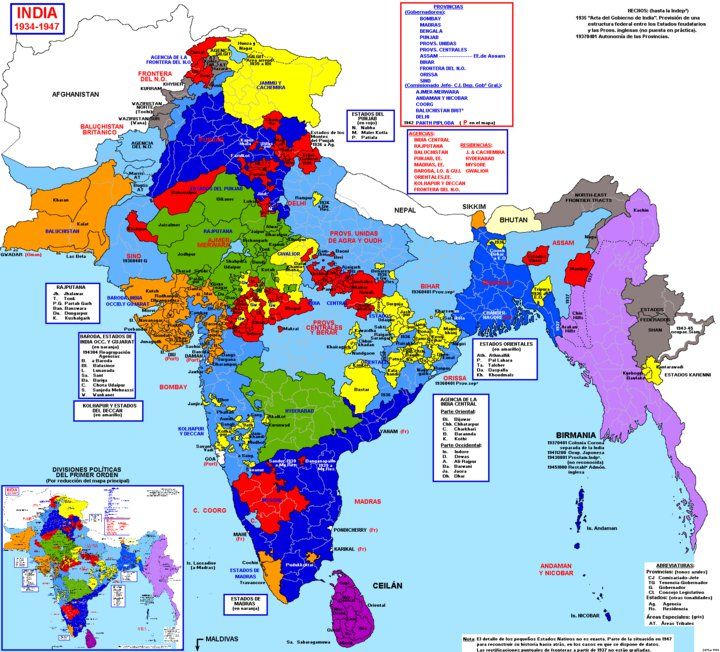
India consisted of 565 princely states before independence which worked separately. The task was to unite all these princely states of different culture, religion and tradition. Sardar Vallabh Bhai Patel emerged as a savior for India. He convinced all the Maharajas of princely state, still Maharaja of Kashmir and Nizam of Hyderabad want to make separate nation, they neither want to join India nor Pakistan.
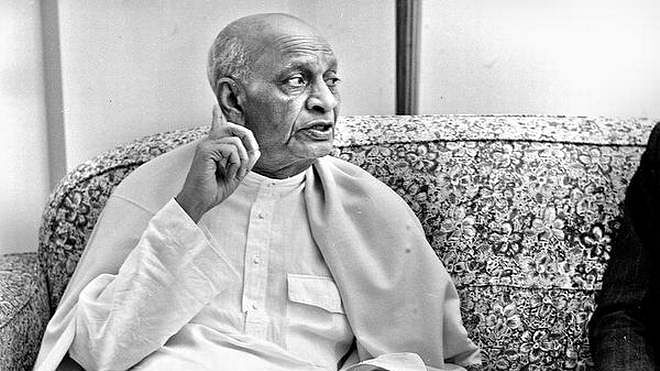
Finally Sardar Patel convinced both the princely state's Maharaja and Nizam and New India was formed. Sardar Patel is known as Iron Man of India, if he would have not interfered, the structure of India we can see today would be different.
Today, India is the largest democracy of the world, with diverse culture and traditions. From North to South and East to West India is full of different colors of tradition, culture, living style, food, dance, dressing, festivals and many more.
Each corner of the country is unique within itself. In the whole world one will not find anywhere this much diversity at one place. India is famous for its diversity and culture.
In India people of almost all religions are found, four major religions of the world were founded in India i.e Hinduism, Sikhism, Jainism and Buddhism.
In India since ancient times the majority of people were of the Hindu religion, others either migrated or converted themselves. Christianity was brought along with Britishers in India.
After Independence India adopted its own written Constitution on 26 January 1950 which today we celebrate as our Republic Day.
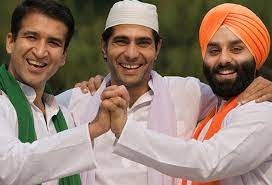
Under the Constitution India provides all rights to all religions equally without discriminating over any particular religion, culture and caste. All people of India follow one citizenship and identity of being Indian.
Therefore, India is well known globally for its title of 'unity in diversity'. All people of diverse cultures live under the shed of one Constitution and with one citizenship.
As earlier mentioned that Indian society was divided among four divisions and were discriminated on the basis of work of each caste, in order to uplift the economically and socially backward classes Indian Constitution provides some special privileges and rights to them. They are given reservation in all aspects, special laws were made for protection of their rights.
Earlier women in society were considered as inferior and were stopped from enjoying their basic rights and hence to improve the condition of women Indian Constitution provides special rights and reservation to them.
Among Indian population the majority of people follow Hinduism, hence one religion could not dominate over the entire society, special privileges are given to minor religion followers and are given equal rights in all the aspects.
Imagine what would have happened if we hadn't got independence? Even if we would get it, what if the framing members of Indian Constitution would have not given such privileges which are mentioned above to the socially backward classes, poor and to minorities, what if any of the religion would have dominated over the entire society? What if after independence the nation builders would have chosen any other form of government rather than democratic one?
India would have missed the title of 'unity of diversity' and such a respected identity in the world. As India is known for unity in diversity, thinking about oneness is like a nightmare.
If we see from bird's eye view India is still a democratic country, united where every section of society is enjoying all the constitutional, social and democratic rights, but deep inside at the ground reality people are not ready to accept these forms of administration.
The reality is people are still fighting and rioting on the name of religion, and the main tussle is among Muslims and Hindus, from partition this conflict began and still after 75 years it is continuing, not only the India and Pakistan, the Hindu and the Muslims of within country are fighting for establishing their power and hegemony.
Hindus want to make India as a nation of Hindus, they don't want any other religion to live here, Muslims want to make India as a Islamic nation, and same is with other religion followers. At the ground level both the religion followers have hatred in their hearts and minds towards each other.
Discrimination has not been ended yet, still people discriminate against each other on the basis of caste.
Politics is always like a mirage, what we see is something that never exists and so is with India, it may seem everything is going constitutionally and equally, but reality and truth can be experienced by observing the situation at ground level.
Let's hope that this nightmare of oneness in United and diversed India never becomes real. Even if it's seeming to be.
The busy schedules become headache though they include your interest matter and work. This can be because of improper management of work and making a load out of it. Procrastination is a major reason of work load. The deadlines at the end confuses the project and lowers the enthusiasm of a person. This results in bad quality of work and dissatisfaction.
Lifestyle needs a change if you feel bored of your job and find it a burden on you. It is the same job you might have applied for with great interest and enthusiasm and wanted to join in quick. The same joy can be brought back by simple steps.
To start with, you should avoid procrastination. It is the worst habit to possess. Once done, you will repeat it for the sake of comfort. However leaving everything to the future will lead no path besides getting you in a trap and creating chaos. Take responsibility and make it a habit to do tasks on-the-spot. This will help manage multiple things at a time and make way for more.
While doing a task, try to make it as interesting that it appears new to you each time you start. Add your own flavor to it by applying innovation and creativity. doing the same job with regular tasks would become fun once you try it the other way keeping the basics same but improving the presentation.
To increase your workplace productivity, a positive and enriching environment is a must. Clear the clutter from the work desk sort out all your online and offline stuffs. It can be deleting unnecessary e-mails, pictures, apps or messages from your device or removing useless files and pages from your office room or desk. Replace unnecessary items with important ones and make sure to add positivity to your environment by keeping green plants nearby and attaching colorful frames on your walls. Be in contact of things that bring energy and joy to you and avoid dull colors and bad company. Make friends who are enthusiastic and determined towards their work.
Always make sure you have time for yourself in between the work. It is important in order to re-energize yourself and start the rest of it-afresh. Being engaged for long hours decreases the capacity and productivity. A break is a must. It may include taking a little walk around or having a short meal, having a chat with your friends or fellow workers or whatever is preferred.
A healthy diet is the key to a healthy mind. Eat healthy and nutritious food which not only fills your stomach but provides you with energy and increase your productivity. Green vegetables help improve focus and make the mind sharp. On the other hand, Fruits also provide essential vitamins to the body. Avoid caffeine to wake up in the morning. Apples are a better substitute for them as per a study.
Enjoy your holidays by planning hangouts with friends and family. This will refresh the mind and prepare for the upcoming busy schedules.
Listen to music to stress-out and involve yourself in social interactions at workplace. It is good to remain involved and make your presence felt among others’. Work continuously to improve yourself and achieve more with hard work and dedication.
It is often hard to manage work and family altogether but it is important to earn to run a family. There are many responsibilities on a working person besides issues arising during the tenure. Conflicts can occur often and sorting them out leaving the work can be frustrating for a busy person. However people should try keeping work and family apart and not letting small things affect their lifestyle. There are lot more of such things that may disturb the mind like road traffic and irregularity of an employee but in order to be successful, one should know how to tackle them on a daily basis. Patience and mindfulness are important characteristics of a leader or even a common worker nowadays.
From its early days as a military-only
network to its current status as one of the developed world’s primary sources
of information and communication, the Internet has come a long way in a short
period of time. Yet there are a few elements that have stayed constant and that
provide a coherent thread for examining the origins of the now-pervasive
medium. The first is the persistence of the Internet—its Cold War beginnings
necessarily influencing its design as a decentralized, indestructible
communication network.
The History of the Internet
The near indestructibility of information
on the Internet derives from a military principle used in secure voice
transmission: decentralization. In the early 1970s, the RAND Corporation
developed a technology (later called “packet switching”) that allowed users to
send secure voice messages. In contrast to a system known as the hub-and-spoke
model, where the telephone operator (the “hub”) would patch two people (the
“spokes”) through directly, this new system allowed for a voice message to be
sent through an entire network, or web, of carrier lines, without the need to
travel through a central hub, allowing for many different possible paths to the
destination.
The Internet has revolutionized the
computer and communications world like nothing before. The invention of the
telegraph, telephone, radio, and computer set the stage for this unprecedented
integration of capabilities. The Internet is at once a world-wide broadcasting
capability, a mechanism for information dissemination, and a medium for
collaboration and interaction between individuals and their computers without
regard for geographic location. The Internet represents one of the most
successful examples of the benefits of sustained investment and commitment to
research and development of information infrastructure. Beginning with the
early research in packet switching, the government, industry and academia have
been partners in evolving and deploying this exciting new technology.
Role of internet in today’s world
Internet has given the field of business
and trade a new face by taking it online. Undoubtedly, online business is
thriving on the net. The Corporate World can reach out to a wider base of
customers, through their websites. The number of active shoppers online is
progressively on the rise and the business world is tapping this fact for the
better. Locating resources like shops, outlets, businesses offering specific
products and services has become easier through Internet. Apart from speed,
reliability and an extensive reach, it also provides the buyers as well as the
sellers with a greater range of products and services to choose from. It also
eliminates the geographical limitations of trade and exchange. Thus, it is
proving to be a fairly profitable mode in the business arena. Advertising and
marketing have also experienced a radical makeover, all thanks to the Internet
and its enormous coverage. A new product can be introduced to a mass audience
within a matter of a few seconds through this high-speed medium. Apart from
garnering the attention of the consumers, sellers also get the all-important
feedback through various programs and polls. Looking at its colossal potential,
Internet has become a highly viable advertising medium, too.
Internet
has made the tendering process smoother, safer and speedier. More secure and
quicker filling up of tenders and execution of orders is now possible through
e-tendering. Organizations using the new age methods undeniably enjoy a
striking edge over the organizations making use of the conventional methods.
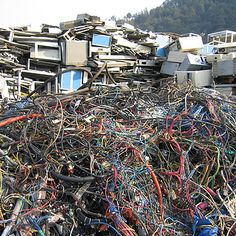
E-waste or electronic waste are those electronic product that are unwanted, not working and nearly at end of their life. E-waste includes almost any household or business item containing with either power or battery supply.
E-waste is a global concern. Many new better technology are coming these days. When new appliances hit the market, old appliances were discarded this generates E-waste.
E-waste contains toxic materials:-
Most appliances contains some form of toxic materials including beryllium, cadmium,mercury and lead which badly affect our soil, water , air and wildlife.
When E-waste buried at landfills, it can dissolve in microscopic traces. These traces of toxic materials pool into ground below landfill known as leaching.
Solution to E-waste
All electronic waste contains some form of recyclable material. It includes plastics, glass and metals.
Reduce the generation of e-waste through smart maintenance.
Reuse the electronic equipment by donating or selling it to someone who still manage too use it.
we all know that in today’s time it is very important to keep ourselves fit for our health. Because if we stay fit we will be healthy And we all know that in today’s time it is equally difficult for some people and not for some people.
But in today’s time, healthy is a very difficult topic, the one who will be healthy and fit, only he can survive. We used to see the people of earlier times that they used to be very fit, they never got sick, that’s why till today they are living their life so well.
For all of us to be healthy, there are many facilities like we should do yoga and exercise so that our body remain fit.
We must have seen that earlier people used to be very fit, the reason was that they used to work very hard. It doesn’t mean that today’s people don’t work hard. My opinion is that at that time there were no facilities like today’s time, so all of them used to work physically.
But today’s time is different, we have got many types of facilities, due to which time is being saved, we are able to give time to our family and rest of ourselves. But at the same time, the effect of all this is also read on our health.
We have seen in earlier times that as soon as the children got time, they run outside to play. But in today’s time, parents like to play video games on their children’s phones sitting at home, but they cannot see their children getting hurt by going out. All this is the reason for bringing laziness in our body. We must understand that being healthy is very important for the life of all of us but also for our family members.
If we are sick today, how many types of medicines do we eat to survive? But if we are already fit then we will not need any medicine. Whatever hard work we do today, we do it for our loved ones, then we should also think that our health will also affect the lives of our loved ones. Whatever hard work we do today, we do it for our loved ones, then we should also think that our health will also affect the lives of our loved ones.
In today’s time, we should pay attention to our health, we should do yoga or exercise whenever we get time. So that our mind also remains calm and we can live our life happily.
‘Growing up with Teens’ by Ruchi Verma, is a psychological approach that revolves around the lives of Teens. I loved to explore this genre. It intrigues me a lot, how parents establish connections with their offspring, how they involve in the process of long-term behavioural management. So, to explore the reality I read this book.
This book was all about the vision of teen parenting. It is not an easy task to raise a teenager, but with the right approach, every parent puts forward to make this journey easier. As communication should not be a barrier in your relationships with your offspring, and these methods will definitely help you to begin better conversations with your teenage kids.
Ruchi Verma states ‘Each day as a parent we too are growing up and understanding the other side of the story.’ This book comprises of 12 chapters. Every section deals with new challenges that emerge in the road of family life. There are so many questions that arise with this set of age, in regards to emotional, physical and social changes. And the perspective, author shared here, is really a nice construct if you can agree to put it into practice this book is really helpful to parents.
Ruchi Verma offers a whole section on communication that I liked the most about this novel. The author acknowledges many important points, for example─ why communication is important? How your teens want to communicate? Do and don’ts of communications.
‘Don’t assume or read their mind. If you don’t understand certain behaviour change or less communication or even, they are not doing things according to the rules made by you’.
‘Listening means letting them finish their story and their thoughts. Just make sure when they talk, look in their eyes, and show interest in their versions. Your opinion on that same topic might differ but remember to give them equal opportunity to put forward their opinions so that they don’t feel neglected.
As a reader, I have mixed feelings about this novel. On the positive side, Ruchi Verma shared some absolute gems of tips and advice based on her personal and professional experiences. She comes up with the idea of talk about adolescence, depression, anxiety. Adding to this, she explored myths and taboos of sex education in India. ‘We carry a hush-hush talking attitude for years. It’s high time to change and break this taboo. Teaching your child this aspect is as important as giving them any other education’.
Not only had she incorporated discussion on daughter’s puberty but also added her son’s too. I have found it to be immensely practical and loved reading it.
The author has rightly convinced me to go on reading the book because every page gave me a new idea about the way she handles the teen’s mind swings. On the other side, I found the information bit repetitive. I so wish it were organized a bit differently.
Reading this book has enhanced the way we look at the behaviour of teens, and the way we feel their life is easy, but they also go through various emotional traumas. ‘It is important to teach both boys and girls that they are equal in the society, and one should respect the other gender’s emotions and consent always.
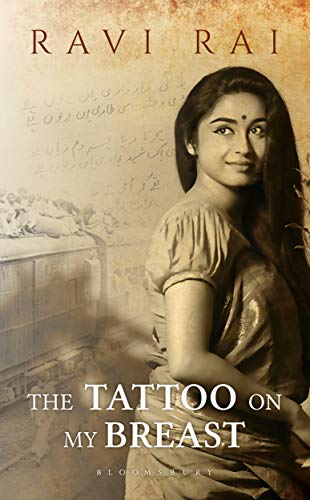
‘The Tattoo on My Breast’ is the debut novel by acclaimed television director and writer Ravi Rai. The story is a mixture of an epic tale of love, passion, emotion, drama and romance set in the times of partition through the eyes of our protagonist women.
The story is set in the 1940’s era, around the time of the Quit India movement and Independence. A Spanish aid worker named Abella Alejandro had come with the International Red Cross to Nepal after the 2015 earthquake and there she learns about Sadhana’s story, the childish granddaughter of a rich Sindhi grain merchant who was getting married to Prakash, when Rehman, the meek, poor boy living next to Sadhana’s house and was Sadhana’s childhood friend realizes his love for her.
On the other hand, Jinnah and Nehru have started displaying their influence on the young and the restless of the yet undivided India, where the several Gurdwara’s Sikh flags are replaced with the green flag of Islam and Prakash becomes a fatality in one such crossfire.
Barely 15 days into her marriage and Sadhana is a widow. And Rehman is back in her life. But little does she know that her radical Hindu father has fixed her marriage to Sunil, a Sindhi millionaire running his looms in Dhakka, which is soon to become East Pakistan.
Sadhana and Rehman plan an escape, but destiny plays a cruel role with the breakout of riots and Rehman is once again late in claiming his love. The Radcliffe line has been drawn and has divided India. The lovers had parted painfully.
Sadhana, now a nurse, is attending to the injured when she meets Sunil, the man she was slated to marry. His brother, Anil is a doctor at the hospital and has fallen in love with the young nurse. But Sadhana’s heart only beats for Rehman. In this hour of difficulty, Sadhana’s grandfather plans a sinister conspiracy and poisons Sadhana’s mind against Rehman; causing her to marry Anil.
And just when connubial happiness begins to set in and Sadhana gets pregnant, Rehman returns for her causing her heart to beat for him once again. What will Dr. Anil, who till now was unaware of their undying love, do when he comes to know of Rehman’s presence? Will Sadhana follow her heart or will she bind herself in chains that have always distanced her from her true love? Will Rehman accept a pregnant Sadhana as his soulmate or leave her at the crossroads once again? To known these answers read the beautifully written book by Ravi Rai ‘The Tattoo on My Breast’ which is easily available on Amazon.in offline and online as well.
I feel the story is well researched and beautifully executed. The plot and some of the imagery make it evident that the writer used to write dramatic shows, which explains the dramatic plot and graphic visualisation. The book gives readers a deep look at the hardship and inequality of suffering around the turbulent times in Indian history. Despite the backdrop, the story is predominantly a love story, and this book is a great gift to romantic book readers. Personally, I feel it describes the sorrow of separation and make you realise the importance of your loved ones in your life.
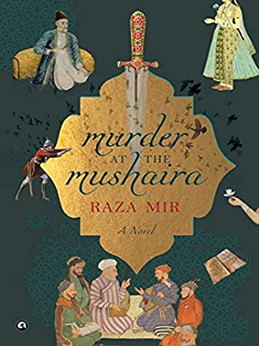
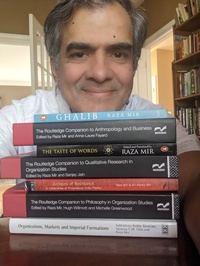
Raza Mir’s ‘Murder at the Mushaira’ is not his first book and the author is almost an expert in writing novels and various other books like Ghalib: A Thousand Desires, The Taste of Words: An Introduction to Urdu. But ‘Murder at the Mushaira’ is most certainly his ‘magnum opus. Each and every page of this novel is worth reading and re-reading. There is no denying or any dilemma in mind because we can see the years of effort and intense research that must have gone into this exquisite work of art by Raza Mir. The fact jumps out at the reader as one is compelled to halt, ponder, smile and sigh at the careful selection of words that create a vivid, elaborate and exuberant imagery of the then Shahjahanabad, amid the rising tensions, chaos and tumult of the 1857 Sepoy Mutiny.
So, the story of this historical fiction by Raza Mir, set against the backdrop of the revolt of 1857.. India stands on the brink of war. Everywhere in its cities, towns, and villages, rebels and revolutionaries are massing to overthrow the ruthless and corrupt British East India Company which has taken over the country and laid it to waste. In Delhi, the capital, even as the plot to get rid of the hated foreigners gathers intensity, the busy social life of the city hums along. Nautch girls entertain clients, nawabs host mushairas or poetry soirees in which the finest poets of the realm congregate to recite their latest verse and intrigue, the wealthy roister in magnificent havelis, and the drinking dens of the city continue to pack in customers.
One morning, Kallu, a retainer at a Delhi haveli, cleaning up after a grand mushaira, discovers a poet stabbed to death with a polished agate dagger. The poet was the nobleman. Gruesome as it is, the murder appears to be a fairly run of the mill crime until anxious officials of the East India Company make it a matter of the highest priority.
Instructions are issued for the murderer to be found and arrested immediately. But who is the killer? The dead man had many enemies, and the investigating officer Kirorimal Chainsukh soon discovers there are dozens of suspects, an equal number of motives, and waves of secrets and lies that threaten to overwhelm him. As the pressure on him to solve the crime increases, Chainsukh turns to Mirza Ghalib, poet laureate and amateur detective, for help.
Ghalib’s tools are his formidable intelligence, intimate knowledge of the machinations of Delhi high society, ferocious curiosity, and reliance on the new science of forensics that his friend the scientist Master Ramachandra has introduced him to. As Ghalib begins to collect evidence and dig into the case, he uncovers an ever-widening list of suspects, and a sinister conspiracy that involves many of Delhi’s most important men and women. By the time you think you have caught up to puzzle, it’s already fades away. The narrative of conspiracy entwines with myriads of secret and lies, entertaining and believable tale.
Murder at the Mushaira is at once a brilliantly constructed murder mystery and the finest historical novel by an Indian author in recent times. One can judge the novel by its cover, a real pristine beauty so dramatic and mysterious at the same time. I genuinely suggest you to pick this phenomenal novel read it because it would be an intoxicating experience for you. I loved this book to eternity and beyond. Must Recommend!!!
Book Name : How to Win Friends and Influence People
Author Name : Dale Carnegie
Year of Publication : 1936
There is a famous proverb. “Tell me who your friend is, and I will tell you who you are.” Adding friends who can stand by us is an art. In 1936 Dale Carnegie, a famous public speaker, wrote a book on how to make such good friends. The title of the book is ” How to Win Friends and Influence People.” The book has sold nearly 30+ million copies since its publication. To date, the book has been ranked 19th on Times Magazine’s 100 Most Influence Books list.
We are going to know about such a famous book. It can be said that this book is the beginning of self development. This book has made a changes in the lives of many.
You can learn an 8 things by reading this book. What they are,
1. Come out of present self and get new thoughts and visions
2. How to farm a team easily
3. Increase popularity
4. Become a great Influencer
5. Increase your influence level on others
6. Learn how to handle complaints and deal with conflicts
7. Learn how to have a better conversation with others
8. Influence other to work with you
You can achieve the above 8 things by reading this book. Not only this but there are a lot of things in this book.
This book has a total of 32 chapters. Author holds this as a 4 part.
PART I – Fundamental Techniques in Handling People
As we learn what is being said in this part, we will begin to interact properly with others. When we interact like that, we develop a respect among the people.
PART II – Six Ways to Make People Like You
Author has said here a 6 things for others to like us or for others to look at us and be impressed in this part. Why is it said that First Impression is the Best Impression. Always a lot of people will think we are like this when they see us. So he has explained how to make us believe when others see us or how to create best impression on us when they see us.
PART III– How to Win People to Your Way of Thinking
Author has clearly stated in this part how to bring others our way. Some of the important things that Arthur has said in this are that we can never win a debate. Because it’s not a problem if you are arguing for proof in a discussion. But to those who argue that what I am saying is right author says that it is difficult for us to win. And in this part he has said many things about how we are creating our enemies, how to avoid it, and how to make others like us.
PART IV– Be a Leader : How to Change People Without Giving Offense or Arousing Resentment
Author has told us how to be a leader and how to bring people our way in this part. Sometimes there will be some arguments between us and those who follow us. It explains how to say it without offending them. If you are a team leader or manager in a company, the steps mentioned in this part will be very helpful to make your team do what you think.
Author has said a lot about things like this in this book. That is, no one likes to accept someone’s order. So he has said very clearly about everything from how we indirectly command someone and how to get them to do the work we need for us.
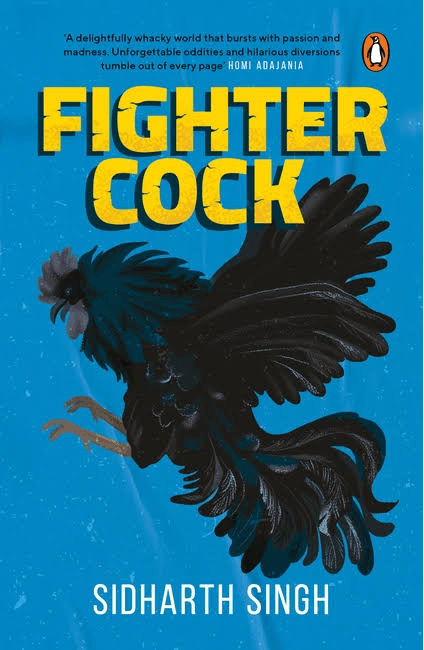
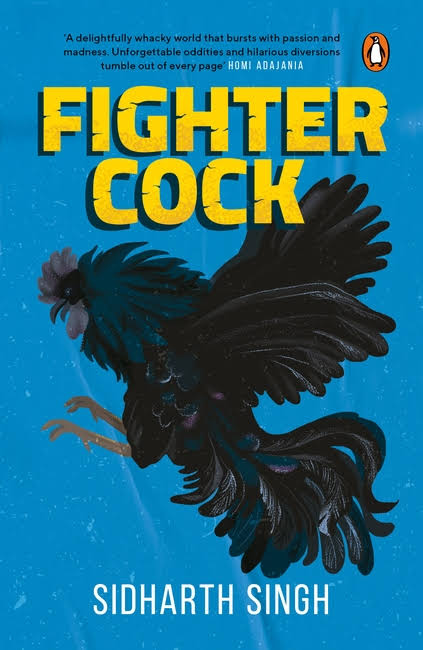
Lines from the novel:‘This is not livestock, Mr Suri. This is black cock, Karianath. As you can see in the painting above me, this black cock is everything to us here in Shikargarh. It is our identity, our culture and now it will also be our business.’
‘Fighter Cock by Sidharth Singh’ is a book that gives you the vision of the universe of petty politics, rivalry and obsession for sex, drugs, and cockfighting. Each character retains their flaws yet is absorbing and dramatic. Although, in the beginning, I am not into this type of genre as much, still this debut gave me enough reason to carry on with it.
Fightercock is a story based on the life of Sher Shah aka Sheru, who has a dangerous past. In a search for a job, he enters this unusual world of royal heritages, patriarchal society, and vengeance. This story is set in Shikargarh, Central India. An untamed wilderness is ruled by Raja Rattan Shah with a passion of blood sport. As Kings always need a new territory to conquer, Raja sahib launches his dream project, the black cock poultry farm, which rears top- class Karianath.
‘Sheru glanced up again at the shabby painting of the Shikargarh coat of arms and inspected the black rooster, framed by two crossed swords below and a fortress above, trying to find meaning in its bizarre heraldry.’
As the story unfolds and discover, more characters come into the spotlight with the basic plotline, that is ─ The Raja’s Karianath fighter cocks are the undisputed champions of the area, but their reign is challenged by the new Aseel fighters imported by Teja, his bastard son, who also schemes to take his position the Aseels had taken the cockfights by storm and upset the status.
In the next few chapters, we have been getting introduced to Sheru’s past life and his connection with Bombay’s underworld.
In the story the author has also described sheru’s childhood he says- as a child our Sheru often asked his mother why she had given him the name Sher Shah. And her answer set the environment of this novel, ‘because you are a tiger, the king of the jungle. You don’t know that yet, but one day you will.’
Once he lost both his parents, he questioned his life journey ‘Why on earth had Anna (his guardian) sent him to Shikargarh, of all places, when he could have easily packed him off down south or even abroad? What was Anna’s real connection with Murugan (Raja Sahib’s Assitant)? How long would he be able to survive here knowing that Anna’s life may be in danger?
As in projects, you need to construct a flow chart into your mind, you need to do the same here to understand the story because there are not a couple of plots but subplots and various tales and references, it is a wild trip, characters do clash, worlds rebuild and it really demands the reader attention.
Personally, I think Fighter Cock is a political thriller that reveals the difficult world of poor Kairus, who were caught in an endless web of debt and delusion. This weekly spectator-sport extravaganza and sports like cockfight was the only form of public entertainment in the area and brought in substantial revenue from illegal gambling, mahua and ganja sales, whereas the raja took the lion’s share of the proceeds.
The only thing interrupted in this novel is the usage of superabundant characters. The prose is clear, and moving sentences. The author managed to captivate drama in right place. I liked the nuances between Sherub and Kanya. ‘If you stay in Shikargarh long enough, you will stop wearing one. Time moves slowly around here,’ she said and extended a delicate but firm hand towards him. ‘I am kanya’.
Fighter cock novel is a kind of political thriller that will keep you hooked with each and every page of the book, it is interesting as well as boring at the same time. But I would definitely suggest this book is not for children below 16years.
It is observed on 7 August every year to honour the handloom weavers in the country. The National Handloom Day is celebrated to mark the 100th anniversary of the Swadeshi Movement, which started in 1905.The first National Handloom Day was organised by Prime Minister Narendra Modi in Chennai.This year 6th National Handloom Day is celebrated.Handloom sector is a symbol of the country’s glorious cultural heritage and an important source of livelihood in the country. The sector is key to women empowerment as over 70% of handloom weavers and allied workers are women. Lets respect, celebrate and encourage handloom sector thereby empowering our handloom weavers and workers financially and instilling pride in their exquisite craftsmanship in our Country.
Every Indian School child is taught that the peacock is India’s National Bird, Tiger is the national Animal, Jana gana Mana is the national Anthem, and Hockey is the national sport.
But in India, the Ministry of Youth Affairs and Sports in 2012 cleared that no particular sport is recognised as India’s National Game.
Some people called Hockey as the National Sport probably because of the international success that hockey gained since it’s Olympic debut in the early 20th century. In 1928, the Indian men’s hockey team made their debut at the Olympics, and won 6 gold medal between 1928-1956. Though their performance declined later.
Similarly, some people believe Kabaddi as the National Sport of India because Kabaddi too is most popularly played in India. Kabaddi is one of the Oldest sports in our country.
But the truth is that the national game of India is neither Hockey nor Kabaddi. There is no sport which has been declared or recognised as the National Sport of India till date.
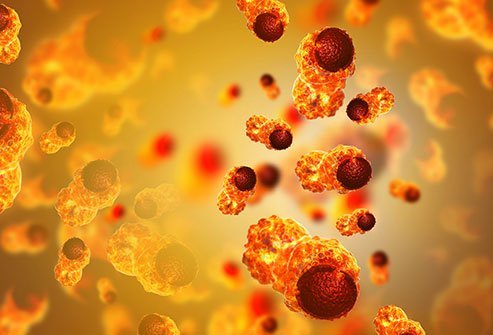
Cancer is a major burden of disease worldwide. Each year, tens of millions of people are diagnosed with cancer around the world, and more than half of the patients eventually die from it.
In many countries, cancer ranks the second most common cause of death following cardiovascular diseases. With significant improvement in treatment and prevention of cardiovascular diseases, cancer has or will soon become the number one killer in many parts of the world.
As elderly people are most susceptible to cancer and population aging continues in many countries, cancer will remain a major health problem around the globe.
In this review, we summarized published data to describe the severity of the burden. We also analyzed the GLOBOCAN 2002 database to evaluate the morbidity and mortality of cancer in various geographic regions around the world.
The GLOBOCAN 2002 database was put together using the huge amount of data available in the Descriptive Epidemiology Group of the International Agency of Research on Cancer (IARC), a World Health Organization agency in Lyon, France [1].
Incidence data are available from cancer registries. They cover either entire national populations or samples of such populations from selected regions. Cancer registries also provide statistics on cancer survival. Mortality data by cause are available for many countries through the registration of vital events.
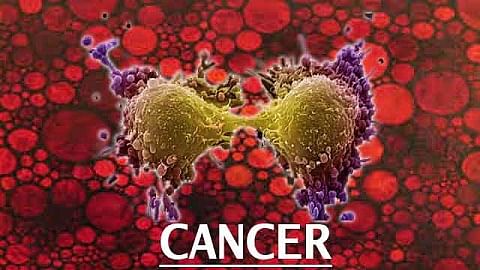
Cancer is a large group of diseases that can start in almost any organ or tissue of the body when abnormal cells grow uncontrollably, go beyond their usual boundaries to invade adjoining parts of the body and/or spread to other organs.
The latter process is called metastasizing and is a major cause of death from cancer. A neoplasm and malignant tumour are other common names for cancer.
Cancer is the second leading cause of death globally, accounting for an estimated 9.6 million deaths, or one in six deaths, in 2018.
Lung, prostate, colorectal, stomach and liver cancer are the most common types of cancer in men, while breast, colorectal, lung, cervical and thyroid cancer are the most common among women.
The cancer burden continues to grow globally, exerting tremendous physical, emotional and financial strain on individuals, families, communities and health systems.
Many health systems in low- and middle-income countries are least prepared to manage this burden, and large numbers of cancer patients globally do not have access to timely quality diagnosis and treatment.
In countries where health systems are strong, survival rates of many types of cancers are improving thanks to accessible early detection, quality treatment and survivorship care.
Neeraj Chopra won Gold in the men’s Javelin throw final with a throw of 87.58 to win the first gold medal in athletics for India and the second gold overall.
This is India’s 7th medal at Tokyo Olympic, the best ever medal haul for India at a single edition of the games.
The first Gold medalist in Olympics for India was Abhinav Bindra in shooting and Neeraj becomes the second Gold medalist for India in the history of Olympics.
So far, India won 1 gold, 2 silvers and 4 bronze at Tokyo Olympics.









 Eduindex
You must be logged in to post a comment.