Over time content writing has evolved enormously in the market. Content writing as a career provides a tremendous opportunity. In today’s world, many big firms are hiring content writers exclusively to provide content solutions to clients.
This brings us to the question that if content writing has such potential, What do I need to become a content writer? What are the career opportunities? Salary Expectation? Well, you will find all the answers needed in this article.
What do you need to become a content writer?
While many of the companies prefer hiring an individual who has a degree in literature or journalism & mass communication, one with excellent writing and communication skills is also welcomed by the companies. In short, anyone with good writing and communication skills can apply for it. Also, thorough knowledge of the field you are writing about is always a plus point.
What are the career opportunities?
Looking at the demand for content writers, it can be said that the demand will stay longer in the industry. Besides taking a job in a firm one can also become a freelance writer or a full-time blogger. Mentioned below are some of the different fields of content writing:-
I) Public Relations Writing: These days, most of the corporate hire in-house writers to write their newsletters, press releases, and bulletins.
II) Technical Writing: It mostly deals with literature like user manuals and do-it-yourself kits, etc.
III) Marketing Content: In this field, a writer should be able to attract customers through catchy headlines and slugs. As a marketing content writer, one needs to be creative to attract the attention of consumers and convince them. This type of writing includes brochures, fliers, etc.
IV) Web content: As websites need to update their content to stay fresh and relevant, they hire content writers.
V) Others: Some of the other fields of content writing includes – health, lifestyle, financial, children’s writing, academic, copywriting, and fashion.
Salary Expectation
As an experienced freelance writer one can earn up to Rs 40-50 thousand in a month. And for the content writers working for a firm, the salary varies from company to company. The average starting salary for a content writer ranges from Rs 15,000 to Rs 20,000 per month.
If you think you are made for writing then you should give content writing a short.
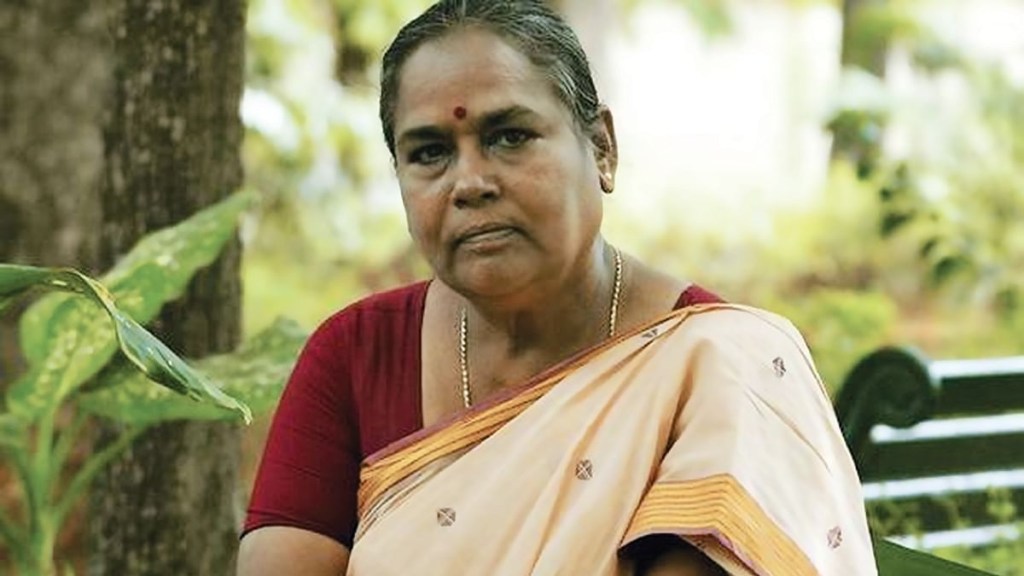
Introduction: Karakku is a novel written by the Tamil Dalit writer Mary Faustina Fatima Rani. In this novel she speaks about a lot of problems faced by the Dalits and how they were discriminated and exploited. She expresses her angst and her pain through her writing. The most prominent one is the problems faced by the dalits is that of caste discrimination. Bama belongs to the untouchable class called Parayas.
• Even though her living standards were not luxurious, it was still a little better than others as her father was an army officer and because of that, whenever he came back home, there was always food at the table. She also had an older brother who made her aware of the conditions of Dalits and help to understand why it is important to overcome it.
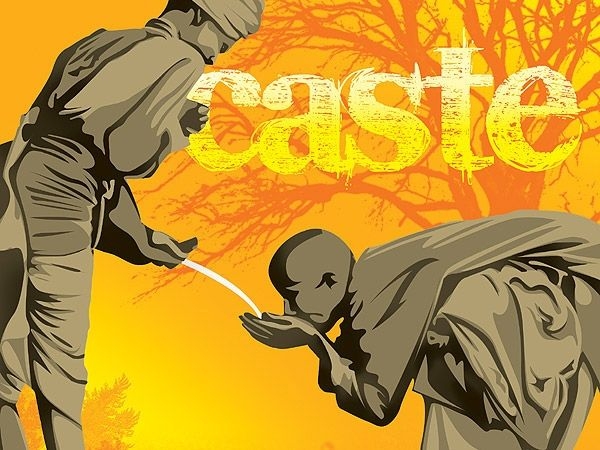
• In the Indian society, the discrimination of people based on their caste was rampant. Every person was judged according to which caste they belong to and showed respect accordingly.
• The problem with food: The people of the upper caste always got to eat all the tasty food like the fishes with fancy names but the lower caste people always had to settle for the cheap fishes as that is what they could afford. She tells us how the lower caste people are the ones who do all the work yet only the rich benefit from it.
• The problem of exploitation and untouchability: Bama mentions the exploitation of the poor Dalits by the rich Naickers and tells us how that is the reason that the Dalits haven’t prospered yet. She talks about work and how the Dalits had to work all their lives just to make ends meet and they were not even be rewarded for it. An example or incident is when a lady was holding a ‘bajji’ with a string so she does not touch it while giving it to a Naicker. At first Bama found this incident funny but after she was explained about the concept of untouchability by her brother she gets a little furious.
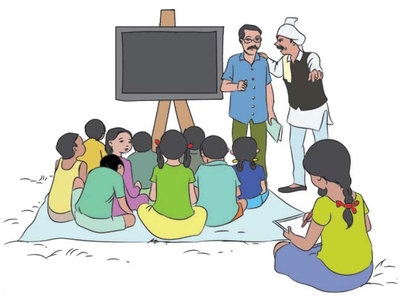
• The problem of Education: The next problem that the Dalits face is the problem of education. Not all Dalits have the luxury or opportunity to attend school and receive an education. The children or not allowed education and even if they are, they are not given equal opportunities and are always identified by their caste. Bama also faced or experienced these during her school days but she managed to gain the trust and respect of her peers and teachers as she was a very bright student. That is when Bama realised that if every child is given this opportunity to receive education, they would be independent and would not have to struggle to make ends meet and would also be a respectable citizen of the country.
• Visible Caste discrimination: In the future when she joined the convent and taught for 5 years, Bama also realised that the caste discrimination still exists. She realised that where there was a vow to help the Dalit children, really care about that aspect. Nobody tried to teach the children what their rights are and how they can together work to overcome their problems as a community and prosper.
Conclusion: All of these incidents show us the plight of the dalits and how difficult their lives are on a daily basis. They need to overcome problems every day, in every field they go to. There is no leniency for the poor which shows us that the hierarchy of caste is an atrocious topic and everyone should be treated equally.
Over time content writing has evolved enormously in the market. Content writing as a career provides a tremendous opportunity. In today’s world, many big firms are hiring content writers exclusively to provide content solutions to clients.
This brings us to the question that if content writing has such potential, What do I need to become a content writer? What are the career opportunities? Salary Expectation? Well, you will find all the answers needed in this article.
What do you need to become a content writer?
While many of the companies prefer hiring an individual who has a degree in literature or journalism & mass communication, one with excellent writing and communication skills is also welcomed by the companies. In short, anyone with good writing and communication skills can apply for it. Also, thorough knowledge of the field you are writing about is always a plus point.
What are the career opportunities?
Looking at the demand for content writers, it can be said that the demand will stay longer in the industry. Besides taking a job in a firm one can also become a freelance writer or a full-time blogger. Mentioned below are some of the different fields of content writing:-
I) Public Relations Writing: These days, most of the corporate hire in-house writers to write their newsletters, press releases, and bulletins.
II) Technical Writing: It mostly deals with literature like user manuals and do-it-yourself kits, etc.
III) Marketing Content: In this field, a writer should be able to attract customers through catchy headlines and slugs. As a marketing content writer, one needs to be creative to attract the attention of consumers and convince them. This type of writing includes brochures, fliers, etc.
IV) Web content: As websites need to update their content to stay fresh and relevant, they hire content writers.
V) Others: Some of the other fields of content writing includes – health, lifestyle, financial, children’s writing, academic, copywriting, and fashion.
Salary Expectation
As an experienced freelance writer one can earn up to Rs 40-50 thousand in a month. And for the content writers working for a firm, the salary varies from company to company. The average starting salary for a content writer ranges from Rs 15,000 to Rs 20,000 per month.
If you think you are made for writing then you should give content writing a short.
Paulo Coelho is a famous Brazilian writer. He published his first book in 1982 and has written more than 30 novels to date. The most famous of these is the 1988 novel The Alchemist. The novel was originally written and published in Portuguese. It has since been translated into 70 world languages.
The story is very, very simple. Let’s get into the story.
The region of Andalusia in Spain has mountains and fertile pastures. There a shepherd boy named Santiago stays with his flock in a dilapidated church in that mountain. He often has a dream. That is, he often dreams that he will get the greatest treasure if he goes to Egypt and sees the pyramids. He asks the girl from a nomadic group to find out if this dream will come true. She confirms this dream and says that it is true and that he will definitely get the treasure if he goes to Egypt somehow. The next day he meets a king in disguise. He also encouraged him and said that when you want to achieve something, this universe will create the environment for you to achieve. Not only that, he gives him two gems from his armor, buys some of his sheep and sends them money for the trip.
Santiago arrives in Morocco after a two-hour voyage by boat from Andalusia. There unfortunately all of his money and stuff is stolen. He has nothing on hand now because the money was stolen. So he works in a glass shop there. After working there for several months and arranging the money for the trip, he plans to travel to Alfheim in Egypt. Then an Englishman becomes a companion. That Englishman has a desire to meet an alchemist who has lived in the desert for over 200 years. The desert journey takes several days for the two to continue their journey together. They both live in an oasis due to the war against the nomadic tribes there. There the Englishman is looking to meet that alchemist who has lived for 200 years. At the same time, Santiago falls in love with Fatima, the daughter of the oasis leader. Santiago warns those who are there one day as the signs of an attack on the desert oasis appear. That is why he is appointed as the consultant of the oasis. As his life progresses smoothly as Fatima’s love and counselor for the oasis, he tries again to chase his dream. Somehow he goes to Egypt and finds the pyramids and intends to get the treasure.
The alchemist, who then lived for 200 years, appears before him and helps him. With his help he goes to the pyramid. Paulo Coelho has written beautifully about whether the treasure was finally found and how it was found.
This is a story with a small center. But everyone who aspires to make their dream come true should definitely read this book at least once. Having the environment to make a dream come true makes life so much happier. Coelho has written fantastic comments on how people are capable of realizing their dream at any time of their lives. His words are also very simple. A journey in that desert, the sand, the air, the heat, the friendship of the Englishman, the love of Fatima, everything is simply described. The story, which moves like a magical journey, will be a pleasant read for those who are dreaming of a dream come true at any time of their lives.
STD’S are sexually transmitted diseases. This means they are most often — but not exclusively — spread by sexual intercourse. HIV, chlamydia, genital herpes, genital warts, gonorrhea, some forms of hepatitis, syphillis, and trichomoniasis are STD’s.
Each year, 20 million new cases are reported; half of these infections are among people ages 15 to 24 and they can have long-term consequences. STDs are serious illnesses that require treatment. Some STDs, such as HIV, cannot be cured and can be deadly. By learning more about STDs, you can learn ways to protect yourself.
You can get a STD from vaginal, anal, or oral intercourse You can also be infected with trichomoniasis through contact with damp or moist objects such as towels, wet clothing, or toilet seats, although it is more commonly spread by sexual contact. You are at high risk if:
You have more than one sexual partner
You have sexual relations with someone who has had many partners
You don’t use a condom when having sex
You share needles when injecting intravenous drugs
Till date COVID-19 is one of the most dangerous viruses that have taken crore lives or even we can say more. The pandemic of COVID-19 is till day come in the list of most hazardous problems faced by us. Crores of people lost there loved once and the only thing left was the family which was completely shattered after this outbreak. It was found that the crisis that the people suffered after the arrival of corona virus is like no other virus faced since recent decades. Also, from the beginning till today no such pandemic had hit the social and economic structure as hard as this virus did.
According to the survey around forty nine million people lifestyle changed and ultimately resulted in extreme poverty. The countries which are already poor have fallen much more but the countries which were counted in the list of middle income are also suffering. For the poor of India the life have been much difficult and survival too. Survive and living a normal life during such outbreak is really a difficult one. India is itself a poor country and the arrival of this pandemic has pushed it more economically. People struggled to survive in the initial face of lockdown and many people are still surviving and a fighting a battle against such great pandemic. The real problem was the battle was not only against the problem of surviving but also inequality in various places like healthcare provided to the patients and the education sector too. The economic crisis faced by the poor section of the society triggered them a lot as it rise the level of income inequality. This virus was itself considered as a virus which gave birth to inequality and this inequality increased rapidly with the passage of time as the rich became richer where as on the other end of the spectrum the poor became more inferior. In a report it was found that the top billionaire’s of India become richer and this percent increased to 35% where as millions of people lost their bread for the day. The report suggests that around 1.70 people lost their jobs in every hour in the month of April, 2020. Maximum people who lost there jobs were from the informal sector and there fight in not ended. These people are still fighting and struggling.
Only we all can end up this poverty gap which can be done from the combination of domestic as well as international resources. No technological or else financial reason could be find till now which can accept the reversals of worldwide poverty. This destruction is due to lack of proper party-political will as well as worldwide leadership on the issue of poverty. The poverty has increased by one hundred forty four million in 2020. Thus, we can sum up that arrival of such hazardous virus has shattered the whole world but the one who suffered the most and are still suffering is the poor and our government should take affective steps regarding reduction of this poverty.
We all are living in 2021, do you think the society treats men and women in a equal manner? No, many of us answer would be no. Don’t you think why? Take your house as an example, does everyone in house do the household chores? No, only the girls especially the mothers.
It is totally not fair at all to make the women to getup in the middle of the meal to serve you. How cruel it is? She is also a human, she to have her own choices and she have all rights to enjoy her life.
We all are hearing different stories each day about how the society treats the girl in the worst manner, the dowry cases, inter caste marriage, acid attack, rape, harassment, abuse these are all the evidence that how the women are struggling to live the common life in this world. As the world is modern the problems are modern, I’m saying about the social media platforms, where most of the women feels insecure,
She is not your servant to fulfill your needs but a living human to fulfill her own needs. As the years passed there stood many peoples raising the voice for the equality of women but still we are fighting for the equality. A good point about that is the situation is not bad as that time but it is not ok to accept that.
Fighting all these things we can see women in the higher points, think about the road she travelled to reach the goal it is not at all the easier one. It says how determine the women should be reach it.
We should teach everyone in the society that men and women are equal, this should be done in the childhood itself so that it would create the better society in the future. This is not only with the men and women but with every human in this world should be treated equally, we all are a fellow human being who are responsible for the society, so it’s our responsibility to make the awareness, and make people understand about the equality.
“Equality is the soul of liberty; there is, in fact, no liberty without it.” – Frances Wright
“The word ‘equality’ shows up too much in our founding documents for anyone to pretend it’s not the American way.” – Martha Plimpton
“There’s nothing complicated about equality.” – Alice Paul
“I would like to be known as a person who is concerned about freedom and justice and prosperity for all people.” – Rosa Parks
Do you remember the 1991 Economic crisis which led to Liberalisation, Privatisation and Globalisation (LPG) reforms ?
So lets us compare the India of 1991 with the India of 2021 which also marks 30 years of LPG Reforms
The Crisis of 1991 & Reforms:
1991 Crisis: In 1990-91, India faced a severe Balance of Payments (BOP) crisis, where its foreign exchange reserves were just adequate to finance 15 days of imports. There were many factors that led to the BOP crisis:
Fiscal Deficit: The fiscal deficit during 1990-91 was around 8.4% of GDP.
Gulf War I: In 1990-91, the situation was aggravated by the rise in the price of oil due to Iraq’s invasion of Kuwait.
Rise in Prices: The inflation rate increased from 6.7% to 16.7% due to a rapid increase in money supply and the country’s economic position became worse.
Nature and Scope of 1991 Reforms: In order to get out of the macro-economic crisis in 1991, India launched a New Economic Policy, which was based on LPG or Liberalisation, Privatisation and Globalisation model.
Then Finance Minister, Manmohan Singh, was the prime architect of the historic 1991 liberalisation.
The broad range of reforms under the LPG model included:
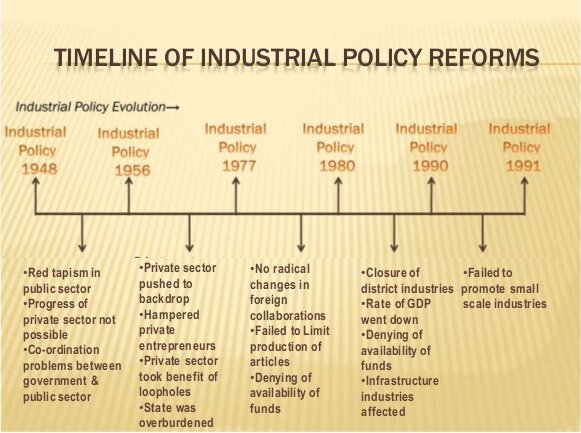
Liberalising Industrial Policy: Abolition of industrial license permit raj, Reduction in import tariffs, etc.
Beginning of Privatisation: Deregulation of markets, Banking reforms, etc.
Globalisation: Exchange rate correction, liberalising foreign direct investment and trade policies, Removal of mandatory convertibility cause, etc.
These reforms are credited and applauded for the high economic growth seen from 1991 to 2011 and substantial reduction of poverty from 2005 to 2015.
The Crisisof 2021 :
The World Economic Outlook Report 2021, states that the Indian economy is expected to grow by 12.5% in 2021 and 6.9% in 2022.
However, the pandemic has led to massive unemployment in the informal sector and poverty is increasing after decades of decline.
The social sectors of health and education have lagged behind and not kept pace with our economic progress.
Too many lives and livelihoods have been lost that should not have been, during the pandemic.
Inspector Raj is set to make a comeback through the policy for e-commerce entities.
India is back to the old habits of borrowing excessively or extracting money (in form of dividends) from the RBI to finance the fiscal deficit.
The migrant labour crisis has laid bare the gaps in the growth model.
India foreign trade policy is again suspecting trade liberalisation, as India has already decided to opt-out of the 16-nation Regional Comprehensive Economic Partnership (RCEP) trade deal.
Way Forward
The 1991 reforms helped the economy stave off a crisis and then bloom. It is time to outline a credible new reform agenda that will not just bring GDP back to pre-crisis levels, but also ensure growth rates higher than it had when it entered the pandemic.
When it comes to space, the first name in our mind will be NASA. From kid to old age people all know about NASA, that much impact NASA have on us. All right coming to this article, in this article we are going counter the following topics – What is NASA and what they do? Creation of NASA, Some special projects of NASA, Future missions of NASA, NASA’s budgetfor the financial year. Here starts the article –
What is NASA?
NASA stands for National Aeronautics and Space administration, it is an Independent US government agency, which is responsible science and technology which is related to space and aeronautics. NASA is the leading space agency in the world. Nearly, 17,000 thousand of people are working in NASA from diverse background.
Creation of NASA
On July 29, 1958 the US congress passes an legislation establishing National Aeronautics and Space administration(NASA), which is responsible for US’s space activities. It has been organized by National Advisory Committee for Aeronautics(NACA). NASA was created in the response of soviet launching Sputnik in 1957. Its headquarter is located at Washington DC.
Some special projects of NASA
Project Apollo
The project Apollo is the biggest achievement for NASA, Also it is the most expensive program for the US. It costed more than $20 Billion in 1960, as of now 225 Billion. The Apollo 11 mission was on July 1969, which was the moon landing. The mission was successful and Neil Armstrong became the one first person to walk on moon, followed by Buzz Aldrin. This is a milestone for NASA.
2. Skylab
photo credit – Pinterest
Sky is the first space station controlled and operated by the Us government. It spent six years orbiting the earth. Three successful crew mans lived there. The astronauts in the space station conducted 270 experiments in solar astronomy, biomedical and life sciences, etc.
NASA’s Budget
NASA receives its funding from annual federal budget passed by the US congress. Till now, US spent around $650 Billion for NASA. The annual budget of NASA for the financial year 2020 is $22.6 Billion. It represents 0.48% of the $4.7 Trillion of the US. The annual budget for NASA this year is $24.1 Billion, with an increase of 6% from the previous year.
Future Missions
There are many future missions for NASA, let us see some of them.
2021 August 8 –SOLAR ORBITER– ESA Solar mission makes second Venus flyby.
2021 October 16 – LUCY– Launch of NASA flyby mission to multiple Trojan asteroids.
2021 Late – LUNAR FLASHLIGHT – Launch of NASA CubeSat mission to find lunar water ice.
2021 Late –LUNAR ICE CUBE– Launch of NASA CubeSat mission to find lunar water and volatile.
2022 January – SMART LANDER FOR INVESTIGATING MOON – Launch of JAXA lunar lander mission.
2023 August 21 – PARKER SOLAR PROBE – NASA solar mission makes sixth Venus flyby.
2024 September – MARTIAN MOON EXPLORATION – Launch of JAXA mission to return sample from Phobos.
That’s all from my side. I hope you like it. Thank you.
Look at the photograph given here. This is The Three Stooges, a bizarre rock formation that can be found in Goblin Valley. There are some exceptionally unique rock formations all over the world.
•Vanishing Rocks of Hyderabad:
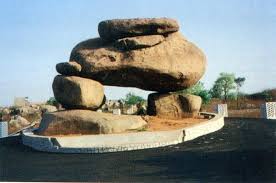
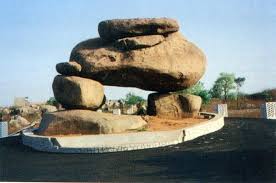
One of the most interesting facets of Hyderabad is the mammoth granite rocks in bewitching poses that capture one’s eye and imagination. Rocks large and small precariously balance on one another to form shapes that mesmerise the mind.These rocks, among the oldest in the world, are Hyderabad’s true heritage. Even the mighty Himalayas at 40-60 million years old are younger than these rocks!
Nature’s Sculptures:
The gigantic boulders inspire creativity and reverence in people, forcing them to look beyond the obvious shapes to create imaginary forms. These rocks seem to strike poses and imitate life-a puppy seated on its hind legs with its front legs raised in the air, a car-shaped formation, flying saucer resting on rocks, four chambers of the heart, and a woman standing with her face to the a woman standing with her face to the breeze; these are just a few shapes that tickle your imagination. It is no wonder then that people have taken to naming certain rocks after the shape they think they resemble or the idea they think they epitomise.
Some of these names have stuck on and the rocks have thus become landmarks in the city. And in some other places, rocks with their symbolic shapes have inspired the devout. Natural openings and cave like structures formed by the rocks have been used as temples by locals. Many people even consider them as symbols of the divine and worship these silent sentinels.
Tortoise Rock
Maintaining ecological balance:
Apart from being a visual treat for viewers, these rocks play an integral role in preserving and nurturing the ecological balance of the region. Lakes and ponds have always formed on adjoining rocky patches. This is a as rocks help natural occurrence create the natural drainage system of the area. Subterranean passages created by these rocks result in the natural flow of rain water to that area, aiding the formation of ponds and lakes and recharging ground water levels.
And where there is green, there are birds and bees. Rocky hills often act as the biodiversity hub for the area. Prickly thick shrubs and dry deciduous forests ensconce the rocks. Along the lakebeds, tall grass grows in wild abandon. Often even medicinal plants and aromatic herbs are found in the area. And hidden in this medley of plants are insects, birds and reptiles. So don’t be surprised if a Baya weaver flies by or a snake wiggles past you, when you are trekking about the rocks. Fauna and flora of varied kinds thrive in rocky eco-systems. Nature is at its best in these spots and here is where people can go to for a whiff of the wild, But today, such spots are disappearing with alarming alacrity. Rocks are being destroyed indiscriminately; the price the city is paying for growth.
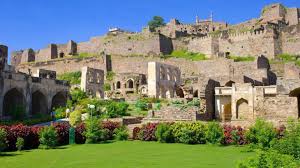
Image Source -google. Golconda fort of hyderabad.
Development at the cost of nature Part1:
It is easy to wonder why someone would destroy rocks that are billions of old. For centuries now these rocks have been the building material for the city. Even the famous Golconda fort of Hyderabad which sits atop a granite hill is made of the very same granite rock. The problem however lies at the speed and magnitude with which these rocks are now disappearing. Just consider the following statistics. The official 2001 census stated the Hyderabad population was around 3.7 million. But today the overflowing buses, traffic jammed streets, and expanding city borders tell a very different story. Today, this natural legacy is giving way to tall residential high-rises and software parks. Hills are being replaced with malls and buildings.
As the massive inflow of population continues, rocks are being quarried round- the-clock to cater to the exponential boom in the construction industry. Large tracts of land have been approved for residential or commercial use, without taking into consideration what actually lies on the land. The rocks are blown down, land is cleared and the hard crystalline rocks are used as construction material. In the past four years itself, vast stretches of hills around the city’s fringes have been turned to rubble or have completely disappeared. If you visit the places where the development is taking place your heart will bleed at the sight of the half quarried, half-eaten mountains…..
The Ministry of External Affairs (India) (MEA), otherwise called the Foreign Ministry, is the public authority organization liable for the lead of unfamiliar relations of India. With the world’s third biggest military use, fourth biggest furnished power, fifth biggest economy by GDP ostensible rates and third biggest economy as far as buying power equality, India is a noticeable local force, an atomic force, an arising worldwide force and an expected superpower. India expects a developing worldwide impact and an unmistakable voice in worldwide issues.
As a previous British settlement, India is an individual from the Commonwealth of Nations and keeps on keeping up with associations with other Commonwealth nations. Since acquiring autonomy from Britain in 1947, nonetheless, India is presently delegated a recently industrialized nation and has developed a broad organization of unfamiliar relations with different states. As a part province of BRICS – a collection of arising significant economies that additionally envelops Brazil, Russia, China and South Africa, India likewise applies a striking impact as the establishing individual from the Non-Aligned Movement. In ongoing many years, India has sought after a more broad international strategy that envelops the local first arrangement encapsulated by SAARC just as the Look East approach to fashion more broad monetary and key associations with other East Asian nations. Also, India was one of the establishing individuals from a few global associations — the United Nations, the Asian Development Bank, New Development BRICS Bank, and G-20, broadly viewed as the primary monetary locus of arising and created countries.
India has additionally assumed a significant and compelling part in other global associations like East Asia Summit, World Trade Organization, International Monetary Fund (IMF), and IBSA Dialog Forum. India is additionally an individual from the Asian Infrastructure Investment Bank and the Shanghai Cooperation Organization.
Provincially, India is a piece of SAARC and BIMSTEC. India has participated in a few UN peacekeeping missions, and as of June 2020, is the fifth-biggest troop giver. India is as of now looking for a perpetual seat in the UN Security Council, alongside the other G4 countries.
India employs colossal impact in worldwide undertakings and can be delegated an arising superpower.
Culture has been mainly studied as an aspect that determines individual and society’s beliefs. Influence culture has on a society has impacted economic and social outcomes. However, lack of research on this relation has provided with limited explanation on how it might have been interlinked for more than decades being oblivious. Upbringing of a child has a significant influence on economic decisions like education, health and job. The atmosphere or people you grow up with teach you to lead a certain a life and make decisions that are suitable to your culture. Academic researches are more based on popular factors such as income and employments; culture has not been been given equal salience. Culture and economics may not have a wide presence but it certainly has been influencing each other.
Social problems most of the countries grapple with are inequality and fragmentation. Inequality in terms of education has resulted in lack of skills and education among the poor. Income produced by uneducated has been very small than those who possess the necessary education. Again, this shapes a unique outcome for those struggling with these issues. Their economic choices are based on such factors. The outcomes of discriminated class are confined to the social issues they have been relentlessly facing. The gulf between the social classes causing an economic gap has been observed and this issue of social fragmentation has been influential. Social mobility varies from place to place. Every place has a specific culture determining its economic affairs. Social mobility is a not a consequence of the policies executed but has to do with the culture of a place. Culture of poor and racial difference has the maximum control on the economic condition than the policies.
Each community devotes itself to religious affirmations that dominates a person’s social beliefs. A loyal follower of religion has been termed as the happiest and morally sound due to its economic choices. Engagement of religion shapes economic well-being of people. The influence religious institutions have on the basic economics decisions related to food, clothing or shelter is deep.
Growing up in a poor family or rich family creates a gap that molds your economic outcomes. When being associated with poor culture during childhood where you closely see financial uncertainty or unforeseen circumstances as a result of uneducated family, you are less likely to engage with your family and fight to overcome poverty. Rich parents work for a better education and social experiences for their children that guarantees a better future.
Children of wealthier communities tend to have experienced mentors to guide them through. In the case of poor children, they do not have proper guidance or role models. Mentors shape a child’s performance and future that later provides better perspective towards economic decisions.
Your peers or colleagues influence you when you are in school. Having friends from a sophisticated culture or background influence you to be that person. The economic decisions you make are an outcome of the culture you are are around.
Economics is majorly influenced by culture and society. Social discrimination is prevalent in determining economic situations. Discriminated society is the most influenced by such factors. Socio-economic problems due to cultural influence are generating bigger economic problems for the poor.
Youngster marriage in India, as indicated by the Indian law, in a marriage where either the lady is underneath the age of 18 or the man is beneath the age of 21. Most youngster relationships include young ladies, large numbers of whom are in poor financial conditions.
Youngster relationships are common in India. Assessments change broadly between sources concerning the degree and size of youngster relationships. The International Center for Research on Women-UNICEF distributions have assessed India’s youngster marriage rate to be 47% from an example studies of 1998, while the United Nations reports it to be 30% in 2005. The Census of India has checked and detailed wedded ladies by age, with extent of females in kid marriage falling in every long term enumeration period since 1981. In its 2001 evaluation report, India expressed zero wedded young ladies beneath the age of 10, 1.4 million wedded young ladies out of 59.2 million young ladies matured 10–14, and 11.3 million wedded young ladies out of 46.3 million young ladies matured 15–19.[3] Times of India announced that ‘since 2001, youngster marriage rates in India have fallen by 46% somewhere in the range of 2005 and 2009.[4]Jharkhand is the state with most elevated kid marriage rates in India (14.1%), while Kerala is the lone state where kid marriage rates have expanded lately. Jammu and Kashmir was accounted for to be the solitary state with most minimal kid marriage cases at 0.4% in 2009. Rustic paces of youngster relationships were multiple times higher than metropolitan India rates in 2009.
Kid marriage was banned in 1929, under Indian law. Be that as it may, in the British pioneer times, the legitimate least time of marriage was set at 14 for young ladies and 18 for young men. Under fights from Muslim associations in unified British India, an individual law Shariat Act was passed in 1937 that permitted kid relationships with assent from a young lady’s gatekeeper. After India’s freedom in 1947, the demonstration went through two corrections. The base legitimate age for marriage was expanded to 15 for young ladies in 1949, and to 18 for females and 21 for guys in 1978. The youngster marriage counteraction laws have been tested in Indian courts, with some Muslim Indian associations looking for no base age and that the age matter be passed on to their own law. Kid marriage is a functioning political subject just as a subject of proceeding with cases under audit in the most noteworthy courts of India.
A few territories of India have acquainted motivators with postpone relationships. For instance, the territory of Haryana presented the alleged Apni Beti, Apna Dhan program in 1994, which means “My little girl, My riches”. It is a restrictive money move program committed to postponing youthful relationships by giving an administration paid security in her name, payable to her folks, in the measure of ₹25,000, after her eighteenth birthday celebration in case she isn’t hitched.
The kids ought not need to work is all around acknowledged, yet there are no all inclusive answer why the issue of kid work continue and how it should be handled. India is confronted with the significant errand of disposing of the kid work which is common in all circles of life. A huge number of kids are occupied with the floor covering production lines, glass manufacturing plants and other unsafe ventures all around the country. The term youngster work has commonly two-crease understandings. Initially, it is suggested to be a monetary need of helpless families and besides, the hazardous viewpoint in childrens work worried about the benefit expanding desire of business foundation wherein youngsters are made to work for extended periods, paid low compensation and denied of instructive freedoms.
Global Labor Organisation12 (ILO) characterizes kid work to “… incorporate youngsters driving for all time grown-up lives, working extended periods of time for low wages under conditions harming to their wellbeing and physical and mental turn of events, at some point isolated from their families, much of the time denied of significant instructive and preparing openings that could be open dependent upon them a superior future”. There are numerous explanations behind the presence of youngster work and it differs with spot and all around. In India, neediness is one of the significant components for destitution, however its not the sole factor. Youngsters give modest work, the individual who needs work needs to pay less to them than grown-up work. The kid can be directed in excess of a grown-up. The force factor of the kid work is the benefit augmentation.
The fundamental driver to inability to control the youngster work are; destitution, low wages than grown-up, joblessness, nonappearance of plans for family remittance, movement to metropolitan regions, huge family size, kids being economically accessible, non presence of severe arrangements for mandatory training, lack of education, obliviousness of guardians and conventional attitudes13.
India represents the second most elevated number where kid work on the planet is concerned. Africa represents the most elevated number of youngsters utilized and misused. The truth of the matter is that across the length and expansiveness of the country, youngsters are in a regrettable condition.
Kid work in India is a common freedom issue for the entire world. It is a significant and broad issue, with numerous kids younger than fourteen working in cover making plants, glass blowing units and making firecrackers with exposed little hands. As per the insights given by Indian government there are 20 million Child works in the nation, while different offices guarantee that it is 50 million.
The circumstance of Child works in India is frantic. Youngsters labor for eight hours at a stretch with just a little break for dinners. The suppers are additionally parsimonious and the kids are not well fed. A large portion of the traveler kids, who can’t return home, rest at their work place, which is exceptionally awful for their wellbeing and advancement. 75% of Indian populace actually lives in rustic regions and are exceptionally poor. Kids in country families who are ailing with neediness see their youngsters as a pay creating asset to enhance the family pay. Guardians penance their children‟s schooling to the developing requirements of their more youthful kin in such families and view them as workers for the whole tribe.
In Northern India the misuse of young kids for work is an acknowledged practice and seen by the nearby populace as a need to reduce destitution. Rug weaving ventures pay exceptionally low wages to Child works and make them work for extended periods in unhygienic conditions. Kids working in such units are for the most part traveler laborers from Northern India, who are shunted here by their families to bring in some cash and send it to them. Their families reliance on their pay, constrains them to persevere through the grave work conditions in the rug manufacturing plants.
While specialists fault the framework, neediness, ignorance, grown-up joblessness; yet the truth of the matter is that the whole country is answerable for each wrongdoing against a kid. Rather than nipping the issue at the bud, kid work in India was permitted to increment as time passes. What’s more, today, youthful ones underneath the age of 14 have become a significant piece of different ventures; at the expense of their guiltlessness, adolescence, wellbeing and so far as that is concerned their lives.
Article 2314 of Indian Constitution restricts the dealing with people and constrained work. Furthermore, Article 2415 forbids the work of youngsters in production lines. It says that No youngster underneath the age of fourteen years will be utilized to work in any processing plant or mine or occupied with some other risky business. The overall arrangement was that right got by Article 24 will scarcely be viable without enactment denying and punishing its infringement.
Governor General Cornwallis, himself a big landlord in England, wanted to create landforms in India on the English model. There were already revenue farmers under the Mughals. Cornwallis came to a settlement with them, treating them as landforms. The outcome was that for the first time in India there was a class of zamindars or landlords with a right to own, bequeath and inherit land. The cultivators, on the other hand,were reduced to the position of mere tenants. The British dealt with the landlords or zamindars directly, and gave them total freedom to do what they liked with their tenants. This settlement made with the zamindars of Bengal, Bihar and Orissa is called the Permanent settlement (1793).
The Ryotwari system was a different revenue system introduced in South India. Under the system,the peasant was the proprietor and paid tax on the land. The government dealt with him directly, without the intervention of a middleman or a tax-farmer. He was entitled to remain in possession of land acquired by him so long as he paid the land revenue. In case of default,apart from eviction and attachment of livestock,even household property or personal belongings could be attached. The Ryotwari system introduced the concept of private property in land. The individual holders were registered and permitted to sell, lease out, mortgage or transfer their right over the land.
Land Revenue and the Pauperisation of Peasantry
The land tax which was the main source of revenue to the British was collected forcibly. Even in times of famines no remission was given to the peasants. They had to even mortgage or sell their prosperty including their land to pay the landlord’s rent and the land tax. As no credit facilities were provided by the state, they had to depend on moneylenders to borrow money. A system of money lending was followed by professional money-lenders who belonged to various communities such mahajans, sahukars, and bohras. In the Tamil speaking areas there were Nattukottai Chettiyars. The colonial state pursed a policy of commercials crops like cotton, jute, groundnuts, oilseeds, sugarcane, tobacco,etc.,
Arthur cottonPennycuick
depending on the market demands fetched better prices than food grains. So in his bid to clear his debt and to pay up the revenue dues to the state, instead of producing for home consumption,the peasant began to raise crops for the market. He had to depend on the price trend in international markets for selling his agricultural goods. Ignorant of market forces the peasants often came to distress,when the demand in the local market, which was now linked to the world market, crashed.
Irrigation
The British neglected irrigation in the first half of nineteenth century. Major irrigation canals were bulit only after millions of people died in a series of major famines that broke out periodically from the middle of 19th century. Even then the money earmarked for irrigation was meagre, but due to the initiative of some well meaning British officials and engineers like Arthur Cotton, and later Pennycuick guaranteed protected irrigation became possible in certain areas. Even where such efforts were taken, the British collected am extra cess adding to the misery of the peasents who were already groaning under the oppressive land revenue system.
Famines
The policy of free trade and the forcible collection of land revenue resulted in the outbreak of famines. Tbe Odisha famine of 1866-67,was a severe and terribel event in the history of that region in which about a third of the population died. The famine of 1876-78,also known as the Great Famine of 1876-78(called Thathu Varusha Panjam in Tamil, caused a large migration of agricultural labourers and artisans from Southern India to British colonies,where they worked as indentured labourers on plantations. The death toll-about 10.3 million––was huge.
Odisha famine of 1886
In the Madras presidency,the famine of 1876-78 was preceded by droughts. The situation was made worse because of the colonial government’s policy of laissez faire in the trade of food-grains. For example, two of the worst famine-afflicted areas in the Madras presidency,the districts of Ganjam and Vizagapatam, continued to export grains throughout the famine. These famines were typically followed by various infectious diseases such as bubonic plague and influenza,which attacked and killed a population already weakened by starvation. The memory of this famine is still preserved in various folk songs and ballads.
Indentured labour
The indentured labour system was a form of debt bondage, by which 3.5 million Indians were transported to various British colonies to provide labour for the plantations (mainly sugar). It started from 1843, the year of abolition of slavery in India and Continued until 1920. This resulted in the development of a large Indian diaspora, which spread from the Indian Ocean (Reunion and Mauritius) to Pacific Ocean (Fiji), as well as contributing to the growth of Indo-Caribbean and Indo-African population.

















 Eduindex
You must be logged in to post a comment.