Best places to visit in ottawa

 Best Places To Visit In Ottawa

Ottawa is quite friendly towards tourists. There are different types of entertainment opportunities and sightseeing for all kinds of travellers. People from different countries like to come here for family vacations. It is a place with blue skies, sunshine-filled days and sweet nights of summer. There you get to see the vibrant greenery and can feel the cool water. You can enjoy your vacation in the proximity of nature by spending some days in the picturesque village of Old Chelsea in the Outaouais region. There you can experience the largest spa in North America as well. The panoramic pool and green hills can give you the ultimate peace of mind. There you also get to know about the place’s iconic history through the amazing museums. There are a number of marvellous places to explore. The best places to visit are as below:-

Parliament Hill

Actually Parliament Hill is the home of the federal government of Canada. The representatives of Canada gather there to make laws which affect the lives of each Canadian. It is one of the biggest tourist attractions for its astounding interior of the Parliament Building and for discovering the function, art and chronicle of the Parliament of Canada. You can come in contact with the sensational live debates and can witness the breathtaking light and sound show on Parliament Hill. You will also experience the unique taste of music: 53 bells of the Peace Tower Carillon, over there.

Rideau Canal

The Rideau Canal is taken as paradise by the visitors for its historic lock stations and 202 kilometres (125 mile) of charming waterway. It is a National Historic Site of Canada as well as a Canadian Heritage River and a World Heritage Site of UNESCO. It includes a number of picturesque lakes and rivers which are attached with canals. There you can have a wonderful experience of the historic waterway by boat. You can also visit the place by car, bicycle or on foot. If you want to enjoy the full ambience of the region then a boat is best for it. You can have a magnificent trip by driving through the spectacular roads which go through the center of Old Ontario. 

Canadian War Museum

t is the place where you get to know about the rich military history of Canada through artwork, photos, artifacts, interactive presentations and unique stories. It is quite attractive for its illustrative architecture. The museum was built in the theme of regeneration to include the features which are energy-efficient. Recycled materials are used there with a green roof on the top; poppies grow over there in the summer. There you get to see the Mercedes-Benz parade car of Hitler, the scarlet dress coat Sir Isaac Brock which has the hole of the bullet that killed him at the Queenston Heights’ battle, a small teddy which was given to a soldier by his young daughter and many other splendid objects. 

National Gallery Of Canada

It is one of the best places in Ottawa where tourists come to explore and discover historical artworks like photographs, paintings, different kinds of sculptures and multimedia installations. You’ll step underneath the sculpture of a spider which has a height of 9 metre before you enter into the ravishing granite-and-glass building. You will get to inquire more than 40,000 works by some 6000 creators. 

Peace Tower

It is one of the well known constructions of Canada. It is situated in the Center of Centre block of Parliament Hill. It was built in 1916 after the Victoria Tower was lost in a fire. You can visit the place as part of the free Centre Block Tour. If you can manage to arrive at the right time you can witness the changing of the guards. You can enjoy the Northern lights sights and sound show on summer nights as well. 
GREEK MYTHOLOGY

Greek mythology, body of stories concerning the gods, heroes, and rituals of the ancient Greeks. That the myths contained a considerable element of fiction was recognized by the more critical Greeks, such as the philosopher Plato in the 5th–4th century BCE. In general, however, in the popular piety of the Greeks, the myths were viewed as true accounts. Greek mythology has subsequently had extensive influence on the arts and literature of Western civilization, which fell heir to much of Greek culture. Although people of all countries, eras, and stages of civilization have developed myths that explain the existence and workings of natural phenomena, recount the deeds of gods or heroes, or seek to justify social or political institutions, the myths of the Greeks have remained unrivaled in the Western world as sources of imaginative and appealing ideas. Poets and artists from ancient times to the present have derived inspiration from Greek mythology and have discovered contemporary significance and relevance in Classical mythological themes.

Sources of Myths: The Homeric poems

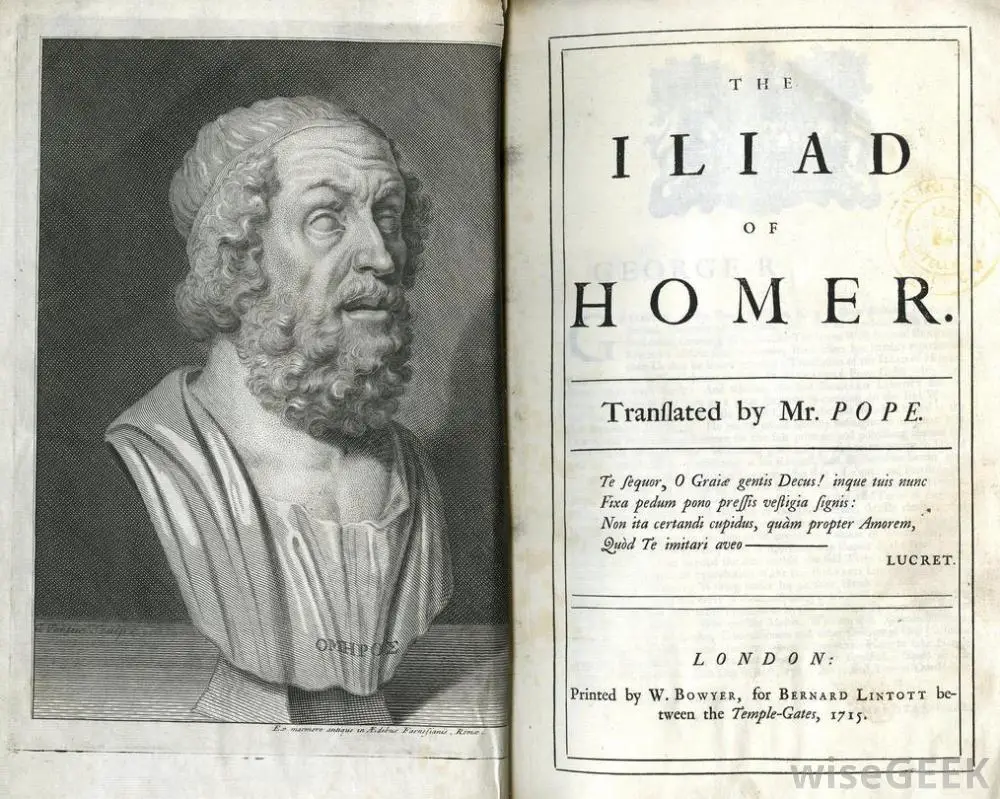
The 5th-century-BCE Greek historian Herodotus remarked that Homer and Hesiod gave to the Olympian gods their familiar characteristics. Few today would accept this literally. In the first book of the Iliad, the son of Zeus and Leto is as instantly identifiable to the Greek reader by his patronymic as are the sons of Atreus. In both cases, the audience is expected to have knowledge of the myths that preceded their literary rendering.

Sources of Myths: The works of Hesoid

he fullest and most important source of myths about the origin of the gods is the Theogony of Hesiod (c. 700 BCE). The elaborate genealogies mentioned above are accompanied by folktales and etiological myths. The Works and Days shares some of these in the context of a farmer’s calendar and an extensive harangue on the subject of justice addressed to Hesiod’s possibly fictitious brother Perses.The Theogony declares the identities and alliances of the gods, while the Works and Days gives advice on the best way to succeed in a dangerous world, and Hesiod urges that the most reliable—though by no means certain—way is to be just.

Sources of Myths: Archaeological Discoveries

The discovery of the Mycenaean civilization by Heinrich Schliemann, a 19th-century German amateur archaeologist, and the discovery of the Minoan civilization in Crete by Sir Arthur Evans, a 20th-century English archaeologist, are essential to the 21st-century understanding of the development of myth and ritual in the Greek world. Geometric designs on pottery of the 8th century BCE depict scenes from the Trojan cycle, as well as the adventures of Heracles. The extreme formality of the style, however, renders much of the identification difficult, and there is no inscriptional evidence accompanying the designs to assist scholars in identification and interpretation. 

Forms of Myths: Religious Myths

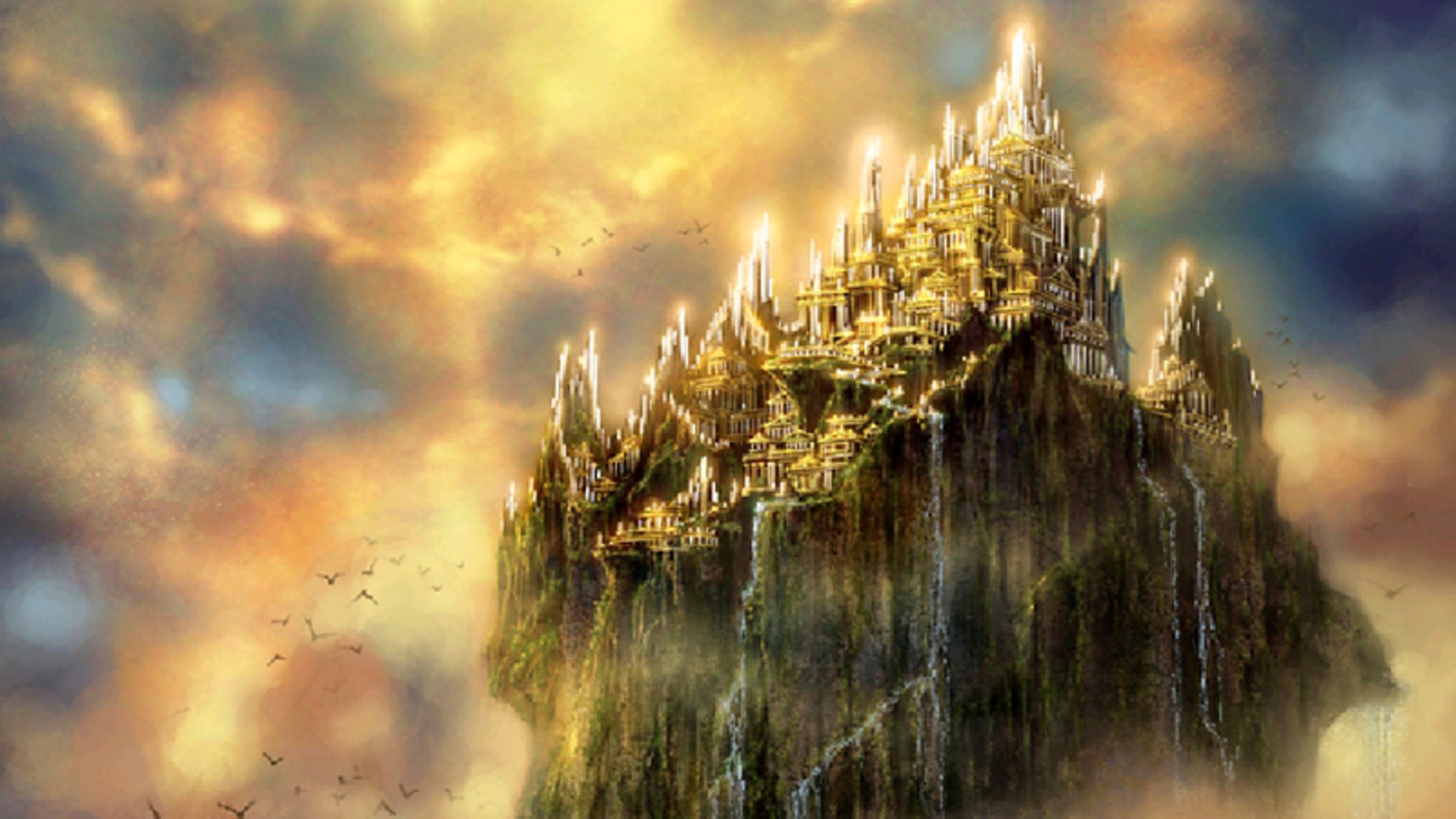
Olympus

Greek religious myths are concerned with gods or heroes in their more serious aspects or are connected with ritual. They include cosmogonical tales of the genesis of the gods and the world out of Chaos, the successions of divine rulers, and the internecine struggles that culminated in the supremacy of Zeus, the ruling god of Olympus (the mountain that was considered the home of the gods). They also include the long tale of Zeus’s amours with goddesses and mortal women, which usually resulted in the births of younger deities and heroes. Myths of Dionysus, on the other hand, demonstrate the hostility aroused by a novel faith. Some myths are closely associated with rituals, such as the account of the drowning of the infant Zeus’s cries by the Curetes, attendants of Zeus, clashing their weapons, or Hera’s annual restoration of her virginity by bathing in the spring Canathus.

Forms of Myths: Legends

Hercules fighting the Nemean Lion

Myths were viewed as embodying divine or timeless truths, whereas legends (or sagas) were quasi-historical. Hence, famous events in epics, such as the Trojan War, were generally regarded as having really happened, and heroes and heroines were believed to have actually lived. Earlier sagas, such as the voyage of the Argonauts, were accepted in a similar fashion. Most Greek legends were embellished with folktales and fiction, but some certainly contain a historical substratum. Such are the tales of more than one sack of Troy, which are supported by archaeological evidence, and the labors of Heracles, which might suggest Mycenaean feudalism. Again, the legend of the Minotaur (a being part human, part bull) could have arisen from exaggerated accounts of bull leaping in ancient Crete.

Forms of Myths: Folktales

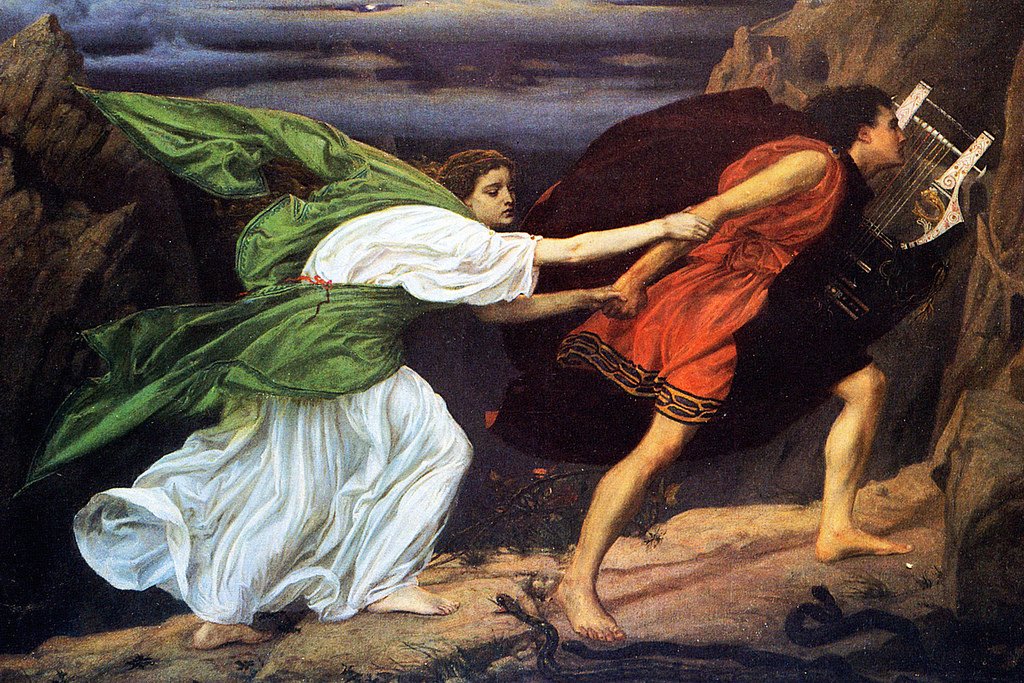
Folktales, consisting of popular recurring themes and told for amusement, inevitably found their way into Greek myth. Such is the theme of lost persons—whether husband, wife, or child —found or recovered after long and exciting adventures. Journeys to the land of the dead were made by Orpheus (a hero who went to Hades to restore his dead wife, Eurydice, to the realm of the living), Heracles, Odysseus, and Theseus (the slayer of the Minotaur). The victory of the little man by means of cunning against impossible odds, the exploits of the superman (e.g., Heracles), or the long-delayed victory over enemies are still as popular with modern writers as they were with the Greeks.

GREEK MYTHOLOGY

Greek mythology, body of stories concerning the gods, heroes, and rituals of the ancient Greeks. That the myths contained a considerable element of fiction was recognized by the more critical Greeks, such as the philosopher Plato in the 5th–4th century BCE. In general, however, in the popular piety of the Greeks, the myths were viewed as true accounts. Greek mythology has subsequently had extensive influence on the arts and literature of Western civilization, which fell heir to much of Greek culture. Although people of all countries, eras, and stages of civilization have developed myths that explain the existence and workings of natural phenomena, recount the deeds of gods or heroes, or seek to justify social or political institutions, the myths of the Greeks have remained unrivaled in the Western world as sources of imaginative and appealing ideas. Poets and artists from ancient times to the present have derived inspiration from Greek mythology and have discovered contemporary significance and relevance in Classical mythological themes.

Sources of Myths: The Homeric poems

The 5th-century-BCE Greek historian Herodotus remarked that Homer and Hesiod gave to the Olympian gods their familiar characteristics. Few today would accept this literally. In the first book of the Iliad, the son of Zeus and Leto is as instantly identifiable to the Greek reader by his patronymic as are the sons of Atreus. In both cases, the audience is expected to have knowledge of the myths that preceded their literary rendering.

Sources of Myths: The works of Hesoid

he fullest and most important source of myths about the origin of the gods is the Theogony of Hesiod (c. 700 BCE). The elaborate genealogies mentioned above are accompanied by folktales and etiological myths. The Works and Days shares some of these in the context of a farmer’s calendar and an extensive harangue on the subject of justice addressed to Hesiod’s possibly fictitious brother Perses.The Theogony declares the identities and alliances of the gods, while the Works and Days gives advice on the best way to succeed in a dangerous world, and Hesiod urges that the most reliable—though by no means certain—way is to be just.

Sources of Myths: Archaeological Discoveries

The discovery of the Mycenaean civilization by Heinrich Schliemann, a 19th-century German amateur archaeologist, and the discovery of the Minoan civilization in Crete by Sir Arthur Evans, a 20th-century English archaeologist, are essential to the 21st-century understanding of the development of myth and ritual in the Greek world. Geometric designs on pottery of the 8th century BCE depict scenes from the Trojan cycle, as well as the adventures of Heracles. The extreme formality of the style, however, renders much of the identification difficult, and there is no inscriptional evidence accompanying the designs to assist scholars in identification and interpretation. 

Forms of Myths: Religious Myths

Olympus

Greek religious myths are concerned with gods or heroes in their more serious aspects or are connected with ritual. They include cosmogonical tales of the genesis of the gods and the world out of Chaos, the successions of divine rulers, and the internecine struggles that culminated in the supremacy of Zeus, the ruling god of Olympus (the mountain that was considered the home of the gods). They also include the long tale of Zeus’s amours with goddesses and mortal women, which usually resulted in the births of younger deities and heroes. Myths of Dionysus, on the other hand, demonstrate the hostility aroused by a novel faith. Some myths are closely associated with rituals, such as the account of the drowning of the infant Zeus’s cries by the Curetes, attendants of Zeus, clashing their weapons, or Hera’s annual restoration of her virginity by bathing in the spring Canathus.

Forms of Myths: Legends

Hercules fighting the Nemean Lion

Myths were viewed as embodying divine or timeless truths, whereas legends (or sagas) were quasi-historical. Hence, famous events in epics, such as the Trojan War, were generally regarded as having really happened, and heroes and heroines were believed to have actually lived. Earlier sagas, such as the voyage of the Argonauts, were accepted in a similar fashion. Most Greek legends were embellished with folktales and fiction, but some certainly contain a historical substratum. Such are the tales of more than one sack of Troy, which are supported by archaeological evidence, and the labors of Heracles, which might suggest Mycenaean feudalism. Again, the legend of the Minotaur (a being part human, part bull) could have arisen from exaggerated accounts of bull leaping in ancient Crete.

Forms of Myths: Folktales

Folktales, consisting of popular recurring themes and told for amusement, inevitably found their way into Greek myth. Such is the theme of lost persons—whether husband, wife, or child —found or recovered after long and exciting adventures. Journeys to the land of the dead were made by Orpheus (a hero who went to Hades to restore his dead wife, Eurydice, to the realm of the living), Heracles, Odysseus, and Theseus (the slayer of the Minotaur). The victory of the little man by means of cunning against impossible odds, the exploits of the superman (e.g., Heracles), or the long-delayed victory over enemies are still as popular with modern writers as they were with the Greeks.

Indian Olympic medal Contender: Proud Of Our Girls

Shooting
India’s 15-member shooting contingent is the favourite to bring back a big haul of medals.

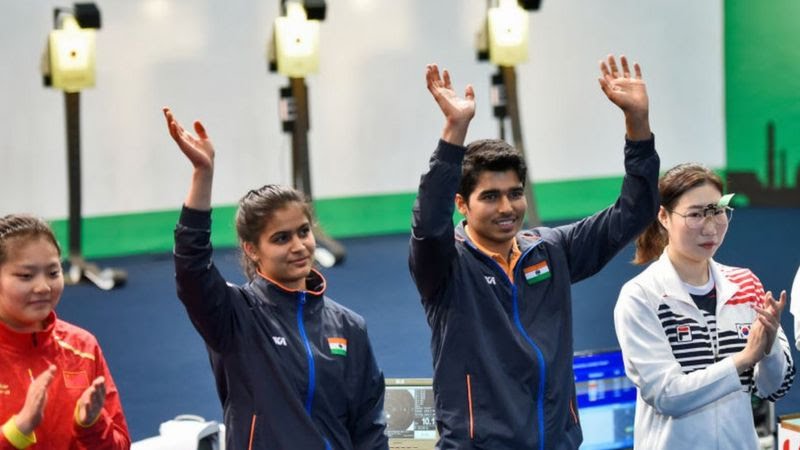
The country’s biggest hopes are pinned on Manu Bhaker and Saurabh Chaudhary.

Indian shooters Manu Bhaker and Saurabh Chaudhary won the gold in the final of mixed 10m Air Pistol at ISSF World Cup, at Karni Singh Shooting Ranges on 27 February 2019 in New Delhi, India


Nineteen-year-old Bhaker, one of the top contenders in the 10m Women’s Air Pistol event, has in the past won it all from World Cup gold medals to the Commonwealth medal and Youth Olympics.

Shooter Saurabh Chaudhary, world number two and Youth Olympics champion, became the youngest Indian shooter to win a gold at the Asian Games in 2018 when he was just 16.

Both Bhaker and Chaudhary are top contenders for a medal finish when they pair up for the 10m Air pistol mixed event. The duo won five successive golds at international shooting events and a silver at the World Cup in Croatia in June.

Badminton

At the Rio Olympics, 21-year-old PV Sindhu bagged a silver – and won a billion hearts. Not everyone had expected a medal back then from the young shuttler. But five years on, expectations are high.

“I was just a participant back then, but now everyone says Sindhu has to get a medal,” she told the BBC recently.


Despite inconsistencies in her performance since 2019, Sindhu remains India’s top medal hope

Last year, the ace shuttler won the inaugural BBC Indian Sportswoman of the Year award.

In 2019, she was crowned the World Badminton Champion but her form has had inconsistencies since then. However, she remains India’s top medal prospect.

Boxing

Boxing
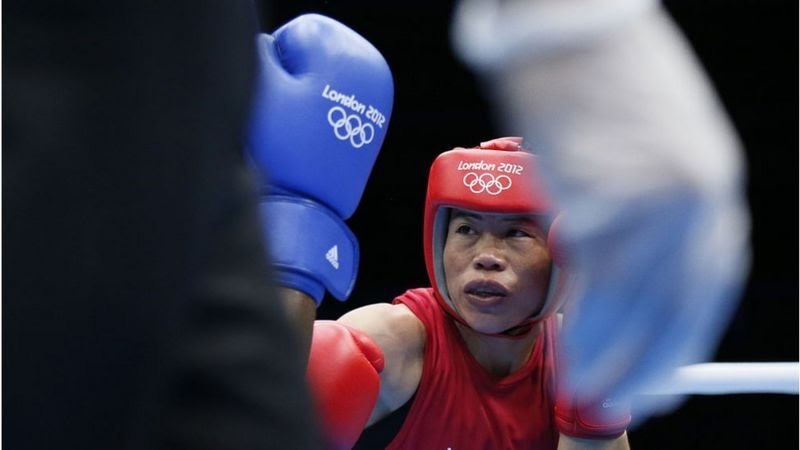
Mary Kom, also known as Magnificent Mary, the Iron Lady and many other nicknames, is a medal favourite for India.

She won a bronze at the 2012 London Olympics and will be looking to change the colour of her medal this time when she participates in the Flyweight section (51kg).


This could be the last Olympic Games for the boxing star

In May, she picked up a silver when she lost the final to Kazakhstan’s Nazym Kyzaibay during the Asian Boxing Championships in Dubai.

At 38, Kom may well be taking part in her last Olympics, and India will be rooting for her to increase her tally before she takes off her gloves.

Archery
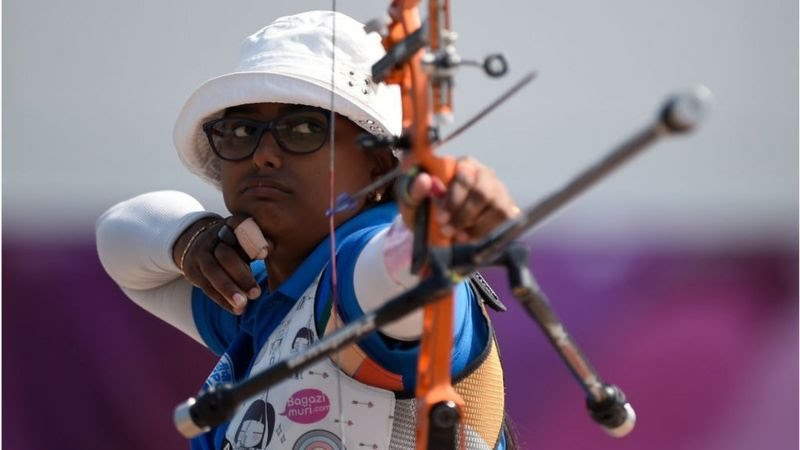
Only last month, archer Deepika Kumari won three golds at the Archery World Cup in Paris.


Deepika Kumari is the number one ranked recurve woman in the world

She is now the world number one in the women’s recurve category and a strong candidate for a medal in Tokyo.

Kumari has won nine gold, 12 silver and seven bronze medals at various World Cups and will be looking to add the Olympic medal to her tally now.

Wrestling
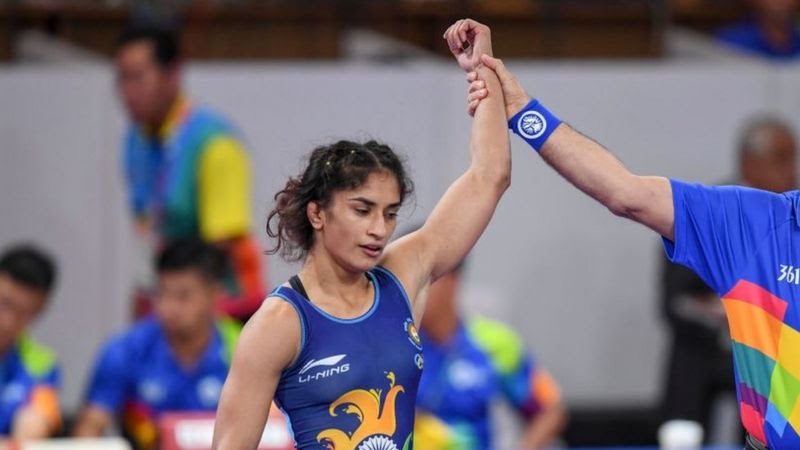
India had a decent run at the Rio Olympics in 2016, with Sakshi Malik earning a bronze medal. In Tokyo, Vinesh Phogat leads the women’s wrestling team.

Having suffered a freak injury during the Rio Olympics, Phogat returned to India in a wheelchair and underwent surgery.

The 26-year-old is now roaring to go in the 53kg category with some great wins in the last couple of months, as well as reclaiming the number one ranking.

Indian Olympic medal Contender: Proud Of Our Girls

Shooting
India’s 15-member shooting contingent is the favourite to bring back a big haul of medals.

The country’s biggest hopes are pinned on Manu Bhaker and Saurabh Chaudhary.

Indian shooters Manu Bhaker and Saurabh Chaudhary won the gold in the final of mixed 10m Air Pistol at ISSF World Cup, at Karni Singh Shooting Ranges on 27 February 2019 in New Delhi, India

Nineteen-year-old Bhaker, one of the top contenders in the 10m Women’s Air Pistol event, has in the past won it all from World Cup gold medals to the Commonwealth medal and Youth Olympics.

Shooter Saurabh Chaudhary, world number two and Youth Olympics champion, became the youngest Indian shooter to win a gold at the Asian Games in 2018 when he was just 16.

Both Bhaker and Chaudhary are top contenders for a medal finish when they pair up for the 10m Air pistol mixed event. The duo won five successive golds at international shooting events and a silver at the World Cup in Croatia in June.

Badminton

At the Rio Olympics, 21-year-old PV Sindhu bagged a silver – and won a billion hearts. Not everyone had expected a medal back then from the young shuttler. But five years on, expectations are high.

“I was just a participant back then, but now everyone says Sindhu has to get a medal,” she told the BBC recently.

Despite inconsistencies in her performance since 2019, Sindhu remains India’s top medal hope

Last year, the ace shuttler won the inaugural BBC Indian Sportswoman of the Year award.

In 2019, she was crowned the World Badminton Champion but her form has had inconsistencies since then. However, she remains India’s top medal prospect.

Boxing

Boxing
Mary Kom, also known as Magnificent Mary, the Iron Lady and many other nicknames, is a medal favourite for India.

She won a bronze at the 2012 London Olympics and will be looking to change the colour of her medal this time when she participates in the Flyweight section (51kg).

This could be the last Olympic Games for the boxing star

In May, she picked up a silver when she lost the final to Kazakhstan’s Nazym Kyzaibay during the Asian Boxing Championships in Dubai.

At 38, Kom may well be taking part in her last Olympics, and India will be rooting for her to increase her tally before she takes off her gloves.

Archery
Only last month, archer Deepika Kumari won three golds at the Archery World Cup in Paris.

Deepika Kumari is the number one ranked recurve woman in the world

She is now the world number one in the women’s recurve category and a strong candidate for a medal in Tokyo.

Kumari has won nine gold, 12 silver and seven bronze medals at various World Cups and will be looking to add the Olympic medal to her tally now.

Wrestling
India had a decent run at the Rio Olympics in 2016, with Sakshi Malik earning a bronze medal. In Tokyo, Vinesh Phogat leads the women’s wrestling team.

Having suffered a freak injury during the Rio Olympics, Phogat returned to India in a wheelchair and underwent surgery.

The 26-year-old is now roaring to go in the 53kg category with some great wins in the last couple of months, as well as reclaiming the number one ranking.

Jallianwala Bagh Massacre

The Jallianwala Bagh massacre, also known as the Amritsar massacre, took place on 13 April 1919. A large but peaceful crowd had gathered at the Jallianwala Bagh in Amritsar, Punjab to protest against the arrest of pro-Indian independence leaders Dr. Saifuddin Kitchlu and Dr. Satya Pal. In response to the public gathering, the British Brigadier-General Dyer surrounded the Bagh with his soldiers. The Jallianwala Bagh could only be exited on one side, as its other three sides were enclosed by buildings. After blocking the exit with his troops, he ordered them to shoot at the crowd, continuing to fire even as protestors tried to flee. The troops kept on firing until their ammunition was exhausted. At least 379 people were killed and over 1,200 other people were injured of whom 192 were seriously injured.

Responses polarized both the British and Indian peoples. Eminent author Rudyard Kipling declared at the time that Dyer “did his duty as he saw it”. This incident shocked Rabindranath Tagore (the first Indian and Asian Nobel laureate) to such an extent that he renounced his knighthood and stated that “such mass murderers aren’t worthy of giving any title to anyone”.

The massacre caused a re-evaluation by the British Army of its military role against civilians to minimal force whenever possible, although later British actions during the Mau Mau insurgencies in Kenya have led historian Huw Bennett to note that the new policy was not always carried out. The army was retrained and developed less violent tactics for crowd control.

The level of casual brutality, and lack of any accountability, stunned the entire nation, resulting in a wrenching loss of faith of the general Indian public in the intentions of the UK. The ineffective inquiry, together with the initial accolades for Dyer, fuelled great widespread anger against the British among the Indian populace, leading to the Non-cooperation movement of 1920–22. Some historians consider the episode a decisive step towards the end of British rule in India. Britain never formally apologised for the massacre but expressed “regret” in 2019.

On Sunday, 13 April 1919, Dyer, convinced a major insurrection could take place, banned all meetings. This notice was not widely disseminated, and many villagers gathered in the Bagh to celebrate the important Hindu and Sikh festival of Baisakhi, and peacefully protest the arrest and deportation of two national leaders, Satyapal and Saifuddin Kitchlew. Dyer and his troops entered the garden, blocking the main entrance behind them, took up position on a raised bank, and with no warning opened fire on the crowd for about ten minutes, directing their bullets largely towards the few open gates through which people were trying to flee, until the ammunition supply was almost exhausted. The following day Dyer stated in a report that “I have heard that between 200 and 300 of the crowd were killed. My party fired 1,650 rounds”.

At 9:00 on the morning of 13 April 1919, the traditional festival of Baisakhi. Reginald Dyer, the acting military commander for Amritsar and its environs, proceeded through the city with several city officials, announcing the implementation of a pass system to enter or leave Amritsar, a curfew beginning at 20:00 that night and a ban on all processions and public meetings of four or more persons. The proclamation was read and explained in English, Urdu, Hindi, and Punjabi, but few paid it any heed or appear to have learned of it later. Meanwhile, local police had received intelligence of the planned meeting in the Jallianwala Bagh through word of mouth and plainclothes detectives in the crowds. At 12:40, Dyer was informed of the meeting and returned to his base at around 13:30 to decide how to handle it.

By mid-afternoon, thousands of Indians had gathered in the Jallianwala Bagh (garden) near the Harmandir Sahib in Amritsar. Many who were present had earlier worshipped at the Golden Temple, and were passing through the Bagh on their way home. The Bagh was (and remains today) an open area of six to seven acres, roughly 200 yards by 200 yards in size, and surrounded on all sides by walls roughly 10 feet in height. Balconies of houses three to four stories tall overlooked the Bagh, and five narrow entrances opened onto it, several with lockable gates. During the rainy season, it was planted with crops, but served as a local meeting and recreation area for much of the year. In the center of the Bagh was a samadhi (cremation site) and a large well partly filled with water which measured about 20 feet in diameter.

Apart from pilgrims, Amritsar had filled up over the preceding days with farmers, traders, and merchants attending the annual Baisakhi horse and cattle fair. The city police closed the fair at 14:00 that afternoon, resulting in a large number of people drifting into the Jallianwala Bagh.

Dyer arranged for an aeroplane to overfly the Bagh and estimate the size of the crowd, that he reported was about 6,000, while the Hunter Commission estimates a crowd of 10,000 to 20,000 had assembled by the time of Dyer’s arrival. Colonel Dyer and Deputy Commissioner Irving, the senior civil authority for Amritsar, took no actions to prevent the crowd assembling, or to peacefully disperse the crowds. This would later be a serious criticism levelled at both Dyer and Irving.

An hour after the meeting began as scheduled at 17:30, Colonel Dyer arrived at the Bagh with a group of ninety soldiers from the Gurkha Rifles, the 54th Sikhs and the 59th Sind Rifles. Fifty of them were armed with .303 Lee–Enfield bolt-action rifles. It is not clear whether Dyer had specifically chosen troops from that ethnic group due to their proven loyalty to the British or that they were simply the Sikh and non-Sikh units most readily available. He had also brought two armoured cars armed with machine guns; however, the vehicles were left outside, as they were unable to enter the Bagh through the narrow entrances. The Jallianwala Bagh was surrounded on all sides by houses and buildings and had only five narrow entrances, most kept permanently locked. The main entrance was relatively wide, but was guarded heavily by the troops backed by the armoured vehicles.

Dyer, without warning the crowd to disperse, blocked the main exits. He stated later that this act “was not to disperse the meeting but to punish the Indians for disobedience.” Dyer ordered his troops to begin shooting toward the densest sections of the crowd in front of the available narrow exits, where panicked crowds were trying to leave the Bagh. Firing continued for approximately ten minutes. Cease-fire was ordered only when ammunition supplies were almost exhausted, after approximately 1,650 rounds were spent.

Apart from the many deaths directly from the shooting, a number of people died of crushing in the stampedes at the narrow gates or by jumping into the solitary well on the compound to escape the shooting. A plaque, placed at the site after independence, states that 120 bodies were removed from the well. The wounded could not be moved from where they had fallen, as a curfew was declared, and more who had been injured then died during the night.

Jallianwala Bagh Massacre

The Jallianwala Bagh massacre, also known as the Amritsar massacre, took place on 13 April 1919. A large but peaceful crowd had gathered at the Jallianwala Bagh in Amritsar, Punjab to protest against the arrest of pro-Indian independence leaders Dr. Saifuddin Kitchlu and Dr. Satya Pal. In response to the public gathering, the British Brigadier-General Dyer surrounded the Bagh with his soldiers. The Jallianwala Bagh could only be exited on one side, as its other three sides were enclosed by buildings. After blocking the exit with his troops, he ordered them to shoot at the crowd, continuing to fire even as protestors tried to flee. The troops kept on firing until their ammunition was exhausted. At least 379 people were killed and over 1,200 other people were injured of whom 192 were seriously injured.

Responses polarized both the British and Indian peoples. Eminent author Rudyard Kipling declared at the time that Dyer “did his duty as he saw it”. This incident shocked Rabindranath Tagore (the first Indian and Asian Nobel laureate) to such an extent that he renounced his knighthood and stated that “such mass murderers aren’t worthy of giving any title to anyone”.

The massacre caused a re-evaluation by the British Army of its military role against civilians to minimal force whenever possible, although later British actions during the Mau Mau insurgencies in Kenya have led historian Huw Bennett to note that the new policy was not always carried out. The army was retrained and developed less violent tactics for crowd control.

The level of casual brutality, and lack of any accountability, stunned the entire nation, resulting in a wrenching loss of faith of the general Indian public in the intentions of the UK. The ineffective inquiry, together with the initial accolades for Dyer, fuelled great widespread anger against the British among the Indian populace, leading to the Non-cooperation movement of 1920–22. Some historians consider the episode a decisive step towards the end of British rule in India. Britain never formally apologised for the massacre but expressed “regret” in 2019.

On Sunday, 13 April 1919, Dyer, convinced a major insurrection could take place, banned all meetings. This notice was not widely disseminated, and many villagers gathered in the Bagh to celebrate the important Hindu and Sikh festival of Baisakhi, and peacefully protest the arrest and deportation of two national leaders, Satyapal and Saifuddin Kitchlew. Dyer and his troops entered the garden, blocking the main entrance behind them, took up position on a raised bank, and with no warning opened fire on the crowd for about ten minutes, directing their bullets largely towards the few open gates through which people were trying to flee, until the ammunition supply was almost exhausted. The following day Dyer stated in a report that “I have heard that between 200 and 300 of the crowd were killed. My party fired 1,650 rounds”.

At 9:00 on the morning of 13 April 1919, the traditional festival of Baisakhi. Reginald Dyer, the acting military commander for Amritsar and its environs, proceeded through the city with several city officials, announcing the implementation of a pass system to enter or leave Amritsar, a curfew beginning at 20:00 that night and a ban on all processions and public meetings of four or more persons. The proclamation was read and explained in English, Urdu, Hindi, and Punjabi, but few paid it any heed or appear to have learned of it later. Meanwhile, local police had received intelligence of the planned meeting in the Jallianwala Bagh through word of mouth and plainclothes detectives in the crowds. At 12:40, Dyer was informed of the meeting and returned to his base at around 13:30 to decide how to handle it.

By mid-afternoon, thousands of Indians had gathered in the Jallianwala Bagh (garden) near the Harmandir Sahib in Amritsar. Many who were present had earlier worshipped at the Golden Temple, and were passing through the Bagh on their way home. The Bagh was (and remains today) an open area of six to seven acres, roughly 200 yards by 200 yards in size, and surrounded on all sides by walls roughly 10 feet in height. Balconies of houses three to four stories tall overlooked the Bagh, and five narrow entrances opened onto it, several with lockable gates. During the rainy season, it was planted with crops, but served as a local meeting and recreation area for much of the year. In the center of the Bagh was a samadhi (cremation site) and a large well partly filled with water which measured about 20 feet in diameter.

Apart from pilgrims, Amritsar had filled up over the preceding days with farmers, traders, and merchants attending the annual Baisakhi horse and cattle fair. The city police closed the fair at 14:00 that afternoon, resulting in a large number of people drifting into the Jallianwala Bagh.

Dyer arranged for an aeroplane to overfly the Bagh and estimate the size of the crowd, that he reported was about 6,000, while the Hunter Commission estimates a crowd of 10,000 to 20,000 had assembled by the time of Dyer’s arrival. Colonel Dyer and Deputy Commissioner Irving, the senior civil authority for Amritsar, took no actions to prevent the crowd assembling, or to peacefully disperse the crowds. This would later be a serious criticism levelled at both Dyer and Irving.

An hour after the meeting began as scheduled at 17:30, Colonel Dyer arrived at the Bagh with a group of ninety soldiers from the Gurkha Rifles, the 54th Sikhs and the 59th Sind Rifles. Fifty of them were armed with .303 Lee–Enfield bolt-action rifles. It is not clear whether Dyer had specifically chosen troops from that ethnic group due to their proven loyalty to the British or that they were simply the Sikh and non-Sikh units most readily available. He had also brought two armoured cars armed with machine guns; however, the vehicles were left outside, as they were unable to enter the Bagh through the narrow entrances. The Jallianwala Bagh was surrounded on all sides by houses and buildings and had only five narrow entrances, most kept permanently locked. The main entrance was relatively wide, but was guarded heavily by the troops backed by the armoured vehicles.

Dyer, without warning the crowd to disperse, blocked the main exits. He stated later that this act “was not to disperse the meeting but to punish the Indians for disobedience.” Dyer ordered his troops to begin shooting toward the densest sections of the crowd in front of the available narrow exits, where panicked crowds were trying to leave the Bagh. Firing continued for approximately ten minutes. Cease-fire was ordered only when ammunition supplies were almost exhausted, after approximately 1,650 rounds were spent.

Apart from the many deaths directly from the shooting, a number of people died of crushing in the stampedes at the narrow gates or by jumping into the solitary well on the compound to escape the shooting. A plaque, placed at the site after independence, states that 120 bodies were removed from the well. The wounded could not be moved from where they had fallen, as a curfew was declared, and more who had been injured then died during the night.

RECURSIVE ALGORITHM

A recursive algorithm calls itself which usually passes the return value as a parameter to the algorithm again. This parameter is the input while the return value is the output. Recursive algorithm is a method of simplification that divides the problem into sub-problems of the same nature. The result of one recursion is the input for the next recursion. The repletion is in the self-similar fashion. The algorithm calls itself with smaller input values and obtains the results by simply performing the operations on these smaller values. Generation of factorial, Fibonacci number series are the examples of recursive algorithms.

Properties

A recursive function can go infinite like a loop. To avoid infinite running of recursive function, there are two properties that a recursive function must have −
• Base criteria − There must be at least one base criteria or condition, such that, when this condition is met the function stops calling itself recursively.
• Progressive approach − The recursive calls should progress in such a way that each time a recursive call is made it comes closer to the base criteria.
Implementation

Many programming languages implement recursion by means of stacks. Generally, whenever a function (caller) calls another function (Calle) or itself as calle, the caller function transfers execution control to the Calle. This transfer process may also involve some data to be passed from the caller to the calle.
This implies, the caller function has to suspend its execution temporarily and resume later when the execution control returns from the calle function. Here, the caller function needs to start exactly from the point of execution where it puts itself on hold. It also needs the exact same data values it was working on. For this purpose, an activation record (or stack frame) is created for the caller function.

RECURSIVE ALGORITHM

A recursive algorithm calls itself which usually passes the return value as a parameter to the algorithm again. This parameter is the input while the return value is the output. Recursive algorithm is a method of simplification that divides the problem into sub-problems of the same nature. The result of one recursion is the input for the next recursion. The repletion is in the self-similar fashion. The algorithm calls itself with smaller input values and obtains the results by simply performing the operations on these smaller values. Generation of factorial, Fibonacci number series are the examples of recursive algorithms.

Properties

A recursive function can go infinite like a loop. To avoid infinite running of recursive function, there are two properties that a recursive function must have −
• Base criteria − There must be at least one base criteria or condition, such that, when this condition is met the function stops calling itself recursively.
• Progressive approach − The recursive calls should progress in such a way that each time a recursive call is made it comes closer to the base criteria.
Implementation

Many programming languages implement recursion by means of stacks. Generally, whenever a function (caller) calls another function (Calle) or itself as calle, the caller function transfers execution control to the Calle. This transfer process may also involve some data to be passed from the caller to the calle.
This implies, the caller function has to suspend its execution temporarily and resume later when the execution control returns from the calle function. Here, the caller function needs to start exactly from the point of execution where it puts itself on hold. It also needs the exact same data values it was working on. For this purpose, an activation record (or stack frame) is created for the caller function.

Dogecoin

A cryptocurrency is a form of digital asset based on a network that is distributed across a large number of computers. This decentralized structure allows them to exist outside the control of governments and central authorities. Dogecoin is a type of  cryptocurrency created by software engineers Billy Markus and Jackson Palmer, who decided to create a payment system as a joke, making fun of the wild speculation in cryptocurrencies at the time. It was initially released on December 6, 2013, and quickly developed its own online community, reaching a market capitalization of US$85,314,347,523 on May 5, 2021.

Dogecoin.com promotes the currency as the “fun and friendly internet currency”, referencing its origins as a joke. It further gained major popularity when  founder, CEO, and Chief Engineer at SpaceX and one of the richest person of the world – Elon Musk talked about it. Billy Markus was a IBM software engineer and Jackson Palmer was a Adobe Software engineer.

Palmer had purchased the domain Dogecoin.com and added a splash screen, which featured the coin’s logo and scattered Comic SanMarkus reached out to Palmer after seeing the site, and started efforts to develop the currency. Markus designed Dogecoin prototype based on other cryptocurrencies such as litecoin and Lucky coin using the scrypt technology in their proof-of-work algorithm.

On December 19, 2013, Dogecoin jumped nearly 300 percent in value in 72 hours, rising from US$0.00026 to $0.00095,with a volume of billions of Dogecoins per day. This growth occurred during a time when bitcoin and many other cryptocurrencies were reeling from China’s decision to forbid Chinese banks from investing into the bitcoin economy. But three days later its value dropped by 80%.

WHAT MAY BE THE REASONS BEHIND INCREASING NUMBER OF DIVORCES ?

The society went through number of shifts in attitude and behavior over the past 80 years and with all these shifts and transitions, the definitions, meanings, lifestyle etc. of people and the life events have also changes. There is change in the beliefs of the people and the meaning of marriage is also redefined and beliefs relating to marriage have also changed significantly. Marriage requires lifelong commitment and is dependent on an individuals fulfillment and satisfaction. With all these shifting’s, the stigma related with divorce has also been eliminated.

With the help of qualitative and quantitative studies it had been seen that there are number of reasons for divorce and some of the major reasons for divorce are lack of commitment, infidelity, and conflict/ arguing. And the most common final straw is domestic violence, infidelity and substance use. In recent decades, there is an increase in number of divorces. The increasing number of divorce is related to various social aspects.

  1. LACK OF PROPER COMMUNICATIONS : Communication is very important when we’re interacting with someone and bad communication can have many impacts on a marriage. It is important to clarify each other’s meanings and concerns, otherwise, it will lead into suspicion, mistrust and arguments and many times it can affect the marriage severely. Arguments in any relationship is not a bad thing and can have healthy results but they can have bad impacts due to lack of communication.
  2. LACK OF COMMITMENT : According to various studies, the major reason behind divorces is the lack of commitment. The commitment gradually erodes until there was not enough commitment for sustaining the relationship and also due to negative events such as infidelity.
  3. ABUSE : When there is abuse in a marriage or in a family then divorce is the best ending and result possible. In some cases it is the husband. While there are some spouses who are able to end and overcome abuse and sometimes with the help of involvement of in laws and elders, the issues can be solved. But everything depends on the attitude and mindset of the person in relationship.
  4. INFIDELITY : Infidelity is considered as a critical turning point in a destroying a relationship and majority of couples end their relationship if they are cheated and due to infidelity. In some cases it is also seen that couples overcome this challenge and find strength to stay together.
  5. ADDICTIONS : Addictions can be in many forms. It can be in the form of alcohol, gambling etc. In many cases it was found that the addicted partner can recover from it and the marriage can be continued but if there is no change and recovery from addictions then it is best for the spouse and children to separate and see if progress is possible. Depending on the circumstance, it can be decided what to do and when to do.
  6. WOMEN’S INDEPENDENCE : Women have become more independent over these years and they are no more dependent on anyone and are no more mere housewives. Women have now become financially, socially, physically and mentally independent and this affects the old aged mentality of many people who believed that women have only one function to play that is nurturing the family. Besides so much advancements, there are many people who have still been hesitant to see women’s progress. And there men who cannot see the progress of women. There are ego clashes which cause dissatisfaction in marriage and lead to divorce.

WHAT MAY BE THE REASONS BEHIND INCREASING NUMBER OF DIVORCES ?

The society went through number of shifts in attitude and behavior over the past 80 years and with all these shifts and transitions, the definitions, meanings, lifestyle etc. of people and the life events have also changes. There is change in the beliefs of the people and the meaning of marriage is also redefined and beliefs relating to marriage have also changed significantly. Marriage requires lifelong commitment and is dependent on an individuals fulfillment and satisfaction. With all these shifting’s, the stigma related with divorce has also been eliminated.

With the help of qualitative and quantitative studies it had been seen that there are number of reasons for divorce and some of the major reasons for divorce are lack of commitment, infidelity, and conflict/ arguing. And the most common final straw is domestic violence, infidelity and substance use. In recent decades, there is an increase in number of divorces. The increasing number of divorce is related to various social aspects.

  1. LACK OF PROPER COMMUNICATIONS : Communication is very important when we’re interacting with someone and bad communication can have many impacts on a marriage. It is important to clarify each other’s meanings and concerns, otherwise, it will lead into suspicion, mistrust and arguments and many times it can affect the marriage severely. Arguments in any relationship is not a bad thing and can have healthy results but they can have bad impacts due to lack of communication.
  2. LACK OF COMMITMENT : According to various studies, the major reason behind divorces is the lack of commitment. The commitment gradually erodes until there was not enough commitment for sustaining the relationship and also due to negative events such as infidelity.
  3. ABUSE : When there is abuse in a marriage or in a family then divorce is the best ending and result possible. In some cases it is the husband. While there are some spouses who are able to end and overcome abuse and sometimes with the help of involvement of in laws and elders, the issues can be solved. But everything depends on the attitude and mindset of the person in relationship.
  4. INFIDELITY : Infidelity is considered as a critical turning point in a destroying a relationship and majority of couples end their relationship if they are cheated and due to infidelity. In some cases it is also seen that couples overcome this challenge and find strength to stay together.
  5. ADDICTIONS : Addictions can be in many forms. It can be in the form of alcohol, gambling etc. In many cases it was found that the addicted partner can recover from it and the marriage can be continued but if there is no change and recovery from addictions then it is best for the spouse and children to separate and see if progress is possible. Depending on the circumstance, it can be decided what to do and when to do.
  6. WOMEN’S INDEPENDENCE : Women have become more independent over these years and they are no more dependent on anyone and are no more mere housewives. Women have now become financially, socially, physically and mentally independent and this affects the old aged mentality of many people who believed that women have only one function to play that is nurturing the family. Besides so much advancements, there are many people who have still been hesitant to see women’s progress. And there men who cannot see the progress of women. There are ego clashes which cause dissatisfaction in marriage and lead to divorce.

Evolution of ‘Tragedy’ in English Drama

Tragedy as known in Dramas is one of the earliest forms of Drama that you can trace back in the history of Drama. With the passage of time ‘Tragedy’ continued to be redefined in history by many famous philosophers as well as playwrights. Both leading us to the present day contemporary Drama which portrays Tragedy in a whole different aspect as compared to the past.

The beginning of Tragic Drama first took place in Greek culture. The well-known stories and myths were the main sources of inspiration for the Tragic plays. The features of the Greek Tragic Drama were as followed. The play involved few actors who themselves played several characters on-stage. There was a norm that tragedy and comedy were never supposed to be mixed. The play strictly followed the three unities in drama known as the unity of place, unity of action and unity of time.

I will now talk about the description of Tragedy in Drama as approached by the early philosophers as well as modern day playwrights. Thus, proving the variations and evolution that took place in the Tragic category of Drama.

As first defined by the great Greek Philosopher Aristotle, a Tragic Drama was a good Tragic Drama if it followed the certain rules as laid out by the Philosopher. The first rule describing the characters of the Drama. According to Aristotle the character had to be good but not too good. This was because the main purpose of the ‘Tragedy’ play was to evoke feelings of pity and sympathy and not any other. This purging of emotions was what he called Catharsis. He also talked about presence of Hamartia in the lead character, which refers to the presence of flaws that later paved way to the tragic aspect of Drama known as the downfall of the protagonist. Aristotle also believed that apart from all this, the action of the play itself had to be proper and of high magnitude.

Geoffrey Chaucer, one of the great poets and writers of the middle English times, gave us why the subjects of tragedy were of ‘High Society’. He explained that the idea of tragedy was to show falseness of human power and wealth. Unlike Aristotle he believed that humble and meekness were the feelings that had to be purged out through tragic plays.

G.W. Hegel a modern philosopher stressed that ‘Tragedy’ in English Dramas had to have a moral conflict. A conflict between two rights.

The present day modern dramas are highly influenced with the ideas of William Shakespeare about Tragedy in Dramas. William Shakespeare was one of the first playwrights to break away from the restrictions about Tragedy as described by the Greeks, the early philosophers and the playwrights. Though he still followed Aristotle’s concepts of tragedy to some extent but he did not completely follow all of his ideas with regard to Tragedy.

The modern-day Dramas today revolve not just around people of high society but also around the stories of ordinary people, leading to a more realistic feeling in Tragedy. It also breaks away the norm of Tragedy not being mixed up with others genres of Drama. Thus, providing the audience with a combination of genres and a great source of entertainment and learning through Dramas.