Assam-Mizoram border dispute

On July 11, 2021, two grenade explosions occurred in Cachar district in Assam near Mizoram border, targeting construction workers. This attack was followed by counter attack from the people of Assam. The main reason appears to be the infamous, unrelenting Assam-Mizoram border dispute.
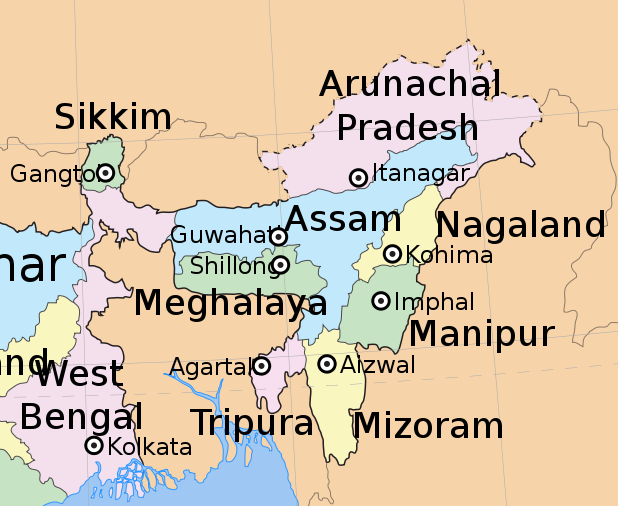
Image source: https://commons.wikimedia.org/wiki/File:Northeast_india_map.png#filelinks

The Assam-Mizoram border dispute, one of the many state border disputes in India, dates back to the colonial era when several state boundaries were demarcated to suit the British administrative needs. The states of Assam, Meghalaya, Nagaland, Mizoram and Arunachal Pradesh were earlier collectively known as the ‘Greater Assam’. The regional and cultural diversity in this large state was the cause of internal conflict in the state. Also keeping in mind the 1962 border dispute with China, the division of state was essential for national integrity as well as internal peace.

So, the state of Assam was disintegrated to form Arunachal Pradesh(union territory in 1972 and upgraded to a state in 1987) , Nagaland(1987), Meghalaya(1972) , Mizoram(UT-1972 and state-1987) . However, Britishers passed two notifications- 1. The notification of 1875- Defines the boundary between Lushai Hills(present day Mizoram) and Cachar Hills 2. The notification of 1933- Defines the boundary between Lushai hills and Manipur, And thus, when the state of Mizoram was formed, the conflict between Mizoram and Assam started. The state of Assam and Mizoram share a 164 km (approx.) border between Cachar, Hailkandi and Karimganj districts of Assam and Kolasib, Mamit and Aizwal district of Mizoram. Both sides follow a natural border(those of mountains). While disintegrating Assam, the government did not pay due attention to the Tribal realities and ethnic composition. Hence, there continues to be a considerable population of Mizos and Nagas in the Cachar Hills, making it possible for both Mizoram and Nagaland to claim these territories in Assam. Also, the people of Mizoram follow the 1875 notification(they believe the Mizo community was not consulted before issuing the notification) and those of Assam follow the 1933 notification.

This is a long unresolved dispute and its high time that it be solved. Amidst this raging pandemic and its socio-economic implications and growing international tensions, the central government has already got a lot in its plate and dumping these inter-state disputes upon the central government in such times of crisis in no wise move on anybody’s part. And so, the states must themselves come together for a peace negotiation as early as possible or otherwise accept a third party intervention. Or, the central government should revive the inter-state council or set up a zonal council to effectively address these disputes. With the NDA government in power in all these states as well the center, a political solution seems a relatively lucrative option. With growing concerns of Chinese developments amongst several Asian countries, addressing disputes of states that are bound to face Chinese interference via its BRI near India’s North-east becomes all the more important.
Assam-Mizoram border dispute

On July 11, 2021, two grenade explosions occurred in Cachar district in Assam near Mizoram border, targeting construction workers. This attack was followed by counter attack from the people of Assam. The main reason appears to be the infamous, unrelenting Assam-Mizoram border dispute.

Image source: https://commons.wikimedia.org/wiki/File:Northeast_india_map.png#filelinks

The Assam-Mizoram border dispute, one of the many state border disputes in India, dates back to the colonial era when several state boundaries were demarcated to suit the British administrative needs. The states of Assam, Meghalaya, Nagaland, Mizoram and Arunachal Pradesh were earlier collectively known as the ‘Greater Assam’. The regional and cultural diversity in this large state was the cause of internal conflict in the state. Also keeping in mind the 1962 border dispute with China, the division of state was essential for national integrity as well as internal peace.

So, the state of Assam was disintegrated to form Arunachal Pradesh(union territory in 1972 and upgraded to a state in 1987) , Nagaland(1987), Meghalaya(1972) , Mizoram(UT-1972 and state-1987) . However, Britishers passed two notifications- 1. The notification of 1875- Defines the boundary between Lushai Hills(present day Mizoram) and Cachar Hills 2. The notification of 1933- Defines the boundary between Lushai hills and Manipur, And thus, when the state of Mizoram was formed, the conflict between Mizoram and Assam started. The state of Assam and Mizoram share a 164 km (approx.) border between Cachar, Hailkandi and Karimganj districts of Assam and Kolasib, Mamit and Aizwal district of Mizoram. Both sides follow a natural border(those of mountains). While disintegrating Assam, the government did not pay due attention to the Tribal realities and ethnic composition. Hence, there continues to be a considerable population of Mizos and Nagas in the Cachar Hills, making it possible for both Mizoram and Nagaland to claim these territories in Assam. Also, the people of Mizoram follow the 1875 notification(they believe the Mizo community was not consulted before issuing the notification) and those of Assam follow the 1933 notification.

This is a long unresolved dispute and its high time that it be solved. Amidst this raging pandemic and its socio-economic implications and growing international tensions, the central government has already got a lot in its plate and dumping these inter-state disputes upon the central government in such times of crisis in no wise move on anybody’s part. And so, the states must themselves come together for a peace negotiation as early as possible or otherwise accept a third party intervention. Or, the central government should revive the inter-state council or set up a zonal council to effectively address these disputes. With the NDA government in power in all these states as well the center, a political solution seems a relatively lucrative option. With growing concerns of Chinese developments amongst several Asian countries, addressing disputes of states that are bound to face Chinese interference via its BRI near India’s North-east becomes all the more important.
DEFORESTATION – A REAL DANGER TO ENVIRONMENT

Deforestation

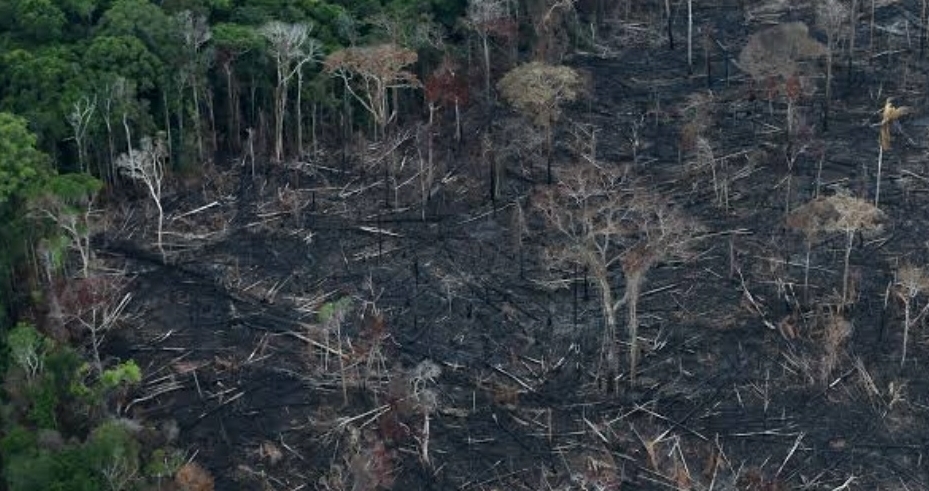
Deforestation is the permanent removal of trees to make room for something besides forest. This can include clearing the land for agriculture or grazing, or using the timber for fuel, construction or manufacturing. 

Deforestation occurs for a number of reasons, including farming, with 80% of deforestation resulting from extensive cattle ranching and logging for materials and development. It has been happening for thousands of years, arguably since man began converting from hunter/gatherer to agricultural based societies, and required larger, unobstructed tracks of land to accommodate cattle, crops, and housing. It was only after the onset of the modern era that it became an epidemic.

Increased Greenhouse Gases

In addition to the loss of habitat, the lack of trees also allows a greater amount of greenhouse gases to be released into the atmosphere. Healthy forests absorb carbon dioxide from the atmosphere, acting as valuable carbon sinks. Deforested areas lose that ability and release more carbon.

Soil Erosion and Flooding

Further effects of deforestation include soil erosion and coastal flooding. Trees help the land to retain water and topsoil, which provides the rich nutrients to sustain additional forest life.

Without forests, the soil erodes and washes away, causing farmers to move on and perpetuate the cycle. The barren land which is left behind in the wake of these unsustainable agricultural practices is then more susceptible to flooding, specifically in coastal regions.

Here are some basic facts about deforestation. These facts are explored in greater depth below.

  • Forests are cut down to clear land for agriculture, livestock grazing, and settlement; for timber; to produce charcoal; and to establish tree plantations.
  • Deforestation occurs across all forest types, but is concentrated in the tropics and boreal regions. Temperate regions are experiencing a net increase in forest cover due to natural regeneration.
  • While deforestation produces food, fiber, and fuel, it can also pose risks to climate, biodiversity, and food security by degrading the ecosystem services normally afforded by healthy and productive forests
  • Scientists estimate that 80% of the planet’s terrestrial species live in forests. Deforestation is therefore one of the biggest extinction risks to many species.

Types of deforestation

The “causes of deforestation” section above focuses on direct drivers of deforestation, but indirect drivers are also important to consider. For example, logging is a major indirect driver of deforestation in the tropics. Logging in tropical rainforests is typically selective, meaning only a few trees are harvested per hectare. But successive logging cycles degrade the perceived economic value of the forest, increasing pressure to convert the forest for intensive use, like agricultural or an industrial plantation (e.g. oil palm, wood pulp, or timber are the most common tropical tree plantations). Logging also usually involves road construction, which facilitates access to remote areas, greatly boosting the likelihood that an area of forest will eventually be cleared or burned.

Drivers of deforestation can be even farther removed however. For example, corruption, governance, and land rights can all be important factors in whether a forest gets destroyed. Corruption can enable companies to circumvent environmental regulations, while poor governance can allow illegal actors to clear forests with impunity since there isn’t any law enforcement. Insecure land rights can spur a free-for-all where forests get cleared because no one has clear stake to maintain them for the public good. Research has shown that forests are more likely to be maintained in indigenous communities that have secure land titles.

DEFORESTATION – A REAL DANGER TO ENVIRONMENT

Deforestation

Deforestation is the permanent removal of trees to make room for something besides forest. This can include clearing the land for agriculture or grazing, or using the timber for fuel, construction or manufacturing. 

Deforestation occurs for a number of reasons, including farming, with 80% of deforestation resulting from extensive cattle ranching and logging for materials and development. It has been happening for thousands of years, arguably since man began converting from hunter/gatherer to agricultural based societies, and required larger, unobstructed tracks of land to accommodate cattle, crops, and housing. It was only after the onset of the modern era that it became an epidemic.

Increased Greenhouse Gases

In addition to the loss of habitat, the lack of trees also allows a greater amount of greenhouse gases to be released into the atmosphere. Healthy forests absorb carbon dioxide from the atmosphere, acting as valuable carbon sinks. Deforested areas lose that ability and release more carbon.

Soil Erosion and Flooding

Further effects of deforestation include soil erosion and coastal flooding. Trees help the land to retain water and topsoil, which provides the rich nutrients to sustain additional forest life.

Without forests, the soil erodes and washes away, causing farmers to move on and perpetuate the cycle. The barren land which is left behind in the wake of these unsustainable agricultural practices is then more susceptible to flooding, specifically in coastal regions.

Here are some basic facts about deforestation. These facts are explored in greater depth below.

  • Forests are cut down to clear land for agriculture, livestock grazing, and settlement; for timber; to produce charcoal; and to establish tree plantations.
  • Deforestation occurs across all forest types, but is concentrated in the tropics and boreal regions. Temperate regions are experiencing a net increase in forest cover due to natural regeneration.
  • While deforestation produces food, fiber, and fuel, it can also pose risks to climate, biodiversity, and food security by degrading the ecosystem services normally afforded by healthy and productive forests
  • Scientists estimate that 80% of the planet’s terrestrial species live in forests. Deforestation is therefore one of the biggest extinction risks to many species.

Types of deforestation

The “causes of deforestation” section above focuses on direct drivers of deforestation, but indirect drivers are also important to consider. For example, logging is a major indirect driver of deforestation in the tropics. Logging in tropical rainforests is typically selective, meaning only a few trees are harvested per hectare. But successive logging cycles degrade the perceived economic value of the forest, increasing pressure to convert the forest for intensive use, like agricultural or an industrial plantation (e.g. oil palm, wood pulp, or timber are the most common tropical tree plantations). Logging also usually involves road construction, which facilitates access to remote areas, greatly boosting the likelihood that an area of forest will eventually be cleared or burned.

Drivers of deforestation can be even farther removed however. For example, corruption, governance, and land rights can all be important factors in whether a forest gets destroyed. Corruption can enable companies to circumvent environmental regulations, while poor governance can allow illegal actors to clear forests with impunity since there isn’t any law enforcement. Insecure land rights can spur a free-for-all where forests get cleared because no one has clear stake to maintain them for the public good. Research has shown that forests are more likely to be maintained in indigenous communities that have secure land titles.

Medical waste

Medical waste is any waste that is generated as a by-product of healthcare work at doctor’s surgeries, dentists, hospitals and laboratories. It includes any material that could come into contact with the body during diagnosis, research, drug administration or any type of treatment.

Medical waste is primarily regulated by state environmental and health departments. EPA has not had authority, specifically for medical waste, since the Medical Waste Tracking Act (MWTA) of 1988 expired in 1991. It is important to contact your state environmental program first when disposing of medical waste. Contact your state environmental protection agency and your state health agency for more information regarding your state’s regulations on medical waste.

Other federal agencies have regulations regarding medical waste. These agencies include Centers for Disease Control (CDC), Occupational Safety and Health Administration (OSHA), U.S. Food and Drug Administration (FDA), and potentially others.

There are generally 4 different kinds of medical waste: infectious, hazardous, radioactive, and general.

The harmful chemicals from biomedical waste may pollute air, water, and land that in turn may cause health problems to the residents. Medical waste is considered as a source of contamination of land and water sources if not rendered harmless before it is buried in land or disposed in water. Health-care waste contains potentially harmful microorganisms, which can infect hospital patients, health workers, and the general public. Health-care waste in some circumstances is incinerated, and dioxins, furans, and other toxic air pollutants may be produced as emissions.

Air pollution, climate change, soil and water contamination.Poor waste management contributes to climate change and air pollution, and directly affects many ecosystems and species. Landfills, considered the last resort in the waste hierarchy, release methane, a very powerful greenhouse gas linked to climate change.

Medical waste

Medical waste is any waste that is generated as a by-product of healthcare work at doctor’s surgeries, dentists, hospitals and laboratories. It includes any material that could come into contact with the body during diagnosis, research, drug administration or any type of treatment.

Medical waste is primarily regulated by state environmental and health departments. EPA has not had authority, specifically for medical waste, since the Medical Waste Tracking Act (MWTA) of 1988 expired in 1991. It is important to contact your state environmental program first when disposing of medical waste. Contact your state environmental protection agency and your state health agency for more information regarding your state’s regulations on medical waste.

Other federal agencies have regulations regarding medical waste. These agencies include Centers for Disease Control (CDC), Occupational Safety and Health Administration (OSHA), U.S. Food and Drug Administration (FDA), and potentially others.

There are generally 4 different kinds of medical waste: infectious, hazardous, radioactive, and general.

The harmful chemicals from biomedical waste may pollute air, water, and land that in turn may cause health problems to the residents. Medical waste is considered as a source of contamination of land and water sources if not rendered harmless before it is buried in land or disposed in water. Health-care waste contains potentially harmful microorganisms, which can infect hospital patients, health workers, and the general public. Health-care waste in some circumstances is incinerated, and dioxins, furans, and other toxic air pollutants may be produced as emissions.

Air pollution, climate change, soil and water contamination.Poor waste management contributes to climate change and air pollution, and directly affects many ecosystems and species. Landfills, considered the last resort in the waste hierarchy, release methane, a very powerful greenhouse gas linked to climate change.

Waste is a Terrible Thing To Mind-Recycle

Waste management, like all environmental endeavors, involves stressors and receptors. Waste management is a conduit at the cross roads of inputs from producers, users and outputs to environmental compartments, with the overall goal to clear the residues and reutilize cleared materials and natural resources.

Importance of waste management:

Waste management reduces the effect of waste on the environment, health, and so on. It can also help reuse resources, such as; paper, cans, glass, and so on. There is Various type of waste management that include the disposal of solid, liquid, gaseous, or hazardous substances.

Waste management are all the processes invoved with managing waste-both solid and liquid-from its inception to its final disposal. The problem of efficiently managing waste is a global one which means it is up to every individual to discuss the need for efficiency In a bid to raise awareness on its effect on earth’s ecosystem. To simplify the tasks of handling a project on waste management, 20 environment projects will be outlined below which you can chose from if any difficulties arise in coming up with your own.

WASTE MANAGEMENT

* Waste cause pollution on land water and air. Proper management of waste is important to reduce pollution.

* Waste are of three types, solid waste, liquid wastes and gaseous wastes. These three types of wastes should be managed separately and carefully so that it does not harm our environment.

* The amount of wastes increase due to the high population. More the people, more waste.

* Waste management refers to the activities connected with the collection and disposal of wastes. Waste management comprises the following activities:

– Waste collection

– Waste transportation

– Waste segregation

– Waste recycling

– Waste disposal

– Waste minimisation and control

GREAT DEPRESSION

The Great Depression was the worst economic downturn in the history of the industrialized world. Lasting from 1929 to 1939. It began after the stock market crash of October 1929, which sent Wall Street into a panic and wiped out millions of investors. Over the next several years consumer spending and investment dropped. Causing steep declines in industrial output and employment as failing companies laid off workers. By 1933, when the Great Depression reached its lowest point some 15 million Americans were unemployed and nearly half the country’s banks had failed.

Throughout the 1920s the U.S economy expanded rapidly and the nation’s total wealth more than doubled between 1920 and 1929 a period dubbed “the Roaring Twenties. The stock market centered at the New York Stock Exchange on Wall Street in New York City, was the scene of reckless speculation, where everyone from millionaire tycoons to cooks and janitors poured their savings into stocks. As a result, the stock market underwent rapid expansion, reaching its peak in August 1929.

By then production had already declined and unemployment had risen leaving stock prices much higher than their actual value. Additionally, wages at that time were low, consumer debt was proliferating the agricultural sector of the economy was struggling due to drought and falling food prices and banks had an excess of large loans that could not be liquidated. The American economy entered a mild recession during the summer of 1929 as consumer spending slowed and unsold goods began to pile up which in turn slowed factory production. Nonetheless, stock prices continued to rise and by the fall of that year had reached stratospheric levels that could not be justified by expected future earnings.

Stock market crash of 1929

On October 24, 1929 as nervous investors began selling overpriced shares mass the stock market crash that some had feared happened at last. a record 12.9 million shares were traded that day known as “Black Thursday”. Five days later on October 29 or Black Tuesday some 16 million shares were traded after another wave of panic swept Wall strret. Millions of shares ended up worthless and those investors who had bought stocks “on margin” were wiped out completely. As consumer confidence vanished in the wake of the stock market crash the downturn in spending and investment led factories and other businesses to slow down production and begin firing their workers. For those who were lucky enough to remain employed wages fell and buying power decreased. Many Americans forced to buy on credit fell into debt and the number of foreclosures and repossessions climbed steadily. The global adherence to the gold standard which joined countries around the world in a fixed currency exchange, helped spread economic woes from the United States throughout the world especially Europe.

Great Depression end

The Great Depression was a worldwide economic depression that lasted 0 years. GDP during the Great Depression fell by half, limited economic movement. A combination of the New Deal and World War II lifted the U.S out of the Depression. Those war jobs seemingly took care of the 17 million unemployed in 1939. Most historians have therefore cited the massive spending during wartime as the event that ended the Great Depression.

GREAT DEPRESSION

The Great Depression was the worst economic downturn in the history of the industrialized world. Lasting from 1929 to 1939. It began after the stock market crash of October 1929, which sent Wall Street into a panic and wiped out millions of investors. Over the next several years consumer spending and investment dropped. Causing steep declines in industrial output and employment as failing companies laid off workers. By 1933, when the Great Depression reached its lowest point some 15 million Americans were unemployed and nearly half the country’s banks had failed.

Throughout the 1920s the U.S economy expanded rapidly and the nation’s total wealth more than doubled between 1920 and 1929 a period dubbed “the Roaring Twenties. The stock market centered at the New York Stock Exchange on Wall Street in New York City, was the scene of reckless speculation, where everyone from millionaire tycoons to cooks and janitors poured their savings into stocks. As a result, the stock market underwent rapid expansion, reaching its peak in August 1929.

By then production had already declined and unemployment had risen leaving stock prices much higher than their actual value. Additionally, wages at that time were low, consumer debt was proliferating the agricultural sector of the economy was struggling due to drought and falling food prices and banks had an excess of large loans that could not be liquidated. The American economy entered a mild recession during the summer of 1929 as consumer spending slowed and unsold goods began to pile up which in turn slowed factory production. Nonetheless, stock prices continued to rise and by the fall of that year had reached stratospheric levels that could not be justified by expected future earnings.

Stock market crash of 1929

On October 24, 1929 as nervous investors began selling overpriced shares mass the stock market crash that some had feared happened at last. a record 12.9 million shares were traded that day known as “Black Thursday”. Five days later on October 29 or Black Tuesday some 16 million shares were traded after another wave of panic swept Wall strret. Millions of shares ended up worthless and those investors who had bought stocks “on margin” were wiped out completely. As consumer confidence vanished in the wake of the stock market crash the downturn in spending and investment led factories and other businesses to slow down production and begin firing their workers. For those who were lucky enough to remain employed wages fell and buying power decreased. Many Americans forced to buy on credit fell into debt and the number of foreclosures and repossessions climbed steadily. The global adherence to the gold standard which joined countries around the world in a fixed currency exchange, helped spread economic woes from the United States throughout the world especially Europe.

Great Depression end

The Great Depression was a worldwide economic depression that lasted 0 years. GDP during the Great Depression fell by half, limited economic movement. A combination of the New Deal and World War II lifted the U.S out of the Depression. Those war jobs seemingly took care of the 17 million unemployed in 1939. Most historians have therefore cited the massive spending during wartime as the event that ended the Great Depression.

FATHER OF THE NATION

“The best way to find yourself is to lose yourself in the service of others.” – Mahatma Gandhi
Meetali soni
The father of the nation is Mahatma Gandhi . The full of Mahatma Gandhi is Mohan Das Karamchand Gandhi. He was born October 2, 1869, Porbandar,Gujarat , India—died January 30, 1948, Delhi.Every year on 2 October, Gandhi Jayanti is observed. This year the day marks the 151st birth anniversary. He was a Indian lawyer, politician, social activist, and writer who became the leader of the nationalist movement against the British rule of India. Mohandas Karamchand Gandhi was known to his many followers as Mahatma, or “the great-souled one.Gandhi was the distinguished leader of the Indian independence movement in British-ruled India. Mahatma Gandhi is also called the Father of the Nation or “Bapu”.Mohandas Karamchand Gandhi or Mahatma Gandhi was a renowned freedom activist and an authoritative or powerful political leader who had played an important role in India’s struggle for Independence against the British rule of India. His father name is karamchand Gandhi . His mother name is Putlibai Gandhi. At the age of 13, Mahatma Gandhi was married to Kasturba which is an arranged marriage. His nationality is INDIAN .They had four sons of Harilal Gandhi, Manilal Gandhi, Ramdas Gandhi and Devdas Gandhi. He was a writer also .In South Africa for about 20 years, Mahatma Gandhi protested against injustices and racial discrimination using the non-violent method of protests. His simplistic lifestyle won him, admirers, both in India and the outside world. His father-in-law was Dewan or Chief Minister of Porbandar, the capital of a small principality in Western British India (Now Gujarat State). Mahatma Gandhi was the son of his father’s fourth wife Putlibai, who belonged to a Vaishnava family.When Gandhi was 9 years old he went to a local school at Rajkot and studied the basics of arithmetic, history, geography, and languages. At the age of 11, he went to a high school in Rajkot. Because of his wedding, at least about one year, his studies were disturbed and later he joined and completed his schooling.He joined Samaldas college in Bhavnagar in 1888 at Gujarat. Later, one of his family friend Mavji Dave Joshi to pursue further studies i.e. law in London. Gandhiji was not satisfied with the studies at Samaldas College and so he became excited by the London proposal and managed to convince his mother and wife that he will not touch non-veg, wine, or women.In May, 1893 he went to South Africa to work as a lawyer. There he had the first-hand experience of racial discrimination when he was thrown out of the first-class apartment of the train despite holding the first-class ticket because it was reserved for white people only and no Indian or black was allowed to travel in the first class. This incident had a serious effect on him and he decided to protest against racial discrimination.In 1915, Gandhiji returned to India permanently and joined the Indian National Congress with Gopal Krishna Gokhale as his mentor.Gandhi’s first major achievement was in 1918 when he led the Champaran and Kheda agitations of Bihar and Gujarat. He also led Non-Cooperation Movement, Civil Disobedience Movement, Swaraj, and Quit-India movement against the British government.

“First they ignore you, then they laugh at you, then they fight with you, then you win.” – Mahatma Gandhi.

Gandhi was a prolific writer.Hind Swaraj, published in Gujarati in 1909. Gandhi also wrote his autobiography, The Story of My Experiments with Truth.In 1930, Gandhi was named the Man of the Year by Time’s Magazine. In 2011, Time magazine named Gandhi as one of the top 25 political icons of all time.

“Happiness is when what you think, what you say, and what you do are in harmony.” – Mahatma Gandhi.

HE IS THE ONLY MAM WHO IS RESPONSIBLE FOR OUR FREEDOM .

Faith is not something to grasp, it is a state to grow into.” – Mahatma Gandhi.

FATHER OF THE NATION

“The best way to find yourself is to lose yourself in the service of others.” – Mahatma Gandhi
Meetali soni
The father of the nation is Mahatma Gandhi . The full of Mahatma Gandhi is Mohan Das Karamchand Gandhi. He was born October 2, 1869, Porbandar,Gujarat , India—died January 30, 1948, Delhi.Every year on 2 October, Gandhi Jayanti is observed. This year the day marks the 151st birth anniversary. He was a Indian lawyer, politician, social activist, and writer who became the leader of the nationalist movement against the British rule of India. Mohandas Karamchand Gandhi was known to his many followers as Mahatma, or “the great-souled one.Gandhi was the distinguished leader of the Indian independence movement in British-ruled India. Mahatma Gandhi is also called the Father of the Nation or “Bapu”.Mohandas Karamchand Gandhi or Mahatma Gandhi was a renowned freedom activist and an authoritative or powerful political leader who had played an important role in India’s struggle for Independence against the British rule of India. His father name is karamchand Gandhi . His mother name is Putlibai Gandhi. At the age of 13, Mahatma Gandhi was married to Kasturba which is an arranged marriage. His nationality is INDIAN .They had four sons of Harilal Gandhi, Manilal Gandhi, Ramdas Gandhi and Devdas Gandhi. He was a writer also .In South Africa for about 20 years, Mahatma Gandhi protested against injustices and racial discrimination using the non-violent method of protests. His simplistic lifestyle won him, admirers, both in India and the outside world. His father-in-law was Dewan or Chief Minister of Porbandar, the capital of a small principality in Western British India (Now Gujarat State). Mahatma Gandhi was the son of his father’s fourth wife Putlibai, who belonged to a Vaishnava family.When Gandhi was 9 years old he went to a local school at Rajkot and studied the basics of arithmetic, history, geography, and languages. At the age of 11, he went to a high school in Rajkot. Because of his wedding, at least about one year, his studies were disturbed and later he joined and completed his schooling.He joined Samaldas college in Bhavnagar in 1888 at Gujarat. Later, one of his family friend Mavji Dave Joshi to pursue further studies i.e. law in London. Gandhiji was not satisfied with the studies at Samaldas College and so he became excited by the London proposal and managed to convince his mother and wife that he will not touch non-veg, wine, or women.In May, 1893 he went to South Africa to work as a lawyer. There he had the first-hand experience of racial discrimination when he was thrown out of the first-class apartment of the train despite holding the first-class ticket because it was reserved for white people only and no Indian or black was allowed to travel in the first class. This incident had a serious effect on him and he decided to protest against racial discrimination.In 1915, Gandhiji returned to India permanently and joined the Indian National Congress with Gopal Krishna Gokhale as his mentor.Gandhi’s first major achievement was in 1918 when he led the Champaran and Kheda agitations of Bihar and Gujarat. He also led Non-Cooperation Movement, Civil Disobedience Movement, Swaraj, and Quit-India movement against the British government.

“First they ignore you, then they laugh at you, then they fight with you, then you win.” – Mahatma Gandhi.

Gandhi was a prolific writer.Hind Swaraj, published in Gujarati in 1909. Gandhi also wrote his autobiography, The Story of My Experiments with Truth.In 1930, Gandhi was named the Man of the Year by Time’s Magazine. In 2011, Time magazine named Gandhi as one of the top 25 political icons of all time.

“Happiness is when what you think, what you say, and what you do are in harmony.” – Mahatma Gandhi.

HE IS THE ONLY MAM WHO IS RESPONSIBLE FOR OUR FREEDOM .

Faith is not something to grasp, it is a state to grow into.” – Mahatma Gandhi.

VOLCANOES

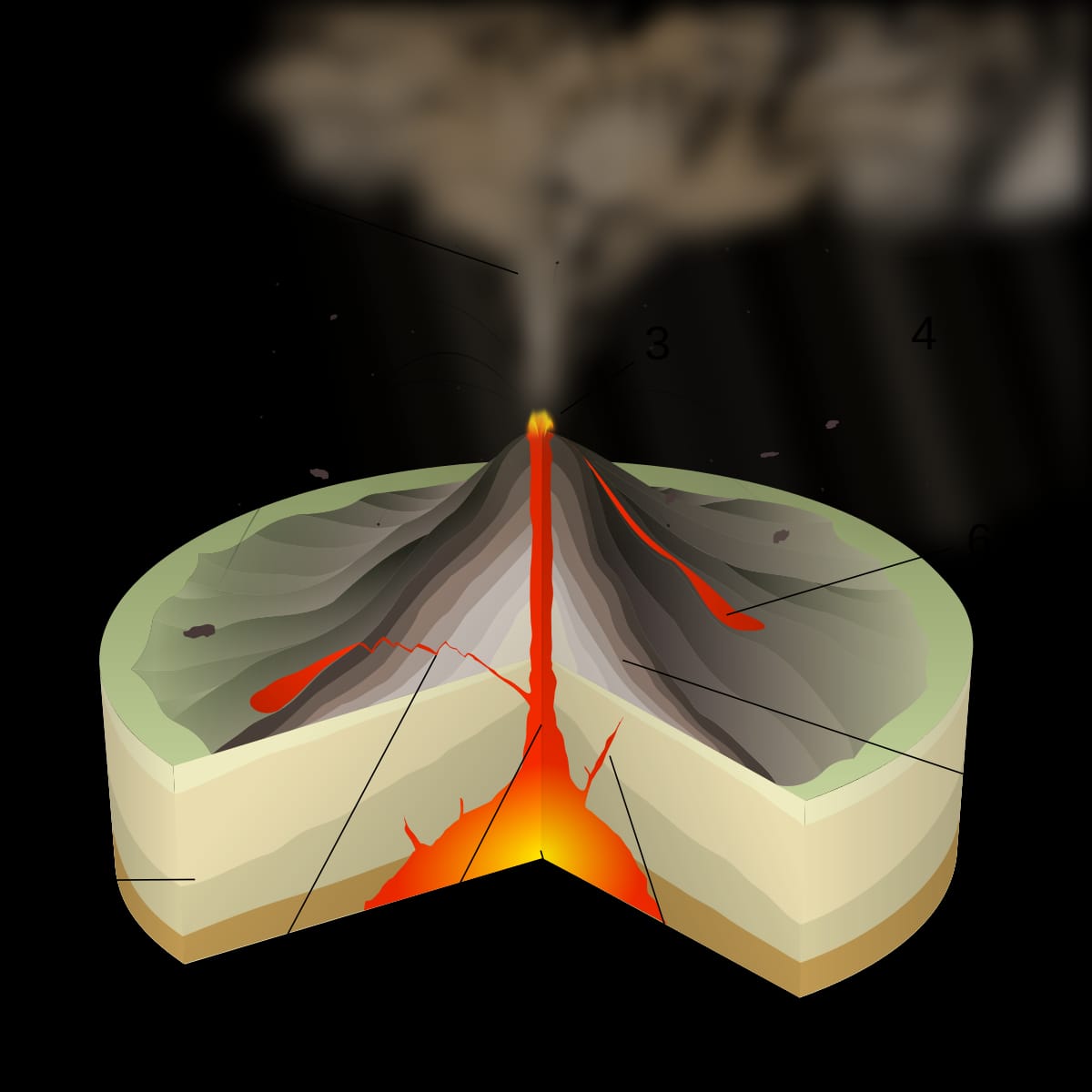
A volcano is a vent or an opening on the surface of the Earth crust, through which hot solid, liquid and gaseous materials (Magma) erupt out to the surface from the Earth’s interior. Magma rises up and ejects on the surface as Lava. Volcanoes are also formed when plates move apart.

Volcanoes generally have the following major components. They are

Magma chamber – a large pool of liquid rock found beneath the surface of the Earth.

Vents – an opening serving as an outlet for air, smoke, fumes, magma etc.

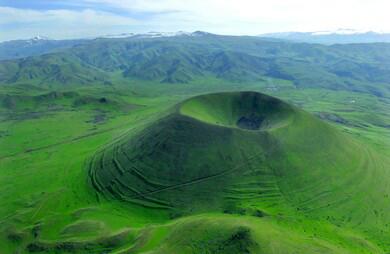
Volcanic cone – a landform built by the magma ejected from the vent in the shape of a cone.

Crater – a bowl shaped depression found at the top of the volcano through which the magma flows out.

Based on the periodicity of eruptions, volcanoes are classified into
✓Active volcano
✓Dormant volcano
✓Extinct volcano

Active Volcano

Active volcanoes are those which constantly eject volcanic lava, gases and fragmented materials. eg. Mount St. Helens in the United States.

Dormant Volcano

Volcanoes that do not show any sign of volcanic activity for a long period of time are known as dormant volcanoes. Sometimes there may be a sudden explosion which may cause unimaginable loss to life and property eg. Mt. Fuji, Japan

Extinct Volcano

When a volcano permanently stops its volcanic activity, then it is called as extinct or dead volcano eg. Mt. Kilimanjaro, Tanzania.

Volcanoes can also be classified based on their structure and composition as composite volcano, shield volcano and dome volcano

Composite Volcano

Composite volcano, also known as strata volcano, is a conical volcano built by many layers of hardened lava, pumice and volcanic ash. These are commonly found in the Pacific Ocean Eg. Mt. Fuji, Japan

Volcanic Dome

A lava dome or volcanic dome is roughly a circular mound formed due to the slow ejection of viscous lava from a volcano. As the lava is rich in silica with intense viscosity, it is prevented from flowing far from its vent. Eg. Paricutin, Mexico

Shield Volcano

Shield volcanoes are formed by intense viscous lava.
These are shallow depositions with gently sloping sides. Hence the lava flows out in all directions to create a shield. Eg. Mauna Loa, Hawaii

VOLCANOES

A volcano is a vent or an opening on the surface of the Earth crust, through which hot solid, liquid and gaseous materials (Magma) erupt out to the surface from the Earth’s interior. Magma rises up and ejects on the surface as Lava. Volcanoes are also formed when plates move apart.

Volcanoes generally have the following major components. They are

Magma chamber – a large pool of liquid rock found beneath the surface of the Earth.

Vents – an opening serving as an outlet for air, smoke, fumes, magma etc.

Volcanic cone – a landform built by the magma ejected from the vent in the shape of a cone.

Crater – a bowl shaped depression found at the top of the volcano through which the magma flows out.

Based on the periodicity of eruptions, volcanoes are classified into
✓Active volcano
✓Dormant volcano
✓Extinct volcano

Active Volcano

Active volcanoes are those which constantly eject volcanic lava, gases and fragmented materials. eg. Mount St. Helens in the United States.

Dormant Volcano

Volcanoes that do not show any sign of volcanic activity for a long period of time are known as dormant volcanoes. Sometimes there may be a sudden explosion which may cause unimaginable loss to life and property eg. Mt. Fuji, Japan

Extinct Volcano

When a volcano permanently stops its volcanic activity, then it is called as extinct or dead volcano eg. Mt. Kilimanjaro, Tanzania.

Volcanoes can also be classified based on their structure and composition as composite volcano, shield volcano and dome volcano

Composite Volcano

Composite volcano, also known as strata volcano, is a conical volcano built by many layers of hardened lava, pumice and volcanic ash. These are commonly found in the Pacific Ocean Eg. Mt. Fuji, Japan

Volcanic Dome

A lava dome or volcanic dome is roughly a circular mound formed due to the slow ejection of viscous lava from a volcano. As the lava is rich in silica with intense viscosity, it is prevented from flowing far from its vent. Eg. Paricutin, Mexico

Shield Volcano

Shield volcanoes are formed by intense viscous lava.
These are shallow depositions with gently sloping sides. Hence the lava flows out in all directions to create a shield. Eg. Mauna Loa, Hawaii

About NABARD

Beginning and VISION

The significance of institutional credit in boosting provincial economy has been obvious to the Government of India directly from its beginning phases of preparation. In this manner, the Reserve Bank of India (RBI) at the demand of the Government of India, established a Committee to Review the Arrangements For Institutional Credit for Agriculture and Rural Development (CRAFICARD) to investigate these exceptionally basic viewpoints. The Committee was framed on 30 March 1979, under the Chairmanship of Shri B. Sivaraman, previous individual from Planning Commission, Government of India.

The Committee’s between time report, submitted on 28 November 1979, illustrated the requirement for another hierarchical gadget for giving full focus, intense course and directed concentration toward acknowledge related issues connected for country improvement. Its suggestion was arrangement of an exceptional advancement monetary foundation which would address these goals and arrangement of National Bank for Agriculture and Rural Development (NABARD) was endorsed by the Parliament through Act 61 of 1981.

NABARD appeared on 12 July 1982 by moving the agrarian credit elements of RBI and renegotiate elements of the then Agricultural Refinance and Development Corporation (ARDC). It was committed to the help of the country by the late Prime Minister Smt. Indira Gandhi on 05 November 1982. Set up with an underlying capital of Rs.100 crore, its settled up capital remained at Rs.14,080 crore as on 31 March 2020. Resulting to the amendment in the structure of divide capital among Government of India and RBI, NABARD today is completely possessed by Government of India.

VISION

Improvement Bank of the Nation for Fostering Rural Prosperity.

MISSION

Advance maintainable and evenhanded agribusiness and rustic improvement through participative monetary and non-monetary intercessions, advancements, innovation and institutional improvement for getting thriving.

About NABARD

Beginning and VISION

The significance of institutional credit in boosting provincial economy has been obvious to the Government of India directly from its beginning phases of preparation. In this manner, the Reserve Bank of India (RBI) at the demand of the Government of India, established a Committee to Review the Arrangements For Institutional Credit for Agriculture and Rural Development (CRAFICARD) to investigate these exceptionally basic viewpoints. The Committee was framed on 30 March 1979, under the Chairmanship of Shri B. Sivaraman, previous individual from Planning Commission, Government of India.

The Committee’s between time report, submitted on 28 November 1979, illustrated the requirement for another hierarchical gadget for giving full focus, intense course and directed concentration toward acknowledge related issues connected for country improvement. Its suggestion was arrangement of an exceptional advancement monetary foundation which would address these goals and arrangement of National Bank for Agriculture and Rural Development (NABARD) was endorsed by the Parliament through Act 61 of 1981.

NABARD appeared on 12 July 1982 by moving the agrarian credit elements of RBI and renegotiate elements of the then Agricultural Refinance and Development Corporation (ARDC). It was committed to the help of the country by the late Prime Minister Smt. Indira Gandhi on 05 November 1982. Set up with an underlying capital of Rs.100 crore, its settled up capital remained at Rs.14,080 crore as on 31 March 2020. Resulting to the amendment in the structure of divide capital among Government of India and RBI, NABARD today is completely possessed by Government of India.

VISION

Improvement Bank of the Nation for Fostering Rural Prosperity.

MISSION

Advance maintainable and evenhanded agribusiness and rustic improvement through participative monetary and non-monetary intercessions, advancements, innovation and institutional improvement for getting thriving.