Factors used in this face wash are Tea trees & fruits, charcoal and Vitamin c helps in keeping the skin healthy and soft. Makes the skin acne-prone and keeps it hydrated. Suitable for all types of skin.
Want to know more about them , then start some reading .
Introduction
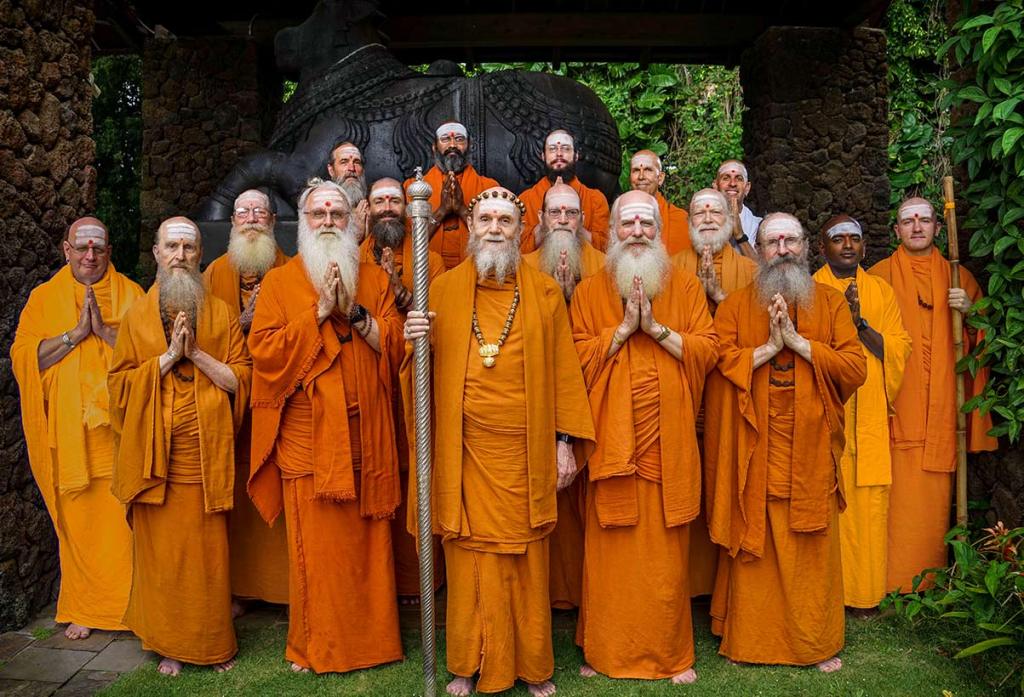
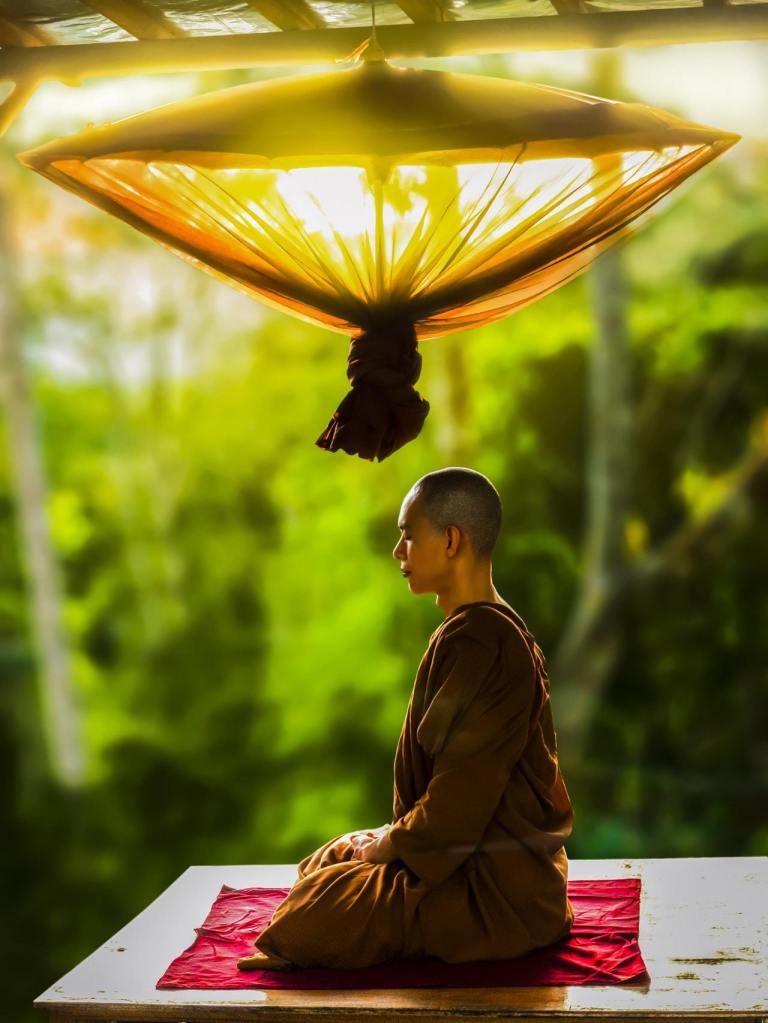
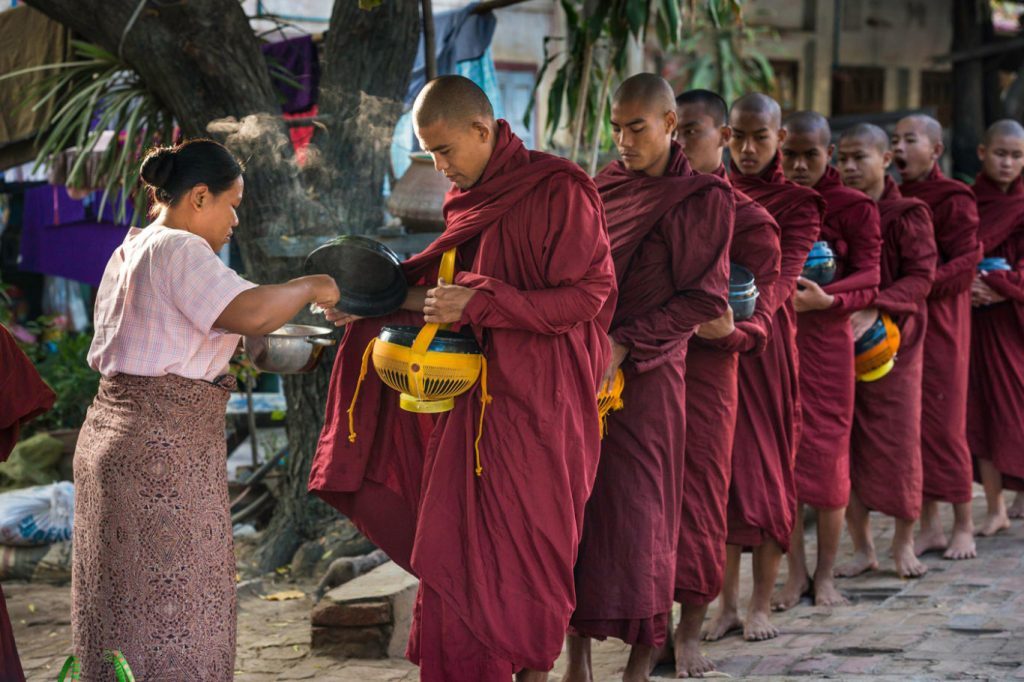
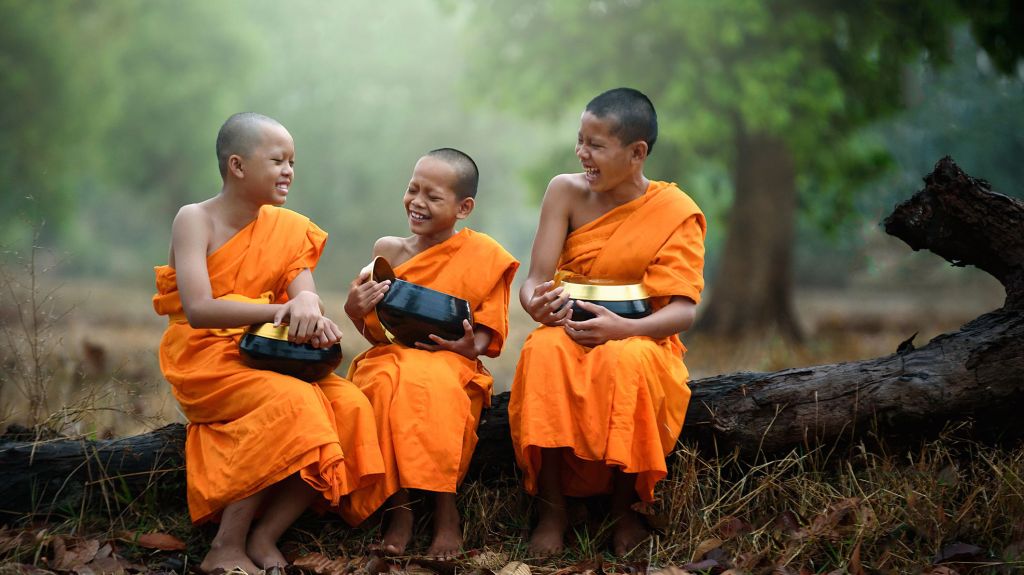
A monk is a person who practices religious asceticism by monastic living, either alone or with any number of other monks . A monk may be a person who decides to dedicate his life to serving all other living beings, or to be an ascetic who voluntarily chooses to leave mainstream society and live his or her life in prayer and contemplation. The concept is ancient and can be seen in many religions and in philosophy.
In simple words , A monk is a man who devoted part or all of his life to a religion. The word comes from Ancient Greek, and can be translated as solitary. In Greek, the word can apply to women, but in modern English it is mainly used for men. The word nun is usually used for female monastics. Monks practice asceticism. They either live alone, or together with other monks who share the same ideals. Monks can be found in different religions, most often in Buddhism, Christianity, Hinduism, Jainism and Taoism.
There living
Monks usually follow rules and regulations for convenient life. As a monk you must obey these rules .
Poverty: the monk cannot own anything.
Chastity: the monk cannot have sex or a sexual relationship and cannot start a family or get married.
Solitude: the monk should always be alone. Some monks choose to not follow this law.
Silence: the monk shall not speak unless it is necessary.
Generosity: the monk should always help other people.
Stillness: the monk cannot travel far unless it is necessary. Sometimes this means that the monk must be cloistered which means that they must not leave their monastery (especially Warsa period). Sometimes they can be allowed to leave, but must not go very far.
Duty: The monk must do some things every day. For example, the monk must pray or meditate and must do some work.
Indian monks
One of the finest and versatile monk in India was Swami Vivekananda . Swami Vivekananda was greatly inspired by Ramakrishna. For Swami, Ramakrishna was just a plain and simple villager, who was a part of the Kali temple. However, his intense spiritual practices intrigued Swami.
For five years, Swami learnt everything from his master, Ramakrishna. After his master left the world, everyone looked up to Swami. He urged the followers of Ramakrishna to leave the worldly pleasures and look up to God.
“You cannot believe in God until you believe in yourself.”
His saying intrigued just not one nation but the whole world .
Life lessons
Being a monk , gives you a pleasure of being yourself . We live in the world where we get pleasure from materialistic things . We become selfish , ruthless, dull, lifeless and worthless. You have to believe in yourself in order to excel in life.
Start learning from lessons.
When you start to do meditation you recognize the egotistical mind.
Trying until you get it right.
The answer to your question is inside of you.
Real wisdom in life comes from doing something and failing.
We must be both compassionate and resilient.
Patience is a virtue.
Detach from your ego.
Happiness come from within, and also comes from outside.
Depression and anxiety are very common problem these days starting from teenager to elderly adults anyone and everyone can face this at any point in life and they equally affect us as any physical disease does, many people don’t take mental health seriously but it is outmost necessary to do so. Here are a few simple daily habits which will help you to deal with depression:
Stay away from negative thoughts, and always try to focus on the filled part of the glass and try not to worry about the empty.
Practice meditation regularly it helps to calm one’s mind and helps in relaxing the brain.
Try to stay out from field where you feel irritated and also do try ignoring unnecessary mess.
Physical exercising is a must for a healthy mind as it keeps the body fit and also helps keeping negativity away.
The physical environment where one spends time and the company of people with which one spend time also plays a key role in determining the and dealing with depression issues.
One must also take care of the diet, consuming fresh fruits and vegetables are highly recommended and one must take care that proper diet is consumed.
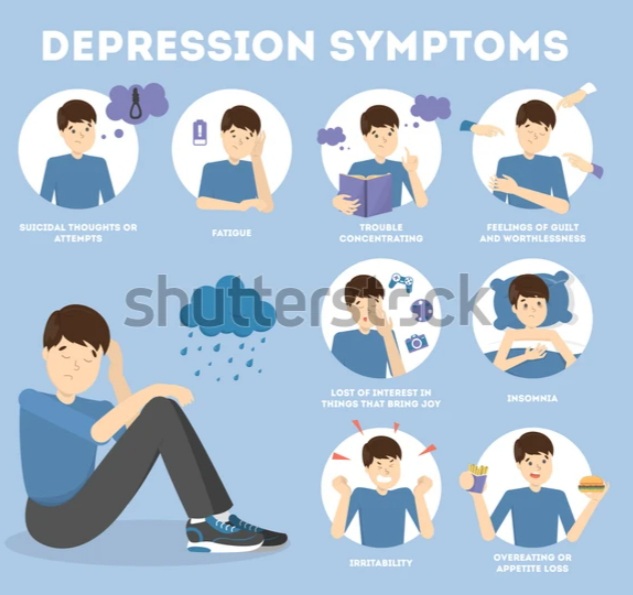
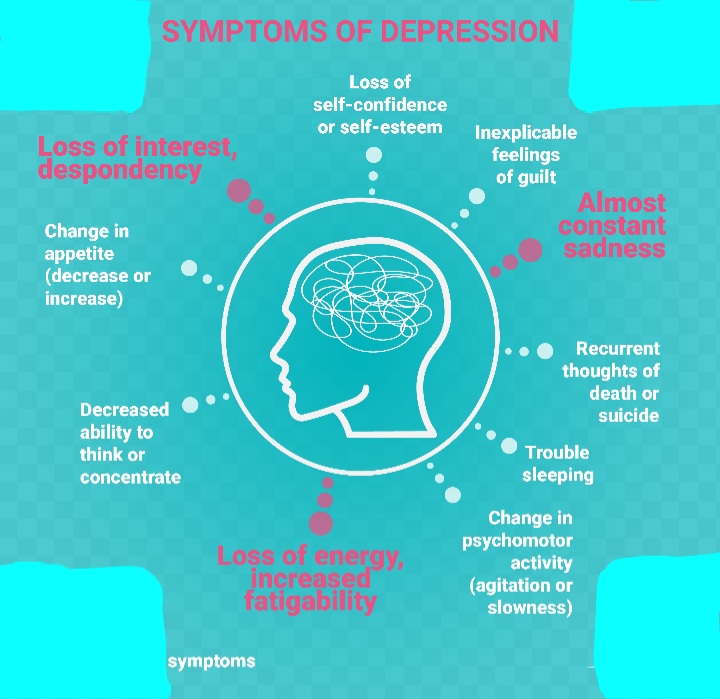
Depression symptoms :
Depression can be more than a constant state of sadness or feeling ” blue”. Major depression cane cause a variety of symptoms. Some affect your mood, and others afect your body. Symptoms may also be onging or come and go. The symptoms of depression can be experienced differently among men, women and children differently.
Men may experience symptoms related to their:
* Mood, such as anger, aggressive, irritability, anxiousness, restlessness.
* Emotional well- being such as feeling empty, sad, hopeless.
* Behavior, such as loss of interest, no longer finding pleasure in favorite activites feeling tired easily , thiughts of suicide, drinking- execessively , using drugs, engaging in high- risk activities.
* sexual interest, such as reduced sexual desire, lack of sexual performance
* cognitive abilities , such as inability to concentrate, difficulty completeing tasks, delayed responses during- conversations.
* sleep patterns, such as insomina, restless slepp, excessive sleepiness, not sleeping through the night.
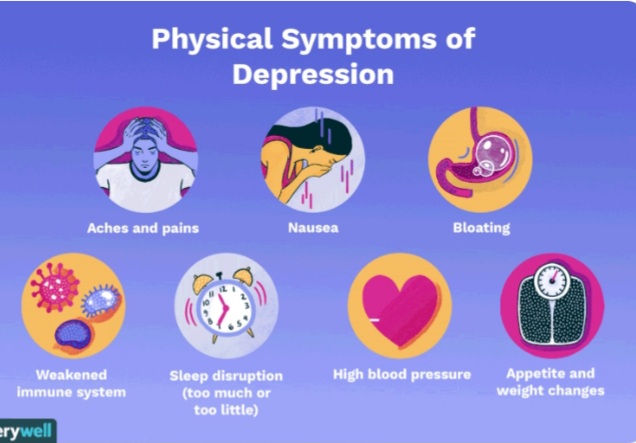
* physical well- being, such as fatigue, pains, headache, digestive problems.
Women may experience symptoms related to their:
* mood, such as irritability
* emotional well- being, such as feeling sad or empty, anxious or hopless.
* congnitive abilities,such asthinking or talking more slowly
* behavior, such as loss of interest in activities, withdrawing from social engagements, thoughts of suicide
* sleep patterns, such as difficultu sleeping through the night, waling early, sleeping too much.
* physical well- being, such as decreases energy, greater fatigue, changes in appetite, weight changes, aches,pain, headaches, increased cramps.
Children may dxperiences symptoms related to their :
* mood such as irritability, anger, mood swings, crying.
* emotional well- being, such as feelings of incompetence or despair, crying, intense sadness
* behavior, such as gettkng into trouble at school or refusing to go to school, avoiding friends or siblings thoughts of death or suicide.
* cognitive abilities, such as difficulty concentrating, decline in school performance, changes in grades.
* sleep patterns, such as difficulty sleeping or sleeping too much
*physical well- being, such as loss of energy digestive problems, changes in appetite, weight loss or gain.
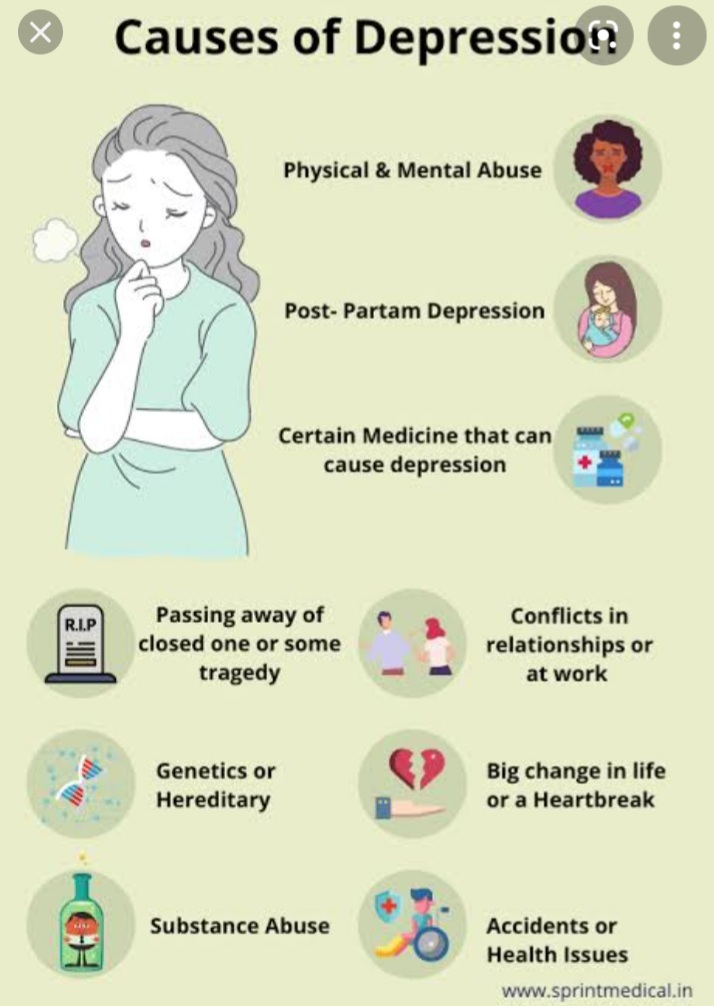
Depression causes :
There are several possible causes of depression. They can range from biological to circumstantial.
Common causes include ;
* Family history :
You’re at a higher risk for developing depression if you hace a family history of depression or another mood disorder.
* Early childhood trauma :
Some events affect the way your body reacts to fear and stressful situations
* Brain structure :
There’s a greater risk for depression if her frontal lobe of your brain is less active.
* Medical conditions :
Certain conditions may put you at higher risk, such as chronic illness, insomia, chroinc pain or attention- deficit hyperactivity disorder
* Drug use :
A history of drug or alcohol misuse can affect your risk.
Many factors can influence feelings of depression, as well as who develops the condition . The causes of depression are often tied to other elements of your health. Depression can be linked with to other health problems, your healthcare provider may also conduct a physical examination and order blood work.
Types of depression :
Depression can be broken into categories depending on the severity of symptoms. Some people experience mild and temporary episodes, whike other experience severs and ongoing depressive episodes.
There are two main types. Major depressive disorder and persistent depressive disorder .
Major depressive disorder :
Major depressive disorder is the more severe form of depression. It’s characterized by persistant feelings of sadness, hoplessness and worthlessness that dont’t go away on their own.
Persistent depressive disorder :
Persistent depressive disorder ( pDD) used to be called dysthymia. It is a milder, but chronic, form of depression.
It’s common for people with PDD to
* lose interest in normal daily activites.
* feel hopless
* lack productivity
* haveclow self- esteem
Depression can be treated successfully, but it’s important to stick your treatment plan.
Treatment for depression :
Living with depression can be difficult, but treatment can help improve your quality of life. Talk to your health care provider about possible options. You may successfully manage symptoms with one form of treatment ,or may find that a combinations of treatment works best.
Being a part of a mixed economy , where politics tend to exploit the peace between different religions and so on …….. .
“India was the motherland of our race, and Sanskrit the mother of Europe’s languages: she was the mother of our philosophy; mother, through the Arabs, of much of our mathematics; mother, through the Buddha, of the ideals embodied in Christianity; mother, through the village community, of self-government and democracy. Mother India is in many ways the mother of us all.”
Will Durant, American historian
And now you want to know why I am being so dramatic over such things . Well , if you want to know than start reading the editorial .
Introduction
Indians say it is important to respect all religions, but major religious groups see little in common and want to live separately
More than 70 years after India became free from colonial rule, Indians generally feel their country has lived up to one of its post-independence ideals: a society where followers of many religions can live and practice freely.
Religion has historically influenced Indian society on a political, cultural and economic level. There is a sense of pride associated with the country’s rich religious history as the traditions of Hinduism, Buddhism, Sikhism and Jainism all emerged out of India. Moreover, while a majority of people in India identify as Hindu (79.8%), the medley of religions that exist within the country continually impact contemporary society.
Census
The 2011 Indian census indicated that 79.8% of Indians identified as Hindu, 14.2% identified as Muslim and 2.3% identified as Christian. A further 1.7% of the population identified as Sikh, 0.7% identified as Buddhist and 0.37% identified as Jain. Due to the massive population size of India, religious minorities still represent a significant number of people. For example, although only 0.37% of India may identify with Jainism, that still equates to over 4 million people. While not all religions in India can be discussed in detail, the following provides an overview of the major religions in the country as well as sizable religions that originated in India.
Social beliefs
“India has two million gods and worships them all. In religion all other countries are paupers; India is the only millionaire.”
Mark Twain
Karma, Acceptance and Personal Choice . Many Indians tend to have a sense of acceptance towards one’s life position or a belief that, due to actions in one’s past life, good or bad personal circumstances are deserved. This attitude partly stems from religious ideas such as ‘karma’ (the idea that one’s actions will affect their current or future life) and ‘samsara’ (the cycle of rebirth).
The interplay of these social, cultural and religious factors allows people to be accepting of life events and trajectories. However, this is not to be interpreted as Indians being unwilling to take responsibility for life circumstances. Many often contemplate how their actions may impact their future and make decisions accordingly. Some of India’s youth are challenging a fatalistic perspective by asserting their free will to choose their vocation, spouse and other life factors. Indeed, as social mobility becomes more common, there is a growing belief that one can change their circumstances.
It’s Role
Religion plays a major role in the Indian way of life. Rituals, worship, and other religious activities are very prominent in an individual’s daily life; it is also a principal organizer of social life. The degree of religiosity varies amongst individuals; in recent decades, religious orthodoxy and observances have become less common in Indian society, particularly amongst young urban-dwellers. As of the politics , they play with religion , people’s belief and with their trust .
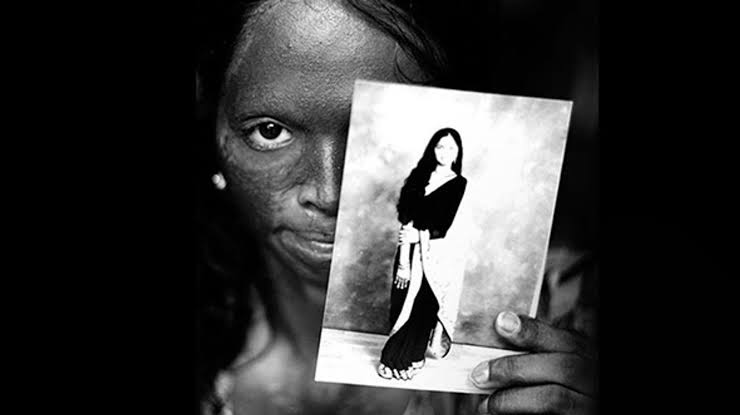
Acid Attacks …why??? The person you love if doesn’t love you back you will do the shameless act!!!!! Why People are mute .. why they don’t talk about this ruthless act…… The Perpetrators of these attacks throw corrosive liquids at their victims, usually at their faces, burning them, and damaging skin tissue , often exposing and sometimes dissolving the bones. Acid attacks can often lead to permanent blindness.
Don’t let your looks make you stop
IN INDIA
In India, acid attacks are at an all-time high and increasing every year, with 250–300 reported incidents every year, while the “actual number could exceed 1,000, according to Acid Survivors’ Trust International”.
THE MOTIVES OF PERPETRATORS
Some of the most common motivations of perpetrators include:
Personal conflict regarding intimate relationships and sexual rejection Sexual-related jealousy and lust Revenge for refusal of sexual advances, proposals of marriage, and demands for dowry Racial motivations Social, political, and religious motivations Gang violence and rivalry Anti-minority discrimination Conflicts over land ownership, farm animals, housing, and property
You are beautiful the you are
ARE WOMEN SAFE
Are women safe?????? I question again are women safe in our motherland. Every day each and every women wears a shroud of fear , staying alert and trying to fight all the odds of attacks. Maybe it’s molestation,attacks, rape , why!!!men why ?? Why do we forget we all came from the womb of some woman who fought for 9months just to give birth to someone who will make another woman’s life hell.. NO NO NO… We all have to fight against the odds of the men where our mother our sister our lover becomes a part of a ruthless act killing them mentally, Physically, emotionally and most importantly the way in which society see her changes …let’s us all come together to fight the demons and kill the devil’s threating our goddesses…I am taking vow of fighting the Maoists and I request all of you to be together to create a better place to live….
Acid attacks refer to physical assaults where an acid or corrosive material is thrown over another individual with the intention to disfigure, torture or kill an individual and according to recent study this form of violence against women is increasing at alarming rate. It was revealed that the victims of acid burn are most often young and teenage girls because of refusal of marriage and rejection of love proposal or sexual advances, personal revenge and family disputes.Another major cause reported was they did not bring enough dowries with them. This horrific act occurs in countries such as: Bangladesh, Cambodia, Pakistan, India, and Afghanistan.
Another major cause reported by respondents was they did not bring enough dowries with them. The most notable effect of an acid attack is the lifelong bodily disfigurement. Consequently, the victim is faced with physical challenges, which require long-term surgical treatment. Acid assault survivors also face many mental health issues upon recovery like anxiety, depression, lowered self-esteem and increased self- consciousness. Many social implications exist for acid survivors especially women, like such attacks usually leave victims handicapped in some way, rendering them dependent on either their spouse or family for everyday activities, such as eating and running errands. These dependencies are increased by the fact that many acid survivors are not able to find suitable work, due to impaired vision and physical handicap. This negatively impacts their economic viability, causing hardships on the families/spouses that care for them. Moreover, acid survivors who are single when attacked almost certainly become snubbed or excluded from society, effectively ruining marriage prospects. Moreover, a significant number of victims receive no compensation for healthcare and other costs, and many others face significant challenges in accessing adequate first aid and long-term healthcare.
“I lost my childhood that day, I stopped going to school and lost all my friends. People stared at me and mocked me. Neighbors and relatives blamed me, and said I must have done something wrong to earn the man’s wrath. My only fault was I refused the man’s proposal.” These were the words spoken by Laxmi Aggarwal , a 26 year old acid attack survivor , who was subjected to an acid attack by two men in 2005 while she was waiting for a bus in the Khan Market area in New Delhi subsequent to her rejection to marry one of the attackers. In spite of the fact that she survived the attack, it had. left her disfigured for life as the acid had burnt her whole face. She has undergone several surgeries to make her physical appearance resemble of what it was.
Acid violence is widespread and prevalent in our society that remains often invisible. Hence the government must combat the acids attacks and implement laws by ensuring adequate police investigations, protecting victims, and punishing the perpetrators. One important way to combat acid violence is to limit the easy availability of acid. The acids used for attacks are easily available as they are used in domestic use as well as for scientific and research purposes. A monitoring system should be formed to check the effective implementation of the rules by the people. They can also eradicate the violence by effectively implementing laws that provide for perpetrators’ prosecution and punishment . Also we must spread awareness about the devastating effects among people and all must work effectively to curb the violence.











 Eduindex
You must be logged in to post a comment.