MEANING: I respect the son of Vasudeva, Devaki, the one who gave birth to such immoral child, the one who destroyed kamsa and who made this world. I salute to Lord Krishna.
MEANING: For the defence of good, for demolishing the evil and to entrench the dharma (righteousness). I (The Lord Krishna) took birth again and again.
When someone stay on sense object for long, the feeling of wanting that object is generated. This wants changes to desire, and this desire gives birth to anger.
MEANING: From anger comes the false believe that conflict with reality; from false believe confuse memory is generated; from a confused memory the power or reason of ruin is created; from the reason of ruin, man finally destroys himself.
MEANING: when the power of dharma (righteousness) is weaken and when there is increase in adharma (unrighteousness) ,I (Lord Krishna) born in this world.
Chapter 9, Verse 26
patram pushhpam phalam toyam yo me bhaktyaa prayachchati | tadaham bhaktyupahritamashnaami prayataatmanah ||
MEANING: I welcome the offering of fruits, water, a flower as well as a leaf, when it is offered with affectionate loyalty.
Chapter 5, Verse 10
brahmanyaadhaaya karmaani sangam tyaktvaa karoti yah | lipyate na sa paapena padmapatramivaambhasaa ||
MEANING: The one who devote and show loyalty toward god, without any attachment, remains distant from sin, just as leaf of lotus under the water.
MEANING: Where there is Lord of protection, compassion and love, the Krishna and the world’s best archer Arjuna, there rule is a good fortune and will shower victory, prosperity, and justice. This is my strong believe.
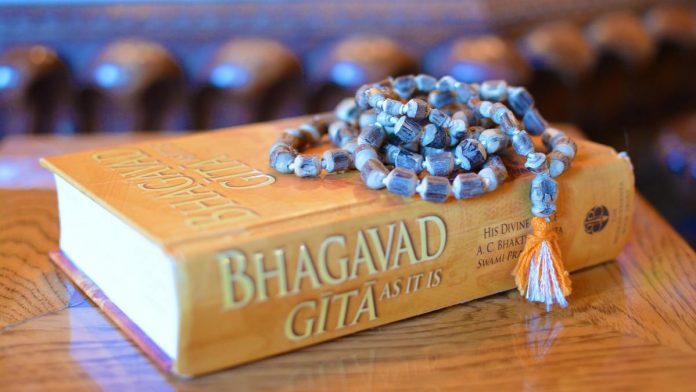
As per the Bhagavad Gita these sloka are considered to be the most knowledgeable word to read.
Supernatural creatures are not explainable by the laws of nature. They have abilities which are superhuman. Abilities like magic, levitation, mind control, extra sensory perceptions. They have been mentioned in various forklore and mythological books and contexts. It states that humans believe in a superior power, good and bad. We can know more about these supernatural creatures from various movies and tv shows like the vampire diaries, lucifer, twilight, conjuring, supernaturals, etc. But they have showed some creatures like hybrids (vampire and werewolf) , and heretics (vampires with magical powers) which are not mentioned in any mythological history and are fictional. Although there is no proof that they still exist but some paranormalists believe that ghosts and spirits do exist. Some supernatural creatures and phenomenons : 1. Deity – They are the believed to be god, a supreme power. They are worshipped by people. 2. Angels – They are said to be the intermediataries between god and earth. They protect the children of god. 3. Prophecy – They are said to be the ones who completes God’s task on earth. 4. Revelation – When god or the good spirit appreas in form of visions or dreams. 5. Reincarnation – When the supernatural starts living inside the bodies of others. 6. Spirits – They are ghosts or angels. 7. Demon – A bad entity as said in religious history. 8. Witchcraft – Practice of magical powers in a person. 9. Miracles – Events which are not explainable by nature or scientific laws. 10. Banshee – Female spirit who’s whining amd crying is fatel. 11. Elf – Legendary beings who are mysterious and small. 12. Devil – Evil subordinates or bad spirits who harm humans. 13. Dwarf – Small creatures with magical powers. 14. Fairies – Who are human like with magical powers and seem to keep others happy. 15. Genie – Creature who fulfils his master’s wishes. 16. Ghost – Spirit of a dead person who haunts people. 17. Giant – A mythical creature of superhuman size. 18. Golem – Artificially created human being by supernaturals. 19. Guarding angel – Who protects a person. 20. Imp – A small creature 21. Leprechaun – A small creature who is mysterious and troublesome. 22. Pixie – A fairy or elf. 23. Vampires – Human like creatures who cannot stand sunlight and drink human blood to survive. 24. Werewolf- A human like creature who turns into a wolf on certain specific occasions. 25. Wraith- A supermatural spirit who reanimates a dead body 26. Sirens – The legend of Greek mythology states that the monstrous women would sing enticing songs and lure sailors to their doom to eat them. 27. Basilisk – A serpentine creature who, much like the Gorgons of Greek myth, can kill with one look. 28. Phoenix – The golden bird who, at the end of its life, burst into flames only to be reborn again. 29. Cyclopes – The one-eyed giant who captured and ate people. 30. Centaurs – With the top half of a human and the full body of a horse. 31. Goblin – a small grotesque supernatural creature, regarded as malevolent towards human beings. 32. Troll – one of a class of supernatural creatures that dwell in caves or mountains and are depicted either as dwarfs or as giants.
Being a part of a mixed economy , where politics tend to exploit the peace between different religions and so on …….. .
“India was the motherland of our race, and Sanskrit the mother of Europe’s languages: she was the mother of our philosophy; mother, through the Arabs, of much of our mathematics; mother, through the Buddha, of the ideals embodied in Christianity; mother, through the village community, of self-government and democracy. Mother India is in many ways the mother of us all.”
Will Durant, American historian
And now you want to know why I am being so dramatic over such things . Well , if you want to know than start reading the editorial .
Introduction
Indians say it is important to respect all religions, but major religious groups see little in common and want to live separately
More than 70 years after India became free from colonial rule, Indians generally feel their country has lived up to one of its post-independence ideals: a society where followers of many religions can live and practice freely.
Religion has historically influenced Indian society on a political, cultural and economic level. There is a sense of pride associated with the country’s rich religious history as the traditions of Hinduism, Buddhism, Sikhism and Jainism all emerged out of India. Moreover, while a majority of people in India identify as Hindu (79.8%), the medley of religions that exist within the country continually impact contemporary society.
Census
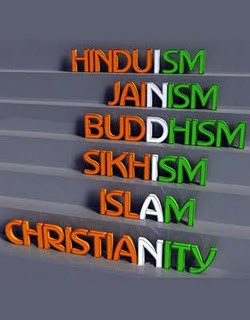
The 2011 Indian census indicated that 79.8% of Indians identified as Hindu, 14.2% identified as Muslim and 2.3% identified as Christian. A further 1.7% of the population identified as Sikh, 0.7% identified as Buddhist and 0.37% identified as Jain. Due to the massive population size of India, religious minorities still represent a significant number of people. For example, although only 0.37% of India may identify with Jainism, that still equates to over 4 million people. While not all religions in India can be discussed in detail, the following provides an overview of the major religions in the country as well as sizable religions that originated in India.
Social beliefs
“India has two million gods and worships them all. In religion all other countries are paupers; India is the only millionaire.”
Mark Twain
Karma, Acceptance and Personal Choice . Many Indians tend to have a sense of acceptance towards one’s life position or a belief that, due to actions in one’s past life, good or bad personal circumstances are deserved. This attitude partly stems from religious ideas such as ‘karma’ (the idea that one’s actions will affect their current or future life) and ‘samsara’ (the cycle of rebirth).
The interplay of these social, cultural and religious factors allows people to be accepting of life events and trajectories. However, this is not to be interpreted as Indians being unwilling to take responsibility for life circumstances. Many often contemplate how their actions may impact their future and make decisions accordingly. Some of India’s youth are challenging a fatalistic perspective by asserting their free will to choose their vocation, spouse and other life factors. Indeed, as social mobility becomes more common, there is a growing belief that one can change their circumstances.
It’s Role
Religion plays a major role in the Indian way of life. Rituals, worship, and other religious activities are very prominent in an individual’s daily life; it is also a principal organizer of social life. The degree of religiosity varies amongst individuals; in recent decades, religious orthodoxy and observances have become less common in Indian society, particularly amongst young urban-dwellers. As of the politics , they play with religion , people’s belief and with their trust .
We are what we think. All that we are arises with our thoughts. With our thoughts, we make the world. Peace comes from within. Do not seek it without.
Lord Buddha
Introduction.
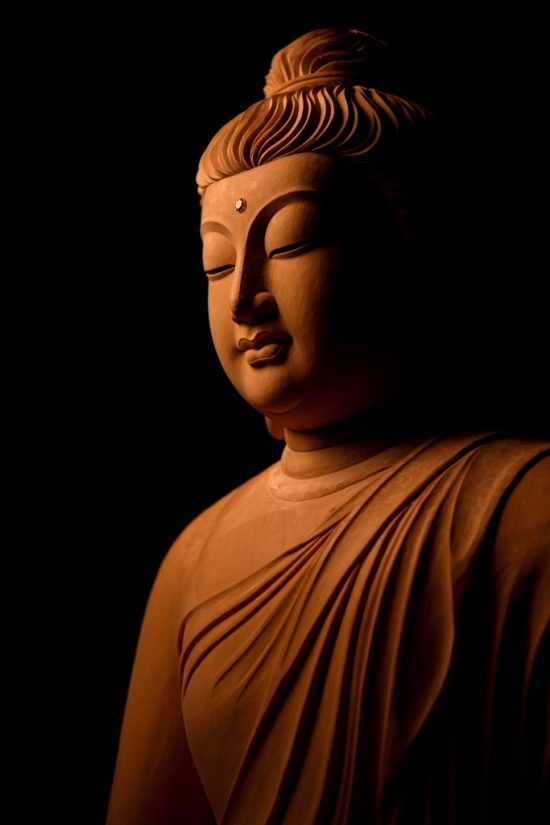
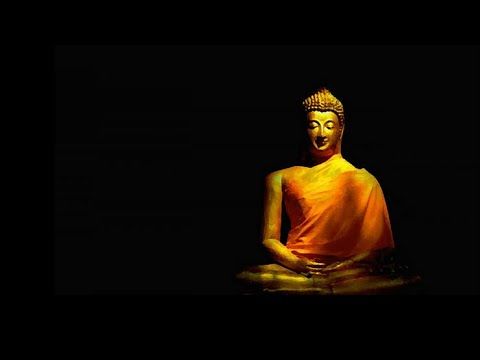
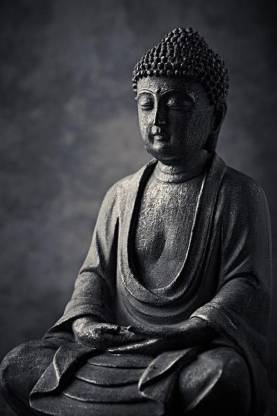
He was a spiritual personality . An ancient teacher and enlightened many . A founder of world religion Buddhism . He was popularly known as Gautama Buddha (also known as Siddhattha Gotama or Siddhārtha Gautama or Buddha Shakyamuni ) .
The Enlightened One who rediscovered an ancient path to release clinging and craving and escape the cycle of birth and rebirth. He taught for around 45 years and built a large following, both monastic and lay. His teaching is based on his insight into the arising of duḥkha (the unsatisfactoriness of clinging to impermanent states and things) and the ending of duhkha—the state called Nibbāna or Nirvana (extinguishing of the three fires).
Buddhism
Buddhism, one of the major religions and philosophical systems of southern and eastern Asia and of the world. Buddha is one of the many epithets of a teacher who lived in northern India sometime between the 6th and the 4th century before the Common Era.
The title buddha was used by a number of religious groups in ancient India and had a range of meanings, but it came to be associated most strongly with the tradition of Buddhism and to mean an enlightened being, one who has awakened from the sleep of ignorance and achieved freedom from suffering.
According to the various traditions of Buddhism, there have been buddhas in the past and there will be buddhas in the future. Some forms of Buddhism hold that there is only one buddha for each historical age; others hold that all beings will eventually become buddhas because they possess the buddha nature (tathagatagarbha).
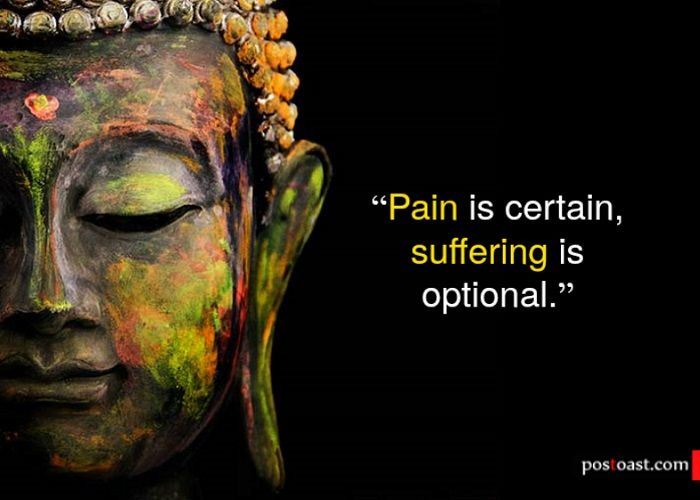
According to Buddhist doctrine, the universe is the product of karma, the law of the cause and effect of actions, according to which virtuous actions create pleasure in the future and nonvirtuous actions create pain.
Your work is to discover your world and then with all your heart give yourself to it.
Lord Buddha
History
Gautama Buddha ( born c. 6th–4th century BCE, Lumbini, near Kapilavastu, Shakya republic, Kosala kingdom [now in Nepal]—died, Kusinara, Malla republic, Magadha kingdom [now Kasia, India]).
Buddha is one of the many epithets of a teacher who lived in northern India sometime between the 6th and the 4th century before the Common Era.
Learnings from Gautama Buddha.
1. “Three things cannot be hidden: the sun, the moon and the truth.”
2. “You will not be punished for your anger; you will be punished by your anger.”
3. “You can search throughout the entire universe for someone who is more deserving of your love and affection than you are yourself, and that person is not to be found anywhere. You, yourself, as much as anybody in the entire universe, deserve your love and affection.”
4. “We are shaped by our thoughts; we become what we think. When the mind is pure, joy follows like a shadow that never leaves.”
5. “Believe nothing, no matter where you read it, or who said it, no matter if I have said it, unless it agrees with your own reason and your own common sense.”
Though most religions make it a point to claim their teachings have been consistent since the dawn of time (whenever that was), spiritual traditions have appeared and disappeared throughout the ages with the same regularity as empires. And if such ancient faiths as Manichaeism, Mithraism, and Tengriism are all but gone, a few of the oldest religions and practices are still around today. Find out what they are below.
Hinduism (founded around the 15th – 5th century BCE)
Hinduism may not be a unified religion per se, or organized into a distinctive belief system, but Hindus (as they have been identifying themselves for centuries, the result of opposition with other religions) roughly follow the same central traditions, understandable to all the religion’s multifarious adherents. The first and foremost of these is a belief in the Vedas – four texts compiled between the 15th and 5th centuries BCE on the Indian subcontinent, and the faith’s oldest scriptures – which make Hinduism without doubt the oldest religion in existence. It has since evolved into a diverse and flexible tradition, notable, as the scholar Wendy Doniger puts it, for its ability to ‘absorb potentially schismatic developments.’ There are close to one billion Hindus in the world today.
Zoroastrianism (10th – 5th century BCE)
The ancient Indo-Iranian religion of Zoroastrianism (known to natives as Mazdayasna) – said to date back to the 2nd millennium BCE – emerged in its current version from the teachings of the reforming prophet Zoroaster (Zarathustra), who historians contend lived at some point between the 10th and 6th centuries BCE (they disagree somewhat). Extremely influential over the development of the Abrahamic tradition, it was the state religion of various Persian empires until the Muslim conquest of the 7th century CE, and survives in parts of Iran, India, and Iraq to this day, reportedly followed by some 200,000 people.
Yazdânism: Interestingly enough, three particular Kurdish religious variants (practiced among the Yazidis, Goran, and Ishik Alevis), grouped together under the umbrella neologism Yazdânism (Cult of Angels), have evolved from a mix of Islam and a Hurrian precursor to the Zoroastrian faith. They reconcile the existence of Abrahamic prophets with a doctrine of reincarnation, and the belief that the world is defended from evil by seven ‘angels’. This may make these creeds as old, if not older, as Zoroastrianism.
Judaism (9th – 5th century BCE)
The foundation for all other Abrahamic religions, and the oldest monotheism still around (though by no means the first – that is alleged to be a variation on ancient Egyptian faith called Atenism, which disappeared in the 14th century BCE), Judaism originated in the kingdoms of Israel and Judah, which first appeared in the Levant around the 9th century BCE. The religion morphed into its current form in the 6th century BCE, evolving from the worship of a state god based in a polytheistic worldview into that of a one ‘true’ God, codified in the Bible. If it is today followed by an estimated 11–14 million people, its two successor faiths – Christianity (1st century CE) and Islam (7th century CE) – are the world’s most popular, with a combined 3.8 billion adherents.
Jainism (8th – 2nd century BCE)
Once a dominant religion on the Indian subcontinent (before the rise of reform Hinduism in the 7th century CE), Jainism has fairly obscure origins. Its followers believe in the tirthankaras, omniscient preachers of the Jain path, whose defining characteristics are marked by asceticism and self-discipline. The last two tirthankaras are known historical figures: Parshvanatha (8th century BCE) and Mahavira (599 – 527 BCE). Yet archeological evidence proving the existence of Jainism only dates back to the second century BCE. Jains are said to number six to seven million worldwide.
Confucianism (6th – 5th century BCE)
If, like Buddhism, Confucianism must invariably be traced to one man – in this case, the Chinese politician, teacher, and philosopher Confucius (551 – 479 BCE) – it is worth noting that he himself maintained he was part of a scholarly tradition dating back to an earlier golden age.
Though the most humanistic and least spiritual creed on this list, Confucianism does provide for a supernatural worldview (it incorporates Heaven, the Lord on High, and divination) influenced by Chinese folk tradition. Since the teachings were first compiled in the Analects a generation or two after Confucius’s death, the tradition has gone through various periods of popularity and unpopularity in China, and remains one of the leading influences on modern Chinese folk religion. Strict Confucianists are said to number about six million.
Buddhism (6th – 5th century BCE)
Unlike most other religions on this list, Buddhism has a fairly clear history: it begins with one man, Siddhartha Gautama, known otherwise as Buddha. Based in the northernmost regions of the Indian subcontinent (most likely in present-day Nepal) roughly between the 6th and 5th centuries BCE, he was the founder and leader of his own monastic order, one of many sects (known as Śramana) that existed across the region at the time. His teachings began to be codified shortly after his death, and continue to be followed one way or another (and with major discrepancies) by at least 400 million people to this day.
Taoism (6th – 4th century BCE)
Taoism can be traced with some certainty to a work attributed to the mythical Laozi (said to have been a contemporary of Confucius), the Tao Te Ching, whose oldest recorded edition dates back to the 4th century BCE. The religion evolved from a strand of traditional Chinese folk religion, and makes mention of masters and teachings from long before it was codified, including the god-like Yellow Emperor, said to have reigned from 2697 – 2597 BCE, and the I Ching, a divination system dating back to 1150 BCE. Today, an estimated 170 million Chinese claim some affiliation with Taoism, with 12 million following it strictly.
Shintoism (3rd century BCE – 8th century CE)
Though not codified until 712 CE in response to contact with mainland religions (namely, Confucianism, Buddhism, and Taoism), Shintoism is a direct descendant of the animistic folk religion of the Yayoi, whose culture spread from the north of Kyushu to the rest of Japan from the 3rd century BCE onward. Today, the faith is a unified account of ancient Japanese mythology, marked strongly by Buddhist influences, and followed by the vast majority of the country’s population (though only a small minority identify it as an organized religion).
A note on methodology:
Before getting into it, it is worth mentioning that determining a religion’s age depends entirely on how one defines what a religion is. All spiritual systems have roots in beliefs dating back millennia – meaning that the main differences between each are found elsewhere: in their codification and general uniformity, and the age of their wider precepts.
Not included, then, are the various animistic and shamanistic traditions (counting the Chinese folk religion, which lacks consistency and is partly constructed on Taoist and Confucian beliefs), as well as the modern revival of ancient religions such as Neopaganism or Mexicayotl (both traditions that were for a long time eradicated, and may differ in important ways from their original conception).
Likewise omitted is atheism, which, despite its natural rejection of organization, is known to have existed at least since the 6th century BCE (though we suspect it’s as old as the first stirrings of religious thoughts).
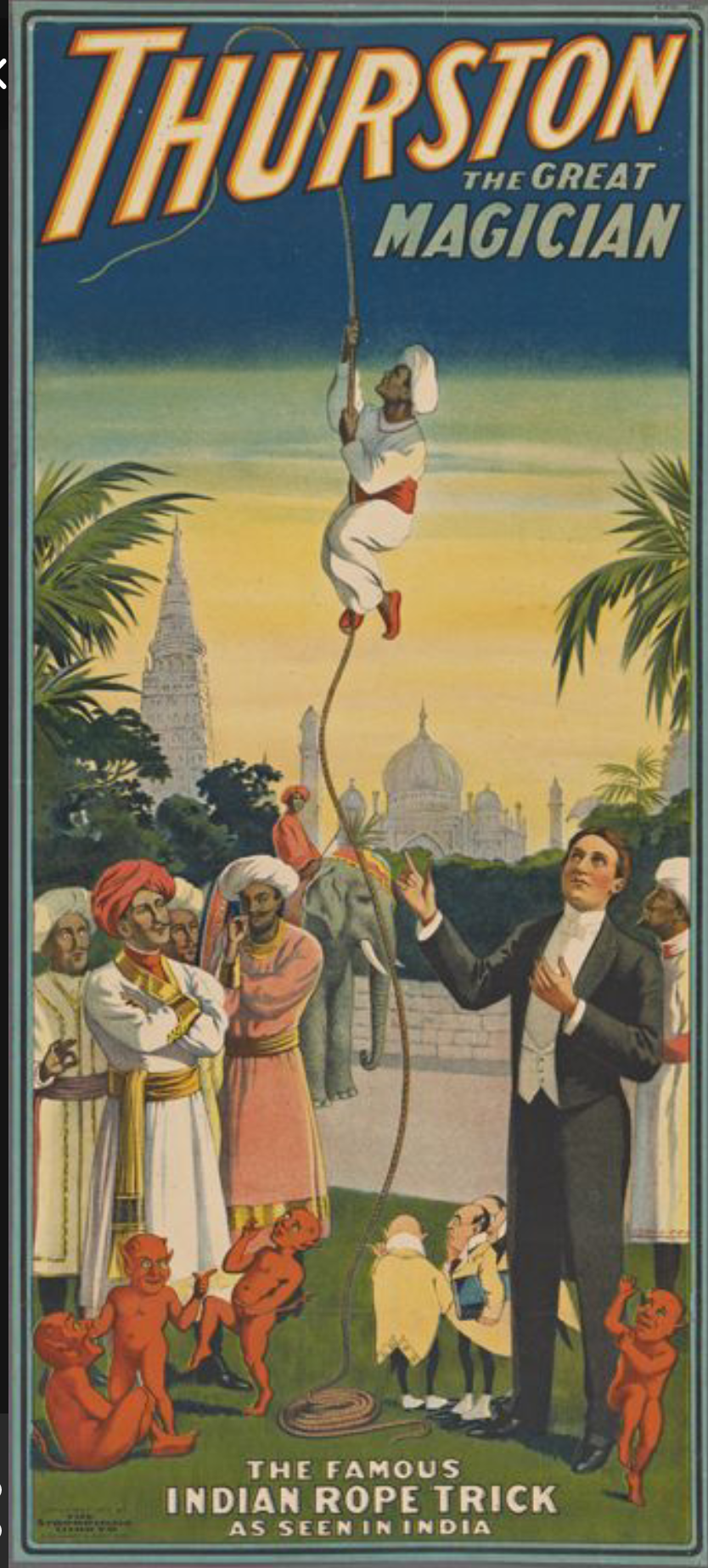
India is a land of countless mysteries that have puzzled the rest of the world. Perhaps the most enduring of these mysteries is that of the ‘Indian rope trick’. In the classic version of Indian rope trick, a rope is thrown into the air where it remains rigid. A young boy then climbs the rope, only to disappear at the top. The performer quickly follows him only to disappear when he reaches the top of the vertical rope! Shortly after, pieces of the boy’s body fall from the sky and land on the ground at the bottom of the rope. A few seconds later, the performer is seen climbing down the rope with a blood stained knife in his hand. On reaching firm ground, the performer utters a magic word and the rope falls limp to the ground. He then gathers up the pieces of the boy’s body and bundles them under a sheet. Within seconds, the sheet is lifted and the boy appears completely whole and unharmed! Travellers to India have described this amazing trick for over 600 years, but there is considerable doubt as to whether the trick is fact or fantasy.
• Shroud of Turin
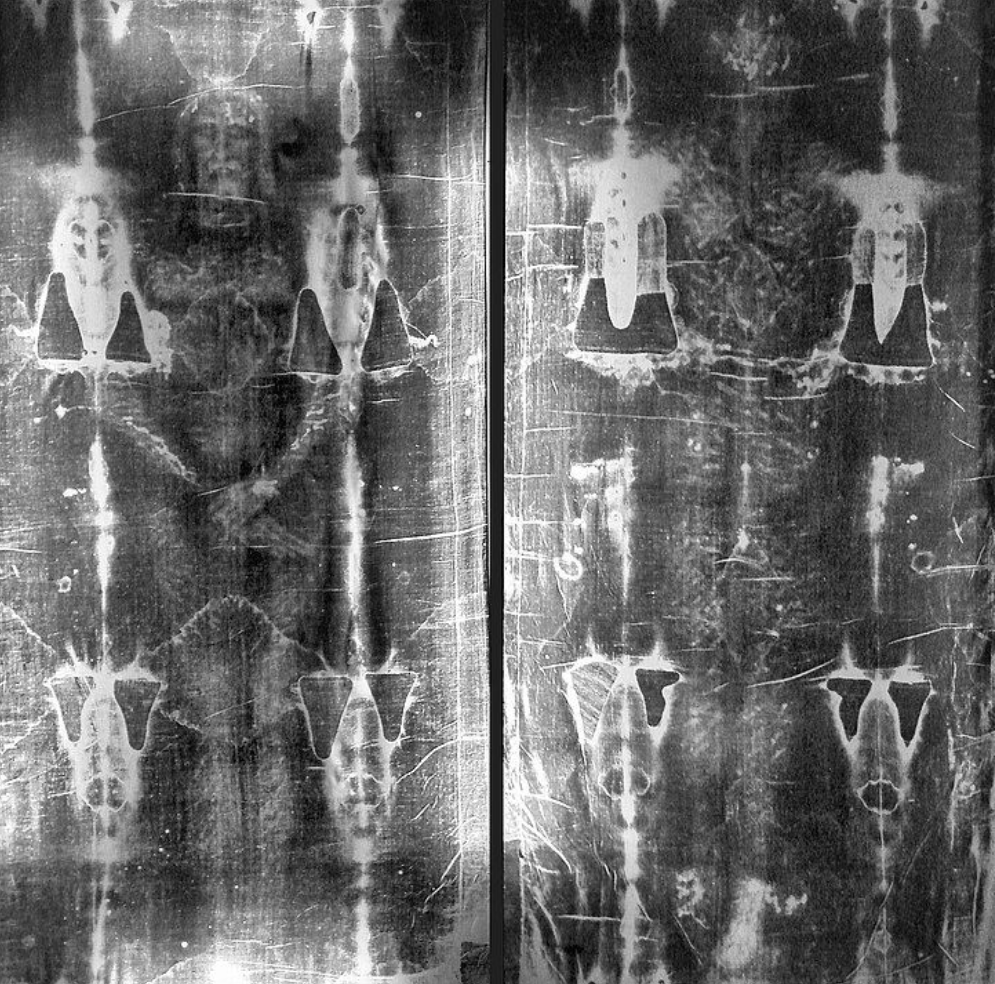
The shroud of Turin is reputedly the cloth in which Jesus Christ was wrapped and buried. The shroud is 4.34 meters long and it bears the image of a man with wounds similar to those suffered by Jesus Christ. The shroud is unquestionably old. Its history is known from the year 1357, when it surfaced in the tiny village of Lirey, France. Today, it is kept in a silver chest in the Cathedral of Saint John, the Baptist in Turin, Italy, where it has been since 1578.
Does the shroud really show the face of Jesus? No one really knows. Although, many scientists have expressed doubts about the accuracy of the image, millions believe it to be divine and it has been a religious relic since the middle ages.
• Loch Ness monster
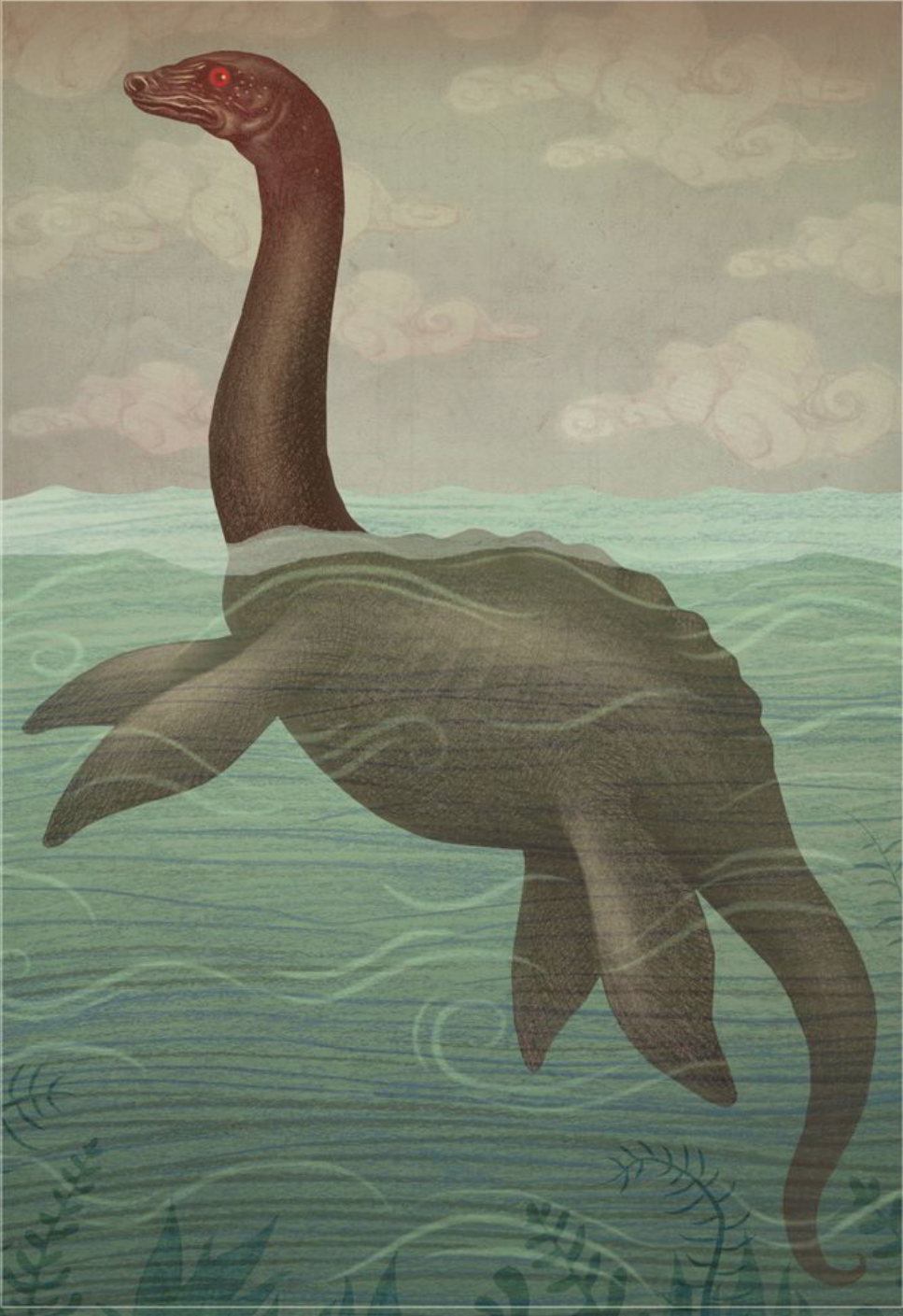
As far back as the 17th century, people have reported seeing a monster in the Loch Ness in Scotland. Loch means lake in Scotland. This is the largest freshwater lake in the UK. But, rather than being known for its size, it is famous for the mysterious legend of the Loch Ness monster or Nessie.
For thousands of years, people have reported catching glimpse of a huge creature. This creature is said to have a small head, a long neck and an immense body with flippers. Some people have shared photos they claim to have taken of this huge creature. The legend is so great that even scientists have been intrigued and many have conducted experiments and come up with theories to try and explain what people could be witnessing.
One explanation is that the monster could be a prehistoric creature called plesiosaur, an animal that has been considered to be extinct. Maybe one of these creatures managed to survive in the Loch Ness Lake, who knows?
Ancient Egyptian Society had many different deities which were an important part of the people’s belief system. There were about 2000 deities in the Egyptian pantheon which were an integral part of the culture. The most famous gods were considered as State Deities while others were a part of the rituals of a specific region. Some of the most popular Deities are – Isis, Osiris, Horus, Ra, Bastet, Set, Nephthys, Anubis.
Isis
Isis was the goddess of magic and was a clever and ambitious woman. She was the wife of Osiris and the patron of magicians. She loved her husband very much and encouraged their son to take vengeance on the evil god Set who had Osiris. She is shown as a beautiful woman with colourful wings.
Osiris
Osiris was a wise and good pharaoh and the husband of Isis. He taught men about farming and is said to have built the first cities of Egypt. His brother Set tricked him into getting inside a coffin and made it into pieces and then hid the pieces all over Egypt. Isis spent years searching for him and eventually put all the pieces together when he partially came back to life. He was the god of the underworld and he sat in judgement over the souls of the dead.
Horus
Horus was called as the Avenger and the son of Isis and Osiris. When he grew up, he defeated Set and became the new pharaoh of Egypt. All mortal pharaohs are considered as descendants of him. Falcon is his symbol and he is often pictured as the man with a falcon’s head.
Ra
Ra was the first pharaoh of the world and the God of the Sun. The Egyptians celebrated as Ra would emerge victoriously after sailing the golden sun ship across the sky. After many centuries Ra became old and went back to the heaven after giving his throne to Osiris.
Bastet
Bastet was the goddess of cats and extremely popular in Egypt. She was a protective goddess and people used to wear amulets with her likeness for good luck. She is pictured as a cat fighting with a knife with the serpent Apep. She was the faithful cat of Ra.
Set
He was the god of desert, storms and evil. He is very tricky and the strongest of all the gods. He became the pharaoh after killing his brother Osiris and was later defeated by his nephew Horus. After that he fled into the desert and controlled the harsh lands outside of the Nile valley. In his old age he spent his days sailing Ra’s boat and defending her from the armies of the serpent Apep. He is pictured as a red skinned god with the head of an unknown animal demon.
Nephthys
Nephthys is the kind and gentle river goddess. She is the wife of Set and the sister of Isis. She didn’t like Set and helped Isis to find the pieces of Osiris and put him together. Her son was Anubis.
Anubis
Anubis is the god of funerals and the most important god. He helped Isis make Osiris into the first mummy. He is pictured as a man with a jackal’s head.
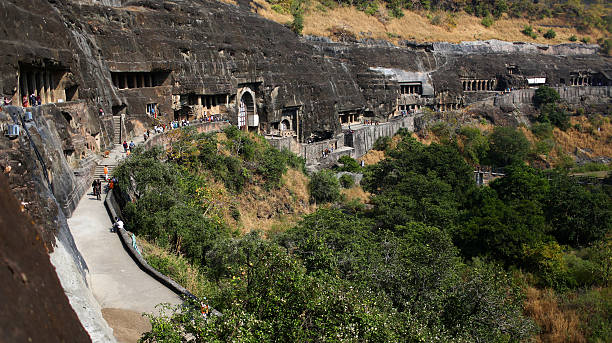
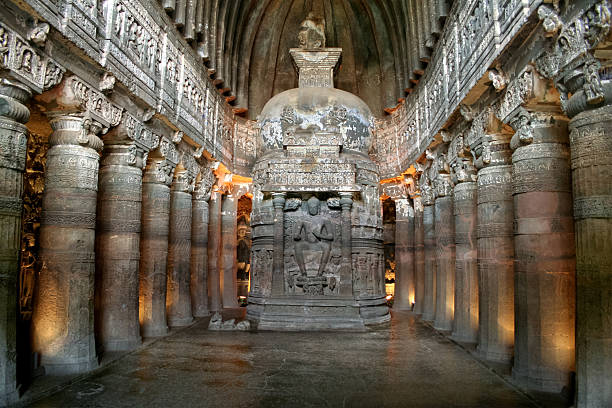
Carved over a period of several centuries, the mystery of Ajanta Caves might never have been uncovered had it not been for a chance pursuit of a tiger by the British Officer John Smith in the year 1819! As old as 200 BCE, the caves are located in Aurangabad district of Maharashtra. Over the multitude of years they fell into disuse and a forest grew over and around them. Carved over many many years by different artisans, they are believed to have been made a refuge for the Buddhist monks during the rains. Some go as far as to say that they were pathways to heaven.
With numerous carvings that describe the life and times of the eras, they are like a window that one can peek through into the glorious past of India. The caves run for a mind numbing length of 29 rock cut caves, all of which have both female and male representation, which is a rare sight! Examples of immense scientific calculations are evident too, as the sun lights up cave 19 on the winter solstice and cave 26 on the Summer solstice in a precision that has persisted over the years!
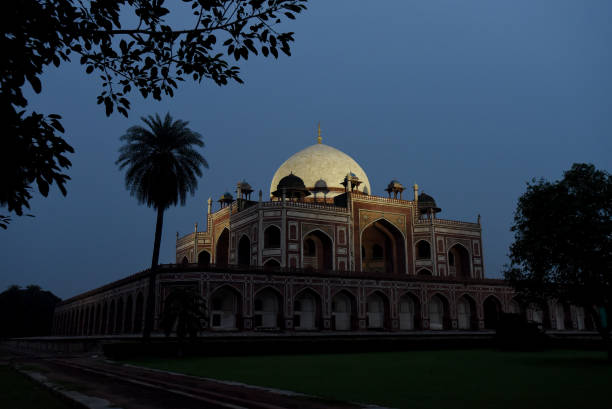
The monument to love that inspired the Taj Mahal-The Humayun Tomb
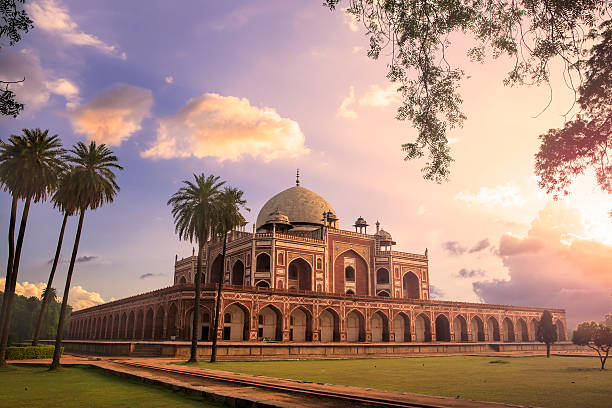
The Humayun’s Tomb
Pick up any form of literature and you will notice that ‘Taj Mahal’ has forever been cited as the all enduring monument of the love of a king for a queen. But, there was one tomb before that, that a grieving widow built for the love and devotion that she felt towards her husband; The Humayun Tomb. The pioneering example of Mughal architecture, its glorious combination of Persian and Indian architecture forms was to set a prelude to an era that was to be embellished by the grandeur of Mughal architecture. Bega Begum, spent her entire life overseeing the construction and design of this tomb that was commissioned to the great Persian architect Mirak Mirza Ghiyas.
One of its kind architecture, this garden tomb houses the graves of over 150 members of the Mughal family. The UNESCO cites it’s reasons for considering it as one of the greatest examples of architecture by saying, “This building tradition culminated in the Taj Mahal, constructed a century later. Despite being the first standardized example of this style, Humayun’s Tomb is an architectural achievement of the highest order.”
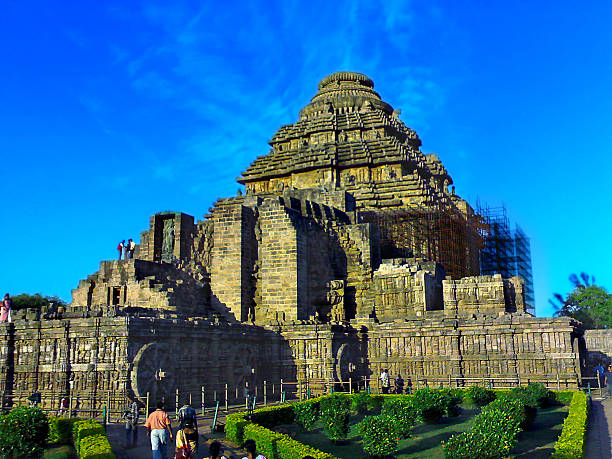
Konark Sun Temple
An ode to Sun God, where even stones speak up in prayer- Konark Temple
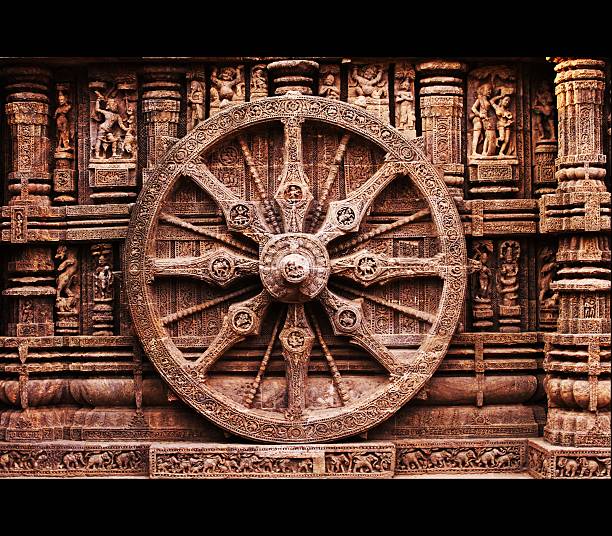
No text of architecture in India is complete without the mention of Sun Temple at Konark, the namesake of the city itself is an elegy to the Sun God, Kona (Corner) and Arka (Sun). On the sparkling coasts of Bay of Bengal rests this edifice that commemorates the work of the masters of ancient times. The temple has an elaborate and intricate mammoth structure that depicts the chariot of the Sun God replete with 24 carved wheels, each of them 3 m in diameter, pulled by seven horses and guarded by two lions at the entrance that bravely crush elephants.
An example of beautiful melee of science, architecture and devotions the sun dials on the temple can calculate time to the exact minute even to this day! There are also three statues of the sun god that catch the rays of the sun precisely at dawn, noon and sunset! Rabindranath Tagore has famously said about the temple “Here the language of stone surpasses the language of man.” The temple beckons to question the monotonous styles of architecture that India has regressed itself to!
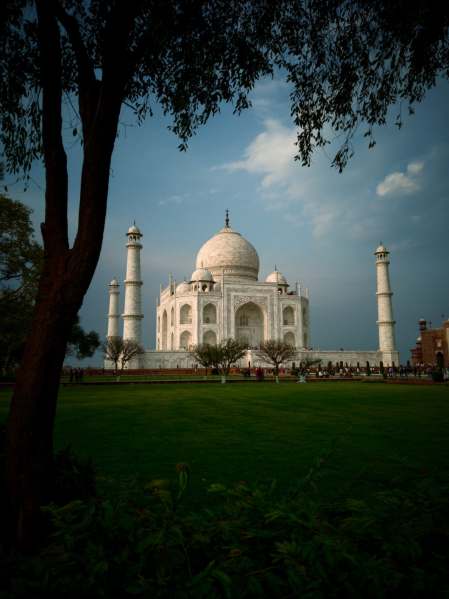
A eulogy to undying love set in white marble- The Taj Mahal
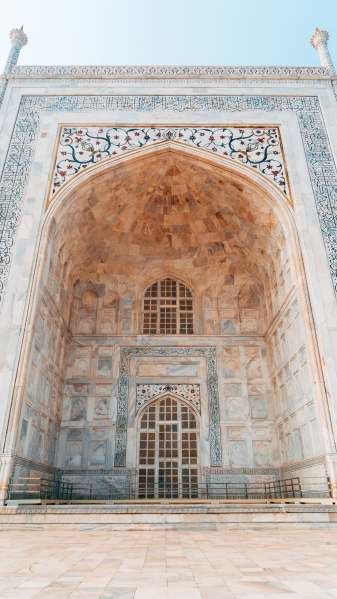
Taj Mahal
Ask anyone, any man or woman about the icon they associate with India, and their answers would most likely allude to the Taj Mahal. Built by the Mughal Emperor Shah Jahan, it is one of the most grandiose gestures of love to ever be materialized on the face of earth. As famously said by the greatest poet, Rabindranath Tagore, “The Taj Mahal rises above the banks of the river like a solitary tear suspended on the cheek of time.” Inspite of the multitude of tourists that visit it, the declarations of love that it has witnessed and countless examples that it has set, there is a sense of melancholy as one approaches the monument, a sense of pain of a lover separated from his wife by death.
The Taj Mahal was built in 1653 AD by over twenty thousand artisans who toiled over 22 years! The white marble was bought in from Makrana in Rajasthan and was transported by elephants. In its days of glory the Taj Mahal was adorned with no less than 28 types of precious stones, brought in from as far as Tibet and Persia. Like the moods of his lady love, the exterior of the Taj also changes colors from a pinkish hue in the dawn to a dull gold at noon and finally, all enduring sparkling white under the moonlight. Legends say that as the emperor lay imprisoned by his own son in the Agra Fort, he derived solace from gazing at the tomb of his beloved wife, at whose side he was finally laid to rest.
The integral land of three beliefs, The Ellora Caves
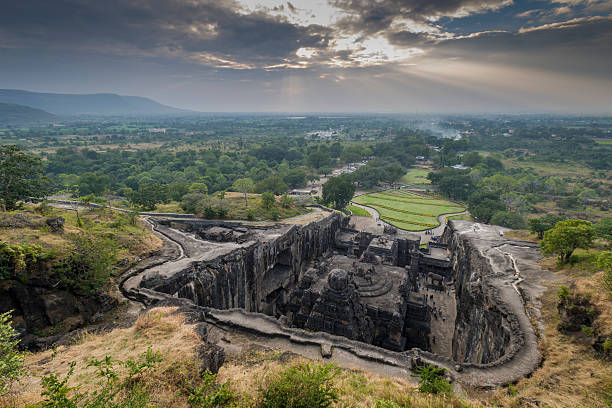
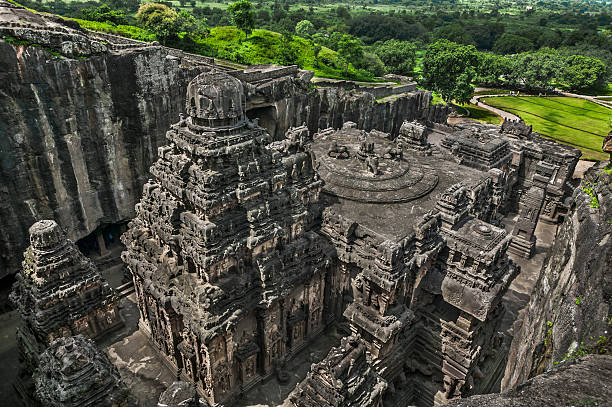
Ellora caves
The Ellora caves is a sculpture’s beautiful blended expression of three major Indian regions: Buddhism, Brahmanism and Jainism. There is something beautiful about this place that takes you to a journey in the past where all these religions born and grew together. The 34 monasteries and temples are carved and dug all together on the wall of a huge basalt cliff in Maharashtra. These splendors of art is a beautiful combination of, when art meets religion
The twelve caves of the Buddhist group speaks about the benevolence of this calm religion, Buddhism. The ‘Cavern of the Ten Avatars’ is a majestic art piece constructed under the reign of Krishna I. The ethnicity of Jain group is well reflected by the sanctuaries carved by the Digambra sect of this pure religion. These gems of art are the immortal legends of the vast rock-cut architecture in India. The elegance of Dravidian Sikhara, which is a flat roofed madapa positioned over sixteen pillar, the gigantic Ravana figure reflecting the strength of this villainous legend as the sculpture here shows him lifting Mt Kailasha is an epitome of the ancient Indian art.
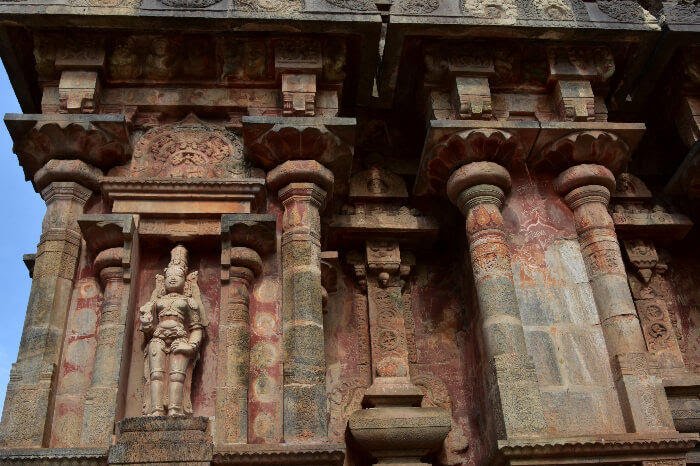
Where the walls sing and sculptures dance, the Chola temples
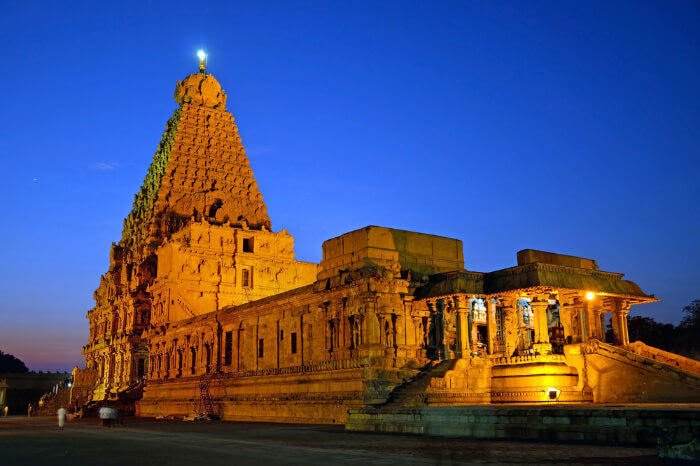
Brihadisvara Temple
The beautiful Chola temples are living tales of the vast empire that Cholas established in Thanjavur. These magnificent temples built during the reign of Rajaraja were the epitome of the vast religious inclination of these rulers as the inscriptions and the chronicles on the wall sing about their opulent rule. This temple in the ancient time was note a mere religious center but a full functional business establishment which was served and maintained by a permanent staff of several hundred priests, 400 devadasi and 57 musicians.
Airavatesvara Temple At Darasuram
The temple was also used for lending money to ship-owners, craft guilds and villagers on a fixed interest rates. The entire temple carved in granite is believed to be inspired by the Pallava architecture. The beautifully adorned 108 poses of the Bharata- Natyam on the walls reflects the hours of torturous patience the sculptures went through. The beautiful series of carvings depicting the legend ruler Rajaraja conversing with his guru, Karuvir Devar is stunningly sculpted in rich colors which rewinds you to the beautiful ancient time of king and queens.
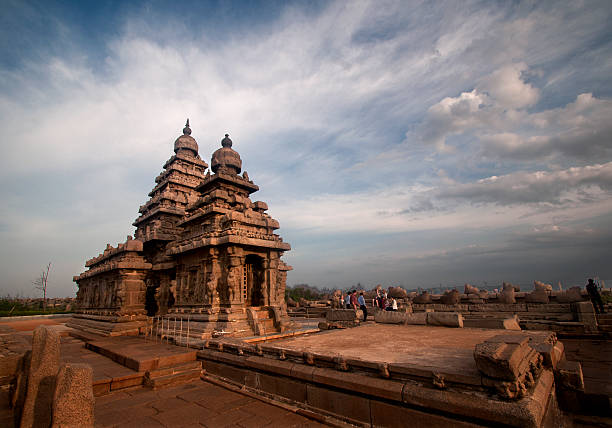
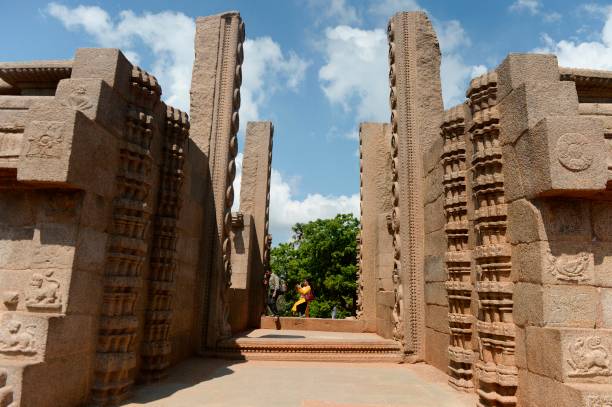
A rock cut sonnet to the great war of Mahabharata, Mahabalipuram
Shore temple Mahabalipuram
It is a widely accepted belief that the great war fought between the Kauravas and the Pandavas, at Kurukshetra, is instrumental in shaping the history and geography of the Indian subcontinent as we know today. The temples of Mahabalipuram demonstrate exactly that, in the rock cut carvings of the great temple architectures, one can clearly see the scenes from the great epic.
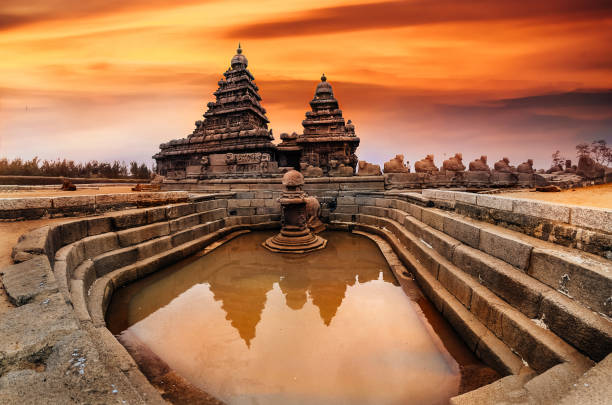
The architecture demonstrates a clear allusion to the sectarianism that had started during the period as different areas were assigned to different Gods. The travels of Marco Polo also describe the Seven Pagodas of Mahabalipuram that belonged to the original structure built in the time when the city was a thriving merchant port. Out of these seven only one has survived in the form of a beautiful shore temple!
Sunset reflection of shore temple
The architect represents neither a Dionysian nor an Apollinian condition: here it is the mighty act of will, the will which moves mountains, the intoxication of the strong will, which demands artistic expression. The most powerful men have always inspired the architects; the architect has always been influenced by power.







 Eduindex News
You must be logged in to post a comment.