The Nightingale Of India

“As long as I have life, as long as blood flows through this arm of mine, I shall not leave the cause of freedom…I am only a woman, only a poet. But as a woman, I give to you the weapons of faith and courage and the shield of fortitude. And as a poet, I fling out the banner of song and sound, the bugle call to battle. How shall I kindle the flame which shall waken you men from slavery…”

Introduction

She was an Indian political activist and poet. A proponent of civil rights, women’s emancipation, and anti-imperialistic ideas, she was an important figure in India’s struggle for independence from colonial rule. Naidu’s work as a poetess earned her the sobriquet ‘the Nightingale of India’, or ‘Bharat Kokila’ by Mahatma Gandhi because of colour, imagery and lyrical quality of her poetry.

Birth and death

Born in a Bengali family in Hyderabad, Naidu was educated in Madras, London and Cambridge. Following her time in England, where she worked as a suffragist, she was drawn to Indian National Congress’ movement for India’s independence from British rule. She became a part of the Indian nationalist movement and became a follower of Mahatma Gandhi and his idea of swaraj. She was appointed as the President of the Indian National Congress in 1925 and later became the Governor of the United Provinces in 1947, becoming the first woman to hold the office of Governor in the Dominion of India.

Naidu’s poetry includes both children’s poems and others written on more serious themes including patriotism, romance, and tragedy. Published in 1912, “In the Bazaars of Hyderabad” remains one of her most popular poems. She married Govindarajulu Naidu, a general physician, and had five children with him. She died of a cardiac arrest on 2 March 1949.

Work

“Tell me no more of thy love, papeeha,
Wouldst thou recall to my heart, papeeha,
Dreams of delight that are gone,
When swift to my side came the feet of my lover…”

– A Love Song From The North by Sarojini
Naidu

1905: The Golden Threshold, published in the United Kingdom.
1912: The Bird of Time: Songs of Life, Death & the Spring, published in London.
1917: The Broken Wing: Songs of Love, Death and the Spring, including “The Gift of India” (first read in public in 1915) .
1919: Muhammad Jinnah: An Ambassador of Unity.
1943: The Sceptred Flute: Songs of India, Allahabad: Kitabistan, posthumously published.
1961: The Feather of the Dawn, posthumously published, edited by her daughter, Padmaja Naidu.
1971:The Indian Weavers.

After India attained independence, she became the first woman Governor of an Indian state, Uttar Pradesh. She served as governor till she passed away in March 1949, when she was working late in office.

As a Feminist

“Sarojini Naidu inspired the Indian Renaissance Movement and had a mission to improve the life of Indian woman.”

Bappaditya Bandopadhyay

Sarojini Naidu played an important role in women’s rights struggle in India. She helped in shaping Women’s Indian Association in 1917 with Annie Besant and others. The Association sought equal rights including the right to vote and represent. She presented the need to include more women in the Congress and in the freedom struggle. During 1918, British and Indian feminists including Naidu set up a magazine called “Stri Dharma” to present international news from a feminist perspective.

Link

Parental Care in animals

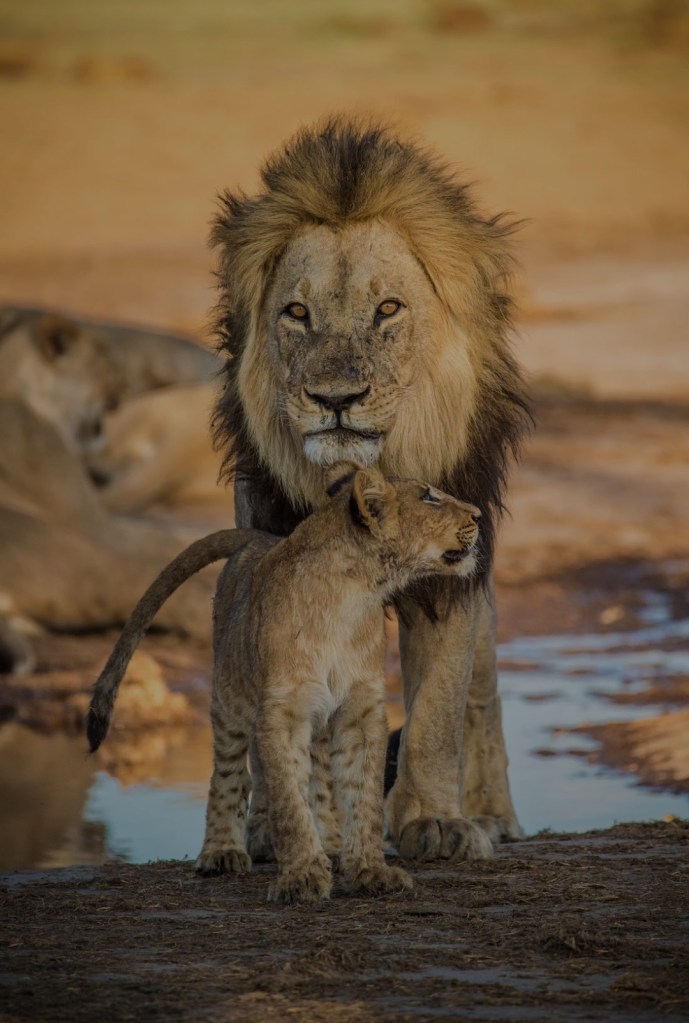
Image credit : Birger Strahi

Like humans many other animals live on this planet with family. Even non-symbiotic organisms, for any period of their lives, take care of their families. If a family does not build its own, the unconscious biological awareness, its species should be endangered to endemic. Elephants, chimpanzees and other of all kinds: relatives to their family members, many times more than human beings who wish to call themselves the most intelligent and noble animal.

Parental Care
Mating refers not only to sex and courtship behaviors. It may also include the cooperative rearing of offspring by the parents. Parental care refers to any behaviors on the part of either or both parents that help their offspring survive. In many birds, parental care includes building a nest and feeding the young. Parental care generally is longest and most complex in mammals, in which it always involves the mother feeding milk to the young (see the Mammals concepts). Parental care in mammals may also involve teaching the young important skills that they will need when they are older and no longer cared for by the parents. For example, meerkat adults teach their pups how to eat scorpions. They show the pups how to safely handle the poisonous insects and how to remove the stingers. Penguin is protecting her chick and will continue to do so until the chick is able to protect itself.

If the concern for all members of their group is one type, then the concern for their offspring is different. Almost all animals are nurtured in their own way, as are humans who love, feed, and care for children more than ever. Depending on what kind of organism cares for the organism, the organism’s reproductive kind. If any organism has a reproductive kind of ovulation, little undeveloped spawning. Chicks are born when such an egg undergoes external fertilization. Generally most species of fish and frogs have this type of reproduction. Care of these eggs before and after fertilization will raise the parental concern of these organisms. In general, studies have shown that both male and female frogs are of concern in fish and frogs in fish, however, frogs have little to do with this generalization; many recent findings suggest that there are many different types of parental care in frogs, not in any species. Surprisingly there are 41 types of parental care in the genus of frogs. Ovulation Kind of Fish with breeding grounds, In organisms such as the frog, little nourishment is required for little parental care within the mother’s body. No more reproduction of ovulation type in some fish, such as sharks, many insects, lizards, and even some snakes, the eggs hatch into the mother’s body, leaving the chicks imperfectly developed. Since these are nourishment within the mother’s body, the need for postnatal parental care is little more than that of ovarian organisms. Others, including mammals, and other animals with advanced bodies in biosynthesis, have the ability to reproduce germ cells. In this way, the birth of a fully developed offspring within the mother’s body is the same as parental care. Teaching and countless other jobs are hidden in parenting. Without taking care of offspring No other living organism is found in this world. In most organisms, either the mother is usually nurtured, or both the father and mother are involved. Fathers have been more concerned with seaweed and some fish. Surprisingly, relatives like aunt and aunty are raising children, elephants, lions, wolves, and a bird called ‘Jay Battler’. Further, some species of bees and sister wineries participate in the nourishment. Males are also rarely involved in parenting in promiscuous mating systems. Biology-based history has shown that when it comes to the question of survival, extinction is the lie that “there may be bad children in the world but not bad mothers.” The death of an incapacitated child for their survival or the survival of a child who is physically capable of their own children requires an example of the mother or father or both parental beings being exploited. This is not true in principle, but is the truth of evolution all the time.

The Amazon

The forest is a peculiar organism of unlimited kindness and benevolence that makes no demands for its sustenance and extends generously the products of its life activity; it affords protection to all beings, offering shade even to the axe-man who destroys it.

– Gautama Buddha

Today , let’s feel the presence of fresh air , waterfall , trees , flora and fauna . Being a citizen of a country , which is well known for its resources , different species, mixed economy and different cultures. It is important for us to see the world of flora and fauna.

Well you get to know by the heading , today we are gonna talk about THE AMAZON’S which is well known for its vast species .

Introduction .


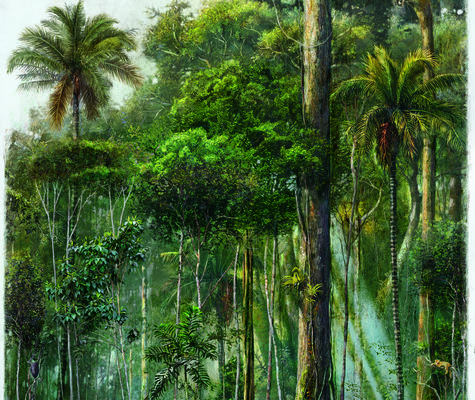
The Amazon jungle or Amazonia, is a moist broadleaf tropical rainforest in the Amazon biome that covers most of the Amazon basin of South America. This basin encompasses 7,000,000 km2 (2,700,000 sq mi), of which 5,500,000 km2 (2,100,000 sq mi) are covered by the rainforest. This region includes territory belonging to nine nations and 3,344 formally acknowledged indigenous territories.

The majority of the forest is contained within Brazil, with 60% of the rainforest, followed by Peru with 13%, Colombia with 10%, and with minor amounts in Bolivia, Ecuador, French Guiana, Guyana, Suriname, and Venezuela. Four nations have “Amazonas” as the name of one of their first-level administrative regions, and France uses the name “Guiana Amazonian Park” for its rainforest protected area. The Amazon represents over half of the planet’s remaining rainforests, and comprises the largest and most biodiverse tract of tropical rainforest in the world, with an estimated 390 billion individual trees divided into 16,000 species.

The name Amazon is said to arise from a war Francisco de Orellana fought with the Tapuyas and other tribes. The women of the tribe fought alongside the men, as was their custom. Orellana derived the name Amazonas from the Amazons of Greek mythology, described by Herodotus and Diodorus.

Flora and Fauna.

Wet tropical forests are the most species-rich biome, and tropical forests in the Americas are consistently more species rich than the wet forests in Africa and Asia.

This constitutes the largest collection of living plants and animal species in the world.

The region is home to about 2.5 million insect species, tens of thousands of plants, and some 2,000 birds and mammals. To date, at least 40,000 plant species, 2,200 fishes, 1,294 birds, 427 mammals, 428 amphibians, and 378 reptiles have been scientifically classified in the region.

The biodiversity of plant species is the highest on Earth with one 2001 study finding a quarter square kilometer (62 acres) of Ecuadorian rainforest supports more than 1,100 tree species.

Human impact on Amazon jungle.

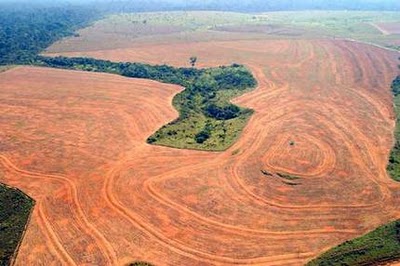
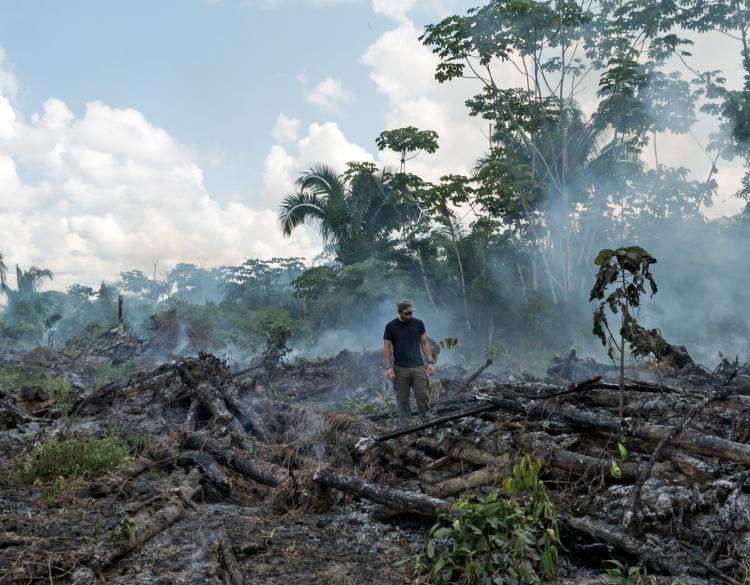
The human impact on the Amazon rainforest has been grossly underestimated according to an international team of researchers. … They found that selective logging and surface wildfires can result in an annual loss of 54 billion tonnes of carbon from the Brazilian Amazon, increasing greenhouse gas emissions.

Lead researcher Dr Erika Berenguer from Lancaster University said: “The impacts of fire and logging in tropical forests have always been largely overlooked by both the scientific community and policy makers who are primarily concerned with deforestation. Yet our results show how these disturbances can severely degrade the forest, with huge amounts of carbon being transferred from plant matter straight into the atmosphere.”

The second author, Dr Joice Ferreira from Embrapa in Brazil, said: “Our findings also draw attention to the necessity for Brazil to implement more effective policies for reducing the use of fire in agriculture, as fires can both devastate private property, and escape into surrounding forests causing widespread degradation. Bringing fire and illegal logging under control is key to reaching our national commitment to reducing carbon emissions.”

The forest is not a resource for us, it is life itself. It is the only place for us to live.

-Evaristo Nugkuag Ikanan

Link

How crocodiles survived mass extinction ?

Crocodiles,by reading the name you would have picturised a massive creature with pointed teeth and a thick skin. The very appearance of them would terrify anyone. We can also call them as living relatives of dinosaurs but still it has always been a mystery on how crocodiles survived the extinction which wept out the entire dinosaurs. Crocodiles shares many common features with dinosaurs but they are different from one another and they have a distinct feature which allowed them to survive the mass extinction of dinosaurs.Though we can’t come up with a perfect conclusion still there are few amazing theories which leaves us wondering.


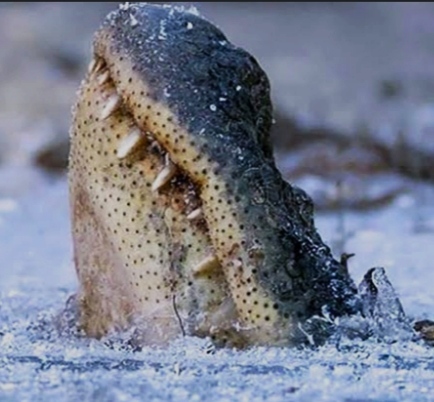
Crocodile show a slow metabolism which allows them to survive for months without food. They being cold blooded cannot generate own heat due to which they hibernate during colder periods. While hibernating they dig burrows in the side of river banks and go for a long sleep. This particular habit of them would have enabled them to withstand the climatic condition prevailed during the mass extinction. The period that followed the event of mass extinction brought a radical weather change which would have wiped of the remaining dinosaurs whereas crocodiles on the other hand had the ability to hibernate or go dormant adopted to the changes and survived the condition.


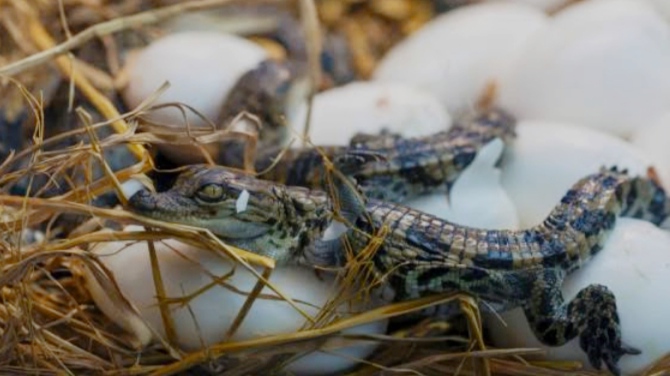
Another important characteristics of survival is in the process of reproduction. In this case the crocodiles gave rise to a large number of offsprings at a time whose young one takes quicker time to grow mature thus increases the possibility of survival.


They also have a strong immune system which enable them to fight against deadly diseases thus providing more anchorage to the survival process. They grow slowly and steadily in size adapting to the surrounding and availability of food which was not characteristic of the other creatures that lived during that age. Apart from all others features, crocodiles are smarter creatures which can be seen through the fact on how easily they can be tamed and trained. They understand the changing around them clearly and tend to adapt to it. All these factors together has assisted crocodiles to escape and thrive through the mass extinction.

Feed them Pawfectly!

What if I offer you crores and crores of money and ask you to stay away from food for days in return? Will you do it? Can you survive without eating? I’m guessing it’s a NO!
Food is one of our necessities. Here ‘our’ not only includes humans but also animals. For animals food (including water) is their only requirement to survive but unfortunately, they don’t even get that.
You’ll have seen dogs, cats, cows, and various other animals come behind us while we walk on the street. They don’t walk behind you to harass you they come to you with hope in their eye. They just need food and a little love rather than getting hit by a stick. Being cruel to them won’t make you superior instead having empathy towards them and treating them like humans will.

Every mother loves to feed their children and would cook many dishes for them but don’t forget those mothers who search for food in a heap of garbage every day just to survive.
Do they deserve this? Of course not!
Nobody deserves this! Then why do they have to do this for their survival?

God has not given them a voice to speak but their eyes are enough to convey their sorrow.
Just feed an animal and see what they do for you in return. Trust me! you’ll be God in their eyes

Things to keep in mind before feeding a stray animal
 • Avoid sweets
Sweets take a lot of time to digest and can result in various health issues in them and can also affect their immunity.

 • Avoid fried and spicy food
Animals might not find fried and spicy food attractive. Avoid feeding them leftovers. Fried and spicy food can lead to many health problems

 • Avoid allergic food
Animals can be allergic to some food items just like humans. Always research before feeding.

 • Do not Overfeed
Every animal has their capacities to eat. Do not force them to eat more, it might make them ill.

 • Avoid plastic bags
Never give them food in plastic bags. They might stick their head inside it and cause breathing problems. Try using plastic bowls.

 • Serve them water
Water is as important as food for them. They can find their water but it’s best to serve them which will make their job much easier.

Adopt, Not Shop: Why It Is The Better Way

Most of us, at one point of time or another, have dreamt of having a pet. And amongst them, dogs have a soft place in the heart of the majority. And why not? They are the sweetest creatures you can ever come across, extremely loyal and are very unique companions. Apart from being cuddly and best at making puppy eyes (no pun intended! ), that is. So, when we think of bringing a furry friend home, we often think that they come with a hefty amount. But now times are changing. People are realising the worth of adopting. And if by any chance anyone reading this is planning to get a furry friend, I’ll try to put my point forward that why we should ‘Adopt, Not Shop’.

Adopting a dog gives a chance to a good life for two dogs. One is to your pet, who might have had faced something traumatic in life, and is in need of love and understanding. In such cases, the bonding between the owner and the pet is much stronger. As for the other one, adopting one dog opens up the slot for another one. So, one more rescued dog would have better facilities, better environment to develop and will have better access to the opportunity to be adopted by another good Samaritan. It is a kind of an endless chain of goodwill and love.

Another advantage of adopting over shopping is that they are really cheap in comparison to the market prices. And at the same time, there is a full blown possibility of you finding your one true loved breed amongst the less fortunate ones. With love and care, each pup blooms out to be a gorgeous dog, adopted or otherwise. Also, all the money that was to go in purchasing the dog can be used instead for the costs of food and grooming. Maybe give your furry friend a good spa day!

Another point to note is that the pet you purchase from a breeder or from a shop is most likely to be a puppy. Now no offense to the puppy lovers, but let’s agree on one thing, it’s hard to train the younglings. A puppy is no different. With the usual care that a pet deserves, they also require extra attention and training. Not an affordable thing to do for many people. INstead, if an older dog is adopted, they already have an understanding of how things work and can also be left alone for a longer period of time (not that everyone wants to do that).

And lastly, you would be standing against an inhuman practice. Of dog breeding. Though not in the mainstream media, but in recent times, the pathetic conditions of this industry has come forward, where the female dogs are treated as nothing more than a birth machine. Often, the living and food standards are very bad. All and all, this is an inhumane way to fulfill and keep up with the market demand. The scene is the same for the specialized dog breeders. All in all, the dogs are treated more with a materialistic approach rather than considering them beings with emotions.

Adopting requires just some research and patience. That goes into the shopping way too. And at the end of the day, they all are the same lovable companion we crave and can cuddle with!

Curiosity (animals)

• Why don’t woodpeckers get a headache?

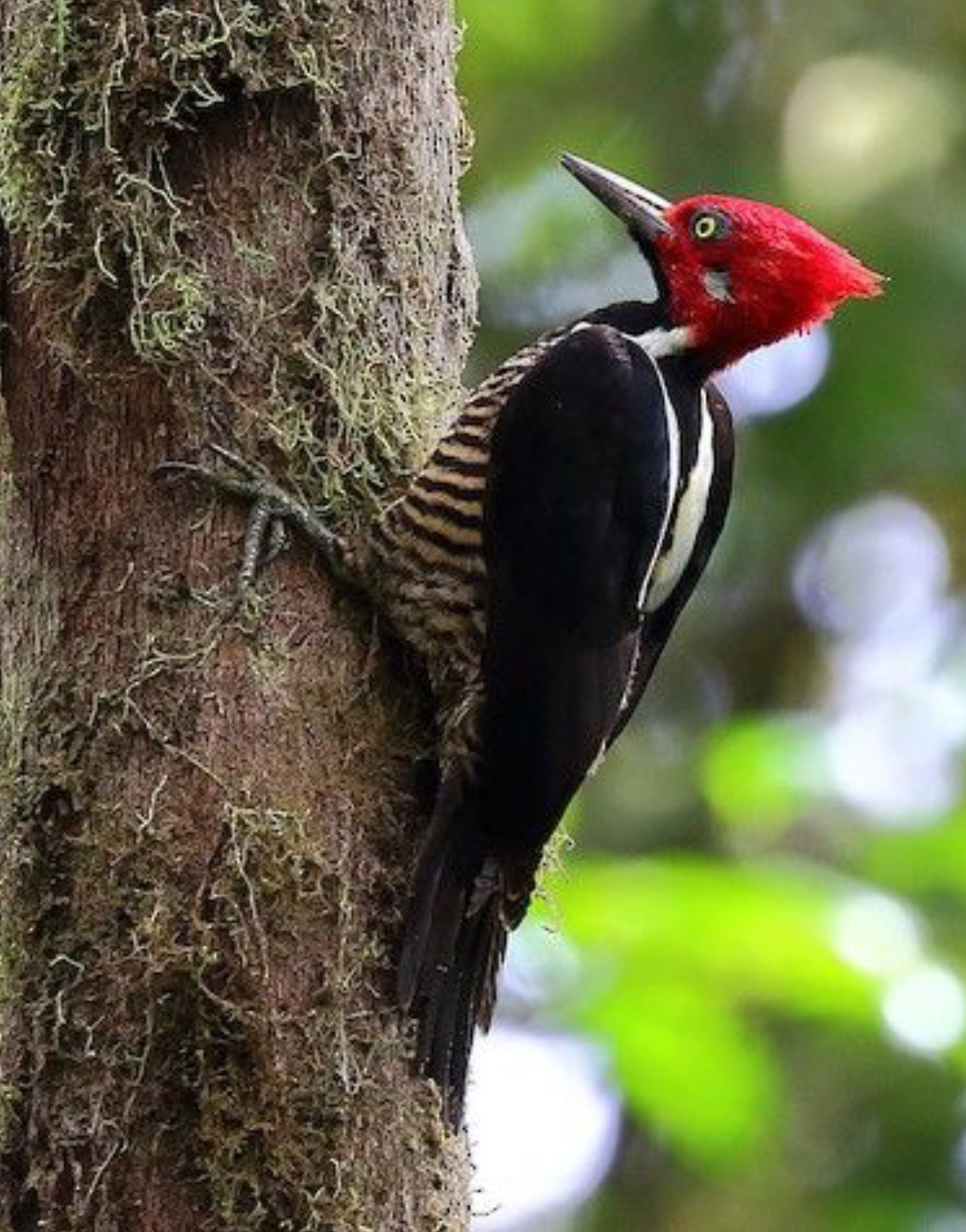
Have you ever seen woodpeckers striking trees with its long beaks? Woodpeckers hit the trees 20 times per second. Yet they don’t get a headache or any other head injury. The reason for thus is that woodpeckers are born with a helmet for the brain, which is formed of strong, thick muscles and sponge like bones in their skull. A woodpecker’s body too is specially designed to absorb the impact of the hit.

A millisecond before a woodpecker’s bill strikes on a tree dense muscles in the neck contract. Some of the force radiates down the neck muscles and protect the skull from a huge impact. A compressible bone in the skull offers a cushion effect too.

• Why aren’t spiders caught in their own webs?

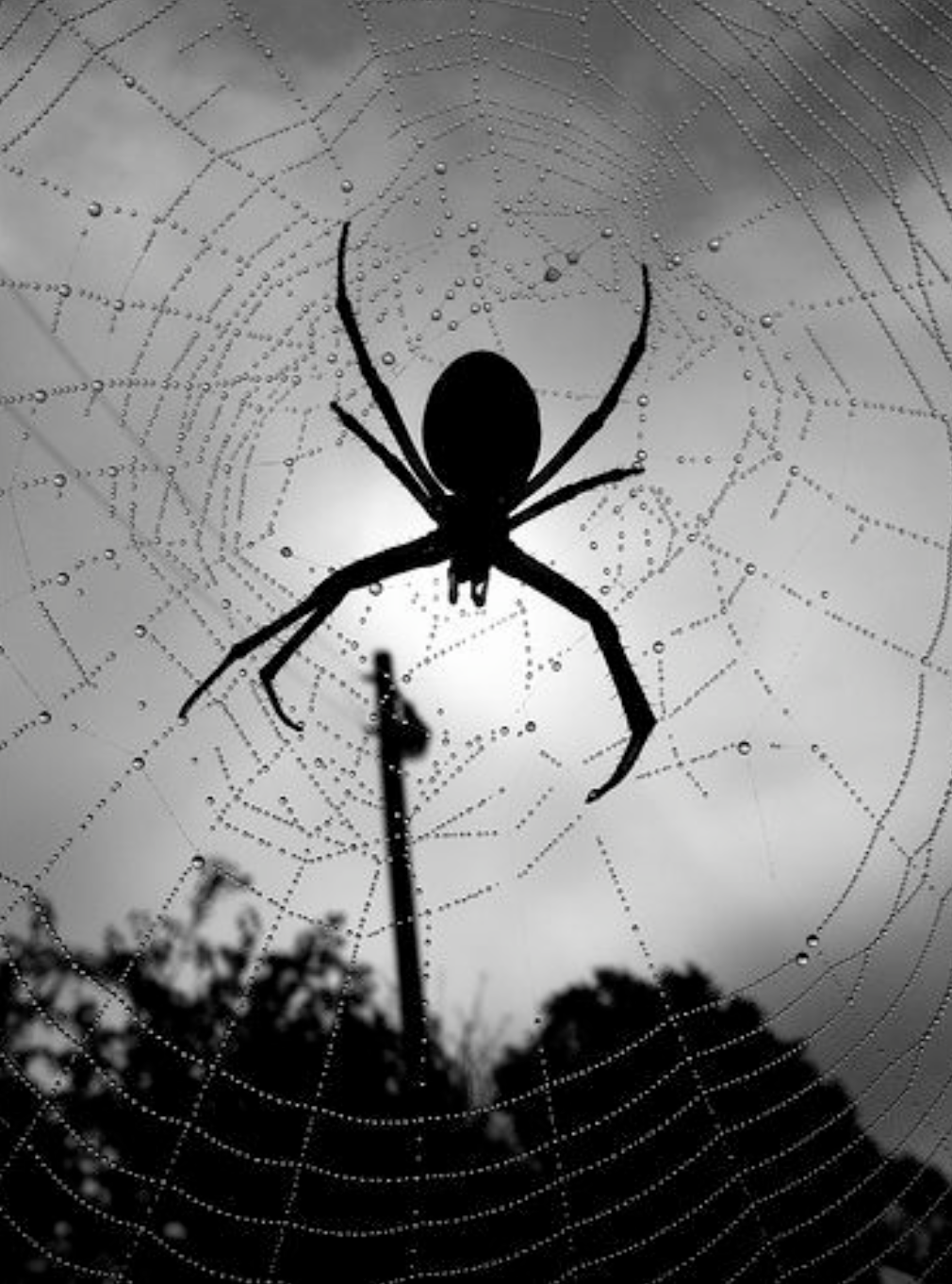
Spiders spin their webs in a circular pattern that is spotted with sticky glue. When an insect brushes against these drops – each thread can carry several dozen per millimetre – it gets stuck and the spider rushes over to inject it with venom or cocoon it in silk. The question of course is how does the spider escape its own glue tracks? The answer lies in the fact is that the web is the spider’s home and it knows its way around the glue traps. There are some threads in the web that have no glue on them and the spider is careful to move only on these threads. It is also believed that spiders use an oily coating on their legs to protect themselves from getting stuck in their own webs!

Colourless rainbow

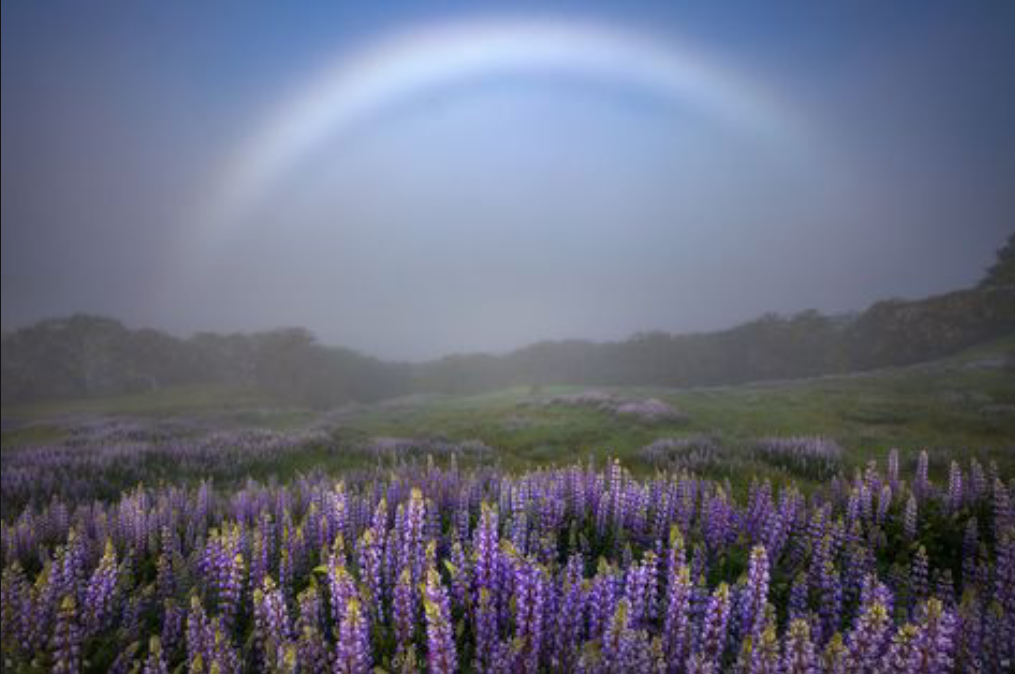
There are some rainbows that are colourless. They are called fogbows and are formed when the sun shines through a fog. The drops of water in the fog are too small to split up light into it’s different colours, so the fogbow is white in colour.

• What do we know about left handed animals?

Most people are right handed, though about one in ten among us is left handed. Animals like chimps, hump back whales and even toads favour one hand, paw, claw or fin over the other. Chimpanzees use both hands with ease, but have a preference for the right hand. Toads also prefer their right side to perform differ functions. Polar bears on the other hand, are left handed.

Some species of parrot such as the sulphur- crested cockatoo are entirely left handed, while others, including the king parrot are mainly right handed. The majority of parrots – including the budgie, galah and rainbow lorikeet use both claws comfortably. Female cats are more inclined to be right handed while male cats favour their left paws. The same is true for dogs. Interestingly, dogs wag their tails to the right when relaxed and to the left when agitated!

Thank you for reading. Have a nice day!🌼

Biodiversity : An overview

The earth provides for millions of species across the globe. Some of which are known to us and others not. We all are connected to each other in various ways and have to support each other too. Species which make proper and sustainable use of this system perish while others meet their destruction.

Biodiversity deals with the degree of nature’s variety in biosphere. This variety can be observed at three levels

  • The genetic variability within a species
  • The variety of species within a community
  • And the organization of species in an area into distinctive plant and animal communities.

Biodiversity provides a variety of environmental services from its species and ecosystem that are essential at the global, regional and local levels. The Production of oxygen, reduction of carbon dioxide, maintenance of the water cycle and protection of the soil are some important services.

Biodiversity is the amount of variety of life on Earth. It is the number of different species of plants, animals, and microorganisms. It includes organisms from Earth’s vastly different ecosystems, including deserts, rainforests, coral reefs, grasslands, tundra, and polar ice caps. Our biodiversity is very important to the well-being of our planet. Most cultures, at least at some time, have recognized the importance of conserving natural resources. Biodiversity is the occurrence of different types of ecosystems, different species of organisms with the whole range of their variants and genes adapted to different climates, environments along with their interactions and processes.

Importance of Conserving Biodiversity

Biodiversity produces a number of products harvested from nature and sold in commercial markets. Indirectly it provides economic benefits to people which include water quality soil protection, equalisation of climate, environmental monitoring, scientific research, recreation etc. The consumptive value can be assigned to goods such as fuel woods, leaves, forest products etc. which may be consumed locally and do not figure in national and international market.

The loss of biodiversity directly influences the social life of the country possibly through influencing ecosystem functions (energy flow and biogeochemical cycle). This be easily understood by observing detrimental effects of global warming and acid rain which cause an unfavourable alteration in logical processes

Aesthetic values such as refreshing fragrance of the flowers, taste of berries, softness of mossed, melodious songs of birds, etc. compel the human beings to preserve them. The earth’s natural beauty with its colour and hues, thick forest, and graceful beasts has inspired the human beings from their date of birth to take necessary steps for its maintenance. Similarly botanical and zoological gardens are the means of biodiversity conservation and are of aesthetic values.

Since earth is homeland of all living organisms, all have equal right to coexist on the surface of earth with all benefits. Unless some legal value is attached to biodiversity, it will not be possible to protect the rapid extinction of species. Biodiversity must be seen in the light of holding ethical value. Since man is the most intelligent amongst the living organisms, it should be prime responsibility and moral obligation of man to preserve and conserve other organisms which will directly or indirectly favour the existence of the man.

Biodiversity holds great ecological value because it is indispensable to maintain the ecological balance. Any disturbance in the delicately fabricated ecological balance maintained by different organisms, will lead to severe problems, which may threaten the survival of human beings.

Biodiversity has great economic value because economic development depends upon efficient and economic management of biotic resources. In the day to day life, human beings are maintaining their lifestyle at the sacrifice of surrounding species which come from diversity of plants and animals struggling for their existence.

The Organic Evolution: How Did The Current Biodiversity Reached Its Present Form

We see the actual spirit of diversity in Nature.But have things always been like this, barring a few minor change-in-scenes, since times immemorial? If not, how did and how much has life forms changed? So, let’s find out from where all this started.

The Beginning: Life on Earth

After formation, Earth was not exactly suitable for housing or nurturing any kind of organisms. After undergoing drastic changes -including solidification of crust, formation and accumulation of various gases (like nitrogen,ammonia,methane,oxygen,hydrogen etc.) in the atmosphere, gradual development of ozone layer and formation of water molecules- Earth became close to be able to support even the most basic forms of ‘life’.

The earliest organic forms, though did not really satisfy our definition of life, but are considered to be the most basic forms of living cells.Experiments by Stanley Miller (1953), Sidney Fox and Oparin (1936), gave the world some theories about the formation of living organisms. Another mention worthy point is that the first life forms originated in water, as for the longest time, Earth was what we can imagine as a giant sea, with no signs of land whatsoever. These organic forms might have developed into self replicating units, then into primitive organisms and at later stages, resulted into some distinct type of chlorophyll synthesizing bacteria, some 2.5-2.3 billion years ago. This gradual process of arising of life from non-living matter (such as simple organic compounds) is termed as abiogenesis.

Evolution of chlorophyll occured around 600 million years ago. With that, the production of oxygen and ozone (after chemical conversion under suitable circumstances) sped up and gradually accumulated in the atmosphere. Ozone layering encased the surface of Earth and provided protection against UV rays, which is detrimental for living organisms. Before that, all organisms developed in deep water, which provided protection against the UV rays. Only after the formation of ozone layer did life flourished on land surface.

The Precambrian age, that last from 4600 to 542 million years old, has very few fossil records. Hence, such a large period of time is not subdivided into further categories in terms of biological evolution. The fossil of this period mainly of cellular organisms.The first living organisms are believed to have developed around 3.8-3.6 billion years ago, from the primitive organic soup (accumulation of large number of complex organic molecule assemblages). Around 3.5 billion years ago,first organisms with prokaryotic cells (cells without true nucleus and having a rudimentary cell structure) are believed to have developed. Those cells were at similar cell complexity level like the present day bacteria.Skip to 2.4 billion years later, the eukaryotic cells are supposed to have developed. For the longest period of time, only unicellular life forms flourished on Earth. Then,evidences indicated that, around 700 million years ago, the first signs of multicellular organisms were traced. Since then, there has been a steady flow of evolution. 

The ‘Complex’ Evolution

The Cambrian period (542- 488.3 million years) is considered to be a milestone in evolution. Even the fossils have records from around 600 million years ago. It is widely assumed that around 600 million years ago, organisms had developed to be able to leave fossilized records. The transition of life forms from water to land had supposedly begun around 500 million years, when plants started growing on land.Later different varieties of plants and animals populated the lands.

The Carboniferous period was an important landmark, which lasted from about 359 to 299 million years in the past, is an important landmark in the journey of evolutionary history. The environ domain was actively dynamic during that period. Humid and warm climate, swampy large areas, changes in sea levels, flood, mud and sand were deposited over the vegetations, etc.

Due to compaction and incomplete decomposition of  plant material in swamps, they converted into peat bogs, and then, into coal. Hence the name carboniferous. In the late Carboniferous period (about 300 million years) tropical rainforests were present in the equator region of Euramerica. Later, ferns replaced the forests, which are present even today.These vascular plants are without seeds as they do not produce flowers and fruits, and are generally found in temperate to tropical parts of Earth. These plants can be mainly divided into stem, leaves and true root; reproduction being facilitated through special structures, known as sporangia (singular:sporangium), that contain spores, which are dispersed into different mediums and germinates on coming in contact with the soil with suitable conditions.

Next period in the geological time scale in the Permian period, which started off around 299 million years ago. This period witnessed major altering activities in the continental lithosphere (which are broken into tectonic plates) starting from the joining of Euramerica, Asia and Gondwana led to the formation of a single landmass called Pangea (Greek translation: All lands), which is considered to be a supercontinent. In terms of ecology, this period was mainly dominated by forests of conifers and tree ferns,large amphibians and reptiles habituating them, and a huge variety of fish and shellfish in the ocean. But, at the end of Permian period, a mass extinction took place, commonly referred to as the ‘Great Dying’. It occured around around 252 million years ago, and wiped out about 90% of all the species present on Earth.Also, trilobites (meaning: three lobes), which a group of arthropod (a group of invertebrate animals with exoskeleton, segmented body, and appendages) and sea scorpions, which had survived the tides of oceans and time for hundreds of million of years, went extinct. 

Next in the line, the Triassic period had set off around 240 million years ago.It is believed that true mammals first evolved during this period, more precisely, during late Triassic period. Also, a specialized subgroup of  Therapsids, which is a group of reptile-like animals that included mammals and their ancestors, also evolved. Early Therapsids demonstrated traits of the present day mammals, such as erect posture. First flying vertebrate animals are supposed to have originated around 215 million years ago, and lasted for 150 million years, vanishing at the end of the Cretaceous period. Another mention worthy occurence in the Triassic period timeline is the splitting of Pangea into two separate land masses. The northern one was named Laurasia and the southern one, Gondwana. Primitive forms of dinosaurs are said to have emerged around 231.4 million years ago.

The Jurassic period is known as the ‘Age of Reptiles’, as they were present in abundance and had a diverse variation throughout this period. The land animals included Stegosaurus, Ceratosaurus, Brachiosaurus and Allosaurus. The oceans were traversed by Ichthyosaurus and Plesiosaurus and the skies are believed to be dominated by the likes of Rhamphorhynchus and Archeopteryx. This period coincided with the emergence of first mammals and birds.

 The Cretaceous period, which started around 145 million years ago, is geologically characterized by separation of India from Gondwanaland, formation of Andes and Rocky mountains, and extensive volcanic activities. Dinosaurs dominated the face of Earth and were of different types. They lived through a period of 135 million years, that is , throughout the Jurassic and Createceuos period. The Cretaceous-Paleogene mass extinction is considered to be the main cause of dinosaurs disappearing from Earth. An important claim by the scientists, on the basis of fossil records, is that the birds evolved from the Theropod dinosaurs, and the development took place in the Jurassic period. Some birds lived through the extinction and their descendents continue to live presently. This period also marks the appearance of angiosperms; plants that could produce flowers. 

Next chapter

The next major development in the course of evolution is considered to be the evolution of humans. But that’s a story for another day. As for our evolution is anything but simple and short. As Carlo Rovelli said in his book, Seven Brief Lesson of Physics: “We are a species which is naturally moved by curiosity, the only one left of a group of species (the genus Homo) made up of a dozen equally curious species. The other species in the group have already become extinct; some, like the Neanderthals, quite recently, roughly thirty thousand years ago. It is a group of species which evolved in Africa, akin to the hierarchical and quarrelsome chimpanzees — and even more closely akin to the bonobos, the small, peaceful, cheerfully egalitarian and promiscuous type of chimps. A group of species which repeatedly went out of Africa in order to explore new worlds, and went far: as far, eventually, as Patagonia — and as far, eventually, as the moon.

It is not against our nature to be curious: it is in our nature to be so.”

Website References

https://en.wikipedia.org/wiki/Abiogenesis

https://www.goodreads.com/quotes/9344668-we-are-a-species-which-is-naturally-moved-by-curiosity

Bibliography

Extinctions: No Comebacks by M.A. Haque

The cat families… part 2

this is the continuation article of part 1

26.Maine Coon cat:

undefined
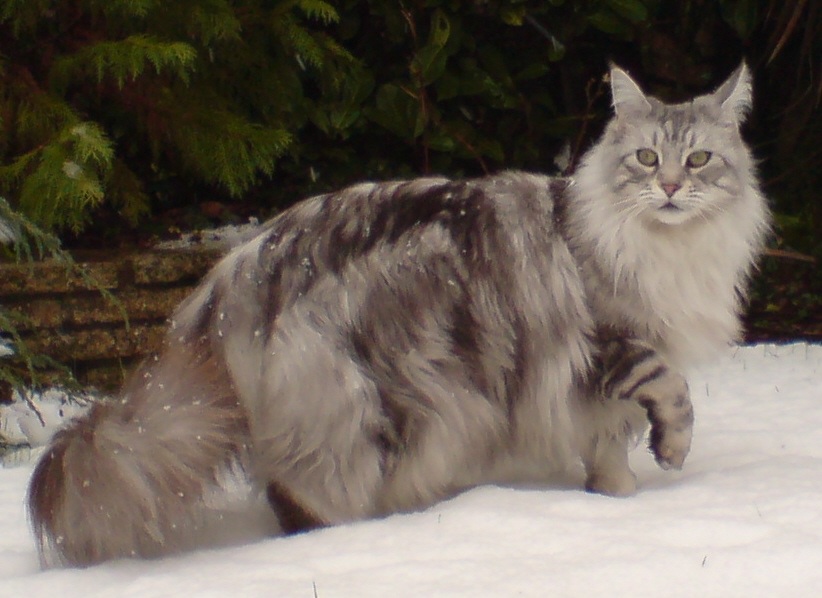
Maine coon cat, North America’s only native breed of the longhaired house cat . Though its origins are unknown, it had been first shown in Boston in 1878. Maines is large, muscular, and heavy-boned; they’ll are named for his or her raccoon-like tail. Excellent mousers, they’re known for his or her gentleness, intelligence, and type disposition, and are especially good with children and dogs. Most are brown tabbies.

27.Manx:

undefined
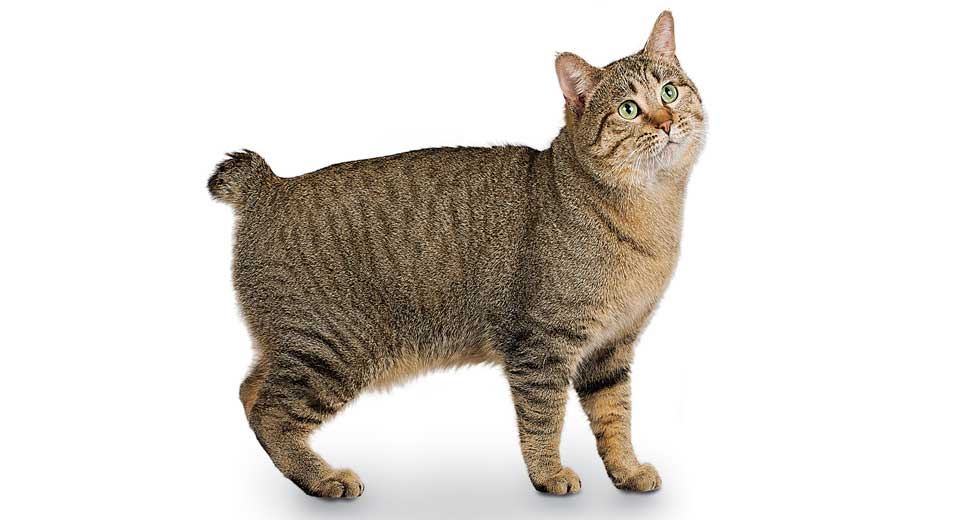
Manx, breed of the tailless house cat of unknown origin but presumed by tradition to possess come from the Isle of Man. Noted for being affectionate, loyal, and courageous, the Manx is distinguished both by its taillessness and by its characteristic hopping gait. it’s compactly built, with a rounded head; large, round eyes; and little , wide-set ears. The rump is additionally rounded and, because the hind legs are considerably longer than the forelegs, is distinctly above the shoulders. The Manx could also be born with a tail but ideally should be totally tailless with a hollow at the top of the backbone where the basis of the tail should be. The double coat could also be any solid, variegated, or tabby color.

28.marbled cat:

undefined
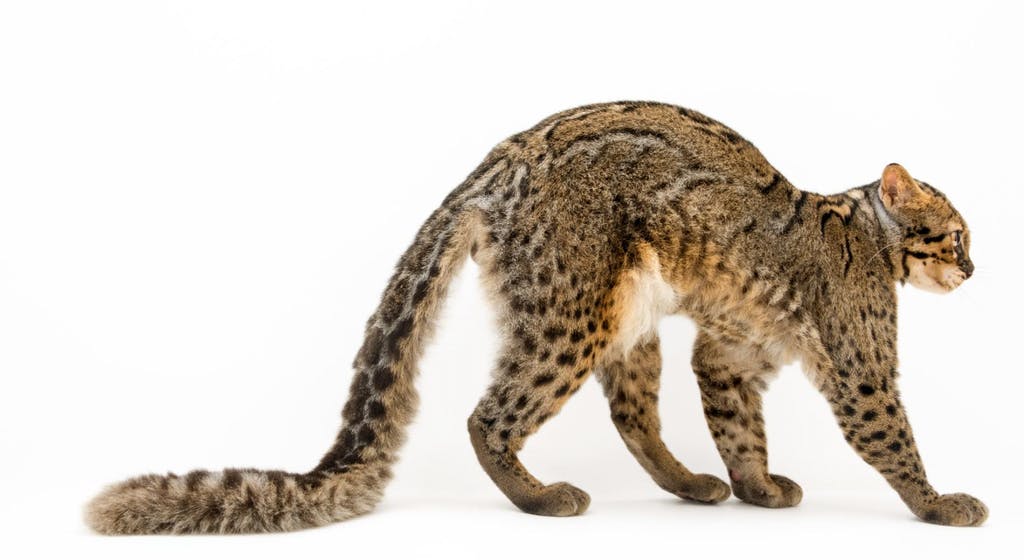
Marbled cat rare Southeast Asian cat, Felidae , often mentioned as a miniature version of the unrelated clouded leopard. The marbled cat is about the dimensions of a domestic cat; it measures roughly 45–60 cm long, excluding a tail of roughly an equivalent length. The coat is long, soft, and pale brown to brownish-gray, with large, dark-edged blotches on the body and smaller dark spots on the legs and tail. The marbled cat is nocturnal and lives in jungles, and should prey on small animals and birds.

29.margay:

undefined
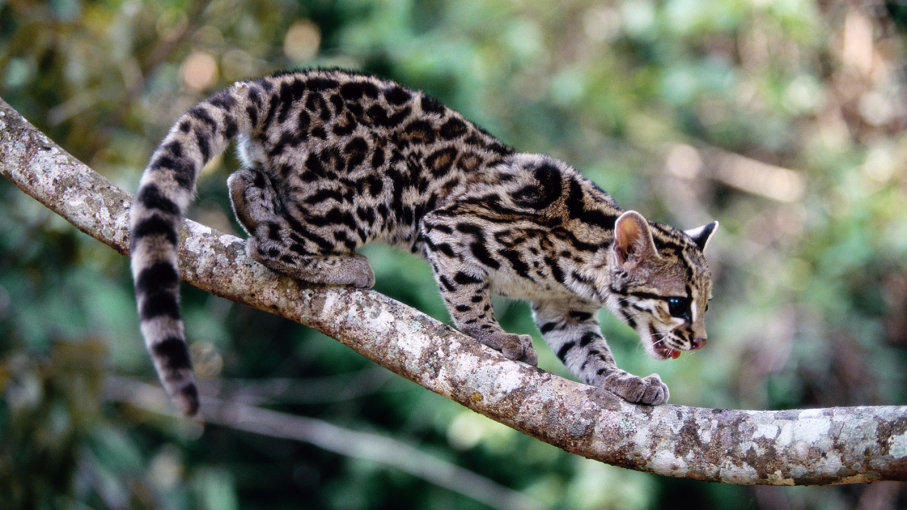
Margay also called tiger cat or tigrillo, alittle cat that ranges from South through Central America and, rarely, into the acute southern us . Little is understood about the habits of the margay. It lives in forests and presumably is nocturnal, feeding on small prey like birds, frogs, and insects. it’s largely arboreal and has specially adapted claws and feet that enable it to scamper up tree trunks and along branches with ease. The margay resembles the related ocelot but features a longer tail and fuller face, emphasized by large, dark eyes and rounded ears. The male attains a maximum length of about 1.1 meters, including a tail about 46 cm long, and weighs up to about 16 kg. the feminine is usually smaller and features a relatively long tail. Coloration varies from pale gray to chocolate with dark markings like spots, stripes, bands, and black-edged blotches. When hand-reared from a kitten, the margay reportedly is definitely tamed; as an adult, however, it’s going to become unpredictable.

30.ocelot:

undefined
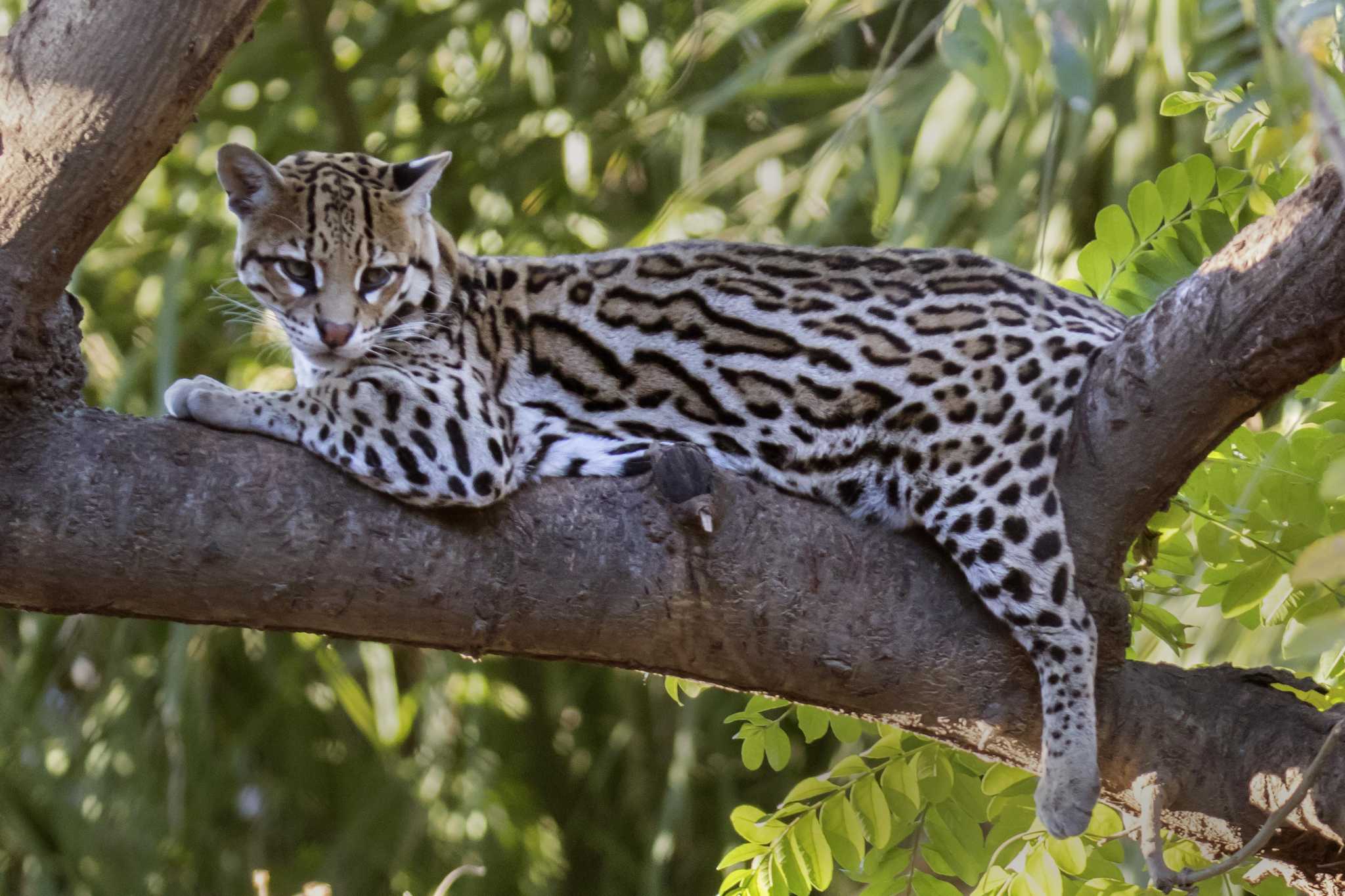
the spotted cat of the New World found in lowland areas from Texas southward to northern Argentina. The short, smooth fur is patterned with elongated, black-edged spots that are arranged in chainlike bands. The cat’s upper parts vary in color from light or tawny yellow to gray. There are small black spots on the top , two black stripes on each cheek, and 4 or five black stripes along the neck. The ocelot’s underparts are whitish, spotted with black, and therefore the tail is marked on the side with dark bars or blotches.

31.Pallas’s cat:

undefined
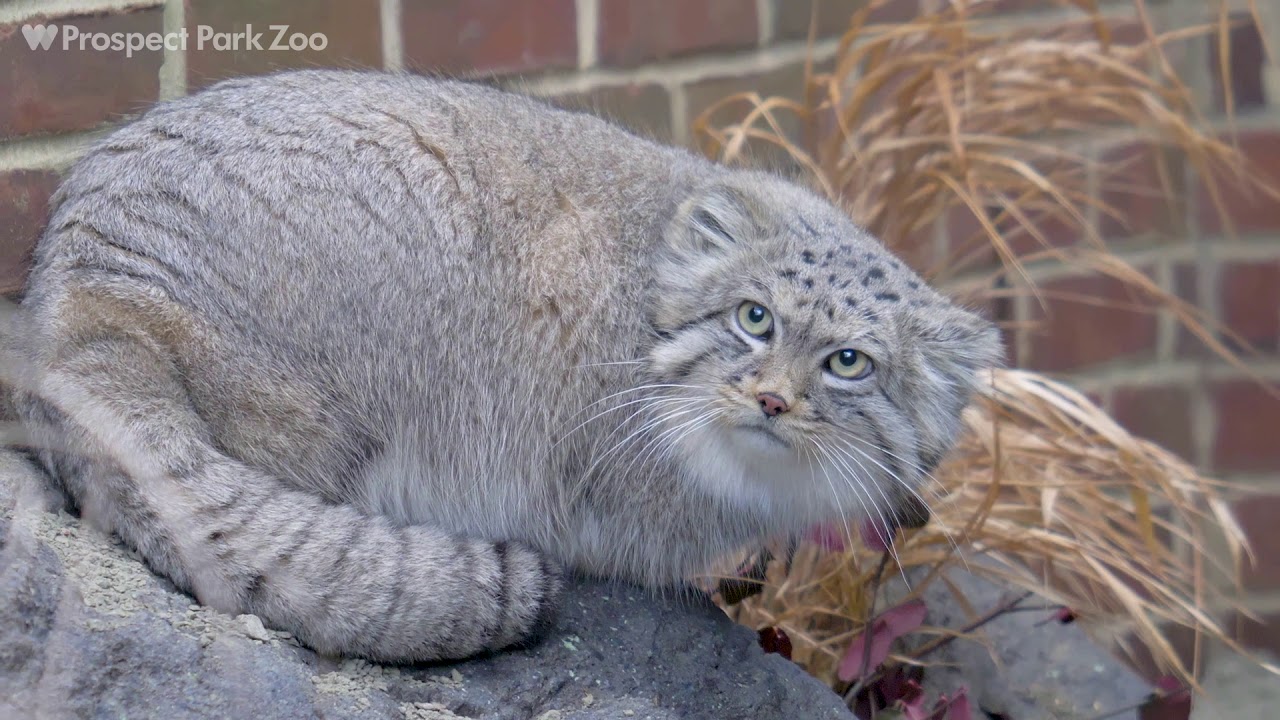
Pallas’s cat also called Steppe Cat, or Manul, small, long-haired cat native to deserts and rocky, mountainous regions from Tibet to Siberia. it had been named for the naturalist Peter Simon Pallas. The Pallas’s cat may be a soft-furred animal about the dimensions of a domestic cat and is pale silvery gray or brown in color. the top of its tail is ringed and tipped with black, and a few individuals have vague, dark markings on the body. The fur of the underparts is about twice as long as that of the upperparts and possibly represents an adaptation to the cat’s habitual lying and crouching on the cold ground.

32.pampas cat:

undefined
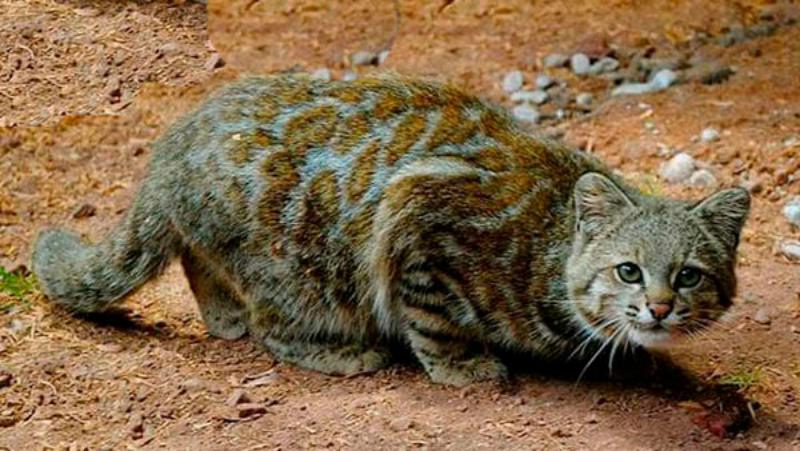
Pampas cat small cat, Felidae , native to South America. it’s about 60 cm long, including the 30-centimeter tail. The coat is long-haired and grayish with brown markings which in some individuals could also be indistinct. Little is understood about the habits of the pampas cat. it’s reported to measure in thick shrubbery and to hunt birds and little animals in the dark .

33.puma:

undefined
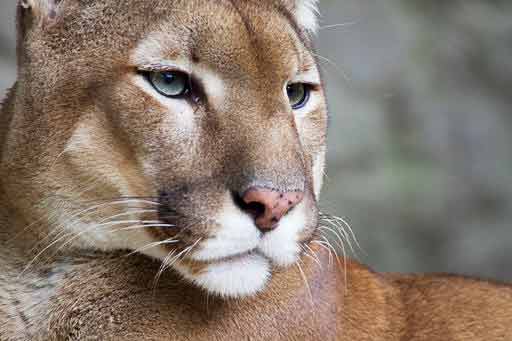
Puma also called cougar , cougar, panther, or catamount, large brownish New World cat comparable in size to the jaguar—the only other large cat of the occident . The puma, a member of the Felidae , has the widest distribution of any New World mammal, with a variety extending from southeastern Alaska to southern Argentina and Chile. Pumas sleep in a spread of habitats, including desert scrub, chaparral, swamps, and forests, but they avoid agricultural areas, flatlands, and other habitats lacking a canopy . Six subspecies of Puma concolor are recognized by most classifications.

34.Rex cat:

undefined
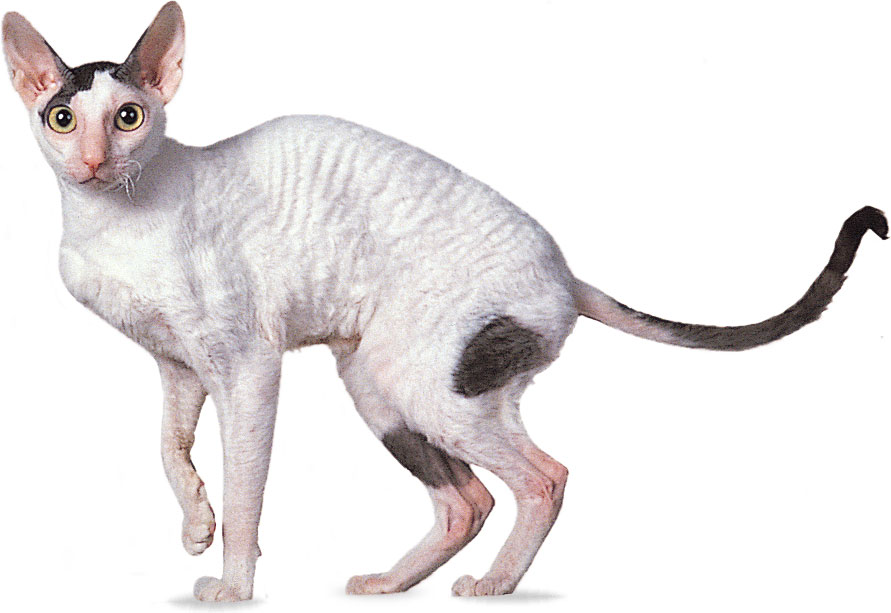
Rex cat, curly-coated breed of house cat that features a dense, soft coat lacking any projecting guard hairs, or outer coat. Except on the top , legs, and paws, the coat forms fairly deep waves, or crimps. The eyebrows and whiskers of the Rex cat are crinkled, the eyes are almond-shaped, and therefore the ears are large and high set. The adult Rex cat is slender and typically has long legs, an extended neck and head, and an extended , tapering tail. Show cats could also be any of the colours or patterns that are accepted for domestic cats.

35.tiger:

undefined
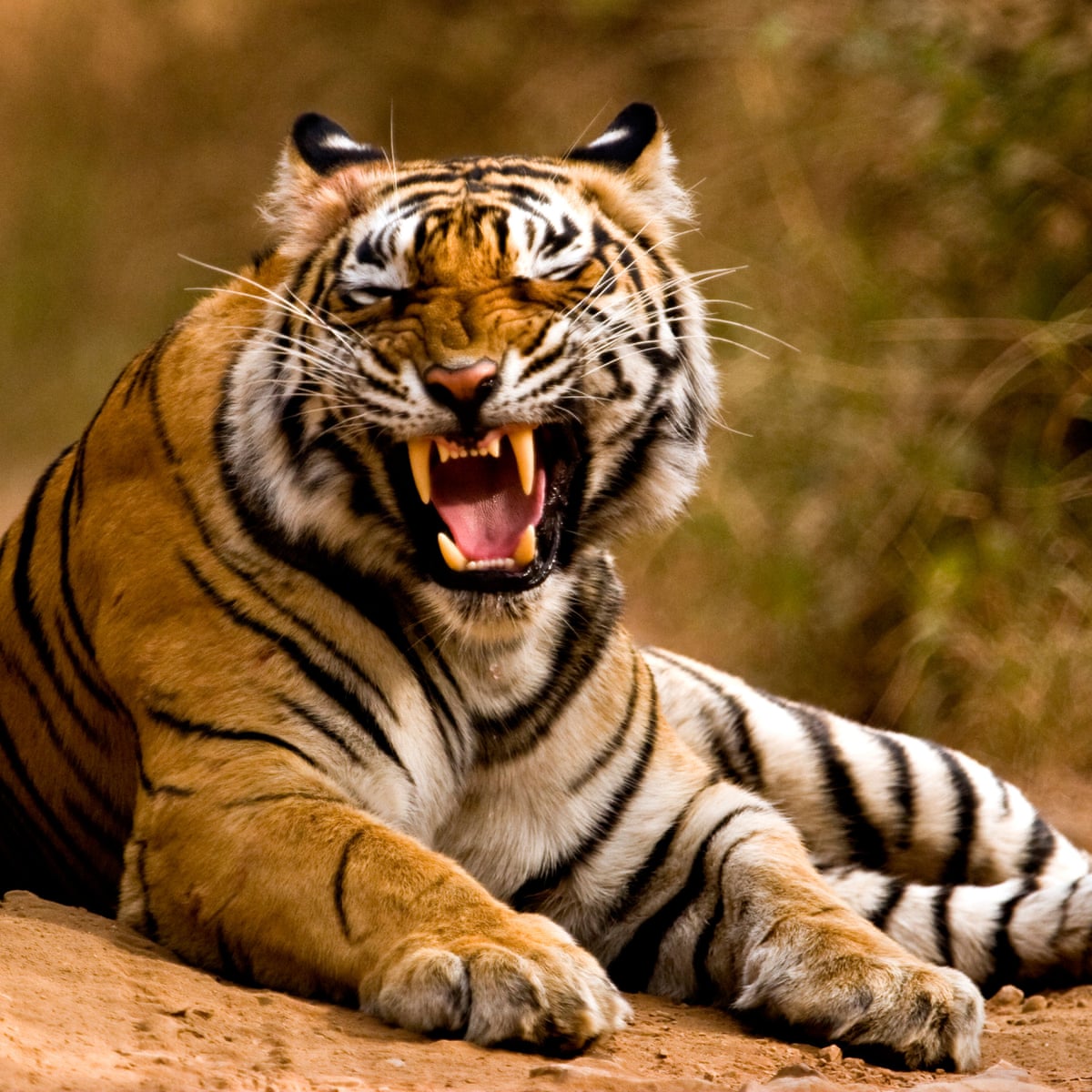
Tiger’s largest member of the cat family, rivaled only by the lion in strength and ferocity. The tiger is endangered throughout its range, which stretches from the Russian Far East through parts of North Korea , China, India, and Southeast Asia to the Indonesian island of Sumatra. The Siberian, or Amur, the tiger is that the largest, measuring up to 4 meters in total length and weighing up to 300 kg. The Indian, or Bengal, the tiger is that the most numerous and accounts for about half the entire tiger population. Males are larger than females and should attain a shoulder height of about 1 meter and a length of about 2.2 meters, excluding a tail of about 1 metre; weight is 160–230 kg, and tigers from the south are smaller than those of the north.

36.tigon:

undefined
Tigon, offspring of a tiger and a lioness. The tigon, or tiglon, may be a zoo-bred hybrid, as is that the liger, the merchandise of the reverse mating of a lion with a tigress.

The cat families…Part 1

Felis catus also called house cat or domestic cat, domesticated member of the family Felidae, order Carnivora, and the smallest member of that family. Like all felids, domestic cats are characterized by supple low-slung bodies, finely molded heads, long tails that aid in balance, and specialized teeth and claws that adapt them admirably to a life of active hunting. Cats possess other features of their wild relatives in being basically carnivorous, remarkably agile and powerful, and finely coordinated in movement.

there are more than, 45 types of cat family members are present around the globe, which include the king lion, tiger, leopard, and many more. Here is the information regarding it.

1.Abyssinian:
undefined
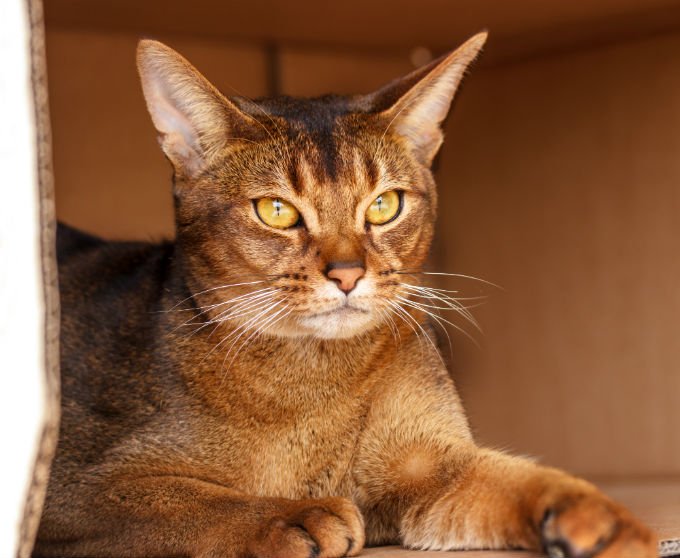
Abyssinian, breed of domestic cat, probably of Egyptian origin, has been considered to approximate the sacred cat of ancient Egypt more closely than any other living cat. The Abyssinian is a lithe cat with relatively slender legs and a long, tapering tail. The short, finely textured coat is ruddy reddish-brown, with individual hairs of the back, sides, chest, and tail distinctively ticked, or tipped, with bands of black or brown. The nose is red, the eyes are hazel, green, or gold, and the tail tip and backs of the hindlegs are black. The Abyssinian is noted for being affectionate and quiet, though generally shy with strangers.

2.African wildcat:
undefined
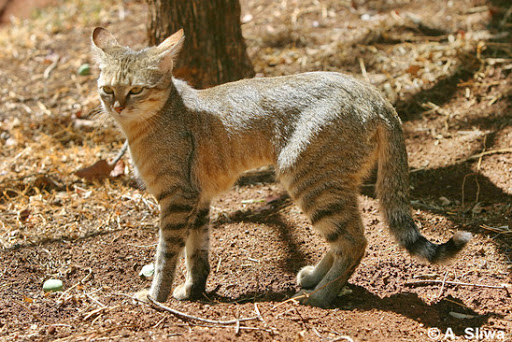
The African wildcat, also called Egyptian wildcat, small, tabby like a cat (family Felidae) found in open and forested regions of Africa and Asia. Likely the first cat to be domesticated, the African wildcat is somewhat larger and stockier than the modern house cat, with which it interbreeds readily. Its coat, paler in the female, is light or orange-brown with narrow dark stripes. The length of the animal is about 70 cm (28 inches), excluding the 40-cm tail; shoulder height averages 23 cm (9 inches), and the cat weighs about 3.5 kg (7.7 pounds). The African wildcat is a solitary nocturnal hunter that preys mainly on birds and small mammals. Mating generally occurs early in the year, and a litter of two to five kittens is born about 56 days later.

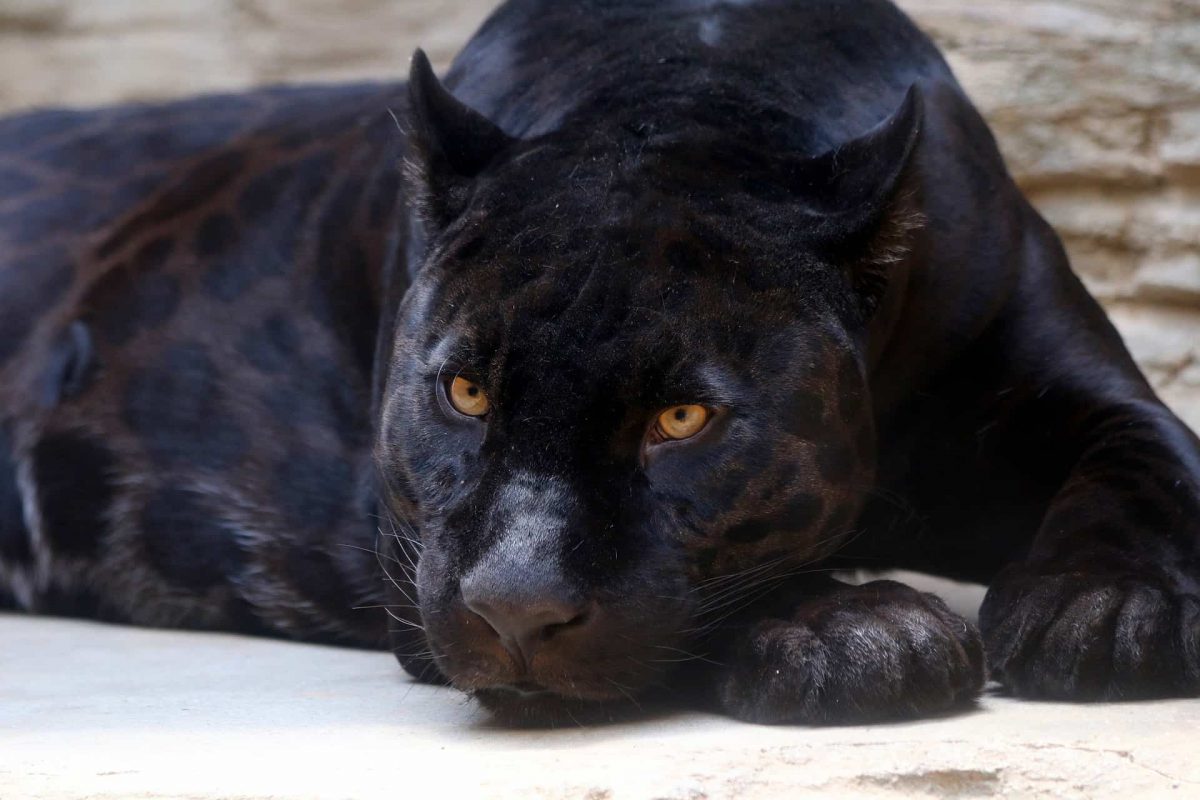
3.black panther:
undefined
Black panther, colloquial term used to refer to large felines classified in the genus Panthera that are characterized by a coat of black fur or large concentrations of black spots set against a dark background. The term black panther is most frequently applied to black-coated leopard of Africa and Asia and jaguars of Central and South America; black-furred variants of these species are also called black leopards and black jaguars, respectively. Besides, the term is sometimes used to describe dark-colored bobcats, lynx, jaguarundis, tigers, and pumas, even though reports of black-colored representatives of some species, such as the puma, have not been confirmed.

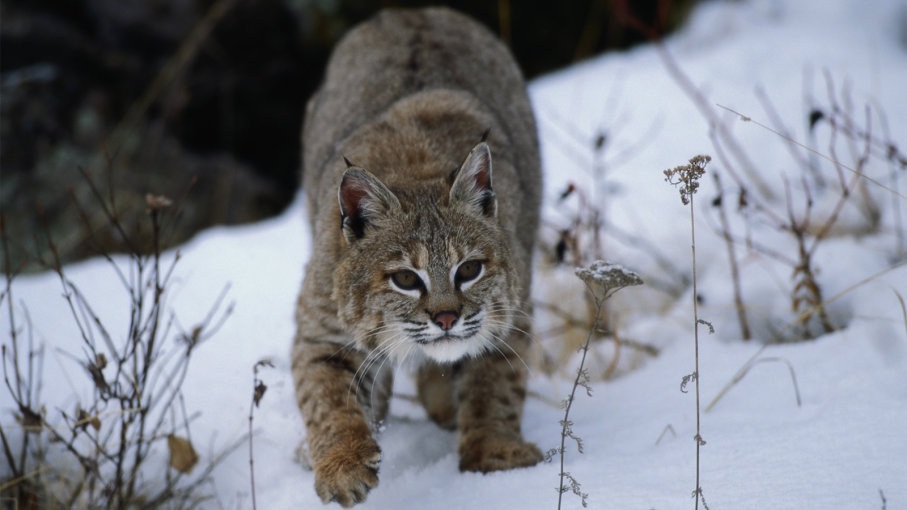
4.bobcat:
undefined
Bobcat, also called bay lynx or wildcat, bobtailed North American cat, found from southern Canada to southern Mexico. The bobcat is a close relative of the somewhat larger Canada lynx.

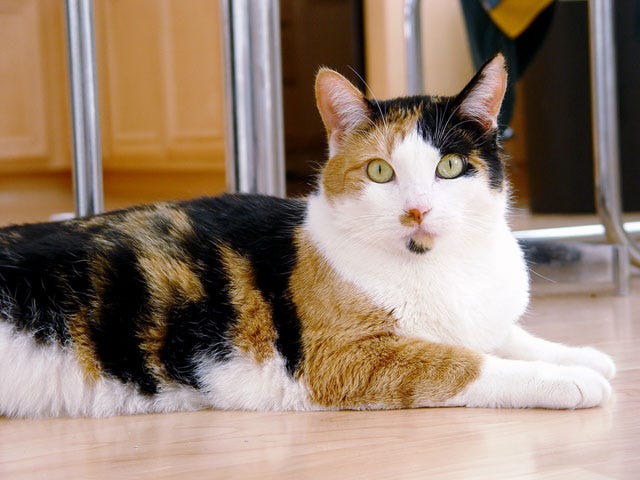
5.calico cat:
undefined
Burmese, breed of domestic cat, presumably of Asian origin. The Burmese are a compactly built cat with a small, rounded head and wide-set, round, yellow, or golden eyes. The short, finely textured, and glossy coat darkens from a milk-chocolate color in the kitten to a rich sable brown in the adult. The underside is paler than the coat; the ears, face, legs, and tail may be darker. The tail is tapered and may be either straight or kinked near the tip.

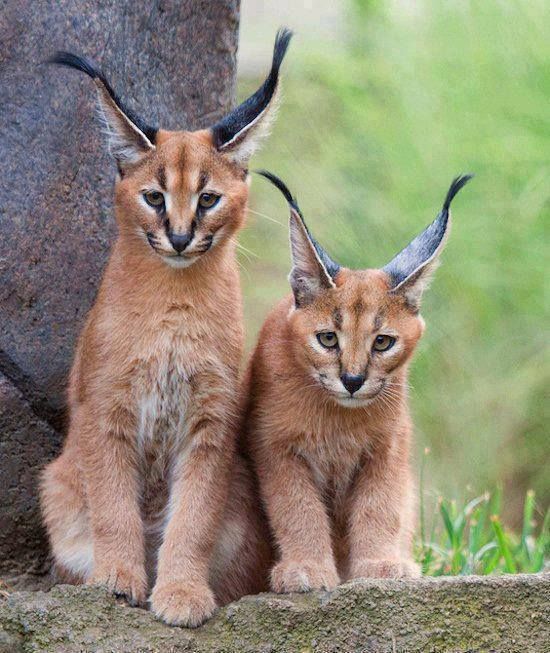
6.caracal:
undefined
Calico cat, In North America, a blotched or spotted domestic cat, usually predominantly white with red and black patches (a pattern also called tortoiseshell-and-white). Because the genetic determination of some coat colors in cats is linked to the sex chromosome, calicoes are almost always female.

7.cat:
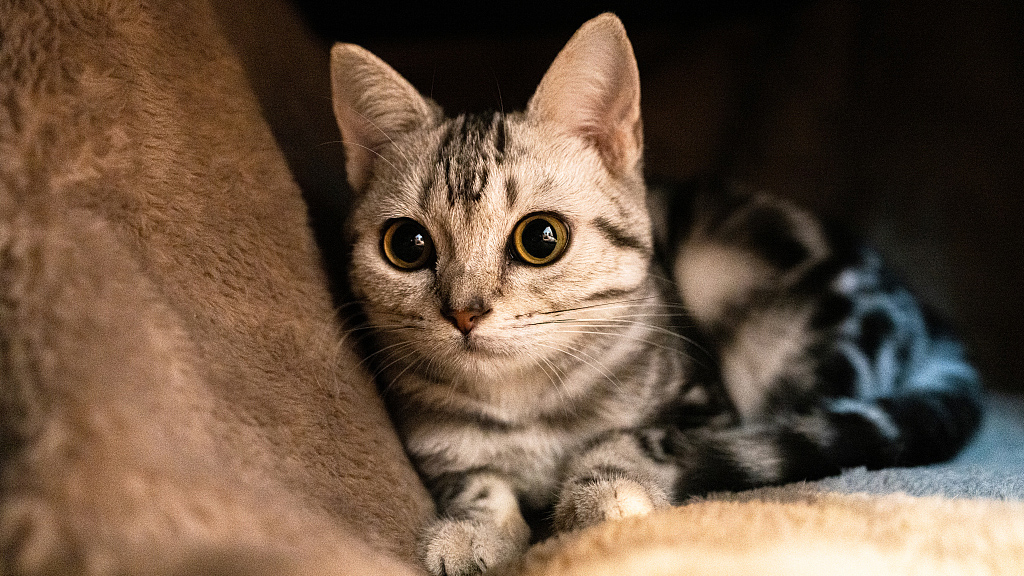
undefined
Cat also called house cat or domestic cat, domesticated member of the family Felidae, order Carnivora, and the smallest member of that family. Like all felids, domestic cats are characterized by supple low-slung bodies, finely molded heads, long tails that aid in balance, and specialized teeth and claws that adapt them admirably to a life of active hunting. Cats possess other features of their wild relatives in being basically carnivorous, remarkably agile and powerful, and finely coordinated in movement.

8.cheetah:
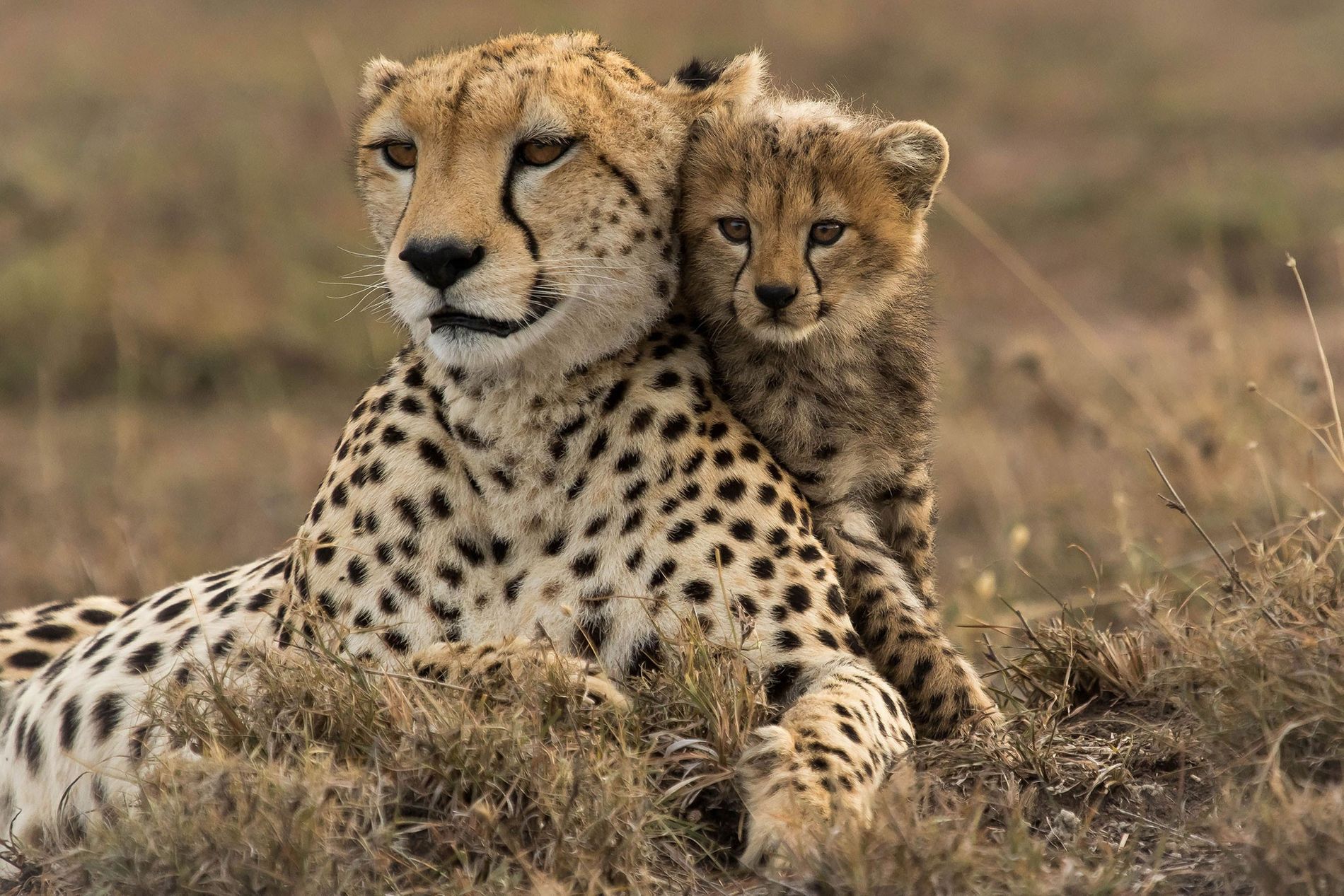
undefined
Cheetah, one of the world’s most-recognizable cats, known especially for its speed. Cheetahs’ sprints have been measured at a maximum of 114 km (71 miles) per hour, and they routinely reach velocities of 80–100 km per hour while pursuing prey. Nearly all the cheetahs remaining in the wildlife in Africa.

9.clouded leopard:
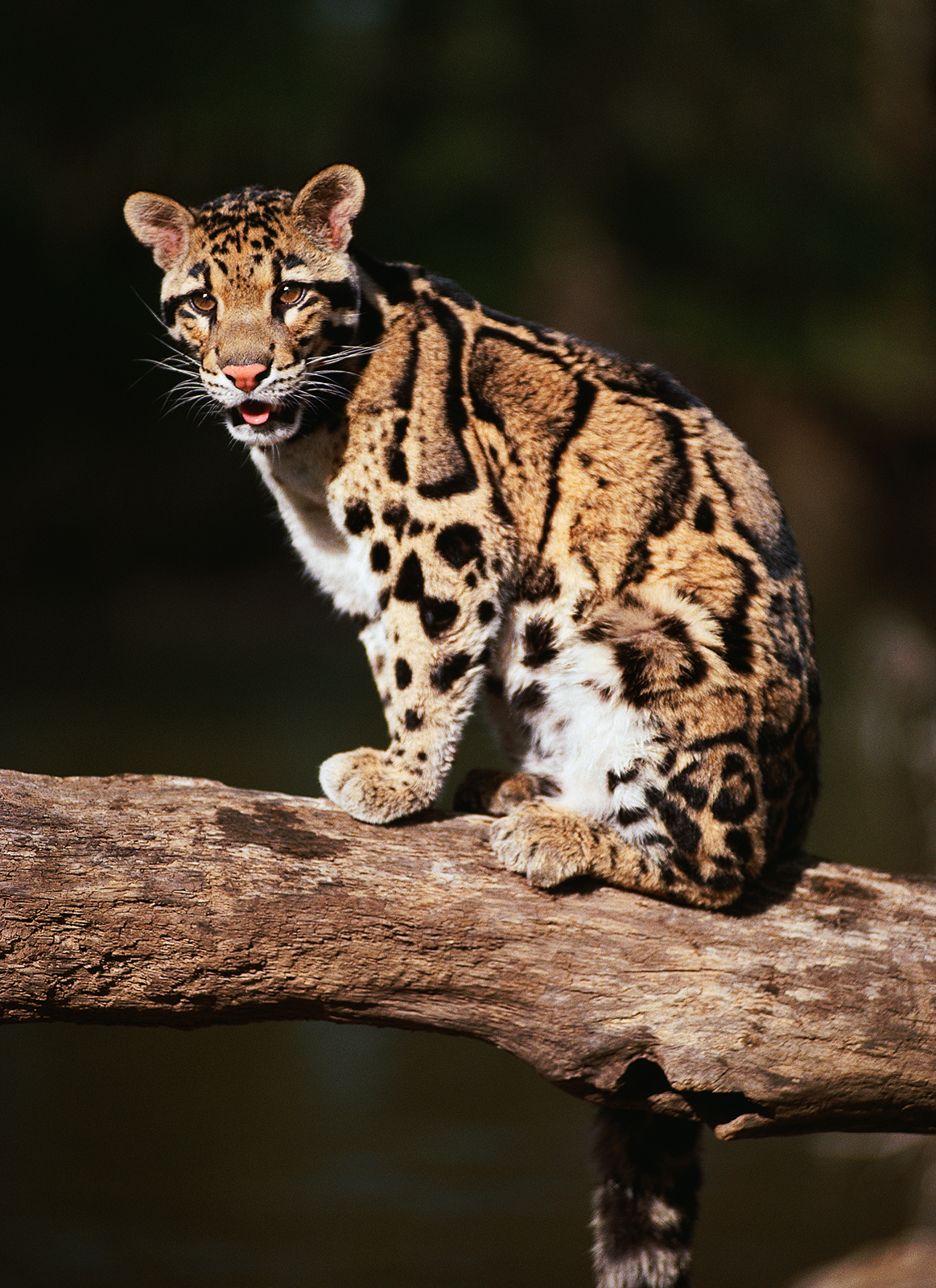
undefined
Clouded leopard, also called clouded tiger, strikingly marked cat, very similar in coloring and coat pattern to the smaller, unrelated marbled cat . There are two species of clouded leopard, which are genetically distinct from one another. Neofelis nebulosa, found on the mainland of southeastern Asia, particularly in forests and other wooded regions, and N. diardi, found on the islands of Sumatra and Borneo, are thought to have diverged about 1.4 million years ago. The population of clouded leopards declined sharply in the latter half of the 20th century as a result of hunting and deforestation. They are reported to be nocturnal and to live in trees; they prey on birds and small mammals, such as pigs and monkeys.

10.domestic shorthair:
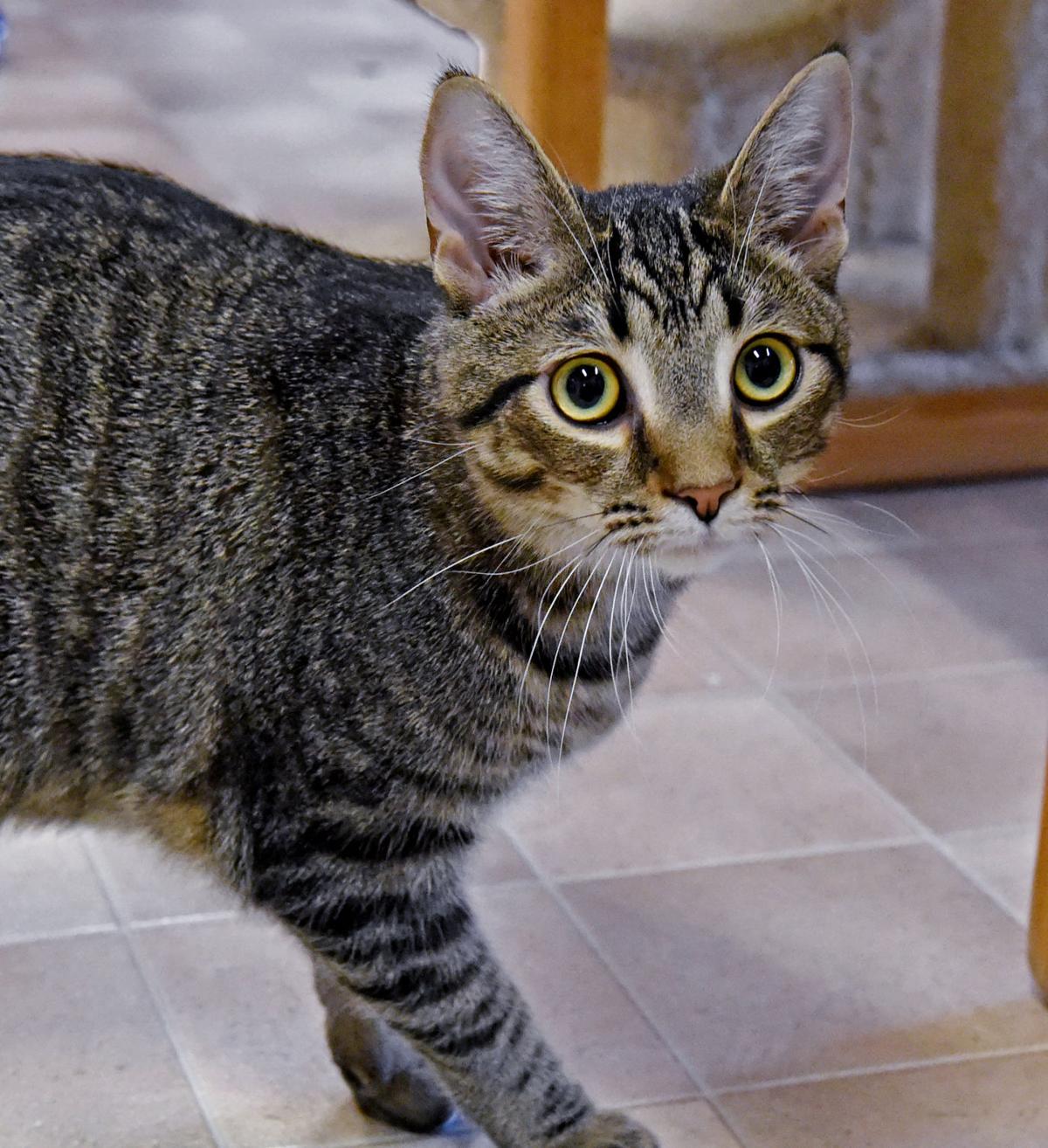
undefined
Domestic shorthair, also called British Shorthair, breed of a domestic cat often referred to as a common, or alley, cat; a good show animal, however, is purebred and pedigreed and has been carefully bred to conform to a set standard of appearance.

11.feline:
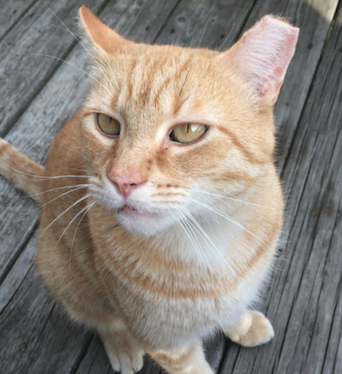
undefined
Feline any of 37 cat species that among others include the cheetah, puma, jaguar, leopard, lion, lynx, tiger, and a domestic cat. Cats are native to almost every region on Earth, except Australia and Antarctica. They are carnivorous mammals that live in a wide variety of habitats, but they are typically woodland animals.

12.fishing cat:
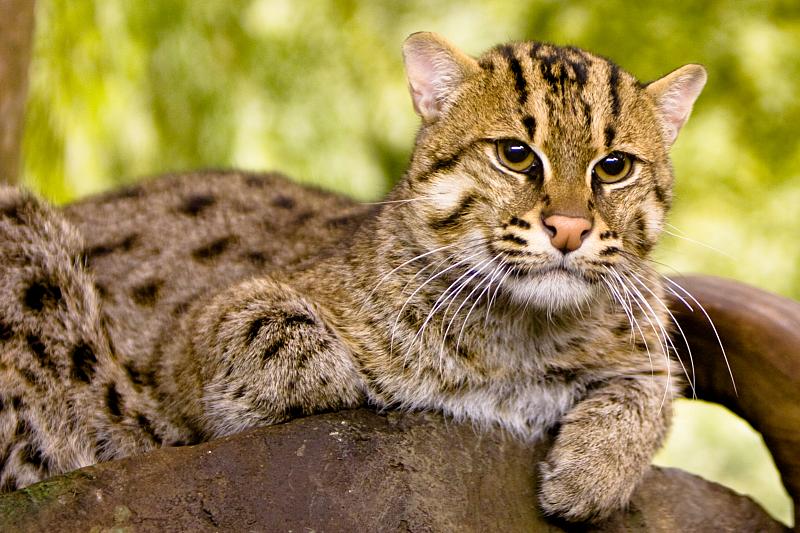
undefined
Fishing cat a tropical cat of the family Felidae, found in India and Southeast Asia. The coat of the fishing cat is pale gray to deep brownish-gray and marked with dark spots and streaks. The adult animal stands about 40 cm (16 inches) at the shoulder, weighs 8–11 kg (18–24 pounds), and is from 60 to 85 cm long, excluding the black-ringed tail, which accounts for an additional 25–30 cm. The fishing cat lives near water and in jungles, reed beds, and marshes. It is reported to fish by scooping its prey out of the water.

13.flat-headed cat:
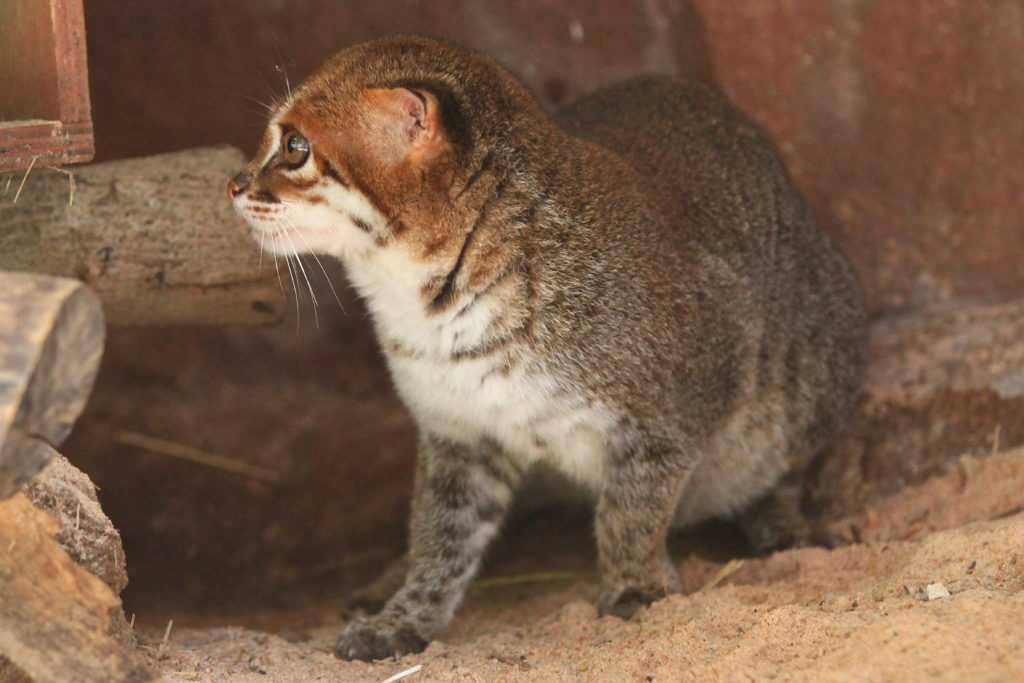
undefined
Flat-headed cat extremely rare Asian cat found in the Malay Peninsula, Sumatra, and Borneo. One of the smallest members of the cat family, Felidae, the adult is from 40 to 60 centimeters (16 to 24 inches) long without the 15–20-cm tail and weighs from 1.5 to 2.5 kilograms (3.3 to 5.5 pounds). Its coat is reddish above and white with red spots below; there are white markings around the eyes. It is the only felid known to include any substantial amount of vegetation in its diet, with a preference for fruit and, when available, sweet potatoes and similar foods. Little else is known about this cat, which is reported to be nocturnal and to hunt fish and frogs along rivers.

14.Florida panther:
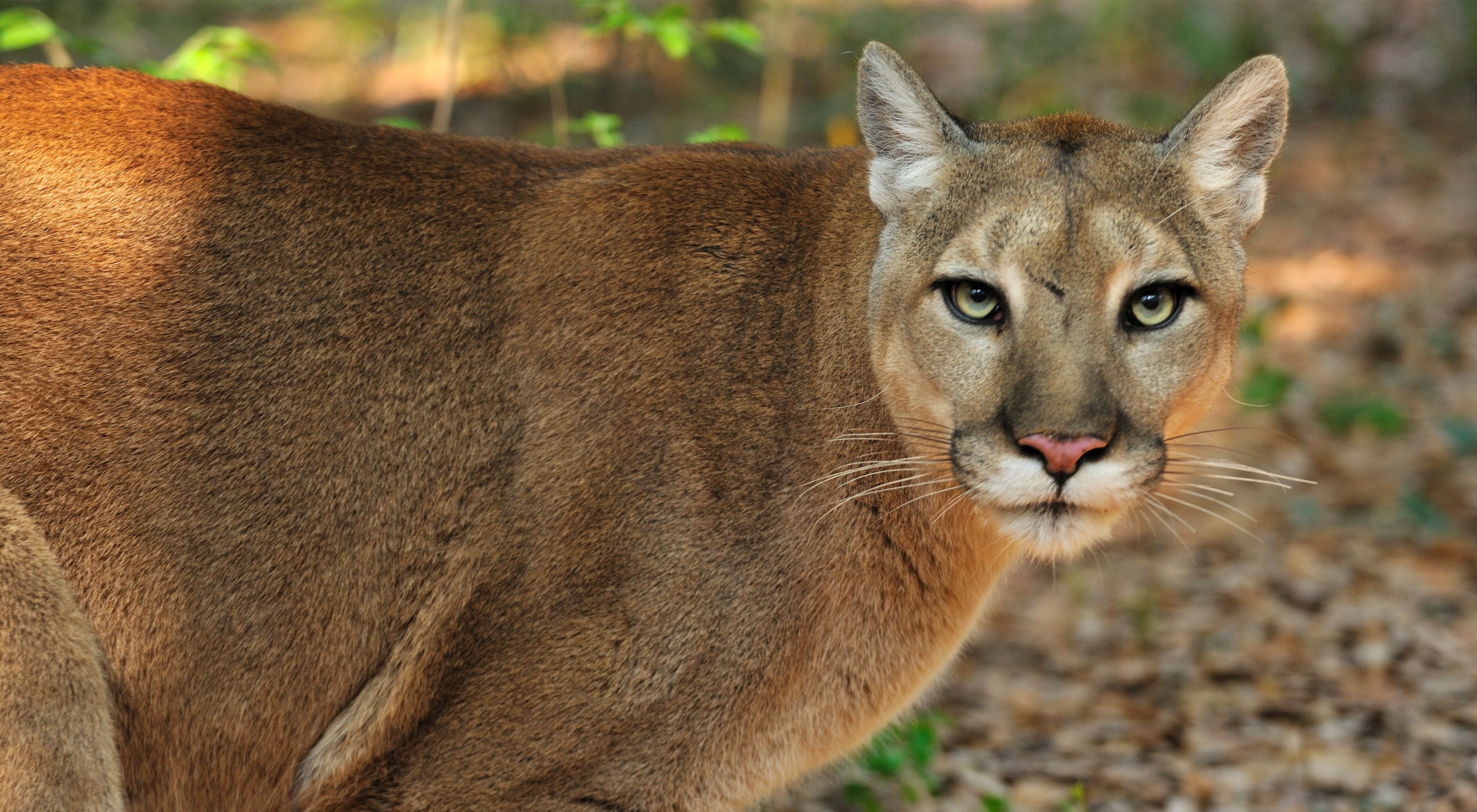
undefined
Florida panther, member of a population of large New World cats belonging to the species Puma concolor, family Felidae, confined to a small, isolated, and inbred group in southern Florida. This population is the only breeding group of pumas in the eastern United States. The Florida panther was traditionally classified as a distinct subspecies of puma and was reclassified as a population of the P. concolor cougar subspecies in 2017 after genetic analysis. The Florida panther was one of the first animals listed under the Endangered Species Act when the law first passed in 1973, and it is recognized as the state animal of Florida.

15.Geoffroy’s cat:
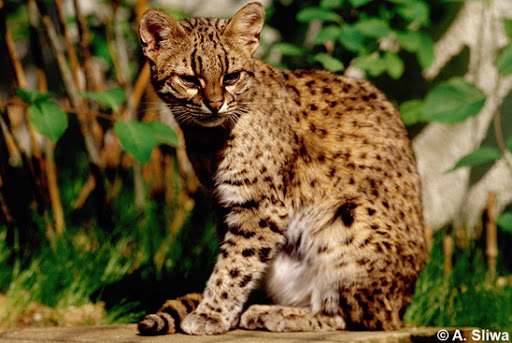
undefined
Geoffroy’s cat South American cat of the family Felidae, found in mountainous regions, especially in Argentina. It is gray or brown with black markings and grows to a length of about 90 cm (36 inches), including a tail of about 40 cm (16 inches). Geoffroy’s cat climbs well and preys on small mammals and birds. It breeds once a year; litters consist of two or three kittens.

17.Himalayan:
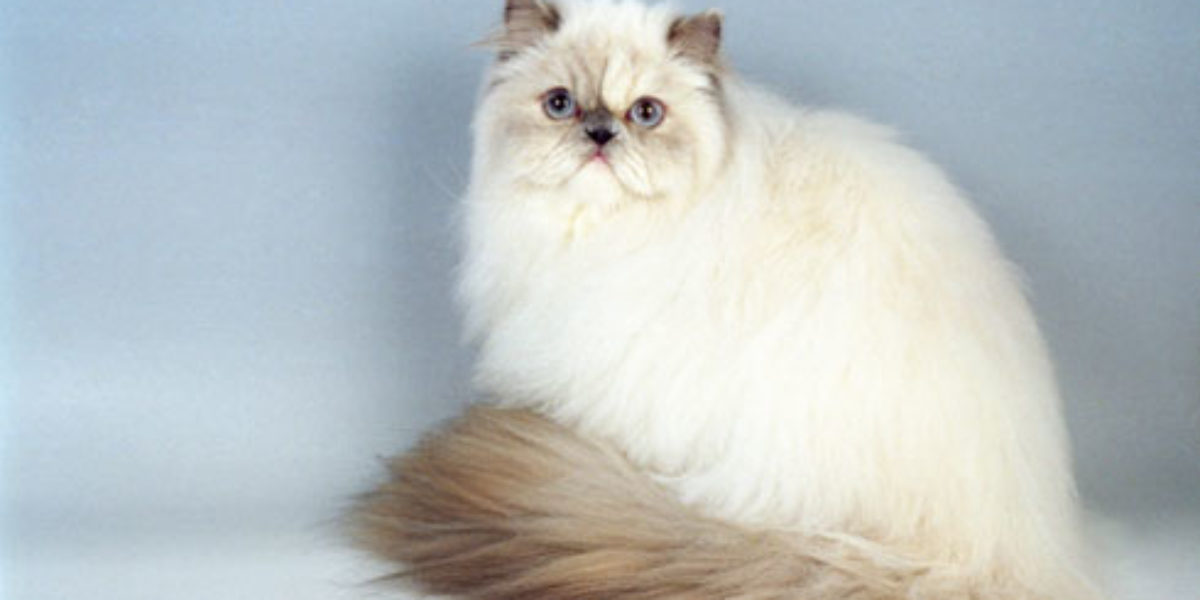
undefined
Himalayan, also called colorpoint, or colorpoint, breed of domestic cat with the coloring of the Siamese and the build and coat of the longhair, or Persian. The Himalayan is produced by matings between Siamese and longhairs followed by selected breeding of the offspring to bring out the proper coloring, coat, and build. A good Himalayan is cobby and short-legged with long, soft fur, a broad, rounded head, and round blue eyes. Born cream-colored, it later develops the darker points (ears, face, legs, and tail) of the Siamese. The points, as in the Siamese, maybe deep brown (seal point), lighter brown, blue-gray , pinkish-gray , or reddish-orange .

18.jaguar:
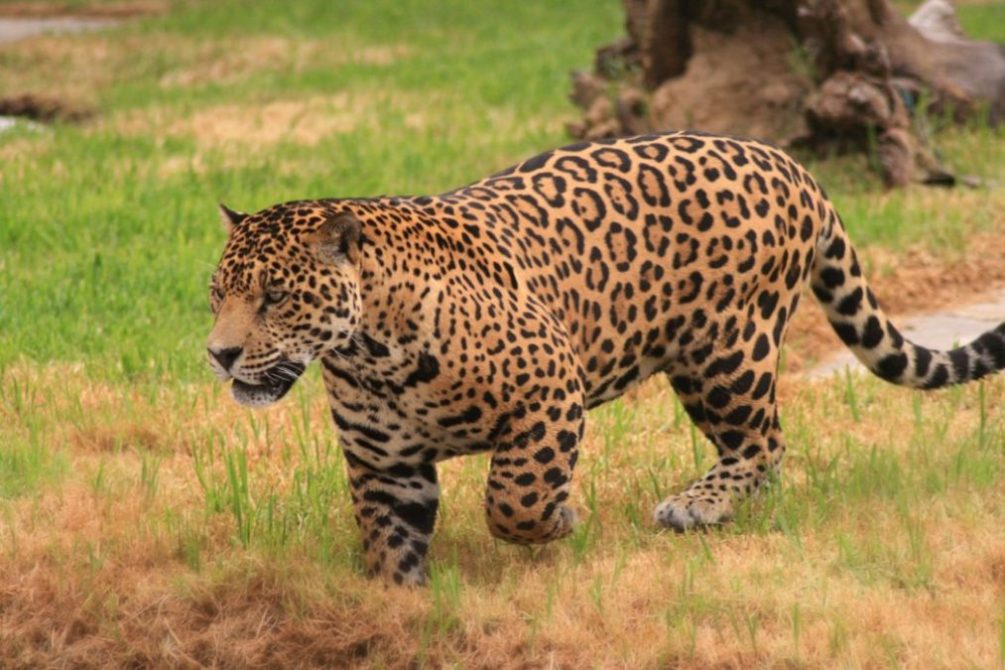
undefined
Jaguar also called el Tigre or Tigre americano, the largest New World member of the cat family, once found from the U.S.-Mexican border southward to Patagonia, Argentina. Its preferred habitats are usually swamps and wooded regions, but jaguars also live in scrublands and deserts. The jaguar is virtually extinct in the northern part of its original range and survives in reduced numbers only in remote areas of Central and South America; the largest known population exists in the Amazon rainforest.

19.jaguarundi:
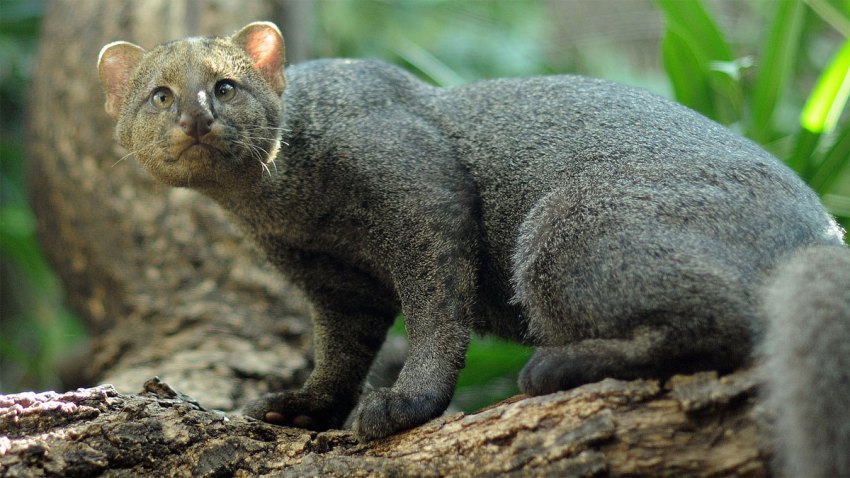
undefined
Jaguarundi, also spelled Jaguarondi small, unspotted New World cat (family Felidae), also known as the otter-cat because of its otterlike appearance and swimming ability. The jaguarundi is native to forested and brushy regions, especially those near water, from South America to the southwestern United States; it is, however, very rare north of Mexico.

20.leopard:
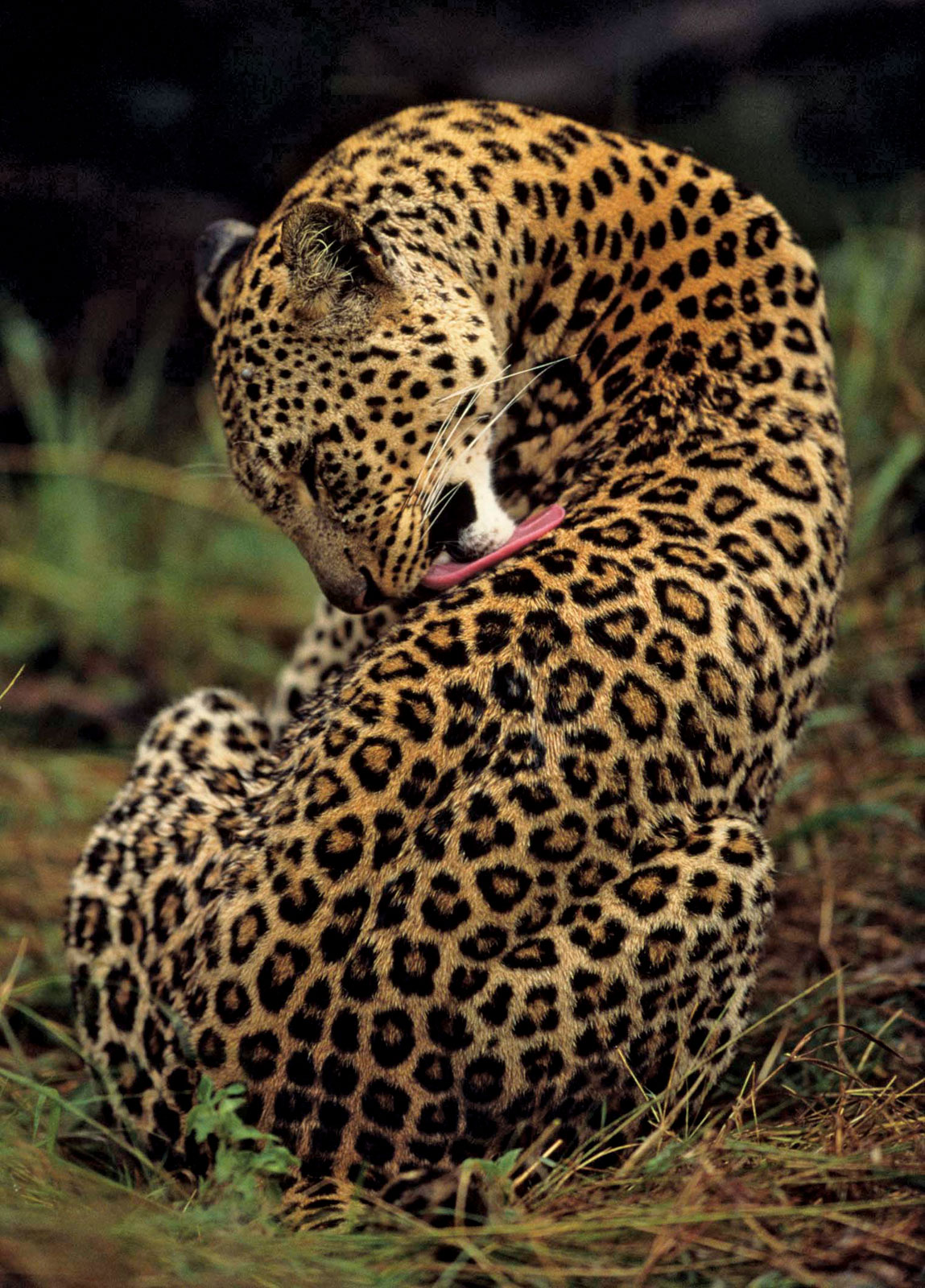
undefined
Leopard also called a panther, large cat closely related to the lion, tiger, and jaguar. The name leopard was originally given to the cat now called cheetah—the so-called hunting leopard—which was once thought to be a cross between the lion and the pard. The term pard was eventually replaced by the name leopard.

21.leopard cat:
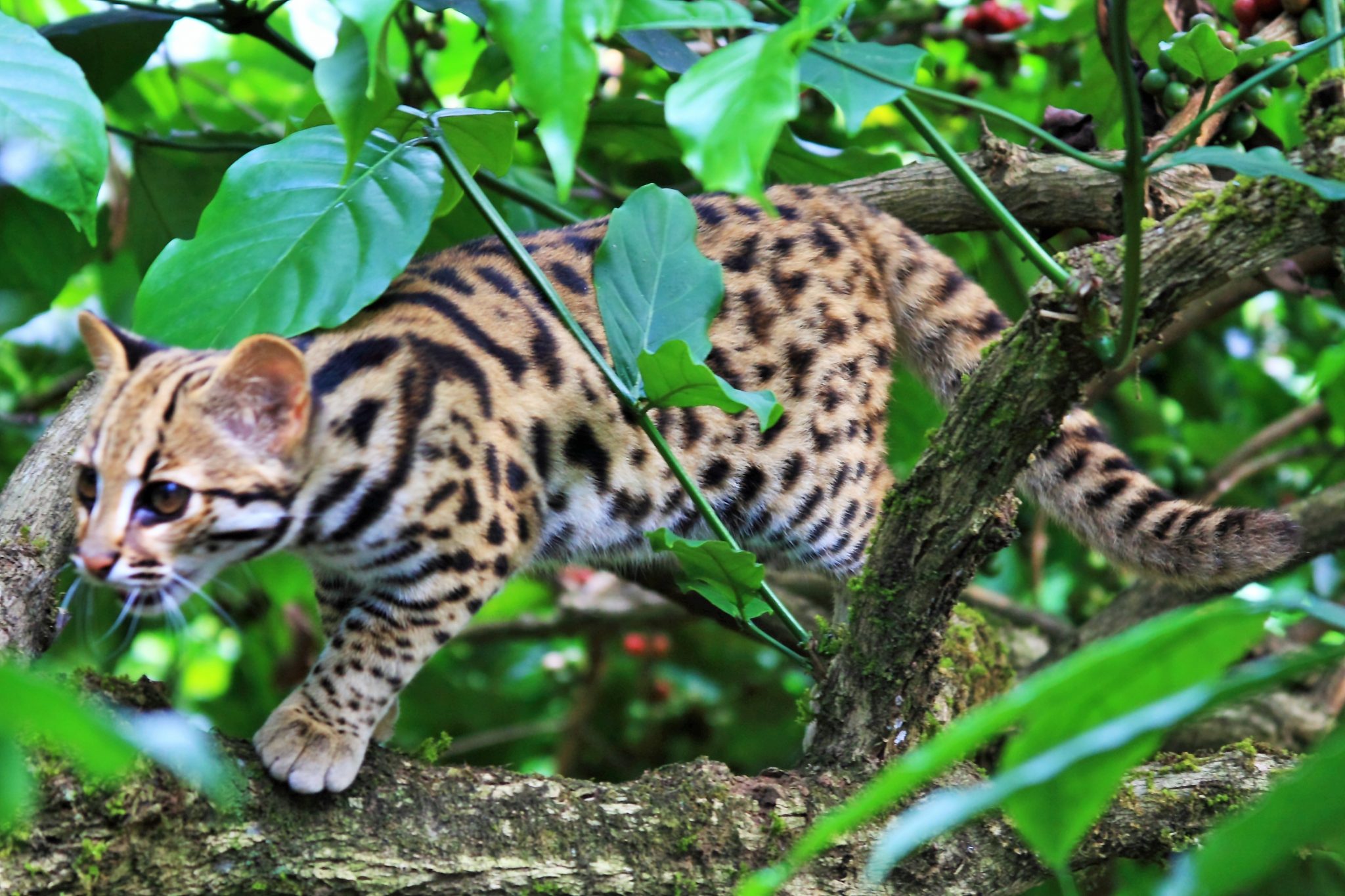
undefined
Leopard cat forest-dwelling cat, of the family Felidae, found across India, Southeast Asia, and nearby islands. The leopard cat is noted for its leopard-like coloring. The species is generally divided into one mainland subspecies, P. bengalensis bengalensis, and several island subspecies—including P. bengalensis borneoensis in Borneo, P. bengalensis Heaney on Palawan, P. bengalensis rabori on the Philippine islands of Cebu, Negros, and Panay, P. bengalensis javenensis on Bali and Java, and P. bengalensis sumatranus on Sumatra and Tebingtinggi.

22.liger:
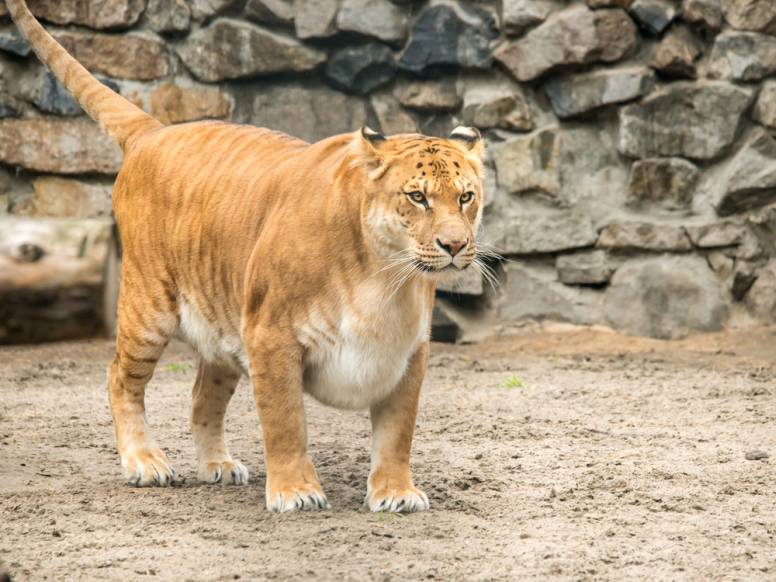
undefined
Liger, offspring of a male lion and a female tiger. The liger is a zoo-bred hybrid, as is the tigon, which is the result of mating a male tiger with a female lion. The liger and the tigon possess features of both parents, in variable proportions, but are generally larger than either. It is thought that most, if not all, male ligers and tigons are sterile. The females, however, on occasion, may be able to produce young. The terms liger and tigon are portmanteaus of the words lion and tiger.

23.lion:
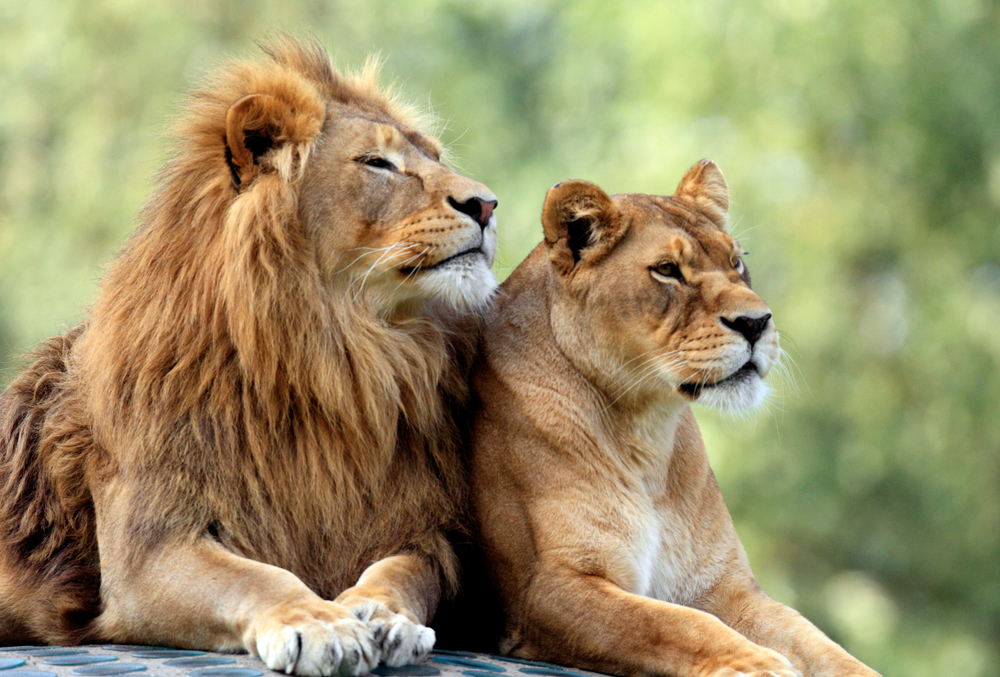
undefined
Lion is large, powerfully built cat that is second in size only to the tiger. The proverbial “king of beasts,” the lion has been one of the best-known wild animals since the earliest times. Lions are most active at night and live in a variety of habitats but prefer grassland, savanna, dense scrub, and open woodland. Historically, they ranged across much of Europe, Asia, and Africa, but now they are found mainly in parts of Africa south of the Sahara. An isolated population of about 650 Asiatic lions constitutes a slightly smaller race that lives under strict protection in India’s Gir National Park and Wildlife Sanctuary.

24.longhair:
undefined
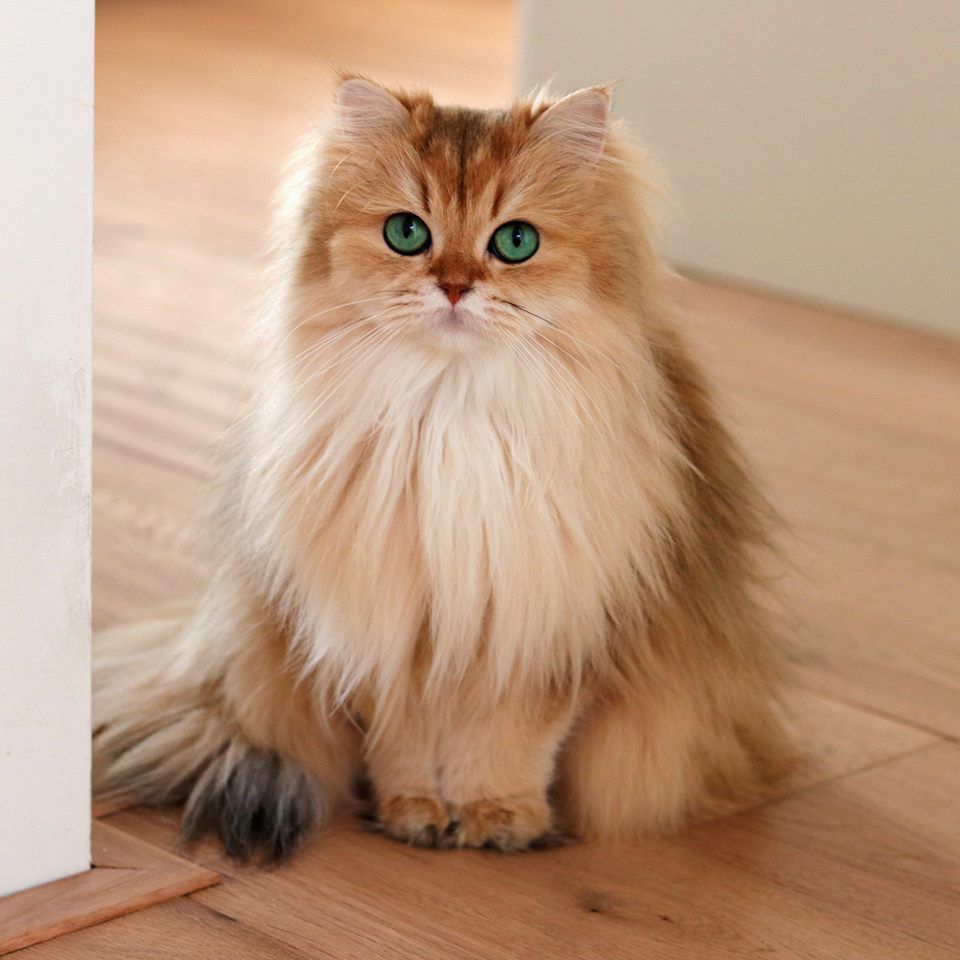
Longhair, also called Persian, breed of domestic cat noted for its long, soft, flowing coat. Long-haired cats were originally known as Persians or Angoras. These names were later discarded in favor of the name longhair, although the cats are still commonly called Persians in the United States. The longhair, a medium-sized or large cat with a cobby , short-legged body, has a broad, round head, a snub nose, and a short, heavily haired tail. The large, round eyes may be blue, orange, golden, green, or copper-colored, depending on the color of the cat. The soft, finely textured coat forms a heavy ruff about the neck.

25.lynx:
undefined
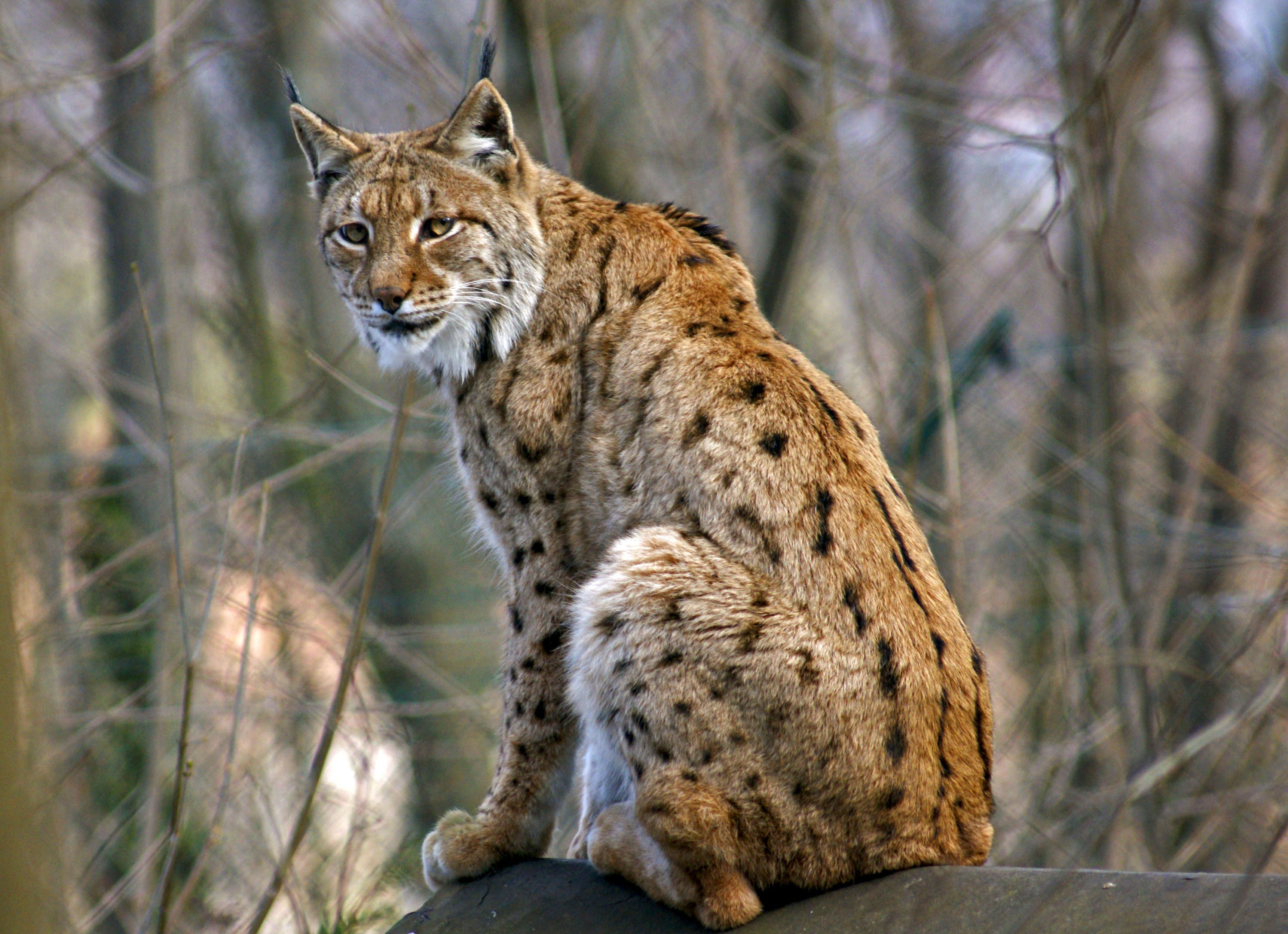
Lynx, (genus Lynx), any of four species of short-tailed cats found in the forests of Europe, Asia, and North America. The Canada lynx and the bobcat live in North America. The Eurasian lynx and the Iberian lynx are their European counterparts. The Iberian lynx is the most endangered feline; as of 2013, possibly fewer than 300 individuals remained in the mountainous scrubland of southern Spain.


Leopons: Hybrids Between Leopards and Lions

Animals all over the world are known to exhibit unnatural behaviors in a typical zoo environment. The pairings which very little off chance of happening in the wild or a natural environment can surely be imagined happening in a zoo. One such pairing is between a lioness and a leopard. In the wild, they both use different mating techniques and would be unlikely to find themselves in a position of compatibility. However, factors change when talking about the same animals in the confined environment of a zoo. They have been successfully bred in captivity to produce a hybrid known as a leopon.

Leopons have been bred in zoos in India, Japan, and Germany. Originally bred for the leopard fur, the hybrid offspring proved to be very sterile. The last of the leopons in India died in 1985, but the British Museum of Natural History still has the leopon skin and skull from an animal bred at the Kolhapur Zoo, India in 1910.

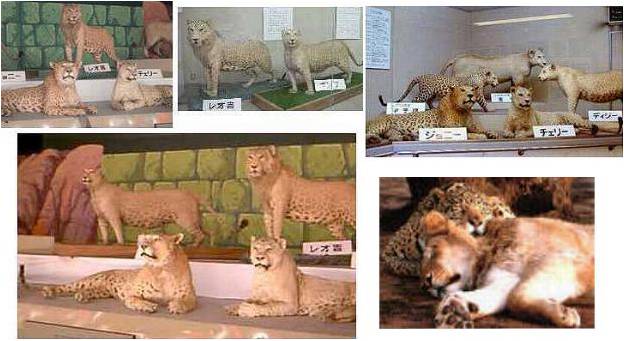
The most successful leopon program was in Nishinomiya City in Japan. Here a lioness named Sonoko was mated to a leopard called Kaneo, both born in 1955 in the Koshien Hanshin Park. The first litter of two leopon cubs was born in 1959 after a gestation period of 97 days. This is an intermediate between the gestation period of a leopard (90 – 95 days) and a lion (105 – 110 days). Usually, in captivity, the big cat males are known to show social behavior and the same happened with Kaneo when he remained with the family after the birth. After this, the couple had three more cubs in 1962.

Leopons are larger in size than leopards and have the combined features of the parents, that is, a lion and a leopard. They have a lion’s stout body while the rest of the appearance resembles a fuzzy leopard with spots and shorter legs. Instead of the classic black spots of a leopard, they have paler brown spots and a reddish-yellow skin. Their tails are tufted like that of a lion while they love to climb trees and play in the water, much like leopards. This distresses the lioness mother as lions are known to hate water. On maturing, the males have a small and sparse mane about 20 centimeters long while the females deal with an internal conflict of having to choose between the solitary lifestyle of a leopard and the social nature of a lioness. Their lifespan is about 20 years, which is more than that of a leopard (12 – 17 years) and that of a lion (10 – 14 years). The lioness mother, leopard father, and leopon offspring were taxidermized and are still on display.

hybrid

Even though it is very unlikely for such hybrids to occur in a natural state, there still are reports suggesting otherwise. Such a natural hybrid is called a Marozi. As for the case of a reciprocal cross between a male lion and a female leopard, the hybrid is known as a lipard and was last found in Italy.

Image COurtesy: GOOGLE