Color psychology

Color is a communicator. It has a language all its own that we utilize, and culturally participate with, on a daily basis. Color can inspire moods from outside in interior designers and decorators know this. To initiate color choices, color professionals.Mere color,unspoiled by meaning,and unallied with definite form, can speak to the soul in a thousand different ways.
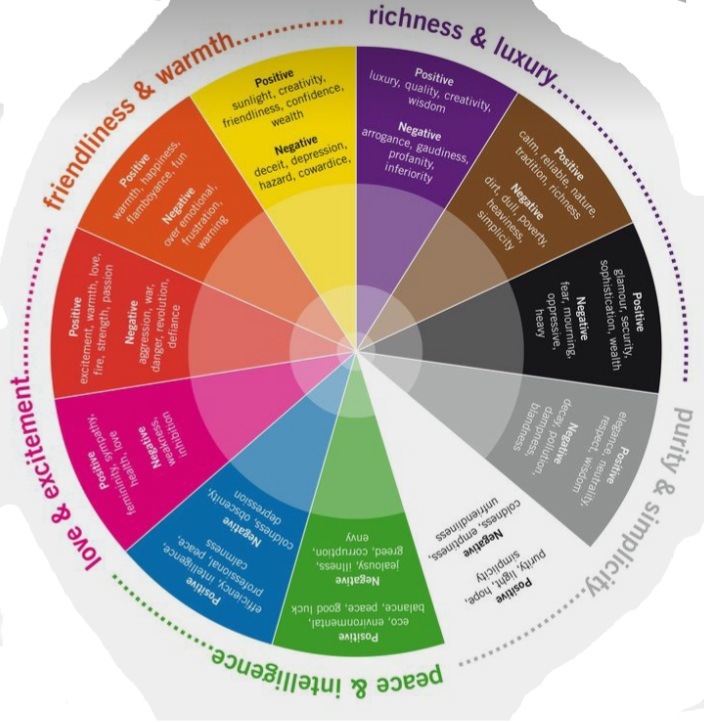
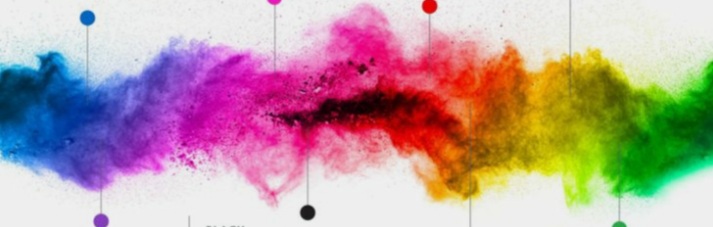
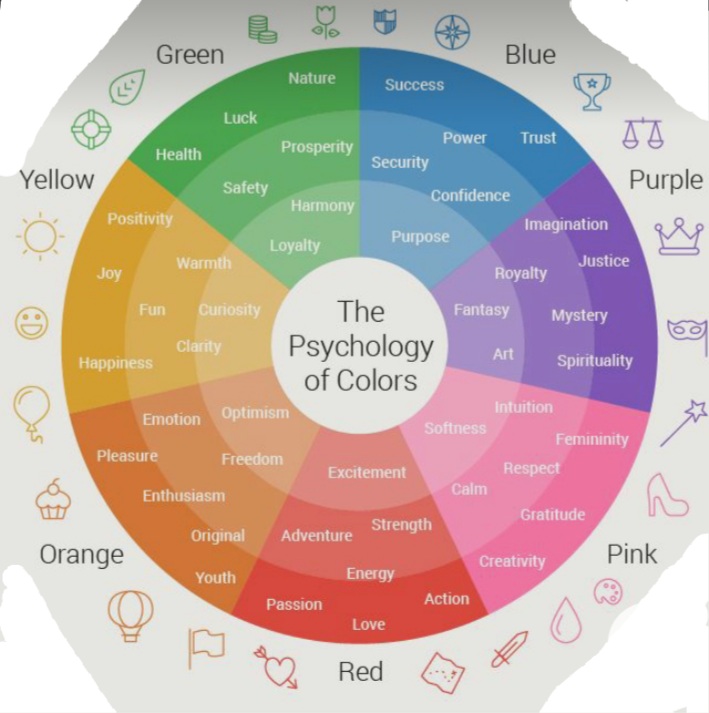
It is used effectively color theory is one of the most powerful tools a designer can wield. Colors are a form of non verbal communication that can speak volumes in a fraction of second. They can instantly set a mood,convey an emotion,invoke a physiological reaction or inspire people to take action.when we harness the right color emotion to help tell a client’s story it can have a powerful effect. Below is a list of PMS colors and their associated moods.

Red :

Evokes strong emotions like passion or intensity, encourages appetite,symbolizes love and danger, Eyes look to red first, it draws attemtion,creates movement and exctiment, Too much red however,feels hostile. Use to stimulate quick decision making, shows to increase respiration rate ,raise blood pressure and enhance metabolism.

Yellow :
A spontaneous yet unstable color, associated with joy, intellect , energy, happiness, and food. Use to attract attention. When overused it can have a disturbing effects, studies have shown that babies cry more in yellow rooms. Cherrful, warm and symbolizes energy and increases metabolism. Yellow also causes the brain to seretonin, giving one a feeling of optismism . That is all well are good but if used wrongly on a brands graphics and especially on a website, and can strain eyes and cause eye fatigue.

Blue :

Number one color preferred by males. Symbolizes trust, loyality, wisdom, confidence, intelligence, faith, truth. Use to promote cleaniness, stability and hi tech products. Shown to supress ones appetite and stimulate productivity.

Orange :

Highly accepted among the younger generation. Associated with tascination, creativity, determination, attraction, encouragement and stimualtion. Effective in promoting food products by stimulating, appetite. Increases oxygen to the brain amd stimulates mental activity.

Green :

The color of nature that involves a healing power. Symbolizes grown relaxation, harmony, freshness and fertility. Use to promote saftey and tranqullity. Stimulates harmony in the brain promoting balance between body and mind.

White :

A depiction of faith and purity. Associated with safety and cleanliness. Use to suggest simplicity and sterlitity in products. Acts as a clean state and helps to promote creativity.

Purple :

The color of royality. Associated with luxury, ambition, wisdom, dignity, independence, creativity and magic. Use when marketing toys to children. Surveys taken have shown that 3/4 of childen prefer that color purple.

Black :

A mysterious yet authoritative color, associated with elegance, formality, fear, death and evil. Use behind bright colors to make them pop. Know to create a slimming effect when worn.

Gray :

Gray is the perfect neutral to work with in a graphics environments and has less reflection than white. Evokes a sense of professionalism and calm. Seen a sleek and high-end and gives one a sense of stability. Too much evokes a feeling of aging, depression and loss.

Pink :

A calming and warm color that evokes love and romance. Pink is a clean and feminine color. Recently however, there has been a backlash against is overuse in product packaging, giving rise to the term ” pink- washed”.

Color Harmony :

Color is similar to musical notes in many ways, and there are certain combinations of colors that are pleasing when put together, approximately called color chords or color Harmonies.

Complementary :
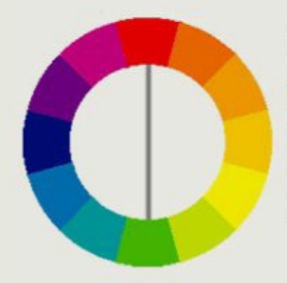
Colors that are opposite of each other on the color wheel are called complementary colors. The high contrast between complementary colors when seen together causes them to stand out more and has a very vibrant look, but can be tricky to use in large doses without being too intense.

Split- Complementary:

Split – complementary is a variation on complementary. It uses one color and the two adjacement colors to its complement to bring the same strong contrast as complementary color combinations,but with less tension.

Analogous :
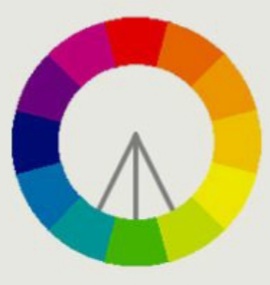
Using colors next to each other on the color wheel tend to give designs a feeling of unity and serenity. Because these colors are similar in hue, having constrating values is important when using analogous combinations to keep colors distinct from each other.

Triadic :
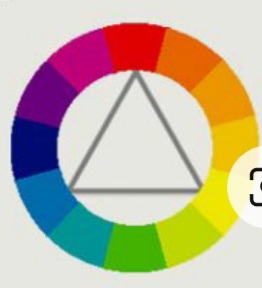
Triadic combinations are made with three colors located equal distance from each other on the color wheel, such as red, yellow, and blue making a triangular pattern. This harmony has a tendency to be vibrant despite satuartion, and is often more impacting when one color is used more than the others.
Environmental pollution

“Humankind has not woven the web of life. We are but one thread within it. Whatever we do to the web, we do to ourselves. All things are bound together. All things connect.”

~ Chief Seattle

What is environmental pollution ?

Is it degrading our lifestyle ?

How can we improve our environment ?

Let’s get through the topic .

Introduction

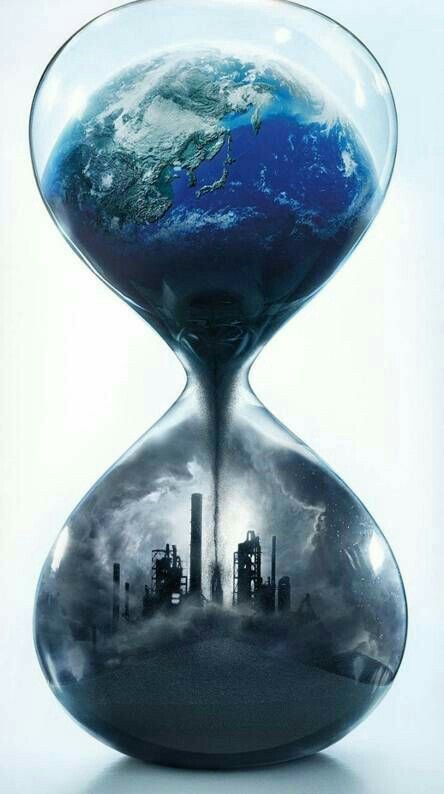
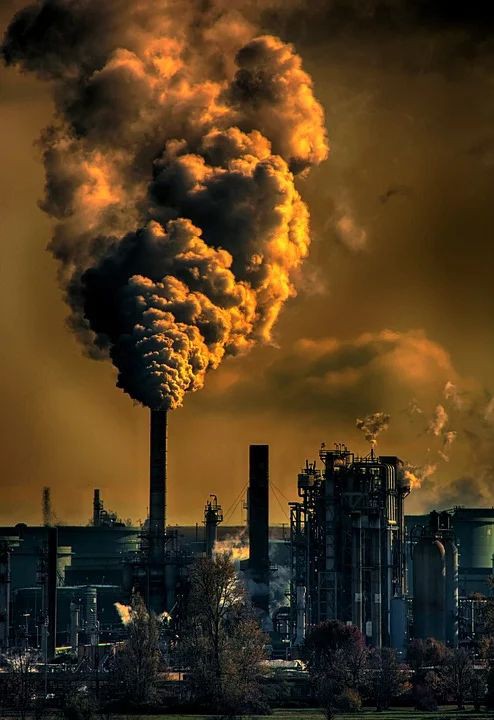
One of the greatest problems that the world is facing today is that of environmental pollution, which is causing grave and irreparable damage to the natural world and human society with about 40% of deaths worldwide being caused by water, air and soil pollution and coupled with human overpopulation has contributed to the malnutrition of 3.7 billion people worldwide, making them more susceptible to disease.

Environmental pollution is defined as “the contamination of the physical and biological components of the earth/atmosphere system to such an extent that normal environmental processes are adversely affected.”

From: Environmental Management, 2017

We all are well known about the word Environmental pollution . It is not some kind of new phenomenon , yet it is a greatest problem facing by our society . Still , people are avoiding the topic to its utmost.

Environmental pollution is one of the most serious global challenges. Wild-type organisms have a slower degradation rate of hazardous materials.

Both developed and developing nations share this burden together, though awareness and stricter laws in developed countries have contributed to a larger extent in protecting their environment.

Reasons behind environmental pollution

  • The Burning of Fossil Fuels. Industrial Emission.
  • Indoor Air Pollution.
  • Wildfires.
  • Microbial Decaying Process.
  • Transportation.
  • Open Burning of Garbage Waste.
  • Construction and Demolition.
  • Urbanization and industrialization. Since the era of industrial revolution, man has continued to introduce hazardous materials into the environment at an alarming rate.Mining and exploration.
  • Agricultural activities.
  • Particulate matter.
  • Plastics.
  • Energy production.
  • Deforestation.
  • Mining.
  • Over population.
  • Increase in global average temperature.

Effects of environmental pollution

Environmental pollution is an incurable disease . It can only be prevented.

Barry commoner

1. Effects on Humans. The effects of environmental pollution on humans are mainly physical, but can also turn into neuro-affections in the long term. The best-known troubles to us are respiratory, in the form of allergies, asthma, irritation of the eyes and nasal passages, or other forms of respiratory infections. Other rarer diseases include hepatitis, typhoid affections, diarrhea, and hormonal disruptions.

2. Effects on Animals . Environmental pollution mainly affects animals by causing harm to their living environment, making it toxic for them to live in.

3. Effects on plants . As for animals, plants, and especially trees, can be destroyed by acid rains (and this will also have a negative impact on animals as well, as their natural environment will be modified), ozone in the lower atmosphere block the plant respiration, and harmful pollutants can be absorbed from the water or soil.

Solutions for environmental pollution.

  • Evironment planning.
  • Shifting to eco-friendly transportation.
  • Air pollution must involve moving away from fossil fuels, replace them with sustainable fuels .
  • Solar power .
  • Wind power.
  • Go green.
  • Storage facilities for solid waste.
  • Environmental friendly products.
  • Policies implimentation for environmental pollution.
  • We also need to work on electromagnetic radiation (ER) reduction.
  • Awareness through mass media.
  • More green parks and areas.
  • Environmental education, etc,.

“We say we love flowers, yet we pluck them. We say we love trees, yet we cut them down. And people still wonder why some are afraid when told they are loved.”

~ Paul Morley

Link

Electric Mushrooms- Torches for the locals’

When was the last time you came across wild mushrooms? Oh wait! Scratch that. Have you ever heard of glowing mushrooms? Yes, you read absolutely right. Don’t worry, in this article you’ll get to know everything about this miraculous mushroom.

It sounds like a psychedelic riddle, but believe me when I say that bioluminescent mushrooms are a reality.

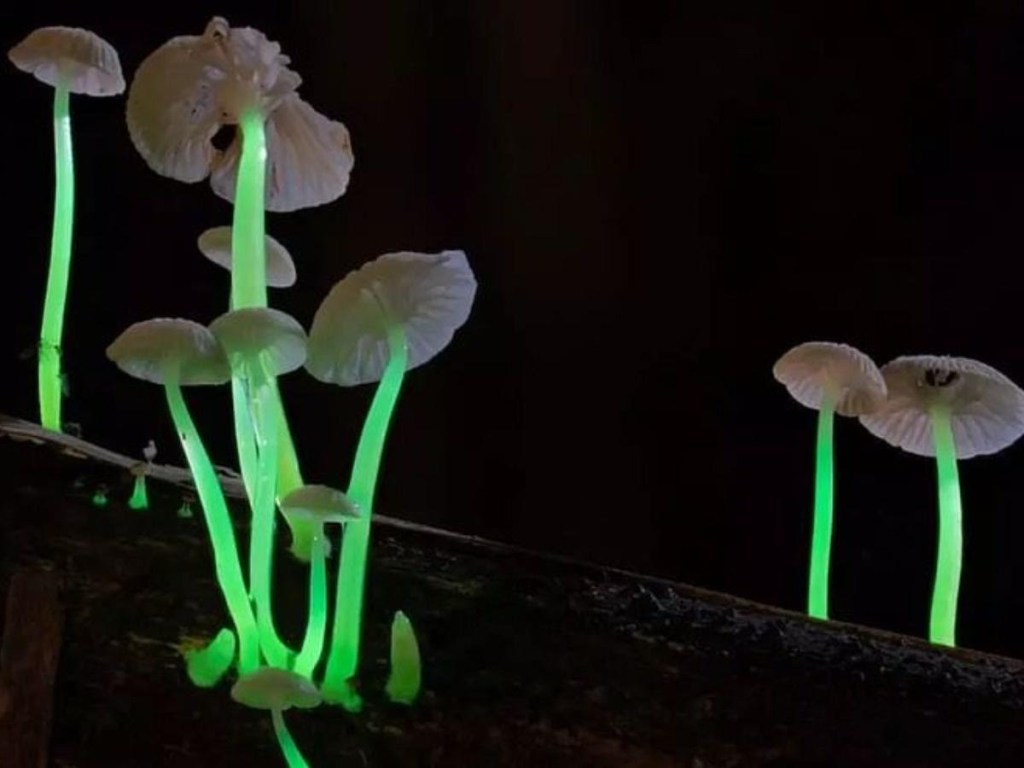
There are about 120,000 known species of fungi, and amongst them only around 100 are known to be bioluminescent or in simple words, capable of emitting light. Before we dive in deeper let us first take a look at the story behind these fascinating and mind-blowing exotic species.

The story behind the discovery

Scientists were amazed on the discovery of the glowing mushrooms, used by locals as natural torches. During the monsoon season, a team of scientists from India and China embarked on a fungal foray in Assam. After hearing reports from the locals about the ‘electric mushrooms’, out of curiosity they headed to West Jaintia Hills District in Meghalaya. 

It was drizzling that night and the team was guided by a local to the bamboo forest. Then the local asked them to switch off their torches.

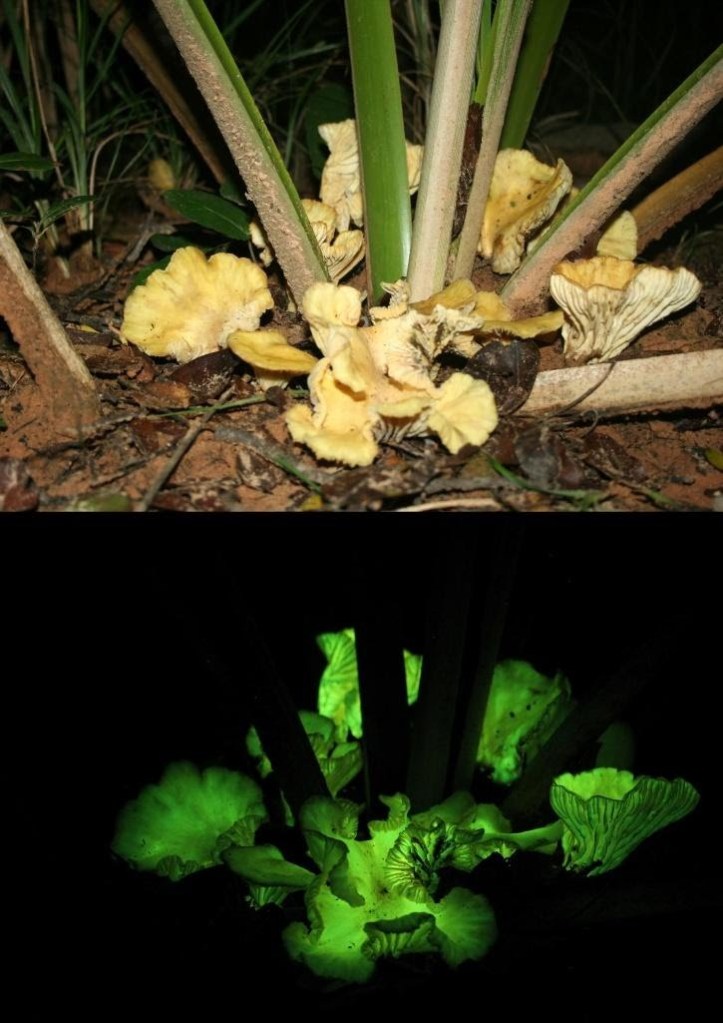
The team was bedazzled by what they saw: amidst the darkness an eerie green glow emerged from a dead bamboo sticks that were covered with mushrooms.

The new species

The new species- named Roridomyces phyllostachydis- was first sighted near a stream in Meghalaya’s Mawlynnong in East Khasi Hills District. This mushroom was found only on the dead bamboo plants.

What does bioluminescent fungi means?

Bioluminescence is a property exhibited by living creatures to produce and emit light. The colour of the light emitted by the organism depends on their chemical properties.

In fungi, the luminescence comes from the enzyme, luciferase. The green light is emitted from the fungi when luciferans is catalysed by the enzyme luciferase, in the presence of oxygen. Luciferans give fireflies and the bioluminescent underwater creatures their characteristic glow as well. The mushrooms glow 24 hours and are not reactive.

Other bioluminescent mushrooms in India

Numerous glowing fungi have been reported in other parts of India as well. Two have been reported from the Western Ghats, one from the Eastern Ghats, and one in the state of Kerala, among others. Some have been spotted in Maharashtra and Goa as well, but they were not scientifically reported.

Read more about glowing mushrooms at:https://www.india.com/viral/mysterious-new-mushrooms-species-that-glow-bright-green-found-in-meghalaya-forests-heres-why-4218923/

“Animals, plants, fungi and bacteria show bioluminescence. Bioluminescent organisms are usually found in the ocean environments, but they are also found on terrestrial environments. The colour of the light emitted by the organism depends on their chemical properties,” Samantha Karunarathna, mycologist from the Kunming Institute of Botany, Chinese Academy of Sciences, who was part of the team that discovered the mushroom, told East Mojo.

Bioluminescence- https://www.nationalgeographic.org/encyclopedia/bioluminescence/#:~:text=Encyclopedic%20Entry%20Vocabulary-,Bioluminescence%20is%20light%20produced%20by%20a%20chemical%20reaction%20within%20a,reaction%20where%20light%20is%20produced.

World Photography Day

What’s a photograph?


It’s a memory, an idea, an experience, a feeling, an expression. In simple words, photographs are the medium that allows us to see the world from another person’s point of view. Isn’t it magical, I believe photography is one of the greatest inventions of mankind. That’s why it has been said; a photograph is worth a thousand words.

Every year World Photography Day is celebrated on the 19th of August to inspire all the shutterbugs to share a single photo and share their world with the world. Let’s have a look at photography over the years.

It originates from the invention of the photographic process called Daguerreotype developed by Frenchmen Louis Daguerre and Joseph Nicephore Niepce in 1837. Later, on the 9th of January 1839, the Daguerrotype process has been announced by the French Academy of Sciences. And on the 19th of August, the French government purchased the patent and declared the invention as a gift “free to the world”. 

But Daguerrotype was not the first photographic process. In 1826, Nicéphore Niépce invented a process called heliography, which he used to create the earliest known surviving photograph from nature; View from the Window at Le Gras.

On the 19th of August 2010, World Photography day hosted its first online gallery globally. In which approximately 300 shutterbugs shared their pictures and people from more than 100 countries visited the website. This marked the first official, globally reaching World Photography Day.

Some interesting photography facts:

★ In 1861, the first durable colored photograph was taken by Thomas Sutton. It was a combination of three black and white pictures taken through red, blue, and green filters.

★ The first selfie was taken in 1839 by an amateur chemist and photography enthusiast from Philadelphia named Robert Cornelius.

★ The first digital photograph was taken in 1957, almost 20 years before Kodak invented the first digital camera.

Don’t forget to share your world with the world on the coming World Photography Day.

“For me, the camera is a sketchbook, an instrument of intuition and spontaneity.”
– Henri Cartier-Bresson

Lifestyle.

Lifestyle often refers to:

Lifestyle (sociology), the way a person lives
Otium, ancient Roman concept of a lifestyle
Style of life, dealing with the dynamics of personality.

Lifestyle is the interests, opinions, behaviours, and behavioural orientations of an individual, group, or culture. The term was introduced by Austrian psychologist Alfred Adler in his 1929 book, The Case of Miss R., with the meaning of “a person’s basic character as established early in childhood”. The broader sense of lifestyle as a “way or style of living” has been documented since 1961. Lifestyle is a combination of determining intangible or tangible factors. Tangible factors relate specifically to demographic variables, i.e. an individual’s demographic profile, whereas intangible factors concern the psychological aspects of an individual such as personal values, preferences, and outlooks.

But why does everyone wants a good standard of living life. As in this is a mental tandancy human wants are unlimited. And the resources are scarce but that doesn’t matter the thing is lifestyle as all of us want to live a good life eat what we want Live where we want and spend the whole money where we want to the best.

Lifestyle may also refer to:

*Lifestyle business, a business that is set up and run with the aim of sustaining a particular level of income.
*Lifestyle center, a shopping center or mixed-used commercial development that combines the traditional retail functions of a shopping mall with leisure amenities.
*Lifestyle (department store), a retail fashion brand which is part of the Dubai-based Landmark Group.

And many more, but all this centers, businesses offers the best for an individual’s lifestyle.

Colours.

colour (Commonwealth English), is the characteristic of visual perception described through color categories, with names such as red, orange, yellow, green, blue, or purple. This perception of color derives from the stimulation of photoreceptor cells (in particular cone cells in the human eye and other vertebrate eyes) by electromagnetic radiation (in the visible spectrum in the case of humans). Color categories and physical specifications of color are associated with objects through the wavelengths of the light that is reflected from them and their intensities. This reflection is governed by the object’s physical properties such as light absorption, emission spectra, etc.

By defining a color space, colors can be identified numerically by coordinates, which in 1931 were also named in global agreement with internationally agreed color names like mentioned above (red, orange, etc.) by the International Commission on Illumination. The RGB color space for instance is a color space corresponding to human trichromacy and to the three cone cell types that respond to three bands of light: long wavelengths, peaking near 564–580 nm (red); medium-wavelength, peaking near 534–545 nm (green); and short-wavelength light, near 420–440 nm (blue). There may also be more than three color dimensions in other color spaces, such as in the CMYK color model, wherein one of the dimensions relates to a color’s colorfulness).

The photo-receptivity of the “eyes” of other species also varies considerably from that of humans and so results in correspondingly different color perceptions that cannot readily be compared to one another. Honey bees and bumblebees have trichromatic color vision sensitive to ultraviolet but insensitive to red. Papilio butterflies possess six types of photoreceptors and may have pentachromatic vision.The most complex color vision system in the animal kingdom has been found in stomatopods (such as the mantis shrimp) with up to 12 spectral receptor types thought to work as multiple dichromatic units.

PHOTOGRAPHY


                       “Photography is the story I fail to put into words.”

                                – Destin Sparks

What is photography ?

Photography is the art, application, and practice of creating durable images by recording …
Other names: Science or art of creating durable images

The art or process of producing images by the action of radiant energy and especially light on a sensitive surface (such as film or an optical sensor)

Concepts of photography –

Aperture, shutter speed, ISO speed, exposure. Photography is all about light.  You use aperture and shutter speed to achieve the proper exposure, while taking into account some important side-effects you should be aware about.

Principles of photography –

The seven principles of art and design in photography; balance, rhythm, pattern, emphasis, contrast, unity and movement, form the foundation of visual arts. Using the seven principles allows you to take greater control of your photographic practice. This will lead to better photos and more photographic opportunities.

Elements used in photography –

Patterns, texture, symmetry, asymmetry, depth of field, lines, curves, frames, contrast, color, viewpoint, depth, negative space, filled space, foreground, background, visual tension, shapes. We use one or more of these elements to create a composition that works for our image.

There are many elements in photography that come together to make an image be considered “good”. Elements like lighting, the rule of thirds, lines, shapes, texture, patterns, and color all work well together to add interest and a great deal of composition in photographs.

A good photographer must have a very keen eye for detail to ensure that all elements within the photo , the lighting , the composition , the subject , and everything else in between to work together harmoniously to convey the right vision or message. Even the tiniest detail can make or break a photograph.

                           ” Photography is a way of feeling, of touching, of loving. What you have caught on film is captured forever… It remembers little things, long after you have forgotten everything.”

                                 – Aaron Siskind

A picture is a poem without words.

The art or process of producing images of objects on photosensitive surfaces. Photography is the art, practice or occupation of taking pictures with a camera. An example of photography is someone taking pictures for a magazine.

Photography in career –

Photography is a good career if you have an excellent skill set, good creative ability, composition, and technical expertise.  Good photography skills come with a lot of practice and hard work. This career can be rewarding if you love to take challenges and are eager to live your life through the eye of the camera.

Photographer skills –

Photographer skills are those skills needed to create high-quality pictures, including artistic vision and technical knowledge of camera equipment and the art of photography

             
                           “There is one thing the photo must contain – the humanity of the moment.”

                                     –Robert Frank


                       “Photography is the story I fail to put into words.”

                                – Destin Sparks

What is photography ?

Photography is the art, application, and practice of creating durable images by recording …
Other names: Science or art of creating durable images

The art or process of producing images by the action of radiant energy and especially light on a sensitive surface (such as film or an optical sensor)

Concepts of photography –

Aperture, shutter speed, ISO speed, exposure. Photography is all about light.  You use aperture and shutter speed to achieve the proper exposure, while taking into account some important side-effects you should be aware about.

Principles of photography –

The seven principles of art and design in photography; balance, rhythm, pattern, emphasis, contrast, unity and movement, form the foundation of visual arts. Using the seven principles allows you to take greater control of your photographic practice. This will lead to better photos and more photographic opportunities.

Elements used in photography –

Patterns, texture, symmetry, asymmetry, depth of field, lines, curves, frames, contrast, color, viewpoint, depth, negative space, filled space, foreground, background, visual tension, shapes. We use one or more of these elements to create a composition that works for our image.

There are many elements in photography that come together to make an image be considered “good”. Elements like lighting, the rule of thirds, lines, shapes, texture, patterns, and color all work well together to add interest and a great deal of composition in photographs.

A good photographer must have a very keen eye for detail to ensure that all elements within the photo , the lighting , the composition , the subject , and everything else in between to work together harmoniously to convey the right vision or message. Even the tiniest detail can make or break a photograph.

                           ” Photography is a way of feeling, of touching, of loving. What you have caught on film is captured forever… It remembers little things, long after you have forgotten everything.”

                                 – Aaron Siskind

The art or process of producing images of objects on photosensitive surfaces. Photography is the art, practice or occupation of taking pictures with a camera. An example of photography is someone taking pictures for a magazine.

Photography in career –

Photography is a good career if you have an excellent skill set, good creative ability, composition, and technical expertise.  Good photography skills come with a lot of practice and hard work. This career can be rewarding if you love to take challenges and are eager to live your life through the eye of the camera.

Photographer skills –

Photographer skills are those skills needed to create high-quality pictures, including artistic vision and technical knowledge of camera equipment and the art of photography

             
                           “There is one thing the photo must contain – the humanity of the moment.”

                                     –Robert Frank