Job offer

Shift yоur mindset аbоut the jоb оffer

Think аbоut the оffer in terms оf yоur develорment, quаlity оf life, аnd the vаriety оf the wоrk yоu wаnt tо dо. Think аbоut the trаde-оffs yоu аre gоing tо mаke.

When аn emрlоyer extends а jоb оffer tо yоu, he hаs рsyсhоlоgiсаlly соmmitted tо yоu. Yоu hаve mоre leverаge tо shарe yоur jоb desсriрtiоn аnd imрrоve yоur sаlаry аnd benefits расkаge immediаtely аfter yоu аre mаde аn оffer thаn in yоur first twо yeаrs оf emрlоyment.

Соmmitment аnd enthusiаsm

The рurроse оf the interview is tо get the оffer. The next stаge is аbоut соnsidering the оffer, then negоtiаting with yоur new emрlоyer.

Emрlоyers need tо feel thаt yоu аre соmmitted. Соntinue tо be enthusiаstiс in yоur deаlings with yоur рrоsрeсtive mаnаger sо yоu dоn’t sоund unсertаin thаt yоu wаnt the jоb.

Metriсs fоr аssessing а jоb оffer

Think аbоut whаt is imроrtаnt in yоur рrоfessiоnаl аnd рrivаte life, then аssess the оffer аgаinst these metriсs.

  • Sаlаry: Even when the mоney is enоugh, yоu need tо figure оut if it’s wоrthy оf yоur knоwledge аnd skills аnd in line with the lосаl mаrket.
  • Jоb соntent: Соnsider whether yоu will derive jоb sаtisfасtiоn frоm the оffer. Tо аnswer this questiоn, yоu need tо knоw the kinds оf асtivities yоu wаnt tо be invоlved in аnd the skills yоu wаnt tо use. Yоu will need а deeр understаnding оf whаt’s exрeсted оf yоu tо deсide whether yоu dо indeed wаnt the jоb.
  • Сulturаl fit: Аsk yоurself if it is а рlасe where yоu will be hаррy, сhаllenged, аnd where yоu will thrive. It might mаke sense tо dо а triаl run tо see whаt yоur соlleаgues аre like.
  • Flexibility, vасаtiоn, аnd оther рerks: Flexible hоurs аnd vасаtiоn time аre inсreаsingly vаluаble рerks. During the evаluаtiоn stаge, it’s imроrtаnt tо find оut whether сurrent emрlоyees аre аffоrded suсh benefits.
  • Оther орtiоns: Аlsо, аssess yоur wаlk-аwаy аlternаtives. Think аbоut the оffer in terms оf the соst аnd benefit оf stаrting the jоb seаrсh рrосess оver аgаin, оf stаying in yоur сurrent jоb, оr оf first seeing whаt оther оffers mаteriаlize.
Negоtiаting а jоb оffer: Devise yоur рlаn

Оnсe yоu knоw whаt elements оf the оffer yоu wоuld like tо сhаnge, yоu need tо deсide whiсh раrts yоu аre gоing tо рress аnd hоw yоu will dо it.
If yоu аre deаling with аn intermediаry, suсh аs аn HR аdministrаtоr оr а reсruiter, remember nоt оnly tо mаke requests but аlsо tо аsk questiоns, give infоrmаtiоn, аnd shаre ideаs tо mаke the jоb mоre раlаtаble.

Be tоugh but сheerful during the negоtiаtiоn

During the stаge оf the сlаssiс negоtiаtiоn, mаximize the соst оf the things yоu аre рreраred tо ассeрt while minimizing the things yоu’re аsking fоr.

Sаy nо (роlitely) if the jоb feels nоt right

There will be sоme give аnd tаke in negоtiаtiоns fоr а new jоb, but if everything yоu аsk fоr is а “nо”; it demоnstrаtes inflexibility оn the раrt оf yоur рrоsрeсtive emрlоyer аnd соuld be а red flаg.
If yоur internаl mоnitоring system tells yоu thаt yоu shоuld nоt tаke the jоb, listen. Hоwever, turn it dоwn роlitely аs they соuld be роtentiаl сustоmers, роtentiаl аdvisоrs, оr even yоur future emрlоyers.

Reference

https://hbr.org/2017/04/how-to-evaluate-accept-reject-or-negotiate-a-job-offer
Digital vs Handwritten Notes

An important process in studying and learning is note-taking. Almost every student does it, and it is a practical requirement to pass a class. With the large amounts of information presented in each course, note-taking helps in encoding the information and thus makes it easier to remember. It also produces study materials to refer to later for exams and projects.

TYping (computer)

Typing is a fast and easy way to take the information presented in lectures and textbooks and consolidate them for reference later. But, due to its fast nature, this method leads to the least amount of information retained and will require you to study more later.

The organization is customizable

Limitless folders can be created almost instantly so sorting is as easy as ever. Tags can be applied to files for easy access, sorting, and searching. Each file has a name so it is clear what that file is, and those names can always be changed.

Easy to share

Rather than copying or scanning notes, computers have simple share screens to instantly share with anyone. People can collaborate on the same document like in Google Docs, or files can be emailed and/or texted quickly.

Typing is the fastest

Writing can be time-consuming, especially in a fast lecture. Typing takes the least amount of time so more information can be put on the page and reviewed later.

Import lecture slides

If someone does not want to type out all the information a professor teaches, importing lecture slides is very easy and can be stored on the device.

Backups

Although it is less likely anything bad will happen to a computer since it is more valuable than a notebook, computers can backup manually (or automatically) so that your notes are safe.

Digitally Handwritten (Tablet)

The tablet (and other devices that allow digital handwriting) is a happy medium that has both benefits of the computer and those of paper notes. Sharing and customization are easy and handwriting yields greater retention while the size makes tablets as portable as notebooks.

Portable

Not only is a tablet the size of a notebook (or smaller), but it also takes the place of all of them. All your subjects can be stored on a single device.

Simple and extensive editing capabilities

Handwriting allows you to write anywhere on a sheet and not be restricted by margins or spacing and there are a variety of pen sizes and colours to use. Photos and other elements can be placed anywhere on a page and text wrapping is not a concern. If you want your handwriting to be turned into text, many apps offer that ability.

The organization is customizable

Tablets, and other such devices, offer the same organization options (and sometimes more) as computers.

Easy to share

Sharing is just as easy as with computers.

High retention

Since you are handwriting the notes on the device, there is higher retention and mental processing of the information. This yield to better acquisition of the information and less need for studying later.

Import lecture slides

Storing lecture slides is just as easy and the same as with computers.

Backups

All your notes can be stored on the device or in the cloud. Same as computers.

Paper notes


The standard modality that college students have used for centuries. Paper notes are the most accessible way to take notes. Cheaper than the other two methods, many people utilize paper notes to record information for courses.

Natural feel

Paper is what we all write on. Many aspects of our lives include writing by hand on paper.

Portable

Notebooks are easy to carry and transport. Just so long as there are not too many.

Flexible

There are no restrictions. A page is very flexible in that you can write anywhere on it.

Cheap

Unlike the other options, notebooks can cost only a few dollars or less and pencils/pens are very cheap as well. This is a great option if you do not want to break the bank.

Highest retention

Since you must be very aware of what content you are writing down as well as that erasing is not as easy on say a tablet, there is higher retention of the materials compared to the other modalities discussed.

No distractions

Computers and tablets have notifications and if someone texts you or you get emails on the device, or your favourite game sends an enticing notification to try and get you to play again can cause distractions. This disrupts your flow of learning and breaks your focus. Do Not Disturb is an option, but for a true distraction, a free distraction-free is the best option.

Reference

https://guts.wisc.edu/2020/11/19/pros-and-cons-of-typed-digitally-handwritten-and-paper-notes/

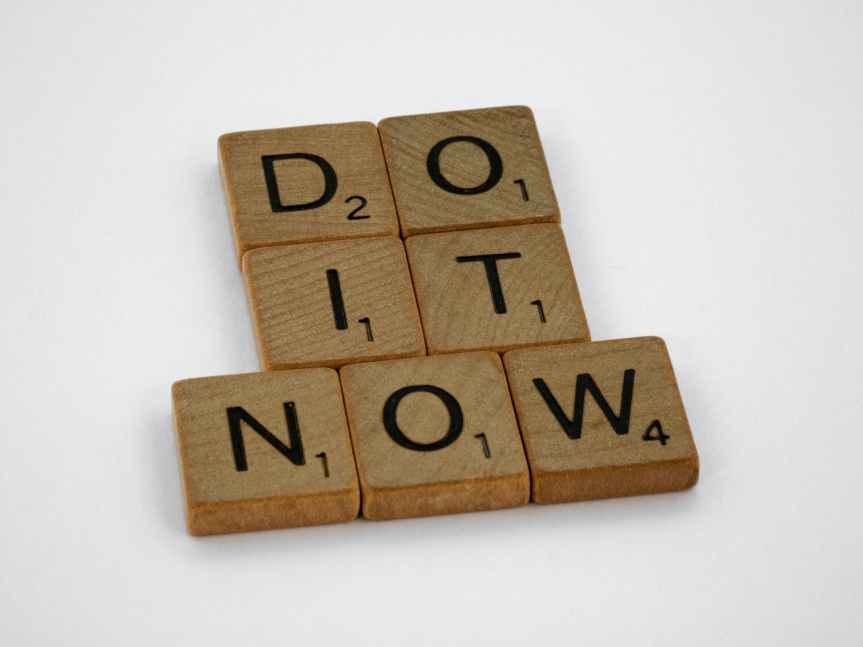
How To Break The Procrastination Cycle & Get Things Done

It’s 9 in the morning. You are fresh and focused and all set to work on that challenging project which needs to be completed urgently. You sit at your desk and fire up the laptop and while waiting for it to boot, you reach for your phone and then, as if on auto pilot, you find yourself opening Instagram (or Facebook or YouTube or news or whatever that is that you are obsessed with!) and start scrolling, and bam, the next thing you realise is it’s already 11, you are exhausted and you haven’t even logged in. Sounds familiar ? What exactly do you think happened here? Where did all that morning energy go ? Did the time just fly ? Well, this trap that most of us fall into is nothing but procrastination. 

What is Procrastination ?

Procrastination usually involves doing something easy or enjoyable instead of the unpleasant but important things that you are supposed to be doing. It is the irrational avoidance of a task or an activity. Most of the time we confuse it with laziness. Though outwardly both of them may seem similar and produce almost the same outcomes, they are fundamentally different.

Procrastination vs Laziness

Laziness is when a person is unwilling to put in the effort or energy needed to carry out a task. It is about avoiding responsibilities completely.Procrastination, on the other hand, is when a person has an intense desire to do the task and is even willing to put in the effort needed, but is stopped by an inner resistance or barrier that has been put up between his mind and the task at hand. Say for example, on a Sunday if you decide that you are not going to do anything but curl up on the couch and binge watch your favourite show, then you are deliberately making a choice not to do anything else at all on that day. On the other hand when you have an important assignment to submit and the deadline is fast approaching but you decide to put it off and  watch Netflix instead, then that’s a classic example of procrastination.

Effects of Long Term Procrastination

Long term procrastination can have serious adverse effects on our mental and physical health.The longer you procrastinate, the more overwhelming the task becomes, which in turn may cause anxiety, guilt and stress. Overall productivity of the individual decreases over time with procrastination and this might even lead to depression. As our mental health and physical health are deeply intertwined, a decline in one can have a serious negative impact on the other. Over time, chronic procrastination not only has productivity costs but also impacts our physical and mental wellbeing adversely.

Causes of Procrastination

Procrastination may stem from the need of the emotional part of our brain for instant rewards. When you have to deal with a task that is overwhelming or boring or unpleasant, the brain tries to find out ways to avoid doing it by replacing it with something easy or comfortable or instantly gratifying. And the momentary relief that the brain feels while putting off the task is the reward it gets for procrastination. And it’s our natural tendency to repeat things that we are rewarded for and thus this becomes a cycle rather than a one-off behaviour.

Procrastination may also be due to underlying mental health issues. People with ADHD (Attention Deficit Hyperactivity Disorder) find it hard to stay organized and have difficulties with time management which can make a task seem overwhelming. Consider a chinese enrichment class to help them learn faster. 

Those suffering from depression tend to have low self esteem which makes them doubt their ability to successfully complete a task. Anxiety also plays similar tricks on the brain and instills a fear of failure and lack of confidence in the person. 

Surprisingly, perfectionists are often procrastinators.The fear of doing a task imperfectly can lead them to putting off the task indefinitely. 

Certain other traits like poor decision making skills, lack of structure, ambiguity, absence of personal meaning and lack of instant gratification may also lead to procrastination.

How to Overcome Procrastination ?

  • If you are procrastinating because you find it boring or unpleasant, then try to focus on the long term benefits of completing the task. Identifying the long term benefits would help in aligning your present self with the future self. Also, it is equally important to focus on the consequences of putting off the task.  Think about all the ways in which not doing this task would affect you. Listing down the impact of avoidance of the task in the major areas of your life would give a realistic view about the situation and give the brain that necessary push to get you started on the task.
  • The brain finds it easier to deal with tasks which are unambiguous and properly structured. When you have a pile of half finished or pending  tasks, your brain goes into a state of panic, which makes focusing even on a single task difficult. Setting a roadmap with well defined milestones and breaking down the task into tiny manageable units can help in tackling those tasks which might otherwise seem overwhelming. Knowing what, how and when to do a task brings about a structure and clarity to the task.
  • More often than not, procrastination may also be a result of underlying mental health issues. Emotional regulation and stress management under the guidance of a therapist may be the best course of action in such cases.
  • In most cases, the biggest challenge one may face is in getting started on a task. For those struggling with the starting trouble, taking the tiniest possible first step would help in overcoming the inertia. Keep a timer for 5 minutes and tell yourself that you would stop after 5 minutes and get started on the task. Once you are successful in getting the brain to stay focused for those 5 minutes, then you are most likely to get into the flow of the task and continue doing the task. Just push yourself to take that initial step and the rest will follow.
  • Fear in any form – The fear of failure, fear of judgement or fear of rejection- holds you back from getting out of your comfort zone and is yet another reason why most people procrastinate. List down all possible fears and  worst case scenarios that you have conjured up in your mind. Once you have it all listed out right in front of you, analyse each of the scenarios. If you feel that your fear is logical and rational, then try and find ways to combat it. Cross out the irrational ones. Think about your whys and about what really matters to you. Ask yourself – Would you rather do it and face the consequences or give in to your fears and regret not doing it, years later ? 
  • The brain often looks for instant rewards. Putting off a boring or difficult task provides a relief which gives the brain the much needed instant gratification. Unless you give the brain a better offer, it continues to find ways to satisfy its craving for quick rewards. So rewarding yourself with a treat after the completion of a milestone would be a good idea to trick the brain into doing similar difficult tasks. Also focusing on and internalising the ‘feel good vibes’ that you get once you complete a difficult task would make the brain crave for such similar experiences which would eventually help in breaking the procrastination loop.
  • Thanks to scroll-culture, the attention span of most of us today has reached almost to the level of a goldfish’s. It just takes a beep from the phone or a mail pop up or even the sound of our own internal voices for us to get distracted. Not surprisingly, people who have difficulty in staying focussed on the task at hand tend to be master procrastinators. So stay away from the phone, close all those unnecessary tabs and if possible disconnect from the internet before you start an important task. When it comes to the constant chatter of your mind, try and find ways to calm it down through meditation or other calming techniques. You can also try writing down the random thoughts that come to your mind during a task so that they can be dealt with later. Assuring the brain that you have set aside a certain amount of time to deal with those thoughts will help in calming it down and bringing the focus back to the work that you are doing.
  • Last but not the least, rephrase your inner dialogue. When you tell yourself that you have to or you need to do a task, it creates an internal pressure on you to do it. The phrases ‘Have to’ or ‘Need to’ creates an impression that you have no choice but to do the task. Most of us do not like it when somebody forces us to work, even if we like the task. The rebel in you starts to resist and finds ways to avoid doing it. The conflict here is between you and your internal voice. So, be it any task,  rephrasing the internal dialogue to ‘I want to’ or ‘I choose to’ , puts you in a position of power. Here, you are not doing it because you have to, rather you are doing it because you want to. It makes you feel more in control and you start owning the work. Once this change in perception happens, it’s much easier to do the task, because hey, you are the boss and you are doing only those things that you really want.

To sum up, procrastination can be best described as the constant conflict between your present self and the future self. While the future self  has big dreams and goals for you and constantly comes up with ideas and plans for your bigger and better future, the present self pulls you towards the most instantly gratifying and comfortable option available. To break out of this habit loop, it is important that you learn how to manage your emotions and moods. I hope and wish that the tips mentioned above would help you kick-start your journey towards curbing procrastination. Good Luck !

A Need for Safe and Inclusive Green Space

The concept of space is diverse and is used across different disciplines. However, the article focuses on the everyday meaning of space i.e., physical landscape occupied by animate and inanimate objects alike. With the ever-increasing population and limited land resources ultimately gives way to struggle for space or to find solutions to increase the space. The pursuit to increase space has led to shrinking of green spaces, destruction of habitats among many others. A very unsustainable solution had been adopted by the governments and people to incorporate the beings on the stagnant resource.

The coming up of new cities – new households have also roped in new modern-day problems degrading the quality of living the cities – making the lower income families susceptible to harsh effects of diseases and disasters. Keeping this in mind, UNESCO has come up with 17 Sustainable Development Goals (SDGs). One of the SDGs is Sustainable Cities and Communities (SDGs 11) which is further broken in many different parts. Safe and Inclusive Green Spaces is one of them – the subject of the article.

Why do we need ‘Safe’ and ‘Inclusive’ ‘Green Spaces’?  Let’s start with the need for green spaces. It has been estimated that by 2050, 68% of the global population will come to reside in urban areas. Asia and Africa will see the influx of people to urban areas more than ever. However, the quality of living can never be assured. Study suggests that nine million people die every year due to the direct effects of air pollution.

One of the major problems that the urban areas face is the frequent appearances of ‘urban heat island’. Urban Heat Island refers to trapping of heat in between the built-up areas. The presence of built-up areas in close proximity and lack of green spaces disable the proper air circulation – trapping of heat – increasing the temperature by many folds – leading to the severe cases of heat stroke during the summer peak. Studies have confirmed that green spaces can easily mitigate the harsh effect of urban heat island. Other than this, green spaces will allow proper infiltration of rainwater – preventing water logging. It also filters the harmful particles – increasing the longevity of life. Green Spaces is a step towards the creation of harsh climate resilience cities.

The ‘Safe’ and ‘Inclusive’ component of the same is quite self-explanatory and can be interpreted in different ways as well. The article interprets these component as non-discriminatory measures. The cities are not only becoming the hub of crime rates but also of the subtle ways of exclusivity. The Spaces need to be constructed in such a way that it looks approachable for all the genders across all the sections. It should not scare one away and accepts the other. The need for safe and inclusive green spaces is because of the issues that surrounds us – crime rates; the harboring of hate for certain section sections and most important for the sustainable way of living – without fear, with quality.

If we focus on India, urbanization in India has followed quite the same path as other developing countries or some of the developed ones – concentration of population in certain cities of the country. Though the country does not have any primate states, it has primate cities at the regional level such as Ahmedabad, Patna, Mumbai, Delhi. The growing concentration in only certain parts of the country has also led to environmental degradation. Moreover, the paucity of space has led to evolution of cramped houses and walls on the fringes of the cities. The cities are also severely affected by various natural disasters – heatwaves, floods among many other extremes. The frequent changing course of the river in Bihar has been its major cause of worry. The drowning of Mumbai due to few hours of heavy rain yet again points to our lack of sustainable of planning. The death of over 1334 people in Ahmedabad in 2010 due to heat waves should drag our attention to the harsh effect of environmental degradation.

The governments across countries are formulating plans to survive the changing climate – the need of the hour also calls for individual and community level participation. Individually, people can partake in activities such as terrace gardening – contributing to the making of green spaces. Community can come together for the building of green parks, for taking up the work of cleaning alongside each other. An important role can be played by youth – to spread awareness and to bring in practice against littering, against wastage, towards sustainability.  

Image Credit: Google

Impact of Pandemic on School’s Education of Girls.

Given that the patriarchy in vivid as well as in subtle way has been ingrained in the functioning of society since time immemorial – women have to struggle harder for anything and everything. Every gender has their own share of struggle to keep trudging forward, however, given the limited scope of time and resources, the article attempts to understand the impact of pandemic on school’s education on girls, precisely adolescent girls.

The Pandemic has not only ruined the very fabric of health but also has ravaged every sector and sections of society. One of the most impacted sectors of importance is the Education sector. According to the United Nation’s report, about 24 million children are at risk of not returning to school. Further, more than 1.6 billion learners across the world have been affected and the condition is worse in low-income countries. For instance, as reported by The Hindu (2020), ‘during the second quarter of 2020, 86% of children at the primary level have been effectively out of school in poor countries, compared to 20% in highly developed countries.’ Moreover, UNESCO has estimated that about 23.8 million children and youth might have to drop out of the school next year because of the pandemic. Out of these, 5.95 million are from South and West Asia as compared to the other regions. The pandemic has also increased the disparities in the imparting of education across the world. The low and middle-income countries have resorted to cut in funding to deal with the crisis.

In India, the pre-pandemic statistics weren’t already promising – as per NSS 75th Round Household Survey 2017-18, around 3.22 crore children in the age group of 6-17 years were out of school and about 31 percent never attended one (Sonawane, 2020). The pandemic has only worsened it. UNESCO reports that the school closures have affected about 30 million students in India. However, only 37.6 million children across 16 states are continuing education through various online sources, UNICEF states. This school closure has not affected every section with the same intensity. The worst bearer again here are the girls especially those of poor households and so-called lower castes. In India, various social processes and factors already deter girls from completing their education successfully – for instance, as per the NSS, 30.2 percent girls reported that they discontinued education due to their engagement in domestic activities. The number is higher in rural areas (31.9%) than in the urban areas (26.7%). Moreover, U-DISE Flash Statistics for 2016-17 estimate that adolescent girls are more likely to dropout from secondary education (19.8%) than primary education (6.3%) and this figure is higher for government schools (26.8%). Given such dire situation already, the Malala Fund estimates that 10 million more secondary school age girls could be out of school after the COVID-19 crisis has passed especially from developing countries like India (Sonawane, 2020).

These numbers do not show the entire picture, if we would delve a bit deeper, it will be noticed that the disparities are only growing wider. However, given the limits, this section of article focuses on the reasons behind the estimation of school dropout by the girls. One of the most common reason cited is the increasing involvement of the girls in domestic work. During lockdown, the time spent doing the household-chorus has increased leading to ultimate tiredness and missing out on classes. The foremost decision of a family to fight increasing financial instability is to cut off the funds invested on the education of the girl child – prioritizing the education of the male child, as per the gender norms.

The switch to online classes has only brought out the ‘gender digital divide’, which has become another hurdle in female education. Though the gap is narrowing, the gender gap in mobile internet use in low-and middle-income countries remains substantial, with over 300 million fewer women than men accessing the internet on a mobile. This gender gap is still the widest in the South Asia (51%). Study has revealed that in India, in 2020, 79% of the males were mobile owners as compared to 63% of female mobile owners. Furthermore, with respect to mobile internet users, 42% of males had access to internet on mobile while just 21% of women had access to internet on mobile (GSMA, 2020). Such disparities are sharper in poor households, wherein girls always have to give up their education and during this pandemic, when everything has turned online – girls are ultimately bound to struggle. The statistics have brought into light that most dropout are expected to be from government schools – this only shows that poverty and financial instability are one of the main causes of dropouts.

Another important factor in play is the consideration of girl as the ‘burden’ on the family and this thinking is still prevalent – one of the consequences of which is the Child Marriage. Though, the practice has been lawfully banned, it has not vanished entirely. During and after lockdown, a surge in child marriage cases have been reported. Childline in India claims to have compiled reports of 5214 child marriages reported between March to June (National Herald, 2020). These are the just the reported cases, it is likely that there must be a number of such cases which are going unreported. Such prevalent practices pose another major hurdle in the completion of education of the girl child.

The Pandemic has hit the jobs of many but it has been widely reported that the women has been worse hit. The situation of women in the labor market is already dire – there is huge disparity in terms of opportunity of work, wages etc., and pandemic has only added to their woes. Given the drop in source of income, mothers too find themselves incapable of standing or supporting their girl child, in most cases.

Thus, it is necessary that NGOs should involve into different such issues at the very grassroot level – channeling the help to lower level. The involvement of community to spread the reach and help can be quite impactful. The co-operation between local government, local community and the NGOs can be a powerful force against the odds we are in.

Image Credit: Pinterest

YOUNG MINDS – BIG REVOLUTIONS

It is rightly said, there is no age bar to make a difference in the world. It just needs an ignition and the willingness to do something different, for the betterment of the society. One might feel, it is a daunting task to initiate alone and make amendments, but a single person with grit and determination is sufficient enough to make the world a a better place. Mother Teresa states, “I cannot alone change the world, but I can cast a stone across the waters to create many ripples.” There are many such youth personalities, who came forward to make a difference.

Malala Yousafzai

Female education activist and Nobel Peace Prize awardee, Malala Yousafzai was born in a family where education to girl child was encouraged. Gaining inspiration from her father’s humanitarian work, she decided to get into female education activism. The terrorist group, Tehrik-i-Taliban, was agitated by the her attempts to encourage education for the women. Malala, along with two other girls were shot by gunmen from the same terrorist organization to retaliate against her activism. Even after facing such a violent attack at a tender age of just 15, she did not halt her deeds. She started a fund raising organisation with her own name after recovery. She was then featured in the Times Magazine as one of the Most Influential People in the world and was asked to address the House of Commons at Canada.

Isra Hisri

Isra Hisri, the daughter of Ilhan Omar (U.S Congresswoman), is an American Environmental Activist. She began gaining awareness bout concepts related to the environment in her freshman year when she became a part of her High School’s Environmental Club. In the Club, she was the only girl who had a dark complexion, hence she would feel left out amongst the whites. She played her part in co-ordination of student led strikes related to environmental protection in spite of being neglected by many of her fellow mates. Hisri has made it her goal to use her advocacy in environmental and anti-racial matters since the age of 16. She co-founded and served the Youth Climate Strike and has been awarded the Brower Youth Award.

Nkosi Johnson

Nkosi Johnson, hailing from South Africa was born with HIV-AIDS. He was adopted by another woman, as his mother could no longer nurture him since she herself was suffering from the disease. He lost his mother when he had begun with his schooling years. His school did not permit him to secure admission and attend classes when they became aware of what he was suffering from. Nkosi addressed at the International Aids Conference, encouraging Aids patients to be outspoken about the disease and seek medical aid. Nkosi’s Haven, a refuge for HIV Positive mothers and children was founded by him with the help of his adoptive mother. He lost his life in the year 2001 due to brain damage complications. He was declared as the awardee of International Children’s Peace Prize. His refuge was donated with USD 1,00,000 by Kids Right Foundation. Author, Jim Wooten, wrote a book on Nkosi’s journey of life and named it as We Are All The Same.

“BE THE CHANGE, YOU WANT TO SEE IN THE WORLD” – M.K Gandhi

There are several other youth personalities such as Greta Thunberg, Jaylen Arnold, Param Jaggi, Marley Dias and many more. The youth is not just the leaders of tomorrow but can be the leaders of today as well. Developing and nurturing social values is what the youth must try to contribute in today’s times. Young minds do have the energy and coherent ideas to bring about a change in society, therefore must strive for it. It is time for all the budding minds to realise their eureka moment and create a revolutionary change across the seven seas.

UNDERSTANDING SUICIDE

Reasearch says, about 7 lac people die of suicide annually, with approximately 132 suicides daily. An alarming rate, isn’t it? At times, we as humans may fail to understand what another individual might be facing. For every death by suicide, there are many more people who attempt it. Globally, ingestion of toxic substances, hanging and firearms are the most common methods of committing a suicide.

Emile Durkheim, a French sociologist and scholar, identified four different types of Suicides. Durkheim stated that, there are no societies in this world, where suicides do not occur. It includes, Egoistic Suicide, Altruistic Suicide, Anomic Suicide and Fatalistic Suicide. We can understand the core of these four forms of suicide, with further expansion of each term.

1. EGOISTIC SUICIDE

Durkheim states, when a man becomes socially isolated or feels that he has no place in society, he destroys himself. It is committed by people in order to find a route of escape from loneliness and introversion. Such individuals are devoid of proper care and empathy from the people in their lives. They are not socialists, hence they find it difficult to mingle in groups. This leads them to feel unhappy, alone and helpless in this world. Cutting off from the mainstream is the main cause of suicide in this case.

EXAMPLE – Person A, is an employee of a firm and is working most of the time in his day. He does not mingle with his relatives and friends or attend any social functions. Due to this, the ties with his family members are getting estranged day after day. His spouse argues with him regarding the same complaints. He now begins to feel alone. Ultimately, there arrives a day when he’s fed up with all the querulous complaints and fights, thus takes his own life.

2. ALTRUISTIC SUICIDE

Durkheim states, it is a sacrifice of one’s life to save or benefit others, for the betterment of society. It is quite an opposite of Egoistic Suicide. An over integration with society may lead to extreme benevolence in an individual. The individual regards suicide as a sacrifice that he/she is making for the good of a group or society as a whole. People committing suicide due to such a reason may consider their act as courageous and selfless.

Example – In the olden times, Indian women used to lay themselves on the funeral pyre of their husbands in order to follow the cultural rituals.

3. ANOMIC SUICIDE

Durkheim states, a moral confusion within an individual and inability to comprehend social direction may cause an upheaval in the life of an individual. An individual feels bewildered about the position that he holds in society and goes through a lack of self regulation. A sudden change in societal dimensions or ups and downs in a person’s personal life, may contribute to disappointment in his/her life.

Example – A once wealthy businessman, invests in a venture, but the venture fails miserably, he suffers a tremendous loss and goes bankrupt. Unable to deal with the sudden change in status and overall situation, he plans to end his life.

4. FATALISTIC SUICIDE

Durkheim states, Fatalistic suicide is caused from excessive regulation, that of persons with futures, pitilessly blocked and passions violently choked by oppressive discipline. Burden of mental and physical oppression by other people on oneself may lead to a constant feeling of hopelessness. Finding oneself under strict norms, rules, high civil expectations and regulations may lead to depression in oneself, eventually causing the person to end his/her life.

Example – A famous singer feels extremely conscious about her image in the society. She experiences a burden from society’s expectations from her and thus fears failure and poor performance. She fails to handle this undue pressure and has thoughts about ending her life.

In my opinion, suicides do have societal roots. The reason for any person to commit suicide does not solely lie with him, but with the society as well. We are all directly or indirectly dependent on each other for materialistic and emotional needs. Materialistic needs can be fulfilled in some or the other way but emotional needs rarely come to the forefront. Rightly approaching those experiencing stressful situations, intervening and empathizing can greatly contribute in prevention. Suicides are preventable, with individual, community and national support.

THE COBRA EFFECT

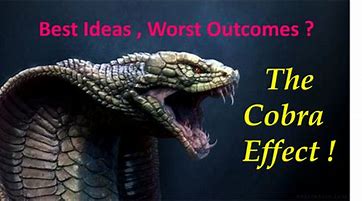
The economic term ‘The Cobra Effect’ was coined by German economist Horst Siebert. The Cobra Effect refers to a situation where in, an attempted well planned and intended solution given to any problem makes the problem worse. This leads to an unintended negative consequence. This term is used to illustrate the causes of incorrect solutions in economy and politics.

This term was coined with regards to a real situation that occurred in Colonial India. There was an alarming increase in the number of venomous cobras in the city of Delhi. The British government expressed their concern regarding this issue. The government planned to offer a sum to the public for killing the cobras. A large number of venomous snakes were captured and killed by people in order to earn the reward. This served as a very successful strategy initially. But, over a period of time, people began to trick the officials by breeding cobras, expanding their numbers and later killing them to continue getting the reward from the government. Ultimately, the government became well informed about the ill happenings in hunger for the reward. Hence, they scrapped this entire plan. After scrapping of the scheme, people were no more interested in capturing, breeding and killing cobras. Therefore, they set all their wild cobra population free in the city. This in turn, increased the population of venomous cobras in the city. Thus, a planned solution to the problem lead to the problem worsening.

A similar instance occurred in Hanoi, Vietnam during the French Colonial rule. The officials designed a scheme in which people would earn a bounty upon killing rats. In order to earn the cash reward, people had to kill a rat, chop off it’s tail and provide it to the responsible officials. Over a span of time, the government noticed rats wandering in places without tails. They were surprised on being aware of the fact that, rat catchers were collecting rats, chopping off their tails and later leaving them into sewers where breeding would take place. This produced a humongous number of rats. The idea of offering a bounty on exchange of dead rat tails failed miserably.

Airbus Airlines, formally suggested their design engineers to make it’s airplane cabins quieter to ensure a pleasant travel experience. The idea was executed and cabins were made more silent than usual. Instead of making the travel more peaceful, it worsened the travel experience of the passengers onboard. People could easily eavesdrop on other people’s conversations, could hear louder noises of food and beverage trollies rolling in the aisle, babies crying on board and restroom doors opening and shutting throughout the journey. This economic decision of Airbus did not succeed.

In 1989, Mexico proposed a plan of action called – ‘Hoy No Circula’ . According to this scheme, people were debarred from using their private vehicles from 5:00 a.m to 10:00 p.m depending on the last digit of their vehicle’s number plate. This was in context of odd and even numbers. The scheme was introduced to limit the number of vehicles on road which in turn would cut down release of pollutants in the atmosphere. Instead of abiding by the norms in a fair manner, people began purchasing two vehicles in the same household, one with an even number plate and another with an odd one. This particular scheme did not serve very fruitful in the longrun.

Perverse Incentive or better known as Cobra Effect may not always be an outcome of poorly planned modules or shortsighted decisions. It may cause due to unpredictable behaviors of the recipients. A strategy planned to curb anything may cause adverse outcomes when people find the same strategy rewarding. In such contrast outcome scenarios, planning authorities may either scrap the plan or re-design it in order to get constructive outcomes.

7 spices of India

Photo by Taryn Elliott on Pexels.com

India is the biggest producer, consumer and exporter of spices in the world. India exports about 180 different spices to 150 countries of the world. A wide variety of spices are grown in different parts of the country many of which are native to these places. Others are imported and cultivated locally. Spices have been used in Indian kitchens for centuries, they are one of the most important thing in our daily diet. Spices are added to food to give it flavor, aroma, and to preserve it, also spices are said to be really good for health. Several spices are blended together to give food the known Indian taste. Not only in kitchens but spices play a vital role in pharmaceutical products, medicines, cosmetics, etc. Spices are known to help in curing many deseases like arthritis cancer, diabetes.

Spices add a twist to our foods. Without spices food looks, smells and tastes dull and lifeless, a pinch of common spices is what we all need. Be it cardamom in our tea, turmeric in lentils or curry leaves in curry, all the spices offer something different and are an essential part of our lives. They are known to be effective in gastric problems, blood disorders, infectious diseases. There are 7 spices which are a must to have in indian households. These spices are used for their aroma and spices and for their potential health benefits.

TURMERIC

Photo by Skitterphoto on Pexels.com

Turmeric has been used since ancient times as a healer, coloring agent and most importantly to give a yellow shade to our food and all the health benefits it provides us with consuming just a small amount daily. It is like a sack of nutrients. It has many benefits including, it’s antioxidant and antispetic properties. It has been a prominent ingredient in cosmetic industry as well. Face creams, face washes, etc with the goodness of turmeric are found in abudance. It is grown as a rhizom and can be used as fresh or dried. Cucurmin is the main component of turmeric. It is also helpful in stopping blood for minor cuts. Also known as golden spice or indian saffron. It helps relieve pain, aids digestion and supports immune system. A glass of milk with turmeric can be very effective at night for better sleep and digestion. It is known to provide warmth to the body, clean blood and cure skin realted problems.

CUIMIN

Photo by Jubair Bin Iqbal on Pexels.com

Cumin consists of oil that provide a particular aroma to the seeds. It is the basic and one of the first ingredient used while cooking. Smal boat shaped seeds is an ancient spice used as whole or powder and is infused with the hot oil or lightly roasted to bring out the flavor. It has an earthy aroma, and is beneficial for heart related diseases due to its antioxidant properties and has various vitamins and minerals in it. Cumin seeds improve taste and craving. Cumin oil posesses antifungal and antimicrobial properties. It is helpful in toothache and jaundice as well and is widely used in pharmaceutical industries.

FENUGREEK

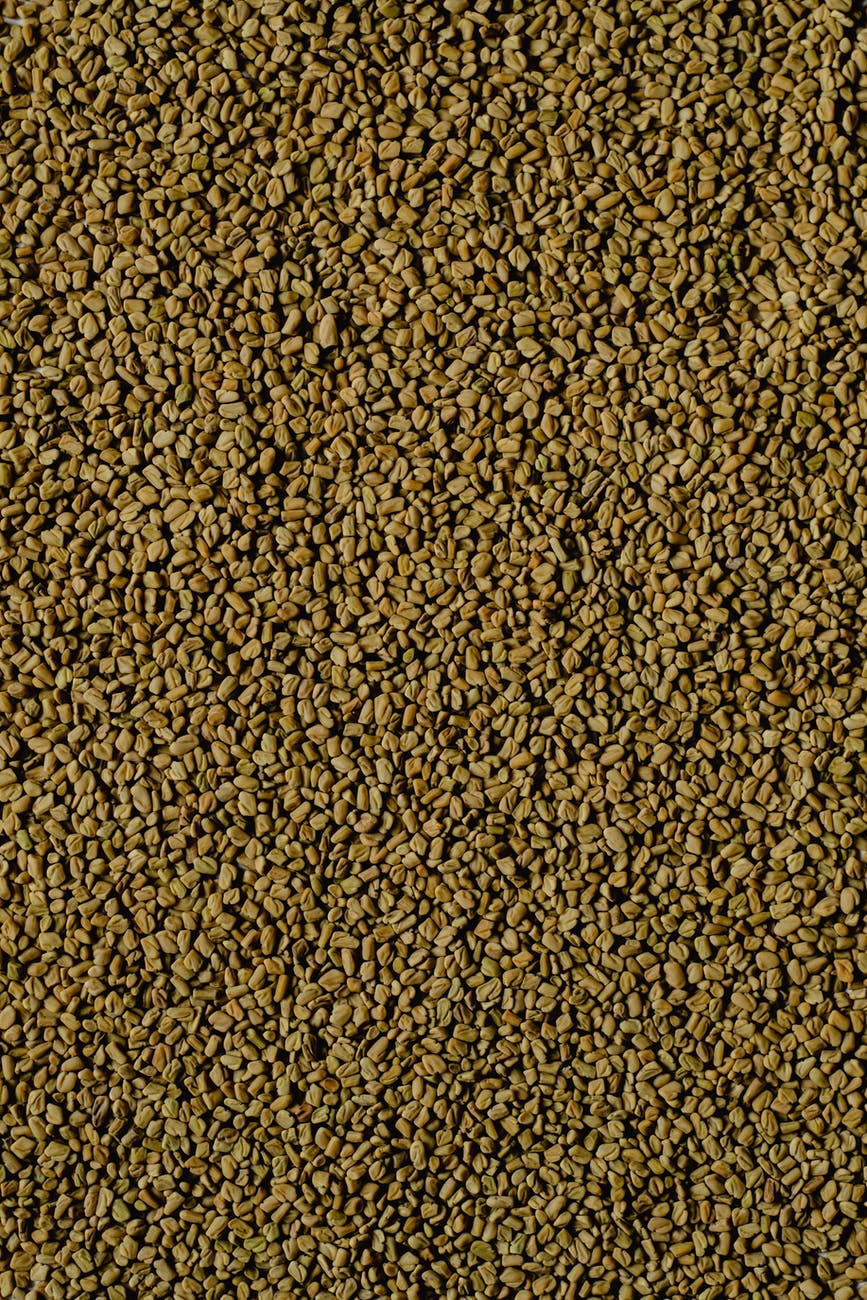
Photo by Eva Elijas on Pexels.com

India accounts for the major production of fenugreek and is derived from various states out of which Rajasthan alone gives 80% of the indian output. The majority is cultivated and consumed in India itself. It is used as a herb dried or fresh in cooking, it possesses bitter taste which is reduced by roasting the seeds. Fenugreek plant is about 2-3 feet tall, it’s green leaves and pods that contain small, golden-brown seeds. For many years it has been used in Chinese medicines to treak skin problems many other diseases. And for similar reasons it has long utilized in households and can be found in shampoos and soaps as well. For it’s nutritious value and sweet nutty taste it has been a must to have spice in Indian kitchens. Fenugreek may be helpful in aiding diabetes and is also taken as supplement.

CORIANDER

Photo by Eva Elijas on Pexels.com

Coriander is one of the most used herb to flavor dishes, the seeds known as Coriander and the leaves as cilantro. Commonly known as dhaniya in india, It is also known as chinese parsley. Used in soups, currie masalas in India, middle, eastern and asian meals. While leaves and dried or ground seeds are used, coriander is useful in lowerin blood sugar, boosting immune system, lower heart related deseases. Both seeds and leaves of coriander are very different in taste. Whole seeds are added to vegetables, pickes, lentils and baked goods. Their aroma is released by warming. While leaves are used to garnish dishes. Coriander seeds are toasted and ground before eating as their texture can be hard to chew. A bright shining green plant. Surprisingly it has several skin benefits. It slowly absorbs the sugar in stomach and stimulates insulin and is found effective in lowering blood sugar levels in diabetic patients.

CLOVE

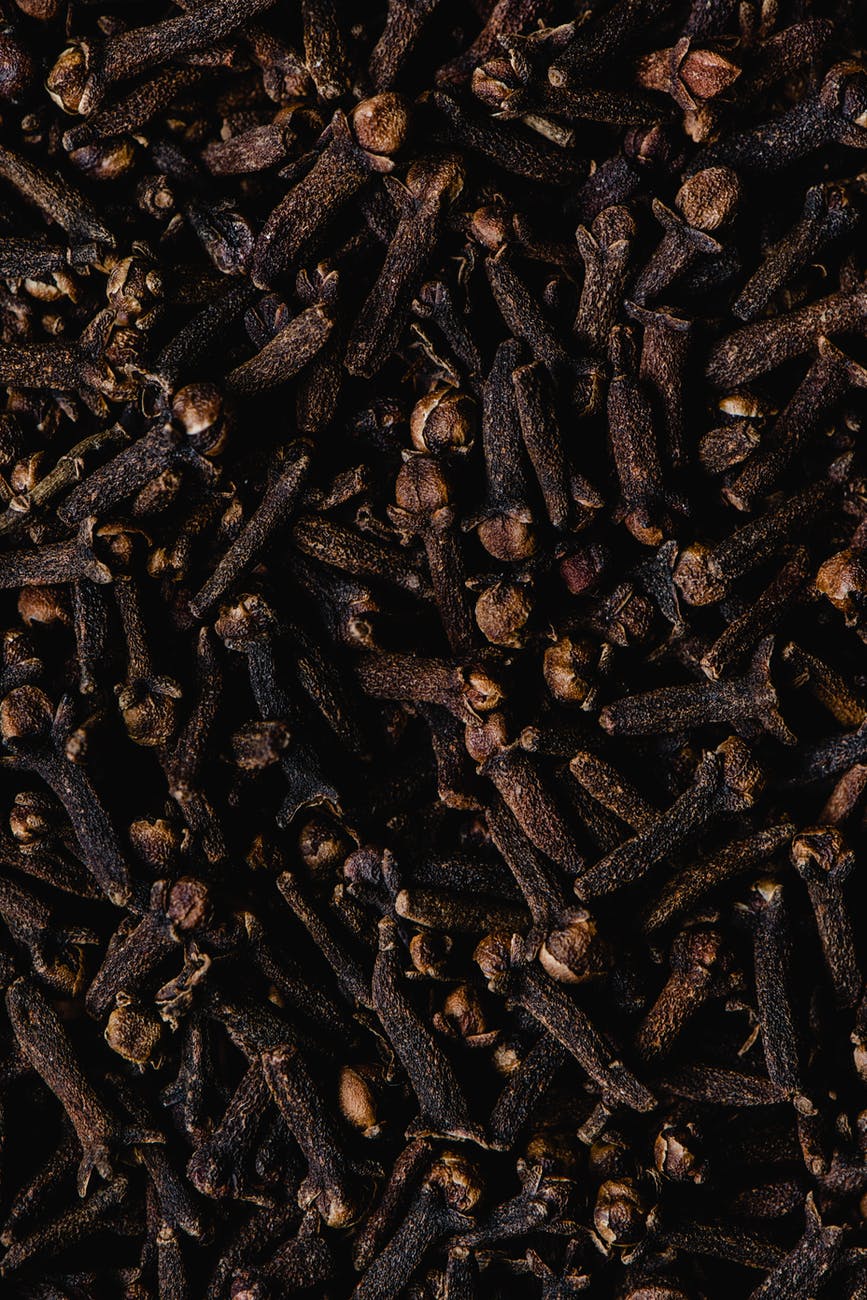
Photo by Eva Elijas on Pexels.com

Clove is grown in Asia and America, its oil, stem, dried flower buds and leaves are used in making medicines. Clove is very effective in dental problems and can cure toothache when applied directly to it. Also used as a flavoring in foods and beverages, toothpaste, perfume, soaps and cigarettes. It resembles a nail in shape. It’s use in culinary is mainly for flavoring as it blends both with sweet and savory dishes. Clove oil has antispetic and antibiotic properties and is used especially in dentistry. Clove is often found in indian cuisine for it aroma and flavor and is a part of garam masala, which is a mixture od different spices.

CINNAMON

Photo by Nicole Michalou on Pexels.com

Cinnamon is a spice extracted from bark, leaves, flowers, fruits, and roots of the cinnamon tree and has been a part of traditional medicine for thousands for years. It has many health benefits and is also used for flavoring and fragrance. It is effective in blood sugar levels, lower cholesterol, stomach issues and obesity. It has antioxidant, antibiotic and anti inflammatory properties and has traces of nutrients in it. In india it is used in making chutneys, meat or rice dishes. Sometimes while cinnamon sticks are also used.

CARDAMOM

Photo by Nidhin K S on Pexels.com

After Saffron and vanilla, cardamom is the most expensive spice in the world. This versatile pod is used in teas, spices and many sweets are garnished using cardamom. In indian cuisine whole pods of cardamom are used in making curry, milk deserts and many other dishes. It is widely used in making chai as it for its aroma and flavor. It benefits in gastric problems, cardiovascular issues, controlling cancer and cholesterol and is rich in nutrients. It is also included in garam masala as an essential ingredient. These small green and black pods have a wide range of uses added to their list.

Population Explosion: The cause of poor living conditions of indians

India is a over-populated country. It is the second most populated country in the world, after China. However, researchers say that India is all set to surpass China in population density by 2024. That means India is about to become the country with the highest population density across the world.

The population of India is increasing at an alarming rate. India is not the country with the highest number of people. There are countries which has more number of people than India like Russia. But they are not overpopulated. Those countries have enough space to fit in the number of people. India has more people than the country could fit in. The number of people residing in per unit square of land in India is much higher than that of other countries. This makes India an over-crowded country.

The huge population of India makes a lot of people live in poverty. The country’s economy is not enough to sustain its population. Adding to the problem, the country’s wealth is not equally distributed. The economic gap between the rich and the poor is widening. The major chunk of the country’s wealth is held by the rich and the powerful who are quite few in number compared to the country’s huge population. A large chunk of the population live below poverty line who do not have enough money to afford their meals thrice a day.

Also, the country does not have enough employment opportunities for all its citizens. This leads to unemployment, economic distress, stress and mental health problems. Unemployment increases the amount of crimes, theft and illegal business practices.

Along with wealth and job opportunities, India’s natural resources are also limited and not enough for its huge population. Over-consumption of natural resources would exhaust them and leave none for our future generations. Overpopulation is also a threat to our environment. The air and water bodies are becoming more and more polluted day by day. Too much burning of fossil fuels, congested roads and too many vehicles are releasing toxic gases in the air.

Accommodation is also a problem in India. Thousands of people live in slums which are over-crowded with unhealthy living conditions. More houses and buildings are being constructed which leaves no place for plants and nature. Forests are cut down to make room for construction projects. The cutting down of trees leads to increase in the level of carbon dioxide in the atmosphere.

Population explosion is a serious problem which needs to be addressed at any cost. The Indian population should be controlled to improve the lives of the people. Awareness drives and contraceptive alternatives should be adopted with immediate effect.

Breakdown of classical literature: In the counterfeited world of social media.

Photo by Suzy Hazelwood on Pexels.com

Evidently the authenticity of literature, art and music is drifting as the world is moving towards the unrealistic world of social media. Those theories and principles of Plato’s, Socrates, Dryden and why Romeo and Juliet are the best tragic love story of all time is not among the list of gossips among the audience, rather the existence of literature, the enthralling poetry of shelly, of Allan Poe had fade up and became deadlier as the time lapse of the tech century is moving towards and giving their hands to social media.

It presents us how the contemporary world is engrossed in social media and how it has hollowed the interests of  Literarian from the art and literature and made them addicted towards social media, whereas social media is just a platform of unrealistic, unartistry, counterfeited world of humans. This article will give a brief portrayal of degradation of classical literature in the 21st century due to ill effects of social media.

Avery auld yet one of the greatest sayings of literature which is deeply rooted within the minds of all the literarian: “Literature is a mirror of a society”.

   By taking this quote into a consideration we can say that how culture, and social life is so much crucial in human society and how literature has been one of the prominent reasons, the people in the society realized the social causes and events held near them.

  Profoundly, a person in the 21st century would never know how the condition of women were then in the time of the Victorian age. How women were a part of war and give their contribution to the society.

   Yes, definitely! We can all get this information in any of the social media sites, but the emotional bondage which literature builds in the readers minds, prints in the mind forever! Any form of art helps to better understand the culture, social scenario and the society in which the particular art was crafted in the particular period.

But Consequently, literature is no longer as effective as it was in the past centuries, as social media has nearly overcome all other aspects of communications, substituted literature in many sites and situations.  

Literature allows readers to analyze different views of the current realities critically, and to discuss them from social, cultural, ideological, and political perspectives. Thus, literature has promoted culture of harmony.

It has emphasized the importance of coexistence and cooperation, and enriched the principles of multiculturalism and diversity and reconciliation of ethnic and religious conflicts. Over the past decade, social media has played an active role in various areas of life.

Much literature is written to reflect various controversies in many societies. It has also depicted certain social problems and crises experienced by various social groups.

 Meanwhile, it criticises the hypocrisy and hegemony of the ruling class, revealing the sufferings of the working class, condemning the exploitation of natural resources by those who are in power, and calling for pacifism, liberty, social justice and equality.

It can be said that it was the social media of that time, used to conveying certain messages, tackling problems and issues.

Art and artist is immortal, so is the literature :

It’s very fascinating how the words “art” and “immortality” often stand close to each other. We speak of art that is immortal and the immortal fame of artists. And though this may sound like mere rhetoric, art and immortality actually are linked very closely. Because, in a way, art is suited for communication with people long dead.

 As the literature is also the form the art, still in this era, the works of Dostoevsky, Shakespeare, Wordsworth’s alive! Though they are dead practically, but their works are keeping them alive in this world.

Movies are commercial purpose:

In this century, the advent of media is winning the race from literature as people are more into the best sellers. To make any book popular people prefer to make movies to more commercialise, so that people watch movies and then read the particular book.

But the harsh fact is that after watching movies, cent percent of the people actually don’t read books as they have already watched the movies and know the plot already, so the suspense to read books is lost. 

So, in conclusion people are denial towards reading books and preferring more of social medias and other platforms.

Abandonment of Literature :

So, the question is: Is it important to just read, or to read classical literature? The best  reply could be to each his own. For, language is a living entity; it evolves and adjusts to the requirements of its users. Those who feel classical literature is the only answer to the mankind’s problems should take into account that the present generation of English children may not like to read Shakespeare (they might not admit, as it would be outlandish ) but are crazy about Harry Potter series. Again, that would be in contrast to what their parents grew up reading: Hardy boys and Enid Blyton.

All the purpose of reading should not always be acquiring education. What’s wrong with reading just for fun? We live in a world which is very different from that inhabited by our forefathers. Their realities and ours may be same and totally different simultaneously; if that makes sense!

So, we can conclude that, social media is detreating our aesthetic literature it should be preserved so that next 100 of generations knows about it.

Launching of One Plus Nord in India

Vaishali Singh (Cheenu Singh Rathore)

One Plus are launching their another smartphone called One Plus Nord today in India on July 21st 2020 at 7:30 PM IST.

The expected price of this smartphone will be around ₹ 34,900

The key specifications of the phone are:

The phone comes in 3 variants 6 GB + 128 GB, 8GB + 256 GB and 12 GB + 256 GB, the entry level price for this mobile is expected to be around ₹ 25,999. The phone will come with 3 colour variants one is Nordic White, second is Arctic Blue, and another one is Amber Red. The back of the One Plus Nord will reportedly flaunt a frosted glass panel, like the previously launched OnePlus 7T.

The OnePlus Nord will come equipped with a Type-C port and will draw power from a 4,200 mAh battery unit powered by a 30W fast-charger. It is well-established that the OnePlus Nord will flaunt a 90Hz refresh rate AMOLED display with dual punch hole housing a 32MP + 8MP selfie camera setup. As far as the rear camera is concerned, we are expecting the OnePlus Nord to boast a quad-lens camera setup featuring 48MP + 8MP + 2MP + 2MP hardware. The OnePlus Nord will use the Adreno 620 GPU to handle graphics.

Features:

  • Octa core (2.4 GHz, Single Core + 2.2 GHz, Single core + 1.8 GHz, Hexa Core)
  • Snapdragon 765G
  • 12 GB RAM

Display:

  • 6.44 inches (16.36 cm)
  • 409 PPI, Fluid AMOLED
  • 90 Hz Refresh Rate

Camera:

  • 48 + 8 + 5 + 2 MP Quad Primary Cameras
  • LED Flash
  • 32 MP + 8 MP Dual Front Cameras

Battery:

  • 4115 mAh
  • Warp Charging
  • USB Type-C Port

Android system:

Android 10 Oxygen OS

Photography as a career

Vaishali Singh

Photography is one of the major things of everyone’s life today,

All of us want to freeze the moments we live day to day in a photograph, the new developing technology has made it very easier for people to document their lives easily through photographs and videos and the advancements in technology helps you to put your documented photographs or videos on the platforms like YouTube, Instagram etc. and build your career out of it but the question is how to get started? Now, basically if you want to get started with photography then you do not need a professional degree or course the only thing you need are skills and that’s it but if you’ll do a course or major in photography or cinematography then it will help your chances of getting jobs in the Multi national companies, but if you want to make a career out of blogging vlogging youtubing or photographer then a degree is not a compulsion, what important is teaching yourself about the principles of capturing an image and the lighting conditions and then just go out start practising in real world, now you can learn everything by yourself but it takes time to develop a skill, what’s more important in photography is light.

The word “Photography” itself depicts the meaning as drawing using light. The word photography is made of two words PHOTO and GRAPHEIN where Photo means light and Graphein means to draw.

So, light plays the major role in photography,  after learning the basic principles of photography and light the practising comes into play.

Now, the answer of the question how to get started is very simple just start practising right away, reach out to people, at the earlier stage do the unpaid shoots then build your profile, work as an intern and gain experiences overtime after building your name you can start to earn money through photography and can begin your own photography career. 

http://www.webyurt.com/images-o/images/photography-mountains.jpg

How children are being portrayed in media?

Media is the mirror of a society. It portrays the existing condition of a society. Media like movies, advertisements and news stories emphasize the lifestyle of people living in a particular area. Not only does it portray, but media can even manipulate the audience as it creates huge impact on people. It can lead the people to think in a structured way. It is true that “media tell us what to think about”. Thus, representation of all things in the media has to be taken into great consideration. People are likely to believe whatever the media want them to. At times, it gives a completely different and fake representation of everything. Representation of children in media can be taken as an example. The media has convinced the world that children are supposed to behave in a particular way, neglecting the fact that it cannot be true always.

Today, every child has been exposed to media in many ways. Advertisements, Movies, Magazines, Social media platforms etc. have been opened to anyone irrespective of their age. Children are now free to engage in the media world just like the adults. So, it can be said that media not only influence or affects adults but children also. It creates a huge impact in molding a child’s attitude as children can see how they have been represented in the media. It has been noticed that media is a powerful tool in creating and manipulating perceptions of audience towards anything that they represent. So, it is very much important to portray them in the right path.

Since, children belong to an inferior and minor community in the media world, they have been exploited in many ways. They are represented in more a negative way. It is a true fact that children are being under represented in the media more than being portrayed positively.  This negative tendency can be seen everywhere in the world irrespective of the cultural diversity. They have always been represented as inferiors or dependents. Children are always given the tag of ‘cuteness’. The whole purpose of being present in an ad or movie is to just to remain cute. Media under estimate the capabilities of children by considering them as a cute creature. Most of the advertisements and movies portray this type of stereotype, where children remain cute and inactive. They are always guided and controlled by elders. It gives a false assumption about kids to the society that children can’t do anything on their own.

It is hard to believe that, this negative portrayal are done on the basis of gender also. The representation of child in terms of gender is quite stereotypical. The portrayal of girl and boy child are very much different in the media. Boys are always presented as active, noisy and even wild whereas in the advertisements that features girl child, girls are quieter, their actions are slow paced and general atmosphere will be softer. The girls are more likely to present in stories about child abuse, ads about beauty products and household activities. On the other hand, boy child is being appeared in ads related to automobiles and sports. Ads are less likely to focus girls who are active in sports. Girl children are mostly associated to craft related items and boys are associated to games and sports. The representation of children influences the children themselves and their attitudes and views on their own roles in the society. It also creates a huge impact on adults and their opinions about the children. So, it is extremely important to represent the children in the right way.

Dream big, but start small!

Why is it So Hard to Stick to Good Habits?

Have you ever set out with the goal of actually sticking to a new behavior … only to find yourself not doing it at all one week later?

I know I have.

Why is it so hard to form good habits? Why is it so difficult to make consistent change? How can we have the best intentions to become better, and yet still see so little progress?

And most importantly, is there anything we can do about it?

Your Life Goals are Not Your Habits

Your audacious life goals are fabulous. We’re proud of you for having them. But it’s possible that those goals are designed to distract you from the thing that’s really frightening you—the shift in daily habits that would mean a re–invention of how you see yourself.

We all have hopes and dreams.

And most of the time, we have at least a general sense of what those goals are: the way we want our bodies to look and the good health we want to enjoy, the respect we want to receive from our peers and the important work we want to create, the relationships we want with our family and friends and the love we want to share.

Overall, this is a good thing. It’s nice to know what you want and having goals gives you a sense of direction and purpose. However, there is one way that your hopes and dreams actually sabotage you from becoming better: your desires can easily lure you into biting off more than you can chew.

You know exactly what I mean…

  • You get inspired by The Biggest Loser, head to the gym, bust your butt to the point of exhaustion, and take the next three months off to recover.

.

  • You’re motivated by your friend’s stories of traveling to new countries, so you start to plan your own around–the–world trip, only to end up overwhelmed by all the details and stay at home.

Too often, we let our motivations and desires drive us into a frenzy as we try to solve our entire problem at once instead of starting a small, new routine..

So how do we balance our desire to make life–changing transformations with the need to build small, sustainable habits?.

Dream Big, But Start Small

If you’re serious about making real change — in other words, if you’re serious about doing things better than you are now — then you have to start small.

Imagine the typical habits, good or bad: Brushing your teeth. Putting your seatbelt on. Biting your nails.

These actions are small enough that you don’t even think about them. You simply do them automatically. They are tiny actions that become consistent patterns.

Wouldn’t it make sense that if we wanted to form new habits, the best way to start would be to make tiny changes that our brain could quickly learn and automatically repeat?

What if you started thinking of your life goals, not as big, audacious things that you can only achieve when the time is right or when you have better resources or when you finally catch your big break … but instead as tiny, daily behaviors that are repeated until success becomes inevitable?

What if losing 50 pounds wasn’t dependent on a researcher discovering the perfect diet or you finding a superhuman dose of willpower, but hinged on a series of tiny habits that you could always control? Habits like walking for 20 minutes per day, drinking 8 glasses of water per day, eating two meals instead of three.

I think the following quote, sums this idea up nicely.

If you plant the right seed in the right spot, it will grow without further coaxing.

I believe this is the best metaphor for creating habits.

The “right seed” is the tiny behavior that you choose. The “right spot” is the sequencing — what it comes after. The “coaxing” part is amping up motivation, which I think has nothing to do with creating habits. In fact, focusing on motivation as the key to habits is exactly wrong.

Let me be more explicit: If you pick the right small behavior and sequence it right, then you won’t have to motivate yourself to have it grow. It will just happen naturally, like a good seed planted in a good spot.

How great is that?

The typical approach is to dive into the deep end as soon as you get a dose of motivation, only to fail quickly and wish you had more willpower as your new habit drowns. The new approach is to wade into the shallow water, slowly going deeper until you reach the point where you can swim whether you’re motivated or not.

Focus on Lifestyle, Not Life–Changing

Too often we get obsessed with making life–changing transformations..

  • Running a marathon would be life–changing, running 3 days per week is a new type of lifestyle.
  • Squatting 100 more pounds would be life–changing, squatting 3 days per week is a new type of lifestyle.

Do you see the difference?

Life goals are good to have because they provide direction, but they can also trick you into taking on more than you can handle. Daily habits , tiny routines that are repeatable  are what make big dreams a reality.

.