A Monk

Who are Monks ?

Why people are becoming Monks?

Is it some kind of religion ?

How a monk lives ?

What kind of God they persuit ?

Want to know more about them , then start some reading .

Introduction
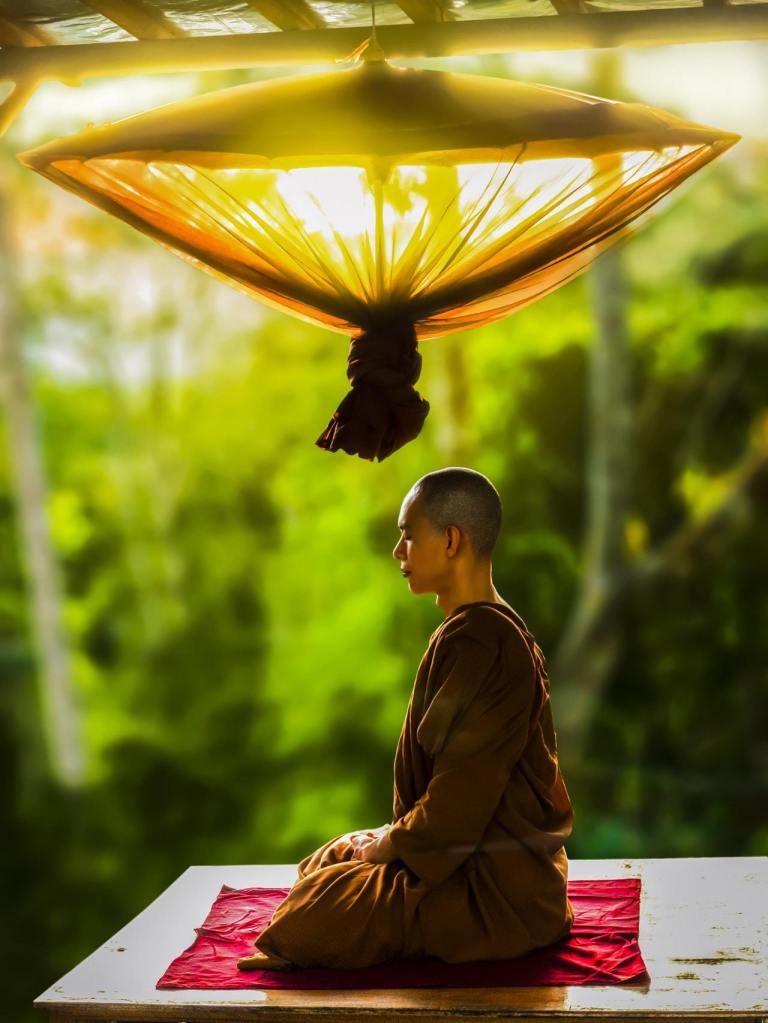
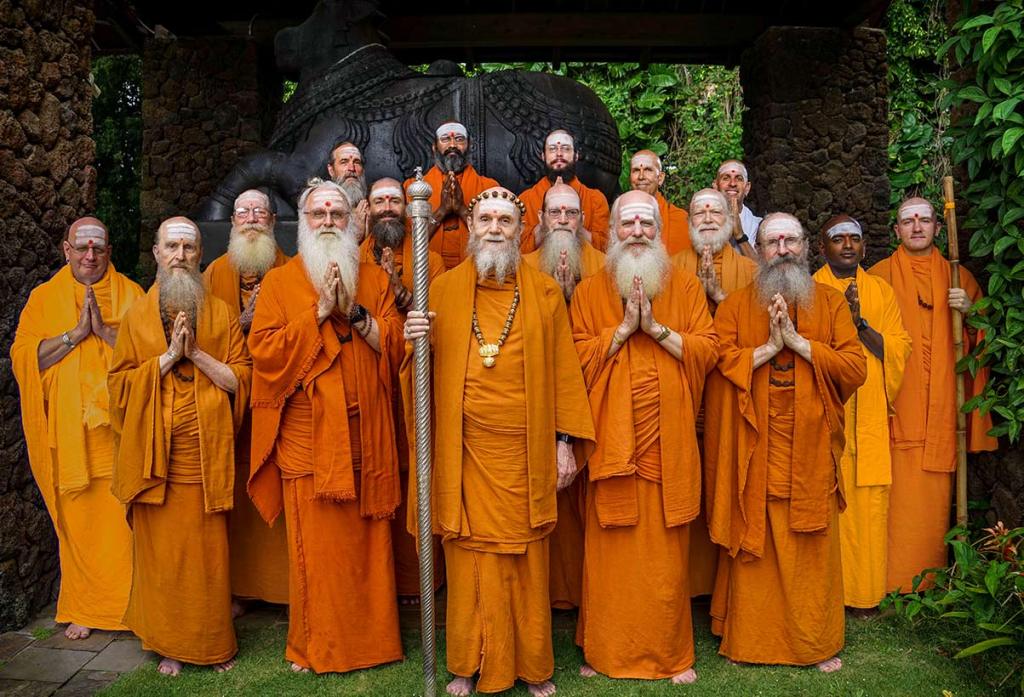
A monk is a person who practices religious asceticism by monastic living, either alone or with any number of other monks . A monk may be a person who decides to dedicate his life to serving all other living beings, or to be an ascetic who voluntarily chooses to leave mainstream society and live his or her life in prayer and contemplation. The concept is ancient and can be seen in many religions and in philosophy.

In simple words , A monk is a man who devoted part or all of his life to a religion. The word comes from Ancient Greek, and can be translated as solitary. In Greek, the word can apply to women, but in modern English it is mainly used for men. The word nun is usually used for female monastics. Monks practice asceticism. They either live alone, or together with other monks who share the same ideals. Monks can be found in different religions, most often in Buddhism, Christianity, Hinduism, Jainism and Taoism.

There living
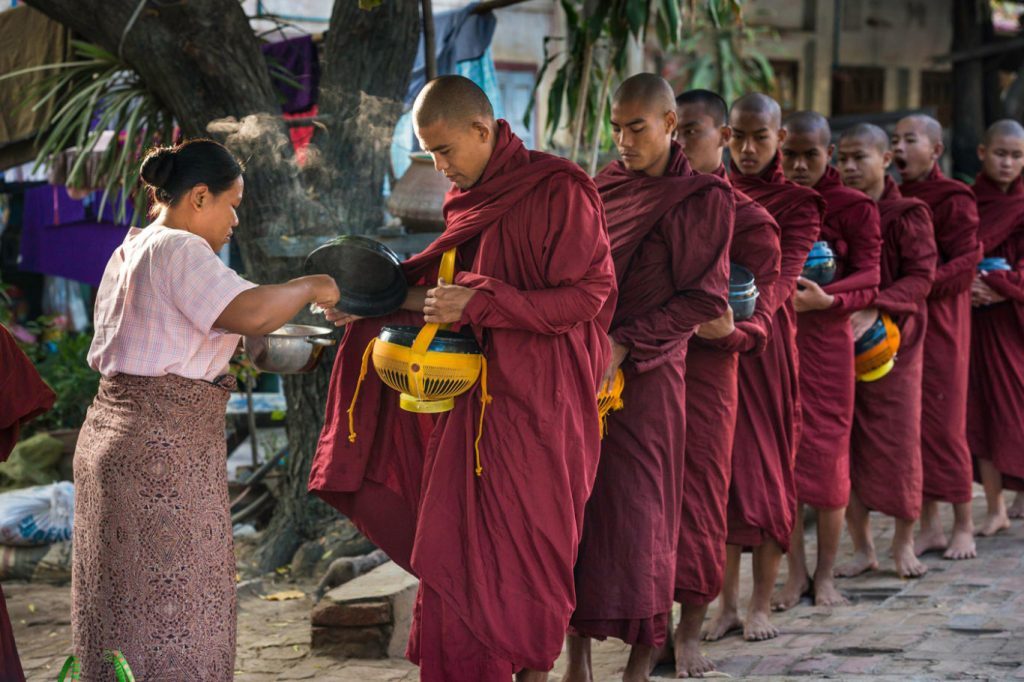
Monks usually follow rules and regulations for convenient life. As a monk you must obey these rules .

  1. Poverty: the monk cannot own anything.
  2. Chastity: the monk cannot have sex or a sexual relationship and cannot start a family or get married.
  3. Solitude: the monk should always be alone. Some monks choose to not follow this law.
  4. Silence: the monk shall not speak unless it is necessary.
  5. Generosity: the monk should always help other people.
  6. Stillness: the monk cannot travel far unless it is necessary. Sometimes this means that the monk must be cloistered which means that they must not leave their monastery (especially Warsa period). Sometimes they can be allowed to leave, but must not go very far.
  7. Duty: The monk must do some things every day. For example, the monk must pray or meditate and must do some work.

Indian monks

One of the finest and versatile monk in India was Swami Vivekananda . Swami Vivekananda was greatly inspired by Ramakrishna. For Swami, Ramakrishna was just a plain and simple villager, who was a part of the Kali temple. However, his intense spiritual practices intrigued Swami.

For five years, Swami learnt everything from his master, Ramakrishna. After his master left the world, everyone looked up to Swami. He urged the followers of Ramakrishna to leave the worldly pleasures and look up to God.

“You cannot believe in God until you believe in yourself.”

His saying intrigued just not one nation but the whole world .

Life lessons

Being a monk , gives you a pleasure of being yourself . We live in the world where we get pleasure from materialistic things . We become selfish , ruthless, dull, lifeless and worthless. You have to believe in yourself in order to excel in life.

Start learning from lessons.

  • When you start to do meditation you recognize the egotistical mind.
  • Trying until you get it right.
  • The answer to your question is inside of you.
  • Real wisdom in life comes from doing something and failing.
  • We must be both compassionate and resilient.
  • Patience is a virtue.
  • Detach from your ego.
  • Happiness come from within, and also comes from outside.
Link
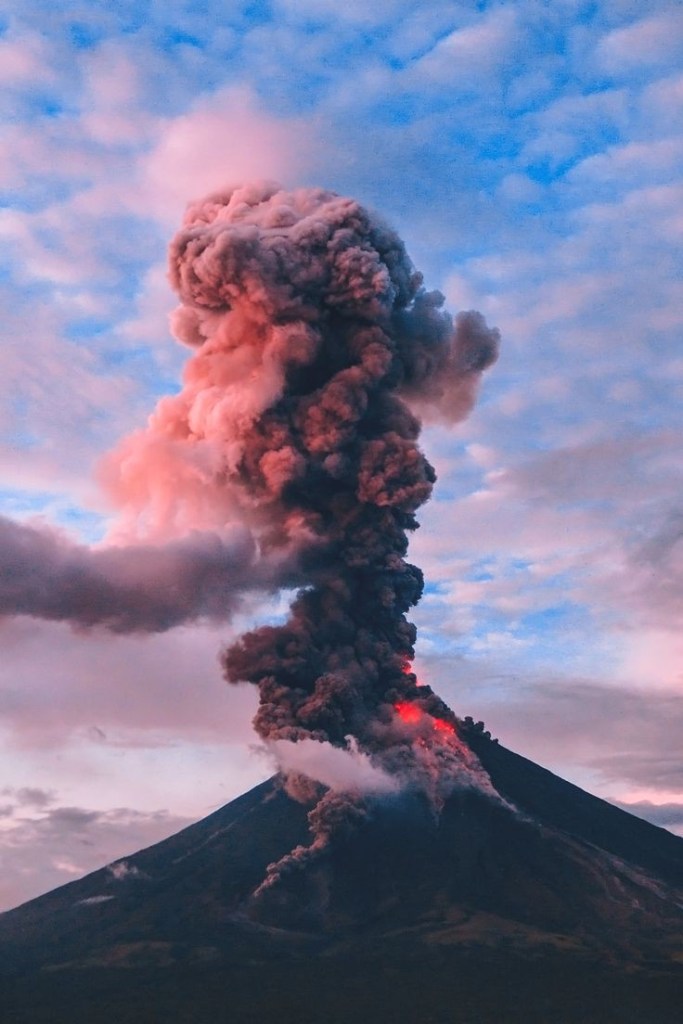
Volcano Eruption

“We are, all of us, growing volcanoes that approach the hour of their eruption, but how near or distant that is, nobody knows- not even God.”

~ Friedrich Nietzsche

We always talk about , what it would be like to see volcano eruption in front of your eyes ?

How amazing it would be like to find out , how the volcano erupt ?

There are many things that we don’t know exist in our earth 🌍. Do you want to know about it . If yes , than read the editorial .

Introduction

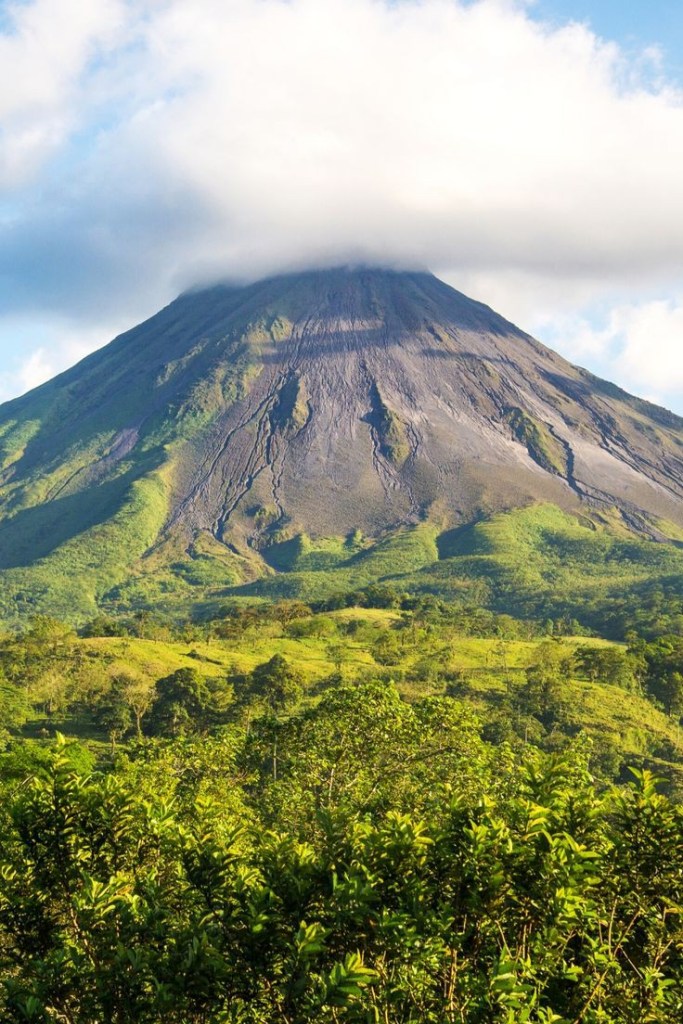
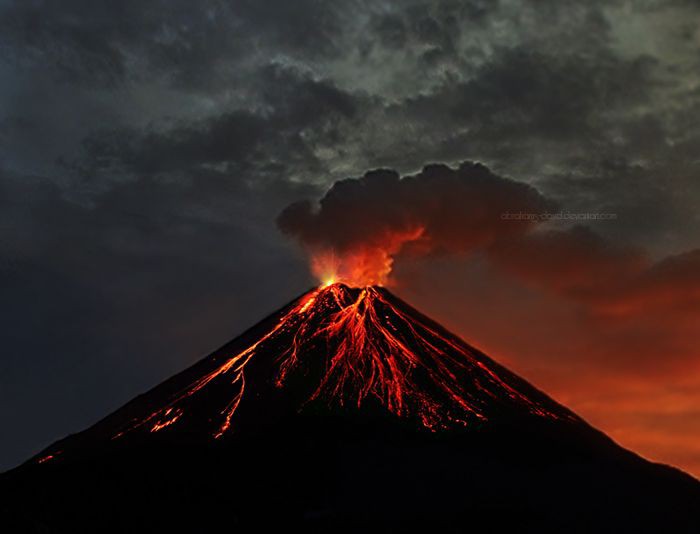
A volcano is a rupture in the crust of a planetary-mass object, such as Earth, that allows hot lava, volcanic ash, and gases to escape from a magma chamber below the surface.

On Earth, volcanoes are most often found where tectonic plates are diverging or converging, and most are found underwater.

The word volcano is derived from the name of Vulcano, a volcanic island in the Aeolian Islands of Italy whose name in turn comes from Vulcan, the god of fire in Roman mythology.

Many ancient accounts ascribe volcanic eruptions to supernatural causes, such as the actions of gods or demigods. To the ancient Greeks, volcanoes’ capricious power could only be explained as acts of the gods, while 16th/17th-century German astronomer Johannes Kepler believed they were ducts for the Earth’s tears.[87] One early idea counter to this was proposed by Jesuit Athanasius Kircher (1602–1680), who witnessed eruptions of Mount Etna and Stromboli, then visited the crater of Vesuvius and published his view of an Earth with a central fire connected to numerous others caused by the burning of sulfur, bitumen and coal.

Types of eruptions

  • Hydrothermal eruption. An eruption driven by the heat in a hydrothermal systems.
  • Phreatic eruption. An eruption driven by the heat from magma interacting with water.
  • Phreatomagmatic eruption.
  • Lava.
  • Strombolian and Hawaiian eruptions.
  • Vulcanian eruptions.
  • Subplinian and Plinian eruptions.

How do volcanoes erupt?

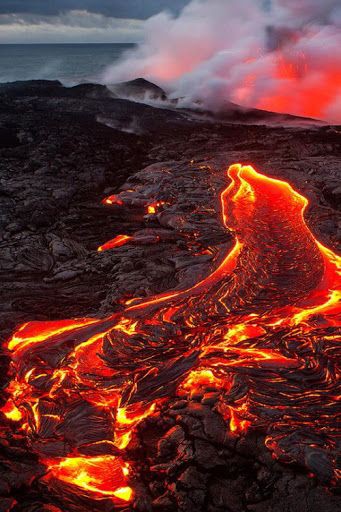
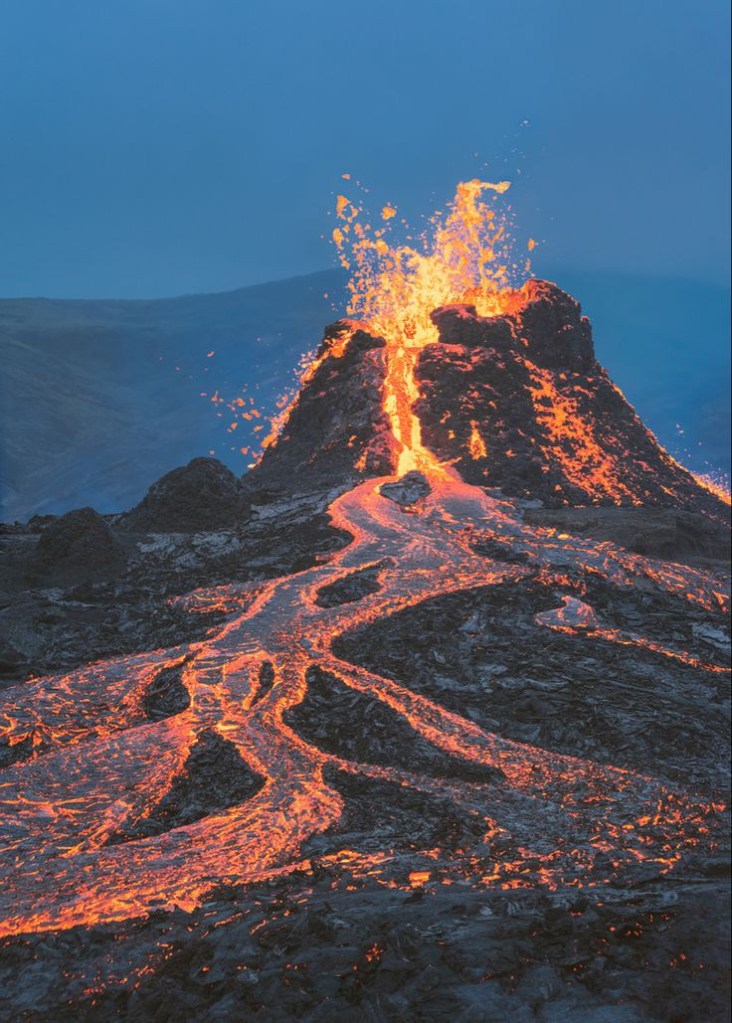
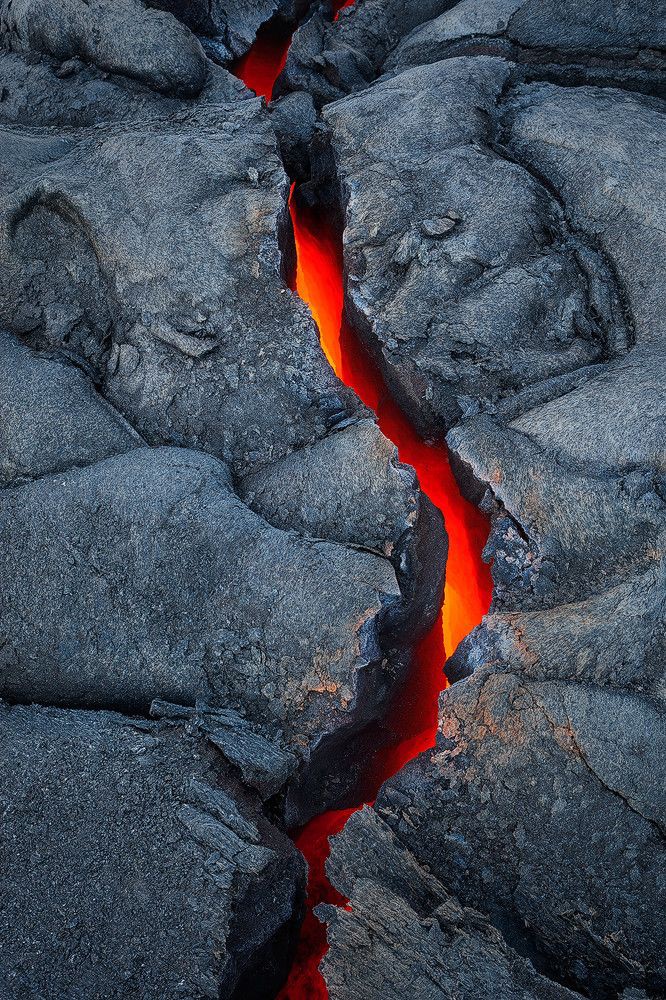
Deep within the Earth it is so hot that some rocks slowly melt and become a thick flowing substance called magma. Since it is lighter than the solid rock around it, magma rises and collects in magma chambers. Eventually, some of the magma pushes through vents and fissures to the Earth’s surface. Magma that has erupted is called lava.

The explosivity of an eruption depends on the composition of the magma. If magma is thin and runny, gases can escape easily from it.
Explosive volcanic eruptions can be dangerous and deadly.

Humans and volcanoes

Volcanic eruptions pose a significant threat to human civilization. However, volcanic activity has also provided humans with important resources.

Although volcanic eruptions pose considerable hazards to humans, past volcanic activity has created important economic resources.

Volcanic ash and weathered basalt produce some of the most fertile soil in the world, rich in nutrients such as iron, magnesium, potassium, calcium, and phosphorus.

Volcanic activity is responsible for emplacing valuable mineral resources, such as metal ores.

The paradox of volcanoes was that they were symbols of destruction but also life. Once the lava slows and cools, it solidifies and then breaks down over time to become soil – rich, fertile soil.
She wasn’t a black hole, she decided. She was a volcano. And like a volcano she couldn’t run away from herself. She’d have to stay there and tend to that wasteland.
She could plant a forest inside herself.

Matt Haig, The Midnight Library

Link

Black Holes: What are they exactly?

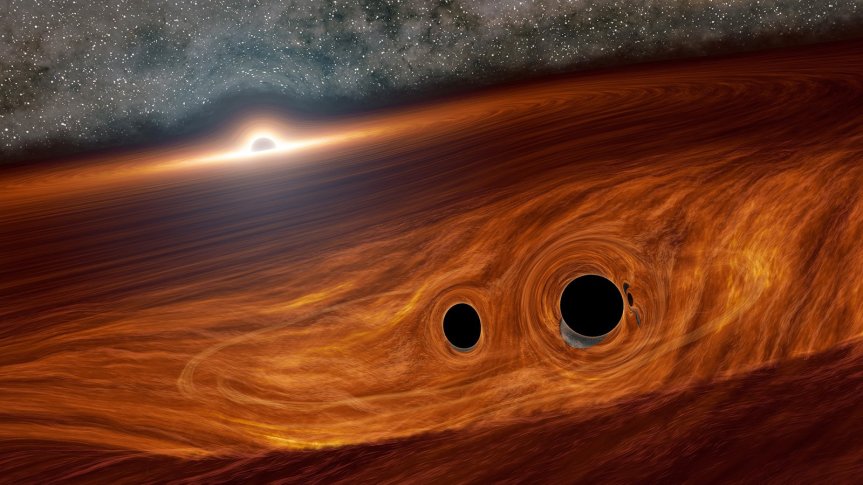
Don’t be fooled by the name: a black hole isn’t just empty space. Rather, it’s a vast amount of matter compressed into a small space – imagine a star 10 times more massive than the Sun crammed into a sphere the size of New York City. As a result, nothing, not even light, can escape the gravitational field. NASA instruments have created a fresh picture of these strange objects in recent years, which are considered by many to be the most fascinating entities in space.

For millennia, people have imagined an object in space that is so big and thick that light cannot escape it. Einstein’s theory of general relativity, which proved that when a large star dies, it leaves behind a small, dense remnant core, is most famous for predicting black holes. The equations demonstrated that if the core’s mass is greater than three times that of the Sun, gravity will override all other forces, resulting in a black hole.

Telescopes that detect x-rays, light, or other forms of electromagnetic radiation cannot directly observe black holes. However, we can deduce the existence of black holes and study them by observing their effects on adjacent matter. If a black hole passes through a cloud of interstellar matter, for example, it will accrete matter. If a normal star approaches close enough to a black hole, a similar scenario can occur. In this situation, as it pushes the star closer to itself, the black hole has the potential to break it apart. As the attracted matter speeds up and warms up, x-rays are emitted into space. Moreover, recent discoveries provide compelling evidence that black holes have a profound impact on their surroundings, generating intense gamma ray bursts, eating neighboring stars, and playing a large role in the creation of new stars in some locations while halting it in others.

The death of a star and the beginning of a black hole

The remnants of a massive star that dies in a supernova explosion form the majority of black holes in our universe. (Smaller stars decay into dense neutron stars, which lack the mass to confine light.) It can be demonstrated theoretically that no force can protect a star from collapsing under the force of gravity if the entire mass of the star is great enough (about three times the mass of the Sun). However, something unexpected happens when the star collapses. As the star’s surface approaches an imaginary surface known as the “event horizon,” time on the star slows in comparison to time measured by observers far away. When the surface of the star reaches the event horizon, time stops and the star can no longer collapse – it is merely a frozen entity in space.

Collisions between stars can produce even larger black holes. The strong, transient flashes of light known as gamma ray bursts were first spotted by NASA’s Swift telescope shortly after its launch in December 2004. After collecting data from the event’s “afterglow” with Chandra and NASA’s Hubble Space Telescope, researchers concluded that enormous explosions can occur when a black hole and a neutron star meet, forming another black hole.

The sheer size of black holes

Although the basic formation process is well studied and documented, one persistent mystery in black hole research is that they appear to exist on two dramatically different scales. On one hand, there are innumerable black holes formed by the collapse of huge stars. These “stellar mass” black holes are 10 to 24 times as massive as the Sun and can be found all around the Universe. When another star gets close enough to the black hole’s gravity, some of the matter around it is snared, causing x-rays to be emitted. The majority of galactic black holes, however, are extremely difficult to detect. Models estimate that there are as many as ten million to a billion such black holes in the Milky Way alone, based on the number of stars massive enough to form them.

The “supermassive” black holes, which are millions, if not billions, of times as massive as the Sun, are on the other extreme of the size range. Supermassive black holes, according to astronomers, are found at the centre of nearly all major galaxies, including our own Milky Way. Astronomers can spot them by observing the effects they have on neighboring stars and gas.

Astronomers have long held the belief that no mid-sized black holes exist, but r ecent data from Chandra, XMM-Newton, and Hubble, on the other hand, strengthens the case for the existence of mid-sized black holes. A chain reaction of star collisions in compact star clusters leads to the production of extremely massive stars, which eventually collapse to generate intermediate-mass black holes, according to one theory. After then, the star clusters descend to the galaxy’s centre, where the intermediate-mass black holes merge to produce a supermassive black hole.

Be it a baby black-hole or a giant one, these fantastic freely occurring galactic phenomena are still something that modern science needs to understand completely. The fact is that most fascinating things of science take the most time to completely grasp.