Advantage of correct posture

Correct posture plays a vital role in everyone’s life. It enhances the personality of an individual. A person’s working efficiency and ability depends upon good posture. Here are some advantages of having correct level :-

  1. Physical appearance :- It is natural phenomenon that every individual wants good physical appearance. For creating good impression on other people, good appearance is prerequisite. Physical appearance depends upon the posture of the individual.
  2. Prevents disorder and diseases :- Poor body posture badly affects functioning of system. Correct posture prevents low back-pain, neck strain, constipation, irritation etc. It means that we are not easily affected by various disorder and diseases if we have good posture.
  3. Change in mental attitude :- Good posture affects in outlook, happiness, self-confidence, determination of an individual. Correct posture always boost up self- confidence and self-esteem.
  4. Improves concentration power :- Good posture helps in breathing properly. When an individual breathes properly their concentration power as well as thinking ability improved.

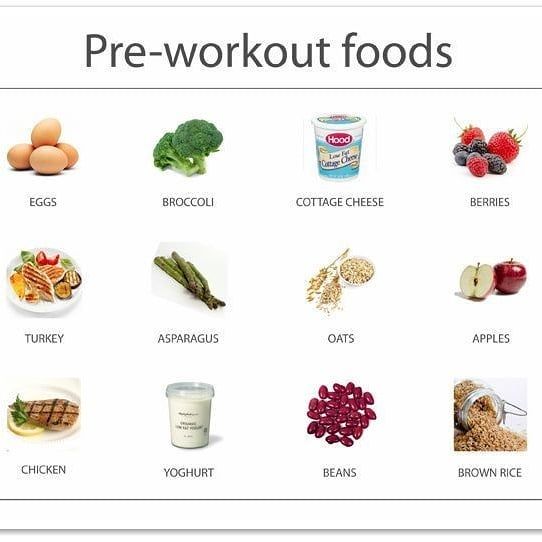
Pre workout meals

Good nutrition can help your body perform better and recover faster after each workout.

Optimal nutrient intake prior to exercise will not only help you maximize your performance but also minimize muscle damage. Fueling your body with the right nutrients prior to exercise will give you the energy and strength you need to perform better.Each macronutrient has a specific role before a workout. However, the ratio in which you need to consume them varies by the individual and type of exercise

Below is a brief look at the role of each macronutrient.

Carbs

Your muscles use the glucose from carbs for fuel.

Glycogen is the way the body processes and stores glucose, mainly in the liver and muscles.

For short- and high-intensity exercise, your glycogen stores are your muscles’ main source of energy (3Trusted Source).

But for longer exercises, the degree to which carbs are used depends on several factors. These include the intensity, type of training and your overall diet (3Trusted Source).

Your muscles’ glycogen stores are limited. As these stores become depleted, your output and intensity diminish (4Trusted Source5Trusted Source6).

Studies have consistently shown that carbs can increase glycogen stores and utilization while boosting carb oxidation during exercise (67Trusted Source8Trusted Source).

Carb loading, which involves consuming a high-carb diet for 1–7 days, is a well-known method to maximize glycogen stores (7Trusted Source8Trusted Source).

Protein

Many studies have documented the potential of pre-workout protein consumption to improve athletic performance.

Eating protein (alone or with carbs) prior to exercise has been shown to increase muscle protein synthesis (9Trusted Source10Trusted Source11Trusted Source).

One study showed a positive anabolic response after participants consumed 20 grams of whey protein before exercise (9Trusted Source).

Other benefits of eating protein before exercise include:

Fat

While glycogen is used for short- and high-intensity bouts of exercise, fat is the source of fuel for longer and moderate-to-low-intensity exercise (14Trusted Source).

Some studies have investigated the effects of fat intake on athletic performance. However, these studies looked at high-fat diets over a long period, rather than prior to exercise (15Trusted Source16Trusted Source).

For example, one study showed how a four-week diet consisting of 40% fat increased endurance running times in healthy, trained runners (15Trusted Source).

TIMING

To maximize the results of your training, try to eat a complete meal containing carbs, protein and fat 2–3 hours before you exercise.However, in some cases, you may not be able to get in a full meal 2–3 hours before working out.In that case, then you can still eat a decent pre-workout meal. However, keep in mind that the sooner you eat before your workout, the smaller and simpler the meal should be.If you eat 45–60 minutes prior to your workout, choose foods that are simple to digest and contain mainly carbs and some protein.This will help prevent any stomach discomfort during exercis


Why gym rats boast about “pump”

As with most profound physiological processes, the pump results from the complex interplay of a number of related functions. In bodybuilding terms, the required stimulus for an effective pump is, of course, proper weight training. As bodybuilders, they train with weights for the sole purpose of stimulating muscle growth, and the pump indicates we are heading in the right direction as far as this aim is concerned.

To achieve maximum muscular growth a pump (scientific name, hyperemia) is essential, and the only way this can be achieved is to train correctly with the right energy intake, to allow sufficient blood flow to the working muscles. Working muscles need blood to supply them with oxygen and nutrients, and remove waste products (namely, lactic acid and carbon dioxide).When a muscle is trained, blood flow is diverted from many other bodily processes, to supply this muscle with what it needs to perform maximally. The blood first needs to become oxygenated (which is done through gaseous exchange in the alveoli of the lungs) before it is pumped to the working muscles, where it is pooled, thus resulting in the tight feeling we call the pump. It is thought that during training, a muscle can receive up to four times the amount of blood it would ordinarily get. Why exactly do the muscles need all this blood? As mentioned, the muscles require sufficient oxygen and nutrients to continue the sustained contracting that results in a pump. Over time, the pump will also create a greater number of capillaries (tiny blood vessels), which will, in turn, provide the muscles with more nutrients and oxygen and allow for larger pumps and more growth in the long term.

How is the pump achieved?

As mentioned, a number of interrelated factors are required for a muscle to pump with blood. The first of these serves a protective function. When we begin training, the nervous and endocrine systems signal the heart to pump more blood. This blood, made available through an increase in cardiac output and blood pressure, pools in its intended muscle, thereby helping to create the pump.

The fight or flight survival mechanism underlies this process, because the muscles are preparing for vigorous work. Whenever we engage in any form of vigorous activity, blood is diverted from unessential bodily processes (such as the urinary or digestive systems), to be used by muscles relevant to the task at hand.

A muscle that does not receive adequate oxygen will fail to continue contracting over a longer term, thereby limiting the intensity of an exercise, which, in turn, stifles the muscles efforts to pump up sufficiently. Lactic acid (a by product of high intensity work) will also congregate in the muscle, causing it to fall short in terms of energy expenditure.Blood that is supplied to the muscle under conditions of maximal work will help to flush this lactic acid out, thereby assisting the pump. The pump is also achieved when hormones and signaling factors such as nitric oxide (NO), released in response to the acidity caused by high lactic acid levels, cause local capillaries in the muscle to dilate, thereby allowing more blood to flow into the muscle. Blood that is supplied to the muscle under conditions of maximal work will help to flush this lactic acid out, thereby assisting the pump. The pump is also achieved when hormones and signaling factors such as nitric oxide (NO), released in response to the acidity caused by high lactic acid levels, cause local capillaries in the muscle to dilate, thereby allowing more blood to flow into the muscle.

Why calisthenics is the “go-to”, if you dont have the time to hit the gym

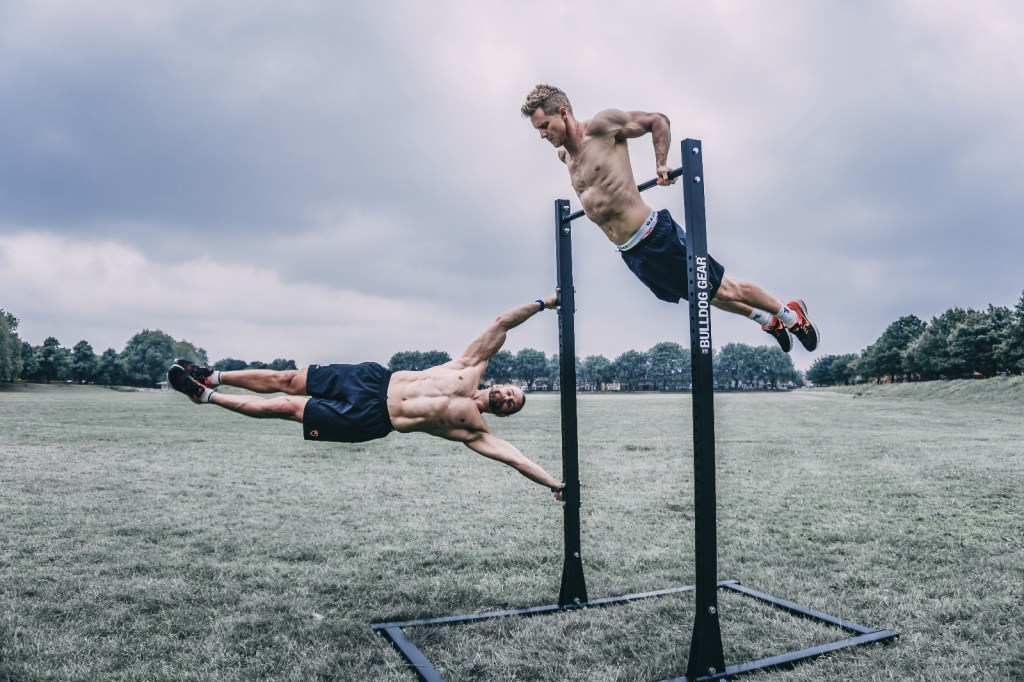
calisthenics (American English) is a form of strength training consisting of a variety of movements that exercise large muscle groups (gross motor movements), such as standing, grasping, pushing, etc. These exercises are often performed rhythmically and with minimal equipment, as bodyweight exercises. They are intended to increase strength, fitness, and flexibility, through movements such as pulling, pushing, bending, jumping, or swinging, using one’s body weight for resistance. Calisthenics can provide the benefits of muscular and aerobic conditioning, in addition to improving psychomotor skills such as balance, agility, and coordination.

Urban calisthenics is a form of Street Workout; calisthenics groups perform exercise routines in urban areas. Individuals and groups train to perform advanced calisthenics skills such as muscle-ups, levers, and various freestyle moves such as spins and flips.

Sports teams and military units often perform leader-directed group calisthenics as a form of synchronized physical training (often including a customized “call and response” routine) to increase group cohesion and discipline. Calisthenics is also popular as a component of physical education in primary and secondary schools over much of the globe.

History

Catharine Esther Beecher (1800–1878), was an American educator and author who popularized and shaped a conservative ideological movement to both elevate and entrench women’s place in the domestic sphere of American culture. She introduced calisthenics in a course of physical education and promoted it. Disciples of Friedrich Ludwig Jahn brought their version of gymnastics to the United States, while Catharine Beecher and Dio Lewis set up physical education programs for women in the 19th century.Organized systems of calisthenics in America took a back seat to competitive sports after the Battle of the Systems, when the states mandated physical education systems. The Royal Canadian Air Force’s calisthenics program published in the 1960s helped to launch modern fitness culture.

Calisthenics is associated with the rapidly growing international sport called Street Workout. The street workout consists of athletes performing calisthenics routines in timed sessions in front of a panel of judges. The World Street Workout & Calisthenics Federation (WSWCF) based in Riga, Latvia orchestrates the annual National Championships and hosts the World Championships for all the national champions to compete at one competition. The World Calisthenics Organization (WCO) based in Los Angeles, CA. promotes a series of competitions known globally as the Battle of the Bars. The WCO created the first-ever set of rules for formal competitions, including weight classes, timed round system, original judging criteria and a 10-point must system—giving an increasing number of athletes worldwide an opportunity to compete in these global competitions. Street workout competitions have also popularised ‘Freestyle calisthenics’, which is a style of calisthenics where the athlete uses their power and momentum to perform dynamic skills and tricks on the bar, often as part of a routine where each trick is linked together in a consistent flow. Freestyle calisthenics requires great skill to control your momentum and understanding the mechanics of the body and the bar.

Can it give you the pump?

The lower intensities also allow athletes to focus on the muscles involved and to get a good squeeze and pump. Many muscle movements are pulled from appropriate strength movements. Many calisthenics movements involve static holds. Endurance movements train the athletes capability to hold the body various positions. This certainly gives you the pump, and by making small adjustment, u will be able to build muscle too.