Have you ever regretted for not picking up a book earlier? I sure have. Here’s an ode to one of these books!
‘Everyday I saw clouds dropping lower and lower like omnious waves. The hills were blue, their outline rimmed in black, and the trees were still. Then fierce, hissing rain would cover the land like the sea’.
I’m regretting now, I’ve never had bookish regrets like this for years. This book is an enchantress, an absolutely beautiful enchantress. The stories are lulling, it pulled me in to picturize the narration, to dream, to contemplate. The folklores, the enchanting description of nature, breathtaking portrayal of the Arunachal Pradesh gave me a book hangover. This book is certainly a tidbit for those who love reading contemporary Indian Writings in English.
PLOTLINE ANALYSIS
‘The Legends of Pensam‘ by Mamang Dai is a collection of short stories. They are all interconnected. There’s a story of a widow Pinyar and her son, interwoven in the folklore of supernatural being Miti Mili, the beliefs of indigenous people, their exquisite narration of the ancient stories are told in the mercurial prose.
The stories portray the colonial period, the Japanese wars, the landscape of Arunachal Pradesh, one of my favorite stories in this collection is ‘the words of women’. The story revolves around the rural women working in the mountains, cutting wood, cracking dry bamboo and carrying it back to the village, the raw portrayal of their demeanor. The generations of the families and their curiosity about learning the stories of the village are evocative.
CONCLUSION
Pensam means ‘In between’, the beautiful title syncs magically with the balmy stories. I picked this book up last month for the Northeast Readathon but I couldn’t read it, I was procrastinating relentlessly to read this beauty. I regret it now. I should’ve read this book earlier. Don’t be like Lavanya, if you are looking for a warm, sweet, beautiful short story collection! Get this right away guys!
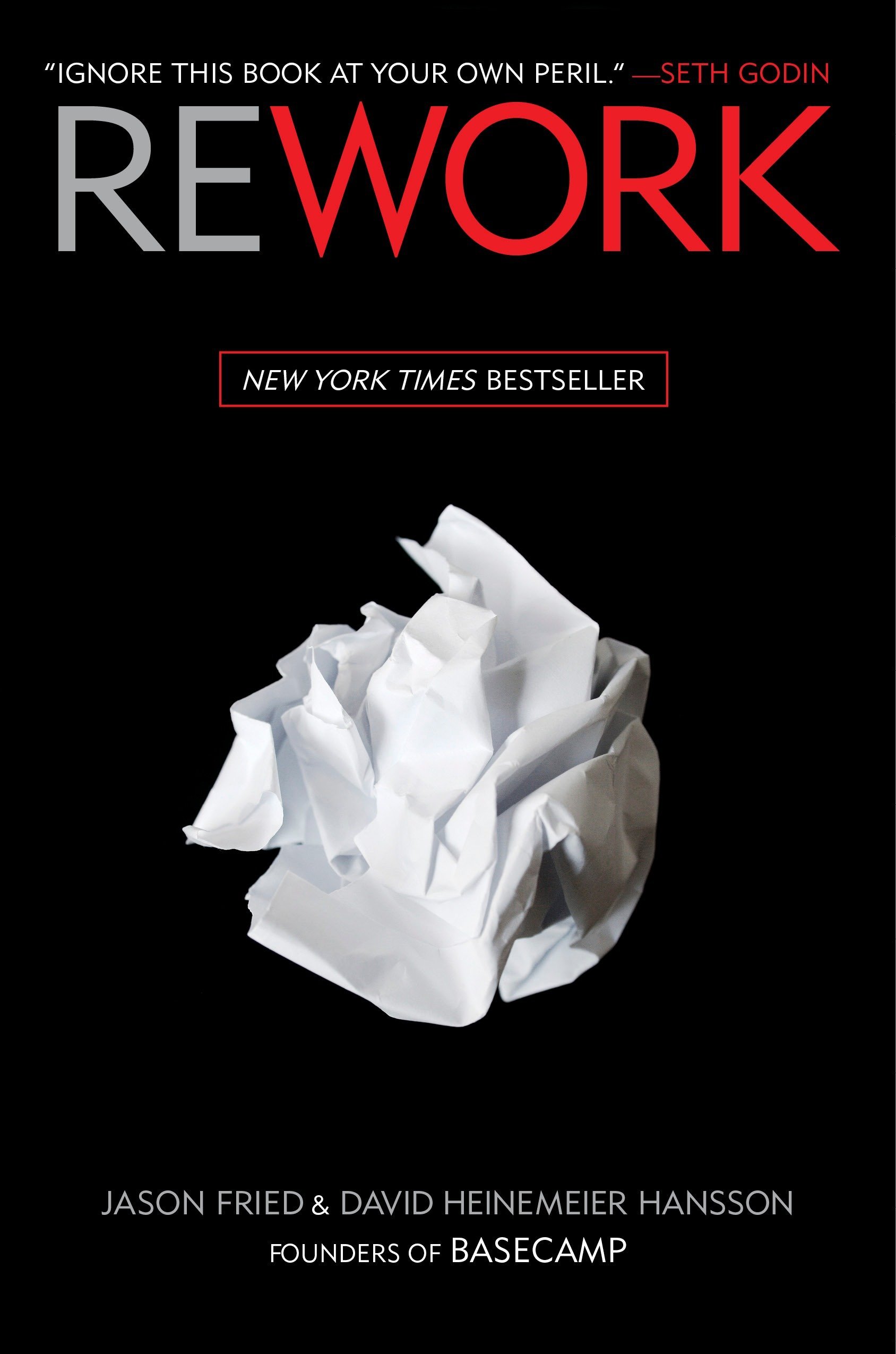
What makes a great product is not the things or features in it but the things which are removed, yes its true! Because people like it simple and easy to use so don’t make it complex, be like a good curator always look for removing things.
2. UNDERGO YOUR COMPETITION
In business most people focus on becoming better than competition than making a better product . But the best way is to do less than your competitor to beat them.
Solve the simple problem and leave the hairy, difficult, nasty problems to the competition. Instead of one upping, try one-downing .
3.WELCOME OBSCURITY
If you are unknown, you company is unknown then its just fine because this is the real time when you have full freedom to make a lot of mistake and no one will blame you because no one knows you, but once you get bigger you become too conservative and you don’t take risk, so enjoy this beauty.
4. PLANNING IS GUESSING
Your plans are not plans they are just guesses so if certain plan doesn’t got executed well, then don’t take it seriously, because they are just mere guesses and every time guessing cant be right. So stop worrying about it.
In the world we find varied geographical regions which includes mountains, plains, deserts, plateaus all with their own physical features. Desert is basically a piece of barren land which is filled with sand and lacks water bodies and have dry weather all along. In day time deserts are extremely heated up and at night it becomes chilling cold at the same place. In the Indian subcontinent we find desert in the western part of the subcontinent in the state of Rajasthan.
The animals and plants in the deserts have their own adaptations, among plants we find a variety of cactus, cactus plants have special adaptations to survive in the desert, they have fleshy stem which holds water in them which turns out to be useful when there is scarcity of water also they have very long roots which can penetrate deep inside the soil in search of water also they don’t have leaves and have thorns in place of them in cactus the food is prepared in the step as it contains chlorophyll and is green in color. Also, we find camel in desert their feet have adaptation to walk on the sand also they can survive with less water and they have long eyelashes to protect their eyes from dust storms.
Types of Deserts :
1. Coastal Deserts :
Coastal deserts occur in cool to warm areas along the coast. They have cool winters and long, warm summers. Coastal deserts are located on the west coasts of continents between 20° to 30° lattitude. Winds off the coast blows in an easterly pattern and prevents the moisture from moving onto the land. The Namib desert in Africa and the Atacama desert in chile are coastal deserts.
2. Subtropical Deserts :
Subtropical deserts the hottest deserts. They are found in Asia, Australia, Africa and North and south America. In the united states, the chilhuahuan, sonoran and Mojave are all subtropical deserts. Subtropical deserts are very hot and dry in the summner and cooler but still dry in the winter. Rainfall happens in short bursts. The air is so hot and dry in these deserts that sometimes rain evaportaes before it even has a chance to hit the ground. The soil in subtropical deserts is usually either sandy or coarse and rocky.
Plants and animals in subtropical deserts must be able to withstand the hot temperatures and lack of moisture. Shrubs and small trees in the subtropical desert usually have leaves adapted to retain moisture. Animals in sbtropical deserts are usually active at night, when it is cooler.
3. Cold wintet Deserts :
Cold winter deserts are also known as semiarid deserts . They have long, dry summers and cold winters with low rain or snowfall. In the united states the Great basin, the colorado plateau and the Red Desert are all cold winter deserts. Other cold winter deserts include the Gobi desert in china and Mongolia and the patagonian desert in Argentina. The lack of rainfall in cloud winter deserts is often caused by the rainshadow effect. The rainshadow effect happens when a high mountain range stops moisture from reaching an area. The Himalayan Mountain prevent rainfall from reaching the Gobi desert.
4. Ploar Deserts :
Polar deserts are found in the Arctic and Antarctic regions. Like warmer deserts, they also get very little precipitation.polar deserts are cold year- round.
Largest Desert in the world :
The antarctic polar Desert, which makes up the vast majority of Antarctica, is the largest desert in the world. In fact this single desert is larger than the combined size of the Gobi Desert, the Arabian Desert, and the sahara Desert.
* The driest desert of the world Atacama is surely the most dangerous desert of all.
The strongest animal in the Desert :
Based on strength to weight ratio, the dung beetle of the scarab is the strongest creature on earth. They can lift 1141 times their own body weight. It helps them a lot in finding the mate and food. The dung beetles also constitute a large percentage of scarab family.
The 7 hardest Animals to Hunt :
* Leopards
* Mountain Goats.
* Elk
* Eland.
* cape Buffalo
* Roan and sable
* Bears.
what can kill you in the Desert?
Aside from the oppressive heat and lack of water, the desert is also full of critters that can bite and sting. Some of these guys can even kill you if you aren’t able to find medical help. Spiders, scorpions, centipedes, and snakes are all found in dark places , abandoned builidings and under rocks.
“Parenting” is one of the substantial topics of research study since society brought awareness towards child development and the impact of family structure on a child’s upbringing. The societal impact and the norms, culture, ethics of the sector to which the child belongs often make the personality of a child accordingly.
The contemporary parents in particular have a keen interest to not be a parent but rather a friend to their child. Reading culture is such a medium through which parent-child get closer to each other.
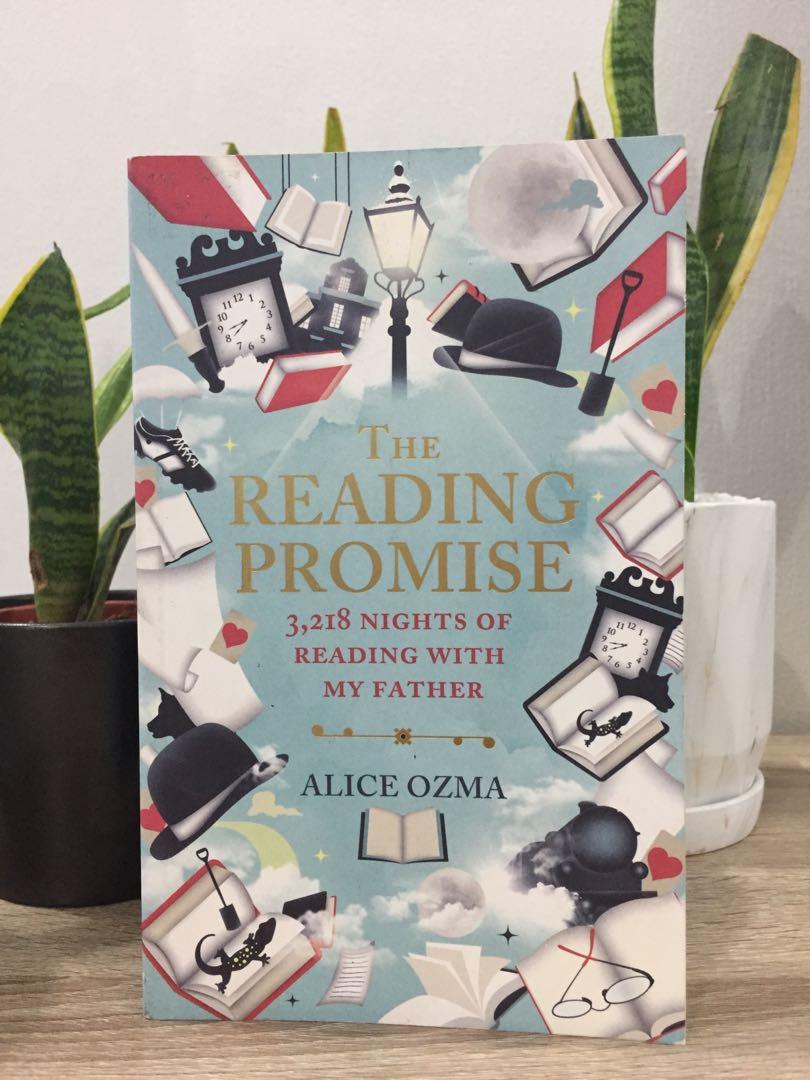
“The Reading Promise: 3,218 Nights Reading with My Father”, is a novel whose title explains very precisely what type of book it is. The Book Portrays the story of a Single divorced father and her daughter who had a beautiful father-daughter relationship cause of Reading culture.
Some Promises are worth be kept Forever, Like – “ A Reading Promise”.
“We called it “The Reading Streak”, but it was more of a promise. A promise to each other, a promise to ourselves. A promise to be there and never give up. It was a promise of hope in hopeless times. It was a promise of comfort when things got uncomfortable. And we kept our promise to each other.“
(Page no: 270, The Reading Promise)
This is a novel that looks more like a daily task performed by every American parent to read books to their children. But this book is more than that, this book is more about a single divorced father who is a librarian in an elementary school and loves to read the book to children which he also does with her younger daughter Alice/Lovie. The book focuses on the father-daughter relationship and their affectionate bond and their journey of how they keep a reading promise which never broke.
Well eventually after some years of life, the promise fades away as time passed and Jim(father) stopped reading books to her daughter (Alice). Jim was a single father who got divorced and living and raising 2 daughters was not an easy task where the societal impact affects a lot on a divorced man. Despite all the barriers he raised 2 daughters beautifully and with good moral values which made them successful in their later years of life.
Jim had a strong bond with Alice as she was young and liked to spend more time with her father. Jim gave a lot of care, attention, and nurturing to Alice. They were more like friends, and as friends, she used to share all her secrets and problems with her father during the night bedtime stories, which was also called “The Streak’s” in which Jim used to read Different lists of novels for 3,218 nights.
Jim – As a Positive Father
We can see that Alice and Jim had a very positive father-daughter relationship and in context, to single divorcee fathers it is often noticed that children tend to stay with their mothers rather than fathers.
But the Parenting/fathering of Jim was such that her daughters chose to stay with their father as mother left them for another man. Usually, in a patriarchal context in a divorcee scenario, it is the father who gives divorce, but here the novel portrays the scenario in a different context to portray the importance of a father in a daughter’s life.
Jim traveled with Alice to a lot of places, whether it is mountains, valleys, deep oceans through the imaginary stories they traveled together. They both had an understanding of each other.
Jim grew and lived Alice’s journey as she grew eventually, from the day she is born till the day she is grown into a woman. Being a girl, she had gone through many stages of her life in which adolescence was the most prominent one. It is that stage when most of the girls hide their emotions and personal life with their parents. Due to reading streak, this was not present in Alice behavior, she used to share each and everything of her life; whether it is her low grades in academics, or a fight with a friend, or going on a date with her boyfriend, she used to share each fragment of her life.
She was never embarrassed in front of her father in any way, this is the major factor that makes Jim a contemporary father where the ideal father deals with all the contemporary issues going on in their children’s life. Jim as a supportive father made her a woman with a strong emotional and mental personality, she was fearless because she had a very positive father in her life. When Alice was in her adolescent stage many things were awkward due to the body changes but Jim normalized that taboo and made her understand that it is all that we are humans.
Usually, fathers face a lot of problems when it comes to raising a girl child because daughters are physically different gender-wise, and the psyche and emotional stability of man and woman differ in many contexts. Despite all these Jim as a father broke all these cultural conflicts and gave Alice a better life without any bad influences and any restrictions in, her life. Jim and Alice celebrated each day with new happiness and new Hope. When they completed 100 nights of reading, they celebrated by eating a pancake in a restaurant.
Although this celebration was not a big event for anyone, they achieved what they wanted to Father’s daughter completed a promise for 100 nights without any change in plans and this should they determination towards each other, they celebrated their promise which they have made with each other.
“My father spent 38 yrs. as an elementary school librarian, and I can say almost without bias that he was the Best around. His students loved him because he was good at what he did – from reading to discipline, to create a general mood of mutual respect, my father was an expert at getting children to love their time in the library.
He was an absolute pleasure to watch almost any given day. On certain days, though, it bordered on cruel and unusual punishment.”
(Page no: 90, Chapter 10, The Reading Promise).
Alice mentioned in the above quote about the qualities which Jim had as a person, she explained that his father was not only an ideal father but an ideal teacher too. Since he was just an Elementary school librarian, he didn’t get much recognition in society but among children he was likable. He had all those qualities which a teacher should have.
Children liked him more because of his soft nature and the humorous way he used to read to the children. When Alice was young, she used to spend time with Jim in his library and used to sleep in the backside of the last benches in the classroom and sometimes used to listen to Jim reading to other kids.
Jim was the reason for Alice to be an Ardent Reader. Jim loved reading books to children, but when he retired and got old then Alice was grown up and looking for a suitable job, that was the time when their streaks go ended.
Jim after retiring used to read books to senior citizens at some old age homes, and sometimes he used to spend time with children who are living in hospitals and used to read books before their surgery. Cause somewhere or the other he still missed his passion of reading books to children, because it was not a hobby but more of a passion that made him feel alive. Reading is the link with Alice’s childhood connection which makes the heart feel more alive every day.
In the end, the book is the best example for every parent to know about parenting is that; “Be a friend to your kid and ultimately you will be a good parent.”
“Parenting” is one of the substantial topics of research study since society brought awareness towards child development and the impact of family structure on a child’s upbringing. The societal impact and the norms, culture, ethics of the sector to which the child belongs often make the personality of a child accordingly.
The contemporary parents in particular have a keen interest to not be a parent but rather a friend to their child. Reading culture is such a medium through which parent-child get closer to each other.
“The Reading Promise: 3,218 Nights Reading with My Father”, is a novel whose title explains very precisely what type of book it is. The Book Portrays the story of a Single divorced father and her daughter who had a beautiful father-daughter relationship cause of Reading culture.
Some Promises are worth be kept Forever, Like – “ A Reading Promise”.
“We called it “The Reading Streak”, but it was more of a promise. A promise to each other, a promise to ourselves. A promise to be there and never give up. It was a promise of hope in hopeless times. It was a promise of comfort when things got uncomfortable. And we kept our promise to each other.“
(Page no: 270, The Reading Promise)
This is a novel that looks more like a daily task performed by every American parent to read books to their children. But this book is more than that, this book is more about a single divorced father who is a librarian in an elementary school and loves to read the book to children which he also does with her younger daughter Alice/Lovie. The book focuses on the father-daughter relationship and their affectionate bond and their journey of how they keep a reading promise which never broke.
Well eventually after some years of life, the promise fades away as time passed and Jim(father) stopped reading books to her daughter (Alice). Jim was a single father who got divorced and living and raising 2 daughters was not an easy task where the societal impact affects a lot on a divorced man. Despite all the barriers he raised 2 daughters beautifully and with good moral values which made them successful in their later years of life.
Jim had a strong bond with Alice as she was young and liked to spend more time with her father. Jim gave a lot of care, attention, and nurturing to Alice. They were more like friends, and as friends, she used to share all her secrets and problems with her father during the night bedtime stories, which was also called “The Streak’s” in which Jim used to read Different lists of novels for 3,218 nights.
Jim – As a Positive Father
We can see that Alice and Jim had a very positive father-daughter relationship and in context, to single divorcee fathers it is often noticed that children tend to stay with their mothers rather than fathers.
But the Parenting/fathering of Jim was such that her daughters chose to stay with their father as mother left them for another man. Usually, in a patriarchal context in a divorcee scenario, it is the father who gives divorce, but here the novel portrays the scenario in a different context to portray the importance of a father in a daughter’s life.
Jim traveled with Alice to a lot of places, whether it is mountains, valleys, deep oceans through the imaginary stories they traveled together. They both had an understanding of each other.
Jim grew and lived Alice’s journey as she grew eventually, from the day she is born till the day she is grown into a woman. Being a girl, she had gone through many stages of her life in which adolescence was the most prominent one. It is that stage when most of the girls hide their emotions and personal life with their parents. Due to reading streak, this was not present in Alice behavior, she used to share each and everything of her life; whether it is her low grades in academics, or a fight with a friend, or going on a date with her boyfriend, she used to share each fragment of her life.
She was never embarrassed in front of her father in any way, this is the major factor that makes Jim a contemporary father where the ideal father deals with all the contemporary issues going on in their children’s life. Jim as a supportive father made her a woman with a strong emotional and mental personality, she was fearless because she had a very positive father in her life. When Alice was in her adolescent stage many things were awkward due to the body changes but Jim normalized that taboo and made her understand that it is all that we are humans.
Usually, fathers face a lot of problems when it comes to raising a girl child because daughters are physically different gender-wise, and the psyche and emotional stability of man and woman differ in many contexts. Despite all these Jim as a father broke all these cultural conflicts and gave Alice a better life without any bad influences and any restrictions in, her life. Jim and Alice celebrated each day with new happiness and new Hope. When they completed 100 nights of reading, they celebrated by eating a pancake in a restaurant.
Although this celebration was not a big event for anyone, they achieved what they wanted to Father’s daughter completed a promise for 100 nights without any change in plans and this should they determination towards each other, they celebrated their promise which they have made with each other.
“My father spent 38 yrs. as an elementary school librarian, and I can say almost without bias that he was the Best around. His students loved him because he was good at what he did – from reading to discipline, to create a general mood of mutual respect, my father was an expert at getting children to love their time in the library.
He was an absolute pleasure to watch almost any given day. On certain days, though, it bordered on cruel and unusual punishment.”
(Page no: 90, Chapter 10, The Reading Promise).
Alice mentioned in the above quote about the qualities which Jim had as a person, she explained that his father was not only an ideal father but an ideal teacher too. Since he was just an Elementary school librarian, he didn’t get much recognition in society but among children he was likable. He had all those qualities which a teacher should have.
Children liked him more because of his soft nature and the humorous way he used to read to the children. When Alice was young, she used to spend time with Jim in his library and used to sleep in the backside of the last benches in the classroom and sometimes used to listen to Jim reading to other kids.
Jim was the reason for Alice to be an Ardent Reader. Jim loved reading books to children, but when he retired and got old then Alice was grown up and looking for a suitable job, that was the time when their streaks go ended.
Jim after retiring used to read books to senior citizens at some old age homes, and sometimes he used to spend time with children who are living in hospitals and used to read books before their surgery. Cause somewhere or the other he still missed his passion of reading books to children, because it was not a hobby but more of a passion that made him feel alive. Reading is the link with Alice’s childhood connection which makes the heart feel more alive every day.
In the end, the book is the best example for every parent to know about parenting is that; “Be a friend to your kid and ultimately you will be a good parent.”
“One heart is not connected to another through harmony alone. They are, instead, linked deeply through their wounds. Pain linked to pain, fragility to fragility. There is no silence without a cry of grief, no forgiveness without bloodshed, no acceptance without a passage through acute loss. That is what lies at the root of true harmony.”
-Haruki Murakami, Colorless Tzukuru Tazaki and His Years of Pilgrimage
Haruki Murakami is a Japanese writer whose novels and short stories have been translated and admired all over the world. Murakami’s works are a true testament to the genre of Magic Realism wherein seemingly unnatural things and incidents happens in the natural world. His stories revolve around inner conflicts, the dilemmas of human existence and a spectrum of psychological topics that makes us question the working of the world. His most notable works include Norwegian Wood, Sputnik Sweetheart, Kafka on the Shore etc. Through this unique method of narration, Murakami explores the warped realities of the human world.
His Novel Colorless Tzukuru Tazaki and His Years of Pilgrimage was written and published in the year 2013. It sold over a million copies in just a month and is a bestseller. It is a realist bildungsroman that follows the life of a railroad engineer in Tokyo named Tsukuru Tazaki. Bildungsroman novels include the development of the protagonist’s mind and character in the passage from childhood through varied experiences- and often through spiritual crisis- into maturity; this process usually involves recognition of one’s identity and role in the world. During his school days, he becomes best friends with four people; two boys named Akamatsu (Red) and Oumi (Blue) and two girls called Shirane (White) and Kurono (Black). Tsukuru had always felt left out from his gang of friends for all of their names included a colour while he always remained colourless. Despite that, he considered them his good friends. But one day, he finds to his utter surprise that all his friends have suddenly cut ties with him without any explanations. Highly depressed and shocked, Tsukuru is traumatised by this turn of events.
“As we go through life we gradually discover who we are, but the more we discover, the more we lose ourselves.”
-Haruki Murakami, Colorless Tzukuru Tazaki and His Years of Pilgrimage
Later on in college, Tsukuru moves to another city and slowly recovers himself from the brink of suicide. He befriends a boy named Haida who narrates a peculiar story of a travelling man and his encounter with a particular kind of music. But before the start of the next semester, Haida leaves him as well. Now resigned to the conclusion that he was born to be lonely, Tsukuru is left with a fear of building close relationships.
Years later, Tsukuru nurtures his interests in trains and ends up being a railroad engineer. His girlfriend Sara advices him to embrace the past than run away from them, for she gives an ultimatum that unless he decides to confront his past, their relationship would never work out. Determined, he takes on a journey to find his lost friends and mend their relationships to work towards a healed future. Like all other Murakami books, this one retains a special place for music as well. In this novel, Lizst’s classical piano solo ‘Years of Pilgrimage’ serves as a recurring symbol that adds charm to the magic realist plotline.
Though many National leaders rendered their selfless service to our country, one among them to be noted was the Kingmaker Kamaraj. K. Kamaraj, familiarly known as Kamarajar was an independent activist and the former Chief Minister of Tamil Nadu. He was popularly known as the Kingmaker of India during the 1960s. He supported Lal Bahadur Shastri, to be the President of India after the death of Nehru. After the sudden dismissal of Lal Bahadur Shastri, he supported Indira Gandhi to be the President of India. He was a man of simplicity and known for his best leadership in the development of Tamil Nadu. The Midday Meals Scheme introduced by him was very popular in India. He was popularly known as Karmaveerar, KalviKan Thirantha Mudhalvar, etc.
K KAMARAJ – Former Chief Minister Of TamilNadu
Kamaraj was born on 15th July 1903 at Virudhunagar in TamilNadu to Kumarasamy and Sivagami Ammal. His birth name was Kamatchi and later changed to Kamarajar. He studied primary education in a traditional school and he was to drop out because of his father’s death to support his family. He had a younger sister named Nagammal. He worked in his uncle’s shop and begun to attend political meetings and common meetings related to Home Rule Movement. He developed his interest in politics by reading daily newspapers. In 1920, at the age of 18, he became a very enthusiastic person and joined Indian National Congress. He organized public meetings for leaders in Virudhnagar and was very eager to meet Mahatma Gandhi. As he wished, he met Gandhiji for the first time in the meeting. Kamaraj went to jail for two years for taking part in ‘Salt Sathyagraha’ led by C. Rajagopalachari at Vedaranyam.
At the age of 34, he contested in the Legislative election for the first time and marked his first victory at Sattur in 1937. He stuck by the principle ‘ One should not accept any post/leadership to which one could not do full justice ‘. In 1954, Kamaraj became the Chief Minister of Tamil Nadu. Various schemes and deeds introduced by him as a Chief Minister are as follows:
He removed Hereditary Education Policy introduced by Rajaji.
He reopened more than 12,000 schools during his leadership as a Chief Minister.
Education and trade hiked during his period.
Kamarajar aimed to eradicate illiteracy and introduced compulsory education. The literacy rate was 7% during the British period but during his period, the literacy rate increased to 37%.
He also introduced the Midday Meals Scheme to provide atleast one healthy meal per day to the poor and needy children. He introduced the uniform scheme to the school children to eradicate the germination of caste-based flaws in young minds.
He built several irrigation canals during his period. He built nine dams which are appreciated till now and they are as strong as him.
Huge investment industries such as Neyveli Lignite Corporation, BHEL, etc. were started during his period.
He has been the Chief Minister of Tamil Nadu for three consecutive terms, by the victory in 1957 and 1962. His ruling period was known as the Golden Age of Tamil Nadu. Kamaraj was a great follower of Mahatma Gandhi, yet to this fact, he died on 2nd October 1975 during his sleep in his native Virudhunagar. He was awarded ‘Bharat Ratna’ posthumously in 1976. The Chennai Airport is named after him as Kamaraj Terminal.
His birthday is celebrated as ‘ Education Development Day ‘ in Tamil Nadu every year. Though he died, his good deeds remain in the hearts of the people.
Intelligence plus character – that is the goal of Education.
Talking about the author, Khaled Hosseini was born in Kabul, Afghanistan. Hosseini is currently a Goodwill Envoy for the United Nations High Commissioner for Refugees (UNHCR). Here is a book review of The Kite Runner which was published in the year 2003.
The unforgettable and heartbreaking story of the improbable friendship between a wealthy boy and the son of his father’s servant, The Kite Runner is a beautifully crafted novel set in a country about to be destroyed.It is about the power of reading, the price of betrayal, and the possibility of salvation; and an exploration of the power of parents over children: their love, their sacrifices, their lies.
A sweepingtale of family, love, and friendship advised in opposition to the devastating backdrop of the records of Afghanistan during the last thirty years, The Kite Runner is an uncommon and effective novel that has to turn out tobe a beloved, one-of-a-type classic.
The book gave a good cry to so many people with the brilliant writing and the emotions it holds. There was from praising all around the world.
“An astonishing, powerful book.” —Diane Sawyer
“This powerful first novel, by an Afghan physician now living in California, tells a story of fierce cruelty and fierce yet redeeming love…In The Kite Runner, Khaled Hosseini gives us a vivid and engaging story that reminds us how long his people have been struggling to triumph over the forces of violence – forces that continue to threaten them even today.” —The New York Times Book Review
“Like Gone with the Wind, this extraordinary first novel locates the personal struggles of everyday people in the terrible sweep of history.” —People
“Poignant…The Kite Runner offers a moving portrait of modern Afghanistan, from its pre-Russian-invasion glory days through the terrible reign of the Taliban.” —Entertainment Weekly (Grade: A)
“A marvelous first novel… an incredible story of the culture. It’s an old-fashioned kind of novel that really sweeps you away.” —San Francisco Chronicle
“A powerful book…no frills, no nonsense, just hard, spare prose…an intimate account of family and friendship, betrayal and salvation that requires no atlas or translation to engage and enlighten us. Parts of The Kite Runner are raw and excruciating to read, yet the book in its entirety is lovingly written.” —The Washington Post Book World
“The Kite Runner, Hosseini’s first novel, is more than just good writing. It is also a wonderfully conjured story that offers a glimpse into an Afghanistan most Americans have never seen, and depicts a side of humanity rarely revealed.” —The Philadelphia Inquirer
A gripping and moving story of betrayal and redemption, The Kite Runner moved me at the same time it tells the story of Amir and Hassan, closest friends, as well as brothers. The two boys lived in Kabul, the capital of Afghanistan, and that year they tried harder than ever to win the local kite fighting tournament, a popular Afghan pastime, and this is Amir’s only hope of winning his father’s race.
But as dragons fight in the sky, war comes to Afghanistan and the country becomes an extremely dangerous place.
People are frequently compelled to make huge sacrifices in conflict, and the young Amir himself commits a betrayal, directed at his best friend Hassan, that will plague him for the rest of his life. Amir and his father are forced to flee Afghanistan for America, and The Kite Runner becomes the story of Amir’s redemption quest – righting the wrongs he committed as a boy in Afghanistan.
The novel is fast-paced and never dull, and it brought me to a weird, interesting, yet oddly familiar world – the world of Afghan life. Not only is the story itself brilliantly constructed, but the book also explores the very art of storytelling.
Hosseini’s writing strikes a great balance between being clear and yet powerful, and not only is the story itself brilliantly constructed, but the book also explores the very art of storytelling.
The best aspect of the kite runner, in my opinion, is its sense of fate and justice, of good triumphing over evil in the end, despite all odds. Without giving anything away about the plot, Amir returns to Afghanistan and makes a new series of sacrifices in order to put things right.
The book’s closing chapter is possibly my favorite, and I’ve found it moving even after revisiting it.
The message underlying the finale could be perceived differently by different readers, but I believe it offers a glimmer of hope for the characters’ futures, as well as perhaps for war-torn Afghanistan.
This beautiful, moving novel deals with complex adult issues about religion, prejudice, forgiveness, and the nature of “goodness.”
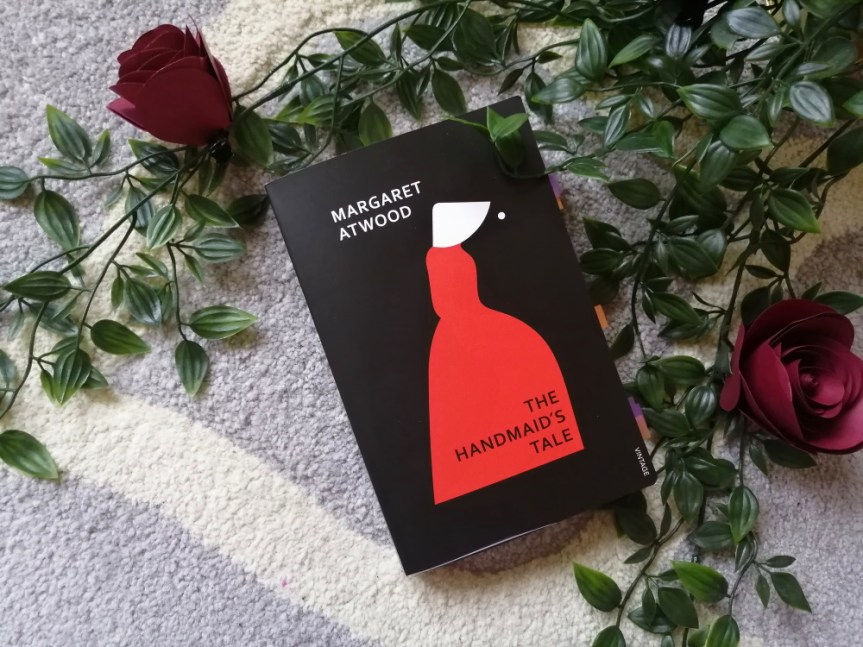
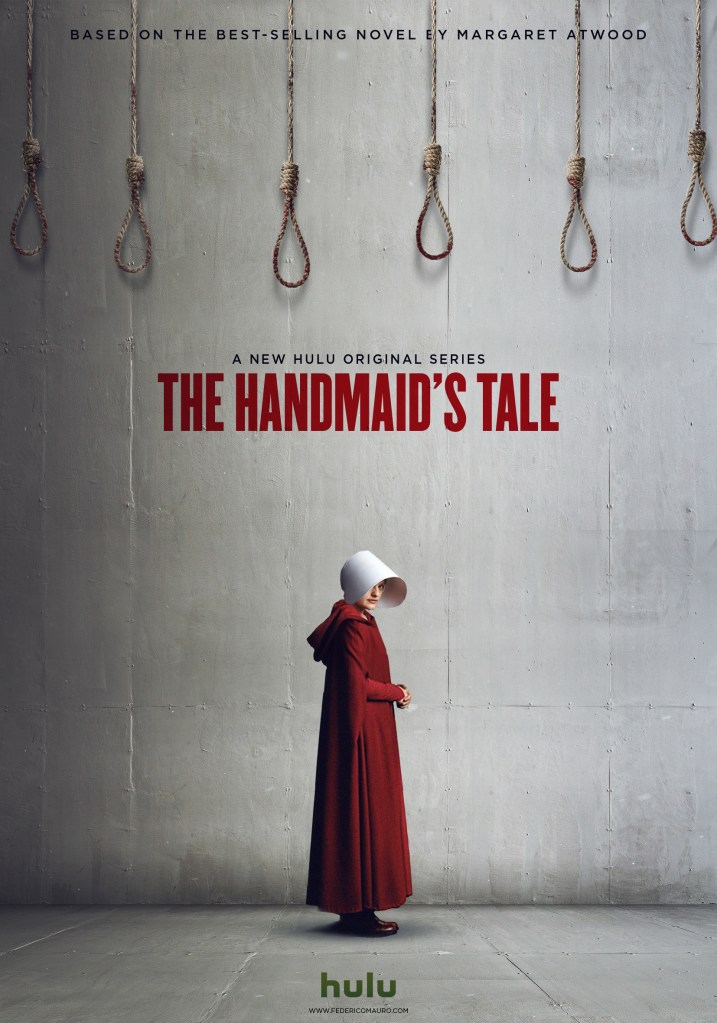
As readers, we travel through many stories and live in those unrealistic worlds that make us feel more realistic the way it is written, some stories imprint in readers’ minds, and some of these imprints in a writer’s mind. However “Handmaid’s Tale” is a novel that is a tormented dystopian story and a novel that kept the readers in an Appalling state throughout the story.
The Gileadean Era: A Foundation intended for the destruction of Humans.
This particular Novel is a dystopian novel that begins with the creation of the “Republic of Gilead” which is formed by a political group namely, the Sons of Jacob which tries to suppress the people of the USA by a strict but environment which is not less than a hell.
The Handmaid’s Tale is a perfect example of How hell would look like if it’s situated on earth. The Gilead Regime is a perfect example of how humans can be hazardous to each other and how they can create a place of agony by being inhuman towards each other and take all rights from the people who are less powerful than them.
This novel is not just about Marxist Feminism, it is not even feminism, it is a novel which talks about suppressing humans who are fragile and powerless and taking away the Right to Speak and Right to express themselves, but this novel is also about how religion is misused against the humans and haunt them in the name of Almighty.
“My Name isn’t Offred. I have another name, which nobody uses now because it’s forbidden. I tell myself it doesn’t matter, your name is like your telephone number useful only to others, but what I tell myself is wrong, it does matter. I kept the knowledge of this name like something hidden, some treasure I’ll come back to dig up, one day.”
– The Handmaid’s Tale
A very Important quote highlighting the crux of the novel in these lines is beautifully written by the author who explains to us about the protagonist of the story: June Osborne who was forcibly turned into Offred who was a mere Handmaid of a commander.
This quote draws us the image that how a person loses their identity when their name is taken away from them. It is the very weird fact that we as a human never use our word, but when someone takes our names from us ultimately, we even lose our identity and our real self-fades away with the spark of our name.
The very same situation happened with June and other women whose names were taken away from them and in return, they were made as Handmaids or we can say a sexual pleasure for their following commanders.
As mentioned in the “Historical Notes” of the novel where Dr. Piexoto explains to the readers that this novel is a transcript of a tape recording which portrays us that the whole novel is written with the perception of an imaginary Character named Offred/June.
Gilead has proved that even advanced technology fails in front of religion. This is a very controversial line that even can hurt people’s sentiments. Gilead abused the people by giving them physical, mental and emotional torcher and treated them as an object for satisfying their pleasure.
A Dystopian story that breaks all norms of society –
If you dig into the story, then “The Handmaid’s Tale” is a dystopian novel that is not one element centric novel, but a novel that has divergent themes and elements. The Protagonist of the story, Offred tells the novel with her viewpoint as a form of a tale where she talks about her sufferings in a form of nostalgia and this novel keeps the reader in curiosity through the suspense drawn in the novel. the story has a nostalgia within a nostalgia. Offred living in a hell called “The Republic of Gilead” makes her a fragile woman cause of the injustice she and other women goes through. The sufferings made her a different person as such she came to a state where she was accustomed to be living like a handmaid and for her freedom was never a word to be dreamt of.
She explains to us how not only women but people who belong to other genders were treated like slaves by the patriarchal society. The author shows us that the patriarch society crossed all the boundaries to break down humanity from the regime and The commander’s wives, the aunts, Martha’s, all were like puppets under this awful patriarch world.
When Humankind is lost, it’s the end of Humanity!
There are many segments of the novel which describe to us the real picture of Gilead and how people in this place are humans but are apathetic towards each other. Gilead is a place where things like emotions, respect, pity don’t exist rather is invisible in this hell-like place.
These handmaids are not allowed to do anything of their own choice as such; going out alone, shopping, watching movies, reading magazines, roaming around the streets, and even having their real names are forbidden in this place. Offred reminiscent of her went days when she was an editor, wife, and a mother and lived a bustling life but in peace. Her freedom is taken away and her bustling life is turned into a life that is just a nightmare for every day.
However now she just has to be fruitful to bear fruits and complete the Procreation ceremony, which is a holy custom for the Gilead community but is merely a form of rape that all handmaids go through. “The Rachel and Leah center “also unofficially known as the “Red Centre” is a cell for those handmaids who disobeyed the law and are followed through the punishment which is a form of clearing mistakes of the young handmaids by making them perfect in the eyes of almighty to bear the seeds planted by the commanders according to the aunts.
In Gilead everything was uncanny, love was substituted with lust, Humans were like slaves, those genders who were not under the category of male and female were sent to “The Colonies” which was not less than a concentration camp that ultimately brings death towards them.
Yet offered never lost hope and always protected herself from the devastation and chose many paths to get over from this hell. Later in the story, we see that his beloved “Nick” who was assumed to be the part of “The eyes” helped him to get out of the regime but in the end, they failed to do so.
We can conclude that; this sci-fi dystopian novel was terrifying at all levels which can devastate human minds. It shows that a sinister human can reach any level of madness and destroy each other by being greedy and sinful.
“You see, Humans are always egoist and sometimes they destroy themselves in search of satisfying themselves with worldly pleasures.”
“Life offers up these moments of joy despite everything,”
Sally Rooney, Normal People.
About the book:
Author: Sally Rooney
Published on: 28th August 2018
Publisher: Faber and Faber
Genre: Literary fiction.
My rating: 3.5/5
The Plot:
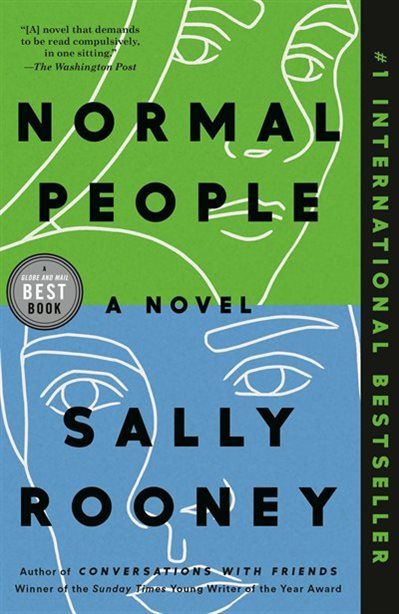
The story follows the lives of two teenagers, each unique in their own way and personality. We have Marianne, who is very private, lonely, proud and studious and always looking for a good conversation, you can sometimes also call her pretentious and then there’s Connell, the popular football star who is well-liked by everyone. Their lives are intertwined in many ways, with them attending the school and Connell’s mother working at her house, they see each other every day and the only conversation they have are pleasantries. However, something shifts and a connection forms, one that both are determined to keep secret. After school, Marianne and Connell are studying at Trinity College in Dublin. Marianne has a whole new social circle to explore, while Connell has gone into his shell. However, as their college life begins they come together and together on a path of self-destruction each acting as a black hole, taking each other with them. With new opportunities coming their way, each having to choose an option.
Review:
This book received too much hype among the GenZ and Millennial groups, a lot of people were either recommending it or posting stories on various social media about it. Nowadays a lot of us, rely a lot on social media, and the things that we’ve seen too many times, we regard the same as the gold standard. So I went into this book, with so much enthusiasm and expectation, however, after reading it, the book did not live up to the amount of hype for me. However, this book paints a very realistic depiction of what teenagers are and how we think and that the only thing we cared about is how society perceives us, and judges us for who or what we are doing and how awkward and flawed we are! The book also addresses issues about the anxiety of moving to a new place, and the idea of not fitting in makes us feel. The thing about Sally Rooney’s writing is that she does not use quotation marks, which takes a while to get accustomed to. The thing about Sally Rooney’s this novel, makes me feel like all the fan-fiction I have read, however, that doesn’t mean I didn’t like this book, I honestly did and but would I re-read it again? Maybe.
Trigger Warning: sexual assault; domestic abuse; drug use; casual racism (called out); depression; anxiety; suicide and suicidal ideation.
“Life is the thing you bring with you inside your own head.”
Sally Rooney, Normal People.
About the author:
Sally Rooney is an Irish author and screenwriter, with her debut novel, ‘Conversations with Friends‘ which was published in 2017. It was nominated for various prizes like Folio Prize, International Dylan Thomas Prize and many others. Her debut novel won the 2017 Sunday Times/Peters Fraser & Dunlop Young Writer of the Year Award. ‘Normal People‘ was also nominated for various prizes and an adaptation of the same novel was premiered in the year 2020. Her upcoming work,’ Beautiful World, Where Are You‘, is set to be published in September of this year (2021).
The Red Market: On the Trail of the World’s Organ Brokers, Bone Thieves, Blood Farmers, and Child Traffickers is a non fiction book about organ trade. The author of this book, Scott Carney, an American investigative journalist and anthropologist, was born on the 9th of July, 1978. He has authored four books – The Red Market, The Enlightenment Trap, What Doesn’t Kill Us and The Wedge. Scott Carney has also worked as a contributing editor at Wired magazine and contributes stories on various issues to Mother Jones, Men’s Journal, Playboy, Foreign Policy, Discover, Outside and Fast Company. Several radio and television programmes including National Geographic TV have covered his works.
This book is an account of various organ trade practices prevalent in the world. The title of the book ‘The Red Market’ – a term coined by the author – refers to a black market place for trafficked human body parts.
“I weigh just a little under two hundred pounds have brown hair blue eyes and a full set of teeth. As far as I know my thyroid gland pumps the right hormones into the twelve pints of blood that circulate in my arteries and veins. At six feet and two inches I have long femurs and tibias with solid connective tissue. Both my kidneys function properly and my heart runs at a steady clip of eighty-seven beats per minute. All in I figure I’m worth about 250 000.”
It contains accounts of an Indian village – nicknamed ‘Kidneyvakkam’ – notorious for its citizens selling their kidney to meet ends, grave robbers in remote villages, a temple that sells the hair of its devotees, child kidnappers who sell kids to adoption centres, and the practice of surrogacy and surrogate mothers. His book provides a detailed and informative account on numerous ways by which the trade of organs is carried out. His information is backed by a thorough research that spanned for years.
“our appetite for human flesh is higher now than at any other time in history.”
This author manages to capture the plight of people forced by their fate to sell their organs to sustain their livelihood, how the anonymity of the buyers is maintained, how the trade is carried out through agents, the economics of the red market and how it is affected by various laws in different countries. The writing style is clear and makes one feel like an observer of the events being narrated making the book an insightful one.
“People don’t go to a transplant center to buy medical services: They go to buy organs.”
The book manages to paint a sufficiently clear enough picture of things that benefits even a person not acquainted with the subject. The book benefits from the background research and the experiences of the author. The interviews of various people involved in the practice helps in better understanding of the events and supplying contextual facts. Despite all this, some parts and arguments advanced by the author tend to feel vague.
The dystopian genre can be categorized into a wide group of literary works of speculative fiction. It usually involves a vision of the future, or an alternate world, which is used by an author to comment on and explore ideas about their own society. It’s has been a popular genre for quite some time. Lets analyze why dystopian literature, in particular, is so important.
Dystopian literature makes important commentary on the world, societies, and our governments. Humans, since the beginning of the organized society, have always been fascinated by a perfect society which is ‘Utopia’. Since Humans are flawed and our societies mirror that, but it’s also in our nature to strive for better, similar to philosophers who focused on political theory.
During the medieval age, utopia seemed to be a noble idea among the European authors and philosophers. While its main aim was to depict an ideal society, Dystopia on the other hand was a response where authors argued with the Utopian literature. Dystopias are utopias in the real world as these visionary ideas work well, as ideas. When placed in reality they quickly turn into dystopias.
In order to have an ideal society, humans should be devoid of humanistic values. Writers Depict societies that strive for perfection but ultimately fail as they ignore some vital part of humanity, which makes a convincing dystopian world.
Writers look for flaws that exist in our societies today, grounded in truth, and amplify them. A similar reflection of flaws can be seen in Orwell’s 1984 where it paralleled the problems that were ongoing in that period with the depiction of the overt dictatorial elements present in the Soviet Union and Third Reich. He critically pointed out the Government Surveillance, thought police, the constant change of history, and banning of books, which may seem exaggerated. These elements parallel our society albeit in a more subdued manner. Nevertheless, the parallels are present there, hence 1984 is still a very relevant piece of literature today.
Similarly in Brave new world, Huxley pointed out that there would be no need for banning books as people will be bombarded with too much information and would be critically incapable to decipher reality with information overload. Where pleasure receptors hijack people’s critical thinking
Within these two instances, we can interpret that one man’s heaven (Utopia) is another man’s hell (Dystopia). And dystopian writers don’t shy away from being political or radical when they try to describe these phenomena to warn readers.
It has also given rise to many similar genres like science fiction and cyberpunk, dystopian literature can share elements with these themes. In recent times, dystopian literature has also been popularized with the help of Movies, TV shows, and Video Games.
With the advent of the 20th-century dystopian literature evolved and flourished, many of the revered classic literature in the past century has been a part of this genre. Technology and science progressed and new means of government and bureaucratic institutions were established. This gave writers a new method to introspect the societal trend.
There is a critical need to academically evaluate these literary writings as its getting more relevant in our present society.
What a good artist understands is that nothing comes from nowhere. All creative work builds on what came before. Nothing is completely original.
If we are free from the burden of trying to be completely original, we can stop trying to make something out of nothing, and we can embrace influence instead of running away from it.
2. PRODUCTIVE PROCRASTINATION.
Creative people need time to sit around and do nothing. You get some of your wonderful ideas when you seat and do nothing. So take time to do nothing and just sit.
If you are running out of ideas, go for a long walk. Por stare at something as long as you can. As artist Maira Kalman says, “Avoiding work is the way to focus my mind”.
3.KEEP YOUR DAY JOB.
A day job gives you a daily routine in which you can schedule a regular time for your creative pursuits. Establishing and keeping a routine can be even more important than having a lot of time.
4. SCHOOL YOURSELF.
School is one thing. Education is another. The two don’t always overlap. Whether you are in school or not its always your job to get yourself an education.
You have to be curious about the world in which you live. Look things up. Chase down every reference. Go deeper than anybody else – that’s how you will get ahead.
When I picked up the book first, I did it with the assumption that the book would be circling around basic morals and lessons that our children usually learn when they get acquainted with their surroundings, this assumption was based on the mere fact, that the book is based on the lives of farm animals. But a very much-needed reality check came, once the short intricate book progressed in my hands.
George Orwell, the author of this 112 pages worth book, uses his gift of simple writing to bring forth a complex life cycle. His writing explains and describes the enormity, complexity, and the need for various important concepts like war, education, laws, government, development, etc in the most straightforward way possible.
While this book may only last for a few hours, it gives various lessons, that can last you a lifetime. George Orwell manages to explain the recurring need for war, the persisting inequality in our society, the struggles of an updated education system, and many more concepts in detail, with just the help of a few farm animals.
Further George Orwell not only provides a wholesome end to the book, but he also manages to bring a conclusion to the vicious cycle of life, in his effortless way.
In the end, the book makes you question a lot of things around you. It opens your eyes to the realities of life in the most captivating way. And persuades you to question, analyze, and conclude everything around you in your way.
Classics are usually stereotyped as boring and hard to understand. But rest assured that not only will this book end in just the knick of time, but it will also provide you a much-needed understanding of life, in the most simplistic way.
Should you read this book ?
Yes, absolutely. Don’t get intimidated by its must-read classic status, Because it will be a book to treasure for a lifetime.
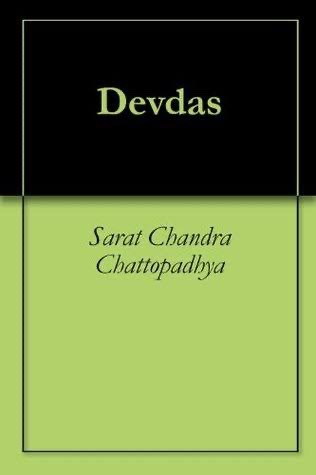
Book Cover of Novel, Devdas. (Photo Credits: Goodreads)
There’s a certain notion among Indians that every sad lover in the country is a real life Devdas. But deep down, let’s analyse, was Devdas really a lover or yet another male chauvinist?
Plot:
The story starts with two childhood family friends Devdas and Paro, both belonging to rich households and immediate neighbours. Both of their families are well connected to the each other as well. The story revolves around Indian state of Bengal.
Slowly, Devdas and Paro grow up and start developing love for each other. However, Devdas was a spoilt rich brat and this is the reason his father sends him to London for higher studies. Paro becomes sad on knowing this and waits for his return. Devdas returns home after 10 years of studies and is now a well grown up. Paro, on the other hand, exceptionally beautiful, fantasises about her childhood love Devdas.
On his return to Bengal, Devdas and Paro meet and resume their fairy tale love story. However, Dev’s family isn’t happy with their relationship as Paro was from a lower caste background. Things go worse when Devdas’s mother insults Paro’s mother for offering her daughter as a bride to Devdas’s family. This was followed my Paro getting insulted by Devdas’s father who calls her “characterless” as she went on to meet Dev at late night. Devdas seeing all this, refused to accept Paro as his family was against the relationship.
Paro’s mother, unable to bear the insult, vows to get Paro married in a family which would be lot more rich and influential than Devdas. And she does so! A week later Paro marries a rich old man from a nearby village. However, just before her marriage, Devdas suddenly arrives and offers his hand to Devdas to which Paro refuses. Devdas gets angry at the refusal and hurts Paro with a gold necklace and thus Paro suffers from an injury.
Months later Paro’s marriage to the old man, Paro pays a visit to Devdas where it’s revealed he’s completely alcoholic and lonely. Paro requests him to come with him but Devdas doesn’t agree but promises her that he would come to Paro once before his death. Devdas also meets a courtesan, Chandramukhi with whom he develops loves but leaves her yet again.
Finally, the story ends with Devdas fulfilling his promise of coming to Paro but Paro’s husband refuses to let her meet Devdas. At the end, an alcoholic Devdas passes away leaving Paro sobbing.
Character of Devdas.
1) Devdas was never a lover.
I wonder, how people have beautifully whitewashed the ignorant and abusive nature of Devdas. When Paro went to meet Devdas late at night putting her dignity at stake, Devdas refused to go with her fearing about his own family honour. If this is the case, how can he be called a lover? If family and society was more important to him, it shows he never actually loved Paro.
2) Devdas was a male chauvinist.
Devdas suddenly offered his hands to Paro when Paro was just about to marry. Paro taking into consideration her self respect questioned Devdas that why is he so late and why didn’t he come when Paro went out to meet him at his home the week before. She also asked Devdas about the reasons why her parents and she were insulted by Dev’s family. Devdas couldn’t tolerate a woman questioning him and instead of apologising to her, he shouted at her for being “too arrogant”. Devdas cared about his family honour but didn’t care about Paro’s family honour: This shows his ingrained patriarchy.
3) Devdas tries to justifies abuse!
Perhaps one of the most problematic chapters of the book was when Paro refuses Dev’s offer of running away with him on her wedding night with the old man. On getting a rejection from Paro, Dev goes intolerant and beats Paro with a gold necklace. Paro suffers from an injury and her head starts bleeding. Devdas asks Paro to keep this injury with her for life as it would always remind her of Devdas. Paro agrees to this and throughout the book she is shown to love that injury. This also shows how much the book has normalised and romanticised a brutal abuse and also definitely brutal abusers!








































 Eduindex
You must be logged in to post a comment.