2 Reasons Why You Need Proxies to Protect Your Brand and Your Consumers


https://pixabay.com/photos/proxy-proxy-server-free-proxy-4620557/

An Internet superhero with many abilities comes to mind when thinking about proxies. Look at it this way. A proxy offers tons of functionalities to users. One is that you get online anonymity while browsing. This keeps you safe from prying on third-party eyes. And yes, this includes cybercriminals.

A proxy helps you roam around anonymously. Proxies hide the end-users identity, therefore, adding a layer of protection This helps ensure security for your devices and data. 

And, that’s not all. By hiding your IP address, you can access geo-restricted content. And companies that do a lot of research enjoy web scraping capabilities. It doesn’t stop there though.

Proxy servers balance internet traffic. It is especially useful during peak hours when there is a lot of traffic. The balancing and caching capabilities ensure faster internet speeds. 

But, how can proxies protect your brand and consumers? Read on to see why investing in this internet superhero is a worthwhile move.

  1. Brand Protection With Residential Proxies

Residential proxies get the IP from an ISP. They will connect the IP to an actual physical location and device. The device could be a phone, laptop, or desktop computer. These act as the intermediary for the connection. 

At this point, you may be wondering why this should matter. Well, remote browsers will see the residential IP address as a real person. This reduces the chances of bans or flagging on some of the sites. Do note, some websites will ban an IP address if there are repeated requests for information.

You cannot open many social media accounts using the same IP address. That is why proxies, such as Blazing SEO residential proxies, are such helpful tools. 

But there is more with regards to brand protection with residential proxies. Let’s check out some uses.

  1. Detect Copyright Infringement

Residential proxies can help detect copyright infringement. Other people could be using your brand images, content, or videos, without your permission. It can be difficult to track such actions on your own. An option is to use bots, but some websites will detect and block them. 

With residential proxies, it appears as if a real person is looking for the information. It becomes possible to search multiple websites without raising any flags.

  1. Identify Rogue Websites

Rogue websites imitate official websites. The account owners will make subtle changes to the URL. It ends up looking like an authentic site. They can then use these to sell counterfeit products or for other nefarious purposes. 

Most customers will not even realize that they are on a fake or copycat website. They could end up losing money. The damage to your brand reputation would be hard to manage. Proxies provide a fantastic way to identify such sites. 

The web scraping capability improves efficiency and reduces the chances of banning. Online anonymity will allow you to search sites in regions that may ban an IP address from your country.

  1. Ad Verification

As a brand, you want to ensure that your ads appear on appropriate sites. You must keep your brand reputation by appearing in the right places. 

You also need a system to check for fake impressions, fraud, and fake clicks. These are popular methods cybercriminals use to send traffic to their sites.

Fraudulent ads, for example, contain malicious code to redirect visitors to another site. Ad verification without a proxy server means the Cybercriminals can flag your activities. They may end up blocking you.

Residential or rotating proxies provide an effective solution to carry out the task. The proxies can also allow you to open up localized ads. Those outside the specific geographical location will now be able to view them.

2. Data Security With Proxies

Businesses collect a lot of information from customers. Proper handling of data is a critical process to keep it safe. Data breaches can lead to serious repercussions. These include:–

  • Damage to the brand’s reputation, which could take years to resolve
  • Loss of customer trust resulting in loss of business. Customers need to know the company they are transacting with keeps their information safe.
  • Financial implications arising from lawsuits
  • Diverting company resources to manage the breach. It can have serious budgetary implications for the company.

Proxies provide a way to improve data security in several ways.

  • The right proxies can provide data encryption. This means that only the intended recipient can decipher the information.
  • The sieving of content in and out of the company browser removes any malicious content. Adding proxies onto other security measures provides that extra layer of protection.
  • Online anonymity keeps the brand safe from third-party eyes. It is especially critical when sending and receiving sensitive documents. Since no one can watch your online activities, there is more security for you.
  • Proxy servers act as a firewall, thus restricting access to unauthorized persons.
  • The company can track internet usage within the company. The admin can block access to inappropriate sites. They can also keep logs or records of the websites employees visit. Proxies provide an effective way of reducing insider threats. Statistics show that insider threats account for more than 34% of cyber-attacks. There has been a 47% increase in such threats within the past two years. In 2020, the cost of Insider threats to organizations was $2.79 million.

Final Thoughts

Proxies provide an efficient and effective way to protect brands and customers. The brand enjoys online anonymity. You can carry out online tasks without anyone monitoring your activities. 

Residential-proxies provide an IP address from the internet service provider. They offer the highest levels of anonymity. The brand can use proxies for web scraping and accessing restricted content. 

Data security is a key component for any company. Any breach will expose customers and the company to so many issues. For the brand, it could lead to damage to reputation and loss of customers. 

The financial implication of correcting such can also be very high. A proxy has so many security benefits as we have highlighted.

As we said, a proxy is like an internet superhero with so many abilities. Your brand and customers will thank you for investing in one.

Introduction to SEO

Introduction to SEO

Search Engine Optimization, more commonly referred to as SEO, is one of the most crucial aspects of marketing. As such, if you’re working to market your blog or your business, you need to know what SEO means and what the rules and ways of SEO success are. While a successful SEO strategy isn’t an exact science, and its practice has been challenged on many fronts throughout the years, knowing the basics is still important to an effective marketing campaign.


What is SEO?

SEO refers to the process of making a website more visible on a search engine’s results page. To clarify, a great SEO strategy will put a company’s website at the top of the list on a Google search page, therefore increasing the likelihood that people will visit the site. Search engines strive to provide the most relevant results for a person conducting a search, so that when a person runs an internet search for “cupcakes,” the first thing to appear isn’t a cookie shop, but a bakery that specializes in cupcakes as well as a definition of the dessert. In other words, SEO helps to make a search relevant to the user and can be critical in driving traffic to your site.


Search engines work by searching the Internet to find text that meets certain criteria. This text is known as keywords and refers to the most important theme(s) of the website, company, or product. Scouring the online world to find keywords are why, as in the example above, a search for “cupcakes” yields a result of multiple pages about cupcakes, not cookies. Other important things that a search engine uses to rank a website include titles, headings, and links that make up the content of a website’s pages. Search engines also employ search engine indexing to find, digest, and store the content of a website. A search engine index refers to the set of data that’s used to base a final search result on.

The Importance of Keyword Research

Another important part of an SEO introduction is understanding the significance of keywords. We explained above that keywords are the specific words or set of words that best describe the theme or overall concept of an idea, website, business, or product. Keywords are the words that people use when conducting a search, and should be words that are included in the content of your webpage. Choosing the right keywords can help to drive traffic to your site, attract potential customers, and greatly improve your SEO ranking.

When deciding what keywords you should include in your text, you should consider things such as the relevancy of the keyword(s) to your website and company, as well as the competitors that are using the same keyword(s) (you can check this by running a quick Google search of chosen keywords yourself, and seeing what sites appear at the top of the list). To discover the value of your keywords, you can buy a sample campaign from Google AdWords, which will allow you to test the traffic generated by your chosen keywords. If all three things are in check—the keywords are relevant to your website, competitors are experiencing success with similar keywords, and a sample campaign yields high traffic—you should feel confident in moving forward with the keywords.

SEO Tools and Services

Although an SEO introduction is a fantastic place to start, as your marketing initiatives develop, you might want to think about acquiring additional SEO products and services. These resources are frequently made available by the search engines themselves, including Google’s Google Analytics, Google Webmaster Tools, Google AdWords Keywords Tool, Google Alerts, Google Trends, DoubleClick Ad Planner, Google Page Speed, Google Site Map, and others.


In addition to the tools offered by Google, you may also investigate additional internet tools or even employ a business that specializes in SEO marketing to build and optimize your website.

Korean wave in India.

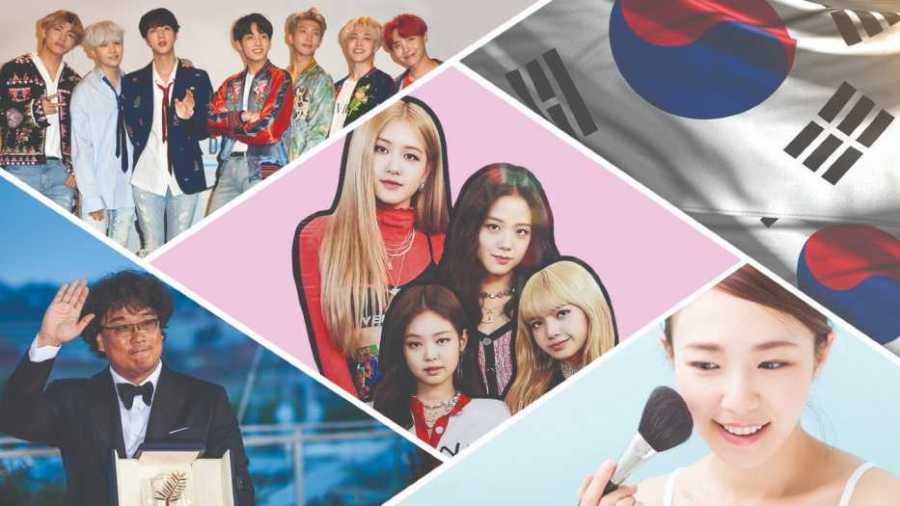
The  Korean wave has certainly seen a significant  rise in India during the pandemic, and K-Drama and K-Pop are seeing massive demand from fans and new followers as well. In response to the growing popularity of the Korean wave in the country, many  online and offline events are held to show people  what they are consuming online. And these extend not only  to K-Drama and K-Pop, but also  to food, beauty and culture in general.
Korean singer PSY’s 2012 viral hit “Gangnam Style” may have started the Korean wave in India, but it certainly wasn’t the origin. The existence of K-POP in India dates back to the late 90’s when in Northeastern part  in Manipur Bollywood films were not allowed to watch because law imposed by the Separatist group Revolutionary Peoples Front to make Manipur independent.Not so much offered, the locals turned to Korean content and it got it’s popularity from their on.

Increasing demand for Korean content is fueling competition between India’s Amazon Prime Video and Netflix. Amazon Prime Video is the first company to launch Parasite and Minari in the country. Hotstar, MX Player, Viki and Viu are also involved in the Korean wave effect. Discovery + launched the “Star vs Food” series featuring the Korea Tourism Organization (KTO) and K-POP idols to introduce Korean food to India. Some prominent dramas are: Crash Landing on You, Squid Games, Descendants of the Sun and many more more , the reason of these Korean content popularity is that as an audiance, Indian’s  find Korean content relatable to them.

According to Hyun Woo, Kross Komix co-founder, president and CEO Thomas Kim predicts that South Korea’s webtoon, or digital comics, will be the next big thing.Kross Komics is India’s only webtoon platform  launched in December 2019. In just about 1.5 years of operation, the app has been downloaded more than 4.5 million times, about half of which are women. “With the numerous webtoons in the romance / romantic comedy category and the world’s best-selling stories, this new format of content has become a very interesting alternative to the dramas and movies”.

“In 2020, the blockade caused by Covid-19 is said to be one of the reason to the popularity and acceptance of Korean culture in India through dramas available on multiple video streaming platforms and the different Korean music band whose craze is extraordinary. South Korea’s food exports hit a record high,  boosted by social media posts from Asian celebrities and the popularity of the movie like “Parasite” and drama like”Crash Landing on You”. The widespread  of k-pop, k-movies, and k-drama has evolved into a  fan culture, especially among the  urban youth of the country. Following k-pop music and movies, K-Food and cooking have undergone a major makeover to reach the larger Indian market. K-cuisine is all the rage, especially on social media, in the form of food challenges like Mukbang, “said Hwang Il-young, director of the Korean Culture Center India .

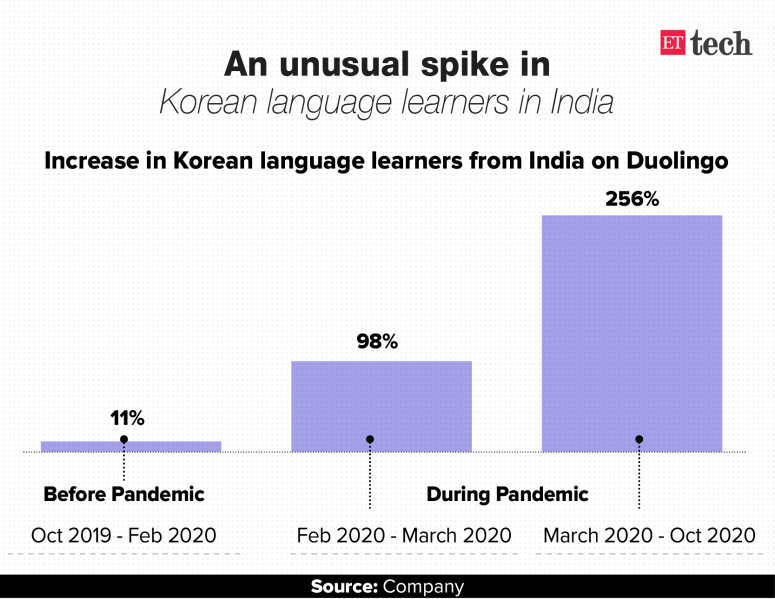
The Korean wave,  the growing global popularity of  Korean culture, swept India a few years ago, but  exploded during a pandemic. Supported by the OTT platform, which has a large investment in Korean programs, the number of people who started watching K-Drama and listening to K-Pop has skyrocketed. Recently, the language learning app Duolingo surveyed 1,013 people in 10  cities in India and found that Korean is  the fastest growing language in India. It was the 7th most popular language for Indians in 2020, but it has risen to the 5th in 2021 and will  continue to rise. Duolingo’s 2021 audio report attributed this primarily to the release of Squid Game in 2021.

Excellent Career in FMCG (Fast Moving Consumer Goods) Industry

Fast Moving Consumer Goods (FMCG) sector is characterized by strong MNC presence and a well established distribution network. In India the easy availability of raw materials as well as cheap labor makes it an ideal destination for this sector. There is also intense competition between the organized and unorganized segments and the fight to keep operational costs low. Due to this intense competition coupled with good enough growth in the sector, it requires huge number of human resource year on year. Fast Moving Consumer Goods (FMCG) goods are all consumable items (other than groceries/pulses) that one needs to buy at regular intervals. These are items which are used daily, and so have a quick rate of consumption, and a high return.  

FMCG can broadly be categorized into three segments which are :  

• Household items as soaps, detergents, household accessories, etc,

• Personal care items as shampoos, toothpaste, shaving products, etc and finally

• Food and Beverages as snacks, processed foods, tea, coffee, edible oils, soft drinks etc.  

Global leaders in the FMCG segment are Nestlé, ITC, Hindustan Unilever Limited, Reckitt Benckiser, Unilever, Procter & Gamble, Coca-Cola, Carlsberg, Kleenex, General Mills, Pepsi, Gillette etc. The burgeoning middle class Indian population, as well as the rural sector, presents a huge potential for this sector. The FMCG sector in India is at present, the fourth largest sector with a total market size in excess of USD 13 billion as of 2012. This sector is expected to grow to a USD 33 billion industry by 2015 and to a whooping USD 100 billion by the year 2025. Growing awareness, easier access, and changing lifestyles have been the key growth drivers for the sector. Rural demand is set to rise with rising incomes and greater awareness of brands. There are number of factors that will drive future growth in this sector. Increasing rate of urbanization, expected to see major growth in coming years will give a big push to this sector.

Moreover, rise in disposable incomes, will lead to premium brands having faster growth and deeper penetration. ​​​​​​​   Innovative and stronger channels of distribution to the rural segments are also giving a big push to this sector in terms of deeper penetration. Moreover, the icing on the cake is the increase in rural non-agricultural income and benefits from government welfare programmes resulting in increased purchasing power. Innovation in FMCG is a wide concept which aside from creating, launching and marketing new products also includes improving shopping processes, providing consumers with a range of tools to purchase products as also ensuring that the entire organization is focused on the singular goal of improving the customer’s overall experience. Therefore, in all functions like marketing, Finance, HR, IT, operations and strategy, there is a demand for talent by FMCG companies.  

As Indian consumers become more global in their aspirations and desires, as they travel abroad and are exposed to global products, their appetite to consume products in their home market will only increase. To meet this demand, FMCG companies need to focus on R&D and innovation as a means to grow the business. At the same time, product lifecycles are shrinking, companies across categories are launching new products, and the pressure to market new products, quickly, is strong. Due to these factors, FMCG companies recruit people at all levels including freshers from B-schools. As innovation becomes critical to the sector’s growth story, there is more demand for freshers as companies want to capitalize on their fresh ideas.

Working in FMCG gives you a chance to work with the biggest brands

A big benefit of working in the FMCG industry is that it is home for many of the world’s largest brands. Some that you might recognize and even have in your home include Heinz, Unilever, Procter and Gamble, Coca-Cola and Nestle. And so are their products. Having the opportunity to work for a brand that you like and use on a regularly basis can increase your job satisfaction and make you enjoy your work more.

Most of the job openings are from industry giants. Therefore, you have a great chance to enter one of the world’s largest companies. Whether you have always wanted the prestige of working for a market leader or you are just attracted to the perks of being employed by one of the world’s industry giants, FMCG can open those doors to you.

FMCG offers opportunities to have a global career

Most industries are concentrated in capitals and big cities. However, FMCG offers opportunities all over the globe for those who are interested. Not only does doing a traineeship in FMCG take you to at least two countries over the course of a year, but having a real job in FMCG can take you anywhere you want. FMCG companies are scattered worldwide and depending on the skills you would like to gain and the job you have, you can land anywhere between Sydney, Hong Kong, Berlin and New York.

Maggi story as brand

The MAGGI brand originated in Switzerland. It was founded in 1884, when Swiss entrepreneur Julius Maggi had a vision: to make good-tasting and nutritious food accessible to busy, working families. He invented a powdered pea and bean soup, to provide nutritious, easy to prepare food for busy women who worked in factories and didn’t have time to prepare healthy meals.

This first MAGGI product was followed two years later with the invention of ready-to-use soups and liquid seasoning. Nestlé acquired the MAGGI brand in 1947 and today, more than 120 years later, we strive to build on Julius Maggi’s ambition of making delicious, quality and nutritious food accessible to all.

Today the tradition continues around the world. Whether it’s MAGGI bouillons, soups, or seasonings, consumers have come to know and trust the MAGGI brand for its high quality, convenience and nutrition.

History

The company originated in Switzerland in 1884, when Julius Maggi took over his father’s mill. He quickly became a pioneer of industrial food production, aiming to improve the nutritional intake of worker families. Maggi was the first to bring protein-rich legume meals to the market, and followed up with a ready-made soup based on legume meals in 1886. After that Julius Maggi introduced bouillon concentrates, first in capsules, then in cubes. In 1897, Julius Maggi founded the company Maggi GmbH in Singen, Germany.

Maggi has become a household name and it is synonymous with noodles. However, Maggi offers other products apart from noodles, and these are soups, ketchups, sauces, and stock cubes. Maggi as a brand was established in 1863 in Switzerland, when Julius Michael Johannes Maggi developed a formula to bring greater taste to meals. In 1882, the Swiss Public Welfare Society authorised Maggi to come up with a vegetable food product that is easy and quick to prepare, to help with the problem of women having less time in the kitchen.

This led to the creation of two instant pea soups and an instant bean soup that reached the height of success. In 1947, Maggi merged with Nestle and since then it has been providing high quality and innovative products to the world.   Maggi has captured the hearts of millions around the world because it understands the needs of people and manages to meet these demands. For example, in the 1980s, when there was a huge increase in the number of women joining the workforce, Nestle India introduced Maggi 2 Minute Noodles to the Indian crowd. This is how Maggi revolutionised the instant food industry, particularly the instant noodles segment. When eating habits of people changed, Maggi tweaked its products to include low-fat bouillons.   

When Maggi was launched in India in the 1980s, there was no direct competition from instant noodle brands. However, there was competition from other snacks that Indians had been fond of for decades, and these included samosas, pakoras, and sandwiches. However, most of these snacks are purchased from roadside stalls, and are relatively unhygienic and unhealthy. So, Maggi positioned itself as the only hygienic homemade brand. It decided to target working women who did not have much time to prepare elaborate meals in the kitchen. However, Maggi realised later, through surveys, that children were the largest consumers of Maggi noodles. And then Maggi repositioned its brand towards the kids segment and included various promotional tools such as sketch pens, colour pencils, and fun books to entice children. And this worked wonders for the brand. Due to its promotional activities, Maggi’s annual growth grew by 15% during its initial years, and today, Maggi is the leading brand in the instant noodles segment in India, with a market share of 79.3%.   

Maggi is worth Rs 200 crores and contributes to approximately 10% of Nestle India’s top line. Being a pioneer in the noodles market in India has definitely given Maggi a boost and first mover’s advantage over other brands. Maggi is slowly but surely widening its market to reach out to more and more people. Today, Maggi has introduced Vegetable and Dal Atta noodles to cater to those who are health conscious. Maggi’s products come in travel packs as well as bulk packs, to cater to those who look for convenience while travelling and those who are price sensitive and prefer to purchase food in bulk. Maggi is one of the few brands to have taken the time to understand its consumers and their requirements, which is why it is one of the most successful brands, not only in India but in the world. 

AMUL – Anand Milk Union Limited

Anand Milk Union Limited, a brand so distinctively Indian has been a part of our lives for nearly five decades now and still is able to touch a chord in our hearts. Brand Amul has grown as a dynamic factor which protects the interests of producers and consumers of Indians and it is a symbol of many aspects of high-quality products sold at reasonable price, of the genesis of a vast co-operative network, of the marketing savvy of a farmers’ organization, and of a proven model for dairy development.

In 1946 the colonial government of Mumbai had the rights of the procurement of milk from the villages of Kaira district. The milk was to be supplied to the government for distribution in Mumbai. The firm, Polson dairy in turn appointed contractors for collecting milk from these villages. The farmers found the contractors entirely unreliable in collecting the daily milk supply and paying them what they considered to be unfair and insufficiently remunerative price. This state of affairs was not tolerated by the farmers; they retaliated and refused to supply milk. Hence they formed a co-operative under the guidance of Sardar Vallabhbhai Patel and Morarji Desai and eventually won the right to collect milk in the district and also sell it to the Government.

The co-operative was  started with an initial collection of just 250 liters a day. This was the beginning of the Kaira District Co-operative Milk Producers’ Union, which is now better known as AMUL which was formally registered on December 14, 1946.

Amul inspired ‘Operation Flood’ and credited to bring the ‘White Revolution’ in India. It began with two village cooperatives and 250 liters of milk per day and it distributes over a million liters of milk per day, collects and processes various milk products. By managing milk supplies from the cattle farmer and sending it straight to the factory, it’s been able to eliminate the middleman. Amul has become a symbol of the aspirations of millions of farmers.

With  ‘White Revolution’, we cannot ignore the remarkable contribution of Dr. Verghese Kurien who is better known as the “father of the white revolution” in India and his name is synonymous with the Amul brand. He is also called as the Milkman of India. For his outstanding input he has earned many accolades and awards that include: Ramon Magsaysay Award for Community Leadership, Padam Shri, Padam Bhushan, Krishi Ratna Award, Wateler Peace Prize Award of Carnegie Foundation and many more.  

The Amul Model is a three-tier cooperative structure. This structure consists of a Dairy Cooperative Society at the village level affiliated to a Milk Union at the District level which in turn is further federated into a Milk Federation at the State level. Three-tier structure was set up in order to delegate the various functions; milk collection is done at the Village Dairy Society, Milk Procurement & Processing at the District Milk Union and Milk & Milk Products Marketing at the State Milk Federation. Three-tier structure was first developed at Amul in Gujarat and thereafter replicated all over the country under the Operation Flood Programme, it is known as the ‘Amul Model’ or ‘Anand Pattern’ of Dairy Cooperatives.

The effects of Operation Flood Programme are more appraised by the World Bank. An incremental return of Rs. 400 billion annually have been generated by an investment of Rs. 20 billion over a period of 20 years. This has been the most beneficial project funded by the World Bank anywhere in the World. One can continue to see the effect of these efforts as India’s milk production continues to increase and now stands at 90 Million Metric Tonne.

 AMUL is recognised as the country’s largest milk producing cooperative. Based in the village of Anand, it expands exponentially. Originally marketed by the Kaira District Cooperative Milk Producers’ Union, Anand, it was taken over by the Gujarat Cooperative Milk Marketing Federation (GCMMF) in 1973 and further it joined hands with other milk cooperatives and now covers 2.12 million farmers, 10,411 village level milk collection centers and fourteen district level plants (unions) under the overall supervision of GCMMF (Gujarat cooperative milk marketing federation ltd). 

Amul has a wide spread supply chain network across the country. Its products are available in over 500,000 retail outlets across Indian through its network of over 3,500 distributors. There are 47 storehouses with dry and cold warehouses to buffer inventory of the entire range of products.

Amul network follows an umbrella branding strategy i.e a common brand for most product categories produced like liquid milk, milk powders, butter, ghee, cheese, cocoa products, sweets, ice-cream and condensed milk. AMUL is considered as India’s best known local Brand across all categories.

In fact, it is not just the core values at Amul that have remained the same; since long the core team associated with the brand is still the same. Even the advertising agency hasn’t changed, and Da Cunha and FCB Ulka, have played a pivotal role in the growth of Amul.

Amul’s unique marketing strategy is really surprising. Despite of the fact that in today’s business world advertising plays a vital role to marketing a product, Amul does not spend more than 1% of total turnover for marketing, compared with 7-8 % spent by most of food and consumer product companies. 

With top of mind  use of its jingle, Utterly Butterly Delicious and animated Amul girl, campaign- Amul brand has set a longest running advertising  Campaign and it is a world record that got registered its name in Guinness World Record and has won the many accolades.  Amul features in top 100 Brands of Asia.Competing with other international brands like Nastle, Dutch Lady, Dumex etc it has been ranked as the best and number one dairy brand from India. 

From a sales turnover of Rs 1,114 crore in 1994-95, Amul’s sales have risen substantially to Rs 9,774.2 crore in 2010-11. Amul is all set to fight in the global arena and has entered overseas markets such as Mauritius, UAE, United States of America, Bangladesh, Australia, China, Singapore, Hong Kong and a few South African countries.

The Gujarat Cooperative Milk Marketing Federation Ltd. cannot be viewed simply as a business enterprise. It is an institution created by the milk producers themselves to primarily safeguard their interest economically, socially as well as democratically. Business houses create profit in order to distribute it to the shareholders. In the case of GCMMF the surplus is ploughed back to farmers through the District Unions as well as the village societies. This circulation of capital with value addition within the structure not only benefits the final beneficiary – the farmer – but eventually contributes to the development of the village community. This is the most significant contribution the Amul Model cooperative has made in building the Nation.

Indian Detergent Market

The detergent market in India is divided into three segments – premium, mid-range, and popular. The premium segment comprises Ariel and Surf; the mid-range segment comprises Tide, Henko, and Rin; and the popular segment comprises Mr White, Wheel, Nirma and Ghari. The market share of the detergents in the premium segment is 15%, and that of the mid-range and popular are 40% and 45% respectively. These detergent brands are considered organized players in the industry and comprise 60% of the total market. The remaining 40% of the market is saturated with regional and small unorganized players. Reports show that India’s per capital consumption of detergent stands at 2.7kg – the lowest in the world.  

Before 1985, Hindustan Unilever’s Surf held the number one position in the detergent market in India. However, when Nirma Chemicals launched a detergent brand called Nirma, catering to the middle and lower middle class customers, Surf was evicted from its number one position. Soon, HLL realized that there were fragments of the market which were untouched by major detergent players in India and it came up with two low-priced detergents called Wheel and Rin to cater to the lower middle class group.  When Hindustan Lever, HLL, and Nirma Chemicals began increasing their market share, Rohit Surfactants, yet another player, launched a detergent brand called Ghari for rural customers, and middle and lower middle class customers.

Today, Ghari is the market leader in the detergent industry, with a market share of 17.3% and Wheel is tagging behind closely at 16.9%. Tide is at present at the third position with a market share of 13.5% and Nirma has less than 6% market share. Ghari has always maintained affordable pricing, which is why it has managed to become a household name in India. To increase its customer base, Rohit Surfactants has spread its distribution network for Ghari detergent to more states in India. In fact, in the last three years, the company has increased its reach to 10 more states and it sells Garhi detergent through more than 3,500 dealers.   

The detergent industry is worth Rs 13,000 crores and industry players are constantly improving their products to suit the changing needs of consumers. A few years back, liquid detergents were almost unheard of; however, today, we witness more and more companies producing liquid detergents alongside powder detergents and laundry bar soaps.    In the past, consumers in India used to wash clothes by hand but today, with the advancement of technology, more and more people are shifting to washing machines. Hence, detergent companies have tweaked their products to enable the washing of clothes in all types of washing machines – top load, front loading, fully automatic, and semi automatic washing machines.​​​​​​​ In addition, detergent companies have started manufacturing powder detergents in packs of 20 grams, 200 grams, 500 grams, 1 kg, and 2 kg to cater to the needs of those who prefer to buy in small packets and in bulk.    Today, consumers have a number of products to choose from, which is why companies are constantly upgrading their products and coming up with better and innovative advertising campaigns to increase their market share.

The Indian detergent market is largely divided into two markets of organised and unorganised players. The main products sold here are the detergent bars, detergent powder & liquid detergent. The major proportion of Indian market lies in the rural area in which people are less aware of the brands, buys from general retails and are also highly price sensitive. Moreover, they can easily switch to another product if it is being offered at lower price.

Hence, price competition is a major factor in Indian Detergent market. On the other side, urban people are educated and are aware of the trends, brands and fabric hygiene. Furthermore, they also purchase detergents from multibrand retails and e commerce. Hence, the premium detergent products such as washing machine powders and liquid detergents were developed targeting the urban audience.

The Indian Detergent market has always seen a substantial growth and is expected to reach INR 49067 crore with a compounded annual growth rate (CAGR) of more than 9%. The Surf brand of Hindustan Unilever Limited claims to be the first brand of the market but soon with the introduction of indigenous brands such as Nirma and Ghari, the global leader lost its shares in Indian market. The indigenous brands Nirma and Ghari pinched the empathy of Indian consumers and started making available detergent powder in Indian market.

However, Nirma lost its share over the Ghari Detergent and the brand Ghari by Rohit Surfactants is currently leading the Indian Market with highest market share. The liquid detergent was brought by HUL in the year 2013 under the brand name of Surf Excel. Other price friendly brands such as Rin, Active Wheel, Tide, etc came into the market with their pricing strategies.

The detergents are made available to the end consumer through mainly three sales channels- General retail, Multi brand retail and online retails. The rural market have only general retails which restricts the people to have only one buying option. But the urban people enjoy various discounts and festive offers given by Multibrand and online retails. The major working chain in Indian multibrand retails re Big Bazaar, D mart, Bansal, etc. and e commerce such as Amazon, Flipkart, etc. offers variety of detergents in different size and packaging.

Parle G is the largest selling biscuit brand in the world !

Parle-G is a brand of biscuits manufactured by Parle Products in India. A 2011 Nielsen survey reported it is the best-selling brand of biscuits in the world. Parle G or Parle Glucose is one of the most popular brands of biscuits not only in India but the entire world. Parle G is a brand of biscuits manufactured by Parle Products in India, and it has been in the market for decades.

In 2011, Nielsen, a market research company, published a report stating that Parle G has consolidated its position as the world’s largest selling biscuit brand. In fact, Parle G has topped other leading brands such as Kraft’s Oreo, Mexico’s Gamesa and Wal-Mart’s private labels. This may come as a surprise to many but India is the world’s leading market for biscuits, moving past some of the biggest markets in the world – the US, Mexico, China, Italy and Spain.

History

Parle Products was established as a confectionery maker in the Vile Parle suburb of Mumbai, in 1929. Parle Products began manufacturing biscuits in 1939. In 1947, when India became independent, the company launched an ad campaign, showcasing its Gluco brand of biscuits as an Indian alternative to British-branded biscuits.

Parle-G biscuits were earlier called ‘Parle Gluco’ Biscuits until the 1980s. The “G” in the name Parle-G originally stood for “Glucose”, though a later brand slogan also stated “G for Genius”. In 2013, Parle-G became India’s first FMCG brand to cross the ₹ 5,000 crore mark in retail sales.

Popularity

Primarily eaten as a tea-time snack, Parle-G is one of the oldest brand names in India. For decades, the product was instantly recognized by its iconic white and yellow wax paper wrapper. The wrapper features a young girl (an illustration by Everest creative Maganlal Daiya back in the 1960s).

Parle-G has recently become available in plastic wrapping. The modern packaging retains its traditional design. The change in materials was promoted with advertisements showing a Parle-G packet placed into a fish tank.

As of January 2013, Parle-G’s strong distribution network covered over 6 million retail stores in India. The Brand Trust Report ranked Parle-G as the 42nd most trusted brand of India in 2014.

The low price is another important factor in Parle-G’s popularity.Outside India, it is sold for 99 cents for a 418  gram pack as of 2012. A more common 80-gram “snack pack” is sold for as low as 15 cents (5 INR) at Indian grocers, and 40 cents at major retailers. By 2016, smaller 56.4-gram packs were being sold as eight for one dollar at Indian grocers in the United States. Also the first TV commercial for Parle-G was made in 1982. Kids favorite Indian superhero Shaktiman also endorsed the brand in the 1990s

Parle G came into existence in 1939 and today, it is a household name when it comes to biscuits. In fact, it is consumed by people of all ages and all classes. It is not only one of the oldest brands of biscuits in India but it is also the most trusted brand in this category. The reason why Parle G has made its way into so many homes is because of its diverse ways of consumption. Many people view biscuits as snacks or teatime food, but Parle G has changed this perception. Today, Parle G is not just seen as an accompaniment for tea but as a substitute for meals.

This is especially beneficial in India where malnutrition is rampant. So, when poor people are unable to afford meals, they can consume a few biscuits and they will get the required nutrients for the day – one pack of Parle G biscuits offers 450 calories.

In addition, Parle G can be consumed by diabetics too. So, Parle G biscuits can be consumed by anyone and everyone. This is how Parle Products has positioned this product and it has proven to be beneficial for the company. Apart from providing the necessary nutrients, Parle G is value for money. Parle G biscuits are sold in various packs ranging from Rs 1 to Rs 50, making it affordable for the masses. Parle G’s positioning as a brand for the masses has enabled it to be the largest selling biscuit brand in the world.

Today, Parle G is exported to Afghanistan, Bangladesh, Bhutan, Sri Lanka, Maldives, Nepal, the US, Europe, and Africa. Parle G is valued at over Rs 2,000 crores and enjoys a 70 percent market share in the glucose biscuit industry. Two brands that are strong competitors of Parle G are Britannia Tiger and ITC’s Sunfeast Glucose.

In India, Parle Products is not just a commercial entity; it is an organisation that cares about the people. Apart from producing world-class biscuits that are unmatched in terms of taste and nutritional value, Parle Products carries out corporate social responsibility (CSR) programmes throughout India. It conducts free eye check-up and treatment in rural areas, develops facilities such as libraries for children and plants trees as a way of promoting clean and green environment.

Parle G is a biscuit brand that not only satisfies one’s hunger and tantalises the taste buds but it also looks into the welfare of the community. This is a great differentiating point between Parle G and other biscuit brands, and all these factors combined together have bestowed upon Parle G its deserving position in the world.

MINISO: The Japanese Lifestyle Brand That’s Taking Over India’s Retail Scene

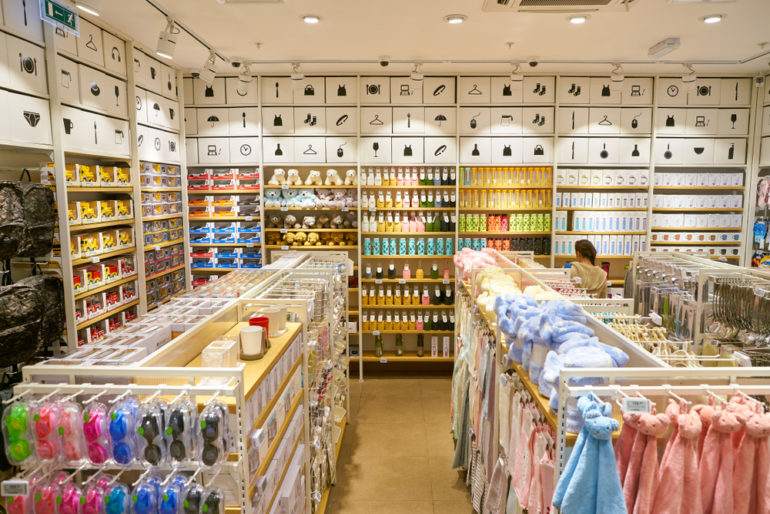
Miniso is a Chinese retailer and designer brand specializes in house goods and cosmetics founded in 2011 by a young Chinese entrepreneur Ye Guofu and co-founded by Japanese Designer Mr. Miyake Junya. It holds a wide range of product categories including cosmetics, home goods, digital accessories, stationery kitchenware and much more under a single hood and it follows the philosophy of “simplicity, nature and good quality”. 

WHY IS MINISO ( A 100% CHINESE COMPANY ) PRETENDING AS JAPANESE COMPANY ?

Initially claiming to be a famous Japanese brand, despite operating in Mainland China have no outlets in Japan. Yes this company is pretending. It does not exists in Japan & Korea but openly advertise their flag stores in Japan. There’s another one called Mumuso which I believed it’s same kind of Dollar store claiming to be Korean origin, but not single business address was found from Korea, and you know the irony is Miniso stores plays Japanese pop music.

Miniso has since expanded outside of China and opened over a thousand stores worldwide.

OPERATION IN INDIA

Since throwing its doors open for business with the launch of its very first store in China back in 2013, Miniso may have subtly wriggled its way into the sub-conscious of the average lifestyle shopper in various world countries as the go-to store for all things chic and cheap.

The Indian economy was one of the fastest growing economies in the world. Many American and European brands have dominated the lifestyle industry here and have thrived. Noticing the opportunity and gauging a huge growth potential that the market had to offer Miniso started its operations in India in August 2017, with a total of 26 stores, out of which 21 in Delhi region and 3 in Mumbai, 2 in Lucknow and 1 in Bangalore. The company plans to expand business in India by increasing its footprint across the country. The company aims to open 800 stores by the end of the year.

In two years since its launch in India, Japanese value retailer Miniso has opened 110 stores across 41 cities.The company achieved its annual target of ₹ 700 crore revenue for 2017-18 in India with an average ticket size, which is 1.5 times higher than its other global markets.The company considers India as among the top 5 contributors to its global revenue. Miniso will expand its presence in India through both company-owned model and franchise partners.

INDIAN CUSTOMERS

The Indian consumers are very confident and the good thing is that the customer is very aware and its easy to get feedback.

It is a brand which resonates with simplicity, nature, good quality and affordable prices—products are priced between R75 and R1500, making the brand accessible to everyone. Miniso’s pricing strategy was built keeping in mind the middle and the upper middle class, the youth and Generation Z, with enormous attention being paid to design which is its USP. The products offered by the company cater to various audiences across income groups and interests.

Indians love the most include lifestyle, fashion accessories and health & beauty products as they are the best-sellers, contributing to 65% of Miniso’s total annual sales.

MINISO is a brick-and-mortar-only business model built around the reality of a world with e-commerce and the brand follows a unique aesthetic and takes care of its customers’ needs, managing to do what most online stores cannot: provide a great shopping experience to all its customers.

INDIA IN MINISO’S GLOBAL SCHEME OF THINGS IN FUTURE ?

Miniso considers ‘India is the future’. This future is not just about selling products. One side is of  purchasing products and doing the business from here. Also  India has an advantage because young people here can speak English well which can help them hire more people from India and send them to different countries, different branches. This can be benifitial in terms of employment growth in India

The Indian market has a vast potential for brand expansion and Miniso intends to follow through on the opportunity—keeping the Indian taste and preferences in mind. The increasing consumer base and rising demand for the brand has allowed Miniso to penetrate the tier II and tier III cities as well, that too in such a short span of time. MINISO’s core consumers are those between the ages of 18 and 35 in urban areas. With smaller budgets, but good taste, these consumers have flocked to MINISO around the world for its low prices and sensible design for lifestyle products in beauty, fashion and consumer electronics.

EFFECT OF BRANDING ON CUSTOMER PURCHASE DECISION

Branding is the process of giving a name or a sign or a symbol to a product.
One of the most important decisions that a marketer has to take in selling a product is in respect of branding. He/ She has to decide whether the firm’s product will be marketed under a brand name or a generic name.
Generic name refers to the name of the class of the product. If the products were sold by their generic names, it would be difficult for the marketers to distinguish their products from that of competitors. Therefore, most of the marketers give a name to their products, which helps in identifying and distinguishing their products from the competitors products.

As the traditional marketing tools and techniques has been replaced by the modern marketing tools and techniques and the number of factories of every good has now been increased, the producer tries to make their product different from other producer of the same product. These things give birth to a new marketing dimension and new era of marketing by the emergence of BRANDING.
In olden days, the brands were just a mark, sign or some sort of numbers to differentiate their goods. The brand then builds many function which creates the value in the mind of the customer. Like the advertisement, which is the function of the branding and it creates a unique association and memory link in the minds of customers on one side and on the other hand, it creates the demand for your goods and services as it attracts the customer, it creates awareness about your production and also educate the customer about the use of goods and services.

ADVANTAGES OF BRANDING
To the marketers

  1. Enables making product differentiation.
  2. Ease in introduction of new product.
  3. Differential pricing.
  4. Helps in advertising and display programs.
    To the customers
  5. Helps in product identification.
  6. Ensures quality.
  7. Status symbol.

CHARACTERISTICS OF A GOOD BRAND NAME

  1. A brand name should be short, easy to pronounce, spell, recognize and remember.
  2. A brand name should suggest the product’s benefits and qualities. It should be appropriate to the product’s function.
  3. A brand name should be distinctive.
  4. Chosen name should have staying power i.e., it should not het out of date.
  5. The brand name should be sufficiently versatile to accommodate new products, which are added to the product line.
  6. It should be adaptable to packaging or labelling requirements, to different advertising media and to different languages.
  7. It should be capable of being registered and protected legally.

Brand image is positive and creates many customers and build strong customers relationship with them and maintain loyalty. But if the brand image is negative, it will be harmful as there will be no customers repetition and retention. So, firm pays a huge investment on advertisement to maintain the brand image and brand equity management programs. As brand image creates perception in customer mind so after purchase, if cognitive dissonance occurs then there is a change in customer’s behavior.
Brand association will impact the consumer buying pattern and behavior. These associations will affect your decision positively if the brand image is positive. Brand loyalty reduce the cost for the firm to retain the customer forever. A loyal customer is helpful for the firm to create new customers.
Generally, brand has greater impact on consumer buying behavior. But at local level, behavior of customer also changes due to branded products and services. Consumer buying behavior is the study of actions of consumer towards planning, purchasing and consuming goods and services.
Consumer buying decision consists of 7 steps:

  1. Need recognition
  2. Information search
  3. Pre-purchase evaluation
  4. Choose alternative
  5. Purchase consumption
  6. Post consumption evaluation
  7. Feedback
    Now, market has become too much competitive due to hyper competition in the market. The best way is to compete these conditions by developing a strong brand image. Basically, the key driver of brand equity is simply brand image. By easily remembering brand , quality production increases which leads to sales increase and makes mire profit. It is the best way which leads towards maximizing market share and to sustain competitive advantage and strong position in the market.