FORMAL ORGANIZATION

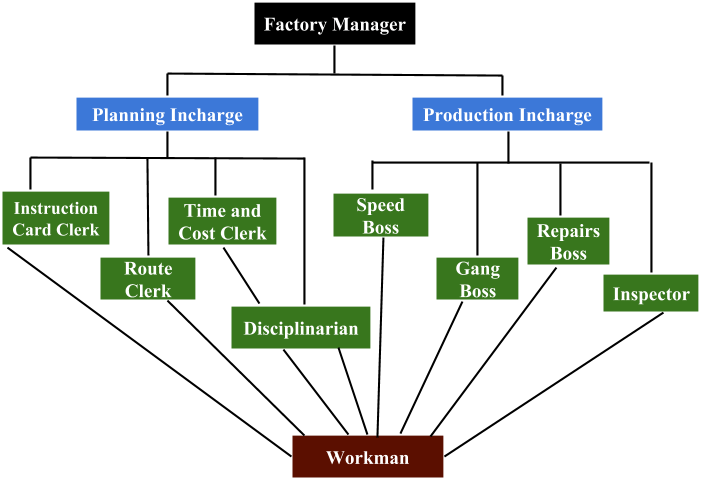
A formal organization is a planned structure which represents the officially established pattern of relationships among individuals, groups, sections, units, departments and divisions to accomplish the goals of the enterprise. A formal organization provides a broad framework and delineates certain prescribed functions and the relationships between them, a formal organization may be defined as a system of consciously coordinated activity of two or more persons towards a given objective. A formal organization may also be defined as:

  1. A pattern of formal relationships and duties, the organization charts, job description and position guides.
  2. Formal rules, policies, work procedures and similar devices adopted by management to guide employee behaviour in certain ways within the structure of formal relationships.

   As Louis A. Allen said, “The formal organization is a system of well-defined jobs, each bearing a definite measure of authority, responsibility and accountability, the whole consciously designed to enable people of the enterprise to work more effectively together in accomplishing their objectives”.  A formal organization facilitates the determination of objectives and policies. Communication, the delegation of authority, and coordination take place according to a prescribed pattern and in fact, formal structure restricts and circumstances the area of operation of individuals working within an organization.

FEATURES OF FORMAL ORGANIZATION

The main characteristics of a formal organization are:

  1. It is based on the division of Labour.
  2. This organization is formed by voluntary thinking.
  3. It is represented by organizational charts and manuals.
  4. In this organization, the rights, duties and liabilities of different persons are clarified on different levels of management.
  5. In a formal organization, unity of command is followed.
  6. It is prepared only for the accomplishment of od predetermined goals.
  7. Here the relationships among members are fully impersonal.
  8. Here delegation of authority flows from top to bottom.

 ADVANTAGES OF FORMAL ORGANIZATION

The main advantages of Formal Organization include:

  1. The best use of resources.
  2. Feeling of cooperation in a formal organization.
  3. No duplication of work.
  4. End of biased opinions from everyone related to any work.
  5. Proper standardisation of work becomes easy to implement.
  6. Helpful in achieving objectives.
  7. Well defined authority and responsibility and accountability avoid any chance of friction and enmity.
  8. Merits of specialisation can be achieved due to the principle of division of labour.
  9. The efficiency of employees can easily be measured due to the predetermination of the rights and duties of each individual.
  10. This type of organization restricts conflicts among executives.

LIMITATIONS OF FORMAL ORGANIZATION

The main limitations of Formal organization include:

  1. Rules are considered more important than the person.
  2. This organization ends the spirit of initiative.
  3. Excessive and undue use of authority takes place in this type of organization.
  4. In this type of organization procedures, programmes, rules etc., are followed strictly and that is why frequent changes are not possible.
  5. A formal organization is impersonal; that is why human feelings have no place here.
  6. There is a lack of coordination among the activities of different persons in different departments.
  7. No consideration is given to the social and human elements.
  8. This organization takes into consideration only the formal communication and creates obstacles in the application of informal communication.

ORGANISING


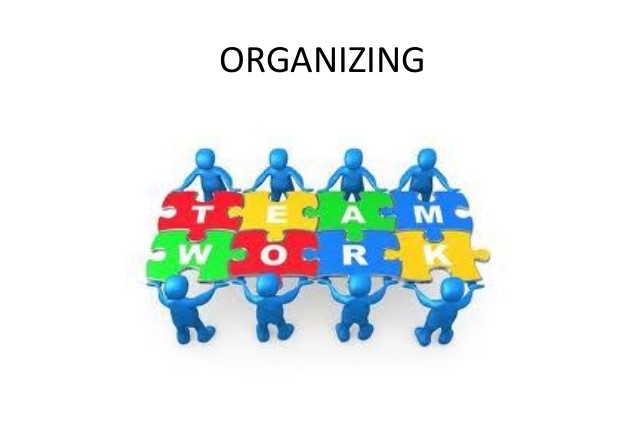
The organisation provides a framework where duties are identified, define tasks are allotted to suitable persons, and interrelationships of personal are made certain and the joint efforts made by different persons become more productive, effective and economical if a well-knit organization is provided by the management and the purpose of establishing an organization, this is to enable its personnel to work more effectively as a unit and no wonder organisation serves as the backbone of management and it is very foundation of most of the steps of operating management.

Organising can be defined as “Organisation is a harmonious adjustment of specialised parts or the accomplishment of common purpose or purposes” by Haney. The organisation is the process of identifying and grouping the work performed, defining and delegating responsibility and authority and establishing a relationship to enable people to work together in accomplishing common objectives.

NATURE OF ORGANISING

1. Division of work

The setting of an organisation involves division of the total work into various activities and functions and assigning the tasks to different persons according to their skill, ability and experience.

2. Chain of command

The superior-subordinate relationship established in an organisation is based on the authority which flows from the higher levels of management to the immediately lower of management and thereby forming a hierarchical chain and is known as the chain of command.

3. Plurality of Persons

The organisation is a group of many persons who assemble to fulfil a common purpose and a single individual cannot create an organisation.

4. Common Objectives

There are various parts of an organisation with different functions to perform but all move in the direction of achieving a general objective.

5. Group of people

An organisation comes into existence when a group of people combine their efforts for some common purpose and willingly contribute towards their common endeavour.

6. Common Purpose

Every organisation comes into existence based on goals of the enterprise which are separate from the personal goals of the people employed and it is the common purpose of the organisation which provides the basis of cooperation among its members.

7. Vertical and Horizontal Relationships

An Organisation creates cooperative relationships between different departments and divisions as well as between superiors and subordinates. The duties and responsibility of superiors and subordinates in each department or division are also unified to serve the purpose of their joint efforts.

8. Organising is a universal process

Organising is needed both in business and also in non-business organisations and nor only this, an organisation will be needed where two or more than two people work jointly. Therefore, an organisation has the quality of universality.

9. Dynamics of organisation

Besides the structural relationships among people which are based on their activities and functions, there exists an organising interaction based on sentiments, attitudes and behaviour of individuals and groups and they are subject to change from time to time.

According to Chester Bernard, Communication, Cooperation and Spirit of service and common objectives are the main elements of the organisation.

How to attract people in first 90 seconds- Must read!!!

These are the secrets from an amazing book called “How to Make people like you in 90 seconds or less” by Nicholas Booth Man. Likable people are always open, welcoming and friendly in nature and you can notice their sincerity, trust, and self-confidence in their behavior as well, and you can develop all these qualities in yourself by meeting other people in a regular manner. If other people do not find you interesting in first 90 seconds after meeting you, then they would want to get rid of you as soon as possible.

How to Maintain Communication and Culture as a Growing Startup ...

If you want that people like you more, then you have to invest your efforts from the very beginning, and this starts even before you speak a single word from your mouth. Any new person notices three basic things just after meeting you, these three things are your

  1. Body language
  2. Your eyes
  3. Expression on your face

Thus, it is essential that when you meet anyone, these three elements give the feeling of openness to other people. For doing this, you will have to show your interest in them, along with your body, you will have to move your brain as well toward them. This effort will show your sincerity and commitment and openness in the conversation and in them as well after this, you need to see directly in the eyes of other people, this establishes the trust and as soon as you make an eye contact with other person make sure you give a genuine smile to them before they think or assume anything else about you. Let your positive attitude shine with a broad and genuine smile with this simple action, other people will consider you as a genuine, open and sincere person with this simple effort, you already made a warm and welcoming mood for the situation, and now you need to initiate by introducing yourself. You can do that with a standard greeting, like Hi or hello and you must need to do that in a very pleasant tone. Along with that make sure you share your first name to the other person and it will encourage the other person to introduce themselves for example, you can say,….”Hello, I am Akash”. When you say this, then the other person will also share his or her name with you, and as soon as they share their name, you must need to repeat their name like wise you said… “Hello, I am Sahil” you got response… “Hi, I am Sohil” now you have to say, “Sohil, Nice to meet your Sohil.” In his famous book, “How to win friends and influence people,” Dale Carnage shared the fact that the name of any individual is the sweetest sound in the entire world for that person that is why it is essential that you repeat other person’s name in the conversation as much as possible. This method will increase your acceptance and respect, it will also make it easier for your to memorize their name. And finally, you have to lean forward slightly. Just a little leaning would be enough, just like Mr. Obama is slightly leaning forward in this photo.

How To Give A Proper Handshake - Business Insider

Image source: BusinessInsider

With your slight inclination, other people will assume you are showing interested in them, and you are listening to them carefully, also, it will give you a pleasant appearance. Just look at photo and tell who is looking more generous in both of them. Of course, it is Mr. Obama, because he is using this principle.

Studies proved that people hire those people that are similar to them and even most of the time they date people with similar people because they make them feel safe and comfortable. If you try to pay attention, you will find, you enjoy the company of those people who think like you, who behave like you and those who make you feel comfortable. You can be comfortable for them just by synching your voice with their voice. The synching of voice is a very powerful tool in communication skills for this, you need to speak at the same pace as other people are speaking that means if they talk slow, then you should not run fast and second thing, you shall try to use the same tone similar to them. If they are calm and relaxed, and you will speak loudly or with excitement, then it won’t work well for you. You need to use same volume and you need to relax while talking. With this, other people will think you are like them and they will feel more comfortable while talking to you.

photo of people doing handshakes
Photo by fauxels on Pexels.com

In 1979, Dr. Lisa Berkman did a study on 7000 people, and this study lasted for 9 years with this study, she found that people that do not have more social connections or those who do not meet other people, they get ill more often, and it increased their chances of earlier death as well and who meet other people more often, were likely to live longer. So, go and expand your social circle without having any fear, without any complications.


PLANNING IN MANAGEMENT

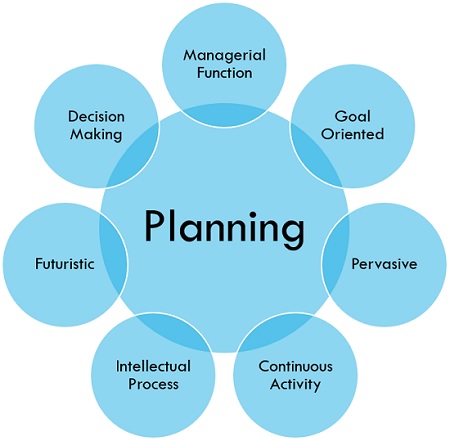
Planning is deciding the objectives and methods to achieve them. Planning involves deciding in advance what is to be done, how is to be done, where is to do, how is to done and by whom is to be done and it makes things happen which may not occur otherwise and it bridges the gap between where we are and where we want to go, the process of planning includes two things:

             1. Deciding objectives

             2. Choosing best from available alternatives

Planning is a fundamental managerial function planning implies an arrangement for doing something as considered in advance and simple words, planning is deciding in advance and Prof. Urwick rightly said: “Planning is fundamentally a mental predisposition to things in an orderly way, to think before acting and to act in the light of facts rather than guesses”. Thus, a plan is a predetermined course of action and it is an attempt on the part of a manager to anticipate the future to achieve better performance, and planning is based on the principle, Look before you leap’.

CONCEPT OF PLANNING

Planning requires goals and it focuses attention on purposes and determines ways achieving them and planning is necessarily a problem of choice and it involves the selection of the most feasible course of action from all available alternatives. Planning is a means of building a bridge to span the present position of the firm with its desired future position. It implies the work of both problems solving as well as decision-making. Man possesses a unique power of reasoning and he often evaluates the pros and cons before proceeding further into the matter.

NATURE OF PLANNING

1. Planning focuses on achieving objectives:

 Planning is to facilitate the attainment of objectives of the organization and planning focuses action on purposes. Planning is merely an empty mental exercise if it loses sight of the organizational objectives and every plan should contribute towards the achievement of company goals. Thus, all plans are directly linked with the goals and objectives of the enterprise and contribute to its attainment and if there are objectives, there is no need for any planning.

2. Planning is a primary function of Management

 Planning is a primary function of management and a manager must perform efficient and intelligent planning before performing any other managerial activities. Thus, planning comes before the execution of all other managerial functions. Planning function of management has the distinction of establishing objectives and all managerial efforts of organizing, staffing, directing, and controlling are directed towards their attainment.

3. Planning is pervasive  An element of planning can be seen behind every human activity in an organization and God has gifted man with the faculty of reasoning and this enables a person to measure the consequences of his planned actions and we can quote several examples where planning precedes individual or group action. Planning is a pervasive activity covering the entire enterprise will all its segments and every level of management. Top management does strategic planning, middle management looks after the administrative planning and the lower management concentrates on operational planning.

SCIENTIFIC MANAGEMENT

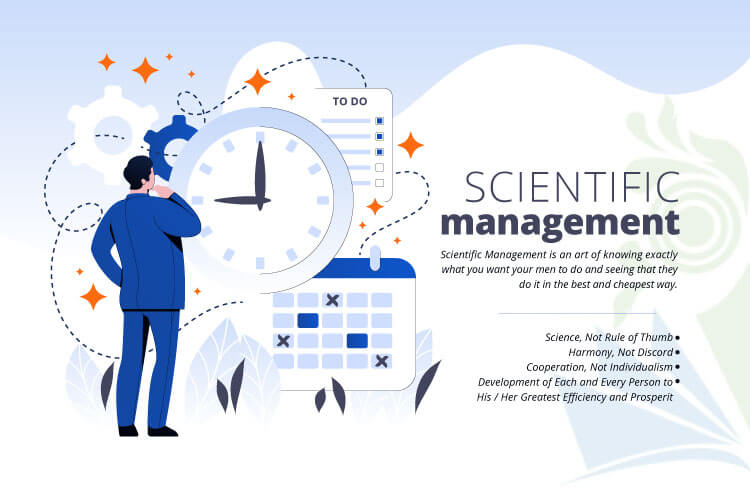
The origin of scientific management dates back to the year 1832 when Charles Babbage discussed the principles of scientific management in his book “The economy of manufactures”. In real sense, scientific management owes its origin to Frederick Winslow Taylor, who is commonly regarded as the father of scientific management.

MEANING OF SCIENTIFIC MANAGEMENT

Scientific management may be regarded as a set of scientific techniques that are supposed to increase the efficiency of an enterprise. Under scientific management, the selection of men, machines, materials is made by a scientific approach. Here, all the organizational activities are performed by rationality and proper discipline, this scientific management is a logical approach towards the solution of management and it assumes that the methods of scientific inquiry, analysis and experimentation can be applied to the activities of managers. It means approaching the problems of management in the manner and spirit of scientific research using tools such as definition, analysis, experiments, etc. It is ‘Scientific Management’ as opposed to ‘Traditional Management’ based on the rule of thumb, trial, error. As said by Peter F. Drucker The cost of scientific management is the organized study of work, the analysis of work into its simplest elements and the systematic management of the worker’s performance of each element”.

We can summarise scientific management as:

  1. Scientific study and analysis of work.
  2. Scientific selection and training of employees.
  3. Standardization of raw material, equipment, and working conditions.
  4. Reasonable remuneration to employees.
  5. Scientific management is an economical method that makes the best possible use by integration and coordination of available resources.

MAIN CHARACTERISTICS OF SCIENTIFIC MANAGEMENT

1. A definite plan: To achieve predetermined definite objectives, management needs a definite plan, and the plan should be goal-oriented.

2. A definite objective: In scientific management, every organization has to establish the basic objectives and efforts are to be made by applying physical and human resources to achieve these predetermined objectives.

3. A set of rules: To make scientific management more effective, a set of rules are framed and these sets of rules are tested and verified as regards their effectiveness in the real business situations by a group of persons.

4. Economy: The main aim of scientific management is to achieve the economy of time, money, and labor, and the technique of economy is used for producing maximum at a minimum cost.

5. Scientific analysis and experiment: Before starting any work, the utility, effectiveness, and suitability of plans are to be tested and analyzed, and thus by scientific analysis and experiment, we can choose the best course of action.

6. Increase in efficiency: The techniques of scientific management help in increasing the efficiency of workers and new techniques and improved tools are used for increasing efficiency.

7. Time study: Time study is concerned with labor productivity and according to it, an estimate is made of the amount of work required to be done to perform a job.

8. Cooperation: In the present competitive situation, efforts should be made to establish a cordial relation between labor and capital. Cooperation is essential for efficient management and group efforts for group benefit can be the active cooperation of each individual. 

CAPITAL STRUCTURE

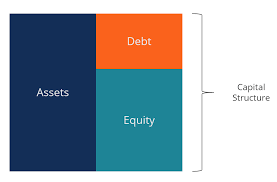
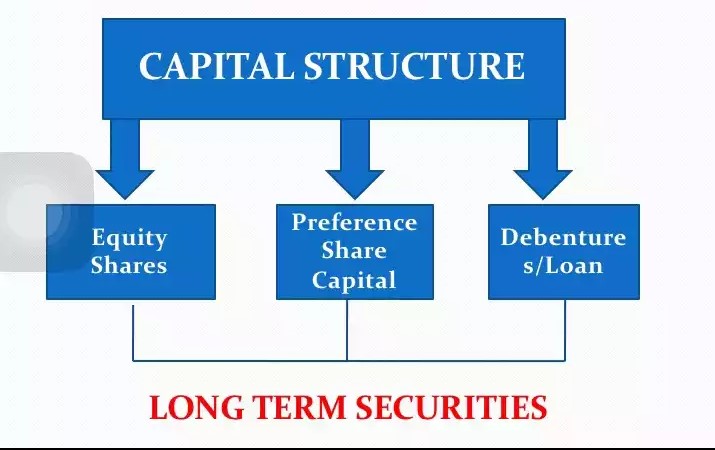
Capital structure signifies the composition of the amount of long-term financing and according to Gerstenberg, “Capital structure means the types of securities to be issued and the proportionate amounts that makeup capitalization”. Long term finds can be obtained from owners and borrowers. The owner’s fund consists of equity shares, preference shares, and retained earnings. Borrower’s fund (debt capital) includes debentures and other long term borrowings and the ratio between the owner’s fund (equity) and borrower’s fund is decided under the capital structure.

DETERMINANTS OF CAPITAL STRUCTURE

As stated earlier capital structure decision is highly individualistic and the capital structure of a company is planned initially when the company is floated. The initial capital structure must be designed very carefully since it will have long-term implications. However, the capital structure decision is a continuous one and has to be taken every time whenever a firm needs additional finances. Several factors affect the capital structure of a firm. Some of the important factors which must be kept in mind while determining the capital structure are discussed as follows:

1. Cash flow position

While choosing if capital structure the future cash flow position must be considered before issuing debt. Cash flow must not only cover fixed cash payment obligations but there must be sufficient buffer also, it must be kept in mind that a company has cash payments obligations for (i) Normal business operations; (ii) for investment in fixed assets; and (iii) for meeting the debt service commitments i.e. payment of interest and repayment of principal.

2. Interest Coverage Ratio

By the use of this ratio, it can ascertain whether the company can pay interest or not. The greater this ratio, the more will be the capacity of the company to use debt. The ratio can be calculated as under:

 Interest coverage ratio= Earnings before interest & Taxes/ Interest

3. Debt Service coverage ratio- DSCR:

 The debt service coverage ratio takes care of the weaknesses referred to in the interest coverage ratio-ICR. A higher DSCR indicated better ability to meet cash commitments and consequently, the company’s potential to increase debt components in its capital structure.

4.Cost of Debt

The capacity of a company to take depends on the cost of debt. In case the firm arranges borrowed funds at a low rate of interest then it will prefer more debt as compared to equity and vice versa.

5. Tax rate

High tax rate makes debt cheaper as the interest paid to debt security holder is subtracted from income before calculating tax whereas companies have to pay tax on dividend paid to shareholders. So high-end tax rate means prefer debt whereas at low rate tax the company can prefer equity in the capital structure.

6. Cost of equity capital

 The cost of a source of finance is the minimum rate of return expected by its Suppliers. Equity shareholders bear the maximum risk because no rate of dividend is fixed. To pay interest on debentures is a statutory liability of the company whether the company earns a profit or not. Thus, debt is cheaper as compared to ordinary share capital. The cost of debt becomes lesser because interest is a charge on the taxable income.

How to open a Franchise without money- US…

let’s talk about to open a franchise with no money so the first thing you can do, if you want to open a franchise with no money down is go to your friends and family look. I understand that that’s something that you may not want to do sometimes that’s a toughest conversation asking friends and family for money but I would assume if you’re willing to open a franchise and you have some skill sets you have a certain level of intelligence and a certain level of ambition so assuming that you have a good reputation and a good rapport with your friends and family then that’s the first place that you can go to get money to fund your franchise.

hamburger and fries photo
Photo by Jonathan Borba on Pexels.com

Now when you’re approaching them for the money it’s important to be tactical and strategic about it and you don’t just say hey! can I borrow ten thousand dollars can I borrow twenty thousand dollars can I have fifty thousand dollars you have to go into it strategically so go into it with a business plan this is the franchise that I want to buy this is the amount of money that I need to get started this is a lot the amount of money that I think I will make with the franchise this is the time period which I can pay the money back to you and get on that loan repayment plan, another way to approach getting money from feds and friends and family to fund your franchise is to ask them to be a partner with you so although they may not want to work in the franchise themselves maybe they’re more willing to give you money or lend you money for the franchise if they are an owner or an investor with you so maybe you’re the one that runs the franchise and you handle the day-to-day operations the sales managing the staff managing the overall business and they get a percentage of the profits as a way of paying them back.

close up photography of starbucks disposable cup
Photo by Adrianna Calvo on Pexels.com

The next way that you can fund a franchise is to get a loan and before you read about that real quick with the franchise so now in getting a loan to open a franchise business it’s important to note that one you’re going to need to have good credit and two you’re going to need to have an income that can support paying back. The loan and three the likelihood is you are still going to need money for the down payment on that loan if you get us an SBA loan which is Small Business Administration they require a minimum of 10% down from you in order to fund that business so what does that mean if you need $100,000 for your franchise business then that means you need to come up with $10,000 in order to here that loan so the question is how will you come up with that $10,000 and there’s a number of options that we’ll go over in a second of how you can do that one way you can do that is what we already talked about which is getting money from friends or family it’s so even with the Small Business Administration having a ten percent minimum requirement that you have to put towards the loan in order to open a business.

white and blue come on in we ere open signage
Photo by Tim Mossholder on Pexels.com

Most lenders that issue SBA loans are going to require anywhere from 20% to 30% in order for you to secure that loan so again in that example if you’re looking to open up a business that’s a total of $100,000 you’re going to have to figure out a way to come up with twenty to thirty thousand dollars in order to secure that loan and so in a second I’m going to tell you about a strategy of exactly how you can do that without having to ask your friends or family for money another way that you can fund a franchise without having any money so to say is seeing if you have any 401k or retirement plans now as someone who has managed over a hundred million dollars over the course of career as a financial advisor typically. I would not recommend for someone to take money out of their 401k and that’s not what I’m recommending to you. So, I want to make sure that you get that clear because there are severe penalties and tax consequences that you should consult the tax advisor about but there are ways that you can leverage your 401k so if you’re still working with your employer you can take out a loan against your 401k in order to fund a business and when you take out a loan there’s one thing that you have to be very careful about the thing that you have to be careful about is that if you leave that employer and you have an outstanding loan they are going to make you repay that loan within a certain period of time usually it’s 60 days if that is the case if you don’t come up with the money and repay the loan for the 401k they count it as an early distribution you’re going to have to pay taxes on that money depending upon if it’s a pre-tax 401k and you may have to pay some penalties. 2 guys opened up first location they were going to need 300 just over $300,000 in order to get first location open so they had a significant equity in their home at that time and want to went ahead and apply for a home equity loan they secured a three hundred and ten thousand dollar home equity loan use that home equity loan to fund the business and to pay for the business about a year or so later they actually wind up moving they sold their house the home equity loan was paid for paid off and now they own the franchise in the business completely outright don’t have any loans on the business and then the last way that you can potentially buy or open a franchise with absolutely no money is to talk to the franchiser again it’s not about the resources it’s about your resourcefulness so it never hurts to ask them and to make a pitch if you’re truly excited and confident about the opportunity.

download

Image source: AZ quotes

TIPS ON HOW TO CREATE A STARTUP IN COLLEGE AND HOW TO FIND A SUITABLE CO-PARTNER

Before starting, there are tons of books which may offer you an honest flavour and understanding of Startups:Zero to one , The Lean Startup, Steve Jobs, Elon Musk, etc. You will not become an Entrepreneur by reading books, but you’ll definitely have a far better understanding and a few motivation – so you want to read them

Google, Facebook, Microsoft. All three companies were started by college students and now they’re among the most important companies within the world. Students feel inspired by such success stories but often don’t have a transparent idea of what they really want to realize once they start a business.

The following points give a thought on the way to start your own company while being in college.

  1. Prioritize
    It is getting to be very difficult if you are doing not have a transparent plan of your business goals. Do not set a really horizontal bar initially as this puts unnecessary stress. Plan your day beforehand in order that you’ll allocate sufficient time to both academics and start-up and strictly say no to activities which don’t align together with your interests.
  2. Choosing right courses
    Colleges provide various electives on entrepreneurship, management. Select such courses which can help to find out about how businesses operate, grow and performance at an outsized scale. This helps in bridging the gap between academics and entrepreneurship. This also helps in networking with compatible students, alumni which may be an enormous boost during this startup journey.
  3. Funding for startup
    There are several colleges which permit their students to pitch their business idea. And if selected a particular amount is allocated to assist them start performing on their plan. These programs are an enormous motivation as they don’t need to worry for the cash within the initial stages. Also make use of the college alumni network to connect to successful entrepreneurs who can help you.
  4. Finding a mentor
    A mentor helps in clearing up doubts and may prevent you from making a wrong decision. Attend various e-summits, business events, alumni meet hosted by your college and you’ll find people willing to guide you during this journey.

Tying it together
There will be people to demotivate you and doubt your goals. Turn a deaf ear to them and believe that this can be achieved. Enjoy the journey so that it does not seem like an additional burden. Do not get upset by the initial roadblocks and keep doing your part.
For making the startup successful, finding the proper co-founder may be a vital thing that one must do. There will be so many challenges in this journey and it is better to face them together rather than doing it alone. Great teams persevere, and success breeds success.

  1. Networking
    Networking is much more crucial than you think. Attend different events like entrepreneurship summits, business seminars etc. Use social networking platforms such as LinkedIn and Facebook to your benefit.
  2. Attend e-summits organised by universities
    University professors know many entrepreneurs, alums who are trying to find suitable persons matching their interests and business plans. Discuss your plans with them and you maybe lucky enough to seek out the support.
  3. Meet colleagues from previous jobs
    If you met someone in your previous job with an entrepreneurial spirit, try to follow up with that person. If you both had thought of owning a company at some time, now is the time to work on that dream.
  4. Explore common interests outside of work.
    Searching for a co-founder is often tricky. It involves taking to consideration multiple factors, the foremost common being compatibility. Make sure you recover together even outside of your work. Strengthen the bonding in various ways like enjoying sports or checking out each other’s reading tastes.
  5. Jointly define long term and short term goals for the startup.
    The enthusiasm maybe very high initially but its real test is within the end of the day . Come together on decisions such as various short term and long term goals for the company. Decide on vision of the corporate , the mission which it wants to accomplish.
  6. Clarify each one’s role
    Make it very clear about the roles each one is going to play. Take responsibility for the decisions which you are going to take. Plan in such how , that the co-founders function without having to interfere in each other’s jurisdiction.

BUSINESS FINANCES

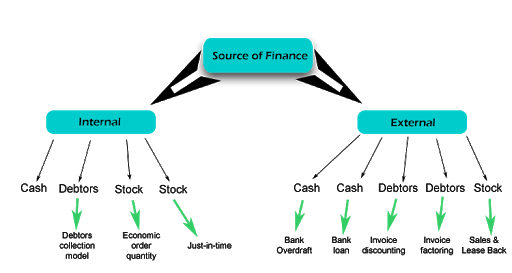
Finance is a must for the smooth conduct of business operations. A business firm can raise funds from two main sources: Owned funds or owned capital and Borrowed funds or loaned capital. Insole proprietorship and partnership the funds contributed as capital are called owned funds. In a joint-stock company fundraised through the issue of shares and reinvestment of earnings (retained earnings) are the owned funds, borrowed funds refer to the borrowings of a business firm. In a company borrowed funds consist of finance raised from debenture holders, financial institutions, public deposits, and commercial banks. Finance can be classified in to:

1. LONG-TERM FINANCE

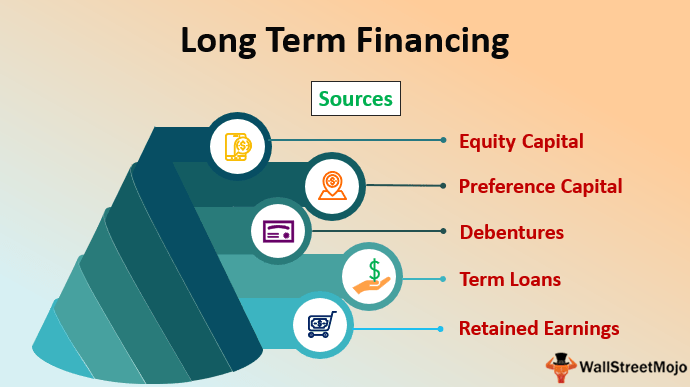
  Long-term finance can be defined as any financial instrument with a maturity exceeding one year (such as bank loans, bonds, leasing, and other forms of debt finance), and public and private equity instruments. Long-term finances are required for permanent investment in the business. It may be raised for more than five years. Long-term finance is required for investment in fixed assets like land and buildings, plant and machinery, furniture and fixtures, etc.

In a business house following are the main sources of long-term finance:

  1. Issue of shares
  2. Issue of debentures
  3. Ploughing back of profits/retained earnings
  4. Loans from specialized financial institutions

The amount of long-term funds required depends on the type of business and the investment required for fixed assets. For example, the manufacturing of steel, cement, chemicals involves heavy investments in buildings, machinery, and equipment. A small factory producing garments or a small workshop for repairing electrical goods will require a small investment in fixed assets. Traders generally require lesser amounts for long-term investment as compared with the requirements of manufactures.

-FROM WALLSTREETMOJO

2. MEDIUM-TERM FINANCE

Medium-term finance is required for a period ranging from 3 to 5 years. It is used for the modernization of plant and machinery, investment in permanent working capital, and for repayment of debts. The main sources of medium-term sources of finance are:

  1. Issue of debentures
  2. Issue of preference shares
  3. Bank loans
  4. Public deposits/fixed deposits
  5. Loans from financial institutions

Manufacturing and trading concerns require more working capital to pay wages and to finance the purchase of raw materials and goods.

3. SHORT-TERM FINANCE

The amount of such capital is required for a short period, say up to one year and as soon as goods are sold and funds are recovered, the amount is again used for current operations. Generally, production processes are completed within a year and goods are ready for sale. Hence short-term funds can be used over and over again from year- to year. Short-term funds are required for meeting day-to-day working capital needs. They raised for twelve months or so. The main sources of short-term finance are as follows:

  1. Bank credit
  2. Customer advances
  3. Trade credit
  4. Deferred incomes
  5. Installments credit

                 The requirements of short-term finance depend on:

  1. The nature of business undertaken
  2. The time gap between the commencement of production or purchase of goods and their sales
  3. The volume of business.

Trading firms normally require proportionately more of short-term capital than a long-term capital. Manufacturing concerns, on the other hand, need relatively smaller amounts of short-term capital as compared to long-term capital.

Business Environment

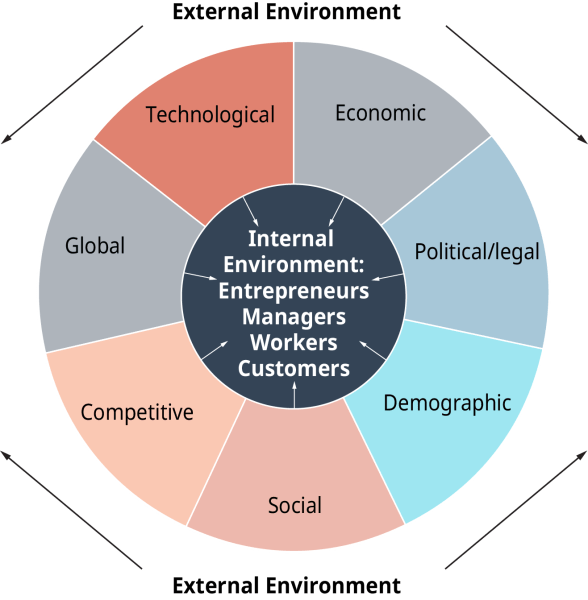
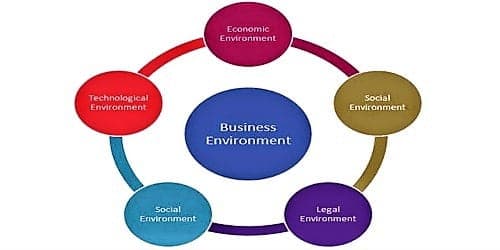
Business is a very economic activity of buying, selling, manufacturing, and rendering auxiliary services to trade and generating income through this activity. Modern Business is the economic and social organ of the society and also of the country and in today’s world modern business is not independent and it cannot work in isolation and business environment constitute- Government, public and economic, political and social situations constitute the business environment. Business environment may be defined as those conditions and forces external to a business unit under which it operates and these forces include government, suppliers, customers, creditors, political parties, socio-cultural organizations, and internal organizations, etc. Some of these may be direct influence over the business firm while others may operate indirectly. “Business environment encompasses the ‘climate’ or set of conditions, economic, social, political or institutional in which business operations are conducted”- Arthur M. Weimer.

– From opentextbc

The broad national economic environment is set by the nature of the economic system embodying the nature of property rights, ownership means of production, the role of planning, the functioning of the price mechanism, etc. Judged from these angles, the economic system of a country may be characterized as capitalist, socialist, communist, or mixed. The business environment consists of all those conditions and forces in the surroundings of a business enterprise under which the business operations are to be carried out efficiently and effectively and without any mistake. The management of the environment forces is an important task before every businessman of today and suitable decisions are required to be made in respect of various developments that are expected to take place for shaping the survival and growth of the business.

Characteristics of the business environment

1. The totality of external forces: The business environment is the total of all those factors/forces which are available outside the business and over which the business has no control. It is the group of many such forces, that is why the nature of it is totality.

2. Specific and General forces: The forces that exist outside the business are (a) Specific forces: These are the forces which affect the firms of an industry separately like customers, suppliers, etc. (b) General forces: These are the forces that affect all the firms of an industry equally, e.g., social, legal, political and technical situations.

3. The Business environment is dynamic: It is obvious that the environment is a mixture of so many factors and there are constant changes in some of them, due to these changes the business environment is dynamic.

4. The Business environment is complex: The nature of an environment in any field is the combination of so many factors and all these factors are related to one another. So the influence that they exercise on business cannot be recognized independently. That is why it is difficult for a business to face them.

5. The Business environment has a long-term impact: Any change in the environment has a long-term effect and impact on any kind of business because the changing environment affects the profitability, productivity, and development of the business.

6. The Business environment affects different firms differently: A change in the environment doesn’t need to affect all businesses in the same manner. One business may welcome the change in the environment while the other may not. Therefore, it is a special o environment that affects different businesses differently.