Bengal Colleges to reopen in Nov, govt may ask UGC to delay academic year

West Bengal schools, West Bengal schools open, West Bengal colleges, West Bengal colleges open, India news, Indian Express
Partha Chatterjee: West Bengal Education Minister

The new academic session of both undergraduate (UG) and postgraduate (PG) colleges and universities in West Bengal will begin from December 1. The decision came after a meeting between Vice-Chancellors of state universities and West Bengal Higher Education Minister Partha Chatterjee on Sunday.

Education Minister Partha Chatterjee said that the reason they are planning to start the new academic session in December is because host of festivals that are lined up in November including Lakshmi puja, Kali puja/Diwali, Chhat puja, Jagaddhatri puja etc. 

Chatterjee said, “As we need to sanitise the institution premises before starting the academic session in full course, we have to take into account the four-five festive days when no work will be possible. So it will be in the fitness of things to start the new sessions from December.”

He said since most universities have already adopted online teaching for the mid semester courses and providing course materials to students who don’t have online facilities, starting the new session won’t be hopefully of much problem.

“Still whether the classes will be entirely online or there will also be offline mode of teaching will depend on the situation at that time,” the minister added.

While admissions to UG courses will be over by October 31, the admission procedure in PG courses will be completed only by the end of November.

The education minister said his department would write to the University Grants Commission (UGC), asking it to allow the state to start the new academic year from December.

In a notice on September 22, the UGC said the admission process for UG first-year students would have to be completed by October 31, and classes should resume on November 1.

Meanwhile, sources said the universities decided to reserve 80 per cent of seats in PG courses for students who completed their graduation in an affiliated college, or in the institute itself. The decision was taken because of the Covid-19 pandemic, and curbs in transport. As a result, many graduates may find it difficult to pursue higher studies in institutions outside the state.

Teachers During the Pandemic


Teachers during the pandemic

The outbreak of the novel coronavirus has significantly affected all sectors including the education sector, the agriculture sector, the industrial sector, and our economy in its entirety. This unforeseen virus has single-handedly disrupted the entire world, from every country’s economy to everyone’s professional as well as personal life. One of the sectors which have been deeply affected is the education sector. Schools have been working offline efficiently for a long time and expecting a fluid switch from offline classes to e-learning is not practical. Most of the schools and the students are not well-equipped with technology to conduct classes regularly, administer tests, organise co-curricular activities, et cetera. Teachers now have to work double the amount they did with the same, if not less, salary. 

Here are some problems that teachers are facing in our country:

• Technological Gap

On one hand, the previous generation is not familiar with technology and on the other, the present generation excels in this area. All their existing curriculum plans are no longer applicable for online learning, thus, they have had to opt for new timetables and plans which may or may not be favourable for them. Learning your way around new applications, especially at the risk of your job, is not an easy task. Upon that, teachers are also made to feel embarrassed because of their lack of knowledge in this area. 

• Unemployment or fall in salary

In these difficult times, teachers are facing financial problems. Due to classes no longer being conducted in many schools or shut down of local schools, teachers and other employees are losing their jobs. The sports department is not engaged in teaching or other activities due to the lockdown and social distancing protocols which do not allow sports. Many teachers have been cut and their work given to others, overburdening them while leaving the others unemployed. Some educational institutions are reducing the salaries of their employees, or simply making them work by not giving them their well-deserved pay. 

• Household chores

India, a country which follows a largely patriarchal system, has about 70 female teachers per a hundred men. Women in our country are expected to attend to all the household chores. Many teachers of this age also have kids, whom they need to handle during the classes as well. Thus, teachers, both male and female, are overburdened with work. Having classes 6 days a week and handling your house are not easy tasks, especially with the added stress of the pandemic and the uncertain future. 

• Bullying

Students are taking advantage of the anonymity that the internet provides. Disrupting classes, passing snide comments, making fun of the teacher, et cetera are very common these days. Students do it out of fun or boredom, what they do not realise is the deep mental effects bullying has on others. Teachers are already pressurised by the schools and the demand to quickly adapt to new teaching methods, they also have to go through this. 

Elementary class teachers are finding it difficult to engage students. Their screen time is increasing and as teaching takes up most of their day, their physical exercise has reduced. Social isolation and all these factors together are negatively affecting our teachers. Let’s take a vow to be kinder to them as they are surely doing their best! 

HARYANA: COLLEGES TO REOPEN ON 26TH SEP FOR TRIAL RUN

The Haryana government has allowed reopening of universities and colleges amid COVID-19 outbreak to enable the students to seek guidance from their teachers, with a trial run to start from September 26.

In a communication, dated September 22, to all universities and colleges in the state, the higher education department has directed them to complete all safety protocols related to COVID-19 and communicate the same by Friday.

The letter from the Director-General of the department refers to the Ministry of Home Affairs (MHA) guidelines wherein students from classes 9 to 12 are allowed to visit schools from September 21 on voluntary basis for taking guidance from their teachers with their parents’ consent.

“Keeping this in view, the universities and colleges may also be allowed to open for students seeking guidance from teachers in a staggered manner,” the letter read.

All protocols recommended by the government, including for sanitisation and social distancing, shall be followed by the institutions, as per the letter.

After remaining shut for the past six months due to the COVID-19 outbreak, the Haryana government had recently allowed students of classes 9 to 12 to visit their schools in areas outside COVID containment zones, on voluntary basis for academic guidance.

The decision was taken in compliance with the Unlock-4 guidelines issued by the Union Ministry of Home Affairs.

In view of the coronavirus-induced lockdown, educational institutes across the country have switched to online mode to impart academic lessons.

According to the schedule prepared by the Haryana higher education department, Bachelor of Arts (BA) first-year students may visit the colleges and universities between 9 am to 12 noon on Mondays and Tuesdays.

“BCom and BSc first-year students will visit the institutes between 12.30 pm to 3.30 pm on Mondays and Tuesdays.

BA second-year students will visit on Wednesdays and Thursdays between 9 am and 12 pm, while BCom and BSc second-year students may go between 12.30 pm to 3.30 pm on Wednesdays and Thursdays.

“BA third-year and Post Graduation (PG) first year students may visit the colleges between 9 am to 12 noon on Fridays and Saturdays; while BCom and BSc final-year students and PG second-year students can go between 12.30 pm to 3.30 pm on Fridays and Saturdays,” the letter added.

How to prepare for college?

Change is the only constant in life. When we leave our teenage years behind, we go through some drastic life changes. For attending college, we may leave our homes, part with our friends, graduate from the school we grew up in and settle in a new, unfamiliar place. Adapting to these big changes is not easy, initially, we feel home-sick, may get into bad habits, have trouble making new friends, or even studying. Here are some things you can do to make your college life easier:

• Learning basic skills

At homes, we are used to being pampered and don’t have to do much around the house. From cooking to laundry, most of us teenagers rely on our parents, guardians or housemaids. This proves a tough challenge in college life. We have some time on our hands due to the global pandemic and we should utilise it to learn basic life skills. Learning how to cook and clean will help us greatly not only during our college years but after that as well. 

• Handling finance

Money, the most wanted paper in the world, but it’s never a part of our school’s curriculum. Until the age of 18, I never managed any sort of finance, be it my uber rides or school canteen bills. Immediately after, we are expected to operate ATMs, save money, have our own bank account and handle it while managing our studied and maintaining our social life. As learning about finance is one of the most important life skills, we should not wait till college. Familiarising with fiscal concepts such as expenditures and savings, utilising student benefits, et cetera is of extreme importance. 

• Being analytical 

In school, the approach for teaching students is different from college. College is more about learning through analysis, there is no one book we have to read or a well-defined course we have to follow. While referring to multiple sources, we have to practice an analytical approach when we answer. In college assignments, we may be asked to give our opinion on a topic or observe and write about a relevant movie or book. For this, we need to broaden our minds and get ready to learn. 

• Learning to deal with hassles

Hassles are minor incidents that occur without any warning and cause stress. Traffic while going to work or a power cut in the middle of a hot summer day are some hassles we may have to deal with. Thinking of proper solutions to handle these daily stress-causing issues is also a skill which we acquire only after facing them or learning through someone else’s experience. In our college life, we do not have a cushion to fall back on, therefore, the responsibility of handling every problem we face falls solely on us. Adding to our already difficult and new college life, daily hassles need to be conquered by preparing for them beforehand to have a less stressful day. 

Transitioning from school to college can be really tough. Make sure to do everything you can to prepare yourself for an amazing college life. After this pandemic ends, live your life to the fullest!

Rio Salado College

Rio Salado College

Rio Salado College is a proven leader in online learning. Established in 1978, the college has maintained a tradition of excellence in distance learning for over 40 years. Serving more than a quarter million students online for over 20 years, we are dedicated to providing innovative educational opportunities through college bridge pathways, community-based learning, corporate and government partnerships, and early college initiatives.

At Rio Salado College, we have transfer partnerships with four-year degree institutions across the U.S., making the process of transferring your Rio credits over to one of our partner colleges as smooth as possible.

Rio Salado College is accredited by the Higher Learning Commission (HLC). We offer affordable tuition rates and flexible online classes that start most Mondays throughout the year. We have over 600 online classes and over 130 degree and certificate programs in a wide variety of subjects. At Rio Salado, you can get an education that’s tailored to fit your life.


Accreditation

Rio Salado College is accredited by the Higher Learning Commission


Leadership and Divisions

Learn more about Rio Salado College\’s departments and the administrators who lead them


Rio National

Serving out-of-state students, Rio National is America\’s Online Community College™

In enrollment among Phoenix-area colleges and universities.


Meet the President

Get to know Rio Salado College Interim President Kate Smith


Our Faculty

The award-winning faculty of Rio Salado are dedicated to student success


Teaching and Learning

We are committed to academic standards that promote continuous improvement in student learning


News and Resources

Stay up to date on all things Rio, and connect with us on social media


Maps and Locations

Multiple locations throughout Maricopa County, Arizona


Research and Planning

An overview of Rio Salado College, our students, programs, successes and initiatives
130+

Certificate and Degree Programs

Choose from 130+ certificate and degree programs.

Learn more

Prescott College

Prescott College

For the Liberal Arts, the Environment, & Social Justice
areziedIMG_2847.jpg


Mission

It is the mission of Prescott College to educate students of diverse ages and backgrounds to understand, thrive in, and enhance our world community and environment. We regard learning as a continuing process and strive to provide an education that will enable students to live productive lives while achieving a balance between self-fulfillment and service to others. Students are encouraged to think critically and act ethically with sensitivity to both the human community and the biosphere. Our philosophy stresses experiential learning and self-direction within an interdisciplinary curriculum.

Roots and Foundation: Prescott College History

Prescott College began in the 1960s, a time of optimism and growth, when leaders of a small town in the stunningly beautiful pine and chaparral country of central Arizona were searching for a new cultural identity. Dr. Charles Franklin Parker, minister of Prescott’s First Congregational Church and Prescott College founder, announced the ambitious project of creating the Harvard of the West – Prescott College. With the group of visionary leaders, Parker drew on the Congregationalist tradition of founding over 50 leading colleges and universities in America, beginning with Harvard in 1636, and including such institutions as Middlebury, Dartmouth, Amherst, Smith, Yale, Oberlin, Grinnell, Whitman, Colorado, Pomona and Scripps.

Making a Difference in a Changing World . . .

Many of the College\’s core philosophical and educational principles emerged in 1963, in a conference of state and nationally known leaders from higher education funded by the Ford Foundation’s Fund for Post-Secondary Education, Business and Industry. These principles crystallized around a central goal: To produce the leaders increasingly crucial to successfully meeting the challenges of the changing world. Dr. Parker’s vision “for a pioneering, even radical experiment in higher education “ and “to graduate society’s leaders for the twenty-first century who would be needed to solve the world’s growing environmental and social problems” seems especially prescient today, as humanity comes to terms with global warming and its potential for large-scale, adverse health, social, economic, and ecological effects. Society looks to new models of education to better prepare students of all ages for their role as global citizens.


Pima Community College

About Pima

Pima Community College is a comprehensive two-year institution serving students and employers throughout Pima County in Arizona and beyond. We welcome everyone striving to achieve a better life for themselves, their families and their communities.

Students have access to a broad range of high quality programs that prepare them with the skills needed by today’s employers and to transfer successfully into four-year programs. Students benefit from Pima’s lower tuition costs and thrive at the highest levels once they transfer.

Pima is in rapid transition to a high-tech institution serving the needs of our region’s growing aerospace, defense and healthcare industries. Developing Centers for Excellence in key areas such as Applied Technology, Information Technology and Health Professions, Pima is focused on strengthening partnerships and expanding employer engagement in order to ensure that today’s students are prepared now and for many years to come.
Centers of Excellence

Pima Community College’s Centers of Excellence raise the bar on workforce-based education through state-of-the-art facilities and partnerships with employers.

Students preparing in our Centers will have the skills needed today for high-growth, high-wage jobs and will be prepared with the technology, communication and critical thinking skills to adapt to future needs.

The Centers will drive opportunities for students and help fuel our region’s economic growth.
Proposition 481For 50 years Pima Community College has served Pima County, providing affordable, comprehensive educational opportunities to the county’s diverse communities, particularly during these uncertain economic times. Prop. 481 on November’s ballot would provide needed flexibility that would allow the College to continue to support students at the highest level, educate a highly skilled workforce and position the College to jumpstart the economy. For more information on Prop. 481 see PCC\’s Proposition 481 page (also available as a Prop. 481 PDF).

About Pima

Locations
Quick Facts
Leadership & Policies
Mission & History
Accreditation
Diversity
Consumer Information
Reports & Data

PCC academic programs Community activities & services B

Pima Jobs

News

If you like it, wear it.

Fashion styles

Artsy

Colourful and vibrant kind of style. Creative.


Bohemian

Personal favourite. Also known as Hippie fashion. With a modern touch to it looks fabulous on anyone.


Casual

The I-don’t-care-I-feel-comfortable type of style. The simplest of clothes in your wardrobe.


Chic

The girls night out or a date night look where you actually put some effort in choosing the dress and makeup.


#5 Preppy

Basically classic but with bold and clean colours with a structured silhouette.


#6 Rocker

Mostly a leather jacket amd pants. Ripped jeans. Don’t-mess-with-me kind of look.


#7 Sophisticated/classic

Classic.


#8 Sexy

Especially for parties. Outgoing type.


#9 Tomboy

Mostly loose clothes. Boyish, carefree. Billie Eilish’s iconic style.


#10 Vintage

Looks cute. Never goes out of style. Comfortable.

Thank you for reading. Have a nice day!

Mesa Community College

success
is our number one priority

Pursuing an education can change a student’s life in ways they could never imagine. In addition to obtaining a certificate or degree, our MCC students gain the knowledge and skills needed to enter the workforce or transfer to a college or university. Our faculty instruct students in a way that allows them to learn how to learn, engage in critical thinking, and teach content students need to succeed. By coming to MCC students are investing in their future, and we are dedicated to helping them on their journey.


achievements
throughout the years

Since MCC\’s establishment we have focused on continually innovating and enhancing our instruction and services. Whether it’s revising our student service processes, developing and offering accredited online degrees and certificates, or renovating buildings with the latest technology, our first goal is student success. To facilitate this success our objective is to continue improving so we can better assist students in reaching their goals. Click below to see some of the highlights of our achievements over the years.


1965

The MCCCD Governing Board changed the college’s name from Mesa Extension to Mesa Community College.

1966

The Southern and Dobson campus opened.

1967

MCC received institutional accreditation.

1974

The athletic mascot changed from Hokam to the Thunderbird.

1986

The first Career Fair was held, helping to connect students with employment options.

1987

Jinnett B. Kirk, the first Dean of Students, was awarded the Don Carlos Humanitarian Award.

1990

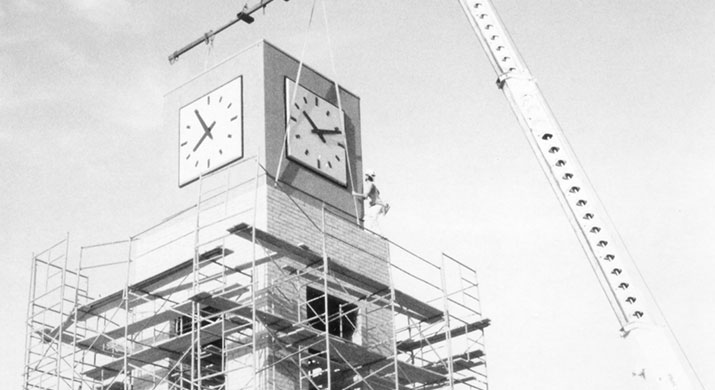
The construction on the Alumni Clock Tower was finished.

1997

The Rose Garden was finished and remains the largest public rose garden in the Southwest to this day.

2001

The Red Mountain campus opened for enrollment.

2004

President George W. Bush visited MCC to discuss a proposal for a federal grant for training programs.

2007

The Council for Higher Education Accreditation (CHEA) awarded MCC the CHEA Award for Institutional Progress in Student Learning Outcomes.

2014

The Performing Arts Center and improved Kirk Student Center opened.

1965


2014

administration
leading the way to success in our local and global community

MCC is the largest of the ten colleges in the Maricopa County Community College District (MCCCD). While each college has a unique and recognizable role within its own community, the ten colleges also have a shared foundation in the vision and mission of the District.
Learn More

progress
on construction of our new buildings

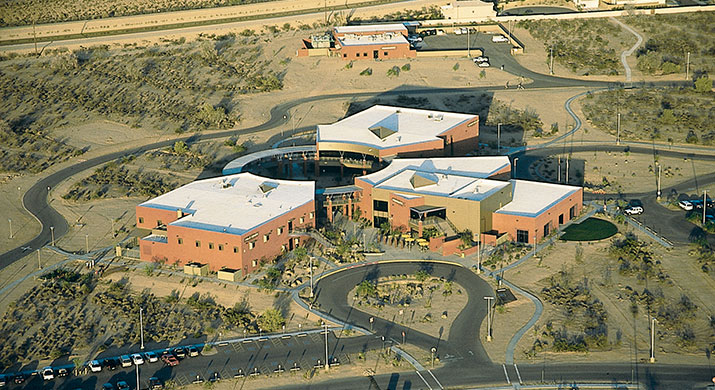
It has been over 50 years since MCC first opened with three buildings and two houses on ¾ of an acre surrounded by the expanse of undeveloped Mesa. Today MCC has two campuses and multiple locations and we continue to strive to improve, making our campuses more inviting, updating technology, and providing top-notch facilities. Click one of the tabs below to view some of our most recent improvements to our campuses.

Performing Arts Center
Art Gallery
Enrollment Center
Kirk Student Center

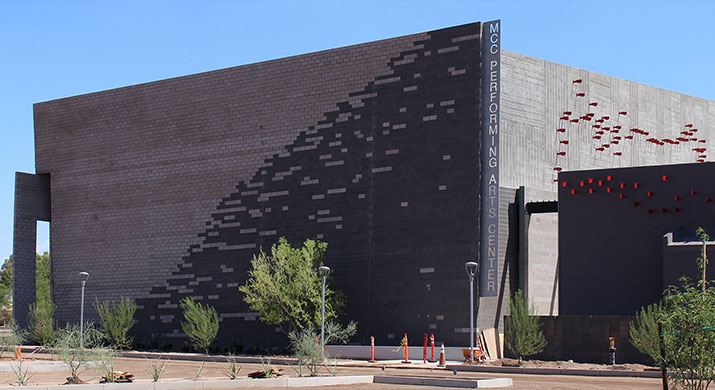
MCC Performing Arts Center

The Performing Arts Center is a multi-purpose facility designed to accommodate the wide range of performances of MCC’s talented music, dance, and theatre programs. Re-imagined to fit the needs of MCC, the large theatre holds 462 seats, performance classrooms, music practice rooms, faculty offices, and the scene shop.
Learn More

resources
to enhance communication and organizational success

Institutional Advancement

The Office of Institutional Advancement – or IA, as we call ourselves – promotes educational opportunities at MCC, enhances the image of the college, and connects us to our communities through communication. In other words, we’re the official voice and face of MCC.
Quick Links

Get the Word Out
Forms, Logos, & Maps
Brand Standards
Experts List
Staff & Contacts

Institutional Effectiveness

The Office of Institutional Effectiveness enhances student success by analyzing gathered institutional research and using it to benefit the college and its students. Such research allows us to make well-informed decisions to ensure MCC continues to improve upon and provide efficient, quality education.
Quick Links

Fast Facts
College Planning
College Statistics
Resources
Student Assessment

Maricopa Community Colleges

 Maricopa Community Colleges’ nationally recognized programs help more than 200,000 students each year achieve their goals. Our 10 accredited colleges offer a diverse range of programs at convenient locations across the Valley, but our goal is the same – your success.

85% of the parents of this state are in favor of the school opening from September, the education department told the plan.

The biggest question among the Corona virus epidemic is about the opening of schools and colleges. Some people are in favor of opening the school and many are against it. Meanwhile, a survey has revealed shocking results. The survey has been conducted by the Education Department of the state Haryana adjacent to Delhi.

In this survey of Haryana Education Department, it has been found that about 85% of the students of class 10th and 12th in the state are in favor of opening school from September 2020. Despite the dangers of the Corona epidemic, these parents are ready to send their children to school.

The survey was conducted online by the state school education department. In this, parents of a total of 76,019 students of class 10th and 12th of various government schools of the state attended. It included a few schools from all the 22 districts of the state.

What questions were asked from parents
These four questions were asked by the education department to all parents –

  • Should schools be opened by September 2020?
  • Are parents ready to send their children to school from September 2020?
  • Have any of your family members conducted the Kovid test?
  • Have any of your family members been found to be Kovid positive? … so how will the schools be opened now.

An Education Department official said that ‘most of the students of 10th-12th students are in favor of opening of schools. Therefore, the department has decided to run trial run by opening two schools in different districts first. Government Senior Secondary School in Karnal and Government High School in Sonepat will be opened for four days. Dates will be revealed soon. ‘ In these four days, every movement of the school will be recorded on cameras. How students come to school, how they enter, how classes attend, or not touch each other, how they get out of school .. All these things will be recorded. Classes will be held in small groups instead of classrooms. After the trial, a team of seven members of the education department, including health and hygiene experts, will watch these video recordings to see if all the rules are being followed. If there is a shortage, teachers will be asked to remove it the very next day. These recordings will be shown to every teacher before school opens. The education department is preparing to open schools for class 10th and 12th from September 21.

Students have to submit written consent of their parents for this. An official of the Directorate of School Education has told that the ‘School Management Committee will conduct a survey from the parents of all the students from class 9th to 12th. If 60 percent or more of the parents are in favor of opening the school, it will be recorded in the school register. However, all these things are still in the planning stage.

Career opportunities in Humanities stream

Taking Arts stream always seems like a tough choice and a stressful one too. You constantly doubt yourself asking whether you had made the right choice. Just like science arts also have holistic area of study and expertise all we have to do is search thoroughly and read more about

Arts stream offers a wide variety of opportunities in all kinds of fields. We usually find UPSC aspirants quite common but not just UPSC but we can also be lawyer, psychologist,fashion designers, journalists and lot more

Here are the most commonly chosen options

Union Public Service Commission aspirants

This is the most common choice of a Humanities student. Being a UPSC aspirant is the main attraction of the arts subject. Students all across India opt for political science with the dreams of being a Civil Servant. Delhi University has become a hub for UPSC aspirants and political science its main attraction. online and offline coaching are available for civil services all across India

Lawyers

One of the professional courses under the arts stream is that of lawyers law courses are now integrated with B A, BBA , B.Com and all sorts of new subject in order to enhance the learning. law has a lot of different fields under it ranging from Civil, Environmental, criminal etc

Mass Media

Mass Media itself covers a lot of opportunities like reporters, journalists, news readers, editors, magazine writers and lots more. Mass media is a field of great attention. Being creative can be a quick JumpStart in this sector

Fashion Designing

This field of study is quite accepting one, creativity and one’s skill and talents are to be put into use in this field. Fashion designers are widely recognised and highly paid too

Professors and Lecturers

This is is one of the commonly opted jobs by the students. Teaching in colleges have its own perks and benefits too professors are widely respected around the country, not only they command respect but they have become an icon for teaching a very skillful young Nation

Event Management

One of the recent trends in our economy is the growing tertiary sector. More and more jobs are being created in this very sector. Event management is one such emerging one. Managing events and Ceremonies by a team of well equipped and professional people has become quite common these days

Hotel Management

Food technology and food studies have become a hit among the youth. This course takes life in a different perspective and teaches you that not only classroom learning matters but learning by experience is important too.

Theater and Film Making

Some of us love the idea of stage and performing arts and where most of us fail to follow these passions is because we are afraid to take a risk, due to this we never come across its advantages and courses. We often focus on the big picture that we forget the little things.

Criminologist

This course can also come under a science branch too. It can also be learned as a discipline under arts too. What’s more interesting that looking at a crime from the point of view of a social thinker

There are even more courses like interior designing, international studies, linguistic expert and lots more to study.

What’s more important is to read more, Learn more and explore more.

Glendale Community College

Education has the power to inspire growth and change lives. Since 1965 Glendale Community College has welcomed over 500,000 students as they worked towards graduating with two-year degrees, transferring to a university, completing new career training, or finishing an occupational certificate. 

Locations


Main Campus

6000 W Olive Ave, Glendale, AZ 85302
(623) 845-3000

Main Campus Google Map


North Campus

5727 W Happy Valley Rd., Phoenix, AZ 85310
(623) 888-7000

North Campus Google Map

Who We Are

Glendale Community College upholds the guiding principles and foundations of the Maricopa Community College District and works to serve the diverse and evolving needs of students and the community.

Welcome to Glendale Community College from our college president, Dr. Leyba Ruiz.
Administration
Values, Vision & Mission
Compliance
Accreditation
Diversity
Sustainability
History of GCC
History of GCC North
Contacts
Community
Careers

About
Athletics
Bookstores
Campus Map – Main
Campus Map – North
College Police
Disability Resource Services
Enrollment FAQ
Financial Aid
Fitness Centers
Library
My.Maricopa
MyInfo App
Technology Help
Tutoring
Careers & Jobs
Non-Discrimination Statements
Consumer Information
Disclaimer
Disclosures
Accreditation
QLess Status

Central Arizona College


image of five CAC campuses

About Central

Central Arizona College opened its doors in 1969 to bring higher education to Pinal County.

CAC serves and educates the diverse communities of Pinal County. From students of Hispanic and Native American descent to participants in the lifelong learners program, the institution’s diverse college community values the power of innovation, continuous quality improvement, and the contribution of the individual.

With five campuses and three centers located strategically throughout the county, CAC provides accessible, educational, economic, cultural, and personal growth opportunities for those of all ages.

The College’s talented and innovative faculty and staff is dedicated to fostering a spirit of learning.

Vision, Mission and Goals

Vision:

Central Arizona’s premier choice in education and career excellence.
Mission:

Central Arizona College serves as a TRUE Learning community by empowering our students and staff to succeed.

Teaching. Reaching. Understanding. Empowering. Learning.

Values:

  1. Accountability
  2. Communities
  3. Trust

Strategic Goals:

Student Success

Ensure student success through retention, persistence, completion, and transfer

Access

Ensure all Pinal County residents and others have access to high quality innovative post-secondary opportunities

Workforce

Ensure students acquire the skills necessary for job placement and that meet employer needs in Pinal County and Region

Community

Ensure Pinal County residents have access to lifelong learning and cultural enrichment

Environment

Ensure a safe, sustainable environment that promotes learning, communication, diversity and satisfaction among students and employees.

Stewardship

Ensure optimization of fiscal resources through a balanced budget to support the needs and expectations of students and the community

Infrastructure

Ensure a physical and technological infrastructure that support changes in learning and working environment

CAC Strategic Plan

Common Student Learning Outcomes:

Central Arizona College supports student success and academic achievement by providing a high quality education which integrates continuous improvement strategies in teaching and learning. CAC’s graduates possess academic knowledge, skills, and attitudes of an educated citizen, including competency in our Common Student Learning Outcomes (CSLOs). 

The four Common Student Learning Outcomes are:

Cultural and Civic Engagement
Participate in diverse environments while demonstrating global citizenship and social consciousness

Integrative Knowledge
Identify, comprehend, apply and synthesize facts, concepts, theories and practices across broad and specialized knowledge areas

Personal and Professional Skills
Demonstrate skills which enhance personal and professional development

Reasoning Skills
Inquire and analyze to solve problems, draw logical conclusions, or create innovative ideas

The CSLOs were approved by the Pinal County Community College Governing Board on September 18, 2012.

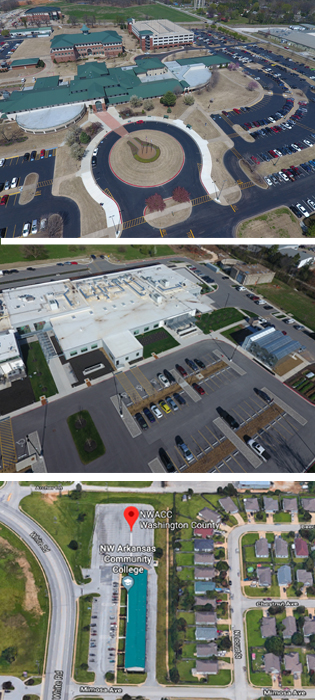
NorthWest Arkansas Community College (NWACC)

 NorthWest Arkansas Community College (NWACC) provides quality and affordable higher education to empower lives and strengthen communities within northwest Arkansas and the surrounding areas. We offer a full range of certificates and associate degrees that can lead to careers in business, computer science, art, communications, culinary, nursing, paramedic, engineering, criminal justice and more.

With over 55 degrees and certificates, as an NWACC student you can choose your own path. Your journey may include earning a certificate in only a few months, pursuing a two-year degree in a high-demand trade, or taking core courses that transfer to a four-year university. 

Whether it\’s pursuing your dream to be a chef at our new, cutting edge culinary training center — Brightwater: A Center for the Study of Food — or becoming a nurse through our Health Professions division, NWACC offers you the quality instruction and academic support you need to begin your journey toward success.  

At NWACC,  we proudly personify diversity. We are comprised of new and returning students; local, international and online. We are LGBT, multicultural, military verterans, and everyone else in between. We are science and math, music and art, healthcare and workforce ready, as well as passionate educators, experienced staff and caring advisors.  

No matter the path you follow, your journey begins at NWACC. There’s a place for you here.


history collage

Since 1990

Since 1990, NWACC has grown from offering classes to 1,200 students in rented facilities to now being the largest community college in Arkansas. We have a campus location in Bentonville and additional facility in Springdale, and over 8,000 enrolled college credit students. 

We have big plans for our future growth and yours. 

View more about NWACC\’s History


IDL wcc

Reaching New Heights 

As the largest community college in Arkansas, NWACC is recognized by two-year colleges as a leader in education. With the building of our Integrated Design Lab on campus and an additional facility in Washington County, we will continue to excel in providing our community with high-ranking degree and certification programs in science, technology, culinary and many more academic divisions. 


 NWACC Facts

icons stats

More Facts about NWACC


 Visit Us

campus locations

NWACC\’s main campus resides in Bentonville, Arkansas, along with additional learning centers in the surrounding areas. 


 Leadership & Planning

NWACC is governed by a Board of Trustees and administered by the college president and a group of exceptional leaders. Their dedication to our students continue to make the college successful. 

Learn more about NWACC\’s Leadership         Read the Current Strategic Plan


Want more information about being an NWACC student?

Learn more about campus life, academic programs, various resources and opportunities.