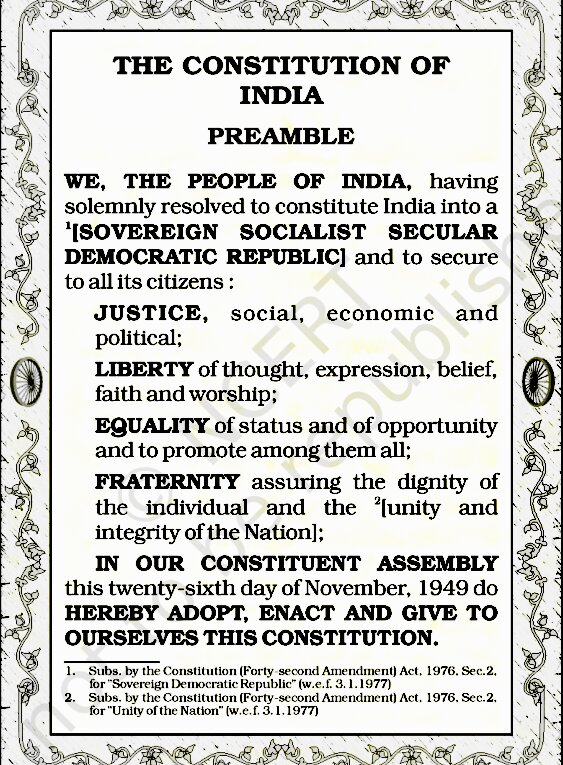
75 Years of the adoption of Constitution of India

Government of India announces the commencement of a historic year-long celebration to commemorate the 75 years of the adoption of the Constitution of India, a milestone that reflects the remarkable journey of our democracy and the enduring legacy of our founding principles and Constitutional values starting on Constitution Day (Samvidhan Diwas)26th November 2024. These celebrations are being conducted under the campaign tagline Hamara Samvidhan, Hamara Swabhimaan and aim to honour the contributions of the Constitution’s makers while reiterating the core values enshrined in it.

On 26th November 1949, the Constituent Assembly of India adopted the Constitution of India, which came into effect on 26th January 1950, marking the beginning of a new era in Indian history. This day is significant as it marks the adoption of the world’s longest written Constitution, a cornerstone of India’s democratic framework. Since its inception, the Constitution serves as the guiding framework, shaping the nation’s progress over the past 75 years.

Celebration – Highlights:

  • Special Website (constitution75.com): A dedicated website, constitution75.com, has been created to enable citizens to engage with the Constitution’s legacy through interactive activities and resources. The website offers:
    • Read the Preamble and record a video: Citizens can participate in the campaign by recording videos while reading the Preamble of the Constitution in languages of their choice. The videos can be uploaded on the campaign website and certificate of participation can be downloaded.
    • Explore the Constitution in Multiple Languages: Access the full text of the Constitution in multiple languages, making it accessible to all citizens.
    • Dive into History: Learn about the making of the Constitution, read debates from the Constituent Assembly, reports of various committees involved in the making of the Constitution and gain insights into the values and principles that shaped modern India.
    • Interactive Features: “Know Your Constitution”, an AI enabled interactive feature, where one can ask questions about the Constitution and receive detailed answers related to the Constitution of India.
  • Mass reading of Preamble on November 26, 2024
    • On 26th November 2024, from schools to offices, from cities to villages, millions across India will read the Preamble together.
    • Capture the moment by uploading your selfies and videos on the website (constitution75.com) and sharing them on social media with pride.
  • Inaugural Programme at Central Hall of Parliament on 26th November 2024:
  1. A grand inaugural programme will be held at the Central Hall of Parliament, led by the President of India, in the presence of the Vice PresidentPrime MinisterSpeaker of Lok Sabha and other dignitaries.
  2. Programme Highlights:
  • Short Film Presentation dedicated to the glory of the Constitution of India, its making and historical journey.
  • Release of a commemorative Coin and Stamp dedicated to the 75th anniversary of adoption of Constitution of India.
  • Release of Books titled “Making of the Constitution of India: A Glimpse” and “Making of the Constitution of India & its Glorious Journey”
  • Release of Booklet dedicated to the Art of the Constitution of India.
  • Release of the Constitution of India in Sanskrit.
  • Release of the Constitution of India in Maithili.
  • Ceremonial reading of Preamble led by the President of India.

The Government of India calls upon the citizens to be a part of this historic occasion and show our collective pride in our Constitution and demonstrate our commitment to the democratic values that define our nation.

How to participate!

  • Visit constitution75.com to read the Preamble of the Constitution, record and upload your videos, and download a certificate of participation.
  • Engage with the interactive features of the website, explore the Constitution in multiple languages, and learn more about the journey that brought India its guiding framework.
  • Join the nationwide movement on 26th November 2024, take part in the reading of the Preamble at schools, colleges, government and private offices, panchayats, and others, across the country. Share your participation on social media to inspire others.

****

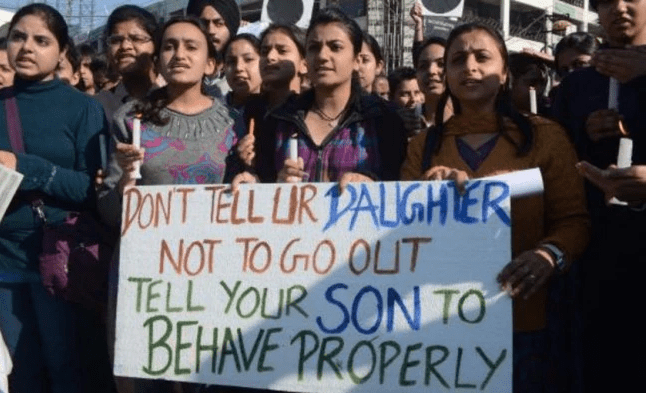
Women organizations and their role in India

Women’s Organisations emerged in India as a result of the spread of education and the establishment of the notion of the new woman. There was an improved level of communication among women which made them aware of the different problems that they faced and their rights and accountabilities in society. This awareness led to the upsurge of women’s organizations that fought for and signified women’s causes

An exclusive feature of the Indian women’s crusade is the fact that early efforts at women’s liberation were set in motion by men. Social reformers such as Raja Ram Mohan Roy, Maharishi Karve, and Swami Dayanand Saraswati challenged the conventional subservience of women, stimulated widow remarriage, and supported female education and impartiality in matters of religion, among other issues. Mahila mandals organized by Hindu reformist organizations such as the Arya Samaj and Brahmo Samaj encouraged women to go out of the boundaries of their homes and interact with other members of society. Pandita Ramabai, who was considered as one of the innovators of the feminist movement, with the help of Justice Ranade established the Arya Mahila Samaj in 1882. She envisioned creating a support network for newly educated women through weekly lectures and lessons at homes, where women could learn and gain confidence through interactions.

Women’s auxiliaries of general reform associations also served as a ground for women to deliberate social issues, express opinions, and share experiences. The Bharata Mahila Parishad of the National Social Conference was the most protruding among such opportunities. Though the National Social Conference was formed at the third meeting of the Indian National Congress in 1887, the Mahila Parishad was launched only in 1905.

The pre‐Independence period saw women’s issues related to the nationalist agenda at various junctures. In this period, a major enhancement of women was in terms of political participation of women, calling for a redefinition of conventional gender roles. Women began openly demonstrating their opposition to foreign control by supporting civil disobedience actions and other forms of protest against the British. Opportunities to organize and participate in agitations gave women much‐needed confidence and a chance to develop their leadership skills. Cutting across communal and religious barriers, women associated themselves with larger problems of society and opposed sectarian issues such as communal electorates. Political awareness among women grew, owing to a general understanding that women’s issues could not be separated from the political environment of the country. During this period, the initial women’s organizations formed within the historical background of the social reform movement and the nationalist movement were as follows.

•The Women’s India Association (WIA).
National Council of Women in India (NCWI).
•The All India Women’s Conference (AIWC) in 1917, 1925, and 1927 correspondingly.
•Each of these organizations emphasized the importance of education in women’s progress.
•The WIA, created by Margaret Cousins in Madras, worked widely for the social and educational emancipation of women. •Associated with the Theosophical Society, it encouraged non‐sectarian religious activity and did creditable work in promoting literacy, setting up shelters for widows, and providing relief for disaster victims.
•Women in Mumbai, Chennai, and Kolkata through networks developed during World War I work, allied their associations together, and created the NCWI in 1925. A national branch of the International Council of Women, its most prominent member was Mehribai Tata, who aggressively campaigned against inert charity and advised men to support female education.
•The most important of the women’s organizations of the time was the All India Women’s Conference. Though its initial efforts were directed towards improving female education, its scope later extended to include a host of women’s issues such as women’s franchise, inheritance rights.

The Constitution of India enlisted in 1950 which permitted equal rights to men and women. Rights such as the right to vote, right to education, right to enter into public service, and political offices brought in satisfaction among women’s groups. In this period, there was limited activity in the area of women’s rights. Many women’s organizations such as the National Federation of Indian Women (1954) the Samajwadi Mahila Sabha (1559) were formed to work for supporting the cause of Indian women. Since the country was facing a social, political crisis after British rule, many demands of the women activists were not supported by the Government. But during this period from 1945, the Indian women got an opportunity to participate in confrontational politics.

In post-independent India, the women’s crusade was divided, as the common opponent, foreign rule, was no longer there. Some of the women leaders formally joined the Indian National Congress and took a powerful position as Ministers, Governors, and Ambassadors. Free India’s Constitution gave universal adult franchise and by the mid-fifties, India had fairly liberal laws concerning women. Most of the demands of the women’s movement had been met and there seemed few issues left to organize around. Women’s organizations now observed that there was an issue of implementation and consequently there was a pause in the women’s movement.

Some women organizations such as the Banga Mahila Samaj, and the Ladies Theosophical Society functioned at local levels to promote contemporary ideas for women. These organizations deal with issues like women’s education, abolition of social evils like purdah and Child marriage, Hindu law reform, moral and material progress of women, equality of rights and opportunities.

It can be believed that the Indian women’s movement worked for two goals.

•Uplift of women.
•Equal rights for both men and women.

Currently, there are many women organizations in India:

•All India Federation of Women Lawyers
•All India Women’s Conference
•Appan Samachar
•Association of Theologically Trained Women of India
•Bharatiya Grameen Mahila Sangh
•Bharatiya Mahila Bank
•Confederation of Women Entrepreneurs
Durga Vahini
•Friends of Women’s World Banking
•Krantikari Adivasi Mahila Sangathan

The major objective of this organization is:

•Strengthening and building new initiatives, networks, forums, etc., for protecting women’s rights
•Monitoring the Government of India’s commitments, implementing the Platform for Action with special focus on the eight-point agenda discussed at the Conference of Commitment, CEDAW, the Human Rights, and other United Nations Convention.
•Advocacy, lobbying, and campaigning on women-related issues.
•Information Dissemination and Documentation.
•Solidarity and linkages with other regional and global forums.


Another women organization in India is Swadhina (Self-esteemed Women) which was formed in 1986. It is principally a civil society organization focused on the Empowerment of women and Child Development based on Sustainable Development and Right Lively hood. At Swadhina, it is believed that positive social change has a direct effect on the lives of women and that change is possible only through equal and spontaneous participation of Women. Organization members are active in five states across the country in remote tribal districts of Singbhums in Jharkhand, Purulia, and West Midnapur in West Bengal, Kanya Kumari in Tamil Nadu, Mayurbhanj in Orissa, and East Champaran in Bihar.

Due to the women’s movement, several legislations were passed like the Equal Remuneration Act, Minimum Wage Act, Maternity Benefit Act, etc. to ensure equal status to women in society & more importantly at work. However, illiteracy amongst the major women workforce (87% of women are employed in the unorganized sector), fear of losing employment & lack of awareness of the laws enacted to protect them, make it difficult for women to benefit from them.


A girl should be two things:

who and what she wants.

MUST WATCH FILMS FOR REAL NATIONALIST

Nationalism always been most  forgettable ideology. Nationalism seeks to pressure & foster a nation’s traditional culture. Nationalism dominant the loyalty and devotion towards nation. It aims to build and maintain a single National identity based on shared social characteristics of culture, ethnicity, geographic location, language, politics, religion traditions and belief in a shared singular history to promote National unity or solidarity.

The moral value of nationalism the relationship between nationalism patriotism and the compatibility of nationalism and cosmopolitanism are all subjects of philosophical labels. Nationalism can be combined with diverse Political goals & ideologies such as conservatism (Right Wing) or socialism (Left Wing). Nationalism is seen as positive or negative depending on it’s actions and outcomes.

Scholars frequently place thebeginning of nationalism in late 18th century or early 19th century with American declaration of Independence or with the French Revolution. Nationalism as a concept was firmly established by 19th century. The template of nationalism, as a method for mobilising Public opinion around new state based on popular sovereignty, Due to Industrial Revolution there was an emergence of an integrated, nation encompassing economy & National Public sphere, where the people began to identify with the country at large, rather than the smaller units of their provinces, town or family.

Union Jack was adopted in 1801 as the rational one. The political development of nationalism and the push for popular sovereignty culminated with the ethnic/ national revolution of Europe. It has also been used to legitimate racial, ethnic and religious divisions, suppress or attack minorities and undermine human rights and democratic tradition. Radical nationalism combined with racial hatred was a key factor in the Holocaust perpetrated by Nazi Germany. In 1749, Thomas Arne composed the patriotic song “Rule Britannia”!. Cartoonist John Arbuthnot invented the character of John Bull as the personification of the English national spirit in 1712.

Imposing the idea of one language in 1772 through his “ Treatise on the origin of language” focusing on the role of common language the instance observe in modern politics. He attached exceptional importance to the concepts of nationality and of patriotism.

Sociological or modernist interpretation of nationalism & nation building argues that nationalism arises and flourishes in modern societies that an industrial economy capable of self sustainability, a central supreme authority capable of maintaining authority and unity, few prominent figures developed the modernist interpretation of nation and nationalism include: Carlton J H Hayes, Rabindranath Tagore, Emile Durkheim, Max weber, Talcott Parsons, Arnold Joseph Toynbee.

 Now, think about it, how preferable to have nationalism as development ideology that emphasis on destroying the diversity; diversity that intact the entire nation in oneness without holding on discrimination. If people understand each other with different culture & religion the world will become the better place to live; politicians will not take advantage & will not turn up entire region in war.

Conflict will resolve quickly if sit & have table talk. Far – Right leader Marine Le Pen in France emerging as second highest vote collector candidate belongs to National Rally Party. National Rally believes in strong French centric ideology same as Trump reign during his tenure like “ Make America great again” to have strong immigration policy and secure the American individual identity . VÖLKISH MOVEMENT (Body of people) – German ethno nationalist movement from late 19th century through to Nazi Era impose the “blood and soil”.

However, It is difficult to amaze the world with far right nationalism as we have example of Vietnam War reaction when people saw the images from Vietnam War people protested against the government, Movements like Black life matters, Protest against CAA.

So, Now what should be the real meaning of Nationalism – Simple we believe in democracy and diversity (ironically scrapped from new CBSE syllabus) when we embrace the different culture. Encouraging tolerance for people of different cultural and racial background. When we send off ethnic & racial difference, religion, socio – economic background, intelligence. So whatever movies are mentioned here are based on true meaning of Nationalism. These movies asking question from Society in terms of socio – economic difference, war, racial discrimination, gender biases if you concern about these matter then you are real nationalist and kind of facets of society that Government wants us that we must not talk about these situations.

Movies Like: –

1)Never look away – Werk ohne Autor

2)Dr. Strangelove: Or How I learned to stop worrying and love the bomb

3)Full metal jacket

4)The lives of others – Das Leben Der Anderen

5)Ardh Satya

6)Mathilukal

7)Shyam benegal’ s films

8)Apu Trilogy

9)Bimal Roy’s films

These above mentioned movies list here in this article because of their Challenging Attitude towards for bringing something better for disadvantaged groups. More Can include in it with time and how we will evolve.


MUST WATCH FILMS FOR REAL NATIONALIST

Nationalism always been most  forgettable ideology. Nationalism seeks to pressure & foster a nation’s traditional culture. Nationalism dominant the loyalty and devotion towards nation. It aims to build and maintain a single National identity based on shared social characteristics of culture, ethnicity, geographic location, language, politics, religion traditions and belief in a shared singular history to promote National unity or solidarity.

The moral value of nationalism the relationship between nationalism patriotism and the compatibility of nationalism and cosmopolitanism are all subjects of philosophical labels. Nationalism can be combined with diverse Political goals & ideologies such as conservatism (Right Wing) or socialism (Left Wing). Nationalism is seen as positive or negative depending on it’s actions and outcomes.

Scholars frequently place thebeginning of nationalism in late 18th century or early 19th century with American declaration of Independence or with the French Revolution. Nationalism as a concept was firmly established by 19th century. The template of nationalism, as a method for mobilising Public opinion around new state based on popular sovereignty, Due to Industrial Revolution there was an emergence of an integrated, nation encompassing economy & National Public sphere, where the people began to identify with the country at large, rather than the smaller units of their provinces, town or family.

Union Jack was adopted in 1801 as the rational one. The political development of nationalism and the push for popular sovereignty culminated with the ethnic/ national revolution of Europe. It has also been used to legitimate racial, ethnic and religious divisions, suppress or attack minorities and undermine human rights and democratic tradition. Radical nationalism combined with racial hatred was a key factor in the Holocaust perpetrated by Nazi Germany. In 1749, Thomas Arne composed the patriotic song “Rule Britannia”!. Cartoonist John Arbuthnot invented the character of John Bull as the personification of the English national spirit in 1712.

Imposing the idea of one language in 1772 through his “ Treatise on the origin of language” focusing on the role of common language the instance observe in modern politics. He attached exceptional importance to the concepts of nationality and of patriotism.

Sociological or modernist interpretation of nationalism & nation building argues that nationalism arises and flourishes in modern societies that an industrial economy capable of self sustainability, a central supreme authority capable of maintaining authority and unity, few prominent figures developed the modernist interpretation of nation and nationalism include: Carlton J H Hayes, Rabindranath Tagore, Emile Durkheim, Max weber, Talcott Parsons, Arnold Joseph Toynbee.

 Now, think about it, how preferable to have nationalism as development ideology that emphasis on destroying the diversity; diversity that intact the entire nation in oneness without holding on discrimination. If people understand each other with different culture & religion the world will become the better place to live; politicians will not take advantage & will not turn up entire region in war.

Conflict will resolve quickly if sit & have table talk. Far – Right leader Marine Le Pen in France emerging as second highest vote collector candidate belongs to National Rally Party. National Rally believes in strong French centric ideology same as Trump reign during his tenure like “ Make America great again” to have strong immigration policy and secure the American individual identity . VÖLKISH MOVEMENT (Body of people) – German ethno nationalist movement from late 19th century through to Nazi Era impose the “blood and soil”.

However, It is difficult to amaze the world with far right nationalism as we have example of Vietnam War reaction when people saw the images from Vietnam War people protested against the government, Movements like Black life matters, Protest against CAA.

So, Now what should be the real meaning of Nationalism – Simple we believe in democracy and diversity (ironically scrapped from new CBSE syllabus) when we embrace the different culture. Encouraging tolerance for people of different cultural and racial background. When we send off ethnic & racial difference, religion, socio – economic background, intelligence. So whatever movies are mentioned here are based on true meaning of Nationalism. These movies asking question from Society in terms of socio – economic difference, war, racial discrimination, gender biases if you concern about these matter then you are real nationalist and kind of facets of society that Government wants us that we must not talk about these situations.

Movies Like: –

1)Never look away – Werk ohne Autor

2)Dr. Strangelove: Or How I learned to stop worrying and love the bomb

3)Full metal jacket

4)The lives of others – Das Leben Der Anderen

5)Ardh Satya

6)Mathilukal

7)Shyam benegal’ s films

8)Apu Trilogy

9)Bimal Roy’s films

These above mentioned movies list here in this article because of their Challenging Attitude towards for bringing something better for disadvantaged groups. More Can include in it with time and how we will evolve.


PLIGHT OF WOMEN IN AFGHANISTAN

BY DAKSHITA NAITHANI

The Afghan women, maybe more than anybody else, have dreaded the Taliban’s return. There have been many advances in women’s rights over the last 20 years, which appear to be set to erase nearly overnight.

A quick lesson from history…

The Taliban, a political and military force, is said to have started in Islamic schools in Northern Pakistan in the early 1990s. Its aim was to restore order in Afghanistan following the withdrawal of Soviet troops in 1989, as well as to impose a harsh form of Sharia law. By 1998, the organisation had seized 90% of Afghanistan’s territory.

Once in control, the organisation garnered worldwide condemnation for a slew of human-rights violations. The ban on female education above the age of ten as well as harsh limitations on day-to-day liberties, were among the stringent mores imposed on women and its influence has frequently threatened to expand beyond, to places like Pakistan, where the organisation memorably shot teenager Malala Yousafzai in 2012. Women were treated worse than at any previous period or by any other culture throughout its rule (1996–2001). They were prohibited from working, leaving the house without a male escort, seeking medical assistance from a male doctor, and being compelled to cover themselves from head to toe, including their eyes. Women who had previously worked as physicians and teachers were compelled to become beggars or even prostitutes in order to feed their families during the Taliban’s rule.

Following the 9/11 attacks, it was thought that the Taliban were harbouring Al-Qaeda soldiers, thus an US-led international operation was started against Afghanistan. As a consequence, the Taliban were deposed from power, an Afghan government was established, and soldiers occupied the country for 20 years. It destabilised several regions of the nation due to battles with US and UK forces on a regular basis, and Afghan people were continued to be assaulted. Many would agree that the political and cultural status of Afghan women had improved significantly since the Taliban’s collapse in late 2001.

The Bush administration’s acceptance of women’s rights and empowerment as rationale for its assault on the Taliban is long gone. So it was under the Barack Obama administration, when then-Secretary of State Hillary Clinton stated that the Taliban’s repudiation of al-Qaida and promise to support the Afghan constitution and safeguard women’s rights were preconditions for US discussions with them. The rejection of al-Qaida has yet to be declared openly and publicly less than 10 years later; the constitutional order and women’s rights are still subject to intra-Afghan talks and will be influenced by the changing balance of military power.

In February 2020, US-Taliban peace talks were concluded, with the US pledging a quiet departure in exchange for an end to hostilities. Afghan leaders and top military generals have warned that the government will collapse without foreign assistance. It looks like the worst has transpired only weeks before Biden’s deadline of September 11th.

The Taliban rule wreaked havoc on the institutions and the economy, which had already been ravaged by decades of conflict and the Soviet scorched-earth counterinsurgency policy.

The post-Taliban constitution of 2004 granted Afghan women a wide range of rights, and the political epoch brought social and economic progress, which greatly improved the socioeconomic situation. From a crumbling health-care system with almost no healthcare available to women during the Taliban years, the post regime built 3,135 functional facilities by 2018, giving more than 80 percent of Afghans access to a medical facility within two hours’ drive.

 Less than 10% of females were enrolled in elementary schools in 2003; by 2017, that figure had risen to 33%, while female secondary school attendance increased from 6% to 39%. As a result, 3.5 million Afghan females were enrolled in education, with 100,000 of them enrolled in academic institutions. Women’s life expectancy increased from 56 to 66 years in 2017 and maternal mortality fell from 1,100 per 100,000 live births in 2000 to 396 per 100,000 in 2015. By 2020, women made up 21% of Afghan public workers, including 16% of top management positions, and 27% of Afghan parliamentarians.

 These benefits for women have been dispersed inequitably, with women in metropolitan areas benefiting considerably more than women in rural regions. Despite formal legal empowerment, life for many rural women has not improved much since the Taliban era, notably in Pashtun regions but also among other rural minority groups. Many Afghan males are staunch conservatives. Families often let their daughters to complete a primary or secondary education before proceeding with planned marriages. The burqa is worn by the majority of Afghan women in rural regions without any pushing from the Taliban.

What is the situation for women in Afghanistan now?

Women’s rights in Afghan had arguably maintained pace with many other Western countries prior to the 1970s. Women were granted the right to vote in 1919, one year after women in the United Kingdom. In the 1950s, gender segregation was eliminated, and in the 1960s, a constitution was enacted that included women in political life. As the region became more unstable in the 1970s, these rights were steadily eroded.

Only 38% of the international humanitarian response plan for Afghanistan is financed as of August 2021. This gap might result in the loss of specialised protection services for 1.2 million children, putting them at risk of abuse, recruitment, child labour, early and forced marriages, and sex abuse. About 1.4 million females, many of whom are survivors of domestic abuse, would be left without access to safe spaces where they may receive full care.

Females, who have experienced life with rights and freedoms, are among the most exposed as a result of the Taliban’s fast progress in Afghanistan. As the Taliban capture control of Kabul, they risk losing their hard-won achievements.

Those cries for aid may be too late as the capital city falls into the clutches of Islamist rebels. There have been several stories of the Taliban going door-to-door and compiling a list of women and girls aged 12 to 45 who are then compelled to marry Taliban warriors. Women are told that they cannot leave the house without a male escort, that they cannot work or study, and that they cannot wear anything they want. Schools are also being shuttered.

There is a lot to lose for a whole generation of Afghan women who entered public life – legislators, journalists, local governors, physicians, nurses, teachers, and public administrators. While they worked alongside male colleagues and in communities that were unfamiliar with people in positions of power to help establish a truly democratic civil society, they also wanted to pave the way for future generations to follow in their footsteps.

The Taliban offers itself a broad range of possibilities by claiming that they will “protect” women’s rights under sharia but refusing to explain how women’s rights and life in Afghanistan will alter if they achieve their goals. Even if the government did not openly adopt as cruel a system for women as in the 1990s, the Taliban’s dispositions are quite likely to undermine women’s rights, impose cultural prohibitions on women, and reduce socio-economic possibilities for them.

In summary, even with this change in behaviour, the Taliban in power would almost certainly strive to curtail Afghan women’s legal rights, exacerbating their social, economic, and political circumstances. How much and in what manner, is the question.

CO-OPERATIVE AND COMPETITIVE FEDERALISM


                                                              (Photo: YouTube)

India opted for quasi-federal structure after Independence. After Independence from 1947 to 1967, India experienced the centralized federalism. From 1967 to 1990, India witnessed confrontational federalism due to the emergence of other party governments at the state level. Since 1990, Co-operative federalism has been developed. The present NDA government has been focusing on the new concept of competitive federalism along with co-operative federalism for higher growth of the country.

In competitive federalism, states would compete with each other over a broad-range issues to provide citizens various services in a hassle-free manner. The policy of one-size-fit-all is replaced with different policies of various states based on their own priorities within the state. This spirit of competition has led to lack of inter-state mutual assistance. The NITI Aayog was formed to empower and strengthen the state governments. It also appointed regional councils to create cooperation among two or more states facing a common set of problems or amicably settle disputes.

While the competition between states, reflected in the World Bank’s Ease of Doing Business index, has generated a lot of enthusiasm, this must be a continuing exercise. There are only few well-off states like Maharashtra, Gujarat, and Tamil Nadu which are competing. The proposed GST law may help some of the less productive states to raise the revenue. But the opposition of few well-off states with respect to revenue loss in implementation of GST system points that there is lack of will in participating in the process of competitive federalism.

We’ve seen various inter-state water disputes such as Krishna water disputes involving Maharashtra, Karnataka and Andhra Pradesh, Narmada water disputes involving Rajasthan, Gujarat, M.P, and Maharashtra, Cauvery water disputes involving Karnataka, Kerala, Tamil Nadu, Puducherry, and various others. For this, under Article 263, an inter-state council was established. The Sarkaria Commission on center-state relations (1983-87) made a strong case for the establishment of a permanent inter-state council. Article 301 to 307 in Part 13 deals with the trade, commerce and intercourse within the territory of India, breaking all the border barrier between the states. Zonal councils have also been established in 1956 to narrow the gap between the states. Cases such as Cauvery water dispute and Sutlej Yamuna link canal issue have seen non-mutual assistance between the states to a wider extent.

Thus, it can be said that co-operative and competitive federalism are two sides of the same coin. This spirit of competition has led to the lack of mutual assistance between and among the states. It is competition with co-operation that will drive the real change.


FATHER OF OUR CONSTIUTION- DR. B.R AMBEDHKAR

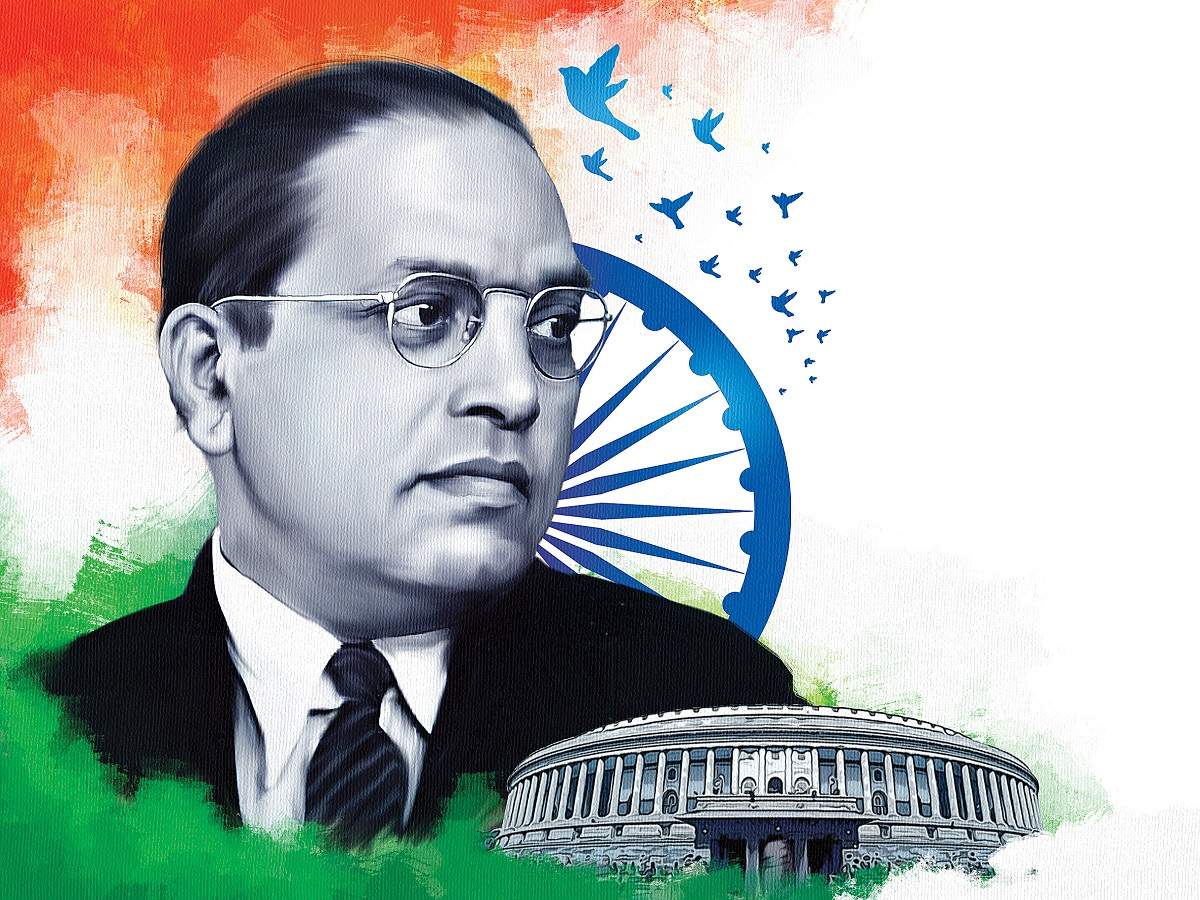
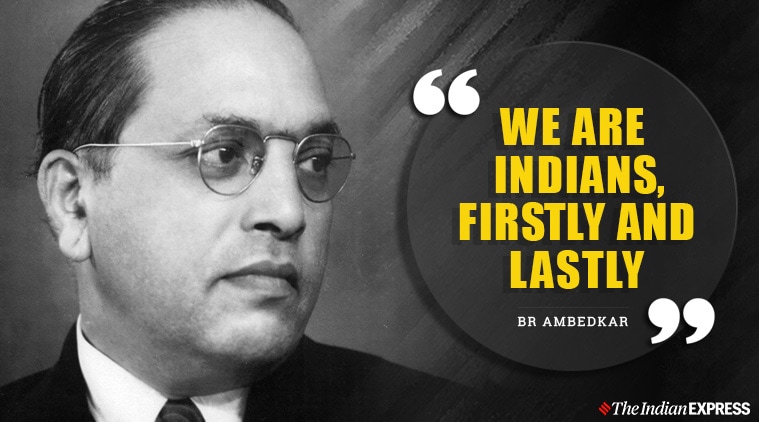
Bhimrao Ramji Ambedkar was brought into the world on 14 April 1891,also known as Babasaheb , was an Indian legal scholar, market analyst, legislator and social reformer, who propelled the Dalit Buddhist development and crusaded against social segregation towards the untouchables. He was British India’s Minister of Labor in Viceroy’s Executive Council, Chairman of the Constituent Drafting board, free India’s first Minister of Law and Justice, and thought about the main engineer of the Constitution of India.

Ambedkar Jayanti: Some interesting facts about the architect of Indian  Constitution, Babasaheb Ambedkar

Dr. B. R. Ambedkar showed all Indians Equality and Fraternity through the drafting of the Constitution of India, the prelude of which expresses that all Indians are equivalent according to the law and that all Indians are a tremendous family through the possibility of Fraternity.

He encouraged individuals to battle for what is correct. He advanced changes that inspired the most minimal of the projects, the Dalits. He coordinated a few developments like Anti-standing development, Dalit Buddhist development, and so forth.

Bhimrao Ambedkar Quotes: Dr. BR Ambedkar Inspirational Quotes, Speech,  Famous Thoughts on Death Anniversary

In the wake of turning into the primary Law Minister of the nation, and through the drafting of the Constitution of India, he changed the future by attempting to allow everybody an equivalent opportunity. Dr. B. R. Ambedkar held the good post of head at the Government Law College in Mumbai for a very long time. He was additionally the main Indian to have a Doctorate in Economics abroad. Following his model, many individuals left Hinduism for Buddhism since Buddhism doesn’t partition individuals into projects. He was the representative for all oppressed and neediness stricken lower projects like the Dalits.

Because of his enthusiasm in the Dalits’ upliftment, he established separate held seats for individuals of lower projects, which was pointlessly gone against by Gandhiji. He was against section 370 of the Indian Constitution, giving select rights to the province of Jammu and Kashmir. Segment 370 has been abolishes an year ago. It shows how exact and ground breaking his arrangements were. He was offered with Bharat Ratna in 1990 for this excellent work in Indian Reforms.

His works and thoughts keep on impacting the mass of individuals. His ground breaking and goals are as yet appropriate today. Many admire him as a good example, as do I. He is really a diamond to our country.

RESOURCES:

https://en.wikipedia.org/wiki/B._R._Ambedkar

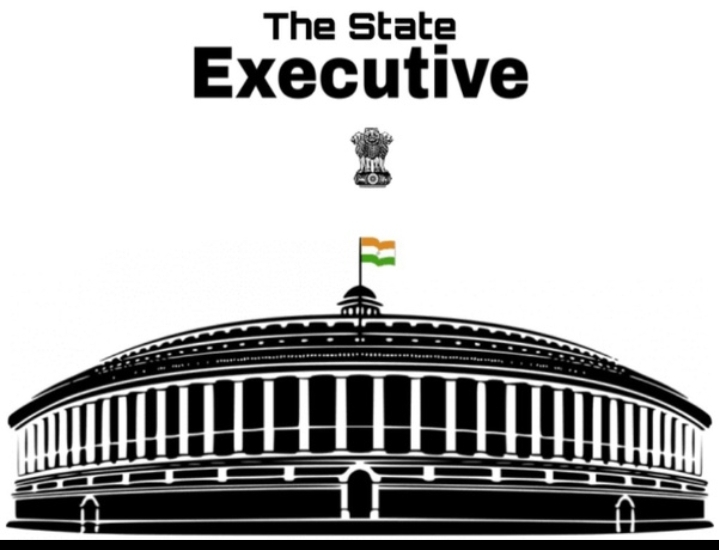
The State Executive

Our Constitution provides for a federal Government, having separate systems for administration, the Union, and the States. The Constitution comprises provisions for the governance of both. It provides a uniform structure for the state Government, in Part VI of the Constitution, which applies to all the states including the erstwhile State of Jammu and Kashmir.

The Governor:- At the head of the executive of a State stands the Governor. The executive powers of the state are vested in the Governor. Generally, there shall be a Governor for every state, but an amendment of 1956 makes it possible for the appointment of some person as the Governor for two or more States[Article 153].

Appointment and term of Office of the Governor:- The Governor of a State is not elected but is appointed by the President and holds his office at the pleasure of the President. Any citizen of India who has completed the age of 35 years is eligible for the office, but he must not hold any other office of profit, and should not be a member of the Legislature of the Union of any State [Article 158]. There is no bar for the selection of a Governor amongst the members of a Legislature, but if a Member of any Legislature is appointed as Governor, he should cease the position of member immediately after such appointment.

The normal term of a Governor’s Office shall be five years, but he can be terminated for the following reasons—

(i) Dismissal by the President, at whose pleasure he holds office [Article 158].

(ii) Resignation [Article156 (2)].

The President’s power can be used only in cases of gross delinquency, such as bribery, corruption, reason, and violation of any provision of the Constitution. There is no bar to a person begin appointed as Governor more than once.

Powers of the Governor:- The Governor has no diplomatic or military powers like the President, but he possesses executive, legislative, and judicial powers similar to those of the President.

(1) Executive Powers– The Governor has the power to appoint his Council of Ministers, the Advocate General, and the members of the State Public Service Commission and holds office during his pleasure. But the members of the State Public Service Commission cannot be removed by him [Article 317]. The Governor has no power to appoint the Judges of High Court he is entitled to consult the President in the matter [Article 217(1)]. He can also nominate 1/6th part of the total members of the Legislative Council.

(2) Legislative Power:- The Governor has a right to addressing and sending messages and summoning, prorogue, and dissolving, in association with the State Legislature, just like the President.

(3) Judicial Powers- The Governor has the power to grant pardon, reprieve, respite, or remission of punishment or to suspend, remit, or commute the sentence of any person convicted of any offense against any law relating to a matter to which executive power of the State extends [Article 161]. The Chief Justice and the Judges of the High Court of the State are appointed with the consultation of the Governor by the President.

(4) Emergency Powers- The Governor has no Emergency powers to perform.

Uniform Civil Code in India

Introduction

India is a very diverse nation having several different cultures, traditions and religions. This diverse nature of India makes it a vibrant and varied country, where it reconciles different religious and cultural views to form one unified nation. However, this also necessitates the need for personal laws that govern each religion and allow their followers to live according to certain religion-specific laws and regulations. For example, Hindus have the Hindu Marriage Act (1955), Muslims have the Muslim Personal Law (Shariat) Application Act (1937), Christians have the Indian Christian Marriage Act (1871), etc. The personal laws are aimed at giving each religion a fair opportunity at following their own customs and traditions. However, many instances in Indian history are evidence to the fact that distributing justice on the basis of religion leads to a multitude of communal issues. Moreover, numerous personal laws have been found to be discriminatory in nature and thereby in derogation of the Fundamental Rights as given in the Indian Constitution. Many a times, these personal laws are regressive in nature and represent ancient societal views that show no congruence to the current, progressive Indian society. It is in view of this that the framers of the Indian constitution, and many other prominent figures during the period of drafting, made efforts to implement a ‘Uniform Civil Code’ in the interest of national consolidation and communal harmony.

The Uniform Civil Code

The Uniform Civil Code refers to a single set of rules or a singular code of law that is applicable to all the citizens of India, regardless of their religious affiliations or which community they belong to. Such a code is the hallmark of a contemporary, progressive nation that has ascended the need for segregation based on religion, caste, race, etc. Article 44 of the Indian Constitution states that a ‘Uniform Civil Code’ is to be implemented for the citizens of India. The Article reads: “The State shall endeavour to provide for its citizens a uniform civil code throughout the territory of India.” Therefore, the idea of a uniform civil code is enshrined in the Indian constitution and stands as a something that the country should strive for. However, it is included as one of the Directive Principles of State Policy, and not as a Fundamental Right or constitutional guarantee. Hence, despite being mentioned in the constitution, there have been no significant steps taken by India to realise such a code.

Goa is the only state in India to have a fully functioning uniform civil code called the Portuguese Civil Code (1867). This code replaces the personal laws based on religion in Goa, and introduces a common law for all its residents regardless of their religion, caste, gender, etc. For example, according to the code, a Muslim man whose marriage is registered in the State of Goa cannot practice polygamy. Although polygamy is a part and parcel of the Muslim personal law, it is nullified in the State of Goa due to the presence of a UCC. Furthermore, a married couple share equal property and divide their assets equally, and succession rights for men and women are similar in Goa. Thus, Goa acts as a contemporary example as to how a uniform civil code works, and what it involves.

Evaluation of the Uniform Civil Code

It can be said that the uniform civil code is a very polarising concept, and that it can bring about both benefits and adversities. It is important to understand these before a solid decision about it can be made. In case it seems like the benefits outweigh the adversities, then it should be implemented, and vice-versa. These can be discussed as:

Pros

  • The application of a uniform code will allow for a much more coherent and efficient system of administration, mitigating a lot of the confusion and conflict created due to the existence of numerous personal laws.
  • A uniform civil code is the hallmark of a secular democracy like India. As mentioned in the Preamble, India is a secular country and does not identify any particular state religion. It is acceptive of all faiths, and gives the freedom to practice and preach any religion its citizens deem suitable for themselves.
  • A common feature seen among most personal laws is discrimination towards women. This is again a reflection of ancient and obsolete beliefs that have no place in modern society. The uniform civil code, however, is devoid of any such discrimination and promotes equal treatment of both genders.
  • Possibly the most important pro is that the implementation of a uniform civil code will infuse the Indian legal system to make it one well-oiled machine. As of right now, the segregation of different personal laws implies different practices in different religions.

Cons

  • Although aiming for communal harmony, the uniform civil code may cause some divisiveness in the Indian society. Communities such Hindus and Muslims have deep-rooted hate against each other, and neither one will be pleased to follow the same code as the other. Hence, the UCC may cause some communal disharmony.
  • It will be a very lengthy and cumbersome process to come up with a uniform civil code that is equitable and non-discriminatory in nature. Realistically, it will take numerous years and make use of many resources, which might not be the best idea considering the many issues India has to focus on in the current times.
  • Most importantly, as mentioned before, people in India have deep emotional ties to their religions. The introduction of such a code that trumps their personal laws is not advisable and can lead to antipathy from the citizens of India.

Conclusion

Ultimately, the debate around the uniform civil code does have valid arguments both for and against it. It boils down to whether it is worth sacrificing some diversity for a stable law and order situation in India. I believe that the UCC could be the need of the hour, and could help in building the egalitarian society India is striving for. India’s long history of communal disputes and discrimination can come to an end, or at least be reduced exponentially, and there can be national integration and unity. However, such a uniform code cannot be suddenly implemented with the hope that it will rectify issues. People should be educated and made aware about it, and a gradual approach should be administered in introducing the UCC.  This will allow it to be effective and accepted in society. Furthermore, each community’s interests should be taken into consideration. In this way, the secular nature of India will be preserved and it will allow for India to progress and grow.

Citizenship

Meaning of citizenship– Citizen are the member of the political community to which they belong. They are the people who compose the State.

Constitutional Rights and Privileges of the Citizens of India-

Citizens of India have the following rights under the Constitution: (a) Fundamental Rights mentioned under Article-15,16,19

b) Only citizens are eligible for certain offices such as those of the President, Vice-President, Judge of the Supreme Court, or a High Court, Attorney General, Governor of a State, Advocate General.

(c) The right of suffrage for election to the House of the People and the Legislative Assembly of every State and the right to become a member of Parliament and of the Legislature of a State.                                               

Person who became Citizens on 26th January, 1950:

Under Article 5-8 of the Constitution, the following persons became citizens of India at the commencement of the Constitution –

(1) who was born as well as domiciled in the “territory of India”- irrespective of the nationality of his parents A- 5(a).

(2) who are domiciled in the “territory of India”, either of whose parents was born in the territory of India- irrespective of the nationality of his parents or the place of birth of such person A- 5(b).

(3) who or whose father/mother was not born in India, but-

(a) had his domicile, in the territory of India

(b) had been ordinarily residing within the territory of India not less than 5 years soon after preceding the commencement of the Constitution.

(4) A person who had migrated from Pakistan, provided-

(a) He or either of his parents/grandparents was born in India as defined in the Government of India Act, 1935

(b) (i) if he migrated before 19 July, 1948

(ii) if he had migrated on or after 19th 1948, he further had made an application before the commencement of this Constitution for registering himself as a citizen of India by an officer appointed by the Government of India.

(5) Person who had migrated from India to Pakistan after 1 March 1947, but had subsequently returned to India under a permit issued under the authority of the Government of India.

(6) A person who, or any of whose parents/grandparents were born in India as defined in the Government of India Act, 1935 but who is ordin

Acquisition of Citizenship after 26th January 1950

The various modes of acquisition of Citizenship prescribed by the Citizenship Act, 1955 are as follows-

(a) Citizenship by birth

(b) Citizenship by descent

(c) Citizenship by registration

(d) Citizenship by naturalization

(e) Citizenship by incorporation of territory

(f) In 1985 a special provision was also added as to citizenship of persons of Indian origin covered by the Assam Accord. Under section 6A (2) two conditions are required to be satisfied –

(1) persons who are of Indian Origin came before 1 January 1966 to Assam from the specified territory

(2) have been ‘ordinarily resident ‘ in Assam as it existed in 1985 since the date of entry in Assam.

Citizenship Amendment Act, 2019- The migrants of Hindu, Sikh, Buddhist, Jain, Parsi, or Christian communities from Afghanistan, Pakistan, or Bangladesh who had entered India without valid travel documents or if the validity of their documents have been expired were regarded as illegal migrants and were ineligible to apply for Indian citizenship under section 5 and 6 of the Citizenship Act, 1955.

Dr. B.R. Ambedkar

Indifferentism is the worst kind of disease that can affect people

Dr.Babasaheb Ambedkar

Dr. B. R. Ambedkar or Bhimrao Ramji Ambedkar or Babasaheb Ambedkar a well known Indian Jurist,Economist, Politician and Social reformer. We all know him beccause of the work done by him on the initial stage of our country’s development. But do you know more about his work and Protests he’s being part of? Do you know what his life story? Let’s dig into it more deeply.

Early Struggle

In the early life itself Ambedkar has faces a lot of discrimination issues. If we go for each belongingness it will difficult to reflect his journey.

Ambedkar was born on 14th April 1891 in Mhow town which is actually a military cantonment and currently is in Madhya Pradesh. He was the 14th number child in his family. His father Ramji maloji sakpal is an army officer in British East India Army, mother Bhimabai sakpal. His brothers Balaram, Anandrao and his sisters Tulasa and Manjula. Ambedkar is from Mahar(dalit) caste background which in the ancient time treated as untouchables and subjected to socio economic discriminations. At the age of 15 in 1906 he is married to Ramabai who is 9 yrs old. His marraige is taken place with the consideration of couple’s family choices and decisions.His wife died in 1933 due to long illness.After completing the draft of India’s contitution in the late 40’s ambedkar suffered with lack of sleep, neuropathic pain in his legs.When he went to Bombay there he met Sharada Kabir whom he married on 15th April 1948. After a while she adapted a name “Savita Ambedkar” and cared for him for the rest of his life.She is also called Mai and died on May 29,2003 at the age of 93 in Mumbai.

Dr. B.R. Ambedkar, Savita Ambedkar

After Ambedkar father’s retirement their whole family shifted to Satara. Just after that Ambedkar’s mother Bhimabai died due to illness because of which they are moved to their paternal aunt.Ambedkar is very fond of studies. Out of his all siblings he is the most intelligent one this is the reason he is selected for high school examinations.But on the other hand, in his village satara his family faces alot of discrimination issues. Because of his dalit cast ambedkar family members are not treated as an ordinary people for eg:

  1. They cant drink water from a single tap as used by everybody else.
  2. In school their children have to sit in a sack away from other children’s
  3. Whenever they want to drink water in school peon will give them water from a utensil far away from them so that utensil is untouchable by them.
  4. In case of medical emergencies they did not get any proper medication because the medical persons are not ready to touch them due to discrimination.
  5. The village people fully insult or boycott them from every single alternative to insult them.

The above examples are enough to understand the type of sufferer they have been. Still it will never become blockage for ambedkar determination towards his values to make a difference.

Education

In 1912 he obtained the degree in Economics and Political science from Bombay university. Meanwhile, he also worked as Private tutor, accountant and established an investment consulting business. In 1918 he became professor of political economy in the sydenham college of commerce and econimics in Mumbai. Over there also professor’s objected to share a jug with him. The discrimination which he faced in his town it never leave his path.

Opposition to Untouchability

Inspired by Dalit buddhist and campaigned against social discrimination towards dalit he is being part of many marches and movements. In 1927 he decided to launch active movements against untouchability. Marches for drinking water with a single tap and entering Hindu temples are his common initiated movements. Not only this the learnings from his childhood to his adult, the suffering that he faced all he compressed in establishing in India’s constitution. From importance of lower caste to importance of knowledge for female he implemented all of them in india’s constitution and made a drastic change in the history of the India.

But still the story of this fabulous person came to an end on 6 december 1956 due to his illness and medication side effects. After that as well the legacy he left behind against discrimination, for knowledge gaining and making dedication for making a difference is still effectful in this modern india.

Important Constitutional Rights granted exclusively for women

These are some important rules that EVERY INDIAN must know!

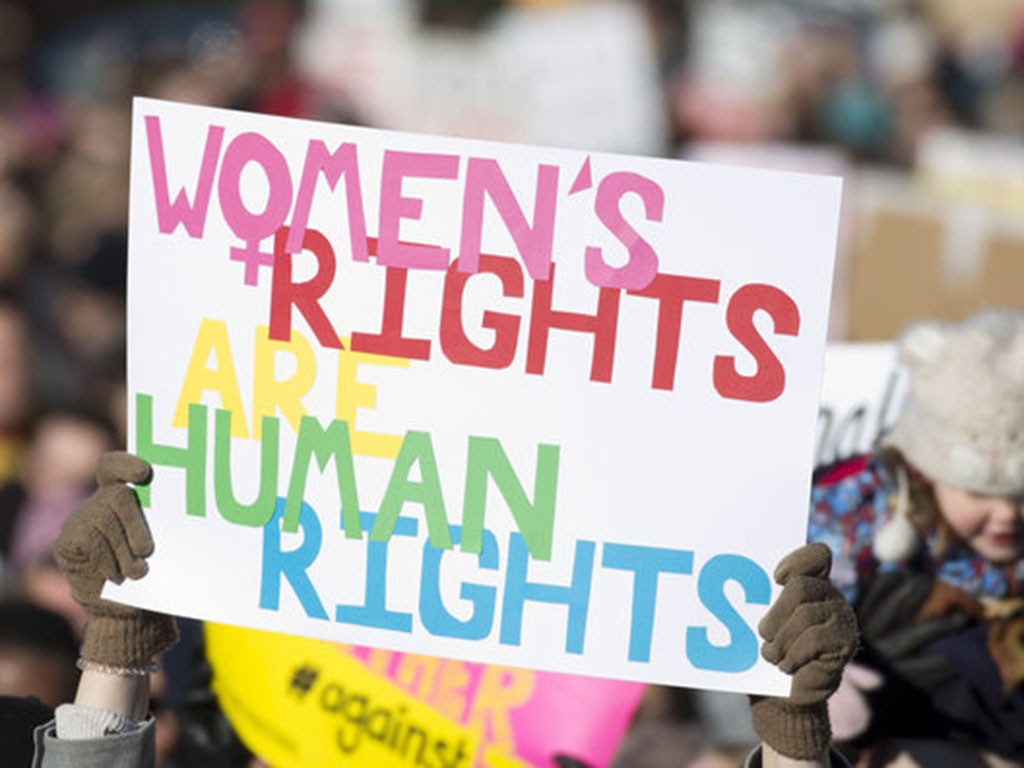
Human’s rights are Woman’s rights and Woman’s rights are Human’s rights

Hillary Clinton

Legal provisions for women that everyone should know

We live in a world where gods and goddesses are worshipped and women are harassed, tortured, abused and abducted every single day. The Government of India confers important rights to Indian women, investigating cases related to many women. Unfortunately, many women in India are not aware of their rights which are provided in different Indian laws.

On the basis of gender equality, an Indian woman has 11 rights in India.

1. Women have a right to Zero FIR

A FIR that can be filed at any police station irrespective of the location where the incident occurred or a specific jurisdiction it comes under, the Zero FIR can later be transfered to the Police Station in whose jurisdiction the case falls under. This ruling was passed by the Supreme Court to save the victim’s time and prevent an offender from getting away scot-free.

2. Women have the right against being stalked

Section 354D of the IPC makes way for legal action to be taken against an offender if he/she follows a woman, tries to contact her to foster personal interaction repeatedly despite a clear indication of disinterest; or monitor the use by a woman of the internet, email or any other form of electronic communication.

3. Female sexual assault victims have the right to keep their identity anonymous

To ensure the protection of privacy of a woman, a woman who has been sexually assaulted may record her statement alone before the district magistrate when the case is under trial, or in the presence of a female police officer.

4. Women have the right against workplace harassment

The Sexual Harassment of Women at Workplace Act gives a female the right to file a complaint against any kind of sexual harassment at her place of work. Under this act, she can submit a written complaint to an Internal Complaints Committee (ICC) at a branch office within a period of 3 months.

5. Women have right not to be arrested at night

Unless there is an exceptional case on the orders of a first class magistrate, a woman cannot be arrested after sunset and before sunrise. In addition, the law also states that the police can interrogate a woman at her residence only in the presence of a woman constable and family members or friends.

6. Women have a right against domestic violence

Section 498 of the Indian Constitution looks to protect a wife, female live-in partner or a woman living in a household like a mother or a sister from domestic violence (including verbal, economic, emotional and sexual) by the hands of a husband, male live-in partner or relatives. The accused shall be punished with a non-bailable imprisonment for a term which may extend to three years and shall also be liable to fine.

7. Women have the right to get free legal aid

Under the Legal Services Authorities Act, female rape victims have the right to get free legal aid or help from the Legal Services Authority who has to arrange a lawyer for her.

8. Women have the right to equal pay

According to the provisions listed under the Equal Remuneration Act, one cannot be discriminated on the basis of sex when it comes to salary, pay or wages. Working women have the right to draw an equal salary, as compared to men.

9. Women have the right to dignity and decency

In an event of accused being a woman, any medical examination procedure on her must be performed by — or in the presence of another woman.

10. Women have the right against indecent representation

Depiction of a woman’s figure (her form or any body part) in any manner that is indecent, derogatory, or is likely to deprave, corrupt or injure the public morality or morals, is a punishable offence.

11. Women have the right to register virtual complaints

The law gives women the provision for filing virtual complaints via e-mail, or writing her complaint and sending it to a police station from a registered postal address. Further, the SHO (Station House Officer) has to a police constable to her place to record her complaint. This is in case a woman is not in a position to physically go to a police station and file a complaint.

It is high time Women become aware of their rights and Stand up strong! Rise up together against the injustices happening against Women!!

References: India Today

Doping – How is it Affecting Sports?

“Science has learned recently that contempt and indignation are addictive mental states. I mean physically and chemically addictive. Literally! People who are self-righteous a lot are apparently doping themselves rhythmically with auto-secreted surges of dopamine, endorphins and enkephalins. Didn’t you ever ask yourself why indignation feels so good?”

~ David Brin

Introduction

Doping in sport is a widespread problem not just among elite athletes, but even more so in recreational sports. In scientific literature, major emphasis is placed on doping detection, whereas detrimental effects of doping agents on athletes’ health are seldom discussed. Human growth hormone also increases muscle mass, although the majority of that is an increase in extracellular fluid and not the functional muscle mass.

The term doping is widely used by organizations that regulate sporting competitions. The use of drugs to enhance performance is considered unethical, and therefore prohibited, by most international sports organizations, including the International Olympic Committee.

History

According to the World Anti-Doping Agency (WADA), the term “doping” probably comes from the Dutch word “dop,” an alcoholic beverage made of grape skins that was used by Zulu warriors to make them stronger in battle.

Ancient Greek athletes used special diets and stimulating potions to improve performance, and 19th century endurance athletes indulged in strychnine, caffeine, cocaine and alcohol.

The American specialist in doping, Max M. Novich, wrote: “Trainers of the old school who supplied treatments which had cocaine as their base declared with assurance that a rider tired by a six-day race would get his second breath after absorbing these mixtures.”[8] John Hoberman, a professor at the University of Texas in Austin, Texas, said six-day races were “de facto experiments investigating the physiology of stress as well as the substances that might alleviate exhaustion.”

Effects of doping in sports

It builds muscle but causes abnormal growth, heart disease, diabetes, thyroid problems, hypertension, blood cancers and arthritis. Other adverse effects include joint pain, muscle weakness, visual disturbances, enlarged heart and diabetes.

Other side effects include:

  • Heart palpitations.Heart rhythm abnormalities.
  • Weight loss.
  • Tremors.
  • Mild high blood pressure (hypertension)
  • Hallucinations.
  • Stroke.
  • Heart attack and other circulatory problems.
  • Constipation.Skin rash or dermatitis.
  • Diarrhea.
  • Dizziness.
  • Drowsiness.
  • Dry mouth.
  • Headache.
  • Insomnia.

UFC ( Ultimate Fighting Championship ).

In December 2013, the UFC began a campaign to drug test their entire roster randomly all year-round. Random testing, however, became problematic for the promotion as it began to affect revenue, as fighters who had tested positive would need to be taken out of fights, which adversely affected fight cards, and therefore pay-per-view sales.

According to Steven Marrocco of MMAjunkie.com, about 31% of UFC fighters subjected to random testing since the program first started have failed due to using performance-enhancing drugs. That is approximately five failed tests for every sixteen random screenings.

From July 2015, the UFC has advocated to all commissions that every fighter be tested in competition for every card. Lorenzo Feritta, who at the time was one of the presidents of the UFC, said, “We want 100 percent of the fighters tested the night they compete”. Also, in addition to the drug testing protocols in place for competitors on fight night, the UFC conducts additional testing for main event fighters or any fighters that are due to compete in championship matches.

Link

WE, THE PEOPLE OF INDIA

What is the first thing that strikes your mind when you read this?

Its the starting of the PREAMBLE of INDIA.

How much do we know about the Preamble of our Country?

What is a Preamble?

  • A preamble is an introductory statement in a document that explains the document’s philosophy and objectives.
  • In a Constitution, it presents the intention of its framers, the history behind its creation, and the core values and principles of the nation.
  • Although not enforceable in court, the Preamble states the objectives of the Constitution, and acts as an aid during the interpretation of Articles when language is found ambiguous.

What is it about?

  • Source of the Constitution
  • Nature of Indian State
  • Statement of its objectives
  • Date of its adoption

Components of Preamble

  • It is indicated by the Preamble that the source of authority of the Constitution lies with the people of India.
  • Preamble declares India to be a sovereign, socialist, secular and democratic republic.
  • The objectives stated by the Preamble are to secure justice, liberty, equality to all citizens and promote fraternity to maintain unity and integrity of the nation.
  • The date of adoption of the preamble is mentioned i.e. November 26, 1949.

Words in bold – The key words

  • We, the people of India: It indicates the ultimate sovereignty of the people of India. Sovereignty means the independent authority of the State, not being subject to the control of any other State or external power.
  • Sovereign: The term means that India has its own independent authority and it is not a dominion of any other external power. In the country, the legislature has the power to make laws which are subject to certain limitations.
  • Socialist: The term means the achievement of socialist ends through democratic means. It holds faith in a mixed economy where both private and public sectors co-exist side by side.
  • It was added in the Preamble by 42nd Amendment, 1976.
  • Secular: The term means that all the religions in India get equal respect, protection and support from the state.
  • It was incorporated in the Preamble by 42nd Constitutional Amendment, 1976.
  • Democratic: The term implies that the Constitution of India has an established form of Constitution which gets its authority from the will of the people expressed in an election.
  • Republic: The term indicates that the head of the state is elected by the people. In India, the President of India is the elected head of the state.
  • Equality: The term ‘Equality’ means no section of society has any special privileges and all the people have given equal opportunities for everything without any discriminations. Everyone is equal before the law.
  • Liberty: The term ‘Liberty’ means freedom for the people to choose their way of life, have political views and behavior in society. Liberty does not mean freedom to do anything, a person can do anything but in the limit set by the law.
  • Fraternity: The term ‘Fraternity’ means a feeling of brotherhood and an emotional attachment with the country and all the people. Fraternity helps to promote dignity and unity in the nation.
  • Justice: It is necessary to maintain order in society that is promised through various provisions of Fundamental Rights and Directive Principles of State Policy provided by the Constitution of India. It comprises three elements, which is social, economic, and political.
    • Social Justice – Social justice means that the Constitution wants to create a society without discrimination on any grounds like caste, creed, gender, religion, etc.
    • Economic Justice – Economic Justice means no discrimination can be caused by people on the basis of their wealth, income, and economic status. Every person must be paid equally for an equal position and all people must get opportunities to earn for their living.
    • Political Justice – Political Justice means all the people have an equal, free and fair right without any discrimination to participate in political opportunities.

Why is Liberty, Equality and Fraternity so important?

It provides a way of life. It includes fraternity, liberty, and equality as the notion of a happy life and which can not be taken from each other.

  • Liberty cannot be divorced from equality, equality cannot be divorced from liberty. Nor can liberty and equality be divorced from fraternity.
  • Without equality, liberty would produce the supremacy of the few over the many.
  • Equality without liberty would kill individual initiative.
  • Without fraternity, liberty would produce the supremacy of the few over the many.
  • Without fraternity, liberty and equality could not become a natural course of things.

Amendment of the Preamble

  • 42nd Amendment Act, 1976: After the judgment of the Kesavanand Bharati case, it was accepted that the preamble is part of the Constitution.
  • The term ‘Socialist’, ‘Secular’, and ‘Integrity’ were added to the preamble through 42nd Amendment Act, 1976.

The Rule of Harmonious Construction

Law has an important place as a representative for social evolution. In this democratic system of governance, there are many intersections between legal order and social evolution. The source of the law in legislation is called statute law. It is made very fast, definite and does not have to wait for identification by the courts. The courts acknowledge a statute because it is law; it is merely not law because the courts recognize it. The cause for uncertainty of legislation is the basic nature of language. It is not always likely to perfectly turn the real intend of the legislation into written words. The ability to adopt the language inevitably means that there will be equally good or unconvincing arguments for both competing interpretation. Many of times the provisions are having more than one meaning or the uncertainty in the language. The legislature becomes functus officio when after enacting the statues. The interpreters cannot revert back to the legislature and ask the exact meaning of the statute because the legislators would not have take up such a wide variety of conditions while making any particular statute. Thus it is totally depend on the Judges to interpret such provisions to make both effective. To avoid further uncertainty, the legislation has provided us with some of the primary rules of interpretations. Harmonious Construction is one of the most significant rules where it is said that if the two or more or more than two provisions of the same act are conflicting with each other then it must be interpreted in such a manner that effect should be given to both, and the provision which has a wider concept will always prevail.

When there is a conflict or inconsistent between two or more provisions or two or more parts of a statute then the rule of harmonious construction is implemented. This rule follows a very simple theory that each and every statute has a purpose and intent as per the law and should be read as a whole. The interpretation should be adopted when all of the provisions are consistent. In the case in which it is totally impossible to harmonize both the provisions, the court’s decision regarding the provision shall prevail. Harmonious rule brings harmony among the various lists referred to in Schedule 7 of Constitution of India. (The 3 Lists of Legislation – Union list, State list, and Concurrent List). This doctrine follows a settled rule that an interpretation that results in hardship, injustice, inconvenience and anomaly should be avoided. The interpretation with the nearest compliance to justice must be picked.

Harmonious Construction has helped Judges to interpret between two conflicting laws easily and has proved easily in providing the justice to society at large. This does not mean that judicial interpretations always thought to be the true and as per the intention of the legislation. More but not the less their interpretation power has given a space for their own ideas to flourish. Although they in most of the cases they gave their best to bring sense out of miserably worded statute. The legislative inability to anticipate all conceivable future scenarios is understandable, and hence it is the task of the judiciary to make existing laws practical by rational interpretations. Judges must control themselves from their own thoughts and philosophy which affects the judgment and many a times they end up in making of new laws. Filling up of such space will ensure that the interpretation by judiciary in the future will produce fruit bearing results for all.