All over the world, the cost-of-living crisis is continuing to bite. According to the Worldwide Cost of Living Index, which is run by Economist Intelligence Unit (EIU), the average cost of living is up by 8.1 percent – largely thanks to the Russian war in Ukraine and the long-term consequences of the pandemic.
However, the crisis is much worse in some places than others – and that’s highlighted by this year’s Worldwide Cost of Living Index. Taking into account changes in the price of everyday goods in 172 cities around the world, the Index has come out with a ranking of the world’s most expensive cities right now.
Top was a tie between New York and Singapore, with New York topping the poll for the first time. Both knocked Tel Aviv down to third, with the Israeli city having been named the most expensive city in the world in the EIU’s 2021 rankings.
Down the other end of the list, the least expensive cities in the world are apparently Damascus in Syria, Tripoli in Libya and the Iranian capital, Tehran. Damascus and Tripoli were also named the least expensive cities in last year’s list.
All over the world, the cost-of-living crisis is continuing to bite. According to the Worldwide Cost of Living Index, which is run by Economist Intelligence Unit (EIU), the average cost of living is up by 8.1 percent – largely thanks to the Russian war in Ukraine and the long-term consequences of the pandemic.
However, the crisis is much worse in some places than others – and that’s highlighted by this year’s Worldwide Cost of Living Index. Taking into account changes in the price of everyday goods in 172 cities around the world, the Index has come out with a ranking of the world’s most expensive cities right now.
Top was a tie between New York and Singapore, with New York topping the poll for the first time. Both knocked Tel Aviv down to third, with the Israeli city having been named the most expensive city in the world in the EIU’s 2021 rankings.
Down the other end of the list, the least expensive cities in the world are apparently Damascus in Syria, Tripoli in Libya and the Iranian capital, Tehran. Damascus and Tripoli were also named the least expensive cities in last year’s list.
Netflix is now providing one more option for American users. Now, some users have the option of taking up the lowest subscription available with ads. This subscription is available for a price of $6.99 a month and comes with ads in between the shows.
This subscription also makes some of the content unavailable to the viewers. To check the blocked content, you will have to get the no ads subscription. If the content has a red lock in the top right corner, then assume that such content is blocked.
This offer was on the cards for quite some time. So, after some trial, now the offer is available for some. This offer now makes the most popular streaming site, more attractive to viewers. It also enables the viewers to experience their favourite content, but with some ads. There is also a restriction in terms of the resolution, which is restricted to 720p.
On the official part, Netflix clarifies that there will ads of 15 to 20 seconds in duration. You cannot skip them, but you can pause them. The ads are the general ads that you see on the internet or YouTube. So, now we can choose one of the cheaper options from Netflix and keep using it. It will reduce piracy to some extent. It will also reduce the sharing of accounts which has been the case with many, for the last few years.
Recently, there have been speculations of various changes in the Netflix plan. So there have been some for the last few months. It is one of them. The other changes include the introduction of restrictions that will stop people from sharing passwords of their accounts with their friends and family.
But there is also content on the platform which will not show you any ads. It is difficult to predict as no list or indication will indicate which content has ads and which does not.
Now, if we consider different platforms, then there are a few changes that point to this new subscription option. In the case of iOS, there is an indication that people can select an ad-supported option, but there are no links, that can point you in the right direction. On the other hand, there are links on the website that will direct you to the page, that will let you choose the ad option.
So, now these changes will be bad news for some. As people expect to see ads in a free version of any service. But, here the viewers will have to watch ads even after paying a certain amount for a subscription. Only time will tell whether viewers like this plan or not. But for beginners there is one plus point, there is an even cheaper version of Netflix for the viewers. For the unknown, there will also be less requirement for some to share their login details as more viewers will be able to afford Netflix. Netflix will also be hoping that more subscribers use its streaming service.
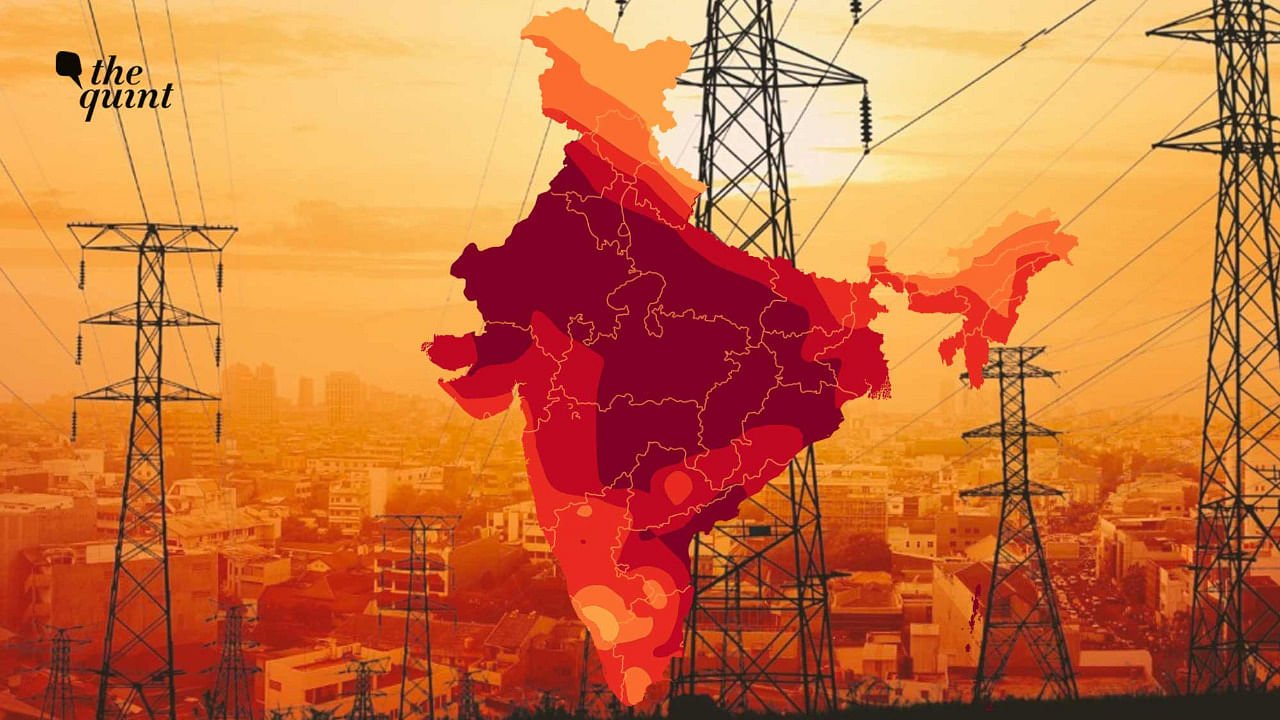
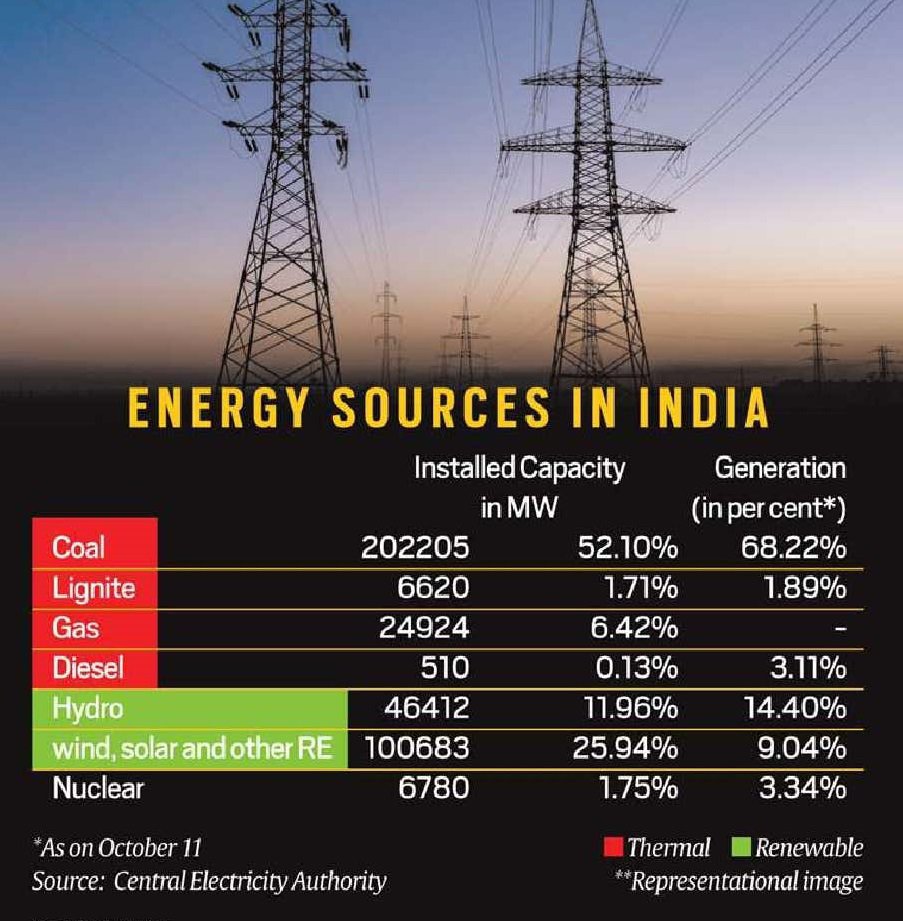
India has the fourth largest coal deposit in the world. It is the second largest fossil fuel producer after China and is home to Coal India, the world’s largest coal mining mine, which accounts for 80% of domestic production. Already allocated coal block mining capacity exceeds expected demand in 2030 by approximately 15% to 20%.
So why are India’s power plants facing coal shortages each year, leading to widespread power outages, exposing parts of the country to darkness and endangering industry? There are several factors. India has a long time policy of minimizing coal imports. In February 2020, Coal Minister Pralhad Joshi announced that the country would stop importing steam coal from 2023 to 2024. Mr Joshi said the Ministry of Coal will work with the Ministry of Railways and the Ministry of Shipping to allow Coal India, prisoners and commercial miners to discharge more coal from their supply by 2030. And the coal supply at power plants is running out at an alarming rate. The Department of Energy is currently blaming the decline in coal imports due to the current crisis. In 2018-19, 21.4 million tonnes of coal were imported for mixing, down to 23.8 million tonnes in 2019-20 and 8.3 million tonnes in 2021-22.
Credit- Civildaily
Power plant coal inventories have fallen by about 13% since April, reaching pre-summer lows. And for the first time since 2015, Coal India will import fuels used by state-owned and private power companies. The Ministry of Energy said almost all states showed that multiple state bids for coal imports would cause confusion and that the decision was made after calling for centralized procurement by Coal India. Imported coal costs five times as much as domestic mining, so the center is being pushed back by the state. Recently, the government has also pressured utilities to increase imports to mix with local coal. Last year, after a two-year break, three tranches of coal auctions were held and nine blocks were successfully awarded.
In September 2021, the Ministry of Coal issued a strict warning to owners of confined coal blocks, stating that their mines should increase production or face restrictions on coal supply by the CIL. The ministry has discovered that these mines are producing below target.
Of the 43 coal mines outsourced to private companies in the energy, steel and metals sectors, none have met their annual production targets. On May 6, Coal India announced that it would provide the private sector with 20 closed and abandoned underground coal mines and reopen and operate its revenue sharing model.
According to journalist Shreya Jai the current power supply chain does not seem ready to handle periods of high growth and state discos cannot pay gencos, but the power supply chain starts with state discos and needs repairs. Railroads, on the other hand, are struggling to align the thermal power industry’s demands for faster coal supply with those from other industries. Rakes must be prepared to meet the growing demand for almost all other bulk commodities, from cement and steel to sand and edible grains. By strengthening the value chain of the electric power sector, it is possible to resolve the coal supply-demand mismatch in the long run.
Cost refers to the expenditure incurred by a producer on factor as well as non-factor inputs for given output of a commodity. It can be categorized into explicit ( Opportunity cost of hiring inputs from the market, measured in cash payments that firm make to others.) and implicit costs. ( Opportunity cost of using self-owned inputs, measured in terms of imputed costs of self owned resources.). It is also termed as selling ( expenditure caused due to promote sale of good.) and production costs ( expenditure on inputs to produce an output.)
Fixed costs are costs related to use of fixed factor of production in short period like, machines, license fee, land expenditure, etc. They do not change with change in output. Variable costs on other hand refer to expenditure by producer on use of variable factors of production like, costs of raw material, wages of workers, wear and tear expense, etc. They increase with increase in output and vice-versa. Graphical representation is given by-
Total cost is defined as sum of variable and fixed costs. Since total variable cost tends to increase at diminishing rate initially, meaning that less and less of additional cost is incurred in every additional output. This happens due to increasing return to a factor and eventually TVC increases at an increasing rate.
Relationship between TVC and MC:
i) Marginal cost is estimated as the difference between total costs of two successive units of output. Thus,
MCn = TCn – TCn-1
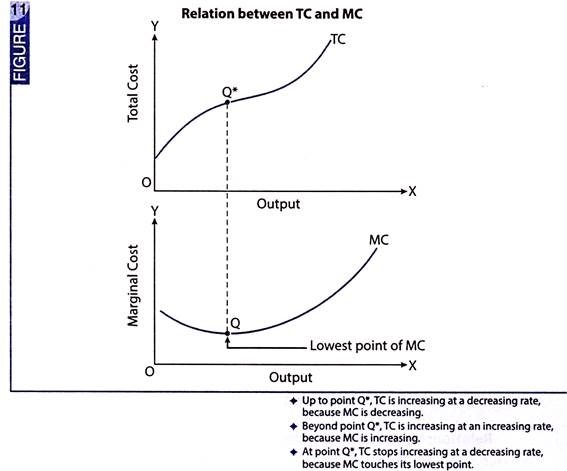
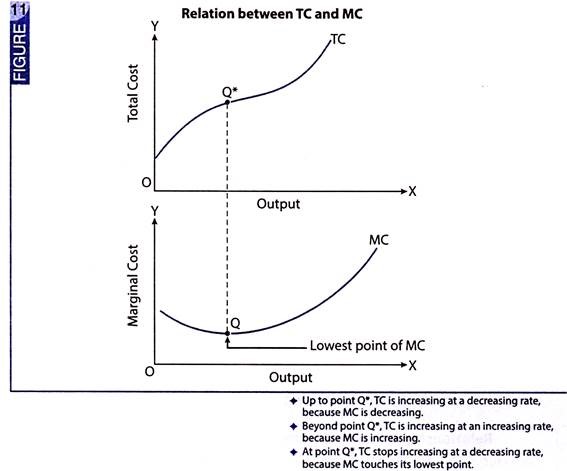
(ii) When MC is diminishing, TC increases at a diminishing rate.
(iii) When MC is rising, TC increases at an increasing rate.
(iv) When MC reaches its lowest point (point Q in Fig. 11), TC stops increasing at a decreasing rate (point Q* in Fig. 11).
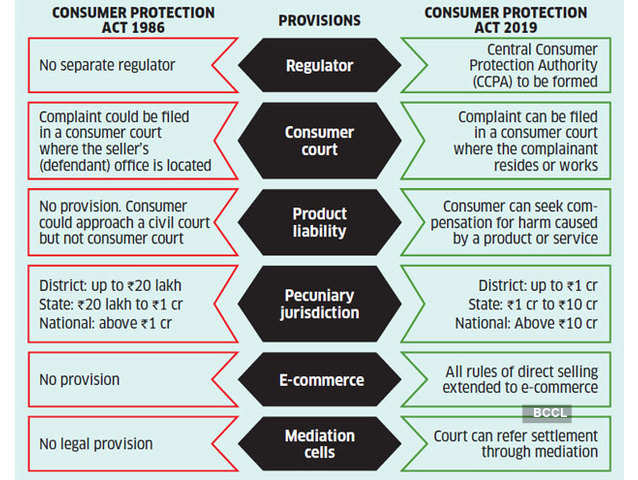
The Consumers can now cheer as the Consumer Protection Act, 2019 has recently replaced the three decade old Consumer Protection Act, 1986. The Consumer Protection Act, 2019 which came into effect on Monday (July 20) has replaced the earlier Consumer Protection Act, 1986.
The new Act as per the Experts say that “it gives more power to the consumers”. It seeks to revamp the process of administration and settlement of consumer disputes, with strict penalties, including jail term for adulteration and misleading ads by firms.
On July 20, 2020 certain provisions of the Consumer Protection Act, 2019 came into force as notified by the Central Government. Following the the key features of the relevant provisions:-
Key features of the Consumer Protection Act, 2019 which came into effect on July 20, 2020:-
1) Consumers can now institute a complaint from where they reside or work for gain.
2) The original pecuniary jurisdiction of the District Commissions has increased upto ₹1 crore from ₹20 lakh earlier.
3) The Pecuniary jurisdiction of State Commissions has been increased from ₹1 crore to Rs. 10 crore.
4) The National Commission can hear cases above ₹10 crore when compared to above ₹1 crore earlier.
5) While the provisions relating to e-commerce are not yet notified, a section relating to electronic service provider (covering software services, electronic payments) is notified.
6) The opposite party needs to deposit 50% of the amount ordered by the District Commission before filing an appeal before the State Commission. Earlier, the ceiling was a maximum of ₹25,000, which has been removed.
7) The limitation period for filing of appeals to the State Commission has been increased from 30 days to 45 days.
8) The Parties can be allowed to settle the disputes through mediation.
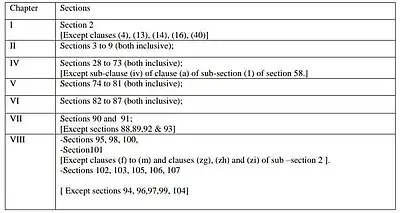
Following are the Sections which came into force:
Above mentioned provisions pertain to the Consumer Protection Councils, Consumer Disputes Redressal Forum, Mediation, Product Liability, punishment for manufacturing, selling, distributing etc spurious good or products which contain adulterant.
As per the rules, the e-commerce players will have to display the total ‘price’ of goods and services offered for sale along with break-up of other charges. Only a few certain miscellaneous provisions with regards and respect to the powers of the Central and State Government to make the rules and regulations have also been enforced.
On misleading advertisements there is provision for jail term and fine for manufacturers. There is no provision for jail for celebrities but they could be banned for endorsing products if it is found to be misleading.
For the first time there will be an exclusive law dealing with Product Liability. A manufacturer or product service provider or product seller will now be responsible to compensate for an injury or damage caused by the defective product or deficiency in services.
The Act has also defined an “e-commerce” as the buying or selling of goods or services including the digital products over digital or electronic networks. The existing definition of e-commerce has been adopted from India’s FDI Guidelines on e-commerce.
The definition of ‘e-commerce Entity’ as provided under the FDI Guidelines includes inventory and market place models.
There is also a provision for class action law suit for ensuring that rights of consumers are not infringed upon. The authority will have power to impose a penalty on a manufacturer or an endorser of up to 10 lakh rupees and imprisonment for up to two years for a false or misleading advertisement.
Photography is one of the major things of everyone’s life today,
All of us want to freeze the moments we live day to day in a photograph, the new developing technology has made it very easier for people to document their lives easily through photographs and videos and the advancements in technology helps you to put your documented photographs or videos on the platforms like YouTube, Instagram etc. and build your career out of it but the question is how to get started? Now, basically if you want to get started with photography then you do not need a professional degree or course the only thing you need are skills and that’s it but if you’ll do a course or major in photography or cinematography then it will help your chances of getting jobs in the Multi national companies, but if you want to make a career out of blogging vlogging youtubing or photographer then a degree is not a compulsion, what important is teaching yourself about the principles of capturing an image and the lighting conditions and then just go out start practising in real world, now you can learn everything by yourself but it takes time to develop a skill, what’s more important in photography is light.
The word “Photography” itself depicts the meaning as drawing using light. The word photography is made of two words PHOTO and GRAPHEIN where Photo means light and Graphein means to draw.
So, light plays the major role in photography, after learning the basic principles of photography and light the practising comes into play.
Now, the answer of the question how to get started is very simple just start practising right away, reach out to people, at the earlier stage do the unpaid shoots then build your profile, work as an intern and gain experiences overtime after building your name you can start to earn money through photography and can begin your own photography career.







 Eduindex

You must be logged in to post a comment.