Raising the alarm bells for policymakers and citizens, a research report has contended that India may witness the third covid wave from August 2021. The report – COVID-19: The race to finishing line – prepared by SBI Research, claims that the covid third wave peak will arrive in the month of September 2021.
The research report says that India achieved its second wave peak on 7th May. “Going by the current data, India can experience cases around10,000 somewhere around the 2nd week of July. However, the cases can start rising by the second fortnight of August,” the report said.
These are the highlights from the report:
1. Global data shows that on average third wave peak cases are around 1.7 times the peak cases at the time of second-wave. 2. However, based on historical trends the cases can start rising by the second fortnight of Aug’21 with peak cases at least a month later. 3. India has started giving more than 40 lakh vaccination doses per day as shown by 7 DMA. 4. Overall, India has fully vaccinated 4.6% of its population, apart from 20.8% having received one dose. This is still lower than other countries including the US, the UK, Israel, Spain, France among others. 5. The decline in bank deposits in FY21 and concomitant increase in health expenditure may result in further increase in household debt to GDP in FY22. 6. States with high per capita GDP have been associated with higher Covid-19 deaths per million while low per capita GDP are associated with low Covid-19 deaths. 7. Only 4.6 per cent of the population in India is fully vaccinated, while 20.8 per cent have received one dose, much lower compared to other countries including the US (47.1 per cent), the UK (48.7 per cent), Israel (59.8 per cent), Spain (38.5 per cent), France (31.2), among others.
India is the one of best and largest place for education systems in the world.
India is the country with over 1,000 universities and 50,000 colleges and institutions. The impact of covid 19 is observed in every sector around the world. The education sectors of India as well as world are badly affected by this.
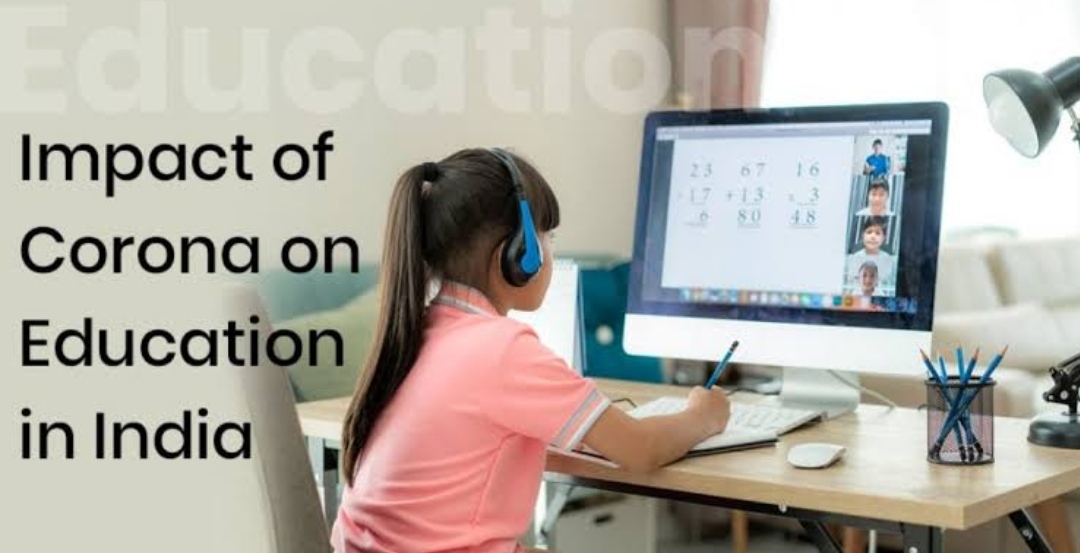
Due to this pandemic, around 32 crore learners stopped to move schools/ colleges, all educational institutions are halted in India. COVID-19 made all the institutions to grow and opt for platforms , techniques, that are not used before. All the classes suspended and all the examinations, entrance tests are postponed.
This pandemic completely destroyed all the schedules of every student. COVID-19 Impact on education is also leads a great damage on country economy at present and in future.
COVID-19 has created many opportunities and challenges for educational institutions to strengthen their technological knowledge and infrastructure.
The lockdown made the entire education online, the teachers are teaching and assigning works through online by using some apps like zoom, Google meet, teams, YouTube, Facebook, skype .,etc.
India is not fully equipped to make education reach every corner of the country through online process. The students those who are not having access to internet will suffer a lot due to the present choice of digital platforms.
Universities and the government of India are relentlessly trying to come up with a solution to this problem.
• Collapse of international tourism -cost the world at least $4 trillion.
• Report -jointly released by UN Conference on Trade and Development (UNCTAD) and UN World Tourist Organization (UNWTO).
• India – 54% drop in tourist arrivals in 2020.
• Tourism is not expected to return to pre- COVID levels until 2023. Cost the world -$1.7 trillion and $2.4 trillion in 2021.
• Three scenarios. Optimistic. Pessimistic. Uneven roll-out of vaccines. • Developing countries -majority in losses due to the asymmetric roll-out of vaccines. • Tourism likely to pick up faster this summer
North America and Europe.
• Loss in tourism sector -Felt particularly by women and young people. • 100-120 million tourism jobs are at stake.
• Recommended quick roll-out of vaccines globally. • Appreciated The EU Digital COVID Certificate initiative. Facilitate safe free movement of citizens in the EU during the COVID-19 pandemic.
• Recommended socio-economic measures to protect livelihoods.
• Grim warning -some tourism-related businesses would not survive even after restrictions are removed.
Throughout the world, the public is being informed about the physical effects of SARS‐CoV‐2 infection and steps to take to prevent exposure to the coronavirus and manage symptoms of COVID‐19 if they appear. However, the effects of this pandemic on one’s mental health have not been studied at length and are still not known. As all efforts are focused on understanding the epidemiology, clinical features, transmission patterns, and management of the COVID‐19 outbreak, there has been very little concern expressed over the effects on one’s mental health and on strategies to prevent stigmatization. People’s behavior may greatly affect the pandemic’s dynamic by altering the severity, transmission, disease flow, and repercussions. The present situation requires raising awareness in public, which can be helpful to deal with this calamity. This perspective article provides a detailed overview of the effects of the COVID‐19 outbreak on the mental health of people.
KIDS AND TEENS AT RISK
Kids, away from their school, companions, and partners, remaining at home can have numerous inquiries concerning the flare-up and they look toward their folks or guardians to find the solution. Not all kids and guardians react to pressure similarly. Children can encounter nervousness, trouble, social detachment, and an oppressive climate that can have short‐ or long‐term consequences for their psychological wellness. Some normal changes in youngsters’ conduct
To assist with balancing negative practices, expects guardians to try to avoid panicking, manage the circumstance carefully, and answer the entirety of the kid’s inquiries as well as could be expected. Guardians can set aside some effort to converse with their youngsters about the COVID‐19 flare-up and share some sure realities, figures, and data. Guardians can assist with consoling them that they are protected at home and urge them to participate in some solid exercises including indoor games and some physical and mental activities. Guardians can likewise foster a home timetable that can assist their youngsters with staying aware of their investigations. Guardians should show less pressure or nervousness at their home as kids see and feel negative energy from their folks. The contribution of guardians in solid exercises with their youngsters can assist with lessening pressure and nervousness and carry help to the general circumstance.
ELDERS AND PEOPLE WITH DISABILITIES AT RISK
Older individuals are more inclined to the COVID‐19 flare-up because of both clinical and social reasons, for example, having a more vulnerable safe framework or other basic medical issue and removing from their families and companions because of their bustling timetables. As indicated by clinical specialists, individuals matured 60 or above are bound to get the SARS‐CoV‐2 and can create a genuine and life‐threatening condition regardless of whether they are healthy.
Physical separating because of the COVID‐19 episode can have exceptional adverse consequences on the emotional wellness of the old and handicapped people. Actual disengagement at home among relatives can put the old and incapacitated individual at genuine emotional wellness hazard. It can cause tension, trouble, and prompt a horrible circumstance for them. Old individuals rely upon youthful ones for their day by day needs, and self‐isolation can fundamentally harm a family framework. The old and crippled individuals living in nursing homes can confront outrageous psychological wellness issues. Be that as it may, something as straightforward as a call during the pandemic episode can assist with supporting old individuals. COVID‐19 can likewise bring about expanded pressure, uneasiness, and gloom among older individuals previously managing psychological well-being issues.
Specialists, medical caretakers, and paramedics functioning as a front‐line power to battle the COVID‐19 flare-up might be more defenseless to foster emotional well-being indications. Dread of contracting an illness, long working hours, inaccessibility of defensive stuff and supplies, patient burden, inaccessibility of powerful COVID‐19 prescription, passing of their associates after openness to COVID‐19, social separating and disconnection from their loved ones, and the critical circumstance of their patients may cause significant damage of the psychological wellness of wellbeing laborers. The functioning proficiency of wellbeing experts may diminish progressively as the pandemic wins. Wellbeing laborers should take brief breaks between their functioning hours and manage the circumstance tranquilly and in a casual way.
National Doctors Day is celebrated nationwide, every year, on the 1st of July. But why? This is to express our gratitude towards doctors and physicians for their service towards our well-being. Legendary physician and the second Chief Minister of West Bengal, Dr Bidhan Chandra Roy was born on the 1st of July in Patna, Bihar in 1882 and coincidentally died on the very same date in the year 1962. In 1961, Dr Roy was conferred with the nation’s highest civilian award, Bharat Ratna. Doctors day in India was established in 1991 in honour of his birth and death anniversary.
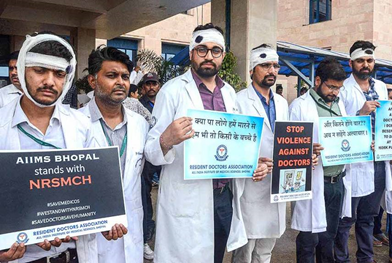
Well, Doctors day is celebrated every year on the 1st of July but this year another day was observed, by the doctors of IMA (Indian Medical Association) on 18th of June, NATIONAL PROTEST DAY. Doctors came together against the assaults on doctors in COVID wards. IMA observed nationwide protests demanding central law to protect doctors against violence.
Doctors and healthcare workers held placards and raised slogans like doctors bachao desh bachao (save doctors, save nation) and save the saviour. Doctors and medical staff at the IMA office in Hyderabad protested wearing black badges. Doctors from AIIMS Delhi and IMA unit, Ludhiana also took part in the agitations. Various state-level protests were taking place for a long time.
Why are these protests taking place?
Let me brief you here
Bhopal: A local politician was seen screaming at a Bhopal doctor who couldn’t save the life of a patient who was bought to the hospital at an oxygen level of 30. This left the doctor in tears and he was demoralised to the extent that he wanted to resign.
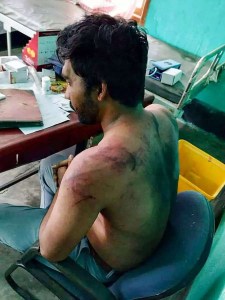
Guwahati: A doctor at a coronavirus facility in Assam was punched, kicked, and pounded with metal trash cans and bricks, by the relatives of a Covid patient who had died, allegedly due to oxygen shortage. Locals also assaulted the doctor who was then hospitalised.
Kerala: A police official allegedly attacked a doctor in the Alappuzha district. The official is accused of slapping Dr Rahul Mathew, who was working the night shift at the Mavelikkara district hospital, after the former’s mother, a COVID-19 patient, was brought dead to the hospitals. Doctors protest for the non-arrest.
And many more such cases went viral on social media. Assaults on doctors might not make it to the news daily, but take place every day.
What exactly did they do to get such treatment?
Grinded in high school, cracked NEET, spent 7-8 years working hard and studying in college, paid a hefty amount of fees to medical colleges or even took loans for their studies.
Who does that? Their fault, right?
Image source: Google | Image by: BusinessToday.In
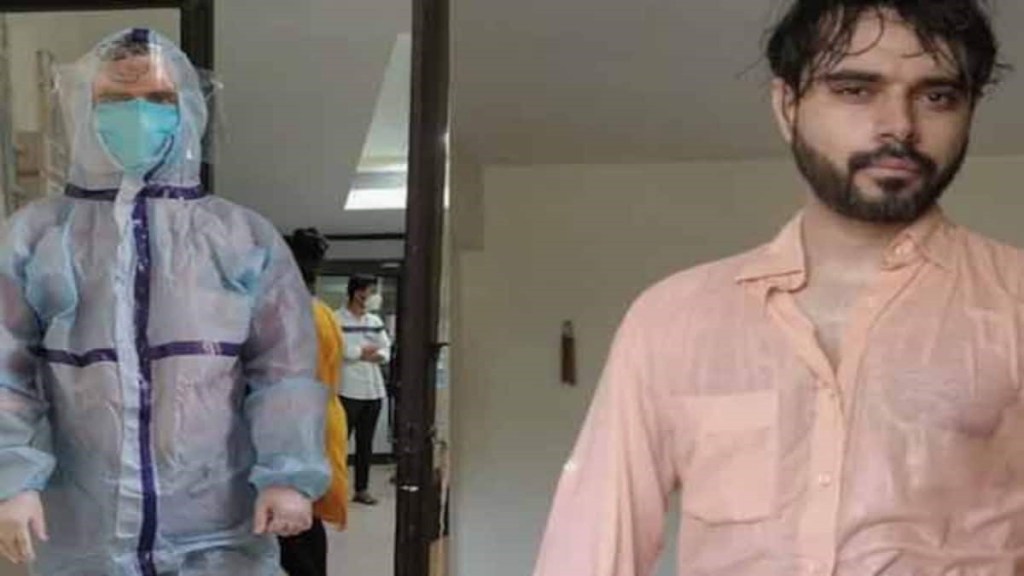
During COVID lockdown when most of us were busy making dalgona coffee and baking cakes, they were out there in scorching heat, wearing PPE kits dealing with patients. Burning the candle at both ends, forgetting they have a life of their own, forgetting they have a family waiting for them, isolating themselves from their own family members, in their own houses to protect their families from contracting the virus, more than 500 doctors died during COVID, trying to save our lives. But why, just to save us. Imagine how demoralising it is for them to get beaten up by the ones they’re working for.
What is the probable reason?
Lack of infrastructure
Manpower
Laws in place
Security arrangements
Lack of infrastructure
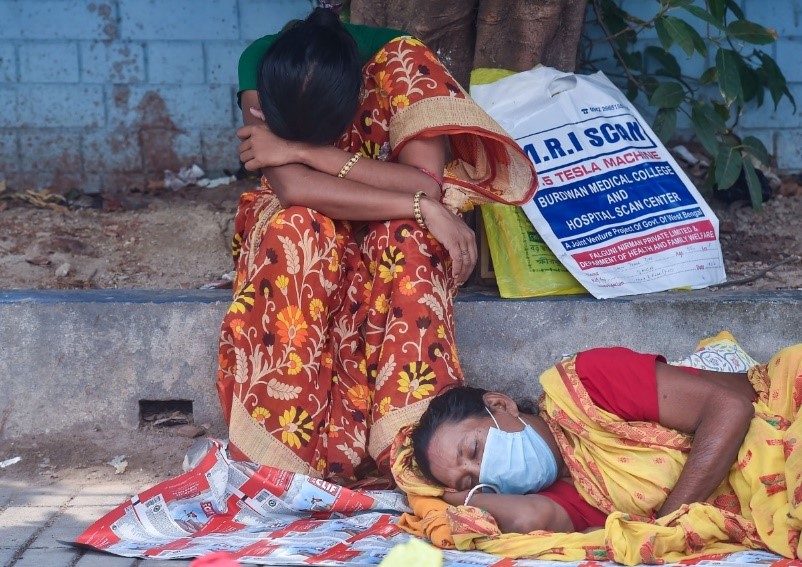
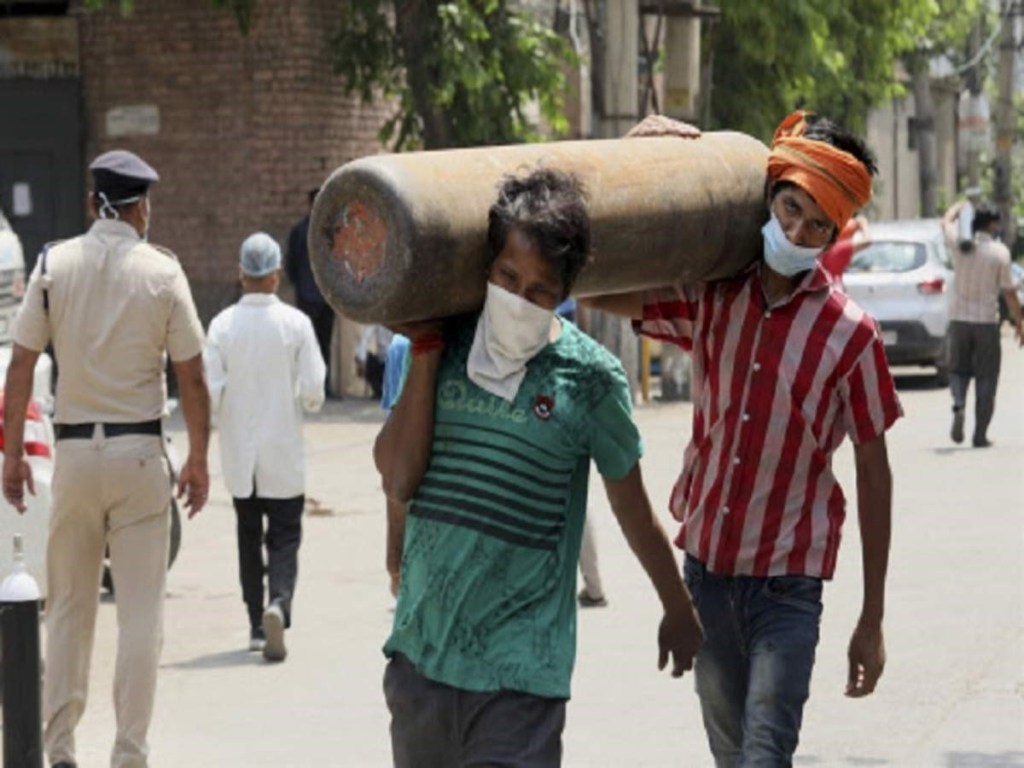
The shortfall of ICUs, no beds for patients, dearth of oxygen support, the inadequacy of medicines, caretakers bound to wait in long queues for medicines at dispensaries, patients gasping outside hospitals, black marketing of almost everything required for a person to recover, our health infrastructure was crippling.
Image source: Google | Image by: The Times Of India
Manpower
Along with the tools used to help fight COVID, there is a paucity of our warriors too. There should be at least one doctor per 1000 patients according to WHO, whereas in India there is one doctor who attends more than 1445 patients. Not just doctors, the suggested number of nurses per 1000 patients is at least 3, there are just 1.7 in India (43% less than WHO standards). This leads to overworking of doctors and medical staff ignoring their basic requirements like sleep and a proper diet.
Laws in place
Medicare Service Persons and Medicare Service Institutions (Prevention of Violence and Damage to Property) Act, also known as the Medical protection act is there in at least 19 states, which when breached can lead to an imprisonment of up to 3 years and a fine of INR 50,000. Damage to any medical devices and equipment is a punishable offence and offenders are liable to pay twice the amount of the damaged equipment’s cost.
The Act, however, fails to really protect doctors because it features neither in the Indian Penal Code (IPC) nor in the Code of Criminal Procedure (CrPC). This makes it difficult for victims to approach the police for help or the latter to file a complaint against suspects.
Security arrangements
Doctors are not politicians with scores of gunmen and bouncers around them, who will assure their safety? Due to lack of security at hospitals and clinics, doctors and other staff are the soft targets for unhappy relatives and agitated patients.
Stepping into doctor’s shoes
Imagine yourself as a teacher who fears being beaten up to death by parents for their child’s poor performance at a test, will you even be willing to teach anymore with the same zest. I don’t think so. Hospitals are understaffed, doctors are overworked, patients are overwhelmed.
But this isn’t the fault of our doctors. They are going an extra mile in order to save as many patients as they can, making 3 patients share a bed or switching oxygen support among patients, they have our best interest at heart.
Doctors are not supposed to be accountable for the paralyzed infrastructure, that is where the leaders we vote for come into play. They’re made to work for 15+ hours at a stretch that too in a harsh environment, in a place they no longer feel safe or comfortable in.
What do doctors want?
All they want is for the government to sit with them and consider their problems.
For a law to protect their lives so that they can continue with their duties towards the nation. The implementation of existing laws.
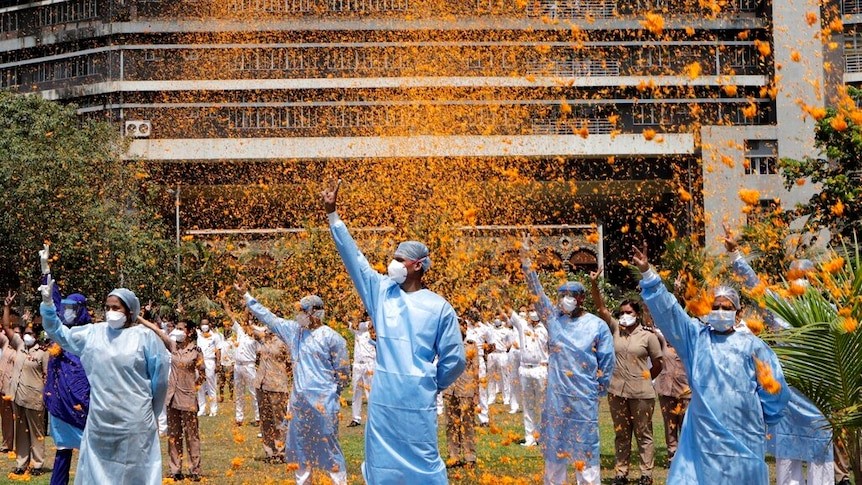
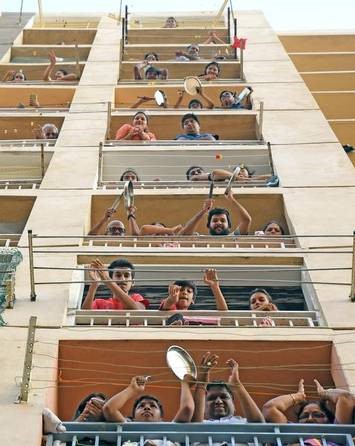
They don’t demand banging of thalis from our balconies or something like that in order to pay our respect, they didn’t ask for showering of flowers upon them for their service, all they’re asking for is to be able to practice in a safe environment where they’re worried for patients’ life, not scared of getting beaten up by sticks.
Image source: Google | Image by: Anjana Pasricha ( VoA)
We were always raised to believe doctors are God on land. Saving our life, giving us a new one at times, while risking their own. What they now want is not godly, but at least a humanly manner.
How can we help?
First and foremost, don’t be someone they need protection from. i.e. don’t be an assaulter.
Secondly, don’t ignore if you see someone being unfair toward them. Raise your voice, report if you see something like this.
A simple realisation that we can trust our doctors can do wonders.
Lastly, don’t forget they’re humans too. Thank them, pay your respect, or at least, just don’t be a jerk.
This Doctors day, I bet Dr Bidhan Chandra wouldn’t be proud of our country treating its doctors and medical staff like this.
Let’s all come together and promise that we’ll make the world a better place to live for our selfless human beings. We owe them.
Ending here with a salute to any doctor or an aspiring doctor reading this, and a sincere tribute to the warriors that lost their lives.
The daunting number of jobs lost by women during the coronavirus pandemic is only the beginning of the story.Yes, it’s widely recognized that women have taken the brunt of the nation’s total job losses — they’re still down 5.3 million vs. 4.6 million for men even with the economy having rebounded somewhat off its COVID-19 lows — largely because working remotely isn’t possible in the hard-hit businesses like restaurants, hotels and retail stores where females dominate. And, yes, it’s also recognized that many moms were forced to drop out to look after their kids after schools went remote — with nearly four out of 10 currently working women still actively considering doing likewise, according to a recent survey by Fidelity Investments.But what’s not talked about as much is this: the potential long-term consequences of having had their financial security and career prospects upended by the pandemic.”Being in a position to take a career break by choice can be considered a privilege,” said Lorna Kapusta, head of women investors at Fidelity. “But we know for many in times of crisis like this one that stepping back from work is more like a necessity. Either way, it’s critically important to understand the decision’s impact on your savings today and into the future, so you can take steps to address it.”Fidelity conducted an analysis of the estimated effect even a one-year career break could have on retirement savings, and the results are staggering.Exhibit No. 1: Say you took your “break” at age 35 when you’d been earning $50,000 a year and had to subsequently accept a slightly lower salary just to get back into the workforce. Assuming a conservative 4.5 percent annual growth rate and factoring in lost retirement contributions — including a 3 percent match from your ex-employer on top of what would have been your own 9 percent contribution — your 401(k) would be $106,469 lighter ($733,325 vs. $839,594) by the time you turned 67.Exhibit No. 2: Substitute a $75,000 salary and the difference is even bigger ($159,702, or $1,099,679 vs. $1,259,381).Exhibit No. 3: And bigger still at $100,000 ($212,936, or $1,466,233 vs. $1,679,169).Plus, don’t forget there’s also the matter of lost Social Security contributions. “Your benefit is calculated based on your top 35 years of earnings,” said Kapusta. “So if you work fewer years, have a lower salary, or don’t reach the minimum eligibility, you may have a smaller check when it comes time to collect in retirement.” All of which helps explain the impetus for launching Fidelity’s weekly Q&A discussion series called “Women Talk Money.” Airing live on Zoom every Wednesday at noon ET and available later on demand, each 30-minute interactive episode uses viewer-submitted questions to address a different topic each week, ranging from job loss to health care to the hidden costs of caregiving.”It’s real talk to help answer women’s most pressing money questions right now — no jargon or judgment,” said Kapusta, noting that the program’s six-part, archived video series is also must-see viewing for those who want to learn the key factors that can significantly impact women’s financial futures.Finally, some historical perspective. When the Labor Department first started tracking such data back in 1948, only one third of women held jobs. That number had nearly doubled by the late 1990s.And today? The ratio of women working has fallen below 57 percent for the first time since 1988.
Only healthy citizens can contribute to a healthy economy. The government of a country provides the necessary funds for the health plan in its budget. In addition, during an epidemic or pandemic, the government ensures the health of its citizens through large-scale tests. And treatment The government is also taking various measures to educate the public about epidemics. In addition, the government is raising public awareness of the causes and preventive measures of various diseases. A large-scale immunization program has also been carried out to prevent the occurrence of many bacterial and viral diseases. The health system of one country is different from that of another country. In India, health services are provided by the public and private sectors. The health system includes hospitals, telemedicine, insurance doctors, etc. In India, the health structure consists of three, two, and three levels. Primary includes sub-centers and primary health care centers. The second level includes community health centers, while the third level includes hospitals and medical schools.
Sub-center:
This is the main point of contact between the health system and patients. It is composed of male and female health professionals and a volunteer.
Primary Medical and Health Center:
This is the main point of contact between villagers and doctors. Medical professionals and nursing staff are part of APS. The main functions of APS are vaccination plan, contraceptive plan, pregnancy care, etc.
Community Health Center:
Including doctors, pediatricians, gynecologists, surgeons, and equipped with operating rooms, X-ray machines, etc.
The private sector
The private sector has also contributed to providing health services to the majority of the population. Through telemedicine, many private medical hospitals and new medical companies are also providing high-quality medical services to rural residents.
Conclusion
The health information system is the future of the medical center. Even so, many hospitals are skeptical about the introduction of this new technology. There are two reasons for this: high cost and implementation process. Changing the initial process This may sound daunting, but we guarantee that the results are worthwhile.
Everybody was stuck in shock when we all heard about CORONAVIRUS. But we didn’t think that it would have such a worst impact on our lives. In fact, we didn’t realize its seriousness at first. When the coronavirus slowly started to spread all over our country, we started to realize the seriousness. As we all know, due to the pandemic, the whole of India was kept shut for many days. Every company went through its worst phase. Gradually, we accepted the scenario and started doing the unthinkable. Schools started taking classes online, IT and other companies functioned through work from home and many others remained pathetic not knowing what to do. Many families couldn’t get enough money for daily necessities. Moreover, they had to spend more than normal for the pandemic made us spend more on medicines and sanitation. With all these, on one hand, we got to learn a lot of new things.
First, we learned to spend time with our family. Before the pandemic, we would live in our own way. We don’t spend time without family. We had our own reasons like returning home after tight schedules either from school, college, or work, and even after that, we had certain tasks to be accomplished. We would spend most of our time in the outside world and only had time to freshen up and relax ourselves to start off the next day. Due to this lockdown, we were not allowed to step out of our houses which made us spend quality time with our family. Also, by this, we realized the value of family and relationships. Not only this, we learned to value life. We realized that life is the biggest gift one has been bestowed with. After losing our loved ones, and seeing our near and dear losing their loved ones, we started being grateful for being alive at least. These were the biggest lessons life taught us through this pandemic.
Lockdown restricted us from using vehicles and this paved the way to reduce air pollution. Now, we see and hear that our EARTH is healing. Holes in the Ozone layer are disappearing. As a result, the environment changed in a good way. We are now released from breathing the poisoned air and the quality of the air has increased.
Another one, we started believing in our natural Indian medicine. Although we have many allopathy medicines for boosting immunity, we all made decoctions using Tulsi leaves, turmeric, pepper, ginger, lemon, honey, and so on. These were the traditional medicines prescribed by our ancestors to prevent our bodies from a virus attack. Literally, every good thing which was ignored before was given place and priorities. As time went by, we started to know how to maintain a healthy lifestyle and good hygiene. We started eating healthy food to sustain this pandemic. We all realized the importance of regular exercises and yoga. They create such a beautiful impact on our bodies. We learned one main lifesaving thing which is very much essential no matter whatever the situation may be, positivity. Positivity plays a crucial role in our life behind the scenes. Researches show that positivity helps in increasing the chances of recovery from any disease. It makes us feel good, boosts our energy and confidence. It is said to enhance mental productivity and inner strength.
We explored the new side of ours. We got to know more about ourselves and self-love and care. Last but not the least, we all understood the pain and struggles of spending our whole life inside the house as faced by all the housewives and mothers only when we were forced to confine ourselves inside the four walls of the house. We started sharing household chores and other work equally with our family. This definitely gave our mothers some relaxation for which they earned for many days.
Going by the quote, “Every evil has its good and every ill an antidote”, we also had many good things that happened in this pandemic. All I would say is be happy with all the goodness around us and stop complaining about the problems.
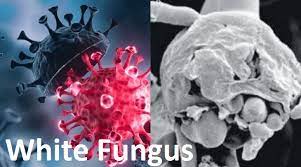
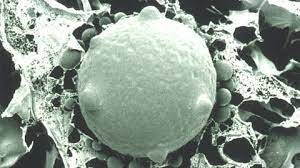
Following black fungus ( mucormycosis), another severe fungal infection has been reported in the country – white fungus. The first case was reported in Patna, Bihar and several other cases have been reported since then. The disease is caused by fungal molds called mucormycetes present naturally in the environment. Though not contagious it can be easily contracted by immuno-suppressant patients.
What are the symptoms?
The infection is more deadly and lethal compared to black fungus according to experts in the field. Besides pulmonary infections, it affects skin, stomach, kidney, private parts, nails, and mouth. The symptoms are very similar to COVID including breathlessness, chest pain, cough, inflammation, swelling, and headaches. Usually, patients go for an antigen test or an RT PCR on seeing such symptoms but get a negative report. The white fungus can be detected by a CT scan or an X-Ray.
Who is the most affected?
The infection is primarily seen in COVID patients who have taken steroid medication as steroids reduce immune responses. Patients with low immunity like diabetes patients and cancer patients can be easily infected. Patients on oxygen support are more likely to be infected. The affected are treated with antifungal drugs and they have been showing improvement.
How to prevent it?
Both black fungus and white fungus can be prevented by boosting immunity. For non-COVID-affected people, staying healthy and having nutritious food is the key and for COVID-affected patients avoiding overuse of steroids is necessary. Steroids should be used only if the oxygen levels drop significantly.
Though many reports of white fungus being four times more deadly than black fungus surfaced, India today reported that white fungus is just a common fungal infection called Candidiasis that usually affects humans. According to the report, there are many drugs available to treat this, fluconazole being the common one.
The fungal mold causing white fungus is present abundantly in the environment therefore Immuno-suppressant patients can easily contact it through water or even from the oxygen cylinders. There have been 5 cases reported in Patna so far and one case is suspected in Uttar Pradesh. Officials have said that it can affect pregnant women and children too. We need to be cautious and boosting immunity must be our priority.
How long has it been since we went to school met our friends or had a family dinner at some restaurant? Since March 2020, we have all been advised to stay home and sanitise ourselves in order to stay safe. Sanitizers and masks have been added to our daily use products, all because of one tiny yet dangerous virus Covid-19!
The world is now waiting anxiously for a vaccine against this dreaded virus. Researchers around the world are working round the clock to develop vaccines to combat the pandemic. Currently, more than 165 vaccines against the corona virus are under process and 27 vaccines are undergoing human trials. Vaccines typically require years of research and testing before reaching the clinic. Today, scientists all over the world are racing to produce a safe and effective vaccine by next year.
• When did the efforts start
Efforts to make a successful Covid-19 vaccine began in January 2020 with the deciphering of the SARS-CoV -2 genome. The first vaccine safety trials in humans started in March but the road ahead remains uncertain. Some trials will fail and others may end without a clear result. But a few may succeed in stimulating the immune system to produce effective antibodies against the virus.
• India and vaccine against Covid-19
Like many other countries, India too is immersed in the efforts to develop successful vaccines to counter Covid-19. Thirty different Indian companies are trying to produce a vaccine to fight the infection. 7 out of these have received approval from the World Health Organization. These vaccines are in different stages of testing and clinical trials now.
COVAXIN
COVAXIN is developed by Hyderabad based Bharat Biotech International Limited in collaboration with ICMR and NIV, Pune. This is the first vaccine from India to get regulatory approval. The vaccine makes us an inactive version of a virus to spike up production of antibodies in the host body. It recently initiated Phase I and Phase II of clinical testing.
ZyCoV-D
ZyCoV-D is being developed by Zydus Cadila based in Ahmedabad. The Phase I trials of the vaccine have already begun. Extensive research was done regarding the same in collaboration with medical labs in Europe and US.
• Russia and vaccine against Covid-19
Russia is one of the countries worst affected by Covid-19. The country has been pushing extensively for a Covid-19 vaccine for quite some time now; Russia too is a part of the race to produce the world’s first Covid vaccine. It is possible that Russia would be ready with its first domestic corona virus vaccine soon. The clinical trials were conducted by the Gamaleya National Research centre of Epidemiology and microbiology. There seem to be no reports of side effects on the volunteers. All the participants showed immunity and the country is planning for the serial production of the vaccine by September. By the beginning of next year, Russia hopes to manufacture several million doses of corona virus vaccines per month.
• Oxford University’s efforts to develop a vaccine
The university of Oxford has partnered with AstraZeneca, a British-Swedish pharmaceutical company to develop an adenovirus vector vaccine to combat Covid-19. The vaccine prototype is currently in Phase III of testing. Trials of the vaccine developed by Oxford University show it can trigger an immune response. The vaccine which has so far been found to be safe and effective is expected to be made available for the masses by the end of 2020. This vaccine would also be the first such vaccine to have a large scale testing in India. The observatory data for this vaccine is expected to be available by November this year. The company has tied up with Pune based serum institute of India to mass produce the vaccine once the company gets required approvals and licensing from medical boards.
• Some methods used to make vaccines for Covid-19
Different scientists across the world try different techniques and formulas to develop vaccines. The Oxford researchers have put small sections of the corona virus genetic code into a harmless virus that infects chimpanzees. They appear to have developed a safe virus that looks enough like the corona virus to produce an immune system. Some other scientists have used pieces of raw genetic code, either DNA or RNA. When these are injected into the body it would start producing bits of viral proteins which the immune system can learn to fight. There is also work on corona virus vaccines called ‘plug and play’ vaccines. This method is new and less tested.
COVID-19 is on a roll across the whole country. With an alarming increase in the number of cases per day, Central and State governments are employing all possible measures so as to curb the spread of this virus, and parallely, to restore normalcy in the life of the general public. Amongst all the people fighting against COVID, directly or other-wise, one name stands out, K.K. Shailaja, Health and Social Welfare Minister of Kerala. With her critical thinking, timely actions and reasonable yet effective techniques to identify and contain the spread of the virus, K.K.Shailaja had flattened Kerala’s case growth curve at the time where there was an exponential increase in the number of cases across the country.
Life At A Glance
K.K. Shailaja, also known as Shailaja Teacher hails from Kannur district of Kerala and was born on 20th November, 1956. She completed her Bachelor in Science (B.Sc.) from Pazhassi Raja N.S.S College, Mattanur and achieved a degree in Bachelors in Education (B.Ed) from Visvesvarayya College in 1980. Then, she was in service for seven years as a Science teacher at Shivapuram High School, Kannur. She retired in 2004 to pursue a full fledged political career.
Students Federation of India (SFI) paved the entry of K.K. Shailaja in the politics. She represented Koothuparamba and Peravoor constituencies in Kerala Legislative Assembly in the years 1996 and 2006 respectively. She is a CPI (M) Central Committee Member and also the Janadhipathya Mahila Association State Secretary and also its Joint Secretary in the Central Committee. In Pinarayi Vijayan government, she is serving as minister of Health and Social Welfare.
Apart from all these, she is the secretary of All India Mahila Association. She had graced the Chief Editor’s post of ‘Sthree Sabdam’ and also has authored two books, ‘Indian Varthamanam Sthreesamoohavum’ and ‘China- Rashtram, Rashteeyam,Kazhchakal’.
Tackling The Crisis
K.K. Shailaja has established a model structure for COVID containment by stringently implementing and following guidelines regarding testing and treatment. These included a strict contact-and-trace program, rapidly equipping for the patients by setting aside 2 hospitals and 500 beds in medical colleges per district, and planned diagnosis on the basis of symptoms and vulnerability. She kept a transparent process by having daily press briefings to inform the masses about the prevailing situations and the measures taken. She also had taken care of the appropriate arrangements for the migrants, those who were stuck in Kerala during the lock-down. Widespread rapid testing has also been done by the Kerala government. In an interview, she had revealed that being vigilant and proactive had helped to hold down the number of cases in the initial phase.
The surge in number of the cases due to the influx of migrant citizens returning in the state is being taken care of. On the same page, measures are being taken so that medical professionals can be provided with some rest. Psychological and emotional counselling is also being provided by the government, over phone, for the elder people,individuals under home quarantine and those who are in need of it.
She has also tackled the 2018 Nipah virus outbreak in Kerala with fast diagnosis and equipped medical response. She was widely lauded for her extremely efficient manner and management.
Applauds and Accolades
K.K Shailaja has been widely recognized, nationally and internationally, for her contribution in handling the COVID crisis in Kerala. Most recently, she has won the title of ‘Top Thinker’, which has been bestowed by the British Magazine ‘Prospect’. She has achieved this title by defeating Jacinda Ardern, Prime Minister of New Zealand. Apart from that, she had also been invited by the UN to take part in a panel discussion on June 23rd, 2020.BBC news has featured her in the list of Asian women Corona fighters, The Guardian and Vogue had also featured and mentioned her in their print media.
They cut into the ocean in a perfectly perpendicular line. Their color changes depending on how much of the rock is submerged in water in low or high tides and how much sunlight reflects on their smooth surface, but it is always a version of black. They disappear when the moon brings the ocean far inland. In low tides more of them appear, covered in green moss that dries quickly in the summer sun. No one knows how much more is underground, perhaps a whole mountain, and that unknown brings me back to nursing the thought of my mother dying. I think of the underground mountain, how it expands towards the center of the earth, how it pushes deep into the waves towards the horizon, and I wonder if she even died.
It happened two decades ago. My father told me on the phone that Sunday that my mother kind of left. This is exactly how he described it, she left. He told me that he was getting ready for the Sunday early morning mass when my mother came back from the bathroom and went back to bed. She watched my father putting on his button-down shirt and with great excitement announced that she absolutely loved the flower pattern. My father paused because the shirt he was putting on was blue, plain blue. My mother marveled over the flower design, describing some of the flowers, including roses, and then announced with amusement that the flowers started moving—growing and blooming right there on my father’s shirt. In that moment my father knew that he would have to miss the Sunday mass. He sat on the bed next to my mother and they talked about the flowers on his shirt. My mother’s face betrayed nothing but the utmost delight. She touched my father’s arms and chest, all the places where the flowers were blooming. Soon, the flowers escaped my father’s shirt and spilled over the bed, covering the comforter and pillows. My mother’s eyes traced what was happening with happiness of a child. When she asked my father how it was possible, he thought she was asking about the flowers, but she wasn’t. She was asking how it was possible to see this much beauty at once. After flowers came people. She looked around the bedroom and asked my father who were all these people in the room, and he told her—with all the reason in the voice he could muster—that they came to visit because they loved her. She looked at the people she saw, at the flowers she saw, and then she looked at my father, straight into his eyes, and said: “Jurek, I am dying,” and she closed her eyes.
The COVID-19 pandemic has had far-reaching consequences beyond the spread of the disease itself and efforts to quarantine it, including political, cultural, and social implications.
pandemic on politics :- A number of provincial-level administrators of the Communist Party of China (CPC) were dismissed over their handling of the quarantine efforts in Central China, a sign of discontent with the political establishment’s response to the outbreak in those regions. Some experts believe this is likely in a move to protect Communist Party general secretary Xi Jinping from people’s anger over the coronavirus pandemic. Some commentators have suggested that outcry over the disease could be a rare protest against the CPC. Additionally, protests in the special administrative region of Hong Kong have strengthened due to fears of immigration from mainland China. Taiwan has also voiced concern over being included in any travel ban involving the People’s Republic of China (PRC) due to the “one-China policy” and its disputed political status. Further afield, the treasurer of Australia was unable to keep a pledge to maintain a fiscal surplus due to the effect of the coronavirus on the economy. A number of countries have been using the outbreak to show their support to China, such as when Prime Minister Hun Sen of Cambodia made a special visit to China with an aim to showcase Cambodia’s support to China in fighting the outbreak of the epidemic.
The United States president Donald Trump was criticised for his response to the pandemic. He was accused of making several misleading or false claims, of failing to provide adequate information, and of downplaying the pandemic’s significance. Trump was also criticised for having closed down the global health security unit of the United States National Security Council, which was founded to prepare the government for potential pandemics.
The Government of the Islamic Republic of Iran has been heavily affected by the virus, with at least two dozen members (approximately 10%) of the Iranian legislature being infected, as well as at least 15 other current or former top government officials, including the vice-president. Advisers to Ali Khamenei and Mohammad Javad Zarif have died from the disease. The spread of the virus has raised questions about the future survival of the regime.
Sovereignty
Geoeconomics and country risk-experts have emphasized the potential erosion of political and economic sovereignty that may affect some already-enfeebled countries like Italy: Edward Luttwak has called Covid-19 “the virus of truth”. M. Nicolas Firzli, director of the World Pensions Council (WPC) and advisory-board member at the World Bank Global Infrastructure Facility (GIF), refers to the pandemic as “the Greater Financial Crisis”, that will “bring to the surface pent-up financial and geopolitical dysfunctions … [many] national economies will suffer as a result, and their political sovereignty itself may be severely eroded”.
Civil Rights and Democracy :- Iran, Jordan, Morocco, Oman, and Yemen banned the printing and distribution of newspapers. On 30 March, the parliament of Hungary granted Prime Minister Viktor Orban the power to rule by decree for an indefinite period.
World Peace :- The coronavirus pandemic appears to have worsened conflict dynamics; it has also led to a United Nations Security Council resolution demanding a global ceasefire. On March 23, 2020, United Nations Secretary-General António Guterres issued an appeal for a global ceasefire as part of the United Nations’ response to the COVID-19 coronavirus pandemic. On 24 June, 2020, 170 UN Member States and Observers signed a non-binding statement in support of the appeal, rising to 172 on 25 June, 2020. On 1 July 2020, the UN Security Council passed resolution S/RES/2532 (2020), demanding a “a general and immediate cessation of hostilities in all situations on its agenda,” expressing support for “the efforts undertaken by the Secretary-General and his Special Representatives and Special Envoys in that respect,” calling for “all parties to armed conflicts to engage immediately in a durable humanitarian pause” of at least 90 consecutive days, and calling for greater international cooperation to address the pandemic.
Education impacts ;- The pandemic has affected educational systems worldwide, leading to the widespread closures of schools and universities. According to data released by UNESCO on 25 March, school and university closures due to COVID-19 were implemented nationwide in 165 countries. Including localized closures, this affects over 1.5 billion students worldwide, accounting for 87% of enrolled learners.
Coronavirus and inequality :- Low income individuals are more likely to contract the coronavirus and to die from it. In both New York City and Barcelona, low income neighborhoods are disproportionately hit by coronavirus cases. Hypotheses for why this is the case include that poorer families are more likely to live in crowded housing and work in the low skill jobs, such as supermarkets and elder care, which are deemed essential during the crisis. In the United States, millions of low-income people may lack access to health care due to being uninsured or underinsured. Millions of Americans lost their health insurance after losing their jobs. Many low income workers in service jobs have become unemployed.
Religious Impact :- The pandemic has impacted religion in various ways, including the cancellation of the worship services of various faiths, the closure of Sunday Schools, as well as the cancellation of pilgrimages surrounding observances and festivals. Many churches, synagogues, mosques, and temples have offered worship through livestream amidst the pandemic. Relief wings of religious organisations have dispatched medical supplies and other aid to affected areas. Adherents of many religions have gathered together to pray for an end to the pandemic, for those affected by it, as well as for the God they believe in to give physicians and scientists the wisdom to combat the disease; in the United States, Trump designated 15 March 2020 as a National Day of Prayer for “God’s healing hand to be placed on the people of our Nation”.
Psychological impact
On 18 March 2020, the World Health Organization issued a report related to mental health and psychosocial issues by addressing instructions and some social considerations during the COVID-19 outbreak.
Due to doubts if pets or other livestock may pass on coronavirus to humans, many people were reluctant to keep their pets fearing transmission, for instance in the Arab World, celebrities were urging people to keep and protect their pets. Meanwhile, people in the U.K. tended to acquire more pets during the coronavirus lockdown.
Suicide :- The coronavirus pandemic has been followed by a concern for a potential spike in suicides, exacerbated by social isolation due to quarantine and social-distancing guidelines, fear, and unemployment and financial factors.
Domestic violence :- Many countries have reported an increase in domestic violence and intimate partner violence attributed to lockdowns amid the COVID-19 pandemic. Financial insecurity, stress, and uncertainty have lead to increased aggression at home, with abusers able to control large amounts of their victims’ daily life. United Nations Secretary-General António Guterres has called for a domestic violence “ceasefire”
Elderly care
Older people are particularly affected by COVID-19. They need special attention during the COVID-19 crisis, and their voices, opinions and concerns are important in formulating responses.
Global data are extremely uncertain at present, nonetheless, the heightened risks of COVID-19 for older persons are evident in all national data. The scale of testing and nature of reporting vary between governments and hence there is risk of misinformation by generalizing from the experience and reports of a given country.
While the number of older persons is relatively and absolutely smaller in developing countries, particularly in Africa, this coincides with other serious structural risks. Countries with the fewest older persons (such as many of the least developed countries), have the fewest health resources, limited experience caring for older patients (including few geriatric specialists), less institutional care for older persons, and far fewer public or NGO support structures for outreach, screening and community-based care of older persons.
Older persons living in long-term care facilities, such as nursing homes and rehabilitation centers, are particularly vulnerable to infection and adverse outcomes from COVID-19. Older persons who live alone may face barriers to obtaining accurate information, food, medication, and other essential supplies during quarantine conditions and community outreach is required. Older persons, especially in isolation, those with cognitive decline, and those who are highly care-dependent, need a continuum of practical and emotional support through informal networks (families), health workers, caregivers, and volunteers.
While the outbreak of the Covid 19 pandemic prompted lockdowns in many countries all over the world, the resultant decrease in emissions may have improved the health of our planet. Incidents where endangered animals have been spotted in certain areas were all around social media.
The worldwide disruption caused by this has resulted in great impacts on the environment and the climate. Also, the considerable decline in travel has caused many regions to experience a large drop in air pollution. Carbon emission rates have reduced across countries significantly. There have been many instances where considerable changes in environmental conditions were observed. In China, lockdowns and similar measures have resulted in a 25 percent reduction in carbon emissions and 50 per cent reduction in nitrogen oxides emissions. One scientist estimated that this may have saved at least 77,000 lives over the course of two months. When compared with indexes of last year, pollution levels in New York have decreased almost by 50% this year. Satellite images have shown that Nitrogen dioxide emissions have started to decrease in Northern Italy, Spain and United Kingdom.
As most people had to stay at home due to lockdown and travel restrictions, many animals have been spotted in several cities. Sea turtles were spotted laying eggs on beaches they once avoided. This was found in coasts of the Bay of Bengal due to the lowered levels of pollution and human intervention. In the United States, dangerous vehicle collisions with animals such as deer, elk, moose, bears, mountain lions were very common. These incidents have reduced greatly and the rates fell by 58% during March and April. Endangered animals were visible in urban cities. A group of Nilgai deers were spotted on the roads of Noida near New Delhi. Dolphins which were seen in the Ganges many years ago, were also spotted in the river during the lockdowns. Several migratory birds were spotted across cities.
Gabon, an African country, had decided to ban the human consumption of certain animals like, bats and pangolins. This was done to reduce the spread of zoonotic diseases because the novel coronavirus is thought to have transmitted to humans through these animals.
According to a study published in May 2020, it was found that the rate of daily global carbon emissions during the lockdown in early April fell by 17%. This could possibly lead to an annual carbon emissions decline of up to 7%, which would be the biggest drop in emissions since World War II according to the study. Researchers suggest that these decreases are mainly due to the reduction of transportation usage and industrial activities. It is true that rebounding and returning to our previous routine and lives could diminish these reductions due to the more limited industrial activities. Due to the reduction in flights, air pollution levels have also dropped significantly.
Temporary changes have affected the environmental conditions. However, whether this pandemic will have a lasting impact on the environment is yet to be known. None of us would have wanted to lower emissions in this way, but it has shown us what we can do together in times of need. Covid-19 has shown us the importance of lives, health services, jobs and mental health. It has also shown us the difference that people and communities can make when they work together – this has given us hope that we can show the same zeal while dealing with climate change and saving our planet.
“Fatality rate of India’s Covid-19 is gradually declining and is now standing at the rate of 2.18%, which is one of the lowest, globally while just 0.28% of the total active cases are on ventilator”, said Union Health Minister Dr.Harsh Vardhan on Friday.
He further added, out of total 5,45,318 active cases, 1.61% need ICU care and 2.32% are on oxygen support.
In a meeting of group of ministers via video conferencing on Covid-19 on Friday, Dr. Harsh Vardhan told that India has reached a milestone of more than 10 lac recoveries with a recovery rate of 64.54%.
“Approximately 1/3rd of total positive cases are active cases under medical supervision”, he was quoted as saying in the health ministry statement.
The meeting has also suggested some measures including revamping of strategy for effective management of containment zones through stricter perimeter control, widespread rapid antigen tests, intensive and rapid door to door tests.
Meanwhile, India’s Covid-19 case tally zoomed past 16lacs on Friday, registering a record single day jump of 55,078 infections. The death-toll has reached to 35,747 with 779 fatalities being reported in 24hour span according to a health ministry bulletin.







 Eduindex
You must be logged in to post a comment.