The Currency of the Future

 Cryptocurrency is on its way to garnering world acceptance, possibly also as a parallel or an alternative currency system. This digital currency has numerous types and platforms, with bitcoin heading the entire space. Bitcoin has grown at almost 400% in the past 6 months and has opened up unimaginable possibilities. Despite its popularity, the concept of cryptocurrency is still unknown to a large part of the population and its misconceptions have taken over to obnoxious extents.

What is Cryptocurrency?

A cryptocurrency (or “crypto”) is a digital currency that can be used to purchase goods and services, but it is secured by an online ledger and strong cryptography.

How do Cryptocurrencies work?

The technology that enables cryptocurrency to function is Blockchain. Blockchain is a decentralized technology that manages and records transactions across many computers. The security of this technology is part of its appeal. Blockchain and related technology, according to many experts, will disrupt many industries, including finance and law.

Why are cryptocurrencies so popular?

For a variety of reasons, cryptocurrency supporters are drawn to it. Here are a few of the most well-known:

  • Supporters see cryptocurrencies like Bitcoin as the currency of the future, and they’re rushing to buy them before they become more valuable.
  • Some supporters like the fact that cryptocurrency frees central banks from controlling the money supply since central banks tend to devalue money overtime via inflation.
  • Other supporters support the blockchain technology that underpins cryptocurrencies because it is a decentralized processing and recording system that is potentially more secure than traditional payment systems.
  • Some speculators are interested in cryptocurrencies since they are increasing in value, yet they are uninterested in the currencies’ long-term acceptance as a means of money transfer.

ADVANTAGES OF CRYPTOCURRENCY

  1. Protection from inflation:

Inflation has caused the value of many currencies to depreciate over time. Almost every cryptocurrency is published with a fixed sum at the time of its launch. The sum of any coin is specified in the source code; for example, there are only 21 million Bitcoins available in the world. As a result, as demand rises, its value rises as well, keeping pace with the market and preventing inflation in the long run. 

Self-governed and managed:

Any currency’s governance and maintenance are critical to its development. Developers/miners are rewarded for storing cryptocurrency transactions on their hardware by receiving the transaction charge. Since the miners are compensated for their work, they keep transaction records correct and up-to-date, ensuring the cryptocurrency’s credibility and decentralizing the records.

  • Currency exchanges can be done easily:

Cryptocurrencies’ privacy and protection have always been a big concern. The blockchain database is made up of a series of difficult-to-solve mathematical puzzles. As a result, cryptocurrency transactions are more reliable than regular electronic transactions. Cryptocurrencies use pseudonyms that are unconnected to any user, account or stored data that could be linked to a profile for better protection and privacy.

  • Decentralized:

One of the key advantages of cryptocurrency is that it is mostly decentralized. Many cryptocurrencies are owned by the creators who use them and others who own a large amount of the coin, or by a company that develops them until they are released into the market. Unlike fiat currencies, which are dominated by the government, decentralization helps keep the currency monopoly free and in check so that no single organization can determine the flow and value of the coin. This, in turn, keeps it safe and secure.

  • Cost-effective mode of transaction:

Sending money across borders is one of the most popular uses of cryptocurrencies. The transaction fees charged by a user are reduced to a marginal or zero-sum with the support of cryptocurrency. It does so by removing the need for third-party verification, such as VISA or PayPal. This eliminates the need for any additional transaction fees.

DISADVANTAGES OF CRYPTOCURRENCY

  1. Can be used for illegal transactions:

Since cryptocurrency transactions are so private and safe, it’s difficult for the govt to trace down or monitor any user-supported wallet address. Bitcoin has previously been used as a way of transferring money during a sort of illicit transaction, including the acquisition of medicine on the dark web. Some people use cryptocurrency to mask the origins of their illegally gained money by converting it through a trustworthy intermediary.

  • Data losses can cause financial losses:

The designers wanted to make practically untraceable source code, solid hacking protections, and impenetrable authentication protocols. Putting money in cryptocurrencies, rather than actual cash or bank vaults, would be better. However, if a user loses their wallet’s private key, there are no ways to recover it. The wallet, also because of the number of coins inside, is going to be kept safe. Thus, leading to the user’s loss. 

  • Decentralized but still operated by some organization:

Cryptocurrencies are well-known for their decentralized nature. However, the manufacturers and a few companies still regulate the flow and volume of some currencies on the market. These investors can manipulate the coin’s price to achieve massive price changes. Also, heavily traded cryptocurrencies, like Bitcoin, which doubled in value repeatedly in 2017, are susceptible to these manipulations.

  • Adverse Effects of mining on the environment:

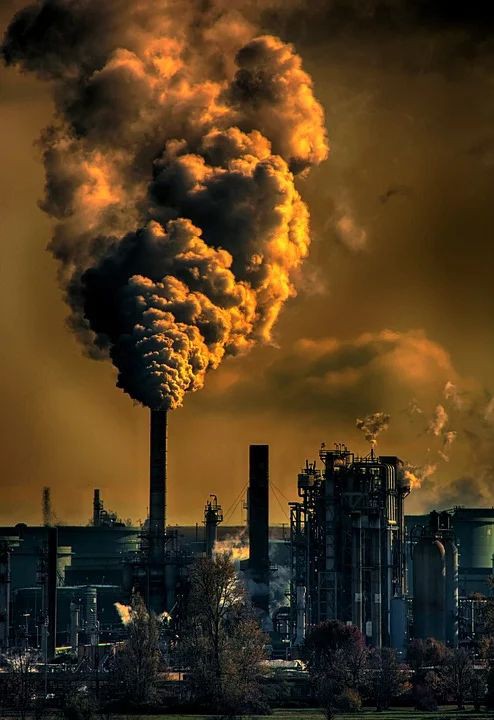
Cryptocurrency mining necessitates a lot of computing power and electricity, making it a very energy-intensive process. Bitcoin is the main perpetrator of this. Bitcoin mining necessitates powerful computers and a lot of resources. It’s impossible to do on a regular machine. Bitcoin miners are concentrated in countries where coal is employed to get electricity, like China. China’s carbon footprint has risen significantly as a result of this.

  • Susceptible to hacks:

While cryptocurrencies are extremely secure, exchanges are not. Most exchanges save user wallet data to properly operate their user ID. Hackers might steal this information, giving them access to an outsized number of accounts. These hackers can easily move funds from those accounts once they need to gain entry. Some exchanges, like Bitfinex and Mt Gox, are compromised in recent years, and Bitcoin worth thousands to many dollars has been stolen. While most exchanges are now extremely stable, another hack remains an opportunity. 

Yes, cryptocurrency has immense potential and its popularity and diverse use cannot be denied. At the same time, ways to reduce the risk and channelize the extreme uncertainty need to be found before the world is freely allowed to use cryptocurrency in any transaction on the face of Earth. All in all, though crypto supposedly seems to have a very bright future, our swiftness and ability to deal with such an instrument will prove to be the make or break situation.

Shortage in Indias Power Supply.

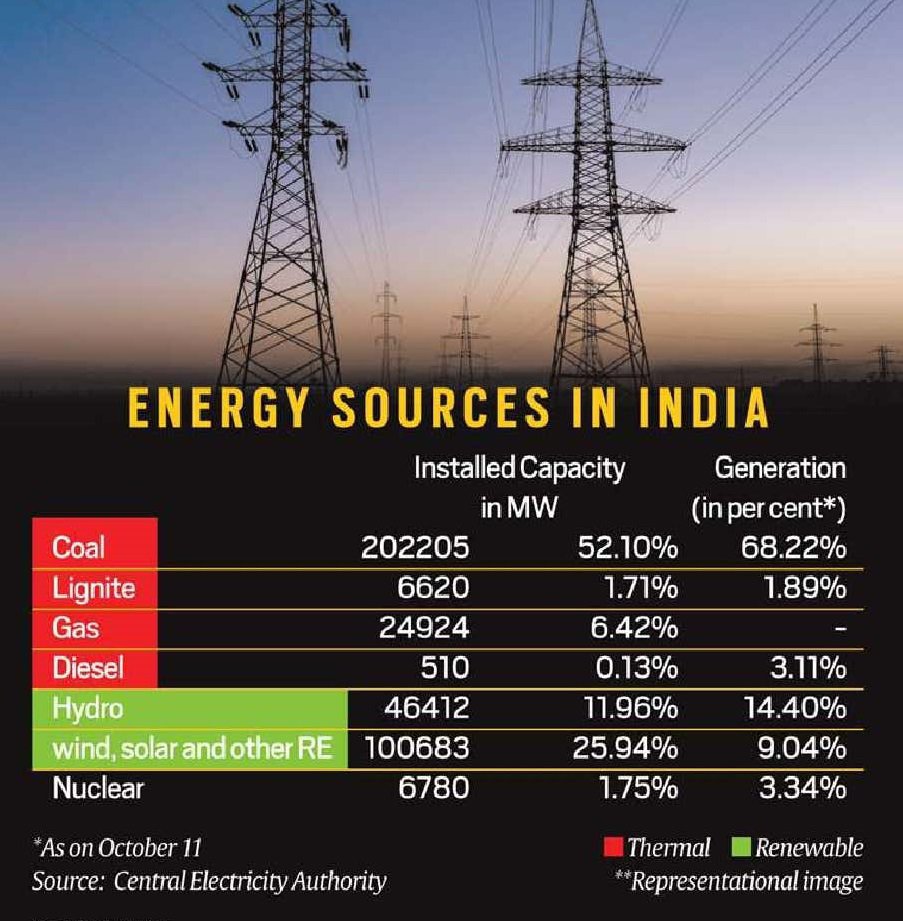
India has the fourth largest coal deposit in the world. It is the second largest fossil fuel producer after China and is home to Coal India, the world’s largest coal mining mine, which accounts for 80% of domestic production. Already allocated coal block mining capacity exceeds expected demand in 2030 by approximately 15% to 20%.


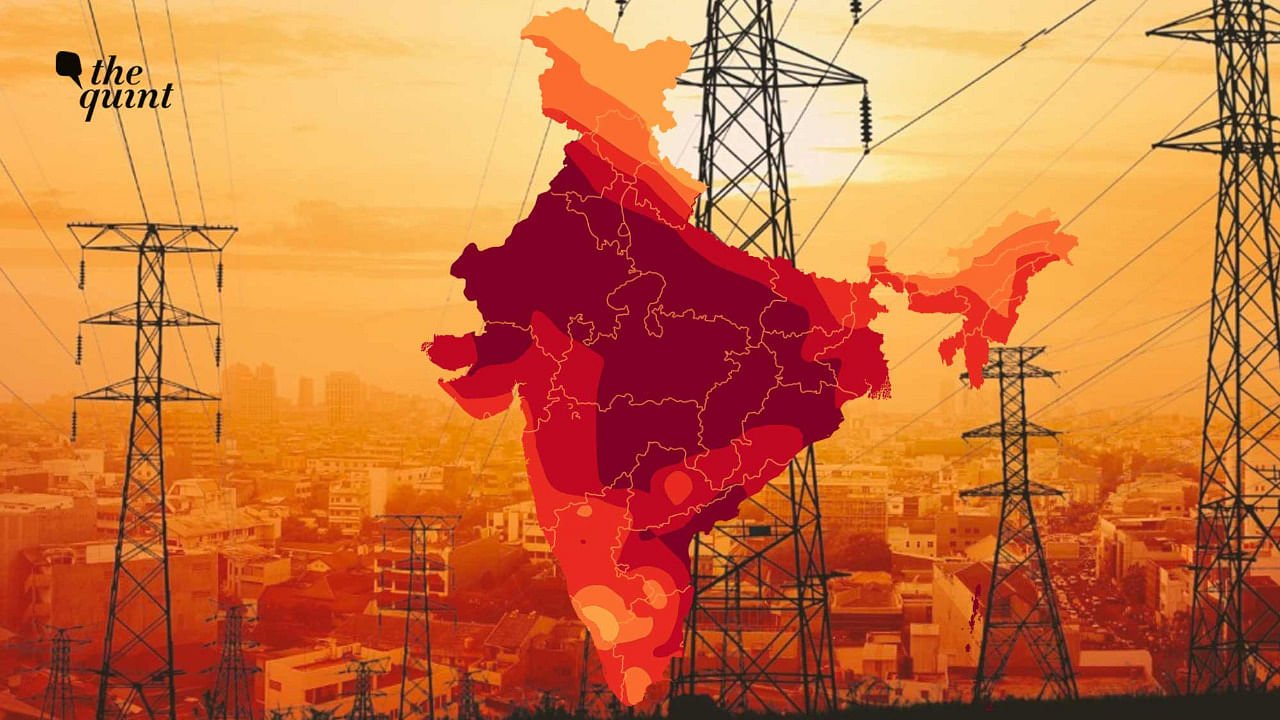
So why are India’s power plants facing coal shortages each year, leading to widespread power outages, exposing parts of the country to darkness and endangering industry?
There are several factors. India has a long time policy of minimizing coal imports. In February 2020, Coal Minister Pralhad Joshi announced that the country would stop importing steam coal from 2023 to 2024.
Mr Joshi said the Ministry of Coal will work with the Ministry of Railways and the Ministry of Shipping to allow Coal India, prisoners and commercial miners to discharge more coal from their supply by 2030. And the coal supply at power plants is running out at an alarming rate. The Department of Energy is currently blaming the decline in coal imports due to the current crisis. In 2018-19, 21.4 million tonnes of coal were imported for mixing, down to 23.8 million tonnes in 2019-20 and 8.3 million tonnes in 2021-22.


Power plant coal inventories have fallen by about 13% since April, reaching pre-summer lows. And for the first time since 2015, Coal India will import fuels used by state-owned and private power companies. The Ministry of Energy said almost all states showed that multiple state bids for coal imports would cause confusion and that the decision was made after calling for centralized procurement by Coal India.
Imported coal costs five times as much as domestic mining, so the center is being pushed back by the state.
Recently, the government has also pressured utilities to increase imports to mix with local coal. Last year, after a two-year break, three tranches of coal auctions were held and nine blocks were successfully awarded.

In September 2021, the Ministry of Coal issued a strict warning to owners of confined coal blocks, stating that their mines should increase production or face restrictions on coal supply by the CIL.
The ministry has discovered that these mines are producing below target.

Of the 43 coal mines outsourced to private companies in the energy, steel and metals sectors, none have met their annual production targets.
On May 6, Coal India announced that it would provide the private sector with 20 closed and abandoned underground coal mines and reopen and operate its revenue sharing model.

According to journalist Shreya Jai the current power supply chain does not seem ready to handle periods of high growth and state discos cannot pay gencos, but the power supply chain starts with state discos and needs repairs. Railroads, on the other hand, are struggling to align the thermal power industry’s demands for faster coal supply with those from other industries. Rakes must be prepared to meet the growing demand for almost all other bulk commodities, from cement and steel to sand and edible grains. By strengthening the value chain of the electric power sector, it is possible to resolve the coal supply-demand mismatch in the long run.

Cryptocurrency Heist

Programmers behind one of the greatest ever advanced coin heists have presently returned about all of the $610 million (generally Rs. 4,530 crores)-plus they stole, Poly Organize, the cryptocurrency stage focused on prior this week by the assault, said on Thursday. The stage, which was small known some time recently Tuesday’s heist, pronounced the programmer on Twitter as a “white cap,” alluding to moral programmers who by and large point to uncover cyber vulnerabilities, upon the return of the reserves.

Poly Arrange, which encourages peer-to-peer token exchanges, included that the tokens were exchanged to a multi-signature wallet controlled by both the stage and the hacker. The as it were remaining tokens however to be returned are the $33 million(roughly Rs. 245 crores) in tie stablecoins solidified prior within the week by cryptocurrency firm Tie, Poly Organize said.

The reimbursement prepare has not however been completed. To guarantee the secure recuperation of client resource, we trust to preserve communication with Mr. White Cap and pass on precise data to the open,” said Poly Arrange on Twitter. A individual claiming to have executed the hack said Poly Organize advertised him a $500,000 (generally Rs. 3.7 crores) bounty to return the stolen resources and guaranteed that he would not be responsible for the occurrence, agreeing to computerized messages shared on Twitter by Tom Robinson, chief researcher and co-founder of Elliptic, a crypto following firm. Poly Arrange, which permits clients to exchange or swap tokens over distinctive blockchains, said on Tuesday it had been hit by the cyberheist, encouraging the guilty parties to return the stolen stores

The still as however unidentified programmer or programmers show up to have misused a powerlessness within the computerized contracts Poly Arrange employments to move resources between distinctive blockchains, agreeing to blockchain forensics company Chainalysis. On Wednesday, the programmers begun returning the stolen coins, driving a few Blockchain examiners to guess that they might have found it as well troublesome to wash stolen cryptocurrency on such a scale. Later on Wednesday, the programmers said in computerized messages moreover shared by Elliptic that they had executed the assault “for fun” and needed to “uncover the defenselessness” some time recently others could abuse it which it was “continuously” the arrange to return the tokens.

At $600 million (generally Rs. 4.460 crores), in any case, the Poly Organize burglary distant surpassed the record $474 million (generally Rs. 3,520 crores) in criminal misfortunes that were enrolled by the whole decentralized fund (DeFi) division from January to July, concurring to crypto insights company CipherTrace. The burglary outlines the dangers of the for the most part unregulated DeFi segment, said crypto specialists. DeFi stages permit clients to conduct exchanges, more often than not in cryptocurrency, without conventional watchmen such as banks or trades.

Transportation in India.

India’s transport sector is large and diverse; it caters to the needs of 1.1 billion people. In 2007, the sector contributed about 5.5 percent to the nation’s GDP, with road transportation contributing the lion’s share.

Good physical connectivity in the urban and rural areas is essential for economic growth. Since the early 1990s, India’s growing economy has witnessed a rise in demand for transport infrastructure and services.

However, the sector has not been able to keep pace with rising demand and is proving to be a drag on the economy. Major improvements in the sector are therefore required to support the country’s continued economic growth and to reduce poverty.

Roads. Roads are the dominant mode of transportation in India today. They carry almost 85 percent of the country’s passenger traffic and more than 60 percent of its freight. The density of India’s highway network — at 0.66 km of roads per square kilometer of land – is similar to that of the United States (0.65) and much greater than China’s (0.16) or Brazil’s (0.20). However, most roads in India are narrow and congested with poor surface quality, and 33 percent of India’s villages do not have access to all-weather roads.

Rural Roads-A Lifeline for Villages in India: Connecting Hinterland to Social Services and markets

Railways. Indian Railways is one of the largest railways under the single management. It carried some 19.8 million passengers and 2.4 million tonnes of freight a day in year 2009 and is one of the world’s largest employer. The railways play a leading role in carrying passengers and cargo across India’s vast territory. However, most of its major corridors have capacity constraint requiring capacity enhancement plans.

Ports. India has 13 major and 199 minor and intermediate ports along its more than 7500 km long coastline. India’s seaborne foreign trade being 95% by volume and 67% by value, the ports play a very significant role in improving foreign trade in a growing economy. These ports serve the country’s growing foreign trade in petroleum products, iron ore, and coal, as well as the increasing movement of containers. Indian ports handled cargo of 850 million tonnes and about 9.0 million TEU container traffic in year 2010. Over the last decade, the average annual growth rate of port cargo volume has been about 10%.. The future potential for port sector, particularly container ports is huge considering that the container traffic is projected to grow to 40 million TEU by 2025. Inland water transportation also remains largely undeveloped despite India’s 14,000 kilometers of navigable rivers and canals.

Aviation. India has 128 airports, including 15 international airports. Indian airports handled 142 million passengers in 2010-11 and 1.6 million tonnes of cargo in year 2009-10. The CAGR for the domestic passenger and freight growth over the last decade has been 14.2% and 7.8% respectively. The dramatic increase in air traffic for both passengers and cargo in recent years has placed a heavy strain on the country’s major airports. Passenger traffic is projected to grow more than 15% annually over 2011-13 and it is estimated that the aviation industry, currently 9th largest in the World, will require 30 billion USD investment in the next 15 years to keep pace with the growing demand.

Urban Transport. India is experiencing rapid urbanization with the present urbanization levels at 30% translating to a population of roughly 340 million living in urban areas. The number of million plus cities is presently at 42 and the urban economy accountd for roughly 60% of the GDP. Motorisation rates in India are in double digits as in most developing economies. Only about 20 cities out of 87 cities with a population in excess of 500,000 and state capitals have any kind of organized transport and only 3-4 cities could lay claim to a mass rapid transit system. The share of public transport in cities with population sizes over 4 million has declined from 69% to 38% between 1994 to 2007. Accident and fatality rates are one of the highest in the world affecting primarily the poor and vulnerable without their own means of transport.

Transport infrastructure in India is better developed in the southern and southwestern parts of the country.

The major challenges facing the sector are:

• India’s roads are congested and of poor quality. Lane capacity is low – majority of national highways are two lanes or less. A quarter of all India’s highways are congested. Many roads are of poor quality and road maintenance remains under-funded. This leads to the deterioration of roads and high transport costs for users.

• Rural areas have poor access. Roads are significant for the development of the rural areas – home to almost 70 percent of India’s population. Although the rural road network is extensive, some 33 percent of India’s villages do not have access to all-weather roads and remain cut off during the monsoon season. The problem is more acute in India’s northern and northeastern states which are poorly linked to the country’s major economic centers.

• The railways are facing severe capacity constraints. All the country’s high-density rail corridors face severe capacity constraints. Also, freight transportation costs by rail are much higher than in most countries as freight tariffs in India have been kept high to subsidize passenger traffic.

• Urban centers are severely congested. In Mumbai, Delhi and other metropolitan centers, roads are often severely congested during the rush hours. The dramatic growth in vehicle ownership during the past decade – has reduced rush hour speeds especially in the central areas of major cities.

• Ports are congested and inefficient. The average annual growth of cargo volume in the ports in the last decade was close to 10%, However, capacity utilization in some of the major ports remain as low as 58-60% Both bulk and containerized traffic is expected to grow at a much faster pace in future and by some estimate the container traffic is projected to grow to about 4.5 times of the current volume by 2025. India’s ports need to significantly ramp up their capacity and efficiency to meet this surging demand.

• Airport infrastructure is strained. . Air traffic has been growing rapidly leading to severe strain on infrastructure at major airports, especially in the Delhi and Mumbai airports which account for more than 40 percent of nation’s air traffic.

Environmental pollution

“Humankind has not woven the web of life. We are but one thread within it. Whatever we do to the web, we do to ourselves. All things are bound together. All things connect.”

~ Chief Seattle

What is environmental pollution ?

Is it degrading our lifestyle ?

How can we improve our environment ?

Let’s get through the topic .

Introduction

One of the greatest problems that the world is facing today is that of environmental pollution, which is causing grave and irreparable damage to the natural world and human society with about 40% of deaths worldwide being caused by water, air and soil pollution and coupled with human overpopulation has contributed to the malnutrition of 3.7 billion people worldwide, making them more susceptible to disease.

Environmental pollution is defined as “the contamination of the physical and biological components of the earth/atmosphere system to such an extent that normal environmental processes are adversely affected.”

From: Environmental Management, 2017

We all are well known about the word Environmental pollution . It is not some kind of new phenomenon , yet it is a greatest problem facing by our society . Still , people are avoiding the topic to its utmost.

Environmental pollution is one of the most serious global challenges. Wild-type organisms have a slower degradation rate of hazardous materials.

Both developed and developing nations share this burden together, though awareness and stricter laws in developed countries have contributed to a larger extent in protecting their environment.

Reasons behind environmental pollution

  • The Burning of Fossil Fuels. Industrial Emission.
  • Indoor Air Pollution.
  • Wildfires.
  • Microbial Decaying Process.
  • Transportation.
  • Open Burning of Garbage Waste.
  • Construction and Demolition.
  • Urbanization and industrialization. Since the era of industrial revolution, man has continued to introduce hazardous materials into the environment at an alarming rate.Mining and exploration.
  • Agricultural activities.
  • Particulate matter.
  • Plastics.
  • Energy production.
  • Deforestation.
  • Mining.
  • Over population.
  • Increase in global average temperature.

Effects of environmental pollution

Environmental pollution is an incurable disease . It can only be prevented.

Barry commoner

1. Effects on Humans. The effects of environmental pollution on humans are mainly physical, but can also turn into neuro-affections in the long term. The best-known troubles to us are respiratory, in the form of allergies, asthma, irritation of the eyes and nasal passages, or other forms of respiratory infections. Other rarer diseases include hepatitis, typhoid affections, diarrhea, and hormonal disruptions.

2. Effects on Animals . Environmental pollution mainly affects animals by causing harm to their living environment, making it toxic for them to live in.

3. Effects on plants . As for animals, plants, and especially trees, can be destroyed by acid rains (and this will also have a negative impact on animals as well, as their natural environment will be modified), ozone in the lower atmosphere block the plant respiration, and harmful pollutants can be absorbed from the water or soil.

Solutions for environmental pollution.

  • Evironment planning.
  • Shifting to eco-friendly transportation.
  • Air pollution must involve moving away from fossil fuels, replace them with sustainable fuels .
  • Solar power .
  • Wind power.
  • Go green.
  • Storage facilities for solid waste.
  • Environmental friendly products.
  • Policies implimentation for environmental pollution.
  • We also need to work on electromagnetic radiation (ER) reduction.
  • Awareness through mass media.
  • More green parks and areas.
  • Environmental education, etc,.

“We say we love flowers, yet we pluck them. We say we love trees, yet we cut them down. And people still wonder why some are afraid when told they are loved.”

~ Paul Morley

Link

Money and it’s Functions

Money a commodity accepted by general consent as a medium of economic exchange. It is basically the legal tender of exchange. The paper currency which we use today has a long history behind it’s origin and evolution. Even today, money is continuously evolving, going from paper to plastic to digital. Over the years, money has changed it’s forms several times but what hasn’t changed is it’s functions. No matter what form it is used in, money almost always serves the same functions.
The functions of money are categorised as primary, secondary and contingent functions.

Primary Functions of Money:

Under this category, money performs it’s two main functions that are medium of exchange and unit of value. In the former case, money has removed the need of double coincidence of wants, something which was very much needed in the batter system which was used earlier. Being a medium of exchange means being generally acceptable. This gives the user freedom of choice and economic independence. It also acts as an intermediary and facilities exchange.
Money as unit of value means money is the standard for measuring values of all goods and services. This value is expressed in terms of price. Price is in terms of monetary unit and money acts as the determiner of rate of exchange. It also helps in calculating important economic parameters like costs, revenue, profits etc.

Secondary Functions of Money:

Under this, money performs three functions. It acts as a standard of deferred payments, it acts as a store of value and as a transfer of value. Money as a standard of deferred payments means that money acts as a standard for payments, which are to be made in future.
Money as a store of value means that money can be used to transfer purchasing power from present to future. Money is a way to store wealth. Although wealth can be stored in other forms also, but money is the most economical and convenient way. Money as a transfer value refers to the fact that money has velocity. It keeps transferring from person to other person.

https://www.yourarticlelibrary.com/economics/money/primary-and-secondary-functions-of-money/30307

Contingent Functions of Money:


Money performs certain contingent functions. These include: distribution of national income, maximization of satisfaction, basis of credit system, money as the most liquid asset. Money helps in distribution of the national product in the form of rent, wage, interest and profit, which are expressed in money terms. Money helps the consumers and producers in maximizing their satisfaction. A consumer derives maximum satisfaction when marginal utility is greater than marginal cost. Money helps in credit creation for banks. Money as a store of value has encouraged savings by people in the form of demand deposits in banks. These deposits are used for generating credit. Money is the most liquid asset of all assets in which wealth is healed. Individuals hold wealth in numerous forms ranging from currency, demand deposits, time deposits to bonds , savings, treasury bills etc. All these forms can be converted into money and vice versa.

https://www.yourarticlelibrary.com/economics/money/contingent-functions-of-money-in-economics/30310

RBI Had Not Printed Rs 2000 Notes In 2019-20, Currency is Still Valid

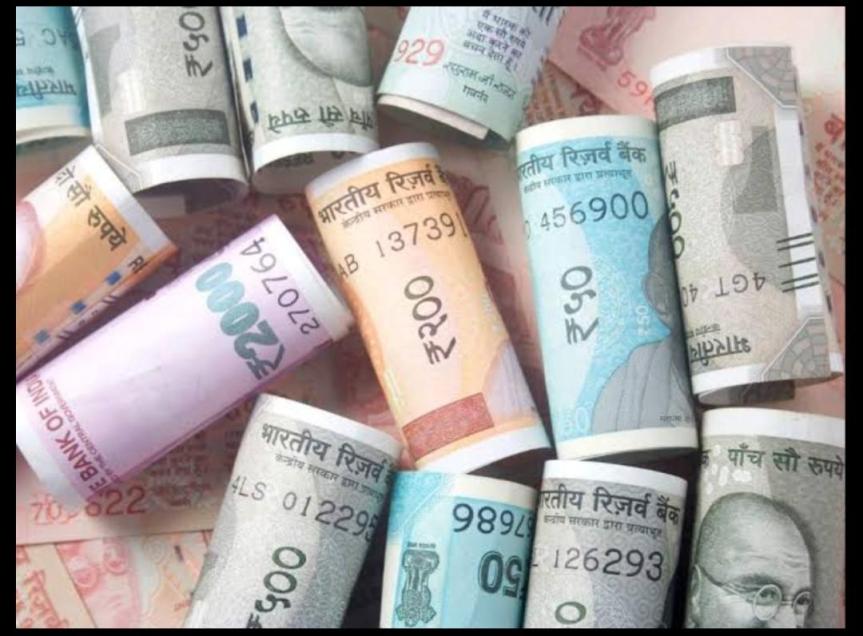
Rs. 2000 notes were introduced by the Government of India after the announcement of the demonetisation of 500 and 1000 rupees notes in November, 2016. Currently, it is the highest denomination currency note of the country. According to the annual report of the RBI, the Rs 2000 denomination note was not printed at all during 2019-2020. These notes were introduced after the government announced demonetisation of old Rs 500 and Rs 1,000 notes 4 years back. At that time, those two denominations had accounted for 86% of the then total currency in circulation.

The number of Rs 2,000 denomination notes had peaked at 3.36 billion units in 2017-18. This number had dropped to 3.29 billion in the years 2018-19. It has again fallen to 2.73 billion in 2019-20. The currency note presses of the Reserve Bank of India (RBI) did not print even one Rs 2,000 note in the last year. This happened because the presses did not receive any order for printing those. This seems to indicate a conscious decision for starting the trend of decreasing the number of notes which are circulated. The 2000 notes under circulation was 50% in 2016-17 and it has come down to almost 22% in 2019-20. These figures are based on RBI’s Annual Report for 2019-20, which was released on August 25 2020.

It is also known that RBI has also disposed a disproportionate share of Rs 2,000 notes in the soiled category. This has raised many questions on the government’s plan about the 2000 denomination note. In January, 2019 the was an indication that the Rs. 2000 notes were not being printed any further because there was adequate supply.

A total of 176.8 million pieces, which is quite a high number, of Rs 2,000 notes under the category of soiled notes were disposed of in 2019-20 by the RBI. While in 2018-19, just 1 million Rs 2,000 notes were disposed of and in 2016-17 or 2017-18, no Rs 2,000 notes were disposed of. Both the 2000 and 500 denomination notes were introduced after demonetization. In 2019-20, the share of Rs 2000 notes which were disposed of was 6.5% while that of Rs.500 notes was 0.6%. Out of the 22 billion currency notes printed in 2019-20, more than 50% of those were of the Rs 500 denomination. Due to these changes in currency composition, the Rs 500 notes has reached a very high share in the total currency under circulation.

The Minister of State for Finance Anurag Singh Thakur had told the Lok Sabha on March 16 2020 that, “Printing of bank notes of particular denomination is decided by the government in consultation with RBI to maintain the desired denomination mix for facilitating transactional demand of public. No indent was placed with the presses for printing of Rs 2,000 denomination notes for 2019-20. However, there is no decision to discontinue the printing of Rs 2,000 bank notes.”

A government official said that, “The Rs 2,000 notes were introduced in 2016 to quickly fill the gap created by demonetization of Rs 500 and Rs 1,000 notes. It was the need of the hour. Gradually, with increased supply of smaller notes, including new notes of Rs 100 and Rs 200, and with growing popularity of digital transactions, the urgency to issue new Rs 2,000 notes is no longer there. But this does not mean that there is any move to discontinue Rs 2,000 notes. Increasingly, commercial banks are also using more and more smaller notes because their customers often find difficulties in getting change for Rs 2,000 notes.”

Management of Currency Printing in India

For a common person, money simply means currency and coins. This is so because in India, the payment system, which includes credit cards and electronic cash, still revolves mainly around currency and coins, especially for retail transactions.

Currency Basics

Coins –

Coins in India are presently being issued in denominations of one rupee, two rupees, five rupees and ten rupees. Coins in the denomination of 1 Paise, 2 Paise, 3 Paise, 5 Paise, 10 Paise, 20 Paise and 25 Paise have been withdrawn from circulation with effect from June 30, 2011 and are, therefore, no more legal tender.

Currency –

Banknotes in India are currently being issued in the denomination of Rs 10, Rs 20, Rs 50, Rs 100, Rs 200, Rs 500 and Rs 2000. These notes are called banknotes as they are issued by the Reserve Bank of India (Reserve Bank). The printing of notes in the denominations of Rs 2 and Rs 5 has been discontinued as these denominations have been coinised.  Government of India wide their Notification no. 2652 dated November 8, 2016 have withdrawn the Legal Tender status of Rs 500 and Rs 1,000 denominations of banknotes of the Mahatma Gandhi Series issued by the Reserve Bank of India till November 8, 2016. Currency paper is composed of cotton and cotton rag.

The highest denomination note ever printed by the Reserve Bank of India was the ₹ 10000 note in 1938 and again in 1954. These notes were demonetized in 1946 and again in 1978.

What is the role of the Reserve Bank of India in currency management ?

The Reserve Bank derives its role in currency management from the Reserve Bank of India Act, 1934. The Reserve Bank manages currency in India. The Government, on the advice of the Reserve Bank, decides on various denominations of banknotes to be issued. The Reserve Bank also co-ordinates with the Government in the designing of banknotes, including the security features. The Reserve Bank estimates the quantity of banknotes that are likely to be needed denomination-wise and accordingly, places indent with the various printing presses. The aim of the Reserve Bank is to provide good quality notes to members of public. Towards this aim, the banknotes received back from circulation are examined and those fit for circulation are reissued and the others (soiled and mutilated) are destroyed so as to maintain the quality of banknotes in circulation.

Generally, the central bank of a country manages the currency of economy. In India RBI manages it with the advice of Government of India. The Reserve Bank derived its role in currency management on the basis of the Reserve Bank of India Act, 1934. Currency management essentially relates to issue of notes and coins and retrieval of unfit notes from circulation. This work is performed through 18 issue offices of the Reserve Bank and a wide network of 4195 currency chests, 488 repositories and 3562 small coin depots managed by banks and Government treasuries.  

RBI has authorized selected branches of banks called Currency chests, to facilitate the distribution of notes and rupee coins. The currency chest branches are expected to distribute notes and rupee coins to other bank branches in their area of operation. Department of Currency Management (DCM) receives notes from four currency note printing presses. Two of the currency note printing presses are owned by the Government of India and two are owned by the Reserve Bank, through its wholly owned subsidiary, the Bharatiya Reserve Bank Note Mudran Ltd. (BRBNML).   

The government owned presses are at Nasik and Dewas. The other two presses are at Mysore and Salboni. Coins are minted in four mints owned by the Government of India. The mints are located at Mumbai, Hyderabad, Calcutta and Noida. As per the minimum storage method RBI can issue any amount of currency which is more than at least 200 crore gold and foreign currency. In this at-least 115 crore will be in the form of gold. The Reserve Bank decides the volume and value of banknotes to be printed each year. The quantum of banknotes that needs to be printed, broadly depends on the requirement for meeting the demand for banknotes due to inflation, GDP growth, replacement of soiled banknotes and reserve stock requirements by using statistical models/techniques.   

Notes and coins of all the denominations are issued by RBI except for the Rupee one coin because the Government of India derives authority to issue Rupee coins from the Coinage Act. As such the rupee coins issued by Government constitute the liabilities of the Government. The Government of India decides the quantity of coins to be minted on the basis of indents received from the Reserve Bank. RBI can print as much money as they want after considering the above mentioned facts. In fact, countries do resort to printing money, or what is known as Quantitative Easing, a term that became popular just after the recession. But, that measure is only for extreme situations, and is also considered dangerous because printing money causes inflation in an economy, too much printing of money will cause hyperinflation also.   

Printing money reduces the value of your currency. Inflation reduces the value of domestic securities making international investors leave the economy. Thus central bank cannot print any amount of money and distribute among poor to make them rich. If the overall supply of goods and services is not commensurate to the money supply increased, price of products will rise by the amount of extra currency printed. If that money is used for financing imports, the domestic currency will depreciate in the foreign exchange market. During slowdown, banks do resort to infusing fresh currency, but such techniques in normal will adversely affect the economy. Since currency in today’s world is not backed by the gold, its effect will be more drastic on the economy. Thus, there is no such thing as a free meal and printing money doesn’t have any effect on increasing real output / real income.    

Why Dollar is Higher Than Rupee ?

Indian National Rupee and US Dollar are the legal tenders in India and the US respectively. Both USD and INR are accepted in the US and India respectively because they meet following conditions which are necessary for anything to be called as money –

1.    General Acceptability
2.    Unit of account
3.    Store of storage
4.    Medium of Exchange

For general acceptability means that no one should refuse from accepting it; unit of account means that is can be used to represent the real value of an economic item; for store of value, it means that if it is stored, it value must not perish; and for medium of exchange, it means that it can be used as a medium for exchange of goods and services. 

As the aforesaid conditions are satisfied for Rupee in India and Dollar in the US, both the currencies are used as money in respective countries. However, in international trade when the nations carryout exchange of goods and services among themselves, Rupee lacks the general acceptability while Dollar, Gold, Special Drawing Rights (SRD) of International Monetary Fund (IMF)  and some other hard currencies like Euro, Japanese Yen, etc. are accepted by almost all countries as a medium of exchange. Thus dollar becomes the international currency while Rupee remains a currency in India only. 

Rupee Vs Dollar

As it is already explained why Rupee is a national currency while Dollar is an international currency, now let’s take a look on the factors which make Dollar stronger than the Rupee. 

1.    Current Account Deficit

The value of any currency in terms of international currency is determined by the demand and supply of the international currency in a particular country and the demand and supply depends on the nature of Balance of Payments (BOP) of a country. BOP is the foreign trade account divided into two parts – Current Account and Capital Account. All the trade in goods and services and foreign remittances are entered in current account while financial exchanges like loans, or overseas investments, Foreign Direct Investment (FDI) or Foreign Institutional Investment (FII) etc. are the part of capital account. If the value of exports is higher than the value of imports, then their will be a current account surplus and there will be a current account deficit if vice versa. 

The export from a country determines the supply of dollar as they will receive dollar from international market for their sold goods and services. Similarly, the imports determine demand of dollar. If imports from a country are higher than the exports from that country, then the demand of dollar will be higher than supply and the domestic currency like Rupee in India, will depreciate against the dollar. Similarly, if exports outpace the imports, then supply of dollar will exceed demand and Rupee will appreciate against dollar in India. In other words, if a country is having current account deficit, the local currency will depreciate against dollar while if it is having a current account surplus, the local currency will appreciate. 

In case of India, if BOP account will continue to have a current account deficit, Dollar will continue to overpower the Rupee. 

2.    Movement Of Capital

Not only just current account but capital account of BOP also determines the value of dollar against a currency. The capital account details the flow of foreign capital in and out of the country. If there is net foreign capital inflow in India in the form of FDI or FII, then the supply of dollar will be much higher than demand and Rupee will strengthen against the dollar. Similarly if there is net capital outflow, Rupee will depreciate. 

3.    Other Factors

There are several other factors also which determine the supply of dollar into the country. The foreign capital usually flows into the region which provides minimum risk and maximum returns. Higher interest rates in a country suggests higher returns. Therefore whenever Fed Reserve of the US increase the interest rates, there is turmoil in all financial markets across the globe because there is a risk of flight of Dollar back to the US. Since US is the largest economy of the world, it is also minimises the risk. As the risk factor also determines capital movement, most countries give significance to the risk rating by international agencies like Moody’s, Fitch etc. It is because of the risk factor that despite high interest rates in Zimbabwe, most investors ignore it. 

And last but not the least, Dollar is an international reserve currency and it is because of this reason, it overpowers most currencies across the world. The strength of US economy vis a vis Indian economy is another reason why Dollar overpowers the Rupee.