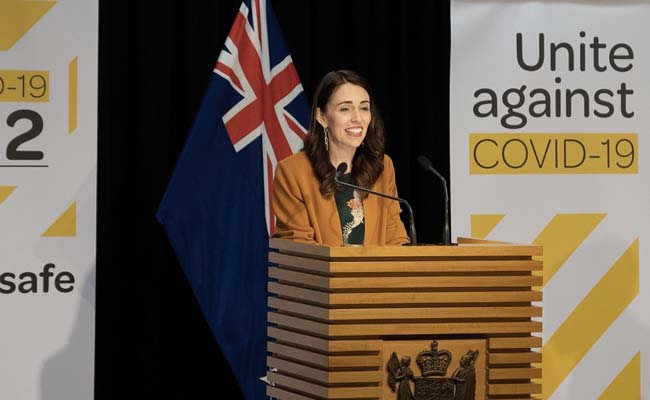
On Tuesday, New Zealand announced that Auckland, its largest city, would be shutting down since 4 new cases has been found in the city. It is the first case of domestic transmission for the nation after remaining covid free for 102 days.
New Zealand’s fight against Covid was recognised across the world. Prime Minister Jacinda Ardern was congratulated for her effective method and governance. A vigorous and decisive response to the pandemic had effectively curbed down the rates of infection. The Pacific island nation of 5 million citizens was considered to be the safest place as it remained Covid free for 100 days at a stretch. It had made a record of zero new cases of community transmission of Covid-19. From a first case on Feb 26 to the last one recorded on May 1st, the whole process of elimination took about 65 days. The nation was placed under lockdown for weeks when the virus first broke out and it had achieved a milestone of 100 days. The last case was recorded on May 1st. The government had warned from before as countries like Australia and Vietnam which were once free from the virus are now fighting a second battle.
The Director General of Health had said that the 4 new cases are from a single family in South Auckland. It is the first local case in 102 days. The patients had no international travel history and contact tracing has been started.
With the announcement of shutdown, media reports suggested that people have started panic buying. The Prime Minister has made a surprise news conference and announced that Auckland will have Level 3 restriction from Wednesday as a “precautionary approach”. According to it, people should be staying at home, away from work, school or any social gathering. Any gathering of more than 10 people will not be allowed. This restriction would be applicable for 3 days, until Friday. This was done to assess the situation and gain further information about contact tracing. Immediate steps have been taken to find the source of the infection and to prevent further spread. There is an added concern because the source of the virus is not known this time. Travelling to Auckland, on North Island, would be restricted for people other than the ones who live there. The rest of New Zealand would go into Level 2 restriction from Wednesday for 3 days. Social gatherings would be restricted and mass gatherings over 100 people would not be allowed. Since sources are unknown for the new cases, it is expected that there could be a rise in numbers in the coming few days.
Auckland Mayor Phil Goff has said, “I am urging Aucklanders to come together like we did last time to stamp out community transmission. Please remain calm, please do not panic buy and please follow the lockdown rules.” People have been instructed to use masks and to avoid all kinds of social gathering. Jacinda Ardern has told reporters, “No other country in the world was free of community transmission as long as New Zealand. Together we have beaten the virus before. We can do so again.”
New Zealand elections are scheduled to happen on September 19. The break of new cases was unexpected. Till now, the government has fought against the situation and done quite well as a result Ardern’s Labour Party has got a lot of support before the elections.
Coronavirus Cases in India LIVE: Coroavirus cases in India have continued to see a spike in the past few days, breaching a new mark every other day. On Sunday, India registered its single-day and record spike of 64,399 coronavirus cases, taking the country’s Covid tally past 21 lakh-mark. India had crossed the 20 lakh-mark on Friday. In just two days, India recorded a spike of over 1 lakh cases. Experts have believed that India’s coronavirus peak is yet to come. As per World Health Organization data, India has been recorded more coronavirus cingle-day cases than the United States or Brazil for past four days. As India readies to prepare to fight coronavirus, stay with us to catch LIVE updates.
One hundred and nine days after the first person tested positive for Covid-19 in India, the country’s case count crossed the 1-lakh mark on Monday, with the number of infections having doubled in just a little over 12 days.
Both the spread of the virus and the spurt in cases in recent days will be a cause for concern for the authorities. On Monday, 4,713 fresh infections were reported from across the country, the third highest in a single day so far, led again by Maharashtra, which reported more than 2,000 cases (2,033 to be exact) for the second day running. As many as 24 states/UTs reported new cases during the day.
On the positive side, the number of people recovering from the infection is steadily rising. It was 38,908 on Monday, with the recovery rate at 38.8%. With 3,103 fatalities from the virus so far, India’s death rate too is relatively low at 3.1%.
However, as the country entered phase 4 of lockdown, the number of daily cases was still rising, indicating that the infection was yet to peak. On Monday, apart from Maharashtra, the number of new cases remained high in Tamil Nadu (536), Gujarat (366), Delhi (299, a slight drop from previous days), Madhya Pradesh (254), Uttar Pradesh (177) and Bihar (103).
Rajasthan and Karnataka registered their highest single-day rise in infections, with 305 and 99 cases, respectively. West Bengal (148), and J&K (106) were also close to their highest numbers.
At 131 deaths from the virus on Monday, the toll remained above 100 for the fourth straight day. Maharashtra recorded the highest 51 deaths, including 23 from Mumbai, while Gujarat reported 35 fatalities, a majority (31) from Ahmedabad alone. The toll was 12 in Delhi, where the death rate is now slowly rising after staying low for a long time.
Among Indian cities, Mumbai has recorded the highest number of Covid-related deaths at 757 while Ahmedabad district comes second with 524. When it comes to death rates, Gujarat’s financial capital has double the rate than the Maximum City. Compared to Mumbai’s rate of 3.64%, Ahmedabad recorded 6.22%. In the month of May, the rate reduced in Mumbai but increased to 6.95% in Ahmedabad.
NEW DELHI: One hundred and nine days after the first person tested positive for Covid- 19.
in India, the country’s case count crossed the 1-lakh mark on Monday, with the number of infections having doubled in just a little over 12 days.
Both the spread of the virus and the spurt in cases in recent days will be a cause for concern for the authorities. On Monday, 4,713 fresh infections were reported from across the country, the third highest in a single day so far, led again by Maharashtra, which reported more than 2,000 cases (2,033 to be exact) for the second day running. As many as 24 states/UTs reported new cases during the day.
On the positive side, the number of people recovering from the infection is steadily rising. It was 38,908 on Monday, with the recovery rate at 38.8%. With 3,103 fatalities from the virus so far, India’s death rate too is relatively low at 3.1%.
However, as the country entered phase 4 of lockdown, the number of daily cases was still rising, indicating that the infection was yet to peak. On Monday, apart from Maharashtra, the number of new cases remained high in Tamil Nadu (536), Gujarat (366), Delhi (299, a slight drop from previous days), Madhya Pradesh (254), Uttar Pradesh (177) and Bihar (103).
Rajasthan and Karnataka registered their highest single-day rise in infections, with 305 and 99 cases, respectively. West Bengal (148), and J&K (106) were also close to their highest numbers.
At 131 deaths from the virus on Monday, the toll remained above 100 for the fourth straight day. Maharashtra recorded the highest 51 deaths, including 23 from Mumbai, while Gujarat reported 35 fatalities, a majority (31) from Ahmedabad alone. The toll was 12 in Delhi, where the death rate is now slowly rising after staying low for a long time.
Among Indian cities, Mumbai has recorded the highest number of Covid-related deaths at 757 while Ahmedabad district comes second with 524. When it comes to death rates, Gujarat’s financial capital has double the rate than the Maximum City. Compared to Mumbai’s rate of 3.64%, Ahmedabad recorded 6.22%. In the month of May, the rate reduced in Mumbai but increased to 6.95% in Ahmedabad.
In terms of cases, Maharashtra reported 2,033, the second-highest count in a day. The state’s tally reached 35,086, with Mumbai reporting over 1,000 cases for the second day in a row (1,185) to breach the 21,000 mark. The city now has 21,335 cases.
Meanwhile, five doctors and 55 police personnel where among the 106 who tested positive for the virus in J&K. Four of these doctors had treated a Covid positive woman who died of co-morbidities on Sunday.
Tamil Nadu reported three deaths and 536 fresh Covid-19 cases on Monday, with people returning from Maharashtra being the only ones testing positive in many districts. The testing strategy continued to be a subject of debate with the ICMR releasing new guidelines and the state set to finalise its own by Tuesday. The state has been criticised for reducing the number of tests over the last one week by epidemiologists, doctors and political leaders.
In Uttar Pradesh, as many as 177 new cases, including 31 in Gautam Budh Nagar, took the state’s Covid tally to 4,649. The state also recorded six deaths, including two migrant workers. UP’s corona toll is now 118.
Since the beginning of the phase-wise upliftment of the coronavirus-induced lockdown, a question that has been frequently asked by people, especially students, across the country is when will schools and colleges reopen in India. All education institutions were closed across the country after the Centre imposed a nationwide lockdown to control the spread of the dreadful coronavirus, which is caused by SARS‑CoV‑2. However, a media report has now revealed that the Centre might soon unveil a phase-wise plan to reopen schools and educational institutes across the country between September 1 and November 14 later this month as part of final Unlock guidelines.
The schools and educational institutes across the country are closed since March 23, when the first lockdown to contain the spread of coronavirus pandemic was put in-place. Ever since, the teaching and learning activities are relying on online modes, whose success has been limited because of the uneven availability of smart-devices, specifically in the country’s hinterland.
According to a report in Economic Times, the specifics of the plan have been formulated by the group of secretaries associated with the Group of Ministers (GoM) on COVID-19 management, which is being headed by Health Minister and Member of Parliament from Delhi’s Chandni Chowk, Dr Harsh Vardhan.
The report quoting its sources said that central government will simply issue Broad Standard Operation Procedures (SOPs) as for the opening of schools and educational institutions, with the final decision left to the respective state governments so as to decide when and how to restart the classroom teaching.
What does the Centre’s formulation of opening schools and educational institutes say?
It suggests that for the first fifteen days of the opening of schools, Class 10 and Class 12 students will be asked and guided to attend the school. Afterwards, the students of Class 6 to 9 will be brought back to the classrooms with restricted hours.
However, all sections of one class will not attend the school on the same day. Different sections of a class will have specific days assigned as for attending the schools.
The emphasis on the sanitisation of the classrooms remains the biggest highlight of the Centre’s formulation. Schools will be told to work in shifts – 8 to 11 AM and 12 to 3 PM – with an hour left for the sanitisation. So far there is no plan to bring the primary and pre-primary students back to the classrooms, and they will continue to be taught via online modes, The Economic Times reported.
The government officials have studied the countries such as Switzerland have brought back the students to classrooms, and the formulation has been designed on similar lines as for the classroom teaching of Indian students.
Writing for the sake of writing isn’t writing. You should have a passion to write. That pushes you forward to a greater extent. The interest on writing makes you write the writings that were never written. Don’t make yourself to write, let yourself make you write. There’s a lot of difference between them. It’s like earning to write and writing to earn. What we know is a drop, what we don’t know is an ocean.
Develop a habit of writing because that makes us improve without our knowledge. Write something that happened to you because it tries to bring the coordination between our brain and hands. As the time passes our hand should be faster than our brain. We should think of next sentence while writing the previous. It can even be writing in a dairy.
Start a blog and keep on writing and express what you feel like. Share it to your contacts and ask them to suggest any improvements. Keep on writing and improving by implementing their suggestions and get improvised with your writing.
Writing not only comes from writing. Start reading the different writings. Analyse the way different people write and try to figure out the pattern they try to express themselves. Read and read until you get better in writing.
Write for someone who are looking for writers because that makes you know more about your writing from others. Try to become freelancer and ask for work. Doing work makes you improve. Such work involves lot of research and you will get a chance to know about the unknowns.
Start your journey in facebook groups and Quora groups and make friendship with your mates . Connect with like minded people and that will surely make you know more about the various styles of writing.
As the world battles the COVID-19 pandemic, countries are moving to stringent measures like lockdowns and curfews. With markets crashing, the global economy is staring at a deep distress.
Entire world is fighting against epidemic COVID 19 outbreak and Hon’ble Prime Minister of India Sh. Narendra Damodardas Modi has taken much need precautionary step of complete lockdown from midnight 12’o clock of 24th March, 2020 onwards for next 21 days and again extended to 3rd May, 2020 for another 19 days.
In this difficult environment, each regulatory body is releasing relief measures and guidelines for easing out the impact of COVID 19. On the financial and compliance front, announcements have been flowing from the Government authorities in the form of deferment of statutory due dates or relaxation in payment terms to overcome the financial crisis being faced due to lock-down.
Similar to several countries, the Government of India has begun working on an economic package to deal with the impact of the pandemic. Realising the hardships faced by its citizens, the Union Finance & Corporate Affairs Minister Smt. Niramla Sitharaman has announced several important relief measures on tax and regulatory aspects.
The Finance Minister also announced that necessary legal circulars and legislative amendments for giving effect to these relief measures will be issued by the concerned Authority.
Following is the summarised form of the key announcements made by the Finance Minister here below:
Direct Taxes
1. Extension of tax return filing deadline
The deadline for the following types of tax return have been extended from 31 March 2020 to 30 June 2020
Belated income-tax return for tax year 2018-19
Revised income-tax return for tax year 2018-19
2. The timeline for linking Aadhaar with PAN has been extended to 30 June 2020
3. Relief with regards to delay in payment of taxes
Interest at the reduced rate of 9% (i.e. 0.75% per month instead of 1/1.5 percent per month) will be charged on delay in respect of following payments made between 20 March 2020 and 30 June 2020:
Advanced tax
Self-assessment tax
Regular tax
Taxes withheld or collected at source
Equalization levy
Securities Transaction Tax and
Commodities Transaction Tax
Penalty and late fees in relation to the above mentioned payments are to be waived off
4. Extension of compliance due dates
In respect of the following, where the due dates fall between 20 March 2020 and 29 June 2020, the revised due dates shall be 30 June 2020:
Issue of notice
Intimation
Notification
Approval order
Sanction order
Filing of appeal
Furnishing of return, statements, applications, reports, any other documents
Completion of proceedings by the authority and
Any compliance by the taxpayer including investment in saving instruments or investments for roll over benefit of capital gains
5. The Direct Tax Vivad se Vishwas Act, 2020:
The timeline for payment of disputed arrears without attracting additional 10% amount under the Vivad se Vishwas Scheme extended from 31 March 2020 to 30 June 2020.
Indirect Taxes
1. Extension of GST return filing deadlines:
The last date for filing the forms GSTR-3B due in months of March, April and May 2020 (i.e. returns of February, March and April 2020) will be extended till 30 June 2020 (in staggered manner)
Date for filing GST annual returns of FY 18-19, which is due on 31 March 2020 is extended till the last week of June 2020
2. Relief in respect of payment of taxes
For those having aggregate annual turnover less than INR 50mn, no interest, late fee, and penalty will be charged for the period
However, for those having an aggregate annual turnover of more than INR 50mn, a reduced rate of interest @ 9% per annum will be charged from 15 days after due date (current interest rate is 18 % per annum) for the delayed payment between 20 March 2020 and 30 June 2020, but no late fee and penalty will be charged if complied before 30 June 2020
Last date for making payments by the Composition dealers for the quarter ending 31 March 2020 will be extended till the last week of June 2020
Payment under Sabka Vishwas Scheme shall be made without interest till 30 June 2020
3. Extension of compliances due dates
In respect of the following under GST law, where the due date falls between 20 March 2020 and 29 June 2020, shall be extended to 30 June 2020:
Issue of notice
Notification
Approval order
Sanction order
Filing of appeal and
Furnishing of return, statements, applications, reports, any other documents
4. Date for opting for composition scheme for the F.Y. 2020-2021 is extended till 30 June 2020
5. 24X7 Custom clearance till end of 30 June 2020
Corporate Laws
1. CARO 2020
Applicability of Companies (Auditor’s Report) Order, 2020 will be effective from FY 2020-2021
2. Board meeting
The mandatory requirement of holding Board meetings within prescribed interval provided by the Companies Act, 2013 (120 days) shall be extended by a period of 60 days till next two quarters i.e. till 30 September
3. Meeting of Independence Directors
For FY 2019-20, if mandatory one meeting of independent directors is not held, the same will not be treated as non-compliance
4. Form INC-20A- Declaration of commencement of Business
New Companies being given 6 more months for filing declaration of commencement of business
5. Debenture
Time line to invest 15% of debentures maturing in a particular year has been extended from 30 April 2020 to 30 June 2020
6. Deposit Reserve
Requirement of creating a Deposit Reserve (equal to 20%) of deposits maturing during FY 20-21, extended to 30 June 2020 instead of 30 April 2020
7. Minimum residency
Non-compliances with 182 days residency in India by Director will not treated as non-compliance
8. No Additional Fees
Moratorium period from 1 April 2020 to 30 September 2020, during which no additional fee would be charged in respect of any filing, irrespective of its due date
9. Insolvency and Bankruptcy Code 2016 (IBC)
Minimum amount of default required to initiate insolvency and liquidation on corporate debtors raised from INR 1 lakh to INR 1 crore, effective immediately, in order to prevent admission of MSMEs defaulting due to economic conditions in lieu of COVID-19
Proposed Suspension of new initiations of Corporate Insolvency Resolution Process under Sections 7, 9 and 10 of IBC for 6 months, contingent upon scenario beyond 30 April 2020 as a safeguard companies from defaults attributable to financial downturn pursuant to the COVID-19 pandemic
Among the measures announced late on Tuesday, the government extended the e-way bill validity for the second time since the lockdown was imposed. The e-way bill generated on or before March 24 and expiring during the March 20-April 15 period would now be valid till May 31. This is likely to help trucks stuck en route to reach their destinations.
Further, the notification extended by three months the deadline for furnishing the annual return and GST audit for financial year 2018-19 to September 30. Additionally, a taxpayer can now furnish monthly return GSTR-3B showing nil sales through SMS using the registered mobile number. This return would be verified by a registered mobile number based one-time password (OTP) facility, the notification said.
The Indian economy is one of the most robust economies in the World and one of the key components which constitutes it significantly is known as Job work. So what’s the definition of Job Work?
Definition
As per Section 2(68) of the CGST Act, 2017 Job Work is defined as ‘any treatment or process undertaken by a person on goods belonging to another registered person’.
Meaning
Job-work means it is the processing of goods supplied by principal. The job worker is required to carry out the process specified and it includes outsourced activities that may or may not culminate into manufacture.
The one who does the said job would be termed as ‘job worker’. The ownership of the goods does not transfer to the job worker but it rests with the principal.
About the Concept
The concept of job work is stated and explained in the Central Excise. It is a concept wherein a principal manufacturer can send an input or semi-finished good to a job worker for further processing.
Many facilities and procedural concessions have been given to the job workers as well as the principal supplier who sends goods for job work.
The whole idea behind this is that the principal must be made responsible for meeting the compliances on behalf of the job worker on the goods processed by the worker.
One must also consider the fact that typically the job-workers are small persons who are unable to comply with the discrete provisions of the law.
The most relevant and pertinent point is what are the Procedural aspects that have to be dealt with in regards to the Job Work?
Certain facilities with the specific conditions are offered in relation to job work some of which are as under:
a) A registered person (Principal) can send inputs/capital goods under intimation and subject to the certain conditions without payment of tax to a job worker and from there to another job worker and after completion of job work bring back such goods without payment of tax.
The principal is not required to reverse the ITC availed on inputs or capital goods dispatched to job worker.
b) Principal can send inputs or capital goods directly to the job worker without bringing them to his premises, still the principal can avail the credit of tax paid on such inputs or capital goods.
c) However, inputs and/or capital goods sent to a job worker are required to be returned to the principal within 1 year and 3 years,respectively, from the date of sending such goods to the job worker.
d) After processing of goods, the job worker may clear the goods to-
(i) Another job worker for further processing;
(ii) Dispatch the goods to any of the place of business of the principal without payment of
(iii) Remove the goods on payment of tax within tax;
(iv) India or without payment of tax for export outside India on fulfilment of conditions.
The facility of supply of goods by principal to the third party directly from the premises of the job worker on payment of tax in India likewise with or without payment of tax for export may be availed by the principal on declaring premise of the job worker as his additional place of business in registration. In case the job worker is a registered person under GST, even declaring the premises of the job worker as additional place of business is not required.
Before supply of goods to job worker, principal would be required to intimate the Jurisdictional Officer containing the details of description of inputs intended to be sent by the principal and the nature of processing to be carried out by the job worker.
The said intimation shall also contain the details of another job worker, if any. The inputs or capital goods shall be sent to the job worker under the cover of a challan issued by the principal.
The challan shall be issued even for the inputs or capital goods sent directly to the job worker. The challan shall contain the details specified in Rule 10 of the Invoice Rules.
The responsibility for keeping proper accounts for the inputs or capital goods shall lie with the principal.
Input Tax credit on goods supplied to job worker under Section 19 of the CGST Act, 2017 provides that the principal (a person supplying taxable goods to the job worker) shall be entitled to take the credit of input tax paid on inputs sent to the job- worker for the job work.
Further, the proviso also provides that the principal can take the credit even when the goods have been directly supplied to the job worker without bringing into the premise of the principal.
The principal need not wait till the inputs are first brought to his place of business.
Time Limits for return of processed goods
As per section 19 of the CGST Act, 2017, inputs and capital goods after processing shall be returned back to principal within one year or three years respectively of their being sent out.
Extended meaning of input
As per the explanation provided in section 143 of the CGST Act, 2017, where certain process is carried out on the input before removal of the same to the job worker, such product after carrying out the process to be referred as the intermediate product.
Waste clearing provisions
Pursuant to section 143 (5) of the CGST Act, 2017, waste generated at the premises of the job worker may be supplied directly by the registered job worker from his place of business on payment of tax or s such waste
may be cleared by the principal, in case the job worker is not registered.
Transitional provisions
Inputs or partially processed inputs which are sent to a job worker prior to introduction of GST under the provisions of existing law [Central Excise] and if such goods are returned within 6 months from the appointed day i.e. 1st July, 2017 no tax would be payable.
If such goods are not returned within prescribed time, the input tax credit availed on such goods will be liable to be recovered.
If manufactured goods are removed, prior to the appointed day, without payment of duty for testing or any other process which does not amount to manufacture, and such goods are returned within 6 months from the appointed day, then no tax will be payable.
For the purpose of these provisions during the transitional period, the manufacturer and the job worker are required to declare the details of such goods sent/received for job work in prescribed format GST TRAN-1, within 90 days of the introduction of the GST.
Conclusion
The tax treatment of job work under GST remains largely similar to the current regime. An important point to note is that the period within which inputs should be brought back or supplied from the job worker’s place is now 1 year instead of 180 days earlier.
Similarly, the period within which capital goods should be brought back or supplied is now 3 years instead of 1 year earlier. Also, GST will now be levied on processing charges charged by the job worker.
For the manufacturing industry, these provisions are positive and in line with the Government’s all-out support for the sector.
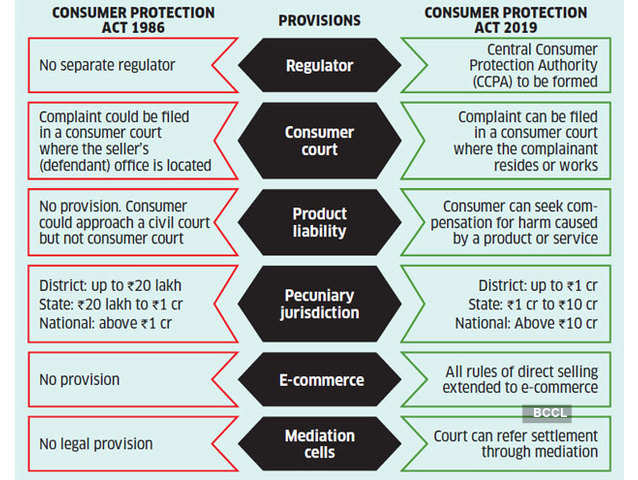
The Consumers can now cheer as the Consumer Protection Act, 2019 has recently replaced the three decade old Consumer Protection Act, 1986. The Consumer Protection Act, 2019 which came into effect on Monday (July 20) has replaced the earlier Consumer Protection Act, 1986.
The new Act as per the Experts say that “it gives more power to the consumers”. It seeks to revamp the process of administration and settlement of consumer disputes, with strict penalties, including jail term for adulteration and misleading ads by firms.
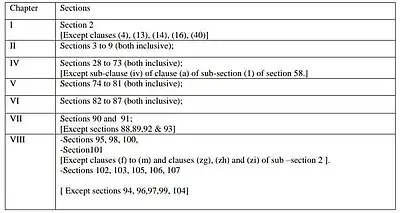
On July 20, 2020 certain provisions of the Consumer Protection Act, 2019 came into force as notified by the Central Government. Following the the key features of the relevant provisions:-
Key features of the Consumer Protection Act, 2019 which came into effect on July 20, 2020:-
1) Consumers can now institute a complaint from where they reside or work for gain.
2) The original pecuniary jurisdiction of the District Commissions has increased upto ₹1 crore from ₹20 lakh earlier.
3) The Pecuniary jurisdiction of State Commissions has been increased from ₹1 crore to Rs. 10 crore.
4) The National Commission can hear cases above ₹10 crore when compared to above ₹1 crore earlier.
5) While the provisions relating to e-commerce are not yet notified, a section relating to electronic service provider (covering software services, electronic payments) is notified.
6) The opposite party needs to deposit 50% of the amount ordered by the District Commission before filing an appeal before the State Commission. Earlier, the ceiling was a maximum of ₹25,000, which has been removed.
7) The limitation period for filing of appeals to the State Commission has been increased from 30 days to 45 days.
8) The Parties can be allowed to settle the disputes through mediation.
Following are the Sections which came into force:
Above mentioned provisions pertain to the Consumer Protection Councils, Consumer Disputes Redressal Forum, Mediation, Product Liability, punishment for manufacturing, selling, distributing etc spurious good or products which contain adulterant.
As per the rules, the e-commerce players will have to display the total ‘price’ of goods and services offered for sale along with break-up of other charges. Only a few certain miscellaneous provisions with regards and respect to the powers of the Central and State Government to make the rules and regulations have also been enforced.
On misleading advertisements there is provision for jail term and fine for manufacturers. There is no provision for jail for celebrities but they could be banned for endorsing products if it is found to be misleading.
For the first time there will be an exclusive law dealing with Product Liability. A manufacturer or product service provider or product seller will now be responsible to compensate for an injury or damage caused by the defective product or deficiency in services.
The Act has also defined an “e-commerce” as the buying or selling of goods or services including the digital products over digital or electronic networks. The existing definition of e-commerce has been adopted from India’s FDI Guidelines on e-commerce.
The definition of ‘e-commerce Entity’ as provided under the FDI Guidelines includes inventory and market place models.
There is also a provision for class action law suit for ensuring that rights of consumers are not infringed upon. The authority will have power to impose a penalty on a manufacturer or an endorser of up to 10 lakh rupees and imprisonment for up to two years for a false or misleading advertisement.
India had a record single-day surge of 24,879 Corona cases taking the cases to 7,67,296 on Thursday, with Maharashtra, Tamil Nadu, Karnataka, Delhi, Telangana, UP and Andhra Pradesh contributing to around 75 per cent of the new cases, according to the Union Health Ministry data.
The death toll climbed to 21,129 with 487 new deaths, the updated data at 8 am showed.
There have been 4,76,377 recovered cases, while there are 2,69,789 active cases of coronavirus infection in the country.
“Around 62.08 per cent of patients have recovered so far,” an official said.
The total number of confirmed cases included foreigners.
Of the 487 deaths reported in the last 24 hours, 198 are from Maharashtra, 64 from Tamil Nadu, 54 from Karnataka, 48 from Delhi, 23 from West Bengal, 18 from Uttar Pradesh, 16 from Gujarat, 12 from Andhra Pradesh, 11 from Telangana, 10 from Rajasthan, seven from Madhya Pradesh, six each from Jammu and Kashmir and Odisha, three each from Bihar, Uttarakhand, Punjab and Haryana and two from Assam.
India is seeing huge surge in cases with almost 20,000 to 25,000 new cases every day. The positive fact is that recovery rate is very good around 61 % and death rate is also nearly 4-5% .India is facing many tensions amid such pandemic ie border disputes with China, terrorist attacks from Pakistan as well as internal attacks from gangsters. But India would soon sort out things and pave way for world to recover from this crisis.
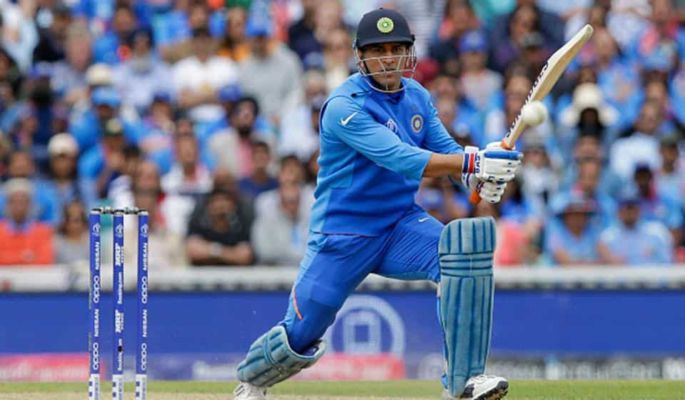
MS Dhoni’s manager Mihir Diwakar has clarified that the wicketkeeper batsman does not seem to be harbouring thoughts of retirement as of now. The former India captain, who has not played any form of cricket since India’s World Cup exit last year, turned 39 on Tuesday.
His manager and childhood friend Mihir Diwakar, while speaking to PTI, gave a peek into the trailblazer’s reclusive life at his home in Ranchi.
“Patriotism is in his blood, be it serving for the country (in defence) or (farming) the land, he’s very passionate about it. He has about 40-50 acres of farm land and he is busy growing organic crops like papaya, banana there,” Diwakar said.
The wicketkeeper-batsman was expected to be back in action at the IPL but that has been postponed indefinitely due to the COVID-19 pandemic.He was recently seen driving a tractor during the lockdown. Diwakar said they are soon going to launch their organic fertiliser under their company’s name Neo Global.
He said the fertiliser is being tested at Dhoni’s farm. Dhoni recently spoke about the harmful impact of pesticides in a video to promote organic farming. “We have a team of experts and scientists and they have developed the fertiliser and it should be launched within two-three months,” Diwakar said.”I spoke to him past midnight. It was a normal business talk. As usual, Dhoni would be at home with his family, with a quiet birthday celebration.”
Asked whether retirement has crossed Dhoni’s mind, Diwakar said: “Being friends, we don’t talk about his cricket. But looking at him, he’s not all thinking about retirement.”He is very determined to play the IPL. He has worked really hard for this. If you remember he was there in Chennai one month in advance before everything was shut down,” he pointed out.
“He is very determined to play the IPL. He has worked really hard for this. If you remember he was there in Chennai one month in advance before everything was shut down,” he pointed out.
“He has maintained his fitness regimen at his farmhouse and will start practice after the lockdown is lifted. Everything now depends on how fast the situation returns to normalcy,” he concluded.
Instagram’s new feature Reels were in testing for some time now and now as the TikTok took an exit from India, Facebook-owned Instagram has rolled out their new Reels feature which allows user to shoot 15-second videos. The feature now arrives in India. This is good opportunity for reels to attract short video lovers as its demand has grown in the country.
many short video apps such as Roposo, Mitron, Chingari, Sharechat, and others are becoming more popular among users and seeing millions of downloads every day.Facebook is also all set to use this opportunity to attract 200 million TikTok users to Reels.
Reels is just a new feature on Instagram and users in India are loving this new feature which is just like TikTok.
Memers doing memes on instagram reels against tiktok
How to use Instagram Reels?
Step 1: Update your Instagram on Google Play
Step 2: Open the Instagram Camera
Step 3: Reels option is available next to boomerang, Superzoom, hands-free, and layout.
Step 4: Click on Reels and select audio from the Instagram Music library.
Step 5: Reels also come with an option to record original voice besides lip-syncing.
Step 6: Reels also let users add AR effects and provide options like Timer, Speed to edit videos as required before sharing. Reels also let users re-record a video and even delete it if needed.
Step 7: After creating their Reel, users can choose to share it with either their followers or everyone on Instagram. Reels can be shared to Feed as well as Explore so everyone on Instagram can view it.
Reels also feature several AR effects allowing users to add a custom touch to their videos. To put AR effects in their videos, users can open Reels camera and go to effects and then AR effects.
Users will also be able to record multiple 15 seconds Reels – it can also be recorded at once and the different effects can be added to each clip post the shoot. The Reels can also be reviewed, deleted, and re-recorded.
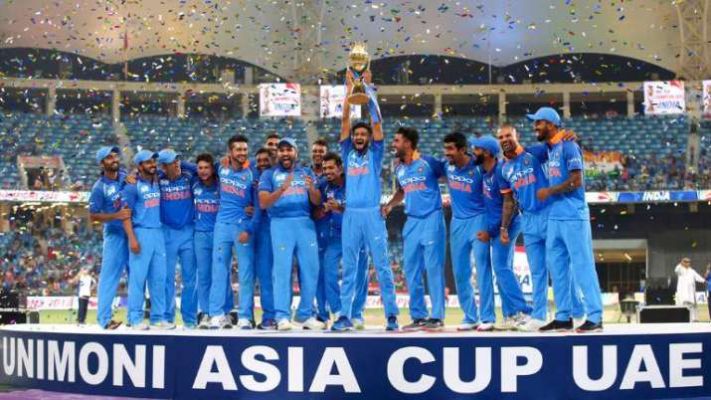
Asia Cup 2020 officially postponed, ACC hopeful of hosting it in June 2021.The Asian Cricket Council on Thursday announced that the 2020 Asia Cup has been postponed. ACC stated that it is hopeful to conduct and schedule tournament on June 2021.
In the press release, ACC stated that the travel restrictions, different quarantine rules of countries, health risks and social distancing norms have posed as challenges to the conduct of the Asia Cup.The Asian Cricket Council on Thursday announced that the 2020 Asia Cup has been postponed. ACC stated that it will try to secure the window of June 2021 to schedule the tournament.
Right from the beginning the board was to organise the tournament as per the original schedule.However, travel restrictions, country-specific quarantine requirements, fundamental health risks and social distancing norms have posed as substantial challenges to the holding of the Asia Cup. Above all, the risks related to health and safety of participating players, support staff, commercial partners, fans and the cricketing community were deemed to be significant,” ACC quoted in the release.
The ACC is hopeful to schedule the Asia Cup in 2021 are looking for the June window to host the tournament.
” The Board, after careful consideration of all the above factors, has confirmed that the Asia Cup 2020 be postponed. Conducting the event with all due safety is major responsibility of ACC and the Board is hopeful that the tournament will be held in 2021. The ACC is currently working towards securing June 2021 as a option for the same,” quoted ACC.
ACC also cleared the air on the hosting nation of the next Asia Cup as it said the Pakistan Cricket Board has exchanged hosting rights with Sri Lanka Cricket Board.
“It can be possible that Sri Lanka hosts for the Asia Cup 2020, Pakistan Cricket Board (PCB), has exchanged hosting rights for the tournament with Sri Lanka Cricket (SLC). Through this arrangement, the SLC will now host the rescheduled Asia Cup expected in June 2021 while the PCB will host the Asia Cup 2022,” the ACC press release stated.
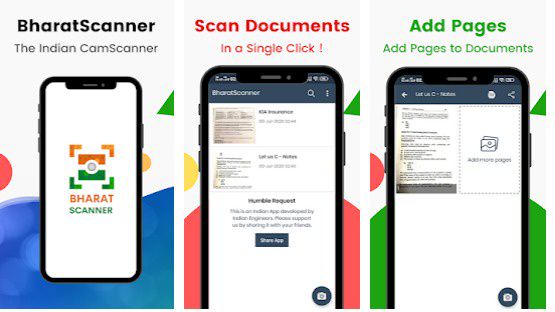
The BharatScanner mobile app, an Indian alternative to cam scanners, has been launched. In this app, users have got the facility from scanning documents to creating PDFs. The special thing is that this app is completely free and users will not have to pay a separate charge to use any feature.
Rating of 4.4 points found on Google Play Store
Bharat Scanner app is available on Google Play Store for users. This app has downloaded more than 10 thousand users so far and it has got a rating of 4.4 points on the Google Play-Store. At the same time, this app size is 36 MB. .
Features of BharatScanner .
Some current features of BharatScanner are as follows: .
Users can scan documents easily.
Filters have been supported in this app.
Users can keep their documents as PDF.
Users have got the facility to share documents in this app on mail and Whatsapp.
Indian government imposes ban on Chinese mobile app .
Under Section 69A of the Information Technology Act, the Government of India decided to block 59 apps as these apps were a threat to India’s sovereignty and integrity, defense of India, security of the state and public order. The government had received many complaints about these apps from various sources, including about the misuse of many mobile apps. These apps were stealing data from both iPhone and Android users.
Ban on these Chinese apps
Tiktok, CamScanner, Shareit, Kwai, UC Browser, Baidu Map, Shein, Clash of Kings, DU Battery Saver, Helo, Likee, YouCam makeup, Mi Community, CM Browers, Virus Cleaner, APUS Browser, ROMWE, Club Factory, Newsdog these 59 apps are banned, including BeutryPlus, WeChat, UC News, QQ Mail.
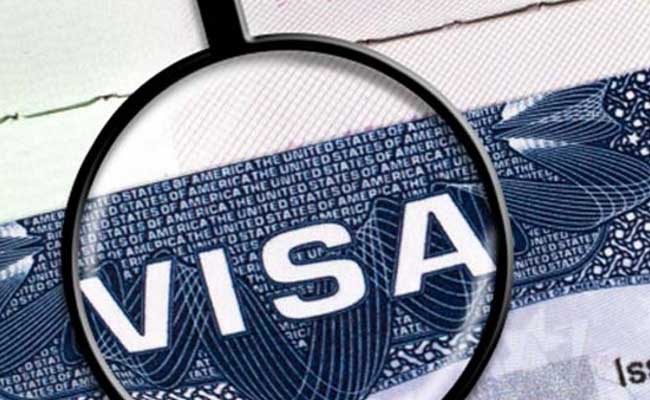
The US order of July 7 stating that F1 visas will not be renewed for students if they are attending only online- lectures in the US is a concerning mater for India since the highest number of foreign students in the US are from India. The US government has announced those F-1 and M-1 (non-academic and vocational students) visa holders attending only online classes will not be allowed to remain in the US.
India on Thursday said it has reported its concerns to the US govt about the new rule on F1 visa and urged to keep in mind the role education have played in the developing relationship between the two countries.
The concerns were expressed during the virtual foreign office consultations between Foreign Secretary Harsh Vardhan Shringla and US political affairs secretary David Hale on Tuesday. Ministry of External Affairs’ spokesperson Anurag Srivastava said that the US government has looked into the concern regarding the new rule.
During virtual meeting, Srivastava said that India is concerned about the possibility of the return of a large number of Indian students studying in the US due to new rules in visa.
The Immigration and Customs Enforcement (ICE), an agency of the US Department of Homeland Security (DHS) on Monday said that the foreign students pursuing courses in the US must return to their country if their institutes are conducting only online course due to covid-19 pandemic.
ICSE, ISC Exam 2020 Result: The Council for the Indian School Certificate Examination (CISCE) on Thursday said that ICSE (class 10) and ICS (class 12) exams results will be declared tomorrow at 3 PM, on the official website ‘cisce.org’ and ‘results.cisce.org. All students who have appeared for the exams are advised to keep an eye on the website and check their results.
To check the results once they are out, follow this steps:
step 2-Go on the ‘Careers’ portal on the homepage.
Step 3: Now, click on the relevent exam link.
Step 4: Enter all the details asked including your roll number, click submit
Step 5: You result will now appear on the screen.
Step 6: Download and take a print-out for a future reference.
To get results on SMS, students can send their Unique id to 09248082883 in this format: ‘ICSE/ISC (Unique ID)’.
Earlier in the day, the CISCE board reduced 25 per cent syllabus from this year’s curriculum in view of the coronavirus pandemic.
According to the latest notification issued by the ICSE Board, the decision to reduce the syllabi will be applicable for Class 9 to Class 12 students and has been taken to reduce the burden amid limited teaching via online classes. The CISCE stated that the reduced syllabus aims to cope with the loss of instructional hours due to the difficulties faced in the academia in the lockdown situation.
COMPANY COMPLIANCES DURING THE COVID-19 ERA: AN INTRODUCTION
The global outbreak of the novel coronavirus has taken the world by storm. While the issue pertaining to the public health is the talk of the town, the impact of COVID-19 on businesses and corporates seems to be least talked about.
Day to day business of the corporates is being affected due to decreased inflow of the human resource and a decrease in the workflow. While technologies have provided a relief to the human resource for physical attendances and conferences, there seemed to be unsettled trouble regarding legal compliances that required various filings and physical meetings.
Pursuant to the ongoing global COVID-19 pandemic and the Finance Minister, Ms. Nirmala Sitharaman’s announcements on March 24, 2020, the Ministry of Corporate Affairs (“MCA”) has issued various circulars to provide relief to companies from certain compliances under the Companies Act, 2013 (“Act”) and associated rules. This has been done as a measure to reduce the compliance burden on entities during the unprecedented health and economic situation caused by COVID-19. Following are the measures:-
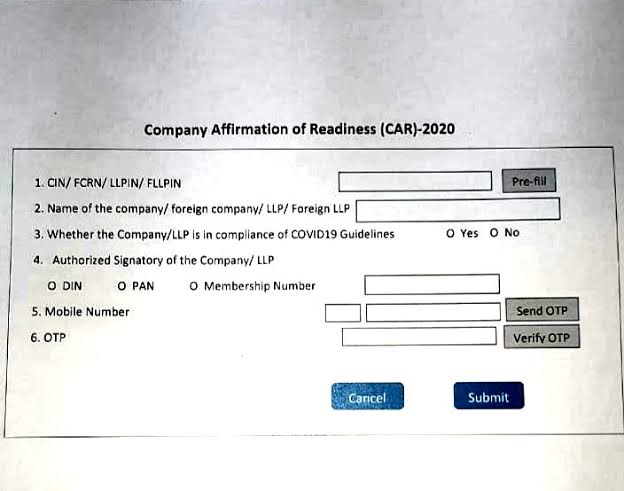
1. Company Affirmation of Readiness towards COVID-19
Social distancing has gained its importance as a way to contain the spread, morbidity, and mortality of COVID-19. Government of India (“GOI”), responsible for the public welfare at large, has realised that social distancing can be achieved in its true sense only if the employers of the Indian public make the same application in their respective premises.
Considering that major employers of the nation belong to the companies or limited liability partnership (“LLP”) type entity, GOI as part of disaster management have advised all companies/LLPs to put in place an immediate plan to implement the “work from home” policy as a temporary measure up till March 31, 2020.
Further, in case of a requirement of physical visits of the essential staff to such offices by the employers, staggered timings may be followed in order to minimize physical interactions of all kinds.
A simple webform for companies/LLP shall be deployed by MCA on March 23, 2020, in order to confirm the readiness of the employers to deal with COVID-19 threat. The webform shall be called CAR (Company Affirmation of Readiness towards COVID-19) and would be required to be signed and submitted by the authorised signatory of the company/LLP.
Therefore, it shall be expected by each company/LLP to ensure reporting of the compliance through CAR instantly from the date of its deployment.
2. Companies Fresh Start Scheme 2020
The MCA issued a circular on March 30, 2020, introducing the Companies Fresh Start Scheme, 2020 which, inter alia, grants a one-time opportunity to defaulting companies to complete all belated filings, including, without limitation, annual filings and filings required under IEPFA (Accounting, Audit, Transfer and Refund) Rules, 2016 in relation to transfer of money remaining unpaid or unclaimed for a period of seven years under Section 124(5) of the Act and transfer of relevant shares in the name of the ‘Investor Education and Protection Fund’ under Section 124(6) of the Act, with the MCA21 registry, without incurring additional fees on account of any delay.
This scheme came into force on April 1, 2020, and is valid till September 30, 2020. The application for seeking immunity for belated filings under this scheme should be made within a period of six months from September 30, 2020, through Form CFSS-2020. Thereafter, an immunity certificate will be provided by the designated authority on the basis of the declarations made in such form.
However, no immunity shall be provided under the scheme in a matter where (i) an appeal or management dispute is pending before any court or tribunal, or (ii) a court has ordered a conviction, or the adjudicating authority under the Act has imposed a penalty, and in respect of such orders, no appeal has been filed prior to the scheme coming into force.
Further, the scheme shall not apply: (i) where an application has been filed or an action for final notice for striking off the name of the company has already been initiated; (ii) where the company has been amalgamated; (iii) when application of obtaining dormant status has been filed; (iv) to vanishing companies; and/or (v) where charge related documents or an increase in authorised capital is involved.
3. CSR Spending
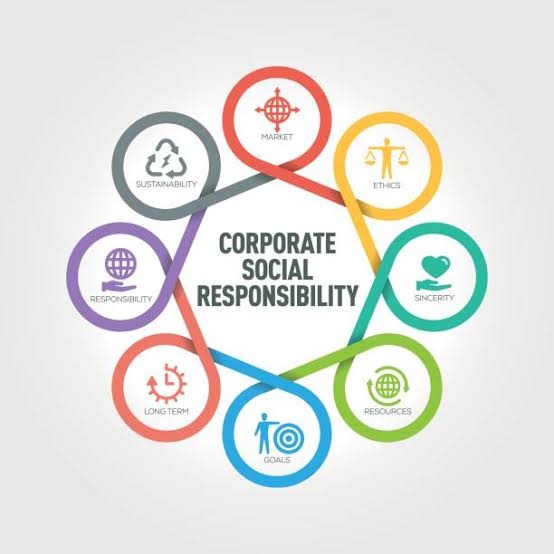
The MCA has by way of circular dated March 23, 2020 and the office memorandum dated March 28, 2020, clarified that the spending of CSR funds by companies in relation to COVID-19, including by way of contribution to the PM CARES Fund, is an eligible CSR expenditure under the Act.
The MCA has further clarified by way of FAQs dated April 10, 2020 that contributions made to the State Disaster Management Authority will also be eligible CSR activity, but contributions towards (a) ‘Chief Minister’s Relief Fund’ or ‘State Relief Fund for COVID-19’; and (b) payment of salary/ wages to employees and workers (including contract labour/ temporary/ casual/ daily wage workers) during the lockdown period will not be considered as eligible CSR expenditure.
However, ex-gratia payment over and above the disbursement of wages to temporary/ casual workers/ daily wage workers, specifically for the purpose of fighting COVID-19, will be admissible towards CSR expenditure, provided there is an explicit declaration to that effect by the board of the company, which is duly certified by the statutory auditor.
4. Meetings of Board and the Shareholders
The Companies (Meetings of Board and its Powers) Rules, 2014 were amended by a notification dated March 19, 2020, to enable companies to hold board meetings on the following matters (which earlier had to be necessarily held at a physical meeting) through video-conferencing or other audio-visual means (collectively “VCC”) till June 30, 2020: (i) approval of annual financial statements and board’s report; (ii) approval of prospectus; (iii) audit committee meetings for consideration of financial statements; and (iv) approval of amalgamation, merger, demerger, acquisition and takeover.
MCA has, by way of a general circular dated April 8, 2020, requested companies to pass all decisions of an urgent nature requiring shareholder approval, other than those of ordinary business or business where any person has right to be heard, through postal ballot/ e-voting in accordance with the relevant statutory provisions without holding a physical general meeting. However, in cases where holding an extraordinary general meeting (“EEGM”) is unavoidable, these have now been permitted to be held through VC until June 30, 2020. The circular further lays down certain conditions to be met for conducting an EGM through VC and the key conditions, inter alia, include: (i) attendance of at least one independent director (where a company is required to appoint one) and auditor (or his authorised representative who is qualified to be the auditor); (ii) maintenance of recorded transcripts of the EGM and, in case of a public company, such transcripts to be uploaded on the company website (if any); and (iii) e-voting facility being available. All other provisions relating to general meetings under the Act (and relevant rules) will continue to apply.
Due to difficulties faced by various stakeholders in serving and receiving notices/responses by post on account of COVID-19, the MCA, on April 13, 2020, provided that notice of EGMs to be held through VC (and for passing shareholder resolutions through postal ballot/ e-voting) may now be given to shareholders only through email addresses of the shareholders registered with the company or with the depository participant/ depository. This circular also specifies various conditions which companies must comply with while sending email notices to shareholders.
CONCLUSION
Business entities in India are requested and expected to keep an eye on the major government websites to ensure timely compliance with all such immediate requirements and mandates issued by GOI as need of the hour from time to time.
WEBSITES REFERRED:-
1) MCA General Circular No. 10/20 dated March 23, 2020 on Clarification on spending of CSR for COVID-19.
2) MCA General Circular No. 12/20 dated March 30, 2020 on Companies Fresh Start Scheme, 2020
3) MCA Notification dated March 19, 2020 on Companies (Meetings of Board and its Powers) Amendment Rules, 2020
4) MCA General Circular No. 14/2020 dated April 8, 2020 on Clarification on passing of ordinary or special resolutions by companies under the Companies Act, 2013 and rules made thereunder on account of threat posed by Covid-19.
5) MCA General Circular No. 17/20 dated April 13, 2020 on clarification on passing ordinary and special resolutions by companies under the Companies Act, 2013 and rules made thereunder on account of threat posed by COVID-19.























 Eduindex
You must be logged in to post a comment.