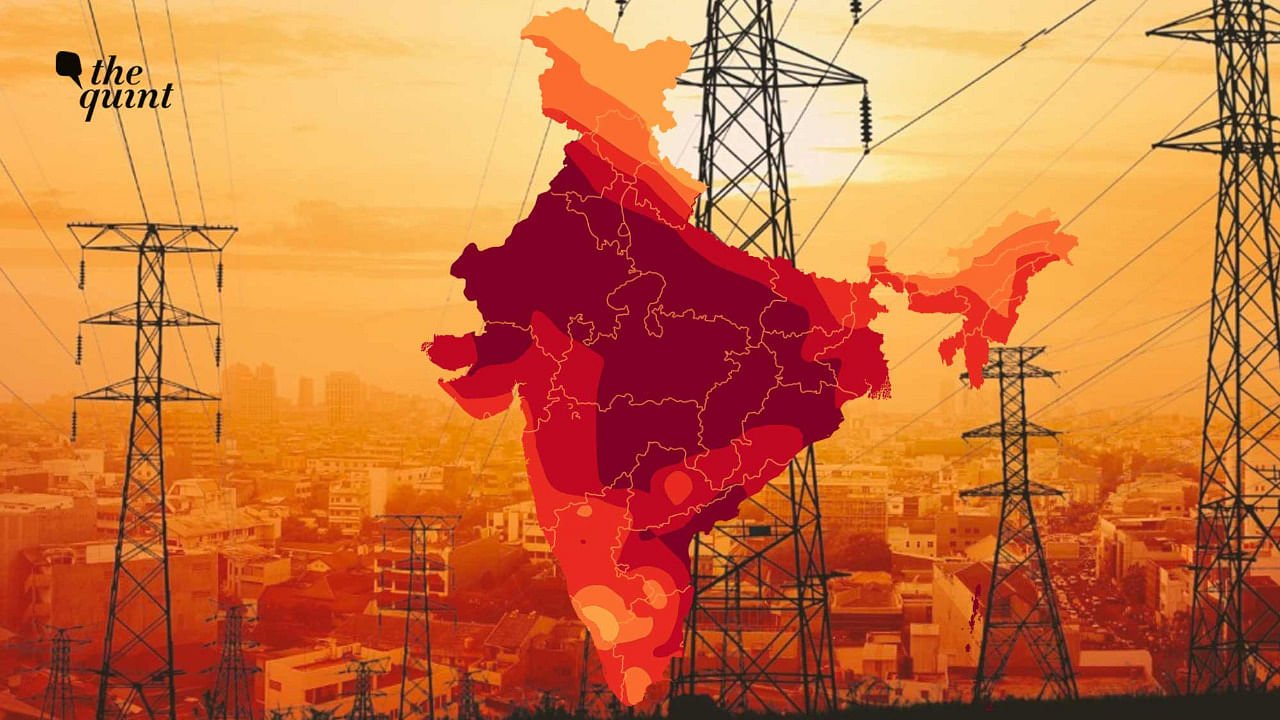
India has the fourth largest coal deposit in the world. It is the second largest fossil fuel producer after China and is home to Coal India, the world’s largest coal mining mine, which accounts for 80% of domestic production. Already allocated coal block mining capacity exceeds expected demand in 2030 by approximately 15% to 20%.
So why are India’s power plants facing coal shortages each year, leading to widespread power outages, exposing parts of the country to darkness and endangering industry? There are several factors. India has a long time policy of minimizing coal imports. In February 2020, Coal Minister Pralhad Joshi announced that the country would stop importing steam coal from 2023 to 2024. Mr Joshi said the Ministry of Coal will work with the Ministry of Railways and the Ministry of Shipping to allow Coal India, prisoners and commercial miners to discharge more coal from their supply by 2030. And the coal supply at power plants is running out at an alarming rate. The Department of Energy is currently blaming the decline in coal imports due to the current crisis. In 2018-19, 21.4 million tonnes of coal were imported for mixing, down to 23.8 million tonnes in 2019-20 and 8.3 million tonnes in 2021-22.
Credit- Civildaily
Power plant coal inventories have fallen by about 13% since April, reaching pre-summer lows. And for the first time since 2015, Coal India will import fuels used by state-owned and private power companies. The Ministry of Energy said almost all states showed that multiple state bids for coal imports would cause confusion and that the decision was made after calling for centralized procurement by Coal India. Imported coal costs five times as much as domestic mining, so the center is being pushed back by the state. Recently, the government has also pressured utilities to increase imports to mix with local coal. Last year, after a two-year break, three tranches of coal auctions were held and nine blocks were successfully awarded.
In September 2021, the Ministry of Coal issued a strict warning to owners of confined coal blocks, stating that their mines should increase production or face restrictions on coal supply by the CIL. The ministry has discovered that these mines are producing below target.
Of the 43 coal mines outsourced to private companies in the energy, steel and metals sectors, none have met their annual production targets. On May 6, Coal India announced that it would provide the private sector with 20 closed and abandoned underground coal mines and reopen and operate its revenue sharing model.
According to journalist Shreya Jai the current power supply chain does not seem ready to handle periods of high growth and state discos cannot pay gencos, but the power supply chain starts with state discos and needs repairs. Railroads, on the other hand, are struggling to align the thermal power industry’s demands for faster coal supply with those from other industries. Rakes must be prepared to meet the growing demand for almost all other bulk commodities, from cement and steel to sand and edible grains. By strengthening the value chain of the electric power sector, it is possible to resolve the coal supply-demand mismatch in the long run.
Television was founded by John Baird. The first television service was started in 1936 by British Broadcasting Corporation (BBC) of Britain . In 1939, television broadcasts began in the United States. In 1953 the first successful programme in colour was transmitted by Columbia Broadcasting System (CBS) in USA. In today՚s world, television has become one of the most powerful means of mass communication . It can impart education, information and entertainment . Television has end up becoming an necessary a part of our lives.
Credit-Youtube
HISTORY India’s first television station was established on October 24, 1951, in the Department of Electronics and telecommunications at Government Engineering College in Jabalpur. Television began in India as an experiment on September 15, 1959. It was first started as two hours programmes a week under the authority of AIR. Early programs of these experimental broadcasts were generally educational programs for children and farmers. By 1975, only seven Indian cities were using television services. The Satellite Instructional Television Experiment (SITE) was an important step by India for the use of television for the development of people and the country. Initially, the show was mainly produced by Doordarshan (DD), who was part of AIR at the time. Transmissions were made twice a day, morning and evening. In addition to information on agriculture, health and family planning, other important topics covered in these programs were audience education and awareness raising. Entertainment was also included in the form of dance, music and cinema. In 1976 Television services were separated from radio . Color television was introduced to the Indian market in 1982.
In the late 1980s, more and more people began to own televisions. There was only one channel, but the TV show was saturated. Therefore, the government opened another channel, partly broadcasting nationally and locally. This channel was called DD2 and was later renamed to DD Metro. Both channels were broadcast on the ground. In 1997, Prasar Bharati, was established.Doordarshan, along with AIR, was incorporated into a state-owned enterprise under Prasar Bharati. Transponders of the American satellites PAS-1 and PAS-4 assisted in the transmission and broadcasting of shows on DD. An international channel called DD International was launched in 1995 and broadcasts programs abroad 19 hours a day to Europe, Asia and Africa via PAS-4 and to North America via PAS-1.The 1980s were the prime time for DD, with shows like comedies such as Hum Log (1984-1985), Wagle Ki Duniya (1988), Buniyaad (1986-1987). Epics like Ramayan (1987–1988) and Mahabharat (1989–1990) brought millions to Doordarshan and later on Chandrakanta (1994–1996). Song-based programs for Hindi movies such as Chitrahaar and Rangoli, and crime thrillers such as Karamchand and Byomkesh Bakshi. Children’s shows such as Tenali Rama ,Vikram Betal and Malgudi Days .
Private Channels influence: The introduction of communication channels was a revolutionary move to reach so many people. It became an opening for Private and Commercial broadcasters in our country. The emergence of private channels began in India in the 1990s after CNN aired the Gulf War. Hong Kong-based STAR (Satellite Telivision Asia Region ) enterned in a contract between an Indian company and Zee TV. It became the first Private Indian Hindi satellite channel. During this time, several local stations have emerged. Apart from local ones various international channels such as Channel, CNN, BBC, Discovery, etc were also available for Indian TV viewers. Their were various categories of channels available for viewers,such as the 24-hour news channel, Religious channels, cartoon channels, movie channels, something for everyone .
Credit-Filmaker Fans
Changes and Evolution: A significant change that has occurred is the use of different methods of delivering television programming. Just a while ago their were satellite-based antennas, but now the mode has converted to dishes. Other shipping methods are are delivery via cable network and direct satellite transmission. Now you can watch TV shows on your mobile phone , the technology behind it is called Internet Protocol Television. The emergence and spread of televisions and computers and the access to content anytime, anywhere, everyone has brought revolutionary change and access to the world of entertainment.
“I always say film is art, theater is life and television is furniture .”
TN Board SSLC 10th Result 2020, Tamil Nadu Board SSLC Class 10th Result 2020 at tnresults.nic.in, dge1.tn.nic.in, dge.tn.gov.in, dge2.tn.nic.in Live Updates: Around 9.7 lakh candidates who had appeared for the SSLC, class 10 exams will get their result through the website tnresults.nic.in
More than nine lakh students were waiting for the results which was declared today. The result was declared today at 09:30 am on the TNDGE official website.
The Tamil Nadu Directorate of Government Examination (TNDGE) released the result for the Secondary School leaving certificate examination (SSLC) or class 10 examination on Monday, August 10. Around 9.7 lakh candidates who had appeared for the SSLC, class 10 exams will get their result through the website tnresults.nic.in
The state government cancelled the board exams due to Coviid-19 and is awarding marks based on half-yearly and quarterly exam marks of students.
“The results of Class X would be declared at 9.30am on August 10. Candidates can check their results by registering their date of birth and roll number,” C Usharani, director of government exams, said in a release.
If students have any grievances over their marks, they can submit the form through their schools from August 17 to 25. The forms will be received on the DGE’s website www.dge.tn.gov.in and processed
“The results would be conveyed through school headmasters,” the release added. The candidates also can get provisional mark sheets from August 17 to 25.
In order to clear the examination, candidate needs to score a minimum of 35 marks out of 100 in each subject while for science candidate needs to clear the theory and practical examination separately such as they need to score 20 out of 75 marks in theory paper and 15 out of 25 marks in practical paper to be declared a pass.
In response to a petition challenging UGC guidelines mandating the conduct of final year exams by universities before September 30, Government of Delhi has informed the Supreme Court that Delhi State Universities exams have been cancelled.
In a latest decision, Deputy Chief Minister of Delhi has directed “all Delhi State Universities to cancel all written online and offline semester examinations including final year exams.“
The Supreme Court had directed. all parties to file their affidavits by August 7, and for rejoinders to be filed a day after that.
Delhi government in its affidavit states that on July 11, a decision was taken by the Deputy Chief Minister/Higher and Technical Education Minister of the National Capital Territory of Delhi that all online-offline exams of universities under the state including final year exams would be cancelled in the wake of rising COVID-19 cases.
However, the affidavit notes that some vice-chancellors of certain universities were in favour of wrapping up at least the final semester exams.
However, after perusing all details including the latest UGC directive to complete final year exams by September 2020, Delhi government decided to stick to its July 11 decision and continue with not holding the exams.
Delhi Government has further stated that “in Delhi’s State universities, best efforts were made to conduct online classes, but the reality of our digital divide is that online classes are not accessible equally by all”.
“During this extremely tough period, regular physical classes got completely interrupted. The students had no access to study material and the college libraries were closed, although getting access through online mode in such peculiar circumstances, the students did not get the kind of preparation needed to attempt a full-fledged examination,” reads the plea.
As per present status, GGSIP University has around 27,000 final year students and are now devising mechanism for assessment to award marks to final year students and this is also the case for Delhi Pharmaceutical Science and Research University (DPSRU).
The other six universities have completed the final year Examination by online mode.
A total of 31 students from different universities across India had approached the Supreme Court to quash the latest University Grants Commission (UGC) circular directing universities to wrap up final year examinations by September 30.
Before Delhi Government, Maharashtra Government on August 7 informed the Supreme Court that the State Disaster Management Authority on July 13 had resolved to not conduct examinations in the state amid the COVID-19 pandemic.
The decision was taken after a majority of University Vice-Chancellors from across the state voted against conducting exams in view of the rising number of COVID-19 cases.
The defence ministry will stop the import of 101 items “beyond given timeline” to boost indigenous production according to Prime Minister Narendra Modi’s mission of Atma Nirbhar Bharat (Self-Reliant India), Union minister Rajnath Singh said today. This would mean that the domestic industry will receive contracts worth almost Rs 4 lakh crore within the next six to seven years. The embargo will be implemented in phases between 2020 and 2024, the minister said.
The list includes high technology weapon systems like “artillery guns, assault rifles, corvettes, sonar systems, transport aircrafts, light combat helicopters, radars and many other items”, the Centre said in a statement
The list also includes wheeled Armoured fighting vehicles (AFVs), with an embargo date of December 2021, “of which the Army is expected to contract almost 200 at an approximate cost of over Rs 5,000 crore,” the ministry said.
The Navy is likely to place demands for submarines with indicative import embargo date of December 2021, of which it expects to contract about six at an approximate cost of almost Rs 42,000 crore.
For the Air Force, it is decided to enlist the LCA MK 1A with an indicative embargo date of December 2020. Of these, 123 are anticipated at an approximate cost of over Rs 85,000 crore, the government said. The ministry will identify more such equipment for import embargo.
The list has been prepared by the defence ministry after consultations with all stakeholders, including the Armed Forces, public and private industry, Mr SIngh said.
“This decision will offer a great opportunity to the Indian defence industry to manufacture the items in the negative list by using their own design and development capabilities or adopting the technologies designed and developed by the DRDO (Defence Research and Development Organisation) to meet the requirements of the Armed Forces,” the minister said.
All steps will be taken to ensure that timelines for production are met. This would involve a coordinated mechanism for “hand-holding of the industry by the Defence Services”, the minister said. The ministry will identify more such equipment for import embargo.
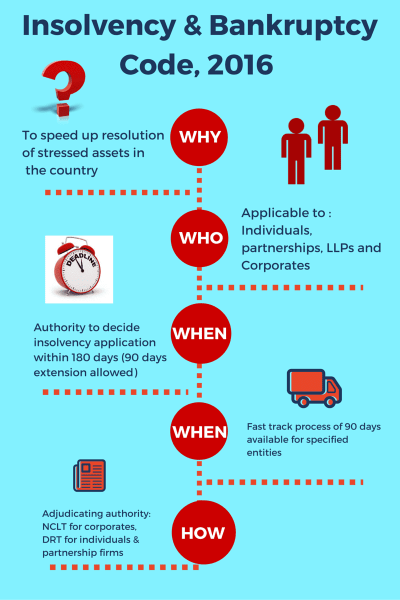
The Code was enacted in 2016 following decades of recommendations suggesting improvements to the previous insolvency regime, which was fragmented, fraught with delays and resulted in poor recoveries for creditors. [1]
The insolvency resolution process in India has in the past involved the simultaneous operation of several statutory instruments.
These include the Sick Industrial Companies Act, 1985, the Securitisation and Reconstruction of Financial Assets and Enforcement of Security Interest Act, 2002, the Recovery of Debt Due to Banks and Financial Institutions Act, 1993, and the Companies Act, 2013.[2]
Broadly, these statutes provided for a disparate process of debt restructuring, and asset seizure and realization in order to facilitate the satisfaction of outstanding debts. [3]
As is evident, a plethora of legislation dealing with insolvency and liquidation led to immense confusion in the legal system, and there was a grave necessity to overhaul the insolvency regime.
All of these multiple legal avenues, and a hamstrung court system led to India witnessing a huge piling up of non-performing assets, and creditors waiting for years at end to recover their money. [5]
The Bankruptcy Code is an effort at a comprehensive reform of the fragmented regime of corporate insolvency framework, in order to allow credit to flow more freely in India and instill faith in investors for speedy disposal of their claims. [4]
The Code consolidates existing laws relating to insolvency of corporate entities and individuals into a single legislation.
The Code has unified the law relating to enforcement of statutory rights of creditors and streamlined the manner in which a debtor company can be revived to sustain its debt without extinguishing the rights of creditors[5]:-
1) The scheme of the Code marked a sea change from the previous regime. In respect of corporate entities, the Code introduced a creditor-in-control regime (with a focus on empowering financial creditors), a time-bound resolution process and reduced scope for judicial intervention, and established institutions such as the Insolvency and Bankruptcy Board of India, insolvency professionals and information utilities.[6]
Since the implementation of this new regime, the constitutional validity of various provisions of the Code has been challenged before various High Courts, and the Supreme Court.
Applicability
The Code provides creditors with a mechanism to initiate an insolvency resolution process in the event a debtor is unable to pay its debts. The Code makes a distinction between Operational Creditors and Financial Creditors. [7]
A Financial Creditor is one whose relationship with the debtor is a pure financial contract, where an amount has been provided to the debtor against the consideration of time value of money (“Financial Creditor”).
Recent reforms have sought to address the concerns of homebuyers by treating them as ‘financial creditors’ for the purposes of the Code. [7]
By a recently promulgated ordinance, the Insolvency and Bankruptcy Code (Amendment) Ordinance, 2018 (“the Ordinance”), the amount raised from allottees under a real estate project (a buyer of an under-construction residential or commercial property) is to be treated as a ‘financial debt’ as such amount has the commercial effect of a borrowing.[7]
The Ordinance does not clarify whether allottees are secured or unsecured financial creditors. Such classification will be subject to the agreement entered into between the homebuyers and the corporate debtor.
In the absence of allottees having a clear status, there may be uncertainty about their priority when receiving dues from the insolvency proceedings. [7]
An Operational Creditor is a creditor who has provided goods or services to the debtor, including employees, central or state governments (“Operational Creditor”). A debtor company may also, by itself, take recourse to the Code if it wants to avail of the mechanism of revival or liquidation. [7]
In the event of inability to pay creditors, a company may choose to go for voluntary insolvency resolution process – a measure by which the company can itself approach the NCLT for the purpose of revival or liquidation. [7]
What was the judicial approach to the Insolvency and Bankruptcy Code?
SERIES OF JUDICIAL PRONOUNCEMENT
With almost more than two years since the introduction of the Code, there have been various challenges in the effective implementation of the Code. However, constructive interpretation by the judiciary coupled with effective amendments to the Code has helped in eradicating most of these teething issues. [8]
Some of the key judicial pronouncements are discussed below:
The Insolvency and Bankruptcy Board of India which is the regulatory and supervisory body in charge of the IBC, has done a commendable job in proactively spreading awareness and regulating the space. [9]
Many important judgments were pronounced throughout the year, including certain landmark cases, where in the Supreme Court has tried to ensure that the spirit of the Code is given primacy over procedural requirements. [9]
Suspended Board of Directors of Corporate Debtor Entity are entitled to access the resolution plan and other related documents:-
In a significant judgments delivered on January 31, 2019, the Hon’ble Supreme Court of India decided on an important aspect with respect to the rights of the suspended board of directors of the Corporate Debtor Entity to receive and access the resolution plan and other related documents, whose case has been admitted by the Adjudicating Authority under the relevant provisions of the Code. [10]
Facts of the Case:
In respect of Mr. Vijay Kumar Jain, Director of Corporate Debtor (‘Appellant’) vs. Standard Chartered Bank and Ors. (As ‘Financial Creditors’), the NCLT had approved the appointment of Resolution Professional (‘RP’) to conduct Corporate Insolvency Resolution Process of Corporate Debtor Company i.e. Ruchi Soya Industries Limited (‘RSIL’). [10]
The appellant, being a member of the suspended board of RSIL, was given notice and agenda for the first meeting of Committee of Creditors (‘CoC’) and was permitted to attend the meeting of CoC. The appellant alleged that he was not granted permission to participate in subsequent meetings of CoC. [10]
As a result, the appellant filed a miscellaneous application before the NCLT to allow his participation in the subsequent meetings of CoC. The appellant also executed a Non-Disclosure Agreement (‘NDA’) to keep information received through participation in the CoC meeting strictly confidential and even undertook to indemnify RP. [10]
However, NCLT vide its order dated August 1, 2018 dismissed the said application of appellant with liberty to the appellant to attend the COC meetings, but not to insist upon the CoC or RP to provide information which is considered as confidential by the CoC or RP. [11]
Against the said order of NCLT, the appellant filed an appeal before the Appellate Tribunal, which recognized the right of appellant to attend and participate on the CoC meetings but Appellate Tribunal vide its order dated August 9, 2018 [12] denied the prayer of the appellant to have access to certain documents including sensitive resolution plan.
The appellant aggrieved by the order of the NCLAT, filed an appeal before the Hon’ble Supreme Court of India. [13]
Apex Court Observations and Findings:
On advertising relevant provisions of the Code and arguments of parties to the dispute, the Supreme Court opined that notice of each meeting of the CoC will have to be given to the suspended board of directors of the corporate debtor entity. [14]
The Supreme Court further noted that the statutory scheme of IBC makes it clear that though the suspended board are not members of the CoC, yet, they have a right to participate in each and every meeting held by the CoC and also have a right to discuss along with members of the CoC, resolution plan that are presented at such meeting. [14]
The Supreme Court further observed that Section 31(1) of the Code make it clear once the resolution plan is passed by the Adjudicating Authority, it shall be binding on the corporate debtor together with guarantors and other stakeholders. [14]
This being the case, it is clear that the erstwhile board of directors, which consists of persons who may have given personal guarantees for the debts owed by the corporate debtor, will be bound by the resolution plan, and therefore, have a vital stake in what ultimately gets passed by the CoC’s.[14]
The Supreme Court also made it clear that so far as confidential information is concerned, RP can take an undertaking in the form of NDA from suspended board of directors of the corporate debtor entity with an objective to maintain strict confidentiality in regard to resolution plan and other related documents. [14]
Further, according to Regulation 39(5) of IBBI (Insolvency Resolution Process for Corporate Persons) Regulations, 2016, the RP shall forthwith send a copy of the order of the Adjudicating Authority approving or rejecting a resolution plan to the participants and resolution applicant. The term ‘Participants’ includes members of the erstwhile Board of Directors of Corporate Debtor. [14]
Thus in view of the above, the Supreme Court allowed the appeal and set aside the impugned order of the Appellate Tribunal. [14]
What was the result of Insolvency and Bankruptcy Code in the present scenario? Also cite relevant case laws.
IBC came into being repealing SICA (Sick Industrial Companies Act), SICA was repealed with effect from 1 December 2016. [15]
To know the background of IBC, it is important to know more about SICA and why it failed to prevail as a law. [15]
This is the exact rationale for the existence of The Insolvency and Bankruptcy Code in India which has been into effect since 2016. [15]
To know the background of IBC, it is important to know more about SICA and why it failed to prevail as a law. [15]
The journey from SICA to IBC
The SICA, 1985:-
The name SICA, itself connotes the reason for its actuality. India witnessed an atmosphere of rampant industrial sickness in the 1980s in furtherance of which the Government of India came up with key legislation i.e. the Sick Industrial Companies Act to combat the issue. [15]
Widespread industrial sickness affects the economy in a number of ways, thus The Act came into being to spot the sick or potentially sick companies owning industrial undertakings and take speedy remedial measures for their revival or in a scenario where there is no such measure, close such units. [15]
This was an action to get the locked up investment in such industrial units released and use them in a more productive manner. SICA was repealed and replaced by the Sick Industrial Companies (Special Provisions) Act of 2003, which diluted certain provisions of SICA and filled certain gaps. [15]
One of the main changes to the new law was that, in addition to combating occupational diseases, it also aimed to reduce the growing incidence by ensuring that companies do not use a medical certificate simply to evade legal obligations and access concessions granted to financial institutions to receive. [15]
The comprehensive performance of the Act did not live up to the expected results and thus, IBC was notified as on 28th May 2016 and the repeal of SICA came into full effect from December 1, 2016. [15]
IBC Kicks In
Mistakes of the past were taken in view and The Insolvency and Bankruptcy code came into being with a wider scope and aiming to resolve the issues via more effective provisions and implementation. It is an act to consolidate and amend the laws having reorganization and insolvency resolution issues as the subject-matter. [15]
The provisions of the Act shall apply to the following in case of insolvency, liquidation, voluntary liquidation or bankruptcy; [15]
“An Act to consolidate and amend the laws relating to reorganisation and insolvency resolution of corporate persons, partnership firms and individuals in a time bound manner for maximisation of value of assets of such persons, to promote entrepreneurship, availability of credit and balance the interests of all the stakeholders including alteration in the order of priority of payment of Government dues and to establish an Insolvency and Bankruptcy Board of India, and for matters connected therewith or incidental thereto.
Whether the expression “and” occurring in section 8(2)(a) may be read as “or”?
The Court held that the expression “and” occurring in section 8(2)(a) may be read as “or” in order to further the object of the statute and/ or to avoid an anomalous situation – once the operational creditor has filed an application, which is otherwise complete, the adjudicating authority must reject the application under Section 9(5)(2)(d) if notice of dispute has been received by the operational creditor or there is a record of dispute in the information utility – So long as a dispute truly exists in fact and is not spurious, hypothetical or illusory, the adjudicating authority has to reject the application – A “dispute” is said to exist, so long as there is a real dispute as to payment between the parties that would fall within the inclusive definition contained in Section 5(6). [16]
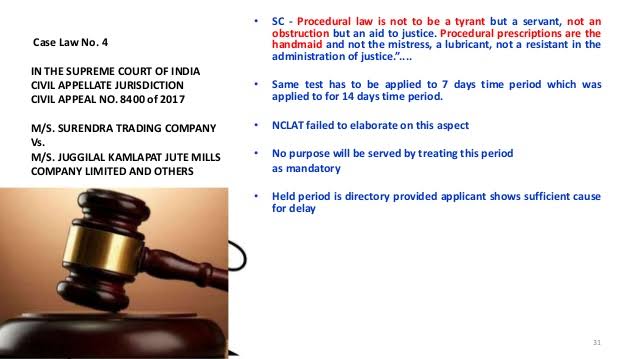
2) Surendra Trading Company Vs. Juggilal Kamlapat Jute Mills Company Ltd. & Others- Supreme Court:
The time limit prescribed in IBC, 2016 for admitting or rejecting a petition or initiation of CIRP under proviso to sub-sec. (5) of Sec. 9, is directory. [17]
The question before the NCLAT was to whether time of fourteen days under section 9(5) given to the adjudicating authority for ascertaining the existence of default and admitting or rejecting the application is mandatory or directory. [17]
NCLAT hold that the mandate of sub-section (5) of section 7 or sub-section (5) of section 9 or sub-section (4) of section 10 is procedural in nature, a tool of aid in expeditious dispensation of justice and is directory. [17]
Further question (with which supreme Court is concerned) was as to whether the period of seven days for rectifying the defects under proviso to sub-section (5) of Section 9 is mandatory or directory. The aforesaid provision of removing the defects within seven days is directory and not mandatory in nature. [17]
3) Essar Steel India Ltd. Vs. Reserve Bank of India-
RBI is authorized to direct any banking company to initiate insolvency resolution process- Gujarat High Court. [18]
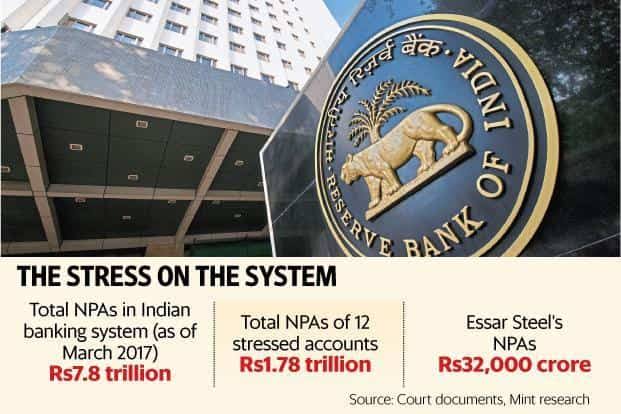
A long-drawn legal battle for Essar Steel ends with this Supreme Court judgment. In one of the most discussed cases under IBC i.e. the case of Essar Steel Limited, the Supreme Court delivered its judgment which would probably be the final judgment of the case. Key highlights of the Essar Steel Supreme Court judgment are as follows: [19]
The requirement of completing the corporate insolvency resolution process within 330 days from the insolvency commencement date as introduced by the 2019 Amendment Act was held as non-mandatory. [19]
CoC can delegate its administrative powers or power of negotiation with the resolution applicants to a smaller committee (sub-committee) since such acts would be ultimately required to be approved and ratified by the CoC. [19]
Prospective resolution applicant has a right to receive complete information as to the CD, debts owed by it, and its activities as a going concern and as such it cannot suddenly be faced with “undecided” claims after the resolution plan submitted by it has been accepted. [19]
To put an end to uncertainty, parameters were laid down for limiting the scope of interference of Adjudicating Authority and Appellate Authority with the commercial decision taken by the requisite majority of CoC. [19]
The Supreme Court has re-emphasized the primacy of the commercial wisdom of the CoC in relation to resolution of the corporate debtor as well as difference in treatment of unequally placed creditors based on its earlier decisions in Swiss Ribbons and K. Sashidhar cases. [19]
Why are the judgments of the Insolvency and Bankruptcy cases pending with court?
The judgments of the cases are pending with the Court due to the Causes for the delays which range from frivolous challenges by operational creditors and promoters to basic issues like shortage of judges. [20]
There is no stipulated time-line for operational creditors to challenge the rejection of their claim, shortage of members at the bench, allowing intervention by promoters at the admission stage and long gaps between conclusion of hearing and passing of written orders are all causing delays,” said Sapan Gupta, national head banking and finance practice at Shardul Amarchand and Mangaldas. [20]
To be fair, delays are not a peculiarly Indian phenomenon. Many advanced countries struggle to provide quick, high-quality justice to citizens. But in India the scale of the problem is unprecedented. Focusing on capacity alone won’t reduce delays. [21]
A pervasive reason for the delays is adjournments. Many advanced countries struggle to provide quick, high-quality justice to citizens. But in India the scale of the problem is unprecedented.[21]
Conclusion
In conclusion, the Insolvency and Bankruptcy Code, 2016, is a progressive legislation that is intended to improve the efficiency of insolvency and bankruptcy proceedings in India. The new legislation provides for the early detection of financial distress and a time bound process for resolution. [22]
However, many details on the IBC’s implementation need to be worked out in the regulations, and its success will depend to a large extent on how quickly a high quality cadre of insolvency resolution professionals will emerge and on whether the time bound process for insolvency resolution will be adhered to in practice. [22]
The IBC has taken its first steps to regularize the insolvency process in India. It has amended over 11 legislations in India, bringing about one of the most significant changes to commercial laws in India in recent times. However, the 22 months of this nascent legislation have been ridden with controversies and speedy resolutions. [23]
It has also become a very important tool for banks to regularize multitudes of non-performing assets plaguing the country’s economy. Within 7 months of the enactment of the IBC, the Reserve Bank of India released a list of 12 companies which held about 25% of the gross non-performing assets of the country.[23]
With more than 11% of all loans in India being terms as bad loans, the IBC has become the need of the hour. The IBC has brought a plethora of changes to insolvency laws in India and aims to reduce the amount of bad loans that has saddled the economy over the last few years. [23]
We are beginning to see this through various companies successfully concluding their insolvency process. The first successful case of a CIRP was that of Bhushan Steel wherein TATA Steel agreed to purchase Bhushan Steel for Rupees Thirty-Two Thousand Five Hundred Crores. [23]
With many more insolvency resolution processes in the pipeline, only time will tell if the IBC will prove to be a successful tool with its objective of streamlining the insolvency process in India. [23]
1) Bankruptcy Law Reforms Committee, The Interim Report of the Bankruptcy Law Reforms Committee (2015).
2) Rule 2.1.1. of RBI Master Circular – Prudential Norms on Income Recognition, Asset Classification and Provisioning – Pertaining to Advances defines an NPA as ‘An asset, including a leased asset, becomes non-performing when it ceases to generate income for the bank. A ‘non-performing asset’ (NPA) was defined as a credit facility in respect of which the interest and/ or installment of principal has remained ‘past due’ for a specified period of time.
3) It must be noted that creditors having outstanding debts continue to have the right to approach an appropriate forum like civil courts or arbitral tribunals for recovery of debts which would be a contractual right of recovery.
4) As cited in the “Abstract” of “Emerging Jurisprudence on Corporate Insolvency” by Shipra Sayal Institute of Law, Nirma University, Ahmedabad, Gujarat, India.
5) As cited in the “Introduction” Para of “A Primer on the Insolvency and Bankruptcy Code, 2016” by Nishith Desai Associates:- The Legal and Tax Counseling Worldwide.
6) As cited in the “Introduction” para of “Understanding the Insolvency and Bankruptcy Code, 2016:- Analysing the developments in jurisprudence” by “Vidhi Bankruptcy Research Programme” at the Vidhi Centre for Legal Policy and the Legal Division of the Insolvency and Bankruptcy Board of India.
7) As cited in the “Applicability” Para of “A Primer on the Insolvency and Bankruptcy Code, 2016” by Nishith Desai Associates:- The Legal and Tax Counseling Worldwide.
8) As cited in the “4th Para ,viz, Series of Judicial Pronouncement” of “Series of Judicial Pronouncement – Insolvency and Bankruptcy Code, 2016” written by Rushabh Ajmera on TaxGuru.
9) As cited in the “Introduction” Para of “Insolvency and Bankruptcy Hotline:- ANALYSING 2018 THROUGH THE LENS OF THE INSOLVENCY CODE” written on January 17, 2019 by Nishith Desai Associates.
10) As cited in the “4th Para” viz, Series of Judicial Pronouncement” of “Series of Judicial Pronouncement – Insolvency and Bankruptcy Code, 2016” written by Rushabh Ajmera on TaxGuru Website India 11 months ago.
11) As cited in “NCLT pronounced order on August1, 2018”.
13) As cited in “Facts of the Case Para” of “Series of Judicial Pronouncement – Insolvency and Bankruptcy Code, 2016” by Rushabh Ajmera 11 Months ago on TaxGuru India Website.
14) As cited in ” Apex Court Observations and Findings Para” in “Series of Judicial Pronouncement – Insolvency and Bankruptcy Code, 2016” by Rushabh Ajmera 11 Months ago on TaxGuru India Website.
15) As cited in “IBC (Insolvency and Bankruptcy Code, 2016) – The Bankruptcy Law of India” written by Vidushi Trehan, LL.M from Symbiosis Law School, Pune , Intern at Khurana & Khurana, Advocates and IP Attorneys.
16) As cited in “Brief about decision para” in ” “and” occurring in section 8(2)(a) may be read as “or”- Mobilox Innovations (P) Ltd. Vs. Kirusa Software (P) Ltd.- Supreme Court” written by IBC LAWSon September 21, 2017.
17) As cited in “Case Name: M/S. Surendra Trading Company Vs. M/S. Juggilal Kamlapat Jute Mills Company Limited and Others” written by IBC LAWS on September 18, 2017
18) As cited in “RBI is authorised to direct any banking company to initiate insolvency resolution process- Essar Steel India Ltd. Vs. RBI- Gujarat High Court” written on July 17, 2017 by IBC LAWS.
19) As cited in “The Insolvency And Bankruptcy Code In 2019 : Recent Amendments And Key Judgments” written by Mayur Shetty and Chintan Gandhi of Rajani Associates on 12th March 2020.
20) As cited in “Delay becomes the norm in insolvency & bankruptcy cases” by Joel Rebello & Saikat Das, ET Bureau on Aug 15, 2019 at 11:25pm.
21) As cited in “Hidden factors that slow our courts and delay justice” written by Arghya Sengupta.
22) As cited in “Insolvency And Bankruptcy Code” written on 12 September 2017 by Samvad Partners.
23) As cited in “2016: Overview Of The Insolvency And Bankruptcy Code, 2016” written by Namrata Bhagwatula , Senior Associate on 20 September, 2018.
One Plus are launching their another smartphone called One Plus Nord today in India on July 21st 2020 at 7:30 PM IST.
The expected price of this smartphone will be around ₹ 34,900
The key specifications of the phone are:
The phone comes in 3 variants 6 GB + 128 GB, 8GB + 256 GB and 12 GB + 256 GB, the entry level price for this mobile is expected to be around ₹ 25,999. The phone will come with 3 colour variants one is Nordic White, second is Arctic Blue, and another one is Amber Red. The back of the One Plus Nord will reportedly flaunt a frosted glass panel, like the previously launched OnePlus 7T.
The OnePlus Nord will come equipped with a Type-C port and will draw power from a 4,200 mAh battery unit powered by a 30W fast-charger. It is well-established that the OnePlus Nord will flaunt a 90Hz refresh rate AMOLED display with dual punch hole housing a 32MP + 8MP selfie camera setup. As far as the rear camera is concerned, we are expecting the OnePlus Nord to boast a quad-lens camera setup featuring 48MP + 8MP + 2MP + 2MP hardware. The OnePlus Nord will use the Adreno 620 GPU to handle graphics.
Features:
Octa core (2.4 GHz, Single Core + 2.2 GHz, Single core + 1.8 GHz, Hexa Core)
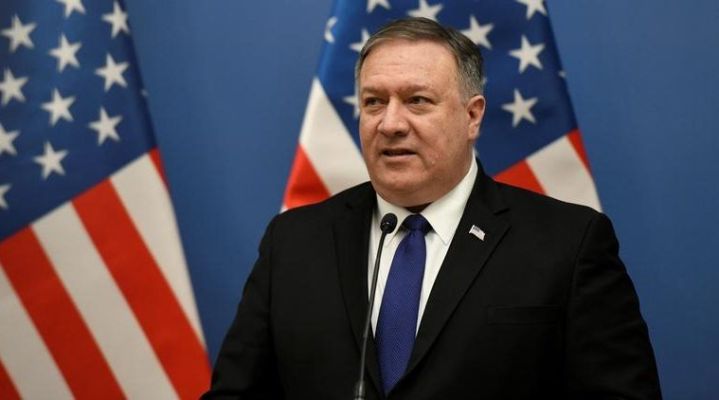
Mike Pompeo, the U.S. Secretary of State, has said that the country is contemplating to ban Chinese apps which include the majorly popular app, TikTok. Having said that, he also has mentioned how TikTok has caused security breaches by sharing information with the Chinese government. The app has experienced massive growth all over the world and now this statement by the Secretary of State could cause a major blow to the app.
On being asked a question which was on the lines of recommending users to download TikTok, Mike Pompeo replied saying, ‘ Only if you want your private information in the hands of the Chinese Communist Party. ‘
This is definitely not the first time the TikTok has received a backlash on how this particular app is responsible for relaying information of a particular country back to China, India too has made the same allegations recently.
The ban may be seen in coming week after India had raised questions against The Chinese apps for sharing information with other servers located outside India. This can be huge blow to TikTok company after its ban in India.Now, U.S. lawmakers are also of the same opinion that the app definitely has some serious security concerns that should not be overlooked at any cost. Chinese laws also need domestic companies ‘to support and cooperate with intelligence work controlled by the Chinese Communist Party.’ The U.S government has now made it very clear that the citizens of the country should be wary of the app.
The Chinese based app, which is owned by ByteDance, was asked to clarify the statements that stated the security concerns, to which it had completely denied the same. ‘We have no higher priority than promoting a safe and secure app experience for our users. We have never provided user data to the Chinese government, nor would we do so if asked,’ TikTok has mentioned in the email it has sent.
It has now created a safe distance from its Chinese roots hoping to calm the global uproar it has created. In the case of the U.S., it is still unclear if the sole reason behind the thought of banning this app is purely based on security concerns.
Uttar Pradesh gangster Vikas Dubey, accused of killing eight policemen last week, was arrested from a temple in Madhya Pradesh after a nearly week-long chase involving the police across three states. Vikas Dubey was caught in Ujjain around the same time two of his aides were killed in separate encounters in UP. His closest aide, Aman Dubey, was killed yesterday.
Bihar police congratulated MP police for arresting Vikas Dubey.
Vikas Dubey was spotted at Mahakal temple around 8 am, according to the police. He was buying prayer offerings to take inside the temple when the shopkeeper recognized him and reportedly alerted security guards. When he emerged from the temple, the guards questioned him.
He first produced a fake ID card of a much younger man. When prodded further, he hit out at the guards, who dragged him to the police station.
“Main Vikas Dubey hoon, Kanpur wala,” he shouted out, when he was beaten while being taken to the police van.
“It is a big success for the police, Vikas Dubey is a cruel killer. The entire Madhya Pradesh police force was on alert. He has been arrested from Ujjain Mahakal temple. We have informed Uttar Pradesh Police,” said Narottam Mishra, Madhya Pradesh Minister.
Dubey – charged in 60 criminal cases including murder, kidnapping, extortion and rioting – had allegedly been alerted to the raid by local policemen and had set up an ambush. When the policemen reached the village, Dubey and his men, armed with AK-47s, fired from rooftops.
UP police is informed about the arrest. However many say that it was planned surrender by Vikas Dubey who allegedly went to temple and made people see him. It is very positive for the state though.
New covid-19 vaccine Covaxin has improved hopes of Indians after the successful trials on monkey. It is now all set to start phase-1 human trials approved by ICMR. For the Human trials of India’s indigenous Covid19 vaccine COVAXIN, 12 hospitals are selected. They will enrol participants this month, samples of Bharat Biotech’s COVAXIN are still undergoing quality and safety tests at a govt lab. Theses tests started last Friday and are expected to be finished by the end of next week. Three of the selected hospitals – Delhi’s AIIMS, Kancheepuram’s SRM Hospital and Research Centre and Vishakhapatnam’s King George Hospital are still awaiting ethics committee approvals to begin enrollment of participants for the study.
Besides Sinovac, the vaccines developed by AstraZeneca-university of Oxford and Sinopharm are the only other candidates to start third stage trial.
US-based Moderna is planning to start its late-stage trial for potential vaccine candidates in July.
Coronavirus COVID-19 vaccine India
India is making significant progress in producing the probable Coronavirus COVID19 vaccine. Many institutions in India are engaged in Research and Development for Corona vaccines in the country. Accordin to information provided by Pune based ICMR institution, National Institute of Virology and Hyderabad based CSIR institution Center for Cellular and Molecular Biology, six Indian companies are working on probable vaccine candidate for Coronavirus.
COVID19 vaccine can be developed by 2021, says WHO scientist! The chief scientist at the World Health Organization (WHO) Soumya Swaminathan has said that at least one COVID19 vaccine will be ready by 2021. Swaminathan said that we can be hopeful of seeing one “safe and efficacious” COVID-19 vaccine by the next year. Swaminathan has revealed that WHO has been discussing methods for “fair distribution of the vaccine” with its member countries.
Chinese tech giant unicorn ByteDance Ltd. is anticipating a huge loss of over USD 6 billion after ban on its 3 apps including hugely popular video making TIK TOK app in India. The decision was taken by indian government in wake of unfortunate clash in Galwan valley in Ladakh between Indian and Chinese soldiers which led to death of 20 Indian brave soldiers and more number of casualties in Chinese camps.
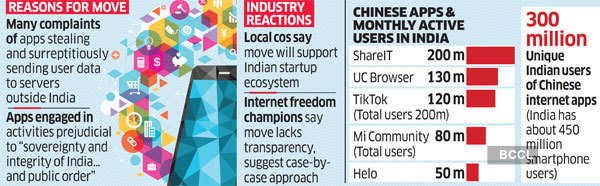
Besides TikTok , India on last Monday banned 58 more Chinese apps including Club Factory, UC Browser and Share it apps for engaging in activities prejudicial to sovereignty and integrity of India, defence of India, security of India and public order.
India was the biggest market in terms of users . Of the total 611 million downloads nearly 112 million are from India which is considerably huge. This ban has however sent image to Chinese government that India would never compromise its privacy, sovereignty and integrity.
The Chinese government has been angry over the decision and want us to take back the decision. However the ban period is not clear and the banned apps are claiming that they have not revealed any information to foreign countries even China.
A top official said the government had considered all aspects before taking the decision. “These apps have been there for a long time, and there are some privacy and security issues with them including risks of data going out of the country,” said the person.
The statement from the Ministry of Electronics and IT (MeitY) said it had received complaints from various sources, including several reports about the misuse of some mobile apps for stealing and surreptitiously transmitting users’ data in an unauthorised manner to servers outside India.
The ban would surely help in bringing Indian alternatives for the Chinese apps and reduce the dominance of Chinese products in Indian market.
Yoga is a group of spiritual,mental and physical practices originated in ancient India. the modern yoga is seen as exercise to the body which mainly consists of postures or asanas. The practice of yoga has been thought to date back to pre-vedicIndian traditions; possibly in the Indus valley civilization around 3000 BCE. Yoga is mentioned in the Rigveda and also referenced in the Upanishads. Yoga gurus from India later introduced yoga to the West,[17] following the success of Swami Vivekananda in the late 19th and early 20th century with his adaptation of yoga tradition, excluding asanas. Outside India, it has developed into a posture-based physical fitness, stress-relief and relaxation technique. Yoga in Indian traditions, however, is more than physical exercise; it has a meditative and spiritual core.
why yoga ?
There are many reasons why one should keep habit of practicing yoga for at least half an hour a day even if they are busy all the day. yoga is an art whivh cures you from a disease before you get infected by it.
some of the benefits of yoga are:
increased flexibility.
increased muscle strength and tone.
improved respiration, energy and vitality.
maintaining a balanced metabolism.
weight reduction.
cardio and circulatory health.
improved athletic performance.
protection from injury.
Prominent personalities practicing yoga:
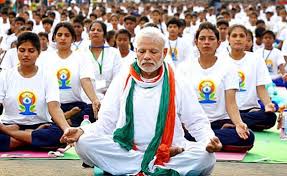
Narendra modi:
If prime minister can do then we can too at least we are not as busy as him.
2. Robert downey ,jr.(Iron Man):
Shocked!! yes he also do yoga which has helped him in leaving the bad habit of drugs addiction.
3.Jennifer Aniston (Racheal green in Friends):
she is been practicing yoga since 2005 for at least 20-30 minutes a day regularly
admist her busy schedule.
The list goes on thus it is well known that yoga is key to healthy life. Practice it daily if you don’t know asanas search in google or refer you tube videos. Hope you start practicing Yoga.
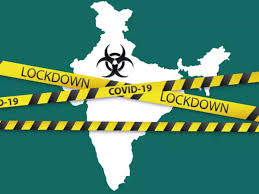
In amidst this global pandemic,life has become very harsh for many poor and middle class people. This lockdown has also locked the earnings making them struggle everyday to meet their daily needs. The biggest question of the hour has turned out to be”when will this pandemic meet an end?”.But it is necessary that we must focus on life after corona.
This corona virus has taught us many things ,it has helped in integration of people not only in the country but also worldwide. This virus has taught us that discrimination of people on basis of caste,religion,region has no sense. It has also became agent of mother earth wherein it brought the pollution levels significantly down all over the world.
It is clear indication that we must start using non-conventional energy sources after this crisis. It is clear that we must understand that humanity is the only religion and serving needy is next to serving god.
We should maintain social distancing at least for following year and help needy. If we all stand United and act wisely we will surely be victorious in this situation and once again we can live that golden days enjoying railway rides, shouting for our favourite team in stadiums and the birds chirping in the forest without our intervention, but for now we must stay home stay safe.
If you pick up a dictionary, the definition you’ll find for the word ‘feminism’. In simple terms, there shouldn’t be any injustice met out to either sex. They should be treated equally. But, off late, a new type of feminism is developing which is rightly called as pseudo feminism. Pseudo feminists hold a strong resolve to correct all the injustices done to women, mostly by lashing out at men and demeaning them. What they forget is the basic essence of feminism movement: equality. Another form of pseudo feminism, according to me, is the feminism of convenience. The biggest example being: men paying for dates. If we’re as equal as women proclaim to be, why can’t a restaurant bill be split between the two? The reason is simple-men are too egoistic to let a woman pay, and for a few women it miraculously becomes a man’s job to pay for the date. Where, I ask these feminists, does the feminism vanish then?
Feminism is now a muddied term. Difficult to say what it means today. We often don’t realise it, but pseudo feminism is all around us, hiding behind feminism in clandestine. We’re the women shouting for equal rights everywhere, but don’t waste a single minute asking a guy sitting on a Ladies Reserved seat to vacate it. Why do we need reservations in general coaches? Since we’re able bodied, strong, grown-up women of strength, can’t we stand in a general coach? Men doing 9-5 jobs, burning their hours toiling hard to earn, are as tired as we are. It is just a very preposterous notion. Like it’s correctly said, two wrongs don’t make a right.
Although they are in the minority, it’s a crystal clear truth there are men who too are subjected to sexual crimes. The numbers of cases reported to the police are on the lower side, because most of the men don’t report such crime for the fear of being ridiculed at, not being believed and instead facing the charges themselves. Men are mostly kidnapped and abducted for illegal sexual intercourse, forced marriages, prostitution, etc. The number of such victims is really low but it’s a fact we cannot ignore. When we are talking of rising violence against women, we shouldn’t neglect the fact that somewhere out there are men also being subjected to same brutalities.
Board results are a few months away, but a boy has passed with flying colors by refusing to be part of a plan to rape a girl, hatched by the girl herself, who was pretending to be a boy. The boy passed but, many say, feminism failed. They have been saying that for years now. They are not too off the mark though. While it may not have failed, it sure has taken a huge hit.
Fake accounts, false allegations and fraudulent charges have harmed men and their reputations. They are also building a case against women’s right to stay in the fight for justice. Part of the problem is the fact that the odds are heavily stacked against women. But another part of the problem is the way women used social media to fight this battle.
Each true story helps build credibility. Each false story is turned into a weapon against the fight for gender justice. The girl, who faked herself as a boy, is not part of the Bois Locker Room chats, but the story is now all about this one girl who faked her identity.
So what should women do?
I will answer with what they should not.
One, do not shoot and scoot. Don’t get into it if you cannot stay in it. Weigh in before you jump in. This is for the long haul. There is a lot of mudslinging that happens. You can’t escape the splashes.
Two, do not use fake accounts to bring down men. It’s easy to prove. The consequences are for everyone – the man, the movement and also you. Take care of You. Take care of the fight that is for us to stand equal to men with no biases in workplaces, no casual sexism, no acid attacks, no rapes and no honor killings.
If true feminism was followed, then we would treat all the victims equally. Victims would cease to be women or men, but just victims of abuse. But sadly, that is not the case. Pseudo feminism shouts out loudly that men can’t be raped, men can’t be tormented, and men claiming to have been put under such atrocities are lying cheats. It’s most likely that I would be branded ‘anti-feminist’ by pseudo feminists all around, but I don’t mind. I don’t mind because I know how to stand up for my fellow sisters when they actually need it.
When a woman is put on fire, when she is raped, is brutalized, is stripped naked on the streets, forced to quit her studies to marry a man three times her senior in age, when she is blamed if she is raped, or teased, when a woman is beaten repeatedly for refusing to pressurize her parents into paying dowry, when she is considered inferior to her male counterparts, that is when I need to give voice to my anger and lash out at the people responsible for it. If I am a true feminist, I will do the same if it were a man being stoned on the streets, being raped, being accused of a fake rape, being doubted over just because he is a man. As Gloria Steinem rightly said, a feminist is anyone who recognizes the equality and full humanity of women and men.
Not all men do it, but all women suffer through it.
The queries about University examinations, re-opening of schools, CBSE exams and results have been answered by Union Human Resource Minister, Dr Ramesh Pokhariyal Nishank. The minister gave clarity regarding the education sector of India.
Board exam at home centres: The minister said that since there is a problem in travelling and reaching the centres of CBSE Board, the students may inform their schools about their location which in turn would be informed to the Board by the school. Thus a child would not have to travel in this tensed atmosphere and reach the centres that are nearest to them to appear for the boards that are to be conducted in July.
Safety of students giving exams in July: When asked if it would be safe to conduct the exams in July as it would be the peak of COVID 19, the minister said that the government will see, observe and then continue the conduct of exams, As of now the Board dates have been decided from July 1 which would be conducted. The guidelines issued by MHA and health ministry would be followed very strictly by the Education ministry.
Entrance Exams delayed: The students are under a lot of pressure on their entrance exams being delayed. The HRD Minister said the government is trying its best to ensure that the students do not lose a year over the pandemic and thus have decided to conduct entrance exams maintaining all social distancing norms at the centres. Although the number of students is high yet the authorities would maintain the safety of students at all times ad centres have been increased to deal with such problems.
Reopening Schools: The minister was asked about school reopening safety and social distancing issues. He said that it is quite evident that the parents would be worried about their wards but it would be primarily important for the students to be protected and study in a sanitized way for the government too. He is in talks with state education ministers regularly. The schools in the states would have to follow all guidelines issued by the MHA.
NCERT, UGC Taskforce in place: The minister said that since the student population is more than 33 crore in India the UGC and NCERT task force is very helpful. Shifting to the online mode of teaching has been very fruitful in conducting classes as per the minister. He talked about Diksha, E Pathshala, SWAYAM, etc which are helpful platforms.


















 Eduindex
You must be logged in to post a comment.