Globalization is the word used to describe the growing interdependence of the world’s economies, cultures, and populations, brought about by cross-border trade in goods and services, technology, and flows of investment, people, and information.
Globalization is driven by the convergence of political, cultural and economic systems that ultimately promote — and often necessitate — increased interaction, integration and dependency amongst nations.
The more that disparate regions of the world become intertwined politically, culturally and economically, the more globalized the world becomes.
These international interactions and dependencies are enabled and accelerated by advances in technology, especially in transportation and telecommunications. In general, money, technology, materials and even people flow more swiftly across national boundaries today than they ever have in the past. The flow of knowledge, ideas and cultures is expediated through Internet communications.
There are three types of globalization:
1. Economic globalization. This type focuses on the unification and integration of international financial markets, as well as multinational corporations that have a significant influence on international markets. 2. Political globalization. This type deals mainly with policies designed to facilitate international trade and commerce. It also deals with the institutions that implement these policies, which can include national governments as well as international institutions, such as the International Monetary Fund and the World Trade Organization. 3. Cultural globalization. This type focuses on the social factors that cause cultures to converge — such as increased ease of communication and transportation, brought about by technology.
FDI stands for “Foreign Direct Investment”. It is an investment by foreign individual(s) or company(ies) into business, capital markets or production in the host country. FDI plays an important role in the economic development of a country. The capital inflow of foreign investors allows strengthening infrastructure, increasing productivity and creating employment opportunities in the Host country.
Foreign Direct Investment in India
Foreign direct investment policy in India is regulated under the Foreign Exchange Management Act (FEMA) 2000 administered by the Reserve Bank of India (RBI). India is one of the top five attractive location for investment. Japan bank of international cooperation continues to rate India as topmost promising country for overseas business operations.
The Government has put in place a policy framework on FDI which is transparent, Predictable, and easily comprehensible. The framework is embodied in circular which may be update.
How FDI works?
Foreign direct investments are commonly made in open economies that offer a skilled workforce and above average growth prospects for the investor, as opposed to tightly regulated economies. Foreign direct investment frequently involves more than just a capital investment. It may include provisions of management or technology as well. The key feature of foreign direct investment is that it establishes either effective control of or at least substantial influence over the decision-making of a foreign business.
Who can invest in India?
A non-resident can invest in India subject to FDI policy except in those sectors which are prohibited. An FII or FPI may invest in the capital of an Indian economy under the portfolio investment schemes which limits the individual holding FII or FPI below 10% of the capital of the Company. The aggregate limit of investment is 24% of the capital of the company. The aggregate limit can be increased to the sectorial cap as applicable by Indian company concerned through a resolution by its bord of director followed by special resolution to that effect and subject to prior intimation to RBI. However, a citizen of Bangladesh or an entity established in Bangladesh can invest only under government route.
* Recent amendments in FDI policy.
1. The amendments in FDI policy is to discourage opportunistic investment in Indian companies by neighbouring countries like china during the COVID-19 pandemic. 2. Recent China’s central bank has increased stake to 1.01% in HDFC bank via automatic route. 3. Revised FDI policy – Any entity of a country which shares land borders with India or where the beneficial owner of investment into India is Situated or is citizen of any such country can invest only under a Government Route.
Why Do We Need FDI?
1. Helps in balancing international payment:- FDI is the major source of foreign exchange inflow in the country. It offers a supreme benefit to country’s external borrowings as the government needs to repay the international debt with the interest over a particular period of time.
2. FDI boosts development in various fields:- For the development of an economy, it is important to have new technology, proper management and new skills. FDI allows bridging of the technology gap between foreign and domestic firms to boost the scale of production which is beneficial for the betterment of Indian economy.
3. FDI & Employment:- FDI allows foreign enterprises to establish their business in India. The establishment of these enterprises in the country generates employment opportunities for the people of India. Thus, the government facilitates foreign companies to set up their business entities in the country to empower Indian youth with new and improved skills.
4. FDI promotes exports from host country:- Foreign companies carry a broad international marketing network and marketing information which helps in promoting domestic products across the globe. Hence, FDI promotes the export-oriented activities that improve export performance of the country.
The Indian government has initiated steps to promote FDI as they set an investor-friendly policy where most of the sectors are open for FDI under the automatic route (meaning no need to take prior approval for investment by the Government or the Reserve Bank of India). The FDI policy is reviewed on a continuous basis with the purpose that India remains an investor-friendly and attractive FDI destination. FDI covers various sectors such as Defence, Pharmaceuticals, Asset Reconstruction Companies, Broadcasting, Trading, Civil Aviation, Construction and Retail, etc.
we can say that FDI plays a crucial role in the growth of Indian economy as it helps to bring new technologies, employment generation and improvement in business operations, etc.
She was just a 15 year old girl . A girl , full of life . But what happened to her .
It’s her story . A story of a survivor.
She was powerful not because she wasn’t scared but because she went on so strongly, despite the fear.”
– Atticus
At the age of 15 , when a girl or a boy makes happy memories and learn about life . She was attacked in the market full of people . She was attacked because she rejected an old jerk of 32 years old.
A 32 year old proposed a marriage proposal to a 15 year old girl , who lives near the neighborhood. She ignored and rejected him and he planned an acid attack .
Her name is Lakshmi Agarwal , she was attacked at the age of 15 in 2005 in New Delhi after rejecting the romantic advances of Naeem Khan . She didn’t inform anyone about the scenario because she believed her parents and society would have blamed her and stopped her study .
After 10 months , Lakshmi was in the market and Naeem asked her again through message about the marriage proposal but she didn’t respond . And in no time , Kamran (Naeem’s older brother ) and his girlfriend attacked her with acid . He was in the motorcycle and his girlfriend Rakhi threw acid on Lakshmi , when Kamran called her name and she looked behind for response.
She fainted on the road and when she regain consciousness she went middle of the road asked for help and met with multiple accidents but no one stopped to help her . She was burning in fire and her skin was melting.
A man named Arun Singh called PCR and told police about the situation . Someone threw water to help her but it turned out opposite and the acid burnt her neck . Arun think it might be late , so he helped her on the backseat of his car , later the seat cover turned into black hole due to the acid .
Arun admitted her in the hospital , called police and her family . Lakshmi went through many surgeries and operations including eye surgery. Four days later Naeem Khan got arrested but was bailed after a month later .
Protests and media attention.
After many protests and media attention Naeem got life imprisonment .
Lakshmi’s story was one of the series in the Hindustan Times. Lakshmi was scared after the attack because most of her face and body parts were not same as before . But she didn’t loose hope ,she fought for justice , asked for help for the victims of acid attacks and pleaded the law for the ban on sale of acid.
Meanwhile government failed to frame policies on acid sale and chemical attacks .
“ Seriousness is not seen on the part of the government in handling the issue,” the bench headed by Justice RM Lodha.
In 2013 , the plea of Agarwal was heard and later claims that “ Acid is freely available in shops. Our own volunteers have gone and purchased acid easily. In fact, I have myself purchased acid,” she said. “We have launched a new initiative called ‘Shoot Acid’.
After , the law passed by Supreme court . Lakshmi founded NGO named Chhanv Foundation to help acid attack survivors in India.
In 2019, she was honored with the International Women Empowerment Award from the Ministry of Women and Child Development, the Ministry of Drinking Water and Sanitation and UNICEF for her campaign of Stop Acid Sale. In 2014, she received the International Women of Courage award at the hands of First Lady Michelle Obama.
And the movie Chhapaak is based on her life and stars Deepika Padukone in her role.
“And one day she discovered that she was fierce, and strong, and full of fire, and that not even she could hold herself back because her passion burned brighter than her fears.”
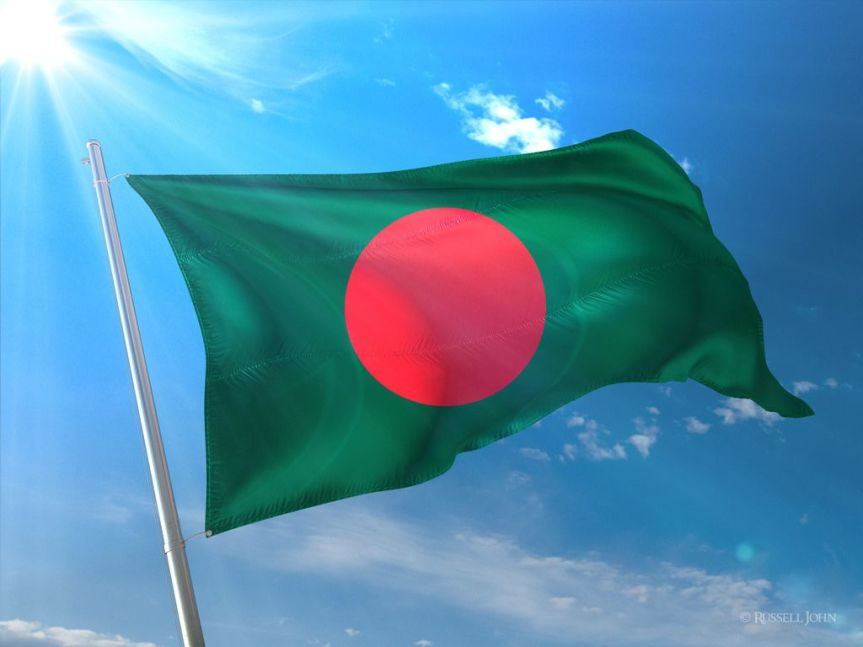
Bangladesh, a country since its inception known as one of the poorest and most overly populated nations, is now gradually seeing economic improvement to an even greater degree than its contemporaries: India and Pakistan. At one point, Bangladesh was included in the list of Least Developed Countries (LDC) enumerated by the UN; but now it has been estimated that by 2024 it will break free from this categorization as it has seen a drastic increase in standard of living, fertility rates, and lowered infant mortality rates.
A Rough Start
Bangladesh got its independence from Pakistan in the year 1971 with the help of India. However, this independence was achieved through a lot of violence and struggle, so the Bangladeshi administration was not able to fulfil even some of the basic needs of its people due to the damage it had suffered, both economical and physical. Following this, there was even a major famine which killed nearly 15 lakh people in the country. This, along with political instability and constant military coups made it very difficult for any growth to take place in the country.
The Basket Case
After its independence, the foreign secretary of USA at the time, Alexis Johnson, called Bangladesh an ‘International Basket Case’. A basket case means a country burdened by economic strife and which falls into severe debt in order to cope with its financial crises. Such countries are those that struggle to maintain a self-sufficient and autonomous economy. Other newspapers would also predict that Independent Bangladesh will be an economic failure. Such predictions at the time were made due to the fact that Bangladesh was overburdened by a very dense populations, leading to severe problems like food shortage. It was also not a country rich in natural resources which would allow it to bolster its economy, so the general view was it would become an underdeveloped state and become economically dependent on other countries. This became true in the 1980s, when Bangladesh heavily relied on foreign aid to stay afloat and meets its needs.
How did Bangladesh become a well-performing economy?
Firstly, there is the well-known fact of the cheap labor or low-skill manufacturing that Bangladesh provides. After China, you are most likely to see a ‘Made in Bangladesh’ tag on the clothes bought in even the most expensive and high-end shopping areas in the world. This is because international clothing and apparel companies look to countries like Bangladesh for cheap labor and manufacturing so as to make greater profits on their products. This industry has provided major employment in the country, and has contributed up to 10% of its GDP at times, helping the country a lot in its growth.
Furthermore, around 80% of the workforce in these factories are women, which is an indicator of high employment for women and their empowerment. In a country where women are generally limited to being homemakers, the employment of women has led to fruitful advancements. Many reports have shown that as more and more women employed in factories, their educational attainment, age of marriage, and general welfare has increased. This is due to the fact that they have become economically independent and have seen an increase in income, thereby allowing expenses to be made on girl child’s education and not making marriage for money a necessity. Today, even the male-female wage gap is slowly decreasing in Bangladesh.
Then there is also the role of NGOs in Bangladesh. International and national NGOs got involved in the improvement of Bangladesh’s socioeconomic situations, with the building of schools and advancement of medical infrastructure. NGOs have played a unique role in Bangladesh’s improvement, as generally such welfare measures should be taken by the government so as to gain public trust. However, the Bangladesh government has given much leeway to the NGOs, and has encouraged to work together with them so as to promote growth in the country. This attitude has led to significant improvements, and other governments hesitant to work with NGOs for fear of it affecting their public image should look to Bangladesh as an example of its benefits.
Finally, and perhaps most important, is the balanced foreign policy of Bangladesh. They have created such a foreign policy that they have received foreign aid from many different countries, even those that have opposed their independence like the USA. Also, the scheme of remittances (money transferred by Bangladeshi citizens working in foreign countries to their home) in the foreign policy has contributed greatly to the GDP of the country. Overall, the foreign policy has allowed for products and services from Bangladesh to be bought and sold in foreign, richer countries, thereby helping income.
Conclusion
Hence, in this way Bangladesh has seen much economic success especially in the last decade or so. What remains to be seen is how the country will move forward in the years to come. Will their dependence on the clothing and garment industry be dangerous? Will international trade regulations become stricter as the country is economically improving? Only time will tell us the answer to these but for now, Bangladesh can celebrate how far it has come.
Change your life today. Don’t gamble on the future, act now, without delay.
Simone de Beauvoir
What’s stopping you, is it your fear ?
From whom you are running , is it a failure ?
When to start , am I getting late ?
What if I hesitate , will they understand ?
How am I going to talk to them ?
In different phases of our life we faced different challenges that may be hard to accept and makes you feel ashamed of yourself.
Most of the time we think our fear might harm us but what we don’t understand is that , if we don’t face them it would never leave .
We hesitate , we fear , we run , we ignore , we lack and in the end we loose hope .
And what we are going to is to reconstruct that hope and trust ourselves . We might need some tools for that and one of them is MOTIVATION .
What is MOTIVATION ? How it works? Will it help ? And so on … There are many questions and the time is limited. So let’s begin .
Introduction
Being successful is not enough in today’s world . To keep the success we need a companion and that is Motivation.
Motivation has a powerful aura it can be your solution if only you used directly on your aim . I might play some tricks with you but the result will always be on your side .
Well it is going to be very hummy dumpy article but who cares (that’s not me ) . What’s important is what you learn from it .
The author Steven Pressfield wrote a great line in his book , The War of Art, which I think gets at the core of motivation.
“At some point, the pain of not doing it becomes greater than the pain of doing it.”
Well said pressfield , in other words (or my words) It is easier to take action , rather than sitting and self,- petrified ourselves.
Like it is easier for MOJO to prepare for his exam rather than think about the result OR It is easier for OJO to workout in the gym rather than sitting in the chair eating junk food . (Well I prefer junk food over gym , just ignore I said that .)
This I think is the core of motivation . To gain something we need to pay the price first . It may be time , energy , sacrifice , risk or it can be anything .
Take action
A lot of people get confused that how to find motivation and when to take action . They are wasting too much time for making plans and than for process . To make it easy find motivation and get started. The more you delay the more it get difficult.
If you waste resources trying to decide when or where to work, you’ll impede your capacity to do the work.
Their are some rituals needs to perform if you want to get motivated :
1. Exercise daily .
2. Become more creative.
3. Start your day stress free .
4. Sleep better .
5. Last but not the least do whatever makes you happy . ( But don’t do nasty things ) .
You’ve gotta dance like there’s nobody watching, love like you’ll never be hurt, sing like there’s nobody listening, and live like it’s heaven on earth.”
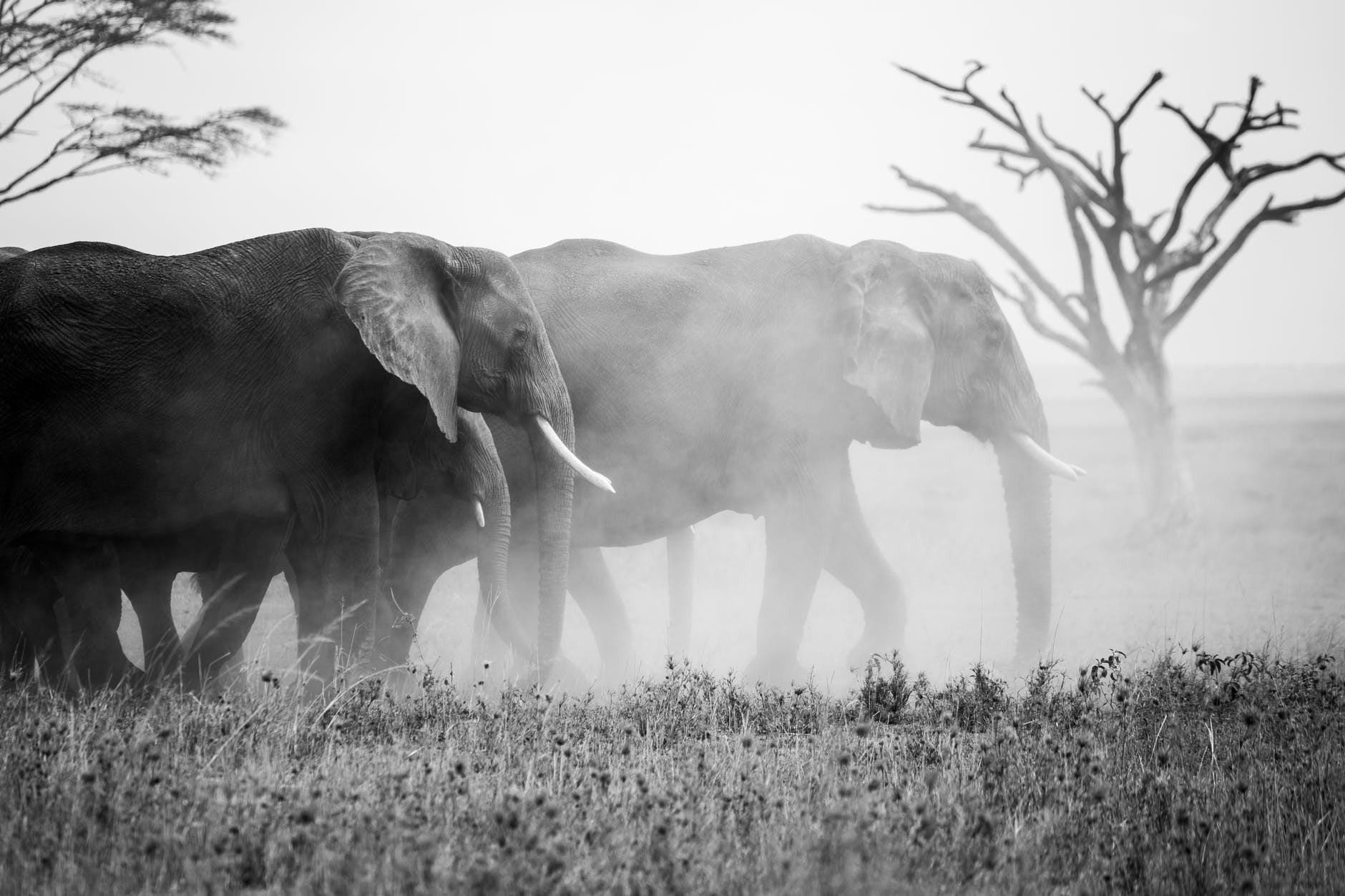
It is distressing to see the plight of the tusk-bearing animals these days. Numerous news headlines are daily highlighting the illegal smuggling of ivory. The extortionate value and demand of the ivories are not only in India, but also in the international markets. Wild animals are mercilessly being poached on a massive scale, possessing a major existential threat to wildlife. But do we really care or do enough to stop this inhumane and selfish act?
Let us first understand the connotation of the word ‘poaching’.
Poaching, in simple words, is the illicit act of killing, shooting, hunting or capturing of animals. The aim of this illegal act is mainly for the purpose of trade of animal products like skin, teeth, horn, bone, etc. Poaching plays a decisive role in being a contributor to biodiversity loss. Due to this felonious act, the number of extinctions has increased dramatically over the past decades. It is necessary to understand that poaching is not only about the uncontrolled killing of protected animals or endangered animals but any unlawful killing of animals.
Smuggling of elephant tusks
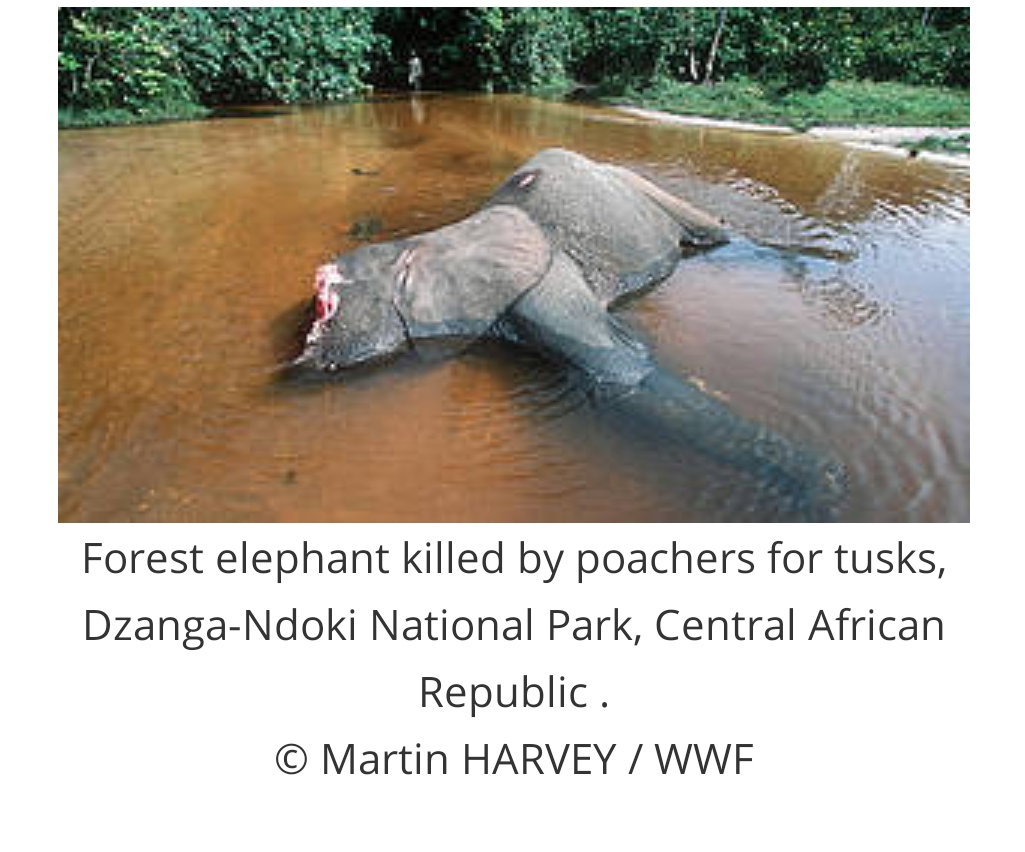
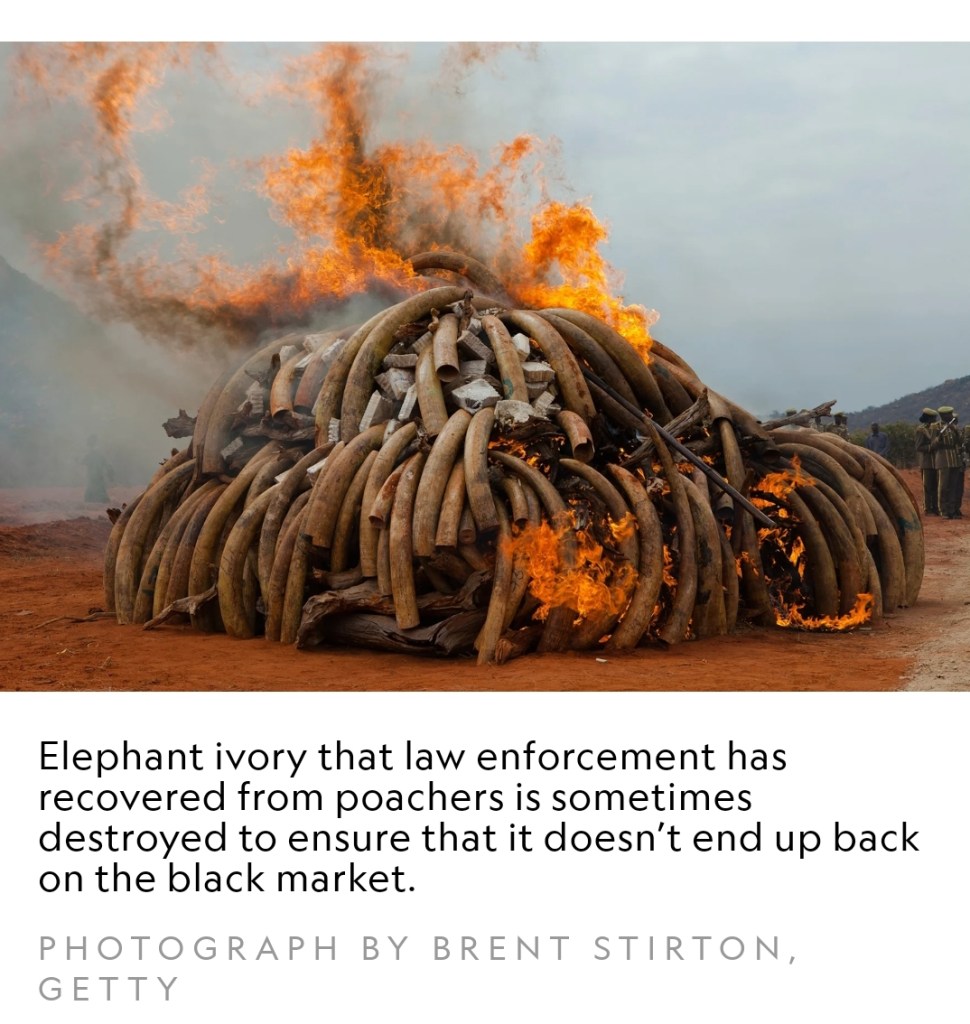
In India, poaching of elephants is very common and a major challenge to be combated. Ivory trade is in high demand mostly in the Asian countries. About 20,000 elephants are mercilessly killed every single year for their tusks. These ivory tusks are then smuggled in the international markets to eventually end up as ivory trinkets.
Ivory trade has been in practise for millennia. In the 14th century BCE, the exportation of ivory and slaves from Africa and Asia were done extensively. The freshly captured slaves along with the tusks were sold. The ivory was then used to make ornaments and aesthetically pleasing commodities.
On July 6, 2016, a complete ban on commercial trade in African elephant ivory went into effect in the United States. The African elephant population has decreased dramatically. Near about 350,000 elephants are left in Africa, as per 2019 data. It is quite shocking to know that 10,000 to 20,000 elephants are slain every year. Elephant numbers have dropped by 62% over the last decade, and if not brought under control, then they’ll be extinct by the end of the next decade.
Major countries where these tusks are sold
China is the biggest consumer market for ivory products. However, a ban was enforced on ivory trade by China in the year 2017. But it is evident that ivory is in high demand in many countries. Illegal selling of ivory is still rampant. In the year 2011, a whopping amount of 100kg of ivory was seized by Tanzanian officials. That same year several countries including Tanzania and Kenya seized a total of 17 ivory shipments weighing 800 kg.
According to surveys and in-depth interviews the demand for ivory is known to be concentrated in: China, Thailand, Vietnam, the Philippines, and the United States.
Last year, about 8.8 tonnes of ivory items were seized in Singapore.
The adverse effects of tusk-removal on the elephants
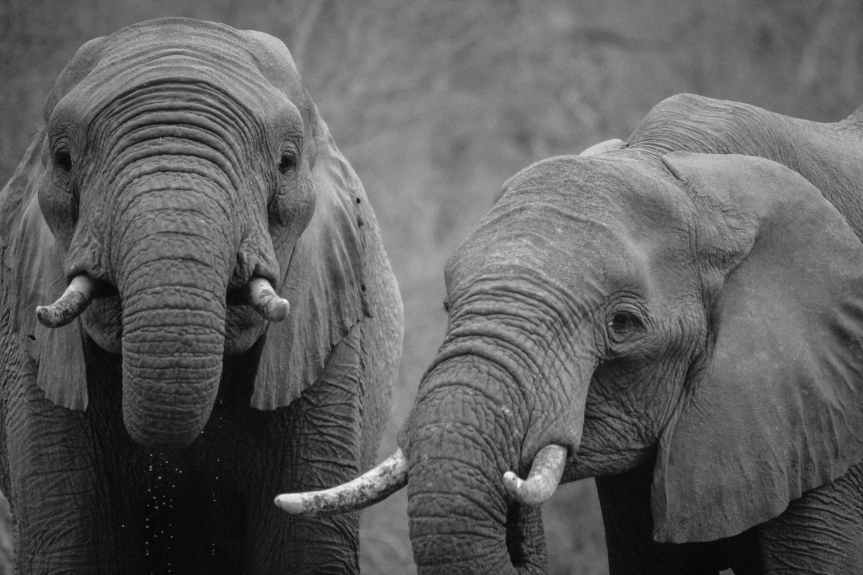
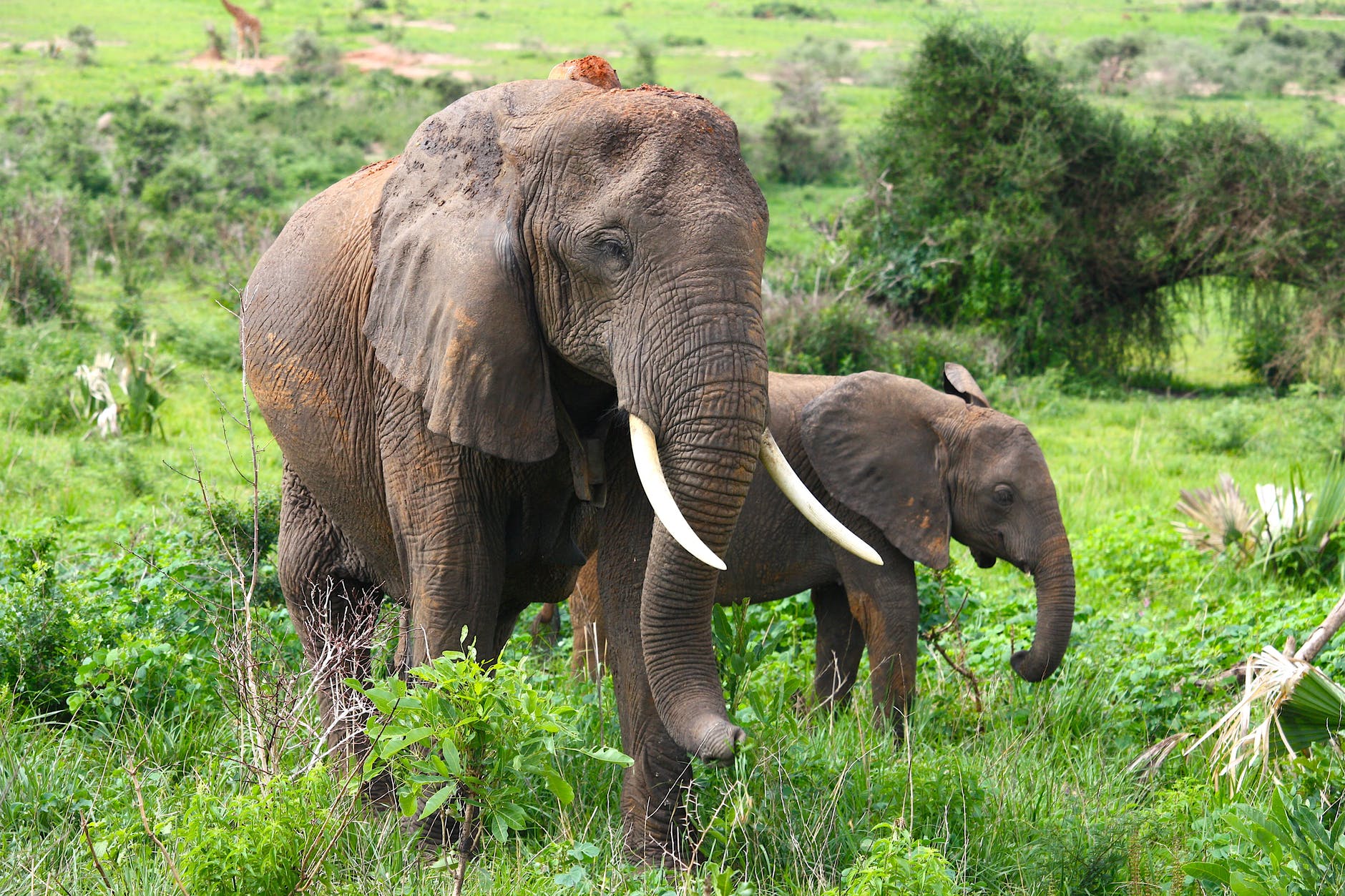
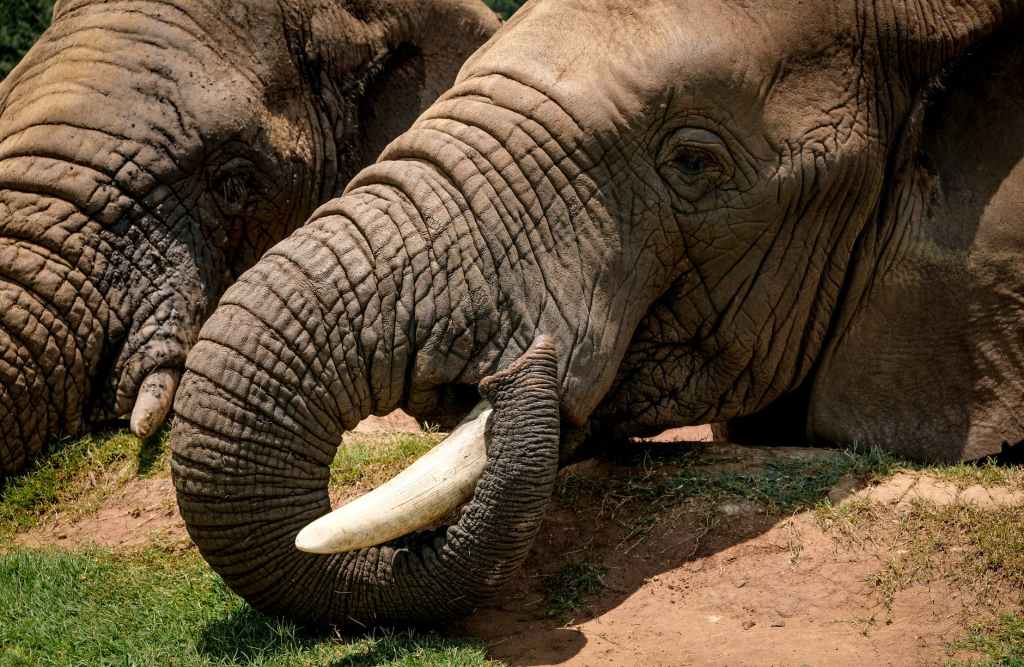
I am sure that we have all seen the majestic elephants flaunting big, off-white tusks on either side of their trunks. These tusks are both beautiful on the elephant and of utmost importance in the species’ survival.
Many poachers claim that there are no after effects of tusk-removal. Either the elephants are killed or sedated before removing their beautiful tusks.
An elephant’s tusk is deeply embedded in its skull. When the tusks are removed, there is a big hole left afterwards. The hole is big enough to stick your arm into it. If the tusks are removed at the point where it protrudes from the head, the nerve is exposed. Either way, now the wound is open and vulnerable to all sorts of infection. So, even though the elephant remains alive it is still at risk. Now, suppose there is an ivory poacher. Any poacher will want as much ivory as he can acquire with as little risk as possible. If he opts for the removal of the tusk completely, he/she will have to completely sedate or kill the elephant, because of little time and the fear of getting caught.
The answer is a ‘Big No’. Ivory has been valuable since ancient times in art and manufacturing a range of items and artefacts. Though elephant ivory is the most important source, ivory of walruses, mammoth, killer whale, sperm whale, hippopotamus, narwhal and warthog are used as well.
The international and national trade of ivory of threatened species such as African and Asian elephants is illegal.
The serenity of the lulling ocean is a wondrous thing to behold..more precious than the gems coveted and covered in platinum or gold…
Oksana Rus
Introduction
International day of Tropics is observed every year on June 29th . This day is celebrated to highlight the different challenges and opportunities faced by the nation as well as by the people who lived in tropical areas .
Firstly , you want to know about things like :
What are tropics ?
Why we celebrate international day of Tropics ?
Or
Is it worth it to talk about these things and is it really important ?
Well hold your horses and try to calm .
What is tropic day and why we celebrate it ?
Well a tropic day is celebrated to highlight the importance of Tropics , it signifies extraordinary and astounding diversity of tropical nations .
The Tropic defined as a area /region between tropic of Cancer and tropic of Capricorn . The day aim at promoting tropical regions and awareness to the people about the diversity of these regions .
While these regions go through little seasonal changes on day to day basis because of some factors like tomography , climatic variation that causes changes in temperature and make these regions warm.
This day introduced to the world when in June 29th , 2014 twelve leading tropical research institutes come together and collaborate. The inaugural state of the Tropics report was launched . The report offers some unique perspective for the increasing the importance of these regions .
United Nations General Assembly adopted resolution A/RES/70/267 in 2016, which declared that 29 June of each year is to be observed as the International Day of the Tropics.
The International day of Tropics briefly explained the issues affecting the tropical zone’s all over the world. To raise awareness and important role the countries played to Sustainable goals .
International day of Tropics 2021
As per the state tropics report the theme of this year is “ THE DIGITAL DIVIDE IN THE TROPICS ”
With the record of sustainable development goals as well as developmental scope . The biodiversity of these regions are maximum and its loss is also greater there. Tropical regions comprise 98% world’s mangrove forests, and around 99% mangrove species.
Due to the subpolar zone the Sun is directly overhead which is one of the region of extinction of flora and fauna in the Tropics. The region is subjected to myriad and need immediate attention to ensure sustainable development.
More than 50% of renewable water resource could be founded their. But the threat lies which causes eviction of lives in the Tropics.
Importance :
Due to the problems it’s our duty as a human being to spread awareness about the implications in climate changes , deforestation , urbanization , global warming effect the biodiversity and lives in Tropics.
The International day of Tropics organize many events in which people share their stories , events and lives in these areas and formulate strategies to ensure the development of such regions .
You who sacrifice fortunes to see the luxuriance of the tropics or the polar lights of the arctic, must pay more dearly to see the One for whom the luxuriance of the tropics is poverty and the polar lights are a tallow candle.
The Android device market is growing day by day, and companies are taking advantage of it by developing Android applications and selling them on the market. Google Mobile Operating System. It is designed to be open source so that Android application developers can take advantage of the operating system and create innovative new applications. The app makes everything easier. But anyone can simply download and use the application; developing an application is not easy. It takes months or even years of brainstorming and deciding on technical details to finally develop an application that can prove itself in the market. To cope with fierce competition in the market, it is important to ensure that everything is done under the latest trends and technological updates in the development industry. Mobile application development is the process of creating software applications that run on mobile devices, and a typical mobile application Use network connections to handle remote computing resources.
Basics of Android development
Android application development consists of one or more of the following four categories:
Operation-an application that provides visible user operations. On the start screen or application Start the operation in the launcher.
Service-You can use service for any application that needs to run for a long time, such as a B. Network monitor or application to check for updates.
Content provider. The easiest way to think about content providers is to think of them as database servers. The job of the content provider is to manage access to persistent data, such as contacts on mobile phones. If your application is very simple, you don’t need to create a content provider. However, if you are building a larger application or application that makes the data available for multiple operations and/or applications, the content provider is a medium that prohibits access to your data.
Streaming media receiver. You can launch Android applications to process data about specific items or respond to events, for example to Receive SMS.
In the past 10 years, Android has become the most popular operating system in many ways.This is a very flexible and user-friendly system that can change anything unrecognizable.It can be done at any stage of the Android application development process, which is impossible to buildanapplication from scratch on a traditional linear platform
Online learning is rapidly becoming one of the most cost-effective ways to educate the world’s rapidly expanding workforce.”
– Jack Messman
Introduction
Virtual classes are becoming a new word in the dictionary of 21st century. It was introduced to the country before but it came to the popularity when people become prisoners in their homes.
Due to the pandemic , virtual world widely came into connect with different countries and one of them was our’s.
Virtual classes become an virtual space where one can ensure to be a keen learner .
How does it work ?
Is it safe to learn online and using different apps for classes ?
How can you assure it cannot harm our privacy ?
Well for the answers you have to read this editorial.
Virtual classes
If you want to teach people a new way of thinking, don’t bother trying to teach them. Instead, give them a tool, the use of which will lead to new ways of thinking.”
– R. Buckminster
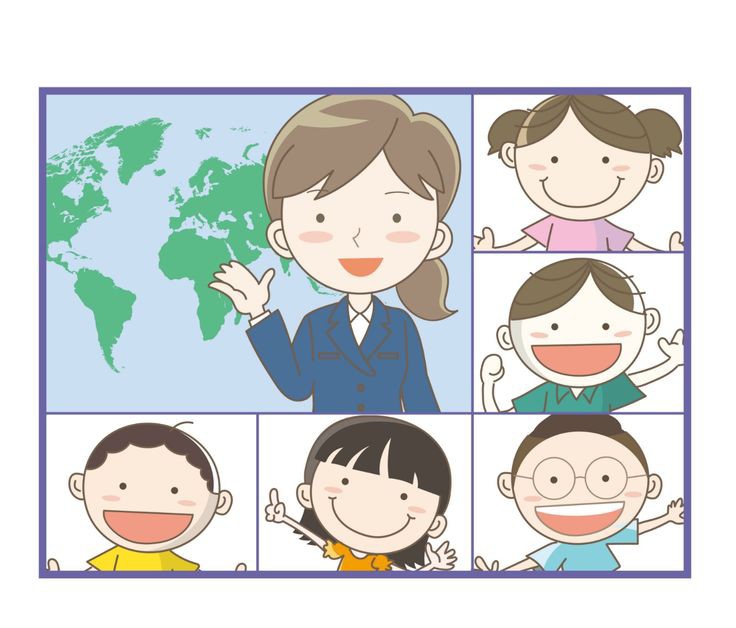
A virtual classroom is a learning and online space where teachers and learners can come together to learn , engage and interact with one another, and work in groups .
The main aim of virtual classes is to provide teacher and learner a platform where they can interact with each other.
It provides an environment to share the learning and thought of the learner and the mentor through video conferencing , Google meetings and others .
How it works
To learn about the virtual classes first you need to know how it works . Their are different portals where we can join virtual classes like zoom , Google meet , WebEx and others . They enable high connectivity , effective communication , simple usage with less internet .
Don’t you think it’s getting to much conceptual . Like OJO -MOJO , I also used some apps for virtual classes and what happened next is the story for me to know and you to explore .
Well , we were at the train station and waiting for a bus , I know I can do standup comedy very well .
Let’s rewrite the statement we were talking about virtual classes . For that we need the most important thing that cannot always be there . Guess what it’s Internet connectivity.
Than we need to login and join from the link that our teachers send in the group .
Want to know a secret , most of the time the link was invisible and students started to create fuss in the group and when it’s time to join the class there were more than 200 messages from where I have to dig the grave , I mean find the link. See how hard I have to work.
Today’s world
Develop a passion for learning. If you do, you will never cease to grow.
– Anthony J. D’Angelo
As the COVID resulted the shut-down of schools and colleges all over the world. More than 1.2 billion children had stoped learning.
And the result , we all know education system changed dramatically with the new e-learning in the digital platform.
Census shows that online learning showing retention of information and take less time. With the increase of online learning many platform providing free learning like BYJU’s , Coursera , Edx , etc,.
Some believe that due to the dramatically changes it was hard to use such platforms and others believe that integration of learning Internet technology education will help to accelerate the learning with diversity.
Choose the sides and make your choice.
If you want to teach people a new way of thinking, don’t bother trying to teach them. Instead, give them a tool, the use of which will lead to new ways of thinking.”
Diesel fuel, in general is any liquid fuel specifically designed for use in diesel engines, whose fuel ignition takes place, without any spark, as a result of compression of the inlet air mixture and then injection of fuel. Therefore, diesel fuel needs good compression ignition characteristics.
The most common type of diesel fuel is a specific fractional distillate of petroleum fuel oil, but alternatives that are not derived from petroleum, such as biodiesel, biomass to liquid (BTL) or gas to liquid (GTL) diesel are increasingly being developed and adopted. To distinguish these types, petroleum-derived diesel is increasingly called petrodiesel in some academic circles.
In many countries, diesel fuel is standardised. For example, in the European Union, the standard for diesel fuel is EN 590. Diesel fuel has many colloquial names, most commonly, it is simply referred to as Diesel. In the UK, diesel fuel for on-road use is commonly abbreviated DERV, standing for diesel-engined road vehicle, which carries a tax premium over equivalent fuel for non-road use. In Australia, diesel fuel is also known as distillate, and in Indonesia, it is known as Solar, a trademarked name by the local oil company Pertamina.
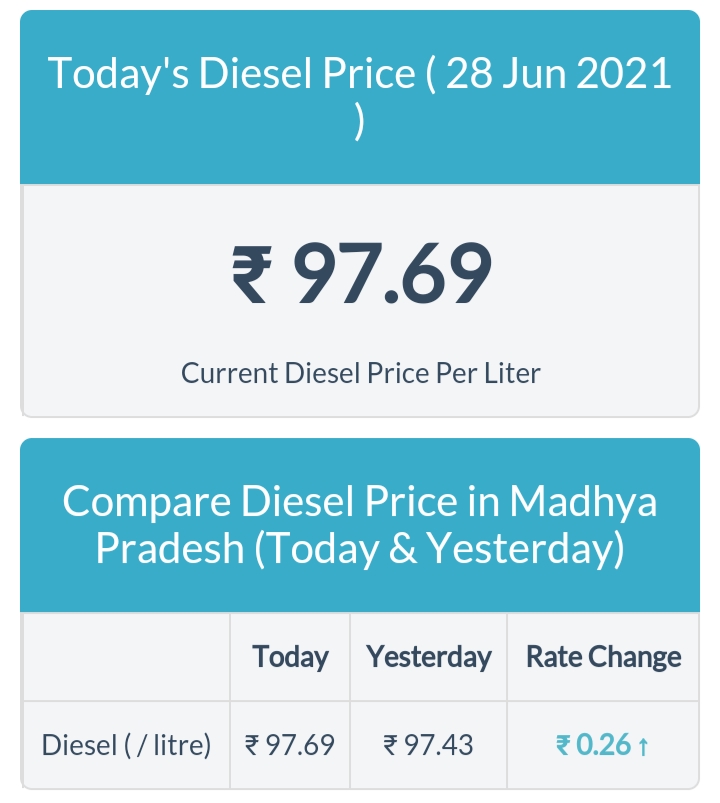
Diesel price in Madhya Pradesh today is fixed by state-run oil marketing companies based the daily ‘Dynamic Fuel Pricing’ mechanism. Here, you can check the current diesel price in Madhya Pradesh, find todays diesel price as well as the quarterly price trend in Madhya Pradesh. New diesel prices in Madhya Pradesh are updated by oil firms daily at 6:00 am IST.
You can also find out how diesel prices in Madhya Pradesh are calculated and how prices are compared to other states. Additionally, find the current Madhya Pradesh diesel price and primary factors impacting diesel prices in India as well as the highest and lowest price recorded during a month.
The Securities and Exchange Board of India (SEBI) is the regulatory body for securities and commodity market in India under the jurisdiction of Ministry of Finance , Government of India. It was established on 12 April 1988 and given Statutory Powers on 30 January 1992 through the SEBI Act, 1992.
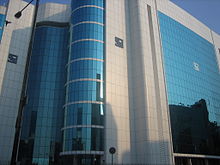
Securities and Exchange Board of India (SEBI) was first established in 1988 as a non-statutory body for regulating the securities market. It became an autonomous body on 30 January 1992 and was accorded statutory powers with the passing of the SEBI Act 1992 by the Indian Parliament. SEBI has its headquarters at the business district of Bandra Kurla Complex in Mumbai and has Northern, Eastern, Southern and Western Regional Offices in New Delhi, Kolkata, Chennai, and Ahmedabad respectively. It has opened local offices at Jaipur and Bangalore and has also opened offices at Guwahati, Bhubaneshwar, Patna, Kochi and Chandigarh in Financial Year 2013–2014.
The SEBI is managed by its members, which consists of the following:
*The chairman is nominated by the Union Government of India. *Two members, i.e., Officers from the Union Finance Ministry. *One member from the Reserve Bank of India. *The remaining five members are nominated by the Union Government of India, out of them at least three shall be whole-time members.
SEBI has to be responsive to the needs of three groups, which constitute the market:
*issuers of securities *investors *market intermediaries
SEBI has three powers rolled into one body: quasi-legislative, quasi-judicial and quasi-executive. It drafts regulations in its legislative capacity, it conducts investigation and enforcement action in its executive function and it passes rulings and orders in its judicial capacity. Though this makes it very powerful, there is an appeal process to create accountability.
Development is almost a mainstream word is today’s day and age and because of that, there are also negative connotations attached to it. In this book, such aspects of development have been discussed at length and it is edited by Mark Hobart. The subject of western development models has come under intense scrutiny and criticisms in recent times. In fact, western anthropologists have questioned the application of scientific knowledge in processes of development. They argue that despite investing large sums of money, in reality the experience of countries in Africa, Asia and Latin America has been just the opposite. Problems of underdevelopment continue to plague the countries of these regions. Over the last few decades or so, a new paradigm of development has emerged. According to this, local knowledge and very often a ‘bottoms-up’ approach to problem solving are increasingly being advocated and implemented. At the outset, the editor of this collection of essays, Mark Hobart, says that the essays and participants’ voices question the claims of western science to providing solutions to underdevelopment and in understanding the importance of local knowledge and its application.
The 12 contributors to this compendium challenge the Utopian view of western knowledge as the only and successful way in achieving economic and social development. Using ethnographic case studies from Europe, Africa, Asia and Latin America, the contributors examine the ways in which local and indigenous knowledges are often more effective than western knowledge and systems in finding solutions to problems. The essays offer a practical approach of using theory and practice for development that economists, sociologists, and political scientists, among others, will find useful.
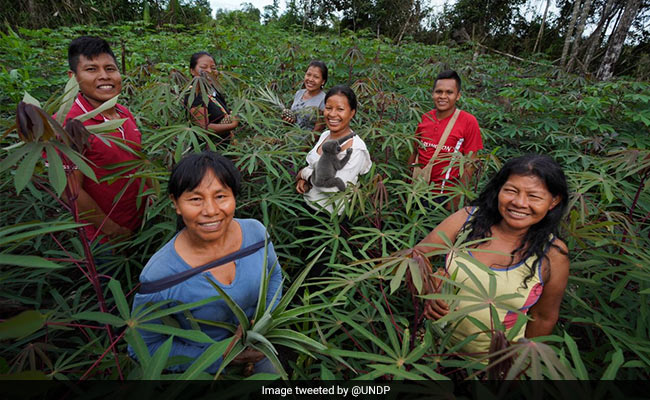
The book cogently describes the importance of development in the world today. Development means different things to several people. It is considered ‘important’ for developing nations to receive developmental aid. It is big business for banks and industries. Multilateral agencies help super powers by handing out the promise of loans to developing nations. For many advanced nations, through their development agencies, aid is an important arm of their economic diplomacy. Yet others are able to leverage their aid-giving capabilities to creating markets for their multinational corporations and help further their powerful vested interests in the process. The whole process of development is so one-sided and top-down that it has become the idiom of economics, technology and management. As noted earlier, what is ignored are the knowledges of the peoples being developed.
The essays clearly reveal that local and indigenous knowledge can form the basis of sustainable management and development. Use of technology and western scientific knowledge have to be employed prudently and judiciously. The essays show that local knowledge and a common-sense approach go a long way in problem solving. Local wisdom, sometimes going back in time and history, can still find a place in the modern world. In our own country, Gandhian ideals and thoughts, such as in rural development, self-sufficiency, at the local level and indigenous practices will help our rural areas prosper. These and a healthy mix of wisdom imbibed from our forefathers should help take India forward.
The concept of human security has given rise to a range of responses and attracted a lot of attention. It has connected the idea of security with that of human development. The very notion of human security has become a part of a broader political discourse. Typically speaking, the concept represents a departure from traditional security studies, which focus on the security of the state. The subjects of the human security approach are individuals, and its end goal is the protection of people from traditional (i.e. military) and non-traditional threats such as poverty and disease.
The advocates of human security have generally been less focused on meta-theoretical debates about the nature of security and have instead focused on influencing policy to take into account the security of individuals in a more practical sense. The concept of Human Security is often believed to have its basis in the realm of policy and the 1994 UNDP Report is believed to be the key official statement of the concept. The report sought to shift the focus from inter-state conflict to that of issues related to development.
Beyond territorial and military concerns, the Report argued that human security is fundamentally concerned with human life and dignity. For analytical purposes, UNDP classified its four main characteristics as: 1) it is universal, 2) its components are interdependent, 3) it is best ensured through prevention, 4) and it is people-centred.
For UNDP, human security meant safety from chronic threats such as hunger, disease, and repression, and it meant protection from sudden and hurtful disruptions in the patterns of daily life. Understood in these terms, it has also been embodied in the policy axiom of “freedom from fear” and “freedom from want”. While acknowledging the varying intensity of possible threats to human welfare, UNDP grouped these threats in seven non-exhaustive and nonexclusive security categories: –
1) community- protection of traditional culture of ethnic groups
2) economic- freedom from poverty
3) environmental- protection from factors such as pollution and degradation
4) food security- i.e. access to food
5) health- access to healthcare
6) personal- physical safety from the use of violence
7) and political- protection of civil liberties and freedom of political expression
One of the key debates in regarding the definition of Human Security. Primarily these are narrow human security and broad human security. The narrow definition emphasizes on ‘freedom from fear’ i.e. essentially conflict prevention and resolution. On the other hand, the broad definition emphasizes on ‘freedom from fear’ and ‘freedom from want’ i.e. conflict prevention and resolution as well as broader social issues such as health and education.
For many scholars operating within the ambit of critical security studies, the emerging practices associated with human security and development are a source of both critical opportunity and concern. Some say that what usually happens is that the policies and practices, in the name of human security, often fail to fulfill its progressive potential. Thus, Human Security is one of the most challenging contemporary ideas that critical approaches to Security are trying to come to terms with. The concept of Human Security provides a continuing source of debate.
World over, GDP, the Gross Domestic Product is the most common indicator of development. Progress of each country is calculated by the increase in its Gross Domestic Product. GDP is the monetary value of all the final goods and services produced in a country in an accounting year.
It is calculated by three methods –
Product method
Income Method
Expenditure method
Under Product method, national income is calculated by the summation of monetary value of all the final goods and services at market price in a year. Under Income method, income earned by various factors engaged in the production of goods and services is added to reach the national income. This provides the National income at factor cost. Under Expenditure method, national income is the sum of expenditure incurred on the purchase of goods and services in a year.
Apart from GDP, other measures of national income are also prevalent like NDP (Net Domestic Product), GNP (Gross National Income), NNP (Net National Product) etc.
NDP can be calculated by deducting the depreciation from GDP i.e. NDP = GDP – depreciation
GNP is calculated by adding net factor incomes from abroad to the GDP i.e. GNP = GDP + Net factor incomes from abroad.
Net factor income from abroad is calculated by adding the incomes from export of goods and services and subtracting the income going out of the country through import of goods and services.
NNP is calculated by deducting the depreciation from the GNP i.e. NNP = GNP – Depreciation. All the aforesaid measures of national income are calculated at either market price of factor cost.
GDPFC = GDPMP – Indirect taxes + subsidies.
Since indirect taxes and subsidies alter the market price of the commodity, in order to know the share of factor of production in the price, indirect taxes are deducted and subsidies are added in the market price. Apart from factor cost and market price, national income is also calculated at current prices and constant prices. The GDP at current prices determines the GDP at the time of its calculation while GDP at constant prices is used mainly for comparison of GDP in different years. GDP at constant prices is calculated with the help of a base year.
In this manner different measures of National Income are calculated as per the need of time. Though every country uses GDP to measure its progress but the concept is also criticized as it excludes many other indicators of development like welfare, health, education, inequalities, quality of environment. The basic idea behind the criticism is that the countries treat GDP growth as the objective of their economic development programme however the objective of development is to ensure better life to the citizens and GDP growth is just one means to achieve that objective. Suppose if the GDP of a country is growing by 8 percent per annum but the population of the country is growing by 2 per cent per annum then the per capita GDP of the country is increasing by only 4 per cent per annum. Moreover, if the prevailing inflation is 5 percent, then the real per capita GDP is in fact decreasing by 1 per cent. Thus even on purely economic basis, real GDP per capita is the better indicator of progress than just GDP growth.
Even the real per capita GDP is blank about the distribution of GDP. Even if real per capita GDP is growing at more that 8 per cent per year but most of this increase is cornered by elite section leaving bulk of the society in the quagmire of poverty, then it cannot be called as development by any means. Therefore many intellectuals call for the replacement of GDP by other to indicators to measure the level of development. One such index is Physical Quality of Life Index (PQLI) developed by Morris de Morris by including non-economic factors like Infant Mortality rate, life expectancy at age one and literacy rate. Though GDP is not the sole representative of development but it is indeed one of the indicator of development and therefore exclusion of GDP from any development index is also prone to criticism as the as the development on the basis of GDP only.
In order to correct this flaw, United Nations Development Programme (UNDP) came with Human Development Index (HDI) which includes both, economic as well as non economic factors to measure the development. The index includes GDP per capita at Purchasing Power Parity (PPP), adult literacy rate as well as primary, secondary and tertiary enrollment ratio and Life expectancy at birth. GDP per capita takes care of economic well being, while Life expectancy and literacy rate details the health of the society as well as skill development in the society. In 2011, India was ranked at 134 out 187 countries in terms of HDI; indeed a poor show ! Though HDI may have some share in criticism but it is most widely accepted indicator of development as it treats human development as the ultimate objective of development. Apart from HDI, UNDP releases other indices also like Gender Inequality Index, Multi Dimensional Poverty Index, Inequality adjusted HDI etc.
The incompleteness of the GDP to delineate the development had given rise to the other measures of development. In the latter half of the 20th century, many countries witnessed high level of GDP growth but were still lacking the effective human development. This further caused disillusionment of GDP approach. But few economists feel that there is nothing wrong in the GDP approach.They feel that absence of development despite of high GDP growth is not because of concentration of planners on GDP growth but it is because the growth was not as high as it should be to develop. Moreover, it is also very hard to conceive for a country to develop without a rise in the GDP. How a country can increase its expenditure on health and education without an increase in its national income. So it can be concluded that though GDP is not a sole indicator of development but indeed it is a necessary input for development. In other words, GDP is necessary but not a sufficient to usher development.
City derives from a French word meaning citizenry. A city is a large or important town. In the United States, cities are incorporated municipalities with local governments. In Great Britain, a borough with a bishop’s seat is called a city. As with the words village and town, city can also refer to the its inhabitants. It’s like watching Paris from an express caboose heading in the opposite direction—every second the city gets smaller and smaller, only you feel it’s really you getting smaller and smaller and lonelier and lonelier, rushing away from all those lights and excitement at about a million miles an hour.
City Expressions
Many interesting uses of the word city exist in English. For example, imagine you see a place with a lot of stray dogs. You might call it “dog city” to indicate that it is full of or indicative of dogs. A city slicker is someone who doesn’t know much about country life. If you say that you can’t fight city hall, you are saying there’s no way you will win in a battle against bureaucracy.
Advantages of City Life:-
City life has an advanced and well-equipped environment. People migrate to cities because of better job opportunities, stability and a decent income which is a lack in villages.
Cities have a huge number of schools, colleges or universities established. Hence, the city folks get proper quality education which is a primary factor for standard living.
Recreation and entertainment are plenty in the cities. People also get adequate opportunities to establish and showcase their talents here.
City life provides commercialization, banking systems, and entrepreneurial businesses. This attracts more people from townships to settle in cities.
Better transportation, sanitation, availability of water and drainage systems are seen in cities. The drainage of polluted water goes through treatment before getting dumped in lakes or rivers. This keeps a small check on pollution too.
Medical help is at fingertips when required. There are a number of hospitals and clinics and well-equipped doctors and nurses for people in need.
Anonymity in cities helps in escaping from the judgements of people.
Disadvantages of city life:-
Urbanization is increasing at a rapid pace, and currently, about 30-33% of Indians lives in cities. This rate tends to be around 40% by 2030. With the high population density, the quality of life in cities is expected to degrade and become unfit for living.
City life is a very busy one, developing every second to a better version of itself. This results in a loss of cultural qualities and flavours.
High demand for city life has resulted in congestion. Human population has increased a lot in city areas.
The city’s population increases day by day. This leads to an environment with polluted air, smog, unclean water supplies, noise pollution
It follows from the previous point that an increase in pollution rates in the cities brings in more health issues. People tend to fall sick more in cities due to the polluted environment which is unfit for living.
Unfair competition among businesses, an increase in crime rates and immorality of the people is more in the cities.
Increase in costs and expenditure is a vital problem for city dwellers. This creates a reason for more competition for gaining wealth and hence increases stress and crimes too.
Village Life
The word village comes from a French term referring to a group of buildings. That’s exactly what a village is—a small community in a rural area. Sometimes, larger towns incorporate the houses of a village as a municipality. Village can also refer to inhabitants of a village and is even applied to groups of animal dwellings.
Advantages of village life:-
A pollution-free environment is available in the rural/village areas only.
Scenic beauty and greenery of rural areas are prominent. This also attracts tourists from around the globe.
Rural areas have a scope for socio-economic benefits like reduction in prices of agricultural and consumer products, access to markets, public transport, employment opportunities, and better education and healthcare facilities.
The essence of folk and culture is prominent in these areas. This defines the rural areas uniquely.
Disadvantages of village life:-
Lack of higher education is a backlog for rural lives. This creates the main hurdle for better standards of living.
Rural areas have poor road connectivity. Over 40 per cent of India’s rural population remains outside the rural road network. According to the Planning Commission’s Working Group on Rural Roads, there are over 3.3 lakh rural habitations with no road connection.
Limited medical help persists in these areas. A counted number of hospitals and even lesser doctors are available. Hence at times, people are bound to move to city areas for sustaining life.
Rural life is difficult for women more because of lack of proper sanitation and toilets. The primary reason for this has to be the lack of educational opportunities.
Conclusion:-
Though the city life has many disadvantages, people flock there more for its advantages.
Improper road connectivity is one of the main reasons for stopping growth in rural areas. But the government is making situations better for rural India. The Pradhan Mantri Gram Sadak Yojana (PMGSY) is a step towards improving road connectivity in rural parts of the country.
Hence, the reduction of pollution in cities and the development of roads and infrastructure in rural areas will bring a balance between the two.






















 Eduindex
You must be logged in to post a comment.