Effects of COVID-19 on Education system

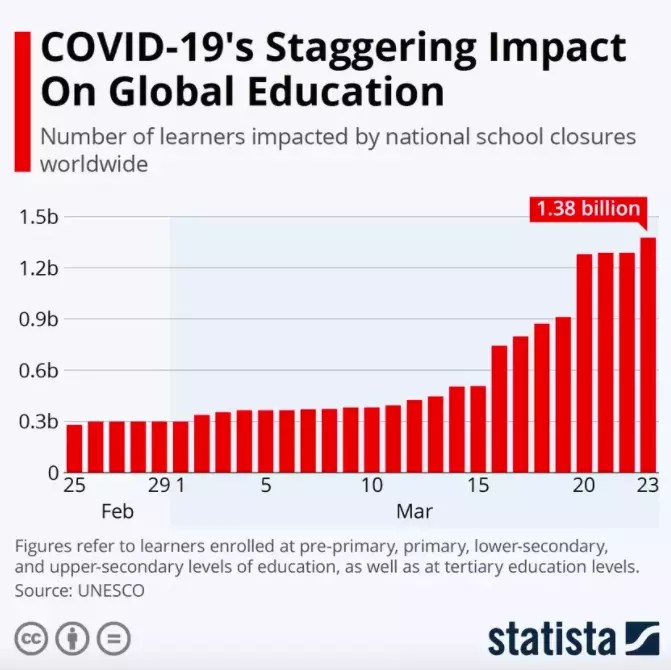
Education is undoubtedly the backbone of modern civilization.Covid-19 affected every part of society so education is not left alone.As per United Nations, some 1 billion students and youth across the planet are affected by school and university closures due to the COVID-19 outbreak.In India schools ,colleges are closed more than 3 months as of now but still their is uncertainty about when and how the education system can come back to normal.

The COVID-19 pandemic has significantly impacted the education system worldwide, leading to a myriad of challenges and changes:

  1. School Closures: To control the spread of the virus, many countries implemented widespread closures of educational institutions. This disrupted traditional learning and affected millions of students globally, leading to interruptions in their education.

  2. Transition to Remote Learning: To mitigate the effects of closures, schools and universities shifted to remote learning and online classes. However, this transition was not seamless for everyone. Disparities in access to technology and the internet resulted in unequal learning opportunities for students.

  3. Learning Loss: Extended periods away from traditional classrooms led to learning loss for many students. The lack of face-to-face interaction, support, and structured learning environments affected academic progress.

  4. Mental Health Impact: The pandemic brought about increased stress and anxiety among students, teachers, and parents. Isolation, uncertainty, and the challenges of adapting to remote learning took a toll on mental health.

  5. Economic Impact: Families facing financial hardships due to the pandemic had to make difficult choices, potentially affecting their children’s ability to access education. This led to concerns about increased drop-out rates, especially among vulnerable populations.

  6. Educational Inequalities: Existing educational disparities were exacerbated. Students from low-income families, rural areas, or marginalized communities faced greater challenges in accessing remote learning due to lack of resources or inadequate infrastructure.

  7. Adaptation of Teaching Methods: Educators had to rapidly adapt their teaching methods to suit online platforms. This shift required training and resources, often posing challenges for teachers who were unfamiliar with technology-driven teaching methods.

  8. Reimagining Education: The pandemic forced a reevaluation of traditional educational systems. It highlighted the importance of flexibility, innovation, and resilience in education, leading to discussions about reforming teaching practices and educational policies.

Moving forward, there’s a push for hybrid learning models that combine in-person and online elements, increased investment in technology and infrastructure to bridge the digital divide, and a focus on mental health support for students and educators. The pandemic has spurred a conversation about reshaping education to be more adaptable and inclusive in the face of future challenges.


Academic Degree and its Types

 Academic Degree and its Types

Academic degree


A lot of students just passed school and going to pursue an academic degree for their higher studies. But you know what is an academic degree and why it is important. An Academic degree is a qualification awarded to the student usually by a college or University for the successful completion of the course of study in higher education. Collage or universities offer various types of courses at different levels of degrees like Under graduation, Master’s, doctorate, diploma, etc. Academic degrees are research-oriented and prepare the student for a research-oriented career. Any course that includes theory, methodology, history, and research is considered an academic degree. 


After completion of an academic degree, one can apply for a decent job in their field, that pays well. The higher the level of degree, the better the job and salary. Academic degrees are not like professional degrees in which you focus on a specific professional career, they can be used for different fields and careers.


Levels of academic degree


Under graduation- Bachelor’s degree

After completion of secondary education you can opt for Bachelor’s degree. You need to study for 3 to 5 years to get Bachelor’s degree. This is the first level of an academic degree. After completion of it, you can opt for the next level of degree. For example, B.A., B. Sc, B.com, BJMC, B. Tech, etc.


Post-graduation- Master’s degree

After completion of a Bachelor’s degree you can opt for a Master’s degree. You need to study for 1 to 2 years to get a Master’s degree. This is the second level of an academic degree. This degree is useful if you want to study is specific field and do research. For example, M.A., M.Sc., MBA, etc. 


Doctorate/Ph.D.

 If you want expertise in a particular field of your interest then you can opt for a doctorate program. During this program, you need to do research in a particular field which helps you get deep knowledge. This last for 3 to 6 years. For example, Ph.D. in English/psychology/ philosophy/etc.


Types of Academic degrees

  • Bachelor of Arts and Bachelor of Science= These are the most common academic degrees which are mostly opted for by students if they want to start their career in the field of arts and science.
  • Bachelor of Business Administration = This degree is very helpful if you want to start your career in business administration. You can directly start their career after completion of the course or may continue their education. 
  • Bachelor of Fine Arts= If you want to start your career in the field of visual and performing arts, this is the best course for you.
  • Bachelor of Architecture= This program is very helpful for those who want to create their career in the field of Architecture or want to become Architecture.
  • Master of Arts and Master of Science= If you want specialization in a particular field after a Bachelor’s degree you can opt for this program.
  • Master of Business Administration= This is a high-level degree in business administration. It helps you to get deeper business knowledge and you can get a good job in the field of business.


A lot of degrees are available according to different fields. You can opt for any degree of your interest based on your educational history.

Integrate vocational education into Higher Education system

 National Education Policy 2020


National Education Policy 2020 was launched by the Prime Minister in July 2020. In the year following that, a number of initiatives have been taken by the DoHE-

  1. For integration of Vocational education into the higher education system (a) UGC(Institutions Deemed to be University) Regulation 2019 has been amended; and (b) guidelines have been Issued by UGC and AICTE to enable Higher Education Institutions( HEIs) offer Apprenticeship/Internship embedded degree programme.
  2. National Apprenticeship Training Scheme has been extended for the next five years with an outlay of Rs. 3054 crore which will make, through apprenticeship, around 9 lakh students employable. Under the scheme students will be given apprenticeship in the emerging and frontier technology such as Artificial Intelligence, drone technology, new evolving and emergent areas including expertise required for Production Linked Incentive Scheme, and PM Gati Shakti Programme of the Government.
  3. Apprenticeship Scheme and Internship Embedded course will create a sustainable skilling eco-system. The scope of the National Apprenticeship Training Scheme has been broadened to give apprentices to students from humanities, commerce and science besides engineering stream.
  4. In order to enable students avail internship, an Internship Portal has been launched by the AICTE. The portal currently has 12.35 lakh internships, 73 lakh students and 38,650 employers registered on it.
  5. Graduate-level, master’s and doctoral education in large multidisciplinary universities, while providing rigorous research-based specialization, would also provide opportunities for multidisciplinary work, including in academia, government, and industry. Accordingly, the Academic Bank of Credit was launched on 29.07.2021 by  Prime Minister. This academic bank would digitally store the academic credits earned from various recognized HEIs so that the degrees from an HEI can be awarded taking into account credits earned. The UGC has provided necessary enabling mechanism to the HEIs by way of regulations.
  6. For enabling multiple entry and exit points, thus, removing currently prevalent rigid boundaries and creating new possibilities for life-long learning, guidelines on Multiple Entry /Exit in Academic Programme in Higher Education Institutions have been issued by the UGC.
  7. vii. To enhance Gross Enrolment Ratio (GER), online teaching and learning is one of the options. Accordingly, UGC has notified Open Distance Learning (ODL) and Online Programmes Regulations, 2020 ; and UGC (Credit Framework for online Course through SWAYAM) Regulation 2021 which has broad-based the eligibility of HEIs to offer Online Courses, as well as enhanced the percentage of courses permitted towards credit from 20 % to 40% by using MOOCs SWAYAM.
  8. To enable Institute of Eminence (IOEs) offer offshore courses (for globalization of education), UGC has amended UGC (Institution of Eminence Deemed to be Universities) Regulation.
  9. For promotion of Indian Knowledge System, arts and culture a knowledge Cell has been set up in the Ministry of Education and in All India Council for Technical Education(AICTE).
  10. To achieve the goal of using the mother tongue/local language as a medium of instruction, and/or offer programmes bilingually, in order to increase access and GER and also to promote the strength, usage, and vibrancy of all Indian languages, JEE (Main) and NEET (UG), the all India exams for entry in Engineering and Medical colleges, have been conducted in 12 languages in addition to English. Furthermore, the All India Council for Technical Education (AICTE) has given approval to nineteen engineering colleges to impart engineering courses in six Indian languages across ten states from the Academic year 2021-22.
  11. AICTE has also developed a tool called “AICTE Translation Automation Al Tool” with a vision to translate English language online courses into eleven different Indian languages for access to a more significant number of students in the rural areas.

 SWAYAM

  1. One hundred and fifty four (154) Universities have come on board for accepting credit transfer for courses offered through SWAYAM platform till now.
  2. From the academic year 2022-23 onwards the first year courses in Arts, Commerce, and Science & Engineering are planned to be made available on SWAYAM platform in 12 languages in addition to English to help students from vernacular medium to study well and excel. Al and ML shall be used for this purpose.

 e-PGPathshala: Online Gateway of PG Courses

  1. The National Mission on Education through information Communication Technology (NME-ICT) is envisaged as a Centrally Sponsored Scheme to leverage the potential of ICT, in teaching and learning process for the benefit of all the learners in Higher Education institutions at any-time anywhere mode.
  2. It is one of the largest OER repositories in India having content of PG courses.
  3. It provides high quality e-content for PG programmes for the benefit of the teachers and students. 
  4. It also Address disparities of various kinds such as rich/poor, urban/rural, cast and religion based disparities, geographical disparities, regional disparities etc. 
  5. 778 papers, with 23000 plus e- modules in 67 Subjects have been developed, out of 23 subjects covers the entire syllabus/curriculum. 
  6. About 1.3 crore plus visitors including international visitors have visited the e-PG Pathshala site. The details of international visitors are: USA :- 11843, UK : – 7190, Australia:- 8615, Russia : – 13579, Pakistan : – 7215, UAE : -3924, China :- 28745, New Zealand:- 366, Japan :- 6722, Germany : 23592.
  7. vii. Total YouTube subscriber on Vidya-Mitra Channel is 5,57,000 with a 63,864,531 video views. 
  8. e-PGPathshala content is being used by universities for blended learning.
  9. Content of the e-PG Pathshala has been distributed through I-LMS to several universities for their learning Management System. 
  10. Two by-product viz. e-Pathya (Offline Access to all e-PG Videos) and e-Adhyayan (e-Books): has been developed.
  11. Recently, due to COVID-19 Lockdown the ePGPathshala website has been used widely across all Universities and several Universities have used ePGPathshala content as a flip class room. 
  12. xii. UGC constituted an appraisal/outcome review Committee for review of e-PG Pathshala Project in 2020. And The Committee felt that e-PG Pathshala, has proved to be very useful to faculty as well as the students as an open education resource and strongly recommended to continue this scheme and recommended that Efforts should be made to translate the courses uploaded on e-PG Pathshala Portal initially in eight regional languages viz. Hindi, Marathi, Telugu, Tamil, Malayalam, Kannada, Bangla, and Gujarati.

 Azadi Ka Amrit Mahotsav(AKAM)

Indian Council of Historical Research is organizing countrywide seminars to identify lesser known 75 heroes, incidents, places, organizations and literature associated with national struggle for  independence for publication later on. National Book Trust is publishing 75 books covering the unknown and unsung heroes/ personalities, forgotten places and events associated with the national struggle for freedom. Besides this National Book Trust is also bringing out 75 books on the unknown personalities who have contributed shaping the country after independence. January 2022 has been assigned for celebrating Innovation Ecosystem. During this month the Innovation Cell of the Ministry will organize special programmes to showcase student innovators, providing funding and incubation support to 75 Innovative Technologies developed by students and faculty, launching ‘KAPILA Campaign’ for promoting Intellectual Property awareness.

 Common University Entrance Test (CUET)

The National Education Policy, 2020 recommended that the NTA will serve as a premier, expert, autonomous testing organization to conduct entrance examinations for undergraduate and graduate admissions and fellowships in higher education institutions. Accordingly, it has been decided that there will be a common entrance examination in all Central Universities, Common University Entrance Test (CUET), to be conducted by National Testing Agency (NTA) for admission into all Central Universities from the year 2022-23. This exam shall test conceptual understanding and the ability to apply knowledge and shall aim to eliminate the need for taking coaching for these exams. The process will reduce the burden on students, universities and colleges, and the entire education system.

State Eligibility Test (SET)

During the year 2021, UGC has granted accreditation to following State Nodal SET Agencies for conducting SET:-

  1. Tamil Nadu-SET (Nodal Agency- Annamalai University, Annamalai Nagar, Tamil Nadu).
  2. West Bengal-SET (Nodal Agency- West Bengal College Service Commission)
  3. Jammu Kashmir and Ladakh-SET (Nodal Agency- University of Jammu, Jammu)

Ek Bharat Shreshtha Bharat

Under Ek Bharat Shreshtha Bharat the Ministry has launched two Mobile Apps. The first Bhasha Sangam has a collection of 100 sentences of daily conversation in 22 Indian languages and aims to teach the same to at least 75 lakh people during the AKAM period. The other Mobile App is a fun quiz game on different states of India. Both Apps allow for self testing and certificate generation.

 Unnat Bharat Abhiyan

  1. To promote the higher education in the rural districts, the scheme Unnat Bharat Abhiyan has been launched to cater the rural local needs. The objective of the scheme is to engage reputed higher educational institutions (central and state; public and private) to understand and work in rural areas.
  2. With the intention of enriching rural India, the Higher Educational Institutes are expected to adopt at least 5 villages and customize the available technologies as per the local needs and also to improve the implementation of existing government programs. Therefore, it may be mentioned that program focuses on enrichment of rural India through technological interventions. As of now 2897 (~2900) institutions are participating and ~ 14500 villages have been adopted by them under the scheme.
  3. The Scheme has been extended for a further period of 5 years i.e. up to March 2026 at a financial outlay of Rs 48.53 Cr.

 Scholarship Schemes

The Central Sector Scheme of Scholarship for College and University Students:-

  1. The EFC in its meeting held on 06-07-2021, recommended continuation of the CS
    Scheme “Scholarship for College and University Students” for next five years from 2021-22 to 2025-26 at a total cost of Rs. 1325.00 Crores.
  2. For academic year 2021-22, National Scholarship Portal has been opened on 18th
    August, 2021 to receive Fresh and Renewal online application form. So far 99957 fresh and 115582 renewal number of applications has received on NSP.
  3. This year (Upto November) a total 157528 number of scholarships have been disbursed to the tune of Rs 166.78 cr.

Central Sector Interest Subsidy Scheme (CSIS) & Credit  Guarantee Fund Scheme for Education Loan (CGFSEL):-

  1. The EFC in its meeting held on 06-07-2021, recommended continuation of the CSIS & CGFSEL for next five years from 2021-22 to 2025-26 at a total cost of Rs. 7721.19 crore.
  2. PFMS Integration of Canara Bank web portal with PFMS successfully done. Payment files being moved through the new PFMS Interface.
  3. Web Portal for Claim Year 2020-21 under CSIS Scheme opened on 01.11.2021 upto31.12.2021.
  4. Total Expenditure under CSIS & CGFSEL- Rs. 1623.52 crore in r/o 794694 no. of claims.

Special Scholarship Scheme for J&K

  1. The EFC in its meeting held on 06-07-2021, recommended continuation of the Special Scholarship Scheme for Jammu & Kashmir and Ladakh during FY 2021-22 to 2025-26 at a total cost of Rs. 1111.81 Crores.
  2. This year (Upto November) a total 14665 number of scholarships have been disbursed to the tune of Rs 144 cr.

 Sindhu Central University

For establishment of Central University of UT of Ladakh an act has been passed by the Parliament in the Monsoon Session and has been notified on 13.08.2021.

 Higher Education Financing Agency

  1. HEFA finances for HEIs, KVs, NVs, AIIMS and other educational institutions of the Ministry of Health.
  2. To fund projects to the tune of Rs. 100,000 crores by 2022.
  3. As on 30th November 2021, projects worth Rs. 43115.00 crores have been approved.
  4. A loan amount of Rs. 32807.06 crores has been sanctioned and Rs. 12892.98 crores has actually been disbursed.
  5. The number of educational institutions that have funding through HEFA stands at 97.

 IISER

Permanent campuses of IISER, Tirupati & IISER Berhampur will be setup with capital cost of Rs. 1137.16 crores and Rs. 1129.32 crores respectively. IISER Tirupati and Berhampur have planned to shift in permanent campuses from next year.

DEEMED TO BE UNIVERSITIES

  1. During the year 2021, Morarji Desai National Institute of Yoga, 68, Ashok Road, New Delhi-110001 has been declared as Deemed to be University. Eleven proposals are under consideration.
  2. Following Deemed to be Universities have been included under Section 12-B of UGC Act, 1956:
  1. Sri Balaji Vidyapeeth, Mahatma Gandhi Medical College, Puducherry.
  2. Vels Institute of Science, Technology & Advanced Studies (VISTAS), Pallavaram, Chennai, Tamilnadu.
  3. Bharat Institute of Higher Education & Research, Chennai, Tamilnadu
  1. Off-campus centre of following Deemed to be Universities have been approved.
  1. S.R.M Institute of Science and Technology, Chennai, Tamilnadu.
  2. ICFAI Foundation for Higher Education, Hyderabad, Telangana.

 WOMEN’S STUDIES/GENDER SENSITIZATION SECTION 

  1. At present, 159 Women’s Studies Centres have been established in various Universities and Colleges under this scheme. 
  2. UGC has also initiated the process for creation of excusive/independent online portal for Women’s Studies Centres. 
  3. UGC has issued an advisory on 07-12-2021 for one day awareness programmes on Sexual Harassment in the Work place (Prevention, Prohibition and Redressal of Sexual Harassment of Women Employees and Students in Higher Educational Institutions) Regulations, 2015, in the Universities/affiliated colleges.
  4. Annual return on cases of Sexual harassment: UGC sends advisory once in a year to the Vice-Chancellors of all the Universities with the request to send the information regarding Annual Return on cases of Sexual Harassment yearly and to constitute an Internal Complaint Committee and also inform the same to their affiliated colleges with request to fill an online compliance of Gender Audit at SAKSHAM web portal. Latest advisory has been uploaded on 10-06-2021. 
  5. To implement the guidelines of Gender Champions: UGC sends advisory once in a year to the Vice-Chancellors of all the Universities with the request to implement the guidelines of Gender Champions and also inform the same to their affiliated colleges with request to fill an online compliance of Gender Champion at SAKSHAM web portal. Latest advisory has been uploaded on 13-07-2021. All advisories available on UGC website, i.e. www.ugc.ac.in and saksham.ugc.ac.in.

INTERNATIONAL COOPERATION 

  1. Under the Stipendium Hungaricum Programme 173 Indian students awarded in 2021.
  2. Under the Indo-Israel Joint Research Programme, third party evaluation of the programme has been conducted and the report has been prepared.
  3. In line with the NEP in 2021, guidelines for Internationalization of Higher Education were issued on 29.07.2021, 164 Office for International Affairs were established in Universities, whereas 156 Universities have established Alumni Connect Cell. 

*********

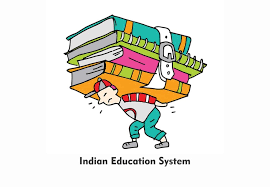
Indian Education System

Education plays an important role in the development of an individual and making him a knowledgeable citizen. It is the education that makes an individual self-reliant, helps to suppress the social evils and contribute towards the development of the society and nation as a whole. Education helps in unravelling the mystery of nature. It enables us to understand and improve the working of our society. It creates conditions for a better life. Education brings out the capabilities to fight injustice happening in society. Every individual has the right to education. 

Indian Education is one of the largest and complex education systems in the world along with China. India is committed to providing basic education to its citizens, the framework of which is defined in the National Policy of Education. Elementary education is now compulsory in India. At the time of Independence, only 14% of India’s population was literate. Now after so many decades since Independence, the number of literates has increased by fivefold.

History of Education System

The history of Indian education system comes from the times of Ramayana and Mahabharata. The historic Indian education system is also called the Gurukula system. There were gurus then who are now known as teachers and shishyas who are called students now. The gurus and the shishyas lived together under one roof in Gurukula until the completion of their education. The shishyas were expected to help the guru in all the daily chores as part of their learning. The children belonging to higher strata of the society were taught all the subjects from Sanskrit to Holy Scriptures and mathematics to metaphysics by the gurus. The Gurukulas during those times focused on the practical aspects of life. The students were taught in the open classroom in the surrounding area of nature. This early system of education in India continued for many years until the modern education system came into the picture in the nineteenth century.

In the early 19th century, during the British period, the modern education system was brought into our country by Lord Thomas Babington Macaulay. The basic strength of this modernized education system was the examinations and a well-defined curriculum, which gave importance to subjects like science and mathematics and subjects like philosophy, metaphysics were given a back seat. The brick and mortar classrooms replaced the open classrooms in the Gurukulas. The essence of the guru shishya bond was taken over by a more formal relationship between the teacher and the student. To understand the progress of any student, examinations were conducted at frequent intervals. The focus of the education system shifted from learning to memorizing of the concepts to score good marks in the examinations.

Problems of Indian Education System

Over a period of time, it has been observed that there are many loopholes in the system of education in India. Instead of understanding the concepts, students started cramming and memorizing the lessons. Knowledge is given a backseat and scoring in high rankings takes importance. The modern parents have tuned their mindsets accordingly and their goal is to ensure that their children score good marks instead of acquiring knowledge right from the primary level. 

Private schools and colleges have been rapidly increasing in the country but the results produced by them are far beyond satisfactory. It has also been observed that the quality of teachers deteriorated with the passing of time. Our examination system is responsible for the wide skill gap. India is producing lakhs of engineers and professionals every year but only a fraction of this number is actually getting employed. This is because the Indian examination system focuses more on scoring good percentages rather than the actual continuous comprehensive evaluation. 

Research and development, which should be the cornerstone of our system, are given the least importance. The private schools and colleges focus on the admission of more students and are least interested in the quality of their education. This is the major reason why the faculties and the teachers lack skills and specialization. This is quite evident from the fact that a single professor is assigned to teach multiple subjects. 

How Can We Improve the Indian Education System?

First and most importantly we should improve the grading system. Rote learning should be discouraged completely. Teachers and faculties should focus more on the analytical skills of the students and grade them accordingly. There should be more focus on comprehensive evaluation instead of scoring only good marks. Workshops must be organized for teachers on a regular basis to keep them updated about the latest developments in the sector of education. At the same time, the curriculum should be reframed according to the present needs of education in India. 

The payroll structure of the teachers and the faculties especially in the government institutions should be improved. This step will help in motivating the teachers to develop their skills and they will take a keen interest in grooming or shaping up a student’s life and career. The government and other entities who are associated with the education sector, need to understand the importance of quality of education. Education should be a holistic process that must focus on the overall development of the physical, emotional, social and cognitive skills of a child. It needs to be a slow and cyclic process and must take place gradually to help the child develop into an autonomous, independent and knowledgeable individual.

Conclusion

An educated individual is an individual who should be able to contribute towards the betterment of the economic and social development of the society as well as the country. The true goal of education must exceed awarding the degrees and certificates to the students. Education is not a tool to earn livelihood but it is a way to liberate the mind and soul of an individual. 

How can online learning influences the education of a Student?

When the world has witnessed one of the most infectious diseases spreading around the globe that affects not only the physical health but also the mental health of people. It was really difficult for any educational institutions, schools, or a college to manage classes physically, But 21st-century technology made it easier and helped institutions with their breathtaking software to conduct online classes and tests.

Photo by Julia M Cameron on Pexels.com

How online education is a new way of learning?

Prior to the COVID-19 pandemic, there were people who used to study on E-platforms, but not often, there were people who didn’t go to school and studied at home. Technology made a click away to explore and learn anything a student wanted to. Now one can carry their textbooks in their pocket, one can meet up anyone face to face on a software, just a click away and one can do learn anything from the internet. After school closed as a result of the pandemic, about 1.8 billion students from 186 different countries, their education was affected, but again technology did not want the student’s life to be ruined by the physical closure of schools. 

Future of Online Education

As per some scholars and economists, it’s highly believed that the overall market for online learning can be up to US $350 Billion in 2025 or more. Parents and students now don’t have to spend extra charges for classrooms, Electricity, or for any other activities that the school asks the students to pay. Parents who used to worry about their kids in school about their bullying, consuming drugs or any other harmful activities now are totally diminished. Now parents can witness their kid’s education during their online classes. Students now can easily study as well as can upgrade their extra skills through e-learning. Many students nowadays do internships, do extra courses, learn new things as well as the technology. Now a 8 year old student knows how to operate a mobile phone or a PC. Some believe that in future online education would be easily available and students don’t have to pay more for their education. “I believe that the integration of information technology in education will be further accelerated and that online education will eventually become an integral component of school education,“ says Wang Tao, Vice President of Tencent Cloud and Vice President of Tencent Education.

As Online education can also put the students in a bad or harmful influence, there are people who don’t want the online education as a major medium of learning.

Reasons why online education can be a harmful influence for the students?

  • Nowadays, most of the school or college students don’t study and cheat on their online exams or tests. It can be a really bad impact on their future and can be the core reason for the lack of their knowledge.
  • The daily and often use of electronic devices can make a person sick and hits their mental health in a really bad way.
  • Students are well aware of the technology and now are highly active on social media networks and making online friends. One can be good, but there are high number of chances to meet a fraud one. Those frauds assault the kids and ask them to do things which a kid didn’t want to.
  • Nowadays students as well as the adults store their personal information on their electronic devices and one don’t know that there are people on the internet named as hackers, who often used to steal the random people information from their cloud and upload them in the Dark web. There is a high number of chances of a kid or high school student could be one of the victims of online frauds and assault.

Reasons why online education can be a good influence for the students?

  • Firstly, the online education can be done in massive numbers at a time, which in physical classes were not possible. A student can know a number of different answers to a same question which is really helpful for a kid to understand that how an answer could be framed for a question.
  • Question answers from textbooks were limited, but in online education one can know more about a question through exploring it on the internet.
  • Technology is our future generation and learning about it since childhood could be an advantage for a student in their future.
  • In a traditional way of learning, one has to stick by a particular teacher and had to adapt their teaching style, but in online education a student can get through a number of teachers and can stick with the one they liked the most.

Disadvantages of Online education

Schools, Colleges are one of the best moments one could live in and online education can totally dismiss it. The other activities in schools like Upgrading leadership qualities through school/college competitions, Outdoor games for physical health of a student, and more things which a student learns through offline education are not possible through online education. The major and the core problem is, not every student or kid have mobile phones or PC and the access to the internet. They all were dependent on government schools, offline classes and free books from the school for their education. Poor family conditions, Bad environment, Poor Electronic facilities could be reason in the future for a student who might lose their interest in their education through E-Learning.

In the end, the conclusion of learning through online education has more disadvantages than their benefits.

Sources:-

https://www.weforum.org/agenda/2020/04/coronavirus-education-global-covid19-online-digital-learning/

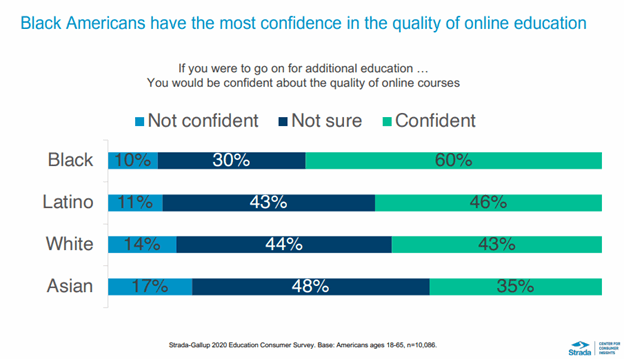
https://www.google.com/url?sa=i&url=https%3A%2F%2Fwww.insidehighered.com%2Fnews%2F2020%2F07%2F30%2Fsurvey-data-reveal-impact-covid-19-perceptions-online-education&psig=AOvVaw28oKObAFVXLJ-UO6vhxiqv&ust=1627984700132000&source=images&cd=vfe&ved=0CAwQjhxqFwoTCKCFmYeKkvICFQAAAAAdAAAAABAK

Improving ‘syllabus’ at school- Part II

“Education is the key to success”. But is it actually providing knowledge to the extent that it makes everyone better off ? Do the lessons taught in schools really matter in our lives ? Is the education system well-established keeping in mind the needs of the times ?

We need to accept that our education system is ruined by some corrupt people hindering the growth and success of the country. Somehow we all know that the training techniques in our schools is old style now and that it requires improvements.

It also becomes a burden for students when they are loaded with tests, assignments and project besides getting regular homework. The classrooms too get filled with only subject-related matter and less care is taken for extra-curriculum.

However there is more scope for extra-curriculum as compared to competitive and corrupt field of academics. It has become corrupt since leverage is being given to some sections or some particular people are being favored in terms of marks(/quotas) or job posts, allocation of funds, etc.

Instead of the regular pattern of teaching, the focus should be made on skill development of students. They acquire more importance in life. Now we see that students lack even the basics of what the corporate world demands of them. From there arises the need to join paid courses after school. You sacrifice peak time for decision making of your life in learning something that should have been the syllabus in the schools! Isn’t it frustrating for someone who holds personal responsibilities and obligations already and had been dreaming of placements and other great opportunities to come on way after education ? Shouldn’t our system be wide enough to support growth and development of individuals, accepting it as their duty towards the nation ?

But the need of the hour is to take action. We can’t continue blaming others’ unless we put forward a step by ourselves. As it has been well said “Be the change you want to see”. The schedule needs to be changed. There is a need for addition of classes for upskilling of students by professionals in the schools itself as there is no time left afterwards, as many say.

There should be attention towards holistic development of a child from the very beginning by arranging music classes, sports period, and other possible skill enhancement classes in schools. This would ensure inclined growth of the child towards his/her area of interest. The students will have knowledge of various fields from the very beginning and this will help them decide early what do they wish to pursue as a career. This is the major problem now-a-days that the youth is not sure of their future goals. They surely have the spark to do wonders but don’t have the correct guidance as to what is best for them or how can they achieve their aims in between the complexities of the world.

The academics should be limited now, to the extent of its feasibility in life and higher studies be offered with a wider choice so that the focus is narrowed upon the future without compromising with present. Knowledge and practical-ability should be given priority over marks and grades. There are innumerable examples of people who were weak in studies but their practical approach proved beneficial for the world. Therefore the students should be taught the practical aspects more than the bookish language and terms.

Coming back to skills, there are a variety of fields where interests of a student can be drawn upon. Painting or sketching, writing, dance and singing, sports(basketball, relay race, badminton), etc. should not be limited to a single period in a week. They should be emphasized as much as academics’ competitions. Training should be provided to those who are keen about such extra activities which are actually, not “extra”.

Financial Literacy

What Is Financial Literacy?

Financial literacy is the ability to understand and effectively use various financial skills, including personal financial management, budgeting, and investing. Financial literacy is the foundation of your relationship with money, and it is a lifelong journey of learning. The earlier you start, the better off you will be, because education is the key to success when it comes to money.

Read on to discover how you can become financially literate and able to navigate the challenging but critical waters of personal finance. And when you have educated yourself, try to pass your knowledge on to your family and friends. Many people find money matters intimidating, but they don’t have to be, so spread the news by example.

Understanding Financial Literacy

In recent decades financial products and services have become increasingly widespread throughout society. Whereas earlier generations of Americans may have purchased goods primarily in cash, today various credit products are popular, such as credit and debit cards and electronic transfers. Indeed, a 2019 survey from the Federal Reserve Bank of San Francisco showed that consumers preferred cash payments in only 22% of transactions, favoring debit cards for 42% and credit cards for 29%.

Other products, such as mortgages, student loans, health insurance, and self-directed accounts, have also grown in importance. This has made it even more imperative for individuals to understand how to use them responsibly. Although there are many skills that might fall under the umbrella of financial literacy, popular examples include household budgeting, learning how to manage and pay off debts, and evaluating the tradeoffs between different credit and investment products. These skills often require at least a working knowledge of key financial concepts, such as compound interest and the time value of money. Given the importance of finance in modern society, lacking financial literacy can be very damaging to an individual’s long-term financial success.

Being financially illiterate can lead to a number of pitfalls, such as being more likely to accumulate unsustainable debt burdens, either through poor spending decisions or a lack of long-term preparation. This in turn can lead to poor credit, bankruptcy, housing foreclosure, and other negative consequences. Thankfully, there are now more resources than ever for those wishing to educate themselves about the world of finance. One such example is the government-sponsored Financial Literacy and Education Commission, which offers a range of free learning resources.

Strategies to Improve Your Financial Literacy Skills

Developing financial literacy to improve your personal finances involves learning and practicing a variety of skills related to budgeting, managing and paying off debts, and understanding credit and investment products. Here are several practical strategies to consider.

Create a Budget—Track how much money you receive each month against how much you spend in an Excel sheet, on paper, or with a budgeting app. Your budget should include income (paychecks, investments, alimony), fixed expenses (rent/mortgage payments, utilities, loan payments), discretionary spending (nonessentials such as eating out, shopping, and travel), and savings.

Pay Yourself First—To build savings, this reverse budgeting strategy involves choosing a savings goal (say, a down payment for a home), deciding how much you want to contribute toward it each month, and setting that amount aside before you divvy up the rest of your expenses.

Pay Bills Promptly—Stay on top of monthly bills, making sure that payments consistently arrive on time. Consider taking advantage of automatic debits from a checking account or bill-pay apps and sign up for payment reminders (by email, phone, or text).

E- EDUCATION: AN EDUCATIONAL REVOLUTION

Eeducation or elearning is the delivery of education or training by electronic teaching methods like computers or laptops etc. E- Education means Schools on Web and it consolidates virtual classrooms, laboratories and integrates it with your other enterprise applications. These now supplement the face – 2 – face class room and commonly known as Blended Learning. It is the learning experiences from the online information sources. This E-Learning approach helps the students know, makes them understand how to research more and the students can preserve their online resources posterity. It helps the teacher to provide better materials for the students by doing research on various topics and subjects. It normally works over the internet and provides numerous tools such as for assessment, communications, collaborations, uploading of content etc.

Schools On Web help in connecting people with each other and provides new ways of communications and collaborations with the help of all kinds of information’s being provided by it. The aim is – Learning without Limits- anytime, in any place, and at any pace. It provides a platform where students and parents are connected, administrators are empowered and teachers are inspired.

E- Learning

The technologies of web collaborations helps in real time access to subjects or instructors or topic matters directly from the PC of users. The key communication/ participation tools are: e mail, chat rooms, whiteboards, journals etc.

Some of the key benefits are:

  1. Enable the teaching od new or existing courses wuthin virtual classrooms
  2. Interactive sessions which can be recorded
  3. Effective evaluation of virtual classes
  4. Provide instant accesS
  5. Generate academic reports
  6. Enables to track the progress of individual learner

Experiential Learning

Experiential Learning

Experiential Learning stimulates experiments and boosts the dimensions of interest, involvement, imagination and interaction by virtual laboratories, scenario – based learning activities and tests of different concepts. All these can be incorporated into various teaching approaches as pre-labs, as alternatives to textbooks home work and individual or group activities.

Some of the key benefits are :

  1. Highly Interactive Platform
  2. Provide Learning by Doing
  3. Ensures and promotes high level of cognition and retention
  4. Safety and Security is ensured
  5. Simulates real-life environments

Management System

E-Learning helps in managing fee structure, fee submission, generation of time table and management, library management and other reports. Web based Institute Management software is designed which enables better interaction among students, teachers, parents and managing body. Thus, it helps in customization of the system for respective needs at a reasonable cost.

COVID 19 and E – Education

Countries are at different points in their COVID 19 infection rates and worldwide there are nearly 1.2 billion children in 186 countries who are getting affected by school closures due to the pandemic. With such sudden transition and shift away from the classroom many problems and issues have emerged across the globe. In such situations, online learning and e-learning approaches have emerged as solutions and in response to significant demand, many online learning platforms have also moved forward for offering free access to their educational services. With the help of e-learning and online teaching initiatives many issues which were being faced in the field of education have been sorted out but still there are still lots of problems which are associated with the availability of proper infrastructures etc. at each and every corner of the globe which can enable each and everyone to access the facilities of e-learning.

Online education

frustrating indeed!!

Online study has become a trend and more schools are opting for it with each passing day; more so, in the wake of COVID-19 lockdown.

Advantages

The online method of study has several advantages. It is very convenient as both you and your teacher can interact from the convenience of your respective homes. You can also ask questions and raise queries as you use to do in the classroom.

The online study method becomes more important in case of a natural calamity of emergency. The perfect example in this regard is the recent COVID 19 pandemic that the world is still recovering from. To date, many schools are running online classes, for the safety of students. Online study is indeed a safer alternative to school education.

Schools Have Saved Operational Costs During Lockdown; Can't Charge Students  For Unused Facilities : Supreme Court

Disadvantages

Apart from numerous advantages, the online method of the study also presents certain disadvantages. It lacks the filled with enthusiasm kind of environment presented by a classroom. The lively and joyful ambience of a classroom is usually lacking in an online session. Teachers and students interact with each other only on subject matters on one by one basis.

Moreover, overexposure to gadgets presents its own health hazards like headache, weak eyesight and lack of concentration, etc.

Conclusion

Despite the disadvantages, the online study method proved to be beneficial in certain specific conditions. When it is not advisable to leave your home, or it isn’t convenient for you, then in that case online study becomes a blessing in disguise.

reference-https://www.aplustopper.com/essay-on-online-education/

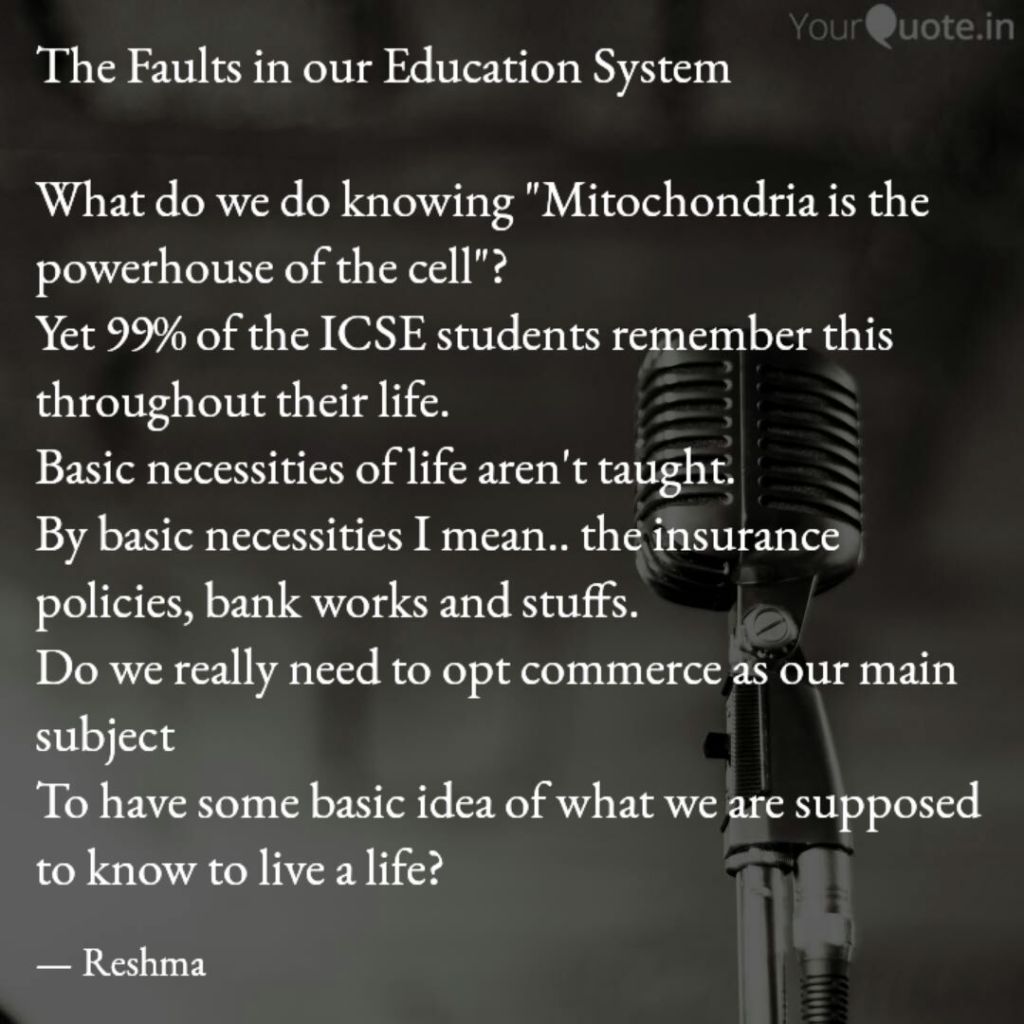
The Faults in our Education System

Why exactly are we educated? Just for the sake of it? No, right? We are suppose to learn everything from basic manners to how to earn a living. At the end of our learnings, we are all supposed earn our own breads and fulfill our desires. It is for this, we are all trained right from the age of 3.

Do we really need to start so early? I’m not so sure about. Still, parents for sure cannot keep calm seeing the rapid increase in the competition these days. I agree. High competitions have ruined the childhood of kids these days by burdening them with homework pressures and stuffs. They don’t even know why are they to study. Innocent kids living in their own fantasy world are being dragged to reality so soon. Pathetic!

Apart from teachers at school and parents at home, there’s another trend to send a 3 year old to tution centres nowadays, where they get far more tortured and this is going unnoticed in this busy world. Tutions for atleast primary school children should be shut. Kids at this age only require a mother’s guidance I believe.

Being a grown up student, I do sit back and realise the faulty education system which have been the same all these years and nobody bothered to change or raise questions. I wonder, am I the only one facing troubles now due to the education system we have had so far. It paid a lot of attention to the little details which did help me at times during my school days. But we need a lot more than all those science and maths. Basics of computer is so necessary in every field, I hardly knew unless I had to make powerpoint presentations and work on spreadsheets in my college days. We were taught these around std.4. And what were we suppose do learning those back then? It is during the late highschool days we found it necessary when we almost forgot the basic concepts. Had we been taught those during the later years of schooling, it would have been far more helpful I suppose.

Another major issue lies that only students who wish to take up commerce gets to know something about bank stuffs, loan procedures, share markets and everything money related. Aren’t the science and the arts students suppose to know such necessites of life? They too live in the same society and earn for their living. Each one of us needs to have certain practical knowledge other than bookish ones. Those projects and assignments we are burdened up with are certainly of no use. No student does it sincerely. We all know our hardwork is going to be dumped somewhere later. That is what exactly happens.

If not schools, at least colleges should educate students on saving and investing money, several bank procedures, loan applications and certain benifits every citizen of India posses. That is what a complete education means. Where will people end up not knowing where and how to invest their earnings? What should they do not knowing the privileges they own? Literate people somehow get to know it from somewhere or the other. But everyone in the country are not literate enough to know things on their own. They too earn for their living but are unaware of investments they can make. There should be schemes to educate such people as well. Only then will our country grow. You won’t believe, there are still more than a thousands of people who exist even whithout an identity card. What proof do they posses of their existence? Is this how we dream of a developed country?

Education system not just mean educating students at school. It means to educate the country, to help people grow. Only bookish knowledge can never be relied upon to live a life. Practical knowledge about what life exactly is and how it should be lived must be taught.

Marks based Education System.

Today, the situation is severe. Most of the Universities and colleges, schools have not conducted exams yet due to lockdown led by Corona virus. Today when i am writing this article no state ,no UT except Andaman & Nicobar in India left, which did not become victim of the world wide crisis.

Whole world is totally disturb.Doctors and Scientists have been busy in finding the solution to resolve the problem.World leaders and bureaucrats are busy in finding economy boosters.Journalists are busy in criticism of the governing bodies regarding migrant workers issue and health system.

Some alternates have been provided for the education. Online content have been provided but only limited. Webinar have been put one or two times, online classes ran to 5-10 topics and now all institutions are free, showing off the responsibilities of education stream. The only work left is to conduct exam and to give result sooner, whatever be the condition.No matter, syllabus complited is 50 % or 40. No matter, the objective of the particular education stream fulfilled or not.The only thing left is to judge an individual on marks attained by him/her.

Online content providing and online classes can be the alternate option to carry on higher studies but when we talk about primary education that has been the fundamental right of an Indian, situation gets very critical.

Primary education can not be provided using these methods as mostly villages have no connectivity of internet if there is,lack of knowledge would not let it possible.

Situation is such, no one caring for quality education and no one is running after practical knowledge. Everyone wants to pull his hands from providing the good solution to quality education.

The need of time is to get attention of governing bodies towards the matter to get the solution. Each and everyone has to be much responsible and an active worker in the field. Journalists should raise the concern.

Solution can only be found when there would be public opinion about the matter and all media houses should promote a very good planning made by any institution or person.

Thanks for reading…

Importance of Career Counseling

After important milestones in education all folks faces this question ‘what next’ after class 10th, after class 12th and after graduation. Career counseling can help altogether the main milestones in one’s career. Firstly, to make a decision a stream and subject combinations, to make a decision the graduation course, and then, to make a decision the post graduation and career option

In school a helpless 16 year old is faced with the selection of varied streams – Humanities, Science with mathematics, science with biology and Commerce, and therefore the only career guidance he has is the opinion of his parents, his teacher’s judgment based on his marks and the comments of his friends and neighbors. A class 11th -12th student together with his subject combinations is flooded with agencies providing various entrance preparation and colleges luring his / her attention. What help he has parents, teachers and admission counselors whose only job is to put the scholar in college and course where they’re going to get commission. A graduate who is doing the course because the oldsters wants him/ her to try to to it or he wasn’t sure of the other and thus is doing the course is also confused about career choices.

We strive to form a progressive world today, where technologies are booming there are many opportunities with various fields where one can make a far better career so guidance provides guidance to an individual to possess a transparent glimpse on what to pursue and the way much duration it takes to finish the course and costs .In today’s world there are also multiple career choices starting from medicine to mass communications, engineering to event management, marine biology to information technology, culinary arts to music.

Choosing a field of study that’s not really suited to your interests or skills could prove disastrous. And that’s where career counseling comes in.

How career counseling works?

Career Counseling involves scientifically developed aptitude tests and personality tests that helps a career counselor give the simplest suited career advice to the scholar supported his report of his aptitude and personality. Human capacities are infinite and may never be measured, nor are we to gauge of what one can do. Every person has unique characteristics, for everybody has his or her own strengths and weaknesses. The key is to identify these unique qualities is through Psychometric Test and career counseling.

What does career counseling offer?

Making an Informed Choice to Choose a Career

Career counseling sessions helps the students to know the pros and cons of the different streams, courses and educational options and the career path it offers, thus the students can make an informed choice, and obtain a career assessment that helps avoid the danger of change in career path later in life. The importance of pinpointing the work cut out for every person can only be gauged when one sees the agony of utmost job misfits. So a career counseling and guidance is needed to help organize ones thoughts and ideas on career related decisions. It can boost the morale and confidence and provides new directions to the scholars which can be beneficial for the entire society. Career counseling helps students discover their true potential and interest in various subjects so as to assist them choose the proper career. Several institutes, including schools and colleges, today offer guidance through a series of aptitude and IQ tests. The tests usually have multiple-choice questions, which don’t got to be prepared for in any way.

Guidance to students

Career counseling is that the guidance given to a student on the road he/she should fancy achieve his/her goals. The advice and counseling provided is predicated on three deciding factors — personality, aptitude and interest.

No confusions

Friends and family can fairly often provide incorrect guidance because their parameters of judging a career choice might differ. A counselor is objective while giving guidance, with no considerations aside from aptitude and interest.

Job Satisfaction

Choosing a career that matches one’s aptitude and personality itself translates into professional success and recognition . The main aim of guidance is to assist students choose a field that’s in tune with their skills and their job expectations. Thus, with the assistance of guidance , most candidates find yourself choosing the proper career, and perform their utmost , which ultimately helps them succeed.

Though not many faculties in India give guidance to students, if your school doesn’t provide you professional counselors, you’ll always seek the assistance of independent counselors. It is always better to hunt professional guidance instead of choose something that the entire herd goes for.

Challenges Associated with Career Counseling

Encouraging Parents and students to take part in counseling is very difficult as people still have a perception that it is time-consuming.

For example in India, there are still 60% of individuals who don’t take career advice 70% of individuals under 14 say they need had no careers advice while 45% of people over 14 have had no or very poor/limited advice.

Over the previous couple of years, there has been a rise within the number of scholars choosing courses aside from engineering. While this is often a positive sign, there’s no doubting the very fact that engineering still remains a dominant choice of scholars pursuing higher studies.

People in India still have a perception that Government service is a secure career so they hesitate to take part in counseling sessions.
Financial problems often provide a drawback in students career even if he/she is good in studies students they visit the career fairs but fails for admissions due to lack of money.