Covid-19 THIRD WAVE.

Raising the alarm bells for policymakers and citizens, a research report has contended that India may witness the third covid wave from August 2021. The report – COVID-19: The race to finishing line – prepared by SBI Research, claims that the covid third wave peak will arrive in the month of September 2021.

The research report says that India achieved its second wave peak on 7th May. “Going by the current data, India can experience cases around10,000 somewhere around the 2nd week of July. However, the cases can start rising by the second fortnight of August,” the report said.


These are the highlights from the report:

1. Global data shows that on average third wave peak cases are around 1.7 times the peak cases at the time of second-wave.
2. However, based on historical trends the cases can start rising by the second fortnight of Aug’21 with peak cases at least a month later.
3. India has started giving more than 40 lakh vaccination doses per day as shown by 7 DMA.
4. Overall, India has fully vaccinated 4.6% of its population, apart from 20.8% having received one dose. This is still lower than other countries including the US, the UK, Israel, Spain, France among others.
5. The decline in bank deposits in FY21 and concomitant increase in health expenditure may result in further increase in household debt to GDP in FY22.
6. States with high per capita GDP have been associated with higher Covid-19 deaths per million while low per capita GDP are associated with low Covid-19 deaths.
7. Only 4.6 per cent of the population in India is fully vaccinated, while 20.8 per cent have received one dose, much lower compared to other countries including the US (47.1 per cent), the UK (48.7 per cent), Israel (59.8 per cent), Spain (38.5 per cent), France (31.2), among others.

FELLING OF BUXWAHA

Diamond mining in India dates back to ancient times. In the past, India was the only source of nearly all the world’s known diamonds, until the discovery of diamonds in South Africa in 1896. India has not been a major diamond-producing country since the 1900s, but diamond mining continues. But don’t we all know what is the price we have to pay for in order to make a mine?

Not recently have the forests of Buxwaha been in news for the wrong reasons. The diamond mine project, which is now with Aditya Birla Group’s Essel Mining & Industries Limited (EMIL), is once again facing dark clouds due to protests over ecological concerns, as it could result in the felling of over 2 lakh trees. Yes, this is the rate of a diamond mine currently!

The 55,000-crore rupees mining project spans over 300 hectares in Madhya Pradesh’s Chhatarpur district, in the drought-prone Bundelkhand region. The block is estimated to have 34 million carats of rough diamonds. The existing diamond mine, National Mineral Development Corporation’s (NMDC) is about 175 kilometres from Bunder.

The proposed Bunder diamond block in the Chhatarpur district of Madhya Pradesh has been in the news for the wrong reasons over the years. The forests of Buxwaha, located near the site, are home to tigers, leopards, Indian foxes, sloth bears and other wildlife. The area is also rich in minor forest produce such as Tendu leaves and Mahua. Over 200,000 trees are expected to be cut in the Buxwaha forest for the diamond project. Environmentalists fear that the mining project would result in loss of biodiversity as well as air and water pollution.

The Forest clearance report shows that the project would cost over 200,000 trees in the forest region and also use a lot of water. We are against the environmental destruction in our area, which is already a water distress area,” said Sankalp Jain, a local youth who is associated with one of the groups running social media campaigns such as ‘save Buxwaha forest’ and ‘India stands with Buxwaha forest’ last month.

Credits: Mongababy

 It is to be noted that the project, once operational, has the potential to become one of the largest diamond mines in the Asian region. The company targets the execution of the mining lease by the end of the financial year 2022. But what potential be praiseworthy where Mother Nature gets compromised? In addition to trees and wildlife, the amount of water needed to build the mine will dry out the already water-scarce region of Buxwaha. A dam is to be constructed to divert a seasonal nallah.

Expectedly the project is facing strong opposition, including social media campaigns. Already, a Public Interest Litigation has been filed in the Supreme Court of India, seeking a stay on the project that had been secured by the Essel Mining & Industries Limited in 2019. In 2006, the Madhya Pradesh government had granted a prospecting licence to Rio Tinto Exploration India Private Limited, an Australian mining giant, to explore diamond mining in the Buxwaha region in the Chhatarpur district. Opposition was done even then.

Effects of Mine

  • 2,00,000 trees are no joke. The ecosystem is no joke. Imagine the countless number of animal species residing in the woods, the amount of oxygen and water that is retained by these green guys.
  • The residents fear a massive loss of trees, including teak, kenbehda, banyan, jamuntenduarjuna and other medicinal trees as well as the devastation of the natural ecosystem if the project proceeds further.
  • “Despite the claims to provide jobs in mining, I feel the project will eat out the livelihood options in the area.” said a resident of Kasera village- closest village to mining site.
  • The villagers are dependent on minor forest produce and water for farming. The project involves the diversion of a nullah which is a lifeline for the area. It ensures groundwater level and water for wildlife.This project will lead to groundwater depletion as well.
  • Environmental activist Hari Krishna Dwivedi said the “whole Bundelkhand region is facing a water crisis and this forest is essential for the local ecology”.
  • The homes of people are going to be uprooted. What progress is this that uproots tribal people who have lived in the region for hundreds of years and generations, tending to the forests and taking only as much is their wont?

All you need to know about UGC( University grant commission)

Introduction

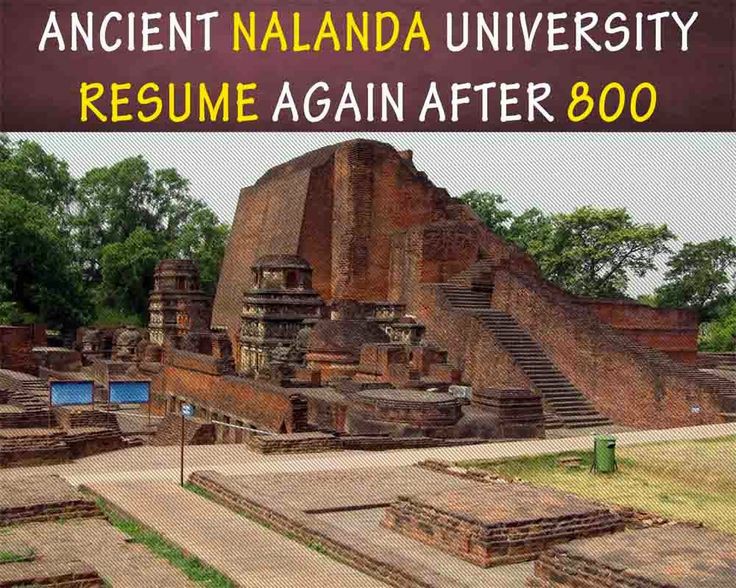
Since ancient times to the modern world, the Higher Education System has always been remarkable in our country, India. From ancient Bharat to modern India, higher education has always occupied a place of prominence in Indian history. In ancient times, Nalanda, Taxila and Vikramsila universities were renowned seats of higher learning, attracting students not only from all over the country but from far off countries like Korea, China, Burma, Sri Lanka, Tibet and Nepal. Today, India manages one of the largest higher education systems in the world.

UGC

The University Grants Commission of India (UGC India) is a statutory body set up by the Government of India in accordance to the UGC Act 1956 under the Ministry of Education, and is charged with coordination, determination and maintenance of standards of higher education. It provides recognition to universities in India, and disbursements of funds to such recognized universities and colleges. The headquarters are in New Delhi, and it has six regional centers in Pune, Bhopal, Kolkata, Hyderabad, Guwahati and Bangalore. A proposal to replace it with another new regulatory body called HECI is under consideration by the Government of India. The UGC provides doctoral scholarships to all those who clear JRF in the National Eligibility Test. On an average, each year more than a $100 million is spent on doctoral and post-doctoral fellowships by the commission.

Basic information

Established
28 December 1953 First
executiveshanti Swaroop bhatnagar
Headquarternew Delhi
ChairmanDp Singh
Departmentdepartment of higher education, ministry of education
Sectorhigher education

History

  • The present system of higher education dates back to Mountstuart Elphinstone`s minutes of 1823, which stressed on the need for establishing schools for teaching English and the European sciences. Later, Lord Macaulay, in his minutes of 1835, advocated “efforts to make natives of the country thoroughly good English scholars”. Sir Charles Wood`s Dispatch of 1854, famously known as the ` Magna Carta of English Education in India`, recommended creating a properly articulated scheme of education from the primary school to the university. It sought to encourage indigenous education and planned the formulation of a coherent policy of education. Subsequently, the universities of Calcutta, Bombay (now Mumbai) and Madras were set up in 1857, followed by the university of Allahabad in 1887. The Inter-University Board (later known as the Association of Indian Universities) was established in 1925 to promote university activities, by sharing information and cooperation in the field of education, culture, sports and allied areas.
  • The first attempt to formulate a national system of education in India came In 1944, with the Report of the Central Advisory Board of Education on Post War Educational Development in India, also known as the Sergeant Report. It recommended the formation of a University Grants Committee, which was formed in 1945 to oversee the work of the three Central Universities of Aligarh, Banaras and Delhi. In 1947, the Committee was entrusted with the responsibility of dealing with all the then existing Universities.
  • Soon after Independence, the University Education Commission was set up in 1948 under the Chairmanship of Dr. S Radhakrishnan “to report on Indian university education and suggest improvements and extensions that might be desirable to suit the present and future needs and aspirations of the country”. It recommended that the University Grant Committee be reconstituted on the general model of the University Grants Commission of the United Kingdom with a full-time Chairman and other members to be appointed from amongst educationists of repute. In 1952, the Union Government decided that all cases pertaining to the allocation of grants-in-aid from public funds to the Central Universities and other Universities and Institutions of higher learning might be referred to the University Grants Commission. Consequently, the University Grants Commission (UGC) was formally inaugurated by late Shri Maulana Abul Kalam Azad, the then Minister of Education, Natural Resources and Scientific Research on 28 December 1953.
  • The UGC, however, was formally established only in November 1956 as a statutory body of the Government of India through an Act of Parliament for the coordination, determination and maintenance of standards of university education in India. In order to ensure effective region-wise coverage throughout the country, the UGC has decentralized its operations by setting up six regional centers at Pune, Hyderabad, Kolkata, Bhopal, Guwahati and Bangalore. The head office of the UGC is located at Bahadur Shah Zafar Marg in New Delhi, with two additional bureaus operating from 35, Feroze Shah Road and the South Campus of University of Delhi as well.
  • In 1994 and 1995 the UGC decentralized its operations by setting up six regional centres at Pune, Hyderabad, Kolkata, Bhopal, Guwahati and Bangalore. The head office of the UGC is located at Bahadur Shah Zafar Marg in New Delhi, with two additional bureaus operating from 35, Feroze Shah Road and the South Campus of University of Delhi as well.
  • In December 2015 the Indian government set a National Institutional of Ranking Framework under UGC which will rank all educational institutes by April 2016.

Role

  • The main aim & role of UGC in higher education is to provide funds to universities and coordinate, determine & maintain the ethics in institutions of higher education. The commission upholds the interpretation among the universities, government, and the community. UGC has also set some standards for the universities for being UGC Approved Universities. With the growth of higher education in India, many top, medium, and small universities are being established day by day. Among these universities, there are many universities that are fake and not fit as per the UGC standards. Therefore, the University Grants Commission has released the list of Fake Universities in India to help the students to recognize these rejected universities

Functions

It provides funds and it also arranges for the coordination and maintenance of the universities in India. The UGC controls the following in India:

1.Maintaining the standard of research, teaching and examination in the university maintaining standards of teaching, examination and research in universities & Framing regulations on minimum standards of education.

2.It is a link between the union government and the institutes of higher education system.

3. It also advises the government about the steps to be taken in order to improve the education system.

4.Allocates grants to the universities and colleges out of its own funds for their development or other general purpose.Advises the central and state government on disbursing grants to the universities out of the Consolidated Fund of India. Advises any authority on the establishment of new university or on the proposal seeking expansion of any university.

5.Collects information on university education in India and in other countries.

6.Seeks information from the universities from time to time. The information may range from the financial position of the university, their various branches of learning to the rules and regulations followed in a particular university.

Imparts education to the students in various streams through its Country wide classroom teachings and a four-year old 24 hours educational channel ‘Vyas’.

8.Conducts National Eligibility Test (NET) through its National Educational Testing Bureau in a bid to determine eligibility for lectureship. It also awards Junior Research Fellowship (JRF), which has been set as the minimum standards for Indian nationals to enter teaching profession and research. Humanities (including languages), Forensic Science, Computer Science, Social Sciences, Environmental Sciences, and Applications and Electronic Science are the subjects in which a student can appear for a JRF.

9.The University Grants Commission has recently launched an ‘e-scripting’ course in television for all those students who want to make a career in broadcast media. The course is being run by its Consortium of Educational Communication, an Inter University Centre of the UGC on electronic media.

10.Monitoring developments in the field of collegiate and university education; disbursing grants to the universities and colleges.

Types of universities under ugc

1.Central Universities

2.state universities

3.Deemed universities

4.private universities

for more information go the link below 👇

https://en.wikipedia.org/wiki/University_Grants_Commission_(India)

https://www.ugc.ac.in/

Reasonable Pluralism

The world we live in today consists of people belonging to different religions, castes, places, people who speak different languages, have differing political opinions and the list goes on. Human beings are unique in their thinking as well as the way they express their thoughts. They are inherently different so many ways and sometimes conflicts can arise between people due to this. But having difference of opinion always does not necessarily mean it is bad or it can end up in conflicts, it can sometimes give insight into how differently and parallelly things work in the other paradine. 

This can result in Political Liberalism, where people are more attentive and acceptable of other people’s religion and are not ethnocentric. This is what John Rawls talks about, he brings in the idea of Political Liberalism where he claims that people who are reasonable would have a liberal approach towards the differing views. And hence the idea that conflicts or fights will happen between people because of their differences is flawed. 

People who hold different comprehensive doctrines can only be acceptable of others differences if they are reasonable. This is what Rawls point out in his study, he says that people living in a society, if they are reasonable people and rational in thinking and attitudes. 

Rawls talks about ‘Reasonable Pluralism’ where people are accommodative of other people’s differences and views. Even though people are inherently different and have different ideas and beliefs people choose to understand them and let this not cause a divide between them. It instead made people more accommodative of these changes and will make them more cosmopolitan in approach. 

This is how Political Liberalism comes into play, people who are liberal and rational tend to understand these diversities and learn to be more adaptive of these differences. This is termed as overlapping consensus. A term used to define the consensus between people having different opinions and view points but are still accommodative of each other. Rawls believed that this would only happen if people were reasonable enough to understand these differences in its moral sense. 

Although this idea behind Rawls is really good, the problem here is that he only takes into account the reasonable citizens. He never accounts for people whose thinking lies beyond reasonable one. Hence, we cannot really say if this is applicable to everyone in the state. Flawless his theory was but it failed to capture people with different perspectives and opinions as different from the crowd of reasonable people. This is one of the major problems which has gone unanswered.

Benefits of learning any foreign language.

In this cutting-edge World, who would mind having an extra set of skills. Having proficiency in more than one language is one of the skills needed in today’s era. Being bilingual/multilingual doesn’t mean one can only connect with the world in a more meaningful way but being bilingual/multilingual one can also stand out from the crowd, and advance their career. These are not the only benefits, let’s have a look at some of the benefits in brief. Mentioned below are some of the many benefits a bilingual/multilingual can have:–

Advance your career

Learning a second language can set you apart from your monolingual colleagues and provide you with opportunities for better employment. Companies with overseas clients and foreign customers are looking for fluent professionals in a second language, who can deal with various communities.

Improves decision-making skills 

It is found in a study by the University of Chicago that a multilingual person is better at decision making than a monolingual.

When you learn a foreign language, you try to learn native expressions and their hidden meaning, which enhances your decision-making process. It is also proved that the decision you make in a foreign language is more reasonable than the decision you make in your native language. 

Connect with people

One of the most incredible advantages of learning a foreign language is opening new windows of opportunities and meeting new people of different communities. When you learn a foreign language, you also generate a sense of better understanding and appreciation towards people from different communities. And you might end up having a lifelong connection with people from different parts of the world. Isn’t it magical?

Sharpens memory

When you learn a new language, your mind is been introduced to various rules, different grammar, and an entirely new set of vocabulary, which exercises your memory. It has also been claimed that people who are into learning a new language find it easier to remember names, facts, directions, and figures. 

Makes traveling easy

When you have fluency in more than one language, it is easier to travel to different parts of the world, as it makes it easier to connect with different cultures and native speakers. When you can talk to a native person you can get more information about the place, even the information that is not on the web. Hence, being bilingual/multilingual can make your traveling so much easier. 

Be it learning a foreign from a university or online classes. If you are planning to learn one, it will for sure provide you several benefits and will boost your career to new heights.

Socialism

Socialism is both a political and an economic theory that was developed between 1750 1850 as a reaction and response to capitalism. It advocates for a system where the community as a whole owns and regulates the means of production, distribution and exchange.It aims to a build a new social order and remove the maladies of the capitalistic system. The chief proponents of socialism are Robert Owen, Sismondi, Saint-Simon and Charles Fourier.

Throughout history, there has always been a big gap between the rich and the poor due to monopolization of the means of production by a few people. The select few have constantly exploited the poor to amass wealth and to retain power. The poor barely meet the necessities of life and do not control any means of production. During the industrial stage, the gulf between the poor and the rich widened unlike before. Post the Industrial Revolution, the introduction of machines increased the divide and led to the concentration of the means of production in the hands of an even more select few. They took advantage of their position and churned out illegitimate profits. This exploitation was the reason the idea of socialism was developed.

Definitions:

Some definitions of socialism are:

Humphrey:

“ Socialism is a system of society in which means of life belong to the community as a whole, and are developed and operated by the community.”

Here, means of life refers to things like land, capital, implements and other such things which help humans to earn a living. 

Hugham:

 “Socialism is the political movement of class which aims to abolish exploitation by means of the collective ownership and democratic management of basic instruments of production and distribution.” 

Socialism developed as a response to capitalism and its primary aim was to create a new social order that eliminates the drawbacks of capitalist system. According to the proponents of socialism, capitalism fosters competition among citizens, as a result making them egoistic and immoral. It also leads to needless expenditure. It encourages a certain few to monopolise means of production and allows them to exploit other people. So the proponents propose a certain way to eliminate the miseries caused by capitalism. They propose that the factors of production be controlled by the community as a whole and not allow individuals to control the means of production. This idea formed the crux of socialism.

There are certain general principles to this theory. According to C. E. M Joad, socialism is “like a hat which has lost its shape, because everybody wears it.” Socialism as an idea has gone through many changes and one exact definition cannot be agreed upon. Nevertheless, some general principles can be seen as its distinguishing features. Socialism opposes capitalism because it believes it to be the cause of exploitation of resources. It aims to protect the common population from the select few. It advocates for social ownership of material resources and that the community should own all the factors of production like land, other property industries, etc. The motive behind production should be social necessity and not profit making for the benefit of one. Its action should at the end benefit the society. Some proponents of socialism have advocated for absolute economic equality where everyone is given the same rewards and other proponents have advocated for proportionate economic equality where people are given rewards to fulfil their basic needs. It is completely opposed to laissez-faire economy and favours the establishment of a planned economy. It is for the abolition of the institution of private property to bring about social equality. It believes in the widening of democracy, and is of the view that socialism and not capitalism can help further this end. 

Socialism has been subjected to criticism for certain of its aspects. The most important criticism of all about socialism is that it crushes the very spirit of the individual. Socialism establishes an order where there is no scope of incentive for people to work, as everyone is distributed the same or similar rewards and there is no scope for any additional incentive as a result of the individual’s hard work. Another major criticism of socialism is its impracticality. It cannot be implemented in a real world scenario as it does not provide people any incentive to work. Perfect socialism has not existed anywhere and even the countries that proclaim themselves as socialist are not completely socialist. In this theory, the State overburdened with too many functions like distribution of resources, controlling of  production, distribution of rewards, etc. This will lead to inefficiency. One other major criticism is that the State interferes with everything. Socialism kills individual freedom.

Math 2.0 day

Today is math 2.0 day, but what exactly does that even mean?.With or without knowing we all use math several times every single day. The subject is also important for the advancement of technology. And thus, to celebrate the combination of maths and technology, Math 2.0 Day is celebrated on July 8. Read on to know other details.

Imagine the way the world used to be viewed! Math as known to be important but not thought to be something you could make a living at and the rising tide of technology was considered a fad! Math 2.0 Day reminds us that technology is here to stay!

Every year, Math 2.0 Day is celebrated on July 8. The day is observed to highlight the importance of the combination of maths and technology. The day was formed to celebrate the achievement made through the combination of maths and technology. Math 2.0 Day also helps to educate the masses about the benefits of maths and technology. Without maths and technology, it would have been impossible for us to achieve the various entertainment mediums we have now.

History of Math 2.0 Day

In 2009, the Math Interest Group formed Math 2.0 Day. Math is extremely important for the advancement of science, technology and education.Math 2.0 Day is a celebration of the blending of technology and mathematics. For a lot of us, math wasn’t a favorite subject, we’d spend the entire period staring at the equations and wondering what sort of livid madman designed these torture chambers on paper. Ultimately, however, we realized that math is utterly indispensable in our modern world. If you’ve ever wondered who uses math in their day to day careers, you aren’t alone and we have some answers for you.

Programmers deal with mathematics every day, as it’s the framework upon which all computer operations are formed. Everything from the order of operations to quadratic equations is necessary to make even the simplest program. Scientists are one of the biggest users of mathematics, whether they’re calculating the statistical variance of their data or figuring out how much to add to their chemistry experiment, it’s involved at every step.

One presumes you live in a house, drive a car, or operate a computer? The engineers responsible for designing those things so that they work, and especially in the case of the house, use math to ensure it doesn’t come crumbling down on your head. Math 2.0 day celebrates all these mathematical heroes and more.

How to celebrate Math 2.0 Day

If you’re like me, you probably have your old math books from college laying around. I suggest busting them open and studying them again. Who knows, in the intervening years you may have secretly developed a love for those dancing numbers. If not, make sure that you stop by those people who use math every day and thank them for doing the work so you don’ thave to.Mathematics is one of the most important fields in the world today, and just about everything we know and love is built on its back.

Asset Bubble

What Is a Bubble?

A bubble is an economic cycle that is characterized by the rapid escalation of market value, particularly in the price of assets. This fast inflation is followed by a quick decrease in value, or a contraction, that is sometimes referred to as a “crash” or a “bubble burst. Typically, a bubble is created by a surge in asset prices that is driven by exuberant market behavior. During a bubble, assets typically trade at a price, or within a price range, that greatly exceeds the asset’s intrinsic value (the price does not align with the fundamentals of the asset).The cause of bubbles is disputed by economists; some economists even disagree that bubbles occur at all (on the basis that asset prices frequently deviate from their intrinsic value). However, bubbles are usually only identified and studied in retrospect, after a massive drop in prices occurs.

How a Bubble Works

An economic bubble occurs any time that the price of a good rises far above the item’s real value. Bubbles are typically attributed to a change in investor behavior, although what causes this change in behavior is debated. Bubbles in equities markets and economies cause resources to be transferred to areas of rapid growth. At the end of a bubble, resources are moved again, causing prices to deflate.

The Japanese economy experienced a bubble in the 1980s after the country’s banks were partially deregulated. This caused a huge surge in the prices of real estate and stock prices. The dot-com boom, also called the dot-com bubble, was a stock market bubble in the late 1990s. It was characterized by excessive speculation in Internet-related companies. During the dot-com boom, people bought technology stocks at high prices—believing they could sell them at a higher price—until confidence was lost and a large market correction occurred.

The research of American economist Hyman P. Minsky helps to explain the development of financial instability and provides one explanation of the characteristics of financial crises. Through his research, Minsky identified five stages in a typical credit cycle. While his theories went largely under-the-radar for many decades, the subprime mortgage crisis of 2008 renewed interest in his formulations, which also help to explain some of the patterns of a bubble.

Displacement

This stage takes place when investors start to notice a new paradigm, like a new product or technology, or historically low interest rates. This can be basically anything that gets their attention. 

Boom

Prices start to rise. Then, they get even more momentum as more investors enter the market. This sets up the stage for the boom. There is an overall sense of failing to jump in, causing even more people to start buying assets. 

Euphoria

When euphoria hits and asset prices skyrocket, it could be said that caution on the part of investors is mostly thrown out the window. 

Profit-Taking

Figuring out when the bubble will burst isn’t easy; once a bubble has burst, it will not inflate again. But anyone who can identify the early warning signs will make money by selling off positions. 

Panic

Asset prices change course and drop (sometimes as rapidly as they rose). Investors want to liquidate them at any price. Asset prices decline as supply outshines demand. 

Has education became a status

India has been one of the top most countries producing skill full labors and day by day India’s literacy rate has been increasing at a reasonable rate . But the question is everyone is learning with their own interest. if yes , why do we still hear news about suicides because of stress. if no , what would be the reason lets find out .

Even though India is one of the country which produces large number of skillfull labors students are being forced to study engineering or medical even though he/her has no interest in studying that its because their parents think that it will be suitable . We never ask for opinion of our children i am not saying about everyone there are still some parents exist who always asks for their kids opinion but majority dont and we have to accept it .

The reason parents wants their kids to take engineering thinking that they will have a better future but the thing is a guy could find a future anywhere but where could he be really happy besides parents caring for the future of their children now its have became a matter of status . Everyone will be thinking now what does education has to do with status??

Our society has poisoned people mind with fake thoughts . We people still wait for hours and hours just to get admission for our children when even government schools have same portion and same level of education. But its is not about studies its about name of the school its about status of the school its about fees its like the higher the fees structure higher will be the status .

Now a days we hear lots of things going on in famous schools students their are harassed by the teachers who is older than their parents but even though people see this daily soon after the schools starts its admission they are wait in long lines for hours and hours in same school and gonna send their son/daughter to learn under the teachers who kept quite without reporting these things even when they knew what was going on

what will bring an end to this ????

who actually sets these standards comment your opinion

Ancient Education System In India

During ancient education, students live away from their parents, their education comprises of subjects like physical education, mental education, politics, economics, etc. They were shaped in a way that they can live in any condition considering how difficult the situation will be? 

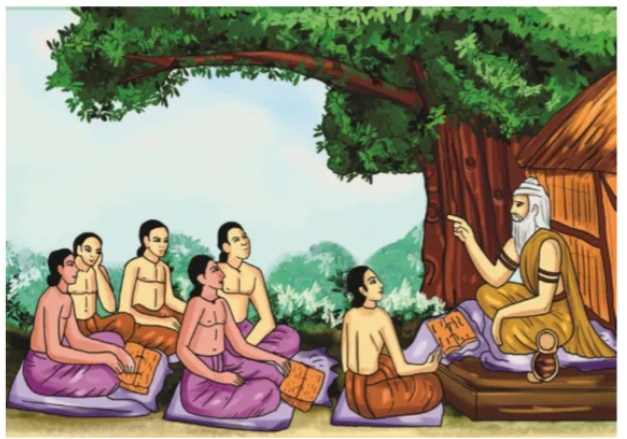
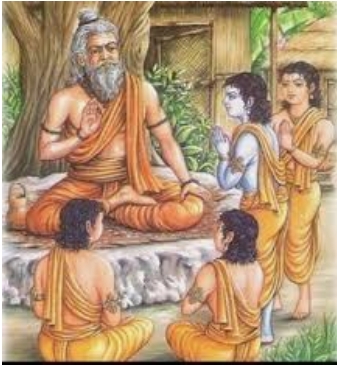
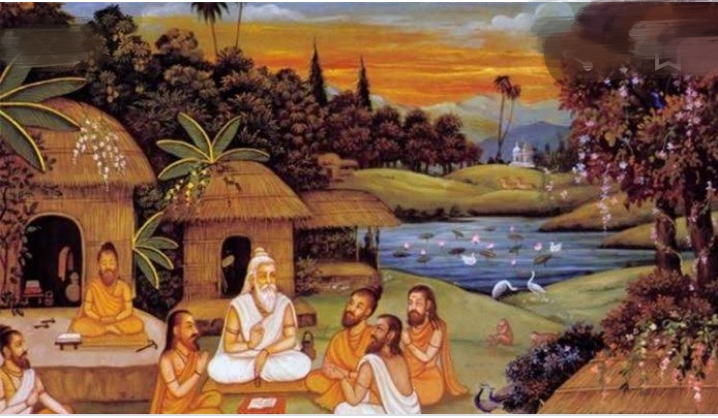
During the early period education was imparted by the teacher (Guru/Acharya) to the pupils who gathered around him and came to live in his house as members of his family. This was known as Gurukula system of eduation. The family of Guru functioned as a demostic school or an Ashram. During that period, the gurus and their shishyas (pupils) lived together helping each other in day-to-day life.

In ancient India, both formal and informal education existed. Indigenous education was imparted at home, in temples, patashalas, and gurukulas. Teaching was oral and students remembered and meditated upon what was taught in the Gurukulas. There were people in homes, villages and temples who guided young children in imbibing pious ways of life.

The medium of language during the Vedic system was Sanskrit. During those times the education was of Vedas, Brahmanas, Upnishads, and Dharmasutras. From the Rigveda onwards, our ancient education started with the objective of developing the students not only in the outer body but also on the inner body. The ancient education focused on imparting ethics like humility, truthfulness, discipline, self-reliance, and respecting all creations to the students. The education was mostly imparted in ashrams, gurukuls, temples, houses. Sometimes pujaris of the temples used to teach students. The education system of ancient India has some special features and uniqueness which was not found in any other ancient education system of the other countries. The education was mostly given in forests under the blue sky, which keeps the student’s mind fresh and alive.

The main objective of education was to equip the students with a good quality of education. The education mostly focused on the enrichment of culture, character, and personality, development, and cultivation of noble ideals. The objective was gaining the mental, physical, and intellectual personality of students, to make the students future-ready and survive in any situation.

In the Vedic system, a child started his education at the age of five. To mark this commencement, the Vidyarambhaceremony, which included worshiping Goddess Saraswati and learning alphabets for the first time, was conducted. Leaving home and starting to live with a teacher required the child to conduct another ceremony called Upanayana. Boys practiced this ceremony at different ages according to their castes (only children of the Brahmin, Kshatriya and Vaishya did so).

Education for women was quite important in ancient India. They were trained in housekeeping, as well as in dancing and music. Girls also had to conduct the Upanayana ceremony. Educated women were divided into two classes – Sadyodwahas, those who pursued their education just until they got married, and Brahmavadinis, those who never married and continued studying throughout their lives. Vedasand Vedangas were taught to women, too, but were limited to religious songs and poems necessary for rituals. Some notable Vedic and Upanishad women scholars were Apala, Indrani, Ghosha, Lopamudra, Gargi and Maitreyi.

Mastering one Veda took 12 years. Thus, depending on how many subjects the student wanted to learn, the study period varied accordingly. The education could go on for as long as 48 years.

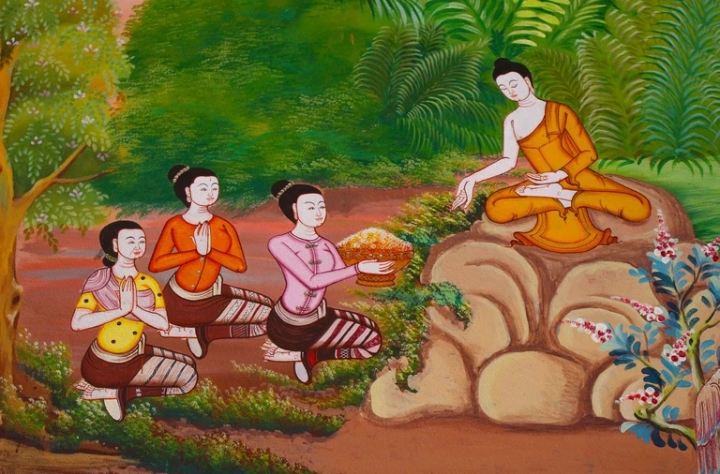
In order to earn a livelihood, men needed to know an art form. As per the ancient Indian education system, there were about 64 art forms, including dance, music, jewel making, sculpture, agriculture, and medical sciences. To acquire vocational training in a particular art form, men were required to work as trainees under a master to gain expertise. They were taught without any cost, and food and boarding were also taken care of by the master.

Just as we have world renowned universities today, there were popular educational institutions here during the ancient times as well. Four of these institutions were quite prominent and known for different specializations. The University of Nalanda was famous for its Catholic and cosmopolitan character and its department of logic. Takshasila University, in an area what is now modern-day Pakistan, was well-known across the world for its medical school and was the chief learning centre in 6th century BC. What Nalanda University was to east India, Vallabhi was to west India. It was also a famous study center that specialized in subjects like law, medicine and economics, and had students attending from all parts of the country. Vikramshila was yet another esteemed institution, best known for Tantric Buddhism.

FARMER’S PROTEST IN PRECISE

One of the recent controversies that has been part of 2020 was the recently passed farmers bill. Ever since the passing of the bill, many farmers have assembled in large number in Delhi to show their disagreement towards the passing of the bill. Farmers have been upfront with their protest showing solidarity together against the passing of the bill.

The following are the bills passed by the Government of India


The Farmers Trade and Commerce (Promotion and Facilitation) Bill 2020


This bill allows farmers to sell their produce to anyone another than the government. It gives farmers a choice on who sell their produce to, whether they want to sell to the government or third party. Earlier the government bought produce from the farmers under the Agricultural Product Market Committee (APMC).


The Farmers (Empowerment and Protection) Agreement on Price Assurance and Farm Services Bill 2020

This bill talks about setting up a framework for contract farming. In this a farmer and a buyer can make a contract even before the farmer makes the produce. The goods can be trades outside the premises of the APMC (Agricultural Produce Market Committee)

The Essential Commodities (Amendment) Bill 2020

This act allows inter-state and intra-state trade of farmers produce by eliminating the government in between. A third party can involve in the business.

These were the three new bills passed by the government. They stand as controversial because the farmers feel that it would eliminate the concept of MSP.

Concept of MSP

MSP stands for minimum support price. This price is offered by the government to the farmers on buying the produce. Government for ages have taken produce from the farmers under MSP and subsidised it and sold it to the people. This made it easy for both the people as well as the farmers. With the assurance of the MSP the farmers could rely on the government even in the times of a bad crop or drought situation. They were sure of the MSP but now this is not the case as seen by many farmers. With the introduction of the bill the farmers are scared that the government has withdrawn the MSP and instead bought in Contract farming.   

Problems with the Bill as perceived by the Farmers 

Farmers are afraid that they will be cheated with the coming of this bill. They feel that the government has withdrawn the MSP and put them in danger. Farmers have been gathering in Delhi ever since the passing of the bill. They have assembled in huge numbers trying to give it all they got and asking the government to take back the bill. The government has responded with saying that they have no intentions of withdrawing the MSP and all they hoped for were the welfare of the farming community and the people. 

Like the two sides of a coin, this bills also have their flip side, the farmers believe that they can be easily tricked into any kind of traps with the contract farming by legal clauses. These powerful companies can easily manipulate and exploit the farmers as they wish. But the government says otherwise, they believe that with the coming of contract farming in India there will be a huge profit as well as private investments. 

This act also allows the trade of produce to other states without MSP, this has caused problems too because this will enlarge the gap between the rich and the poor farmers. It will create a gap which cannot be closed and will only widen with the passage of time.

Protests across India

Farmers have been protesting about these bills ever since it was passed and the government has initiated talks with the farmers where they were assured of the fact that the MSP won’t be cut off.

This protest has turned into a massive one where farmers had even blocked roads to Delhi. They also observed a strike on December 8 as part of their dissent all across India. The idea of protesting without the usage of violence enshrines as a part of our Right to Freedom but there have been insights of violence too.  As many as 31 organisations are said to be taking their stand against the bill, most of them are protesting against the first bill in fear of the removal of MSP. There have almost been 5 rounds of talks which had failed. Home Minister Amit Shah had called for a restructuring of the bill but the farmers have said no, they wanted to the full bill to be rolled back. Farmers have threatened to expand the protests by closing the Delhi –Jaipur Highway, capturing Reliance malls and capturing toll plazas.

There have been a series of misunderstandings that needs to be understood and changed for both the government and the farmers to put an end to this issue, only then the true essence of a democracy will prevail.

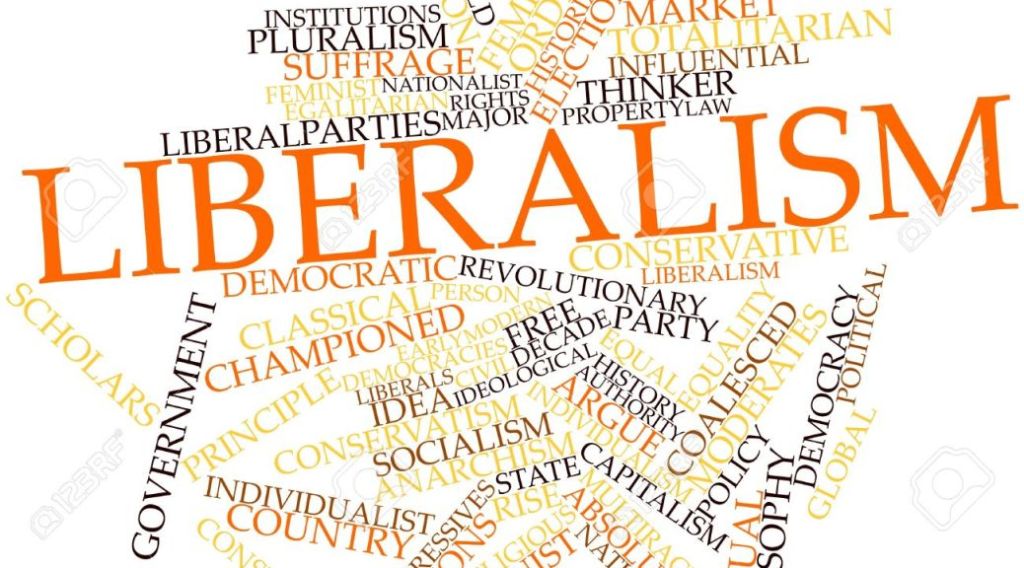
Liberalism

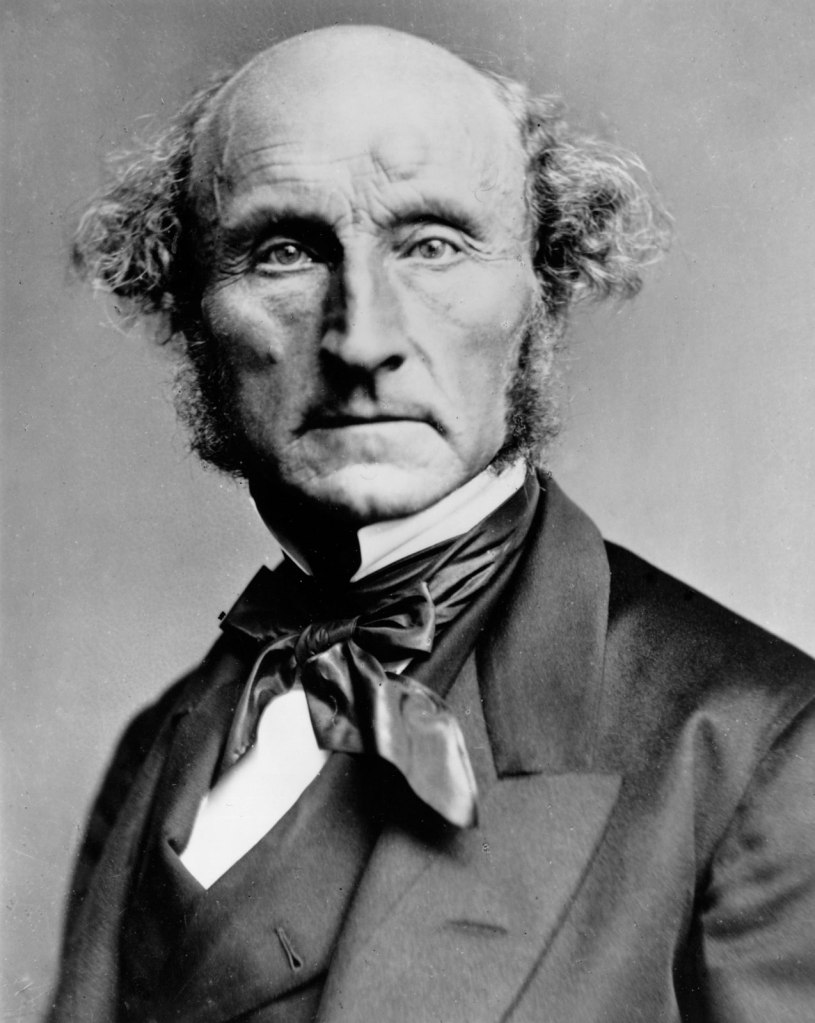
The concept of liberalism is a combination of different ideas of a common nature developed by different thinkers over time. There is no one exact definition of liberalism. It is based on the idea that people have the right to exercise liberty and government has to impose only less restrictions on them. John Stuart M, an English philosopher and political economist, was a proponent of liberalism. His opinion was that the State should exercise minimal control over a citizen. The theory of liberalism was a response to the unjust authority of the State and the Church.

John Stuart Mill

According to proponents of liberalism, State is a necessary evil. It is regarded as evil as power is vested in this institution and can use coercive force. They accept state as a necessary evil regardless of this drawback or evil. State is necessary for the existence of an ordered society. According to David G. Smith, “Liberalism is the belief in, and the commitment to, a set of methods and policies that have, as a common aim, greater freedom for individuals.” According to Sartori, “ Very simply, liberalism is the theory and practice of individual liberty, judicial defence, and the constitutional State”.

There are certain general principles that stand out in different varieties of liberalism. Liberalism is opposed to all artificial pressures and regulations on the liberty of a citizen. This theory believes that traditions and social institutions no longer hold any relevance in the development and progress of an individual. Economically, liberalism favours laissez-faire economics where the market is not restricted and is guided by market factors alone. It advocates for free trade and production without restrictions. It is opposed to restrictions on imports and exports. The proponents believe that the individual must be allowed to use and allocate resources according to their wishes.

Politically, the theory advocated for a complete restriction on the State for imposing restriction on an individual in the initial stages. It believes in the theory of separation of powers to curb arbitrary use of power. It supports for the existence of judicial review to monitor and ensure the executive is acting according to the Constitution. It favours parliamentary democracy and advocates for the Rule of Law(Law is supreme). it is against concentration of power in a few hands and favours decentralisation of power. It strongly believes that the power is with the people and the government must be made accountable through regular elections. It favours equality before law. It strongly supports the freedom of speech and expression. It is for Secularism. The state has to use its authority and power for the welfare of people and protection of their natural rights. 

Liberalism of early days differs a lot from today’s liberalism. Liberalism can be classified into two types – Classical and Modern Liberalism. 

Classical Liberalism

Classical liberalism is political ideology that advocates civil liberties. It is in the form it was originally conceived. The major proponents of classical liberalism are Adam Smith, Thomas Malthus, and David Ricardo who advocated for economic natural liberty and Jeremy Bentham and John Stuart Mill who advocated for political natural liberty. Classical liberalism was seen as fundamentally negative in nature as it advocated individual liberty without any restrictions. According to Prof. Hallowell, the basis of classical liberalism is in the rationality and good faith of man – that man, left to himself without any restrictions or shackles, is inherently good, and demonstrates positive behaviour. As a result, it advocated for minimal interference on the part of the Station in the matters of individual. It supports for inalienable natural rights for man like the right to life, freedom to own property, etc. It believes in the Rule of Law and not men or rulers. It advocates for political, economic, social, cultural, moral, and spiritual freedoms. It also emphasizes equality in matters of faith and personality.

According to Leonard Hobhouse – civil liberty, political liberty, social liberty, personal liberty(personal choices like food, clothin, religion), fiscal liberty(people representation in framing fiscal policies and no taxation), domestic liberty(rights to women and children), administrative(free to administer one’s own territory), geographic(all regions should be treated equally) and racial liberty and international(freedom of state with no external control from other states) liberty are the essential components of classical liberalism.

Modern Liberalism

Modern liberalism is the form as we know it today. Liberalism went through several changes during the 19th century. Modern liberalism departs from the classical form and its ideas. The proponents of modern liberalism understood the importance of the state and developed a concept called welfare state. Welfare state is the concept that the State exists not just to perform police functions, but its ultimate goal is to protect people and ensure development. 

Modern liberalism believes that the State is not a necessary evil and regards it as a moral institution. The State should promote the intellectual and moral faculties of the citizens and work to ensure their welfare. For this purpose, it encourages increased participation of the State for welfare of people. It advocates for the formation of welfare state. It advocates the need for collective responsibility of the State and its citizens in ensuring healthcare, education, welfare of children and women, etc. According to this theory, rights are not sacrosanct or natural. They exist by virtue of their sanction by the State. It believes in humanism and secularism as the principal goals to promote harmony and peace. It supports for regulation and control of the economic life of the society. It encourages for some degree of public control in industrial matters. It is for protecting a state from external threat and ensuring autonomy at all level of administration. It advocates for a constitutional, democratic, and parliamentary system of government.

Constitution and Constitutionalism

Constitution

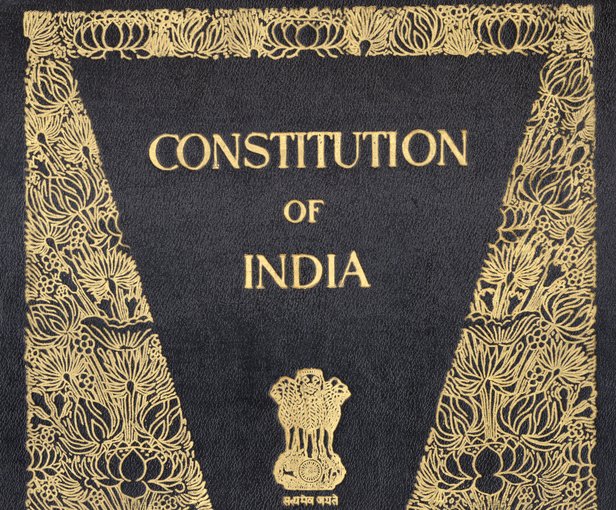
Constitution is a document with legal force that contains a set of fundamental principles and laws of a state. The concept of constitution is connected with the philosophy of constitutionalism. The government of a state has to conduct itself according to this document. Legally, it is the supreme law of the land and above everyone including the government. Constitutions have been classified into certain types by different scholars. They are:

Evolved/Cumulative Constitution: Evolved or Cumulative constitution is not a constitution created through a national convention. It is a product of evolution of many years. It has not come into force suddenly. The elements of this type of constitution have been cumulatively added over a period of time. For example, the Constitution of the UK is a cumulative constitution.  

Enacted/Conventional Constitution: Enacted or Convention Constitution is a document which has been  developed and framed by a Constituent Assembly.  It has come into force at a specific date.

For example: The US Constitution, and the Indian Constitution. 

Legal Constitution: Legal Constitution is nothing but the bare text of the written Constitution. 

Real: This type of Constitution also includes, in addition to Legal Constitution, conventions and judicial decisions relating to it form the real Constitution. 

Other types of Constitution include written and unwritten and rigid and flexible. According to the opinion of Dr. Garner, a written and enacted Constitution, and an unwritten and evolved Constitution, is essentially the same. Rigid Constitution refers to a type in which the provisions are difficult to amend and can be done only through a complicated procedure. Example: the US constitution. Flexible Constitution refers to a Constitution whose provisions can be easily amended. Example: the Swiss Constitution. 

There are certain features of an ideal Constitution. A good constitution has to be clear and should not be ambiguous. All the provisions contained in it have to unambiguous. Secondly, there has to be a balance between precision and comprehensiveness. It should not be verbose and must be precise in its expression. While achieving preciseness, it must not sacrifice comprehensiveness. It has to comprehensive to account for all possibilities. An ideal Constitution should aim for a balance between precision and comprehensiveness. It should also aim for a balance between rigidity and flexibility. Though rigidity makes a Constitution stable, there is a disadvantage of becoming unresponsive to changing circumstances. Flexibility allows to introduce changes to meet the changing requirements. Therefore, a right balance between rigidity and flexibility has to be achieved.

Constitutionalism

Constitutionalism is the philosophy that there must exist a Constitution that guides the government of a state how to and how not to act. According to this philosophy, every citizen of a state and the government itself must obey the Constitution. An ideal Constitution has to reflect the ideals and desires of the state’s citizens. The goal of constitutionalism is to prevent arbitrary usage of power and abuse of power. According to Don E. Fehrenbacher, constitutionalism is “a complex of ideas, attitudes, and patterns of behaviour elaborating the principle that the authority of government derives from, and is limited by, a body of fundamental law.” According to constitutional scholar David Fellman, the touchstone of constitutionalism is the concept of limited government under a higher law. 

The roots of constitutionalism can be traced back to Athens, Greece. Athens was a well-known city state in its time. The state was run on the basis of Constitution built on the basis of direct democracy.

Between 624 – 404 BCE, there existed 11 Constitutions which governed Athens. Aristotle has studied and described a large number of Constitutions in his seminal work ‘Politics’. In this work, he discusses about constitutional government. Plato also regarded a constitutional government the best form of government. According to Plato, the philosopher-king is the best king, but even such a king should be subject to restrictions. 

Types of learners and how to engage them

  1. Auditory and Musical learners

To engage a social learner, encourage both group collaboration and presentation. Consider:

  • Roleplaying historical events or works of literature
  • Collaborating on maths problems
  • Working as a class on comprehension questions

Auditory learners like to hear solutions and examples explained to them, and may gravitate towards music subjects and group learning as a way to understand information. Auditory learners often have a high aptitude for distinguishing notes and tones in music and speech.

Qualities often associated with auditory learners include:

  • Possessing a ‘good ear’ for music and tones
  • May be distractible
  • Likes to talk to self / others / hum / sing

Auditory learners might say words out loud or hum tones to better learn them. This strategy is key for keeping musical learners engaged in class lessons.

How to engage them?

If you’re a music teacher, you’re in luck. Auditory learners will be engaged from start to finish. For other subjects however, engaging aural learners requires some tact and forethought.

The key here is your voice (and the voice of your students). Write down something on the whiteboard, then read it out loud. Work on your delivery so you can express learning material in interesting and engaging tones. Similarly, encourage your students to read back their own notes to themselves (and the class). Hearing the sound of their own voice and the voices of others is engaging to auditory learners, but it can be a great learning tool for students of all types.

Other strategies you can try include:

  • Recording lessons for later listening and reference
  • Encouraging auditory listeners to ‘teach others’ verbally
  • Seating them away from distractions

2. Visual and Spatial learner

Visual learners like diagrams, drawing out concepts, charts and processes. They learn by looking at visual concepts, creating them, and watching other people create them. Visual learners might be organised or creative in their application, and find things like colours and shapes useful.

Visual learners often possess the following qualities:

  • Habitual doodlers / drawers
  • Observant
  • Not easily distracted
  • Enjoys planning
  • Prefers visual instructions

How to engage them?

To engage a visual learner in the classroom you’ll want to include elements like maps, diagrams and imagery. If you have a projector, try to include relevant images to go along with the course content. In geography and history, maps are helpful, while for maths and logic, go with diagrams.

Charts, images and diagrams will aid most students, so catering to visual learners doesn’t mean you have to ignore other types. When it comes to self-driven learning, encourage the spatially aware to sketch out their ideas, create mind maps and flowcharts. It should probably come to them naturally, but a bit of prompting can always help.

Other tactics you can use include:

  • Sitting visual learners near the front
  • Using colour codes and cues
  • Encouraging note taking and recopying notes during study

3. Verbal learner

Verbal learning includes both writing and speaking. Verbal learners might have a preference for reading and writing, word games and poems. Verbal learners know the meanings of a broad category of words, can use them effectively, and actively seek out new words to add to their repertoire.

Some qualities associated with verbal learners include:

  • Intellectual
  • Bookworm
  • Good story teller

Verbal learners often seek out careers in journalism and writing, administration, law and politics.

How to engage them?

Verbal learners will want to write down notes, talk about concepts and potentially present them as well. The trick with verbal learners is knowing what adjacent types of learning apply to them – are they an outgoing or more introspective verbal learner? Some may lean more to talking, while others to reading and writing. Try to cater to preference while also using their verbal abilities to push personal boundaries every once in awhile.

4. Logical and Mahematical learners

Perhaps unsurprisingly, mathematical learners err towards careers in programming, accountancy, science, research and other number and pattern-orientated careers. Some qualities associated with mathematical learners include:

  • Pattern recognition
  • Good with numbers
  • Predisposition towards grouping and classification

How to engage them?

Mathematical learners will greatly appreciate any type of learning that logically explains the subject at hand. For maths, that’s easy. For other subjects, it requires some effort and planning:

  • History and geography: Try to include statistics and classification taxonomy in your lesson plans.
  • Literature: Ask your students “What category of book is this?” Or in poetry, have them learn the meters and explain them to other students.
  • Music: Teach both musical instrument classification (woodwind etc) and the mathematical relationships between notes.
  • Art: A good starting point is the colour wheel and the effects of combining different colours.

With logical students, always look to incorporate a system. If you’re unsure, include the students in the development of that system. They’ll benefit from it greatly.

5. Physical and Kinaesthetic learner

Commonly called hands-on learners, kinesthetics prefer to physically engage with the materials of the subject matter. Some qualities associated with physical learners include:

  • Preference to ‘get their hands dirty’
  • Energetic, may drum fingers or shake legs
  • Action-orientated and outgoing
  • May de-prioritise reading and writing

Physical learners represent about 50% of the population,and gravitate towards careers with lots of hands on work like emergency services, physical education and sports.

How to engage them?

Channeling the energy and excitability of physical learners is key to offering a good lesson. Taking breaks so they can move around can help, but so can encouraging role play and movement within the lesson itself. Physical interaction is also important. The use of props and models will greatly benefit a kinaesthetic learner. Give them something to grab onto and they’ll process information much better than from a book or whiteboard.

Other strategies to engage physical learners include:

  • Encouraging movement during study (don’t punish them for fidgeting)
  • Decluttering desks and surfaces so they can focus on learning

6. Social and Interpersonal learner

Social learners show preference towards groups and collaboration. Some, but not all, will gravitate towards leadership within a group. Some of the qualities often associated with this type of learner include:

  • Extraverted
  • Good communicator
  • Sensitive and empathetic

It’s important for educators to understand that not all social learners are extraverted or highly communicative, and that they can also be visual, auditory, verbal, logical or physical learners. The interpersonal aspect perhaps better describes the settings in which they are most comfortable, rather than how they absorb information.

As such, teachers should be cognisant of the breadth of variation between different types of social learners. For example, social doesn’t strictly mean verbal. Some social learners prefer to listen in a group setting, rather than on their own.

How to engage them?

Interpersonal learners like to ‘do’ and to ‘share’. This can sometimes lead to distraction for other students who are more intrapersonal in their learning habits. To prevent this, try to channel social learners into providing value to the group, giving them tasks that use their energy usefully, with a focus on empathy for their classmates.

7. Social and Intrapersonal learner

Solitary learners can be visual, auditory, physical, verbal or logical learners. Fulfilling all the needs of the solitary student will ensure they are fully engaged. Some of the qualities often associated with this type of learner include:

  • Independent
  • Introspective
  • Private

Intrapersonal learners may gravitate towards careers with a lot of self determination or motivation, as well as solitary workloads. Think:

  • Researchers
  • Writers and authors
  • Programmers and coders

How to engage them?

In a classroom environment it can sometimes be difficult to engage a solitary learner. They might sit silently in the back of the classroom, only to ace the exam at the end of semester. For the educator, it’s important to engage them during class. Provide visual materials, books and learning aids. Designate quiet areas, and collaborate with defined sharing time so the solitary learner can feel adequately prepared.

Mixed learning approach

With large classrooms, it’s not always easy to personalise lessons, but using a mixed learning approach throughout coursework can help you cater to each type of learning style. You may decide to focus on a particular learning type each lesson, or incorporate multiple strategies within each lesson. The most important element is first recognising the differences in student learning – the rest will flow from there.


NEW DIMENSIONS TO DEATH- GRAY,BROWNING AND DICKINSON

If Winter comes, can Spring be far behind?
                               -Percy Bysshe Shelley (Ode to the West Wind)

Such spirited start, isn’t it? Poets literally can change our thoughts with mere lines. So are the poems that deal with Death.

“Elegy Written in a Country Churchyard”, “Prospice” and “Because I could not stop for Death” are on top of the list when it comes to overcome the fear of death. In the three years of my graduation I read these poems in the respective order and I must say there was an orderly development in my thought which I would like to share with you. Some of you might even connect with it.

Our generation is dealing with Death more closely than any other. With the help of advanced technology and advanced mutants of novel corona virus, the world is ‘connecting’ rapidly! It’s a time where no one is untouched by the feeling of anxiety or depression. Therefore it is crucial to keep the mind afresh. Why not to give a kick start to brain by reading through the lines of poetry instead of covid news every morning.

Gray and his Elegy

The boast of heraldry, the pomp of pow’r,
         And all that beauty, all that wealth e’er gave,
Awaits alike th’ inevitable hour.
         The paths of glory lead but to the grave.

In his poem Elegy Written in a Country Churchyard(1757), Thomas Gray talks about inevitability of death. While the traditional elegy form memorializes an individual’s death, but Gray expands the form to encompass death as a phenomenon that all of humankind inevitably experiences. He talks of big ambitious people who look with contempt at the poor people, they all are lying buried in the ground. Thus giving the message that death is blind to mankind’s social constructs such as class distinction. Death is the ultimate leveler.

Reading this poem makes one realise how futile is living; living by boasting of all the achievements, all the wealth; because one day when the end comes one will have to leave all these behind. Here come the reality check.

Browning’s Prospice

Written after his wife’s death whom he loved dearly, Robert Browning describes his idea of combating Death in his 1861 poem Prospice.

I was ever a fighter, so—one fight more,
The best and the last!
I would hate that death bandaged my eyes and forbore,
And bade me creep past.
No! let me taste the whole of it, fare like my peers..”

Browning treats Death as his enemy. The poet is not at all afraid of the physical troubles that come at the time of death. The symptoms of death does not deter him. Browning says that even the heroes of antiquity had to face death and fight it bravely. Common man should derive inspiration from them and be prepared to meet death bravely and cheerfully like them. If we do so, we can overcome it in one minute. Death is scary only when we are afraid of it. As a matter of fact, even the worst moment of death becomes enjoyable and appears to be the best for those who have got courage in them. After all, through death, we pass into another life and pass into Heaven if we are brave.  

This verse is an absolute necessity. It radiates optimism- the need of the hour. And also the power to fight the fear.

Because I could not stop for Death by Emily Dickinson

Because I could not stop for Death —

He kindly stopped for me —

The Carriage held but just Ourselves —

And Immortality.

Emily Dickinson is one of the giants of American literature. She was little known during her life time but became immensely popular after the posthumous publication of her works. Dickinson’s poems reflect her “early and lifelong fascination” with illness, dying and death. The poem contains a gentlemanly appearance of personified Death. The use of words such as ‘kindly’, ‘civility’ create a positive image of usually feared Death in our mind. There are many guesses over the poem’s actual meaning. Some interpret it as the Christian belief in the afterlife. According to the Christian faith, that first life stops and following death we encounter immortality through our existence in the after life.

My personal interpretation was related to the thought “We are born to die”; such that since the birth Death waits for us and in the whole journey of life Death is the only constant companion. Nevertheless, the whole poem gave a soothing feel and therefore evolved my perspective about death.