Oceanography is one of the largest areas of geography as it deals with the largest form on earth, Ocean. More than half of the earth’s surface is covered with water and it mainly consists of oceans. Even though it looks similar when we look from above, there are deep structures inside the water. Just like the land forms we daily see around us; oceans also have a wide variety of structures. In order to gain a clear idea about those, let us look into it in detail:
Major structures
Continental shelf
A continental shelf is the edge of a continent that lies under the ocean. Continents are the seven main divisions of land on Earth. A continental shelf extends from the coastline of a continent to a drop-off point called the shelf break. From the break, the shelf descends toward the deep ocean floor in what is called the continental slope. Even though they are underwater, continental shelves are part of the continent. The widths of the continental shelves vary.
Continental shelf
Continental slopes are regions of steeply sloping seafloor that lie between continental shelves and the deep ocean basins. Regional gradients are typically 2–5°, but locally slopes may be much steeper. Their large-scale morphology is a consequence of tectonic processes: the different elevations of continental crust and oceanic crust, the details of the original rift tectonics on passive continental margins, and the styles of subduction and accretion on convergent margins.
Continental rise
continental rise, a major depositional regime in oceans made up of thick sequences of continental material that accumulate between the continental slope and the abyssal plain. Continental rises form as a result of three sedimentary processes: mass wasting, the deposition from contour currents, and the vertical settling of clastic and biogenic particles.
Abyssal plane
The term ‘abyssal plain’ refers to a flat region of the ocean floor, usually at the base of a continental rise, where slope is less than 1:1000. It represents the deepest and flat part of the ocean floor lying between 4000 and 6500 m deep
Minor structures
Abyssal hills
An abyssal hill is a small hill that rises from the floor of an abyssal plain. They are the most abundant geomorphic structures on the planet Earth, covering more than 30% of the ocean floors. Abyssal hills have relatively sharply defined edges and climb to heights of no more than a few hundred meters. They can be from a few hundred meters to kilometers in width.
Trenches
Ocean trenches are steep depressions in the deepest parts of the ocean, where old ocean crust from one tectonic plate is pushed beneath another plate, raising mountains, causing earthquakes, and forming volcanoes on the seafloor and on land.
Submarine canyons
A submarine canyon is a steep-sided valley cut into the seabed of the continental slope, sometimes extending well onto the continental shelf, having nearly vertical walls, and occasionally having canyon wall heights of up to 5 km, from canyon floor to canyon rim, as with the Great Bahama Canyon.
Ocean has several other wonders hid under its deep waters. If we go deeper new structures unfold.
Education plays an important role in the development of an individual and making him a knowledgeable citizen. It is the education that makes an individual self-reliant, helps to suppress the social evils and contribute towards the development of the society and nation as a whole. Education helps in unravelling the mystery of nature. It enables us to understand and improve the working of our society. It creates conditions for a better life. Education brings out the capabilities to fight injustice happening in society. Every individual has the right to education.
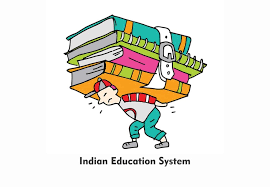
Indian Education is one of the largest and complex education systems in the world along with China. India is committed to providing basic education to its citizens, the framework of which is defined in the National Policy of Education. Elementary education is now compulsory in India. At the time of Independence, only 14% of India’s population was literate. Now after so many decades since Independence, the number of literates has increased by fivefold.
History of Education System
The history of Indian education system comes from the times of Ramayana and Mahabharata. The historic Indian education system is also called the Gurukula system. There were gurus then who are now known as teachers and shishyas who are called students now. The gurus and the shishyas lived together under one roof in Gurukula until the completion of their education. The shishyas were expected to help the guru in all the daily chores as part of their learning. The children belonging to higher strata of the society were taught all the subjects from Sanskrit to Holy Scriptures and mathematics to metaphysics by the gurus. The Gurukulas during those times focused on the practical aspects of life. The students were taught in the open classroom in the surrounding area of nature. This early system of education in India continued for many years until the modern education system came into the picture in the nineteenth century.
In the early 19th century, during the British period, the modern education system was brought into our country by Lord Thomas Babington Macaulay. The basic strength of this modernized education system was the examinations and a well-defined curriculum, which gave importance to subjects like science and mathematics and subjects like philosophy, metaphysics were given a back seat. The brick and mortar classrooms replaced the open classrooms in the Gurukulas. The essence of the guru shishya bond was taken over by a more formal relationship between the teacher and the student. To understand the progress of any student, examinations were conducted at frequent intervals. The focus of the education system shifted from learning to memorizing of the concepts to score good marks in the examinations.
Problems of Indian Education System
Over a period of time, it has been observed that there are many loopholes in the system of education in India. Instead of understanding the concepts, students started cramming and memorizing the lessons. Knowledge is given a backseat and scoring in high rankings takes importance. The modern parents have tuned their mindsets accordingly and their goal is to ensure that their children score good marks instead of acquiring knowledge right from the primary level.
Private schools and colleges have been rapidly increasing in the country but the results produced by them are far beyond satisfactory. It has also been observed that the quality of teachers deteriorated with the passing of time. Our examination system is responsible for the wide skill gap. India is producing lakhs of engineers and professionals every year but only a fraction of this number is actually getting employed. This is because the Indian examination system focuses more on scoring good percentages rather than the actual continuous comprehensive evaluation.
Research and development, which should be the cornerstone of our system, are given the least importance. The private schools and colleges focus on the admission of more students and are least interested in the quality of their education. This is the major reason why the faculties and the teachers lack skills and specialization. This is quite evident from the fact that a single professor is assigned to teach multiple subjects.
How Can We Improve the Indian Education System?
First and most importantly we should improve the grading system. Rote learning should be discouraged completely. Teachers and faculties should focus more on the analytical skills of the students and grade them accordingly. There should be more focus on comprehensive evaluation instead of scoring only good marks. Workshops must be organized for teachers on a regular basis to keep them updated about the latest developments in the sector of education. At the same time, the curriculum should be reframed according to the present needs of education in India.
The payroll structure of the teachers and the faculties especially in the government institutions should be improved. This step will help in motivating the teachers to develop their skills and they will take a keen interest in grooming or shaping up a student’s life and career. The government and other entities who are associated with the education sector, need to understand the importance of quality of education. Education should be a holistic process that must focus on the overall development of the physical, emotional, social and cognitive skills of a child. It needs to be a slow and cyclic process and must take place gradually to help the child develop into an autonomous, independent and knowledgeable individual.
Conclusion
An educated individual is an individual who should be able to contribute towards the betterment of the economic and social development of the society as well as the country. The true goal of education must exceed awarding the degrees and certificates to the students. Education is not a tool to earn livelihood but it is a way to liberate the mind and soul of an individual.
Stress is part of being human, and it can help motivate you to get things done. Even high stress from serious illness, job loss, a death in the family, or a painful life event can be a natural part of life. You may feel down or anxious, and that’s normal too for a while. Talk to your doctor if you feel down or anxious for more than several weeks or if it starts to interfere with your home or work life. Therapy, medication, and other stategies help. In the meantime, there are things you can learn to manage stress before it gets to be too much. Consider these suggestions:
Exercise
To start with, physical activity can help improve your sleep. And better sleep means better stress management. Doctors don’t yet know exactly why, but people who exercise more tend to get better deep “slow wave” sleep that helps renew the brain and body. Just take care not to exercise too close to bedtime, which disrupts sleep for some people. Exercise also seems to help mood. Part of the reason may be that it stimulates your body to release a number of hormones like endorphins and endocannabinoids that help block pain, improve sleep, and sedate you. Some of them (endocannabinoids) may be responsible for the euphoric feeling, or “runner’s high,” that some people report after long runs.
People who exercise also tend to feel less anxious and more positive about themselves. When your body feels good, your mind often follows. Get a dose of stress relief with these exercises:
Property rights define the theoretical and legal ownership of resources and how they can be used. These resources can be both tangible or intangible and can be owned by individuals, businesses, and governments. In many countries, including the United States, individuals generally exercise private property rights or the rights of private persons to accumulate, hold, delegate, rent, or sell their property. In economics property rights form the basis for all market exchange, and the allocation of property rights in a society affects the efficiency of resource use.
Understanding Property Rights
Property is secured by laws that are clearly defined and enforced by the state. These laws define ownership and any associated benefits that come with holding the property. The term property is very expansive, though the legal protection for certain kinds of property varies between jurisdictions.Property is generally owned by individuals or a small group of people. The rights of property ownership can be extended by using patents and copyrights to protect:
Scarce physical resources such as houses, cars, books, and cellphones
Non-human creatures like dogs, cats, horses or birds
Intellectual property such as inventions, ideas, or words
Other types of property, such as communal or government property, are legally owned by well-defined groups. These are typically deemed public property. Ownership is enforced by individuals in positions of political or cultural power. Property rights give the owner or right holder the ability to do with the property what they choose. That includes holding on to it, selling or renting it out for profit, or transferring it to another party.
Acquiring Rights to a Property
Individuals in a private property rights regime acquire and transfer in mutually agreed-upon transfers, or else through homesteading. Mutual transfers include rents, sales, voluntary sharing, inheritances, gambling, and charity. Homesteading is the unique case; an individual may acquire a previously unowned resource by mixing his labor with the resource over a period of time. Examples of homesteading acts include plowing a field, carving stone, and domesticating a wild animal. In areas where property rights don’t exist, the ownership and use of resources are allocated by force, normally by the government. That means these resources are allocated by political ends rather than economic ones. Such governments determine who may interact with, can be excluded from, or may benefit from the use of the property.
Private Property Rights
Private property rights are one of the pillars of capitalist economies, as well as many legal systems, and moral philosophies. Within a private property rights regime, individuals need the ability to exclude others from the uses and benefits of their property. All privately owned resources are rivalrous, meaning only a single user may possess the title and legal claim to the property. Private property owners also have the exclusive right to use and benefit from the services or products. Private property owners may exchange the resource on a voluntary basis.
Private Property Rights and Market Prices
Every market price in a voluntary, capitalist society originates through transfers of private property. Each transaction takes place between one property owner and someone interested in acquiring the property. The value at which the property exchanges depends on how valuable it is to each party. Suppose an investor purchases $1,000 in shares of stock in Apple. In this case, Apple values owning the $1,000 more than the stock. The investor has the opposite preference, and values ownership of Apple stock more than $1,000.
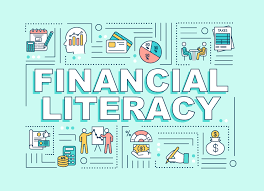
Financial literacy is the ability to understand and effectively use various financial skills, including personal financial management, budgeting, and investing. Financial literacy is the foundation of your relationship with money, and it is a lifelong journey of learning. The earlier you start, the better off you will be, because education is the key to success when it comes to money.
Read on to discover how you can become financially literate and able to navigate the challenging but critical waters of personal finance. And when you have educated yourself, try to pass your knowledge on to your family and friends. Many people find money matters intimidating, but they don’t have to be, so spread the news by example.
Understanding Financial Literacy
In recent decades financial products and services have become increasingly widespread throughout society. Whereas earlier generations of Americans may have purchased goods primarily in cash, today various credit products are popular, such as credit and debit cards and electronic transfers. Indeed, a 2019 survey from the Federal Reserve Bank of San Francisco showed that consumers preferred cash payments in only 22% of transactions, favoring debit cards for 42% and credit cards for 29%.
Other products, such as mortgages, student loans, health insurance, and self-directed accounts, have also grown in importance. This has made it even more imperative for individuals to understand how to use them responsibly. Although there are many skills that might fall under the umbrella of financial literacy, popular examples include household budgeting, learning how to manage and pay off debts, and evaluating the tradeoffs between different credit and investment products. These skills often require at least a working knowledge of key financial concepts, such as compound interest and the time value of money. Given the importance of finance in modern society, lacking financial literacy can be very damaging to an individual’s long-term financial success.
Being financially illiterate can lead to a number of pitfalls, such as being more likely to accumulate unsustainable debt burdens, either through poor spending decisions or a lack of long-term preparation. This in turn can lead to poor credit, bankruptcy, housing foreclosure, and other negative consequences. Thankfully, there are now more resources than ever for those wishing to educate themselves about the world of finance. One such example is the government-sponsored Financial Literacy and Education Commission, which offers a range of free learning resources.
Strategies to Improve Your Financial Literacy Skills
Developing financial literacy to improve your personal finances involves learning and practicing a variety of skills related to budgeting, managing and paying off debts, and understanding credit and investment products. Here are several practical strategies to consider.
Create a Budget—Track how much money you receive each month against how much you spend in an Excel sheet, on paper, or with a budgeting app. Your budget should include income (paychecks, investments, alimony), fixed expenses (rent/mortgage payments, utilities, loan payments), discretionary spending (nonessentials such as eating out, shopping, and travel), and savings.
Pay Yourself First—To build savings, this reverse budgeting strategy involves choosing a savings goal (say, a down payment for a home), deciding how much you want to contribute toward it each month, and setting that amount aside before you divvy up the rest of your expenses.
Pay Bills Promptly—Stay on top of monthly bills, making sure that payments consistently arrive on time. Consider taking advantage of automatic debits from a checking account or bill-pay apps and sign up for payment reminders (by email, phone, or text).
Video gaming has become a popular activity for people of all ages. Many children and adolescents spend large amounts of time playing them, although no one should have more than two hours total of screen time in a day. Video gaming is a multi-billion dollar industry, bringing in more money than movies and DVDs combined. Video games have become very sophisticated and realistic and some games connect to the Internet, which allow children and adolescents to play online with unknown adults and peers.
While some games have educational content, many of the most popular games emphasize negative themes. They promote the killing of people or animals, the use and abuse of drugs and alcohol, criminal behavior, disrespect for the law and other authority figures, sexual exploitation and violence towards women, racial, sexual and gender stereotypes, and foul language obscenities and obscene gestures. Examples of video games not acceptable for children because they have these themes include the popular ones Grand Theft Auto, Call of Duty, and Mortal Kombat.
There is growing research on the effects of video games on children. Studies of children exposed to violence have shown that they can become immune or numb to the horror of violence, imitate the violence they see and show more aggressive behavior with greater exposure to violence. Studies have also shown that the more realistic and repeated the exposure to violence, the greater the impact on children. Children and adolescents can become overly involved and even obsessed with video games, leading to poor social skills, time away from family time, school work and other hobbies, lower grades, reading less, exercising less, becoming overweight, and having aggressive thoughts and behaviors.
So how can you, as a parent, protect your child against these types of video games? First, you can check the Entertainment Software Rating Board ratings to learn about the game’s content. Every video game will actually have a label on the front to tell you what type of game it is. If it says M for mature, it’s not for your child.
Play the video games with your child to experience the game’s content and know exactly what your child is playing. Set clear rules about the game’s content for both playing time in and outside of your home. Strongly warn your children about the potential serious dangers of Internet contacts and relationships while playing online. There are a lot of online predators that will look for children specifically playing video games and this can lead to them meeting in real life. Finally, remember that you are a role model for your child. Make sure the video games you play as an adult are ones that you would want your child to play.
If you are concerned as a parent that your child is spending too much time playing video games or your child starts becoming obsessed with aggressive or violent video games, make sure you set some limits. You’re not allowed to play games for one hour after all the homework is done and encourage your child to participate in other activities so they’re not drawn to those video games. By being aware of what games are out there, you can help your child make appropriate decisions about gaming no matter where your child plays.
Education administration is a fast-changing field that requires knowledge of modern classroom practices and insights in student behavior. My experiences in education and administration make me the ideal candidate for this position.
The position listing for principal stated that you were searching for a candidate who could develop and maintain curriculum standards. I served as a teacher for seventeen years before entering administration and am keenly aware of the state and local standards for curriculum development.
I might not have sparkling marks and dazzling grades up to post graduation due to many reasons, but nevertheless, this lacuna always has kept me awaken and stimulated to impart updated education to my students at every level of their academic growth and aspiring career to score big, achieve high.
Close to 19 years of sound academic experience in more than one school has accustomed me to various teaching-learning and working experience. Employed in various capacity right from common teacher to HOD English to academic coordinator and finally to an esteemed post of a Principal has given me ample space, time, authority and opportunity to groom my pedagogic skill, academic quality, planning ability, leadership efficiency, administrative proficiency and management capacity, appropriately.
As a School Principal, I am nurtured, experienced and accumulated with vital information related to School leadership, Operation, Management, Administration, Marketing, Teaching, Training, planning and community relationship building. Being a priest of English, Sound writing and communication skills have always assisted me to be resourceful and updated at every level of my progress.
Educational requirements change quickly, and principals often act as liaisons between the state and the teaching staff. My experience in curriculum development has helped me be able to interpret state standards and communicate them efficiently to my colleagues. As a principal, I would be comfortable holding everyone accountable for these rapidly changing standards.
My resume highlights specific examples of my administrative and leadership duties, my strong problem-solving, creative thinking, and long-range planning abilities. Additionally, I am adept in communicating with a diverse population.
I relish the range of challenges that are part of this job and enjoy working with students, parents, and teachers. My interests, strengths and abilities, along with my experience, I believe, are exactly what you want for this position. I hope you will give me the opportunity of a personal interview to help me understand your needs better and explain to you in greater detail how I can contribute to your school system.
Whether you’re five or ninety five, the internet has a lot to offer. Particularly when the topic is education, the resources on the internet are endless. Best of all, many high quality sites are completely free. From history to coding, excellent, free online education awaits you.
1. Coursera:
Coursera is a website that partners with universities and organizations around the world. This brings a wide variety of topics and perspectives to one searchable database. Coursera is a powerful tool for free online education and includes courses from many top universities, museums and trusts. This gives the site an extremely wide range of in-depth courses. Coursera is extremely useful if you’re looking to study many different topics, or want courses from different schools and groups.
2. Khan Academy:
Partnering with many post secondary schools, Khan Academy offers a useable, well-organized interface. Also curating many courses from around the web, Khan Academy offers impressive depth on many different subjects. Among the more well-known educational sites, Khan Academy is also incredibly user-friendly, which may make it easier to keep learning goals. If you’re looking for a free online education, you can’t go wrong with Khan Academy.
3. Open Culture Online Courses:
If you are struggling to find exactly the material you are looking for, try Open Culture’s listing of free online education courses. The page highlights 1000 lectures, videos, and podcasts from universities around the world. The site features a lot of material found only on universities’ private sites, all in easy-to-browse categories. This means you can find hundreds of university courses without having to visit and search each university’s site. Open Culture’s list features courses from England, Australia, Wales, and many state universities around the United States. It’s a very helpful resource for finding many courses in one area of study.
4. Udemy:
Udemy’s free courses are similar in concept to Coursera’s but additionally allows users to build custom courses from lessons. Working with many top professors and schools, the site mixes the customizable platform of other sites with a heavy emphasis on top-quality content. This is another site, however, that mixes free and paid content.
5. Lifehack Fast Track Class:
Lifehack believes in skills that multiply your time, energy, and overall quality of life. In this rapidly changing world, traditional education skills just don’t cut it anymore. You can’t afford to take years learning a skill you’ll never really practice. Besides offering some paid courses that will help you become a better self, it offers a list of free courses which aim to train some of the Core Life Multipliers.
6. Academic Earth:
Another site with courses from many different schools is Academic Earth. Academic Earth brings together top notch courses from many different sources and focuses on offering a wide variety of subjects. Academic Earth lists courses by subject and school, so it might be easier to find what you’re looking for.
7. edX:
Another great option for free online education is edX. Also bringing together courses from many different schools, the site has impressive, quality information for everyone. edX covers a great range of topics from universities such as Harvard, MIT, and Berkeley, meaning a high-quality, free online education is entirely possible here.
8. Alison:
Alison is a free education site offering certification in some areas. Alison offers courses mainly in business, technology, and health, but also includes language learning courses. It’s a great option if users need a professional certificate for their learning, as Alison also offers school curriculum courses.
9. iTunesU Free Courses:
A very convenient place for free online education is iTunesU, because it integrates seamlessly with your iPod or any app-ready Apple mobile device. On an iPad, iPhone, or iPod touch, users download the iTunesU app. Desktop users can access iTunesU on the upper right hand corner of the iTunes Store. iTunesU is also convenient because the store is categorized much like iTunes. Users can search learning materials in many different ways, including by genre and topic. However, courses are often a mix of free podcasts or videos and paid content. iTunesU does include courses on a variety of topics, but it does not integrate with Android, Google or Windows mobile devices.
10. Stanford Online:
Stanford Online is a great site for high-quality courses, though the topics are somewhat limited compared to sites partnered with more than one school. If you’re looking for free courses, make sure to mark the “free” option on the left-hand side.
11. Open Yale Courses:
Open Yale Courses echoes Stanford Online, in that it offers only courses from Yale. While the site is similarly limited to topics taught at the school, Open Yale Courses offers a lot of videos of actual campus lectures. The availability of videos makes the site a great option if you’re looking for quality courses but learn better by watching than by reading.
12. UC Berkeley Class Central:
Much like the other schools on this list, UC Berkeley has a variety of free online education options. The school has slightly fewer courses than the schools above, but it includes some supplementary lectures and webcasts.
13. MIT OpenCourseWare:
Similarly, MIT offers a variety of free courses. The school has a comparable number of courses to the schools above, and it includes very in-depth course materials on the subjects available.
14. Carnegie Mellon Open Learning Initiative:
Carnegie Mellon’s free online education site is comparable with the other school’s on this list. However, Open Learning Initiative also covers a smaller range of topics, but for the topics that are covered, impressive, in-depth material is available.
15. Codecademy:
Codecademy is a website dedicated specifically to teaching coding. Where other coding sites follow an example/practice session workflow, Codecademy includes a live practice window. This means you can practice coding while still viewing the lesson material. The courses at Codecademy are well-written and easy to follow, and the website is organized very nicely. Codecademy features a centralized dashboard where you can monitor your progress, and it organizes lessons into complete modules. This lets you learn an entire language without needing to pick the next course manually.
16. Code:
Code is another website focused on coding and app writing. A site with high-quality courses, Code also features learning options for kids. In addition to kid-friendly courses, Code offers free online education classes on a wide variety of technology topics. These classes include app writing, robotics, and Javascript. Most of the courses are also geared in a such a way that they can be useful in a classroom setting. This makes Code a great resource for harder to find coding topics, as well as various learning settings.
17. TED-Ed:
Another great destination for more general learning and free online education is TED-Ed. From the same people that brought you the all-encompassing, motivational web series comes a site chocked full of educational videos. Most include impressive animation, and all are ten minutes long or less. Not only is TED-Ed an excellent site for the curious, but it also includes supplemental materials and quizzes on the videos. This makes the site extremely useful in formal education settings, as well as in entertaining ways to brush up on new discoveries and topics.
18. LessonPaths:
LessonPaths is another great tool for those looking for a more usable and convenient way to access learning material. On this site, users create link playlists of their favorite learning materials from other sites. Users then rank these collections, making it easy to find many different high-quality, accessible sources on a given topic.
19. Memrise:
Another impressive free online education site offering ease of use and convenience is Memrise. Available both on desktop and as an app, Memrise is a particularly powerful tool if you are studying a language. The site encompasses many other topics as well, though some of the course material is user generated content. Part of what makes Memrise special is their integration of games into the learning materials, mixing learning with entertainment.
20. Fun Brain:
Fun Brain is another great option for kids looking for free online education, as it focuses on games and fun puzzles. Particularly focused on math and reading, Fun Brain’s game-based approach can be valuable if the child in question struggles to pay attention. Fun Brain offers rewards and challenges as well.






 Eduindex
You must be logged in to post a comment.