President Election in USA

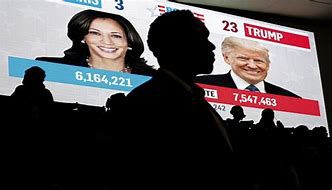
The election of the President in the United States is a complex process rooted in the Constitution, involving both the popular vote and a unique mechanism known as the Electoral College. Every four years, Americans go to the polls to select their President and Vice President, with the next election set to occur on November 5, 2024.
1. Primary Elections and Nominations

The presidential election process begins with primary elections and caucuses, which are organized by political parties across the 50 states. These elections determine each party’s nominee, allowing voters to select their preferred candidate within their party. Primaries may be closed (only registered party members can vote) or open (allowing any voter to participate). Candidates compete for delegates who will officially support them at the party’s national convention.

During the National Conventions, the chosen delegates from each party formally nominate their candidate for President. The candidate then selects a running mate for Vice President, and the party platform is finalized.

2. The General Election Campaign

After the conventions, the focus shifts to the general election campaign. Presidential candidates campaign nationwide, debating and addressing issues to appeal to a broad voter base. The general election campaign lasts several months and includes televised debates, town hall meetings, rallies, and advertisements.

3. The General Election and Popular Vote

On Election Day, citizens cast their ballots for their preferred candidate. While many people believe they are directly voting for the President, they are actually voting for a slate of electors pledged to their candidate. This vote, called the popular vote, determines which candidate will receive the electoral votes from each state.

4. The Electoral College

The Electoral College is a unique feature of the U.S. presidential election process. Established in the Constitution, it allocates a certain number of electors to each state, equal to its total number of senators and representatives in Congress (with Washington D.C. receiving three electors). In total, there are 538 electors, and a candidate needs at least 270 electoral votes to win the presidency.

In most states, the candidate who wins the popular vote receives all the state’s electoral votes. However, Maine and Nebraska use a district-based system, where two votes go to the statewide winner, and the remaining votes are awarded based on each congressional district’s results.

5. Electoral College Vote and Certification

After the general election, electors meet in their respective state capitals in December to cast their votes. These votes are then sent to Congress, where they are formally counted in early January. If a candidate receives at least 270 electoral votes, they are certified as the President-elect.

In rare cases, if no candidate achieves the required majority, the decision is made by the House of Representatives. The House elects the President from the top three candidates, with each state delegation having one vote, while the Senate elects the Vice President from the top two candidates.

6. Inauguration Day

The new President and Vice President are inaugurated on January 20, formally marking the transition of power. The President takes the oath of office administered by the Chief Justice of the United States, followed by an inaugural address, symbolizing the beginning of a new administration.

Conclusion

The U.S. presidential election process, involving both direct and indirect voting mechanisms, reflects a blend of democratic values and unique historical considerations. The system emphasizes both popular input through direct voting and federal principles through the Electoral College, providing a distinctive approach to electing the nation’s highest office.

Importance of Elections in India

Elections are a cornerstone of democracy, playing a vital role in ensuring the very fabric of a democratic society. The importance of elections in democracy can be seen in the following aspects:
1. *Accountability*: Elections hold elected representatives accountable to the people, ensuring they are answerable for their actions and policies.
2. *Representation*: Elections provide citizens with a voice, allowing them to choose representatives who reflect their values, beliefs, and interests.
3. *Power Transfer*: Elections facilitate the peaceful transfer of power, preventing violent coups and ensuring stability in government.
4. *Citizen Participation*: Elections encourage citizen engagement, fostering a sense of ownership and responsibility in the democratic process.

5. *Protection of Rights*: Elections help safeguard individual rights and freedoms, as elected officials are tasked with upholding the constitution and protecting citizens’ liberties.
6. *Promoting Political Pluralism*: Elections allow for the coexistence of diverse political parties and ideologies, promoting healthy competition and debate.
7. *Encouraging Political Engagement*: Elections inspire citizens to stay informed, engage in political discussions, and participate in the democratic process.
8. *Preventing Authoritarianism*: Elections prevent the concentration of power, ensuring that no single individual or group dominates the political landscape.
9. *Fostering Transparency*: Elections promote transparency in government, as elected officials are required to be open and accountable in their decision-making processes.
10. *Strengthening Democracy*: Elections reinforce democratic values, reinforcing the principles of equality, justice, and freedom that underpin democratic societies.
In summary, elections are the lifeblood of democracy, ensuring that power remains with the people and that government remains accountable, representative, and responsive to their needs.

The Anticipation Builds: 2024 General Elections in India

 As the calendar inches closer to the year 2024, all eyes are fixed on the horizon of Indian politics, eagerly awaiting the next General Elections. India, the world’s largest democracy, conducts these elections every five years to determine the fate of the nation and its people. With its diverse population, myriad challenges, and evolving political landscape, the 2024 General Elections promise to be a defining moment in India’s history.

  1. Political Dynamics

The political landscape in India is ever-changing, marked by the dynamic nature of its political parties. The 2024 elections will be a litmus test for the ruling party, which will seek to secure another term, while the opposition parties will strive to make inroads. The BJP, led by Prime Minister Narendra Modi, has been in power since 2014 and is expected to present a formidable challenge to its opponents. However, the Indian political arena is known for its unpredictability, and alliances and realignments can alter the equations significantly.

  1. Key Issues

The 2024 General Elections are expected to revolve around a range of critical issues that resonate with the Indian populace. Some of these issues include:

a. Economic Recovery: In the wake of the COVID-19 pandemic, India, like the rest of the world, faces economic challenges. The electorate will scrutinize the government’s performance in reviving the economy, generating employment, and alleviating poverty.

b. Healthcare Infrastructure: The pandemic exposed weaknesses in India’s healthcare system. Voters will be interested in the government’s efforts to bolster healthcare infrastructure and ensure better access to quality medical care.

c. Agricultural Reforms: The contentious agricultural reforms implemented by the government will likely remain a focal point. The stance taken by various parties on these reforms will be closely observed by voters, particularly in agrarian states.

d. National Security: Security concerns, especially in border areas, will feature prominently in the election discourse. The government’s handling of national security issues will be closely scrutinized.

e. Environment and Climate Change: Climate change and environmental degradation have become global concerns. Voters may press for more comprehensive policies to address these issues.

  1. Electoral Technology

India is known for its mammoth electoral process, with millions of voters spread across diverse geographical regions. Technology is expected to play a crucial role in making the election process more efficient and transparent. The Election Commission of India has been at the forefront of implementing technology-driven solutions to facilitate voter registration, booth management, and result dissemination.

  1. Youth and Women’s Participation

The youth vote is expected to be a significant factor in the 2024 elections. India has a large and young population, and their concerns and aspirations will shape the election narrative. Moreover, the participation of women in Indian politics has been steadily increasing, and their role in deciding the outcome of elections cannot be underestimated.

  1. Conclusion

The 2024 General Elections in India are poised to be a watershed moment in the country’s political history. The electorate will have the responsibility of choosing leaders and policies that will shape India’s future. As the nation awaits this crucial event, it is imperative that the elections are conducted smoothly, fairly, and in a manner that upholds the principles of democracy. The world will be watching as India takes another step forward in its democratic journey.

An Electoral System That Neglects The Youth?

Since the inception of democracy in 507 B.C, the axiom that the people of a nation play a pivotal role in upholding it has stood firm through the test of time. While the question of which members of society would play this role has historically been a contentious issue in many countries, it was never a major problem in India. The Constituent Assembly ensured that universal adult franchise was provided for in the Constitution from the very beginning. While there was some opposition to universal adult franchise, based on concerns that the right to vote was being given too early, the possibility of inadequate education, knowledge, patriotism towards the country amongst the voters, a majority of members supported it. This meant that, once a citizen of India reached a certain age, they would be entitled to vote irrespective of their gender, religion, caste, education, income, or any other factor.

The provision of adult franchise has become more inclusive over time. When it was first written, article 326 of the Constitution allowed citizens who were 21 years of age or above, to vote in their local, state Legislative Assembly and national Lok Sabha elections. The age limit was reduced to 18 years of age or above after the Sixty-first Amendment Act, 1988. However, this seemingly innocuous provision contains a major problem. Article 326 gives the appropriate legislature the ability to set a date before which a citizen must turn 18 years of age, in order to be eligible to vote. 

According to the Election Commission of India (ECI), attaining the age of 18 years on or before the qualifying date of the year of revision of the electoral roll is a requirement to register in the electoral roll. According to Article 14 (b) of the Representation of the People Act, 1950, the qualifying date is “The 1st day of January”. This is a significant impediment to the participation of youth in the electoral process as it means that a citizen turning 18 years of age on or after the 2nd of January in the year of an election, is ineligible to vote in that election, even if they turn 18 years of age before any of the elections are actually held. This means that there are a very large number of 18 year olds who will get to vote in a major election only after 5 years, which is a very long time after they have technically reached the correct age to vote. 

In May 2016, D. V. Sadananda Gowda, the Minister of Law and Justice at the time stated that the government had plans to add more than one qualifying date in a year before which a citizen may be eligible to vote. Furthermore, the ECI has suggested the elimination of the qualifying date and allowing citizens to be eligible to vote as soon as they turn 18. While having only one qualifying date made sense in the past as electoral rolls were updated manually, it makes absolutely no sense now as online voter registration is an established process. Despite this, no action has been taken to remove this blatant hindrance to the participation of youth voters in a critical democratic process. 

Let’s take a look at the participation of “young voters” in recent elections. An Indian citizen aged 18-19 years and voting for the first time is considered a young voter. According to data from the ECI, approximately 15 million young voters participated in the 2019 national elections. However, this ostensibly large number is sadly only about 30% of the estimated population of young voters (48.5 million). It is also a lower number than the 23 million young voters that participated in the 2014 national elections, which contradicts the fact that the total electorate increased from about 815 million in 2014 to about 900 million in 2019. The percentage of young voters that actually voted is abysmal, especially when India has the largest youth population in the world, according to the UN (356 million). 

There could be a variety of reasons for this ignominious participation of youth in the electoral process. Without a doubt, the youth do consider voting in general as well as their vote to be important. However, many do not apply for a voter ID, either because they don’t know how to, or because they don’t prioritize it over other things important to them, such as college applications and driver licences. This problem is being addressed by the various grassroot level and large scale campaigns to increase awareness on the importance of participating in the electoral process organised by various NGOs as well as the ECI. Nowadays, political parties use special tactics to enlarge their youth voter base. Although a quixotic change in the near future, the introduction of online voting systems would significantly increase the participation of youth in the electoral process.

Another impediment to youth participation in the electoral process is the obnoxious amount of influence that money and corruption have in an election. The youth are more interested in policies that would improve their quality of life, their education and their job opportunities rather than flashy and expensive election campaigns carried out by an inaccessible pantheon. Besides this, the lack of candidates that reflect the aspirations of the youth makes them avoid the electoral process. While article 84 (b) of the Constitution states that a citizen above the age of 25 can contest in the Lok Sabha election, the youngest MP is 27 years old and there are only 4 MPs between the ages of 27 and 30. This is equivalent to about 0.75% of the 536 sitting members of the Lok Sabha, which is incongruously unrepresentative of the age demographics of India. In response to a Public Interest Litigation that called for the reduction of the age limit for contesting an election to 21 years of age, the Supreme Court of India chose to stress on experience rather than representation, by stating that citizens must have a certain amount of experience before they can contest an election. Furthermore, in 2018 the Supreme Court responded to a PIL that called for the reduction of the age limit for contesting an election to 18 years of age by stating that parliament must deliberate and make a decision. 

There seems to be some light at the end of the tunnel. For instance, in the recent Tamil Nadu legislative assembly elections, 21.86% of the total electorate were between the ages of 18 and 29, accentuating the growing importance of youth in politics. While making their voices heard by casting their vote is not the only step, it is nevertheless a crucial one in moving towards a country in which the youth are adequately represented in state and national leadership. With citizens aged below 25 comprising more than half of our total population, it is time that the youth is at the helm of decision making that has an impact on their future. It is also time for ancient laws, such as the qualifying date, to be modified, so that we can begin to change this behemoth of an electoral system that neglects the youth. 

Is Media still Working On its ethics and norms.

As the UP Election are on the way all the political parties are on their way to lure the public towards them to getthe votes and to win the elections. Therefore a lot interviews and rallies have started taken place. India has just came out of the second wave of Covid-19 and somehow there were many political rallies lead to the boost in cases at some places.

Sadly the same thing is happening again and the rallies and political gatherings have started again. No one knows what can be the result of all this but as there are a chances of having a third wave of Covid-19 around October it is not something that leaders should be focusing on.

Among all this the role of media has became limited to promoting the government and several products only. The major news channels are not talking about the problems that may arise as the result of the actions taken by Government. Upon having a chance to interview they only end up asking silly questions like a 5 year old fro, prime minister and from chief minister as well.

The role of media is to ask questions on behalf of the public but it seems to do everything except that only.

what do you think about current media and what do you think about the government. please share your thoughts in the comments below.

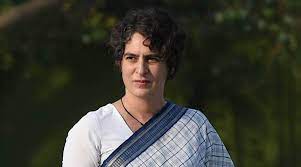
Priyanka Gandhi’s demand on cancelation of UP Block Pramukh Elections.

On July 16 Priyanka Gandhi arrived in UP and is ready and is ready to revive Congerss in the state. On the second day of visit Piyanka Gandhi visited Lakhimpur to meet the victims of abbuse at Block Pramukh Election.

Priyanka Gandhi said that she and all the women of our country are with them and will support them. She also pointed out the authorities for being responsible to conduct the elections in a proper manner without any violence. and demanded the elections to be terminated and to be held again in a organised manner.

She talked to the victims and pointed out the silence of administration and that whenever anything like this happens the elections are terminated but why it is not happening here.

She also mentioned that Prime Minister congratulated UP to successfully conducting the elections even after all that happened and took place not at a single but at more than one place. And asked for the better investigation and to held the election again in a stable manner.

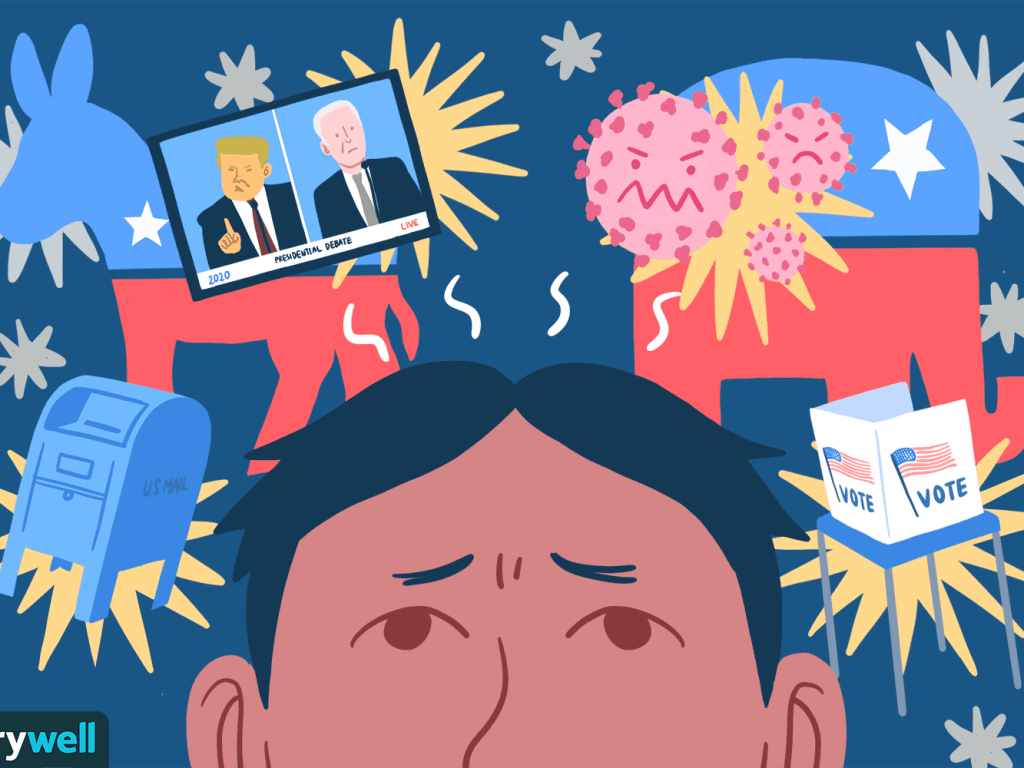
Are You Sick Of Politics Too? An in-depth view at the Politically Triggered Anxiety and Electoral Stress that’s hitting Indians

With an age old stigma tailing down it’s path, we Indians generally don’t give as much consideration to our mental health for various reasons as compared to those in the West. In any case, there is a possibility that you heft around some stress about the political course of the country.

The world’s largest democracy voted for five assembly elections recently. With 180 million of India’s 1.3 billion people eligible to cast their votes , a larger strata of its overgrowing population heads out to exercise their biggest power in hands to chose from among various political parties jostling for their accession to throne. Some of you may find your anxiety levels all over the place during the election season. Welcome to the world of Politically Triggered Anxiety and Electoral Stress Disorder that’s hitting the Indians hard and fast.

Profoundly polarized worlds of politics will in general raise the feelings of anxiety of those who fall to be most vulnerable and threatened to it. Yet, on a more larger scale, it could likewise affect anyone who’s owns a cell phone in this news on the go age we all live in..

Election Stress Disorder grabbed global media attention during the run-up to the 2016 US Presidential elections . The American Psychological Association revealed in October 2016 that 57% of Americans admitted that the political environment of the nation is “very” or “fairly huge” source of stress in their lives. The high levels of anxiousness was seen linked to a huge partisan campaign between then Democratic Party candidate Hilary Clinton and her rival Republican Party candidate Donald Trump .In April 2016, the survey led by Washington Post-ABC News uncovered that 69% of Americans felt anxious over the apprehension of Donald Trump being elected the President of the United States. Believe it or not, election-related anxiety is real. No matter where you head to-from social networking sites to heated debates on news channels–there is no escaping from highly charged political discussions. This can be particularly torturing if your political philosophy is at crossroads with those close to you. For many individuals, politics isn’t just about who is overseeing the country yet rather a significant piece of their idealogy. Uncertainty is frequently stressful, and some people are better at dealing with uncertainty than others. Experiencing a pit-like nauseous feeling in the gut, every time there’s political discussions and even the slightest exposure to election talk and media coverage, you could be experiencing election-related anxiety. We Indians too already have enough on our plates with our very own Made in India brand of divisive desi politics and polarization bringing in a lot of stress all of which are only heightens as we trudge closer to the elections every now and then.


Here lies another Indian-ish things — we have a tendency to be the first in everything. The first to discover ‘zero to the first to discover the cure for leprosy, and now the ESD. We have known about it for years now but just didn’t claimed it like the West. In 1997, Jaipur-based psychiatrist Dr Shiv Gautam led a team of three doctors who did a study in Rajasthan and published a paper titled ‘Election – A Stressful Life Event’, analysing near about 54 patients who sought counselling after developing mental health troubles following local panchayat elections in Rajasthan back then, concluding that the elections were stressful not only for the candidates and their campaigners but also the State Election Commission. The researchers followed this up with another study in 2009 and the result was very similar.

There has been an increase of stress and anxiety in economically backward sections. Economically crippled strata of India have been targeted in phases — irrespective of their political beliefs. . The constant uneasiness and uncertainty blanketing the life of a common householder develops into stress and subsequently into anxiety, leading to physiological complications.


According to the Lancet Report, India recorded one of the highest suicide rates among youth globally. A research published in the Asian Journal of Psychiatry, 37.7% of university students in India suffered from ‘moderate’ depression, 13.1% suffered from ‘severe’ depression, and 2.4 % were suffering from ‘extremely severe’ depression, citing the uncertainty of employment and the fluctuating job market as the prime causes.

Mental health professionals pose blame of the barrage of stress-inducing social media brought to Indians , over the advent of social media. News is on every screen and there is an urgency to consume and pass it over it immediately; no time to take in the reality of the news and then react to it because everyone wants to be the first political think tank on social media which is evident on the amount of political, communal and religious propaganda in the media. The fact remains that low levels of digital and media literacy among the general population has been marked as the biggest contributor to the widespread fake news and rapid onset mob-violence scenario, as the recent violent protests over Whatsapp forwards have demonstrated.

As a coping strategy to deal with the anxiety caused by politics, Maryland based therapist and a victim to this stress himself, Dr. Steven Stosny , advises those affected by the election and its aftermath, “to reach out, connect, affiliate and show compassion for those similarly affected. Hold other people’s perspectives alongside your own. Weigh evidence, see nuance, plan for the future and replace blame, denial, and avoidance with the appreciation of complexity.” “Stand up for what you believe. Write letters, demonstrate, lobby — remembering that you’ll be most effective (and feel better) when focused on the change you want to see rather than merely reacting to what you don’t like. For optimal psychological health, take the moral high ground and resist the urge to react to a jerk like a jerk,” Stonsy says.