Education stands as a beacon of hope and a pathway to a better future, especially for those born into impoverished circumstances. In the fight against poverty, education emerges as a powerful tool that not only offers immediate benefits but also creates a ripple effect of positive change across generations. The transformative role of education in improving the lives of the poor is multifaceted, addressing economic, social, and individual empowerment aspects.
Breaking the Cycle of Poverty:
Education serves as a key mechanism for breaking the cycle of poverty. By providing individuals with knowledge, skills, and opportunities for personal development, education equips them to escape the constraints of their socio-economic backgrounds. Access to quality education empowers individuals to pursue higher-paying jobs, secure stable employment, and achieve financial independence, thus lifting themselves and their families out of poverty.
Enhancing Economic Opportunities:
Education opens doors to a wide range of economic opportunities that would otherwise be inaccessible to the poor. Through formal schooling, vocational training, and skill development programs, individuals acquire the expertise and qualifications needed to compete in the job market. Moreover, education fosters entrepreneurship by equipping aspiring entrepreneurs with the knowledge and business acumen necessary to start and sustain successful ventures, thereby generating income and creating employment opportunities within their communities.
Promoting Social Mobility and Equality:
Education plays a crucial role in promoting social mobility and equality by leveling the playing field for individuals from disadvantaged backgrounds. By providing equal access to education regardless of socio-economic status, societies can mitigate the disparities that perpetuate poverty and marginalization. Education empowers individuals to challenge systemic inequalities, advocate for their rights, and participate actively in civic and political processes, thereby fostering a more inclusive and equitable society.
Improving Health and Well-being:
Education has a profound impact on health outcomes and overall well-being. Educated individuals are more likely to adopt healthier lifestyles, make informed decisions about healthcare, and access preventive services. Furthermore, education empowers individuals to understand and address pressing health issues such as sanitation, nutrition, and disease prevention within their communities. By promoting health literacy and behavior change, education contributes to improved health outcomes and reduced healthcare disparities among the poor.
Fostering Personal Empowerment and Resilience:
Beyond its socio-economic benefits, education fosters personal empowerment and resilience among the poor. Through education, individuals develop critical thinking skills, self-confidence, and a sense of agency to navigate life’s challenges and seize opportunities for growth. Education instills values such as perseverance, discipline, and adaptability, enabling individuals to overcome adversity and pursue their aspirations despite the odds stacked against them.
In conclusion, the role of education in improving the lives of the poor cannot be overstated. Education serves as a catalyst for socio-economic development, promoting empowerment, equality, and upward mobility among disadvantaged populations. By investing in education, societies can break the cycle of poverty, unlock human potential, and create a more just and prosperous future for all. As Nelson Mandela aptly said, “Education is the most powerful weapon which you can use to change the world.”
Key Initiative and Achievements of Department of Social Justice and Empowerment under Ministry of Social Justice and Empowerment in the year 2023 are-
Initiatives for the welfare of Scheduled Caste
Pre-Matric and Post Matric scholarship scheme for SC students
The Department of Social Justice and Empowerment with an objective of appreciably increasing the Gross Enrolment Ratio of SC students in higher education, with a focus on those from the poorest households, has been implementing Centrally Sponsored Scheme “Post-Matric Scholarships to the students belonging to Scheduled Castes for studies in India”.
DoSJE introduced Centrally Sponsored Scheme of Pre-Matric Scholarship for SC students & Others which aims to support, through financial assistance, parents of children belonging to Schedules Caste and other disadvantaged categories for education of their wards studying at the pre-matric stage.
Achievements under the schemes:
During the year 2023 to till date (22.12.2023), a total of 34,58,538 SC beneficiaries have been released scholarship amounting to Rs. 3546.34 Cr under Post-Matric scholarship scheme for SC students;
During the year 2023 to till date (22.12.2023), a total of 18,32,628 beneficiaries have been released scholarship amounting to Rs. 369.03 Cr under Pre-Matric Scholarship scheme for SC students;
Aadhaar- based payment system is being utilized to ensure that the scholarship funds are received by the student through DBT directly into his/her aadhaar seeded account;
Some of the States/ UTs viz. Tamil Nadu, Karnataka have automated the process of receipt and processing of applications by digitalization of certificates and auto- fetching of eligibility data to ensure minimum manual intervention and increased transparency;
Seven States/UTs viz. Assam, Chandigarh, Gujarat, Himachal Pradesh, Jharkhand, Karnataka and Odisha have covered more beneficiaries as against their annual targets under Post Matric SC scheme for the year 2022-23;
Under Component-II of the Pre-matric Scheme which deals with children whose parents are engaged in cleaning and hazardous occupations, numbers of participating States have increased from one in 2022 to nine in 2023 to provide scholarship to disadvantaged students.
Scholarships for Higher Education for Young Achievers Scheme (SHREYAS) for SCs
The Department conceptualized Umbrella scheme namely ‘Scholarship for Higher Education for Young Achievers Scheme (SHREYAS)’ to ensure convergence of resources across the four smaller Central Sector Schemes of the Department catering to SC/OBC students desirous of pursuing higher education (in India and abroad) and/or obtaining employment in Group A/Group B services of centre or State Governments. The schemes has the following components –
Top Class Education for SCs:
The Scheme Guidelines of the scheme have been revised by this Department and 44 new institutes have been empanelled under the scheme raising the total count of institutes to 266
Scholarship benefits have been provided to 3999 beneficiaries till date.
Free Coaching scheme for SCs and OBCs:
The Scheme Guidelines of the scheme have been revised by this Department and from F.Y 2023-24 the scheme will be run by Dr. Ambedkar Foundation (DAF) through empanelled Central Universities.
Scholarship benefits have been provided to 483 beneficiaries from January 2023 till date.
III. National Overseas Scholarship for SCs:
Under NOS Scheme financial assistance is provided to the selected students from SCs (115 slots); De-notified, Nomadic and Semi-Nomadic Tribes (6 slots); landless agricultural labourers and traditional artisan categories ( 4 slots), for pursuing masters and Ph.G. level courses abroad. Presently, 125 slots are allotted under the scheme. 107 students has been awarded scholarship out of 125 for the S.Y. 2023-24 till date.
National Fellowship for SCs:
The objective of the Scheme is to provide fellowships in the form of financial assistance to students belonging to Scheduled Caste category to pursue higher studies leading to M. Phil., Ph.D. in Science, Humanities and Social Science streams, in Indian Universities/Institutions/Colleges recognized by University Grants Commission (UGC).
Under NFSC scheme fellowship is provided to Scheduled Castes students for pursuing higher education leading to M.Phil/Ph.D degrees in Sciences, Humanities and Social Sciences in Indian Universities/Institutions/Colleges recognized by University Grants Commission. The scheme is being implemented by National Scheduled Castes Finance and Development Corporation. The scheme provides for 2000 new slots per year who have qualified the National Eligibility Test-Junior Research Fellowship (NET-JRF) of UGC and Junior Research Fellows for Science stream qualifying UGC-Council of Scientific and Industrial Research (UGC-CSIR) Joint Test. The rates under the scheme has been revised i.e. Rs. 37,000/- p.m. for JRF and Rs. 42,000/- p.m. for SRF w.e.f. 01.01.2023.
SHRESHTA (RESIDENTIAL EDUCATION FOR STUDENTS IN HIGH SCHOOLS IN TARGETED AREAS)
The department has been implementing Scheme for Residential Education for Students in High Schools in Targeted Areas (SHRESHTA) to enhance the reach of development Intervention of the Government and to fill the gap in service deficient SCs dominant areas, in the sector of education through the efforts of grant-in-aid institutions (run by NGOs) and residential high schools offering high quality education and to provide environment for socio economic upliftment and overall development of the Scheduled Castes (SCs).
The scheme is being implemented in two modes. In mode-I, each year a specified number (3000) of meritorious SC students in States/UTs are selected through the National Entrance Test for SHRESHTA (NETS) conducted by the National Testing Agency (NTA) and admitted in the best private residential schools affiliated by CBSE/State Boards in classes 9th and 1lth. In mode-2, financial assistance is provided to the NGOs for running the schools/hostel projects related to Education sector to Scheduled Caste students. The Scheme broadly covers 3 types of projects namely (i) Residential Schools (ii) Non- Residential Schools and (iii) Hostels, both for Primary and Secondary Students.
Achievements under the scheme:
Under this scheme, total 2564 students were admitted in 142 Private Residential Schools affiliated by CBSE/State Boards for academic session 2023-24 and school fee of an amount of Rs. 30.55 Crore is reimbursed by this Department.
Details of funds released and number beneficiaries during F.Y. 2023-24 is under:
(Rs. In Lakh)
Sr. No.
2023-24
Total
Amount
released
2023-24
Total No of Students
1
Amount Released to
Private
Residential
Schools
(Mode-1)
No. of
Students
Fund
released to
NGOs/VOs
(Mode -2)
No. of
Students
4921.28
4134*
236.11
3409
5157.39
7543
*(as on 10.12.2023)
*2564 students selected during 2023-24 and 1570 studentys carry forward from selected during 2022-23 and 2021-2022 in mode-1
The Department under Pradhan Mantri AnusuchitJaati Abhyuday Yojana (PM-AJAY) merged 03 erstwhile Centrally Sponsored Schemes, namely, Pradhan Mantri Adarsh Gram Yojana(PMAGY), Special Central Assistance to Scheduled Castes Sub Plan(SCA to SCSP) and Babu Jagjivan Ram Chhatrawas Yojana(BJRCY) with an aim to reduce poverty of the SC communities by generation of additional employment opportunities through Skill development, income generating schemes and other initiatives; and to improve socio-economic developmental indicators by ensuring adequate infrastructure and requisite services in the SC dominated villages. the Scheme has now the following three components:
Development of SC dominated villages into an ‘Adarsh Gram’
Grants-in-aid for District/State-level Projects for socio-economic betterment of SCs
Construction of Hostels in Higher Educational Institutions
Achievements under the scheme:
Grants-in-Aid’ component: Since 1st January, 2023, a total of 3132 projects have been approved and sanctioned benefitting a total number of 1,14,722 beneficiaries. During the period, a total fund of Rs. 117.54 Cr. has been released to the State Governments/ UTs.
‘Hostel’ component: Since 1st January, 2023, Rs. 56.04 Cr. Has been released for construction of 20 girls’ hostel and 10 boys’ hostel.
‘Adarsh Gram’ Component: Since 1st January, 2023, a total of 1786 Village Development plans (VPDs) have been generated and 1899 villages have been declared Adarsh Gram. A total fund of Rs. 106.01 Cr. has been released to States/ UTs.
The protection of Civil Rights Act, 1955 and the Scheduled Castes and the Scheduled Tribes (Prevention of Atrocities) Act, 1989:
Central Assistance of Rs. 496 Crores (approx..) has been released to the States/UTs under the Centrally Sponsored Scheme for the implementation of the PCR Act, 1955 and the SC/ST (PoA) Act, 1989 for effective implementation of these Acts in the year 2023.
Approx 92093 number of atrocity victims/dependents have been provided relief in the year 2023 under the scheme.
Approx. 20000 inter-caste marriage couples have been provided incentive in the year 2023 under the scheme.
Meeting of the committee constituted for effective coordination to devise ways and means to curb offences of untouchability and atrocities against SCs and STs and effective implementation of the PCR Act, 1955 and PoA Act, 1989, has been held on 21.11.2023 under the Chairpersonship of the Hon’ble Union Minister for Social Justice & Empowerment, under which the implementation of the PCR Act, 1955 and the SC/ST (PoA) Act, 1989 in all the States/UTs has been reviewed.
Initiatives for the welfare of Backward Class
PM-YASASVI
The DoSJE devised an umbrella scheme namely; PM-YASASVI for OBC, EBC and DNT students with five sub-schemes to streamline scholarship schemes for students from OBC, EBC and DNT communities to ensure timely disbursement to them. The erstwhile Schemes of Dr. Ambedkar Scheme of Post-Matric Scholarship for Economically Backward Classes (EBCs), Dr. Ambedkar Scheme of Pre-Matric and Post-Matric Scholarship for DNTs have been subsumed in the umbrella Scheme of PM YASASVI with effect from 2021-22.
Pre-Matric Scholarship for OBC/EBC & DNT Boys and Girls
Post- Matric Scholarship for OBC/EBC & DNT Boys and Girls
Construction of hostels for OBC Boys and Girls
Central Sector Scheme of Top Class Education in College for OBC,EBC and DNT students
Central Sector Scheme of Top Class Education in Schools for OBC,EBC and DNT students
SHREYAS
The Department for Educational Empowerment of OBC & EBC students by way of awarding fellowship (financial assistance) in obtaining quality higher education and interest subsidy on educational loan for overseas studies, has been implementing Scholarships for Higher Education for Young Achievers Scheme- SHREYAS with two ongoing Central Sector schemes as components
National Fellowship for OBC students
Dr. Ambedkar Central Sector Scheme on Education loans for Overseas Studies for OBC & EBC
Achievements under PM-YASASVI and SHREYAS:
Under Pre-Matric Scholarship for OBC, EBC & DNT students Rs. 383.24 lakh has been released from 01.01.2023 to 22.12.2023 and no. of beneficiaries are 21.727 lakh for 2022-23 and beneficiaries for 2023-24 will be provided with subsequent year’s proposal.
Under Post-Matric Scholarship for OBC, EBC & DNT students Rs. 1064.26 lakh has been released from 01.01.2023 to 22.12.2023 and no. of beneficiaries are 25.55 lakh for 2022-23 and beneficiaries for 2023-24 will be provided with subsequent year’s proposal.
Under Construction of hostels for OBC Boys and Girls Rs. 21.6365 lakh has been released from 01.01.2023 to 22.12.2023 for 1800 No. of Seat for 2022-23 and 496 No. of Seats for 2023-24.
Under Central Sector Scheme of Top Class Education in Schools for OBC, EBC and DNT students Rs. 1.891 lakh has been released from 01.01.2023 to 22.12.2023 for 1291 students.
Under Dr. Ambedkar Scheme of Interest Subsidy for Overseas Studies for OBC/EBC students Rs. 48.09 lakh has been released for 1570 students in 2022-23.
Under National Fellowship for OBC students Rs. 56.38 lakh has been released for 2734 beneficiaries (upto 31 Dec. 2022).
Initiatives for Welfare of Safai Karamchari
National Action for Mechanized Sanitation Eco-system (NAMASTE).
Self Employment Scheme for Rehabilitation of Manual Scavengers (SRMS) has been modified during the FY 2023-24 with a new nomenclature i.e. National Action for Mechanized Sanitation Eco-system (NAMASTE). NAMASTE is a joint initiative of the Ministry of Social Justice and Empowerment (MoSJE) and Ministry of Housing & Urban Affairs (MoHUA) and NSKFDC is the implementing agency.
The primary target of NAMASTE is the sewer and septic tank sanitation Workers (SSWs) involved in hazardous cleaning operations and directly dealing with human faecal matter. Interventions for rehabilitation of manual scavengers under SRMS will continue under NAMASTE.
Achievements under NAMASTE
Online training on the NAMASTE Mobile App for the profiling of sewer and septic worker has been conducted in 27 State/UTs
Profiling camps for identification of SSWs have commenced in Delhi and Chandigarh in the month of December.
Skill Development Training has commenced for 1306 candidates
Rs. 0.85 Crore has been released as Capital Subsidy for self employment projects for 79 Manual scavengers/dependants
Rs. 3.21 Crore has been released as Capital Subsidy for 84 beneficiaries for Sanitation related projects. In addition Rs.0.51 Crore released for 16 projects of previous year which could not be released due to PFMS problem.
307 Workshops have been conducted in various ULBs on Prevention of hazardous cleaning of sewer and septic tanks
Initiatives for Welfare of Senior Citizens
Atal Vayo Abhyuday Yojana (AVYAY)
The department under Integrated Programme for Older People (IPOP) component of the scheme provides basic amenities like shelter, food, medical care and entertainment opportunities and by encouraging productive and active ageing through providing support for capacity building of Government/ Non-Governmental Organisations/Panchayati Raj Institutions/ local bodies and the Community at large. Assistance under the scheme will be given to the Panchayati Raj Institutions/local bodies and eligible Non-Governmental Voluntary Organisations.
RashtriyaVayoshri Yojana (RVY)- launched in 2017 to assist BPL senior citizens suffering from age related disabilities/ infirmities. Assistive Devices distributed free of cost.
Achievements under AVYAY and RVY
The meeting of EFC of the schemes to be funded from the Senior Citizens Welfare Fund (SCWF) amounting Rs. 979.85 Crore for the year 2021-22 to 2025-26 was held on 09th August, 2023 under the Chairmanship of Finance Secretary.
The guidelines for implementation of the Atal Vayo Abhyuday Yojana(AVYAY)-CS was revised in respect of the components to be funded from the Senior Citizens’ Welfare Fund(SCWF) in line with the recommendations of the EFC in its meeting held on 09th August, 2023.
In respect of the scheme of Elderline: National Helpline for Senior Citizens, the Request for Proposals (RFP) procedure has been finalized.
Distribution camps at 28 locations were conducted on 24.09.2023 under the scheme of RashtriyaVayoshri Yojana (RVY) wherein assistive devices worth Rs. 9.05 Crore have been provided to 12562 (approx.) senior citizens.
Under the scheme of Training of Geriatric Care Givers, applications of training partners/training institutes were invited till 20.10.2023. Applications have been scrutinized and MOU along with work order has been processed for 36 training partners and Training Institutes including NISD and RRTCs.
Under the Integrated Programme for Senior Citizens (IPSrC), a total of 88 new old age homes included during past 2 financial years.
With National level conferences and regular monthly meetings, the participation of the State Governments has increased.
The Screening Committee of Department has recommended a total amount of Rs.76.95 Crore under the State Action Plan for Senior Citizens(SAPSrC).
Initiatives for prevention of Drug Abuse
The Ministry of Social Justice and Empowerment has launched the National Action Plan for Drug Demand Reduction (NAPDDR) which is an umbrella scheme under which financial assistance is provided to (i) ‘State Governments/ Union Territory (UT) Administrations for Preventive Education and Awareness Generation, Capacity Building, Skill development, vocational training and livelihood support of ex-drug addicts, Programmes for Drug Demand Reduction by States/UTs etc. and (ii) NGOs/VOs for running and maintenance of Integrated Rehabilitation Centers for Addicts (IRCAs), Community based peer Led Intervention (CPLI) for early Drug Use Prevention among Adolescents, Outreach and Drop In Centers (ODIC), District De-Addiction Centers (DDACs); and (iii) Addiction Treatment Facilities (ATFs) in Government hospitals .
The Ministry has initiated the Nasha Mukt Bharat Abhiyan with the aim of creating awareness about the adverse effects of substance abuse among youth in all districts across countries.
Achievements Under NAPDDR
The Ministry has released an amount of Rs. 95.97Cr. to NGOs/VOs/SAPs under NAPDDR scheme during calendar year 2023.
During the saidperiod, fund have been sanctioned to 310 Organizations and a total of 740616 beneficiaries have been benefited under the Scheme.
The Ministry has sanctioned setting up of 47 DDACs (District De-addiction centre) in the GAP districts across the country during the year.
25 ATFs were dedicated to the nation during the year.
Expert Working Group meeting on Drug Demand Reduction held on 7.4.2023 under India’s Chairmanship of Shanghai Cooperation Organization (SCO) Council of Heads of State. All Member States participated in the meeting online through Zoom platform.
Achievements of NMBA
Since launch of NMBA and till now, through the various activities undertaken on-ground, 10.74+ crore people have been sensitized on substance use including 3.38+ Crore Youth and 2.27+ Crore Women.
Participation of 3.28+ Lakh educational institutions has ensured that the message of the Abhiyaan reaches children and youth of the country.
A strong force of 8,000+ Master Volunteers (MVs) have been identified and trained.
Awareness through official Social Media accounts of the Abhiyaan on Twitter, Facebook & Instagram.
NMBA Mobile Application developed to gather and collect the data of NMBA activities and represent on the NMBA Dashboard at district, state and national level.
NMBA Website (http://nmba.dosje.gov.in) provides detailed information and insights to the user/viewer about the Abhiyaan, an online discussion forum, NMBA dashboard, e-pledge.
Welfare of Transgenders and Persons engaged in Begging
Support for Marginalized Individuals for Livelihood and Enterprise (SMILE)
Comprehensive Rehabilitation of persons engaged in the act of Begging’
Department has approved the revised scheme guidelines (23.10.2023)
Department identified 30 cities/places and received consent, action plan and other documents
Conducted orientation programme with Nodal officers from all 30 cities.
25 cities submitted their consent to implement the scheme.
Rs. 5.00 crore has been released to CNA (NISD) towards 1st instalment to implementing agencies.
Comprehensive Rehabilitation for Welfare of Transgender Persons
PM-DAKSH Yojana, a Central Sector Scheme, was launched during 2020-21. The main objective of the Scheme is to enhance competency level of the target groups (SCs, OBCs, EBCs, DNTs, Safai Karamcharis including waste pickers etc) to make them employable both in self- employment and wage-employment for their socio-economic development.
Achievement under the scheme:
During 2023-24, 28 Government and 84 private training institutes have been empanelled for implementation of the Scheme. More than 95000 trainee targets have been distributed among these 112 empanelled training institutes.
The practice of empanelling institutes on yearly basis has been discontinued and now the institutes are empanelled for minimum period of three years subject to satisfactory physical and financial progress and non-indulgence of institutes concerned in any malpractices relating to implementation of the scheme.
For the first time, while allotting the States, Districts, job roles etc., a transparent process was adopted due to which 411 Districts including 82 Aspirational Districts have been covered for implementation.
Further, latest job roles have been allotted to these training institutes.
Out of existing 38 training sectors, 32 sectors have been covered which are likely to diversify the training opportunities to the desirous trainee candidates and will also facilitate better employment opportunities to them.
More than 55,000 applicants have already applied on the PM-DAKSH portal for 821 centers seeking training in 247 different courses.
Out of these 55,000 plus applicants more than 37,000 applicants are female who are one of the important target groups for the training.
574 batches for training have already been formed and they are ready for commencement of training.
The training is likely to commence in all sanctioned centers in the month of December, 2023 itself.
A momentous collaboration has been cemented as the Ministry of Social Justice & Empowerment and the National Safai Karamcharis Finance and Development Corporation (NSKFDC) inked a Memorandum of Understanding (MoU) for the fiscal years 2023-24 and 2024-25. This strategic partnership aims to enhance the socio-economic upliftment of Safai Karamcharis, Manual Scavengers, Waste Pickers and their dependants focusing on empowering these marginalized communities across the nation.
The MoU underscores the commitment to accelerate inclusive growth through the effective allocation and utilization of funds for targeted welfare programs. The joint endeavor strives to amplify initiatives that promote safety, education, skill development, entrepreneurship, and sustainable employment opportunities, contributing to the holistic advancement of these workers who toil hard braving inclement weather to keep our surroundings clean.
NSKFDC, a prominent organization dedicated for this cause will collaborate closely with the Ministry to ensure the transparent and effective utilization of allocated funds. This alliance seeks to synergize expertise and resources for impactful implementation of programs that empower these marginalized populations.
The signing of this MoU is a testament to the shared vision of fostering equal opportunities and societal progress. Both parties are eager to channel their collective efforts to drive positive changes, fostering an environment where every individual can thrive and contribute to the nation’s growth.
Union Minister for Social Justice and Empowerment Dr. Virendra Kumar inaugurates the Divya Kala Mela in Kartavya Path at India Gate, Delhi. Minister of State for Social Justice and Empowerment Sushri Pratima Bhowmik was also present on the occasion. The Divya Kala Mela will be held from 2nd to 7th December and it’s aims to provide a great platform for the products and craftsmanship of Divyang artisans, craftsmen and artisans from across the country. On this occasion, Union Minister for Social Justice and Empowerment Virendra Kumar said that the objective of the fair is to bring self-reliance in the lives of Divyangjan, he said that this type of event will provide a big platform to the Divyangjans as well as display and sale of their products and in future Will also provide an opportunity to connect with big businessmen. With this, he said that Divya Kala Mela will now be organized across the country. The four finance corporations under this ministry, NHFDC, NBCFDC, NSFDC and NSKDFC k provide financial assistance under term loan schemes and micro finance schemes to the artisans through various channel partners.
The ambitious plan of P M Modi, P.M. is Training in skill upgradation and skill development under Daksh is also important for our target group of corporates as the group is mostly engaged in traditional economic activities which require continuous improvement of their skills as per the market requirement. Therefore, to make the economic activities of the target groups compatible with market competition, emphasis is also being laid on skill up gradation. They just need to identify their needs and potential and training and match it with their access to government resources and soft loans. PM Rs 495 crore has been distributed to more than 5 lakh trainees under Daksh.
The event will provide an exciting experience to the visitors to see vibrant products, handicrafts, handlooms, embroidery work and packaged food items, etc. from different parts of the country including Jammu & Kashmir and North Eastern States. Around 200 Divyang artisans, artists and entrepreneurs from 22 states and union territories will showcase their products and skills in the fair. The fair showcased products from the categories of home decor & lifestyle, clothing, stationery & eco-friendly products, packaged food, organic products, toys & gifts, personal accessories-jewellery, clutch bags, a fair for all’ Vocal for Local’ and will provide an opportunity to see and buy products made by Divyang artisans through their additional resolution, the six-day Divya Kala Mela will open from 11.00 am to 8.00 pm. It will host a range of cultural activities including performances by differently-abled artists and eminent professionals. Visitors can also relish their favorite food from different regions of the country at the event.
Union Minister for Social Justice and Empowerment Dr. Virendra Kumar inaugurates the Divya Kala Mela in Kartavya Path at India Gate, Delhi. Minister of State for Social Justice and Empowerment Sushri Pratima Bhowmik was also present on the occasion. The Divya Kala Mela will be held from 2nd to 7th December and it’s aims to provide a great platform for the products and craftsmanship of Divyang artisans, craftsmen and artisans from across the country. On this occasion, Union Minister for Social Justice and Empowerment Virendra Kumar said that the objective of the fair is to bring self-reliance in the lives of Divyangjan, he said that this type of event will provide a big platform to the Divyangjans as well as display and sale of their products and in future Will also provide an opportunity to connect with big businessmen. With this, he said that Divya Kala Mela will now be organized across the country. The four finance corporations under this ministry, NHFDC, NBCFDC, NSFDC and NSKDFC k provide financial assistance under term loan schemes and micro finance schemes to the artisans through various channel partners.
The ambitious plan of P M Modi, P.M. is Training in skill upgradation and skill development under Daksh is also important for our target group of corporates as the group is mostly engaged in traditional economic activities which require continuous improvement of their skills as per the market requirement. Therefore, to make the economic activities of the target groups compatible with market competition, emphasis is also being laid on skill up gradation. They just need to identify their needs and potential and training and match it with their access to government resources and soft loans. PM Rs 495 crore has been distributed to more than 5 lakh trainees under Daksh.
The event will provide an exciting experience to the visitors to see vibrant products, handicrafts, handlooms, embroidery work and packaged food items, etc. from different parts of the country including Jammu & Kashmir and North Eastern States. Around 200 Divyang artisans, artists and entrepreneurs from 22 states and union territories will showcase their products and skills in the fair. The fair showcased products from the categories of home decor & lifestyle, clothing, stationery & eco-friendly products, packaged food, organic products, toys & gifts, personal accessories-jewellery, clutch bags, a fair for all’ Vocal for Local’ and will provide an opportunity to see and buy products made by Divyang artisans through their additional resolution, the six-day Divya Kala Mela will open from 11.00 am to 8.00 pm. It will host a range of cultural activities including performances by differently-abled artists and eminent professionals. Visitors can also relish their favorite food from different regions of the country at the event.
Women’s empowermentis the process of empowering women. It may be defined in several ways, including accepting women’s viewpoints or making an effort to seek them, raising the status of women through education, awareness, literacy, and training.
Challenges of Women Empowerment
The major hurdles in the process of empowering women are loads of Problems that were faced by women in past days and still today up to some extent are Gender discrimination, Lack of Education, Female Infanticide, Financial Constraints, Family Responsibility, Low Mobility, Low ability to bear Risk, Low need for achievement, Absence of ambition for the achievement. Atrocities on Women such as Raped, Kicked, Killed, Subdued, humiliated, Deserted and divorced Women.Social stigma and the fear of abandonment by the family play a big role in women and girls’ ability or inability to access laws and policies to address sexual and physical violence.
Some other factors that pose the challenge in realizing women’s empowerment are Poverty, Health and Safety, Professional and household Inequality.
Prospects of Women Empowerment
More than ever before, today’s young women have more choices and control in their lives. They had the most choices in education, the least in career choices. Women are touching heights in almost all fronts be it politics, science, technology, defense, administration and in society in general. This has become possible because of slowly changing social perspective towards women.
In recent years, the traditional roles of women have undergone some changes due to economic needs, and some efforts were made to bring visibility and mainstream women’s contribution to the overall growth and development of society. The status of women has changed considerably. Women have made significant strides in all fields, although their number remains insignificant.
Smt. Pratibha Devi Singh Patil became first women president of India 12th President of India. Sakshi Malik became the first Indian woman to win an Olympic medal for wrestling at the 2016 Rio Olympics in the 58 kg freestyle category and PV Sindhu bagged a silver medal at the 2016 Beijing Olympics in Badminton.
The Indian Government has paid special attention to women’s empowerment, and both the National Policy for Empowerment of Women (NPEW) 2001, as well as the 10th Five Year Plan, illustrate its commitment to women’s empowerment and welfare. The Government of India has initiated a number of schemes and Ministry of Women and Child Development, Government of India has started so many Programmes for the empowerment of Women.
v Conclusion
When women are empowered they get the right to speak up, get a proper education, have a fixed income, do not become victims of early child marriage or domestic violence and do not have to face harassment. Also when women will be empowered, they will have their daughters empowered as well. Women empowerment cannot be possible unless women come with and help to self-empower themselves or other women for which they will be paid back for their, support love and care to each other. Besides they will live in more developed and educated society.
To tackle the issue of Substance Abuse and a vision to make India Drug Free, Nasha Mukt Bharat Abhiyaan (NMBA) was launched on 15th August 2020, in 272 Districts identified as most vulnerable in terms of usage of drugs in the country. These vulnerable districts were identified on the basis of findings from the Comprehensive National Survey and the inputs provided by the Narcotics Control Bureau (NCB).
The Abhiyaan is a three-pronged attack combining the supply curb by Narcotics Control Bureau, Outreach and Awareness and Demand Reduction effort by Social Justice and Empowerment and treatment through Health Department
Youth, Educational Institutions, Women, Children, Civil Society Organizations/NGOs are envisioned as major target populations and stakeholders of the Nasha Mukt Bharat Abhiyaan
The Nasha Mukt Bharat Abhiyaan was launched in the identified 272 districts on 15th August 2020 and since its launch, a wide range of activities have been conducted throughout the country that have fostered participation from all quarters of society and stakeholders. District Level Nasha Mukt Committees which are headed by the District Collector/Magistrate charted out, planned and taken the lead in the implementation of the Abhiyaan in their respective districts.
Till now through the various activities undertaken for the Abhiyaan, 1.4+ Crore people have been reached out so far in the identified districts
More than 45+ lakh youth have actively participated in the activities of the Abhiyaan
The contribution of 29.5+ Lakh women have been vital in reaching out to a larger community through the Anganwadi & ASHA Workers, ANMs, MahilaMandals& Women SHGs
Across the country till now, 30+ lakh students have been reached with events, competitions and sessions organized in 55,000+ educational institutions such as schools & colleges
Master Volunteers have been selected and trained to lead the Abhiyaan activities in the 272 identified districts. A strong network of 8,000+ Master Volunteers are actively participating in the Abhiyaan.
The Ministry has tried to take over the online space and engage with the various stakeholders through a range of activities and online events. The Social Media accounts of the Abhiyaan on Twitter, Facebook & Instagram have acted as effective medium for the online presence.
A host of online events like Panel Discussion with DC/DMs, Expert Panel Discussion, Online competitions etc. have also been organized with the involvement and participation from the highest authorities from the Ministry as well as the States & Districts, subject matter & domain experts from different fields, professionals working in the area of substance abuse and the youth at large.
A Mobile Application for the Nasha Mukt Bharat Abhiyaan was launched by the Ministry to gather and collect the data and the information of the activities that are happening on-ground. This App is being used by the selected Master Volunteers who are involved in organizing and conducting activities for the Abhiyaan and also by the District Officials. All this collected data is represented in the NMBA Dashboard where detailed information can be viewed on a district, state and national level.
A Website (http://nmba.dosje.gov.in) for the NMBA has been made live and public with the intention of providing detailed information and insights to the user/viewer about the Abhiyaan.
The NMBA website also has an interactive space for Forum & Discussion to questions on anything related to substance abuse which is answered within the next 24 hours by subject matter and domain experts who are affiliated to eminent institutions like NIMHANS & PGIMER
All the rehabilitation, treatment and counselling facilities supported by the Ministry have been geo-tagged
A short film on the Abhiyaan, its objectives and the efforts of the districts has been made
Eminent Universities & Colleges across the country such as Christ University, Manipal Academy of Higher Education, VIT are actively involved in the implementation of Abhiyaan activities in their campuses and vulnerable communities present around them.
To celebrate Azadi ka Amrit Mahotsav, Ministry has planned to declare 100 districts as ‘Drug Sensitized Districts’ from August 2021 to August 2022 as per defined parameters
2. SMILE-Support for Marginalized Individuals for Livlihood and Enterprise.
The Ministry of Social Justice and Empowerment has formulated an umbrella scheme “SMILE – Support for Marginalized Individuals for Livelihood and Enterprise”, which includes two sub-schemes – ‘Central Sector Scheme for Comprehensive Rehabilitation for Welfare of Transgender Persons’ and ‘Central Sector Scheme for Comprehensive Rehabilitation of persons engaged in the act of Begging’. This umbrella scheme covers several comprehensive measures including welfare measures for both transgender persons and persons who are engaged in the act of begging with focus extensively on rehabilitation, provision of medical facilities, counselling, education, skill development, economic linkages etc with the support of State Governments/UTs/Local Urban Bodies, Voluntary Organizations, Community Based Organizations (CBOs) and institutions and others. The Scheme is expected to be launched soon.
3. Post –Matric Scholarship Scheme for SC students.
Under Post-Matric Scholarship Scheme for SC students, the Union Cabinet approved transformatory changes in the scheme in December, 2020 for the period of 2020-21 to 2025-26 which included fixed sharing pattern of 60:40 between Centre & States and DBT of Central Share to beneficiaries from 2021-22 onwards. Despite having a short implementation time of the revised scheme during March 2021, the achievement of the release made under the scheme was extraordinary and over 105% of the allocated budget. The central assistance amounting to Rs. 4008.60 cr was released covering over 62 lacs beneficiaries (exact figure yet to be reported by States).
As one of the major interventions of the Government was to introduce direct central share to the beneficiary account from FY2021-22 inwards, the Department successfully implementing this provision and in this regards an amount of Rs 245.42 cr has been released to over 4 lakh beneficiaries on 6th December, 2021 as of now.
4. Achievements of NSKFDC
Achievements of loaning scheme of NSKDSC
NSKFDC has disbursed Rs. 99.33 Cr to its Channelizing Agencies for extending the benefits of various loan schemes of NSKFDC to 21869 beneficiaries during the calendar year 2021 as on 21.12.21.
With a view to promote mechanized cleaning and also provide livelihood opportunities to the target group, NSKFDC is also providing financial assistance under its Swachhta Udyami Yojana (SUY) for procurement of mechanized cleaning equipments. The beneficiaries from the target group are provided long term work contact for mechanized cleaning from the Urban Local Bodies and related equipments/vehicles are financed under SUY scheme with provision of capital and interest subsidy under SRMS scheme.
28 Loan Mela’s were organised in various cities under Safaimitra Surkasha Challenge to provide financial assistance to target group of NSKFDC for procurement of mechanised cleaning equipments/vehicles under Swachhta Udyami Yojana (SUY) of NSKFDC.
NSKFDC has also provided capital subsidy of Rs.5.19 Cr against 142 beneficiaries from the target group of NSKFDC for procurement of 117 units of mechanized cleaning equipments having total cost of Rs. 13.73 Cr.
Swachhta Udyami Yojna (SUY)
Swachhta Udyami Yojna (SUY) was launched by NSKFDC on the birth anniversary of Mahatma Gandhi on 2nd October 2014 with twin objectives of cleanliness and providing livelihood to Safai Karamcharis and liberated Manual Scavengers and their dependents. NSKFDC provides financial assistance to its target group for procurement of operation of mechanised sanitation related equipments and vehicles.
Financial assistance to Urban Local Bodies (ULBs) under Swachhta Udyami Yojana (SUY) of NSKFDC: Loans are provided to Urban Local Bodies (ULBs) under SUY scheme of NSKFDC for procurement of any mechanised cleaning equipment/vehicle having unit cost not exceeding Rs.50.00 Lakhs as per the details given below:
Beneficiary Profile
Maximum Limit (upto)
Rate of Interest
NSKFDC Loan Share
ULB Share
Repayment period
Municipal Corporation/Jal Boards, Public Health & Engineering Departments, Cantonment Boards etc.
Rs.50.00 lacs per unit(no. of units could be more than 1)
4% p.a.(1% rebate for timely repayment)
90%
10%
Upto 10 years
Financial assistance to is also provided through State Channelizing Agencies (SCAs) under Swachhta Udyami Yojana (SUY) of NSKFDC
Financial assistance to the target group under SUY Scheme
Grant of Capital and Interest Subsidy under SRMS Scheme:NSKFDC is actively working for the objective of manhole to machine-hole transformation by providing upfront capital Subsidy and interest subsidy under SRMS scheme to promote this initiative.
CAPITAL SUBSIDY:- Upfront capital subsidy is also admissible for procurement of mechanised cleaning equipments under SRMS Scheme as under:
Range of Project Cost (Rs.)
Capital Subsidy
For individuals
Upto Rs. 5,00,000
50% of project cost
5,00,000 to 15,00,000
Rs. 2.5 lakh + 25% of remaining project cost
For Group Projects:
Upto Rs. 10,00,000 per beneficiary with maximum project cost upto Rs. 50,00,000
Same as admissible to individuals subject to maximum Rs. 3.75 lakh per beneficiary
INTEREST SUBSIDY– The rate of interest as per the scheme is 6% per annum. The difference between the rate of interest charged by the Bank and the rate of interest as per scheme is paid as interest subsidy on monthly basis.
Progress under SUY Scheme For Sanitation Related Projects
During 2021-22, so far 139 beneficiaries have been provided with upfront capital subsidy of Rs. 5.09 crores for procurement of equipments/machines related to sanitation related projects.
In 2020-21, Department modified the existing Scheme of Assistance to skilling for OBCs/EBCs/DNTs with inclusion of SCs and Safai Karamcharis including Waste Pickers and renamed it as PM DAKSH Yojana, a Central Sector Scheme. The objective is to provide high quality skills through good quality institutions and reputed Training institutes/partners (TIs/TPs) so as to ensure higher employability for the target group. Apart from this, rural artisans who have become marginalized owing to newer technologies in market, would be trained so as to adopt newer processes and increase their incomes. As approved by SFC, the Ministry of Social Justice & Empowerment is to continue Pradhan Mantri Dakshta Aur Kushalta Sampann Hitgrahi (PM-DAKSH) Yojana, with a target to skill around 2,71,000 SCs/OBCs/EBCs/DNT/Safai Karamcharis including Waste Pickers during next five years (2021-22 to 2025-26) with a budget outlay of Rs.450.25 crore.
1.1 Initiative taken under PM DAKSH
PM-DAKSH Portal and PM-DAKSH Mobile App were launched by Dr. Virendra Kumar, Hon’ble Minister of Social Justice and Empowerment on 07.08.2021. The PM-DAKSH portal offers on-line registration for a Free of Cost Skill Development Training Programmes under ‘Pradhan Mantri-Dakshta Aur Kushalta Sampann Hitgrahi (PM-DAKSH) Yojana’. Applications are invited from the candidates belonging to SCs, OBCs,EBCs,DNTs, Sanitation workers including waste picker in the age group of 18 to 45 years.
The four interventions such as Up-skilling/Re-skilling, Short Term Training, Long term training and Entrepreneurship Development Programmes (EDB) are introduced for enhancing skill of them. The interested candidates may register themselves at pmdaksh.dosje.gov.in or on Mobile App “PM-DAKSH” to be downloaded from Google Play Store.
Letter have already written to Principal Secretaries of State Governments and DMs/DCs to make wide publicity of the PM-DAKSH Yojana.
1.2 Year end Achievement of PM-DAKSH
PM-DAKSH Portal and PM-DAKSH Mobile App were launched by Dr. Virendra Kumar, Hon’ble Minister of Social Justice and Empowerment on 07.08.2021. The PM-DAKSH portal offers on-line registration for a Free of Cost Skill Development Training Programmes under ‘Pradhan Mantri-Dakshta Aur Kushalta Sampann Hitgrahi (PM-DAKSH) Yojana’. Applications are invited from the candidates belonging to SCs, OBCs,EBCs,DNTs, Sanitation workers including waste picker in the age group of 18 to 45 years in four interventions such up-skilling/re-skilling, Short Term Training, Long Term Training and Entrepreneurship Development Programmes (EDP) are introduced for enhancing skill of them.
The portal has opened from 08.08.2021 to 30.09.2021 for online registration by the candidates. Status of PM-DAKSH Portal as on 30.11.2021 is as under:
Sl. No.
Interventions
1
Total number of Candidates Registered
51608
2
Total number of Registered Institute/Center
76
3
Total number of training/Courses offered
341
4
Total number of ongoing batches
537
5
Total number of candidates for which training is commenced
19199
The physical achievements, Corporation-wise, are as under:-
Physical Achievements (As on 30.11.2021)
Year
NSFDC
NBCFDC
NSKFDC
Total
2021-22*
6539
9770
2890
19,199
* Out of the target (49,800), the training programme has been commenced for 19,199 candidates. The commencement of further training is in progress.
Financial Achievement
During 2021-22, an amount of Rs.80.19 crores has been allocated under the scheme. No fund has been released to the Corporations for PM-DAKSH in 2021-22 as it has been decided that the Corporations should first utilize the unspent amount lying with them and after utilization of 80% of fund released to them in 2020-21, they may send the proposal for further release.
SCHEME OF SELF EMPLOYMENT SCHEME FOR REHABILITATION OF MANUAL SCAVENGERS (SRMS)
The Scheme has been revised w.e.f. 1.4.2021. Major revisions made under the Scheme are:-
Enhancement of limit of maximum amount of capital subsidy for self employment projects from Rs. 3.25 lakh to Rs. 5.00 lakh.
Capital Subsidy to be paid upfront and not back-ended, as earlier.
Sanitation workers and their dependants have also been made eligible for receiving capital subsidy and interest subsidy for sanitation related projects.
Assistance would also be admissible for group projects costing upto Rs. 50.00 lakh. Each member of the group can have project share upto Rs. 10.00 lakh. Maximum capital subsidy admissible to each member of the group is Rs. 3.75 lakh. Maximum capital subsidy admissible to group upto Rs. 18.75 lakh.
During 2021, so far 142 sanitation workers have been provided capital subsidy of Rs. 5.19 crore for sanitation related projects.
5. Senior Citizen
On the occasion of International Day of Older Persons (IDOP), the Ministry organized a function at Vigyan Bhawan, New Delhi which was chaired by the Hon’ble Minister of Social Justice and Empowerment. The Hon’ble Vice President of India was the Chief Guest in the function named Vayo Naman-2021. The following activities were done on the occasion:-
Conferment of Vayoshreshtha Samman- National Awards for Senior Citizens
The Hon’ble Vice President of India conferred Vayoshreshtha Samman to 05 institutions and 06 individuals. The Awards were conferred to institutions for providing services in the field of welfare of the elderly, and to individual senior citizens for showing exemplary work in different fields.
Dedicating Elderline to the Nation
The Hon’ble Vice President of India dedicated a toll free National Helpline for Senior Citizens named Elderline – 14567- to the Nation. The Helpline provides a platform to the senior citizens for grievance redressal. The Helpline also contributes in the field of awareness generation in respect of the Maintenance and Welfare of Parents and Senior Citizens (MWPSC) Act, 2007, and the Schemes of the Central Government meant for welfare of senior citizens.
Launching of SACRED Portal
A portal namely Senior Able Citizens for Re-Employment in Dignity (SACRED) (https://sacred.dosje.gov.in/) was launched by the Hon’ble Vice President of India. The portal was launched to provide employment to willing senior citizens by virtually matching their preferences with preferences of companies ready to engage such senior citizens.
SAGE portal
A scheme for promoting Silver Economy in the country was launched under Atal Vayo Abhuday Yojana, which aims at assisting start-ups in the field of elderly welfare (silver economy) by the Government of India. These start-ups are to be assisted by way of equity participation of GOI subject to a maximum of 49% equity, and subject to a maximum Rs. 1 crore, per start up. On the occasion of IDOP, selected start ups for F.Y. 2021-22 were announced.
6. Scheme for Economic Empowerment of DNT Communities (SEED)
The Ministry, for the welfare of DNT communities has formulated a scheme namely “ Scheme for Economic Empowerment of DNT Communities (SEED)” with total outlay of Rs. 200 Crore for next five years, having following four components:-
To provide coaching of good quality for DNT candidates to enable them to appear in competitive examinations,
To provide Health Insurance to them,
To facilitate livelihood initiative at community level and
To provide financial assistance for construction of houses for members of these communities.
The article takes up the subject of Self-Help Groups which is considered to be one of the major factors in women empowerment. It tries to understand the question ‘why’ and reflects on if the prevalent casteism in the society affects its functioning in any way. Let’s have a quick recap of women empowerment and why do women need to be empowered!
Women Empowerment is an umbrella term which brings in the ways to help and enable women to grasp the freedom they are entitled to as all human beings are. The freedom to make choices; the freedom to spread their wings; the freedom to be just human beings. We need women empowerment because of the very perspective that women are so-called ‘weaker sex’. Years of being told this, it has penetrated into every hook and corner – and we need an uplift from this. We need empowerment to break free from the chains of “being allowed”. The actual fact that I am attempting to write an article on ‘women empowerment’ proves the very point of why we need to it.
Self-help groups has been one of the many ways adopted by different parties to empower women. How? In very simple words, it enables women to take financial decisions and help each other in doing so. Pretty simple, right! There are NGOs and banks which helps them take this process a long way or to even help them start. There are various ways this group can help women build up themselves. A group of women coming together can be quite an upliftment – other than providing a platform for financial decisions, it gives them an opportunity to discuss problems at personal level, bring out the issues of domestic violence; come out collectively with a solution; tackle issues of alcoholism and other such problems which are likely to pose threat to financial, emotional and social decisions of women.
However, even if SHGs provides the way to move forward to women, escaping the casteism issues is another thing. An article published in The Hindu brought out the point that caste play a dominant role in Self-help groups. The groups employ different categories, etiquettes r requirements of inclusion – a preference to caste could be seen, the study brought out (The Hindu, 2013). The caste issues have been ignored and been confirmed. A resistance to change in leadership, the position going to same caste has been detected. The strive to bring in diversity is lost. Rural areas – where community are more closely knitted also showcases casteism in not-so-subtle ways.
Nonetheless, it cannot be ignored that SHGs have been an empowering factor. During the Covid-19 times, may SHGs suffered a backlog due to lack of funding affecting the lives of many. With no financial means, savings became out of question. However, there were many SHGs which also helped in battling Covid-19 by the production of masks – helping to meet the demand of the same. The point is to diversify the means of finance in the groups; to clear the inherent obstacle of caste; to collaborate across districts; to train them for the worst scenarios; to educate them. SHGs has enabled women to take financial decisions and come a long way but its diversification of ways is necessary to combat the worst times. It is important to identify the loopholes and come up with the collective solutions and move above the issues of castes.
Have you ever felt attracted towards something or someone just by a glimpse of sight? Yeah, that’s what the attraction of energy is. Everything in the universe has its unique energy with different frequencies and vibrations. There’s a famous quote by Nikola Tesla “If you want to find the secrets of the universe, think in terms of energy, frequency, and vibration.”
In childhood, we all have been taught to maintain a relationship with good people only. The reason being behind is if we attract the good people energy we will become good too but if we will be in a bad angry we will behave the same.
Each one of us desires to live in a calming and peaceful environment. It is important to understand the angry within us is affected by our surroundings, the better the energy the better you will feel, the better you will become
Everything starts with what kind of energy you are putting into the universe. And the energy you are attracting from the universe. If you think of something positive you will tend to attract that and if you think of negative vice-versa will happen. Here the law of attraction came into action. You will become what you will think. The more positive you are around the happier you become. The way to do this is by associating yourself with better energy.
Lastly, I would like to note that if you want to become better you will get rid of all negative energy aspects in your life. It could be negative people, negative things, bad habits. You will feel the benefit of all that bad energy lifted from your life. Then Your life will become better.
Chess was the most important indoor game of the nineteenth century in England. It enjoyed centuries-old privileged status. It was considered as a ‘rational recreation’. Chess, unlike any other game, deals more with logic and rationality rather than fun, as we know, Rationalism had taken over the Victorian era abundantly.
(Alice playing Chess in Looking Glass world)
Alice, at once, recognizes the chess board stretched on the vast land in the Looking Glass World. It shows that although she is just seven and a half years, still familiar to the this game, which signifies the popularity of Chess in England in Victorian Era, especially among the bourgeois class(as it is also called ‘game of royals’) and Alice belonged to the same.
In life we make ‘choices’, in chess we make ‘moves’. In order to attain something valuable in life as to capture the opponent’s castle in chess, initiative has to be taken. Nobody can make decisions for me, I’ll have to play myself, it’s just suggestions that our people may put before us. Here, Alice makes a choice to participate in the game ‘imagining’ her goal where she wants to be in the end. Well, talking about imagination with reference to Victorian era, it significantly brought out a drastic change in society, though previously children along with adults were forced into realism. ‘Imagination’ is quite efficient to presume one’s position in the coming years and then working out to get there can be useful, because life makes it hard to calculate the further possibilities due to lack of information. Alice restrained herself asking the Queens about their arrival, thinking it would be obtrusive, which keeps her away from the information, also we see Alice not able to distinguish between Red Knight and White Knight and actually who’s there to save her declares her ignorance towards information.
Chess is symbolic to attributes of life, we see, there are (apparently) three stages in chess, that is, opening, middle game and the end game, similarly we have childhood, youth and adulthood in life. Alice joins the giant Chess game of life as a white pawn, that is, she holds very limited power and can move once at a time. We always need to start from the beginning, that is, from the very first ladder in order to earn it step by step. Alice has the freedom to setup her ‘goal’ to be a Queen, but she has no power over her inevitable maturation that’s leading her to womanhood. Within the framework of the chess game, Alice has almost no control over her path and she, with certain implied rules of the game, is driven by the corresponding characters in the book, as in chess, every piece moves in answer to the move of the other one. She is pushed towards her goal by the various situations occurring before her in every square, such as, the train ride, no-name forest, Humpty Dumpty and the White Knight. Thus, it can be traced from the narrative that in life, there is some invisible force that’s propelling every individual in the direction of set goal. It can be comprehended that collaboration is the biggest instrument to victory, for example, White Knight saved Alice from the attack of Red Knight without which it had been a Herculean task for her to reach to final square. We will have to rely on our people somehow, otherwise we can’t achieve our dreams just by our own self. In chess, one can take full credit for one’s victories, but in life it would be naive to say that what I achieved is all because of my sole efforts.
(Lewis Carroll)
The game of Chess in Through The Looking Glass represents the interest of Carroll in logics and mathematics, and the agent is ‘Alice’. This game is not about luck unlike other indoor/board games, rather brainy. In the same way, Life is more about randomness, it’s not alone in the hands of fate, though life is much more unpredictable. We need statistics as well as probability in both chess and life. Also, chess possesses two different colors, that is, one is light and the other one is dark, where I suppose, they stand for logic and nonsense respectively. Based on this idea, Alice often proves to be smarter, more prudent than the so-called adults she confronts in the Looking Glass world. This might also be a reverse-reflection of actual world, I guess, where we see adults inclined towards logic and children uttering stuff and nonsense and vice-versa, here, in the world of mirror.
(Children doing factory chores in Victorian England)
Life of the children in Victorian period was totally opposite to that of present-day children. They were considered as miniature adults and were expected to be highly sophisticated, more in the case of rich class children. Children were not allowed to shout, complain, interrupt or disagree with anyone. The children of rich parents were usually looked after by governesses, no matter humble or strict, and they only used to teach them manners and the way of living. Here, in Looking Glass world, Red Queen, the first character to guide Alice in the reverse world,
(Red Queen scolding Alice)
resembles very much like a governess of Alice when she teaches her how to not tweedle her fingers while speaking, how to behave, and to curtsey, and how Alice couldn’t go against her. She says, “when you’ve once said a thing, that fixes it, and you must take the consequences.”, because Alice is a Pawn and a Pawn cannot move backward, it is also allusion to the fact that once you have made the decision/choice, you can’t step back and stay committed bearing with it’s outcome, and she also asks Alice only to speak when she was asked to. Even we see TweedleDum-TweedleDee not ready to converse with Alice before she greets them. When Alice thinks that asking the Queens how they arrived would be impertinent, it shows again the social structure built for children in the real Victorian world.
When we are in a state of childhood, we want to turn into an adult soon. Similarly, Alice is excited about her lone-tour of adulthood through the Looking Glass world as she thinks she will be free of all the scolding, she says, “….no one here to scold me away from the fire….and can’t get me!” In the beginning, Alice was thrilled about her journey but as she is heading forward, she encounters the sense of loneliness in her journey to become a Queen(apparently) and acts adult herself. Though she is surrounded by different creatures many a times, but she feels alienated to their foreign ways. Hence, here Chess is a symbol of journey advancing from childhood to adulthood. She undergoes many crucial experiences, putting forward the idea of challenges one has to face in this journey of adulthood in one’s life. In the beginning, we see Alice being rude to Gnat about his jokes and later we see her kindness with White Knight that declares the change in her attitude as moving towards adulthood. When the Queen gives Alice directions as how to be a proper queen, it indicates that Alice wasn’t actually prepared to become a queen, just as it’s hard to prepare to be an adult in real world. Every square leads her to different characters and every character teaches Alice something significant, as we know, advice can come from the most unexpected places. For example, revelation of identity imposed by the situation in the woods of forgetfulness, the White Queen teaches her to believe in impossible, the fall of Humpty Dumpty symbolizes ‘the fall of man for pride’ and also ‘the fall of innocence’ proceeding towards maturity, and likewise all the other characters. These teachings help Alice to inherent the characteristics of adulthood within her. The crown here, symbolizes the transformation of Alice from childhood to adulthood.
The Red King and the White King are almost doing nothing throughout the game as compared to their Queens. The Red King, as first encountered by Alice, is sleeping and his other pieces are performing their tasks to save him, whereas, the White King seems to be nervous not able to catch up with her Queen.
White King
Red King
Now these characters resemble in moves of both as that of the White and Red King in the real chess board. These actions of Queens and Kings in the world behind the mirror, may portray the position of women in the Victorian era. Women, at that time, used to engage themselves working for their husband and family, and also middle class and the working class women were employed to earn bread for their family, in support of their husbands. Red Queen saying to Alice, “…if you want to get somewhere else, you must run at least twice as fast as that!” may ascertain the idea that in a male-dominated society, women need to work double/toil harder in comparison to men in order to attain recognition. Women in the nineteenth century were not given much of the rights and privileges. This period is named after Queen Victoria, who was in the place of power. It is strange to encounter such a frivolous situation of women at the time when a lady herself was reigning over the society. When we behold Alice as a little woman moving from actual world to Looking Glass world, it may seem as she is struggling to change her confided world. She starts her journey all by herself which reflects the essence of independence in her. The characters like Live flowers resemble the social class structure that pushes Alice to follow their rules. When she chooses to be a Queen, she establishes the path for women/girls to upgrade their status because Alice learns that she must have a powerful authority to control Looking Glass world when one of the servants at once answers her after she turns into a Queen, so is the case for women in Victorian era, for example, Queen Victoria.
We need not be afraid of our high-rated opponents and feel incapable before them and it is then only that Alice is able to shake Red Queen in frustration and raises her voice against her rather than stitching her lips out of fear as evident in the beginning, that is, crown here, symbolizes her transformation from childhood to womanhood, gives her voice and finally renovates her status from a pawn to a queen. All the exclusive pieces are placed right behind the pawns. And a Pawn in comparison to them is just an ordinary, common piece that can slowly and gradually become a Queen. Even a pawn can cut down a King, pertaining to life, a single human being, regardless of his status, is enough to bring about revolution in the society, and win the castle of life. Alice suffering through all the odds, obstructions eventually made it, checkmated the Red King and turned into a Queen.
As a Queen in the game, the Red Queen and the White Queen are able to move swiftly and effortlessly. The White Queen, as she says, “jam-tomorrow and jam-yesterday, but never jam-today.”, and screams before pricking her thumb, travels in past and future which is true for the Queen,
(Alice tying clumsy hair of White Queen)
in general, in chess that she can freely move in every direction possible, but she is seen nervous and messy all the time here, and ultimately at two points passes up a chance to checkmate and on another occasion she missed the opportunity to capture the Red Knight. Similarly, the Red Queen said to Alice, “Speak when you’re spoken to!”, and having supporting her words, she doesn’t announce it after putting White King on the check, hence, the check is ignored. Their individual character traits restrained them from performing their duties. This also discovers their absent-mindedness and reverse effect of the mirror world.
The Knight in the chess moves very distinctively and is allowed to jump over any other pieces. Riding and falling of the White Knight in looking glass world is signifying it’s unique L-shape movement. The inventions of White Knight are here to present his powerful character trait, like in chess board Knight is an only piece imbibed with many powers, unlike other pieces, not even a Queen can move in same way as Knight, though his inventions are unprofitable disclosing the touch of the illusionary world, still it is pointing to the fact that precaution is must, so his horse wears spikes on it’s ankles to protect it from shark bites and he collects things that might be useful in the difficult situation. The White Knight is the only character that is benevolent with Alice and saves Alice from the attack of Red Knight (stopping her to be a Queen/upgrade the position of women in society), but it can be an example of gender-biased society where a man is shown as a powerful figure and woman belongs to a weaker section. Alice, here, is represented as a weak girl and this action of White Knight throws light on the concept of feminism, and make Alice learn that a woman must stand for herself and must discover her own capabilities.
Chess wasn’t just one of the themes in Carroll’s story, indeed, it was the ground for the novel’s structure. The game of chess in real world is ‘logical’ while in looking glass world it can be called as ‘maddening game of chess’. Also as an inverted image created by the mirror, this indoor game is displayed as an outer giant field of chess. The pieces are definitely running and moving under the implied rules, but the pattern is not applied evenly. This game sets the deterministic way of life. Both life and chess are, more or less, synonymous in almost every aspect.
Modern world has opened the doors for newer technologies. Every day, people bring new ideas to transform the way of thinking and doing things. Stories from all over the world from different fields influence many to pursue with their field of interest. There are several successful women in many fields in India also; they become true inspiration to all the young dreamers. Moreover, this pandemic have also taught us to be more skillful to achieve success and continuous growth in our lives.
One of the inspiring stories that have made young girls believe in their dreams is that of P.V. Sindhu. She started playing Badminton at the age of 8 and made her international debut when she was 17 yrs old. After tremendous hard work and with constant learning she became the World’s 6th Ranking Women in Single Badminton. This dedication and her constant efforts are real inspiration for the women out there who believe on themselves.
Image: Sports24
Likewise, Sharanya a 24 yr old young junior doctor who treated the victims of the Kozhikode Plan Crash. After working for 1 year at Kozhikode General Hospital,she quits to start preparing for her NEET exams. On one of the fateful night, when the hospital needed all hands on deck, she jumped into help without a second thought.
12 year old Haaziq from Pune came up with ingenious innovation- Ervis – which is a prototype ocean cleaner ship that can suck out plastic from the surface of the ocean. The picture of a young whale that died of intestinal blockage after consuming huge amount of plastic is what made this 12 year old to wage war against plastic. His novel idea received global attention and he got a chance to present this idea before audience through TED-X club.
India is one of the countries having most number of youths; the need is to give them a proper direction to think and to bring a change. Engagement of young people at local, national and global levels is impacting lives. The more they explore the more idea they collect. At this stage of confusion and uncertainty youths from different part of India are setting examples for others. No talent should be wasted, because they are capable of much more. But due to societal pressure and constant discouragements they often confused to choose their field of interests.
Image: Rightful Owner
The 22 year old a Haimanti founder of the NGO Junoon, is the inspiration for people who want to bring a change in the field of education especially for underprivileged children. Since May 2018, she has been on a mission to equip them with necessary skills along with education that will enable her to enroll them in a regular school under the Right to Education Act.
There are several more tales of young minds whose acts inspire us to work towards innovative methodologies. A young regular college student from Palakkad district, Shahinsa belongs to an agrarian family from the Panamanna village have deep passion for farming and finds the time to grow crops using modern technology in the fields.
Sriya Donepudi (15), a school going girl from Khajaguda started an initiative to recycle used flowers after social functions. She collected discarded flowers from various events and with the help of women from economically weaker sections they made soaps, paper-weights and other items from floral waste. According to The New Indian Express, this initiative made her bag The Diana Awards of 2020.
In the year 2017, Malhar and his friends collected the garbage thrown by visitors at Dadar Beach. Earlier, they started it as a weekend activity that gradually turned into a fully fledged cleanup movement engaging over 20,000 Mumbaikers. Collectively they have gathered 1000 tonnes of waste including plastics, stale food and religious offerings that had been cleared from the beach side. His efforts for this cleaning drive recognized globally when United Nations felicitated him on the International Volunteer Day.
Most of Indian startup and innovation landscape provide opportunity to young inventors to bloom. Their keen observations combined with deep sense of strategic ideas helps them in dealing with various problematic situations in the field of technology. These tales not only made us proud but also inspire us to build a new India with innovative thoughts.
Image : Shutterstock
Each of us is great in our own fashion. Even a tiny story of inspiration can influence thousands of youngsters to pursue their dream; each act can impact the world. Every one of us has that hidden power, the requirement is to have faith and continue our work with relentless efforts. These tiny tales of youths inspires many to pursue their dream . This pandemic is really tough and a challenging time for all the innovators but if you’re passionate enough to achieve your goal, you should continue with perseverance and patience.
Women’s empowerment refers to addressing powerful women in order to equip them with the ability to make their own decisions. In a world dominated by men, women have gone through a lot throughout time. They were regarded as nearly non-existent human beings in earlier times. As if all rights, including basic rights like voting, belonged to men. Women gradually realized their power as time went on. Since that time, the world has witnessed a revolution in women’s empowerment. Women can only be empowered if they are informed about their rights. Most girls grow up believing they are inferior to boys and, as a result, submit to the patriarchal and regressive social order. Young girls must be educated that they are no less capable than males and that if they are committed, they can achieve anything.
Women’s contribution to India’s economy:
Women have played a critical part in assisting India’s economic development. Women are thought to contribute 17-18% of total GDP. Despite their strength in agriculture and the dairy industry, India’s growing urbanization has yet to attract more women to enter the workforce. With only 25% of India’s labour force being female, women’s contribution to the country’s GDP is currently among the lowest in the world. However, even if 50% of women choose to work, India’s annual growth rate can range from 1.5 to 9%.
Why is Women’s Empowerment so crucial?
Women’s empowerment is a component of encouraging women to feel powerful by informing them that they can achieve whatever goals they set for themselves. Women can work outside the home and make their own decisions. Women aren’t reliant on men. They can use their skills to support their families and make money. Some women are hesitant to work in a demanding environment or in a high-ranking position because they believe it is not a woman’s duty. Empowerment aids in the reduction of domestic violence because it encourages people to cherish and promote women. Women are not abused in any way, including sexual, emotional, and physical abuse. Women are now obtaining high-level positions in the same way that males do. Some women are promoted to roles such as president, leader, commune chief, and other high-ranking posts. Many women are now politically, educationally, and economically engaged in society.
Conclusion:
Women’s Empowerment in the purest sense will only be realized once society’s attitudes toward fairness and equality have changed. Women’s empowerment refers to the ability of women to make decisions about their own lives. Women’s empowerment refers to the formation of an environment that benefits both individuals and society as a whole. Women should be granted the same rights as males in order to truly empower them. For their growth and development, they must be strong, vigilant, and alert at all times. Women’s education, poverty, health, and safety are the most common issues. After the country’s independence, India faced numerous obstacles, many of which resulted in a significant disparity between men and women, particularly in the field of education. Economic prosperity, political stability, and social revolution can all be achieved by empowering girls.
Every woman, independent of class, caste and creed, has faced some level of difficulty because of their gender. These difficulties are not new, the female gender has faced them for a very long period of time all over the world. Even today, women are far from being recognised as equal which is not because of their capabilities but rather because of the social, political and economic discrimination and oppression that they have faced. This is reflected by India’s 122nd (out of 162) rank in Gender Inequality Index published by the United Nations Development Programme as per 2019.
About a hundred years ago, women had to battle a completely different and more severe set of problems. This included female infanticide (deliberately killing a newborn girl) which is still practised in some rural areas across the country. Child marriage was also widely popular which also led to many teenage pregnancies. It was in 1929 that child marriage was banned by law which was revised in 2006 to extend women’s age of marriage from 14 to 18. Dowry, even though no longer permitted by law, was and still remains prevalent in India. Other practices which are no longer widespread are the Sati Pratha (widow, willingly or forcefully, burning to death in her husband’s pyre), honour killings, no inheritance or property rights, et cetera.
In rural as well as urban areas, women do not have the position they deserve. This is due to multiple problems, some of these problems that demand immediate eradication for the growth of women in the society are:
-Patriarchy
The root of discrimination against women, patriarchy poses the toughest obstacle to overcome. The belief that men are superior to women is not only accepted by most men but some women have also internalised this mentality. Men, not wanting to give up their privilege, have continuously oppressed and prevented women from obtaining the position they deserve in their homes and society.
-Violence and other crimes against women
Apart from being seen as inferior beings, women also face safety related issues. Physical violence is quite common in India, the rate of domestic violence (violent behaviour towards women typically by the male members of the household) is as high as 33.5% for the age group of 15 to 49. Emotional violence has an equally negative impact as it affects the mental health of women. According to various reports, psychological abuse is as common as physical abuse. Crime rates against women are soaring. Sexual violence, murder, rape threats, dowry-related abuse and other crimes have become so common that women feel threatened even in their own homes.
-Lack of freedom
In today’s world, freedom and independence hold extreme importance. It is unwise to be financially dependent on others after a certain age. But the societal constraints do not let women escape from the ongoing circle of subjugation towards social or financial empowerment. Upon reaching a ‘proper’ age, women are often forced into arranged marriage, regarded as ‘paraya dhan’ (estranged asset) by their parents, burdened with the responsibility of taking care of their in-laws and husband, forced to leave their jobs for bearing a child and, then, cursed if it’s a girl. At their male-dominated workplace, they may be sexually assaulted, given lower pay than men, discouraged by family members from working, feel unsafe at work or while travelling to work, face difficulty in getting maternity leaves, have no period leaves, along with many other serious issues.
These are just a few injustices that women face in their lives. It is high-time to rise and demand practice of equality and empowerment of women.
As Kofi Annan once said, “There is no tool for development more effective that the empowerment of women.”
“Women don’t have to choose between career and motherhood. We can have it all. Its very important to understand and believe that you’re equal. Equality is about equal opportunities, mutual and equal respect. Empowerment comes from within.” – Indian professional tennis player, Sania Mirza
Women empowerment is empowering women to take their own decisions for their personal development and making them capable of deciding for themselves. It also acquires a point of view that women are as equal as men. Empowered women can exert power to shape their families ,communities and society ,hence women empowerment is very important to elevate women.
According to estimates from the World Health Organisation, approximately 35% of all women around the world have experienced physical and/or sexual violence in their lifetime . That is 1 in every 3. Millions of girls are subjected to abuse, child labor, sex trafficking, child marriage and other offenses. Several women and girls continue to shoulder the burden of poverty. Also there are numerous reports about women being subjecting to domestic violence and gender inequality. Sexual assault, abuse, rape is far more common than people like to believe. This has to end . Women empowerment is need of the hour. Hence, we have to find ways ,we as citizens of the world, can empower women.
1.Women economic empowerment is very important. Everyone should teach their girl child with good moral values and higher education. There is a need to give priority to a girl’s education and the their economic empowerment is the key to achieving their full potential and giving voices to women who have been repressed for ages.
2.Celebrate other women.We should learn to celebrate other people’s success and accomplishments and and hence, I feel it is encouraging to celebrate women who support each other especially as a women community. Lets appreciate women who inspires others, lift women up and celebrate each other’s victories.
3.Its important to Listen to women and hear their stories. Listen to them when they open up. It takes a lot of support and healing to brave enough to share their horrific and life changing experiences . Support each other and make sure that you are here for them .
4.”No one is born ugly, we’re just born in a judgmental society.”-South Korean songwriter and rapper, Kim Namjoon There is so much pressure by society for to fit into the unrealistic beauty expectations of women. We must strongly advocate for the eradication of the unrealistic beauty standards and other societal expectations that are leading our people into deep mental health issues. May we truly become the women we aspire to be .
Women have a right to play an equal part in our society- planning and decision-making. It is important to know ourselves and our self-worth.But there can be no equality or empowerment when there’s fear, violence and control. We must commit to keep raising awareness on women and girls rights and issues through peer education, empowerment and community engagement. It’s to start making and leaving a mark on our generation and for our future generations.


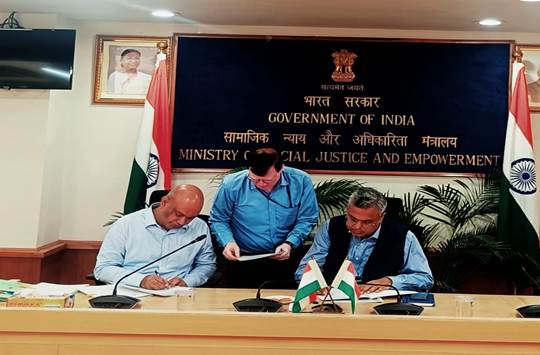
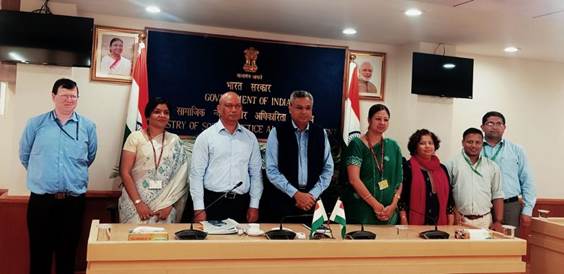
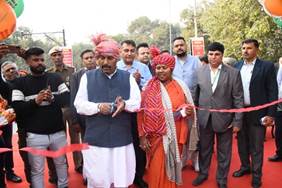
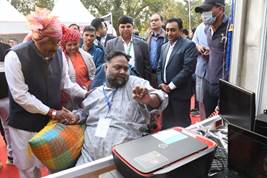
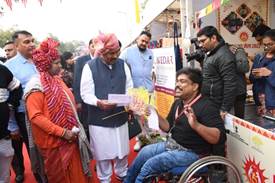
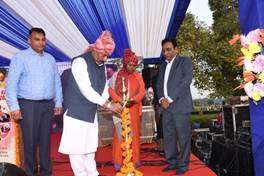
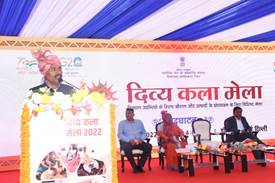
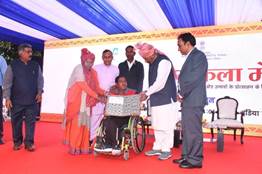

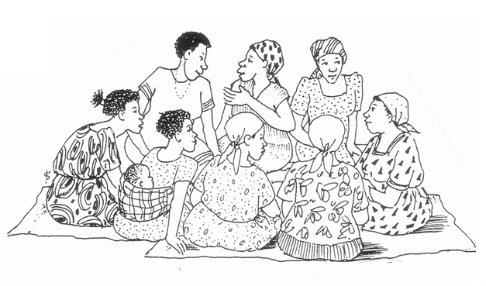
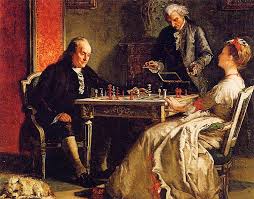

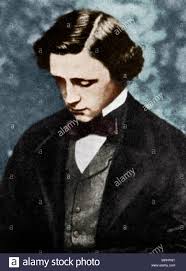
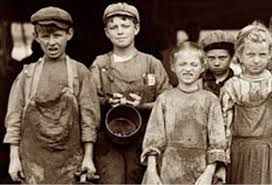
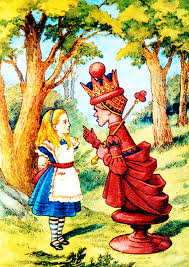
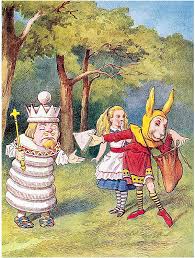
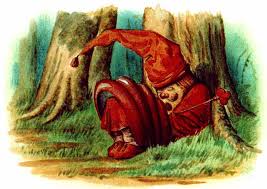
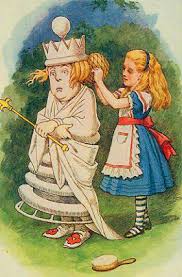
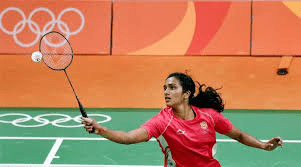

 Eduindex
You must be logged in to post a comment.