The Importance of English

The British had to leave bag and baggage as the long drawn struggle for freedom came to an end. Now, India is a free and sovereign country with Hindi as its national language. And the importance of English as a second official and a link language continues. No doubt the British imposed English on India but now it is not a foreign language. It continues to play an important role within the country and outside in dealings with foreign countries. For more than two centuries English has been in India and many Indian writers and authors have made generous contribution in the development of English language and literature. Among great political leaders Mahatma Gandhi, Pandit Jawaharlal Nehru etc have been prolific writers in the language.

Though the percentage of English speaking people in India is very low, yet it is most widely used among the educated urban people. It is also the medium of instruction in the institutions of higher learning and education. Hindi in devanagari script is the official language of the union and it was stipulated in the Indian constitution that English shall continue to be used For all official purpose of the union till January 25, 1965 but a complete switchover to Hindi was not found practicable within the stipulated date and English in addition to Hindi continues to be used for all official purposes. However, over 44 crore people speak Hindi and it is their mother tongue followed by Bengali and Tamil. The regional languages are the official languages of the states. There are 22 statutory recognized languages in India. Many people are over enthusiastic about removing English and replacing it completely with Hindi and regional languages. They argue that English is a symbol of slavery and colonialism. But they forget that English is an international language and Hindi or regional languages just provide translated material in higher learning and training. Without English it would not be possible to keep pace with the rapid advancements and researchers in science and technology. The mother tongues are Important and so is Hindi and it is desirable that the students are imparted instructions and education in their mother tongues will stop but it does not mean that English is no more important or can be completely replaced by Hindi or any other Indian languages. Total abolition of English would leave India far behind other countries in the fields of medicine, engineering, communication, business, space technology, agriculture etc. It would be suicidal to remove it completely from the scene. Moreover southern states in particular would never tolerate it and there would be a sort of chaos.

Discretion is the better part of valour and it is advisable that English retains its present position an status for some more time to come. English is a link language and a means of communication between different educated linguistic and regional groups will stop it is a language of learning, higher studies, business, science and technology and opportunities. Even those who advocate Its removal in public send the sons and daughters to English medium schools. English is very rich, powerful, varied and widely used and understood language. It is spoken by the majority of the educated people all over the world. It can be called a window Upon the world of business, science and culture. As such, more and more Indians are learning English and there is a flood of institutions teaching Indians how to speak English will stop English is still an important instrument which provides us access to a wealth of knowledge and information of the world.

It was English which helped Indian renaissance beginning from the time of Raja Ram Mohan Roy and Rabindranath Tagore. English helped leaders and people come together inspired by patriotism and national feelings. It is this vehicle which carried their ideas dreams and cries to the other peoples of the world. Removal of English Would cut off India from other countries and international affairs. If we want to grow and develop, we will have to keep close contacts with the other nations of the world. We cannot lose the expertise, efficiency and advantage of English gained after many decades of efforts an exercise because we have inherited it from the British.


Learning English Is Essential For A Child's Success. Read This To Find Out Why

              “Communication
works for those who work at it”

                            -John
Powell


Children are great at learning
languages, they learn a language quickly and gain fluency in a matter of years
but at what age should they start learning English? 
 

There is no age bar for learning but
the children need to start learning English as early as possible. Over 840
million people speak English
as a first or second language, which makes it the
second most-spoken language. It is considered to be the language of success. To
be very honest, if someone wants a decent job anywhere in the world, he/she
needs to be proficient in this language.
Children have a higher grasping power
as compared to an adult. Developing a habit of speaking, writing, listening,
and reading should be inculcated in a child from the very beginning.

Let’s look at the advantages of being
a young learner and how parents can help their children to learn, grow and
succeed.


Learn and Lead 


Being able to communicate in English is one of the most
important life skills. Communication skills take a lifetime to master, if not
mastered at an early age. According
to a 2018 survey conducted by the National Association of Colleges and
Employees
, communication skills are ranked first among ‘must have’
skills. The most important aim should be to
ignite young minds and unleash the dormant energy by providing an opportunity
for children to learn to communicate effectively in English. It is the duty of the parents and teachers to help broaden a child’s perspective, think critically, speak fluently, participate
in public speaking
and tap their leadership potential.


Invest time in learning  

Communication skills would make them stand strong on their feet.

Poor Communication has been considered as one of the greatest
barriers to confidence. If a child has not developed the skill of speaking, he
might lose the confidence to take his place among others.

Communicating daily will help to sharpen their skill.


 How is the current situation beneficial for students?


 In current situations, schools are closed and
students are not able to participate in co-curricular activities, thus
considering the situation it is the best time to grab the opportunity and
master the skill of communicating in English. Every child deserves to learn and
we as an older generation should give them the right opportunity and platform.

In today’s world, let’s make sure that our younger generation
does not have to face any hesitation. 

We must ensure that children develop skills that classrooms
can’t teach. A personalized curriculum should be developed which caters to the need
of the students. Thus, making them learn in a more conceptualized way.

Let them learn and lead the
world


Beneficial for higher studies 


Like job applications, one of the best benefits of learning
English is an educational opportunity. If you wish your child should
access the best colleges like Harvard, Stanford, Oxford, Cambridge, or any
college, knowing English provides them an incredible edge. Writing
SOP’s (Statement of Purpose) is not an easy task; therefore, writing English is
very important for the students. Thus, it will ensure them to get the best
education in the future. If your child wishes to study abroad or within India
itself, learning English is one of the most important factors which
should be kept in mind.

Learn, grow and communicate.


Develop the habit of writing 

 
Who knows your child might be the next Shakespeare?

One of the best ways to understand a language is to write. The more your child writes the
more exposure he receives. This eventually increases their creativity.

Schools must provide the students with exposure to
writing and make them understand the essence of writing. Students should start learning with simple words that later on turn into more complex and afterward the students must learn descriptive words needed to become creative writers. Much like becoming a musician, one might not understand
his/her instrument until they try it out. The same goes for English. It
requires consistent practice.

Start learning today, see the
benefits soon.


Improve focus


To correctly become a well-rounded English speaker requires
focus and determination. A child must develop such a thought process that helps her to remain focused and dedicated. Educators should give personal attention to students. During the course, students need to focus on
the
four core pillars of learning -:


<!–[if gte vml 1]><v:oval id="_x0000_s1029" style='position:absolute;
margin-left:407.25pt;margin-top:13.65pt;width:109.5pt;height:101.25pt;
z-index:-1′ fillcolor=”#c0504d [3205]” strokecolor=”#f2f2f2 [3041]”
strokeweight=”3pt”>
<v:shadow on="t" type="perspective" color="#622423 [1605]" opacity=".5"
offset=”1pt” offset2=”-1pt”/>
<![endif]–>
<!–[if gte vml 1]><v:oval id="_x0000_s1028"
style=’position:absolute;margin-left:282.75pt;margin-top:9.15pt;width:110.25pt;
height:105.75pt;z-index:-2′ fillcolor=”#9bbb59 [3206]” strokecolor=”#f2f2f2 [3041]”
strokeweight=”3pt”>
<v:shadow on="t" type="perspective" color="#4e6128 [1606]" opacity=".5"
offset=”1pt” offset2=”-1pt”/>
<![endif]–><!–[if gte vml 1]><v:oval id="_x0000_s1027"
style=’position:absolute;margin-left:2in;margin-top:9.15pt;width:125.25pt;
height:105.75pt;z-index:-3′ fillcolor=”#4bacc6 [3208]” strokecolor=”#f2f2f2 [3041]”
strokeweight=”3pt”>
<v:shadow on="t" type="perspective" color="#205867 [1608]" opacity=".5"
offset=”1pt” offset2=”-1pt”/>
<![endif]–><!–[if gte vml 1]><v:oval id="_x0000_s1026"
style=’position:absolute;margin-left:12.75pt;margin-top:3.15pt;width:113.25pt;
height:111.75pt;z-index:-4′ fillcolor=”#f79646 [3209]” strokecolor=”#f2f2f2 [3041]”
strokeweight=”3pt”>
<v:shadow on="t" type="perspective" color="#974706 [1609]" opacity=".5"
offset=”1pt” offset2=”-1pt”/>
<![endif]–>


       SPEAKING 
         

    READING
        

 WRITING

 LISTENING

 Thus, this will provide them amazing exposure and some invaluable experience of learning.

Children are the terra firma upon which the future is built. The
impact of learning will bring out their individuality. 
They deserve to know the world, let’s not keep them confined.

Let’s nurture their
leadership qualities because we can foresee a nation run by them.
  

                                               Students today are leaders tomorrow

10 TIPS TO END A CONVERSATION

1. I’d better get going.

2. I have to rush off now.

3. Let’s meet up again son, bye for now.

4. Let’s get together soon. Take care.

5. You have been amazing

6. It was wonderful to talk with you. I must be going

7. It was great to see you again.

8. Sorry I’ve gotta go

9. Its been good talking to you

10. I look forward seeing you again soon.

William Shakespeare

William Shakespeare - Plays, Biography & Poems - HISTORY
Image Source: google.com

William Shakespeare was an actor, playwright, poet, and theatre entrepreneur. He was born in Stratford, Evan on April 23, 1564. He is the son of John Shakespeare and Mary Arden and may have been educated at King Edward VI High School in Stratford, where he learned Latin and a little Greek, and read Roman dramatists. At the age of eighteen, he married Anne Hathaway, a woman seven or eight years older than him.

Shakespeare wrote more than thirty plays. These are usually divided into four categories: histories, comedies, tragedies, and romances. Some of his famous works include Hamlet, Romeo and Juliet, Much ado about nothing, King John, The tragedy of King Lear, etc. William Shakespeare first appeared on the London stage around 1592, where his plays will be written and performed, but the exact date is unknown. After 1594, Shakespeare’s plays were performed in their entirety by a company owned by a group of actors, which became the leading company in London. After the death of Queen Elizabeth in 1603, the company obtained a royal patent and changed its name to King`s Men, named after King James I.

Shakespeare has written at least 38 plays and more than 150 long and short poems, many of which are considered the best English plays of all time. His works have been translated into several existing major languages, in addition to other languages. Even after 400 years after his death, they are still performed around the world. In his poems and plays, Shakespeare invented thousands of words. According to the Oxford English Dictionary, includes such words as arch-villain, birthplace, bloodsucking, courtship, dewdrop, downstairs, fanged, heartsore, hunchbacked, leapfrog, misquote, pageantry, radiance, schoolboy, stillborn, watchdog, and zany.

Shakespeare’s influence on art, literature, language and a wide range of creative arts has long been known and documented. He is the most widely read playwright in the Western Hemisphere, and English is full of quotes and phrases derived from his plays. He is also the inventor of the iambi pentameter, a form of poetry that is still widely used even today.

 He is also one of the most influential figures in English literature, having a profound influence on everyone like Herman Melville, Charles Dickens, Agatha Christie, Anthony Burgess, etc. But his influence is not limited to the field of art. The psychoanalyst Sigmund Freud used Hamlet as the basis for many of his theories about human nature. His influence is also reflected in painting and in the opera, especially Giuseppe Verdi and the entire community of Romantic and Pre-Raphaelite painters.

On April 23, 1616, he died at the age of fifty-two in his hometown of Stratford-upon-Evan. His death occurred on or near his birthday (which is still unknown).

Some famous quotes by Shakespeare

“It is not in the stars to hold our destiny but in ourselves”

“We know what we are, but now what we may be”

“With mirth and laughter let old wrinkles come”

“Expectation is the root of all heartache”

“Conscience doth makes cowards of us all”

Some common english words important for GRE

Alacrity The GRE has a predilection for words that don’t really sound like what they mean. Alacrity is no exception. Many think the word has a negative connotation. Alacrity, however, means an eager willingness to do something. So imagine the first day at a job that you’ve worked really hard to get. How are you going to complete the tasks assigned to you? With alacrity, of course. An interesting correlation: the more alacritous (adjective form) you are when you’re learning GRE vocabulary, the better you will do.

Prosaic Prosaic conjures up a beautiful mosaic for some. For others, the pro- is clearly positive. So if somebody or something is prosaic, it must surely be good. Once again the GRE confounds expectations. Prosaic means dull and lacking imagination. It can be used to describe plans, life, language, or just about anything inanimate that has become dull (it is not used to describe people).

A good mnemonic: prose is the opposite of poetry. And where poetry, ideally, bursts force with imagination, prose (think of text-book writing), lacks imagination. Hence, prose-aic.

Veracity:- Veracity sounds a lot like voracity. Whereas many know voracity means full of hunger (the adjective form voracious is more common), few know veracity. Unfortunately, many confuse the two on the test. Veracity means truthful. The adjective form, veracious, sounds a lot like voracious. So be careful. Paucity Paucity is a lack of something. In honor of paucity, this entry will have a paucity of words.

Maintain The second definition of this word – and one the new GRE favors – is to assert. One can maintain their innocence. A scientist can maintain that a recent finding support her theory. The latter context is the one you’ll encounter on the GRE. Contrite Word roots are often misleading. This word does not mean with triteness (con- meaning with). To be contrite is to feel remorse.

Laconic Another word that sounds different from what it means. A person is described as laconic when he/she says very few words. I’m usually reminded of John Wayne, the quintessential cowboy, who, with a gravely intonation, muttered few words. As this allusion betrays may age more than anything else, think of Christian Bale in Batman.

Pugnacious Much like a pug dog, which aggressively yaps at things near it, a person who is pugnacious likes to aggressively argue about everything. Verbally combative is another good way to describe pugnacious. Disparate If two things are fundamentally different, they are disparate. For instance, verbal skills and math skills are disparate, and as such are usually tested separately, the GRE being no exception.

https://www.google.com/url?sa=t&source=web&rct=j&url=https://translate.google.co.in/&ved=2ahUKEwjRsZym0N3xAhUYILcAHXjXASwQFjABegQIDhAC&usg=AOvVaw3PxxM8sVv2-Z8mgIzSGywh

http://magoosh.com/gre/2012/grevocabularyebook

CAN WE THINK “WORLD WITHOUT ENGLISH”?

ENGLISH IN PRE-INDEPENDENCE DAYS

During the British rule in India English was imposed on Indians as a compulsory study. The British rulers wanted a class of interpreters between the rulers and ruled. Only a selected few could learn English and get good jobs under the British rulers. English education was confined to the chosen few. The foreign rulers had no desire to educate the mass.

ENGLISH AFTER INDEPENDENCE

English education, however, did one good thing to India. It created a batch of scholars who imbibed the best English education. The western culture, new ideas and thoughts about science and scientific studies slowly spread among us through English and we became aware of the tremendous progress that the nations of the west were making. This knowledge, rather the impact of this aerated a tremendous excitement among us and this was the root of the famous Renaissance Movement, which is a bright landmark in our social, cultural and educational sphere. After independence, some nationalists wanted the complete abolition of English from our academic programme. They pleaded for the abolition of English on the ground that its retention smacks of our slavery to England. But there were others who wanted English to continue as a subject for study.

IMPORTANCE OF ENGLISH ITS PLACE IN EDUCATION

The English language is known as the lingua franca of the world. English language is no longer the monopoly of English men. It is now used by a large number of people scattered geographically in different parts of the world. English language is the gateway to the various branches of knowledge and it opens the window to the outside world. It is studied now in many countries, and it is a very helpful means for international communication in commerce and culture. So narrow patriotism should not blur our vision about its importance. It is necessary to retain English as a link language, and as a second language to be read from class III. Regional language should be given first preference, and should be the medium of instruction up to the graduate level. We would see some of the vital reasons to hug English in the main course of life.

Knowledge of English will open doors of bigger opportunity in the field of higher studies on national and international platform.

No scientific and commercial knowledge can be complete without the proper knowledge of English.

This is the language one can study quickly and smoothly without troubles. So, it paves the way to greater studies hence generate greater interest in all type of knowledge acquisition.

International English Language Testing System (IELTS) opens wider prospects to enter in any renowned institution all over the world.

Meaningful study of English will make you conscious of the progress and the standard of living the world has achieved. English is the language of the media and a person can receive exceptional growth in books publishing, films, TV shows if one pursues English in these career prospect.

Technological growth prospers in the lap of English culture and skill. One receives ample support and strength if assisted by English in all level.

English knowing professional wins laurels and fatty salary packages in comparison to other besides promotion and felicitations in a company.  

English is the language of the internet. Right from website development to social media marketing every thing demands a solid base if English. So, the good learners are always getting an edge effect in all the matter.

English education knowledge and workings make you the greater professional, enhances your competitiveness and all-round exhibition of skill. It makes you to be a satisfied citizen of the world.

Knowledge of English gives greater depth in research work, thesis writing, contents composing, communication and future advancement of all the subjects known to the humanity.

So, education, civilization and communication demand a worldwide awakening of English learning culture, practice, use and application in all aspects of life.

Etymology – Back To The Origins

Did someone run away with my temper?🙊🙃

To gain an understanding of the usage of the word “temper” in the phrase “to lose one’s temper”, it would be useful, first, to note its appearance as a segment in the words “temperature”, “temperate”, and “temperament”.

Etymology refers to the study of the origin of a word and the historical development of its meaning.

The Etymology and Science

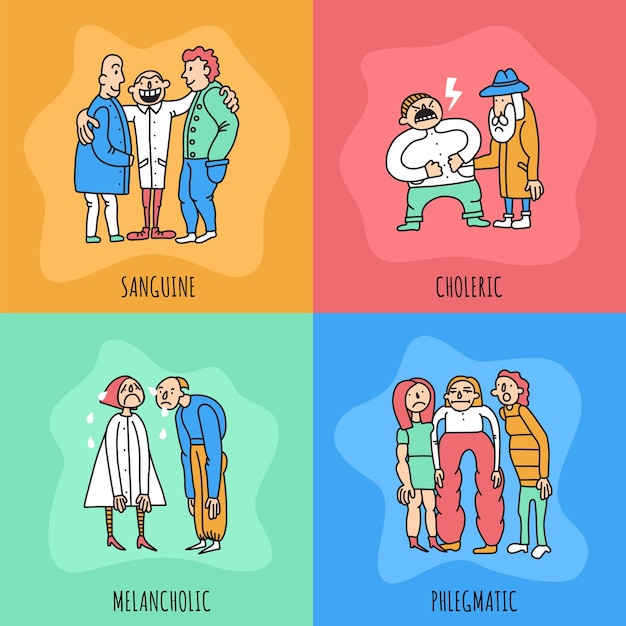
When we dig into the etymology of the word “temper”, we are led to examine its origin in the context of humoral pathology (four humors) – as developed in ancient Greece and Roman societies, who in turn borrowed from the much older Ayurveda system of “tridoshas” (vata, pitta, kapha). Aristotle focused on the four elements (air, fire, water, earth) as the building blocks of the universe (Plato developed it further). Hippocrates (who was greatly influenced by Ayurveda) developed the theory of the four humors – blood, bile, phlegm, and water. These and other thinkers believed that the four elements and the four humors determined the behavior of all created things, including the human body. Some of the noted thinkers of the time characterized all behavior into four types: melancholic, phlegmatic, choleric, and sanguine. The information about Hippocrates’ theory of four humours has been carefully studied from https://exploringyourmind.com/hippocrates-theory-four-humors/

The four behaviours of a human

Thus, the overall behavior of a human or overall disposition could be described as “temperament”. Subsequently, a 16th century Roman physician, Galen, proposed that the temperament was dependent on temperature. Therefore, he stated that all sickness was “distemperature”. Attach below is a link to help you learn more about etymology and its sublime magic!

https://www.etymonline.com/word/learn

Closure

We can now make the connection between temperate (which generally refers to mild – neither too hot nor too cold), temperature, and temperament. Seen in this light, losing one’s temper refers to losing that temperate state, and moving to distemperature (both in physical and mental sense) – and that was perhaps most outwardly manifest when someone exhibited anger.

Day Out With Chip- The Robot!

There is no rule on how to write. Sometimes, it comes easily and perfectly; sometimes it’s like drilling rock and then blasting it out with charges.”

  • Ernest Hemingway

Today’s article discusses all about writing with Chip – The Robot. I had officially booked a day out with him and he seemed welcoming. We had a long conversation which I will try to compress in this article. So, let us begin.

Hello Chip. So, My Very First Question For You Is That What Do You Think About Writing?

Writing is an art which only a few are blessed with. Certain talented people around the globe are able to compose creative and fictitious worlds and make people visualize them through their amazing description. That is exactly what writing is all about. You make people reflect through your writing. Thus, it becomes an art and can’t be learnt. The creative and imaginative aspects sprout from within.

Totally! I Agree To This. However, What Do You Think Makes Writing An Entertaining Task?

This totally depends on the interest levels of the individual. Writing is fun for people who are completely inclined towards it while those who hesitate to read even a page, aren’t going to like it. So, the thing is that you need complete love for the process before initiating it. The second stage could be that you are interested in the process but aren’t able to concentrate and come up with certain new ideas and topics to write on. In such cases, you could take inspiration from the pettiest things around you. You just need to open your inner eye to notice that. And that, I tell you honestly, is an amazing job. Sitting and pondering over the petty objects and coming up with some imaginative character or story of your own, in itself is so entertaining. Another reason maybe that you aren’t able to concentrate could be that your mind is disturbed and aren’t focused. Thus, all you could do is practice meditation or do tasks that would soothe your senses. In short, I would state that indulging into the process of imagination is one of the best experiences when it comes to writing which is enough to make writing an entertaining task.

That Was So Helpful! Which Is Your Favourite Genre When It Comes To Writing?

My favourite genre shall always be fiction because it makes writing all the more interesting. You get to weave your own imagination and there aren’t any limits in the framing of thoughts onto that sheet of paper. Fiction introduces a new world, not only to the readers but also to the writers.

True That! So, What Are The Effective Ways Of Writing Fiction?

Fiction as a genre needs extremely insightful and creative people to frame a good story. You need to think outside the box when it comes to fiction. People don’t admire the same boring mythological concepts. Instead, when added a spice of an entirely new world of fictitious characters and incidents, the story begins to gain certain amount of popularity. The effective way of writing fiction is to never force on writing it. Sit and ponder over the outline of your story. Don’t try to be creative when your brain is stressed. Don’t set a deadline to writing a story when working on fiction. Just be cool, calm and devoted to your manuscript. Don’t give up easily on manuscript. You could always give some time to thinking effectively. However, if you wish to launch your book at a specific date then it is advisable to start as early as possible so that you don’t have to overdo on the last minute and can work with peace.

So, Important! Would You Like To Speak About Some Other Favourite Genre Of Yours?

Certainly! Mystery catches my attention every single time. It is because of the intense suspense factor that makes reading such a fun task. Here too, you need to have the creativity to frame the suspense appropriately. A single mistake can disclose the entire sequence and thereby disrupt your attempt of maintaining suspense. So, this is another genre, you need to be careful with. Give proper amount of time to thinking and don’t rush. Your manuscript isn’t yelling at you to finish it as soon as possible, nor is anybody else urging you to be prompt. Unlike writing prompts which don’t stress on the topic, other types of write ups don’t require you to be prompt. So, work with peace and eliminate all the pessimistic thoughts before you choose to begin with these genres.

That Was So Helpful! Lastly, Would You Like To Conclude On A Good Note?

Certainly! I would like to thank you for choosing to go out with me. I request each and every reader of this article to definitely write and not hesitate in the process. The more you write, the more efficient you shall be. You just need to be faithful and devoted to the process. Your thoughts need to be refined, in order to make writing a fun task. Maintaining effective sanity is quintessential for writers who must hibernate from chaos. So, go surrender yourself to the lap of mother nature and write for hours together, trusting that one fine day a highly creative idea would grace you with its presence on that blank sheet of paper!

Thank You So Much Chip!

How can you improve your English during Lockdown?

Business English Course in London


As Indian we’re mostly multi-lingual and almost 85 percent people know Hindi or use it to communicate but with globalization and with the arrival of big MNCs we’ve realized the importance of English. Even though we learn English in school, why aren’t we so confident while speaking? We learn a language and attain fluency in it only when we practice it in our day to day life but learning English is limited to school or coaching classes. Maybe you’re weak point is reading or you face problems with pronunciation or what so ever. I believe you could utilize your lockdown into being productive and overcoming your flaws by improving your English Language.

Here are some of the ways that you may try to get a better grasp of English Language:

  • Reading everyday-

Make it a habit to regularly read aloud a text for at least 15 minutes daily. You could either read a newspaper/ e-newspaper, begin with a simple book or read paragraphs in English online.


  • Listening to Music-

You could find different kinds of English music according to your genre. Try listening to them while looking at the lyrics. Start with slow English songs for better understanding.


  • Listen to Podcasts-

Podcasts are a great way to learn a language. You could listen to podcasts where two people are conversing, a monologue by a person or a story narration.

http://https://learnenglish.britishcouncil.org/general-english/podcasts


  • Refer dictionary-

I personally prefer online dictionaries as they also correct us with our pronunciation and for better understanding they use the word in a sentence as an example  for better understanding.

http://https://www.merriam-webster.com/


  • Learn by chatting-

In the world of social media we’re used to chatting online but most of the time we don’t talk in  English. There are Chatting apps available as  a simulator to learn English.

http://https://play.google.com/store/apps/details?id=com.yobimi.chatenglish&hl=en_IN&gl=US


  • Write-

Whenever you get time just start writing on any random topic. It doesn’t matter if there’s grammatical mistake or you’re unable to find exact words for the sentence. Pick up a random topic from google and start writing about it as per your understanding. Later on you can correct your mistakes my pasting the content on grammar checker apps and learn from your mistakes.


  • Duolingo-

This app is probably the best for learning any language. I highly recommend using it.

http://https://play.google.com/store/apps/details?id=com.duolingo


  • YouTube/Online course-

If you aren’t willing to pay for learning English, there are lots of options available online. One of them is YouTube where you’d find detailed explanations and better tips for English. Secondly, you can enroll for free online courses as well.


The Ways to Improve Your English Vocabulary

It is often easy for people to speak broken English. Broken English is nothing but the mixture of our mother tongue and English. It would sound good and safe when we communicate with our friends or family. You would also think that “Wow I really speak good English , even if I combine it with my mother tongue”. But , what if the same broken English haunts you in a job interview or if you speak in a big crowd. Its a major thing to consider right.

So, let’s just improve our communication skills by practicing good English.

The ways specified here are easy and different , hopefully it helps people to improve their vocabulary.

Method 1: Read a story at night.

Instead of , scrolling through the phone for hours at night. Read books in any genre, be it bed time stories , fiction novel , horror stories; You just have to spent time reading a story at night. This helps you to learn new sentences and new words which you could use it in your day-to-day life.

Method 2: Convert your regional language phrases to English

Collect all the words that you most actively use in your mother tongue, convert them into English. Now you are just replacing your phrases into English, this helps you to use more English. This would also break the habit of using broken English.

Method 3: Speak to yourself in the mirror.

Stand in front of the mirror, pick any topic and start talking  about that topic. You will observe where are you really getting stuck and would improve further by repeating this exercise. For more effect, just record a video of you speaking English and pin point the mistakes you make.


Common grammatical errors in written English

Language has had a solid establishment in our society and been advancing with time. Grammar shapes the basic language structure and helps in maintaining structural composition and readability. Having a language means to have a medium to associate with others in a way to exchange feelings and thoughts in an understandable manner.

Over time, English has ended up becoming one of the most popular languages for communication in the world. Despite that, English is frequently seen as a complex and precarious dialect to a great extent due to its erratic spellings and a parcel of exemptions to its rules of language structure. This tricky to learn grammar makes one prone to grammatical errors more often in written English.

Common Errors in English

>Spelling errors

The most obvious and common mistake in written English is of spellings. It mostly occurs due to: (a) too many rules and exceptions for writing certain words- for e.g. Use of ‘I’ before ‘E’ in case of ‘V’ and vice-versa for ‘C’ is instructed. However, the word ‘SCIENCE’ contradicts the rule (b) homophones- for e.g. rain, reign and rein the pronunciation is the same but written differently.

>Missing or misplaced apostrophe

Apostrophes are used to indicate possession and also used in contracted form of words. If misplaced or missing, it changes the sense of a sentence. For e.g. their (possession) and they’re (contracted form of they are)

>Absence or incorrect use of commas

Commas are the simplest tool to separate the fragment of a sentence. If made in use inappropriately or not used at all, commas can influence clarity of a sentence causing disarray in it.

>Subject verb agreement

It is one of the few errors which occur in written as well as spoken English. To maintain grammatical accuracy it is important to satisfy the verb with respect to subject i.e. if the subject is singular, the verb needs to be plural in form and vice versa. For e.g. birds chirp (plural subject, singular verb) and sun shines (singular subject, plural verb)

>Inappropriate use of tense

We often tend to ignore tense while writing. A sentence has to be accurate with the use of tense to maintain the same sense throughout the sentence.

>Overuse of adverbs

Unnecessary adverbs need to be avoided. Instead of searching for more adverb, one should lookout for a more effective verb or adjective to add more colour to the content.

>Inappropriate use of degree of comparison

Herein, mostly errors are observed in comparative and superlative degree. Use of ‘more’ before the comparative degree of adjective and omitting the use of ‘the’ in superlative degree of adjective while comparison are common mistakes. For e.g.- I am more taller than him.

Improve your English

Writing for the sake of writing isn’t writing. You should have a passion to write. That pushes you forward to a greater extent. The interest on writing makes you write the writings that were never written. Don’t make yourself to write, let yourself make you write. There’s a lot of difference between them. It’s like earning to write and writing to earn. What we know is a drop, what we don’t know is an ocean.

Develop a habit of writing because that makes us improve without our knowledge. Write something that happened to you because it tries to bring the coordination between our brain and hands. As the time passes our hand should be faster than our brain. We should think of next sentence while writing the previous. It can even be writing in a dairy.

Start a blog and keep on writing and express what you feel like. Share it to your contacts and ask them to suggest any improvements. Keep on writing and improving by implementing their suggestions and get improvised with your writing.

Writing not only comes from writing. Start reading the different writings. Analyse the way different people write and try to figure out the pattern they try to express themselves. Read and read until you get better in writing.

Write for someone who are looking for writers because that makes you know more about your writing from others. Try to become freelancer and ask for work. Doing work makes you improve. Such work involves lot of research and you will get a chance to know about the unknowns.

Start your journey in facebook groups and Quora groups and make friendship with your mates . Connect with like minded people and that will surely make you know more about the various styles of writing.

Treadmills: a torture device?

Treadmill, a machine that can be seen in any gym one steps into regardless of the country one stays in. Treadmill has become an iconic exercise when it comes to the gym. The constant thud underneath your feet. The constrained space. The monotony of going nowhere fast. Feeling like hours have gone by as you slog on it, but in reality, mere minutes have passed by. Running on a treadmill can certainly feel like torture, but did you know it was originally used for that very purpose. Its true the now easy to access treadmill was once used to torture and get troublesome inmates into line.

Photo by Polina Tankilevitch on Pexels.com

In the 1800’s, treadmills were created to punish English prisoners. It was at a time when the English prison system was abysmally bad. Execution and deportations were usually the punishment of choice and those who were locked away faced hours of solitude in tiny confined filthy cells. So social movements led by religious groups, philanthropists and celebrities like Charles Dickens sought to change these dire conditions that the inmates faced and tried to reform the prisoners and prison system. When the movement succeeded, entire prisons were remodelled and new forms of rehabilitations, such as the treadmill were introduced. Invented by an English engineer, Sir William Cubitt in 1818 the original version was vastly different than the commercial ones we know today. Prisoners stepped on 24 spokes pf a large paddle wheel. As the wheel turned, the prisoner was forced to keep stepping up in order to reduce the risk of falling down, similar to modern stepper machines. Meanwhile the rotation of the wheel made gears pump water, crush grain and power mills, which is where the name Treadmill originated. These devices were seen as a fantastic way to whip the prisoners into shape with the added benefit of powering the mills helped rebuild a British economy that was devastated by the Napoleonic wars. It was win-win situation for everyone except of course the prisoners. It is estimated, on an average that the prisoners spent around six hours or so a day on treadmills which can be an equivalent of 5000 to 14000 feet a day which is roughly climbing Mount Everest to its halfway point. They did so five days a week with little food to energize themselves with. Cubitt’s idea quickly spread across the British Empire and America. And within a decade of its creation over 50 English prisons boasted a treadmill and America also quickly surmounted to a similar amount. Unsurprisingly the exertion combined with the poor nutrition being provided saw any prisoners suffering from breakdowns and injuries but unfortunately prison guards did not seem to care. In 1894, New York prison guard James Hardie credited the device to have taming his most boisterous of inmates claiming that the monotonous steadiness, not its severity is what terrorized the inmates. The treadmills lasted in England until the late 19th century, when they were banned for being excessively cruel under the Prison Act of 1898.

Soon the torture device returned with a vengeance, this time targeting the unsuspecting public. In 1911, a treadmill patent was registered in the US and by 1952 was thrust into limelight with the model that we are so familiar with. As an easy and convenient way to improve aerobic fitness, it soon gained a lot of familiarity in the exercise business.            

Thus is the tale of the torture device that soon became a staple in every corner of gyms and exercise squares.

Emerging Careers in English Literature

English Literature as a discipline can be fascinating and aesthetic if you love reading about various literary genres. There has been a steady growth of different English literature genres, for example, Dalit Literature or Translation Studies or Diasporic Literature. Many universities have added a list of various programs and areas of specializations to be offered to the students under the department of English. But, there has always been a doubt related to career opportunities in the field of literature. Apart from the teaching and academic sector, there are many opportunities after you graduate with a degree in English literature.

List of careers in English literature

Here is a list of emerging careers that you can pursue once you are an English literature graduate.

  • There are multiple job opportunities in the publishing sector. You can apply to internships while you are still pursuing your degree. There are various roles in the publishing sector, like editor, sub-editor, copy editor. Along with these primary roles, we can observe a steady rise of audiobooks. This is an excellent scope for recent literature graduates. You can apply to become a voice-over artist to build up the audiobook collection in many publishing houses.
  • Online teaching is another emerging career in the field of literature. If you are interested in the education domain and want to pursue your career as an online teacher, you can apply for the same. Many educational institutes are planning on adding up more tuition classes rather than classroom teaching. Hence, you can try online teaching as a career option.
  • The most popular emerging career is in the field of writing. If you have an underlying passion for writing, you can try to opt for content writing jobs or internships. There are many different parts of writing, such as academic writing, or technical writing, or creative writing. You need to find out what you are most comfortable in. Then, you would be able to write on various niches like lifestyle, education, business, book review, entertainment, travel, food, and many others.
  • Digital Marketing or Social Media Marketing is one of the most popular sectors at the moment. With the growing need for digitization, social media has proved to be one of the new leading methods to promote a business or a start-up.
  • Content Development is one of the new options that are being opted by many literature students. Once you graduate, you can quickly look for an internship related to content development and managing.

The careers mentioned above have been emerging steadily in the market sector. After you complete your English literature graduation, you can try and apply to whatever option you feel convenient. Nowadays, even pursuing a literature subject can lead to several new career paths. You definitely need to do a lot of market research, and know about the roles and responsibilities required in different positions, and apply accordingly. It is better to start early and gain some experience through internships while you are still in college. In this way, you would easily be able to realize what is more interesting for you.