Most of the times, artforms are considered as the medium for adults. But there are some films which proved it is not so. There are some great films were told from the perspective of children. From simple life lessons to biggest events in world history, all these films have amused the viewers by the stunning performances of child actors. When we experience such great performances from children, the impact is several times bigger.
Let us check such films:
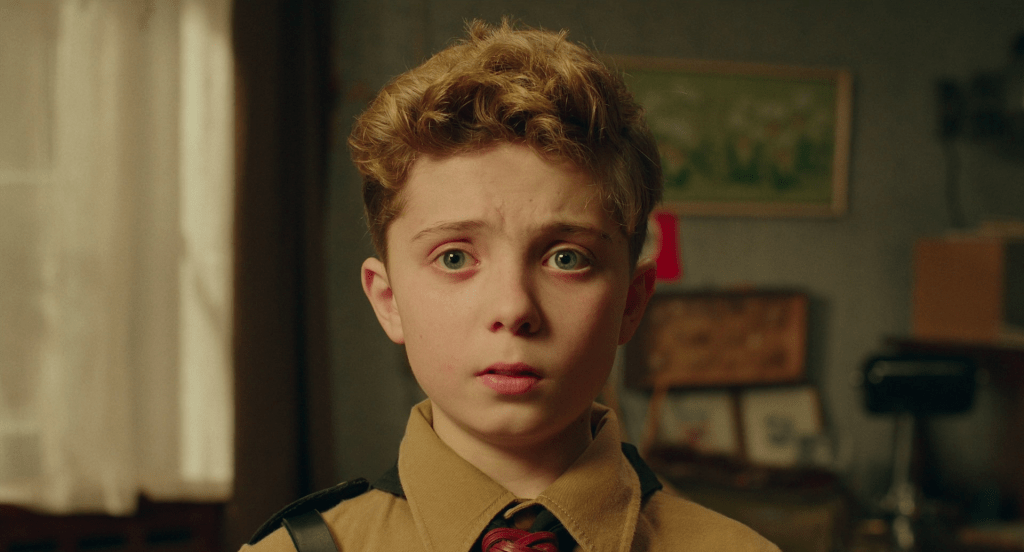
Jojo rabbit
Jojo Rabbit is a 2019 comedy-drama film written and directed by Taika Waititi, adapted from Christine Leunens’s 2008 book Caging Skies. Roman Griffin Davis portrays the title character, Johannes “Jojo” Betzler, a ten-year-old Hitler Youth member who finds out that his mother (Scarlett Johansson) is hiding a Jewish girl (Thomasin McKenzie) in their attic. He must then question his beliefs while dealing with the intervention of his imaginary friend (Waititi), a fanciful version of Adolf Hitler with a comedic stance on the politics of the war.
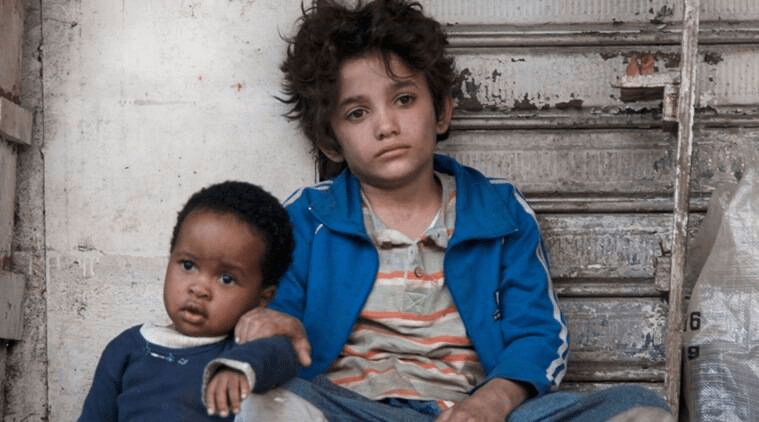
Capernaum
Capernaum is a 2018 Lebanese drama film directed by Nadine Labaki and produced by Khaled Mouzanar. The film stars Syrian refugee child actor Zain Al Rafeea as Zain El Hajj, a 12-year-old living in the slums of Beirut. Capernaum is told in flashback format, focusing on Zain’s life, including his encounter with an Ethiopian immigrant Rahil and her infant son Yonas, and leading up to his attempt to sue his parents for child neglect.
Children of heaven
Children of Heaven is a 1997 Iranian family drama film written and directed by Majid Majidi. It deals with a brother and sister, and their adventures over a lost pair of shoes. It was nominated for the Academy Award for Best Foreign Language Film in 1998.
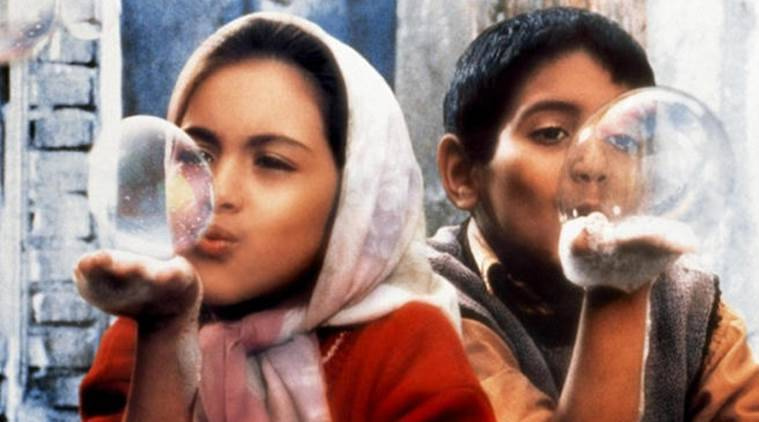
The white balloon
The White Balloon is a 1995 Iranian film directed by Jafar Panahi, with a screenplay by Abbas Kiarostami. The film is on the BFI list of the 50 films you should see by the age of 14. The film is about a brother and sister and has several intense scenes.
Machuca
Machuca is a 2004 Chilean film written and directed by Andrés Wood. Set in 1973 Santiago during Salvador Allende’s socialist government until shortly after General Augusto Pinochet’s military coup in 1973, the film tells the story of two pupils: Gonzalo Infante comes from a rich family with a European background, while Pedro Machuca comes from an indigenous background and lives in very poor conditions. They meet at an elite, English-language Catholic school, where the director, Father McEnroe, is developing a social integration project.
Belfast
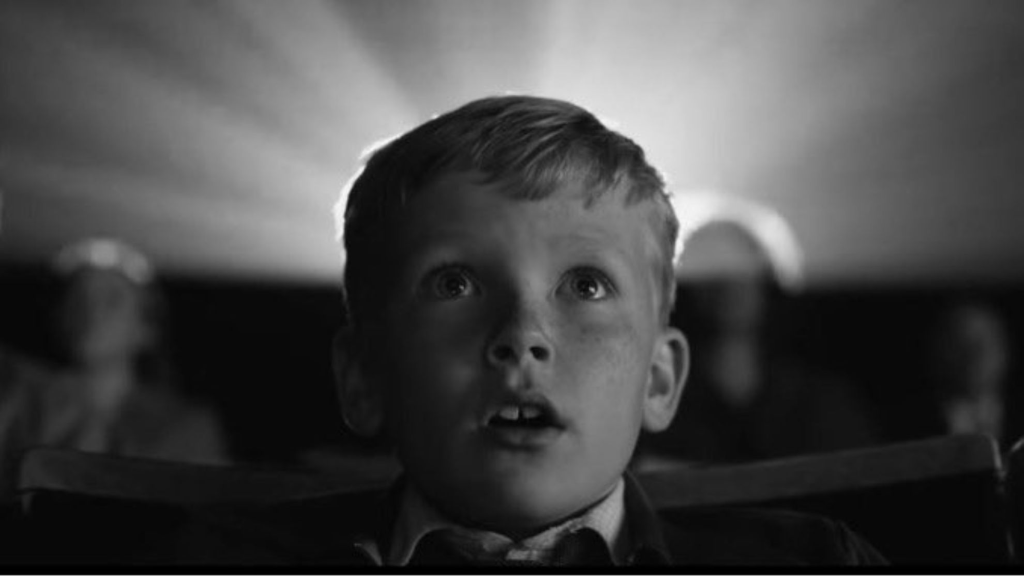
Belfast is a 2021 British coming-of-age drama film written and directed by Kenneth Branagh. The film chronicles the life of a working-class Ulster Protestant family from the perspective of their nine-year-old son Buddy during The Troubles in Belfast, Northern Ireland. Buddy’s father Pa works overseas in England, while the family—Ma, elder brother Will, and paternal grandparents Granny and Pop—live in Belfast.
Tare Zameen par
Taare Zameen Par (transl. Stars on land), also known as Like Stars on Earth in English, is a 2007 Indian Hindi-language drama film produced and directed by Aamir Khan. The film stars Khan himself, along with Darsheel Safary. The film explores the life and imagination of Ishaan (Safary), an 8-year-old dyslexic child. Although he excels in art, his poor academic performance leads his parents to send him to a boarding school. Ishaan’s new art teacher Nikumbh suspects that he is dyslexic and helps him to overcome his reading disorder.
Kakka muttai
Kaaka Muttai is a 2015 Indian Tamil-language comedy-drama film written, directed and filmed by M. Manikandan. The film’s storyline revolves around two slum children of Chennai, whose desire is to taste a pizza.
Life is beautiful
Life Is Beautiful is a 1997 Italian movie directed by and starring Roberto Benigni, who co-wrote the film with Vincenzo Cerami. Benigni plays Guido Orefice, a Jewish Italian bookshop owner, who employs his fertile imagination to shield his son from the horrors of internment in a Nazi concentration camp.
Cinema paradiso
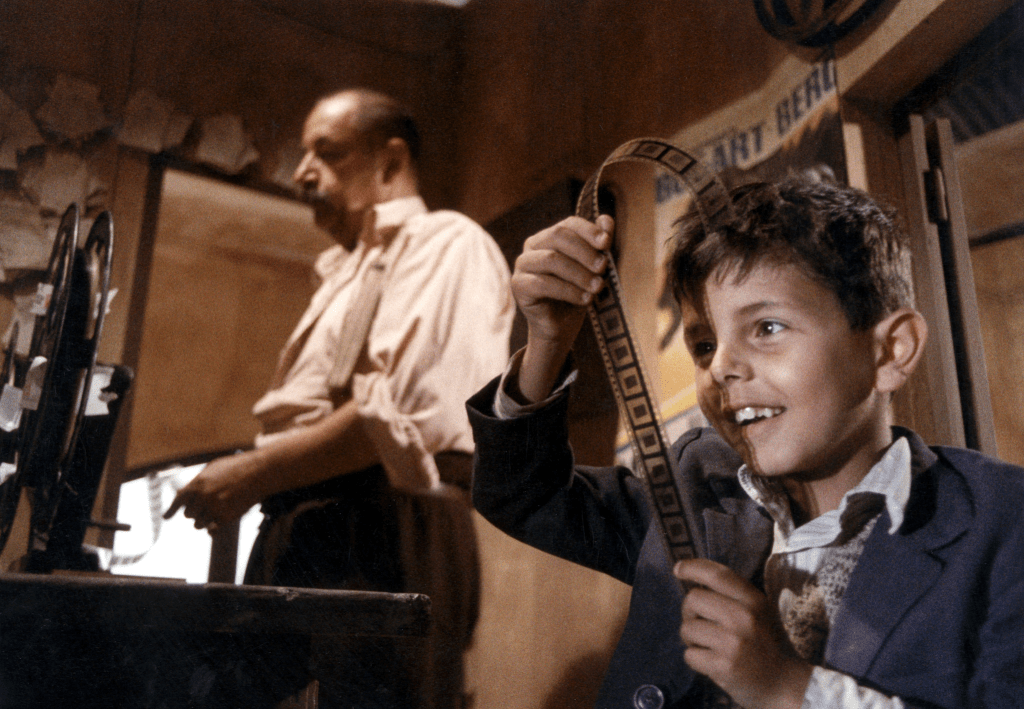
Cinema Paradiso is a 1988 coming-of-age drama film written and directed by Giuseppe Tornatore. Set in a small Sicilian town, the film centers on the friendship between a young boy and an aging projectionist who works at the titular movie theatre.
Central station
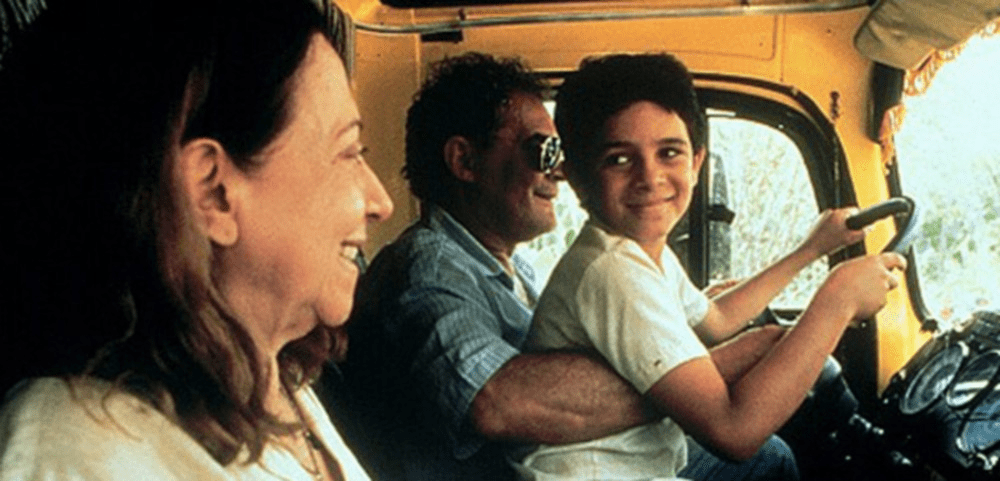
Central Station is a 1998 Brazilian–French drama film directed by Walter Salles and starring Fernanda Montenegro and Vinícius de Oliveira. The screenplay, adapted by João Emanuel Carneiro and Marcos Bernstein from a story by its director Walter Salles, tells the story of a young boy’s friendship with a jaded middle-aged woman
Sixth sense
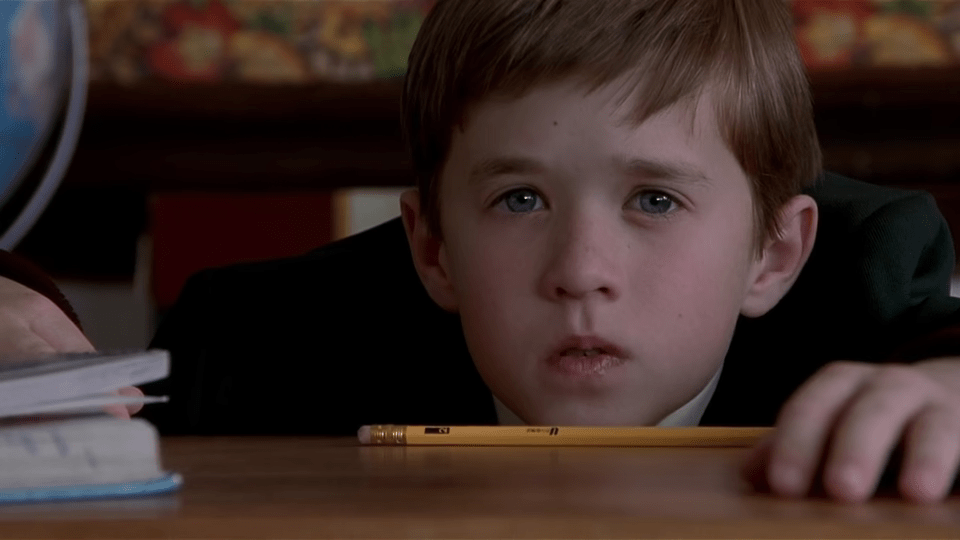
The Sixth Sense is a 1999 American supernatural psychological thriller film written and directed by M. Night Shyamalan. It stars Bruce Willis as a child psychologist whose patient (Haley Joel Osment) can talk to the dead. The film established Shyamalan and introduced the cinema public to his traits, most notably his affinity for surprise endings
Most of the times, artforms are considered as the medium for adults. But there are some films which proved it is not so. There are some great films were told from the perspective of children. From simple life lessons to biggest events in world history, all these films have amused the viewers by the stunning performances of child actors. When we experience such great performances from children, the impact is several times bigger.
Let us check such films:
Jojo rabbit
Jojo Rabbit is a 2019 comedy-drama film written and directed by Taika Waititi, adapted from Christine Leunens’s 2008 book Caging Skies. Roman Griffin Davis portrays the title character, Johannes “Jojo” Betzler, a ten-year-old Hitler Youth member who finds out that his mother (Scarlett Johansson) is hiding a Jewish girl (Thomasin McKenzie) in their attic. He must then question his beliefs while dealing with the intervention of his imaginary friend (Waititi), a fanciful version of Adolf Hitler with a comedic stance on the politics of the war.
Capernaum
Capernaum is a 2018 Lebanese drama film directed by Nadine Labaki and produced by Khaled Mouzanar. The film stars Syrian refugee child actor Zain Al Rafeea as Zain El Hajj, a 12-year-old living in the slums of Beirut. Capernaum is told in flashback format, focusing on Zain’s life, including his encounter with an Ethiopian immigrant Rahil and her infant son Yonas, and leading up to his attempt to sue his parents for child neglect.
Children of heaven
Children of Heaven is a 1997 Iranian family drama film written and directed by Majid Majidi. It deals with a brother and sister, and their adventures over a lost pair of shoes. It was nominated for the Academy Award for Best Foreign Language Film in 1998.
The white balloon
The White Balloon is a 1995 Iranian film directed by Jafar Panahi, with a screenplay by Abbas Kiarostami. The film is on the BFI list of the 50 films you should see by the age of 14. The film is about a brother and sister and has several intense scenes.
Machuca
Machuca is a 2004 Chilean film written and directed by Andrés Wood. Set in 1973 Santiago during Salvador Allende’s socialist government until shortly after General Augusto Pinochet’s military coup in 1973, the film tells the story of two pupils: Gonzalo Infante comes from a rich family with a European background, while Pedro Machuca comes from an indigenous background and lives in very poor conditions. They meet at an elite, English-language Catholic school, where the director, Father McEnroe, is developing a social integration project.
Belfast
Belfast is a 2021 British coming-of-age drama film written and directed by Kenneth Branagh. The film chronicles the life of a working-class Ulster Protestant family from the perspective of their nine-year-old son Buddy during The Troubles in Belfast, Northern Ireland. Buddy’s father Pa works overseas in England, while the family—Ma, elder brother Will, and paternal grandparents Granny and Pop—live in Belfast.
Tare Zameen par
Taare Zameen Par (transl. Stars on land), also known as Like Stars on Earth in English, is a 2007 Indian Hindi-language drama film produced and directed by Aamir Khan. The film stars Khan himself, along with Darsheel Safary. The film explores the life and imagination of Ishaan (Safary), an 8-year-old dyslexic child. Although he excels in art, his poor academic performance leads his parents to send him to a boarding school. Ishaan’s new art teacher Nikumbh suspects that he is dyslexic and helps him to overcome his reading disorder.
Kakka muttai
Kaaka Muttai is a 2015 Indian Tamil-language comedy-drama film written, directed and filmed by M. Manikandan. The film’s storyline revolves around two slum children of Chennai, whose desire is to taste a pizza.
Life is beautiful
Life Is Beautiful is a 1997 Italian movie directed by and starring Roberto Benigni, who co-wrote the film with Vincenzo Cerami. Benigni plays Guido Orefice, a Jewish Italian bookshop owner, who employs his fertile imagination to shield his son from the horrors of internment in a Nazi concentration camp.
Cinema paradiso
Cinema Paradiso is a 1988 coming-of-age drama film written and directed by Giuseppe Tornatore. Set in a small Sicilian town, the film centers on the friendship between a young boy and an aging projectionist who works at the titular movie theatre.
Central station
Central Station is a 1998 Brazilian–French drama film directed by Walter Salles and starring Fernanda Montenegro and Vinícius de Oliveira. The screenplay, adapted by João Emanuel Carneiro and Marcos Bernstein from a story by its director Walter Salles, tells the story of a young boy’s friendship with a jaded middle-aged woman
Sixth sense
The Sixth Sense is a 1999 American supernatural psychological thriller film written and directed by M. Night Shyamalan. It stars Bruce Willis as a child psychologist whose patient (Haley Joel Osment) can talk to the dead. The film established Shyamalan and introduced the cinema public to his traits, most notably his affinity for surprise endings
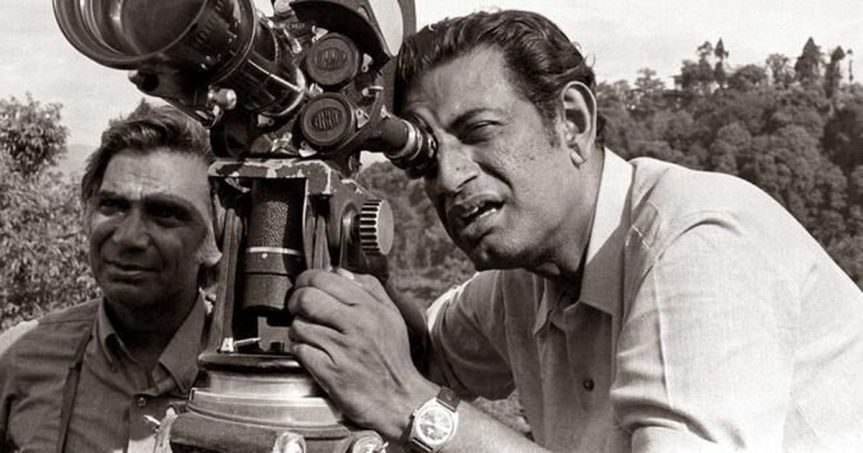
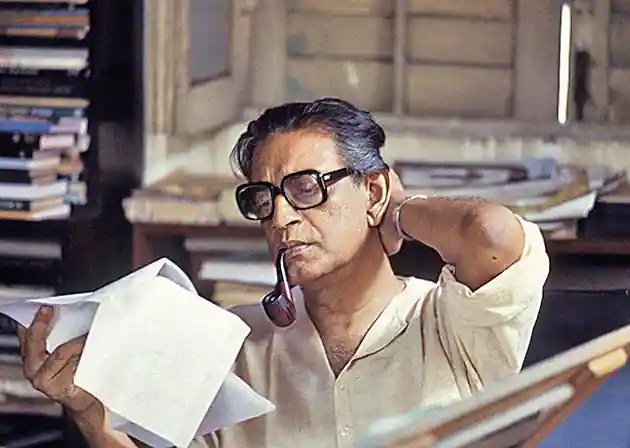
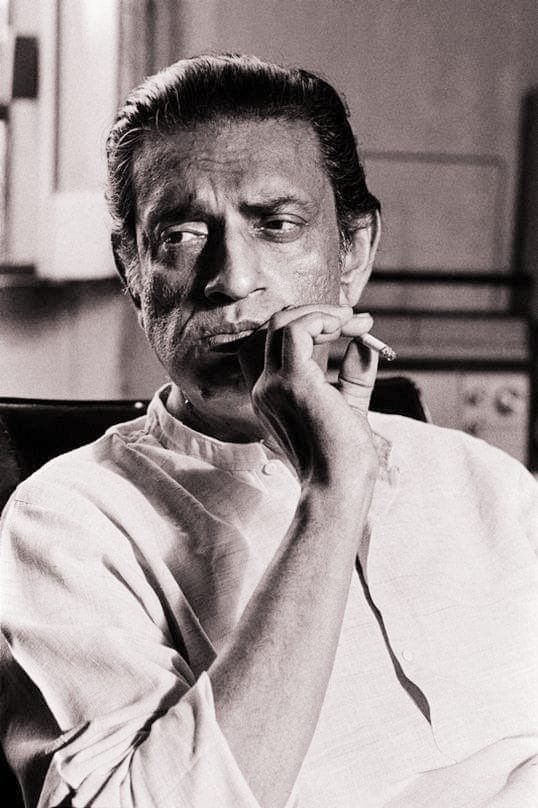
Satyajit Ray was India’s first internationally recognized film-maker and, several years after his death, still remains the most well-known Indian director on the world stage. Ray has written that he became captivated by the cinema as a young college student, and he was self-taught, his film education consisting largely of repeated viewings of film classics by de Sica, Fellini, John Ford, Orson Welles, and other eminent directors.
Satyajit Ray
Early Life and Family Background
Satyajit Ray was born into an illustrious family in Kolkata (then Calcutta) on 2nd May,1921. His grandfather, Upendra Kishore Ray-Chaudhary, was a publisher, illustrator, musician, the creator of children’s literature in Bengali and a leader of the Brahmo Samaj, a religious and social movement in nineteenth century Bengal. His father, Sukumar Ray, was a noted satirist and India’s first writer of nonsensical rhymes, akin to the nonsense verse of Edward Lear. Having studied at Ballygunge Government High School, Calcutta and completed his BA in economics at Presidency College, Satyajit Ray went on to develop an interest in fine arts. Later in life, Satyajit Ray made a documentary of his father’s life. His film, Goopy Gyne Bagha Byne, was based on a story published by his grandfather in 1914, but even other films, such as Hirok Rajah Deshe, “The Kingdom of Diamonds”, clearly drew upon his interest in children’s poetry and nonsensical rhymes.
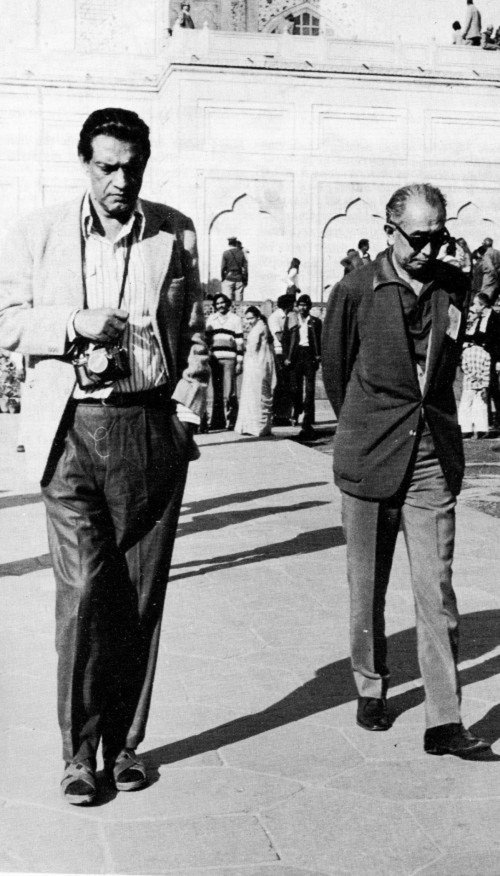
Satyajit Ray with Akira Kurosawa
The Crisis of Indian Cinema Before Ray
From the 1920s to the early 1950s, several directors working within Hollywood—as well as filmmakers in former Soviet Union, France, Italy, Germany, and Japan—considered cinema not as a mere tool of entertainment but as a medium for creative expression. Filmmakers such as Charlie Chaplin, Sergei Eisenstein, Jean Renoir, Roberto Rossellini, Vittorio De Sica, Akira Kurosawa, and others deployed artistically innovative filmic devices to convey profound statements about the complexities of life. Some of the aesthetically satisfying films produced during this period were hailed as cinematic masterpieces. Films in India, however, prioritised cliched elements such as sentimental slush, ersatz emotion, theatricality, romantic tales, spectacle-like songs, and happy endings in these decades. Instead of making serious attempts at formal experimentation, Indian directors continued catering to the lowest common denominator audience.
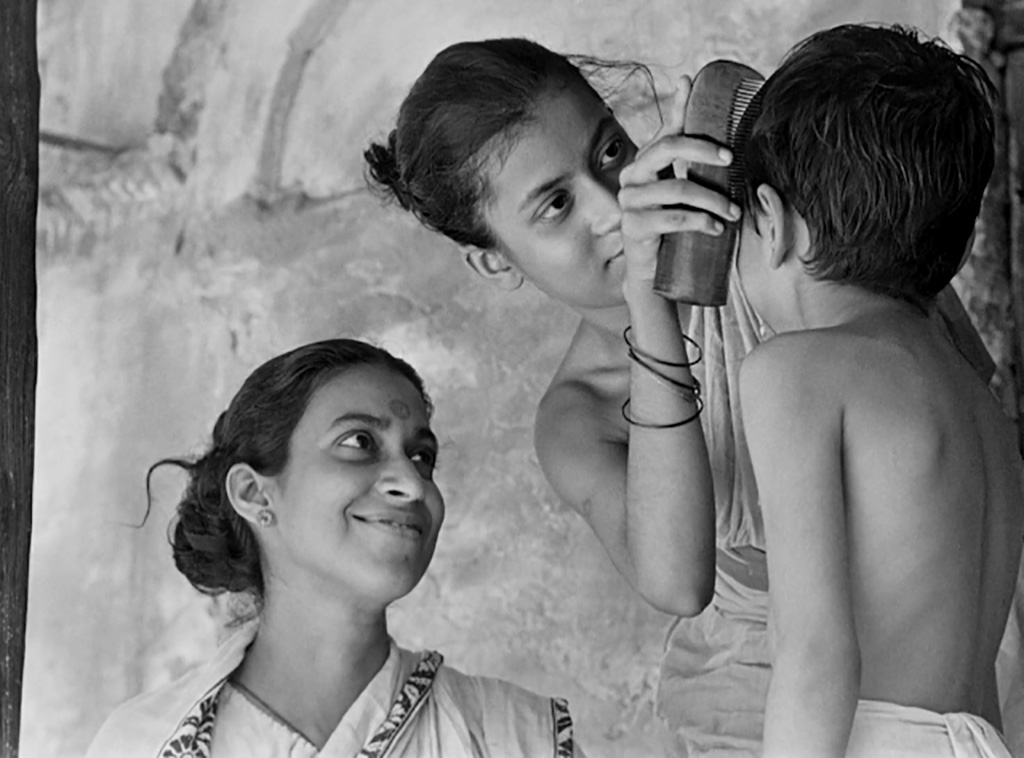
Iconic scene from Pather Panchali (1955)Pather Panchali (1955)
Breakthrough of Satyajit Ray
A young Ray had grown up on Hollywood movies, so when his ad agency sent him to London for higher training, he spent more and more of his time in the company of films and started “losing interest in advertising in the process,” he once said in an interview. During this trip, he saw Vittorio De Sica’s “Ladri di biciclette” (Bicycle Thieves),in 1948, a neo-realist Italian masterpiece of post-War despair and was entranced by its beguiling simplicity and humanism. Back in Calcutta, he heard that Jean Renoir was in town and walked straight into the hotel where the great French filmmaker was staying to confide in his own dreams of making a movie someday. Renoir, who was location-scouting for The River in Calcutta at the time, encouraged the aspirant. And so began the journey of the song of the little road.
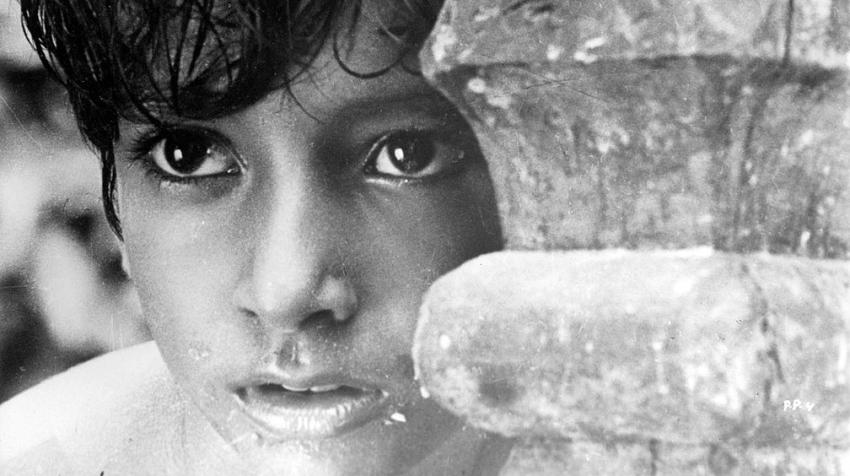
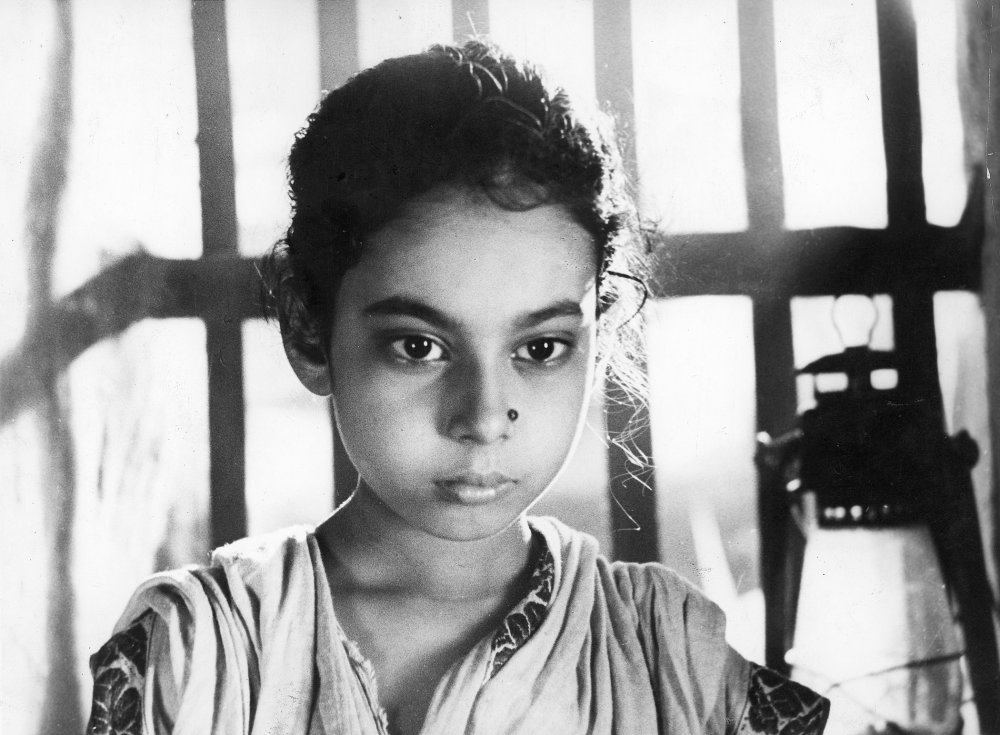
Subir Banerjee as Apu in Pather Panchali (1955)
Ray’s landmark debut, Pather Panchali ( which was adapted from eponymous 1928Bengali novel “Pather Panchali” by eminentBengali novelist Bibhutibhusan Bandopadhay) was on a shoe-string budget in 1955 with a mostly non-professional cast. All the while, he clung on to his job for a safety net even as he shot what would become the first of the classic Apu Trilogy on weekends. The film was apparently being made by a group of neophytes, who had to stop filming more than once, owing to the depletion of their shoestring budget.
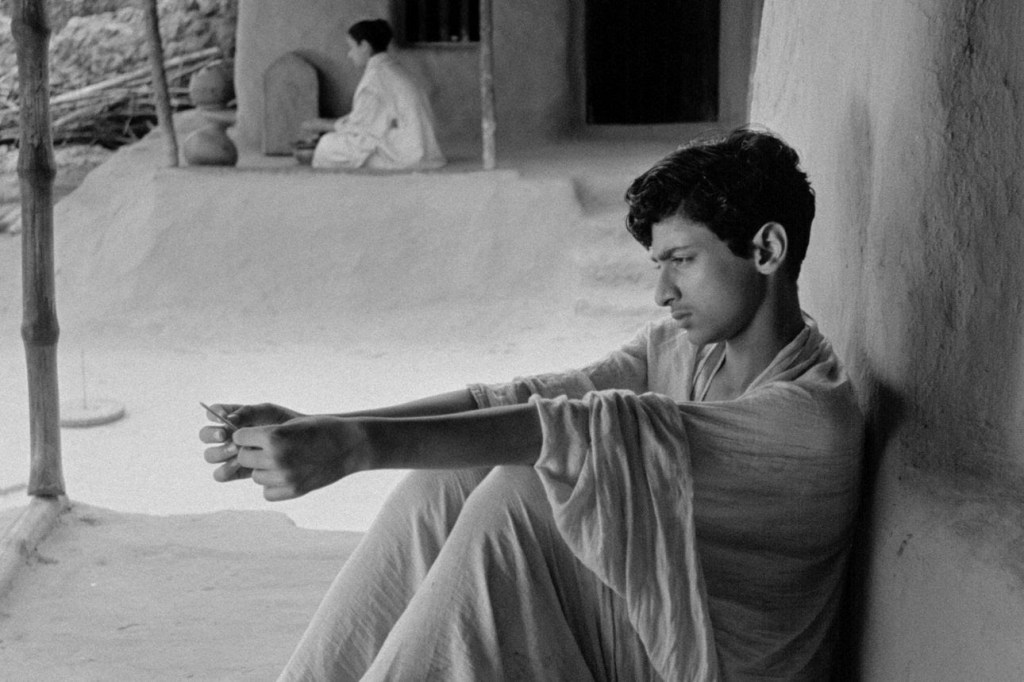
Smaran Ghoshal as Apu in Aporajito (1956)
Notable Films of Satyajit Ray
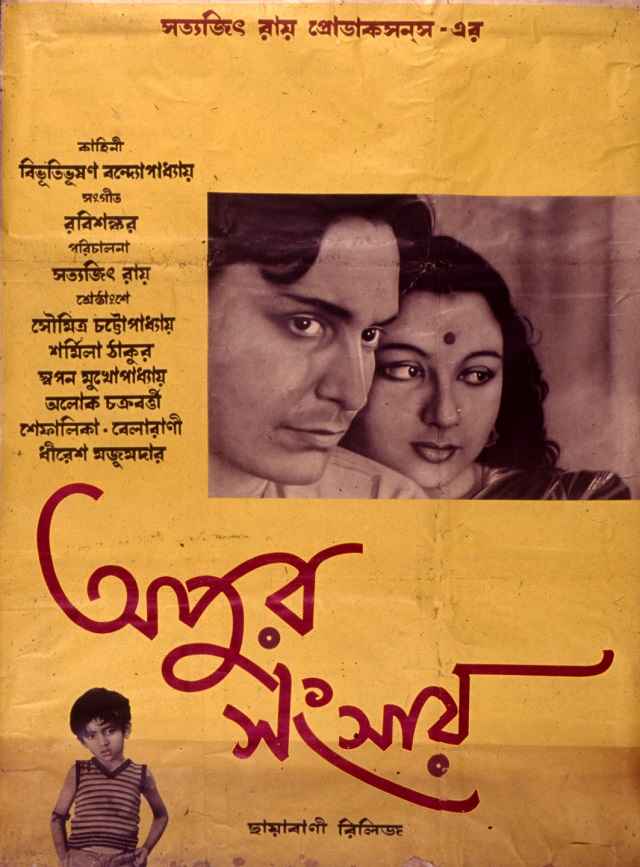
Ray directed 36 films, comprising 29 feature films, five documentaries, and two short films.Pather Panchaliwas completed in 1955 and turned out to be both a commercial and a tremendous critical success, first in Bengal and then in the West following a major award at the 1956 Cannes InternationalFilm Festival. sured Ray the financial backing he needed to make the other two films of the trilogy: Aparajito (1956; The Unvanquished) and Apur Sansar (1959; The World of Apu).Pather Panchaliand its sequels tell the story of Apu, the poor son of a Brahman priest, as he grows from childhood to manhood in a setting that shifts from a small village to the city of Calcutta.
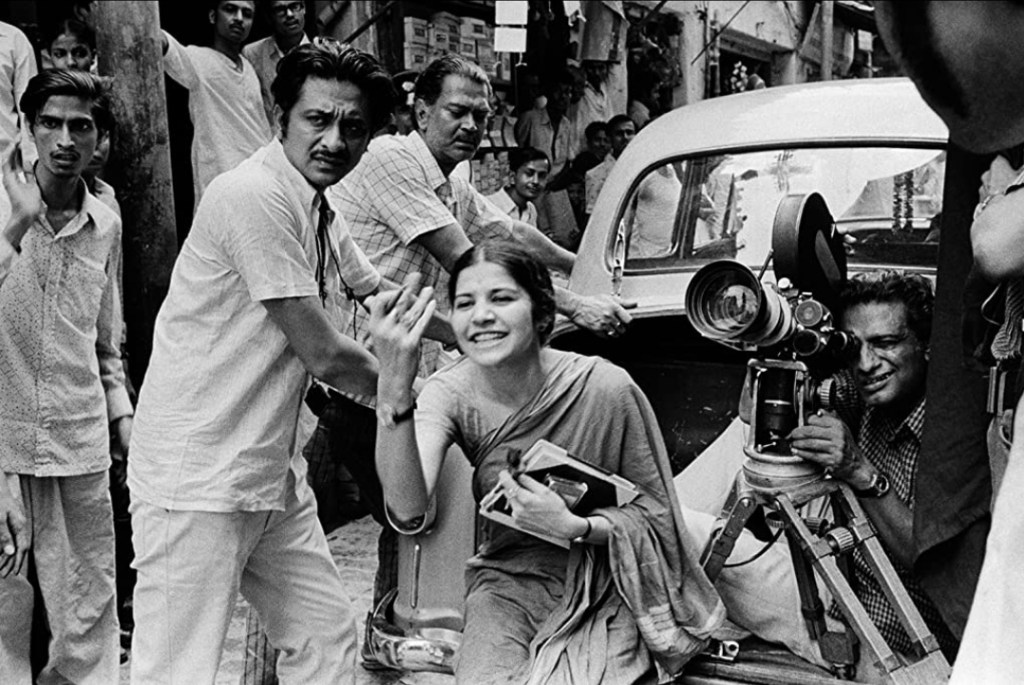
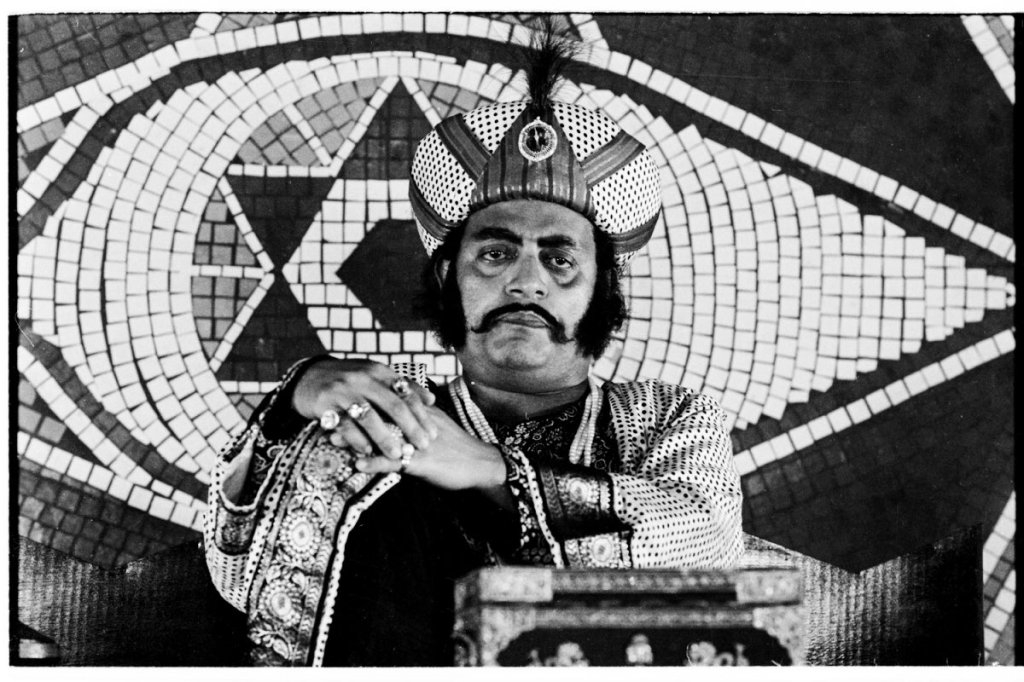
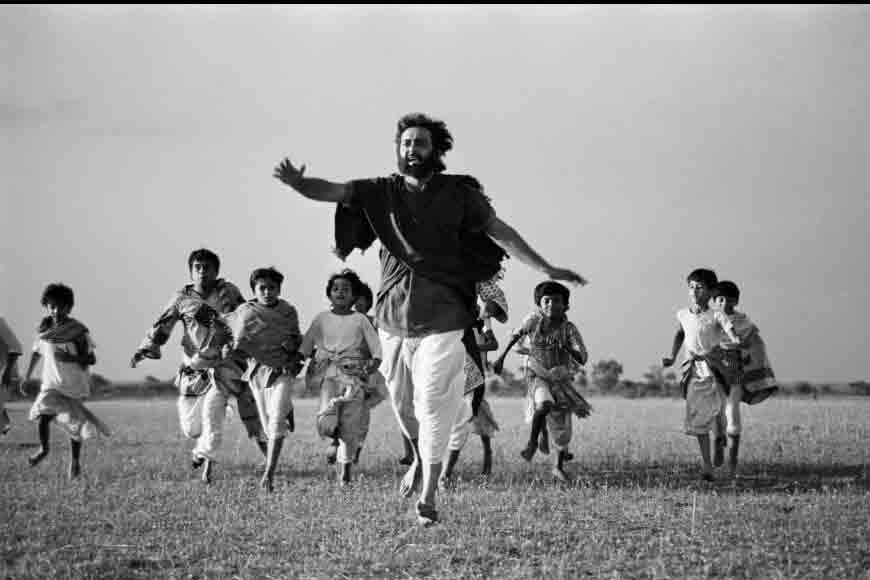
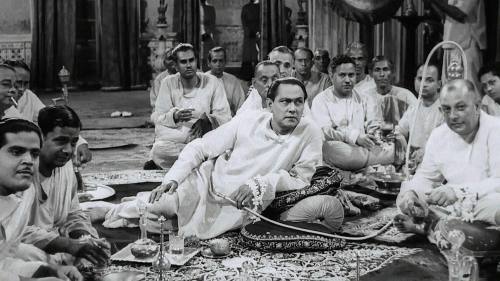
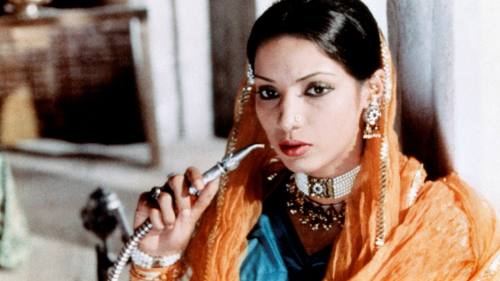
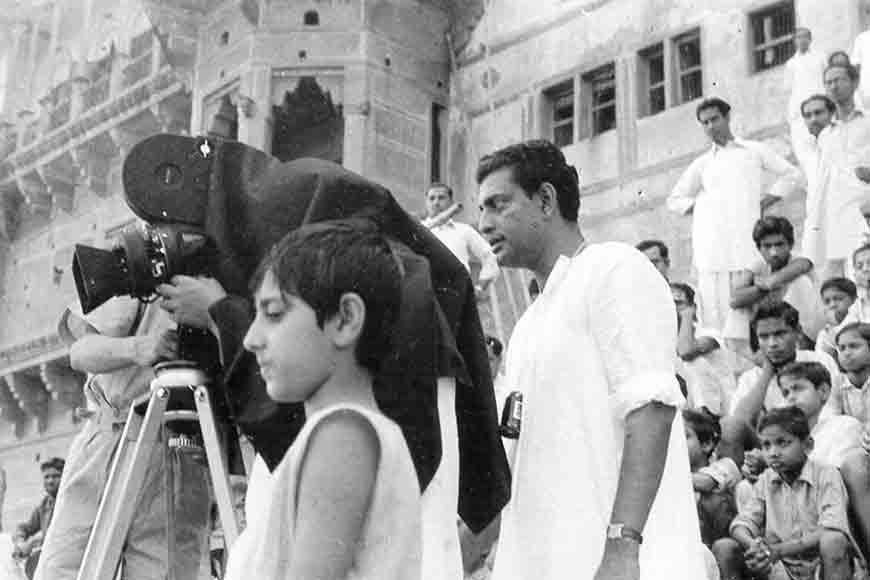
Chandana Banerjee in Teen Kanya (1961)During the Shooting of Jana Aranya (1975)Utpal Dutta in HirokRajar Deshe(1980)Soumitra Chatterjee in Hirok Rajar Deshe (1980)Chhabi Biswas (in middle) in Jalsaghar (1958)Shabana Azmi in Shatranj ke Khilari (1977)Satyajit Ray during the shooting of Sonar Kella(1974)
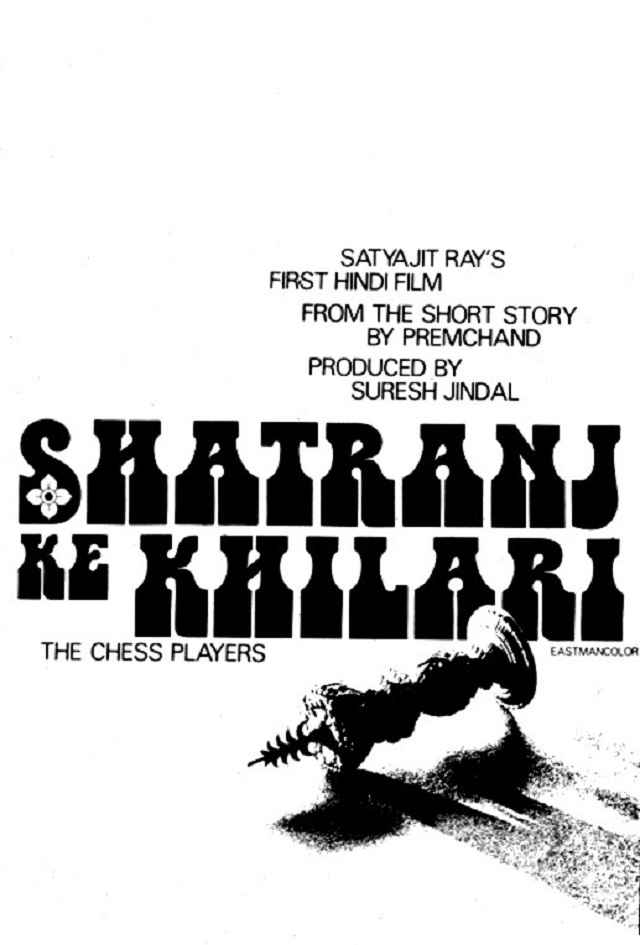
Ray’s major films about Hindu orthodoxy and feudal values (and their potential clash with modern Western-inspired reforms) include Jalsaghar (1958; The Music Room), an impassioned evocation of a man’s obsession with music; Devi (1960; The Goddess), in which the obsession is with a girl’s divine incarnation; Sadgati (1981; Deliverance), a powerful indictment of caste; and Kanchenjungha (1962), Ray’s first original screenplay and first colour film, a subtle exploration of arranged marriage among wealthy, westernized Bengalis.Shatranj ke Khilari (1977; The Chess Players), Ray’s first film made in the Hindi Language , with a comparatively large budget, is an even subtler probing of the impact of the West on India. Although humour is evident in almost all of Ray’s films, it is particularly marked in the comedy Parash Pathar (1957; The Philosopher’s Stone) and in the musical Goopy Gyne Bagha Byne (1969; The Adventures of Goopy and Bagha), based on a story by his grandfather.
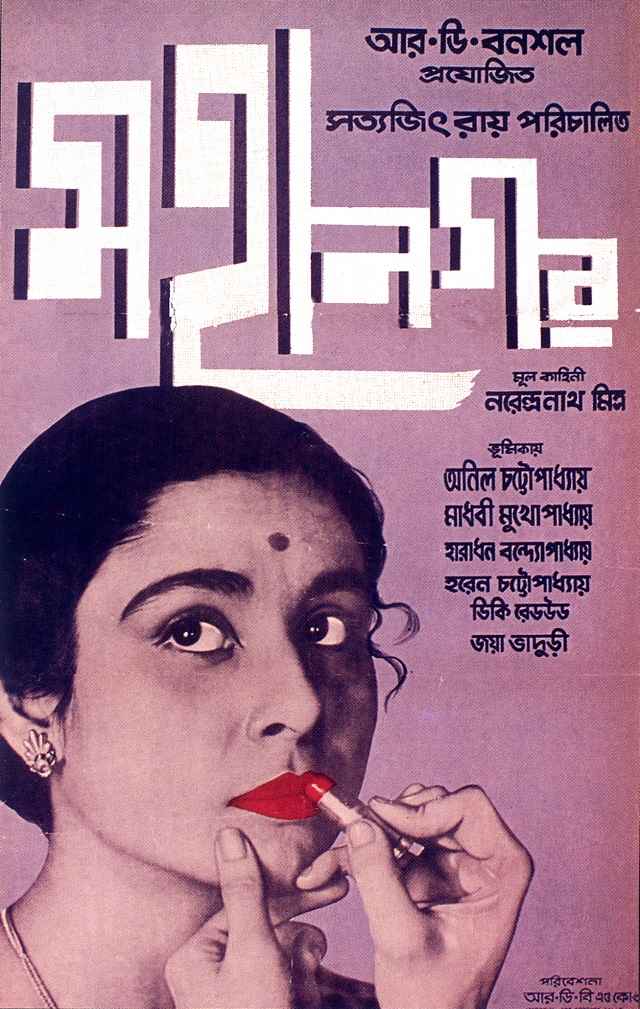
His other notable films were Ahsani Sanket (1973; Distant Thunder), Aranyer Din Ratri (1970; Days and Nights in the Forest) , Mahanagar (1963; The Big City) and a trilogy of films made in the 1970s—Pratidwandi (1970; The Adversary), Seemabaddha (1971; Company Limited), and Jana Aranya (1975; The Middleman), Ganashatru (1989; An Enemy of the People), Shakha Prashakha (1990; Branches of the Tree), and the Agantuk (1991; The Stranger).
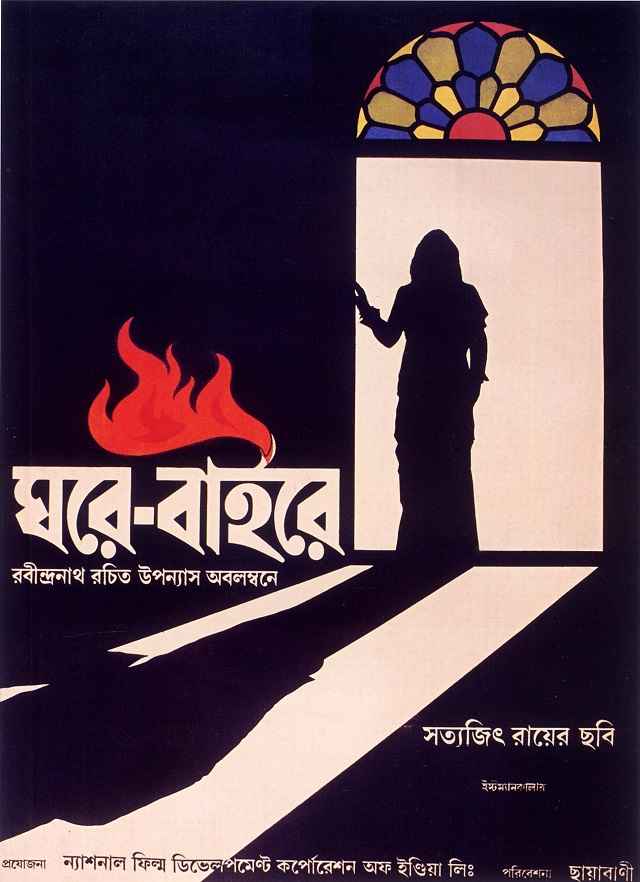
Poster of Shatranj ke Khilari (1977)Poster of Devi(1960)Poster of Ghore-BairePoster of Mahanagar(1963)Poster of Apur Sansar (1959)Poster of Nayak Poster of Charulata
Work As A Novelist
Ray created two popular fictional characters in Bengali children’s literature—Feluda, a sleuth, and Professor Shanku, a scientist. The Feluda stories are narrated by Topesh Ranjan Mitra aka Topse, his teenage cousin, something of a Watson to Feluda’s Holmes. The science fictions of Shonku are presented as a diary discovered after the scientist had mysteriously disappeared. Ray also wrote a collection of nonsensical verses named Today Bandha Ghorar Dim, which includes a translation of Lewis Carroll’s “Jabberwocky”. He wrote a collection of humorous stories of Mulla Nasiruddin in Bengali. Ray wrote an autobiography about his childhood years, Jakhan Chhoto Chhilam (1982), translated to English as Childhood Days: A Memoir by his wife Bijoya Ray. In 1994, Ray published his memoir, My Year’s with Apu, about his experiences of making The Apu Trilogy.
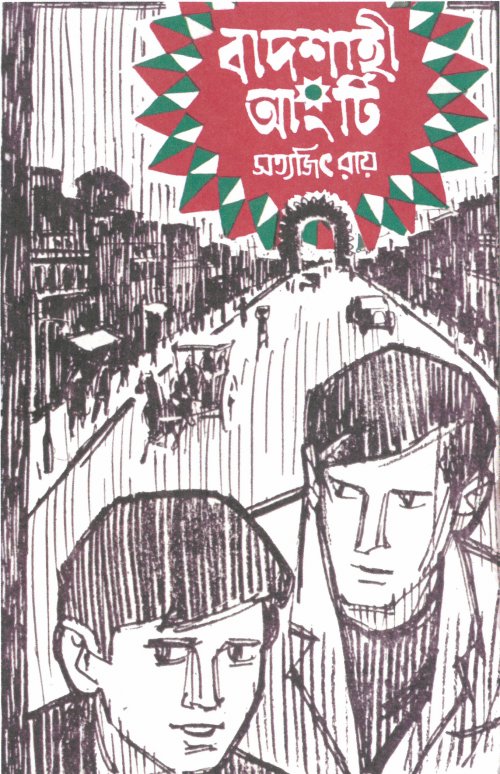
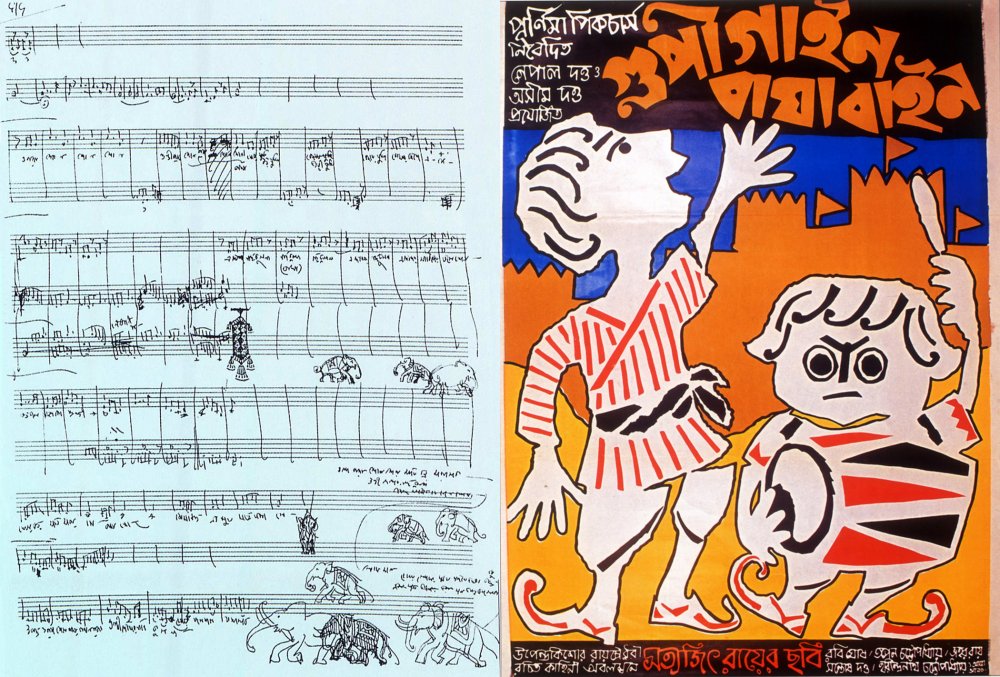
Book Cover illustrated by Satyajit Ray, himself for his first detective novel “Badshahi Angti”.The musical score and Poster for Goopy Gyne Bagha Byne(1969), done by Satyajit Ray, himself Portrait of Akira Kurosawa, illustrated by Satyajit Ray
Critical Analysis of Satyajit Ray
Instead of acting like a propagandist, Ray wanted to make people aware of the persistence of certain social problems. Devi and Ganasatru show people’s blind religious beliefs, Sakha Prasakhadiscloses the involvement of the top officials with bribery and corruption, Shatranj ke Khilari indicates the indolence and lack of political consciousness of the wealthy people, Aranyer Din Ratrireveals the insensitivity and boasting of the urban young men, and Mahapurushmockingly exposes the failure of the urban elite to embrace rational thoughts. Given the necessity of making people conscious of the same problems in present-day society, these films are still relevant today. Ray’s films also made a departure from tradition by frequently including strong women characters. Sarbajaya in Pather Panchali and Aparajito, Manisha in Kanchenjungha, Arati in Mahanagar, Charu in Charulata, Karuna in Kapurush, Aditi in Nayak, Aparna and Jaya in Aranyer Din Ratri, Sudarshana in Seemabadhdha, and Ananga in Asani Sanketappear as bolder, more confident, and more resilient than the male characters. In an interview, Ray states that the inclusion of unwavering women characters reflects his own attitudes towards and personal experience with women.
Awards Received by Satyajit Ray
Ray received many awards, including 36National Film Award by the Government of India, and awards at international film festival. In 11th Moscow InternationalFilm Festival 1979, he was awarded with the Honorable Prize for the contribution to cinema. At the Berlin International Film Festival, he was one of only four filmmakers to win the Silver Bear for Best Director more than once and holds the record for the most Golden Bear nominations, with seven. At the Venice Film Festival, where he had previously won a Golden Lion for Aparajito (1956), he was awarded the Golden Lion Honorary Award in 1982. That same year, he received an honorary “Hommage à Satyajit Ray” award at the 1982 Cannes International Film Festival. Ray is the second film personality after Charlie Chaplin to have been awarded an honorarydoctorate by Oxford University.
He was awarded the Dadasaheb Phalke Award in 1985, and the Legion of Honour by the President of France in 1987. The Government of India awarded him the Padma Bhusan in 1965 and the highest civilian honour, Bharat Ratna, shortly before his death. The Academy of Motion Picture Arts and Sciences awarded Ray an Honorary Award in 1992 for Lifetime Achievement. In 1992, he was posthumously awarded the Akira Kurosawa Award for Lifetime Achievement in Directing at the San Francisco International Film Festival.
Conclusion
Whenever we talk about radical filmmaking in the realm of Bengali cinema, Satyajit Ray’s maiden feature (made in the face of tremendous odds) is mentioned. From Pather Panchali to his last film Agantuk, Ray never compromised on high standards, thereby making a huge impression. Having a greater familiarity with the oeuvre of Ray would enable people to understand the impressive qualities and importance of socially-meaningful cinema. We are surely in need of films that would make us perceive the beauty of a dewdrop on a blade of grass, strengthen our sense of humanism, and raise our social consciousness—hence, the everlasting relevance of the cinema of Satyajit Ray.
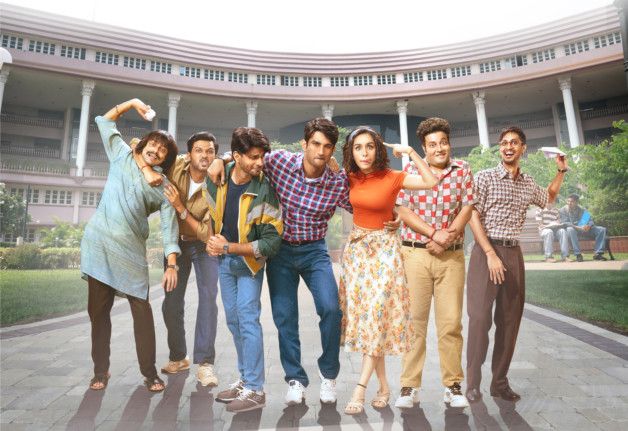
Chhichhore, the movie which taught us that, suicide is not right option, movies which taught us “ NEVER GIVE UP”, we just have to keep going, doing our best just keep going and enjoy your life cause these moments are never gonna come back.
In life things we love the most always disappears quickly and its life.
The film tells the story of Aniruddha “Anni” Pathak, a middle-aged divorcee whose son Raghav tries to commit suicide but survives, though he is in a critical condition for his unwillingness to live out of fear he would be called a “loser”. Desperate, he goes against the wishes of his former girlfriend turned ex-wife Maya’s wishes to recount his own journey in 1992 as a “loser” in a gang of six; as he continues along to convince Raghav, the other five receive news of the tragedy and decide to join their friend in his pain to complete a story they never fail to cherish as a lesson in their life.
Since childhood we are listening this, from our parents, family members and relatives, if you win this competition, I’ll buy you your fav dress or I’ll buy you motorcycle, if you get first rank in your school or college test, I’ll buy you smartphone, if you got selected or if you pass the test I’ll give you this or that or whatever you want I’ll give you, blab blah. But no one told us that if you didn’t won or if you got second rank or if you failed the test, it’s okay, it’s completely okay, atleast you have tried and worked very hard for this. What’s big deal if you didn’t got selected, the most important thing is, you tried and didn’t give up easily. Life is all about second change for them who don’t give up easily and try until they give their best. Let’s say that, it wasn’t your best and promise yourself that you will try very hard to give your best and trust yourself, if you think you can do it then you definitely can and one day you will definitely became successful and will achieve your dream.
Its human nature that we got disappointed very soon, we think like we did so much hard work for this and after all this what we got is failure.
Its life and in life things always don’t go as we planned, just trust yourself and try harder, you may struggle but it won’t matter anymore. If you feel like quitting, think about the reason why you started.
NEVER QUIT. NEVER GIVE UP. FLY IT TO THE END.
Here are some memorable dialogues from Chhichore we will always remember
1. “Tumhara result decide nahi karta hai ki tum loser ho ki nahi… Tumhari koshish decide karti hai!”
2. “Success ke baad ka plan sabke paas hai… lekin agar, galti se fail ho gaye… toh failure se kaise deal karna hai… Koi baat hi nahi karna chahta.”
3. “Hum haar jeet, success failure mein itna ulajh gaye hai… ki, zindagi jeena bhool gaye hai… Zindagi mein agar kuch sabse zyada important hai… toh woh hai khud ZINDAGI.”
4. “Doosron se haarke loser kehlane se kahin zyada bura hai…khud se haarke loser kehlana.”
5. “I am a failure, mera kuchh nhi ho sakta… But we forgot success doesn’t come at once.”
6. “Dost jinke sath hum haste hai, rote hai Par zindagi jeena sikhte hai.”
Do you find Tollywood funny because of it’s hilarious fighting scenes? and Do you choose Bollywood over Tollywood? If, yes! Then there are some things you need to know about these both well known film industries. Bollywood is basically a Hindi language movie industry and Tollywood belongs to South India. Tollywood releases movies in various south indian languages such as Telugu, Malayalam, Tamil, etc.
Bollywood is too overrated because of the number of movies it releases every year and also due to some actors who are famous world wide.
But, we all have noticed in past few years, that, the South – Indian movies (Tollywood) makes better movies than Bollywood. The story line given in Tollywood makes more sense than that of the Bollywood. Infact, Bollywood has adapted various stories from Tollywood and made some good remakes, for example, Rowdy Rathore starring Akshay Kumar is adapted from a Telugu movie, Vikramarkudu, Kabir Singh is a remake of Telugu movie, Arjun Reddy, Wanted is also a remake of a Telugu film, Pokiri. So, now you know, that these hit Bollywood movies have come from Tollywood.
We usually tend to compare Bollywood actors with Tollywood actors on the basis of their looks, looks and looks. And we focus on this aspect so much that we forget about the talent, acting skills, and passion seen in them. Tollywood actors are as talented and passionate about their work as Bollywood actors. It is seen that the selection of actors in Tollywood is done more on the basis of their skills rather than their looks.
Tollywood has also produced some of the best actors like the Superstar Rajnikant, Chiranjeevi, Nagarjuna, Mahesh Babu, and many more.
Tollywood movies are getting more recognition than bollywood movies in India like Bahubali and many more which have also got appreciated in international film industry too. Every industry has its own pros and cons.So,its not right to debate on which one is better, both are doing exceptionally great.As to know whether which one is better, it completely depends on the viewer’s preference. The spectators are the one who give the final judgment for all the movies.
Films wield immense influence on masses. Cinema is one of the mighty media and commands great popularity. It is a very popular means of cheap and easily available entertainment, thousands of men and women see films daily in cinema houses, theatres and on their televisions. The mass appeal of cinema is well known. Its influence on the audience is deep and abiding. People, particularly the young men and women have their film heroes and heroines. They are mad after them and follow them in fashions and way of living. They see the same film again and again which features their favourite stars.
Indian film industry is very big and is now almost 100 years old. India produces the largest number of films in Hindi and other Indian languages and thousands of people are employed in the Industry as cameraman, technicians, actors, producers, music directors, singers, editors, spot boys, helpers, financiers, distributors etc. It provides employment to a larger number of people in the country. Indian films are also popular in many foreign countries. India is the leader in the film production and so far has produced more than 28000 feature films followed by Pundalik. The first Indian talkie Alam Ara was produced in 1931. Since then Indian films have not looked back. The first International Film Festival of India was held in 1952.
As a form of popular and mass recreation and entertainment, films are unrivalled. Its impact on our social, personal, national and family life is abiding and far reaching. Films are an important topic of discussion among the people. Newspapers and magazines are full of articles, comments, reviews, pictures and features related to films and the people connected with them. Seeing films have become a craze among the youngsters. The spread of television and cable boom has further popularised the films.
Besides entertainment and amusement, cinema is also a good source of education, instruction, enlightenment and information. We can learn about the distant places of our country and those of foreign countries without actually visiting them. It also helps in spreading the awareness about social evils and their removal. Many superstitions and blind beliefs can be easily eradicated through films. It is a good means of forming public opinion on social, political and national issues. It can affect many changes in the society and cause a social and cultural renaissance. Educational films help students in increasing their knowledge. By screening good purposeful and cultural films, we can mould and build the character of the young men and women of India. All good and decent films would go a long way in removing such evils as dowry, casteism, communalism, hatred, untouchability etc. Cinema and films also help a great deal in national integration, unity and emotional harmony. Patriotic songs and films strengthen the bonds of nationalism and unity. Thus, cinema is a very potent means of influencing the masses. The vivid, concrete images and visuals leave permanent impressions on the minds of the viewers. People imbibe the ideas, concepts and emotions seen on the silver screen without making any physical effort. Even illiterate and uneducated persons can be taught new ideas. To understand things through reading requires education, efforts, books and mental effort but films make instructions easily digestible by blending them with pleasure and entertainment. Cinema speaks and speaks pleasantly and not to individuals but to masses spread over a large area.
This is so powerful means of mass education, entertainment and communication should be used wisely to spread education, enlightenment and morals. But unfortunately it has been increasingly used as an instrument of destruction and disintegration of human personality. Many such crimes as thefts, cheating, violence murders and kidnappings are being committed because of the evil influence of the movies. The cinemas have become schools where vice, violence and crime are taught openly. They have become the synonym of sin, moral degradation and violence.
People in greater number are becoming victims of the unhealthy influence of films. They encourage them to violate acceptable standards of decency, etiquette and social behaviour. Film makers should understand and follow their social obligations. Films should be so decent as a man may not hesitate to see it with his wife and children. The scenes depicting women as victims of rape, sexual abuse etc. Should be avoided or should be incorporated very imaginatively and suggestively. In the name of reality obscenity cannot be allowed.
Why is the movie considered as Hindi Cinema’s first teenage love story?
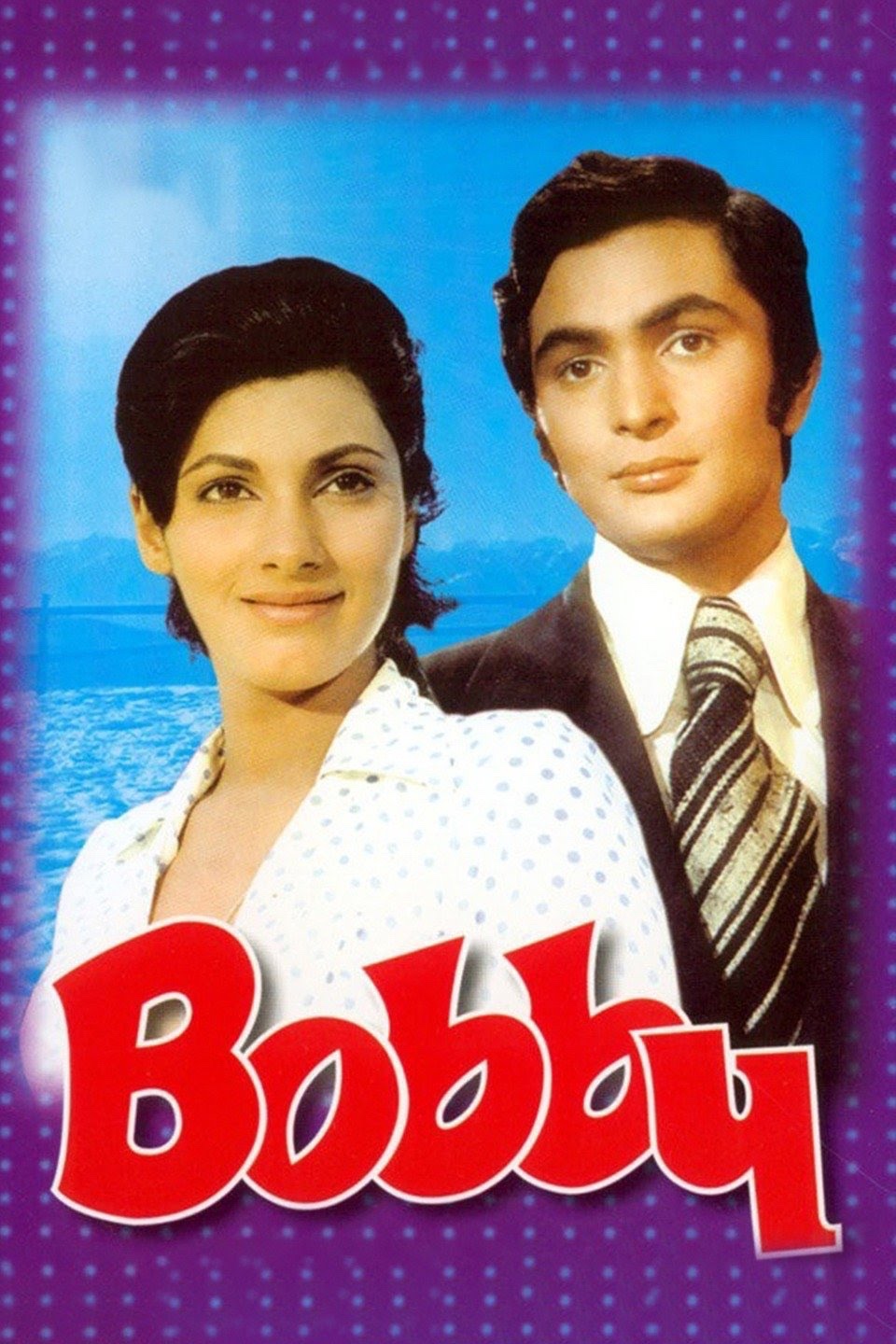
1970s ‘India’ witnessed lots of socio-economic happenings like unemployment, poverty and corruption and so were the plots of most of the movies of that era based on classism, social injustice, divide between rich and poor and so on. Although the genre “love story” was mostly ignored, the film “Bobby” in 1973 came out as an exception. Directed by Raj Kapoor and produced and distributed by R.K. Films with Rishi Kapoor and Dimple Kapadia in lead roles, the film is altogether a masterpiece. Not only is it considered as a benchmark of Hindi Romantic Cinema but it also completely redefined the genre, thus breaking the earlier notions of typical family drama love stories.
Film Poster of Bobby (1973).
The movie begins with six year old Raj, son of a rich business person who is sent to boarding school leaving behind his governess, Mrs Braganza in grief. After completing his studies in boarding school, Raj (played by Rishi Kapoor) returns for his 18th Birthday party where his eyes are stunned seeing a girl in a white gown, who’s apparently his governess’ granddaughter, Bobby Braganza (played by Dimple Kapadia). The next day, Raj visits Mrs.Braganza’s home, who’s in a better economic condition than before and gets to meet Bobby. The two subsequently develop a friendship and liking towards each other. Not very long before they had their first break up following a misunderstanding at Raj’s friend’s party which they sort out later during Bobby’s Kashmir school trip.
Slowly, both of their parents come to know about their affair and Braganzas are invited to Raj’s home for a dinner party by his father. However seeing the social condition of Braganzas, Raj’s father brutally mocks them leading Braganzas shattered. He doesn’t stop at that and visits Braganza’s residence to again insult them by providing them money to get rid of the Raj and Bobby’s relationship. He then fixes Raj’s marriage with another rich businessperson’s disabled daughter without telling Raj. Raj, however, runs away and this time Raj’s family along with police accuse Bobby’s father with ‘kidnapping’. Both Raj and Bobby’s family chase the couple and with no option left Raj and Bobby decide to jump in the river but are rescued by each other’s dad. The film has a “happy ending” with unification of two families.
How this film brought a change in the genre and why it remains a trendsetter?
It is probably Bobby, which introduced teenage romance in Hindi Cinema. Before this film, love story in the context of Hindi Cinema was only restricted to a grown up adult man and woman mostly in their late 20s who fall in love and marry or how typical Indian families indulge in arrange marriage and how the couple start loving each other after marriage. Bobby was one of the first Hindi films which showed teenage romance in a very entertaining and engaging way. There is an entire song in the movie titled “Hum tum ek kamre me band” (English: We both are locked in a room) where it is shown how the young couple (Bobby and Raj) accidentally get locked in a room, which proves that the movie was way ahead of its time. The film is also known for its exquisite closets varying from fairy tale gowns to dreamy jackets. Shot in spectacular locations of Goa, Mumbai and Kashmir, it was all soothing and added more to its glory.
The film was specifically made for the youth and Bobby being the debut film of both Dimple Kapadia and Rishi Kapoor added more to its freshness. The film had so much of impact on youth that during that time 14-15 year olds used to rebel against their parents to find true love and eventually the film became “template” for teen romances in India. The audience and Indian public were so fascinated with the movie’s character Bobby that many girls born in India during that time were named “Bobby”. Interestingly, this movie’s plot was replicated consequently in several other romantic Hindi films for over three decades.
The typical “happy ending” stories as mentioned earlier also became a trend ever since. Almost every popular love story in Hindi Cinema had a similar plot thereafter and that too in a proper sequence- first romance of a teen couple from different economic classes, followed by severe family restrictions and finally the climax- either happy or mournful. These narrative elements like family restrictions and classism became genre conventions ever since the release of Bobby.
Studio Ghibli is a Japanese animation studio that has been creating wonderful animated movies since 1985. Founded by Hayao Miyazaki and co., Ghibli’s movies have always stood apart for their thought-provoking themes and immensely settings. Ghibli animations have the power to transport us to an ethereal land that transcends beyond the mundanities of human life. They are usually set in a mythical of fictional landscapes which are hidden from and within the everyday realities of humans. Through these fictional characters and magical settings, Ghibli movies have a way of moving us to tears with etched emotions. Their plotlines are heart-wrenchingly beautiful and are often presented with a touching message to humanity. Another element that adds to the beauty of each movie is that they are accompanied by an assortment of soulful music. Ghibli movie magic lies in the fact that it can instantly takes us lands that reminds us of the beauty of mossy meadows, gentle rivers, sweet smell of earth after the first rain, dewdrops on a tender leaf and vast grasslands meeting a clear blue sky in its horizon.
Here’s a list of top 3 must-watch Ghibli movies:
1. Spirited Away
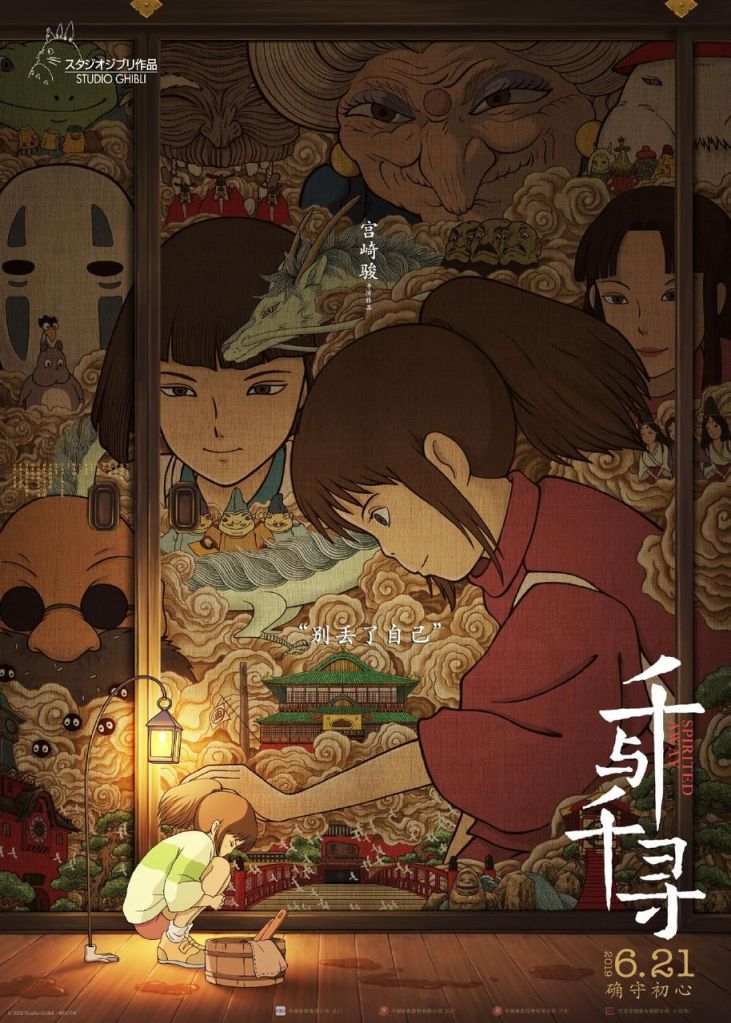
Spirited Away was released in 2001 and was directed by Hayao Miyazaki. Spirited Away follows the story of Chiro, a 10-year-old girl who, while moving into a new neighbourhood with her family, accidentally enters the world of Kami or Japanese folk spirits. The family crosses into the threshold before sunset, not knowing that it transforms into the magical land of spirits after sun down. After her parents are turned into pigs, Chiro embarks on a journey to recover their true selves by working for the land’s wealthiest witch Yubaba. Set with beautiful animations of glittering nightscape and elegant river spirits, Spirited Away is easily a true cinematic masterpiece. It won the Academy award for ‘Best Animated Feature Film’ in 2002 and is critically acclaimed worldwide.
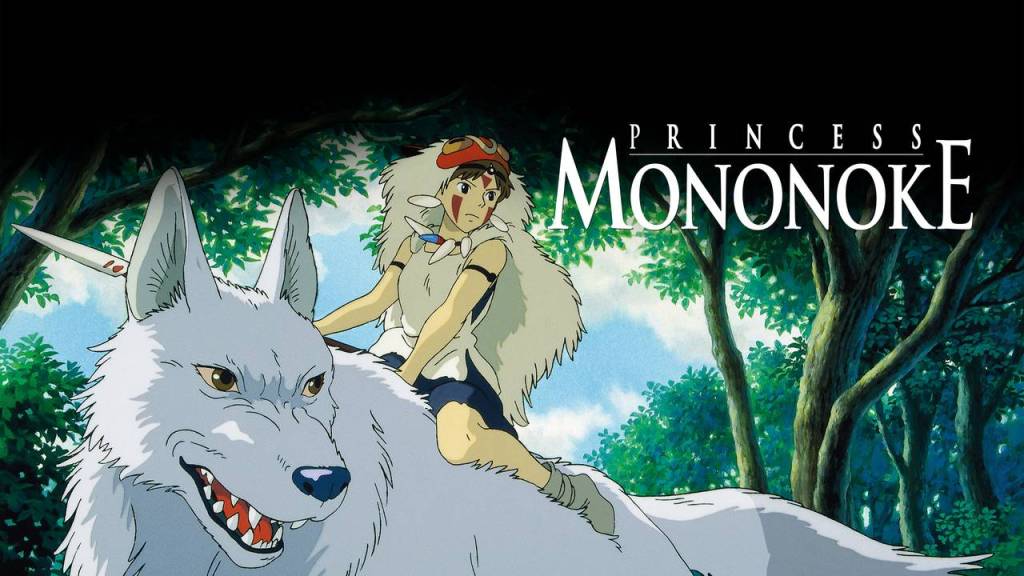
2. Princess Mononoke
Princess Mononoke was released in the year 1997 and was directed by Hayao Miyazaki. It is a thought-provoking story that questions and laments the destruction of nature sue to mankind’s greed for more. Set in the late Muromachi perios, it follows the story of a young Prince Ashitaka who encounters wild forest gods and its protectors who are caught fighting against humans who seek to destroy the forest for their purposes. With surreal mythical creatures and an abundance of emotions, Princess Mononoke moves us with its powerful message.
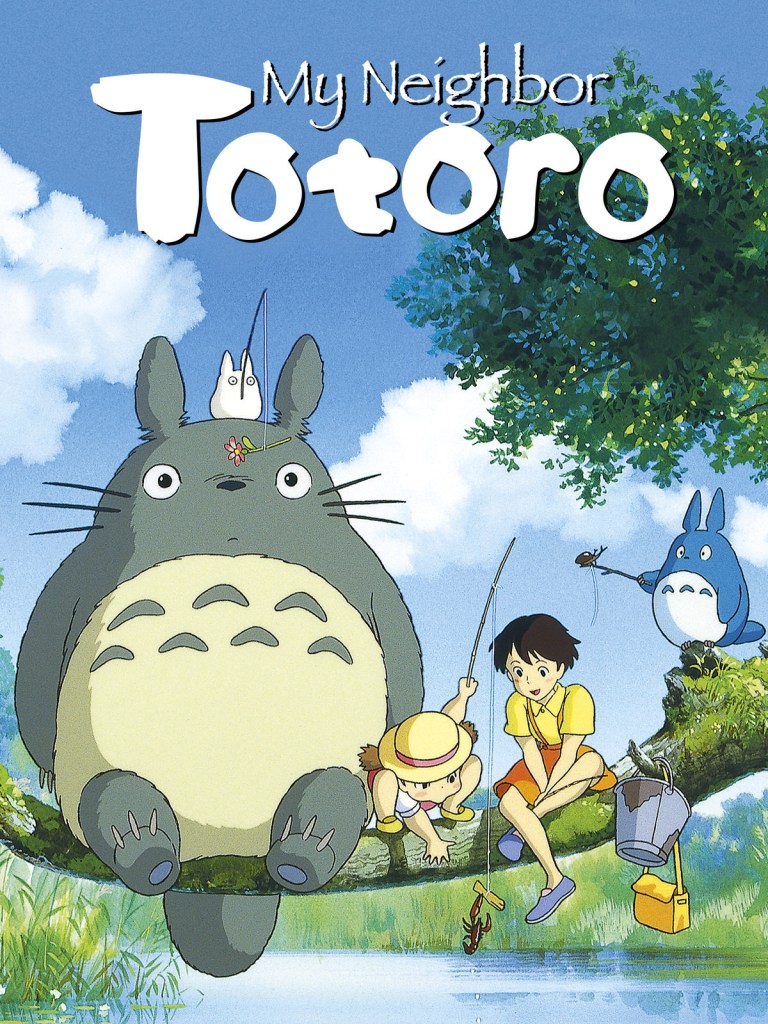
3. My Neighbor Totoro
My Neighbour Totoro was released in the year 1988 and was directed by Hayao Miyazaki. It follows the story of two little girls named Satsuki and Mei who, while moving into their new house, discover a hoard of fantasy creatures in their backyard. The two children, especially the younger one is innocently curious. As she stumbles into a mossy hole, she discovers a couple of friendly wood spirits including the huge Totoro who keep her company until her sister arrives back from school. Set in a post-war Japan, the movie shines with the innocence of the children and explore their humorous interactions with the mysterious and cute creatures. Totoro was widely popular and has been the face of Studio Ghibli since.
There are several other notable Ghibli movies including Howl’s Moving Castle, Castle in the Sky, Grave of the Fireflies and Kiki’s delivery service, etc.
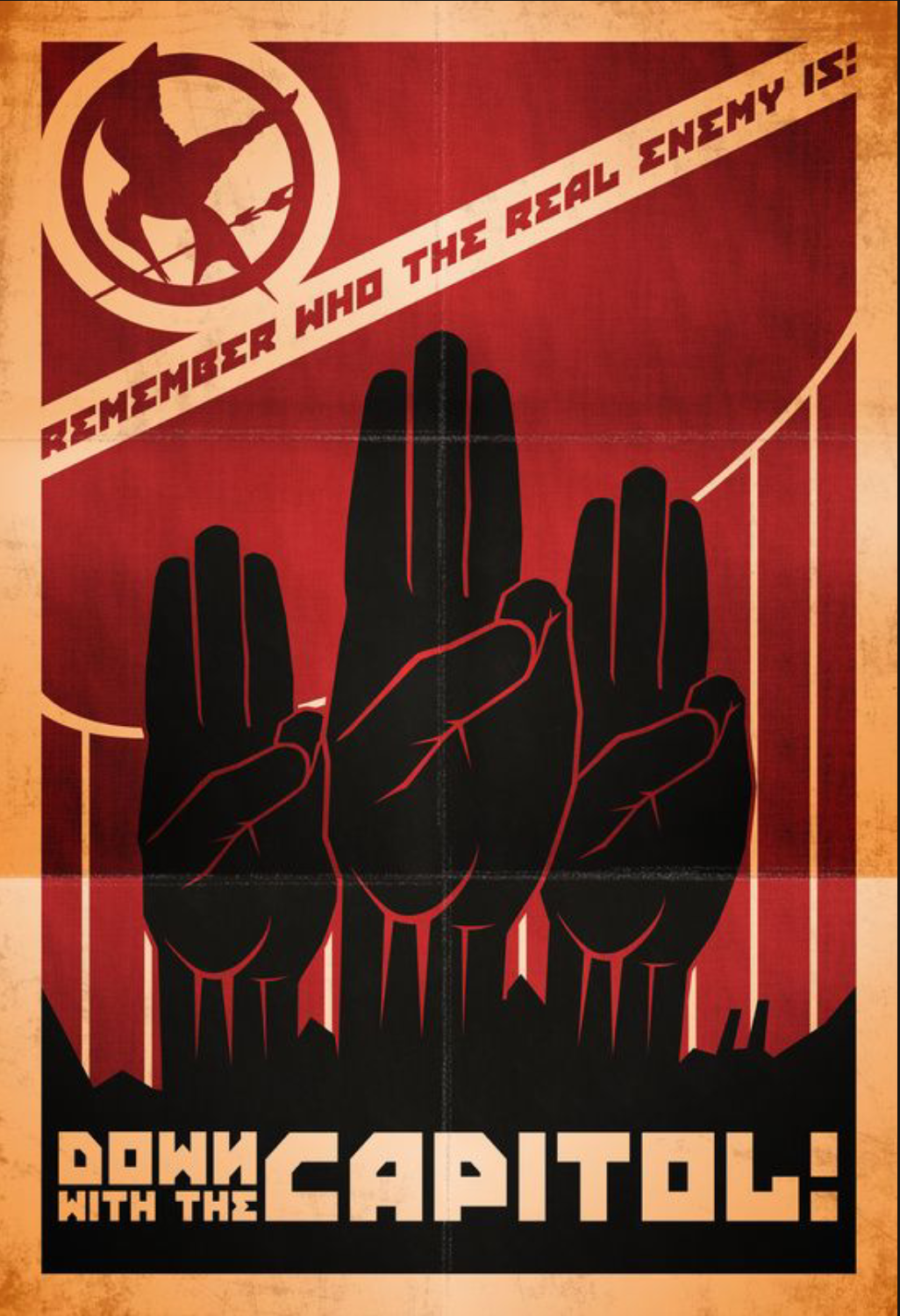
The government holds too much power. This is very well portrayed in the Hunger Games a book trilogy written by American author Suzanne Collins later made into a science fiction dystopian film series. The story is basically how the government has too much power over the lives of common man, how and why it is so wrong. The story is takes place in the fictional country that goes by the name of Panem. It consists of 12 districts that have been assigned various disciplines under which the people of the district work. Naming a few, district 3 specializes in technology, district 11 in agriculture, district 12 in coal mining. District 12 being the smallest and the poorest. All these districts are forced to produce the assigned goods and no have no freedom. The Capitol is the government who enjoy all the riches and luxury while the other districts starve to death. The Capitol, for the sole purpose of entertainment, organises this game annually where two teenagers- a male and a female are forced to participate, locked in an area and have to fight each other to death. The one who survives is declared the winner.
On the big screen we may find it interesting but more interestingly the series is the best depiction of communism. We know that our government always wants to suppress us and gain full control over our lives. Hence this book or the movie series is a good way to give us some lesson in an entertaining manner.
The government’s control over the goods production in a district and no freedom of their own reminds us of the real world example of North and South Korea. Everyone is aware of the situation here. People in North Korea have no freedom it is only the governmental control over their lives and henceforth people are starving. On the contrary, South Korea is thriving. Former Soviet Union couldn’t find a permanent position due to the same reasons. It had too much control over the people and the people suffered. A government cannot work without the cooperation of its people. History holds records of how such controlling government led to their own decline. Panem government violates its people’s basic rights resulting in poverty and starvation and later a rebellion.
The Hunger Games also shows how the upper class lives in luxury in contrast to the middle class lives. It shows how the people of district 1 enjoy all the facilities and live a posh life. They do not have to wait in lines for hours to manage some food for the family. This demonstrates real life situation where the rich are getting richer and the poor even poorer. The government might show us false hope but it is the lower class people who are the fools. The horrors of communism in this book/movie is a good way to let the younger generation realise the truth about the world. Also teach us lessons to be smarter.
The impact of COVID-19 has been massive in the film industry around the whole world. All the film industries across the globe are facing the consequences of COVID-19 hugely. The film industry has faced billions and billions of financial losses. All the multiplexes and cinema halls have been locked down, and there has been no profit in the market sector. The film festivals had to be canceled. Many of the dates of the film festivals have been delayed. All the films which were supposed to release in this timeframe have extended the time of release. The complete lockdown of the entertainment industry, due to COVID-19 has majorly affected the box office profit. The places to face severe financial losses at the box office are North America, China, India, South Korea, Italy, Japan, Middle East, U.K., and many others.
Present Scenario at the Box Office
Most parts of the world that have been severely affected have entirely shut off the entertainment industry. They have closed down the shopping malls and movie complexes. Hence, it has changed the box office tremendously. China, America, Italy have been facing significant drawbacks in their box office estimations. Though the box office had already calculated substantial financial loss as soon as COVID-19 started spreading in China, it hardly estimated the significant loss it would suffer across the world.
Italy, China, the USA, Qatar, Thailand, Australia, U.K., Malaysia, and New Zealand have closed down all the movie theatres, and there have been no film releases since then. Afterward, France and Ireland decided on reducing the seating capacity at every movie theatre to half of its original percentage. Japan has closed down over 200 movie theatres after the spread of COVID-19.
Box Office has faced significant financial loss from the beginning of the year. As they have estimated, they have suffered around 30% loss in Taiwan, 35% loss in the Philippines, Hong Kong, Singapore, 60% loss in South Korea, and about 72% loss in Italy. In March, the box office faced higher financial losses. Though China had reopened their cinema halls and movie theatres at that time, the government had to close them down again, to stop the spread of COVID-19.
The Chinese film industry has suffered a significant loss due to the outbreak of COVID-19. They had strictly closed down all the movie theatres and cinema halls. The primary reason behind their massive decline in the Chinese film industry is the Lunar New Year. Every year, at the time of Lunar New Year, the Chinese box office made a huge success. But, this year, they suffered a significant loss, which was unprecedented for them. They have closed down film studios like Xiangshan Global Studios and Hengdian World Studios. Hence no production work is going on at the moment. The film releases have been postponed, and there has been no work progress since.
Due to the outbreak of COVID-19, Japan has entirely locked down all the movie theatres and cinema halls. Many film festivals have been canceled like the Osaka Asian Film Festival. They have canceled the festival and have arranged to give refunds to the tickets which were bought by the people, in advance. Other small festivals like Kitakan Film Festival, the AnimeJapan Festival, and many others were canceled. The only film to have released during this pandemic is Fukushima 50, and it has not able to cross the 1 billion mark at the box office yet though Japan has been planning out various strategies to release films for the people and arrange a way for them to get some peace amidst this crazy pandemonium.
Things have gone pretty rough for the Hollywood film industry as well. After the impact of COVID-19, multiple blockbuster projects got delayed, and all the movie theatres have been closed. Many films that were about to get released like No Time To Die, Mulan and others have been postponed to November. Disney has entirely locked down all the production works of films such as The Little Mermaid, Jurassic World: Dominion, and others. This had hugely affected the pillars of the Hollywood Industry in that many are afraid that Hollywood might not go back to the stage where it stood before COVID-19 took place.
Many film releases have been postponed, and all the movie theatres around India have been locked down. Most of the technicians working in the film industry have no income source. COVID-19 has surely broken down the pillars of the Indian Film Industry. Several Bollywood film releases got postponed like Sooryavanshi, which was expected to make hundreds of crores. Rohit Shetty has to postpone the dates of his film release. Many production houses such as Yash Raj Films, Dharma Productions closed down all the ongoing activities and also, any work which was going on in their films. Even the most delayed film of 2020, Brahmastra, got even more delayed due to the pandemic. Some film releases took place at the beginning months of the year. But, things have come to a halt since March. The major film releases as 83, Radhe, and others got postponed. Even Salman Khan had to postpone his film Radhe, which was supposed to release on Eid. Every Indian wait for Salman Khan’s Eid release, but this year, no movies got released. The Indian Film Industry has faced huge losses due to the COVID-19 pandemic.
The major film industries around the world have faced similar consequences of the pandemic. The scenario has been identified across the globe. Every part of the world, may it be in the United States or Canada or France or South Korea or Germany or Australia or Mexico, all have faced the impacts of COVID-19 thoroughly. The productions of significant films have halted, and the technicians have lost work across the world. The box office is facing financial losses in billions. Massive projects have been postponed. Many celebrities have lost their lives, which have inevitably affected the film industry. Like Terrence McNally, Lucia Bose, Mark Blum, Patricia Bosworth, Allen Garfield, and Hilary Heath, many others have lost their lives fighting with coronavirus, which has hugely affected the film industry. The entertainment industry is one of the most popular sectors across the world. People everywhere wait eagerly for the film releases, and the film industry is the one single business sector that never goes without work. Though many films might face failures at the box office, the blockbuster successes always compensate for those. Apart from the film industry, even the television industries across the world have been going through the same loss of money and work.
The Film Industries as One
Most of the award show and the film festivals got canceled due to the impact of COVID-19. To cope with the present scenario, twenty film industries worldwide have come together to project movies on YouTube for free. This is a worldwide film festival that has united the film industries together. The “We Are One: A Global Film Festival” has been arranged for ten days by film festivals worldwide. The online global film festival is streaming documentaries, comedy shows, music, and films. This is the best step that has been taken by the film industries across the world so that they keep entertaining the people around the globe. The complete lockdown of the entertainment industry has also left a reduced effect on the people. Hence, this is a way to help all of us from the traumatic news we’ve been hearing for months now.
All the film industries are trying to work together to bring smiles on the faces of people. Though they have faced significant losses for the last few months, they are still trying to arrange online festivals and shows for the viewers to stay engaged.
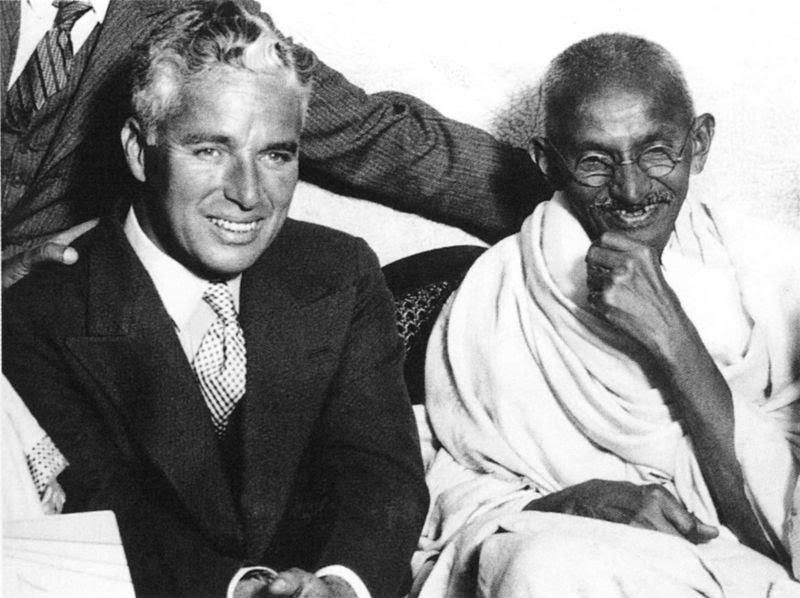
Popularly known as the English comedy King. His parents Hannah and Charles Sr. we’re both hall actors though they just had a penny of income. Chaplin didn’t have decent relations with his father and that’s why he and his half- brother Sydney had to face poverty in childhood. People usually had a misconception about his eye color, they were blue but they looked like Brown due to black and white screen.
Charles Spencer Chaplin
Born on 16 April 1889{England} – and died on 25 December 1977{Switzerland}). He was a perfectionist and a multi-tasker (composer, actor, director, screenwriter, producer, and editor). In 1898 Hannah was sent to an asylum and during this tenure, Chaplin and Sydney were sent to live with their father whom they barely knew. He was an alcoholic and later died due to liver disease. Chaplin had his mother’s encouragement which always pointed out that Chaplin always had a spark and talent. When he was 13 he withdrew education while he was a part of the dance troupe. He later turned his career from a dancer to a comedic performer and drama. He got recognition in the theater after he acted in “Inebriate Swell”. A contract was finalized with Mutual amounting $670,000 a year ($15.7 million today), which Robinson says made Chaplin – at 26 of age and was one of the highest-paid actors. This huge amount of salary was everywhere in the press and on news headlines. John R. Freuler, the studio president, illustrated: “We can afford to pay Mr. Chaplin this large sum annually because the public wants Chaplin and will pay for him.” Later in life, Chaplin referred to his Mutual years as the happiest period of his career. Chaplin passed away in 1977 at the age of eighty-eight years old.
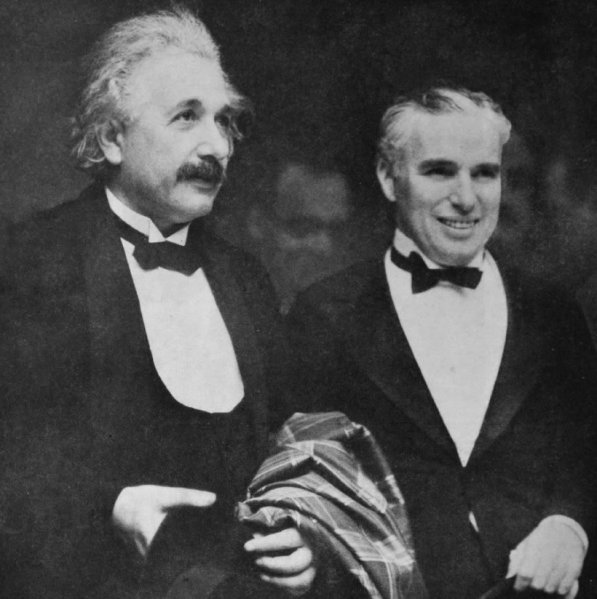
Charlie with Einstein.
“An American Obsession”– British media once attacked him as he didn’t participate in the First World War. Though he upheld himself fighting for Britain, he wasn’t summoned by either country. The most appreciated character of Tramp was everywhere including the costume parties.
Less known facts.
He was banned from the US because of his alleged Communist politics.
The Academy of Motion Picture Arts and Sciences honored the 82-year-old Chaplin with an honorary Oscar. He attended the ceremony and obtained an energetic standing ovation. When he finally spoke, he said, “Thank you for the honor of inviting me here. You’re all wonderful, sweet people.” He returned to the US after 20 years.
After Chaplin died, some thieves asked his widow Oona Chaplin for ransom. Even after his death, he created controversy. The thieves demanded $600,000 to return the body. Oona tapped the phone lines, which led authorities to the two men, Roman Wardas and Gantscho Ganev.
He married thrice. He had an interest in teenagers. When Chaplin was 54 years old he married for the last time with 18-year-old Oona O’Neill and gave birth to 8 kids.
He was the first actor to appear in Time Magazine and at that time he was paid much more than the President of the US.
He was so dedicated to his work and got so much applause. Also, he received a 12-minute standing ovation in the Oscars of 1972 which is historic.




















 Eduindex
You must be logged in to post a comment.