Production Linked Incentive Scheme for Food Processing Industry (PLISFPI)

 The Production Linked Incentive Scheme for Food Processing Industry (PLISFPI) was approved by the Union Cabinet on 31st March 2021 with a budget of Rs. 10,900 crores, to be implemented from 2021-22 to 2026-27. It consists of three components: incentivizing manufacturing in four major food product segments, promoting Innovative/Organic products of SMEs, and supporting branding and marketing abroad for Indian brands. Additionally, the PLI Scheme for Millet-based Products (PLISMBP) was launched in FY 2022-23 with an outlay of ₹800 crore, utilizing savings from PLISFPI. The scheme boosts the capacity of the food processing industry by supporting food manufacturing entities that are willing to expand their processing capacity, incentivizing the growth of strong Indian brands, enhancing the presence of Indian food brands in the global market, creating more employment opportunities, and ensuring higher income for farmers.

The Ministry is actively implementing three major schemes to promote the food processing sector: Pradhan Mantri Kisan SAMPADA Yojana (PMKSY), Pradhan Mantri Formalization of Micro Food Processing Enterprises (PMFME) scheme, and Production Linked Incentive (PLI) Scheme. These schemes offer comprehensive support across the entire food processing value chain, aiding the food industry in meeting international quality and safety standards for their food products. One of the objectives of the R&D scheme under PMKSY is to promote research and development in the field of food quality and safety standards in the food processing sector. Through this scheme, financial support is provided through grant-in-aid, covering 50% of equipment costs in general areas and 70% in difficult areas. Under another component scheme of PMKSY, known as “Food Safety and Quality Assurance Infrastructure,” financial assistance is provided to Central/State Government and private sector organizations/universities for the establishment and enhancement of food testing laboratories across the country. This initiative plays a crucial role in ensuring compliance with FSSAI regulations, which, in turn, facilitates the maintenance of high-quality and safety standards of processed food products to meet global demands.

To increase ethanol production, the Government is implementing the Ethanol Blended with Petrol (EBP) Programme nationwide. Various Ethanol Interest Subvention Schemes were introduced from 2018 to 2022, encouraging entrepreneurs to establish new distilleries or expand existing ones. The scheme offers an interest subvention of 6% or 50% of the interest charged by banks/financial institutions for five years, whichever is lower, along with a one-year moratorium, to promote ethanol production growth. Ethanol production from grain was also included under these schemes in 2021 to further promote ethanol production.

The Ministry of Food Processing Industries (MoFPI) has been implementing the Pradhan Mantri Kisan Sampada Yojana (PMKSY), which addresses the infrastructure challenges being faced by SMEs and promotes technology adoption in the food processing sector. PMKSY supports establishment of cold chains, and other processing facilities, which contribute to improving the supply chain and storage capabilities in the food processing sector. 1,281 projects have been approved under PMKSY.

The PMKSY provides significant support and incentives to food processing SMEs, encouraging their growth and development. Through financial assistance and other benefits, PMKSY facilitates the establishment of modern infrastructure/ technology, and capacity expansion for SMEs. This has led to increased processing levels, improved product quality, and enhanced market access for these SMEs. The Yojana has significantly boosted employment opportunities, particularly in rural areas, assisting in the generation of jobs for 13.09 Lakh people.

The Ministry is implementing three major schemes – PMKSY, PMFME scheme, and PLI Scheme – to promote the food processing, thereby reducing food losses and promoting sustainability. The R&D Scheme under PMKSY aims to enhance production, including tech- based food processing innovation, quality, safety, and trade while promoting sustainability. The PLI Scheme for Food Processing Industry incentivises MSMEs that focus on innovative products, boosting innovation in the food processing sector. Additionally, the PLI Scheme for Millet-based Products promotes millets, which are special grains that need less resources to grow, provide excellent nutrients, and can withstand changes in the weather, which helps in achieving the goal of sustainability.

 To promote “Brand India” globally, the PLI Scheme for Food Processing Industry supports companies with branding and marketing abroad, boosting emergence of strong Indian brands. Companies receive 50% financial incentives for expenditure on international branding, capped at 3% of food product sales or ₹50 Crore per year, whichever is less. Presently, 77 applications are covered under this PLI component.
Struggles of big dairy companies in India!!!

India is that the world’s biggest producer and consumer of dairy. In 2018 alone, India produced 186 million metric tonnes of milk — about 410 billion pounds and 22 percent of the milk produced globally. Almost all of that is consumed domestically thanks to India’s dairy-heavy diet — think creamy curries, yogurt drinks, and a popular type of butter called ghee. A quick note before we proceed: this includes milk from buffaloes, which are an important source of milk in many developing countries. the point is that India loves milk.

What is pushing India's small dairy farmers out of business?

In 2011, the French dairy company Danone hoped to capitalize on this by opening a division in India. Danone opened its own processing plant in Haryana and tried to capture some of India’s 1.2 billion dairy lovers. But less than a decade later, Danone shuttered their dairy business in India. That same year, the corporate made 28 billion dollars worldwide and was within the top three global dairy companies. With all this success, elsewhere, why did Danone’s dairy business sour in India? Let’s start with some background on Danone. Their business is broken down into three categories:

  1. 1.specialized nutrition, like supplements and formula for babies;
  2. bottled waters and seltzers;
  3. dairy and plant-based alternatives.

That one makes up over half of their global sales, but it’s also the one that failed in India. Danone does still sell specialized nutrition products in the country, but they don’t break out those sales figures separately. This is the same company as Dannon in the U.S. The company decided to rebrand to make the spelling less confusing for American consumers. Anyway, now for some background on India’s dairy industry. There are about 75 million dairy farmers in India. Most of them are women who own one or two buffaloes or cows to supplement the family’s income. Nearly half of India’s milk is not sold, but consumed by the farmers household. This makes India’s dairy industry much more fractured and localized than other countries where Danone operates. Take the company’s native France and one of its biggest customers, the U.S. Each has far fewer dairy farms with herds that dwarf India’s one or two animal average. This was Danone’s first big problem in India: sourcing milk is difficult. Of the half not consumed by farmers’ households, only about 15 percent goes to big organized companies or government run cooperatives. The rest goes to hundreds of small, local milk processors.

Tainted milk: Branded dairy in India sees 5% increase in ...

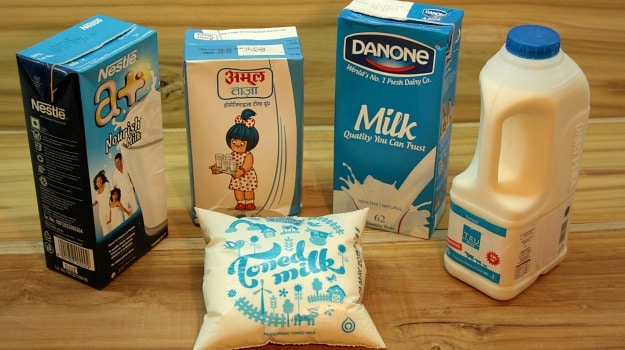
The largest companies like Amul, Mother Dairy, and Nestlé have tiny percentages of the market, and they’ve been there for decades. Market research firms Mintel and Euromonitor declined to release specific market share numbers to CNBC. However, a 2016 piece in The Economic Times of India citing Euromonitor put the figures at about 7 percent for Amul, 3.7 percent for Mother Dairy, and 2.9 percent for Nestlé. In short, tapping into the existing dairy infrastructure is effective but time consuming. Imagine the effort of contacting dozens or hundreds of local and regional dairies, processors, or individual farmers. But establishing a separate supply chain altogether is very expensive — a lesson Danone learned the hard way. And when Danone did get milk, the company focused on the wrong products. Danone pushed plain yogurt and flavored yogurt drinks — popular in places like the U.S. and France with high profit margins to boot. But in India around the time when Danone arrived, yogurt comprised only 7 percent of the dairy consumed.

The real money was in ghee, a type of clarified butter, and plain old fluid milk, a product with razor-thin margins dominated by those hundreds of local small-scale producers. Analysts explained to CNBC the simple reason why Indian consumers shunned Danone’s prepackaged yogurt. And if Indian consumers did want to buy premade yogurt, they had a slew of cheaper options than Danone. Dairy never accounted for more than 10 percent of Danone’s sales in India, a far cry from its global 50 percent. Its specialized nutrition arm picks up the slack, and the company announced a renewed focus on that division when it shuttered its dairy operation. Meanwhile, two of their biggest competitors, Amul and Nestlé, made nearly five billion and 750 million from dairy, respectively. But not all hope is lost for Danone’s dairy in India.

Amul, Nestle, Mother Dairy, Tru & Danone: Which Milk Tastes the ...

In January 2018, the same time that Danone ended its dairy production there, the investment arm of the company announced its part in a 26.5 million dollar investment in Epigamia, an Indian yogurt startup. This could be a sustainable move for Danone in India’s dairy industry because Epigamia offers consumers products that add value onto the plain yogurt they will make cheaply reception . But perhaps most importantly is this: while much of the population still makes yogurt the old-fashioned way, analysts predict that a growing number of consumers will want to buy premade options as they move into corporate jobs in developing urban centers. Very large numbers indeed. If only 5 percent of India’s 1.35 billion people decides to buy prepackaged yogurt, that’s over 67 million consumers — more than the entire population of Danone’s native France.

Food processing industry stakeholders to assess Covid-19

The grievance cell of Ministry of Food Processing Industries has been able to close and resolve 581 issues out of 585 received, with proactive approach and timely redressal. The task force has been taking up these issues with the respective state governments and other relevant authorities including Ministry of Finance, Ministry of Home Affairs. The task force have also been in constant touch with leading industry associations and food processors across states to address any issues / challenges faced by food and allied industry so that it can run at maximum capacities. Grievances or any problems faced by Food Processing Sector, in either disruption of production or supply chain, during nationwide Covid-19 lockdown can be mailed at covidgrievance-mofpi@gov.in.

A dedicated task force and a grievance cell was set up in the Ministry, which consisted of senior officials of the Ministry and members of Invest India. Industry could reach out to the grievance cell directly or through various industry associations. The major issues which were received at the grievance cell included issues related to

  1. Plant shutdowns due to lockdown
  2. Logistics related issues, warehouse shutdown
  3. Non availability of labour
  4. Movement of staff and workers

Smt. Harsimrat Kaur Badal, Union Minister of Food Processing Industries has chaired a series of video conferences with the industry associations, cold chain developers, exporters etc. on a regular basis for monitoring the situation at ground level.

The Ministry received various issues during VC interactions with cold chain promoters, on which the task force has promptly reacted and have taken up the issues with all the relevant stakeholders. Various steps were taken keeping in mind the necessities of food and allied industry to recoup with the new normalcy.

MoFPI is also a member of the Empowered Committee on Logistics and Supplies, and has been working to ensure that harvested agriculture produce can be supplied to the industry so that farmers are benefitted. Ministry of Food Processing Industries has taken several measures to ensure that the Food Processing Industry has been impacted minimally due to the Covid-19 crisis.