While both men and women contract various conditions, some health issues affect women differently and more commonly.
The following seven illnesses pose considerable health risks.
Heart Disease
Heart disease causes one in every four deaths among women.Although the public considers heart disease a common issue among men, the condition affects males and females nearly equally.
Breast Cancer
Breast cancer, which typically originates in the lining of the milk ducts, can spread to other organs, and is the most aggressive cancer affecting the global female population.The condition presents more among female populations in developed nations due to their extended life spans.
Ovarian and Cervical Cancer
Many people are not aware of the differences between ovarian and cervical cancer.Cervical cancer originates in the lower uterus, while ovarian cancer starts in the fallopian tubes. While both conditions cause similar pain, cervical cancer also causes discharge and pain during intercourse.
Gynecological Health
Bleeding and discharge are a normal part of the menstrual cycle.However, added symptoms during menstruation may indicate health issues, and unusual symptoms, such as bleeding between menstruations and frequent urinating, can mimic other health conditions.
Pregnancy Issues
Pre-existing conditions can worsen during pregnancy, threatening the health of a mother and her child.Asthma, diabetes, and depression can harm the mother and child during pregnancy if not managed properly.
Depression and Anxiety
Natural hormonal fluctuations can lead to depression or anxiety.Premenstrual syndrome (PMS) occurs commonly among women, while premenstrual dysmorphic disorder (PMDD) presents similar, but greatly intensified, symptoms.
Health Technology for Women
Soon, new technologies will emerge to assist care providers in treating women’s health conditions.
Men form one-third of a typical medical school’s population; Rest of the seats are all occupied by women. The pay gap in the healthcare sector is 25% higher than any other sector. Most women agree to work at low wages because of the financial crises they face. Gender inequality is leading to a shortage of healthcare workers in the sector. Women in India face “extensive gender discrimination” in access to healthcare. Gender inequality is leading to a shortage of healthcare workers in the sector because obviously only one-third of the seats were taken by men.
Under the National Health Mission, the government has launched several schemes. The most important program launched by the government is Rashtriya Arogya Nidhi which provides financial assistance to the patients that are below poverty line and are suffering from life-threatening diseases. Rashtriya Swasthya Bima Yojana is a government-run health insurance program for the Indian poor. It aims to provide health insurance coverage to the unrecognized sector workers belonging to the below poverty line.National AIDS Control Organization was set up so that every person living with HIV has access to quality care and is treated with dignity. Anganwadi Workers and the ASHA workers are the grassroots level functionaries under the umbrella ICDS Scheme and the National Health Mission respectively. Both these functionaries being closely connected with the rural and urban poor families, play a pivotal role in addressing their nutrition and health related problems/issues.
How the Government has failed them ?
·Do not have regular salaries, partly because their work is supposed to be voluntary and part-time.
·Even though the Code on Social Security, 2020 aims to include formal and informal sectors under a social safety net, it excludes several categories of workers, including ASHA and Anganwadi workers. The Code on Wages, too, has left this constituency out of its coverage, depriving employees of a fixed minimum wage.
·“As per Modi government’s definition, Anganwadi and ASHA workers are not ‘workers’ but only ‘volunteers’, who do not receive any ‘wage’ but only an ‘honorarium’! So the principle of minimum wage would not apply to these scheme workers.”
Also a gender issue
·Limited space for career progression is linked to low institutional recognition, demotivation, and curtailed opportunities for growth. ASHAs face sexual harassment by other health workers and community members, linked to their mobility and public profile.ASHAs have worked to further women’s interests, particularly in Chhattisgarh state where Mitanins(the name for ASHAs there) have mobilized protests against alcoholism, supported women’s collectives and taken action against gender based violence.ASHAs have begun taking action to mobilize their peers to reduce gender based violence. ASHAs have reported an increased sense of empowerment and personal growth, in part through their belief in the social value of their work.
Gender as a social determinant of health
The social determinants of health (SDH) are the non-medical factors that influence health outcomes. They are the conditions in which people are born, grow, work, live, and age, and the wider set of forces and systems shaping the conditions of daily life. These forces and systems include economic policies and systems, development agendas, social norms, social policies and political systems.
The SDH have an important influence on health inequities – the unfair and avoidable differences in health status seen within and between countries. In countries at all levels of income, health and illness follow a social gradient: the lower the socioeconomic position, the worse the health.
The following list provides examples of the social determinants of health, which can influence health equity in positive and negative ways:
1.Income and social protection
2. Education
3.Unemployment and Job security
Research shows that the social determinants can be more important than health care or lifestyle choices in influencing health. For example, numerous studies suggest that SDH account for between 30-55% of health outcomes. In addition, estimates show that the contribution of sectors outside health to population health outcomes exceeds the contribution from the health sector.
Addressing SDH appropriately is fundamental for improving health and reducing longstanding inequities in health, which requires action by all sectors and civil .
Social determinants of health are conditions in the environments in which people are born, live, learn, work, play, worship, and age that affect a wide range of health, functioning, and quality-of-life outcomes and risks. Conditions (e.g., social, economic, and physical) in these various environments and settings (e.g., school, church, workplace, and neighborhood) have been referred to as “place.”
In addition to the more material attributes of “place, ” the patterns of social engagement and sense of security and well-being are also affected by where people live. Resources that enhance quality of life can have a significant influence on population health outcomes. Examples of these resources include safe and affordable housing, access to education, public safety, availability of healthy foods, local emergency/health services and, environments free of life-threatening toxins.
Reproductive rights in India
Reproductive Rights are rights of individual to decide freely and responsibly the number, spacing and timing of children. It is individual’s right to decide whether to reproduce and have reproductive health. The Supreme Court of India and several state high courts have recognized the importance of reproductive rights and have observed that the denial of reproductive rights is violation of women’s fundamental and human rights.
Courts have been at the forefront of expanding, protecting, and promoting reproductive rights. court through its various judgements from time to time has promoted and protected the reproductive rights of women. for instance, Puttaswamy judgment, Suchita Srivastava V. Chandigarh Administration, Navtej Singh Johar V. UOI.
Role of socio-physical environment in health care
Social determinants of health are the conditions in the environment where people sustain, i.e. they born, live, learn etc., which affects the health, functioning and quality of life outcomes and risks. Health starts from our localities, our homes, schools, communities where it is also examined by our access to social and economic opportunities. So, social determinants of health are designed to identity ways to create social and physical environment that promote good health.
In the current presence, there have been plan of measures and projects that equivalent rights and openings ought to be made accessible to the young ladies. Previously, people had this perspective that male individuals from the family ought to be instructed. When the guys would gain schooling, they would deliver a huge commitment in advancing generosity and prosperity of their families through attainment of employment openings. However, in the current presence, in metropolitan just as in provincial networks, people and networks have achieved changes in their perspectives and viewpoints and are empowering young ladies also towards securing of training. Young ladies and women too can deliver a viable commitment in advancing government assistance of their families and networks. At the point when they acquire support from their folks, then, at that point they can achieve great quality training. Variables Causing Gender Inequality in EducationThere are presence of numerous and different associations between sexual orientation correspondence and fulfillment of the fundamental right to schooling. The women and young ladies are encountering refusal of common freedom to instruction in India, yet in different nations of the world also (Gender Discrimination in Education, 2012). The elements causing sex disparity in instruction have been expressed as follows: Conditions of Poverty When people are dwelling in the states of neediness, then, at that point they experience number of issues and difficulties in making a decent living. Now and again, they even experience issues in gathering their every day healthful requirements. The people and families, who are dwelling in the states of destitution have the essential goal of creating adequate pay to support their everyday environments agreeably. They generally don’t have monetary assets to meet the costs, engaged with the compatibility of training. In any event, when schooling is given liberated from cost, they actually need to meet different costs, involvedin instruction. These are, fixed things, books, sacks, outfits, transportation costs, etc. The destitution stricken people experience issues in gathering these costs. The destitution stricken people have this perspective that procurement of training is of most extreme importance in supporting one’s day to day environments. Consequently, they seek to get their
children joined up with schools. They have this perspective that instruction ought to be given to the children, so they can get occupied with great employment openings in future. Though, young ladies are prepared as far as execution of family duties and minor tasks to procure some pay to help their families. For example, when guardians are occupied with creation of things, then, at that point they empower their children, both young men and young ladies to help them underway and deals. The young men are needed to land occupied with this position after school hours. The young ladies are normally deterred from securing of instruction, because of restricted monetary resources.Their male kin show them, what they have realized in schools, principally to improve their essential proficiency abilities of perusing, composing and numeracy. Commonness of Traditional Viewpoints The people and networks generally had customary perspectives with respect to the schooling of young ladies. Especially, when they had restricted monetary assets, then, at that point theybelieved that these assets ought to be put something aside for marriage of their young ladies and ought not be spent on training. Another perspective was that in conjugal homes, young ladies would not have the option to use their instructive abilities and would fundamentally need to implement the family obligations. Thinking about this angle, from the underlying stage, they train their young ladies in regards to the implementation of family obligations. In the past period, young ladies and women were only kept to their homes and not permitted to take an interest in any friendly capacities or occasions. They were not permitted to communicate their perspectives and viewpoints in the dynamic issue. They basically supported their day to day environments on the pay procured by men and were intended to comply with the choices and rules detailed by them. Henceforth, because of the predominance of customary perspectives, they were oppressed and were denied of specific rights and openings. The procurement of training of young ladies, is generally influenced by conventional practices related with youthfulness. In some rustic networks, pervasiveness of certain customary practices end up being obstacles inside the course of obtaining of training with respect to the young ladies (Linda, 2014). Because of the pervasiveness of customary perspectives and viewpoints, girlsare denied from obtaining of instruction, yet in addition in accomplishing self-freedom. All in all, these are boundaries inside the course of attainment of empowerment openings. Accordingly, for achieving empowerment openings among women and young ladies, it is important to achieve changes in customary perspectives and offer equivalent rights and chances to women and young ladies.
A long-time running misconception among people is that sex, gender and sexuality are the same. And that there exists only 3 genders/sex/sexuality in the world i.e. Male, Female and Intersex. Often people do not even know about Intersex and believe that Male and Female are Bisht 2 the only two beings possible. Therefore, before we move forward, I’d like to make these concepts clear and spread some basic knowledge about the difference between them. Sex: In general terms ‘sex’ refers to the biological differences between males and females, such as the genitalia and genetic differences. (Chromosomes) Gender (Gender Identity): Gender refers to the socially constructed characteristics of women and men, such as norms, roles, and relationships of and between groups of women and men. It varies from society to society and can be changed. This is the ‘binary’ view of gender, where only two genders are accepted i.e. man and woman. The norms laid for the way a man and a woman should behave in society is known as gender role. Gender Identity on the other hand, is an individual’s view of themselves. It is one’s internal sense of being a man, a woman, both or neither. How much do you feel like a man, a woman, or something else? This is your gender identity. Gender is a spectrum, because you could feel a little like a man, a lot like a woman, and maybe also a bit like something else. Or you could feel like none of these. That would make you agender, meaning that you don’t feel any of these gender identities fit you. Since every individual has a unique sense of experiencing things differently, gender can’t be restricted to just male and female. When talking about gender we have many gender related terms that are a must-know for anyone. Here are some of them listed below!
Gender Expression: Gender expression is how a person publicly expresses or presents their gender. This can include behaviour and outward appearance such as dress, hair, make-up, body language and voice. A person’s chosen name and pronoun are also common ways of expressing gender. Therefore, you should always ask a person’s Bisht 3 pronoun when you meet them in order to address them properly and not misgender them as it can be hurtful and disrespectful.
Transgender: “Transgender” is an umbrella term that describes people whose gender identity or expression does not match the sex they were assigned at birth. For example, a transgender person may identify as a woman despite having been born with male genitalia.
Genderfluid: Gender fluidity is a gender identity that may change over time or according to relational or psychological state, and also incorporates the feeling of not having a gender. In practice, gender fluid people may express masculinity, femininity, or an androgynous self in their personality, sexual experiences, and self-concept. Sexuality (Sexual Orientation): Sexuality or sexual orientation describes a person’s enduring physical, romantic, and/or emotional attraction to another person. In short it is the individual’s preference to the sex he/she/they feel attracted to, be it sexually or romantically. (for e.g. straight, gay, lesbian, bisexual, asexual) Coming Out: Coming out is a process of understanding, accepting, and valuing your sexual orientation/identity. It involves both exploring your identity and sharing your identity with others.
Gender is one of the major sources of inequality in the world today. Girls are usually deprived of their rights and are likely to suffer from abuse and violence.
Discrimination based on gender gives rise to food insecurity, health risks, and exclusion from several opportunities. The United Nations (UN) estimates that 70% of the 1.3 billion people in poverty globally are women. According to World Food Program USA, more than 60% of the world’s hungry are women and girls, in nearly 2/3rd of countries, women are more likely than men to report food insecurity and one in three women with anemia are left untreated.
In a lot of countries women are not allowed to pursue higher education and they are married off early. In addition, domestic violence is a major problem in many countries including India. The women get beaten up by their husbands as men think they are superior to their wife and many women stay in abusive relationships and don’t speak up because of the fear of society.
Sometimes women face discrimation even at work, women who do actually work get paid less than their male counterparts and are disproportionately impacted by poverty. It is just unfair to pay someone less for the same work because of their sex. Therefore, we see how women empowerment is the need of the hour. We need women empowerment so that these women can speak up for their rights and never be a victim of injustice.
Women have suffered a lot at the hands of men. In earlier times, women were treated as non-existent and as if all the rights belonged to men. With the passage of time, women realised their power and began the revolution for women empowerment. Women’s empowerment can be defined as empowering the women to make their own choices, to instil a sense of self-worth and to influence social change for themselves and others.
Promoting women’s empowerment has emerged as a major global movement and has been continuously gaining momentum. While the western countries are still making progress, third world countries still fall behind in empowering the women. While there has been progress with the passage of time, even then women continue to face discrimination and exploitation in every part of the world.
Women can be empowered through government schemes as well as on an individual basis. The people of the society and government must both come together to make it happen. At the societal level, we should start respecting women and encourage them to take up jobs, higher education,etc. Women should get equal opportunity in every field, irrespective of their gender. Various programs or schemes must be made available for women so they can be learn skills to fend for themselves in case they face financial crisis.
Today, more than ever, women enjoy their rights. However, there are many women who are still fighting to come out of the cluthes of patriarchy and there is a long way to go.
We must have heard from our relatives and people from our older generation that a good woman or a good wife is the one who knows how to ‘adjust’. We also must have come across conversations where patriarchs have often said things like “to maintain a good relationship, a woman must adjust” or “till the time things don’t go worse a woman should learn to adjust and shouldn’t go for judicial recourse”.
Photo Credits: First Post
These casual patriarchal phrases raise many important questions: do women need to face the worse to get justice? Do women need to tolerate abuse from their partners till the time abuse doesn’t go extremely physical or sexual in nature? Do only women need to give up on their dreams and just look after their families?
Patriarchy apologists, however appraise some women in our society and they are only those women who unwillingly or willingly give up on their dreams and career in order to maintain a ‘happy’ family or women who stay with their ‘cruel’ in laws. This proves that the more a woman sacrifices or the more a woman tolerates abuse, the more she is loved and the more she is considered as an “ideal woman”.
But the moment a woman stands up for herself, the moment she focuses on her dreams and career instead of caring about maintaining a family, the moment she stops adjusting, the same patriarchy apologists start slut shamming her or shamming her simply. In this case, she becomes a “bad example” for all other women just for standing up for her simple basic rights.
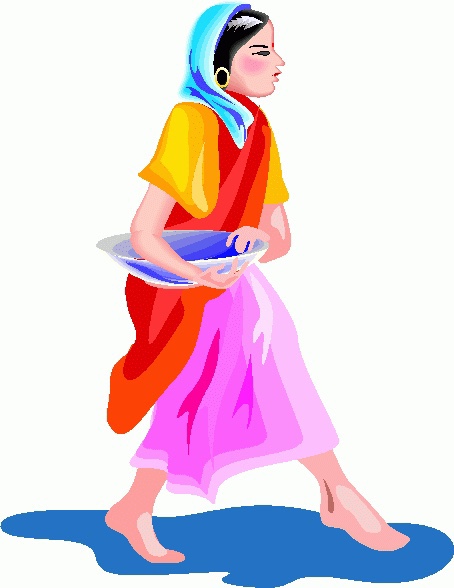
This also reminds us about how society has taught us that a mother only becomes “a true mother” when she is sacrificial. In India, people question a mother’s identity even if she chooses to wear a western outfit. Do women now even have to sacrifice on their preferred clothes? Women wearing western are seen “incapable “of raising a child? How does a simple piece of fabric decides a woman’s worth? Mothers are also judged by our patriarchal world for being into a particular profession, for example, those engaged in beauty and wellness or into travelling. How does a mother’s profession makes her “less of a mother”?
Photo Credits: Clipart Library.
It’s high time we stop romanticising women who suffer because of internalized patriarchy. The only thing our patriarchal society has to understand is that a woman’s personal choices are her own fundamental rights and she can exercise them as and when she wants.
BLUE FOR BOYS AND PINK FOR GIRLS? THIS WHAT A LOT OF US HAVE HEARD; GROWING.
THE DAY A GIRL IS BORN: HER ROOM , THE COT, WALLS OF HER ROOM AND AKIN ARE ALL DECORATED PINK. FOR A BOY THE SAME IS COLOURED BLUE. THIS DISCRIMINATION STARTS BY BIRTH. THIS DIVISION IS MADE BY BIRTH!
DISCRIMINATION IS NOT SOMETHING WHICH COMES NATURALLY TO US IT; IT WAS TAUGHT TO US. THE DIVIDE THAT WE ARE PREACHED IS WHY THIS DISCRIMINATION STARTS.
UNEQUAL WAGES, HUMONOUS GAP IN SEX RATIO, UNEQUAL OPPORTUNITY ARE ALL THAT TAKES PLACE DUE TO DISCRIMINATION.
CONSIDERING GIRL CHILD TO BE A BURDEN AND BOY CHILD TO BE A BOON , IS WHAT LEADS TO UNEQUAL GENDER RATIO.
CONSIDERING WOMENS TO BE LESS EDUCATED AND LESS ABLED IS DISCRIMINATION. TELLING BOYS NOT TO CRY, CAUSE “YOU ARNT A GIRL” , IS DISCRIMINATION.
STOPPING GIRLS FROM GOING OUT SIDE AT NIGHT, CAUSE ” YOU ARE A GIRL” , NOT LETTING US SPEAK BECAUSE, ” YOU ARE A GIRL”. NOT LETTING US WEAR DRESSES WE WISH TO WEAR, CAUSE ” YOU ARE A GIRL”. ASKING THEM TO WORK AT HOME AND NOT GO GOT CAUSE, “YOU ARE THE WOMEN OF THE FAMILY”.
STOPPING BOYS FROM EXPRESSING THEIR EMOTIONS , CAUSE ” YOU ARE A BOY”. PUTTING FINANCIAL BURDEN ON THEM CAUSE, ” YOU ARE THE MAN OF THE HOUSE”.
HOW CAN YOU LOVE BOYS? , ” YOU ARE A BOY”. HOW CAN YOU LOVE A GIRL? , ‘ YOU ARE A GIRL”. HOW COME YOU DONT KNOW WHOM DO YOU LOVE, ” YOU ARE A BOY/GIRL AND YOU HAVE TO LOVE A GIRL/BOY”. ‘YOU WANT TO BE A GIRL’, “YOU WISH TO BE A BOY”???
WHAT IS IT ?
IT IS DISCRIMINATION.
NOT ONLY GIRLS BUT BOYS TOO FACE IT AT TIMES.
UNTIL THIS DISCRIMINATION SUPPRESSES, THE WORLD WOULD NOT BE THE WAY : MAJORITY OF US WANT IT TO BE.
RESPECT ALL GENDERS; BE IT A GIRL, A BOY AND LGBTQ+
ALL OF US TOGETHER WILL BE ABLE TO DEVELOP A NATION WE ALL WISH FOR.
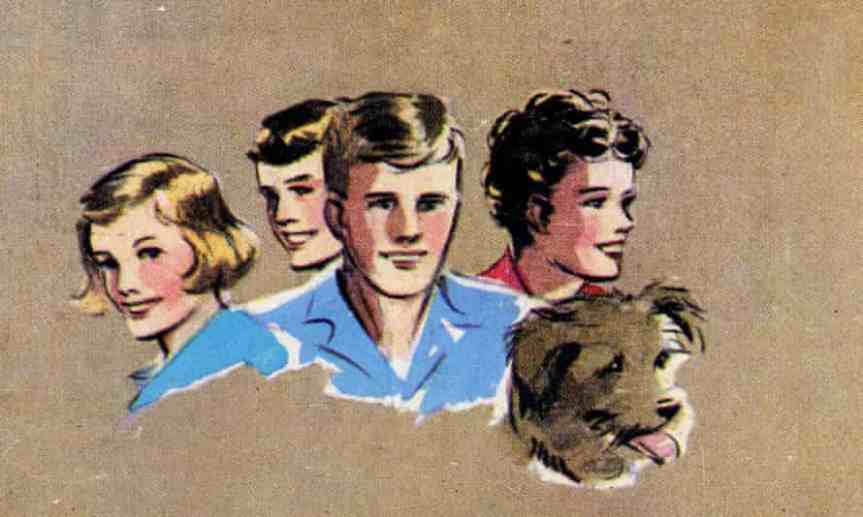
The Famous Five is a children’s adventure series written by the British author Enid Blyton. The first book The Five on a Treasure Island was published in the year (1942) after which 20 more books followed. With the sales totaling over a 100 million, it is considered to be an all-time best-seller in children’s literature. The series revolves around the lives of four children: Julian, Dick, Anne, Georgina (George), and her dog Timothy. Blyton’s portrayal of their carefree summers and adventures have always gained popularity among children. More often, Enid Blyton books are usually responsible for getting children interested in literature. Her use of simple language helps children easily understand the story. Her vibrant descriptions appeal to the readers in such a way that we long for adventures, matching the enthusiasm of the characters portrayed in her stories. Her storylines are intriguing and her peculiar way of dropping hints throughout the book which finally connects up as a shocking climax is always interesting.
“Far from being a set of fixed and stable values and roles assigned/imposed by society, gender is a performance or a role enacted by the individuals. This performance of gender is, of course, social in the sense that it is enacted, validated and accepted by the society.”
-Judith Butler (Gender Trouble)
In most cases, Blyton adheres to the dominant gender norms of her times; which is the Middle-class heteronormative British views which regulated the behaviour of women with respect to their appropriate domestic roles and activities for women like raising children and managing the household instead of careers. Blyton presents rather contradictory representation of gender roles. Mostly, she follows the dominant submissive roles of females but on the other hand, she also shows that there are alternatives where women have agency and freedom of choice. Her writing of ‘sexist’ characters are probably a result of suiting the story to the audiences of her time.
“Anne had a very happy morning. She arranged everything beautifully on the shelf… IT really was a splendid larder and dresser!… Then the little girl set to work to make the beds. She decided to make two nice big ones, one on each side of the cave.”
– Five Run Away Together (1944)
Anne is described as someone who is shy and timid. She’s not as adventurous as her brothers Julian and Dick or like her cousin George. She does all the domestic chores and is often in charge their food and other domestic needs. She is referred to by her brothers as a “Very good little house keeper”. She likes playing ‘house’ and thus, voluntarily does all the chores during their quests and she likes doing it. And she is extremely happy when she’s praised for her work. She takes pride being referred to a good housekeeper. Despite being the youngest of the four, she is often portrayed as the nurturer and care-giver. She selflessly takes care of everyone’s needs and plays a mother-like figure to the rest of the group. George’s mother, Fanny is portrayed in a similar such way and serves as a role-model figure for Anne. It is a given that she’s the youngest and perhaps that’s one of the reasons why she is babied. But there’s a clear hint of patronisation when her brothers address her. Through Anne, Blyton firmly reinforces the typical female gender stereotype that women are supposed to be gentle, caring, nurturing and subservient housekeepers who are not fit for a career-based life.
“Don’t you simply hate being a girl?” asked George.
“No, of course not,” said Anne.“You see – I like pretty frocks – and I love my dolls – and you can’t do that if you’re a boy.”
“Pooh! Fancy bothering about pretty frocks,” said George, in a scornful voice. “And dolls! Well you are a baby, that’s all I can say.”
Anne felt offended.
-Five on a Treasure Island (1942)
Blyton was a career woman, so her portrayal of George can be seen as her personal resistance to the dominant gender stereotype of her time. Georgina prefers to be called George, and is good at everything that is traditionally masculine like climbing trees, swimming, rowing boat, drawing carriages etc. She tries very hard to not be ‘girly’ and dresses up like a ‘boy’. In anyway, she wishes to be a boy as she prefers being called ‘Master’ instead of miss, loves it when people mistake her for a boy etc. It is evident that boys were valued more in the society than girls. And her desperate need to imitate a man can be seen a cry for help in an overtly patriarchal society. She wants to be treated with the same respect and dignity that her male cousins enjoy and so, she feels that the only means to achieve that is by imitating a man. On a separate note, many readers have read into George’s tomboyishness as signs of gender dysphoria. (Gender dysphoria involves a conflict between a person’s physical gender and the gender with which he, she or they identify with.) So, the idea of a tomboy fails to take into account the more contemporary idea of gender as a spectrum rather than a rigid binary. Considering the time that this was written in, it is unlikely that this is what Blyton meant. But nevertheless, it is empowering to interpret that perhaps George is a transman; a boy trapped in a girl’s body.
George despises any characteristic of weakness that is usually associated with women. She seeks power and respect while Anne is contented with whatever the society is willing to give her. There is an instance where George gives into something and the boys praise her for giving in gracefully or decently like a boy. At this, George becomes extremely happy for being identified as a boy and she feels that “She didn’t want to be petty and catty and bear malice as so many girls did.” This can be seen as a perfect example of gender hierarchy where having a “decent” behaviour is normal only for boys and that it’s an exception for girls. George is admired by the rest for being good at physical activities. She excels to the point that she even threatens the authority of the dominant male leader by being better. There are several instances where she’s better at swimming or rowing than the boys. This skilled behaviour empowers Anne and in those instances; she longs and hopes to be as skilled as George. George is a successful, independent girl who can do anything that a boy can do, and do it better. This can be seen as Blyton’s attempt at empowering little girls.
While Anne takes pride in fulfilling her duties as the default nurturing housekeeper, George is expected to help her out and engage in these domestic chores as well. And this internalised social norm creates a feeling of guilt within George while no such guilt exists in the minds of the boys. Now even if the boys do offer help, Anne dismisses it off as “No. That’s my job and George’s.” Anne is easily scared and is seen as a cry-baby. The group takes it for granted that she’s emotional and weak and is in need of protection. George on the other hand, suppresses all of her emotions in fear that it’d show her as a ‘girl’ which was considered inferior. She hates crying as crying is seen as something that only girls do – a sign of weakness if expressed by a boy. Aside from effecting George, this also imposes an unrealistic and unhealthy emotional and mental standard on the boys. For instance, Dick is shamed for crying or expressing any emotions that are not ‘manly’. This also reinforces toxic masculine traits on young boys.
George thus imitates traditional masculinity as an attempt to receive equal treatments. She over-compensates in this aspect to desperately hide any traces of being a girl. To an extent, it does grant her more privileges than the feminine Anne but this comes out as a positive reinforcement on her, and it proves the masculine authority over women of the time. Despite all her attempts, the fact remains that she is still ‘just a girl’ and that she only receives the freedom that her male peers allow her to enjoy. No matter how much she tries to imitate men, she’s still othered by them.
We see a contradictory portrayal of gender roles by Blyton. All the criticisms aside, we can also interpret this as her way of showing that girls can choose to be either Anne or George or a mix of both. Anne might have been typecast as the stereotypical girly girl, but even if it’s because of the inherent social norms, she loves it. She unapologetically takes pride in being herself and doing things that she enjoys, even if the others ridicule her and tease her for being ‘too weak’. On the other hand, even though it reinforces male superiority, George’s unique character proves that girls can do anything that boys can and actually be better at it. For the time that it was written in, it is clear that Blyton intended George’s character as someone who breaks away from tradition. Thus, we see that Blyton offers different perspectives on how girls can choose to be.
Gender in contrast to sex is a social construct. It is an established set of characteristics of society according to which people are categorized into males or females. Gender roles vary from society to society. There are many agencies present in society that facilitate the social construction of gender. Family is one such agency.
In this article, I will try to show the various processes through which gender identity is established in children by their families.
As a child grows the gender identity is established through four processes namely:
Reinforcement or moulding-Parents at home treat their children differently depending on their sex. Boys are normally given more freedom than girls while girls are treated more protectively. Any ‘effeminate’ behaviour on the part of the boy is highly discouraged and if such tendencies continue they are regarded as ‘psychological disturbances.’As a result of this training, children learn their sex roles effectively and quickly.
Opportunities-Opportunities go a long way in determining gender roles. While boys are encouraged to take up technical jobs girls are discouraged . Girls are encouraged to go along the ‘the feminine way’ and boys are expected to develop themselves along ‘the masculine way’.Boys are given cars, building blocks etc to play with while girls are given kitchen set, dolls to play with. The boys are expected to help their fathers and girls are expected to help their mothers.
Role modelling-It is a major mechanism of gender socialisation. By the age of three, nearly all children know whether they are male or female and by the age of four, they have very definite ideas of what masculinity and femininity must involve. A male child usually identifies with his father and a female child with her mother. The boys considering their father as a role model emulates them and the same is the case with girls who look up to their mothers. Role modelling is more effective when the child has a strong and warm relationship with the role model.
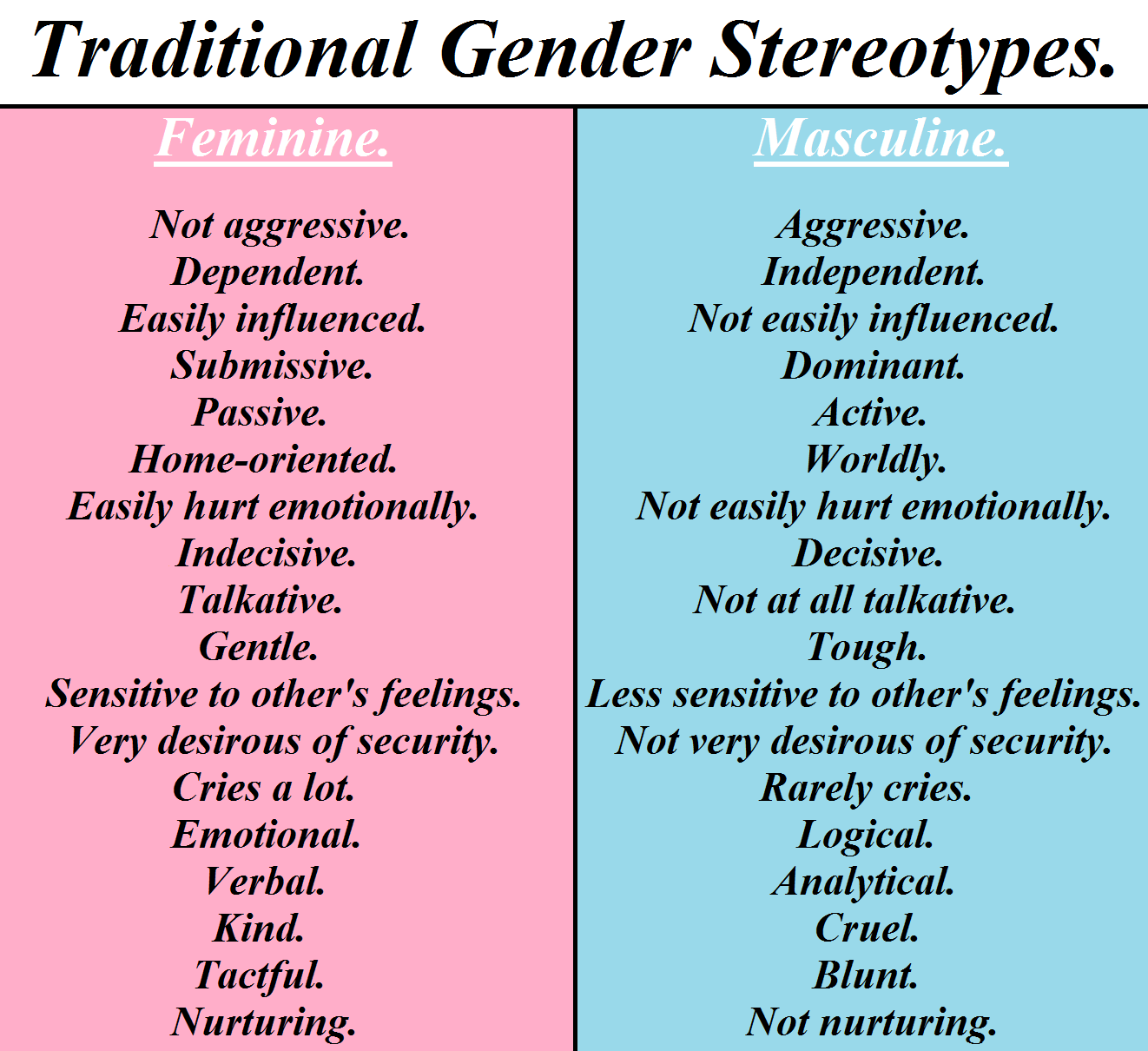
Explicit verbal instruction-Certain instructions also determine gender identity.” Boys don’t cry like girls”,” Pink is the colour of girls”,” You are a girl you should know how to cook” etc are some very common instructions. Hearing the same everywhere and on daily basis influences the mind of an individual and determines the gender identity.
Hence, families give the earliest reinforcement for acting appropriately according to one’s gender, and the environment continues to teach what is acceptable for men and women.
Gender equality – When the term is said, we immediately start thinking of men and women and the differences between them in our society. Do we think of other genders? Do we know how many genders are there apart from male and female? No or maybe few. But the actuality is there are different genders of people living all over the world. Without being aware of this, we just speak only about males and females or transgender at times. When we speak about the difficulties faced by them, are we also adding the opportunities and recognition they got along with this? No. It is our responsibility to give equal importance to the good and bad in our society. So, let’s try to understand the myths and facts about the some more commonly known genders – male, female and transgender.
MALE AND FEMALE
I would like to start with the good changes in society for women that are left unrecognized most of the time. Starting with the change in family backgrounds, we had certain roles and responsibilities to be played, as men should work in the outside world, and women were stereotyped to carry out household chores in the olden times. But now we live in the era where both men and women work in the corporate world and share the household responsibilities equally. So, no longer there exists a male chauvinistic society. Still, we talk about the olden scenario rather than the reality. Talking about social development is as important as raising a voice for the differences.
Moving on to the traditional differences, I already said women are stereotyped to play certain roles which are being criticized as a major difference. But the reality is women are said to carry out household chores as they are the physical exercises a woman can do. Those days there were no corporate jobs. All the men had to do physical work which women couldn’t carry out and she shouldn’t do as it affects her uterus. This was the scientific reason behind the traditional practices. And again, this is also misinterpreted as women are made to sit in their houses.
The next one is about male-dominant domains – Women emerge and maintain their place in every field making every domain equal for both genders. They work in prominent roles in the so-called male-dominant domains such as Army, Navy, Airforce, and many more. Still, certain fields come under the dominance of men even after women laid their step into it. For example, they have already started driving autos changing the tag “male dominant domains”. But we recognize this as their special talent than treating them equally. All men and women are equally bestowed by the lord and there is nothing special when a woman does the same a man does.
TRANSGENDERS
Coming to the transgenders, the myth is they are not given enough support and chances to prove themselves. But the fact is they are provided with opportunities to showcase their talents. The difference is between whether they utilize it effectively or not. They are persons like Kalki Subramaniam who changed her identity from transgender to an entrepreneur cum inspirational speaker and some individuals are asking alms from the people in public places instead of standing on their legs.
So, many such good things are happening around in our society. We should feel proud and accept the changes taking place rather than complaining blindly. NGOs are working for different genders other than the above-mentioned to grant the place they deserve in society. It all depends on how we perceive them. Let us look deep into them and together build a better society.
On Monday 28th December 2020, Arya Rajendran a 21-year-old graduate student from Kerala created history becoming the youngest Mayor in the country. She was elected as the Mayor of Thiruvananthapuram corporation, the largest urban body in Kerala. Arya, a second-year BSc Mathematicss student of the All Saints College here, won from the Mudavanmughal ward of the city corporation, bagging 2,872 votes, 549 more than the rival Congress candidate. The Thiruvananthapuram district secretariat of the ruling CPI(M) had recommended Arya Rajendran’s name for the post of Mayor as two of their Mayor candidates of CPI(M) failed to win the election from their respective wards. After she was elected Mayor, Arya took the oath administered by Collector Navjot Khosa inside the closely packed council hall of Thiruvananthapuram Corporation.
Arya Rajendran began her political journey as a child activist in Balasangam, the children’s wing of CPI(M) in Kerala. At present, she is the state president of Balasangam and state committee member of Student’s Federation of India (SFI).
As a staunch party activist hailing from a hardcore Marxist family, she said: “I have faced the election with confidence and courage. I am ready to shoulder any responsibility entrusted with me by my party. My dream is to take forward politics and my studies together.”
Arya being elected as the mayor of the capital city of Kerala in itself is a declaration from CPI(M), that age and gender will never be used as a constraint in determining a true leader. She is redefining the existing norms by setting an example to the youth, especially girls who are reluctant to come to the forefront of politics at a young age.
When asked about her role model, Arya was quick and clear with her answer.
“When it is a party like the LDF (Left Democratic Front) there will be many people to be cited as models – it is a party of cadres. Like our respected Chief Minister who has proven to be a crisis manager during these difficult times, and the influence he’s had on the common man. It is very important to be a leader who stands with the people at times of crisis,” she said.
Arya being elected as the Mayor of the capital city can be seen as the first of many changes from CPI(M) in Kerala ahead of the forthcoming assembly elections. After a stunning victory in the civic election across the state, CPI(M) is aiming to continue their winning streak to the upcoming assembly elections and thereby creating the history of becoming the first government to continue for two consecutive terms since its inception in 1950.
The Image of Man is written by George Mosses. He was an eminent German-American historian, who specialised in the history of Germany, the rise of Nazism and Fascism and Jewish History along with the relationship between the Jewish and non-Jewish sections of German society through history. In this book, Mosse traces the contours of the evolution of the ideal of manliness and manhood in modern Western European society.
The ideal of masculinity was, according to Mosse, served the dual purpose of being both a positive stereotype and also a social function. It was the adhesive that kept the disparate pieces of post-industrial human society from falling apart and it did this by reconciling the desire for progress with the need for order. Order because of its balanced and harmonious appearance, and progress through its decisiveness, activeness, and virility.
Much like the notions of European Nationalisms and indeed the idea of European civilisation as conceptualised through the historiography of the late 19th and early 20th centuries, the ideal of manliness fused industrialising Europe’s reverence for the sophistication and greatness of Classical Greece with its faith in Christianity in general – in addition to what Max Weber called the ‘Protestant Work Ethic’ in particular– and pseudo-Darwinian notions.
The ideal male body symbolized a healthy, well-ordered society. The ideal male was virtuous, honourable, and merciful like a good Christian man should be. The ideal male was also strong and courageous, chaste and exercised self-control, much like the legendary men of yore from the epics. This ideal of man has lasted through the decades, evolving with the times but sticking to its core essence, and continues to remain the dominant idea of man today not just in the West, but also in other parts of a now increasingly globalised and westernised world. Mosse dates the appearance of this positive male stereotype to the time of the Napoleonic Wars.
Mosses’ analysis is subtle. He does not equate masculinity with the exercise of raw power. Few historians can equal his ability to discern what differentiates one country from another. Very few historians in the world can match Mosses’ depth of knowledge enabling him to pinpoint the differences within one country and among different countries. The book primarily deals with the situation in Pre-Nazi Germany, but also covers the situation in France, Italy, England and the United States to a lesser extent. The comparisons that Mosse makes are constructive. Why were nearly all Frenchmen considered honourable enough to duel, while in German only five per cent could give satisfaction? What distinguished the Italian fascist masculine ideal from its German counterpart? Mosse provides stimulating and convincing answers for these questions but does not consider America in any depth.
The outbreak of the First World War further entrenched the notions of martial fervour and strength as essential to masculinity. Young men were encouraged to fight the war and defeat the enemy, while conscientious objectors were looked down upon as effeminate weaklings or deviants who were parasites in society. The role of women in the construction of the ideal of man is not considered particularly significant, although not entirely absent. The book looks at institutions such as the military, schools, and clubs, which helped in shaping the manliness ideal, but fails to look into the home in any detail.
Reasons for gender pay gap to exist : According to a research, there are four reasons for gender pay gap to exist. First is, companies hire more men in senior management roles compared to women. Secondly, part-time roles and caring responsibilities are shared unequally in the society. Thirdly, women prefer working in low-paid sectors and roles and lastly, women are paid less when compared to men in the same roles. Claudia Goldin and Henry Lee, Harvard University states that “When you look at the gap, it widens at the upper end. In fact, we see the largest differences at the very upper end, not at the lower end”. It might not seem like a big difference when a person who is supposed to earn 14 dollars per hour earns 10 dollars but it will make quite a big difference when a person who is supposed to make 300,000 dollars makes only 150,000 dollars. Companies are more comfortable and satisfied with hiring more men in senior management roles compared to women. A research found that it was likely for employers to hire men more than women in senior roles not because of prejudice but because they stereotype and rely on their perception that men are better performers at certain tasks. It was also stated that this can be divided as two faces of discrimination which is statistical discrimination which is because of beliefs about gender differences in skills, experience and abilities and taste discrimination which is a result of stereotypes or bias against certain group. Women find it very difficult to make it to the senior roles of their company and advance in their field. When compared to men women earn about 78 cents on the dollar. It is estimated that only 4.2% of women make it up-to being CEOs and only 19.2% of board members. A study suggests that women not being able to reach the top is because of the “broken rung”. It was found that for every 100 men promoted as manager only 72 women which accounts to men holding 62% of manager level roles whereas women hold only 38%. Therefore, this broken rung is an obstacle for the women even at the entry level. Also, this entry level inequality allows men to outnumber women in such roles and the number of women at the senior level roles decreases. Part time roles and caring responsibilities are shared unequally in the society. Women are more in the “nurturing” roles than the men, which makes them look more concerned and commited to their home and family and not their jobs.Gender inequalities in part time and in caring works also lead to a gap in pay. A cross-country analysis also found that in countries where women who spend more time on unpaid care, it was likely to have a larger gap in pay. And in part time jobs women earn only 65% of what men earn when they spend twice as much time in caring activities and only 40% when it was full time jobs. Women devote almost 60% of their time to household and caring activities, irrespective of whether they are employed, educated or earning. Another reason for this gap to exist is also because women prefer working on low wage sector and roles and employment of women in such roles are increasing day by day. An estimate of 7.6 million jobs were taken up by women in this low wage and female dominated sectors between the years 1994 and 2014 which almost a third of all new jobs in that period. The US Bureau of Labor statistics stated that the businesses which cater to provide care for the old and disabled, because the business increased almost four times between the years 1994 and 2014 . This shows that women prefer to work in low paid sectors and roles. The “women’s work” which involves cooking, cleaning,caring is always looked down and considered as something that does not require acknowledgement and this assumption has followed also to the marketplace. Though these jobs require energy, stamina , physical and mental strength, these jobs are never valued and women who play the most part in these jobs are often undercompensated . Therefore , it is not that the women who prefer low paid jobs but it is that these low paid jobs are undervalued. Also women are paid less compared to the men doing the same roles. Pay is decided based on gender and not on competence.
Ways to overcome the gender pay gap : Continuous pressure on gender pay gap situation has resulted in formulating certain strategies to overcome it. Some of these include designing senior work roles for all employees, irrespective of gender bias; developing quality flexible jobs that allow men and women to balance caring responsibility with their ambition; opening up all industries to flexible working arrangement and part-time jobs and lastly paying same remuneration to women and men for the same roles. With these strategies and others gender pay gap in the world can be reduced. There should be a balance and equality in maternity and paternity leave like in the case of Sweden where there is an availability for paternal leave on the basis of ‘use it or lose it’ which will develop a sense of sharing the caring responsibilities. A family friendly working condition must be created so that it will help the man and woman of the house to balance work and family. This will also help them choose working hours accordingly and accommodate their caring responsibilities. Unpaid work must be recognized as the national policy level so that a change in the organizational structure can be established .Minimum wage should be raised since this minimum wage is decreasing from the 1960s which is leading these wage ages to live in poverty. “The unwillingness to raise the minimum wage is really hurting women, because they are disproportionately represented at that level” says Isabel V Sawhill, a senior fellow of Economic studies. Raising this minimum wage will serve as a step to improve low wage jobs which are majorly female dominated jobs. This will not only reduce the level of poverty but also bridge the pay gap. “States with Equal Minimum Wages for Tipped Workers Have Smaller Wage Gaps for Women Overall and Lower Poverty Rates for Tipped Workers”. Equal pay laws need to be strengthened so that potential pay discrimination can be tackled and there can be transparency of pay between Co workers. There are a lot of steps organisations can do to ensure gender wage parity which includes checking wage parity right from the time a person is employed. Market analysis must also be conducted to have a check on wage parity. The company should also look for unconscious biases when there is assessment.The most important obstacle to wage equality, however, lies in our attitudes. When women value themselves enough to fight for their due, and when society values all human beings equally, the gender wage gap will cease to be an issue.Claudia Goldin and Henry Lee from the Harvard University say that it is important to divide labour at home. Change must begin at home and the couple should decide and balance their home and career as to who is on call at home and who is the office. Paying same remuneration to women and men for the same roles can also serve as an effective strategy as this will also help the women not to feel less about themselves and to feel a contentment in what they are doing.
For the most part of history, gender inequality is a heavily debated topic of discussion because from time immemorial it is always the men who have been the dominating force in the society which are reflected in the benefits they receive. Gender pay gap is the difference between wages and salaries of men and women. It is the median yearly pay of women working full-time and throughout the year compared to the remuneration of men in the same category. Other estimates are based on hourly or weekly earnings or specific to a group of women. The term ” equal pay ” came into spotlight in the year 1963 when Former President John F Kennedy amended the 1938 Fair Labor standard act which was a part of his New frontier program. But this did not put an end to the gender pay gap which has been existing from the time women came into the workforce during the industrial revolution. Even until the year 2017, women earned only about 81.8% of what men were earning. The gender pay gap has become a major topic of research with women playing a big role in labour force facing alarming pay iniquities. A survey conducted on a company’s database with responses from around 2000 working women drew a conclusion that about 68.5% of the respondents said that the management does not want to take any necessary steps to bridge this gap even if gender parity is a priority resulting in zero change. The article further said ” it’s not just ‘glass ceilings’, but also ‘glass floors’, ‘glass doors’ and ‘glass walls’ at the workplace”. Factors resulting in gender pay gap : Gender pay gap is one of the gold mine area of research in labour market because it has an immense impact on wages. Wages is the primary motive of any labour force and this wage is distributed unequally to the labourers based on their gender due to a number of factors . Factors that result in the gender pay gap include occupations segregation, direct pay discrimination and bias against working mothers. In addition, factors like disability, racial bias, age and access to education also affect the gap in gender pay. Occupational segregation : Occupational segregation is most often based on gender where, women in female-dominated occupations face two different marginalisation based on wage. Firstly the average wage of their jobs is lower than that in comparable male-dominated jobs, and secondly they earn less relative to men in the same jobs .Occupational segregation is evident within occupation differences in earnings rather than differences in occupation itself. To put an end to all occupational segregation caused by gender more than half of the women in the labour force will have to go in search of a different occupation. It is said that it will almost take would take 150 – 320 years for occupational segregation to reach the point of integration. Occupational segregation occurs majorly because of preconceived notions and assumptions on which gender is best suited for best role rather than considering the efficiency of the person. This has an effect on the economy because it limits the participation of the labour group due to which they inevitably adopt to sectors which correspond to their gender and also lowers the aggregate demand in the economy causing a fall in female wages and leading to the gap in gender. It was also found that UK attributes to about 17% of pay gap with occupational segregation by gender. The female dominated jobs include about 22 occupations which is compressed into seven groups which are Office and administrative assistance,Health care and care support, Cashiers,Food preparation, Early childhood care and education, Beauty and personal services, Maids and housekeeping cleaners who earn less than 15 dollars per hour which is less than what men earn in the same occupation and contributes to only about 93.5% of what men earn. Bias against working mothers : Bias against working mothers is a kind of discrimination women who are pregnant or who just delivered a baby encounter in their working space due to which they don’t get the pay they deserve. Working Mothers particularly face more discrimination and in account for most gender gap in wages in comparison to the non mothers. This status of being a parent had a toll only on the female applicants because motherhood is seen as culturally incompatible with being an ideal worker whereas fatherhood or the paternal wall bias does not exist because the man is looked as the package deal of being a good
father and a great employee and are expected to work even if they have a new born at home. An economic study proved that the difference in pay gap between mothers aged less than 35 and non mothers is greater than the gap between men and women. The various factors for this wage gap for working mothers included reduced investment in human capital, lesser effort and efficiency compared with non mothers. The “work effort ” hypothesis by Becker in the year 1985 concludes that it might be possible that mothers are less competent, committed and are less productive at work because they have spent all their effort and energy caring for their children. This discrimination can be based on three factors, which is skill, trait and behaviour. A research also said that this wage gap is likely to be prevalent either because working mothers are assumed to be less productive or because employers stereotype working mothers and discriminate them or sometimes the reason maybe the combination of the two. Direct pay segregation Direct pay segregation is when women are paid comparatively lesser than men and women for the same job. A survey in India came up with the finding that male members on company boards earned about 1.22 crores annually and the women board members earned only about 60 lakh annually which is two times lesser than what men boars members earn die the same job. This is because the society has a great influence on what roles each gender should posses and therefore puts a level of pay for each gender. Women are often considered inferior and less competent than their male counterparts therefore they are often paid lesser for the same work. This was believed to be because women had lesser human capital than men in terms of knowledge, skills and experience. A major example for this direct pay segregation is the pay gap between the women’s and men’s soccer team of the US. According to reports, the U.S. women’s soccer team are paid only $2 million for winning the FIFA Women’s World Cup while the men’s soccer team players are paid $35 million. This discrimination extends even towards the salary where women receive between $6,842 and $37,800, while the men receive up-to $50,000. Age: Age is one of the primary factors that widens this gap. Women are paid only about 90% of what men are paid on weekly basis which stays the same until around the age of 35 and then through retirement, women are paid 74–82 percent of what men are paid, depending on age. By the time workers reach 55–64 years old women are paid only 74 percent of what their male counterparts are paid. The gender gap is narrower when the working women are younger in age which includes women below their 35’s. This gap widens the most when they reach their forties reaching its widest point for women in their forties. The various reasons include that older women are found to have a have a lower level of education than the younger women who are already undergoing this wage gap and also because of their shorter span of time in their job tenure when compared to their counterparts. Disability Dsabled people experience low employment opportunities and even if they get an employment ,they receive less pay. The causes of the disability pay gap are complex. The rate of employment for people with disabilities was only 35% ,with 63% men and 57% women in the year 2014. Another factor for this gender pay gap is disability. It is measured by answering questions related to these six disabilities: hearing, vision, ambulatory(related to walking) , cognitive(understanding), self care and independent living. The bias on women with disabilities is more than that of men with disabilities, because they tend to paid lesser than men with disabilities even though both are are prone to disability. This disability does not just cater to physical disability but also mental and progressive illness. In the 2015 ACS report, it was found that disabled people made only 68% compared to what people without disabilities made. And among people with disabilities also women made only 69% compared to men. Racism : Racism in today’s world is a longstanding phenomenan which constitutes to double marginalisation in women because they face oppression because firstly they are women and secondly because they belong to a particular race. Though men who belong to a certain race also face this oppression, women are doubly taken advantage of. Most companies generally pay lesser to the women who are so called “black” or “discriminated “. A research stated that non-white people earn lesser than the whites which is associated with discrimination because they are believed to have poor command of the particular language or because they exhibit qualities which do not match with the culture they are put in. Therefore they become overqualified and underpaid for the job which results in the pay gap. The above factors give way to gender pay gap to exist.
The gender wage gap is real problem affecting women all over the world. This gap should not just be considered as an evidence of gender inequality and discrimination but rather as a statistical artifact of failing to adjust for factors that could drive earnings differences between men and women.
Why can’t I speak to opposite sex? What is the reason for it? What is it stopping many of us to atleast reply them in a gentle manner? I too don’t have a answer but the answer to my question lies in question itself. Is it shy or fear which is taking us far from here? These are common and frequently faced question by almost every individual.
When you can’t face you will never face it. If you face it now you will never have to face it again. Facing now will make you face it forever and will not make you feel as though you are facing it. If you have no wrong intention then you will feel free to talk. Feeling insecure about the opinion of the person whom you wanna talk will make you feel about yourself what you feel about the feel the other person gonna feel. But he’s never gonna feel because you will never gonna speak. It’s just a feeling that you feel that will be never felt by other person. If you can speak then speak, if you can’t speak then sont think about it. Wasting time on something that you will never do is something that you never get. It will happen all of sudden. If it is meant to happen it will happen for sure. Thinking about something that you can’t do unless some force make you do so is mere waste. Don’t wait for the moment because the moment happens when it wanted to.
Feel free to make a move. Have guts to do something that is not wrong. Doing something that never gonna harm others is acceptable and it’s never done because people beleive it as some wrong thing. Speaking to speak is good but speaking for the purpose of wrong intention is wrong. If you speak something that is not wrong then no one treats you in a wrong way. If you can’t speak and it’s not intended then atleast there will sometime in future where a situation arises where you have to speak because it had to happen. The only thing is stop wasting time on thinking on how to approach opposite sex to talk. It’s as simple as that. If you can, you will. If you can’t, you can’t. Don’t think of it, if it’s intended then it will happen. Daring at the moment will make you comfortable not inly to thay moment. The intensity of comfort increses as the fear decreases. Everything is normal unless you feel it so.






 Eduindex
You must be logged in to post a comment.