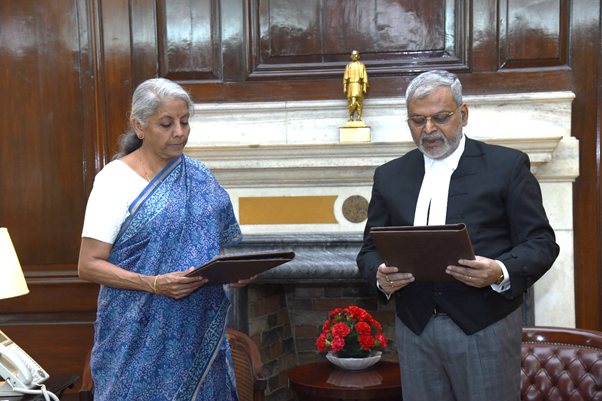
Union Minister for Finance and Corporate Affairs Smt. Nirmala Sitharaman administered the oath of integrity and secrecy to Justice (Retd.) Sanjaya Kumar Mishra as the President of the GST Appellate Tribunal (GSTAT), in New Delhi, today. Justice (Retd.) Mishra’s appointment marks the beginning of the operationalisation of the GSTAT, a crucial body for resolving GST-related disputes.
The GSTAT is the Appellate Authority established under the Central Goods and Services Tax Act, 2017, to hear various appeals under the said Act and the respective State/Union Territories GST Acts against the orders of the first appellate authority. It consists of a Principal Bench and various State Benches. As per the approval of the GST Council, the Government has notified the Principal Bench, to be located at New Delhi, and 31 State Benches at various locations across the country. Process for appointment of Judicial Members and Technical Members is already in progress.
The Tribunal will ensure swift, fair, judicious and effective resolution to GST disputes, besides significantly reducing the burden on higher courts. The establishment of the GSTAT would further enhance the effectiveness of the GST system in India and foster a more transparent and efficient tax environment in the country.
GSTAT’s first President, Justice (Retd.) Mishra was a former Chief Justice of the Jharkhand High Court and was selected by a Search-cum-Selection Committee headed by the Hon’ble Chief Justice of India.
In its first physical meeting in two years, the GST Council on Friday effected several long-pending tweaks in tax rates including an increase in the GST levied on footwear costing less than ₹1,000 as well as readymade garments and fabrics to 12% from 5%.
The new rates on these products, a decision on which had been deferred by the Council over the past year owing to the pandemic’s impact on households, will come into effect from January 1, Finance Minister Nirmala Sitharaman said.
The Council approved a special composition scheme for brick kilns with a turnover threshold of ₹20 lakh, from April 1, 2022. Bricks would attract GST at the rate of 6% without input tax credits under the scheme, or 12% with input credits.
While this will please States like Uttar Pradesh that had sought a special scheme for brick kilns, a decision on extending such a scheme for other evasion-prone sectors like pan masala, gutkha and sand mining was put off.
The Council also decided to extend the concessional tax rates granted for COVID-19 medicines like Amphotericin B and Remdesivir till December 31, but similar sops offered by the Council at its last meeting in June for equipment like oxygen concentrators will expire on September 30.
The GST rate on seven more drugs useful for COVID-19 patients has been slashed till December 31 to 5% from 12%, including Itolizumab, Posaconazole and Favipiravir. The GST rate on Keytruda medicine for treatment of cancer has been reduced from 12% to 5%.
Life-saving drugs Zolgensma and Viltepso used in the treatment of spinal muscular atrophy, particularly for children, has been exempted from GST when imported for personal use. These medicines cost about ₹16 crore, Ms. Sitharaman said.
Food delivery tax shift: The Council also decided to make food delivery apps like Swiggy and Zomato liable to collect and remit the taxes on food orders, as opposed to the current system where restaurants providing the food remit the tax.
Revenue Secretary Tarun Bajaj stressed this did not constitute a new or extra tax, just the tax that was payable by restaurants would now be paid by aggregators. Some restaurants were avoiding paying the GST even though it was billed to customers.
“The decision to make food aggregators pay tax on supplies made by restaurants from January 1, 2022, seems to have been done based on empirical data of under reporting by restaurants, despite having collected tax on supplies of food to customers,” said Mahesh Jaising, Partner, Deloitte India.
“The impact on the end consumer is expected to be neutral where the restaurant is a registered one. For those supplies from unregistered, there could be a 5% GST going forward,” he added.
Aircraft on lease: The GST Council has exempted Integrated GST levied on import of aircraft on lease basis. This will help the aviation industry avoid double taxation, the Finance Minister said, and will also be granted for aircraft lessors who are located in Special Economic Zones.
Goods supplied at Indo-Bangladesh border haats have also been exempted from GST.
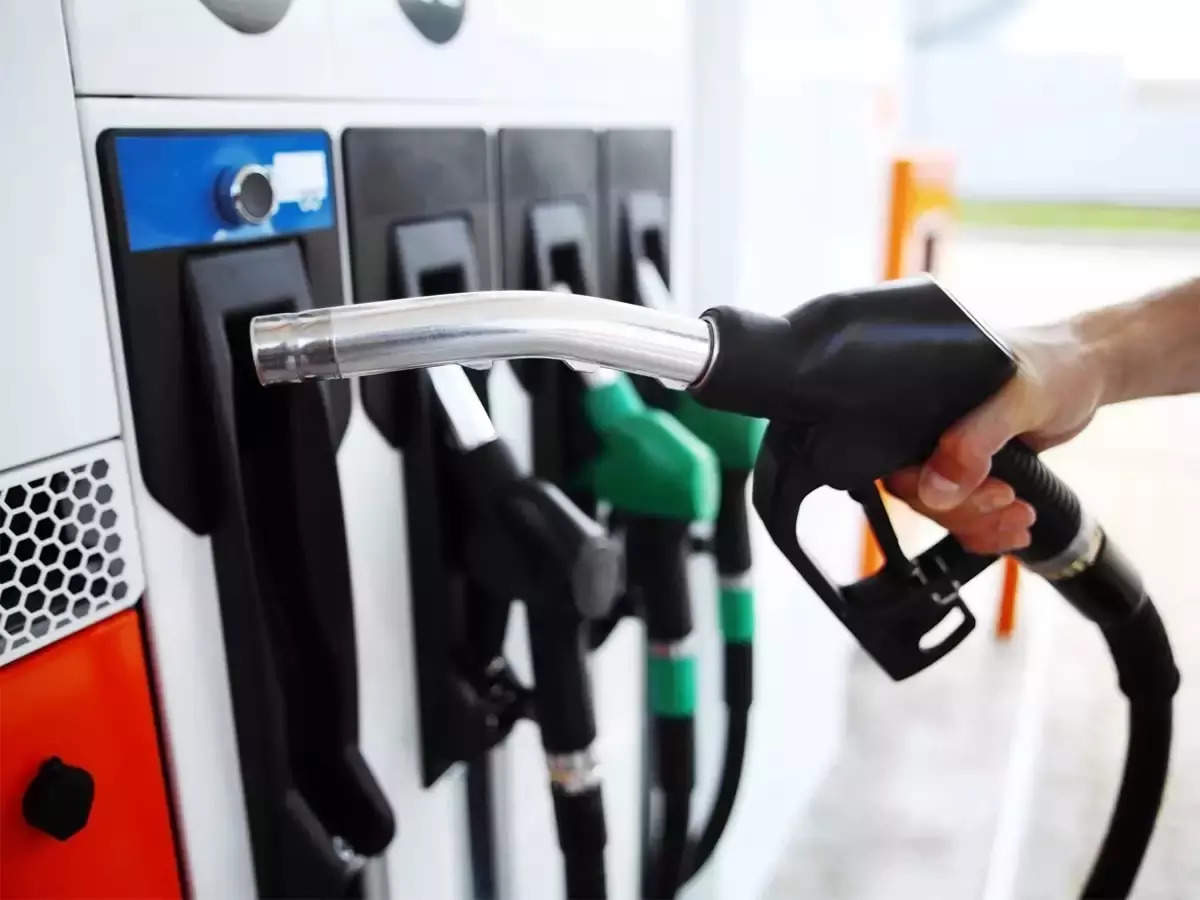
The soaring prices of petrol and diesel has time and again highlighted the question of whether bringing it under the goods and services tax (GST) regime will prove beneficial for the consumers. The much debated and speculated issue might finally come to a conclusion on Friday when the 45th GST Council meets in Lucknow. For the first time in 20 months, the GST council will be conducting a physical meeting. After December 18, 2019, all the GST Council meetings were done in virtual mode.
“We are not saying that we should bring petrol and diesel under GST immediately, we are basically asking states to suggest a timeline,” a government source told TOI ahead of the crucial meeting of the GST Council on Friday. When GST was introduced in July 2017, five commodities — crude oil, natural gas, petrol, diesel and aviation turbine fuel (ATF) — were kept out of the GST purview, considering the revenue dependence of the central and state governments on them.
As demand recovered, the spike in global oil prices pushed petrol and diesel prices to an all-time high, leading to demand for bringing it under GST. Fuel prices have been hovering at record levels on account of 41 increases in its retail rates since April this year. However, since the past 11 days there has been no revision in prices of petrol and diesel as oil marketing companies (OMCs) kept a tab on global oil prices. Accordingly, in Delhi a litre of petrol costs Rs 101.19 and diesel costs Rs 88.62. Similarly, price of petrol in Mumbai, Chennai and Kolkata stood unchanged at Rs 107.26, Rs 98.96, Rs 101.62 per litre, respectively.
Diesel price also remained unchanged. In Delhi, Mumbai, Chennai and Kolkata, the fuel was sold for Rs 88.62, Rs 96.19, Rs 93.26 and Rs 91.71 per litre respectively.
Prices are largely going to remain unchanged or get some relief by way of a cut in days ahead as global oil is expected to soften again. Oil cartel Opec and its allies have agreed to gradually raise production levels that should prevent upward price movement.
देश में ईंधन की कीमतों में लगातार बढ़ोतरी देखने को मिल रही है। लागतार बढ़ रहा रेट थमने का नाम नहीं ले रहा, जिससे जनता काफी परेशान है। कच्चे तेल के दामों में जिस तरह से अंतरराष्ट्रीय बाजार में तेजी देखने को मिल रही है,वैसे ही घरेलू बाजार में पेट्रोल और डीजल के दाम भी आसमान छू रहा है। भारत में ईंधन की कीमतें रिकॉर्ड स्तर पर है।
5 अक्टूबर 2021 यानी कि मंगलवार को 1 दिन की स्थिरता के बाद भारतीय तेल कंपनियों ने डीजल और पेट्रोल के रेट में इजाफा कर दिया है। बात करें पेट्रोल की तो 25 पैसे प्रति लीटर एवं डीजल 30 पैसे प्रति लीटर और अधिक महंगा हुआ है। वहीं अक्टूबर में हरदिन भाव बढ़ता रहा है। अब तक केवल 1 दिन डीजल और पेट्रोल का रेट स्थिर रहा है।
इंडियन ऑयल कॉर्पोरेशन के मुताबिक़, ईंधन के दामों में वृद्धि के बाद दिल्ली में पेट्रोल की कीमत 102.64 रुपए प्रति लीटर एवं डीजल 91.07 रुपए प्रति लीटर तक पहुंच गया है। हालांकि,देश के चारों महानगरों की तुलना करें तो मुंबई में डीजल-पेट्रोल सबसे अधिक महंगा है। बता दें, जुलाई एवं अगस्त के महीने में कच्चे तेल के दामों में कुछ खास बदलाव नहीं आया था। इसलिए 18 जुलाई से 23 सितंबर तक तेल कंपनियों ने मूल्य वृद्धि नहीं की थी। इस दौरान पेट्रोल 0.65 और डीजल 1.25 की कीमतों में कटौती की गई थी। फिर अंतर्राष्ट्रीय बाजार में निरंतर बढ़ती कीमतों के कारण 28 सितंबर से पेट्रोल और 24 सितंबर से डीजल की कीमतों में बढ़ोतरी की गई है।
अंतरराष्ट्रीय बाजार में पेट्रोल और डीजल की कीमत क्रूड की कीमत के आधार पर प्रतिदिन अपडेट होती है। कीमतों की समीक्षा करने के बाद ऑयल मार्केटिंग कंपनियां रोज डीजल और पेट्रोल के दाम निर्धारित करती है।
“One nation, one election”, might sound good as well as appealing, but it will have a number of anti-democratic consequences. It’s true saying that simultaneous elections for Lok Sabha and State Assembly could save time, energy and money of our country, but on the other side it can prove to be harmful for our country as well as democracy.
Apart from logical considerations, which cannot be a serious reason for a major change to the basic structure of the Indian polity, the most seductive argument in favor of simultaneous elections is the allure of Modi’s phrase, “One nation, one election.” This matches the “one nation, one tax” rationale for the goods and services tax (GST), which, of course, came into force via its own constitutional amendment on 1 July, 2017.
While one can debate the economic costs and benefits of GST, the analogy with elections is logically flawed. Indeed, the concept of simultaneous elections fundamentally runs against the grin of our Westminster-style federal political union. “One nation, one election” would make sense if India were a unitary state. But we are a union of states, which is philosophically and politically an essentially different conception of the Indian nation-state. With this, let us discuss the disadvantages of holding simultaneous elections in India:
Rule by the majority is the cardinal principle of Indian democracy. The concept of simultaneous elections goes against this principle since if elections are held simultaneously then the Lok Sabha and the state legislative assemblies cannot be dissolved before completing their full period of 5 years even if the ruling party is reduced to a minority hence it will go against the federal principles.
It will disown today’s reality of fragmented quality at the state level where coalitions are the order of the day. So, simultaneous elections try to bring in the presidential type of governance where the state assembly is no longer can decide their own path and have to be in existence for 5 years with a minority party in power.
Even if elections were to take place simultaneously, parties contesting in only one state would anyway be similarly burdened. So, it probably takes care of only national parties. And the logistic requirement of movement of the requisite security forces. This constant would remain even if simultaneous elections were held.
So, it can be said that holding simultaneous elections is certainly desirable but not feasible. The question which arises is, “Why should the states suffer from the electoral decisions taken at the centre?” It has been said that simultaneous elections would curtail government expenditure but the election commission has updated that for this it would require the procurement of 24 lakh EVMs and an equal number of VVPAT units which is double the number required to hold only parliamentary polls. So, the first objective is not met.
Therefore, notwithstanding the benefits of simultaneous elections highlighted above, the cost to the Indian democracy in terms of playing havoc with the cardinal principle of rule by the majority will be far more than any savings to be realized to the public exchequer. Rather other alternatives should be explored to reduce election-related expenses like state funding of elections, decriminalization of politics, bringing in transparency in political funding by linking Aadhaar card to the election Identity card which has still not been done, etc.
India opted for quasi-federal structure after Independence. After Independence from 1947 to 1967, India experienced the centralized federalism. From 1967 to 1990, India witnessed confrontational federalism due to the emergence of other party governments at the state level. Since 1990, Co-operative federalism has been developed. The present NDA government has been focusing on the new concept of competitive federalism along with co-operative federalism for higher growth of the country.
In competitive federalism, states would compete with each other over a broad-range issues to provide citizens various services in a hassle-free manner. The policy of one-size-fit-all is replaced with different policies of various states based on their own priorities within the state. This spirit of competition has led to lack of inter-state mutual assistance. The NITI Aayog was formed to empower and strengthen the state governments. It also appointed regional councils to create cooperation among two or more states facing a common set of problems or amicably settle disputes.
While the competition between states, reflected in the World Bank’s Ease of Doing Business index, has generated a lot of enthusiasm, this must be a continuing exercise. There are only few well-off states like Maharashtra, Gujarat, and Tamil Nadu which are competing. The proposed GST law may help some of the less productive states to raise the revenue. But the opposition of few well-off states with respect to revenue loss in implementation of GST system points that there is lack of will in participating in the process of competitive federalism.
We’ve seen various inter-state water disputes such as Krishna water disputes involving Maharashtra, Karnataka and Andhra Pradesh, Narmada water disputes involving Rajasthan, Gujarat, M.P, and Maharashtra, Cauvery water disputes involving Karnataka, Kerala, Tamil Nadu, Puducherry, and various others. For this, under Article 263, an inter-state council was established. The Sarkaria Commission on center-state relations (1983-87) made a strong case for the establishment of a permanent inter-state council. Article 301 to 307 in Part 13 deals with the trade, commerce and intercourse within the territory of India, breaking all the border barrier between the states. Zonal councils have also been established in 1956 to narrow the gap between the states. Cases such as Cauvery water dispute and Sutlej Yamuna link canal issue have seen non-mutual assistance between the states to a wider extent.
Thus, it can be said that co-operative and competitive federalism are two sides of the same coin. This spirit of competition has led to the lack of mutual assistance between and among the states. It is competition with co-operation that will drive the real change.
(Photo: SignalX) As per the Reserve Bank of India (RBI), India’s banking sector is sufficiently capitalized and well – regulated. Credit, market and liquidity risk studies suggest that Indian banks are generally resilient and have withstood the global downturn well. The Indian economy is a mixed economy. It is known to be the world’s sixth largest in terms of nominal GDP. The legal environment plays a vital role in the economic development of a country.
After GST, IBC is the second most crucial reform in the legal setting of India. It was implemented through an act of Parliament. The law was necessitated due to huge pile up of non-performing loans of banks and delay in debt resolution. Insolvency resolution in India took 4.3 years on an average against other countries such as U.K (1 year) and U.S.A (1.5 years), which is sought to be reduced besides facilitating the resolution of big-ticket loan accounts. Two years on the IBC has succeeded in a large measure in preventing corporates from defaulting on their loans. The IBC process has changed the debtor-creditor relationship. A number of major cases have been resolved in two years, while some others are in advanced stages of resolution.
With a strict 180+90 days ‘resolve-or-liquidate’ diktat, the Code has received commendation, not only from the Indian Industry, but from the global fraternity, including The World Bank and IMF, and has materially contributed to India’s 30 place jump in 2018’s Ease of Doing Business ranking. IBC truly enforces the concept of ‘creditor in control’ instead of ‘debtor in possession’, and maximize value recovery potential corporate debtors. “Capitalism without Bankruptcy is like Catholicism without Hell,” said Frank Borman, renowned astronaut and erstwhile chairman of a failed US airline. As such, the institutions established by the state should promote freedom to start a business (entry), to run the business (level playing field) and to exit/discontinue the business. The reforms of the 1990s focused on freedom of entry (dismantling the license-quota raj) and then, from the beginning of this century, the focus shifted to freedom of continuing business. The third leg, which is freedom to exit, has now been provided in the shape of the IBC, to provide a mechanism to stressed businesses to resolve insolvency in an orderly manner.
The IBC seeks to consolidate scattered and unstructured jurisprudence on insolvency prevalent in various Acts, like the Presidency Towns Insolvency Act, 1909, Sick Industrial Companies Act, 1985, Limited Liability Partnership Act, 2008, Companies Act, 2013, etc. On the positive side, we have witnessed that debtors were reconciling with the ‘creditor incontrol’ scenario, with the committee of creditors (CoC) becoming all- powerful in the resolution process.
It was the first time that the government and Reserve Bank of India were on the same page for effective resolution of the problem of bad debt and improving overall financial discipline in the way business is conducted in India. As Nelson Mandela said, “I never lose; I eitherwin or I learn.” The jury is still out on the IBC even though the World Bank has acknowledged the efforts.
WHAT IS INSOLVENCY AND BANKRUPTCY CODE, 2016?
“In One line we can say that in case of a default by the equity owners to meet their debt obligations, control is transferred to the creditors and equity owners take a back seat.”
The insolvency and Bankruptcy code, 2016 (IBC) is the bankruptcy law in India and whose aim is to consolidate the existing framework by creating a single law for insolvency and bankruptcy and amend the laws relating to the entities in India with the time being enforce. The consolidation of laws in India is not a new concept like GST was framed by consolidating 17 laws into one. This code was introduced in Lok Sabha in December 2015. It was passes by Lok Sabha on 5 May 2016.
The purpose of this act can be divided into the following two goals:
1. Making sure that the insolvency proceedings can be completed within a minimum amount of time.
2. Making sure that the financial risks to the foreign investors is decreased. Its primary goal was to consolidate insolvency resolution process for LLPs. Companies, individuals and partnerships. That being said, the purposes of these codes, being a part of The Companies (Amendment) Act 2017, are the following:
1. Establishing and amending the laws associated with reorganizing and resolving the insolvency of entities like partnership firms, individuals and corporate persons.
2. Providing resolution in a time bound manner.
3. Promoting entrepreneurship in India.
4. Maximizing the availability of credit in the Indian market.
5. Establishing Insolvency and Bankruptcy Board in India.
The four pillars of supporting institutional infrastructure, to make the Insolvency and Bankruptcy Process work efficiently are:
The regulator – The Insolvency and Bankruptcy Board of India (IBBI)
Adjudicating Authority (AA):
National Company Law Tribunal (NCLT) – For Corporate, i.e., Companies and Limited Liability Partnerships
National Company Law Appellate Tribunal (NCLAT) will act as Appellate Authority.
Debt Recovery Tribunal (DRT) – For Individuals and Unlimited Partnership Firms
A private industry of Insolvency Professionals (IPs) with oversight by private Insolvency Professional Agencies (IPAs)
A private industry of Information Utilities (Ius)
THE ROUTE TO THE IBC
The main objective of the act is to consolidate and amend the laws relating to reorganization and insolvency resolution of corporate persons, partnership firms and individuals in a time bound manner for maximization of value of assets of such persons, to promote entrepreneurship, availability of credit and balance the interests of all the stakeholders including alteration in the order of priority of payment of Government dues and to establish an Insolvency and Bankruptcy Board of India, and for matters connected therewith or incidental thereto.
IBC provides for a time-bound process to resolve insolvency. When a default in repayment occurs, creditors gain control over debtor’s assets and must make decisions to resolve insolvency. When a default in repayment occurs, creditors gain control over debtor’s assets and must make decisions to resolve insolvency. Under IBC, debtor and creditor both can start ‘recovery’proceedings against each other.
It is a comprehensive Code enacted as the Preamble states, to
“consolidate and amend the laws relating to reorganization and insolvency resolution of corporate persons, partnership firms and individuals in a time bound manner for maximization of value of assets of such persons, to promote entrepreneurship, availability of credit and balance the interests of all the stakeholders including alteration in the order of priority of payment of Government dues and to establish an Insolvency and Bankruptcy Board of India, and for matters connected therewith or incidental thereto”.
The Preamble clearly states that the legislative intent to incorporate this code is
Firstly, to remove the ambiguity that had been prevailing in the previous legislations;
Secondly, to prevent unnecessary delays and to ensure fast dismissal of matters, i.e., within 180 days;
Thirdly, to prevent loss to corporate creditors due to depreciation of assets of the insolvent company;
Fourthly, to establish a balance among the interests of the various stakeholders, and
Lastly, to create a common forum to deal with such matters.
IMPACT OF IBC
The Covid-19 pandemic has been driving corporate failures around the world, including in India. The global financial news reveals an increase in bankruptcies due to the Covid-19 induced global lockdowns. While the bankruptcies are unfortunate, a recognition of the bankruptcies facing companies in the face of the collapse and an efficient resolution of such bankruptcies (which will allow both the companies and creditors involved to move along) is vital to rejuvenating the economy.
In the light of the Covid-19 pandemic and business failures globally, it is important that financially distressed companies can still access the credit market thanks to a strong bankruptcy system and survive under stressed scenarios. Using a panel of 33,845 non-financial firms for the period of 2008-19 and by exploiting a difference-in-differences analysis, a study has been undertaken revealing the impact of the IBC policy on the availability of long- and short-term financing for, and the cost of, credit of distressed firms as compared to their non-distressed counterparts. As in most emerging markets, India’s debt market is dominated by state-owned banks and the domestic credit to private sector by banks (percentage of GDP) is 50 per cent in 2019 compared to a world average of 90.5 per cent (Source: World Development Indicators). Recent statistics from World Bank’s Doing Business Data show the creditor rights index in India improving from 6 in 2014 to 9 in 2019 compared to the world average of 5.67 in 2019.
Bose et al. (2021) study shows that after the introduction of the IBC reform, the access to long-term debt increased by 6.3 per cent, short-term debt increased by 1.4 per cent, while the cost of borrowing declined for distressed firms. This is the first study that provides evidence on the impact of the IBC policy on the “credit channels” of distressed firms. The enactment of the code has helped to enforce discipline in the country’s credit culture. IBC has created a credit culture that discourages defaults. There has been a change in the business culture as well: there is now an understanding that when things go wrong, companies will not get an automatic rescue package from the taxpayer funds. The objective of IBC was to create conditions so that credit could be generated from the domestic market and investments drawn from the international market. In order to achieve those objectives, it was necessary to create a culture of deterrence against default. The practice of dragging lenders to court to delay the repayments of outstanding loans is slowly coming to an end. India’s Insolvency and Bankruptcy Code is ensuring that lenders get repaid on time and this is making India a more attractive investment destination.
IBC has played a great role in macroeconomic objectives providing India a strong stand in the global platform. After the enactment of the code, the FDI has substantially increased. In 2012-13, the FDI of India was 34298 US$ Million and just after enactment of the code it rose to 61463 US$ Million in 2017-18 which is growing by approximately 80%. There has been an increase in Mergers and Acquisitions activity in the country. It also led to the establishment of Information Utilities (IUs) which further accelerated the development of the credit market of India.
In previous, no law prevented the operational creditors but under the code, there is a provision that the operational creditors (domestic as well as international) have right to file suit against the default. Thus, the code provides right to the foreign creditors which will enhance the economic transactions of India and others.
MEASURES TAKEN DUE TO COVID
The global COVID-19 pandemic and its consequential lockdown are having an economic ripple effect on the business of Indian citizens. To mitigate its impact, in the last tranche of economic reforms, the Central Government made numerous changes upon the Insolvency and Bankruptcy Code, 2016 (“IBC”), and its adjudicatory processes, which will have wide-ranging ramifications. In exercise of its powers under Section 4 of the IBC, the Central Government has raised the threshold for invoking insolvency to Rs 1 crore from the existing Rs 1 lakh. This provision will relegate MSMEs to civil remedies for debt recovery and may have an effect of excluding it under the IBC. At this cost, the amendment may have successfully addressed the issue of frivolous recovery claims initiated under the grab of insolvency processes due to the seemingly low original threshold of rupees one lakh.
The government has come up with IBC 2020 to streamline the CIRP, protect last-mile funding, and boost investment in financially distressed sectors.The changes put a threshold condition for initiating CIRP by the financial creditors, who are allottees under a real estate project. It also imports safeguards for successful bidders, the corporate debtors, and its assets from the offenses of the former promoters or management.
India took decades to implement such an effective insolvency regime and improve its global ranking of doing business. It promotes entrepreneurship and tries to balance the interest of the various stakeholders.
CONCLUSION
Resolving insolvency in a strict time bound manner is an important challenge for any country to maintain a healthy and robust economic system. This study has made an attempt to understand and analyze the impact of the IBC on the credit sector of the economy. The study emphasizes the fact that IBC is a big step in the direction of resolving the issues of Non-Performing Assets and hence will act to the rescue of banks which have been facing a lot of difficulties due to corporate defaults. The number of companies that have benefitted from this law is large, there has been improvement in the speed as well as the success rate of the resolution process.
There is still a long way to go ahead and as the saying goes,
“We have to acknowledge the progress we made, but understand that we still have a long way to go. That things are better, but still not good enough.”
Everyone may have heard about GST up to this point. GST is for Goods & Services Tax, which is a national tax levied on the manufacture, sale, and consumption of goods and services that makes no distinction between goods and services for taxation. It will largely replace all indirect taxes levied by the Indian central and state governments on goods and services. In India, The Atal Bihari Vajpayee government proposed the introduction of GST in 2000. The Goods and Service Tax Act was passed by Parliament on March 29, 2017, and into effect on July 1, 2017. To put it another way, the Products and Service Tax (GST) is a tax that is levied on the provision of goods and services.
For the purpose of tax collection, it was split into five tax slabs: 0%, 5%, 12%, 18%, and 28 percent. Individual state governments tax petroleum goods, alcoholic beverages, electricity, and real estate separately. Rough precious and semi-precious stones are taxed at a special rate of 0.25 percent, while gold is taxed at 3%. Furthermore, a 22 percent cess or other charges on top of the 28 percent applies to few things, such as aerated drinks, expensive cars, and tobacco products, are subject to GST. Pre-GST, most commodities had a statutory tax rate of around 26.5 percent; post-GST, most goods are likely to have a tax rate of around 18 percent.
OBJECTIVES OF GST:
One of the main goals of the Products and Service Tax (GST) is to avoid double taxation or the effects of taxes on the cost of production and delivery of goods and services. The elimination of cascading effects, i.e. tax on tax till ultimate consumers, will considerably improve the competitiveness of original goods and services in the market, resulting in a positive influence on the country’s GDP growth. It is not only desirable but also necessary, to implement a GST to replace the existing numerous tax structures of the federal and state governments. It would be conceivable to offer full credit for input taxes collected if multiple taxes were integrated into a GST system. GST, or Goods and Services Tax, is a destination-based consumption tax based on the VAT idea.
GST Rate of other countries:-
Australia 10%
France 19.6%
Canada 5%
Germany 19%
Japan 5%
Singapore 7%
New Zealand 15%
Types of GST :
1. CGST (Central Goods and Service Tax)
The Central Goods and Services Tax (CGST) is a federal tax on goods and services. It applies to vendors who do business within the state. The collected taxes will be shared with the central authority.
2. SGST (State Goods and Service Tax)
A state’s Goods and Services Tax (SGST) is a tax on goods and services. It applies to vendors who do business in the state. The collected taxes will be distributed to the appropriate state authority.
3. IGST (Integrated Goods and Service Tax)
The Integrated Goods and Services Tax (IGST) is a type of tax that applies to both goods and services. It is relevant to suppliers who do interstate and import operations. The collected taxes will be split between the federal and state governments.
4. UTGST (Union Territory Goods and Services Tax)
The UTGST is levied on supplies made in the Union Territories of the Andaman and Nicobar Islands,
Chandigarh, Dadra and Nagar Haveli, Daman and Diu, and Lakshadweep.
GST Advantages
GST is an easy-to-understand tax that also reduces the number of indirect taxes.
There will be no hidden taxes and the cost of conducting business would be cheaper because GST will not be a burden to registered shops.
People will benefit because prices will drop, which will boost businesses since consumption will rise.
Separate taxes for goods and services, as is the current taxation system, necessitate the split of transaction values into the value of products and services for taxation, resulting in increased complexities, administrative, and compliance expenses.
When all of the taxes are integrated into the GST system, the tax burden can be divided evenly between manufacturing and services.
GST will be levied only at the ultimate point of consumption, following the VAT principle, and not at numerous stages along the way (from manufacturing to retail outlets). This will aid in the removal of economic distortions and the creation of a common national market.
GST will also aid in the creation of a transparent and anti-corruption tax administration. Currently, a tax is assessed when a finished product leaves a factory, which is paid by the manufacturer, and it is levied again when the product is sold at a retail outlet.
GST is supported by the GSTN, a fully integrated tax infrastructure that handles all aspects of the tax.
Disadvantages
According to some economists, GST in India might have a detrimental impact on the real estate sector. It would raise the cost of new homes by up to 8% and diminish demand by roughly 12%.
According to some experts, CGST (Central GST) and SGST (State GST) are simply new names for the Central Excise/Service Tax, VAT, and CST. As a result, the number of tax levels does not decrease significantly.
Currently, only 4% of retail products are subject to tax. Garments and clothing may become more expensive after the GST is implemented.
It would have an impact on the aviation sector. Currently, service taxes on airfares range from 6% to 9%. With GST, the rate will rise to over 15%, nearly doubling the tax rate.
The entire ecosystem would experience teething problems and learn as a result of the adoption and migration to the new GST system.
GST is a destination-based tax on consumption of goods and services. It is proposed to be levied at all stages right from manufacture up to final consumption with credit of taxes paid at previous stages available as set off. In a nutshell, only value addition will be taxed and the burden of tax is to be borne by the final consumer.
A few important points of consideration are given below:
The tax would accrue to the taxing authority, which has jurisdiction over the place of consumption which is also termed as place of supply.
1. The Existing Taxes that are proposed to be Subsumed under GST-
The GST would replace the following taxes:
(i) Taxes currently levied and collected by the Centre:
a. Central Excise duty
b. Duties of Excise (Medicinal and Toilet Preparations)
c. Additional Duties of Excise (Goods of Special Importance)
d. Additional Duties of Excise (Textiles and Textile Products)
e. Additional Duties of Customs (commonly known as CVD)
f. Special Additional Duty of Customs (SAD)
g. Service Tax
h. Central Surcharges and Cesses so far as they relate to supply of goods and services
(ii) State taxes that would be subsumed under the GST are:
a. State VAT b. Central Sales Tax
c. Luxury Tax
d. Entry Tax (all forms)
e. Entertainment and Amusement Tax (except when levied by the local bodies)
f. Taxes on advertisements
g. Purchase Tax
h. Taxes on lotteries, betting and gambling i. State Surcharges and Cesses so far as they relate to supply of goods and services.
The GST Council shall make recommendations to the Union and States on the taxes, cesses and surcharges levied by the Centre, the States and the local bodies which may be subsumed in the GST.
2. The Status of Tobacco and Tobacco Products under the GST Regime-
Tobacco and tobacco products would be subject to GST. In addition, the Centre would have the power to levy Central Excise duty on these products.
3.Type of GST proposed to be Implemented-
It would be a dual GST with the Centre and States simultaneously levying it on a common tax base. The GST to be levied by the Centre on intra-State supply of goods and /or services would be called the Central GST (CGST) and that to be levied by the States would be called the State GST (SGST). Similarly, Integrated GST (IGST) will be levied and administered by the Centre on every inter-state supply of goods and services.
4. Need for Dual GST- India is a federal country where both the Centre and the States have been assigned the powers to levy and collect taxes through appropriate legislation. Both the levels of Government have distinct responsibilities to perform according to the division of powers prescribed in the Constitution for which they need to raise resources. A dual GST will, therefore, be in keeping with the Constitutional requirement of fiscal federalism.
5. Authority to Levy and Administer GST- Centre will levy and administer CGST and IGST, while states will levy and administer SGST.
6. Benefits from GST- Introduction of GST would be a very significant step in the field of indirect tax reforms in India. By amalgamating a large number of Central and State taxes into a single tax and allowing set-off of prior-stage taxes, it would mitigate the ill effects of cascading and pave the way for a common national market. For the consumers, the biggest gain would be in terms of a reduction in the overall tax burden on goods, which is currently estimated at 25%-30%. Introduction of GST would also make our products competitive in the domestic and international markets. Studies show that this would instantly spur economic growth. There may also be revenue gain for the Centre and the States due to widening of the tax base, increase in trade volumes and improved tax compliance. Last but not the least, this tax, because of its transparent character, would be easier to administer.
7. Concept of IGST- Under the GST regime, an Integrated GST (IGST) would be levied and collected by the Centre on inter-State supply of goods and services. Under Article 269A of the Constitution, the GST on supplies in the course of inter-State trade or commerce shall be levied and collected by the Government of India and such tax shall be apportioned between the Union and the States in the manner as may be provided by Parliament by law on the recommendations of the Goods and Services Tax Council.
8. Deciding Authority for levy of GST- The CGST and SGST would be levied at rates to be jointly decided by the Centre and States. The rates would be notified on the recommendations of the GST Council.
Tax reforms must be implemented. To improve revenue performance factors like globalization, large informal sectors and policies of neighboring countries must be considered.
The multiplicity of taxes at the state and central levels resulted in a complex indirect tax structure in the country that is ridden with hidden costs for trade and industry. It is to simplify this very indirect tax structure that the government has attempted several tax policy reforms at different points of time. This objective furthered the idea of ‘One Nation One Tax’ and the introduction of Goods and Services Tax (GST) into the financial system. The passing of GST is seen by many as a great leap forward towards achieving economic integration of the Country. GST is one indirect tax for the whole nation, which will make India one unified common market. It is a single tax on the supply of goods and services, from the manufacturer to the consumer. It is essentially tax only on value addition at each stage. The final consumer will thus bear only the GST charged by the last dealer in the supply chain, with set-off benefits at all the previous stages.
Many have opined that the GST would effectively be a death knell for federalism in the country. The main concerns in this regard are as follows:
States could lose control over financial autonomy due to GST council being a constitutional body controlling taxpayers.
Loss of revenue: the demonetization move resulted in loss of states revenue which needs to be compensated.
Administrative issues: As to who would have control over taxpayers having less than Rs.1.50 crore annual revenue
The GST Council consists of Union Finance Minister (Chairman), Union Minister of State in charge Finance, and a Minister nominated by each State government. All decisions of the GST Council are made by 3/4th majority of the votes, the centre shall have 1/3rd of the votes and the states together have 2/3rd of the votes. Many critics of are apprehensive of this power of central government and worry that it might have an upper hand in many deliberations of the council.
However counter arguments to these criticisms suggest otherwise. With regard to loss of revenue, as far as loss of revenue to the states, Article 18 of the Act of 2016, provides for compensation to the States for loss for a period of five years. Administrative challenges can be overcome if the states receive revenue that they were receiving.
The Goods and Service Tax is among the most significant reforms since liberalization commenced in 1991. It embodies ‘one economic India’ which is expected to lead to a more productive economy. It was also brought in with an aim to lead to macroeconomic gains. The GST council serves as an example of mutual cooperation among the centre and the states irrespective of party affiliations. Despite scepticism, so far it does not appear the concept of cooperative federalism has been compromised because of GST. Many hope that it will be implemented in the same spirit here onwards as well for it could also be viewed as a leading example for the future of cooperative federalism as a whole.
The Indian economy is one of the most robust economies in the World and one of the key components which constitutes it significantly is known as Job work. So what’s the definition of Job Work?
Definition
As per Section 2(68) of the CGST Act, 2017 Job Work is defined as ‘any treatment or process undertaken by a person on goods belonging to another registered person’.
Meaning
Job-work means it is the processing of goods supplied by principal. The job worker is required to carry out the process specified and it includes outsourced activities that may or may not culminate into manufacture.
The one who does the said job would be termed as ‘job worker’. The ownership of the goods does not transfer to the job worker but it rests with the principal.
About the Concept
The concept of job work is stated and explained in the Central Excise. It is a concept wherein a principal manufacturer can send an input or semi-finished good to a job worker for further processing.
Many facilities and procedural concessions have been given to the job workers as well as the principal supplier who sends goods for job work.
The whole idea behind this is that the principal must be made responsible for meeting the compliances on behalf of the job worker on the goods processed by the worker.
One must also consider the fact that typically the job-workers are small persons who are unable to comply with the discrete provisions of the law.
The most relevant and pertinent point is what are the Procedural aspects that have to be dealt with in regards to the Job Work?
Certain facilities with the specific conditions are offered in relation to job work some of which are as under:
a) A registered person (Principal) can send inputs/capital goods under intimation and subject to the certain conditions without payment of tax to a job worker and from there to another job worker and after completion of job work bring back such goods without payment of tax.
The principal is not required to reverse the ITC availed on inputs or capital goods dispatched to job worker.
b) Principal can send inputs or capital goods directly to the job worker without bringing them to his premises, still the principal can avail the credit of tax paid on such inputs or capital goods.
c) However, inputs and/or capital goods sent to a job worker are required to be returned to the principal within 1 year and 3 years,respectively, from the date of sending such goods to the job worker.
d) After processing of goods, the job worker may clear the goods to-
(i) Another job worker for further processing;
(ii) Dispatch the goods to any of the place of business of the principal without payment of
(iii) Remove the goods on payment of tax within tax;
(iv) India or without payment of tax for export outside India on fulfilment of conditions.
The facility of supply of goods by principal to the third party directly from the premises of the job worker on payment of tax in India likewise with or without payment of tax for export may be availed by the principal on declaring premise of the job worker as his additional place of business in registration. In case the job worker is a registered person under GST, even declaring the premises of the job worker as additional place of business is not required.
Before supply of goods to job worker, principal would be required to intimate the Jurisdictional Officer containing the details of description of inputs intended to be sent by the principal and the nature of processing to be carried out by the job worker.
The said intimation shall also contain the details of another job worker, if any. The inputs or capital goods shall be sent to the job worker under the cover of a challan issued by the principal.
The challan shall be issued even for the inputs or capital goods sent directly to the job worker. The challan shall contain the details specified in Rule 10 of the Invoice Rules.
The responsibility for keeping proper accounts for the inputs or capital goods shall lie with the principal.
Input Tax credit on goods supplied to job worker under Section 19 of the CGST Act, 2017 provides that the principal (a person supplying taxable goods to the job worker) shall be entitled to take the credit of input tax paid on inputs sent to the job- worker for the job work.
Further, the proviso also provides that the principal can take the credit even when the goods have been directly supplied to the job worker without bringing into the premise of the principal.
The principal need not wait till the inputs are first brought to his place of business.
Time Limits for return of processed goods
As per section 19 of the CGST Act, 2017, inputs and capital goods after processing shall be returned back to principal within one year or three years respectively of their being sent out.
Extended meaning of input
As per the explanation provided in section 143 of the CGST Act, 2017, where certain process is carried out on the input before removal of the same to the job worker, such product after carrying out the process to be referred as the intermediate product.
Waste clearing provisions
Pursuant to section 143 (5) of the CGST Act, 2017, waste generated at the premises of the job worker may be supplied directly by the registered job worker from his place of business on payment of tax or s such waste
may be cleared by the principal, in case the job worker is not registered.
Transitional provisions
Inputs or partially processed inputs which are sent to a job worker prior to introduction of GST under the provisions of existing law [Central Excise] and if such goods are returned within 6 months from the appointed day i.e. 1st July, 2017 no tax would be payable.
If such goods are not returned within prescribed time, the input tax credit availed on such goods will be liable to be recovered.
If manufactured goods are removed, prior to the appointed day, without payment of duty for testing or any other process which does not amount to manufacture, and such goods are returned within 6 months from the appointed day, then no tax will be payable.
For the purpose of these provisions during the transitional period, the manufacturer and the job worker are required to declare the details of such goods sent/received for job work in prescribed format GST TRAN-1, within 90 days of the introduction of the GST.
Conclusion
The tax treatment of job work under GST remains largely similar to the current regime. An important point to note is that the period within which inputs should be brought back or supplied from the job worker’s place is now 1 year instead of 180 days earlier.
Similarly, the period within which capital goods should be brought back or supplied is now 3 years instead of 1 year earlier. Also, GST will now be levied on processing charges charged by the job worker.
For the manufacturing industry, these provisions are positive and in line with the Government’s all-out support for the sector.
India is one among the world’s fasting growing economies. It had been touted as an economic and geopolitical counterweight to China. But recently its growth fell to its slowest pace in six years. Investment has weakened, and unemployment has risen. So what’s causing the slowdown, and how can it be reversed? Since the turn of the century, India’s economy has grown at a rapid rate, helping transform the country. Between 2006 and 2016, rising incomes lifted 271 million people out of poverty, meaning the proportion of Indians still living in poverty has fallen dramatically, from around 55% to twenty-eight . Access to electricity has also improved. In 2007 just 70% of the population had access to power. By 2017, that grew to nearly 93%.
More recently, the Indian government constructed around 110 million toilets — a huge step towards better sanitation designed to prevent the practice of open defecation. It’s a signature program of Prime Minister Narendra Modi, known as Swachh Bharat, or Clean India. All this development has been supported by a booming economy, but as lately , that expansion has begun to run out of steam. In the third quarter of 2019, India’s economic output grew by 4.5% – making it the primary time the country’s growth dipped below 5% since 2013. For context, 4.5% growth remains much above that of developed economies just like the U.S., But with 12 million Indians entering the workforce per annum , economists say the country needs annual growth rates to remain above nine percent to make sure there are enough jobs. So, what’s causing this recent slowdown? Well, officialdom argue turbulence in international financial markets is guilty.
Political uncertainty and U.S.-China trade tensions mean confidence levels among investors and consumers everywhere have sunk. The United Nations has even warned that a global recession in 2020 is now a “clear and present danger”. But back to India – many economists say the country’s growth problems are literally self-inflicted. One obvious culprit is the shadow banking sector. During the 2000s, India saw an investment boom. It was fuelled by state banks dispensing a load of loans for giant infrastructure projects. But some of the companies taking advantage of these loans couldn’t keep up with the repayments. That meant the state banks weren’t getting paid back and therefore struggled to give out new loans. To keep business moving, shadow banks stepped in. These financial institutions, which operate like ordinary commercial banks but don’t follow traditional banking rules, eventually made up an estimated third of all new loans nationwide. The loans played a pivotal role for the millions of small businesses and consumers who would otherwise have no access to credit. But in 2018, shadow banking giant Infrastructure Leasing & Financial Services, defaulted on its debt repayments. Its collapse sent shockwaves through the economy and shook up more traditional banks that had supported the world.
It became harder for people to shop for expensive items like cars. That hurt India’s automotive industry, which is one among the country’s biggest. It employs about 35 million people and makes up about 7% of India’s GDP. Last summer, the industry suffered its worst sales performance in nearly 19 years, and reports suggest tens of thousands of workers are laid off. The agriculture and construction sectors have also been hurting, with small and medium businesses being hit the hardest. The country’s percentage has been on an overall upward trend since July 2017, rising several percentage points to 7.7%. Higher unemployment means consumers are buying less, resulting in the unfortunate cycle of slower manufacturing, production, investment and job creation.
A survey from the Reserve Bank of India found consumer confidence has fallen to its lowest level in five years. But Indians still have a positive outlook for the longer term , with most consumers expecting to feel more optimistic during a year. However, if things don’t improve, debt could become another issue. Expecting better days ahead, many households have continued to spend, by taking out loans and dipping into savings. Household savings as a proportion of GDP has fallen from 23.6% to 17.2%. Meanwhile, household debt has surged to 10.9% during the same period. Critics say the govt in New Delhi has did not spot these risks and hasn’t done enough to urge the economy moving again. The Reserve Bank of India’s former governor Raghuram Rajan recently blamed the lack of significant reforms and a slowdown in investments since the global financial crisis. Even the country’s chief economic advisor recently admitted reforms are needed to form India more friendly to investors.
India has cut its corporate rate , but labor and land laws are still extremely strict. He also says the country must become pro-market, instead of just pro-business, to avoid costly government bailouts of failing sectors. But not all reforms have been good to the economy. In 2016, Prime Minister Modi tried to crack down on corruption, counterfeits and evasion by banning high value bank notes. In one night, the cash ban made 86% of all cash invalid. Three years later, many analysts say the policy disrupted the economy and did not achieve many of its original goals. In 2017, a replacement nuisance tax placed small businesses struggling and a few of them were forced to shut . In mid-2019, India’s government introduced a controversial new tax on foreign investors. Consequently, India’s stock exchange suffered its worst July performance in 17 years. Just one month later, the measure was scrapped.
The government has now refocused its efforts on international trade and investment, and thus the recent changes to the corporate rate could indeed help attract businesses and investors to India. But if the country wants to be a part of the world’s largest supply chains, it’ll need low and consistent tariff levels to encourage outsiders to take a position for the long term.
The country’s shifting export policy has harmed several of its largest industries, particularly clothing. India’s share of the worldwide apparel market has increased only slightly within the past 20 years. And though the Indian workforce is vast, both Bangladesh and Vietnam now export more. On top of that, the country’s import tariffs on the average are much above the world’s biggest economies. They’re also among the highest of the world’s emerging economies. Even U.S. President Donald Trump has called for the country to bring down its duties.
Has India’s growth actually slowed the maximum amount as we think? The government’s former chief economic advisor Arvind Subramanian caused a good little bit of controversy in June 2019, when he claimed the country’s official stats probably overstated GDP growth by 2.5% from 2011-2012 to 2016-2017. He says the bottom line is that India never recovered from the global financial crisis. The government denies this. But none of this has hurt Prime Minister Modi at the polls – he won by a landslide in the most recent election. So how will he keep his promise and double the dimensions of the economy by 2025? Many economists insist a well-explained economic vision would help. As would more long-term investment, better skilled workers and enhancements to infrastructure. It may not matter who or what’s responsible for India’s recent economic challenges, but bottom line – India’s economic process must recover , and fast.
Accounting software is a necessity when trying to run your own business, and the sooner you implement a good accounting software solution the better. While there are standalone platforms for invoicing software and tax software, generally your accounting platforms will be more comprehensive. To get the Free software, login to https://services.gst.gov.in
In the recent past, tweets have been noticed by the Government on the issue of waiver of late fee applicable on non-filing of GSTR 3B returns. The demands are largely for the waiver of late fee for the returns which were required to be filed from the beginning of Goods & Services Tax (GST) i.e. August, 2017.
It may be noted that for helping the small businesses having turnover less than Rs 5 crore in the current situation arising out of COVID-19, Finance Minister Smt. Nirmala Sitharaman had already announced extension of GST returns of February, March, April and May 2020 till June 2020. No late fee will be charged for this period.
The current requests for waiver of late fee pertain to the old period (August 2017 to January 2020). It may be appreciated that the late fee is imposed to ensure that the taxpayers file return in time and pay taxes on the amount collected from buyers and due to the Government. This is a step to ensure that a certain discipline is maintained regarding compliance. Honest and compliant taxpayers would be discriminated negatively in the absence of such a provision.
In GST, all decisions are taken by the Centre and the State with the approval of the GST Council. It would not be possible or desirable for the Central Government to unilaterally take a view on this issue and therefore, the trade is informed that the issue of late fee would be taken up for discussion in the next GST Council meeting.








 Eduindex
You must be logged in to post a comment.