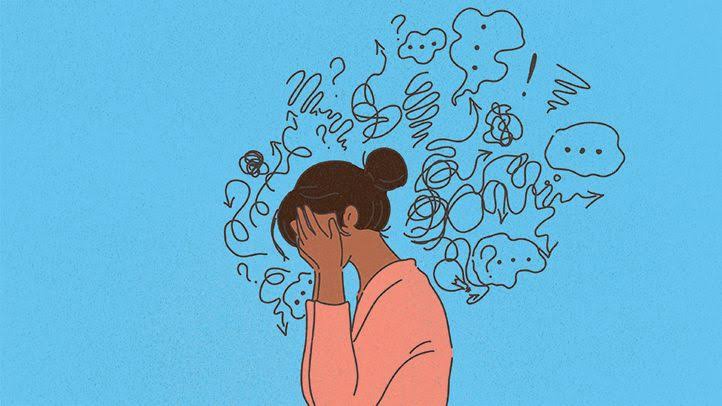
World After the COVID 19 Pandemic

COVID-19 will reverse both of those trends, increasing the space both between countries and among people. Some will laud these changes for increasing safety and resilience. But a world that’s less global and fewer urban would even be less prosperous, less stable and fewer fulfilling. Future is shrouded in clouds of uncertainty, as resilient leaders steel oneself against all possible global outcomes, few are more prominent than others. These are two most predicted and certain scenarios of how the planet would begin of COVID 19. Less global, more isolated. Even before COVID-19, the decades-long trend toward ever-more globalization of trade, investment, supply chains and other people flow were starting to grind to a halt. We began to seem closer to range in terms of the products we produce and consume, the people with whom we interact, and where we get our energy and our money. In retrospect, we’ll come to look at the years right before the 2008 financial crisis as “peak globalization.” Since then, the mixture of recession, inequality and populism has created a growing anti-globalization and anti-immigration consensus in western countries, exemplified by the U.S. trade war with China. The reaction of developed economies to the coronavirus will only strengthen this consensus, as all things international are going to be viewed as incurring unnecessary and dangerous risks.
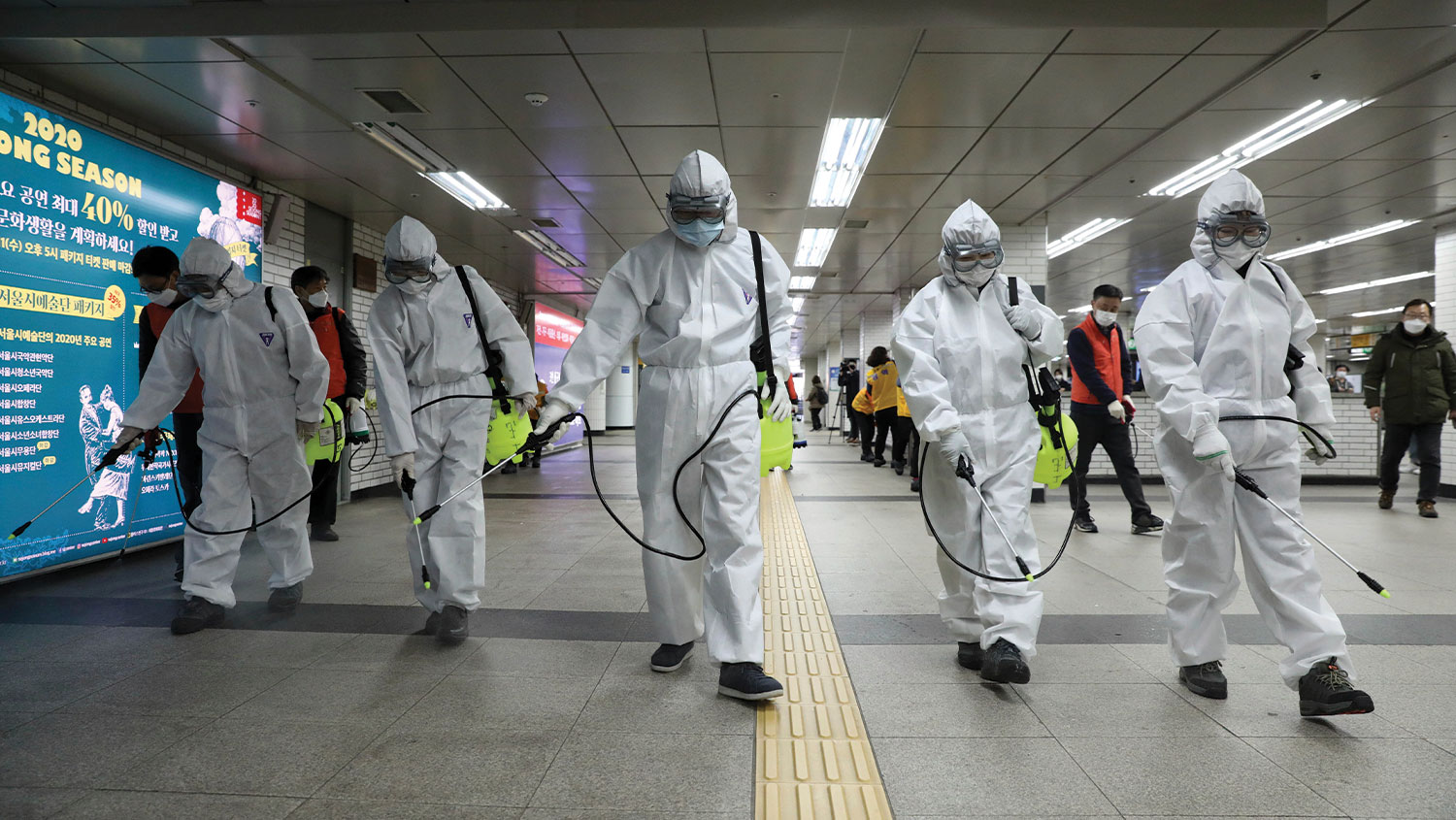
What WHO calling the coronavirus outbreak a pandemic means | Science News

What was a growing “anti-globalization” consensus is poised to crystalize into a “de-globalization” reality. We are being told this de-globalization will make us all more resilient. But it’ll also make us less prosperous — with less choice and better prices. it’s going to also make us less secure, as international cooperation will decrease and therefore the potential for international conflict will increase. Less density, more distance. Urbanization is probably going to be the opposite major casualty of the coronavirus. Unlike globalization, the trend of ever greater-urbanization was unaffected by the worldwide financial crisis. Even America — the land of all things suburban — joined the worldwide march into cities. People were interested in cities not just for economic opportunity but also for the urban lifestyle. After coronavirus, people are going to be more scared of crowded trains and buses, cafes and restaurants, theaters and stadiums, supermarkets and offices. Crowded spaces are the lifeblood of cities. But now crowds are seen as major health risks. People that have the power to exit the town will increasingly be tempted to try to do so. people that cannot leave will feel at increased risk, hunker down, and reduce their movements and contacts. it’s hard to believe Manhattan without the subway and 10-deep pedestrians on Fifth Avenue. But that will be the increasing post-COVID reality. De-urbanization would harm the economic process because cities generate enormous scale economies and have proved to be remarkably effective incubators of creativity and innovation. This might be particularly true in developing economies where the movement of individuals from rural areas to rapidly expanding cities has been perhaps the key driver of poverty reduction. But the shrinking of cities will produce other adverse effects too, from reducing cultural vibrancy and cosmopolitanism to exacerbating global climate change. Additionally, to be more productive, cities also tend to be more environmentally sustainable. A world that’s less global and fewer urban would be far less appealing to me, personally. But it’s also a world that might hurt economic prosperity, reduce shared understanding among disparate people, and increase the prospect of conflict among them. Our immediate reactions to COVID-19 will lead us to require both to de-globalize and to de-urbanize. But we must take fully under consideration the profound longer-term costs of doing so. Globalization and urbanization generate challenges we must confront, all the more so during a post-coronavirus world. the answer is to manage them, to not reverse them.


FLAX SEEDS: Best for Health and Longevity

Flax seeds are also known as linseed. It is a flowering plant called Linum usitatissimum.It is a food and fiber crop grown in temperate region.

Flax seeds has been used for thousand of years and they also form an essential part of our diet. It is best for health and longevity of life. It contains 800 times more lignin than any other food plant. It is one of the best vegetarian source of omega-3 found in salmon. 50 gm of flax seeds is equivalent to that found in 3-ounce of salmon serving. It also contains omega-6 and omega-9. It is a rich source of iron,calcium and protein. Amino acid found in flax seed are the one’s which human body can’t generate on its own.
Uses of Flax Seeds
According to a research, intake of omega-3 provides benefit in many diseases. By consuming flax seeds, we have the following benefits:-
1.Presence of high fiber and low carbohydrates in flax seeds helps in controlling weight as it reduce our appetite.
2.Intake of flax seeds decreases the LDL cholesterol, which reduces the chance of having heart diseases.Omega-3 fats does not allow blood vessels to get blocked. Through this omega-3 cleans our blood vessels. It helps in smooth flow of the blood. Omega-3 is very useful for the blood vessels.
3.Flax seeds have different types of antiviral properties, which protects us from frequent cold and flu ailments.
4. Omega-3 present in flax seeds does not allow clotting of blood. As blood clots increases the chances of having stroke,heart attack, etc.
5. Omega-3 fatty acids and vitamin B that are present in flax seeds help to  reduce dark marks and spots on face. It makes the skin glow and prevents pimples.
6. Flax seeds keeps are digestive system healthy. Intake of these seeds helps to cure the swelling in the stomach.Person get a better health when problems related to digestion ends.
7. Omega-3 boost the memory and concentration. It is good for the brain. Effective in Alzheimer disease.
8. Omega-3 helps to improve eyesight. Also effective in cataract and glaucoma. Use of flax seed makes  the eyesight sharp.
9. Intake of 15-20 gm flax seeds with aloevera, helps to reduce constipation.
10.Flax seeds balances women hormones so that danger of early menopause can be eliminated. Intake of flax seeds in the breakfast helps to regulate periods and eases period cramps.
11.Flax seeds are effective in high blood pressure.
12.Old age problem of knee pain can be reduced by intake of flax seeds.
13.Presence of antioxidants in flax seeds helps to cure different types of cancer.
13.Omega-3 is called feel good food as it keeps our mind and soul happy.
14.Omega -3 is very beneficial for our hair and nails.
15.Flax seeds are extremely high in soluble and insoluble fibers.
16.Flax seeds detoxifies cells.
17.It is very rich in calcium and iron.
18.It helps to prevent anemia.
19.It helps to burn fats
Dosage
Roast the flax seeds before use to get a better taste.
Take 1 tablespoon of flax seeds three times a day after every meal.

TAKING CARE OF PERSONAL HYGIENE

BY: VAIBHAVI MENON

“Life is short so don’t risk it.” We know how important personal hygiene is, as keeping our body, hands and hair clean can stop the spread of germs and illnesses. Personal hygiene is defined by the practices you take to look after your physical health to avoid diseases by maintaining a certain level of personal cleanliness. It is a key element in our daily routines to live a healthy life. Thorough out our whole life a bunch of people or maybe even ourselves get diseases which could be life threatening and usually people consider the main reason for this to be not getting access to something and being careless about your surroundings. What they don’t know is that hygiene plays a very important part in not getting in contact with these diseases. For example during this ongoing pandemic, most people catch the virus because they don’t take the proper precautions like sanitizing yourself or wearing masks. Therefore taking care of your personal hygiene is a very important thing to do if you want to lead a healthy life.

Few basic ways in which we can maintain personal hygiene could be through simple activities like taking a shower atleast once a day, brushing your teeth twice a day, making sure to floss your teeth, applying deodorant to avoid foul smell, washing your body with soap, cutting your nails, washing your hair properly thrice a week, making sure your face is clean before going to sleep, wearing comfortable clothing, changing your pillowcases once a week, cleaning your phone screen to remove it of any bacteria, wearing a mask, carrying sanitizers, washing your hands with proper techniques, covering your mouth while sneezing your coughing, applying sunscreen even if you aren’t going out, putting on perfume or body mists. It is important to change sanitary products regularly and to wash the hands before and after changing tampons, pads, or any other sanitary products. As vaginas are self-cleaning, using soap to clean the vagina can cause an imbalance of its natural bacteria and lead to infections. The vulva (the external part of the vagina) should only need cleaning once a day using a mild soap and water. People with an uncircumcised penis can clean it by gently pulling back the foreskin and washing underneath it with warm water or soap. If you can’t remember to do things like shower, wash your hair, clip your nails, or brush your teeth, set a reminder on your phone. The cue will push you to the activity, and over time, you’ll begin to do it yourself. Hang a reminder in the bathroom to wash your hands after using the toilet. Put a little sign by the plates or bowls in the kitchen to cue yourself to wash your hands before eating. These signs can help jog your memory and improve your habits.

Therefore maintaining personal hygiene is beneficial for you and your own health and it’s considered one way of helping you in having a healthy and safe life.

Biomedical Wastes

Our environment is degrading day by day. India with its growing population is also keeping up with the waste generation.

Nowadays pollution is everywhere whether its air pollution, water pollution, land pollution, noise pollution, radioactive pollution and the pollution from E waste what not?

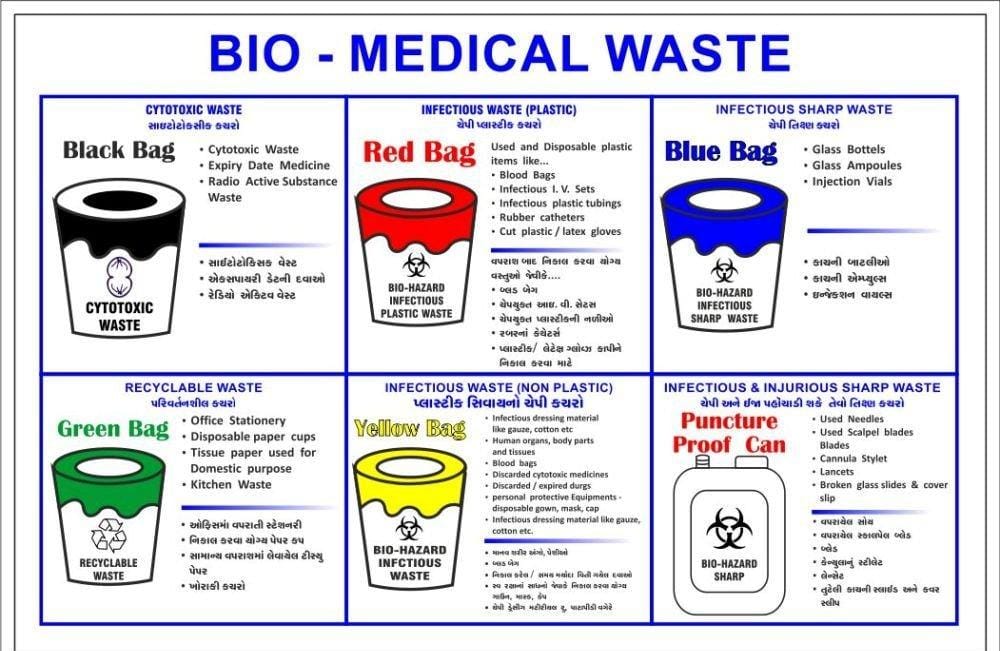
Biomedical Waste( BMW) is any waste produced during the diagnosis treatment or immunization of human or Animal Research activities retaining threat or in the production the testing of biological or in health camps.

Let the waste of the ‘sicks’, not ruin the life of the ‘healthy’

Common generator of Biomedical wastes are :-

  • Hospital
  • Emergency Medical Services
  • Medicinal Research Laboratories
  • offices of physician , dentist, veterinarians
  • home Health Care
  • funeral homes

From WHO stats 2000,the improper treatment of medical waste( primary use of infected needles and syringes) caused 21 million hepatitis B infection and 2, 60, 000 HIV infections worldwide.

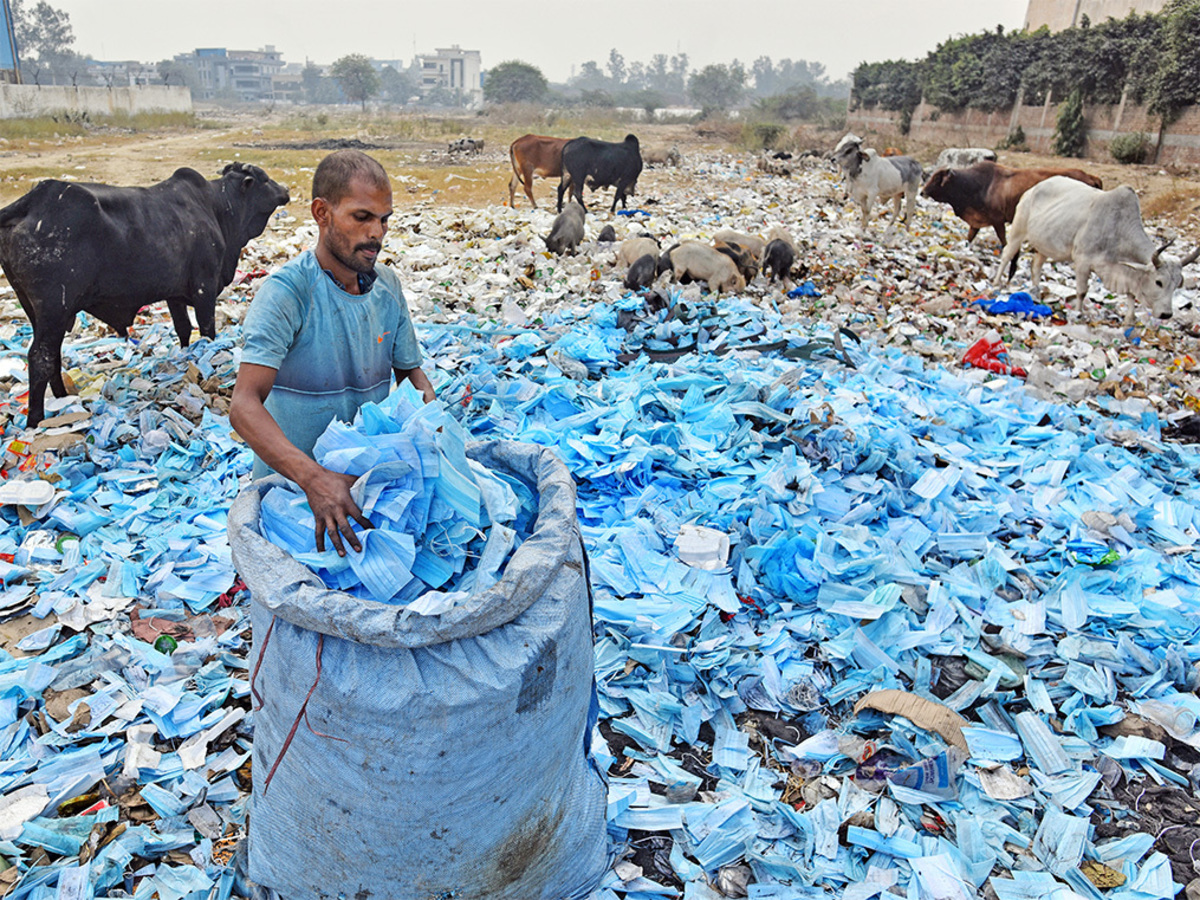
During this pandemic situation, we have witnesses another huge list of Biomedical Waste generation in India. India generated over 18000 tons of covid-19 related biomedical waste in starting 4 months of this pandemic. This includes personal protective equipment (PPE), gloves, face mask, head cover, plastic coverall, hezmet suit and syringes among others.

Types of Biomedical Waste

Infectious waste

  • Suspected of containing pathogen in a sufficiently large quantity or concentration to result in disease in susceptible host.
  • Cultures and stock of infectious Agent from laboratory.
  • Waste from operation and autopsies on patient with infectious disease.
  • Waste having come into contact with infected hemodialysis patient.

Pathological waste

  • Infectious material containing dead tissue may conceal specially dangerous and communicable infectious Agent.
  • Include – blood, body fluid, tissues, organs, body parts, human foetus etc.
  • Subcategory of pathological waste is Anatomical waste.
    • Consist of identifiable human or animal body parts healthy or otherwise.

Radioactive waste

  • Waste generated during the different application of radioisotopes in biological research on medicine.
  • May contain infectious biological components from Anatomical, research or clinical sources.
  • By product of various nuclear Technology process.
  • Include-
    • Nuclear medicine
    • nuclear research
    • Nuclear power
    • Manufacturing
    • construction
    • Caol
    • Rare Earth mining
    • Nuclear weapon reprocessing

Pharmaceutical waste

  • Contaminated or expired drugs and vaccine as well as antibiotics and pills.
  • Result from many activities and location in health care facilities.
  • Small quantities at households can often be thrown away in the municipal waste stream.
  • But large quantities kept at pharmacies distribution Centre, Hospital etc. be managed to minimise the risk of release or to exposure to the public.

Genotoxic waste

  • Waste from drugs that are used in radiotherapy and units.
  • One of the type of hospital waste that are extremely dangerous and may cause cell mutation or cancer.
  • Cytotoxic drugs are main components.
  • Include –
    • Urine
    • Faeces
    • Vomit treated with Chemicals or cytotoxic drug.

Sharps

  • Object that are Sharp enough to cut or puncture the skin.
  • Transmit infections directly into the bloodstream.
  • Generally treated as highly hazardous medical waste regardless of whether they are contaminated or not.
  • Includes –
    • knife
    • Blades
    • Infusion set
    • Needles
    • Broken Glass
    • Nails
    • Scalpel

Chemical waste

  • Contain radioactive element poses particularly difficult problem of disposal.
  • Includes –
    • Heavy metal from Medical appliance
    • Disinfectant
    • Solvent
  • Difficulty in disposal are partly technical and partly political
    • The radioactive constituent that find their way into groundwater and surface water must be kept to exceedingly small amount for very long time.
    • Fear of mysterious effect of radiation, politician reluctant to consider disposal of radioactive waste in the area of their constituent.

Daily habits and good qualities

A good man is made of habits that he has been inculcated in his lifelong back. No one becomes successful in a day and one most common observation in every successful person is them following a set routine or daily habits or rituals. It may look like that this is what every other person does but, the only difference is that they do it better than a normal person, they do it with more consistency that is how it turns out to be a lifelong habit.
Two to three good habits which focus on the development of an individual physically, mentally, emotionally or in other aspects can be beneficial in long term. This may include the following-

Experimentation
Not very usual habit but one can always try experimenting things academically, professionally or any other way. For instance- at very basic level a student can experiment with his study time and shifting it from late night to early morning can prove more helpful. Experimentation can provide a better work approach at both personal and professional level.

Changes
Changes are important because an individual does not stay stuck to one thing and things does not remain same for 10 years, it is about including healthy changes in the life for instance – changing to a healthy diet plan can help you stay fit and more active it also promotes a healthy lifestyle. So, one small change can lead to overall betterment.

Consistency
You might have heard consistency is the key, yes, it is. Consistency lets an individual to focus on the goals or the aim, they are less distracted and as consistency becomes a habit results are visible.
For instance- if you practice a trick multiple times for one hour every day gradually you will not only learn it but, master it.

Time management
Another important thing, if the timings are not managed properly then the difference between what is more important and what is less important cannot be spotted at the end of the day. If you are seriously working upon something, then there are at least two to three goals that are set every day and in this case every goal is priority and time should be equally distributed.
As there are high chances of distraction a timetable may help you enjoy and fulfil your goals easily.

Cutting out the negativity
As everyone is stressed and worried for something or the other it is important to cut of every type of negativity that can be toxic. This negativity can be in the form of criticism of society, mental pressure from parents and peers, demotivation factors etc.

Focusing on your path while measuring the small progress that you are making every day is more important and can help tackle such obstacles. It can be difficult initially but, when you are eying on your goal rest of the negativity and even distraction disappears.

Well, there are many more habits and qualities that can be included in the list these are some of the most basic ones whether you are a student, an employee or even a monk habits can make you a better human being.

HOW TO CONTROL YOUR EMOTION ?

Benefits of Meditation 101: How To Meditate In Less Time

There is no doubt that emotions play a very important role in the field of games and sports but it is also essential for a sportsperson to have enough control over emotions . If a sportsperson is unable to control his emotion during the competition , it can damage or ruin his sports career . If there is appropriate control over emotions, the emotional energy may be utilised into proper and constructive channels. A number of research studies have shown that we can control our emotions well before the provoking situation occurs. We can prepare ourselves ahead of time. We can take some physical actions , can learn new ways of thinking and understanding how emotions work . Emotions can be controlled up to a desired level by the following methods.

  • Control your breathing : For appropriate control over your emotions you should try to control your breathing whenever you note certain physiological changes such as dry mouth and elevated heart rate . Find a comfortable place. Take a normal breathe first , then start inhalation. Allow your chest to expand as you fill air into your lungs. Take six to ten deep breaths per minute . In this way, you can control your breathing which will ultimately control your emotions .
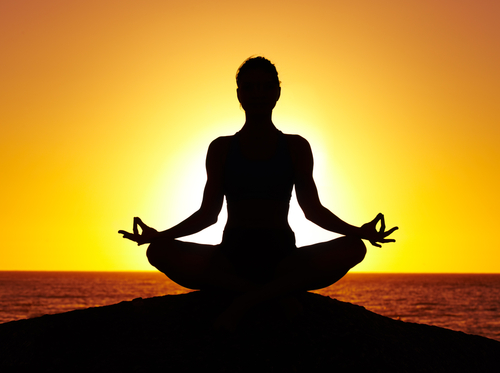
  • Meditation : Meditation can be used for controlling your emotions. It can be ideal for staying calm in between the rounds of competition . First of all, sit in a comfortable position . After that pick or select a short focus word that has significant meaning for you and that you associate with relaxation . The word may be relax , smooth , calm or easy, etc . Then close your eyes slowly. After that breathe slowly repeating the focus word. Be passive and avoid other thoughts which come into your mind . Continue this process for 10 to 15 times.
  • Repression: Repression means to avoid the undesirable emotions when these arise in an individual . However , there may be some problems in using this method because sometimes the undesirable emotions may enter into unconscious mind and later on these burst spontaneously with greater force.
  • Introspection: It may be applicable for educated individuals . They can introspect themselves in the stages of different emotions. As soon as they start introspection into themselves, emotions are usually vented out .
  • Redirection: Redirection means the change of direction in the display of emotions.

Studies and Exams during Pandemic

Being a student is never easy. Living up to the parents expectations, constantly being compared to others with better grades and competing with fellow students and friends may sound easy but is really very difficult. Competition has been increasing day by day along with our population. Fees of schools and colleges have been increasing, seats for prestigious universities are decreasing and the number of people fighting for those seats are growing drastically.

Adding to that, this pandemic situation has taken a toll on students and teachers equally. But students being on the receiving end from each and every side. Teachers and parents used to scold children for spending time in front of TV’s, computers and mobile phones. They used to tell us that it is not good for our eyes and we may get headache, weak eyesight, etc. But now, the very same teachers and parents are asking us to spend hours in front of those small screens daily.

Photo by Ksenia Chernaya on Pexels.com

An average student has to spend a minimum of 6 hours a day in front of his mobile or computer screens to attend his online lectures. He then has to finish boatload of assignments and homework which have to be submitted the following day. Keeping all those aside, he even has to attend to exams physically, all the way to his examination hall. Now, a student has to risk his life to write an exam.

Being prepared mentally and physically for all those exams is not a cake walk for any student. He has to bear his headaches caused due to online classes, manage his workload of assignments and studies simultaneously. Preparing the notes on his own or studying again from his mobile will one day weaken his eyes and damage his nerves. Leading such a stressful lives and yet being scolded for bad results can only be possible by a student.

Take regular breaks from classes and try to lighten your workload. Ask anyone for help if you are feeling stressed or depressed. It is okay to take a temporary break from your life and enjoy everything. Update everything about yourself to any close friend to make him know if you are facing any difficulties. This is your life and no one will scold you for being you.

Nutritive Tomatoes

Tomato is one of the common vegetables in our kitchen. Everywhere in the world You will be able to see tomato. Tomato is an edible berry type of vegetable and its binomial name is Solanumly copersicum. Its origin is western South America and Central America. Tomato is originally color in red but some types of tomato are color yellow, purple, green etc. It tastes sour or sweet or both in the sometime.

Colorful Tomatoes

Tomatoes Diversity

Various type of tomato:

  1. Cherry tomatoes: They are size of a cherry. They are sweet juicy and tender and looks so beautiful. They are mostly used in salad and snacks. They test sour more than sweet. It can be red, yellow, purple and other colors.
  2. Grape tomatoes: They are much smaller than Cherry tomatoes and very tasty. It is also used in salads, grilling, roasting, snacking. They are crispy and juicy.
  3. Red Beefsteak tomatoes: They are mild in taste, juicy and in medium size. They are good to make sauces and salad, grill and Salsa.
  4. Roma tomatoes: They are quite larger than Cherry tomatoes. They are Tangy, have few seeds and meaty. It is good to make sauce and sandwich.
  5. Green beef steak tomato: They are colour in bright light green and in large size and very Meaty. It tastes tangy, tarty. It is eaten as sauce salsa pickling or by juice.
  6. Heirloom tomatoes: They are in various colour like light red dark brown red yellow etc. They are Meaty, firm, tangy or sweets and with good textures. It is used in soup, sandwich and roasting purpose. These are not the only variety of tomatoes. There is also Cocktail tomato, tomatoes on the vine, Green tomato, plum tomato, yellow tomato, pear tomato, Brandywine tomatoes, Cherokee purple tomatoes, black krim tomato, celebrity tomato and many more.
  • Cherry tomatoes
  • Red Grape Tomatoes
  • Red Beefsteak tomatoes
  • Roma tomatoes
  • Green beef steak tomato
  • Heirloom tomatoes
  • Pear tomatoes
    Black Krim Tomato
    Plum Tomato
    Tomato on vines
    Yellow Tomatoes
    Tomato as Snakes

    How to eat: Tomato is a vegetable which can be eaten in both cooked and uncooked way. Tomato is a very important ingredient in salad. Tomato soup are very tasty and healthy. There is also other type of dishes are available and you all know about tomato sauce /ketch up which are very common and popular and it taste sweet and sour.

    Tomato soup
    Tomato Salad

    Nutrition value: According to USDA (United States Department of Agriculture) the nutrients present in 100-gram raw tomato is –

    1. Fat 0.2g with 0% daily value.
    2. No saturated fat is present.
    3. No cholesterol 5 mg sodium with 0% daily value.
    4.  237mg potassium with 6% daily value.
    5. 3.9 g carbohydrates with 1% daily value.
    6. 1.2g dietary fiber with 4% daily value.
    7. 2.6 gm of sugar.
    8.  0.9 gm of protein with 1% Daily value.
    9. 22% daily value of Vitamin C.
    10. 5% daily value of Vitamin B6.
    11. 1% daily value of calcium.
    12.  2% daily value of magnesium.
    13. 1% daily value of iron.
    14. Tomato does not contain any cholesterol, fat, vitamin D.
    15. Tomato contains 95% water.
    16. It gives away almost 18 Cal energy.
    17. Tomato is a very good source of vitamin C, fiber, Vitamin A.
    18. Tomato also contains folate(or vitamin B9),Vitamin K, and some antioxidants (Lycopene, beta carotene, chlorogenic acid, Naringenin) etc.
    Tomato for Health

    Health benefits:

    1. lycopene is an antioxidant which prevents the growth of Cancer cells in our body. Tomato contains good amount of lycopene. So, tomato fight against Cancer. Research says that risk chances of prostate cancer can be reduced by consuming tomato.
    2. Tomato is a very good source of vitamin C wards off the Common health disease like common cold, flu. So, tomato is very good vegetable for preventing these common health problems.
    3. Tomato is a healthy diet vegetable as it has very low amount of fat and cholesterol and helps to lose the body weight.
    4. As I have said before, Tomato has lots of Vitamin A. Vitamin A specially zeaxanthin and lutein (a form of Vitamin A) are important for our retina. So, tomato is very good for our eyesight.
    5. Tomato contains many antioxidants which improves our skin health and make our skin much glowing and protects from Sunburn.
    6. Lycopene, Vitamin A, Vitamin E and Vitamin C are good nutrients for our heart. Lycopene helps to reduce the bad LDL cholesterol in blood and thus it protects our heart from various heart health issue including heart attack.

    Fundamentals of 'LAUGHTER YOGA'.

    Laughing is very important for health:

    The most important principle behind Laughter Yoga or the most significant driving force behind the several Laughter Clubs is the theory that Motion Creates Emotion. Quite a few people wonder how a person can laugh when he is in no mood to laugh or when one doesn’t have any reason to laugh. However, the answer is very simple. For, there is a well established link between the body and the mind. Whatever happens to the mind happens to the body as well. This is easily understood and observed too. If a person is sad or depressed, his body also appears quite lifeless and sluggish. Such a person doesn’t walk or talk enthusiastically. But, what most people fail to understand is that the opposite is also true.

    Whatever happens to the body also happens to the mind. I remember my father once telling me, “Son, if you are sad or feeling a bit low, don’t sit idle. Keep doing some physical work or go for a walk or do some jogging or go out to play some cricket or football . You’ll feel better.” And most of the times dad was proved correct. I would start feeling better quite soon. In an unhappy state of mind, if we bring ourselves to behaving or acting happy, soon enough we will start feeling light-hearted and chirpy indeed!

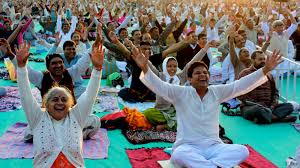
    So, Laughter Yoga aims to use the two-way body-mind link to change the state of mind through voluntary physical gestures which include repetitive clapping, chanting, specific body movements along with laughter and breathing exercises. The result is so positive and its effects are so powerful that the modern world today has witnessed Laughter Yoga overcome severe and chronic depression in thousands of people right across the globe. In fact, several Laughter Clubs have adopted the motto, “If your Mind can’t laugh, bring your Body to our club.”

    Laughter is all about playfulness. Have you ever wondered why children laugh 300 to 400 times a day whereas adults would consider themselves very fortunate if they manage laughter 10 to 15 times in a day? This is because of that seriously wicked and interfering tool called the brain! Adult use their brains or minds first to comprehend humour and then decide if they have to laugh. Very often, they suffer from what is said in Hindi the LKK Syndrome, that is “Log Kya Kahenge” or “What will people say?” This is called the “Mind-to-Body Model of Humour”.

    On the other hand, children, who do not allow themselves to be too affected by the LKK Syndrome and don’t use their brain to seriously do the comprehension first, laugh the most while playing. Even if they fall into mud and slime while playing, they laugh heartily together without bothering about the consequences of soiling their spotlessly white school dress in case of a traditionally strict class teacher or headmistress in school or mother at home! Their laughter comes straight from the body and happily they don’t make use of intellectual capacity of the brain for it. Very clearly, they exhibit the “Body-to-Mind Model of Humour”, It is this childlike playfulness that Laughter Yoga aims at cultivating in people who are quite stressed these days.

    Image -google.

    What is sadly significant is the fact that more and more children and even women, to whom smiles and laughter and giggling should come as naturally as the turtle coming out of its shell to walk or leaves falling in autumn, are enrolling themselves as members of laughter clubs nowadays!

    Laughter Yoga makes a clear distinction between Happiness and Joy. Happiness is a conditional response of the mind which is totally dependent on the fulfilment of certain desires of the mind. By its very nature, it is related to how one’s life had been in the past or how it will be in the future! It is not there at all in the present moment. The ironical and sad fact is that even if some dreams, goals or aspirations are fulfilled, happiness disappears quite quickly as the mind starts chasing new goalposts-a new, job, a new house, a bigger car, etc.

    On the other hand, joyfulness is the unconditional commitment to be happy each moment, to have fun for the moment, despite the problems and challenges of life, no matter how insurmountable they seem to the mind. It is the promise that the Body makes to the mind to indulge in playfulness moment by moment and thereby give relaxation to it. During these periods of playfulness triggered by a plethora of physical activities like dancing, singing, playing and laughing, physiological and biochemical changes take place within our body that give us a sense of well-being that completely alters a negative outlook towards life and its challenges replacing it with confident positivism moment by moment.

    Therefore, in Laughter Clubs, members develop positive conditioning of joy. By laughing together over a period of time, clapping in a rhythm ,chanting “Ho Ho Ha Ha” in unison and positive affirmations like ” Very Good Very Good Yay Yay”, the brain develops new neuronal connections to produce happy neuropeptides and hormones in the body that rejuvenate the members.

    Finally, Laughter Yoga rectifies shallow and irregular breathing, which is the direct consequence of stress and negative mental state. According to Dr. Otto Warburg, a Nobel Laureate, one of the main reasons for falling sick is the lack of oxygen in the body cells due to incorrect breathing. So, let us laugh together and get the oxygen back into our cells!

    Do Indians Get Enough SLEEP?

    I’m telling you about on Sleep habits among Indians?

    Aviral is a Man .Aviral knew he was dead tired. Though it had been more than thirty eight hours since the forty four year old marketing executive returned to Delhi early one morning from New York, he was still recovering from jet lag. He had forced himself to remain awake the whole day as he had hoped to coerce his body into sleeping at night.

    But the much needed sleep seemed to elude him completely. “I hardly managed any sleep that night,” Aviral recalled. The time change had completely disrupted his sleep pattern, and when he got out of bed at 7a.m. to head for office, he was entirely ill at ease, to say the least. At the office, he could barely concentrate on his work.

    Aviral wasn’t aware simply how exhausted he was until he had driven a quarter of the twenty-four kilometre stretch on his way back home in the suburbs of Delhi. He halted at a busy signal on the way, but fell asleep suddenly at the wheel. He dazed after the motorist behind him honked. Aviral drove on, but feeling woke up he couldn’t focus any further, he decided to pull off the main road and parked the car in a quiet place. Then, he rolled down the windows a bit and managed to take a two-hour nap in his car. It was only after that that Aviral could drive home safely.

    It is an undisputed fact that not getting enough sleep can lead to problems in concentrating. In fact many sleep disorder experts think that lack of sleep is the reason for many ailments. Dr. Kumar Menon and his colleagues presented a study paper on sleep disorders in Mumbai in which they stressed on the need for early detection of the problem and concluded that it was high time that all the physicians “woke up to sleep disorders and included sleep history in evaluating their patients.”

    Whatever be the cause of not getting proper and enough sleep, we’ve all experienced the exhaustion caused by lack of sleep. Thus, sleep is as important to a healthy lifestyle as eating properly and exercising. Getting a good night’s sleep is one of the simplest things we can do to stay healthy.

    A good night’s sleep means waking up rested and invigorated. On an average, a healthy adult requires just over eight hours of sleep a night, according to Dr. Jeffrey Lipsitz, a Canadian expert on sleep disorders. However, the amount of sleep it takes to rejuvenate an individual varies from person to person. “It’s not a fixed number,” opines Joseph De Koninck, a renowned professor of psychology, adding that if one consistently gets less sleep than one needs, then “a sleep deficit accumulates.” The time it takes for a sleep deficit to accrue depends on how consistent the problem is. “Missing a couple of hours of sleep every night for a week is probably enough,” says another psychiatrist Robert Levitan.

    Swarup Chatterjee, the 28 year-old IIM graduate and assistant manager at a BPO in Hyderabad, knows very well that he doesn’t get enough sleep. “I haven’t had more than four to five hours of sleep for the last three years. There’s always so much that needs to be done in my professional as well as personal life that I am constantly thinking.” Swarup is fully aware that all that is very stressful and he admits that even though he has high energy levels, he is often tired and so he drinks several cups of coffee to counter the fatigue. “But I know that I’ll be able to concentrate better if only I got more sleep,” Chatterjee concludes.

    In a study conducted by sleep-disorder experts, it was found that at least one- third of adults have significant sleep loss, i.e. they have just six and a half hours or less of sleep every night. Then a recent survey conducted in India has shown that twenty-nine percent of Indians went to sleep only after midnight and sixty-one percent slept for seven hours or less. The survey also arrived at the conclusion that Indians were among the world’s earliest risers, with sixty-four percent getting out of bed before 7a.m. Is there a need to reiterate that “Early to Rise” is good provided a person follows the “Early to Bed” principle as well?

    Sleep is crucial to maintaining one’s health. Without it, we increase our susceptibility to an astonishing array of health problems, including heart disease, stroke, diabetes, obesity and depression. Not sleeping enough can compromise your immune system, says Stanley Coren, noted professor of psychology and author of the very popular book, “Sleep Thieves”. You eat well and exercise in order to keep your immune system up, Coren goes on to explain, but if you aren’t sleeping, you undo all that good work. “The immune system works best when you are sleeping,” he says. “That’s when your natural killer cells are generated.”

    Image Source -google.

    Natural killer cells are produced in the bone marrow and found in the blood and lymph fluid. They are part of the body’s defence mechanism against viruses, bacteria, even cancer, and they do not work properly in the persons who are sleep- deprived. A study in Turkey revealed that after 24 hours of sleep deprivation, the percentage of natural killer cells in the blood declined by 37 percent. Another study in the USA conducted on 23 boys and men found that one night of partial sleep-deprivation reduced natural-killer-cell activity to 72 percent of normal levels. Though their activity returns to normal when we begin to get proper sleep, the real problem is that a lot of damage might have been done to our bodies when we were sleep-deprived for several nights and our immune system might have left us undefended and susceptible to infection.

    Sleep is important in keeping not only our waistline trim, but ensuring a balanced brain activity too. During sleep, brain neurotransmitters-the chemicals that deliver messages between nerve cells in the brain-are replenished. When we do not sleep well, our brain chemicals become depleted which leads to emotional disturbances like depression, anxiety and general feelings of sadness, anger and irritation.

    Fighting Corona with Humanity.

    I still remember reading our history textbooks and pondering over the fact that how the people in those times had faced the draconian affects of epidemics. Having no vaccine or any scientific knowledge, made them quite helpless. Today in the 21st century, with all the technology in the world, when we are faced with yet another epidemic, it has become a little difficult for us to cope up with it too , but for all different reasons. I , for instance never expected rather never believed that history would repeat it’s one of the worst realities again.
    “Just because things are the way they are , they’ll not remain the way they are.”
    Bertolt Brecht
    UN chief advisers have termed COVID19 as the worst thing to happen since World War II.

    Corona virus or to be more specific COVID19 originated in Wuhan , a city in China. And before even the rest of the world could understand what was happening, the unwanted guest was already at their doors. Past these months, thousands of people have succumbed to it, and lakhs lay in the hope to recover. The situation in US had completely shattered the dogma that a superpower can conquer it all. And the eeriness in the’ Bel Pease’ (beautiful country) , Italy, has put the world in a shock. The world is suffering in all possible ways. But few positive outcomes of all this tragedy is the audible sound of birds chirping, the visible blue sky (which was not so visible, and not so blue before), the damaged ozone layer healing itself, and obviously the Earth finally getting a chance to breathe again. Sometimes I wonder how karma pays back and how maybe this situation is what we humans sort of had it coming.
    The soldiers in this war, the doctors, police , cleaners and all those people who have been working these past months non stop have shown us that how humanity is the priority.

    Novavax and J&J join the Covid-19 vaccine push | Evaluate

    After many lives lost in the ongoing 2nd wave and the country preparing itself for the 3rd wave, we should all remember that to get vaccinated , wearing masks and following the social distancing guidelines is surely the key.

    How can other people help in fighting the corona war you ask ?
    Be Kind. This is a difficult time. Not a time to play the blame game but to play SAFE. Couple of days back I read that a girl from northeast was spat on by a person and called out as CORONA. This is so derogatory and discriminating. This difficult time is not only testing your patience but also testing to what level can you maintain your humane level.
    A little help to the helpless please. Do whatever it is in your hands to help the needy. Donate food , money so that they can also get a fair chance at staying alive.
    Who let the dogs out?! Well technically the lockdown has left them all alone. So please do take care of the animals out on the street. Don’t lock them out of your hearts.
    Meditate the stress away I understand how this lockdown can be so stressful, so in order to keep calm , keep meditating.
    Laugh it all out Stay happy and also try to keep your friends cheerful by calling them up. There might be plenty of your loved ones in different parts of the World, who must be waiting for a shoulder to lean on, so go ahead and give them a virtual shoulder to lean on to.
    Being Munna bhai MBBS?! I agree that jaadu ki jhappi is all we need, but social distancing ,you know. Also don’t spread rumours and let the real doctors do the real work.
    People all over the world are helping the needy with all their heart. Plenty of NGOs , business men, members of film fraternity, and many more have come forward to fight this war the humane way. Love,compassion, awareness and a sprinkle of humanity can help us to get through this war.

    John F Kennedy rightly said ,
    Ask not what your country can do for you , but what you can do for your country, and right now all you can do ,is Stay Inside.

    How To Quickly Improve Your Mood

    While we’re in the midst of life’s stresses, we sometimes just want to feel happy immediately. Not only do studies indicate that cheerful individuals have many advantages in life as a result of their happiness, but happiness also just feels good.

    Every area of your life is affected by your mood and mental health, from how you feel about yourself to your relationships with others and your physical health.

    Though it may appear like happiness is just around the corner with a better career, a healthier relationship or a nicer house, the euphoria that comes with those accomplishments might be ephemeral. Furthermore, you don’t need to make major changes to be joyful; you can experience happiness even with doing miniscule task

    There are several strategies to keep your brain and emotions in peak condition. Exercise, good nutrition, and stress-reduction strategies such as meditation or mindfulness may maintain your brain — and your body — in peak condition.

    How to Quickly Improve Your Mood

    Listen To Music

    Music is believed to have the capacity to affect one’s mood, making it a great stress reliever. In reality, music has been utilised therapeutically in hospitals for pain management and mental well-being. Music has also been related to happiness, particularly specific genres of music, according to research. Music, particularly music with a major tone, is associated with reduced stress and feelings of enjoyment.

    Incorporate Laughter In Your Life

    As it’s so true, the saying “Laughter is the best medicine” has become a cliche. We know that laughing has several benefits other than improving one’s mood. Laughter has been shown to boost immunity and extend life. Laughter can not only be helpful for elevating your mood but the mere anticipation of laughter has been shown to have advantages.

    Change Your Mindset

    Changing your expectations and comparisons is a quick and easy approach to improve your attitude. Rather than focusing on what you don’t have, consider all you do have. There will always be those that will have more than you in some aspect of life, but so many would have less than you. Enjoy the advantages of thankfulness and shift your perspective on what you have, and you will feel happier right away.

    Do a Good Deed

    Many people have found that helping others makes them happy. Indeed, studies suggest that individuals who volunteer have higher levels of health and pleasure. This is believed to be true for a number of reasons. The first is that generosity itself has several advantages, including an increased degree of emotional well-being. If you are doing something kind for someone else, your attention shifts away from yourself and your issues and onto others and making them happy. A smile that you put on somebody else’s face is an infectious smile that spreads contagious happiness.

    Practice Meditation

    Although meditation appears to be more of a stress management strategy than one that may increase happiness, it has been shown to be an efficient approach for both. Meditation’s stress-reduction effects are well-known, but research also suggests that regular meditation can lead to higher levels of happiness.

    If your attempts to improve your mood aren’t helping or you’re having difficulty giving yourself a very much needed boost, consider seeking help from a  professional therapist. If your mood has been low for much more than two weeks or is affecting your relationships, job, or education, speaking with a therapist can help.

    How To Quickly Improve Your Mood

    While we’re in the midst of life’s stresses, we sometimes just want to feel happy immediately. Not only do studies indicate that cheerful individuals have many advantages in life as a result of their happiness, but happiness also just feels good.

    Every area of your life is affected by your mood and mental health, from how you feel about yourself to your relationships with others and your physical health.

    Though it may appear like happiness is just around the corner with a better career, a healthier relationship or a nicer house, the euphoria that comes with those accomplishments might be ephemeral. Furthermore, you don’t need to make major changes to be joyful; you can experience happiness even with doing miniscule task

    There are several strategies to keep your brain and emotions in peak condition. Exercise, good nutrition, and stress-reduction strategies such as meditation or mindfulness may maintain your brain — and your body — in peak condition.

    How to Quickly Improve Your Mood

    Listen To Music

    Music is believed to have the capacity to affect one’s mood, making it a great stress reliever. In reality, music has been utilised therapeutically in hospitals for pain management and mental well-being. Music has also been related to happiness, particularly specific genres of music, according to research. Music, particularly music with a major tone, is associated with reduced stress and feelings of enjoyment.

    Incorporate Laughter In Your Life

    As it’s so true, the saying “Laughter is the best medicine” has become a cliche. We know that laughing has several benefits other than improving one’s mood. Laughter has been shown to boost immunity and extend life. Laughter can not only be helpful for elevating your mood but the mere anticipation of laughter has been shown to have advantages.

    Change Your Mindset

    Changing your expectations and comparisons is a quick and easy approach to improve your attitude. Rather than focusing on what you don’t have, consider all you do have. There will always be those that will have more than you in some aspect of life, but so many would have less than you. Enjoy the advantages of thankfulness and shift your perspective on what you have, and you will feel happier right away.

    Do a Good Deed

    Many people have found that helping others makes them happy. Indeed, studies suggest that individuals who volunteer have higher levels of health and pleasure. This is believed to be true for a number of reasons. The first is that generosity itself has several advantages, including an increased degree of emotional well-being. If you are doing something kind for someone else, your attention shifts away from yourself and your issues and onto others and making them happy. A smile that you put on somebody else’s face is an infectious smile that spreads contagious happiness.

    Practice Meditation

    Although meditation appears to be more of a stress management strategy than one that may increase happiness, it has been shown to be an efficient approach for both. Meditation’s stress-reduction effects are well-known, but research also suggests that regular meditation can lead to higher levels of happiness.

    If your attempts to improve your mood aren’t helping or you’re having difficulty giving yourself a very much needed boost, consider seeking help from a  professional therapist. If your mood has been low for much more than two weeks or is affecting your relationships, job, or education, speaking with a therapist can help.

    Myths and Facts about the most common mental illness: Anxiety

    Remember the feeling of nervousness and fearfulness on the first day of school/when going for a job interview/when moving to another city/when giving your first speech? Well, if you do then that feeling my friend is called Anxiety. 

    Anxiety is our body’s natural response to stress. It’s a feeling of fear or uncertainty about what’s to show up. However, if you feel anxious on a severe level and the feelings last longer than six months and are intruding with your life, you may have an anxiety disorder. 

    Anxiety is the most common mental illness. Also, you have heard a lot of things about anxiety, out of them some are facts and some are myths. So, let’s have a look at some of the myths and facts about Anxiety:-

    I) What are the types of Anxiety?

    Myth: All anxiety is the same.

    Fact: There are multiple different types of anxiety disorders.

    Anxiety affects people differently. For some people, anxiety may only be experienced in certain situations, while others experience it more often. 

    Common types of anxiety include:

    ★ General anxiety disorder

    ★ Panic disorder

    ★ Social anxiety disorder

    ★ Phobias

    ★ Obsessive-Compulsive Disorder

    ★ Post-Traumatic Stress Disorder

    ★ Separation anxiety

    II) Who suffers from Anxiety?

    Myth: Only adults suffer from anxiety. 

    Fact: Anxiety affects both children and adults. 

    The more Anxiety is common in Adults, the same it is for children. According to the Centers for Disease Control and Prevention (CDC), around 4.4 million children aged 3-17 have been diagnosed with anxiety. 

    Anxiety can affect children by causing; children behavioral, emotional, and physical symptoms, similar as they can in adults. 

    III) How serious is Anxiety? 

    Myth: It is not a big deal. 

    Fact: Anxiety can cause serious health problems. 

    As mentioned above anxiety can be different for everyone. Anxiety becomes a problem when it starts intruding on your day-to-day life. 

    Anxiety can cause emotional and behavioral problems like worries and fears. Also, it can cause physical problems like rapid breathing, sweating, headaches, and tense muscles. It also affects eating and sleeping patterns.

    IV) Anxiety and Depression

    Myth: Anxiety and depression are not related.

    Fact: Many people who suffer from anxiety also undergo depression. 

    It is common to have both anxiety disorder and depression at the same time. 50% of people undergoing depression are also diagnosed with anxiety disorder, according to the Anxiety and Depression Association of America (ADAA). 

    Also, according to ADAA, anxiety is linked with numerous other mental and health conditions:

    ★ Headaches

    ★ Irritable bowel syndrome

    ★ Chronic pain

    ★ Eating disorders

    ★ Sleep disorders

    ★ Substance abuse

    ★ Bipolar disorder

    ★ Attention-deficit/hyperactive disorder

    ★ Fibromyalgia

    Anxiety is a concerning issue, stop believing in myths, check your facts. And if it has started intruding your life, consult a doctor. 

    Myths and facts about the most common mental illness: Anxiety

    Remember the feeling of nervousness and fearfulness on the first day of school/when going for a job interview/when moving to another city/when giving your first speech? Well, if you do then that feeling my friend is called Anxiety. 

    Anxiety is our body’s natural response to stress. It’s a feeling of fear or uncertainty about what’s to show up. However, if you feel anxious on a severe level and the feelings last longer than six months and are intruding with your life, you may have an anxiety disorder. 

    Anxiety is the most common mental illness. Also, you have heard a lot of things about anxiety, out of them some are facts and some are myths. So, let’s have a look at some of the myths and facts about Anxiety:-

    I) What are the types of Anxiety?

    Myth: All anxiety is the same.

    Fact: There are multiple different types of anxiety disorders.

    Anxiety affects people differently. For some people, anxiety may only be experienced in certain situations, while others experience it more often. 

    Common types of anxiety include:

    ★ General anxiety disorder

    ★ Panic disorder

    ★ Social anxiety disorder

    ★ Phobias

    ★ Obsessive-Compulsive Disorder

    ★ Post-Traumatic Stress Disorder

    ★ Separation anxiety

    II) Who suffers from Anxiety?

    Myth: Only adults suffer from anxiety. 

    Fact: Anxiety affects both children and adults. 

    The more Anxiety is common in Adults, the same it is for children. According to the Centers for Disease Control and Prevention (CDC), around 4.4 million children aged 3-17 have been diagnosed with anxiety. 

    Anxiety can affect children by causing; children behavioral, emotional, and physical symptoms, similar as they can in adults. 

    III) How serious is Anxiety? 

    Myth: It is not a big deal. 

    Fact: Anxiety can cause serious health problems. 

    As mentioned above anxiety can be different for everyone. Anxiety becomes a problem when it starts intruding on your day-to-day life. 

    Anxiety can cause emotional and behavioral problems like worries and fears. Also, it can cause physical problems like rapid breathing, sweating, headaches, and tense muscles. It also affects eating and sleeping patterns.

    IV) Anxiety and Depression

    Myth: Anxiety and depression are not related.

    Fact: Many people who suffer from anxiety also undergo depression. 

    It is common to have both anxiety disorder and depression at the same time. 50% of people undergoing depression are also diagnosed with anxiety disorder, according to the Anxiety and Depression Association of America (ADAA). 

    Also, according to ADAA, anxiety is linked with numerous other mental and health conditions:

    ★ Headaches

    ★ Irritable bowel syndrome

    ★ Chronic pain

    ★ Eating disorders

    ★ Sleep disorders

    ★ Substance abuse

    ★ Bipolar disorder

    ★ Attention-deficit/hyperactive disorder

    ★ Fibromyalgia

    Anxiety is a concerning issue, stop believing in myths, check your facts. And if it has started intruding your life, consult a doctor.