The Evergreen Mughal Architecture

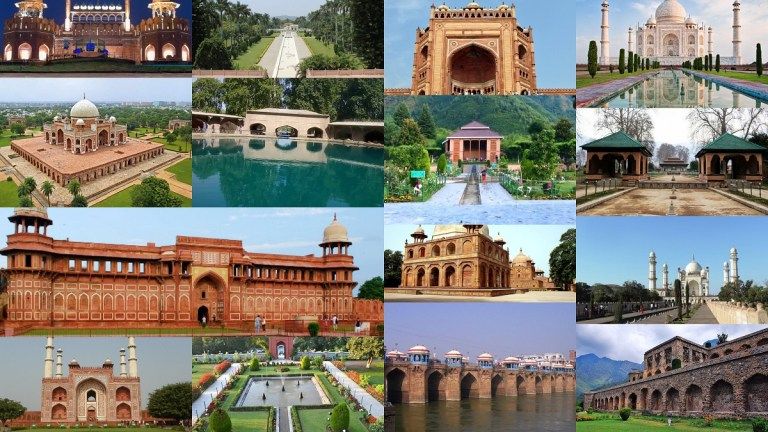
Mughal architecture, is a characteristic Indo-Islamic-Persian building style that flourished in Northern and Central India under the patronage of the Mughal emperors from the mid-16th to the late 17th century. This new style combined elements of Islamic art and architecture, which had been introduced to India during the Delhi Sultanate (1192–1398) and had produced great monuments such as the Qutb Minar, with features of Persian art and architecture. Mughal monuments are found chiefly in the northern parts of India, but there are also many remains in Pakistan. The Mughal period marked a striking revival of Islamic architecture in northern India. Under the patronage of the Mughal emperors, Persian, Indian, and various provincial styles were fused to produce works of unusual quality and refinement.

The tomb of the emperor Humayun (1564) at Delhi inaugurated the new style, though it shows strong Persian influences. The tomb was designed by a Persian architect Mirak Mirza Ghiyas. Set in a garden at Delhi, it has an intricate ground plan with central octagonal chambers, joined by an archway with an elegant facade and surmounted by cupolas, kiosks, and pinnacles. 

The first great period of building activity occurred under the emperor Akbar (reigned 1556–1605) at Agra and at the new capital city of Fatehpur Sikri, which was founded in 1569. The latter city’s Great Mosque (1571; Jami Masjid), with its monumental Victory Gate (Buland Darzawa), is one of the finest mosques of the Mughal period. The great fort at Agra (1565–1574) and the tomb of Akbar at Sikandra, near Agra, are other notable structures dating from his reign. Most of these early Mughal buildings use arches only sparingly, relying instead on post-and-lintel construction. They are built of red sandstone or white marble.

Mughal architecture reached its peak during the reign of the emperor Shah Jahan (1628–1658), its crowning achievement being the magnificent Taj Mahal. This period is marked by a fresh emergence in India of Persian features that had been seen earlier in the tomb of Humayun. The use of the double dome, a recessed archway inside a rectangular fronton, and parklike surroundings are all typical of the Shah Jahan period. Symmetry and balance between the parts of a building were always stressed, while the delicacy of detail in Shah Jahan decorative work has seldom been surpassed. White marble was a favored building material as is evidenced with the Wonder of the World. After the Taj Mahal, the second major undertaking of Shah Jahan’s reign was the palace-fortress at Delhi, begun in 1638. Among its notable buildings are the red-sandstone-pillared Diwan-I-Am (“Hall of Public Audience”) and the so-called Diwan-I-Khas (“Hall of Private Audience”), which housed the famous Peacock Throne. He established Delhi as his capital (1638) and built there the famous Red Fort (1639) which contained the imperial Mughal palace.

The architectural monuments of Shah Jahan’s successor, Aurangzeb (reigned 1658–1707), were not as numerous, though some notable mosques, including the Badshahi mosque in Lahore, were built before the beginning of the 18th century. Subsequent works moved away from the balance and coherence characteristic of mature Mughal architecture. In general, however, Mughal architecture had begun to decline during his reign, a process that would accelerate after his death. “Architecture, of all the arts, is the one which acts the most slowly, but the most surely, on the soul.” The Mughal architecture truly was a revolutionary blend of different cultures and till the present day. Some of the buildings constructed under the reign of the emperor’s are some of the most famous and well known and continue to inspire and attract millions towards its timeless design.

The Hiroshima Day

6th August 1945. Imperial Japan had refused to surrender even though all the other Axis powers had. Hitler and Mussolini were dead – the Second world war in Europe had come to an end as far as conflicts were concerned (A long age of a partitioned Germany and the Nuremberg trials would happen later). Roosevelt had overseen the construction of secret weapon and Truman, who came to power in the April of that year, ordered for its use.

Atomic Bomb Dropped on Hiroshima - HISTORY
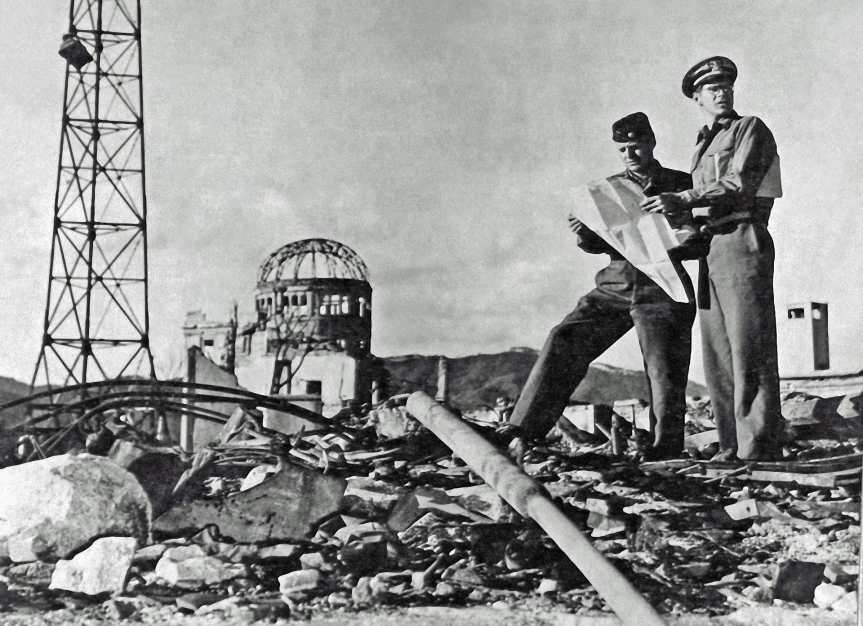
Hiroshima was the first city in history to suffer a nuclear detonation.

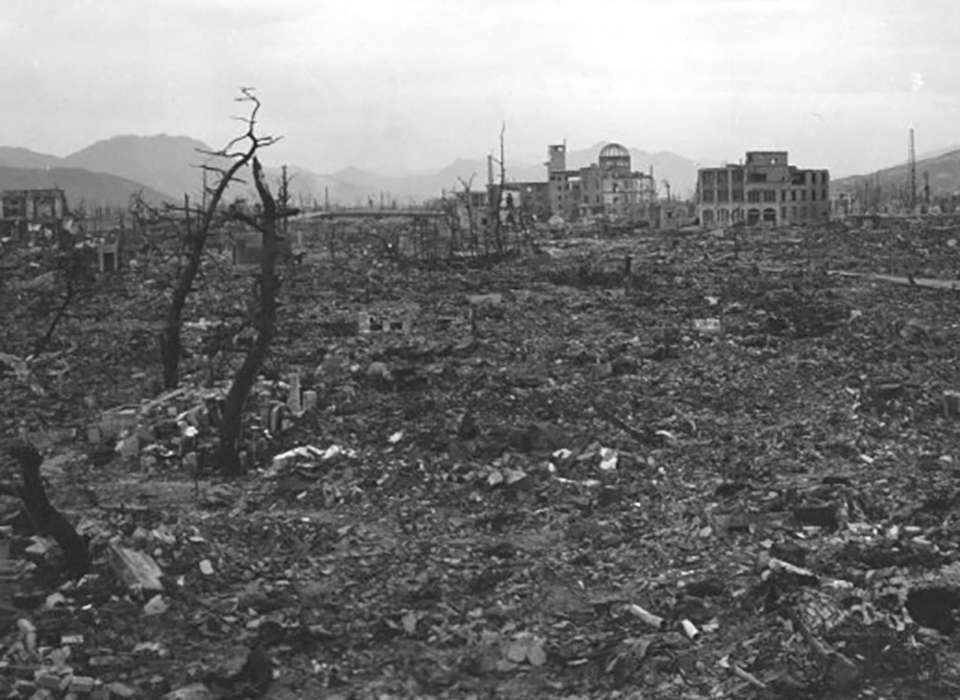
The city of Hiroshima was bombed on the 6th of August 1945 – the first ever atomic bomb attack in human history. 3 days later, another Japanese city – Nagasaki was bombed with the nuclear weapon – forcing Japan to surrender unconditionally and bring the second world war to a decisive end in the favour of the Allied forces. But Truman and most Americans shall never know what it is to be bombed with the weapon. Hiroshima and Nagasaki mark the only instances of atomic bombing recorded. The Allied had failed to bring Japan to its knees and sought the Atom bomb as a quick and effective way. But this quick way, which was a joint plan by the US and its allies – as required by the Quebec Agreement killed a 150,000 people – a 120,000 of them being civilians in Hiroshima alone. And this might have been one of the deadliest attacks on a civilian city by any country involved in a conventional warfare – let alone the US that was trying top be the leader of human rights and civilian liberties.

The Most Fearsome Sight: The Atomic Bombing of Hiroshima | The National  WWII Museum | New Orleans
A 120,000 people and 50sq km of area were eradicated in a matter of seconds.

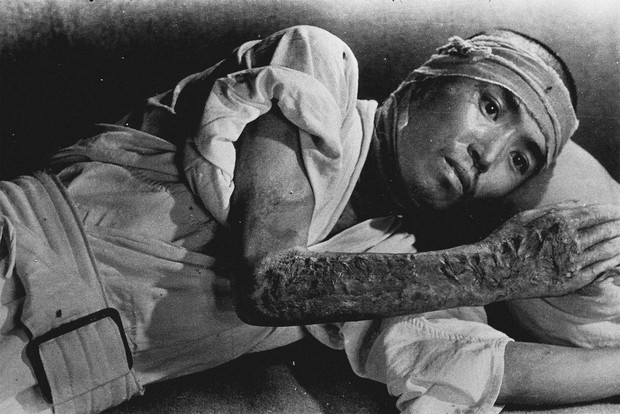
To the Allies, the bomb meant an end to warfare and a sign of American supremacy for the next 5 decades. But to Japan, it meant deaths of 200,000 people in both cities and several decades of nuclear poisoning, radiation induced mutations and cancers that spanned several generations and in some families continue even today.

The University of Texas created a photobook to let the average American – who allegedly yields more pride than sympathy toward the incident – to know of the plight of a nuclear warfare. And people across the world – may it be Chinese, Indian, Pakistani, American, Russian, Israeli or North Korean(if they could read this) would agree that the rhetoric of a nuclear warfare is so blatant in these societies that a bunch of stupid people in the government can lead to a humanitarian and environmental crisis unprecedented in history.

University of Texas photo book aims to show realities of Hiroshima,  Nagasaki blasts to US - The Mainichi
Raditation poisoning killed about 20,000 more people in the later months.

The Hiroshima Day is a reminder of the powers of nature that man has been able to harness and the fact that these powers mean only more responsible behaviour is needed in all of us.

Hiroshima Peace Memorial Park Hiroshima Tickets & Tours - Book Now
The Hiroshima Memorial Park stands as a testimony to those people who bore the brunt of war between two groups who sought nothing but a global supremacy in trade and diplomacy.

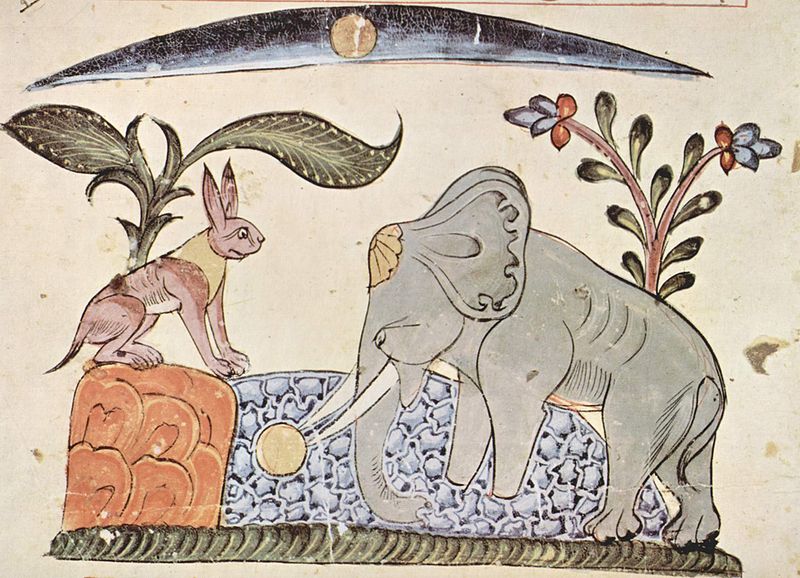
Panchatantra : The Older Aesop Fables

A certain king Sudarshan had three sons – neither of them willing to take responsibility or learn anything. The dejected king went to a scholar named Vishnu Sharma who used animals as characters to weave five treatises – sets of interwoven stories – “The Loss of Friends”, “The Winning of Friends”, “Of Crows and Owls”, “Loss of Gains” and “Imprudence” – that taught the princes about politics, life, justice etc. and came to be known as the Panchatantra.

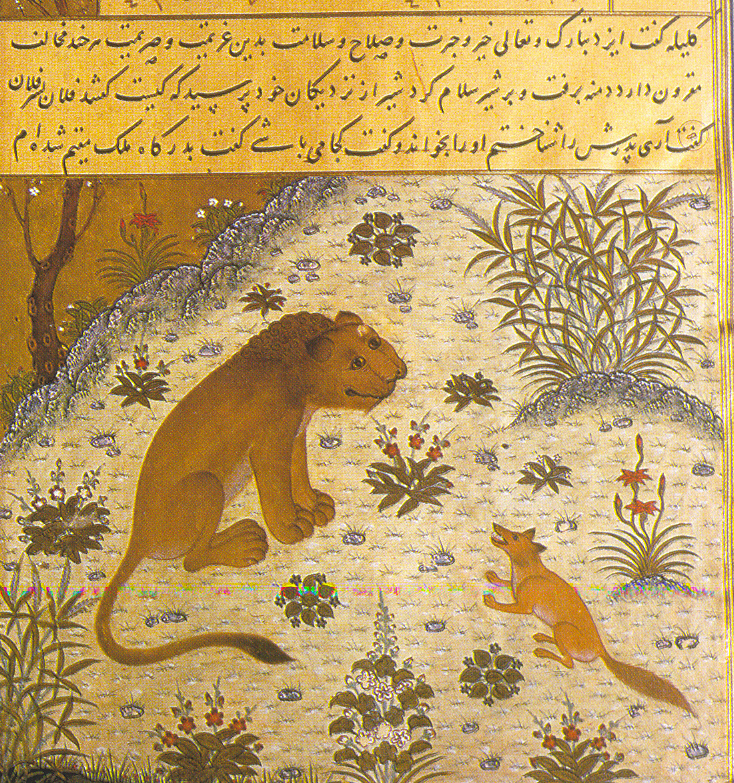
Panchatantra to this day remains the most published, circulated and translated non-religious text in human history. The Arabs carried the book to their lands to be translated as Kalīlah wa Dimnah in the 7th century. By that time, it already existed in Sanskrit, Persian, Greek and the local Indian languages like Pali and Prakrit. By the 17th century, it existed in French, Italian, German, Chez, English and Slavic languages as well.

Ibn al-Muqaffa' by Khalil Gibran.png
Ibn al-Muqaffa, the scholar who translated the book in Arabic.
The Persian Panchatantra

The Aesop Fables of Greece carries a similar taste in story telling – simple and straightforward stories with talking animals often holding the traits identified with humans. But weirdly enough, that is a more famous set of stories in the modern day despite all the historic achievements the Panchatantra holds.

In the modern day, when society is increasingly pushing itself and its members – including kids and adults into its new evolving definitions of justice, crime and conduct – Panchatantra offers a freshness of simplicity despite being 2500 years in age and in lore.

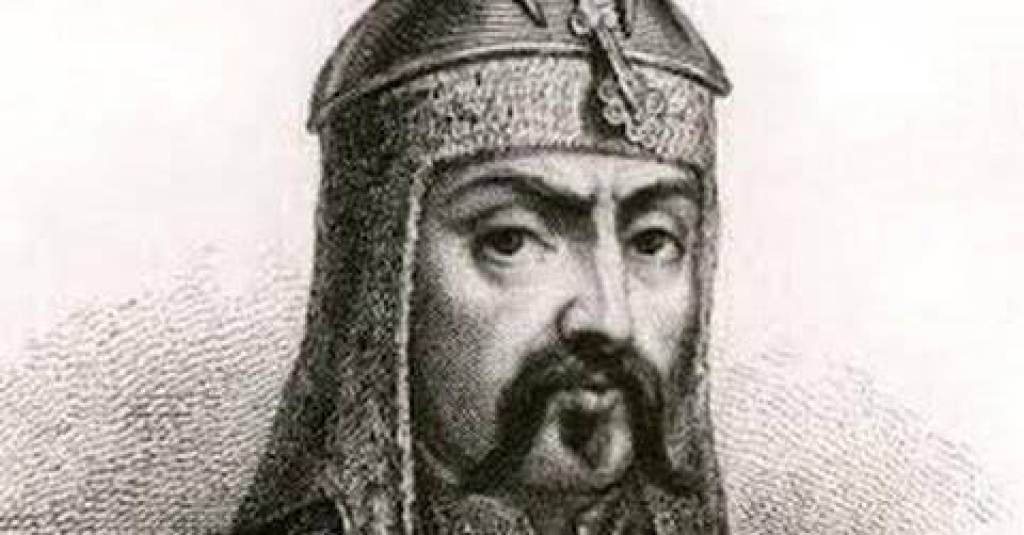
Attilla The Hun

Attila was a warrior king of the Hun people who reigned in the fifth century. History remembers him as the most savage invader of the Roman Empire. Attila was supposedly born in 406 AD in present-day Hungary. He was the son of a powerful royal aristocrat of the Hun Empire. The Hun people were nomadic Eurasian people who settled in Central And Eastern Europe in the second century. As a prince of the empire, Attila was educated in politics, military and diplomatic relations. At the time the Hun people were being ruled by two of Attila’s uncles. This was twin rulership system was unique to the Hun people..

In 434 the two uncles passed away and Attila and his younger brother Bleda continued with the twin leadership style. Unlike Bleda, Attila was a man of war from the onset of his leadership. He forged diplomatic ties with the Roman military commander Aetius. Aetius headed the army of the Western Roman Empire which had its capital in Rome. The Eastern Roman Empire had its capital in Constantinople, which is today’s Istanbul. In 445 Attila killed his brother and declared himself the sole king of the Hun Empire. He consolidated the various chiefdoms of the Hun into a unitary kingdom. 

Peace at Magnus

When Attila and his brother Bleda assumed power in 434, the Hun Empire was on the verge of war with the Eastern Romans. Dissident Hun princes had taken exile in the Roman Empire. The princes were accused of aiding the Romans in plundering the Hun’s royal treasures including the royal burial sites. The Roman Emperor decided to agree with the peace terms of the Huns. The Romans were to pay a tax of seven hundred pounds of pure gold annually. The peace agreement was later called The Treaty of Magnus. The treaty did not hold for long.

In 441, Attila and his brother invaded the Eastern Roman territory in the Balkans. The two brothers were merely avenging the betrayal of the treaty by their Roman counterparts. The plundered treasures had not been returned and the dissidents were still freely living in the Roman territory. In 443, the Hun army was at the doorstep of the Roman capital Constantinople. The two parties renegotiated the Magnus treaty. This time the imposed tax was punitive. The seven hundred pounds was tripled to two thousand one hundred pounds of pure gold. To express their anger, the Huns imposed a late payment penalty of six thousand pounds of gold for the delays in the previous treaty. The Roman emperor obliged.

Rise of Attila

Huns vs Romans

In 447 Attila who was now the imperial king, invaded the eastern Roman Empire once more. This time Attila led his forces to destroy many Roman cities in the Balkans all the way to Greece. Sensing his downfall, the Eastern Roman Emperor negotiated another treaty. Attila led his army out of Roman territory. The conditions of peace put the Eastern Roman Empire at the mercy of Attila. Having rampaged in the east, Attila decided to invade the Western Roman Empire. In 450, he waged war with the Western Romans in the guise of wanting to free the Roman princess Honoria from a forced marriage. In the fighting later called the Battle of Catalunian Plains, the Roman coalition army stood its ground. For the first time in his life, Attila had met formidable resistance. By the end of the war, heavy casualties were witnessed by both armies. The Visigoth king who fought alongside the Roman army was dead. Half of the Roman army had been killed. On the other side, the Hunnic army had been defeated. Attila retreated to his Central European Hunnic Empire. In a show of defiance, Attila made another incursion into the Western Roman territory. This time, Attila went for the capital Rome. When Milan and Aquileia fell into Attila’s hands, the Roman Pope Leo I intervened. Attila pulled out his forces after the meeting.

Attila’s Death

Attila invaded northern Italy in 452 but spared the city of Rome due to the diplomacy of Pope Leo I and the rough shape of his own troops. Legend has it that St. Peter and St. Paul appeared to Attila, threatening to strike him dead if he did not settle with Pope Leo I. Attila died the following year, in 453, before he could try once again to take Italy. Attila left behind a divided family. His appointed successor, his oldest son Ellac, fought with his other sons, Dengizich and Ernakh, over control of their father’s empire, which was ultimately divided among them. Among many memorable quotes, Attila the Hun is remembered for saying of his powerful reign, “There, where I have passed, the grass will never grow gain.”

The Enlightenment – The Great ‘Age of Reason’

Considered as a profound turning point in the intellectual history of the West, the era of Enlightenment was both a movement and a state of mind to those who sought logic and reason to contradict the then ever-present traditional beliefs.

The principal targets of these thinkers were religion (the Catholic Church in France) and the hereditary aristocracy’s hegemony of society. During the early years of the 18th century, a movement parallel to scientific advancement, for political revolution erupted in France. Denis Diderot, for example, linked reason to the conservation of virtue and its ability to check potentially harmful human passions in his writings. Similarly, Jean-Jacques Rousseau’s profoundly influential works argued that man was born free and intelligent, but was imprisoned by the limits imposed on society by governments. True political sovereignty, he believed, remained in the hands of the people as long as the rule of law was properly maintained by a democratically endorsed government: a radical political theory that came to influence the United States later. 

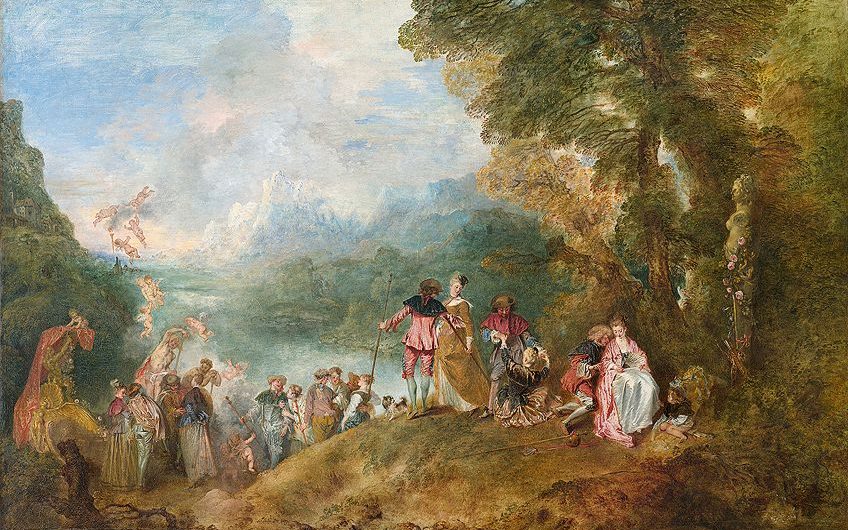
The Enlightenment encouraged people to criticize the monarchy (then King Louis XVI) and corrupt nobles. Philosophers accused Rococo art of being immoral and vulgar because Rococo artists and architects adopted a more humorous, floral and elegant approach to the Baroque style. It was an art form with deep-rooted playful and witty themes, just like a theme borrowed from a classic love story. This motivated the “enlightened” philosophers to promote a new kind of art, which was moral rather than immoral and taught people right from wrong.

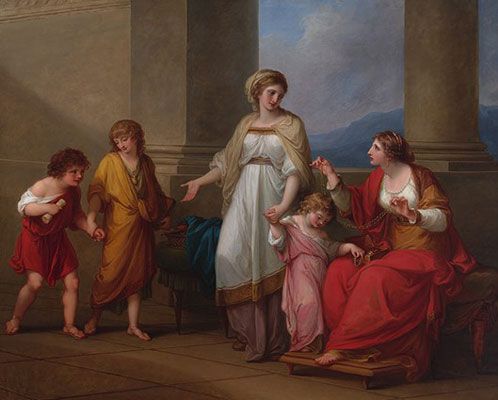
This new art form called “neoclassicism” attempts to present classical ideals and themes in a style derived from classical Greek and Roman origin. The neoclassical painting reflects the frozen shape of ancient relief sculpture, compact composition, and shallow space. Artists and intellectuals inspired by classical history made contributions to early neoclassicism, which was not only a way of looking at the world but was also a visual style. As we know, the two main targets under critical appraisal during the Enlightenment were the government and religious authorities. Many Enlightenment thinkers waged fierce campaigns against restrictions on freedom (such as censorship, discrimination, etc.) and religious interference in public affairs (such as law, education, government). These called for reforms, and they were put forth by some of the most eloquent writers in history, which is why the Enlightenment is also known as the golden age of satire. 

The two main well-renown writers in Enlightenment satire were Voltaire (French) and Swift (English). Voltaire fought against various forms of injustice, including religious and political discrimination, arbitrary imprisonment, and torture. He is mainly known for his many philosophical and satirical works, including novels, short stories and prose. Voltaire was also an accomplished poet, tragedian and historian. The Irish-English writer Jonathon Swift (Jonathon Swift) is perhaps the most famous satirist in history. He wrote many satirical essays covering many topics. His main personal complaint is the abuse of the Irish by the British. Swift’s masterpiece is the novel “Gulliver’s Travels”, which takes a series of wonderful adventures as the background to conduct a comprehensive investigation of morality, politics and society.

In conclusion, the era of enlightenment was the pinnacle of the evolution of modernity and contemporary societal ideals, thus it was an extremely rewarding effort for me to learn more about this intriguing and fascinating time.

Petra

Petra and as the Nabateans used to call it “Raqmu” is one of the most famous cities in Jordan due to its archaeological and architectural history. The city is also known as the Rose City due to its pink rocks formations.

Petra was established in 312 AC, and it became the capital of the Nabateans people, who were referred to in the Bible. They inhabited the region of Petra between the IV AC and II DC. Petra was also a very important commercial center between the Arabic peninsula and Damascus in Syria, and today Petra is the most visited tourist attraction in Jordan.

The Romans conquered Petra in 106 A.C, and they turned the territory into a roman province. During the second and third centuries, Petra continued to grow and in the seventh century, the Romans lost the power of Petra to Islam.

In the 12th century, Petra was once again taken by different leaders and for a while, Petra was hidden until it was found by Swiss explores Johann Ludwig Burckhardt, who was responsible to announce the city into the world with his poem “a rose-red city half as old as time.”

Where is Petra located?

Petra is located in the territory between the Dead Sea and the Gulf of Aqaba, in the mountains of the east side of the Wadi Araba. In the city of Petra, many ancient monuments can be found such as the Roman Theater, the Royal Tombs, and others.

Places to visit in Petra

Bab el Siq

Bab el Siq is the gate of Siq, the main entrance to the city. As you arrive, you will see three square blocks carved into the rock, then you will see the tomb of the 1st century A.D. The bottom is where you can find the Triclinium, a banquet room. On the opposite side of the cliff, you will see a double inscription in Nabataean and Greek.

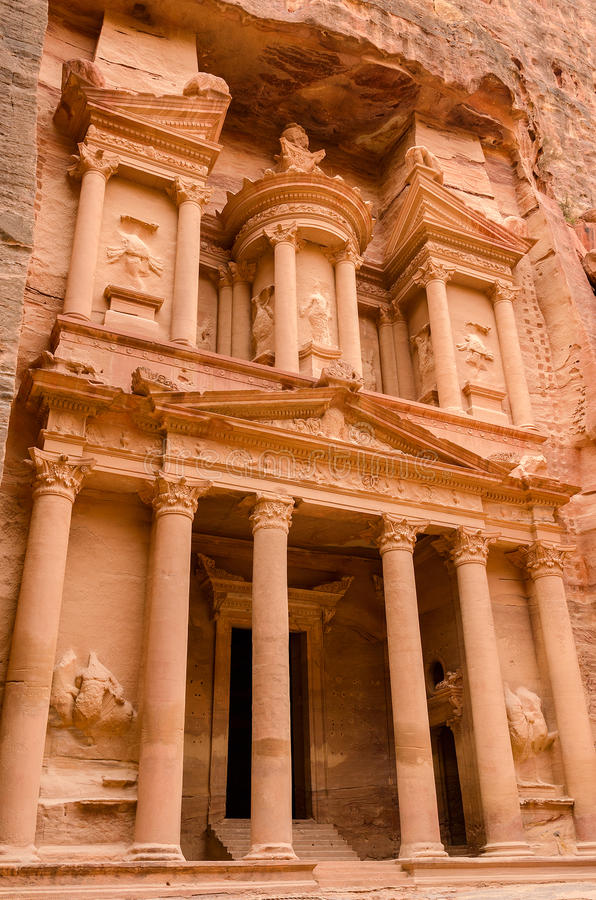
Al Khazneh (The Treasury)

The entrance to the city of the Nabataeans is made through the Siq, a strait measuring around one km long, flanked by rocks that reach up to 80 meters high. A walk through the Siq is a unique experience. The colors and rock formations you will see are impressive.

During the walk as you reach the end of the Siq, the great treasure begins to emerge, the postcard Al-Khazneh, one of the ruins of Petra, the most famous among them. The natural beauty and the remarkable architectural features of this place will blow your mind.

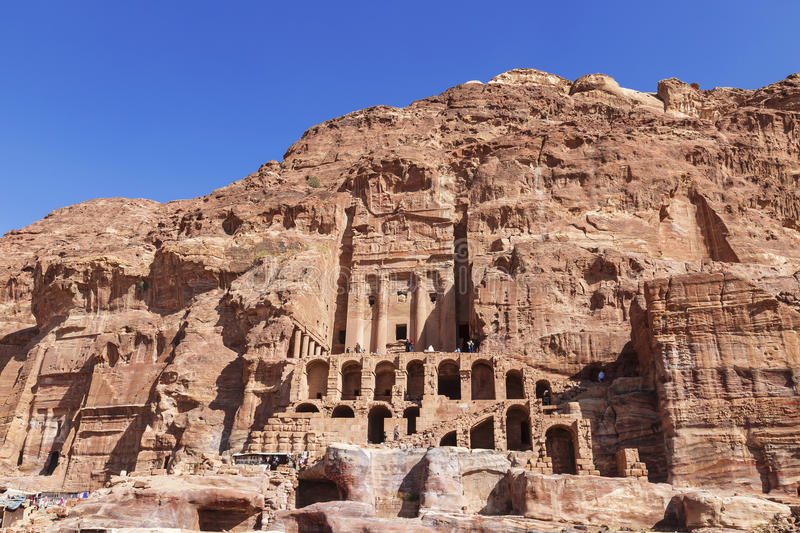
The Treasury is one of the wonders you can find in the ruins of Petra. There are several, or rather, hundreds of tombs made in the rock, Roman theater, obelisks, temples, altars for offering sacrifices and colonnaded streets, and, high up in the valley, there is the sumptuous Ad-Deir Monastery.

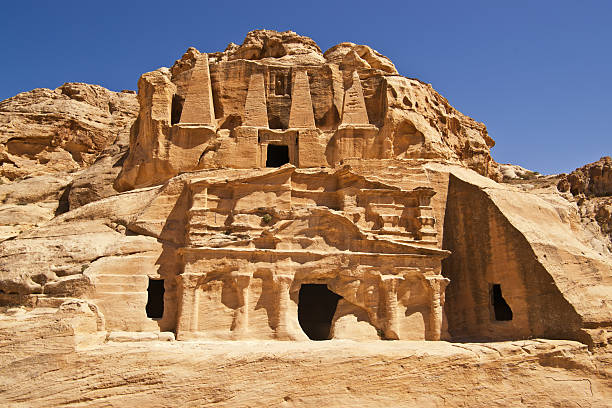
Petra Royal Tombs

Downhill from the Theatre is a larger thoroughfare. Within its west-facing cliffs, there are some of the most impressive burial places in Petra, known collectively as the ‘Royal Tombs’. They look particularly stunning bathed in the golden light of sunset; there are four of them one next to the other. However, they suffered flood damage over the centuries which lead to some of their facades no being as well kept, possibly part of the reason they are not as famous as the Treasury. There are steps that lead up to them and you can actually visit the inside of these tombs.

Petra Today

After the eighth century, when Petra was largely abandoned as a trading center, its stone structures were used for shelter by nomadic shepherds for several centuries.

When Petra was named a UNESCO World Heritage Site in 1985, Petra Bedouin tribespeople who had made homes for themselves within the city’s remaining ruins were forcibly relocated by the Jordanian government.

In the early 2000s, the site was named one of the “Seven New Wonders of the World,” leading to a spike in tourism. Since then, efforts have been made to protect the ruins of Petra from heavy tourism, as well as damage from floods, rain and other environmental factors.

HOW DID K-POP AND K-DRAMA BECOME SO POPULAR ?

Prior to going to that point we should concentrate some set of experiences about South Korea also called Republic of Korea. South Korea got it autonomy on 15 August 1947 same as India. However, why it grew so quick that now it is considered as evolved country. At the point when South Korea got it’s freedom around then it was extremely poor. The food that U.S.A used to supply was just sustenance around then for individuals. Pushing forward, in the year 1997 South Korea was confronting major financial emergency. It was such a lot of that individuals didn’t have anything to eat, they were losing their employment and were neglecting to accomplish considerably pitiful assets. Around then Korean government took a credit of 58 billion dollar from I.M.F which should be paid off by 24 August 2001. So without with nothing to do the entire nation comes right into it. They began giving their gold, cash to the public authority.

K-Drama Couples - Free Instagram Stories Template by @itsmariaalyssa |  Korean drama list, Korean drama tv, Kdrama

SETTING UP THE K-POP INDUSTRY

Yet at the same time in the wake of doing that much they had the option to gather just 8 billion dollar actually left with 50 billion dollars. To take care of the remainder of the cash, they set up Korean inventive substance agency(KOCCA)which objective was to put Korean melody on the map in other nation to bring in cash. They got going by playing a Korean show in a Hong Kong’s T.V station free of charge. This didn’t give cash however offered a brief look at Korean culture in western market which as a trade off benefits them. They before long passed a law in which they will give 1% of state financial plan in culture. Three major organizations accepted the open door and they made the Korean Music Industry.

12 Times K-Pop Groups Made History In The Last Decade | Soompi

Korean music doesn’t have any one performer, it comprises of numerous individuals actually like BTS has 7 individuals. To interface with more western crowd they keep their gathering name in English and they additionally have some English verses in their tunes. These gathering individuals are prepared for quite a long time in singing, rapping and dancing. They buckle down since youthful age to turn into a part in a K-Pop group. However, online media likewise assumed a significant part in accomplishment of K-Pop and K-Drama. Gangnam style was the primary Korean music to contact the worldwide crowd. It was the first run through when individuals paid attention to Korean music however bunches like BTS, BLACKPINK and EXO have mainstreamed it. Till now BTS has added 3.6 billion dollar to Korean economy. BTS has additionally started a mission with UNICEF called Love Myself mission and they likewise gave 1 million dollars to BLACK LIVES MATTER.

BTS are encouraging the world to #SpeakYourself in their UN speech

Isn’t it’s extraordinary that the music business which was framed to take care of the obligation turned into the greatest music industry on the planet. This is the primary driver of South Korea’s turn of events.

RESOURCES:

History of Tea in India

Though the Camellia synesis is also native to India, and grew in the wild long before its actual value was understood, it is thought that tea was carried to India by silk caravans travelling from China to Europe centuries ago.

Native Americans ate the leaves occasionally, but they were largely employed for their medicinal powers.

Photo by Lisa on Pexels.com

It took a long time for it to evolve into what is currently known as chai, a flavorful black tea sweetened with sugar and milk, along with spices like cardamom and ginger, and used in cooking, vegetable dishes, and soup.

Tea was initially introduced to Indians by the British and is now an integral component of daily life. Tea originated in India thanks to the British, who sought to break China’s tea monopoly after discovering that Indian soil was ideal for growing these plants.

The presence of native flora indicated that the soil was suitable for transplanting Chinese seedlings, and the Assam valley and Darjeeling’s towering mountains were chosen as early tea planting sites.

Tea manufacturing in India began to blossom after 14 years of fruitless attempts, allowing the manufacture of a tea that was equivalent to, if not better than, its Chinese counterpart.

The native tea species

When Scotsman Robert Bruce identified a native type of Camellia sinensis plant in Assam in 1823, commercial tea plantations were first created under British rule.

According to legend, a local merchant named Maniram Dewan brought Bruce to the Singpho people, who drank a tea-like beverage. The Singphos gathered fragile leaves from a wild plant and dried them in the sun.

It’s worth noting that, at the time these changes were taking shape, the East India Company was attempting to break the Chinese monopoly on the global tea trade due to a growing conflict of interests.

In response to this scenario, one of the Company’s initiatives was to begin producing tea in British possessions, particularly India.

Around the year 1840, India’s tea industry began to take shape. Chinary tea plants, which were first tested in Assam, were later tested in the high-elevation districts of Darjeeling and Kangra, where they thrived.

Tea planting in Darjeeling began in 1841, when Archibald Campbell, the first superintendent of Darjeeling, experimented by planting a few chinar trees.

Tea consumption has evolved in a variety of ways, with each region of this large country producing its own chai variations. On one end of the scale are the gourmet stores that sell and serve good Indian tea, while on the other are the simple roadside chaiwallas who offer hundreds of steaming cups to people from all walks of life.

Photo by Tatiana Syrikova on Pexels.com

While India is today known for its high-quality tea and the countless cups of chai consumed by Indians, the custom of drinking tea as a regular beverage did not begin in India.

Tea had been used as a medicinal drink in India since ancient times (nearly identical to China), but it had never been used as a beverage.

After years of selling tea to Portugal, Japan opted to seal its doors to the rest of the world and isolate itself, leaving the global tea trade in the hands of the Chinese. While China was willing to trade, it was adamant about keeping the secrets of tea cultivation.

Darjeeling tea estates began in the 1850s, and the world soon sampled the “Champagne of teas,” Darjeeling tea.

The Chinese tea monopoly was fully broken with the creation of Darjeeling tea and widespread marketing by the British, and Indian teas quickly seized both the market and the imagination of worldwide tea consumers; and the rest, as we all know, is history.

References

http://www.teatrunk.in

http://www.wikipedia.com

http://www.cafesrichard.com

http://www.teabox.com

The Great Pyramid of Giza

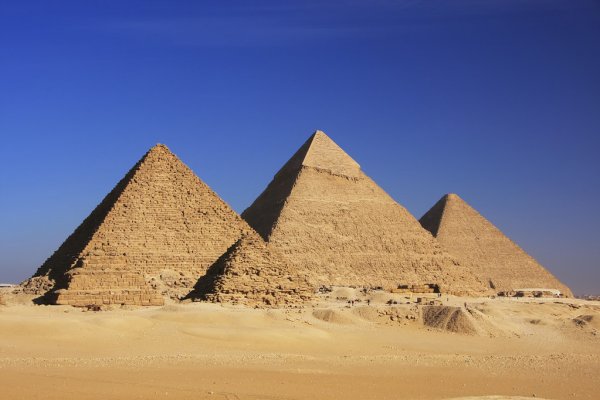
The Great Pyramid of Giza is a defining symbol of Egypt and the last of the ancient Seven Wonders of the World. It is located on the Giza plateau near the modern city of Cairo and was built over a twenty-year period during the reign of the king Khufu (2589-2566 BCE, also known as Cheops) of the 4th Dynasty. Until the Eiffel Tower was completed in Paris, France in 1889 CE, the Great Pyramid was the tallest structure made by human hands in the world; a record it held for over 3,000 years and one unlikely to be broken. Other scholars have pointed to the Lincoln Cathedral spire in England, built in 1300 CE, as the structure which finally surpassed the Great Pyramid in height but, still, the Egyptian monument held the title for an impressive span of time. The pyramid rises to a height of 479 feet (146 metres) with a base of 754 feet (230 metres) and is comprised of over two million blocks of stone. Some of these stones are of such immense size and weight (such as the granite slabs in the King’s Chamber) that the logistics of raising and positioning them so precisely seems an impossibility by modern standards.

Design

In terms of design and planning, some theories suggest that parts of the plan were laid out on the ground at a 1:1 scale. This might account for the accuracy of the workmanship, such that the four sides of the base have an average error of only 58 mm in length. The sides of the pyramid rise at the angle of 51°52′, accurately oriented to the compass’ four cardinal points.

The entrance is around 18 m (59 ft) above the ground on the north side. The Queen’s Chamber and the King’s Chamber are contained inside, connected via a corridor and a slanting gallery 46 m (151 ft) long. The King’s Chamber is shielded from the thrust exerted by the masses of masonry piled on top of it, by five compartments separated by massive horizontal slabs of granite, weighing 25-80 tonnes.

Construction

Most hypotheses are based on the idea that the huge stones were moved from a quarry, and then either dragged, lifted or rolled into place. The most widely accepted theory is that a ramp-like embankment of brick, earth and sand was increased along with the pyramid. Using this embankment, the Egyptians would have hauled the stone blocks using sledges, rollers and levers.

There is also disagreement about the size and nature of the workforce required. The Ancient Greeks thought that slave labour was used, with the historian Herodotus theorising that it took 20 years and 100,000 slaves to build. However, Egyptologists in the 20th century discovered archaeological remains of workers’ camps, which gave rise to the belief that a more limited workforce of as few as 20,000 could have been sufficient, with the workers being skilled rather than slaves.

The core of the pyramid was formed from 2.3 million limestone blocks. The outer casing was made using white Tura limestone, crafted to form a smooth surface with intricate joints unrivalled by any other Egyptian masonry. However, this casing was gradually plundered during ancient and medieval times, although some of the stones can still be seen around the base today.

Shine Bright Like a Diamond:

Today, the Giza pyramids wear the tawny tones of their surrounding Libyan Desert. But back in their heyday, they sparkled. Originally, the pyramids were encased in slabs of highly polished white limestone. When the sun struck them, they lit up and shimmered. Some researchers believe that the pyramids’ capstones were plated in gold as well.

Those dazzling façades have long been stripped—some sources report that those blocks of stone were repurposed and used to build mosques—but you can still see remnants of a once-snowy cap atop the middle pyramid.

GREEK MYTHOLOGY

Greek mythology, body of stories concerning the gods, heroes, and rituals of the ancient Greeks. That the myths contained a considerable element of fiction was recognized by the more critical Greeks, such as the philosopher Plato in the 5th–4th century BCE. In general, however, in the popular piety of the Greeks, the myths were viewed as true accounts. Greek mythology has subsequently had extensive influence on the arts and literature of Western civilization, which fell heir to much of Greek culture. Although people of all countries, eras, and stages of civilization have developed myths that explain the existence and workings of natural phenomena, recount the deeds of gods or heroes, or seek to justify social or political institutions, the myths of the Greeks have remained unrivaled in the Western world as sources of imaginative and appealing ideas. Poets and artists from ancient times to the present have derived inspiration from Greek mythology and have discovered contemporary significance and relevance in Classical mythological themes.

Sources of Myths: The Homeric poems

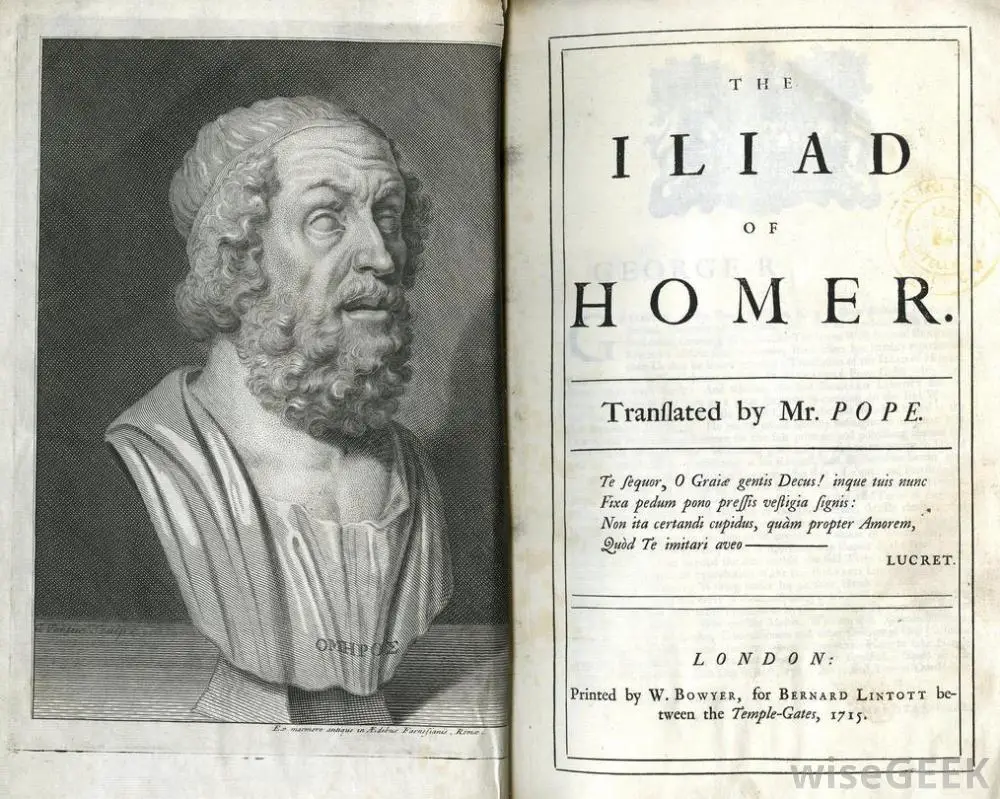
The 5th-century-BCE Greek historian Herodotus remarked that Homer and Hesiod gave to the Olympian gods their familiar characteristics. Few today would accept this literally. In the first book of the Iliad, the son of Zeus and Leto is as instantly identifiable to the Greek reader by his patronymic as are the sons of Atreus. In both cases, the audience is expected to have knowledge of the myths that preceded their literary rendering.

Sources of Myths: The works of Hesoid

he fullest and most important source of myths about the origin of the gods is the Theogony of Hesiod (c. 700 BCE). The elaborate genealogies mentioned above are accompanied by folktales and etiological myths. The Works and Days shares some of these in the context of a farmer’s calendar and an extensive harangue on the subject of justice addressed to Hesiod’s possibly fictitious brother Perses.The Theogony declares the identities and alliances of the gods, while the Works and Days gives advice on the best way to succeed in a dangerous world, and Hesiod urges that the most reliable—though by no means certain—way is to be just.

Sources of Myths: Archaeological Discoveries

The discovery of the Mycenaean civilization by Heinrich Schliemann, a 19th-century German amateur archaeologist, and the discovery of the Minoan civilization in Crete by Sir Arthur Evans, a 20th-century English archaeologist, are essential to the 21st-century understanding of the development of myth and ritual in the Greek world. Geometric designs on pottery of the 8th century BCE depict scenes from the Trojan cycle, as well as the adventures of Heracles. The extreme formality of the style, however, renders much of the identification difficult, and there is no inscriptional evidence accompanying the designs to assist scholars in identification and interpretation. 

Forms of Myths: Religious Myths

Olympus

Greek religious myths are concerned with gods or heroes in their more serious aspects or are connected with ritual. They include cosmogonical tales of the genesis of the gods and the world out of Chaos, the successions of divine rulers, and the internecine struggles that culminated in the supremacy of Zeus, the ruling god of Olympus (the mountain that was considered the home of the gods). They also include the long tale of Zeus’s amours with goddesses and mortal women, which usually resulted in the births of younger deities and heroes. Myths of Dionysus, on the other hand, demonstrate the hostility aroused by a novel faith. Some myths are closely associated with rituals, such as the account of the drowning of the infant Zeus’s cries by the Curetes, attendants of Zeus, clashing their weapons, or Hera’s annual restoration of her virginity by bathing in the spring Canathus.

Forms of Myths: Legends

Hercules fighting the Nemean Lion

Myths were viewed as embodying divine or timeless truths, whereas legends (or sagas) were quasi-historical. Hence, famous events in epics, such as the Trojan War, were generally regarded as having really happened, and heroes and heroines were believed to have actually lived. Earlier sagas, such as the voyage of the Argonauts, were accepted in a similar fashion. Most Greek legends were embellished with folktales and fiction, but some certainly contain a historical substratum. Such are the tales of more than one sack of Troy, which are supported by archaeological evidence, and the labors of Heracles, which might suggest Mycenaean feudalism. Again, the legend of the Minotaur (a being part human, part bull) could have arisen from exaggerated accounts of bull leaping in ancient Crete.

Forms of Myths: Folktales

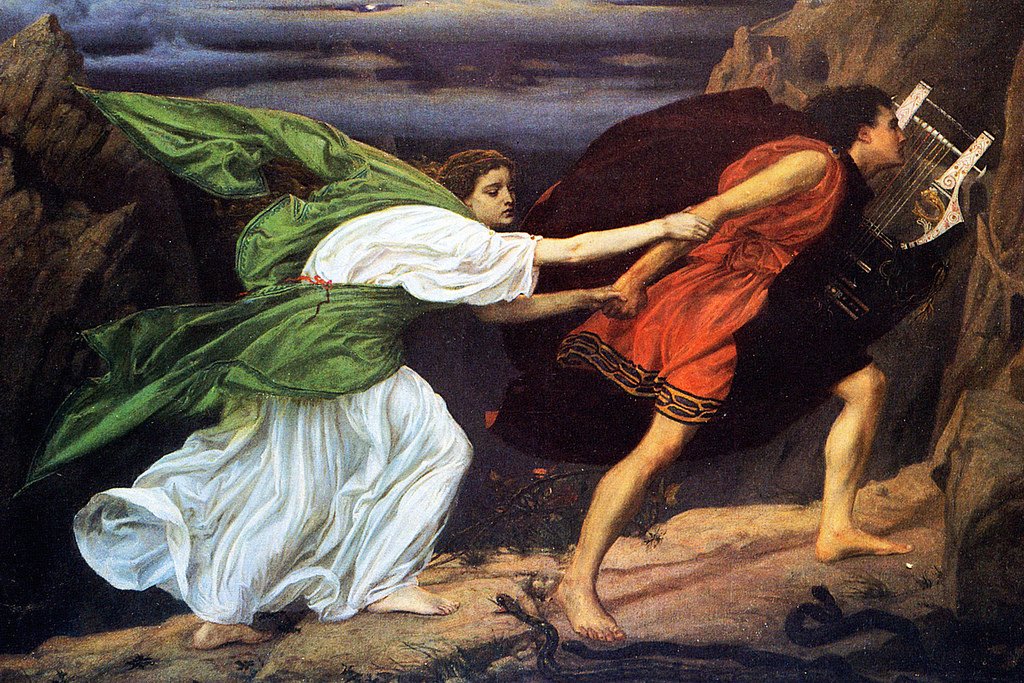
Folktales, consisting of popular recurring themes and told for amusement, inevitably found their way into Greek myth. Such is the theme of lost persons—whether husband, wife, or child —found or recovered after long and exciting adventures. Journeys to the land of the dead were made by Orpheus (a hero who went to Hades to restore his dead wife, Eurydice, to the realm of the living), Heracles, Odysseus, and Theseus (the slayer of the Minotaur). The victory of the little man by means of cunning against impossible odds, the exploits of the superman (e.g., Heracles), or the long-delayed victory over enemies are still as popular with modern writers as they were with the Greeks.

The Great Emu War

The ‘Emu War’, also known widely as the Great Emu War, was a nuisance wildlife management military operation undertaken in Australia in the later part of 1932 to address public concern over the number of Emus that were said to be running amok in the Campion district of Western Australia. The unsuccessful attempts to curb the population of emus, employed soldiers armed with Lewis guns, a World War 1 era light machine gun, making the local media to adopt the name “Emu War” when referring to the incident. 

While a number of emus were killed, the emu population persisted and continued to wreak havoc by crop destruction.

Background

Discharged Australian WW1 veterans were given lands to take up farming by the Australian government within Western Australia. The difficulties farmers were already facing increased by the arrival of as many as 20,000 emus. Emus regularly migrate after their breeding season, heading to the coast from the inland regions. With the lands cleared and additional water supplies being made available for the livestock by the Western Australian farmers, the Emus found that the cultivated lands were a good habitat for them, and began to intrude into farm territory. The veteran farmers began taking up arms against the birds.

The War

Military involvement was due to begin in October 1932. The “war” was conducted under the command of Major G. Meredith of the Seventh Heavy Battery of the Royal Australian Artillery. They moved in formation behind the birds, and the birds answered their organised assault with inspired chaos, scattering themselves in all directions to minimize the casualties. The army tried gunning them down in moving trucks, but found they could not aim properly at their speedy foes.

A second campaign was mounted by Major Meredith on 13 November 1932, killing 40 emus. Two days later, barely any, but about a month later its was reported that 100 emus were being killed every week. The commanding officer found that it took 10 bullets to bring down every one emu, which was a pretty dismal effort. He was recalled the Great Emu War had finally come to an end.

Aftermath

Despite the problems encountered with the culling of the emus, the farmers once again requested military assistance in 1934, 1943, and 1948, only to be turned down by the Australian government. Instead, the bounty system that had been initiated in 1923 was continued, which proved to be effective as 57,034 bounties were claimed over a six-month period in 1934 alone.

https://blogs.scientificamerican.com/running-ponies/the-great-emu-war-in-which-some-large-flightless-birds-unwittingly-foiled-the-australian-army/

https://www.atlasobscura.com/articles/the-great-emu-war

What Is Ikigai?

Ikigai (ee-key-guy) is a Japanese notion that combines the words iki, which means “alive” or “life,” and gai, which means “benefit” or “value.” When these phrases are combined, they indicate something which provides your life value, significance, or goal.

The notion of ikigai is claimed to have originated from traditional Japanese medicine’s core health and wellness concepts. According to this medical tradition, one’s physiological well-being is influenced by one’s mental wellbeing and perception of meaning in life

Explanations of ikigai are frequently associated with components of social identity, such as job and family life, but it is also explained as something more. It is the concept of finding meaning in all you are doing in life. Interests, relationships, public service and traveling all contribute to your ikigai.

Ikigai is frequently connected with a Venn diagram depicting the points where the following elements overlap:

  • What you love
  • What you are good at
  • What the world needs
  • What you can be paid for

THE DIFFERENT SPHERES OF IKIGAI

WHAT YOU LOVE

This sphere contains everything we do or encounter in life that offers us the most joy and helps us feel the most lively and satisfied. What matters is that we give ourselves permission to think very carefully as to what we enjoy, without regard for whether we are excellent at it, whether the world needs it, or if we can be paid to do it.

WHAT ARE YOU GOOD AT

This sphere contains whatever you are exceptionally great at, such as abilities you’ve learned, interests you’ve pursued, talents you’ve demonstrated since a young age, and so on. It’s possible that you’re excellent at something. This category includes skills or capabilities, regardless of if you are passionate about them, if the world needs them, or if you can be compensated for them.

WHAT THE WORLD NEEDS

The “world” here could refer to mankind overall, a local group with whom you are in contact, or somewhere in between. Whatever the world requires may be established based on your perceptions or the requirements voiced by others. Outside one’s own needs, this area of ikigai links most directly with other people and doing good for others.

WHAT YOU CAN BE PAID FOR

This domain of the diagram also alludes to the world or society as a whole, because it involves what somebody else is prepared to pay you for. Whether you can get compensated for your interests or skills is determined by circumstances such as the condition of the economy, the demand for your passions/talents, and so on.

A “balance point” in this ikigai diagram would thus include something that you are passionate about, are also skilled at, that perhaps the world really needs currently, and for which you will get paid.

IN PURSUIT OF A PURPOSE

Everybody, according to the Japanese culture, possesses ikigai. It denotes the worth that one discovers in their life or the things which make one feel as though their life is worthwhile. It pertains to both mental and spiritual situations that give one the impression that their existence has meaning.

What particularly appeals to me about ikigai is its interchangeability. It is unique to each individual and recognises that the concept of “happy” is really rather complex. Ikigai, as an idea, can grow alongside you. If one route of purpose is no longer available, you may adapt, shift, and follow other pursuits with purpose. This is accommodated by Ikigai.

Even though the present really doesn’t seem right, if you do not feel genuinely valued in your current condition but have a great desire to strive towards, you will have discovered your ikigai.

We frequently measure ourselves to everyone else, and when people around us appear to be doing better than us, we might feel like losers We soon overlook what we’re aiming for and we reject our current journey. This is where I believe ikigai may truly help. When we follow the concepts of ikigai, we are brought back to ourselves, towards our own purposes, and to the road we are taking to get there. Ikigai is just as much about adjustments, difficulties, and blunders as it is about achieving the “ideal” goal of a contented existence.

The concept in itself is not innovative or revolutionary, but it’s worth remembering.

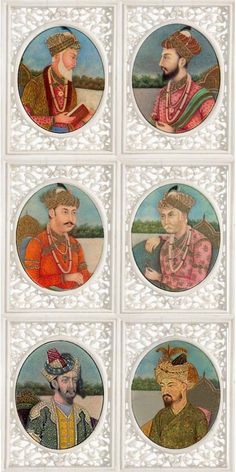
Rulers of the Mughal empire.

In India, the Mughal Empire was perhaps the best domain ever. The Mughal Empire administered countless individuals. India became joined under one guideline, and had extremely prosperous social and political years during the Mughal rule. There were numerous Muslim and Hindu realms split all through India until the organizers of the Mughal Empire came. There were a few men like Babar, grandson to the Great Asian victor Tamerlane and the vanquisher Genghis Khan from the northern district of Ganges, stream valley, who chose to take over Khyber, and at last, the entirety of India.

Babar (1526-1530):

the extraordinary grandson of Tamerlane and Genghis Khan, was the first Mughal sovereign in Quite a while. He went up against and crushed Lodhi in 1526 at the main skirmish of Panipat, thus came to build up the Mughal Empire in India. Babar governed until 1530, and was prevailed by his child Humayun.

Humayun (1530-1540 and 1555-1556):

the oldest child of Babar, succeeded his dad and turned into the second head of the Mughal Empire. He managed India for almost 10 years however was removed by Sher Shah Suri, the Afghan ruler. Humayun meandered for around 15 years after his loss. In the interim, Sher Shah Suri passed on and Humayun had the option to crush his replacement, Sikandar Suri and recapture his crown of the Hindustan. Nonetheless, before long, he kicked the bucket in 1556 at a youthful age of 48 years.

Sher Shah Suri (1540-1545):

was an Afghan chief who assumed control over the Mughal Empire in the wake of overcoming Humayun in 1540. Sher Shah involved the seat of Delhi for not over five years, but rather his reign end up being a milestone in the Sub-landmass. As a lord, he has a few accomplishments in his credit. He set up an effective policy management. He set up an income assortment framework dependent on the estimation of land. Equity was given to the everyday person. Various common works were completed during his short rule; planting of trees, wells and working of Sarai (hotels) for voyagers was finished. Streets were laid; it was under his standard that the Grand Trunk street from Delhi to Kabul was assembled. The money was additionally changed to finely printed silver coins called Dam. Notwithstanding, Sher Shah didn’t endure long after his increase on the seat and kicked the bucket in 1545 after a short rule of five years.

Akbar (1556-1605):

Humayun’s beneficiary, Akbar, was brought into the world in a state of banishment and was just 13 years of age when his dad kicked the bucket. Akbar’s reign holds a specific noticeable quality ever; he was the ruler who really invigorated the establishments of the Mughal Empire. After a progression of triumphs, he figured out how to curb the greater part of India. Regions not under the realm were assigned as feeders. He additionally embraced a placating strategy towards the Rajputs, henceforth diminishing any danger from them. Akbar was an incredible victor, yet a fit coordinator and an extraordinary manager too. He set up a large group of establishments that end up being the establishment of a managerial framework that worked even in British India. Akbar’s standard additionally stands apart because of his liberal approaches towards the non-Muslims, his strict advancements, the land income framework and his popular Mansabdari framework. Akbar’s Mansabdari framework turned into the premise of Mughal military association and common organization.

Akbar passed on in 1605, almost 50 years after his rising to the seat, and was covered outside of Agra at Sikandra. His child Jehangir then, at that point accepted the seat.

Jehangir:

Akbar was prevailed by his child, Salim, who took the title of Jehangir, signifying “Hero of the World”. He wedded Mehr-un-Nisa whom he gave the title of Nur Jahan (light of the world). He cherished her with dazzle enthusiasm and gave over the total reins of organization to her. He extended the realm through the expansion of Kangra and Kistwar and merged the Mughal rule in Bengal. Jehangir did not have the political endeavor of his dad Akbar. Be that as it may, he was a fair man and an open minded ruler. He strived to change society and was lenient towards Hindus, Christians and Jews. Be that as it may, relations with Sikhs were stressed, and the fifth of the ten Sikh masters, Arjun Dev, was executed at Jehangir’s orders for giving guide and solace to Khusrau, Jehangir’s defiant child. Craftsmanship, writing, and design succeeded under Jehangir’s standard, and the Mughal cultivates in Srinagar stay a suffering declaration to his imaginative taste. He passed on in 1627.

Shah Jahan:

Jehangir was prevailed by his second child Khurram in 1628. Khurram took the name of Shah Jahan, for example the Emperor of the World. He further extended his Empire to Kandhar in the north and vanquished the majority of Southern India. The Mughal Empire was at its apex during Shah Jahan’s standard. This was because of right around 100 years of unmatched thriving and harmony. Therefore, during this rule, the world saw the extraordinary advancement of expressions and culture of the Mughal Empire. Shah Jahan has been known as the “modeler ruler”. The Red Fort and the Jama Masjid, both in Delhi, stand apart as transcending accomplishments of both structural designing and workmanship. However regardless of anything else, Shah Jahan is recalled today for the Taj Mahal, the gigantic white marble sepulcher developed for his better half Mumtaz Mahal along the banks of the Yamuna River in Agra.

Aurangzeb:

Aurangzeb climbed the seat in 1658 and controlled preeminent till 1707. Along these lines Aurangzeb governed for a very long time, coordinating with Akbar’s reign in life span. However, lamentably he got his five children far from the regal court with the outcome that none of them was prepared in the specialty of government. This end up being exceptionally harming for the Mughals later on. During his 50 years of rule, Aurangzeb attempted to satisfy his aspiration of bringing the whole Sub-landmass under one principle. It was under him that the Mughal Empire arrived at its top in matter of region.

The Indus Valley Civilization

The Indus River Valley Civilization, 3300-1300 BCE, otherwise called the Harappan Civilization, stretched out from advanced upper east Afghanistan to Pakistan and northwest India.

Significant advancements of this civilization incorporate normalized loads and measures, seal cutting, and metallurgy with copper, bronze, lead, and tin.

Little is perceived about the Indus script, and subsequently, little is thought about the Indus River Valley Civilization’s establishments and frameworks of administration.

The progress probably finished because of environmental change and relocation.

Geology and time period

In 1856, British pilgrim authorities in India were occupied with checking the development of a railroad interfacing the urban communities of Lahore and Karachi in cutting edge Pakistan along the Indus River valley.

As they kept on working, a portion of the workers found many fire-prepared blocks stopped in the dry landscape. There were countless genuinely uniform blocks, which appeared to be very old. Regardless, the laborers utilized some of them to develop the street bed, ignorant that they were utilizing old antiques. They before long found among the blocks stone antiques made of soapstone, including multifaceted creative markings.

However they didn’t know it then, at that point, and however the main significant unearthings didn’t occur until the 1920s, these rail line laborers had stumbled upon the remainders of the Indus Valley Civilization, otherwise called the Harappan Civilization, after Harappa, the first of its destinations to be uncovered, in what was then the Punjab area of British India and is currently in Pakistan. At first, numerous archeologists thought they had discovered remnants of the old Maurya Empire, an enormous domain which overwhelmed antiquated India somewhere in the range of c. 322 and 185 BCE.

Prior to the unearthing of these Harappan urban communities, researchers imagined that Indian progress had started in the Ganges valley as Aryan migrants from Persia and focal Asia populated the area around 1250 BCE. The revelation of old Harappan urban communities agitated that origination and moved the course of events back another 1500 years,situating the Indus Valley Civilization in a completely unique natural setting.

Alleviation guide of Pakistan including the starting points of the Indus Valley realm, Mehrgarh, in the lower regions of a mountain pass. Guide shows Pakistan, Afghanistan, the northwest piece of India and Punjab, and part of the Arabian Sea.

Help guide of Pakistan including the starting points of the Indus Valley realm, Mehrgarh, in the lower regions of a mountain pass. Guide shows Pakistan, Afghanistan, the northwest piece of India and Punjab, and part of the Arabian Sea.

Alleviation guide of Pakistan. Picture kindness Wikimedia Commons.

Researchers are as yet sorting out data about this baffling civilization, however they have taken in an extraordinary arrangement about it since its rediscovery. Its starting points appear to lie in a settlement named Mehrgarh in the lower regions of a mountain pass in current Balochistan in western Pakistan. There is proof of settlement around here as right on time as 7000 BCE.

The Indus Valley Civilization is regularly isolated into three stages: the Early Harappan Phase from 3300 to 2600 BCE, the Mature Harappan Phase from 2600 to 1900 BCE, and the Late Harappan Phase from 1900 to 1300 BCE.

This guide shows the degree of the Indus Valley Civilization during the Mature Harappan Phase. Civilization is featured in brown in the space of current Pakistan and northern India. The remainder of the guide is green and is an incomplete guide of India and the region northwest of Pakistan.

This guide shows the degree of the Indus Valley Civilization during the Mature Harappan Phase. Progress is featured in brown in the space of advanced Pakistan and northern India. The remainder of the guide is green and is an incomplete guide of India and the region northwest of Pakistan.

Indus Valley Civilization in the Mature Harappan Phase (2600-1900 BCE). Picture civility Wikimedia Commons.

At its pinnacle, the Indus Valley Civilization may have had a populace of more than 5,000,000 individuals. The Indus urban communities are noted for their metropolitan arranging, a specialized and political cycle worried about the utilization of land and plan of the metropolitan climate. They are additionally noted for their prepared block houses, elaborate waste frameworks, water supply frameworks, and groups of huge, nonresidential structures.

The Indus Valley Civilization started to decay around 1800 BCE. Archeological proof shows that exchange with Mesopotamia, found to a great extent in present day Iraq, appeared to have finished. The high level seepage frameworks and showers of the extraordinary urban communities were worked over or impeded. Composing started to vanish, and the normalized loads and measures utilized for exchange and tax collection dropped out of utilization.

Metropolitan framework and design

By 2600 BCE, little Early Harappan people group had formed into huge metropolitan places. These urban areas incorporate Harappa, Ganeriwala, and Mohenjo-daro in cutting edge Pakistan and Dholavira, Kalibangan, Rakhigarhi, Rupar, and Lothal in current India. Altogether, in excess of 1,052 urban areas and settlements have been discovered, mostly in the overall locale of the Indus River and its feeders.

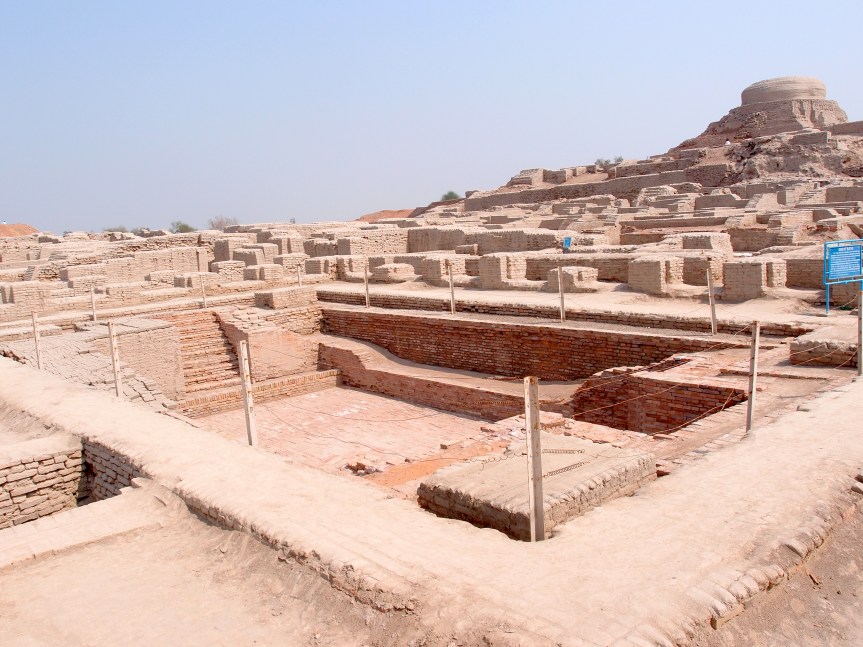
Mohenjo-daro is thought to have been underlying the twenty-6th century BCE; it became not just the biggest city of the Indus Valley Civilization however one of the world’s soonest major metropolitan communities. Found west of the Indus River in the Larkana District, Mohenjo-daro was quite possibly the most modern urban areas of the period, with cutting edge designing and metropolitan arranging.

Archeological remaining parts at the lower town of Lothal. The blocks are uniform in size and are dark earthy colored shaded. They are in a field of dead grass and are lined by low-lying green trees and bushes.

Archeological remaining parts at the lower town of Lothal. The blocks are uniform in size and are dark earthy colored hued. They are in a field of dead grass and are lined by low-lying green trees and bushes.

Archeological remaining parts at the lower town of Lothal, showing uniform fire-prepared blocks. Fire-prepared blocks will hold up to dampness, making them fit to building showers and sewers. Picture kindness Wikimedia Commons.

Harappa was a braced city in cutting edge Pakistan that is accepted to have been home to upwards of 23,500 inhabitants living in etched houses with level rooftops made of red sand and mud. The city spread more than 150 hectares—370 sections of land—and had sustained managerial and strict focuses of a similar sort utilized in Mohenjo-daro.

The two urban communities had comparative association and included strongholds, focal regions in a city that were vigorously sustained—ensured with protective military designs. Moreover, the two urban communities were arranged along the Indus River. This construction would have permitted those at the more significant levels of the structures in one or the other city to peer down the waterway and see into the distance.

The remaining parts of the Indus Valley Civilization urban communities show wonderful association; there were very much arranged wastewater seepage and garbage assortment frameworks and perhaps even open showers and silos, which are storage facilities for grain. Most city-inhabitants were craftsmans and shippers gathered in particular areas. The nature of metropolitan arranging proposes effective city governments that set a high need on cleanliness or strict custom.

Harappans exhibited progressed design with dockyards, silos, stockrooms, block stages, and defensive dividers. These huge dividers probably shielded the Harappans from floods and may have stopped military struggles. In contrast to Mesopotamia and Ancient Egypt, the occupants of the Indus Valley Civilization didn’t construct enormous, great designs. There is no convincing proof of royal residences or sanctuaries—or even of rulers, armed forces, or ministers—and the biggest designs might be storage facilities. The city of Mohenjo-daro contains the Great Bath, which may have been a huge, public washing and social region.


The Great Game

The term ‘Great Game’ was used to describe the rivalry that occurred between the British Empire and the Russian Empire for most of the 19th century and beginning of the 20th century as their spheres of influence in India, Afghanistan and the Tibetan Kingdom moved the two  powers closer to one another in South-Central Asia. It also had direct consequences in Persia(Iran) and British India.

History

The Great Game is believed to have begun on 12 January 1830 when Lord Ellenborough, the President of the Board of Control for India, tasked Lord Bentinck, the Governor General, with establishing a new trade route to the Emirate of Bukhara. Britain was fearful of Russia invading India to add to the vast empire that Russia was building. Britain intended to gain control over the Emirate of Afghanistan and make it a protectorate, and to use the Ottoman Empire, the Persian Empire, the Khiva Khanate, and the Emirate of Bukhara as buffer states between both empires. This would have protected India and also key British sea trade routes by stopping the Russian Empire from obtaining a port on the Persian Gulf or the Indian Ocean. Russia proposed Afghanistan to be the neutral, buffer zone. As a result, there was a deep atmosphere of distrust and the talk of war between the two major European Empires.  Britain made it a high priority to protect all the approaches to India, getting involved in a geopolitical chess and the “great game” is primarily how the British did this. The British Empire used Afghanistan as a buffer state to protect all approaches to British India from a Russian invasion. British concern about the Russian influence on Afghanistan led to the First Anglo-Afghan War (from 1838 to 1842) and the Second Anglo-Afghan War (from 1878 to 1880). The Third Anglo-Afghan War began May 1919 and lasted for a month. British Empire no longer had influence on Afghanistan’s foreign affairs after an armistice was signed on August 8, 1919.

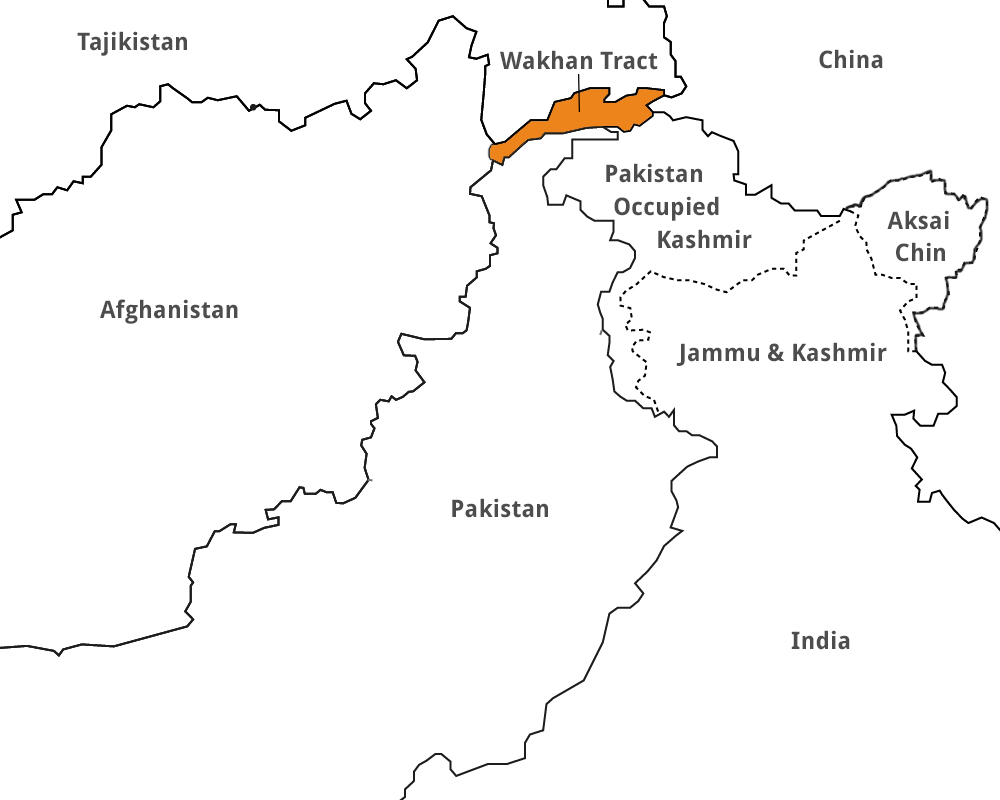
Wakhan Corridor

The Geographical effects of the great game are still felt to this day by the formation of the Wakhan corridor, which was formed by an 1893 agreement between the British Empire (British India) and Afghanistan, creating the Durand Line. This narrow strip was to act as a Buffer zone between the Russian and the British Empires, and this geographical anomaly still exists to this day, as part of Afghanistan.

The end of the Great Game

Many Historians consider the end of the Great Game to be the 10 September 1895 signing of the Pamir Boundary Commission protocols and the border between Afghanistan and the Russian empire was defined.

https://www.loc.gov/ghe/cascade/index.html?appid=a0930b1f4e424987ba68c28880f088ea