Empower Your Insights with Julius: AI-Driven Analysis and Visualization Support

Daily writing prompt
What snack would you eat right now?

In today’s data-driven world, making sense of vast amounts of information is both a necessity and a challenge. Whether you’re a researcher, educator, business strategist, or data enthusiast, effective analysis and visualization can unlock new perspectives and drive impactful decisions. Meet Julius, your AI-powered assistant, designed to transform complex data into clear insights and visually compelling narratives.

Why Choose Julius?

Julius bridges the gap between raw data and actionable insights with cutting-edge AI capabilities. Here’s how Julius stands out:

  1. Comprehensive Data Analysis:
    Julius processes structured and unstructured datasets to uncover patterns, trends, and anomalies. From statistical summaries to advanced modeling, it caters to diverse analytical needs.
  2. Dynamic Visualization:
    Presenting data effectively is as crucial as analyzing it. Julius generates visually appealing and interactive charts, graphs, and infographics that are customizable and tailored to your objectives.
  3. User-Friendly Interface:
    No technical expertise? No problem. Julius simplifies complex analysis with intuitive commands, making it accessible for beginners while robust enough for experts.
  4. Domain-Specific Insights:
    Whether you’re analyzing educational trends, financial performance, healthcare data, or market research, Julius offers tailored insights based on the context of your dataset.
  5. Real-Time Collaboration:
    Work collaboratively with your team by sharing live insights, visualizations, and reports. Julius integrates seamlessly with popular tools to ensure a smooth workflow.

How Julius Can Help

  • For Educators and Researchers: Analyze enrollment trends, publication data, or institutional performance. Julius can turn raw academic data into insights that influence policy and teaching practices.
  • For Businesses: Optimize marketing campaigns, sales strategies, and operational efficiency with data-backed recommendations.
  • For NGOs and Social Impact Projects: Use Julius to visualize the impact of initiatives, track progress, and make data-driven funding proposals.
  • For Individuals: Simplify personal finance tracking, investment planning, or academic projects with Julius’s user-friendly tools.

Example in Action:

Imagine you’re working with education data to measure the impact of a policy like the National Education Policy (NEP). Julius can:

  • Analyze enrollment growth before and after NEP implementation.
  • Visualize growth trends in universities, colleges, and GER over time.
  • Generate interactive dashboards that allow policymakers to explore data by region, gender, or discipline.

Get Started with Julius

Unleash the power of AI in your analysis and visualizations with Julius. Whether you’re dealing with complex datasets or just need a clear visual representation of your findings, Julius is here to assist.

Robber Barons

N kavya

The super rich industrialists and financiers such as John D. Rockefeller, Andrew W. Mellon, Andrew Carnegie, Henry H. Rogers, J.P. Morgan, Cornelius Vanderbilt of the Vanderbilt family, and the prominent Astor family were labeled as “robber barons” by the common people.

A robber baron is a term used frequently in the 19th century during America’s Gilded Age to describe successful industrialists whose business practices were often considered ruthless or unethical. Robber baron is a term that is also sometimes attributed to any successful businessperson whose practices are considered unethical or unscrupulous. This behavior can include employee or environmental abuse, stock market manipulation, or deliberately restricting output to charge higher prices.

These practices included exerting control over natural resources, influencing high levels of government, paying subsistence wages, squashing competition by acquiring their competitors to create monopolies and raise prices, and schemes to sell stock at inflated prices to unsuspecting investors. The term combines the sense of criminal (“robber”) and illegitimate aristocracy (a baron is an illegitimate role in a republic). This monopoly was achieved in part by crushing rivals and systematically cheating Native Americans of fur pelts.

During 19th century the chief complaint that was capitalists were becoming monopolists. Fear over the robber barons and their monopoly practices increased public support for the Sherman Antitrust Act of 1890 (The Sherman Anti-Trust Act authorized the federal government to institute proceedings against trusts in order to dissolve them). Many so-called robber barons. became wealthy entrepreneurs through product innovation and business efficiency. Of the goods and services they provided, supply grew, and prices fell rapidly, greatly boosting Americans’ standards of living. This is the opposite of monopolistic behavior.

Some Of The Major Robber Barons -:

1. James Fisk, one Wall Street’s first great financiers, accumulated much of his fortune by fraudulent stock market practices. The venture brought them vast sums but led to a securities market panic that began on September 24, 1869, a day that was long remembered as Black Friday.

2. Leland Stanford became involved in Republican politics in California and was elected governor in 1861. With three colleagues, he formed the Pacific Association and used their combined assets to bribe congressmen and others with political influence in the country’s capital. In return, the association was provided 9 million acres (3.6 million hectares) and a $24 million loan financed by federal bonds.

3. John D. Rockefeller made his immense riches from monopolizing America’s oil industry. Conspiring with refinery owners, he helped found what became known as the Standard Oil monopoly. Those who stubbornly resisted were confronted with price wars. By 1890, the Rockefeller trust controlled approximately 90 percent of the petroleum production in the United States, a situation that led to the passage of the Sherman Antitrust Act that same year.

4. J.P. Morgan who organized a number of major railroads and consolidated the United States Steel, International Harvester, and General Electric corporations

5. Andrew Carnegie who led the enormous expansion of the American steel industry in the late 19th century; shipping and railroad magnate

6. Cornelius Vanderbilt, Industralist

7. George Pullman the inventor of the Pullman sleeping car

8. Henry Clay Frick who helped build the world’s largest coke and steel operations.

Common criticisms of the early robber barons -:

Poor working conditions for employees, selfishness, and greed. Some robber barons including Robert Fulton, Edward K. Collins, and Leland Stanford earned their wealth through political entrepreneurship. Many wealthy railroad tycoons during the 1800s received privileged access and financing from the government via extensive use of lobbyists.

The major considerations of robber barons are – :

•While robber barons took advantage of their workers, they sometimes offered better working conditions than the norm of the day


•Some tycoons rank among the most noted philanthropists of all time. Rockefeller donated around 10% of every paycheck he ever earned.


•Railroad tycoon James J. Hill publicized and provided free education about crop diversification, and would transport immigrants at reduced rates if they promised to farm near his railroads.

Radio In India

N kavya

Radio broadcasting began in India in 1922. The Government owned radio station All India Radio dominated broadcasting since 1936.

Broadcasting in India actually began about 13 years before AIR came into existence. In June 1923 the Radio Club of Bombay made the first ever broadcast in the country. This was followed by the setting up of the Calcutta Radio Club five months later. The Indian Broadcasting Company (IBC) came into being on July 23, 1927, only to face liquidation in less than three years.

In April 1930, the Indian Broadcasting Service, under the Department of Industries and Labour, commenced its operations on an experimental basis. Lionel Fielden was appointed the first Controller of Broadcasting in August 1935. In the following month Akashvani Mysore, a private radio station was set up. On June 8, 1936, the Indian State Broadcasting Service became All India Radio.

The Central News Organisation (CNO) came into existence in August, 1937. In the same year, AIR came under the Department of Communications and four years later came under the Department of Information and Broadcasting. When India attained independence, there were six radio stations in India, at Delhi, Bombay, Calcutta, Madras, Tiruchirapalli and Lucknow. The following year, CNO was split up into two divisions, the News Services Division (NSD) and the External Services Division (ESD). In 1956 the name AKASHVANI was adopted for the National Broadcaster. The Vividh Bharati Service was launched in 1957 with popular film music as its main component

The phenomenal growth achieved by All India Radio has made it one of the largest media organisations in the world. With a network of 262 radio stations, AIR today is accessible to almost the entire population of the country and nearly 92% of the total area. A broadcasting giant, AIR today broadcasts in 23 languages and 146 dialects catering to a vast spectrum of socio-economically and culturally diverse populace.

Programmes of the External Services Division are broadcast in 11 Indian and 16 foreign languages reaching out to more than 100 countries. These external broadcasts aim to keep the overseas listeners informed about developments in the country and provide a rich fare of entertainment as well.

The News Services Division, of All India Radio broadcasts 647 bulletins daily for a total duration of nearly 56 hours in about 90 Languages/Dialects in Home, Regional, External and DTH Services. 314 news headlines on hourly basis are also being mounted on FM mode from 41 AIR Stations. 44 Regional News Units originate 469 daily news bulletins in 75 languages. In addition to the daily news bulletins, the News Services Division also mounts number of news-based programmes on topical subjects from Delhi and its Regional News Units

AIR operates at present 18 FM stereo channels, called AIR FM Rainbow, targeting the urban audience in a refreshing style of presentation. Four more FM channels called, AIR FM Gold, broadcast composite news and entertainment programmes from Delhi, Kolkata, Chennai and Mumbai. With the FM wave sweeping the country, AIR is augmenting its Medium Wave transmission with additional FM transmitters at Regional stations.

In April 2020, as per a survey by AZ Research PPL, commissioned by the Association of Radio Operators for India (AORI) Radio listenership in India touched a peak of 51 million.

Does radio have a future?

The consoles, connected watches and TV’s that we use every day will be just another way in which radio stations can broadcast and increase their audience numbers. Since its creation, radio has continually evolved with the times

Why Radio is still popular?

Portable and Inexpensive: Radio is portable among many modes of communication. They can be used in cars, stores, and other places, which helps to reach the targeted audience. According to researchers, broadcast radio reaches 99% of the Indian population today.

The Government decision for transition to the digital mode of transmission, AIR is switching from analog to digital in a phased manner. The technology adopted is the Digital Radio Mondiale or DRM. With the target of complete digitization by 2017, the listeners can look forward to highly enhanced transmission quality in the near future.

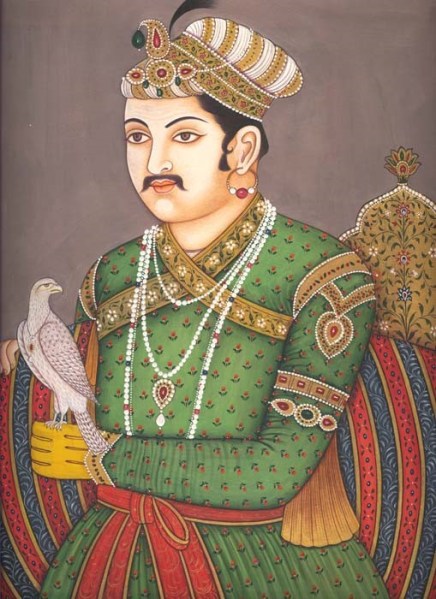
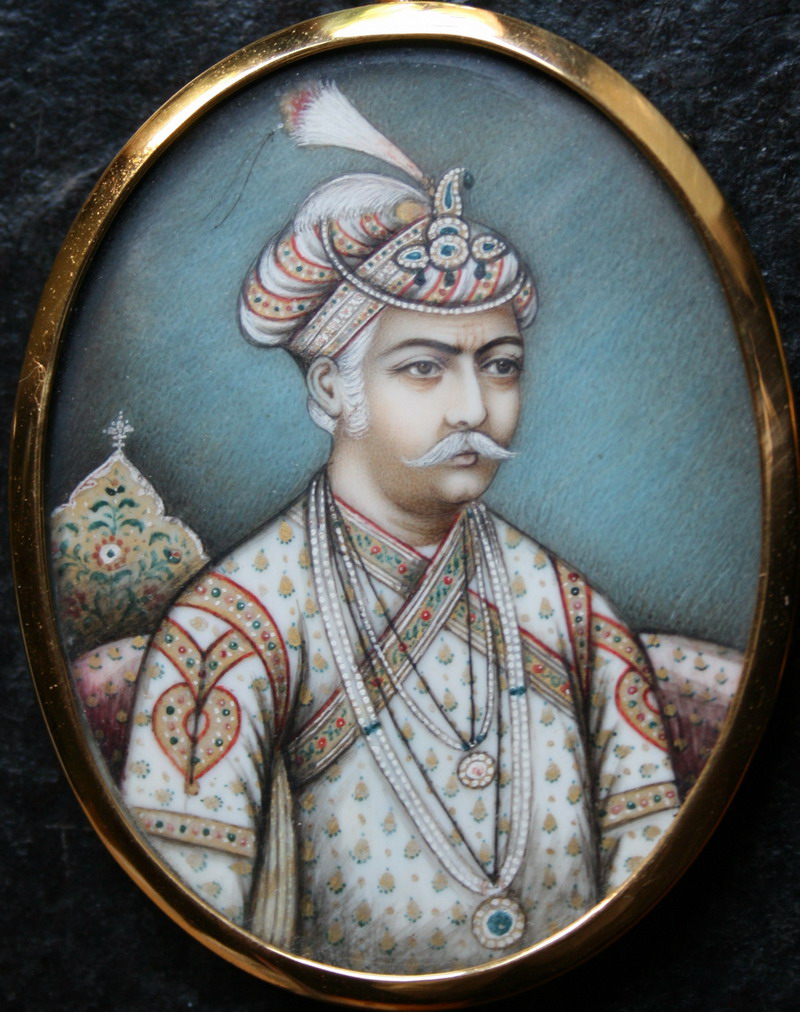
HISTORY OF AKBAR

Abu’l-Fath Jalal-ud-din Muhammad Akbar Akbar was born on October 15,1542.He was popularly known as Akbar The Great.

Akbar succeeded his father, Humayun, under a regent, Bairam Khan, who helped the young emperor expand and consolidate Mughal domains in India. Bairam Khan taught him the ruling and war techniques which made him a strong personality and a successful general. Akbar gradually enlarged the Mughal Empire to include much of the Indian subcontinent. His power and influence, however, extended over the entire subcontinent because of Mughal military, political, cultural, and economic dominance. To unify the vast Mughal state, Akbar established a centralised system of administration throughout his empire and adopted a policy of conciliating conquered rulers through marriage and diplomacy. To preserve peace and order in a religiously and culturally diverse empire, he adopted policies that won him the support of his non-Muslim subjects. Mughal India developed a strong and stable economy, leading to commercial expansion and greater patronage of culture. Akbar himself was a patron of art and culture. Although he could not read and write, he was fond of literature, and created a library of over 24,000 volumes in several languages. Akbar dedicated the first decade of his rule towards expanding his empire. Under the regency of Bairam Khan, Ajmer, Malwa and Garhkatanga were annexed into the Mughal territories. After consolidating the empire, Akbar concentrated on establishing a stable and subject-friendly administration at the center to govern his vast empire. The principles of Akbar’s administration were based on moral as well as material welfare of his subjects. He brought about several changes in existing policies to establish an environment of uniform opportunities to people irrespective of religion.
The Emperor himself was the supreme governor of the empire. He retained ultimate judicial, legislative and administrative power above anyone else. After consolidating the empire, Akbar concentrated on establishing a stable and subject-friendly administration at the center to govern his vast empire. The principles of Akbar’s administration were based on moral as well as material welfare of his subjects. He brought about several changes in existing policies to establish an environment of uniform opportunities to people irrespective of religion.
The Emperor himself was the supreme governor of the empire. He retained ultimate judicial, legislative and administrative power above anyone else. Akbar introduced reforms in judicial system as well and for the first time, Hindu customs and laws were referred to in case of Hindu subjects. The Emperor was the highest authority in Law and the power to give capital punishment rested solely with him. The major social reform introduced by Akbar was the abolition of the Pilgrimage Tax for Hindus in 1563 as well as the Jazia tax imposed on the Hindu subjects. He discouraged child marriage and encouraged widow remarriage. Akbar was probably the first Islamic ruler in India who sought stable political alliances through matrimony. He married several Hindu Princess including Jodha Bai. Akbar’s rule was marked by wide religious tolerance and liberal outlook. Akbar was profoundly religious himself, yet he never sought to enforce his own religious views on anyone; be it prisoners of war, or Hindu wives or the common people in his kingdom. He gave great importance to choice and abolished discriminatory taxes based on religion. He encouraged building of temples and even churches his empire. Out of reverence for the Hindu members of the Royal Family he banned the cooking of beef in the kitchens. He took several steps to unite the Muslim and Hindu society. For his contribution he was fondly called as Akbar by the people.

In 1605, at the age of 63, Akbar fell ill with a serious case of dysentery. He never recovered from it and after three weeks of suffering, he passed away on October 27, 1605 at Fatehpur Sikri. He was buried at Sikandra, Agra.

HISTORY OF BRIHADESHWARA TEMPLE


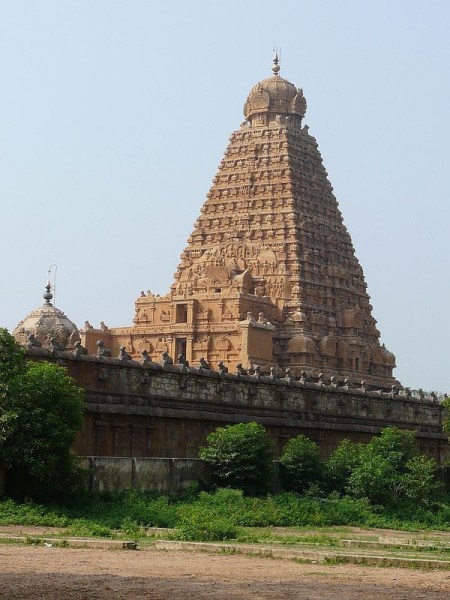
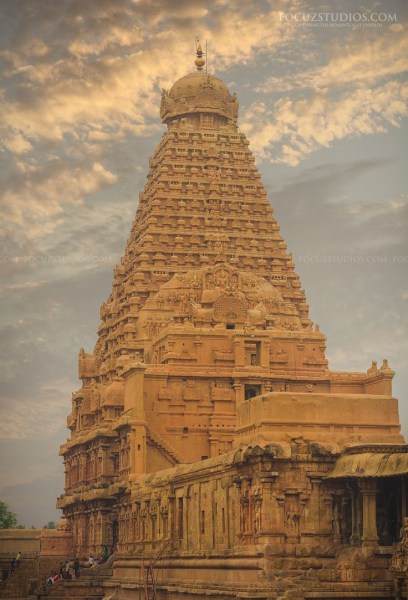
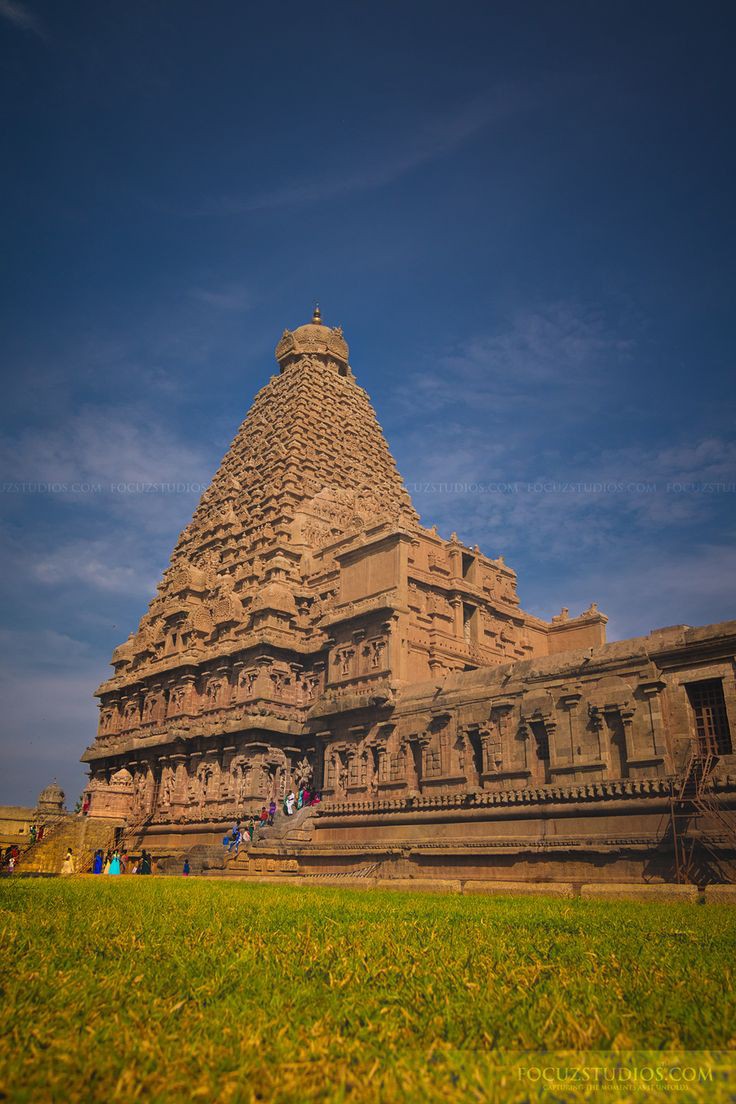
Brihadeeshwara Temple is originally known as Peruvudaiyar Kovil locally known as Thanjai Periya Kovil. It is located in Thanjavur. It is one of the largest Hindu temples and an exemplary example of a fully realized Tamil architecture.


It was built by Raja Raja Chola I in 1010 AD, Brihadeshwara Temple is an ancient temple . The deity of the temple is Lord Shiva,in his dancing pose who is called the Nataraj. The temple is also known as Rajeswara Temple, Rajarajeswaram and Periya Kovil. The temple was built, like a fortress on the shores of a river, by the king to grace the Chola Empire. This thousand-year-old temple is now part of the UNESCO World Heritage Site adding to its exceptional historical and cultural value. The truth is that the secret of the construction of the great temple is still unknown. The large temple construction system is designed in the form of light bonding. During the construction of this temple, when each stone was bound, a threaded gap was left behind. The reason is the way the temple was built and the pure granite stones used for it. While everyone thinks that granite was introduced in the 20th century, it is surprising that over 130,000 tons of granite was used in this temple about 1000 years ago. The temple is a magnificent architectural construct that will never stop surprising anyone visiting the temple. The major attraction of the temple is the 216-feet-tall tower that is built above the Sanctum of the temple. This flamboyant tower can be seen by anyone entering the city from afar. Another breathtaking thing that will sure stupefy the visitor is the magnificent Nandi statue built at the temple; it is about two meters in height, six meters in length and two-and-half meters in width, and weighs around a whopping 20 tons for a statue built from a single stone. Various postures of the famous classical dance, Bharathanatyam, are sculpted finely on the exterior walls of the upper storey of the temple. The temple is a myriad of surprises , by its architectural features. The topmost structure of the temple, called Vimana, weighs around 80 tons, and it is a mystery how the builders got it up there. There are several musical pillars, which make different sounds when taped, at the temple. The architecture of the temple is done so cleverly that the temple casts no shadow on the ground when the sun is at its peak. This is a phenomenon that attracts thousands of tourists and architectural enthusiasts from across the world to unravel the architectural mystery of the temple. Brihadeshwara Temple is also the first all-granite temple in the world, and the fact that granites are not available within the 100-mile radius of the temple only makes it all the more astonishing. Granite is as heavy a stone to carry as it is to carve, but none of that seemed to have shied the king from realizing the temple the way he envisaged.

It took only 7 years to built the temple. The Thanjavur Great Temple is a majestic work of art built over a thousand years ago in a time when science was not developed and there were no technical tools.Foreign researchers researching the Great Temple, with the help of today’s state-of-the-art techniques and science, are still scratching their heads over the mystery of its construction, despite standing upside down and researching the anchor. Yet they themselves come to an assumption and come to the conclusion that they would have built like this, or built like that.The majesty of the temple carries it’s pride to many centuries.

HISTORY OF ZEUS

Zeus was the king of the Greek gods who lived on Mount Olympus.

Zeus is the child of Cronus and Rhea, the youngest of his siblings to be born. He is married to Hera, by whom he is usually said to have fathered Ares, Eileithyia, Hebe, and Hephaestus.

He was respected as an all father who was chief of the gods.

Brothers and Sisters:

Zeus had several brothers and sisters who were also powerful gods and goddesses. He was the youngest, but the most powerful of three brothers. His oldest brother was Hades who ruled the Underworld. His other brother was Poseidon, god of the sea. He had three sisters including Hestia, Demeter, and Hera (who he married).

Zeus had a number of children. Some of his children were Olympic gods such as Ares, Apollo, Artemis, Athena, Aphrodite, Hermes and Dionysus. He also had some children who were half human and were heroes such as Hercules and Perseus. Other famous children include the Muses, the Graces, and Helen of Troy.

STORY OF KING OF GODS:

Zeus was the sixth child of the Titan gods Cronus and Rhea.

Zeus’ father Cronus was worried that his children would become too powerful, so he ate his first five children. They didn’t die, but they couldn’t get out of his stomach either.

When Rhea had Zeus, she hid him from Cronus and Zeus was raised in the forest by Nymphs. When Zeus grew older he wanted to rescue his brothers and sisters. He got a special potion and disguised himself so that Cronus would not recognize him. When Cronus drank the potion, he coughed up his five children. They were Hades, Poseidon, Demeter, Hera, and Hestia.

Cronus and the Titans were angry. They battled Zeus and his brothers and sisters for years. Zeus set the giants and Cyclopes of Earth free to help him fight.

They gave the Olympians weapons to fight the Titans. Zeus got thunder and lightning, Poseidon got a powerful trident, and Hades a helm that made him invisible.

The Titans surrendered and Zeus had them locked deep underground. Mother Earth then became angry with Zeus for locking the Titans underground.

She sent the world’s most fearsome monster called the Typhon to fight the Olympians.

The other Olympians ran and hid, but not Zeus. Zeus fought the Typhon and trapped him under Mount Etna.

This is the legend of how Mount Etna became a volcano. Now Zeus was the most powerful of all the gods.

He and his fellow gods went to live on Mount Olympus. There Zeus married Hera and ruled over the gods and humans.

Zeus is king in heaven is a saying common to all men”. Zeus’ symbols are the thunderbolt, eagle, bull, and oak.

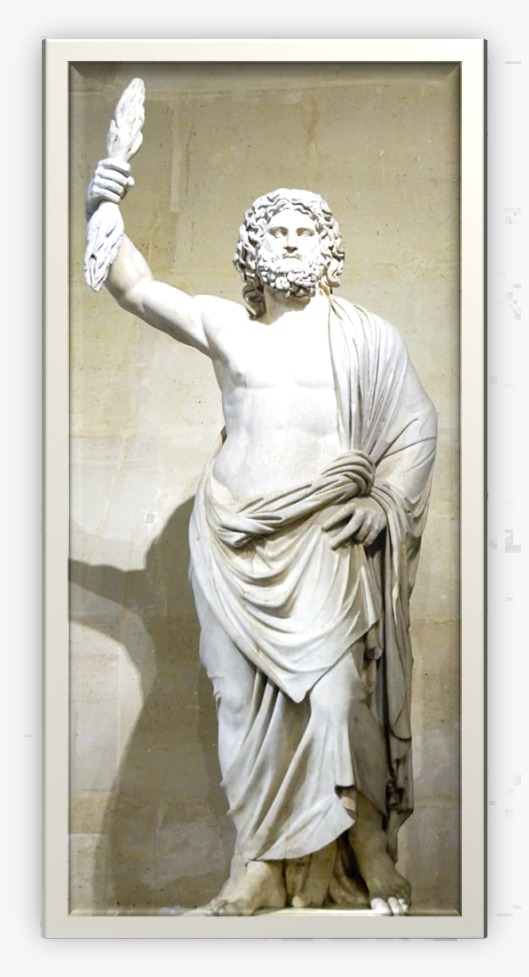
Zeus is frequently depicted by Greek artists in one of three poses: standing, striding forward with a thunderbolt leveled in his raised right hand, or seated in majesty.

THUNDERBOLTS:

The God of Thunder, had the power to wield thunderbolts.

He did this by concentrating vast amounts of energy in his hands, then aiming and hurling thunderbolts at his targets.

His bolts could shear mountains, vaporize islands, incinerate entire cities and even boil the seas.

His bolt were also capable of destroying the bodies of mortals, and even gods.

CONTROL OVER THE ELEMENTS:

Since Zeus was the God of the sky, he had absolute control over elements such as winds, thunderstorms, rain, moisture, clouds, lightning and weather.

He also had the ability to control the movement of stars, govern the functioning of day and night, controlling the effects of time and decide the lifespan of mortals.

ABILITY TO GRANT POWERS:

It is believed that Zeus controlled the abilities of all his children and sisters, and could take their powers and grant them new ones at will.

Apart from this, he was also extremely strong physically, enough to lift mountains.

His strength exceeded that of every Olympian, except that of Hercules, who was his son.

SHAPE-SHIFT:

Another great ability of Zeus was that he was able to shape-shift or transform himself into other forms at will.

Accounts of this ability are mainly witnessed in the tales of his sexual escapades.

His disguises included that of an eagle, a satyr, a flame of fire, a phoenix, a shower of gold, a bull, an ant, an eagle, a shower, a lapwing, a swan, a star, a bear, a shepherd, a goose, a serpent and a vulture.

Leda and the Swan-Zeus took the form of a swan to have intercourse with Leda.

HELEN OF TROY

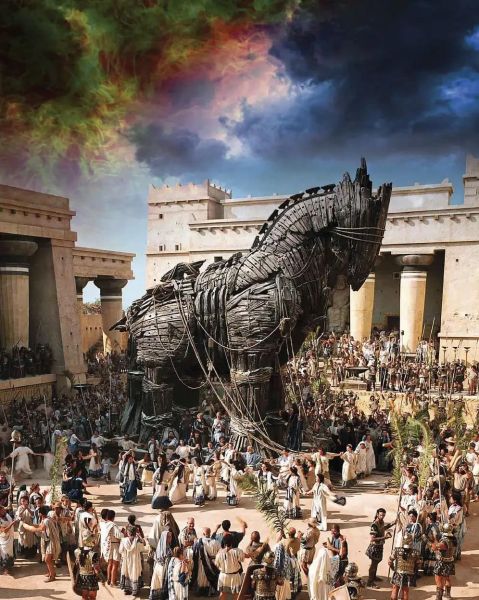
HELEN OF TROY is a character in Homer’s classic epic poem, the “Iliad”,written in the 8th century about the the Trojan War, imagined by the Greeks to have occurred about 500 years earlier.


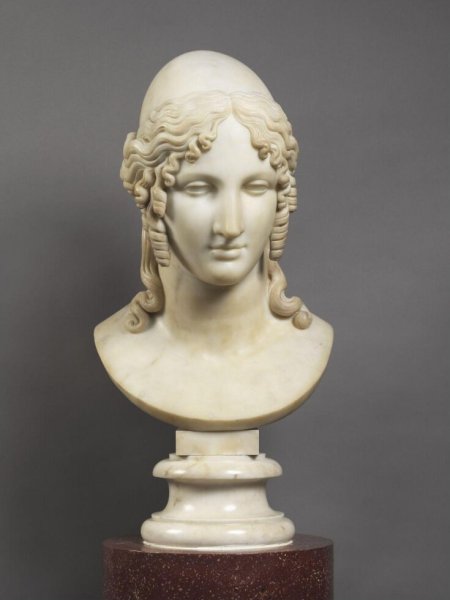
She was the most beautiful woman in the ancient Greek world, the daughter of the king of the Greek gods,Zeus, and the cause of the 10-year Trojan War between Troy and Sparta.


Her story is one of the most dramatic love stories of all time and is said to be one of the main reasons for a 10-year war between the Greeks and Trojans, known as the Trojan War.
In the “Iliad,” Helen’s name is a battle cry, but her story is not told in detail: the “Iliad” is chiefly a man’s story of the conflicting passions and struggles of men on opposing sides of a great battle. The Trojan War was central to the early history of ancient Greece. Details of Helen’s story are provided in a group of poems known as the “epic cycle” or the “Trojan War Cycle,” written in the centuries after Homer.
The legendary beauty of Helen attracted men from afar and also those close to home who saw her as a means to the Spartan throne. The first likely mate of Helen was Theseus, the hero of Athens who kidnapped Helen when she was still young.
Later Menelaus, brother of the Mycenaean King Agamemnon, married Helen. Agamemnon and Menelaus were sons of King Atreus of Mycenae and were therefore referred to as Atrides. Agamemnon married the sister of Helen, Clytemnestra, and became king of Mycenae after expelling his uncle.
The most famous mate of Helen was Paris of Troy. Paris (also known as Alexander or Alexandros) was the son of King Priam of Troy and his queen, Hecuba, but he was rejected at birth and raised as a shepherd on Mount Ida.
While Paris was living the life of a shepherd,the three goddesses , Hera , Aphrodite , and Athena , appeared and asked him to award the “fairest” of them the golden apple that Discord had promised one of them. Each goddess offered Paris a bribe.
Aphrodite, the goddess of love and beauty had offered Paris the most beautiful woman on earth for his bride. That woman was Helen. Unfortunately, Helen was taken. She was the bride of the Spartan king Menelaus.
The love between Menelaus and Helen is unclear. In the end, they may have been reconciled, but meanwhile, when Paris came to the court of Menelaus as a guest, he may have aroused unaccustomed desire in Helen, since in the “Iliad,” Helen takes some responsibility for her abduction.
Menelaus received and extended hospitality to Paris. Then, when Menelaus discovered that Paris had taken off for Troy with Helen and other prized possessions Helen may have considered part of her dowry, he was enraged at this violation of the laws of hospitality. Paris offered to return the stolen possessions, even though he was unwilling to return Helen, but Menelaus wanted Helen, too.
But he wasn’t the last one. After Paris was killed , his brother Deiphobus married Helen. After Deiphobus , the son of Peleus, Achilles , married Helen.And perhaps Helen married five more other.
According to Laurie Macgurie , writing in “Helen of Troy From Homer to Hollywood”,Helen had 11 men as a husbands in the ancient literature.
But he wasn’t the last one. After Paris was killed , his brother Deiphobus married Helen. After Deiphobus , the son of Peleus, Achilles , married Helen.And perhaps Helen married five more other.
According to Laurie Macgurie , writing in “Helen of Troy From Homer to Hollywood”,Helen had 11 men as a husbands in the ancient literature.

SOME INTRESTING FACTS ABOUT KAILASH MANASAROVAR

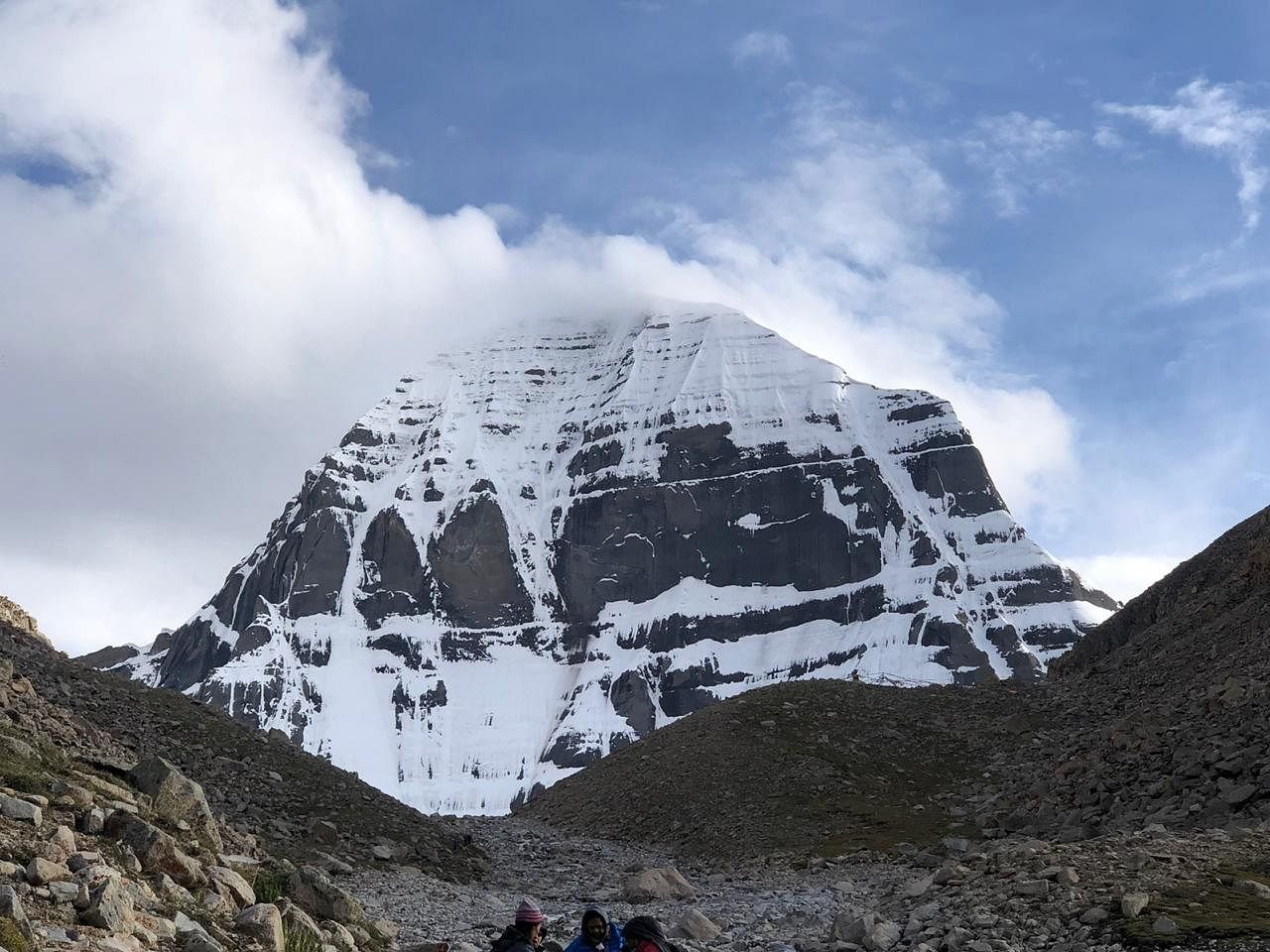
Mount Kailash is located near Lake Manasarover and Lake Rakshastal, near the Indus River, the headwaters of Asia’s longest river. Sutlej; Brahmaputra; Karnali also known as Ghaghara (a tributary of the Ganges) in India. Mount Kailash is considered to sacred in four religions. Receipts; Buddhism; and Jainism.

SOME INTRESTING FACTS ABOUT KAILASH MANASAROVAR

• Stairway to Heaven: Mount Kailash in Tibet is considered a “stairway to heaven”. According to Hindu mythology, it is the residence of Lord Shiva and Goddess Parvati. Climbing this sacred mountain peak is forbidden, as other religions also considered it sacred.
•Sacred to different religions: Mount Kailash is sacred to four religions, including Hinduism, Jainism, Bonn, and Sikhism.
Kailash Strange Structure:The strange pyramid shape of Kailash Manasarovar led to the theory that it was an artificial mountain. According to Russian researchers, Kailash is not a mountain because it is too perfect and symmetrical to be considered a natural event. According to scientists, it’s an artificial vacuum pyramid surrounded by hundreds of small pyramids.
• Kailash cannot be conquered :Kailash, just 6,656 meters above sea level, is not the highest mountain in the world, but it is still unconquerable. There were several trekker trying to climb Mount Kaikash, but none reached the summit. It is believed that climbing this sacred summit will protect the gods.
• Unexpected death of a climber: There are certain points in time when subsequent visits are prohibited. Siberian mountaineers visited once before this point and quickly aged decades earlier. Surprisingly, they died a year later at an old age. Divinity Dwelling: Mt. Kailash is a physical embodiment of Mt. Meru and is believed to have the technical expertise of the superhuman being of God.
Earth’s Energy Center: This sacred mountain is considered the center of the universe. It is considered the axis of the universe, the center of the world, and the pillars of the world. It is the place where the earth and the sky meet.
• Accelerating Aging Near Mt.Kailash: Scientists believed that the aging process would accelerate here. People who spend nearly 12 hours here have been shown to grow their hair and nails. This is equivalent to two weeks in normal life.
• Kailash satellite view: The satellite view of Kailash shows that the shadow of Kailash represents the smile of Lord Shiva.
• Kailash Mystery: You can see the Hindu symbol OM (ॐ) from the southern ridge of Kailash. The formation of a huge ice valley and horizontal rocks from the top of the mountain make up this symbol. Headwaters of the Great Rivers: There are four great rivers in Asia that spring from Kailash Manasarobar. Lake Mansarobar are the sources of the Indus, Sutlej, Brahmaputra and Karnali rivers, which form the main left tributaries of the Ganges.
• Lakes of Good and Evil: The Kailas Himalayan region has two lakes, Lake Manasarovar and Lake Rakshastal. There are many myths surrounding these two lakes. They also show both the good and the bad of humanity.
• Birthplace of Sir Ganesha: Gauri Kund is located near Lake Manasarovar, which is believed to be the birthplace of Lord Ganesha. This is the place where the goddess Parvati surrounded Sir Ganesha with bubbles while taking a bath.
Mount Kailash is said to be non-flying area, you cannot fly over Mt. Kailash by helicopter or any other means.

” It’s pointless giving advice to people who will not listen. It only reduces the value of your words. “

– Author: Farahad Zama

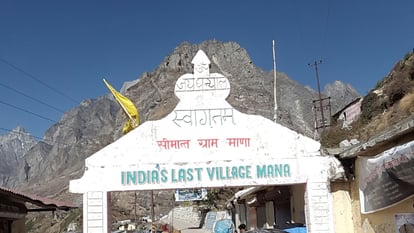
India’s last village Mana.

Mana Village is located in the Chamoli district of Uttarakhand, at an altitude of 3200 m , on the banks of the Saraswati River, about 5 km from the famous Hindu pilgrimage site Badrinath. This beautiful place is located 26 km from the border between India and Tibet and is the last village of India.
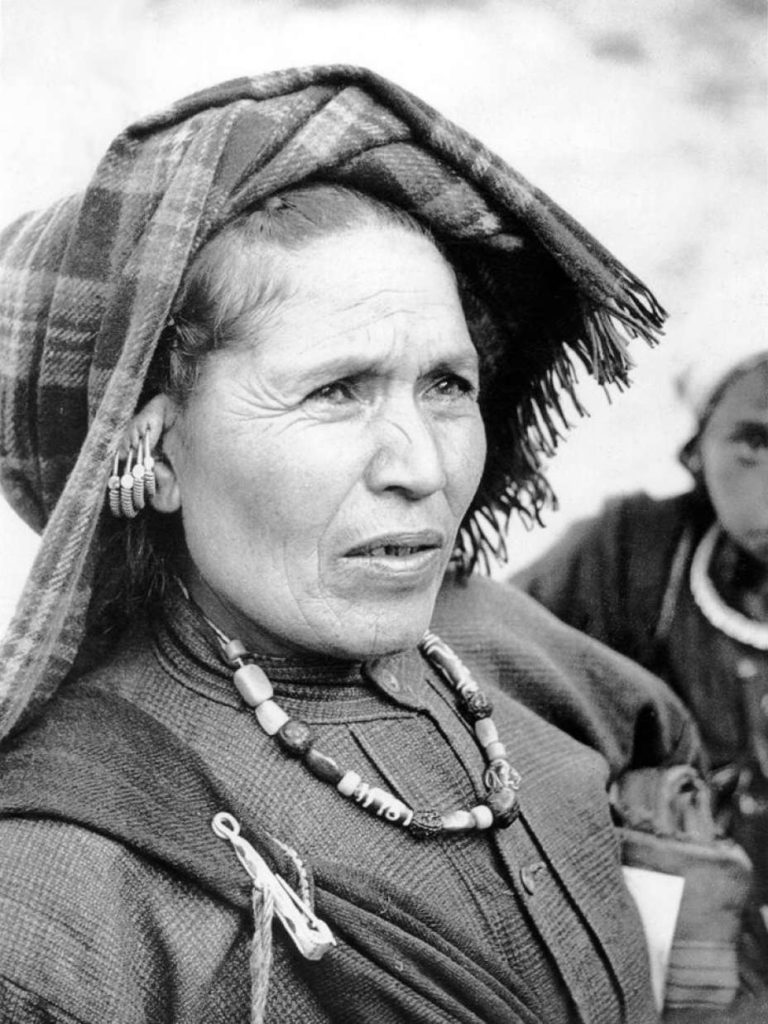
According to the 2011 census, the village was home to about 558 households and with population of about 1214 people . Most of the population here belong to Marchhas and Jads or Bhotias. During the winter, the area is covered with snow, so the entire population moves to lower altitudes. Many cafes here tell people that their store is the last cafe on the Indian border. Most of the people here speaks Garhwali Or Hindi languages.
If you visit this place, you will notice that the shopkeepers in the area sell their products under the title “Last Village”, such as “The Last Tea and Coffee Corner in India”.

Religious importance of mana village:

The village of Mana is of great religious importance to Hindus as it is associated with the Mahabharata era. Pandavas, the five mythical figures of the epic Mahabharata, is believed to have passed through the village of Mana on his final journey to heaven. There is also a stone bridge called “Bheempul” near the Saraswati River. It is believed to have been created by Bheem, one of the Pandava’s .

How do you get to Mana village?
You can reach Mana village easily as it is easily accessible from Rishikesh / Haridwar/Dehradun and situated just 5 km from Badrinath Temple. The nearest train station is located in Haridwar, about 275 km away, and you can reach the village by bus / taxi from outside this station. Mana is just 315 km from Dehradun and there is a regular bus in front of the train station.

Mana attractions :

Neelkanth Peak: At an altitude of 6597 feet above sea level, Neelkanth Peak is one of the region’s main attractions. Also known as the “Queen of Garhwal”, this snow-capped peak rises beautifully above the Badrinath Temple and is a must-see for adventure and trekking lovers.

Tapt Kund: According to Hindu mythology, Tapt Kund is the Sanctuary of the Lord of Agni (Fire). This natural hot spring is thought to have medicinal properties, and it is said that soaking in Tapt Kund water will cure skin diseases.

Vasudhara: This is a scenic waterfall about 9km from Badrinath Temple. According to Legend it is the place where Pandavas stayed for some time during their exile.

Vyas Gufa: As the name implies, Ved Vyas, a famous scholar and author of the epic Mahabharata, lived in this cave while writing the four famous vedas. What makes this cave interesting is a small shrine dedicated to him, which is said to be over 5,000 years old.

Beehma Pul: One of Mana Village’s main attractions is Beehma Pul. Beehma is said to have built this Bheem Pul, a stone bridge to allow his wife Draupadi to cross the Saraswati River on a journey to heaven.

Misuse of Section 375 .

Section 375 of the Indian Criminal Code was created to protect women from rape. In Indian criminal law, in section 375 Men are said to commited rape if he :
(a) pierce the penis in some way or force a “rape” on a woman’s vagina, mouth, urethra, or anus.
(b) in some way insert an object or body part other than the penis into the woman’s vagina, urethra, or anus, or have the woman do so to him or others.
(c) manipulate any part of a woman’s body to penetrate or penetrate the woman’s vagina, urethra, anus, or other parts of her body.
(d) place the mouth in the woman’s vagina, anus, urethra.

Under Section 370 , If a person rape woman and do so in any of the following seven situations.
1) Against to their will. 2) Without their consent. 3)With consent and consent for fear of death or injury to them or those they are close to.
4) Consent is given because a man knows he is not her husband and believes that he is another man who is married, or that he is legally married. If so, with her consent
5) If she is under the age of 18, with or without her consent.

Abuse of power
One of the famous sayings used in connection with Section 375 is “Men are guilty until proved innocent, and women are not guilty until proved innocent.”
Laws enacted to empower women and reassure them in patriarchal societies soon turned into swords that killed the dignity of men in society by false accusations, or women misused laws and power made to protect them. The problem that is occurring in our world today is that women use verbal consent to have sexual intercourse and later refuse or refrain from having sexual intercourse or falsely accuse men that they had it without thier consent. In both cases, the man has the responsibility of proof and must prove his innocence.

According to an article published in The Times of India , only one person was convicted in each of the fourth cases of rape, and high probability that anyone who did not proven guilty after a full trial could be innocent. Leads to the high assumption that innocent people have been accused of rape. India’s conviction ratebin rape cases is 32%, which is self-evident from the fact that numerous false reports related to rape have been registered in India.

Being a victim of false rape allegations is as bad as being a victim of rape. You can’t imagine the shock, trauma, ridicule, and humiliation that someone experienced after being falsely accused of rape. Not only the man, but his family and close friends suffer from various consequences, and isolation and ridicule are just a few of them. Their future is shattered, the humiliation and shame that society suffers is enough to shatter it, and no one can think of them living as they used to.

What can be done ?
The creators of Article 375 of the 2013 Act and the Criminal (Amendment) having only one vision in context to the problem, consider only the safety of women and have not developed any means of protecting innocent men in society. Therefore, there is usually a debate about what we can do to protect innocent people from society who are falsely accused. Provision (Section 375) cannot be said to be gender-neutral to remove the slight justice that this section offers, as it acts as a hurdle for women to file genuine rape cases.
Then the question arises. What can you do? In such situations, the legislature and judiciary need to work together to strike the right balance between men and women so that the virtues of justice are provided to them equally.

Gaura Devi who played an important role in Chipko Movement.

Gaura Devi (1925 – 1991) was a social activist and a rural women community leader from Uttarakhand, India who played an important role in the Chipko movement in 1970’s .
Gaura Devi was born in 1925 in a village named Lata of Chamoli district in the state of Uttarakhand. She got married at very young age, afer her marraige she moved to a nearby village named Reni by the Alaknanda River. At the age of 22 she was a widow with a child. After her husband death she moved to a new village which was near to the border of Indo-Tibet.

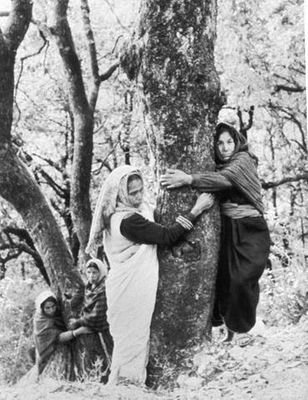
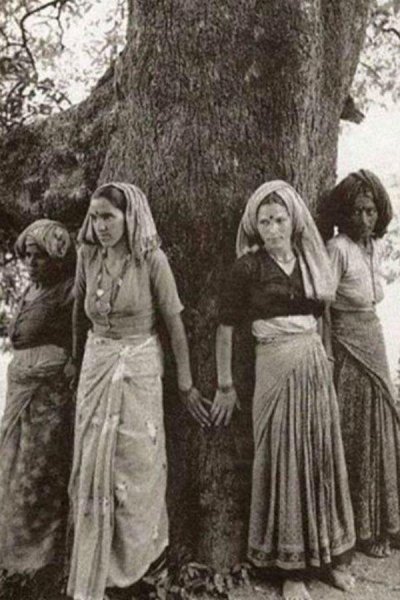
An environmentalist Sunderlal Bahuguna initially started the Chipko Movement . Gaura Devi became the leader of the Chipko movement in 1974. Gaura Devi was elected to lead the Mahila Mangal Dal (Women’s Welfare Association) in the wake of the Chipko movement. The organization worked towards protecting the forests of the community. On March 25, 1974, she learned from a young girl of the village that a local loggers of the village were logging a tree near the village. People in the village of Reni were told the news that according to government new policy, the government would pay compensation to the people for the land used by the army . Gaura Devi and 27 other women decide to take action against the loggers. She confronted the loggers and demanded that the men shoot her instead of cutting down trees, and she described the forest as “vandevta” (the jungle god) and her maika (mother’s house). Eventually, for the next three or four days Gaura Devi along with other village women’s protect the trees by hugging the trees , despite the insults and intimidation of the armed loggers,she was able to stop the logger’s work . After seeing the bravery of Gaura Devi and other village women’s how they protect the trees who are the important part of thier life other villagers from different villages joined the action with her . After this incident, the Uttar Pradesh government set up a specialized committee to investigate logging issues, and the logging company withdrew its subordinates from Reni. The Commission stated that the Reni Forest is an ecologically sensitive area where trees should not be logged. The Uttar Pradesh government who was in power of that area at that has since banned all logging in areas over 1150 km² for 10 years.

Some other important activist who played an important role in Chipko Andolan or Chipko movement along side Gaura Devi were :
Suraksha Devi, Sudesha Devi, Bachni Devi and Chandi Bhatt, Virushka Devi and others.

Gaura Devi passed away in July 1991, at the age of 66 in Reni village Chamoli.

“Ecology is permanent economy “

-Sunderlal Bahuguna

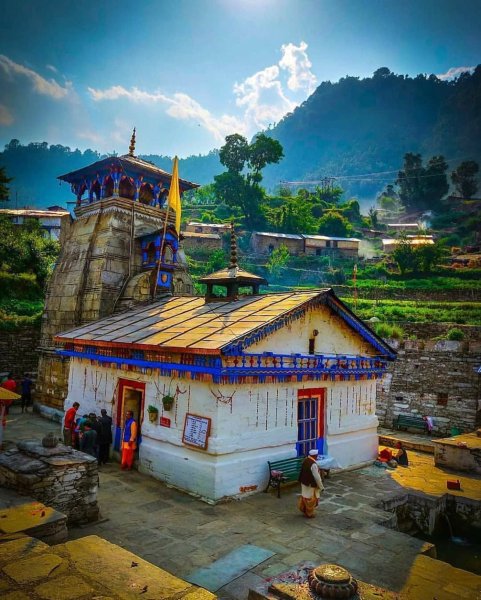
A temple believed to be a marriage place of Lord Shiva and Goddess Parvati.

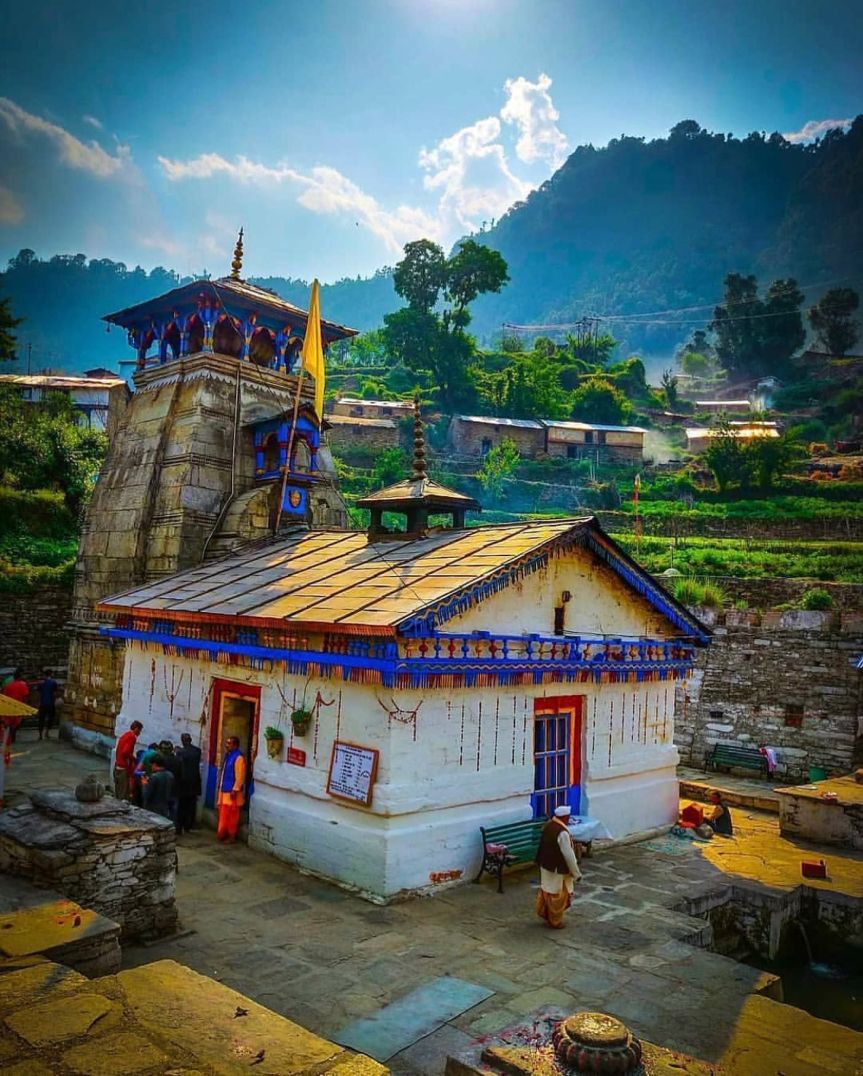
Trijuginarayan Temple is a Hindu temple located in the village of Trijuginarayan in the Rudraprayag district, Uttarakhand, India. The ancient temple is dedicated to Lord Vishnu. Its a popular Hindu pilgrimage site because it is attributed to the legend that this is the place where the marriage of Lord Shiva and Goddess Parvati took place and which Lord Vishnu witnessed here. The hallmark of this temple is the eternal fire that burns in front of the temple. It is believed that the fire is burning from the time of Lord Shiva and Goddess Parvati marriage. Therefore, this temple is also known as Akhand Dhuni Temple. The temple courtyard is also the source of water that fills the three nearby sacred bathing ponds (Kund).

It is believed by many historian that Trijuginarayan Temple have been built by Adi Shankaracharya. Adi Shankaracharya is said to have built many temples in Uttarakhand. The shrine has a silver two-foot statue of Vishnu, accompanied by Consort (the goddess of wealth Lakshmi and the goddess of music and learning) Saraswati.The Trijuginarayan Temple is located at an altitude of 1,980 meters (6,500 feet), about 5 km from Sonprayag, the meeting junction of the Mandakini and Songanga rivers. During the three months of winter, the area is covered with snow. Apples and drupes are cultivated in this area for agricultural purposes.

According to Hindu Dharma, the goddess Parvati was the daughter of Himavat or Himavat-personification of the Himalayas. She was the reincarnation of Shiva’s first wife, Sati-who lost her life when her father offended Shiva. Parvati first tried to allure Shiva with her beauty, but failed. In the end, she suffered severe penance in Gaurikund, five kilometers from Trijuginarayan, and won Shiva. Pilgrim visitors to the Trijuginaryan Temple also visit the Gauri Kund Temple dedicated to Parvati, which is also the base camp for trekking to the Kedarnath Temple. According to mythology, Shiva proposed to Parvati in Guptakashi before getting married in the small village of Trijuginarayan .
Triwajinarayan is believed to be the capital of Himavat. It was the place where Shiva and Pearlvati married in heaven during Satya Yuga, and was witnessed in front of the eternally burning sacred fire in front of the temple of Havana Kund or Agni Kund. It is said Vishnu appeared at the wedding ceremony of Lord Shiva and Goddess Parvati as a brother of Parvati. Meanwhile, the Lord Brahma served as the priest of marriage which was witnessed by all the wise men of the time. The exact location of the wedding is indicated by a stone called Brahma Sila in front of the temple. The splendor of this place is also recorded in Stala Purana, a scripture unique to the Pilgrimage Center. According to the scripture , pilgrims visiting this temple consider the burning ashes of fire to be holy and carry it with them. The ashes from this fire are also believed to promote the bliss of the couple. There were no witnesses to the incident before the wedding, but it is believed that the gods taken bath from the four kunds: Rudra Kund, Vishnu Kund, and Brahma Kund. The stream of the three Kunds, according to legend, comes from Saraswati Kund, which is derived from the navel of Vishnu. Therefore, these Kund waters are considered a remedy for infertility.

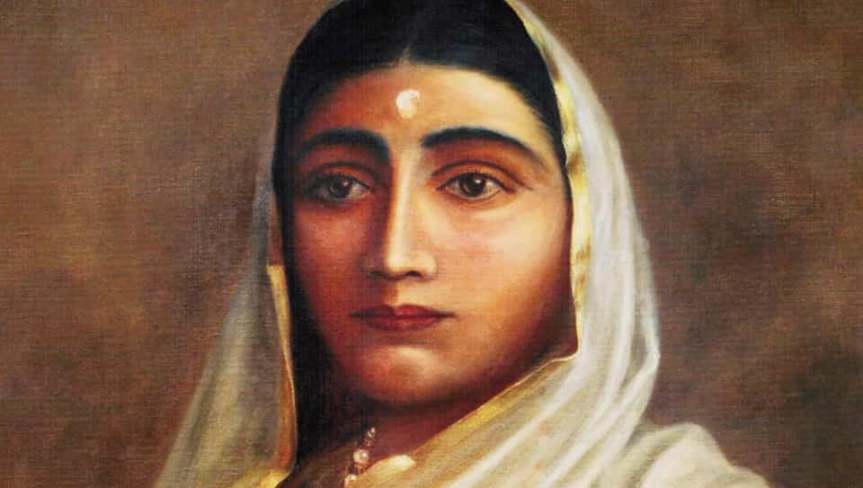
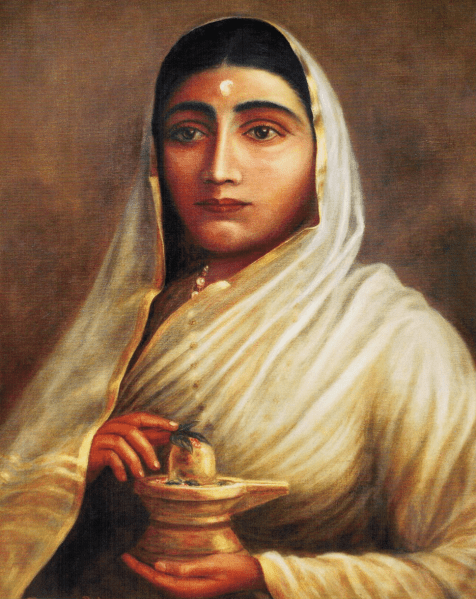
Noble Queen of the Maratha Empire Rani Ahilyabai.

Ahilya Bai was born write to Mankoji Shinde and Sushila Shinde in the village of Chaundi (now Ahmednagar district) in Maharashtra, and was born in the Marathi Hindu family. His father, Mankoji Shinde, a descendant of the magnificent Dhangar family, served as a patil. At that time, the woman were not allowed to attend school , but her father taught her how to read and write.


According to one legend, Ahiliya once stopped by Chaundi on her way to Pune, where Bajirao I, commander of the Maratha army, and Marhar Rao Holker, the ruler of Malwa, saw eight-year-old Ahilya in a temple worship service. Impressed by her devotion and her personality, Marhar, on the advice of Peshwa, married Ahilya and his son Khande Rao. She married Khande Rao in 1733. Ahilya accompanied Khande Rao on many campaigns. Throughout her marriage, she was raised by her mother-in-law, Gautama Bai. Gautama Bai is believed to have played an important role in bringing out the values that she had planted in Ahiliya. She trained them in administration, accounting, politics, etc. and finally delivered their Khasgi Jagir in 1759.

In 1754, Candelao, along with his father Marharla O’Holker, besieged Fort Kumar in Jatrajas Rajimar in Bharatpur at the request of Imadulmark and General Mirbakshi of Mugar Emperor Ahmadsha Bahadur. Suraj Mal supported Emperor Mugar’s rebellious Wajir Safdar Jang. Khande Rao was inspecting his army with an open litter when a shell fired by the Jat army during the battle hit him and died.
After the death of her husband, Ahilya Bye was prevented from playing sati by her father-in-law. After the death of her husband, she received military training by Malhar Rao Holker. After the death of Khande Rao.Ahilya Bai gave up all the desires of life and decided to perform a sati to accompany her husband’s funeral cremation. Her people urged her not to commit sati, but she said her husband promised to accompany her for the rest of her life, and now he walked in the middle of her. Finally, when she decided to play Sati and did not forgive her, it was her father-in-law, Malhar Rao, who made a fervent emotional plea to stop her from doing suicide. .


Marhar Rao Holker died in 1766, twelve years after his son Khande Rao died. Male Rao,the grandson of Marhar Rao and the only son of Khande Rao became the ruler of Indole under the rule of Ahilya Bai in 1766, but he also died within a few months in April 1767.

Ahiliya Bai died on August 13, 1795, at the age of 70. The reign of the modern woman Ahiliya Bai is remembered as a golden age in the history of the Maratha Empire. Ahiliya Bai was taken over by her nephew Tucozy Rao Holker, her commander-in-chief. He immediately abandoned the throne in 1797 in support of his son Kashi Rao Holker.

Ahiliya Bai was a great pioneer and builder of Hindu temples and built hundreds of temples and Dharmashala throughout India. Especially well known for the refurbishment and re-dedication of some of the most sacred sites of Hindu pilgrimages that were desecrated and destroyed by Emperor Aurangzeb in the last century.

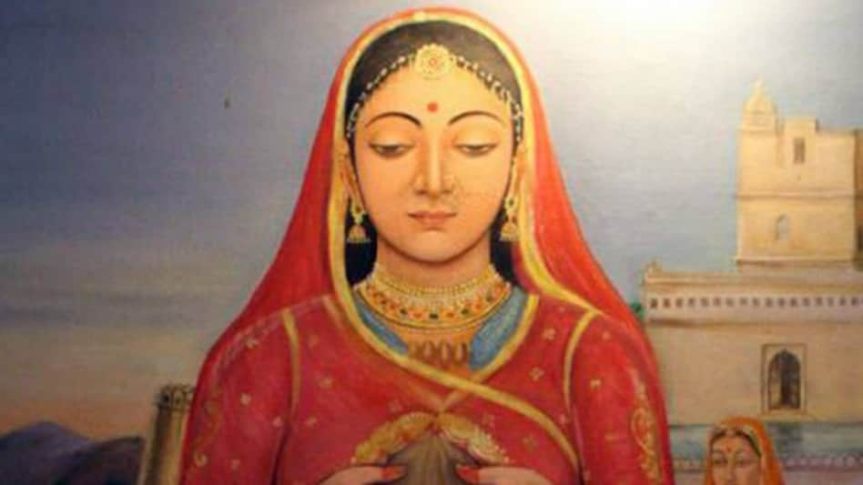
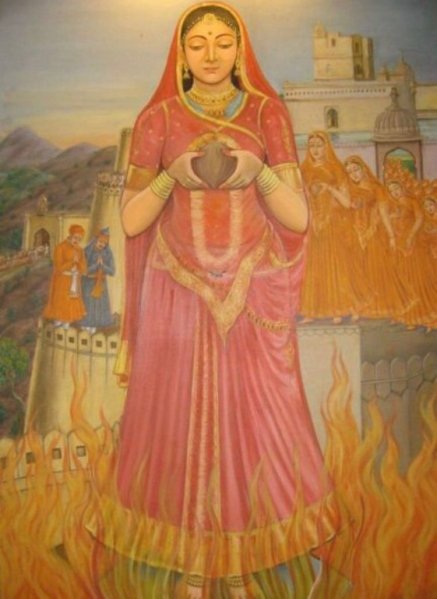
Story of a fierce Queen, Rani Karnavati.

Rani Karnavati was a princess and temporary ruler from Bundi, India. She married Rana Sanga of Mewar in Chittorgarh, the capital of the Kingdom of Mewar. She was the mother of Rana Vikramaditya and Rana Uday Singh, and the grandmother of the legendary Maharana Pratap. During 1527 to 1533 the minority years of her sons she served as a regent for Mewar. She died on 8th March 1535.

After Babur seized the throne of Delhi in 1526, Rana Sanga of Mewar led a coalition of Rajput Kings against Babur to seize the throne of Delhi. In the starting Rana Sanga was able to defeat Babul in the Battle of Bayana, but in the Battle of Kanua, he was defeated because of Babur’s excellent tactics, guns, and artillery.Rani Karnavati took over as regent on behalf of his eldest son Vikramaditya who was a minor at that time. Meanwhile, Mewar was attacked a second time by Gujarat’s ruler Bahadur Shah against whom Vikramaditya had previously been defeated. It was very important issue for Rani Karnavati.

The nobles of Mewar Kingdom did not want to fight for Vikramaditya, and as the upcoming battle will certainly be another stain in the history of Sisodias. Rani Karnavati was able to persuade nobles to fight for Mewar and honor of Sisodias . Their only condition was that Vikramaditya and Uday Singh should go to Boondi for their personal security during the war. In some legends some also said, that Rani Karnavati also sent Rakhi to Emperor Humayun of Mugals calling him his brother and asking for help. Therefore, her name was irreparably linked to the Raksha Bandhan Festival. However, this is not supported by modern writers, and modern historians such as Satish Kumar consider it a fable rather than a historical fact.

Rani Karnavati agreed to send her sons to Bundi ,while knowing the situation being very critical and which can be dangerous for her two sons and send her trusted maid Panna Dai to accompany them and take care of them. Panna hesitated, but she left for Bundi with Vikramaditya and Uday Singh and accept the Queen’s wishes.

The Sisodias dynasty fought bravely, but the army of Mewar was outnumbered by Bahadur Shah army and they were defeated. Bahadur Shah entered Chittorgarh and it was his second attack on Chittor. The male nobles donned with saffron cloths fought with the enemy till thier death and commited Saka.Karnavati and other noble court women realized that defeat was imminent and to save their honour they committed suicide on March 8, 1534, in a fire called Jauhar. This was the second of the three Jauhar to take place in Chittor.

History of Television in India.

Television was founded by John Baird. The first television service was started in 1936 by British Broadcasting Corporation (BBC) of Britain . In 1939, television broadcasts began in the United States. In 1953 the first successful programme in colour was transmitted by Columbia Broadcasting System (CBS) in USA. In today՚s world, television has become one of the most powerful means of mass communication . It can impart education, information and entertainment . Television has end up becoming an necessary a part of our lives.


HISTORY
India’s first television station was established on October 24, 1951, in the Department of Electronics and telecommunications at Government Engineering College in Jabalpur. Television began in India as an experiment on September 15, 1959. It was first started as two hours programmes a week under the authority of AIR. Early programs of these experimental broadcasts were generally educational programs for children and farmers. By 1975, only seven Indian cities were using television services. The Satellite Instructional Television Experiment (SITE) was an important step by India for the use of television for the development of people and the country. Initially, the show was mainly produced by Doordarshan (DD), who was part of AIR at the time. Transmissions were made twice a day, morning and evening. In addition to information on agriculture, health and family planning, other important topics covered in these programs were audience education and awareness raising. Entertainment was also included in the form of dance, music and cinema. In 1976 Television services were separated from radio . Color television was introduced to the Indian market in 1982.

In the late 1980s, more and more people began to own televisions. There was only one channel, but the TV show was saturated. Therefore, the government opened another channel, partly broadcasting nationally and locally. This channel was called DD2 and was later renamed to DD Metro. Both channels were broadcast on the ground. In 1997, Prasar Bharati, was established.Doordarshan, along with AIR, was incorporated into a state-owned enterprise under Prasar Bharati. Transponders of the American satellites PAS-1 and PAS-4 assisted in the transmission and broadcasting of shows on DD. An international channel called DD International was launched in 1995 and broadcasts programs abroad 19 hours a day to Europe, Asia and Africa via PAS-4 and to North America via PAS-1.The 1980s were the prime time for DD, with shows like comedies such as Hum Log (1984-1985), Wagle Ki Duniya (1988), Buniyaad (1986-1987). Epics like Ramayan (1987–1988) and Mahabharat (1989–1990) brought millions to Doordarshan and later on Chandrakanta (1994–1996). Song-based programs for Hindi movies such as Chitrahaar and Rangoli, and crime thrillers such as Karamchand and Byomkesh Bakshi. Children’s shows such as Tenali Rama ,Vikram Betal and Malgudi Days .


Private Channels influence:
The introduction of communication channels was a revolutionary move to reach so many people. It became an opening for Private and Commercial broadcasters in our country. The emergence of private channels began in India in the 1990s after CNN aired the Gulf War. Hong Kong-based STAR (Satellite Telivision Asia Region ) enterned in a contract between an Indian company and Zee TV. It became the first Private Indian Hindi satellite channel. During this time, several local stations have emerged. Apart from local ones various international channels such as Channel, CNN, BBC, Discovery, etc were also available for Indian TV viewers. Their were various categories of channels available for viewers,such as the 24-hour news channel, Religious channels, cartoon channels, movie channels, something for everyone .


Changes and Evolution:
A significant change that has occurred is the use of different methods of delivering television programming. Just a while ago their were satellite-based antennas, but now the mode has converted to dishes. Other shipping methods are are delivery via cable network and direct satellite transmission. Now you can watch TV shows on your mobile phone , the technology behind it is called Internet Protocol Television. The emergence and spread of televisions and computers and the access to content anytime, anywhere, everyone has brought revolutionary change and access to the world of entertainment.

“I always say film is art, theater is life and television is furniture .”

Kenny Leon