An unexamined human life is deprived of the meaning and purpose of existence. The ability to introspect removes the individualistic absurdity by invoking a commitment to moral integrity and social solidarity.
Just like a seed needs soil, sunlight and water for its germination, human life needs introspection and examination for its growth. A greater understanding of the experiences gained in the life at any particular time, enriches one’s engagement with self and the universe.
Mahatma Gandhi’s examination of self through his autobiography, “My experiments with truth”, highlights the significance of reflection on life. Mahatma Gandhi was not only able to map his weaknesses and vulnerabilities through the examination, but was also able to question his prejudices and understand his strength as a human being.
This very ability to reflect on life adds more depth to the character of Arjun in Mahabharat than most of the other characters. Instead of following the norms and fighting with his clan, Arjun questions the meaninglessness of the war and the purpose of his life.
The fast-changing societies and consumerist culture in the contemporary world leave less time for human beings to examine and think about the changes. Adaptation to changes have become automatic and unquestionable.
The quotation has strong relevance in the present times where human beings are burdened with the histories of war, colonisation, nationalisation, erosion of morality in the scientific and technological advancements and the sense of spiritual uprootedness.
It is in these times that one needs to dwell deeper into the conscience to find the purpose of existence and engage in a more meaningful manner with the society.
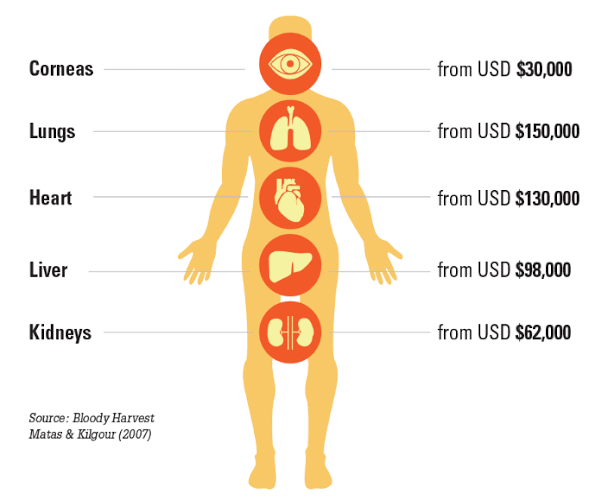
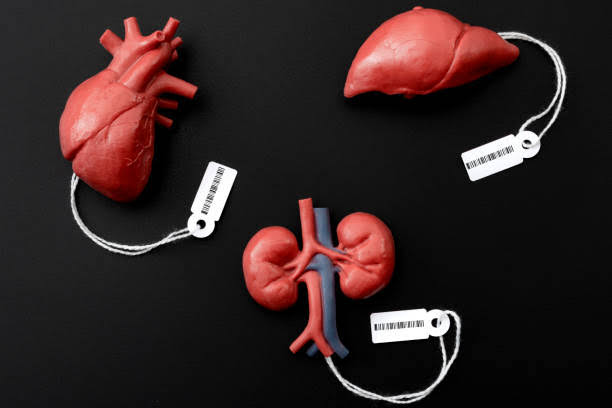
Organ trafficking is a very big issue which the world is facing right now. It is a deadly crime which robs human beings of their healthy life. It is essentially an illegal business of human organs, tissues and body parts. They use them for transplantation. It is bringing down the human body to the worth of an object. They trade them off for a little money or some other commodities. There are various reasons why this happens greatly in all parts of the world.
Causes of Organ Trafficking
When we look at the problems people are facing in today’s world, a lack of organ donors is the main one. There are too many patients nowadays and too few volunteers. Thus, when the supply and demand do not match, crimes like these will rise.
Most importantly, poverty is a great cause of this. People who are in great debt or in need of money sell off their organs to get some temporary relief. They get very less amount than the actual worth. Furthermore, illiteracy is also a great cause. Those who are not educated are not aware of the consequences of selling their organs. They do not know the health hazards and are very vulnerable to this crime.
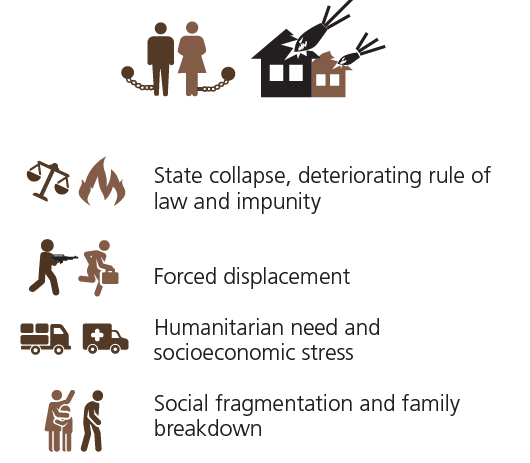
The children in war and developing regions are also very vulnerable to organ trafficking. When they get displaced from their homes, the traffickers make them easy targets. Furthermore, deceiving and dishonest medical firms and people also are a major cause. As organ transplant cannot be done without proper knowledge of it, people of the medical field who are corrupt contribute to it.
The lack of proper implementation of laws also contributes largely to this problem. As there are no stringent laws against this crime, the traffickers have no fear. Moreover, they also get off easy which makes it easy to commit this crime.
Impact of Organ Trafficking
Organ trafficking has a negative impact on society as a whole. The poor people get robbed off their good health due to this crime. The traffickers exploit them endlessly to make sure they do not betray them.
Moreover, kidnapping and human trafficking also happen due to this crime only. The traffickers abduct and traffic children into selling their organs. Some also murder them after their work is done to not leave any proof behind.
Organ trafficking also impacts the health of a person as well as their safety. The high demand for organs results in diseases and illnesses amongst people whose organs are trafficked. People also rob others so they can sell their organs. Even medical firms are losing their credibility because of such illegal practices.
Therefore, we need to eliminate this crime to protect people. The government must take strict measures and implement stringent laws against this crime. We must spread awareness about organ donation so people can donate their organs after death so the supply meets the demand. This will ensure no organ trafficking happens. Moreover, people must also be made aware of the dangers of organ trafficking so they can be better prepared and aware of the consequences.
“life is a gift of our creater…And it should NEVER Be for SALE”
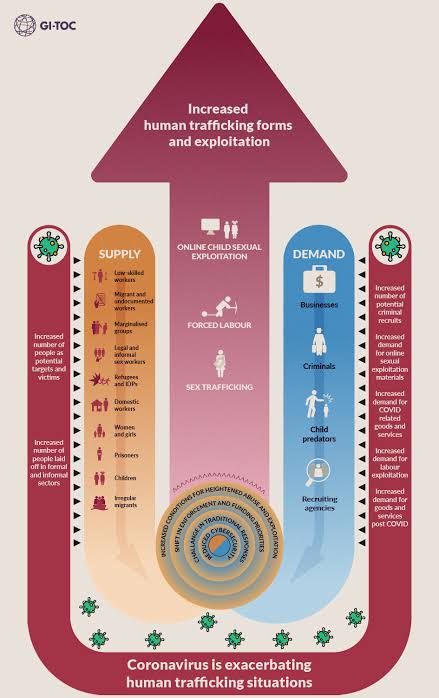
Human trafficking is the trade of humans for the purpose of forced labour, sexual slavery, or commercial sexual exploitation for the trafficker or others. This may encompass providing a spouse in the context of forced marriage, or the extraction of organs or tissues, including for surrogacy and ova removal. Human trafficking can occur within a country or trans-nationally. Human trafficking is a crime against the person because of the violation of the victim’s rights of movement through coercion and because of their commercial exploitation. Human trafficking is the trade in people, especially women and children, and does not necessarily involve the movement of the person from one place to another. People smuggling (also called human smuggling and migrant smuggling) is a related practice which is characterized by the consent of the person being smuggled. Smuggling situations can descend into human trafficking through coercion and exploitation. Trafficked people are held against their will through acts of coercion, and forced to work for or provide services to the trafficker or others. According to the International Labour Organization (ILO), forced labour alone (one component of human trafficking) generates an estimated $150 billion in profits per annum as of 2014. In 2012, the ILO estimated that 21 million victims are trapped in modern-day slavery. Of these, 14.2 million (68%) were exploited for labour, 4.5 million (22%) were sexually exploited, and 2.2 million (10%) were exploited in state-imposed forced labour.
The International Labour Organization has reported that child workers, minorities, and irregular migrants are at considerable risk of more extreme forms of exploitation. Statistics shows that over half of the world’s 215 million young workers are observed to be in hazardous sectors, including forced sex work and forced street begging. Ethnic minorities and highly marginalized groups of people are highly estimated to work in some of the most exploitative and damaging sectors, such as leather tanning, mining, and stone quarry work. Human trafficking is the third largest crime industry in the world, behind drug dealing and arms trafficking, and is the fastest-growing activity of trans-national criminal organizations. Human trafficking is condemned as a violation of human rights by international conventions. In addition, human trafficking is subject to a directive in the European Union. According to a report by the U.S. State Department, Belarus, Iran, Russia, and Turkmenistan remain among the worst countries when it comes to providing protection against human trafficking and forced labour. Trafficked people are held against their will through acts of coercion, and forced to work for or provide services to the trafficker or others. The work or services may include anything from bonded or forced labour to commercial sexual exploitation.
The arrangement may be structured as a work contract, but with no or low payment, or on terms which are highly exploitative. Sometimes the arrangement is structured as debt bondage, with the victim not being permitted or able to pay off the debt. In India, the trafficking in persons for commercial sexual exploitation, forced labour, forced marriages and domestic servitude is considered an organized crime. The Government of India applies the Criminal Law (Amendment) Act 2013, active from 3 February 2013, as well as Section 370 and 370A IPC, which defines human trafficking and “provides stringent punishment for human trafficking; trafficking of children for exploitation in any form including physical exploitation; or any form of sexual exploitation, slavery, servitude or the forced removal of organs.” Additionally, a Regional Task Force implements the SAARC Convention on the prevention of Trafficking in Women and Children.
Humanity is defined as the quality of being human; the unique nature of man that distinguishes him from other beings. Being human does not imply that one has humanity. If you want to know how human a person is, look at what he does for others who don’t return the favour. Mother Teresa has beautifully portrayed one of the most extraordinary examples of extra-ordinary humanity in a human being. When and whenever possible, humanity entails caring for and assisting others.
Humanity entails putting other’s needs before your own, and putting others’ needs ahead of your own when they want assistance. Humanity entails expressing unconditional love to all living things on the planet. The following anecdote serves as an excellent illustration of humanity.
Importance of Humanity:
As humanity progresses towards the future, the true essence of humanity is increasingly distorted. It is critical to remember that actions of humanity must not be motivated by selfish benefit such as celebrity, money, or power. Borders divide the world we live in today, but our reach is infinite. We are fortunate in that we have the ability to travel wherever we choose and experience whatever we desire. Countless nations struggle incessantly over territory, resulting in the deaths of many innocent people.
Similarly, other humanitarian crises such as those in Yemen, Syria, Myanmar, and others have claimed the lives of millions of people. Because the situation is unlikely to be resolved anytime soon, humanity is required. Most importantly, humanity is concerned not only with humans but also with the environment and all living things. We must all band together to display true humanity and aid in the healing and prosperity of other humans, animals, and the environment.
Instead of fighting about democracy in other nations, we should ask ourselves if we have a voice in our own. Because power corrupts even the most strong-willed, we should exercise our right to vote and enhance the government’s procedures. Stop photographing flora and animals to show your friends and relatives. Look at the trees, animals, and natural beauty with your real eyes, not through the lens of a camera. Bring your friends and family to see the breathtaking beauties that surround us and share this beauty with them.
While technology and democracy have given us the ability to accelerate the pace of change in our society, they have also corrupted us. It has given us a sense of unlimited power and knowledge, making us feel as if we are Gods. No, we aren’t gods, and we have no power over other people’s lives. Only that right is theirs. However, we can and must alter ourselves by making informed selections, making the best life choices, and not allowing others to make our decisions for us.
The narrative of a king is an excellent illustration of mankind. When a dove and an eagle were fighting, a kind-hearted king witnessed it. He could communicate with birds and other animals. The pigeon requested the king’s assistance in escaping the eagle’s clutches. The king promised the eagle that in exchange for saving the pigeon, he would pay any price. The eagle requests from the monarch that he be given the same amount of flesh as the pigeon. The king agrees to the Eagle’s condition and begins hacking off his own flesh in proportion to the pigeon’s meat. He finds the pigeon heavier even after donating a small amount of his flesh. Finally, he gives the Eagle his entire being to consume. The Eagle and the Pigeon both transform into angels at that point, appearing on the ground to test the king’s humanity.
For his deeds of humanity, the monarch has now been awarded with the most beautiful prizes and afterlife heaven. This narrative can be interpreted as an overblown statement intended to make people realise the importance of humanity in their daily lives. One crucial truth to remember is that “an individual’s life is measured not by the number of degrees he or she holds, but by the degree of humanitarian actions that one engages in on a daily basis.”
Numerous armed conflicts are currently taking place around the globe, cost of which goes beyond the numbers deaths but it also includes the victims of the consequences of war.The number of indirect victims of armed conflicts is much higher than that of direct deaths. Indirect death is mainly caused by some preventable infectious diseases, undernourishment , and pregnancy-related conditions. In addition to deaths, armed conflicts also lead to undernourishment, increased infant mortality rates, forced migration, refugees, destruction of infrastructure.
International armed conflict, internationalized armed conflict, and non-international armed conflict are the three types of conflicts recognized by International humanitarian law.
Human rights
“Human rights” can be defined as rights of all human beings, regardless of nationality, residence, gender, ethnic origin, race, religion, language or any other status. Everyone is equally entitled to their human rights without any discrimination. This belief is fairly new and it stems from an evolution of the reflection of human dignity over the past centuries.
After World War II, stronger ideas of human rights emerged . People wanted to make sure that they never again be unjustly denied freedom, food, and shelter. The calls for human rights standards to protect citizens from abuses by their governments, came from different parts of the world. These voices played an important role in the San Francisco meeting that drafted the United Nations Charter in 1945. United Nations was then established with the primary goal of maintaining international peace and preventing conflict.
International humanitarian law
Human rights during armed conflicts are infringed upon the most. Therefore, over the years, there has been much focus on the formulation of mechanism aimed at alleviating human suffering armed conflicts. International law of armed conflicts, of which humanitarian law is a part, tries to provide protection to victims of war and crimes.
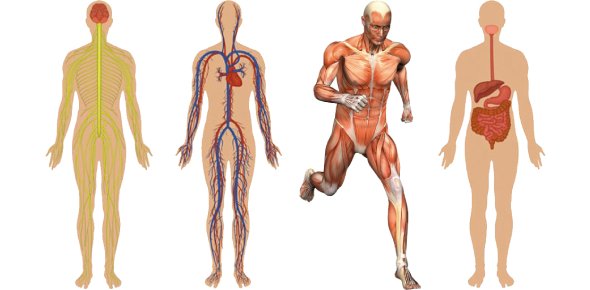
Anatomy is the study of the shape and structure of the body of organisms or living beings. The word anatomy is derived from the Greek words ‘ ana ‘ and ‘ tomy ‘ where ‘ ana ‘ means ‘apart’ and ‘tomy ‘ means ‘to cut’. In physiology, the functions of various system such as respiratory system, digestive system, nervous system, skeleton system and muscular system of organisms are studied. It can be said that physiology is the study of how the body and all its part function. It consists of two word, namely, ‘physio’ and ‘ ology’ where ‘physio’ means ‘nature ‘ and ‘ ology ‘ means ‘ study’. Here ,we will study human anatomy and human physiology.
Definition of Human Anatomy
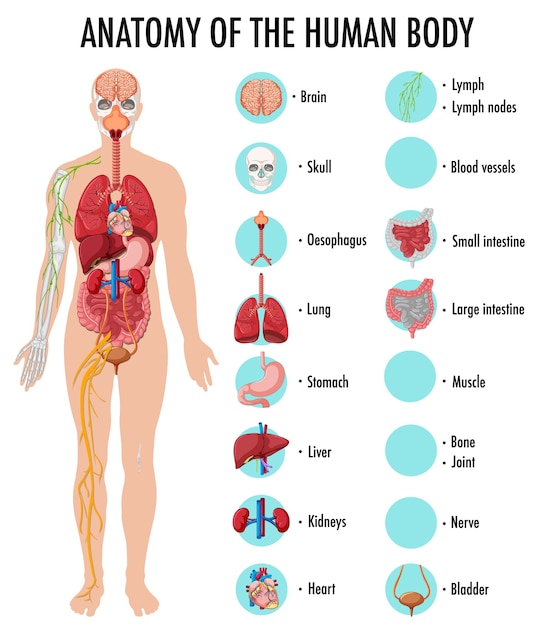
Human Anatomy is the study of structure ,shape, size , weight and location of all the organs of human body. A detailed knowledge of the structure of various system of human body is provided in human anatomy . For example , the shape, size, weight, structure and location of all the organs of the excretory system such as lungs, kidneys, large intestine, liver, skin, etc. are studied in human anatomy. Human anatomy can be defined as the science dealing with human body structure and relationships among structures.
Importance of Anatomy
The importance of anatomy and physiology is mentioned below.
Anatomy Provides the Knowledge of Structures of Various Organs : Human anatomy provides the detailed knowledge of the structure of various organ body . We get the knowledge of structure, shape, size, location and weight of organs of all the systems of our body. We come to know about the length of various organs such as the length, size and shape of the bones. With the help of anatomy , we get the knowledge of the percentage of white fibres and red fibres present in an individual. As a result of such knowledge , the teacher and coaches working in the field of physical education and sports may easily select the suitable sports according to the traits of students. For example, weightlifting is more appropriate for short statured students, who have more percentage of white fibres i.e., fast twitch fibres in comparison to red fibers i.e., slow twitch fibres can perform better in sprinting events instead of endurance events.
The story of human origins is complicated since our ancestors swapped genes (and probably skills).
The first humans emerged in Africa around two million years ago, long before the modern humans known as Homo sapiens appeared on the same continent.
There’s a lot anthropologists still don’t know about how different groups of humans interacted and mated with each other over this long stretch of prehistory. Thanks to new archaeological and genealogical research, they’re starting to fill in some of the blanks.
The First Humans
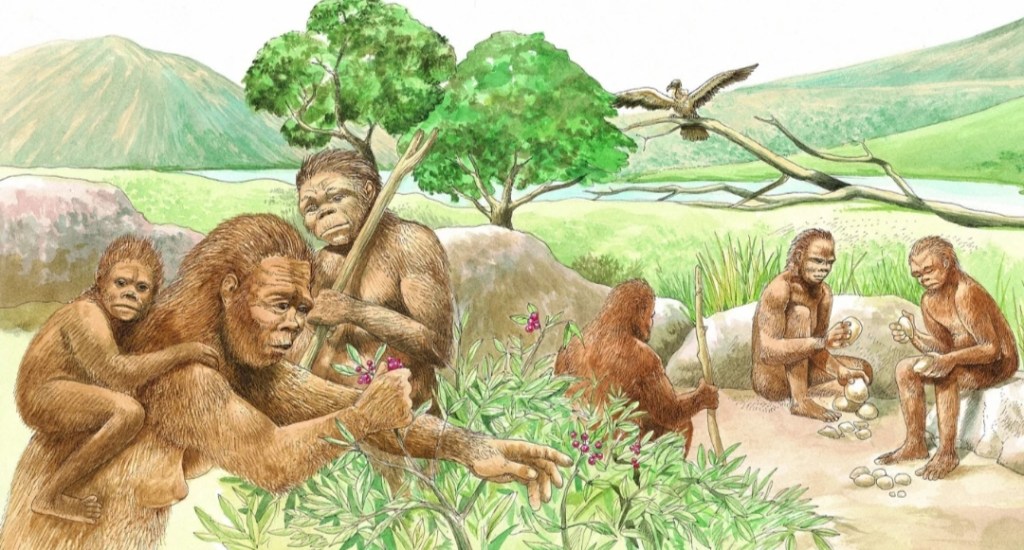
Homo habilis individuals chip away at rocks, sharpening them for cutting up game or scraping hides while a woman, with her child, gathers wild berries to eat and branches to make shelters.
First things first: A “human” is anyone who belongs to the genus Homo (Latin for “man”). Scientists still don’t know exactly when or how the first humans evolved, but they’ve identified a few of the oldest ones.
One of the earliest known humans is Homo habilis, or “handy man,” who lived about 2.4 million to 1.4 million years ago in Eastern and Southern Africa. Others include Homo rudolfensis, who lived in Eastern Africa about 1.9 million to 1.8 million years ago (its name comes from its discovery in East Rudolph, Kenya); and Homo erectus, the “upright man” who ranged from Southern Africa all the way to modern-day China and Indonesia from about 1.89 million to 110,000 years ago.
In addition to these early humans, researchers have found evidence of an unknown “superarchaic” group that separated from other humans in Africa around two million years ago. These superarchaic humans mated with the ancestors of Neanderthals and Denisovans, according to a paper published in Science Advances in February 2020. This marks the earliest known instance of human groups mating with each other—something we know happened a lot more later on.
After the superarchaic humans came the archaic ones: Neanderthals, Denisovans and other human groups that no longer exist.
Archaeologists have known about Neanderthals, or Homo neanderthalensis, since the 19th century, but only discovered Denisovans in 2008 (the group is so new it doesn’t have a scientific name yet). Since then, researchers have discovered Neanderthals and Denisovans not only mated with each other, they also mated with modern humans.
“When the Max Plank Institute [for Evolutionary Anthropology] began getting nuclear DNA sequenced data from Neanderthals, then it became very clear very quickly that modern humans carried some Neanderthal DNA,” says Alan R. Rogers, a professor of anthropology and biology at the University of Utah and lead author of the Science Advances paper. “That was a real turning point… It became widely accepted very quickly after that.”
As a more recently-discovered group, we have far less information on Denisovans than Neanderthals. But archaeologists have found evidence that they lived and mated with Neanderthals in Siberia for around 100,000 years. The most direct evidence of this is the recent discovery of a 13-year-old girl who lived in that cave about 90,000 years ago. DNA analysis revealed that her mother was a Neanderthal and her father was a Denisovan.
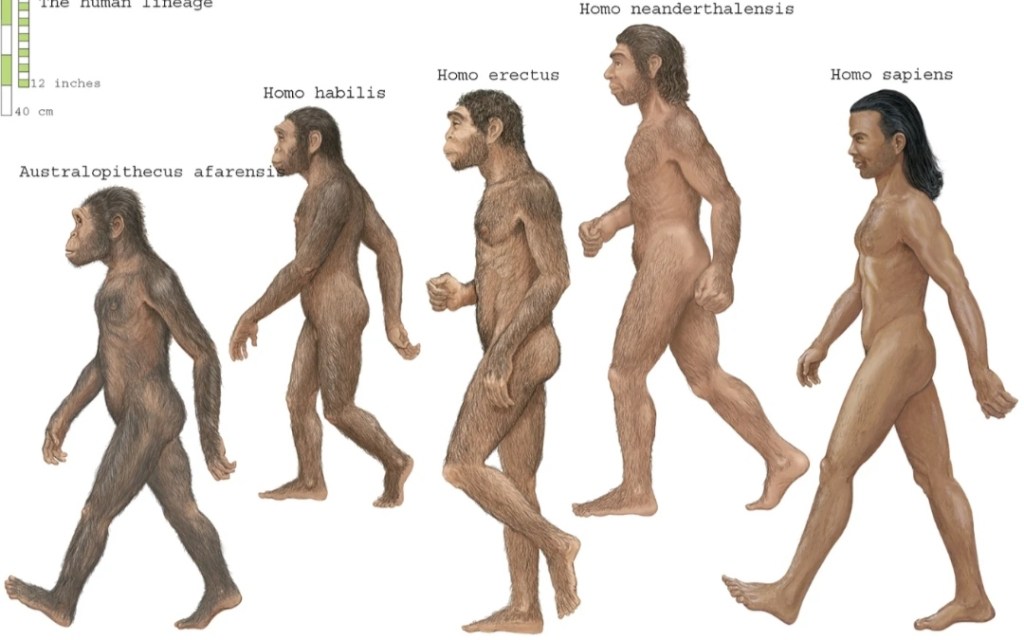
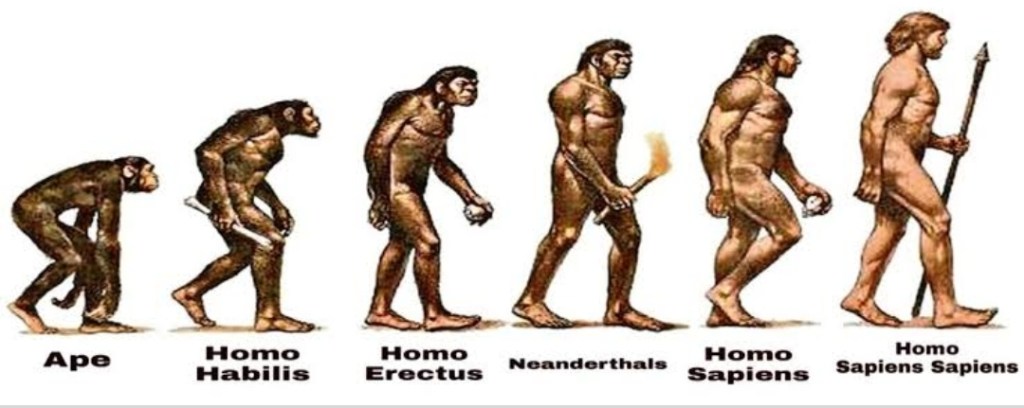
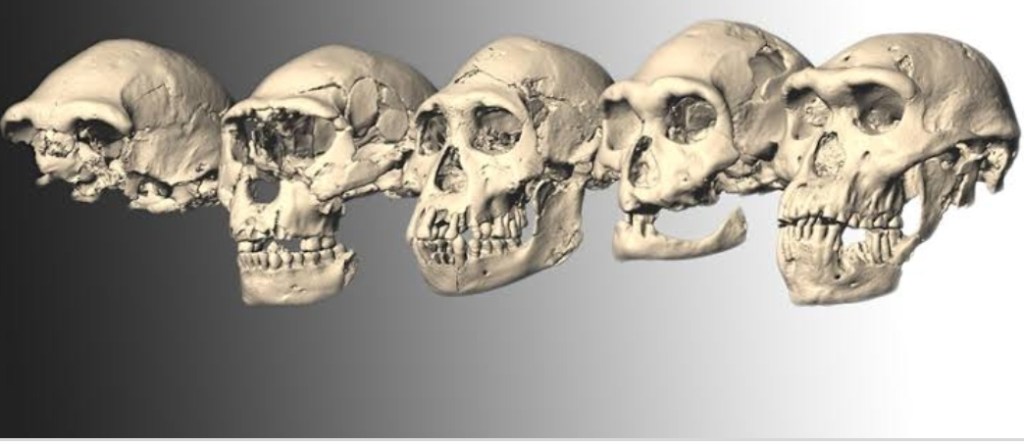
The human lineage of Australopithecus afarensis, Homo habilis, Homo erectus, Neanderthals and Homo sapiens.
Scientists are still figuring out when all this inter-group mating took place. Modern humans may have mated with Neanderthals after migrating out of Africa and into Europe and Asia around 70,000 years ago. Apparently, this was no one-night stand—research suggests there were multiple encounters between Neanderthals and modern humans.
Less is known about the Denisovans and their movements, but research suggests modern humans mated with them in Asia and Australia between 50,000 and 15,000 years ago.
Until recently, some researchers assumed people of African descent didn’t have Neanderthal ancestry because their predecessors didn’t leave Africa to meet the Neanderthals in Europe and Asia. But in January 2020, a paper in Cell upended that narrative by reporting that modern populations across Africa also carry a significant amount of Neanderthal DNA. Researchers suggest this could be the result of modern humans migrating back into Africa over the past 20,000 years after mating with Neanderthals in Europe and Asia.
Given these types of discoveries, it may be better to think about human evolution as a “braided stream,” rather than a “classical tree of evolution,” says Andrew C. Sorensen, a postdoctoral researcher in archaeology at Leiden University in the Netherlands. Although the majority of modern humans’ DNA still comes from a group that developed in Africa (Neanderthal and Deniosovan DNA accounts for only a small percentage of our genes), new discoveries about inter-group mating have complicated our view of human evolution.
“It seems like the more DNA evidence that we get—every question that gets answered, five more pop up,” he says. “So it’s a bit of an evolutionary wack-a-mole.”
Early Human Ancestors Shared Skills
Human groups that encountered each other probably swapped more than just genes, too. Neanderthals living in modern-day France roughly 50,000 years ago knew how to start a fire, according to a 2018 Nature paperon which Sorensen was the lead author. Fire-starting is a key skill that different human groups could have passed along to each other—possibly even one that Neanderthals taught to some modern humans.
“These early human groups, they really got around,” Sorensen says. “These people just move around so much that it’s very difficult to tease out these relationships.”
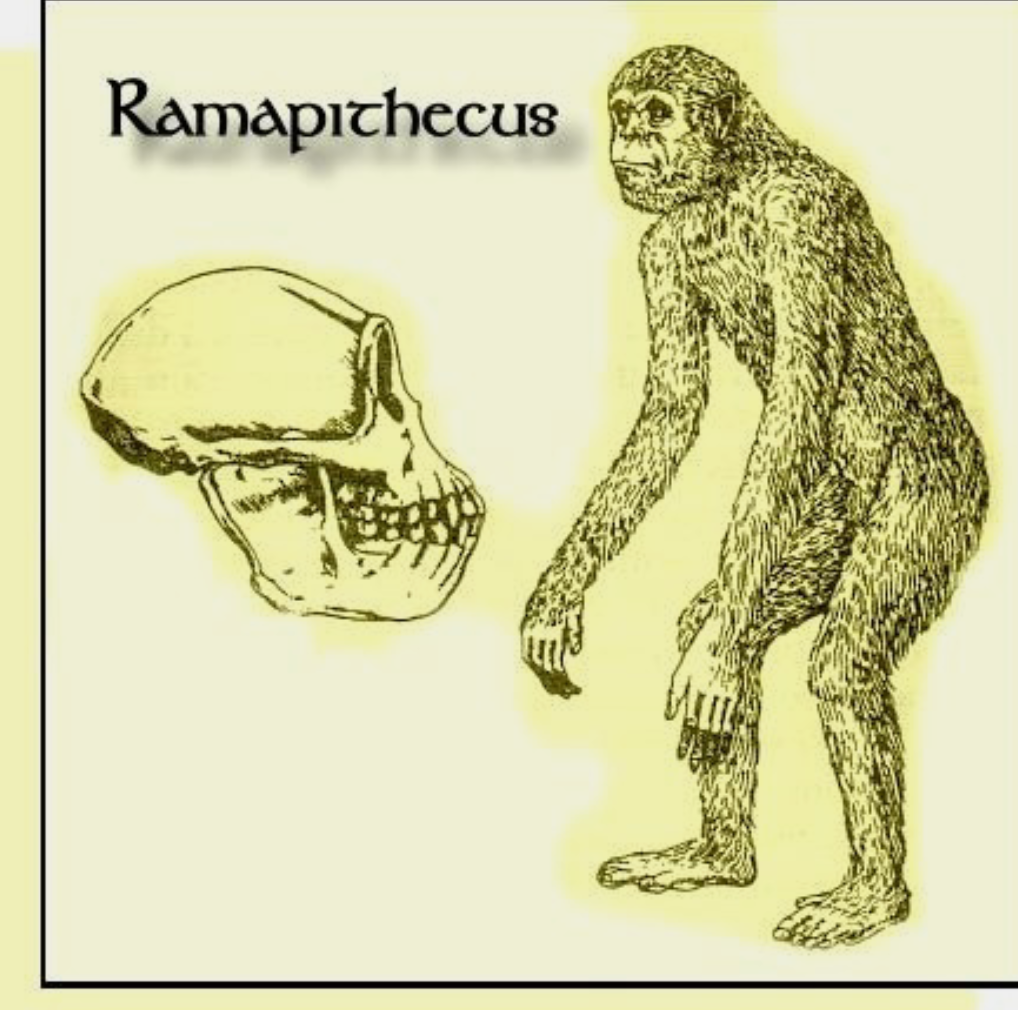
About 15mya, primates called Dryopithecus and Ramapithecus were existing. They were hairy and walked like gorillas and chimpanzees.
Ramapithecus was more man-like while Dryopithecus was more ape-like. Few fossils of man-like bones have been discovered in Ethiopia and Tanzania.
These revealed hominid features leading to the belief that about 3-4mya, man-like primates walked in eastern Africa. They were probably not taller than 4 feet but walked up right.
Two mya, Australopithecus probably lived in East African grasslands. Evidence shows they hunter with stone weapons but essentially ate fruit.
Some of the bones among the bones discovered were different. This creature was called the first human-like being the hominid and was called Homo habilis.
The brain capacities were between 650-800cc. They probably did not eat meat. Fossils discovered in Java in 1891 revealed the next stage, i.e., Homo erectus about 1.5mya.
” Homo erectus had a large brain around 900cc. Homo erectus probably ate meat. The Neanderthal man with a brain size of 1400cc lived in near East and Central Asia between 1,00,000-40,000 years back. They used hides to protect their body and buried their dead.”
Homo sapiens arose in Africa and moved across continents and developed into distinct races. During ice age between 75,000-10,000 years ago modern Homo sapiens arose.
Pre-historic cave art developed about 18,000 years ago. Agriculture came around 10,000 years back and human settlements started. The rest of what happened is part of human history of growth and decline of civilisations.
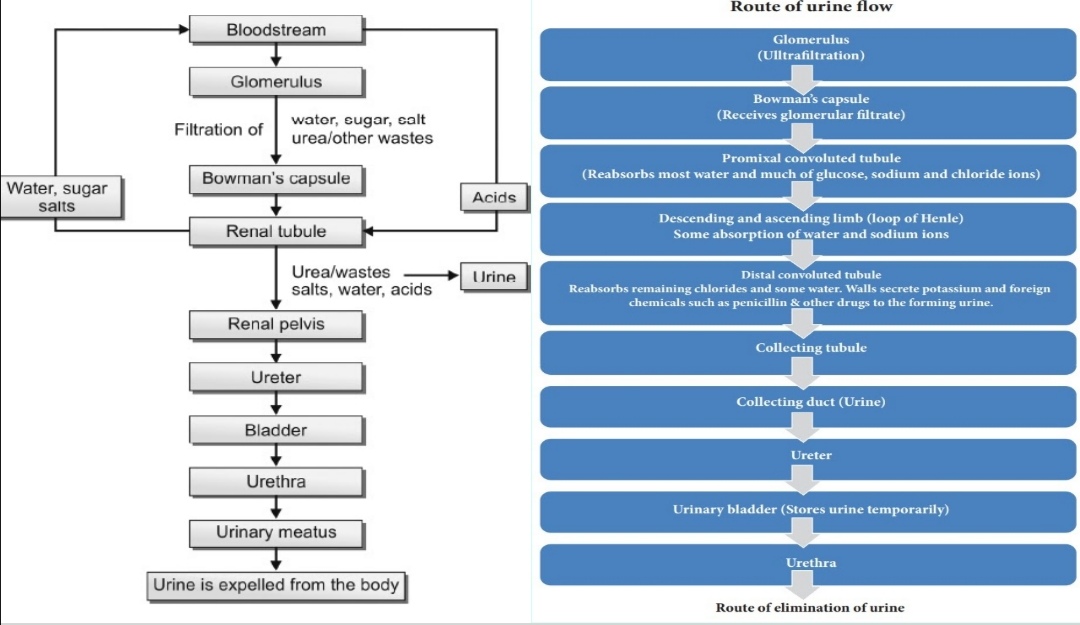
Removal of nirogenous waste produce during metabolism of protein and nucleic acid.
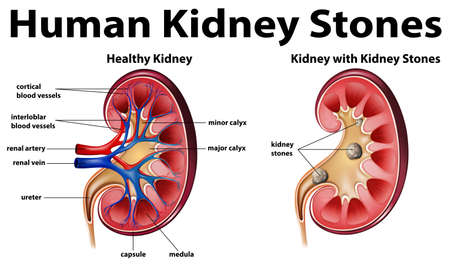
Human excretory system includes:- Pair of kidney Pair of ureter Urinary bladder Urethra
Function of kidney
Kidneys regulate the osmotic pressure of a mammal’s blood through extensive filtration and purification, in a process known as Osmoregulation.
Kidneys filter the blood; urine is the filtrate that eliminates wastes from the body via the ureter into the urinary bladder.
The kidneys are surrounded by three layers:
Renal fascia
perirenal fat capsule
Renal caps
EXTERNAL ANATOMY
A typical adult kidney (mass – 135–150 g) is:
10–12 cm- long 5–7 cm – wide 3 cm cm- thick
The concave medial border of each kidney faces the vertebral column.
Near the centre of the concave border is an indentation called the Renal hilum, through which the ureter emerges from the kidney along with blood vessels, lymphatic vessels and nerves.
Human kidney are Retroperitoneal(covered with peritoneum)
Present between 12th thoracic vertebrae to 3rd lumber vertebrae.
Left kidney is higher than the right kidney due to position of liver in right side.
Three layers of tissue
a) .The Renal capsule(Deep layer) – Smooth, transparent sheet of dense irregular connective tissue that is continuous with the outer coat of the ureter.
It serves as a barrier against trauma and helps maintain the shape of the kidney.
b) The adipose capsule (middle layer) – Mass of fatty tissue surrounding the renal capsule.
Protects the kidney from trauma and holds it firmly in place within the abdominal cavity.
c) The renal fascia(superficial layer) – Thin layer of dense irregular connective tissue
Anchors the kidney to the surrounding structures and to the abdominal wall
On the anterior surface of the kidneys, the renal fascia is deep to the peritoneum
Internal anatomy
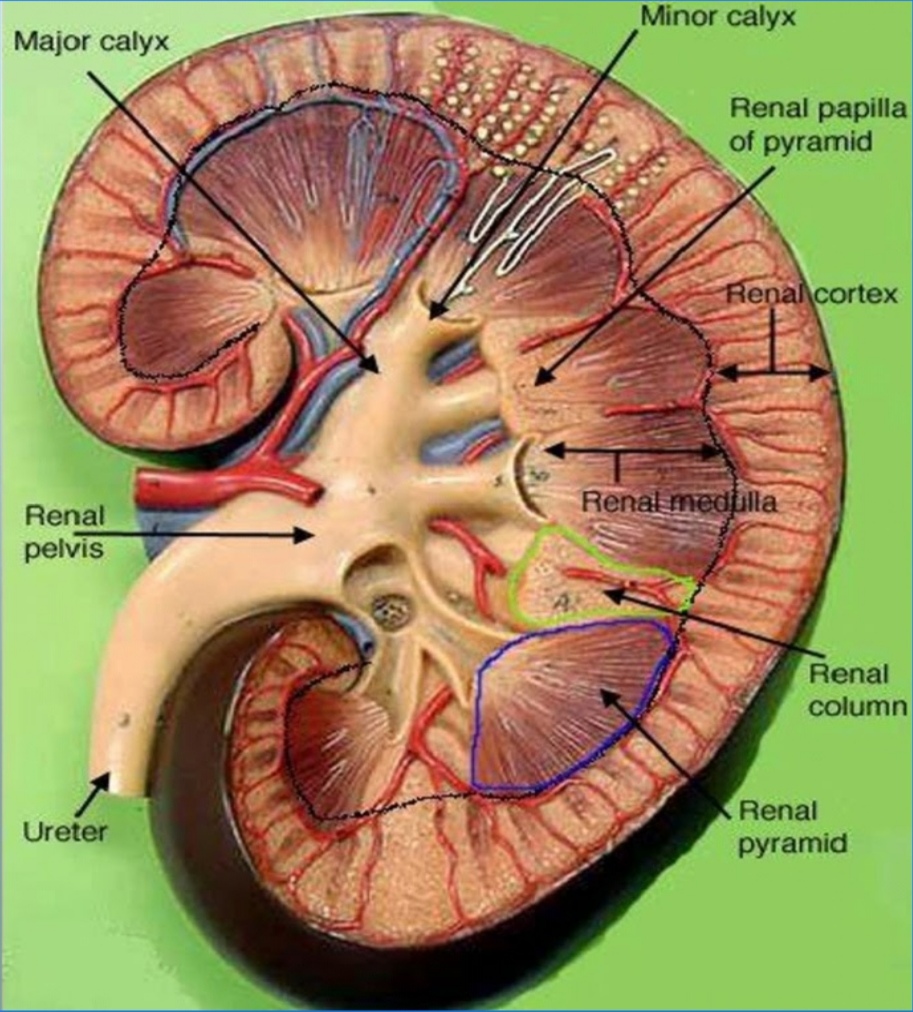
A frontal section through the kidney reveals two distinct regions:
Renal cortex (outer)
Renal medulla (inner).
The renal medulla consists of several cone-shaped renal pyramids.
The base (wider end) of each pyramid faces the renal cortex, and its apex (narrower end), called a renal papilla, points toward the renal hilum.
The renal cortex, smooth textured area extending from the renal capsule to the bases of the renal pyramids.
It is divided into an outer cortical zone and an inner juxtamedullary zone.
Ureter
Muscular tubes of 25-30cm length, 3m in diameter.
Wall of Ureter
Innermost-Transitional epithelium
Middle layer-Muscular(longitudinal and circular muscle)
Outermost layer – Tunica adventita.
Urine is move through ureter by peristalsis.
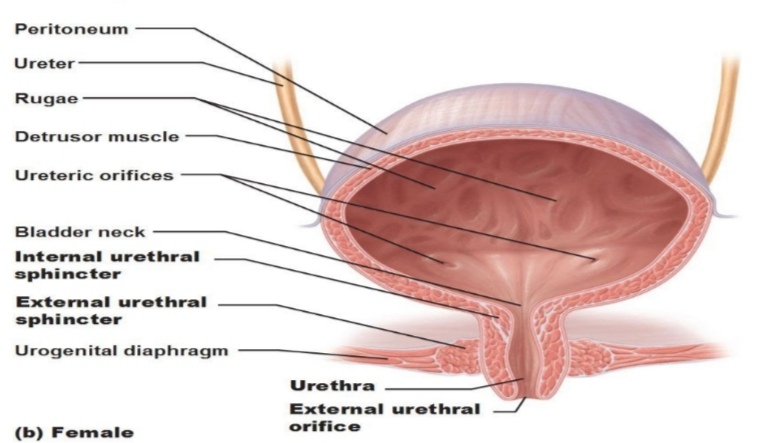
Urethra conduct the urine from urinary bladder to outside. Female urethra is short. Male urethra is long.
Urinary bladder
Urinary bladder
It is hollow muscular organ that stores urine from the kidneys before disposal by urination.
In humans the bladder is a hollow distensible organ that sits on the pelvic floor
Urinary Bladder
Nephron
Structure of nephron
Structure and functional unit of kidey.
Each kidney contain about 1 million nephron
Each nephron has 2 part
Glomerulus
Renal tubules.
Take a simple filtrate of the blood and modify it into urine.
Cleanse the blood and balance the constituents of the circulation.
Many changes take place in the different parts of the nephron before urine is created for disposal.
The term urine will be used here after to describe the filtrate as it is modified into true urine.
The principle task of the nephron population is to balance the plasma to homeostatic set points and excrete potential toxins in the urine.
RENAL CORPUSCLE
It CONSISTS OF A GLOMERULUS SURROUNDED BY A BOWMAN’S CAPSULE.
THE GLOMERULUS ARISES FROM AN AFFERENT ARTERIOLE AND EMPTIES INTO AN EFFERENT ARTERIOLE.
THE SMALLER DIAMETER OF AN EFFERENT ARTERIOLE HELPS TO MAINTAIN HIGH BLOOD PRESSURE IN THE GLOMERULUS.
THE BOWMAN’S CAPSULE IS DIVIDED INTO THREE LAYERS:
OUTER PARIETAL LAYER- MADE UP OF EPITHELIAL CELLS WITH MINUTE PORES OF DIAMETER 12NM.
MIDDLE BASEMENT MEMBRANE-IT IS SELECTIVELY PERMEABLE.
INNER VISCERAL LAYER-IT CONSISTS OF LARGE NUCLEATED CELLS CALLED PODOCYTE(BEAR FINGER-LIKE PROJECTIONS CALLED PODOCEL)
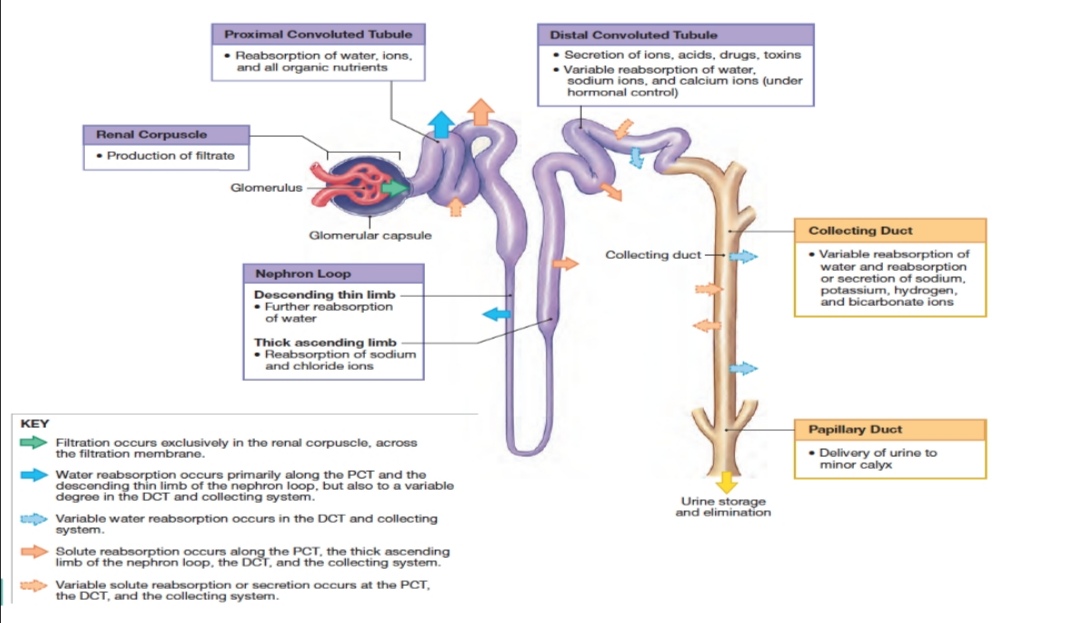
Renal tubule
It IS A LONG AND CONVOLUTED STRUCTURE THAT EMERGES FROM THE GLOMERULUS
IT CAN BE DIVIDED INTO THREE PARTS BASED ON FUNCTION:-
PROXIMAL CONVOLUTED TUBULE (PCT) – IN THE RENAL CORTEX.
THE LOOP OF HENLE, OR NEPHRITIC LOOP – IT FORMS A LOOP (WITH DESCENDING AND ASCENDING LIMBS) THAT GOES THROUGH THE RENAL MEDULLA.
DISTAL CONVOLUTED TUBULE (DCT)- IN THE RENAL CORTEX.
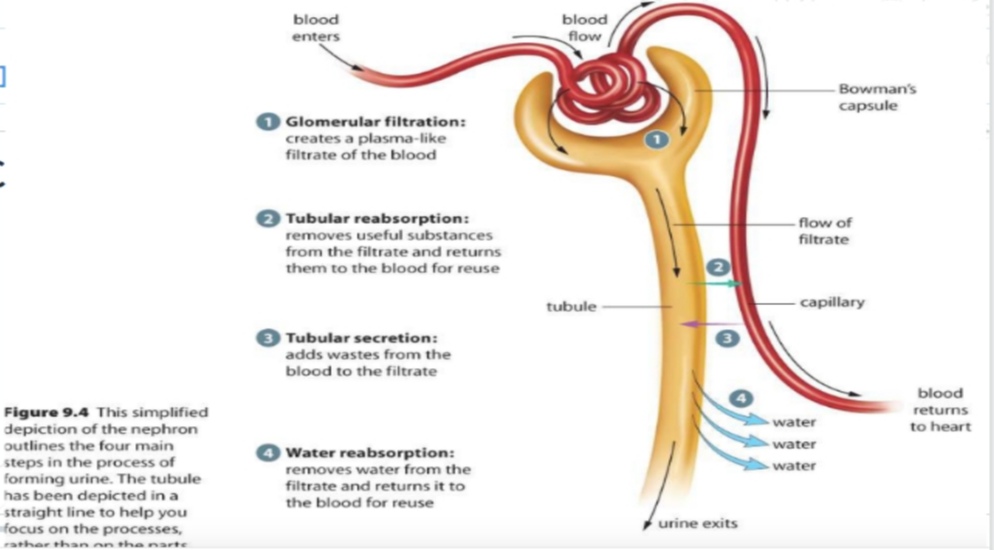
WATER AND SOLUTES ARE FORCED THROUGH THE CAPILLARY WALLS OF THE Glomerulus INTO THE BOWMAN’S CAPSULE (GLOMERULARCAPSULE)
FILTRATE –THE FLUID THAT IS FILTERED OUT INTO BOWMAN’S CAPSULE.
Glomerulus filtrate-same as plasma but protein are absent.
Contains-Water, ions, Glucose, amino acid, water soluble vitamin, urea, uric acid etc.
Tubular reabsorption
OCCURS BOTH PASSIVE AND Actively.
GLUCOSE, AMINO ACIDS, AND OTHER NEEDED IONS (NA, K, CL, CA, HCO3) ARE TRANSPORTED OUT OF THE FILTRATE INTO THE PERITUBULAR CAPILLARIES ( REABSORBED BACK INTO THE BLOOD)
ABOUT 65% OF THE FILTRATE IS REABSORBED IN THE PCT.
AS THESE SUBSTANCES ARE Reabsorbed, THE BLOOD BECOMES HYPERTONICSO WATER EASILY FOLLOWS BY OSMOSIS.
REABSORPTIONIN THE DCT IS UNDER Hormonal CONTROL ALDOSTERONE CAUSES MORE SALT TO BE ABSORBED
ADH CAUSES MORE WATER TO BE ABSORBED
TUBULAR SECRETION
WASTE PRODUCTS SUCH AS UREA AND URIC ACID, DRUGS AND HYDROGEN AND BICARBONATE IONS ARE MOVE OUT OF THE PERITUBULARCAPILLARIES INTO THE FILTRATE; THIS REMOVES UNWANTED WASTES AND HELPS REGULATE PH
Urine
It is pale yellow in colour due to Urochrome pigment that is byproduct of red blood corpuscles(RBC) breakdown.
Around 1-1.5 litre of urine is formed per day.
PH =6 (vary 4.2 – 8.2)
It can be four times as concentrated as the blood i. e-1200mosmol/L.
Sumer was an ancient civilization founded in the Mesopotamia region of the Fertile Crescent situated between the Tigris and Euphrates rivers. Known for their innovations in language, governance, architecture and more, Sumerians are considered the creators of civilization as modern humans understand it. Their control of the region lasted for short of 2,000 years before the Babylonians took charge in 2004 B.C.
Sumerian Civilization
Sumer was first settled by humans from 4500 to 4000 B.C., though it is probable that some settlers arrived much earlier.
This early population—known as the Ubaid people—was notable for strides in the development of civilization such as farming and raising cattle, weaving textiles, working with carpentry and pottery and even enjoying beer. Villages and towns were built around Ubaid farming communities.
The people known as Sumerians were in control of the area by 3000 B.C. Their culture was comprised of a group of city-states, including Eridu, Nippur, Lagash, Kish, Ur and the very first true city, Uruk. At its peak around 2800 BC, the city had a population between 40,000 and 80,000 people living between its six miles of defensive walls, making it a contender for the largest city in the world.
Each city-state of Sumer was surrounded by a wall, with villages settled just outside and distinguished by the worship of local deities.
Sumerian Language And Literature
The Sumerian language is the oldest linguistic record. It first appeared in archaeological records around 3100 B.C. and dominated Mesopotamia for the next thousand years. It was mostly replaced by Akkadian around 2000 B.C. but held on as a written language in cuneiform for another 2,000 years.
Cuneiform, which is used in pictographic tablets, appeared as far back as 4000 B.C., but was later adapted into Akkadian, and expanded even further outside of Mesopotamia beginning in 3000 B.C.
Writing remains one of the most important cultural achievements of the Sumerians, allowing for meticulous record keeping from rulers down to farmers and ranchers. The oldest written laws date back to 2400 B.C. in the city of Ebla, where the Code of Er-Nammu was written on tablets.
The Sumerians were considered to have a rich body of literary works, though only fragments of these documents exist.
Sumerian Art and Architecture
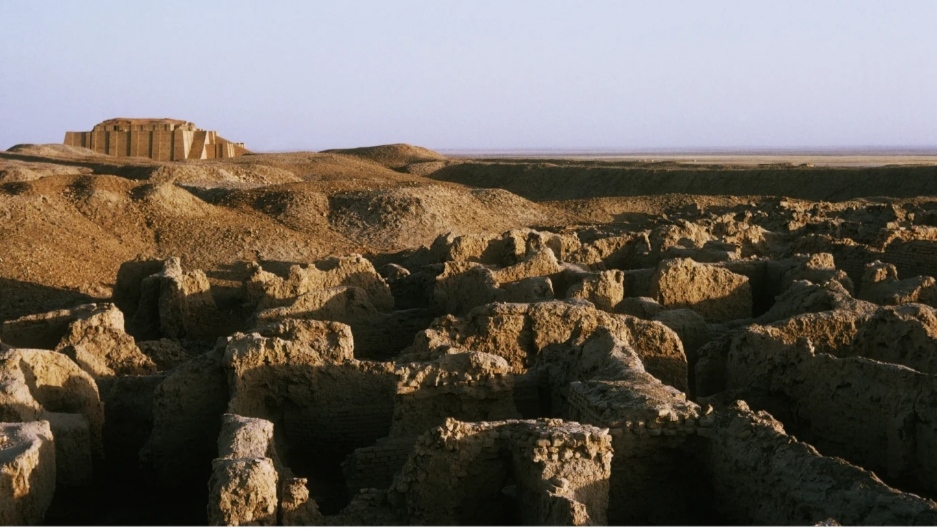
Architecture on a grand scale is generally credited to have begun under the Sumerians, with religious structures dating back to 3400 B.C., although it appears that the basics of the structures began in the Ubaid period as far back as 5200 B.C. and were improved upon through the centuries. Homes were made from mud bricks or bundled marsh reeds. The buildings are noted for their arched doorways and flat roofs.
Elaborate construction, such as terra cotta ornamentation with bronze accents, complicated mosaics, imposing brick columns and sophisticated mural paintings all reveal the society’s technical sophistication.
Sculpture was used mainly to adorn temples and offer some of the earliest examples of human artists seeking to achieve some form of naturalism in their figures. Facing a scarcity of stone, Sumerians made leaps in metal-casting for their sculpture work, though relief carving in stone was a popular art form.
Under the Akkadian dynasty, sculpture reached new heights, as evidenced by intricate and stylized work in diorite dated to 2100 B.C.
Ziggurats began to appear around 2200 B.C. These impressive pyramid-like, stepped temples, which were either square or rectangular, featured no inner chambers and stood about 170 feet high. Ziggurats often featured sloping sides and terraces with gardens. The Hanging Gardens of Babylon was one of these.
Palaces also reach a new level of grandiosity. In Mari around 1779 B.C., an ambitious 200-room palace was constructed.
Sumerian Science
Sumerians had a system of medicine that was based in magic and herbalism, but they were also familiar with processes of removing chemical parts from natural substances. They are considered to have had an advanced knowledge of anatomy, and surgical instruments have been found in archeological sites.
One of the Sumerians greatest advances was in the area of hydraulic engineering. Early in their history they created a system of ditches to control flooding, and were also the inventors of irrigation, harnessing the power of the Tigris and Euphrates for farming. Canals were consistently maintained from dynasty to dynasty.
Their skill at engineering and architecture both point to the sophistication of their understanding of math. The structure of modern time keeping, with sixty seconds in a minute and sixty minutes in an hour, is attributed to the Sumerians.
Sumerian Culture
Schools were common in Sumerian culture, marking the world’s first mass effort to pass along knowledge in order to keep a society running and building on itself.
Sumerians left behind scores of written records, but they are more renowned for their epic poetry, which influenced later works in Greece and Rome and sections of the Bible, most notably the story of the Great Flood, the Garden of Eden, and the Tower of Babel. The Sumerians were musically inclined and a Sumerian hymn, “Hurrian Hymn No. 6,” is considered the world’s oldest musically notated song.
Gilgamesh
The very first ruling body of Sumer that has historical verification is the First Dynasty of Kish. The earliest ruler mentioned is Etana of Kish, who, in a document from the time, is credited as having “stabilized all the lands.” One thousand years later, Etana would be memorialized in a poem that told of his adventures in heaven.
The most famous of the early Sumerian rulers is Gilgamesh, king of Uruk, who took control around 2700 B.C. and is still remembered for his fictional adventures in the Epic of Gilgamesh, the first epic poem in history and inspiration for later Roman and Greek myths and Biblical stories.
A devastating flood in the region was used as a pivotal point in the epic poem and later reused in the Old Testament story of Noah.
Sumerian Power Struggles
Somewhere around 2600 B.C., a power struggle erupted between the leaders of Kish, Erech and Ur, which set off a “musical-chairs” scenario of rulers for the region for the next 400 years.
The first conflict resulted in the kingdom of Awan seizing control and shifting the ruling body outside of Sumer until the kingship was returned to the Kish.
The Kish kept control briefly until the rise of Uruk King Enshakushanna, whose brief dynasty was followed by Adabian conqueror Lugalannemundu, who held power for 90 years and is said to have expanded his kingdom up to the Mediterranean. Lugalannemundu also conquered the Gutian people, who lived in the Eastern Iraqi mountains and who would later come to rule Sumer.
In 2500 B.C. the only woman to rule the Sumerians, Kubaba, took the throne. She is the only female listed on the Sumerian King List, which names all rulers of Sumer and their accomplishments. Kubaba’s son, Puzur-Suen, eventually reigned, bringing in the fourth dynasty of Kish, following a brief ascendency of Unzi, the first in the Akshak Dynasty.
This last Kish dynasty ruled for a century before Uruk king Lugal-zage-si ruled for 25 years before Sargon took control in 2234.
Sargon
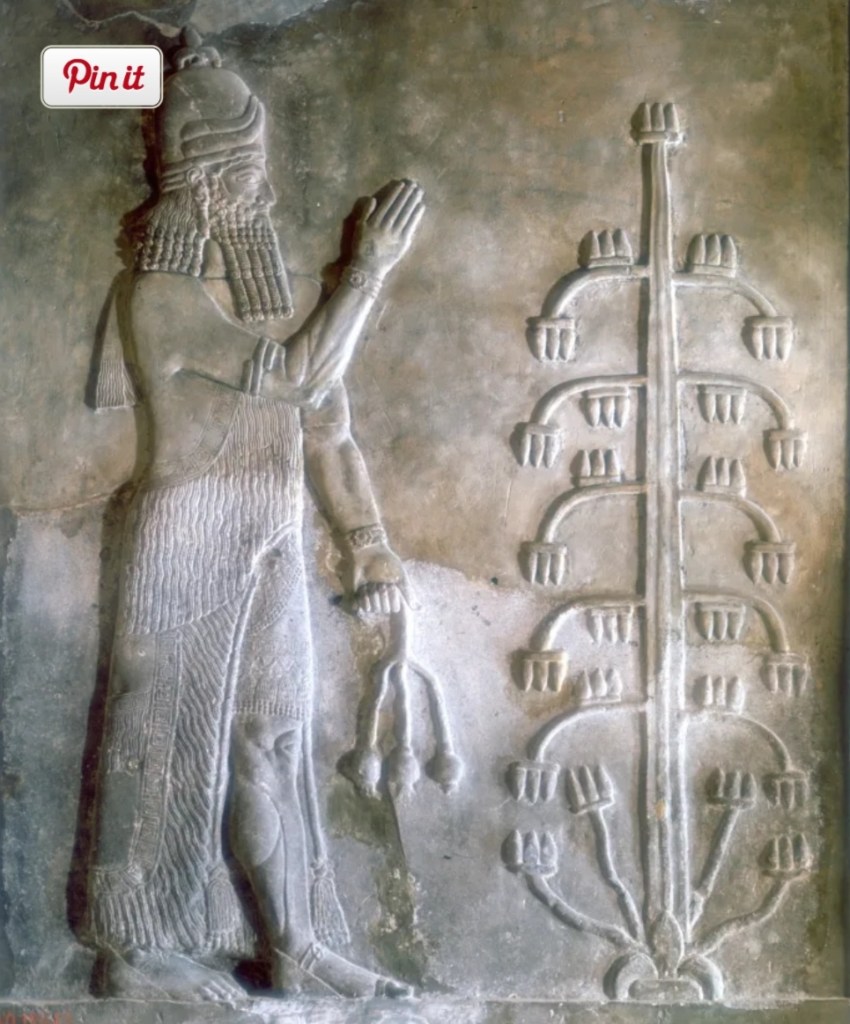
Sargon was an Akkadian whose past is shrouded in legends that some claim were ignited by Sargon himself. The claim is that he was the secret child of a high priestess who placed him in a basket and cast him off into a river, a story that was later utilized for Moses in the Old Testament.
Sumerian tradition says that Sargon was the son of a gardener who rose to the position of cupbearer for Ur-Zababa, king of Kish, which was not a servant position but a high official.
Ur-Zababa was defeated by the king of Uruk, who was, in turn, overtaken by Sargon. Sargon followed that victory by seizing the cities of Ur, Umma and Lagash, and establishing himself as ruler. His militaristic reign reached to the Persian Gulf.
Sargon built the city of Agade as his base, south of Kish, which became an important center in the ancient world and a prominent port. Agade was also home to Sargon’s army, which is considered the first organized standing army in history and the earliest to use chariots in warfare.
Sargon took control of the religious cultures of the Akkadians and the Sumerians, making his daughter Enhedu-anna the head priestess of the moon god cult of Ur. Enheduanna is best remembered for her transcriptions of temple hymns, which she also wrote and preserved in her writings.
Sargon ruled for 50 years, and after his death, his son Rimush faced widespread rebellion and was killed. Rimush’s brother Manishtushu met the same fate.
Sargon’s grandson, Naram-Sin, took the throne in 2292 B.C. Naram-Sin considered himself divine and was leveled with charges of sacrilege.
The Gutians invaded in 2193 B.C. following the reign of the last Akkadian king, Naram-Sin’s son Sharkalisharri. Their era is marked by decentralized chaos and neglect. It was during Gutian reign that the grand city of Agade decayed into wreckage and disappeared from history.
Ur-Nammu
The final gasp of Sumer leadership came in 2100 B.C. when Utuhegal, king of Ur, overthrew the Gutians. Utuhegal’s reign was brief, with Ur-Nammu, the former governor of Ur, taking the throne, starting a dynasty that would rule for about a century.
Ur-Nammu was known as a builder. Figurines from the time depict him carrying building materials. During his reign, he started massive projects to build walls around his capital city, to create more irrigation canals, construct new temples and rebuild old ones.
Ur-Nammu also did the considerable work of constructing an organized and complicated legal code that is considered the first in history. Its purpose was to ensure that everyone in the kingdom, no matter what city they lived in, received the same justice and punishments, rather than rely on the whims of individual governors.
Ur-Nammu also created an organized school system for state administrators. Called the Edubba, it kept an archive of clay tablets for learning.
What Happened to Sumer?
In 2004 B.C., the Elamites stormed Ur and took control. At the same time, Amorites had begun overtaking the Sumerian population.
The ruling Elamites were eventually absorbed into Amorite culture, becoming the Babylonians and marking the end of the Sumerians as a distinct body from the rest of Mesopotamia.
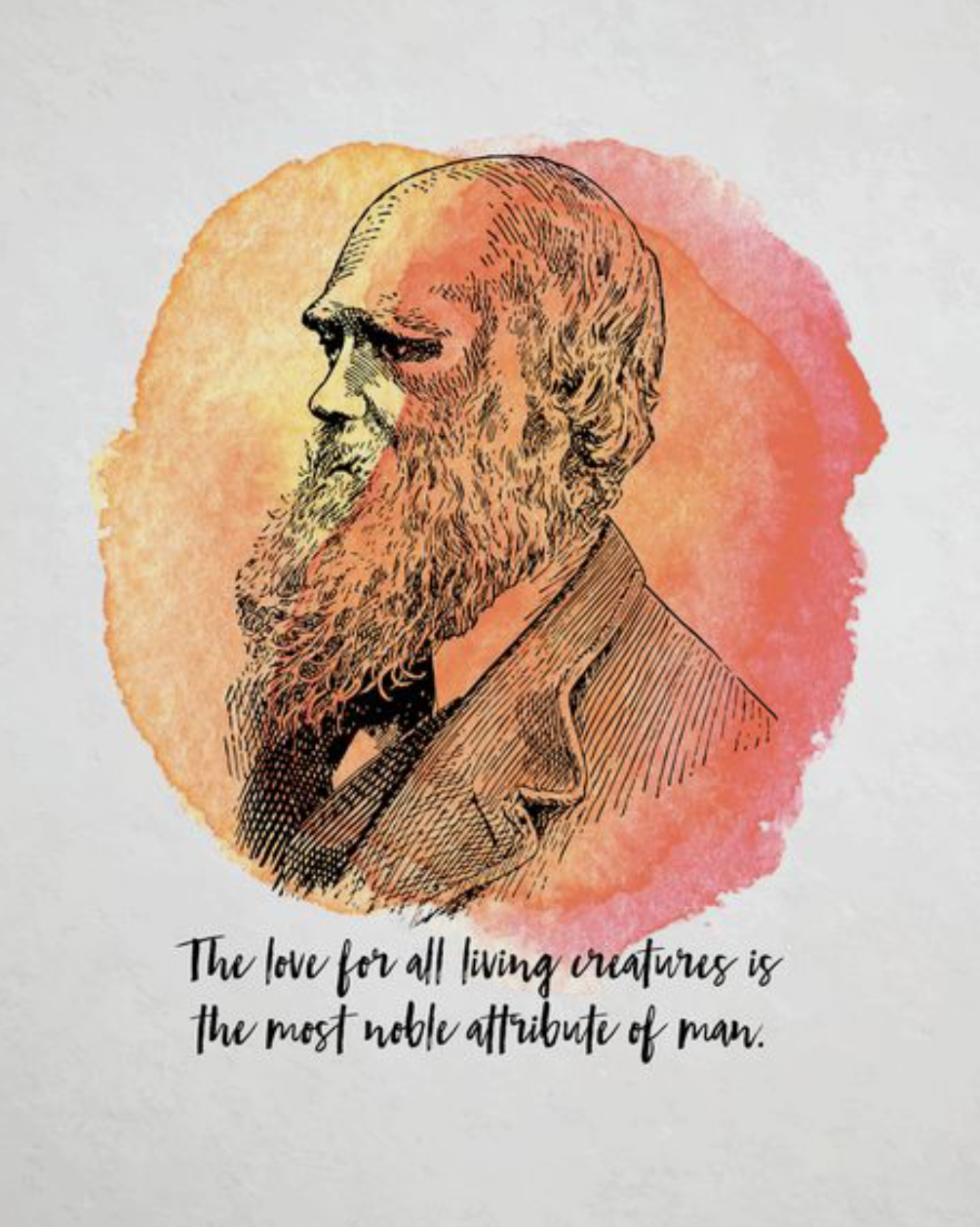
When you think of evolution the first name that comes to one’s mind is that of Charles Darwin. However, the fact is that he was not the first person to put forward the idea of evolution. Lamarck had suggested it earlier but the concept was not popular. In fact zoology professor Robert Grant lost his job because he supported Lamarck theory! An anonymous work titled, ‘The Vestiges of creation’ was ridiculed. It was Charles Darwin who first made the theory acceptable and he was able to do so because he supported it with a huge amount of evidence. Darwin, an English naturalist put forward his theory in a book titled ‘On the origin of the species’. He established that all species descended from common ancestors and that the different species evolved through a process he called natural selection. Darwin’s theory gained acceptance because it was able to explain the diversity of life.
Ramapithecus belongs to an extent group of primates that lived from about 12 to 14 million years ago. Fossils of Ramapithecus were discovered in India and Africa beginning in 1932. Fossil evidence suggested that it had a short face, heavy jaws and enamelled teeth like hominids. Its importance lies in the fact that it was regarded as a possible ancestor of Australopithecus and therefore of modern humans. Later for sale finds indicated that Ramapithecus was more closely related to the orangutan and Ramapithecus is now regarded by many as a member of a group known as Sivapithecus.
It has been long known that humans share a common ancestor with apes but it was only in the last 30 years that techniques for develop to provide strong evidence in support of the theory that humans are more closely related to chimpanzees than they are to gorillas orangutans or Gibbons. The DNA of a chimpanzee is 98% identical to that of a human being. However our bodies adapted for walking on 2 legs. This is possible because the lower portion of the human body evolved to facilitate load bearing and balancing while walking upright. Chimpanzees not only share most of our genes they seem to be able to handle tools and they are able to grasp language pretty well too. Now researchers have found that we share a similar brain pattern when communicating. But in spite of these similarities there are clear differences in body structure intellect and behaviour.
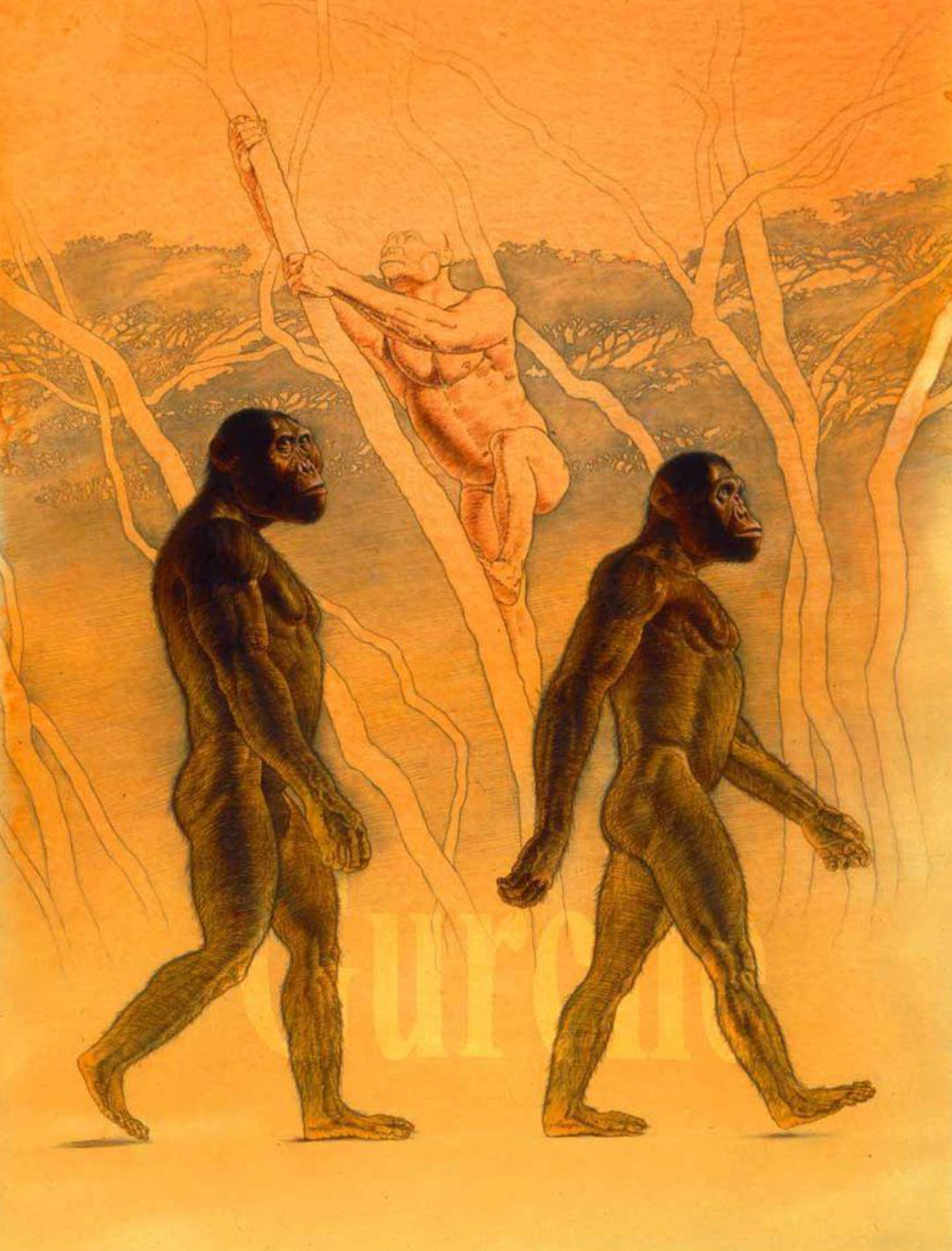
Australopithecus was an early hominid which is now extinct. Fossil evidence suggests that these individuals lived from approximately 4- 2 million years ago after evolving on the continent of Africa. Sense the fossils were recovered from south Africa they were called south African man apes or australopithecines. Australopithecines are believed to have been around 1 to 1.5 metre tall and probably fed on leaves fruits and the remaining of dead animals. Their brains were larger than those of apes but smaller than human brains while their teeth would like human teeth it is believed that Australopithecus eventually evolved into modern humans.
Neanderthal man first appeared in Africa about 200,000 years ago and migrated to the rest of the world around 100,000 years ago. The name Neanderthal comes from Neander valley where an early skull was found. Neanderthals would different from other species of early man. They were much taller and very strong for stop the brains were actually larger than ours are today. They were marvellous hunters. They often used caves as their homes. They were adept at fire making and probably cooked their food routinely. Neanderthals buried their dead. The Neanderthals died out by around 30,000 BC. Cro-Magnon man lived some 40,000 -10,000 years ago. Their remains were first found in France in 1868 and then throughout other parts of Europe.
Cro-Magnon man was anatomically identical to modern humans and deferred significantly from Neanderthal man who disappeared in the fossil record shortly after Cro-Magnons appearance. Cromagnon man was tall and had an erect posture. He had a prominent chin a surprising forehead and skull shaped like hours. These man was killed hunters toolmakers and artists. Cro-Magnon man was a true human and looked just like us. He is represented by the remains of 5 individuals found in March 18683 adult males one adult female and one child.
•First family. In 1975 Donald Johansson discovered the remains of at least 13 individuals of all ages at her there in Ethiopia. The sizes of the specimens varied greatly and Johansson believed that they all belong to a single species Australopithecus afarensis in which men were much larger than the females.
Chocolate is one of the favourite foods of human beings. A gift, a comfort food, a truce, you name it, chocolate has everything covered. And it is unanimously favourite in almost all the age groups, but more in the younger ones. All and all, chocolates’ demand isn’t going down anytime in the near future. And speaking of tasty treats, we are taught to share it with friends. But are they good for our furry, pet friends too? Actually they aren’t!
Animals, especially the commonly domesticated ones, are susceptible to chocolate poisoning. Chocolate contains a compound theobromine (C7H8N4O2), which is an alkaloid found in the cocoa trees. Apart from chocolate, this alkaloid is also found in tea leaves, kola nut, etc. It has resemblance to the stimulants like caffeine and theophylline, and can be classified as xanthine alkaloid. For now, the median lethal doses for the cats, dogs, rats and mices are commonly known.
Alkaloids are organic compounds with a typically basic chemistry, but they also contain some compounds with neutral, or even slightly acidic properties. They all, uniformly, have a bitter taste. In nature, bitter taste is a danger indicator, and hence, are produced in several plants, like cocoa plant, as a response to the avoid predators. Animals, under the usual circumstances, do not consume the cocoa seeds. Even if some animals consume the cocoa pods, they dispose of the cocoa seed, despite their fat content, most likely due to the high amounts of theobromine.
But, in chocolate, cocoa’s bitter flavour is partially or fully masked by the added sugar and fats. Hence the animals, especially the ones whose taste buds can detect sweetness, like dogs, have a tendency to consume them. Cats, on the other hand, due to absence of ability to detect sweetness, are not very prone to consuming chocolates accidently.
Even in human beings, it can cause effects on consumption above a limit. The lethal dosage 50% (LD50), which happens to be the quantity that can kill 50% of the individuals of a particular species, in humans happens to be 1000mg/kg. At a consumption level of 0.8-1.5g/day, symptoms like sweating, headaches and trembling are observed. At 250mg/day, limited effects on the mood is observed. Along with human beings, rats and mices also have a good tolerance to theobromine, with the LD50 levels being 837 mg/kg and 1265 mg/kg respectively.
But, cats and dogs have comparatively lower quantities for LD50. The dogs drop down at the 300mg/kg level, while cats are at 200mg/kg. Hence, even a small amount of cocoa consumption can be harmful for them, especially for the smaller sized individuals. Also, the type of chocolate consumed is an important factor in the theobromine poisoning cases. The dark chocolate items contain a very high amount of theobromine concentration. In comparison to that, milk chocolate contains relatively smaller concentrations (10 times lesser than dark chocolate). Unsweetened cocoa powder is the most concentrated.
The early symptoms of chocolate poisoning include vomiting, nausea, diarrhea, increased urination and mood swings.Dogs and cats digest theobromine slower than the human beings, and hence, are susceptible to succumbing to chocolate poisoning. Clinical symptoms of poisoning can last upto 72 hours. More severe symptoms include epilrptic seizures, internal bleeding and cardiac arrests. All these can lead to an eventual death.
If identified early, chocolate poisoning is treatable. Veterinarians treat these cases by inducing vomiting within two hours of ingestion, and by administering benzodiazepines for seizures.
But whatever be the treatment, the ordeal is painful for the animals. And as the old saying goes around, “ Prevention is better than cure”. So, the least we can do for our beloved pets is to keep them safe from accidental consumption of harmful items.
The environment is the most valuable component of human life because it has an efficacious interconnectedness of life on both the living and non-living things. What we do to our planet is what we do to ourselves. Human life is dependent on the environment for survival on earth. The environment is a vast trove of resources such as air, shelter, food, and water. The ecosystem that includes all the plants, animals, birds, reptiles, insects, water bodies, fishes, human beings, trees, microorganisms and many more altogether constitute the environment. Besides the basic three divisions such as the physical, social, and cultural environment, Today, we are surrounded by the artificial environment created for ourselves such as buildings, air-conditioned rooms, streets, shopping complexes, vehicles emitting poisonous gases, dust, etc. All these assets, on one hand, signify our luxurious life whereas on the other, baneful and human-centred nature of man.
Over the years, innumerable environmentalists and philosophers have shifted and encouraged others to shift towards a nature centred approach. This brings the anthropocentrism and non-anthropocentrism approaches to light. Whilst anthropocentric approach sees man as the centre of the universe and all other animals and components in terms of their instrumental values, non-anthropocentrism sees the natural components, biotic as well as abiotic in terms of intrinsic values. The work of Aldo Leopold, “A Sandy County Almanac”, especially see ‘land’ as a ‘community and not as a commodity. Rachel Carson is another thinker who has extended her thoughts to the world by asserting the importance of being friendly with animals rather than killing them for their flesh and skin.
Franklin D. Roosevelt opines that “A nation that destroys its soil destroys itself. Forests are the lungs of our land, purifying the air and giving fresh strength to our people.” However, the environment is not given the respect it deserves. Man has become a poacher of nature to satisfy his economic and physical needs. The pollution of the environment has choked all the resources required to sustain the life of living things and therefore affecting negatively.
The environment always gives us countless benefits that we can’t repay our entire life. The forest and trees filter the air and absorb harmful gases. Plants purify water, reduce the chances of a flood, and maintain natural balance and many others. Moreover, the environment regulates the vital systems that are essential for the ecosystem. Every being in the environment is so significant for human life. It is well captured in the words of Maurice Maeterlinck, a Belgian playwright, poet, and essayist who says, “If the bee disappeared off the face of the earth, man would only have four years left to live.”
The environment regulates various natural cycles that happen daily. These cycles help in maintaining the natural balance between living things and the environment. Disturbance of these things can ultimately affect the life cycle of humans and other living beings. The environment has always helped us and other living beings to flourish and grow from thousands of years. The environment provides us fertile land, water, air, livestock and many essential things for survival. Saving the environment is one of the responsibilities of all humans. It begins only by identifying the pollutants and by trying to mitigate them drastically. Human activities are the major cause of environmental degradation because most of the activities of humans do harm the environment in some way. The activities of humans that cause environmental degradation are pollution, defective environmental policies, chemicals, greenhouse gases, global warming, ozone depletion, etc. All these affect the environment badly. Besides, these the overuse of natural resources will create a situation in the future there will be no resources for consumption. And the most basic necessity of living air is getting so polluted that humans are forced to use bottled oxygen for breathing as witnessed in our capital city called Delhi.
The increasing human activity is exerting more pressure on the surface of the earth which is causing many disasters in an unnatural form. Also, we are using natural resources at a pace that within a few years they will vanish from the earth. A clean environment is very important for the health and prosperity of a society and a nation as a whole. It is one of the basic requirements for the presence of life on Earth. Living species including plants, animals, humans and aquatic life cannot survive amid waste; they all need a healthy and clean environment to live; an unclean environment gives way to diseases and an unbalanced ecosystem much more. A society that consumes polluted water or breathes in polluted air cannot be healthy and prosperous. Necessary steps must be taken to clean the environment and prevent any further damage to it. To preserve a clean environment, the Environment-friendly policies are to be in a lay man’s term. The guidelines for industrial or infrastructural development are essential to claim reduced or minimal effect on the environment. The usage of renewable energy sources like wind and water instead of conventional sources would result in the reduction of environmental pollution. Vehicles with zero emissions such as vehicles running on electricity or solar energy could be encouraged. Steps should be taken for the accumulation and conservation of rainwater to meet everyday water requirements. People must be made aware of the hazards of the population explosion and its effects on the environment and depletion of natural resources. The use of Organic pesticides which are made up of minerals or other plant materials that keep pests at bay and break down quickly in the soil would certainly help prevent pollution due to hazardous chemicals.
One of the commendable initiatives taken by the U.N to curb environmental pollution is “The World Environment Day”, celebrated on 5th June every year, to raise awareness and urge the governments, individuals, and societies of the world to come together and take steps to eradicate the use of plastics in our day to day life and other factors contributing to the environmental pollution in our daily life and taking necessary steps to prevent them. India recently hosted the World Environment Day on 5th June 2018 with the theme of “Beat Plastic Pollution”. India introduced Swachh Bharat Abhiyan (Clean India Campaign) on 2nd Oct 2014 to clean its roads and cities. We as an individual must take a pledge to keep our society clean, free from any littering waste and to inform the concerned authorities when we encounter such littering or garbage.
Eventually, we should understand that it is the environment that is keeping us alive. Without the blanket of the environment, we won’t be able to survive. It is high time we wake up and heal the natural world. It is never too late to give up our prejudices and overt dependence on technology. Let’s coexist with our environment and be human(e) in a true sense. Moreover, the environment’s contribution to life cannot be repaid. Besides, still what the environment has done for us, in return we have only damaged and degraded it.
The natural tendency of life is to find stability. In biology we refer to this process as equilibrium or homeostasis.
For example, consider your blood pressure. When it dips too low, your heart rate speeds up and nudges your blood pressure back into a healthy range. When it rises too high, your kidneys reduce the amount of fluid in the body by flushing out urine. All the while, your blood vessels help maintain the balance by contracting or expanding as needed.
The human body employs hundreds of feedback loops to keep your blood pressure, body temperature, glucose levels, calcium levels, and many other processes at a stable equilibrium.
Martial arts master George Leonard points out that our daily lives also develop their own levels of homeostasis. We fall into patterns for how often we do (or don’t) exercise, how often we do (or don’t) clean the dishes, how often we do (or don’t) call our parents, and everything else in between. Over time, each of us settles into our own version of equilibrium.
Like your body, there are many forces and feedback loops that moderate the particular equilibrium of your habits. Your daily routines are governed by the delicate balance between your environment, and many other forces. As time goes on, this equilibrium becomes so normal that it becomes invisible. All of these forces are interacting each day, but we rarely notice how they shape our behaviors.
That is, until we try to make a change.
The Myth of Radical Change
The myth of radical change and overnight success is pervasive in our culture. Experts say things like, “The biggest mistake most people make in life is not setting goals high enough.” Or they tell us, “If you want massive results, then you have to take massive action.”
On the surface, these phrases sound inspiring. What we fail to realize, however, is that any quest for rapid growth contradicts every stabilizing force in our lives. Remember, the natural tendency of life is to find stability. Anytime equilibrium is lost, the system is motivated to restore it.
If you step too far outside the bounds of your normal performance, then nearly all of the forces in your life will be screaming to get you back to equilibrium. If you take massive action, then you quickly run into a massive roadblock.
Nearly anyone who has tried to make a big change in their life has experienced some form of this. You finally work up the motivation to stick with a new diet only to find your co-workers subtly undermining your efforts. You commit to going for a run each night and within a week you’re asked to stay late at work. You start a new meditation habit and your kids keep barging into the room.
“Resistance is proportionate to the size and speed of the change, not to whether the change is a favorable or unfavorable one.”
The forces in our lives that have established our current equilibrium will work to pull us back whether we are trying to change for better or worse. In the words of George Leonard, “Resistance is proportionate to the size and speed of the change, not to whether the change is a favorable or unfavorable one.”
In other words, the faster you try to change, the more likely you are to backslide. The very pursuit of rapid change dials up a wide range of counteracting forces which are fighting to pull you back into your previous lifestyle. You might be able to beat equilibrium for a little while, but pretty soon your energy fades and the backsliding begins.
The Optimal Rate of Growth
Of course, change is certainly possible, but it is only sustainable within a fairly narrow window. When an athlete trains too hard, she ends up sick or injured. When a company changes course too quickly, the culture breaks down and employees get burnt out. When a leader pushes his personal agenda to the extreme, the nation riots and the people re-establish the balance of power. Living systems do not like extreme conditions.
Thankfully, there is a better way.
Consider the following quote from systems expert Peter Senge. “Virtually all natural systems, from ecosystems to animals to organizations, have intrinsically optimal rates of growth. The optimal rate is far less than the fastest possible growth. When growth becomes excessive—as it does in cancer—the system itself will seek to compensate by slowing down; perhaps putting the organization’s survival at risk in the process.”
By contrast, when you accumulate small wins and focus on one percent improvements , you nudge equilibrium forward. It is like building muscle. If the weight is too light, your muscles will atrophy. If the weight is too heavy, you’ll end up injured. But if the weight is just a touch beyond normal, then your muscles will adapt to the new stimulus and equilibrium will take a small step forward.
The Paradox of Behavior Change
In order for change to last, we must work with the fundamental forces in our lives, not against them. Nearly everything that makes up your daily life has an equilibrium—a natural set point, a normal pace, a typical rhythm. If we reach too far beyond this equilibrium, we will find ourselves being yanked back to the baseline.
Thus, the best way to achieve a new level of equilibrium is not with radical change, but through small wins each day.
This is the great paradox of behavior change. If you try to change your life all at once, you will quickly find yourself pulled back into the same patterns as before. But if you merely focus on changing your normal day, you will find your life changes naturally as a side effect.













 Eduindex
You must be logged in to post a comment.