

https://mywwwpublicpolicy.wordpress.com/2022/04/17/ismat-chughtai-a-voice-with-many-tunes/
Tag: impact
Impact of caste dynamics in contemporary India
The association between various caste groups has now become more flexible and is now at ease. One of the significant impacts in the contemporary age is personal job preference. In the past, men believed in pursuing occupation under its caste like mainly they were engaged in pottery, blacksmithing etc. However, the current scenario is very much different, people have started pursuing jobs of their own choices irrespective of their caste such as in railways, teaching, government jobs, marketing and business. The food habits of the people have been modified, sharing of food is now common between both the sections of society and nowadays people of both upper and lower caste enjoy their food in restaurants in the local together. Power and wealth are almost in least association with the caste. The belief that the lower castes are responsible for pollution and freshness has now somewhat become extinct. However, in petto, rituals of purification with regard to one’s caste ranking, such practice still prevails. The custom of marrying only within the limits of a caste is still in practice, though not as severely as in the past. Lower sections of the society still faces difficulty in pursuing of caste related occupation and access to essential resources in extreme remote rural areas, however in urban areas, caste has almost nil significance in the society. The growth or ranking of women is still based on man’s positioning in the society. But today awareness of equal rights of women, education, employment are eventually advancing the modern society. The Indian Constitution made and implemented various special provisions, due to which competition among the caste groups in order to access the power and necessities like better life enhancement, educational benefits, government oriented jobs, etc. have gained force.
Implementation of such provisions and policies have always been the talk of the town and ground to numerous controversies, although political parties support these policies seemingly for their political benefits, but keeping it aside, it has been of great significant to the people belonging to the lower caste especially the Scheduled Castes (SCs), Scheduled Tribes (STs) and backward classes (OBCs). These groups have grabbed every opportunity provided to them and excelled in it. In the elected offices, these groups have greater representation. They have proved to be an essential part of the Indian political election system. They have also successfully mend their paths in each and every institution, be it political, legal or educational, and also secured high posts in government jobs. In a number of regions, these caste groups have succeeded in forming powerful parties in politics.
However, regrettably, a small portion of people belonging to the lower caste have gained profit from the policies and provisions made by the Indian Constitution. When observed from far, other sections of society seem to have willingly accepted the individuals of the lower castes, but the reality is quite contrary, in numerous parts of India, the upper castes still treat the lower caste’s individuals as outsiders and deny them access to resources. Such an incident came into light in parts of Bihar, India in 1994, the landowners of the upper caste formed a special army known as Ranvir Sena in order to defend themselves from lower caste’s individuals. Though fortunately by 1999, this was disbarred, the Ranvir Sena had already slaughtered 20 Dalits. The upper caste’s individuals who are against the special polices made for the lower castes and also those who are at any sort of economic disadvantage by the implementation of such policies, often are responsible for the mistreatments against lower sections.
The caste system has played a vital role in molding the ethics, principles as well as habitation of the society in India. The rituals and customs of Hindu philosophy greatly influence the faith and lives of the Indians. Post independence, Indians are still in the clutch of beliefs regarding one’s social rank and their caste status. In the ancient days, people of a common society were divided on the basis of caste, sex and birth. Since birth they had their lifestyles organized according to their specific caste rule and had no choice preference as such. However, with the course of time the linkage between one’s occupation and caste has become almost insignificant. In urban areas, interaction among various castes is without restriction. The current Indian society is progressing eventually from the closed caste system to interactive functioning of the society irrespective of any caste. The various provisions and policies implemented by the government have encouraged the lower sections to come forward and represent themselves in the society. Such provisions have also encouraged the people of other caste groups to be secular towards one another. Therefore, it is essential to look after how caste discrimination has affected the standard of life and mobility of society in contemporary India.
International Relations
Introduction
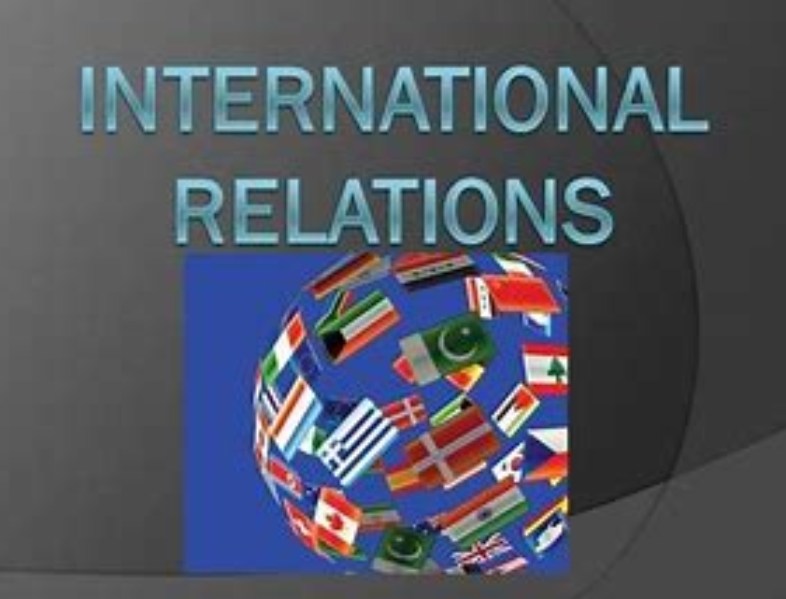
The term ‘international relations’ was first used by Jeremy Bentham in the 18th century, although its Latin equivalent, ‘intergentes‘, was used a century earlier by Rijehare Zouche. Both of them had used the term in the context of what later came to be known as international law. Today, nation states have become highly interdependent, and relations between them, political or economic, have developed into an essential area of knowledge.
The term ‘international relations’ (IR) may be used both for a ‘condition’ and a ‘discipline’ Quincy Wright, for example, makes such a distinction. The official relations between sovereign countries are described as international relations, though according to Wright, ‘… the word “interstate” would have been more accurate because in political science, the state came to be the term applied to such societies’. Viewed thus, international relations, as a condition, refers to the facts of international life, that is to say, the actual conduct of relations among nations through diplomacy based on foreign policy. It also includes actual areas of cooperation, conflict and war. According to Quincy Wright, IR should tell the ‘truth about the subject’, i.e., how such relations are conducted and, as a discipline, IR should treat them in a systematic and scientific manner.
Meaning Of International Relations
International relations as a subject is concerned with the relationships among the governments of various sovereign states. Many people may think that relations among nations are regulated and conducted by presidents, prime ministers, foreign ministers, officials of the foreign offices and diplomats. This is partially true. The scope of international relations is not merely political. Today, economic activities such as international trade, role of multinational corporations, terrorist activities and impact of environment are all embraced in the fold of relations among nations.
Most scholars agree that the term ‘international politics’ is used to describe official political relations between governments acting on behalf of their states. The term ‘international relations’ is broader. According to Stanley Hoffman, ‘The discipline of international relations is concerned with the factors and activities which affect the external policies and power of the basic units into which the world is divided.’
International Relations As A Field Of Study
As a field of study, international relations analyses a wide range of political activities. These include war, peace, diplomacy, trade relations, treaties, alliances, cultural, exchanges, participation in international organizations, etc. Each of these activities makes up distinct issue areas on which scholars and foreign policy makers focus attention.
The scope of international relations is often defined by subtitles, like ‘questions of war and peace’ as a subtitle of international security. Joshua S Goldstein wrote, ‘the movements of armies and of diplomats, the crafting of treaties and alliances, the development and deployment of military capabilities – these are the subjects that dominated the study of IR in the past… and they continue to hold central position in the field.’
Besides these, religious groups and movements working in two or more countries also act as non-state actors in the international relations. These may include large followers as the Catholic Church has, or a spread out population as sought to be represented by the Vishwa Hindu Parishad.
SCRAP POLICY 2021
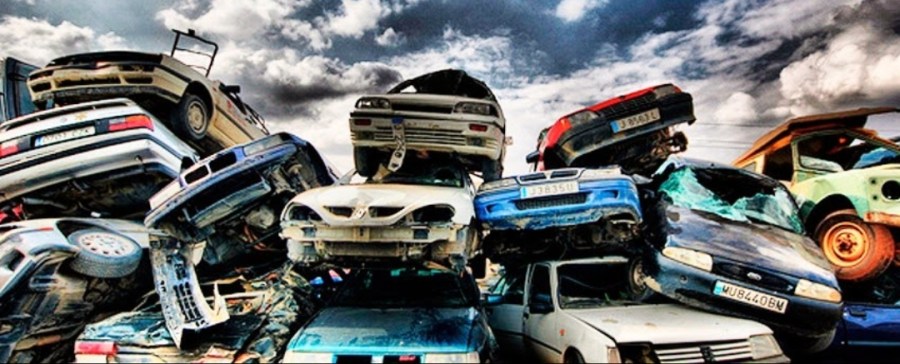
The topic for today’s article is scrap policy in India. Now the question is what is meant by scrap? The answer to this is – to remove an unwanted covering or a top layer from something. Scrap consists of recyclable materials left over from product manufacturing and consumption, such as parts of vehicles, building supplies, and surplus materials.
Unlike waste, scrap has monetary value, especially recovered metals and non-metallic ,especially are also recovered for recycling. And the much -awaited draft policy on vehicle scrapping is finally out.
The policy outlines the criteria for defining end -of-life vehicles and scrapping them. It also makes provision for scrapping facilities for safe disposal of waste and material recovery. This policy has only “advised” the state governments and the automobile industry to provide voluntary incentives to the owners of the vehicles.
This proposed policy seeks to phase out unit vehicles to reduce vehicular pollution, meet the climate commitments, improve road safety and fuel efficiency, formalise informal vehicle scrapping industry and recover low cost material for automotive, steel and electronics industry. The vehicle scrapping scheme is likely to usher in significant change and is expected to generate demands for new vehicles.
The policy says, commercial vehicles of more than 15 years and passenger vehicles of more than 20 years will have to be mandatorily scrapped if they don’t pass the fitness and emission tests. Vehicle owners who would voluntarily scrap their vehicles will get a rebate on road tax in the range of 15% to 25% and complete waiver of registration fees on the next vehicle purchase.
The government has envisaged investments worth Rs 10000 core for establishing vehicle fitness centers. Most likely scrapyards are to be established in the four zones and they will also supply scrap steel to automobile manufactures and other industries. The milestones set in the draft policy require the rules for fitness tests and scrapping to be in place by October 1, 2021. All government and PSU -owned vehicles older than 15 years will be scrapped by October 1, 2022. The same will be done for other vehicles by 2023 and 2024.
JOKES and their IMPACT
Hellooo guys!!,today’s topic is the joke ,don’t think I am pranking you guys, literally I am going to write about “JOKE”
SO starting todays article with a “joke” as the title says.
Whoever said nothing is impossible is a liar. I’ve been doing nothing for years.><
THE THOUGHT CLUB
What do you guys think when you hear this word “JOKE”
JOKE IS DIRECTED TOWARDS A PERSON,SUBJECT,OBJECT,SITUATION.
A joke is a display of humour in which words are used within a specific and well-defined narrative structure to make people laugh and is usually not meant to be taken seriously.
-Wikipedia
A JOKE CAN BE HUMOUR,PUN ,OR A TEASE
JOKES CAN BE SARCASTIC,SAVAGE,PUN,SENTIMENTAL.EVEN LIFE LESSONS CAN BE LEARNT THROUGH THEM.
Jokes present a funny situation ,but they also make us think about it, interesting isn’t it.
JOKES WHICH ARE MADE ON THE SPOT ARE EVEN MORE FUNNIER AS THEY RELATE TO THE SITUATION PRESENT THERE.
The punchlines are what jokes are mainly made up of the whole joe surround that particular line, whether it will be funny or not it depends on them.
We make jokes when we want to get out of awkward situation, or when teasing someone, or to criticize some one.
we make jokes so there can be a relaxed atmosphere, it binds people closer, jokes that bring a smile on your face, they can make your sad day a happy day.

Reading or listening to jokes can make one stress free, they bring out the joy that is hiding .Jokes make our mood lighter.
Jokes that we read mostly portrays our real life situation which makes them more funnier as we also realize that the the routine which is depicted there is very true and connects to many people.
There are many benefits of jokes,
Jokes make us laugh and in turn it triggers the endorphins which brings calmness to our nerves ,releases pain and makes us stress free.
But sometime jokes can hurt the others feeling too. We should not joke on somebody thoughtlessly cause its fun to you, we should consider the other person’s situation, and take their state of mind ,and relevance to the situation, their emotional status and your personal rapport with them into account so that the other person is not feeling uncomfortable and is actually willing to accept the jokes.
Making jokes without considering their privacy, and thoughtlessly intruding into their personal life cannot be considered as joke but an insult. You cannot make a joke out of every situation, there should be a certain time, environment and mood to be considered.
Jokes can not only sweeten the relationship between people often they can sour, and sever the bonds.
Jokes made without crossing the borders that is what we should aim for so that the other people can think they can confide their serious problems and ask for their solution optimistically as you would be a person who knows when to joke and when you shouldn’t.
And today’s joke of the day is I wrote an serious article on joke><. Thankyou^^
Implementation of Nanotechnology with DNA
How music changes your mood?.
Music stimulates the part of the brain that produces the dopamine hormone. This hormone affects emotional behavior and mood. The influence of music is both behavioral and neural. That is, this means that music not only affects the mood but also affects what we cannot control ourselves.Music is not only able to affect your mood — listening to particularly happy or sad music can even change the way we perceive the world, according to researchers from the University of Groningen.
Music and mood are closely interrelated — listening to a sad or happy song on the radio can make you feel more sad or happy. However, such mood changes not only affect how you feel, they also change your perception. For example, people will recognize happy faces if they are feeling happy themselves.
A new study by researcher Jacob Jolij and student Maaike Meurs of the Psychology Department of the University of Groningen shows that music has an even more dramatic effect on perception: even if there is nothing to see, people sometimes still see happy faces when they are listening to happy music and sad faces when they are listening to sad music.
Research has found that when a subject listens to music that gives them the chills, it triggers a release of dopamine to the brain. And if you don’t know, dopamine is a kind of naturally occurring happy chemical we receive as part of a reward system. Now here’s the really interesting part: Dopamine is not only released during peak musical moments but also when we anticipate those moments. It’s like our brain is rewarding us for knowing a really great chorus is just about to hit!
Hearing a song from our adolescence brings back a flood of feelings and memories. By why do those songs have such a strong hold on our emotional core? Our brains develop rapidly between ages 12 and 22 (there’s a reason they call it our “formative” years), so when we make a connection to a song during that time, it’s a strong neurological connection. The massive rush of hormones associated with our pubescent years tells our brains that everything is super important, and that includes whatever music we’re listening to at the time. That’s why when we hear a true throwback to our high school days, it’s a powerful thing.
The impact of positive thinking has been a subject of focus for psychologists and self-help gurus for ages now, but what about positive listening? Is there such a thing as intentionally listening to positive-sounding music to boost your mood? We already know music that gives us the chills helps to release dopamine, but a separate study found that people who intentionally listened to upbeat music improved their moods and happiness in just two weeks. When a separate group was instructed to listen to different music that wasn’t deemed positive sounding, they didn’t experience the same mood-boosting effect. So the next time you’re blue, maybe put on a song that will make you smile.

What technology we want to live our daily life?
Transformers.
Yup , the transformer which are used to increase or decrease the alternating voltages in electric power appliances .
As we all know without electricity we all return to the Stone age . No bulbs , no fans , no computers , no machines nothing . Everything depends upon the electricity and effective electricity distribution or we can say propagation depends upon the transformer .
We need high voltage for effective power transmission but we can’t use that high voltage to charge our mobile phones ,hence presenting the transformer . It’ll step down that voltage to the value suitable for your phone’s charging .
Depending upon where they are used they can be of two type step up and step down . When we need more output voltage we use step up and vice versa.
So thank you all the brains that were involved in the invention of such beauty.
So, what else would you like to include in this because I guess for that to you need an electricity. Think.
See yaa..
Welcoming September 2020
As the restrictions are being lifted in order to aid the degrading economy it needs to be kept in mind that the cases in India are achieving new heights.
Here are some disturbing facts before you think that this month was going to be easy on you.
1) Bill Gates is supremely confident that a new wave of cases will be seen in October – November. This might take a nasty turn as the increased rates could be blamed on protestors and these relaxations
2) China and India are prepared for a war. Both the nations have gathered their arms and ammunitions along with planning their strategies that might come in use anytime soon.
3) The increase in the incidence of earthquakes in the himalayan fault line (5.1 in Manipur recently) indicates there could be big one soon.
4) The economy is moving towards recession and will not recover any soon. This is one of the reasons of the gradual unlock happening.
5) There are possibilities of cyclones in both Eastern and Western front in the cyclone season October.
6) Food shortages most probably will happen sooner than later considering the unusual weather that has led to increase pest attacks. Those migrants who returned home due to covid outbreak thinking to take up farming have lost everything and are burdened with loans.
7) The hospital, tourism, transport industries suffer the most due to lack of mobility of people under such conditions.
8) Small businesses are being whiped out and corporate houses purchasing various businesses.
9) Crime rates are bound to increase along with suicide rates due to unemployment. 45% increase in suicide rates has already been noted.
10) Both center and state are faced with huge shortage of funds with centre refusing to pay GST compensation to states. This might lead to increased taxes.
The list goes on and on. Good days seem like a distant dream.
Steps colleges need to take before they open after Covid-19
This pandemic has brought us all into a dilemma regarding the position of academics of students. Online classes are already being carried on by schools and colleges. Yet, this cannot be continued for long as the effectiveness of classroom education lacks in online classes. No one actually knows when the pandemic will be flattened and students flock to campuses.
The only thing that is known is that a large number of students and teachers would come together at their colleges. Students are already mentally fatigue and dying to be back to the campus.
The Government had earlier instructed a gradual opening of colleges with caution and precautionary measures from September 1st. But with more than 3.6 million Coronavirus cases in India, the date was shifted and the next plausible one may go for the dawn of the new year, with one semester going online.
Colleges have to be opened someday. When the day comes, there are many chances of arising this pandemic again. We can avoid this situation to an extent by following certain steps and safety measures.
Here are the steps colleges need to take before the reopen after Covid-19 :
1) To start with, all educational institutes need to quickly migrate to the digital mode through the use of existing massive online courses (MOOCs) and create their own MOOCs for the domains they deal in, provided they can muster the courage and the resources. Going ahead, it will by PhyGital or blended learning, with physical being the base and digital being the larger engagement period. Even virtual labs and studios will do half the practical work as well. This is a big call and for digital content creation and aggregation along with engaging delivery need to be ensured.
2) It goes without saying, that no campus can ensure a batch coming in for all 5 days or 6 days to the campuses physically for a long time ahead. It will be two to a maximum of three days a week, and that too, with temperature checking, gloves and masks, ideally with full sleeves and legs covered, and a head cover might be ordered also.
3) Many campuses will and should have a sanitising tunnel to walk through, will have to walk with a minimum 4 feet distance from the nearest peer and sit at a distance from the next buddy.
This will make it necessary for half the batch to sit in a classroom, and half the team working in studios at a point of time, which stretches the infrastructure to a hilt and doubles the workload of mentors, who anyways shall be rarer and lesser paid in these Corona times.
4) The lunch-time will be staggered to reduce crowding at eating places, while session timings will be changed to reduce commotion on corridors. Lunch-time is a weaker time period during which the students tend to form groups for informal talks.
5) Campuses will call for creating a digital persona for all learners thus making it compulsory for all to have networked smartphones, specific apps to be downloaded for regular use, a good laptop, WiFi-driven high-speed digital access at homes, and cameras, to assist tech-driven learning. Though many schools banned mobiles sometime earlier, today, schools need mobile handsets more than ever. The tool of wasting time is the harbinger of besting time today.
6) While an individual student may need to come to campuses for two to three days a week, most staff and faculty members may in fact need to be on campus for five to six days to cater to the staggered and smaller batches, while continuing to guide those online at homes. That’s a double whammy for the staff in times of fewer colleagues and insecure salaries.
7) Another major need is to revolutionise the assessment system with loads of formative assessments online through quiz and open book tests. Instead of conducting exams offline, online exams would give a way to reduce the chances of another pandemic.
8) Libraries need to go digital, and mentors need to be thoroughly trained to create and deliver an engaging learning content and aggregated learning resources, apart from management becoming flexible on fees and add-ons.
9) Hostels may be hit hard for a while, and learners may choose to have home food and water. This will harm economic interests of the related service providers.
10) We are in for a plethora of surprises. But college campuses with a quick migration to a robust yet easy-to-use learning management systems, and with a sanitised environment are expected to do better.
Impact of Insurance Bill
Insurance is a means of protection from financial loss. It is a form of risk management, primarily used to hedge against the risk of a contingent or uncertain loss.
An entity which provides insurance is known as an insurer, insurance company, insurance carrier or underwriter. A person or entity who buys insurance is known as an insured or as a policyholder. The insurance transaction involves the insured assuming a guaranteed and known relatively small loss in the form of payment to the insurer in exchange for the insurer’s promise to compensate the insured in the event of a covered loss. The loss may or may not be financial, but it must be reducible to financial terms, and usually involves something in which the insured has an insurable interest established by ownership, possession, or pre-existing relationship.
The insured receives a contract, called the insurance policy, which details the conditions and circumstances under which the insurer will compensate the insured. The amount of money charged by the insurer to the policyholder for the coverage set forth in the insurance policy is called the premium. If the insured experiences a loss which is potentially covered by the insurance policy, the insured submits a claim to the insurer for processing by a claims adjuster. The insurer may hegde its own risk by taking out reinsurance, whereby another insurance company agrees to carry some of the risks, especially if the primary insurer deems the risk too large for it to carry.
Insurance sector in India has seen instrumental change since the last two decades when there was only one player namely Life Insurance Cooperation (LIC) before it was opened up for the private and foreign players. Currently, there are 28 players in the non life insurance business and 24 players in life insurance thus infusing the competition in the sector. The Insurance Regulatory and Development Authority (IRDA), headquartered at Hyderabad, being the regulatory authority of the insurance sector in India is the sole authority which frames regulations for the sector, ranging from registration of insurance players to protection of policy holders’ interest, thus aiming to regulate and promote the growth of the insurance sector.
The Insurance Laws (Amendment) Bill, 2015, which intended to increase the FDI limit in the insurance sector from 26% to 49% apart from introducing several other changes, got the nod of the parliament on March 12, 2015 after much deliberations. The bill is expected to provide a major fillip to growth of the sector. Some major changes introduced by the bill are as under –
Capital Infusion
Apart from increasing the foreign holding, the bill also provided various other avenues and flexibility in raising the capital for the cash strapped sector. The current insurance penetration is just 3.9% in India. The capital infusion would not only increase the penetration of insurance which is need of hour, but would also augment the product diversification.
Consumer Interests
In order to curb the miss-selling, heavy penalties have been imposed on intermediaries and insurance companies for misconduct. The penalty is increased to up to INR1.0 crore for the insurance companies and up to INR10,000 for agents depending upon the nature of violation. This would work as a deterrent to the companies and agents for any miss-selling. Further, if the policy is older than three years, no life insurance policy can now be rejected by the insurer on any ground. This will motivate insurers to strengthen their underwriting standards and increase faith amongst consumers and protect the policyholder’s interest. Ban is also imposed on multilevel marketing schemes.
Commission and Pay Outs
The bill confers the power to determine the quantum of commission, pay outs and other expenses to the IRDA. From now onwards, IRDA would try to bring more transparency in the sector for the benefit of the end consumers. Meanwhile, agents and intermediaries have been banned from more than one company.
Empowering IRDA
Empowering IRDA to frame operations related rules and regulations would provide it with the opportunity to adapt quickly with the changing environment while securing best interest of the policyholders. IRDAI is now empowered to regulate key aspects of operations including solvency, investments, expenses and commissions etc. It also empowers the Authority to regulate the functions, code of conduct, etc., of surveyors and loss assessors.
Changes in Health Insurance Sector
Under the revised regulations, minimum capital investment in health insurance sector has been increased to Rs 100 crore, to ensure that only serious players are present in the sector. The amendment Act has also expanded the definition of health insurance business by including travel and personal accident cover. This would result in further growth of the health sector, which is one of the most under-insured segments in India.
Thus the new amendments in the Insurance sector aims to bring a holistic improvement in the sector by augmenting competition, infusing capital, introducing product diversification as well as safeguarding the interests of the final consumer. In this way, insurance business can increase its depth and penetration in conformity to the developed world.
How will 2020 shape 2021 ?
In the year 2020, the whole world is fighting with a virus, which changed the way we live and work at least temporarily. COVID-19 took many lives and made many people jobless. The impact this pandemic created will be there at least for the next few years. No one knows when this pandemic will end, but it is evident that the year 2021 will be different because of the year 2020.
“Sometimes even to live is an act of courage.” Those words are as true today as when they were written two millennia ago by the Roman Stoic philosopher, Seneca. The coronavirus pandemic is affecting millions and it is imperative to understand the unprecedented shockwave it has created – shattering social structures and disrupting economies and markets, with the ripples felt by almost every individual, business and nation.
The Covid-19 outbreak in India has severely impacted the economy in myriad ways, with the lockdown halting the entire nation. It came at a time when the Indian economy was already slowing due to weaknesses in the financial sector and falling consumer demand for goods. Sectors already suffering, including logistics, aviation, transport, and tourism, are struggling to absorb the impact on the economy of the coronavirus pandemic.
There are parallels between the emerging economic crisis and the financial crash of 2008. Like then, investment institutions and banks, including the IMF and Goldman Sachs, as well as the global rating’s agencies, such as Moody’s and S&P, have slashed growth projections, with India and other countries forecast to enter a ‘deep recession’. But the scale of the 2020 downturn is likely to be far greater than what followed 2008.
Efforts by the Indian government to flatten the virus curve through stringent lockdown measures will result in a steep economic contraction. In its April 2020 policy review, the Reserve Bank of India, warned: “The macroeconomic and financial landscape has deteriorated, precipitously in some areas.”
Like other countries around the world, India too is grappling with the conundrum of reopening the economy – protecting and restoring activity this year to help shape a return to growth in 2021 – while containing the spread of the virus, and potentially further lockdowns.
The effect of 2020 on 2021:
- During COVID-19 pandemic, imports and exports were affected adversely. And it affected many countries. For example, the Automobile industry in India imports components from China. When China was fighting with coronavirus, factories were shut down and as a result, India’s automobile industry had to halt the production. Not just India, but many countries are depending on the imports for many products such as electronics, pharmaceutical ingredients etc. So, in the year 2021, companies will work on diversifying supply chains and countries will work on achieving self-sufficiency. This may lead to protectionist tendencies.
- COVID-19 came when the world is least expecting it. No country is fully ready to face it. Many developing countries have a shortage of healthcare professionals and medical equipment. Even developed countries have a shortage of medicines. So, in 2021, countries may work to fill this gap.
- As coronavirus forced people to sit at homes, the demand for telemedicine facilities increased drastically. In 2021, hospitals and governments may work to make telemedicine facilities more accessible.
- 2021 may bring more work from home jobs, as more and more companies are thinking of it as a win-win situation for them and for the employees.
- Virtual meetings will become more common. In 2021, people may not travel on flights just to attend official meetings. This will result in less carbon emissions.
- We have been fighting with climate change for a long time. United Nations member countries started working on the common goal of making affordable and clean energy accessible to all. But coronavirus pandemic affected the world economy badly, and every country is working a lot to uplift the economy. So, the transition to clean energy may take a backseat in 2021.
- As many people are now scared to eat out and are preferring healthy food to boost immunity, restaurants and food delivery apps may continue to struggle in 2021 as well. There will be more investments in the companies the manufactures hygiene-related products and raw foods.
- There will be more e-learning opportunities.
- People may save more money by avoiding unnecessary expenses because COVID-19 pandemic taught people that anything can happen at any time and so savings are important to protect ourselves in tough times.
- We have witnessed people stuck in other countries or in other states within the country due to lockdown throughout the world. After going through difficult times in 2020, people may want to stay close to their families. If it happens, it will alter the demography of many regions.
- As people may not be ready to go to theatres at least for the next few months, OTT (Over-the-top media services ) platforms such as Netflix & Amazon Prime may take over the traditional film industry in 2021.
- With an increase in work from home jobs, 2021 may see an increase in cybersecurity threats.
How will 2020 impact 2021?
The pandemic is undoubtedly redrawing the landscape, but it is difficult to develop an economic blueprint for the post Covid-19 future because we have never before experienced the measures put in place to stem the spread, such as suspended transport, inoperative plants and stalled projects. Effects will differ to some extent across the Indian states as they follow specific economic strategies. Tourism has been severely hit, and will continue to suffer, no more so than in Goa where tourism is the mainstay of the state’s economic development strategy. The consequences for small firms, labour and for investment in tourist and transport infrastructure will be harsh.
Even the high-performing districts in India have been badly impacted by the lockdown – 130 districts classified as red zones account for 41% of national economic activity, 38% of industrial output and are the most industrialised regions. Lower economic activity in these areas has spread to suppliers and revenues have slumped. The collective consequence of disruptions to supply chains, operations and travel are reverberating across almost all sectors of the economy, leading to:
Higher unemployment – further reducing demand and impacting production and capacity utilisation, and damaging corporate results
Shortage of labour – migrant labourers have suffered greatly during the lockdown. The Government of India has increased the money going into the Mahatma Gandhi National Rural Employment Guarantee Scheme, which provides livelihood security in rural areas through 100 days of paid employment for adults who volunteer to do unskilled manual work. Under Covid-19 migrant labour obviously feels safer working closer to home rather than moving across states, but this will reduce the availability of workers for other sectors and regions.
Severe liquidity crunch – working capital issues/solvency risk for sustained periods could lead to defaults on loans and may increase stranded assets in the banking sector.
Potential losses will vary by sector, but some industries that are suffering, such as airlines, hotels, automotive, construction and real estate, are likely to continue to bear the brunt into 2021.
Covid-19 is unprecedented, so it is difficult to accurately make projections for economic growth, but it is possible to highlight some of the issues that will have an impact on Indian economy going forward.
It will take months, possibly years for migrant labours to return to work in other states, so the financial stress on rural households will increase, and will be exacerbated by a weak job market.
Demand has fallen significantly since the introduction of the lockdown. AIIMS Director Randeep Guleria has said cases of Covid-19 in India will peak in June and July, though others say this may not happen until September. This will impact tourism, aviation, retail and many other economic activities, leading to job losses that will further reduce demand. Given the uncertainties, it is unlikely we will see a return to full-scale operations in many sectors this year. This will impact the financial health of many enterprises and many will reduce Capital investment in 2021.
Remittances to India are projected to fall due to travel restrictions. The World Bank estimates these could decline by as much as 23%.
Rising unemployment, falling corporate revenue and profit is bound to impact tax revenues. Already the government has announced a series of support measures. Falling tax income and rising expenditure to support many social and employment schemes will increase the government’s fiscal deficit in 2021.
There are glimmers of hope, however. The Indian economy may benefit from falling fuel oil prices, potentially halving the import bill if current crude oil prices hold, and many foreign firms are looking at India as alternate manufacturing destinations in many sectors, such as pharmaceuticals, chemicals and electronic component manufacturing. India needs to capitalise on this potential opportunity and provide all necessary policy assistance to attract foreign investment in 2021.
Covid-19 has adversely impacted the entire global economy and India is not spared. Looking at the current trend India is expected to enter recession. Recovery should focus on creating a more sustainable and resilience economy, pursuing opportunities to build back better and improve the life chances of all Indians.
Conclusion:
Coronavirus pandemic affected everyone and changed our daily lives. The world will create 2021 based on these changes and also with the lessons we learned while fighting with the pandemic.
Impact of Corona Pandemic on India’s Economy
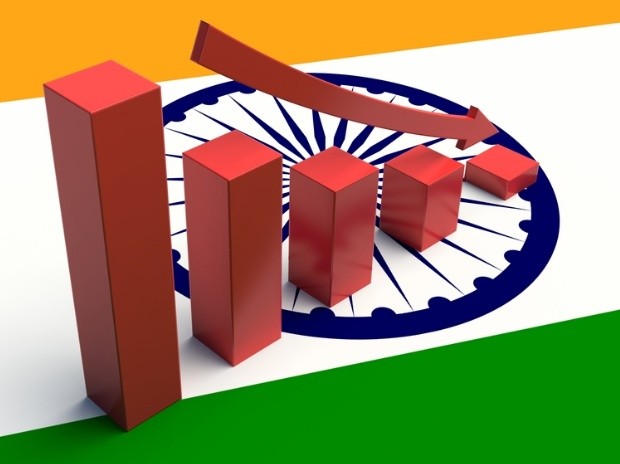
The economic impact of the Covid-19 pandemic in India has been largely disruptive. India’s growth in the fourth quarter of the fiscal year 2020 went down to 3.1% according to the Ministry of Statistics. The Chief Economic Adviser to the Government of India said that this drop is mainly due to the coronavirus pandemic effect on the Indian economy. Notably India had also been witnessing a pre-pandemic slowdown, and according to the World Bank, the current pandemic has “magnified pre-existing risks to India’s economic outlook”.
Economists slashed GDP rates for the predictable future due to the obvious impact of the lockdown. However, it was also estimated that the country might bounce back quickly because its industry composition, with unorganized markets being largely dominant. Losses from organized sectors amounted to an estimated nine trillion rupees in late March, projected to increase with the prolonging of the lockdown. As expected, the most affected industries included services and manufacturing, specifically travel & tourism, financial services, mining and construction, with declining rates of up to 23 percent between April and June 2020.
Recently an industry survey that is jointly conducted by industry body Ficci and tax consultancy Dhruva advisors and took responses from about 380 companies across the sectors. It is said that businesses are grappling with “tremendous uncertainty” about their future.
According to the survey, COVID-19 is having a ‘deep impact’ on Indian businesses, over the coming month’s jobs are at high risk because firms are looking for some reduction in manpower. Further, it is added that already COVID-19 crisis has caused an unprecedented collapse in economic activities over the last few weeks.
The present situation is having a “high to very high” level impact on their business according to almost 72 per cent respondents. Further, 70 per cent of the surveyed firms are expecting a negative growth sales in the fiscal year 2020-21.
Ficci said in a statement, “The survey clearly highlights that unless a substantive economic package is announced by the government immediately, we could see a permanent impairment of a large section of the industry, which may lose the opportunity to come back to life again.”
The survey found:
–In respect to the approved expansion plans, around 61 per cent of the respondents expect to postpone such expansions for a period of up to 6 or 12 months, while 33 per cent expect it to for more than 12 months.
–Surveyed firms of around 60 per cent have postponed their fund-raising plans for the next 6-12 months. Also, nearly 25 per cent of the firms have decided the same.
–Surveyed firms around 43 per cent have reported that they do not predict an impact on exports. Further, 34 per cent said that exports would take a hit by more than 10 per cent.
According to Du & Bradstreet, COVID-19 no doubt disrupted human lives and global supply chain but the pandemic is a severe demand shock which has offset the green shoots of recovery of the Indian economy that was visible towards the end of 2019 and early 2020.
Almost four months has passed, 1.3 Billion Indians have gradually adjusted to the new normal and its completely alright because there isn’t any option left for us. Health workers, security services are working tirelessly to ensure our safety. Centre and State government machinery along with supply chains for essential goods & services are doing best to ensure that food & financial security is available for those who need it the most. Let us all do a favour to our Incredible Nation by helping to constrain the virus, make wise use of unlock period to avoid another lock-down period.
 Eduindex
You must be logged in to post a comment.