The Green Revolution in India

Photo by Pixabay on Pexels.com

The great increase in production of food grains(like rice and wheat) due to the introduction of high yielding varieties,to the use of pesticides, and to bettter management techniques is known as the Green Revolution in India.
A part of a larger initiative by Norman Borlaug, green revolution in India was founded by M.S Swaminathan. The aim was to increase agricultural productivity in the developing world with the use of technology and agricultural research. The Green Revolution started in 1965 with the first introduction of High yielding variety(HYV)seeds in Indian agriculture. The end result of the Green Revolution was to make India self sufficient when it came to food grains. The Green Revolution in India was first introduced in Punjab in the late 1960s as a part of a development program issued by international donor agencies and the government of India. During the British Raj, India’s grain economy hinged on a unilateral relation of exploitation. The Green Revolution resulted in increased production of food grains (especially wheatand rice) and was in large part due to the introduction into developing countries of new, high-yielding varieties, beginning in the mid-20th century with Borlaug’s work. Borlaug developed a short-stemmed (“dwarf”) strain of wheat that increased crop yields. Previously, taller wheat varieties would break under the weight of the heads if production was increased by chemical fertilizers. Borlaug’s short-stemmed wheat could withstand the increased weight of fertilized heads.Wheat production in Mexico multiplied threefold owing to this and other varieties.Following Borlaug’s success in Mexico, the Indian and Pakistani goverments requested his assistance. Borlaug began his agricultural revolution in Asia. With India and Pakistan facing food shortages due to rapid population growth, the importation of Borlaug’s dwarf wheat in the mid-1960s was a key element if Green Revolution in India and helped the country to become agriculturally self sufficient.

What are the main features of Green Revolution?
1) Introduction of new and high yielding variety of seeds
2) Increased use of fertilizers, pesticides and weedicides to reduce agricultural losses.
3) Increased application of fertilisers to enhance agricultural productivity.
4) Use of latest agricultural machinery like tractors, threshers and harvesters etc.
5) Use of disease resistant varieties so that production will enhance.

Pros and cons of Green Revolution
Pros:
1) increase in agricultural production
2) reduction in import of food grains
3) increase quality of food
4) increase tolerance to pests, diseases and weeds
5) prosperity of farmers and helps in rural employment
Cons:
1) expensive seeds
2) ecological problems like soil erosion, waterlogging, desertification etc.
3) creates lack of biodiversity
4) health impacts from increased pesticides and fertilisers
5) deforestation

The White Revolution in India

Photo by Engin Akyurt on Pexels.com

The revolution associated with a sharp increase in milk production in the country is called the White Revolution in India also known as Operation Flood. White revolution period intended to make India a self-dependent nation in milk production.
Verghese Kurien ,the founder of Amul introduced White revolution in India. He is known as the father of white revolution in India.
Operation Flood started the White Revolution in India and made our country self-sufficient in milk and this was achieved entirely through the cooperative structure.One of the largest of its kind, the programme objective was to create a nationwide milk grid. It resulted in making India one of the largest producers of milk and milk products, and hence is also called the White Revolution of India. It also helped reduce malpractices by milk traders and merchants. The White Revolution in India was successful in transforming the country from a milk deficient nation to a world leader in milk production. It helped dairy-farming become India’s largest self-sustaining industry and also, India’s largest rural employment provider.

Advantages and disadvantages of white revolution
Advantage:
1) ended imports of milk solids in India.
2) India started exporting milk powder to many foreign nations.
3) dairy industries and infrastructures modernised and expanded.
4) more employment in the field of dairy farming.
5) dairy needs are met locally.
Disadvantage:
1) since livestock are prone to many diseases, milk obtained from them during such conditions leads to disease spreading.
2) adulteration of milk and dairy products.

A state in India that is free of patriarchy

Photo by Angshu Purkait on Pexels.com

Meghalaya – a state in northeastern India has always been a far cry from the rest of India.The state is home to the Khasi and the Garo people, two of the few tribes to follow a matriarchal structure of society.

In a country like India, where the status of women is considered to be lower to that of men, where daughters of the household are treated as paraya dhan who are supposed to get married one day and go to her husband’s family , and the patriarchal system that subjugates women, oppresses women and tells them that they are not up to the mark and not as important as men,the fact that there are societies with a culture of dominant women is a wonder in itself! Unlike many places in India, where the birth of a girl is accompanied by reactions ranging from subdued acceptance to outright rage, the birth of a girl in places like Shillong is celebrated with mirth and laughter.There is no disparity in the treatment of women in urban and rural households of the Khasis and the Garos.In Khasi marriages, the men go and live with the wife and her family which is in stark contrast to most other communities in India, which see tearful goodbyes between the woman’s family.
An interesting and little known fact is that Khasi children take the title of their mother and her clan. This effectively means there are no illegitimate children among them.
It is refreshing to know that such a rare scene exists in our own country. For a nation plagued by a mindset of misogyny, the culture and traditions found in Meghalaya serves as a beacon of hope and change.

The Forest Man of India

Photo by mali maeder on Pexels.com

Jadav Peyang from Jorhat district in Assam was given the title of “The Forest Man” in Delhi by government of Indian on World Earth Day in 2010 for turning a barren land of 550 acres into a forest all by himself. It took him nearly 30 years to accomplish the task. It is officially called as Molai Forest. The locals call it “Molai” as a tribute to Jadav who used to be a fair child with pink cheeks, thus resembling a Mola(raddish in local language). At the age of 16, Jadav Payeng had experienced that a large number of snakes died due to excessive heat after floods washed them onto the sandbar. He then planted around 20 bamboo seedlings on the sandbar of the Brahmaputra river.

He started working in the forest from 1979 when the Social Forestry division of Assam’s Golaghat district had launched a scheme of tree plantation on 200 hectares of land at Aruna Chapori, situated about five kilometres from Kokilamukh in Jorhat district. He was one of the labourers of the project which was completed after five years.
Jadav has a simple solution to the global problem of depleting forest cover: teach our children to love Nature. “The rest will happen on its own,” he feels. According to wildlife experts, the forest atrracts around world’s 80% migratory birds.Jadav’s story also inspired a children’s book, Jadav and the Tree Place, that tells his story of how he made a forest that is now home to wild animals. He has been the subject of award-winning documentaries and now people travel across the globe to see the Molai forest. His inspirational story is also being taught in ecology classes at schools across the United States.

Life Wanna Rich – Trilok Kumar

This is the first english poem written by him

Heyyy heyy… Life wanna  rich,
but i m not rich  , but I gonna tech
do you want a leach….
same same, here here, there there, were were

if there is a will there is a way… it may it may!!
like a day it gonna bright your way…
If I gonna say it may it may!!
I know how to say… it gonna change your way!!

O God what to say if upsc is dream then there is a way….
I must now to say , if u gonna say it is beneficial for your day….!!!!!
It prevent u from decay…..

Heyy Heyy still u wanna learn it gives u fun….
whatever u have done.
Like a sun your enemy gonnna 🔥burn !!
still u didn’t see your way it may spoil your way…

Now focus on your aim and say it may, it may….!!
At any stage study is the base..
Money give u fame and study is the same
And Google your name.. it will be on the top it’s your hope!!

Trilok Kumar

FESTIVALS OF INDIA

Hello readers as the festive season as arrived in India, let’s get to know about the festivals celebrated in India.

Festivals are the Indian culture that add spices to the Indian Cuisine, the most wonderful form of the celebration. The main reason is India is known for its diversity. And this line gives the reason to celebrate every festival with enthusiasm. Be it wearing Santa hats on Christmas or lighting the house with diya in Diwali, every festival is welcomed with great celebration and happiness.

Here are some festivals to witness celebrated by every India with great unanimous.

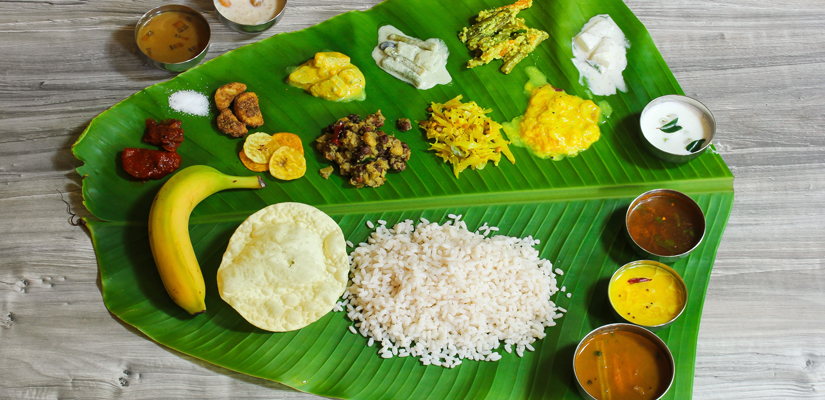
ONAM

It is a 7days long carnival celebrated on the land of God, Kerela. This brings people of Kerala together to perform in the crowded street, feasts, and boat race and more!  Celebrating Onam in Kerala gives you the unforgettable joy and experience.

Significance  

Onam is flourishing festival observed by Malayalis as they welcome the legendry King Mahabali.

HOLI

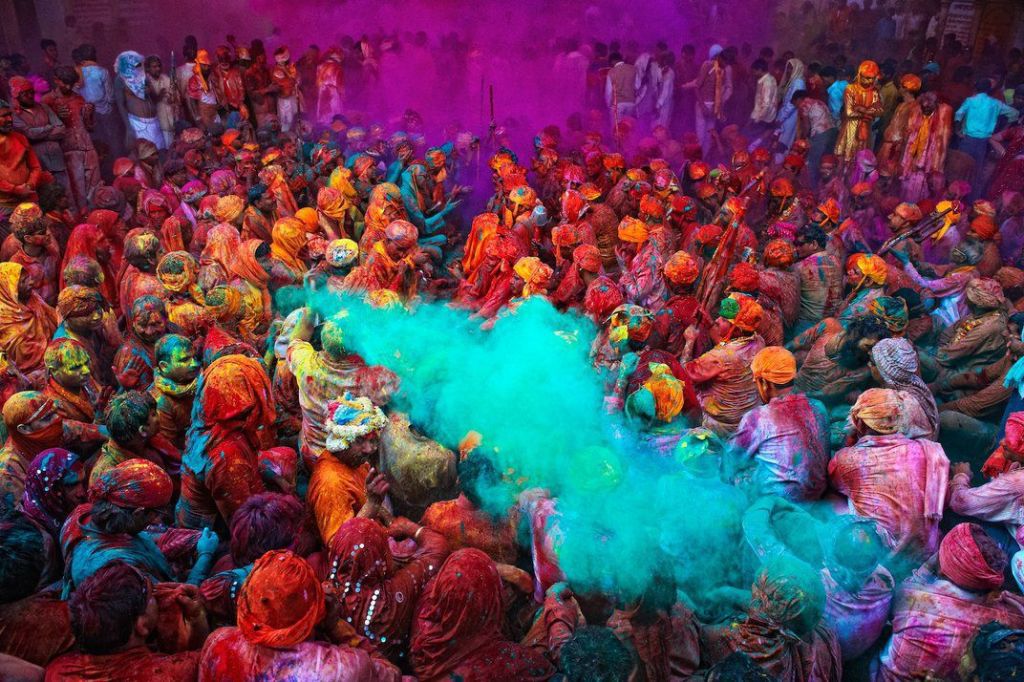
Holi is celebrated on the victory of good over evil. During this people apply colours on each other. Dry or wet no matter this festival is enjoyed by every individual in India. Holi is counted in one of the famous festivals celebrated. People arranges pool partis, dance and enjoy eating sweets.

Significance

The Holi festival is a symbol of victory over evil, according to the mythology it is said prince Prahlad killed Holika, sister of King Hiranyakaship. It is also beginning of spring season.

RAKSHABANDHAN

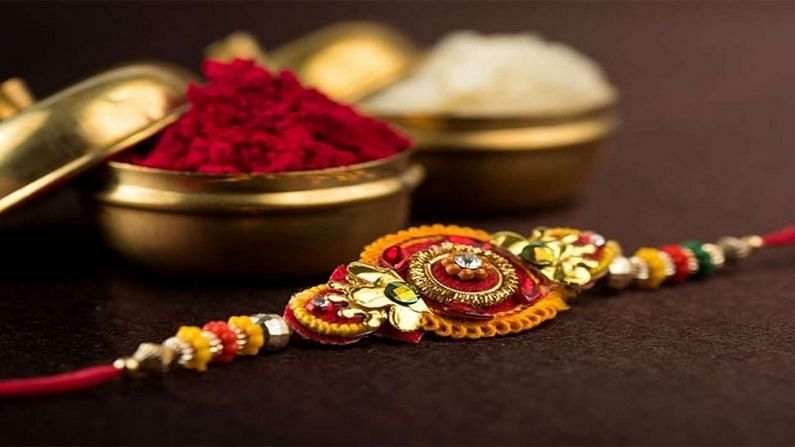
Raksha Bandhan is very popular festival celebrated in India. This festival is celebrated to highlight the relationship between sisters and brothers. This festival denotes that it is brother’s responsibility to take care of his siter during ups and downs.  The Rakhi signifies the promise made brother to his sister.

Significance

This festival is dedicated to all the brothers and sister’s bond.

GANESH CHATURTI

This festival is famous in Maharashtra state, it is also important in India too. The reason behind celebrating this festival is the birth of Lord Ganesh. This festival is witnessed for 5-11 days.

Significance

The birth of Lord Shiva and Parvati’s son, Ganesh with elephant head gave the reason for celebrating this enthusiastic festival.

CHRISTMAS

It is one of the most famous festival celebrated across the world. It is a festival where Christians welcome Lord Jesus. No doubt the Santa gets all the attention of children for dropping chocolates and gifts for them. It is believed that Santa fulfils all the wishes asked by children during Christmas.  Christmas is a day where people decorate their house with lights and even Christmas tree is decor.
Significance

Christmas is celebrated worldwide. On this day Lord Jesus Christ was born.

IMPORTANCE OF NEWSPAPER

Newspapers provide general information and knowledge, such as news on the economy, sports, entertainment, trade, and commerce. In short, the newspaper is extremely important to humans; reading the newspaper on a daily basis can help us strengthen our reading habits, broaden our knowledge, and improve our fluency. For those who are interested in political news, there is a comprehensive list of what is happening on the national and worldwide political fronts. How significant was it for newspapers to report in depth. Assembly elections and Lok-Sabha bye-elections were recently held, and people on every street corner could be seen frantically trying to obtain a newspaper to learn the latest results.

Then there is worldwide political news, which keeps people informed about current events across the world. Some people’s first interest in sports is to turn to the newspaper’s Sports page. It also assists us in becoming more informed citizens. Newspapers keep us informed of any changes in the country’s rules and regulations. Furthermore, they are quite educational for students. Here, a learner can learn everything there is to know about general knowledge and current events. We keep up with technological advances, government legislation, research projects, and other topics.

Aside from that, newspapers feature fantastic pieces on social concerns, civilizations, the arts, and other topics. It informs the public about key problems and conveys public opinion. As a result, individuals will be able to conduct thorough assessments of the administration and its ministers. Likewise, newspapers provide excellent job prospects. Those looking for work read newspapers in order to find dependable job openings.Aside from that, newspapers feature fantastic pieces on social concerns, civilizations, the arts, and other topics. It informs the public about key problems and conveys public opinion. As a result, individuals will be able to conduct thorough assessments of the administration and its ministers. Likewise, newspapers provide excellent job prospects. Those looking for work read newspapers in order to find dependable job openings.

The Benefits of Reading Newspapers:

Some of the advantages of reading daily newspapers are as follows:

1.The world’s news is published in newspapers.

2.Newspapers are a source of general knowledge and information.

3.Newspapers cover topics such as the economy, sports, gaming, entertainment, trade, and business.

4.Reading the newspaper is a healthy habit that has been ingrained in modern society. This habit will broaden your horizons and deepen your understanding.

5.You may stay informed by reading the newspaper. It allows you to participate in any conversation about current events throughout the world.

6.Reading newspapers will boost your general knowledge and make it easier for you to relate to what is happening in the world.

7.Reading newspapers will boost your general knowledge and make it easier for you to relate to others who frequently discuss current events and politics.

8.You will have a clear notion and comprehension of what is going on in your country and throughout the world if you read newspapers.

A World Without Newspapers:

Everything is becoming digital as the globe advances swiftly. We can do everything on our cellphones or computers, from buying to reading the news. The newspaper industry has also been affected by digitisation. Because individuals can obtain fast updates about the newest news on their phones, newspaper sales have plummeted. Is this to say that the digital era will obliterate newspapers? Given the current situation, this prospect appears to be a distinct possibility. Are we, on the other hand, ready for a world without newspapers? Without newspapers, the world would be like a house without mirrors. We won’t be able to see our own reflection as a result of this.

Compare this condition to that of the rest of the globe and the newspaper. Imagine that the world has lost its national mirror, and you are unable to get an accurate image of what is going on around you. What’s worse, instead of the national mirror, we’re getting a fun-house mirror, which distorts information and causes you to perceive what isn’t genuine. In other words, politicians will have unrestricted access to the public to spread their ads and agendas. The data won’t be trustworthy, and it won’t even be examined. There will be no journalists to decode the government and corporate spin on stealing the average guy of his money.

HUMANITY

Humanity is defined as the quality of being human; the unique nature of man that distinguishes him from other beings. Being human does not imply that one has humanity. If you want to know how human a person is, look at what he does for others who don’t return the favour. Mother Teresa has beautifully portrayed one of the most extraordinary examples of extra-ordinary humanity in a human being. When and whenever possible, humanity entails caring for and assisting others. 

Humanity entails putting other’s needs before your own, and putting others’ needs ahead of your own when they want assistance. Humanity entails expressing unconditional love to all living things on the planet. The following anecdote serves as an excellent illustration of humanity.

Importance of Humanity:

As humanity progresses towards the future, the true essence of humanity is increasingly distorted. It is critical to remember that actions of humanity must not be motivated by selfish benefit such as celebrity, money, or power. Borders divide the world we live in today, but our reach is infinite. We are fortunate in that we have the ability to travel wherever we choose and experience whatever we desire. Countless nations struggle incessantly over territory, resulting in the deaths of many innocent people.

Similarly, other humanitarian crises such as those in Yemen, Syria, Myanmar, and others have claimed the lives of millions of people. Because the situation is unlikely to be resolved anytime soon, humanity is required. Most importantly, humanity is concerned not only with humans but also with the environment and all living things. We must all band together to display true humanity and aid in the healing and prosperity of other humans, animals, and the environment.

Instead of fighting about democracy in other nations, we should ask ourselves if we have a voice in our own. Because power corrupts even the most strong-willed, we should exercise our right to vote and enhance the government’s procedures. Stop photographing flora and animals to show your friends and relatives. Look at the trees, animals, and natural beauty with your real eyes, not through the lens of a camera. Bring your friends and family to see the breathtaking beauties that surround us and share this beauty with them.

While technology and democracy have given us the ability to accelerate the pace of change in our society, they have also corrupted us. It has given us a sense of unlimited power and knowledge, making us feel as if we are Gods. No, we aren’t gods, and we have no power over other people’s lives. Only that right is theirs. However, we can and must alter ourselves by making informed selections, making the best life choices, and not allowing others to make our decisions for us.

The narrative of a king is an excellent illustration of mankind. When a dove and an eagle were fighting, a kind-hearted king witnessed it. He could communicate with birds and other animals. The pigeon requested the king’s assistance in escaping the eagle’s clutches. The king promised the eagle that in exchange for saving the pigeon, he would pay any price. The eagle requests from the monarch that he be given the same amount of flesh as the pigeon. The king agrees to the Eagle’s condition and begins hacking off his own flesh in proportion to the pigeon’s meat. He finds the pigeon heavier even after donating a small amount of his flesh. Finally, he gives the Eagle his entire being to consume. The Eagle and the Pigeon both transform into angels at that point, appearing on the ground to test the king’s humanity. 

For his deeds of humanity, the monarch has now been awarded with the most beautiful prizes and afterlife heaven. This narrative can be interpreted as an overblown statement intended to make people realise the importance of humanity in their daily lives. One crucial truth to remember is that “an individual’s life is measured not by the number of degrees he or she holds, but by the degree of humanitarian actions that one engages in on a daily basis.”

‘ROAD ACCIDENT’

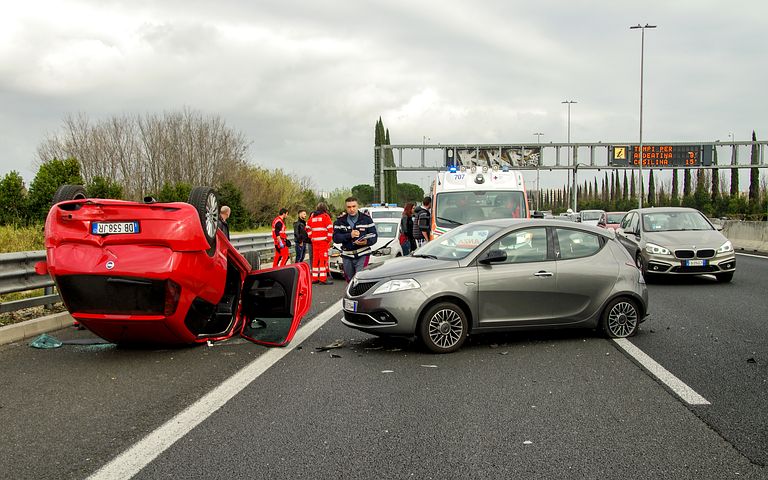
Road accidents are the order of the day in India. There is nothing unusual about innocent people losing their lives due to a combination of several factors. First and foremost is their own indifference and ignorance of traffic rules; combined with other factors like callous drivers or the absolute insensitivity shown by the transport authorities. There is no need to go for the statistical details about the exact number of deaths or serious injuries caused due to road accidents in a particular year. Such statistics do not reflect the truth under normal circumstances. The picture given below shows a man whose car has been turned over because of a collision with a truck and the man is presumably bleeding to death.

The policeman seems to have been able to nab the driver who looks more dazed than guilty, perhaps because of the impact of alcohol which is usually the driving force for drivers across India. An ambulance is in place and two men seem to be moving towards the victim with a stretcher. This is very assuring but the nature of the tragedy leaves us with considerable anxiety about the chances of the victim’s survival. Above all, the picture does not forget to show the common men who usually do not forget to play the role of either mute spectators or aggressive agitators under these circumstances. The spot is not as crowded as city areas are expected to be. Perhaps that also explains the presence of trees, clouds, and birds in the area rather than multistoried buildings and advertisement boards.

Car crash on major highway during rainfall at night. Ambulance in foreground and police car in background.

There are some serious questions that come to my mind when I look at this picture. If we contemplate the picture at a deeper level, we are bound to be confronted by certain very disturbing questions. Why are accidents so common in India? Can nothing be done to combat the menace of rash driving? Why can’t we have a more proactive approach from the police department so that a strict vigil on the roads discourages maniacs from indulging in the killing game of rash driving? The picture shows the policeman nabbing the driver and the medical team on the spot to help the wounded.

Both these incidents are utopian in the Indian context because most drivers in such cases flee the spot and reappear in the scene after a gap of about four or five months, when people have completely forgotten about this incident. Such people also take care to bribe certain dishonest policemen to stay out of legal hassles. The police are often unable to take these people to task. Moreover such is the state of medical care in our country that more often, accident victims die before they can reach the hospital and get proper medical care. Police investigation into these accident cases is such that the common man shies away from helping accident victims for fear of police harassment.

Auto accident involving two cars on a city street

There is no gainsaying the fact that this scenario needs to change. If we do not rush to the aid of an accident victim, it raises serious questions about our identity as civilised human beings. The concerned authorities and the common man should co-operate to improve the scenario with stricter traffic laws and efficient mobile health care units. But we need political will for such a thing to happen. Suppose this person is being taken to the hospital but his ambulance gets stuck in a traffic jam caused by a VIP’s transport facilities and the man dies, whom do you hold responsible? Can we depend on such individuals to make our roads and healthcare facilities better?

Scenario of Road accident in India:

India had most deaths in road accidents in 2019: Report
A total of 151,113 people were killed in 480,652 road accidents across India in 2019, an average of 414 a day or 17 an hour, according to a report by the transport A total of 151,113 people were killed in 480,652 road accidents across India in 2019, an average of 414 a day or 17 an hour, according to a report by the transport research wing of the ministry of road transport and highways.

India continued to have the most road fatalities in the world, followed by China, a distant second at 63,093 deaths in 2,12,846 road accidents in 2019, the report revealed. The United States of America (USA) reported the most road accidents at 2,211,439, and witnessed 37,461 deaths in 2019.

According to the report, speeding was the leading cause of deaths, while, in terms of vehicles, two-wheelers were involved in most road fatalities.

Across states, most road accidents were reported in Tamil Nadu (57,228), followed by Madhya Pradesh (50,669), Uttar Pradesh (42,572), Kerala (41,111) and Karnataka (40,658) accidents.

Maharashtra ranked sixth with 32,295 accidents, but saw the second-highest number of fatalities (12,788), after 22,655 in Uttar Pradesh.

Among cities, Delhi retained its first rank with 1,463 deaths, followed by Jaipur (1,283), Chennai (1,252) and Bengaluru (768).

Mumbai ranked ninth with 447 people being killed in road accidents in 2019.

‘INDEPENDENCE DAY’ Celebration

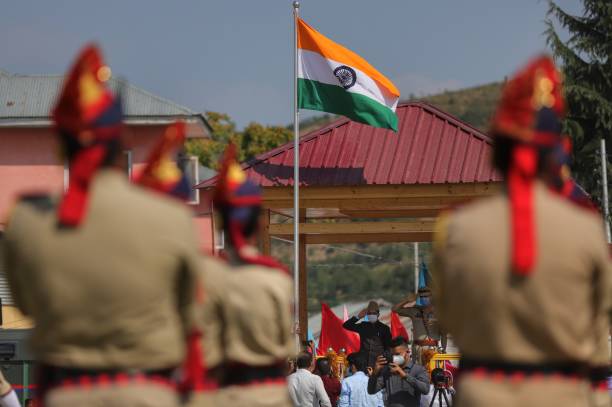
Mother India breathed the fragrance of freedom on 15 August, 1947. In the picture, we can see the hoisting of the national flag presumably by a senior and respected member of some community. This is a common sight in India where patriotic feelings are expressed at this time of the year. It is but natural that we should all feel strongly for our country, and what better time to express these feelings than on Independence Day!

However, the happy look on the faces of these people cannot hide the ugly truths that stare us in the face even after more than sixty years of independence. It is good that we celebrate our freedom with great enthusiasm as depicted in the picture. But mere smiles, celebrations and flag hoisting ceremonies are of no use unless we imbibe the spirit of Indianness in us. The spirit exhibited on this day should become a part of our very being.

CRPF and Jammu and Kashmir Police personnel takes part in the parade on India’s 74th Independence day in Baramulla, Jammu and Kashmir, India on 15 August 2020. (Photo by Nasir Kachroo/NurPhoto via Getty Images)

Generally we sing the national anthem with a lot of enthusiasm and then forget all about the relevance of the day as soon as the function is over. We throw sweet packets here and there and litter our surroundings. Moreover, in a country where more than fifty per cent of the population has a hand-to-mouth existence, the wastage of food is no less than sacrilege. If we do not respect the dignity of our people and surroundings, all the respect showered on the national anthem and the national song become meaningless

We must raise our voices in unison against the hypocritical phenomenon of paying lip-service to the concept of patriotism but stooping to grossly lackadaisical behaviour when it comes to performing our roles as Indians. Spitting or relieving ourselves in public places, not obeying the law while availing of transport facilities, disrespecting public property, joining mobs to create nuisance, calling strikes and bringing life to a halt on working days, remaining spectators to the corruption around us are all different patterns of behaviour that lower the prestige of our nation.

When we hoist the national flag, it is important that we feel clear in our conscience. One may argue that a small number of people setting the right example would not make much of a difference. This would indeed be a myopic interpretation of reality. The truth is that you may be a drop in the ocean, but the ocean is incomplete little gesture of respecting your country At least without in the true sense of the term would make a reasonable difference to the jawans on the border who risk their lives day and night to ensure that we can smile, secure in our knowledge of security when we look at the national flag fluttering high in the air.

History:

India was ruled by the Britishers for many years. The East India Company ruled India for about 100 years. It was in 1757 when the East India Company won the battle of Plassey. It was after the win went the Company started exerting power over India. Our nation had its rebellion against the foreign rule for the first time in 1957. The entire country united against British power. It was an unfortunate event as India was defeated back then but after that time. Indian rule was then passed to the British who ruled our country till India got its independence. Our nation faced a long campaign to gain independence. Britain then began to weaken after two world wars and India was finally free. India’s freedom struggle has always been an inspiration to the work as it was the most non-violent campaign in the world.

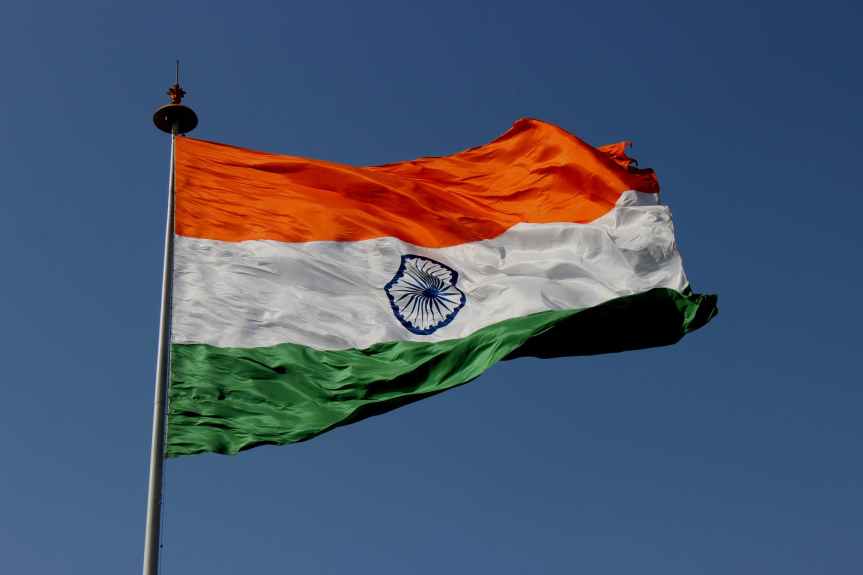
National Flag of India

Facts:

India has been independent for 73 years.

India is named after the river Indus.
India has had 14 Prime Ministers out of which one has been a female Prime Minister.
India has had 13 full-time Presidents out of which only one has been a woman.
The Indian National Flag was designed by Pingali Venkayya who was one of the freedom fighters and also an agricultural from Andhra Pradesh.
India’s national anthem was adopted three years of post-independence.
Mahatma Gandhi wasn’t able to celebrate the first Independence Day in Delhi.

GANDHI JAYANTI

The birthday of Mohandas Karamchand Gandhi is celebrated as ‘Gandhi Jayanti.’ On October 2nd, 1869, India’s “Father of the Nation,” Gandhiji, was born. Thus, every year on October 2nd, Gandhi Jayanti is commemorated. In India, Gandhi Jayanti is observed as a public holiday. The International Day of Non-Violence is observed on this date around the world. Mahatma Gandhi’s contribution to Indian politics is incomparable. Gandhi suffered and was imprisoned multiple times throughout the tumultuous days of the campaign for Indian independence, but freedom for his motherland remained his cherished objective. He was a key figure in several freedom fights and was the founder of the “Quit India Movement.”

ABOUT MAHATMA GANDHI:

On October 2, 1869, in Porbandar, Gujarat, India, Mohandas Karamchand Gandhi was born. His father was the dewan (chief minister) of Porbandar, and his deeply religious mother was a staunch follower of Vaishnavism (the worship of the Hindu god Vishnu), influenced by Jainism, an ascetic faith built on self-discipline and nonviolence. Mohandas Gandhi left home at the age of 19 to study law at the Inner Temple, one of London’s four legal schools. In mid-1891, he returned to India and opened a law office in Bombay, but it was a flop. He quickly took a job with an Indian company, which dispatched him to its South African branch. Gandhi stayed in South Africa for approximately 20 years with his wife Kasturbai and their children. Mohandas Karamchand Gandhi, also known as Mahatma Gandhi, was a well-known freedom activist and a significant political figure in India’s fight for independence from British control. He was also known as the country’s founding father. He had, without a doubt, made a difference in the lives of India’s impoverished. Every year on Gandhi Jayanti, his birthday, is commemorated. Many people were impacted by his idea of truth and nonviolence, which was embraced by Martin Luther and Nelson Mandela for their respective battle movements.

SIGNIFICANCE OF MAHATMA GANDHI AND GANDHISM:

Mahatma Gandhi was a pivotal figure in both the Indian Independence Movement and the Indian National Congress, and is considered one of the most influential figures in Indian history. Gandhi was born in the city of Porbandar, in western British India, on October 2nd, 1869. Mohandas Karamchand Gandhi was his birth name. He was given the epithet ‘Mahatma’ later in life, which means ‘Great Soul,’ and refers to his role in assisting India in gaining independence from Britain.

“I have nothing new to teach the world. Truth and non-violence are as old as the hills. All I have done is to try experiments in both on as vast a scale as I could.” – M K Gandhi

Gandhism is an amalgamation of Mahatma Gandhi’s ideals and practices, as well as his activities, in plain and simple terms. It comprises of Mahatma Gandhi’s thoughts, which he gave to the world, and his acts, which he termed as “truth experiments.” We know that he lived his life to the fullest extent feasible in accordance with his principles; therefore, people who believe that Gandhism is defined solely by his ideas are mistaken. Mahatma Gandhi cannot be compared to Karl Marx, whose ideas are referred to as Marxism. It would be incorrect to label the Mahatma’s views as Gandhism because he was also a man of action.

“India is a cradle of art and culture”

The Indian Culture is known to be the most versatile culture in the world. From the ethical values of our heritage, the social norms, many traditional customs in the country, Various belief systems present in each family to a state to a country as a whole, different political parties, beautiful artifacts and the present technology that have originated in or the country is associated with in the Indian land or subcontinent. The term which also applies and is used beyond our motherland India to countries and different cultures whose histories are considered to be strongly connected to India’s by its immigration phase, their colonization, or its influence. Indian culture has often been labelled and is popularly known as a combination of numerous cultures, and has been influenced by a history that is many millennials old, beginning from the Indus Valley Civilization.  Many elements of the Indian culture can be identified in the country and it proudly take prides in contributing in various mathematics, religions, philosophy of the world, different cuisines, various languages that are present (many words from English are influenced by Sanskrit, which is considered to be the oldest language in the entire human existence), its art which included dance, music, movies, sculptures, various art items and this has made a huge impact in the world.

Unique Customs And Traditions Of Indian Culture - IndianMirror Magazine

India is considered to have a long romance with the form of art which is the art of dance. The Hindu language  Sanskrit has texts like Nātyaśāstra which is Science of Dance and also Abhinaya Darpana which is the Mirror of Gesture. The Indian artform of dance is known to be taught in these ancient books and this is present in the country, according to Ragini Devi, who is an Indian classical dancer states that it is considered to be the expression of one’s inner beauty and the divine in a man. It is a deliberate form of art, nothing in this form of art is left to a chance, each gesture in dance seeks to communicate the ideas of an individual, each facial expression is the artist’s emotions which makes it personal and valuable for the viewers as everyone has a different way to approach art and that is the beauty of the dance forms and other forms of art in the country. In the Indian culture it’s drama and theatre has had a long history alongside its dance and music. Many plays which are performed by Indian artists are recognized by UNESCO as a masterpiece. One of the most renowned pieces of art in the country is its cave paintings from Ellora to Ajanta to Bagh and Sittanavasal there are a plethora of paintings and sculptures which are enough to testify the love of art, history and culture which is present in the country. 

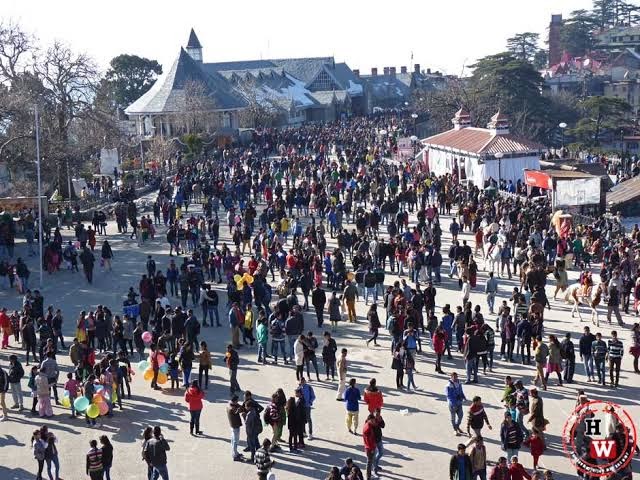
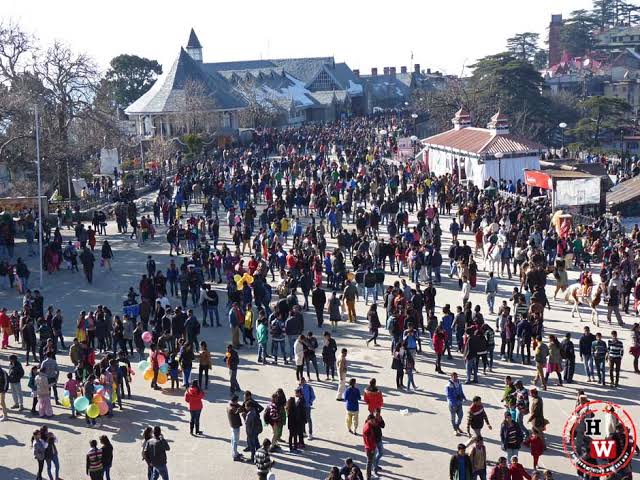
Manali flooded with tourist amid third wave warning; covid protocols getting ignored.

Inspite of third wave warning lakhs of tourists have thronged Himachal Pradesh in less than a month.Videos emerging from Manali and Shimla show that social distancing norms put in place to contain the coronavirus pandemic have gone for a toss.Highways choked, hotels fully booked after the Himachal Pradesh government relaxed Covid-19 related restrictions.Hotel occupancy in major tourist spots, including Shimla, Manali and Dharamshala, is almost full and tourists have been heading to less popular tourist spots in a bid to find accommodation and in guest houses.

Even though the governments, health experts have been warning against large crowds, a sea of tourists was seen in Manali town in Kullu district as the Himachal Pradesh government eased COVID restrictions.the increase in the number of tourists has posed a challenge for the authorities who are struggling to ensure implementation of Covid protocols amid fears of an impending third wave of coronavirus infections.

Reason behind this huge influx of tourist

  1. The prime reason is that the Himachal administration has withdrawn the mandatory need of a negative RTPCR report and e-Covid pass to enter the hill state.
  2. Another reason, behind the rush of tourists, is the ongoing heatwave in North India.
  3. while the third reason is that some people fear that lockdown-like restrictions may be imposed if the third wave of coronavirus strikes the nation. So many have decided to use this opportunity to visit some places

Twitterati reaction

Social media was abuzz with pictures of crowded Manali markets and tourist spots. While some were concerned over the violation of Covid protocols by the tourists, others shared memes and took taunt at the carelessness of the public.

for more news related to covid vist the link👇

https://www.timesnownews.com/india/article/tourism-with-a-vengeance-in-himachal-pradesh-shimla-manali-jampacked-covid-protocols-thrown-to-wind/780836

https://news.google.com/covid19/map

Bose-EinsteinCondensate The 5th Matter

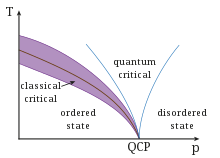
QuantumPhaseTransition.svg

In condensed matter physics, a Bose–Einstein condensate (BEC) is a state of matter (also called the fifth state of matter) which is typically formed when a gas of bosons at low densities is cooled to temperatures very close to absolute zero (−273.15 °C or −459.67 °F). Under such conditions, a large fraction of bosons occupy the lowest quantum state, at which point microscopic quantum mechanical phenomena, particularly wavefunction interference, become apparent macroscopically. A BEC is formed by cooling a gas of extremely low density (about one-hundred-thousandth (1/100,000) the density of normal air) to ultra-low temperatures.

This state was first predicted, generally, in 1924–1925 by Albert Einstein following and crediting a pioneering paper by Satyendra Nath Bose on the new field now known as quantum statistics.

This transition to BEC occurs below a critical temperature, which for a uniform three-dimensional gas consisting of non-interacting particles with no apparent internal degrees of freedom is given by:{\displaystyle T_{\rm {c}}=\left({\frac {n}{\zeta (3/2)}}\right)^{2/3}{\frac {2\pi \hbar ^{2}}{mk_{\rm {B}}}}\approx 3.3125\ {\frac {\hbar ^{2}n^{2/3}}{mk_{\rm {B}}}}}{\displaystyle T_{\rm {c}}=\left({\frac {n}{\zeta (3/2)}}\right)^{2/3}{\frac {2\pi \hbar ^{2}}{mk_{\rm {B}}}}\approx 3.3125\ {\frac {\hbar ^{2}n^{2/3}}{mk_{\rm {B}}}}}

where:

{\displaystyle \,T_{\rm {c}}}is the critical temperature,
\,nthe particle density,
\,mthe mass per boson,
\hbar the reduced Planck constant,
{\displaystyle \,k_{\rm {B}}}the Boltzmann constant and
\,\zeta the Riemann zeta function; {\displaystyle \,\zeta (3/2)\approx 2.6124.}\,\zeta(3/2)\approx 2.6124. 

Interactions shift the value and the corrections can be calculated by mean-field theory. This formula is derived from finding the gas degeneracy in the Bose gas using Bose–Einstein statistics.

Superfluidity of BEC and Landau criterion

The phenomena of superfluidity of a Bose gas and superconductivity of a strongly-correlated Fermi gas (a gas of Cooper pairs) are tightly connected to Bose–Einstein condensation. Under corresponding conditions, below the temperature of phase transition, these phenomena were observed in helium-4 and different classes of superconductors. In this sense, the superconductivity is often called the superfluidity of Fermi gas. In the simplest form, the origin of superfluidity can be seen from the weakly interacting bosons model.

Land Reforms in India

Land reforms refer to the efforts made by the government to reform the ownership and regulation of land. Land reforms play a great role in the rural agrarian economy.
During the pre independence period, there were three types of land tenure systems in India.

  1. The Zamindari System– This system was created by the East India Company as a result of the permanent settlement between Lord Cornwallis and landlords. In this system revenue was collected from farmers by the zamindars or the landlords.
  2. The Mahalwari System– This system was introduced by William Bentinck in Oudh and Agra and was latter extended to Madhya Pradesh. In this system the revenue was collected by village headman on behalf of whole village and here whole village was treated as a unit.
  3. The Ryotwari System– This system was introduced in Tamil Nadu and was extended to Maharashtra, East Punjab, Assam, Coorg and Baar. In this system the land revenue was collected was paid directly by the farmers to the state.

In all three systems, there was exploitation and deprivation. Zamindari system created a class of zamindars who did not work and took away surplus from the cultivators. The lives of tenants and sub tenants was miserable. In the post independent India, land reforms were introduced to stop the exploitation that had been prevailing in the land tenure systems.
https://www.indiaagronet.com/indiaagronet/agri_economics/CONTENTS/Land%20Tenure.htm
The first and foremost step in doing so was abolition of intermediaries. The main reason of exploitation was zamindars. The Zamindari Abolition Act took four and a half years to become a law. Official documents state that zamindari has been abolished now and zamindars are now the big landowners. This has lead to a decline in the exploitation of tenants and the feudal rural structure has crumbled down.
Another step taken was the tenancy reforms. Under this, regulation of rent was done. Security of tenure was provided as well. This was done to protect tenants and grant them permanent rights in land. Ownership rights for tenants were also given.
Reorganisation of Agriculture was another land reform. Here ceilings on agricultural holdings were provided. Ceiling refers to the legal limit on the amount of land which an individual can hold. However, in rural India, implementing ceiling laws is rather difficult because of the balance of power is weighted against the landless.
Another land reform was the consolidation of holdings. This reform was done to solve the problem of fragmented land holdings. In this method one consolidated holding is provided equal to the total of scattered plots. The problem that arises in this reform is the fertility and location of the new land which is provided.
Cooperative farming is another land reform which has been advocated to solve the problems created by subdivision of holdings. In this method, farmers who have small land holdings work together for cultivation. It has many advantages. Expensive implements can be bought by clubbing money together. Market surplus of food grain can be obtained more easily. It also encourage the spirit of cooperation.
https://www.rauias.com/daily-current-affairs-for-upsc-ias/land-reforms-in-india-an-analysis-upsc/