Creating a Pandemic-proof Infrastructure

During the last few years, the world saw a crisis that shook every aspect of human life. A crisis that comes once in many decades. Almost every country experienced a complete lockdown at some point in time. Many countries with previously thought-to-be world-class health-care systems have also been tried, pushed to the limit, and in some respects found wanting. The pandemic took all countries by surprise and the discussion on appropriate national and global strategies is very diverse. The COVID-19 epidemic has demonstrated what is at risk, upending the lives of families worldwide. Millions of people have died, and a generation of kids has experienced a learning catastrophe.

The two years of the pandemic highlighted the current inadequacies of our healthcare delivery system and the need for urgent improvisation. The two years have seen us go through harrowing times—patients died for want of hospital beds and oxygen; the ventilator supply ran dry; high infections led to a severe manpower crunch at hospitals; there were not enough vaccines available then. Our healthcare system had crumbled under pressure, and our frontline workers, both in public and private hospitals, had burned themselves out. And now with cases rising, there is fear of a return to the past among healthcare workers.

Although the pandemic has eased, the virus is still alive and mutating and more pandemics are expected to follow. In the wake of this scenario, it is important for the world community to better equip ourselves to tackle such situations in the future. It is the moment that we realise the importance and need to strengthen healthcare infrastructure globally. It is time to work on making a pandemic-proof healthcare system for the future. Below are the areas that need to be focused on:

  • ·         Curative services – there is a need for the expansion of telemedicine from triage, diagnosis, and follow-up services covering all conditions (acute to chronic). Making institutions adapt and become centres of knowledge dissemination- telemedicine and all possibilities of e- and m-health and provide knowledge to people at home, on what symptoms to look out for, where to test, how to self-care, etc for not only Covid-19 but for other conditions too.
  • ·         Improve primary health care – Better primary health care will help us protect against future pandemics. Improving primary health care includes recruiting, training, and prioritising healthcare workers, and establishing effective surveillance and response systems, building confidence in health services through community outreach.
  • ·         Improve logistics and supply – There are a lot of logistics that are needed in a healthcare system. Some examples include masks, gloves, PPEs, disinfectants, etc. Apart from there’s also the supply of syringes and the cold chain storage that’s been necessary to make sure that the vaccines are stored at the proper temperature and don’t go to waste.  Increased investments in this type of infrastructure will assist to guarantee that communities obtain the immunizations they require while also protecting them from future outbreaks.
  • ·         Promotive and preventive healthcare services – The pandemic has demonstrated that having an underlying condition like diabetes, hypertension or obesity predisposes one to complications, long hospital stays, and mortality. Because of all these reasons, COVID-19 has been categorised as a syndemic rather than a pandemic. It is necessary to provide preventive and promotive health services like boosting one’s immune system through diet, exercise, and supplements, in different formats, online, face-to-face, or through home visits.
  • ·         Mental health services – Mental health issues during the pandemic are threatening to become the next pandemic. Stress and mental health issues related to lockdowns affect everyone but tend to affect the weaker segments of society more severely. It is necessary to create awareness about mental health and make mental health services available, accessible, and affordable to all.

It is true that we need to build pandemic-proof health infrastructure. But does Covid-19 expose our health sector only or show us the reality of other aspects also? Working only on health will not be sufficient. We also need to improve our social, educational and political infrastructure. The world saw a huge dropout of students because of online classes during pandemic. Some of the major reasons given for dropping are fairly obvious: technology problems, lack of support, poorly designed courses, and technologically inexperienced educators. This demands due consideration and commitment. The epidemic has impacted numerous nations’ governmental and political systems, resulting in declarations of emergency, suspensions of legislative activity, isolation or death of multiple lawmakers, and postponing of elections owing to worries of viral transmission.Furthermore, in certain areas, the epidemic has posed various problems to democracy, causing it to be weakened and harmed. Hence, building a pandemic-proof political infrastructure will not only ensure an efficient response to tackle the crisis but also provide basic institutional support to the nation and to the world as a whole.

This is a unique moment where we have an opportunity to learn from this pandemic and prevent others in the future. The legacy of COVID-19 mustn’t be one of disruption and disparity, but instead a moment of monumental change.

Sengol

On December 10,2020 when PM Narendra Modi laid the foundation stone of the new parliament building, the deadline for the completion of the project was October 2022 which was shifted to March, 2023. The March deadline was also not met, but everybody knows that the project is near completion, and the inauguration date could be announced any time and as per expectations 28 May is decided as the date for the inauguration of the new Parliament.

It was not surprising that as soon as the announcement was made, many opposition parties started firing allegation towards government. What came as a surprise for many of us was the pacing of ‘Sengol’ in the new parliament building. Many questions hits in mind one by one. What is Sengol? Where was it all the time? Who made it? What does it signify? Where will it be placed? Don’t worry. Your mind will be free from question related to Sengol after reading this write up as it contains answers to all your question.

The historic ‘Sengol’ that is going to be installed in the new parliament building was received by the first PM of India Jawaharlal Nehru from the then Viceroy of India Lord Mountbatten on 14 August 1947 at around 10:45 PM at his residence in the presence of many other prominent leaders of the time. PM Nehru received this as the symbol of the transfer of power from British at his residence. When the decision of the independence of India was final, Lord Mountbatten was sent as the viceroy to complete the process of independence without hinderance. Mountbatten being unaware of rituals and customs of Indian culture he asked PM Nehru about the special ceremony to be organized for the transfer of power. Nehru discussed this with C. Rajagopalachari fondly known as Rajaji, and after extensive research of Indian culture Rajaji told Pandit Nehru about the tradition of transfer of power during Chola dynasty and how ‘Sengol’ was used to mark this.

The Sengol gets its name from the Tamil word ‘semmai’, meaning righteousness. The sceptre is a historical symbol of Independence as it signifies the transfer of power from the British to the Indians. “The Sengol signifies justice, integrity and unfailing good governance of the king who holds it,” said Mani Maran, a Tamil Pandit at Saraswathi Mahal Library in Thanjavur in an interview given to Times of India on Wednesday. “Tamil emperors like Cholas were usually holding a sceptre in their hands. After crowning the new king, his predecessor or the rajaguru handed over the sceptre during the ceremonial occasion. Thiruvalluvar mentions the sceptre while referring to the rule of law. Sangam works like the Silapathikaram mentions the superiority and importance of the sceptre,” he added. Union Home Minister Amit Shah addressing a press conference on Wednesday said, “The ‘sengol’ represents values of fair and equitable governance.”

The responsibility of arranging a sceptre was handed to Rajaji by Pandit Nehru. Rajaji reached out to Thiruvaduthurai Atheenam, a well-known mutt in Tamil Nadu’s Tanjore district for assistance and its leader commissioned the manufacturing of the Sengol to Chennai-based “Vummidi Bangaru Chetty” jewelers, as per the official document. It was crafted by two men namely, Vummidi Ethirajulu and Vummidi Sudhakar. It is made of silver with a coat of gold. The sceptre is five feet tall and has a ‘Nandi’ bull on top, symbolizing justice and goddess Laxmi is inscribed on it. It was made in 30 days. According to the official documents, the sceptre was handed to Lord Mountbatten by the Deputy high priest of the Adheenam and was taken back. It was then taken to Pandit Nehru’s house in procession and handed over to him. A special song was rendered, as specified by the high priest. The ceremonial sceptre was kept at the Allahabad Museum, along with several other historical objects associated with Jawaharlal Nehru, as part of the Nehru Gallery of the museum.

Now the Sengol has been moved to Delhi and would be placed near the Lok Sabha speaker’s chair in the new parliament building. Citing resources India Today reported that the Sengol will be ceremoniously transported to the House in a grand procession. The occasion is likely to be steeped in Tamil tradition. The Nadaswaram, would lead the procession with a group of musicians will be playing Tamil Nadu’s traditional instrument. Modi is expected to walk along with the procession. “Adheenams,” or priests from Shaivite mutts in Tamil Nadu, will be present in the Lok Sabha’s Well. The priests will sanctify the Sengol with holy water after Modi greets them at the well, India Today added. The “Oduvars,” or Tamil temple singers, will lyrically recite the “Kolaru Padhigam” in the background as the Nadaswaram musicians enchant with their soulful music. The Sengol will be presented to the prime minister after this revered ceremony and placed in a glass case next to the Speaker’s seat in the House.

After decades of anonymity, this holy sceptre will quadruple the magnificence of new parliament building. and always remind us of the hardship that our forefathers had while fighting for independence and will motivate us to defend this independence.

6th India-Canada Ministerial Dialogue on Trade & Investment

 India and Canada held the sixth Ministerial Dialogue on Trade & Investment (MDTI) in Ottawa on May 8, 2023, co-chaired by Shri Piyush Goyal, Union Minister of Commerce and Industry, Consumer Affairs and Food, and Public Distribution and Textiles, Government of India and the Hon’ble Mary Ng, Minister of International Trade, Export Promotion, Small Business and Economic Development, Government of Canada. The Ministers emphasised the solid foundation of the trade and economic relationship between India and Canada and recognized the significant opportunity to deepen bilateral ties and economic partnership.

The Ministers touched on the important discussions taking place at the various meetings of the G-20 being held in India this year under the Indian Presidency. In this context, Minister Ng noted India’s role as a global economy of the future and congratulated the Government of India and the Indian business organizations on the successes enjoyed so far at the G-20 events in India. She expressed her support for India as G20 Chair, and the priorities pursued by India in the G20 Trade and Investment Working Group. Minister Ng indicated that she is looking forward to participating in the upcoming G-20 Trade and Investment Ministerial meeting in India scheduled to take place in August 2023.

In recognition of the critical importance of the Indo-Pacific region for Canada’s prosperity, security, and its capacity to address environmental challenges, Minister Ng noted the rolling out of Canada’s Indo-Pacific Strategy and noted India’s importance in the region.

The Ministers noted the resilience of bilateral trade in 2022 following the challenges of the COVID-19 pandemic and the disruptions caused by the war in Ukraine. Canada-India bilateral trade in goods reached nearly C$12 billion in 2022, a substantial 57% increase over the previous year. The Ministers also underlined the contribution of the services sector in furthering the bilateral relationship and noted the significant potential for increasing bilateral services trade which stood at C$8.9 billion in 2022. Ministers recognized the significant growth of two-way investments and their contribution to deepening economic and trade ties, appreciative of the improvements made by both countries to facilitate business growth and attract investment.

The Ministers noted that the trade-related strengths of India and Canada are complementary and real potential exists for trade in both goods and services to expand significantly in both traditional and emerging sectors. With that goal in mind, the Ministers called for boosting the commercial ties between the two countries through enhanced cooperation and by forging partnerships to take advantage of the complementarities in such sectors as agricultural goods, chemicals, green technologies, infrastructure, automotive, clean energy, electronics, and minerals and metals. The Ministers further asked their officials to discuss trade remedy issues of bilateral importance on a regular basis.

The Ministers emphasized the key institutional role that the MDTI can play to promote bilateral trade and investment ties and to strengthen economic cooperation between the two countries. Recognising the need for a comprehensive trade agreement to create vast new opportunities for boosting trade and investment flows between India and Canada, in 2022 the Ministers formally re-launched the India-Canada Comprehensive Economic Partnership Agreement (CEPA) negotiations. In pursuit of that goal, negotiations towards an Early Progress Trade Agreement (EPTA), as a transitional step towards the CEPA, have been underway and several rounds of discussions have already taken place. The EPTA would cover, among others, high level commitments in goods, services, investment, rules of origin, sanitary and phytosanitary measures, technical barriers to trade, and dispute settlement, and may also cover other areas where mutual agreement is reached.

The two sides also agreed to explore enhanced cooperation through measures such as coordinated investment promotion, information exchange and mutual support between the two parties in near future. This cooperation between India and Canada will be finalized by way of a Memorandum of Understanding (MoU) preferably in Fall 2023.

The Ministers noted that global supply chains remain under the threat of disruption from the fallout of the COVID-19 pandemic, as well as the effects of the ongoing war in Ukraine. In this context, they discussed the continued importance of working together to promote the international rules-based order and supply chain resiliency in critical sectors. They emphasised enhancing cooperation in sectors such as clean technologies for infrastructure development, critical minerals, electric vehicles and batteries, renewable energy/hydrogen, and AI.

Recognising the importance of critical minerals for the future economy and green economy, the Ministers agreed on the importance of government to government coordination to promote critical mineral supply chain resiliency. Ministers also agreed to explore options for business to business engagement on critical minerals between the two countries, and have committed to an annual dialogue between the appropriate points of contact at the officials level on the margins of the Prospectors and Developers Association Conference in Toronto to discuss issues of mutual interest.

Both sides discussed the potential for strengthening the cooperation in the field of science, technology and innovation in priority areas by building on the ongoing work in the Joint Science and Technology Cooperation Committee (JSTCC) and seeking enhanced collaboration in the areas of start-ups and innovation partnerships. The Ministers agreed that there is significant potential to strengthen such cooperation and to enhance collaboration between their research and business communities in support of a sustainable economic recovery and the prosperity and wellbeing of their citizens.

The Ministers recognised the value of further deepening the India-Canada commercial relationship through initiatives such as organized fora for SMEs and women entrepreneurs.

Minister Mary Ng appreciated the visit of the Indian business delegation at the sidelines of the 6th MDTI which has enhanced B2B engagement. To continue the momentum of B2B engagement, both Ministers look forward to the relaunch the Canada-India CEO Forum with renewed focus and a new set of priorities. The CEO Forum could be announced at a mutually-agreed early date. Further, Minister Mary Ng announced that she looks forward to leading a Team Canada trade mission to India in October 2023 which was welcomed by Minister Goyal.

The Ministers noted the significant movement of professionals and skilled workers, students, and business travelers between the two countries, and its immense contribution to enhancing the bilateral economic partnership and, in this context, noted the desire for enhanced discussions in the area of migration and mobility. Both sides agreed to continue to discuss ways to deepen and strengthen the bilateral innovation ecosystem through an appropriate mechanism to be determined. In addition, in accordance with Canada’s Indo-Pacific Strategy, further investments will be made to support industrial research and development partnerships.

In line with the announcement made in the National Education Policy 2020 of India for facilitating foreign universities and educational institutions, India also invited top Canadian Universities to set up their campuses in India.

The Ministers noted that India and Canada have agreed to an expanded air services agreement in 2022 which enhances people to people ties through enhanced commercial flights by carriers of both the countries.

The Ministers reaffirmed their commitment to the rules-based, transparent, non-discriminatory, open, and inclusive multilateral trading system embodied by the World Trade Organization and concurred to work together to further strengthen it.

The Ministers agreed to remain engaged to provide sustained momentum including having an annual work plan which is reported on a regular basis to build linkages and strengthen cooperation across sectors to harness the full potential of the trade and investment relationship between India and Canada.

***

India-Israel Friendship – Beginning of a New Era of Industrial Research and Development Cooperation

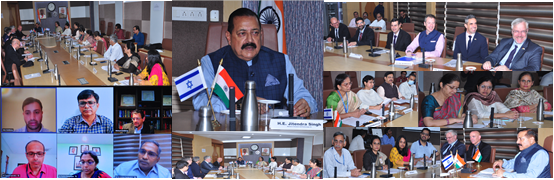
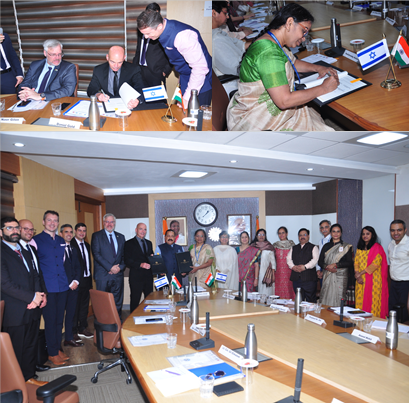
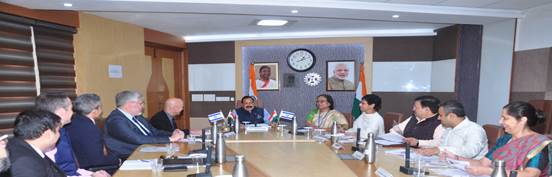
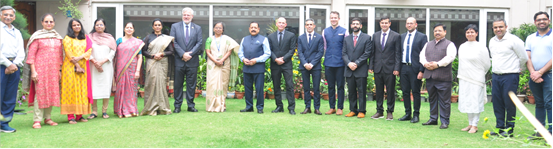
 In a momentous milestone in S&T cooperation between India and Israel, a Memorandum of Understanding (MoU) on Industrial Research and Development Cooperation was signed between the Council of Scientific and Industrial Research (CSIR) under the Ministry of Science and Technology (MoST) of the Republic of India and the Directorate of Defense Research and Development (DDR&D), under the Ministry of Defense of the State of Israel.

Dr N Kalaiselvi, DG, CSIR and Secretary, DSIR thanked the Hon’ble Minister of State(IC), Ministry of Science and Technology and Earth Sciences, GoI and Vice President, CSIR Society for gracing the meeting and his continued support to CSIR. She welcomed the dignitaries and gave an overview of CSIR, showcasing its technological and research prowess as also the ongoing collaboration discussions with DDR&D, Israel in Aerospace, Healthcare, Energy. Sharing CSIR’s priority topics she concurred to the interest of DDR&D for furthering collaboration with Israel in high technology areas such as Artificial Intelligence, Quantum and semiconductors, synthetic biology etc.

Acknowledging the ongoing cooperation efforts of CSIR and his team, Dr. Daniel Gold, Head, DDR&D envisioned that the CSIR-DDR&D cooperation would be beneficial for the welfare of both the countries. He added that DDR&D welcomes collaboration not only with R&D organizations but also with start-ups and companies, venture capitals on both sides. He apprised that AI and photonics are strengths of Israel and welcomed cooperation with CSIR in High Technology sectors which would pave the way for building a better future.

Stressing the successful completion of three decades of India-Israel successful diplomatic relations, Mr. Naor Gilon, Ambassador of Israel to India emphasised the close friendly relations between Israel and India, which have culminated into a strategic partnership after the complimentary visits of Prime Ministers of both the countries in 2018. The present CSIR-DDR&D cooperation would add another feather and be a milestone for India-Israel relations.

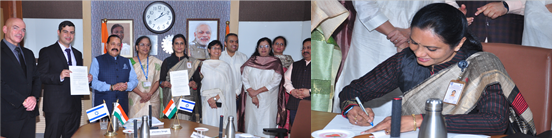
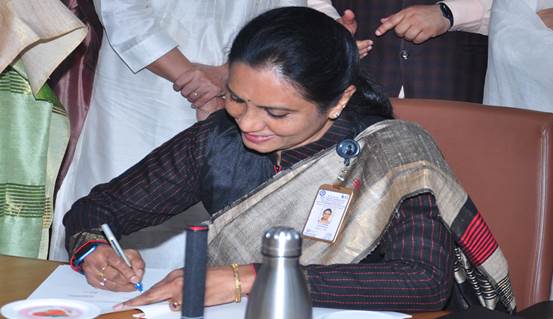
Dr N Kalaiselvi and Dr. Daniel Gold signed the CSIR-DDR&D MoU in the august presence of Hon’ble Minister of S&T, Government of India and Vice President, CSIR Society, Dr Jitendra Singh.

The MoU shall enable cooperation in the industrial R&D programs in mutually agreeable industrial technology fields through implementation of specific projects. The collaboration would encompass some of the key industrial sectors including Healthcare; Aerospace & Electronics Instrumentation; Civil, Infrastructure & Engineering; Chemicals and Petrochemicals, Sustainable Energy including Energy Devices; Ecology, Environment, Earth & Ocean Sciences and Water; Mining, Minerals, Metals & Materials; Agriculture, Nutrition & Biotechnology. The collaboration through the MoU would be steered and the execution monitored by a Joint Steering Committee led by the heads of the CSIR and DDR&D for taking forward mutually benefiting Industrial and technology cooperation.

Specific collaboration on Hydrogen and Aerospace currently under discussed between CSIR and DDR&D were briefed by Dr Abhay Pashilkar, Director, CSIR-National Aerospace Laboratories (CSIR-NAL), and Dr Ashish Lele, Director, CSIR-National Chemical Laboratory (CSIR-NCL); they welcomed collaboration on futuristic technologies in these domains, including in High Altitude Platform, Hydrogen Valley programs of CSIR, respectively.

Specific collaboration on Therapeutics between CSIR-Indian Institute of Chemical Technology (CSIR-IICT) and M/s 101 Therapeutics for conducting clinical trials of a COVID-19 drug having enormous therapeutic potential was briefed; if successful this would prove to be highly appropriate and effective for preparation of future pandemics. The cooperation MoU between CSIR-IICT and M/s 101 Therapeutics was also signed during the meeting.


In his remarks, Dr Jitendra Singh said that it is a very important year in the S&T sphere of India under the leadership of  PM of India as India is holding G20 presidency, celebrating the International year of Millets, as also India and Israel completed 30 years of successful diplomatic relations.

He apprised that CSIR has specialized laboratories in almost all the identified priority sectors therefore assured appropriate competence for this cooperation. For e.g. indigenous Hydrogen Fuel Cell bus by CSIR-NCL, purple revolution (Lavender cultivation) by CSIR-IIIM. He welcomed technology partnership with Israel and congratulated both sides for for their efforts to strengthen the India-Israel relationship.

Dr. Rama Swami Bansal, Head, International S&T Affaris Directorate (ISTAD), CSIR thanked the Hon’ble Minister for his continued support to CSIR, the team from Israel for building and formalizing the cooperation and her colleagues from CSIR and MEA for their kind and gracious presence during the MoU signing meeting today.

**************************

Chief Minister of the Punjab Late Shri Parkash Singh Badal

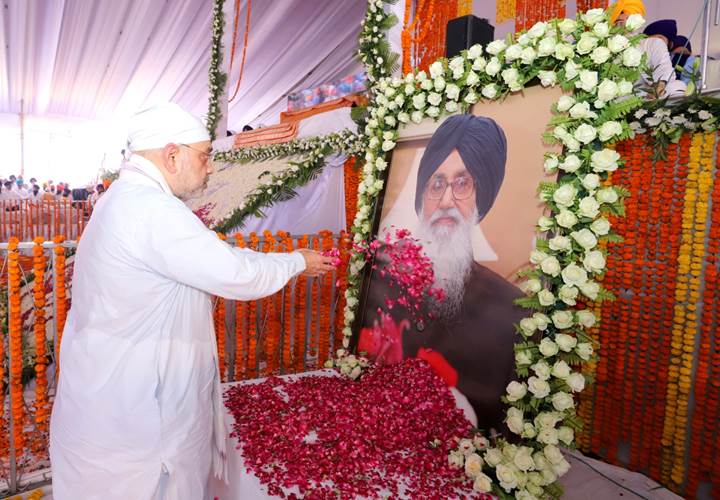
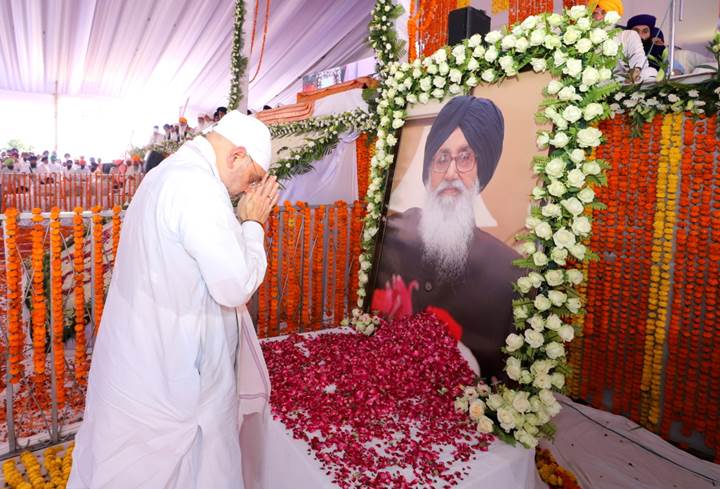
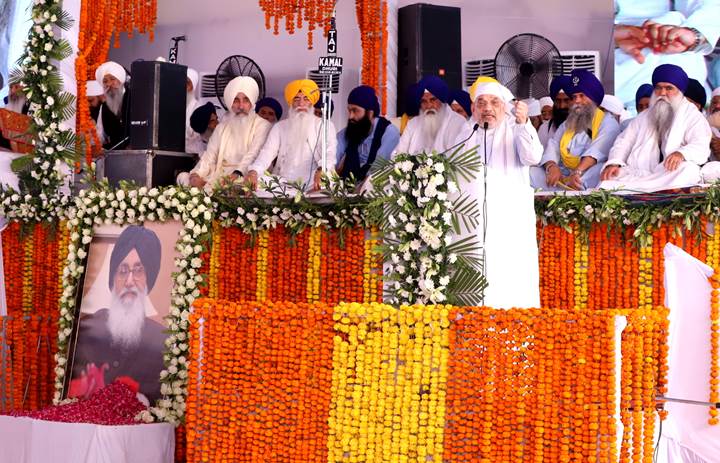
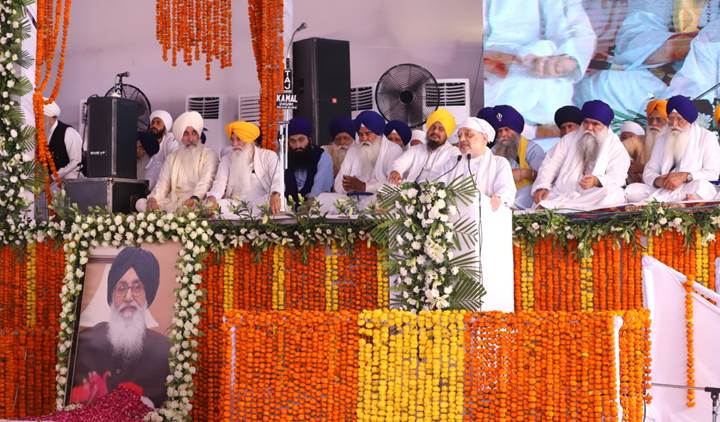
 Union Home Minister and Minister of Cooperation, Shri Amit Shah took part in the ‘Antim Ardas’ of former Chief Minister of the Punjab Late Shri Parkash Singh Badal and paid his last respects at Shri Muktsar Sahib in Punjab.

https://static.pib.gov.in/WriteReadData/userfiles/image/image001U30J.jpg

Shri Amit Shah said that due to passing away of Shri Parkash Singh Badal, the political and social leadership of not only Punjab but the entire country has suffered an irreparable loss. He said that it would be very difficult to fill the vacuum created by the demise of Shri Badal. Shri Shah said that with the passing away of Shri Badal, the Sikh community has lost a true soldier, the country has lost a patriot, the farmers have lost a true sympathizer and politics has lost a great man who set high standards.

https://static.pib.gov.in/WriteReadData/userfiles/image/image002D723.jpg

The Union Home Minister said that Shri Parkash Singh Badal had a long public life of 70 years, no person except Badal Sahab could live such a life without making any opponent. Shri Shah said that he always learnt from his meeting with Shri Badal and he always tried to show the true path. No one except great man like Shri Badal can give advice in political life with such transparency.

https://static.pib.gov.in/WriteReadData/userfiles/image/image003HB3V.jpg

Shri Amit Shah said that Shri Parkash Singh Badal was the longest serving member of the Punjab Legislative Assembly and Shri Badalserved as the Chief Minister of Punjab for 5 times and laid the foundation of New Punjab. With his demise, the Sardar of brotherhood has also left us. Shri Parkash Singh Badal devoted his whole life to Hindu-Sikh unity and despite facing many oppositions in politics, Badal Sahab always tried to keep everyone united. Shri Shah said that it is impossible to find such a person in public and political life.

https://static.pib.gov.in/WriteReadData/userfiles/image/image004L62O.jpg

The Union Home Minister and Minister of Cooperation said that from 1970 till today, whenever there was an opportunity to stand for the country, Badal Sahab never backed down. He said that Sardar Parkash Singh Badal fought for principles and creedand spent longest time of his public life on jail. During the Emergency, Shri Parkash SinghBadal firmly stood to protect democracy, whether it was the Kargil war or the fight against terror, on every front, Badal Sahab, always stood like a shield for the national interest. Shri Shah said that the passing away of Badal Sahab is a huge loss for the entire country. Shri Amit Shah said that we all should take inspiration from the life of Shri Parkash Singh Badaland may Waheguru give us all the strength to walk on his path.

*****

India-U.S. partnership is the defining moment of the 21st century

 Union Minister of Commerce & Industry, Textiles and Consumer Affairs, Food & Public Distribution Shri Piyush Goyal said that the India-U.S. partnership is the defining moment of the 21st century and reiterated the “ChaleinSaathSaath: Forward Together We Go” motto underscoring the depth of the partnership. During his Inaugural Address on ‘US-India Partnership: Forging Ahead’ at American Chamber of Commerce in India (AMCHAM) India’s 31st Annual General Meeting today in New Delhi, he talked about diversifying and deepening India-U.S. trade and investment ties for mutual growth and prosperity.

The Minister emphasised that the leaders of both the countries, Prime Minister of India, Shri Narendra Modi and President of the United States of America, Mr. Joe Biden, understand each other and work smoothly together to find solutions to complex geopolitical problems around the world. Shri Goyal mentioned the 5Ts-Talent, Technology, Tradition, Trade and Trusteeship- identified by the Prime Minister as the vision for the India-U.S. relationship.

The Minister noted that the bilateral trade between India and U.S. has been the highest in the last couple of years and said that it is aimed to increase multifold in the coming years. He said that the target of US$2 trillion exports by the year 2030 is doable with the increasing eminence and recognition of India across the world and with strengthening partnerships with like minded countries having shared values like the U.S.

Shri Piyush Goyal cited the examples of many Indian companies operating in the U.S. and vice versa and highlighted how significantly they are contributing to each other’s economy. The Minister said that these business relations are deepening the partnership between the two countries. He expressed hope that more and more U.S. based corporations will work together with Indian companies in the near future.

The Minister encouraged companies from the U.S. to establish their base in India and expand to newer frontiers like the markets of Africa and South-East Asia. He said that India offers assured prosperity and growth to the U.S. companies with the recent policy reforms undertaken with focus on the fundamental  macroeconomic parameters, affordable labour costs, inclusive and sustainable development and increasing ease of doing business.

The Minister said that the businesses in both countries can work together to expand to the next level in many sectors like defence manufacturing, pharmaceuticals, textiles, engineering products, auto components, electrical products, agricultural products, etc. on the merchandise side while IT, accounting, business processes outsourcing, research & development, tourism, etc. on the services side. He said that the bilateral trade between both the countries is growing rapidly and has tremendous potential to scale further heights. He said that the technical and managerial talent offered by India to businesses around the world cements India’s relationship with the world; he cited the example of many U.S. corporations having Indian or Indian-origin CEOs.

The Minister said that Amrit Kaal is the defining period for India in which the demographic dividend is contributing to the growth of the economy bringing prosperity & future for the country. He said that the reform processes undertaken by the government in the last 9 years will turn India into a global manufacturing hub. He said that the efforts of the government towards improving logistics infrastructure like connectivity, power, etc. is leading to better quality of life for the people of India and enabling the aspirational youth to contribute to the rapid development of India. Shri Goyal stressed that it is important for the industry to stand on its own feet with delivery of high quality products and services with government interference in business to the minimum.

The Minister said that there is multifarious interaction between India and the U.S. at various platforms like the Indo-Pacific Economic Framework for Prosperity (IPEF), U.S.-India CEO Forum, Quad, etc. He said that the comprehensive & strategic partnership between India and the U.S. is based on the strong foundation of shared values, commitment to the rule of law, transparency, freedom of business, freedom of media, independent judiciary, etc. The Minister said that there is complementarity between the India-U.S. economy and both countries collaborate to make prosperous and rational decisions.

He mentioned the significance of the recent visit of United States Secretary of Commerce, Ms. Gina Raimondo to India for the strengthening and deepening of the India-U.S. Partnership. He said that during her visit, Ms. Raimondo met the Prime Minister of India, Shri Narendra Modi and praised his visionary leadership in transforming India. He said that Ms. Raimondo noted the efforts of the Government in eliminating poverty and improving the lives of the people of India through the efficient use of technology and effective policy formulations.

The Minister said that India is committed to the fight against climate change and praised the performance of India as it performed better than the commitments it had made with being among the top 5 countries in performance on climate action. He said that India is consistent in the fight against climate change under the visionary leadership of Prime Minister, Shri Narendra Modi who brought less developed, developing and developed countries together for the signing of the Paris Agreement.

The Minister appreciated the important role played by AMCHAM and the impetus provided by it for the India-U.S. partnership. He said that the collective effort between the leadership of both countries, warmth between people, etc. enables both the countries to partner in uncharted territories for mutual growth and development. The Minister also released two reports at the event: 1. The India edge – US Industries catalysing the growth trajectory and 2. Future of Urban Mobility- Integration of Platforms.

***

AIM, NITI Aayog, and UNCDF Team Up to Make India a Global Agri-tech Leader

 Atal Innovation Mission (AIM), NITI Aayog, and the United Nations Capital Development Fund (UNCDF) today jointly launched a whitepaper aimed at making India a global leader in Agri-Tech innovation and expanding these innovations to the least developed countries in Asia and Africa.

The whitepaper, meticulously prepared by experts from AIM, NITI Aayog, and UNCDF, offers actionable steps to overcome challenges faced by Agri-Tech start-ups and facilitate their growth at national and international levels.

The whitepaper outlines the significant observations and recommendations required to tackle challenges in the agriculture sector and promote sustainable practices that support smallholder farmers across developing economies. Agri-Tech innovations will help address food security, supply chain inefficiencies, and climate change concerns.

Addressing the audience, Mr. Samuel Praveen Kumar, Joint Secretary, Ministry of Agriculture and Farmers Welfare stated, “Agri-tech startups in India have emerged as a game-changer in the agriculture sector, offering innovative solutions to the emerging challenges in Agriculture like Climate change, Improving Productivity etc. The AIM-UNCDF Agri-tech challenge has uncovered the immense promise and potential of this market, and we are excited to see what the future holds.”

Speaking during the launch, Mission Director Atal Innovation Mission Dr. Chintan Vaishnav said “the agriculture sector is critical to food security, supply chain efficiency, and climate change mitigation, and the Agri-Tech start-ups in India have provided significant solutions to these challenges. Through this partnership with UNCDF, we aim to facilitate cross-border engagement, knowledge exchange, and investments to support high-impact Agri-Tech innovations and make agriculture practices efficient, resilient, and sustainable for smallholder farmers across developing economies. We look forward to working with our partners to realize this vision.”

At the launch, Jaspreet Singh, Global lead, Financial health and Innovation, UNCDF, said, “The learnings from the Agri-tech challenge have been immense and revealed that the market is enormous and has immense potential for global south-south collaboration. Moving forward, we are working towards creating a community platform for smallholder farmers which can be helpful for Agri and Agri-tech startups to exchange ideas, explore collaboration, and share knowledge”

With over 70% of the agricultural workforce in India comprising smallholder farmers, Agri-tech start-ups have emerged as the solution to the challenges faced by farmers. AIM, in partnership with UNCDF, aims to create a south-south collaboration environment where start-ups from Asia and Africa can exchange ideas and generate opportunities in their respective countries.

AIM, an anchor partner of the south-south collaboration initiatives, collaborates with partner countries such as Indonesia, Malaysia, Kenya, Uganda, Malawi, and Zambia. The collaboration focuses on addressing three key challenges in the agriculture sector, namely low productivity, poor risk resilience, and inefficient supply chain management. Out of 25 potential Agri-Tech start-ups that aim to solve critical challenges around production, supply chain, risk, and climate change, the partners have shown interest in and are at various stages of cross-border engagement.

The Agri-Tech start-ups in emerging economies have successfully provided digital solutions to several agricultural challenges that the sector has faced in the past. AIM, in partnership with UNCDF, is committed to supporting high-impact Agri-Tech innovations, creating an enabling environment that facilitates start-up growth and sharing of knowledge across borders. The Indian start-up sector has the potential to play the role of a knowledge hub and support market development in less-developed start-up economies across the globe.

The launch of the whitepaper marks a significant milestone in the journey towards making India a global leader in Agri-Tech innovation and expanding these innovations to the least developed countries in Asia and Africa. AIM, NITI Aayog, and UNCDF are committed to working together towards this goal and achieving sustainable and inclusive growth in the agriculture sector.


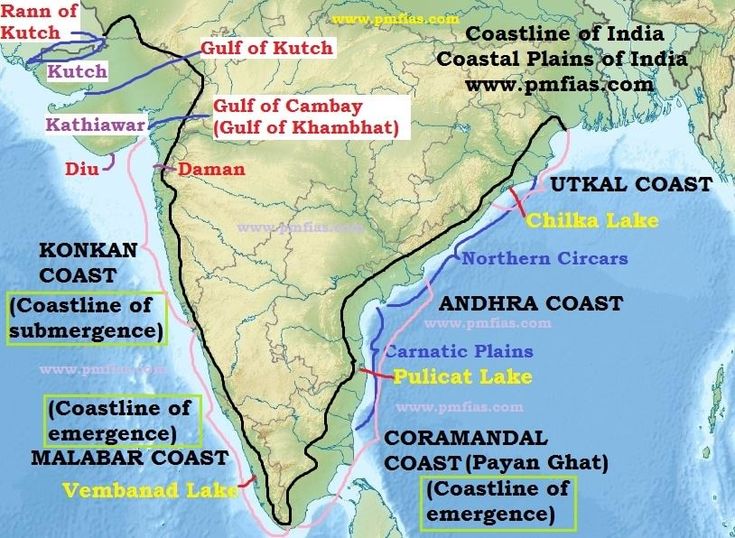
Define coastal zone and its characteristics. Also make a map highlighting the coastal lines of India.

Coastal zone is the area where land meets the sea, it’s a dynamic and constantly changing environment. It typically includes a range of habitats, such as beaches, dunes, cliffs, estuaries, and wetlands. The characteristics of coastal zones vary depending on the specific location, but some common features include:High biological productivity due to the mixing of nutrient-rich water from the ocean and freshwater from rivers.
High levels of biodiversity, with many unique species adapted to the coastal environment.
High levels of human activity, including residential and commercial development, fishing, and tourism.
Vulnerability to natural disasters, such as hurricanes, storm surges, and tsunamis.
India has a long coastline of approximately 7,517 km, which runs along the Bay of Bengal in the east, the Arabian Sea in the west, and the Indian Ocean in the south. The coastal zone of India is a unique and diverse environment that supports a variety of ecosystems and habitats, including beaches, mangrove forests, coral reefs, estuaries, and wetlands. The following are some of the characteristics of the coastal zone in India:

High biodiversity: The coastal zone of India is home to a wide variety of plant and animal species, many of which are endemic to the region. The mangrove forests of the Sundarbans, for example, are home to the Royal Bengal Tiger, while the coral reefs of the Andaman and Nicobar Islands support a diverse array of marine life.
High levels of human activity: The coastal zone of India is densely populated and supports a variety of economic activities, including fishing, aquaculture, tourism, and port development. This has led to significant environmental degradation, including pollution, habitat loss, and overexploitation of natural resources.
Vulnerability to natural disasters: The coastal zone of India is highly vulnerable to natural disasters, including cyclones, storm surges, and sea-level rise. In recent years, severe weather events such as the 2004 Indian Ocean tsunami, the 2017 Cyclone Ockhi, and the 2019 Cyclone Fani have caused significant damage and loss of life along the Indian coast.
Coastal erosion: The coastal zone of India is experiencing significant coastal erosion, particularly in areas of high wave energy and human activity. This is leading to the loss of beaches, dunes, and other important habitats, and is exacerbating the impacts of climate change on the region.
In conclusion, the coastal zone of India is a unique and diverse environment that supports a wide variety of ecosystems and habitats, but is also facing significant environmental challenges. It is important to implement sustainable coastal management practices that balance economic development with environmental conservation and protection of vulnerable coastal communities.

New Education Policy of India 2020

The New Education Policy (NEP) of India was launched in 2020 with the aim of revamping the education system in the country and bringing about significant changes in the way education is imparted. The NEP is the first education policy in India to be launched in the 21st century, and it replaces the earlier National Policy on Education, which was launched in 1986 and revised in 1992.

The NEP is based on the principles of access, equity, quality, affordability, and accountability, and it aims to provide a holistic and multidisciplinary education to students from all backgrounds. The policy is designed to promote lifelong learning and to equip students with the skills and knowledge they need to succeed in a rapidly changing world.
One of the major goals of the NEP is to provide universal access to education from preschool to secondary school. The policy aims to increase enrollment rates and reduce dropout rates by providing free and compulsory education to all children between the ages of 3 and 18 years. It also emphasizes the importance of early childhood education and aims to provide high-quality preschool education to all children.
The NEP also seeks to bring about a significant shift in the curriculum and pedagogy of schools and colleges. It emphasizes the importance of multidisciplinary learning and encourages the integration of vocational and academic education. The policy aims to reduce the emphasis on rote learning and memorization and promote critical thinking, creativity, and problem-solving skills.
Another significant feature of the NEP is its focus on the use of technology in education. The policy aims to promote the use of technology to enhance learning outcomes and make education more accessible and affordable. It also emphasizes the importance of digital literacy and aims to provide students with the skills they need to use technology effectively.
The NEP also seeks to promote the internationalization of education and encourage greater collaboration between Indian and foreign educational institutions. The policy aims to attract foreign students to study in India and encourage Indian students to study abroad.
The NEP also addresses the issue of teacher training and professional development. It emphasizes the importance of continuous learning and aims to provide teachers with the skills and knowledge they need to deliver high-quality education. The policy also encourages the use of technology in teacher training and aims to provide teachers with access to high-quality online resources.
The NEP also addresses the issue of funding for education. The policy aims to increase public investment in education and encourage private investment in the sector. It also proposes the establishment of a National Research Foundation to fund research and innovation in education.
The NEP has received mixed reactions from stakeholders in the education sector. While some have praised the policy for its focus on access, equity, and quality, others have criticized it for being too ambitious and lacking in detail. Some critics have also raised concerns about the implementation of the policy, particularly in terms of funding and teacher training.
In conclusion, the New Education Policy of India is a comprehensive and ambitious policy that seeks to bring about significant changes in the education system of the country. The policy has the potential to transform the education sector and provide students with the skills and knowledge they need to succeed in a rapidly changing world. However, its success will depend on the effective implementation of the policy and the commitment of all stakeholders to work towards its goals.

Preamble of Indian Constitution

 The Preamble of the Indian Constitution is an introductory statement that outlines the fundamental principles and objectives of the Constitution. It is a concise and powerful statement that reflects the aspirations and values of the Indian people. The Preamble is an integral part of the Constitution and serves as a guide to interpreting its provisions. It was adopted by the Constituent Assembly on 26th November 1949, and came into effect on 26th January 1950, when the Constitution was enacted.


Source – Timesofindia

The Preamble begins with the words “We, the people of India,” which reflects the democratic nature of the Indian Constitution. The use of the phrase “We, the people” signifies that the Constitution derives its authority from the people of India, who are the ultimate source of power in the country. The Preamble contains several important keywords, which are discussed below.

  1. Sovereign: The term sovereign means that India is a self-governing nation, and its government is not subject to external control or influence. It implies that the Indian Constitution is the supreme law of the land, and all citizens and institutions must respect its provisions.

  2. Socialist: The term socialist reflects the commitment of the Indian Constitution to the principles of social justice and equality. It emphasizes the need to eliminate poverty, inequality, and exploitation, and to promote the welfare of all citizens.

  3. Secular: The term secular means that the Indian Constitution guarantees freedom of religion to all citizens, and the State does not endorse or promote any particular religion. It implies that the State is neutral in matters of religion and treats all religions equally.

  4. Democratic: The term democratic signifies that the Indian Constitution is based on the principles of democracy, which includes free and fair elections, the rule of law, and the protection of individual rights and freedoms. It implies that the government is accountable to the people, and the people have the right to participate in the decision-making process.

  5. Republic: The term republic means that India is a sovereign state, and its head of state is elected by the people. It implies that the Indian Constitution provides for a representative government that is accountable to the people.

  6. Justice: The term justice reflects the commitment of the Indian Constitution to the principles of social, economic, and political justice. It implies that the State must ensure that all citizens have access to justice, and that there is no discrimination based on caste, gender, religion, or any other grounds.

  7. Liberty: The term liberty signifies that the Indian Constitution guarantees freedom of speech, expression, assembly, and association to all citizens. It implies that the State must respect and protect the rights of individuals to live their lives as they see fit, as long as they do not infringe on the rights of others.

  8. Equality: The term equality reflects the commitment of the Indian Constitution to the principle of equal treatment under the law. It implies that all citizens are equal before the law, and there is no discrimination based on caste, gender, religion, or any other grounds.

  9. Fraternity: The term fraternity means a sense of brotherhood. The constitution of India promotes the feeling of fraternity by the system of single citizenship.

What are Agro-Climatic Regions of India?

 Geographers use the term “area” to refer to any particular portion of Earth’s surface. It may be as small as a park or a neighborhood, or as large as a continent or an ocean. Metropolitan areas, for example, help define the borders of large population centers for a census and other official purposes. The metropolitan area of Delhi, Mumbai are urban geographic areas.  Area is also an exact measure of the size of a surface with specific boundaries.

The geographical area of India is divided into 15 agro-climatic regions. These are further divided into more homogeneous 72 sub-zones. The 15 agro-climatic zones are:

  • Zone 1 – Western Himalayan Region: Jammu and Kashmir, Uttar Pradesh
  • Zone 2 – Eastern Himalayan Region: Assam, Sikkim, West Bengal and all North-Eastern states
  • Zone 3 – Lower Gangetic Plains Region: West Bengal
  • Zone 4 – Middle Gangetic Plains Region: Uttar Pradesh, Bihar
  • Zone 5 – Upper Gangetic Plains Region: Uttar Pradesh
  • Zone 6 – Trans-Gangetic Plains Region: Punjab, Haryana, Delhi and Rajasthan
  • Zone 7 – Eastern Plateau and Hills Region: Maharashtra, Uttar Pradesh, Orissa and West Bengal
  • Zone 8 – Central Plateau and Hills Region: MP, Rajasthan, Uttar Pradesh
  • Zone 9 – Western Plateau and Hills Region: Maharashtra, Madhya Pradesh and Rajasthan
  • Zone 10 – Southern Plateau and Hills Region: Andhra Pradesh, Karnataka, Tamil Nadu
  • Zone 11 – East Coast Plains and Hills Region: Orissa, Andhra Pradesh, Tamil Nadu and Pondicherry
  • Zone 12 – West Coast Plains and Ghat Region: Tamil Nadu, Kerala, Goa, Karnataka, Maharashtra
  • Zone 13 – Gujarat Plains and Hills Region: Gujarat
  • Zone 14 – Western Dry Region: Rajasthan
  • Zone 15 – The Islands Region: Andaman and Nicobar, Lakshadweep
Geographic Areas Examples
Tropical Rainforest Assam and parts of the Sahyadri Mountain Range
Tropical Savannah Sahyadri Mountain Range and parts of Maharashtra
Tropical and subtropical steppe Parts of Punjab and Gujarat
Tropical Desert Most parts of Rajasthan
Moist subtropical with winter Parts of Punjab, Assam, and Rajasthan
Mountain climate Parts of Jammu and Kashmir, Himachal Pradesh, and Uttaranchal
Drought Rajasthan, Gujarat, and Haryana
Tropical semi-arid steppe Tamil Nadu, Maharashtra, and other parts of South India

RRR's song Naatu-Naatu nominated for Oscar in best original song category.

Naatu Naatu’ from SS Rajamouli’s ‘RRR’ nominated for Best Original Song in Oscars.

Director SS Rajamouli’s historical epic RRR has scored a nomination in the Best Original Song category at the upcoming 95th Academy Awards, more popularly known as the Oscars.

It’s the first Indian feature film to be nominated for anything other than best international film at the Academy Awards, which take place in March.

The song has been a favourite at award ceremonies and has already won a Golden Globe and a Critics’ Choice Award.

It will be up against heavyweights Lady Gaga and Rihanna, whose songs are nominated in the same Oscars category.

BharOS : India's indigenous mobile Operating System.

With the advent of the smartphone era, majorly two OS (Operating System) which are Google’s Android and Apple’s iOS have been dominating the market. India has a population of more than 140 crore people and smartphone users account for more than 75 crores and we are dependent on the big tech giants for OS services. Also, the problem with renowned names such as android and iOS is that they come primarily with pre-installed apps and users have limited alternatives to switch to, which creates the issue with user privacy. So, there is a need for our own indigenous OS for Indian smartphone users. An IIT Madras Incubated organization has developed BharOS, a made in India Operating System.

BharOS is an AOSP (Android Open Source Project) Operating System based on the Linux kernel. It is developed by JandKops (JandK Operations Private Limited), which is a non-profit organization incubated at Indian Institute of Technology Madras.

BharOS is basically a really clean fork of AOSP that provides an NDA (No Default Apps) setting, which means that users do not have to keep or use pre-installed apps in this mobile operating system. NDA is key as many pre-installed apps that currently ship with other smartphones can slow down the device or take a toll on battery life by acting as bloatware. Going with an NDA design for BharOS was intentional as it will let users have more control over the apps on their mobile phones based on the user’s trust in the app and the kind of data they store on their phone.

BharOS also provides access to a Private App Store Service called PASS, which is a list of apps that have been thoroughly vetted and have been verified to comply with businesses’ privacy and security needs.

BharOS would offer NOTA (Native Over the Air) updates, meaning that security updates and bug fixes will be automatically installed rather than users having to check for updates and implement them on their own.

As of now, BharOS is not rolled out for public use but developers claimed that they have given access to the OS to certain organizations with stringent privacy and security requirement. BharOS developers claim that BharOS is better than both Android and iOS in terms of features and security. On top of that, they also claim that BharOS could even improve the battery life of the device. It will also allow users to install apps of their interest and will ship with an India-based app store. BharOS is a contribution towards the idea of a self-reliant India or ‘Atmanirbhar Bharat’ by creating a secure OS environment for India-based users.

Know about TRAI's proposal of displaying name with phone number.

In November last year, TRAI floated a consultation paper seeking comments about the potential introduction of Caller Name Presentation (CNAP).

The feature will allow users to know the identity of the person calling them. The basic idea is that if people are aware of the person who is calling them, they can make an informed choice about those calls. At the same time, such a feature could potentially help in curbing harassment and other spam calls.

The proposal CNAP will also be difficult to execute from a technical perspective given that a number of phones in the Indian market may not be able to support it, telcos have said.

Meanwhile, Truecaller, which already offers a similar service albeit through a crowdsourcing model has said since several people purchase SIM cards using forged identity cards, TRAI’s proposal to use SIM registration data to display callers’ names might be fraught with inaccuracies since “the identity of the actual user of a mobile number may not be the same as the subscriber”.

Adani Enterprises files India's largest FPO.

Adani Enterprises, the flagship company of ports-to-energy conglomerate Adani Group, said it would raise ₹20,000 crore in follow-on public offering of new shares, which is being touted as the country’s biggest FPO.

The Adani Group’s flagship company has filed papers with capital market regulator Securities and Exchange Board of India (Sebi) for the FPO.

An FPO is the issuance of shares to investors by a publicly listed entity. Its name comes from the fact that it follows an initial public offering (IPO). 

Over the past five years, Adani’s fortune has skyrocketed. In the past year, the share prices of his many publicly traded firms have soared by more than fivefold. Four of the six companies have increased investor worth by more than ₹1 lakh-crore. In five years, shares of his flagship company, Adani Enterprises, have increased by almost 2,500 per cent.