ENDANDERED ANIMALS – NATIVE TO INDIA

India has a high level of biodiversity, with roughly 8% of all species on the earth found there.  It is home to 7.6% of all mammals, 12.6 percent of all avian, 6.2 percent of all reptilian, 4.4 percent of all amphibian, 11.7 percent of all fish, and 6.0 percent of all flowering plant species, making it one of seventeen megadiverse countries.

The country is home to 4 of the world’s 34 biodiversity hotspots: the Himalayas, the Western Ghats, the North-East, and the Nicobar Islands. India plays host to a plethora of rare & exotic animals like The Greater One-Horned Rhinoceros, Nilgiri tahr, Nilgiri marten, Bengal tiger, Kashmir Hangul and, pygmy hogs, to name a few.

Kashmir Hangul (Kashmir Stag) 

Hangul, Jammu & Kashmir’s state animal, previously widely distributed throughout Kashmir’s mountains, is now limited to the Dachigam National Park in Kashmir. The Hangul’s population has steadily dropped throughout the decades, from a peak of 5,000 in the early 1900s. Experts have highlighted habitat fragmentation, a lack of favorable breeding, predation, and a relatively low fawn-female ratio as the most significant obstacles to Hangul conservation and population expansion. The Kashmir Hangul’s fawns are preyed upon in huge numbers by the Common Leopard, Himalayan Black Bear, and nomads’ dogs, threatening their survival. The Kashmiri Red Stag, famed for its 11- to 16-point antlers, has been designated as a critically endangered species by the International Union for Conservation of Nature (IUCN).

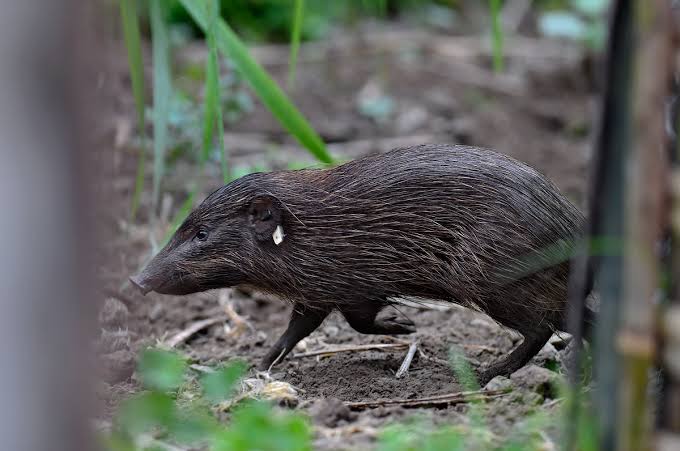
Pygmy Hog

They are indigenous to India and can only be seen in a few scattered sites near Manas National Park in north-western Assam. Pygmy hog (Porcula salvania) is the world’s tiniest pig, standing at 20-30cm in height – with its sporadic hair and streamlined body that is nearly the size of a cat, it is also exceptionally rare.

 Unfortunately, with only 200 left, they have been classified as an Endangered species in the IUCN red list. Habitat decay and degradation result from human settling, farming, seasonal burning, livestock pasture, and commercial forestry constitute the main challenges confronting the already jeopardized pygmy hogs.

Sangai Deer 

The recherché Sangai as know as  the brow-antlered deer or the dancing deer, is only found in the Keibul Lamjao National Park, the world’s sole floating national park, and is indigenous to Manipur. Sangai eats a diverse range of aquatic plants, grasses, herbaceous plants, and shoots, including Zizania latifolia, Saccharum munja, S bengalensis, Erianthus procerus, E ravernnae, and others. According to the latest wildlife estimation undertaken by the Manipur Forest Department, the sangai deer’s population is static at 260. Marked endangered by the International Union for Conservation of Nature (IUCN), The Sangai population continues to dwindle as a consequence of low genetic diversity, disease proneness, hovering biomass habitat depletion, and hog deer competition.

Gooty Tarantula

The Peacock Parachute Spider, sometimes referred as the Gooty Tarantula, is a spider belonging to the genus Poecilotheria. The blue colour is caused by the arrangement of nanocrystals in their body hairs, which reflect blue wavelengths of light.  P. metallica, endemic to India, lives in the wild in holes in towering trees, where it weaves asymmetric funnel webs. They prey on a myriad of flying insects. The “quality of habitat” of spiders that seek cavities and deep cracks in old woods is also dwindling. The spiders have been labelled as critically endangered by the International Union for Conservation of Nature (IUCN).

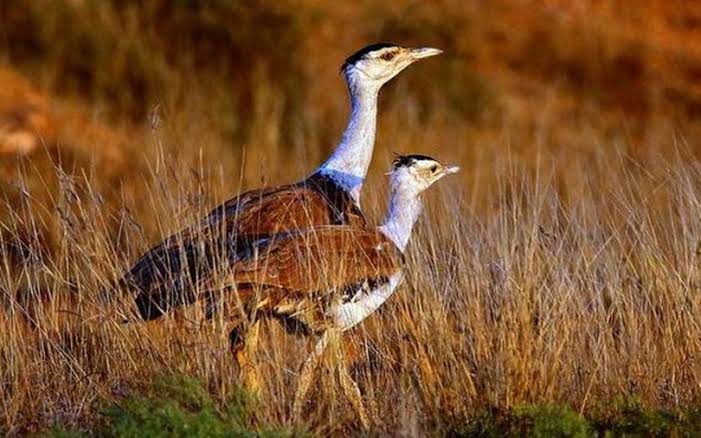
great Indian bustards

Rajasthan is home to about 122 of India’s estimated 150 critically endangered great Indian bustards (GIB), which are clustered in the Desert National Park on the western flank. Great Indian bustards are big birds with long legs and a long neck, with the tallest individuals reaching 1.2 metres (4 feet) in height. The males and females are about the same size, with the largest weighing 15 kg (33 pounds). The colour of a bird’s feathers distinguishes males from females.

India plans talks with Taliban preparing for life after US pullout

India is planning to activate direct channels of communication with the Taliban as the possibility of the Islamist group soon taking the centre stage in mainstream politics in Kabul is appearing to be an eventuality now.

The move comes as countries such as the US and the UK have already begun to recognise the legitimacy of the Taliban.

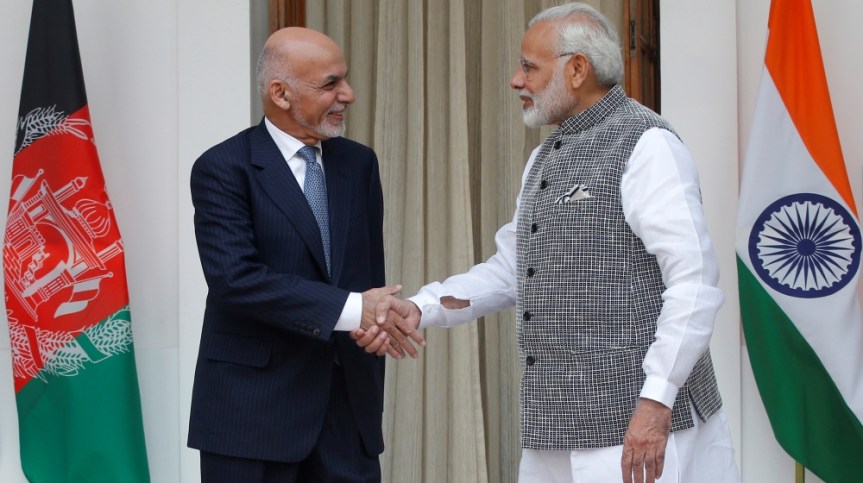
While India has assured support to the Ashraf Ghani government for peace and stability in Afghanistan as the Taliban has gone on an offensive, the Narendra Modi government believes it should begin to establish a network of contacts with those in the Taliban who sit in Doha, the capital of Qatar, and those who see New Delhi as their partner for development.

For this, India is now banking on Russia, which is planning on playing a greater role along with Iran. New Delhi is looking to be part of that arrangement even if it means supporting a transition government in Kabul, which looks imminent there after the US troops leave by 31 August.

Russia and India are believed to have held extensive talks on what stance regional partners will be taking now that violence in Afghanistan has surged and it has become all the more significant to bring in the Taliban as interlocutors. This is because the message then will “trickle down” to their commanders who are fighting the Afghan government forces, sources said.

According to a source, the government is planning to speak to those Taliban leaders with whom India had been engaging ever since External Affairs Minister S. Jaishankar participated in the intra-Afghan dialogue in Doha in September 2020.

Since the war began in Afghanistan two decades ago, India has invested about $3 billion in the development of the country.

PLACES TO VISIT IN SIKKIM

1. Gangtok

It’s the exotic capital of sikkim, it’s surrounding regions are rich in natural beauty and atmospheric sceneries. Places you need to visit here are Nathula pass, Tsangmo lake, MG marg and monasteries. 

2. Tsangmo lake/ Changu lake 

This lake is only 38 km away from Gangtok located at a height of around 12300 ft. This is charming view of the lake is unexplainable. During the winter season the lake remains frozen. The blue waters, fresh air creates a perfect ambience! 

3. Yumthang Valley

It is located at a height of around 3,500 meter. It’s alluring beauty is just awesome. The scenic valley and the mountain view creates a magical charm. From December to March the valley trip to valley is normally cancelled due to heavy snowfall.

 4. Gurudongmar Lake

This is one of the most gorgeous lake in India located at a height of 17,800 ft above. About 5 km away from the Gurudongmar lake lies the India China border. Due to it’s high altitude, the oxygen level remains very low and the atmosphere is extremely windy and cold. 

Blue Origin Trip: People, Earth, Space and Environment

Jeff Bezos, the founder of Amazon and Blue Origin, the richest man on the planet and a lot many adjectives that are used for him – finally and quite successfully monetized space travel in the eyes of the Earthlings.

Jeff Bezos launches to space aboard New Shepard rocket ship - BBC News
Commercial Astronaut Bezos in his maiden space voyage.

To begin with, he thanked and congratulated all earthlings for this success. He added that it was we, the people and all the employees of Amazon who had paid for it. Well, he isn’t exactly lying. And we could be thankful to him too, for he has successfully monetized space travel – something we all wanted to hear as kids – well maybe not the monetization part. But it will be this monetization that will fuel more companies to enter into the market. Elon Musk has already worked a lot on reusable space crafts, not to forget that many space agencies – the most prominent being ISRO in India are working to create cheaper means of launching cargo and satellites into space and there are many private space-based start-ups opening up too. Maybe in a decade, space travel will be accessible to at least the upper middle class across the planet.

But should we really thank Jeff Bezos? Opening space for travel opens space for greater amount of debris and maybe a push for institutions all around the world to find out ways to tackle an already existing problem. To add to that, Space travel and Musks’s goal of colonising Mars are but only more incentives to reduce budget on the environment in the long run. Sounds like a dystopian Science Fiction but history points out to the facts that when man was not bound by citizenship laws, forests and agrarian lands have gone barren only because they had options. It is this history that has pushed us towards all the environmental litigations we know of. Will we be as enthusiastic about them if Mars colonies were a reality? As Musk has himself repeatedly stressed that Earth might no longer be livable. Well, scientifically, it is livable upto another 4.5 billion years. But we, the people and the way in which we living beings influence the climate might not allow the planet to see more than 500 years from now. And we are not to be shamed about it. Our education, our governments and our media is more accountable than we are. These are the institutions that tell us what and how the world is. And unfortunately, we believe that is the way the world is.

So, should we or should we not support a scientific and technological advancement?

The answers don’t really lie with anyone. While Bezos travelled to space and Musk revolutionised reusability of the crafts, we still saw public demonstrations in South America against the change in fishing litigations, India against the allegedly anti-environment and corporate-friendly revisions in Environment Impact Assessment Law draft and in Brazil against the government’s decision to not do a lot about the Amazon fires. Humanity still loves this Earth and while in a distant future, capitalism can shame people for doing so, it is increasingly unsuccessful right now. And let us not only keep it that way, but also create ways to add to that love.

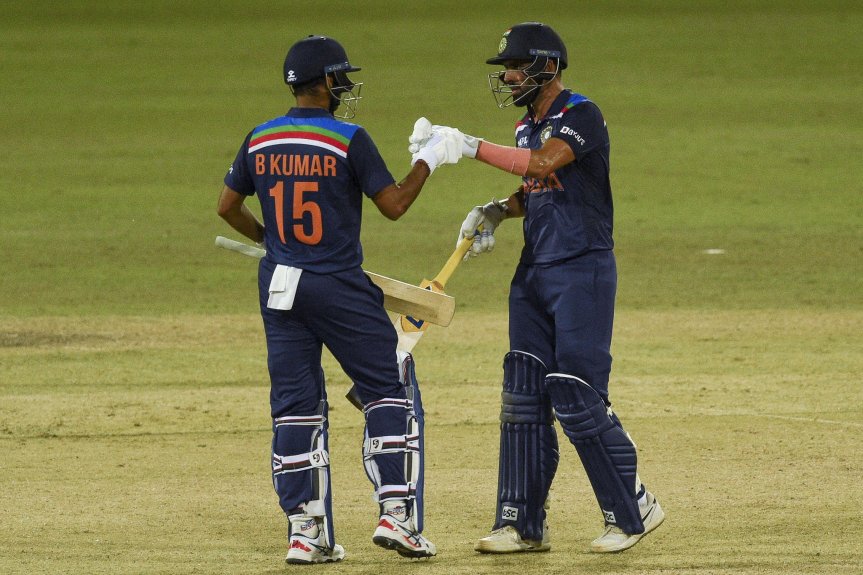
All-rounder Deepak chahar destroyed Lankans dreams in the 2nd ODI.

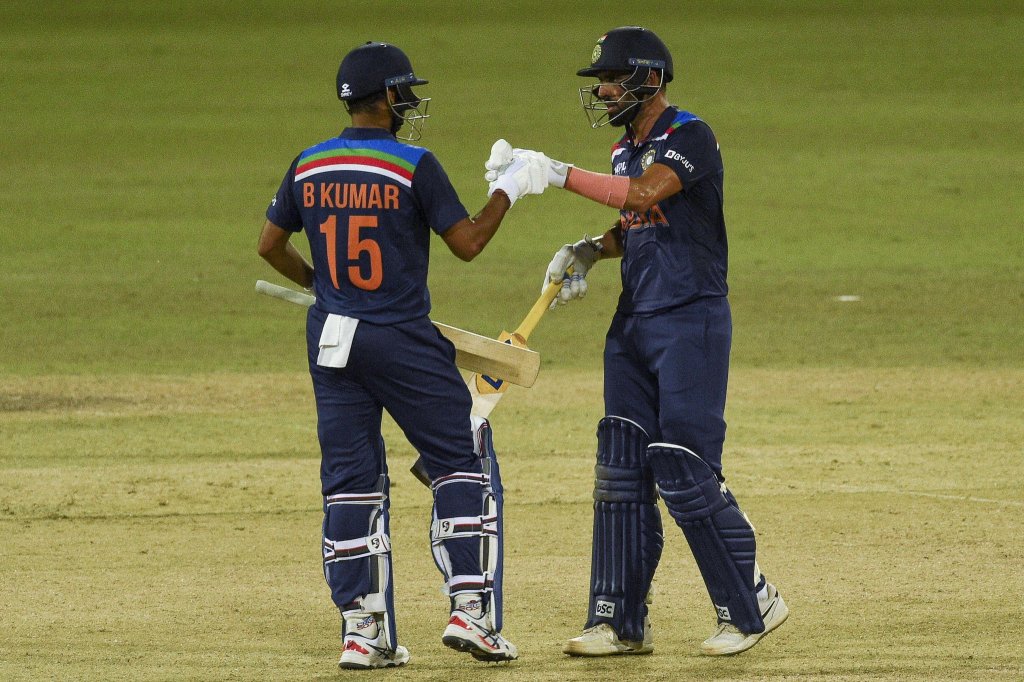
Chahar and bhuvaneshwar in the 2nd ODI

Lankans won the toss and elected to bat first. Openers minod Minod Bhanuka and Avishka Fernando added 59 runs in powerplay. Yazuvendra chahal broke this partnership and Minod 36(42) hit one delivery to Manish Pandey at midwicket and he made no mistake. On the very next ball,new man Bhanuka rakjpaksha edged the delivery to Ishan kishan and returned to pavilion with a golden duck.


Then, avishka Fernando and Dhananjay de selva continued the innings and added few runs between them. Avishka after reaching his fifty falled to Bhuvaneshwar,he scored 50 of 71. Deepak chahar got rid of Dhananjay 32 of 45 with a knuckle ball, shanaka 16 of 24 was bowled by chahal and Hasranga 8 of 11 was bowled over by chahar. Aslanka continued the scoreboard ticking and registered his maiden fifty and soon fall to Bhuvaneshwar,he scored 65 of 68. Karunaratne 44 of 33 landed some blows at end to take his side to 275/9. Bhuvaneshwar and chahal bagged 3 wickets each while deepak chahar took 2 wickets.

Chasing 275,Shaw and Dhawan opened the Indian innings and shaw hit 3 boundaries and was looking in good touch. Lankans introduced Hasranga and he got rid of shaw 13 of 11 with a googly. Kishan 1 of 4 soon followed with falling to Rajitha.

Dhawan 29 of 38 tried to carry the innings but Hasranga got better of him and he was strucked on pad and review got Lankans his wicket. Manish Pandey 37 of 31 , was striking well but he was unlucky to be run out. then, Hardik Pandya chipped one straight to midwicket to fall for a duck. Suryakumar Yadav continued the fight at the other end and scored a fluent fifty. Krunal Pandya sttruggled but managed to hang in there. Lakshan Sandakan trapped Suryakumar 53 of 44 leg-before-wicket and few overs later,Hasaranga castled Krunal 35 of 54 . Victory seemed easy to Lanka at that time and match was in their control.

After,that Bhuvneshwar and Chahar took the game deep. Chahar hit a massive six off Sandakan in the 43rd over and followed it up with two more boundaries in the next over to reach his fifty. Some streaky boundaries added to Sri Lanka’s woes and eased India’s path to victory eventually as the match was completed with five balls to spare. Bhuvaneshwar scored 19 of 28 and Chahar made 69 of 82. For his all-round performance Deepak chahar was given ‘Player of the match’ award.

Hasranga bagged 3 wickets and Rajitha,Shanaka and Sandakan got 1 wicket each.


T-20 world cup is near and India in chahar may have discovered an All-rounder. We’ve seen him landing few blows in IPL, but it was new for us in Indian Jersey. India will look to clean sweep the Lankans while Lankans will play for their pride in the last match,as they’ve nothing to loose now.

Environmental laws in india

Either Stable burning in various states accrued the air pollution in Delhi and created a gas chamber around NCR ; SC came upon a committee to observe scenario , Or 4 industries inflicting stream pollution were shut down by Maharashtra pollution board . Everybody has responsive to environmental problems as higher than . The key solution for resilience to environmental issues are provided by government in various legislations , enactments and provisions on environment laws .


In republic of India environmental law is concern with the policy and law for protection of the environment . It aims for achieving carbon free economy through taking measures for reducing climate change. All the acts under this laws are safeguards in ensuring effective management of the environment and its multiple ecosystems . It provides for preventing environmental damage .


Natural resources in the earth were unscathed from millions of years. It were remain pure until the industrialized started . After the industrialization this resources have been exploited in Spain of 100 years only . From 19th century, the environment (air , water and land ) is directly exploited by rapidly growing population at alarming-rates.


environment includes water, air and land and the inter-relationship which exists among and between water, air and land, and human beings, other living creatures, plants, microorganisms and property , as mentioned in section 2 of environmental protection Act of 1986 . Environment is a wide sphere , it consists of social, economically , political , religious dimensions .


Addressed area of environmental laws in India :

1. Quality of water : For the prevention and control of water pollution and to maintain or restore wholesomeness of water in the country the water act of 1974 was enacted. It further provides for the establishment of Boards ( CPCB and SPCB ) for the prevention and control of water pollution with a view to carry out the aforesaid purposes. This act prohibits the discharge of pollutants into water bodies beyond a given standard, it also lays down fine and penalties for non-compliance.

2. Reduction of air pollution and maintaining air quality : The Air (Prevention and Control of Pollution) Act, 1981 (the “Air Act”) is an act to provide for the prevention , protection and abatement of air pollution .It provides for establishment of Boards at the Central and State levels with a view to carrying out the aforesaid purposes.

3. Hazardous Waste management : legislations that directly or indirectly deal with hazardous waste management are the Factories Act, 1948, the Public Liability Insurance Act, 1991, the National Environment Tribunal Act, 1995 and rules and notifications under the Environmental Act.

4. Containment cleanup, damage mitigation : preventing future damage to the environment is undeniably the primary objective of environmental law, mitigating and reducing existing damage is also important. This area most often deals with issues like toxic leaks and oil spills. The central objective of this branch of environmental law is deciding liability, planning an appropriate response, and also determining the best process of investigation and monitoring in the overall clean up process. This area also concerns itself with the study and assessment of risk in the long term, to better mitigate any future accidents and risks.

5. Sustainability of resources : United Nations has put great emphasis on ensuring the sustainability of resources. For this vision , it has advocated the formation of various legal principles and legislation. In this regards concept of environmental impact assessment introduced .

Noble legislations and enactments on environment law in India :


Laws on Forest and wild life protection:
• The Indian Forest Act, 1927 ; The Wildlife Protection Act, 1972; The Forest (Conservation) Act, 1980 ; The Environment (Protection) Act, 1986; The National Green Tribunal Act, 2010.


Laws on Water pollution :
• The Water (Prevention and Control of Pollution) Act, 1974.


Laws on air pollution :
• The Air (Prevention and Control of Pollution) Act, 1981 (the “Air Act”)


Laws on hazardous waste management :
• Biomedical Waste (Management and Handling) Rules, 1998 ; Municipal Solid Wastes (Management and Handling) Rules, 2000 ; Batteries (Management & Handling) Rules, 2001 ; Hazardous Wastes (Management, Handling and Transboundary) Rules, 2008 ; E – Waste (Management and Handling) Rules, 2011 .
Laws on wetlands


Ramsar convention (1971) : This convention was initiated to push for greater conservation and sustainable use of wetlands ; Wetlands (Conservation and Management) Rules, 2017.
Constitutional provisions on environment laws


Part IVA (Art 51A-Fundamental Duties) of the constitution casts a duty on every citizen of India to protect and improve the natural environment including forests, lakes, rivers and wildlife, and to have compassion for living creatures.


• the Constitution of India under Part IV (Art 48A-Directive Principles of State Policies) stipulates that the State shall endeavour to protect and improve the environment and to safeguard the forests and wildlife of the country.

environment makes human life possible, and our cultural environment helps define who we are. It is therefore essential that our population and economic growth are environmentally sustainable.

Haryana and Punjab have 4% of India’s population

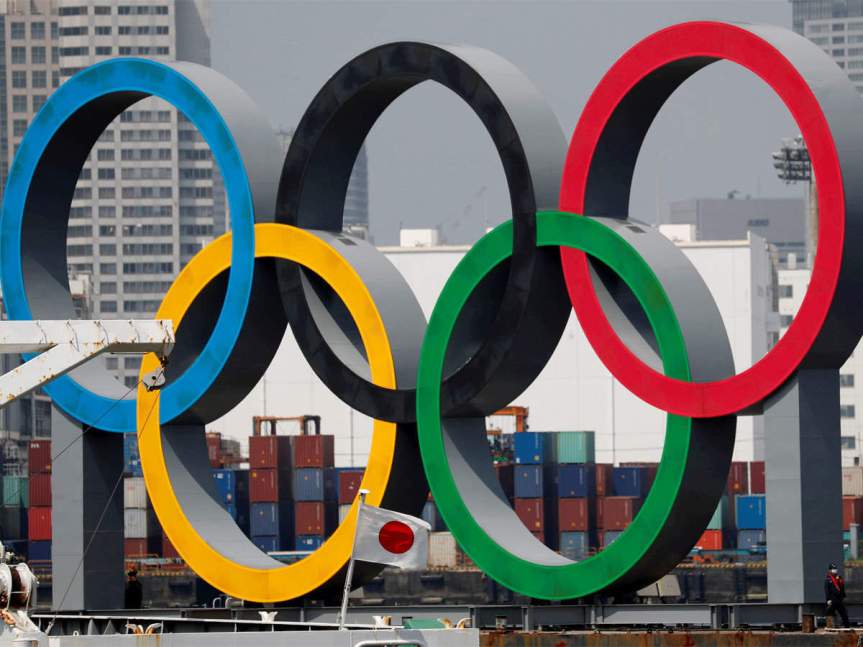
Haryana and Punjab are the two states that are once again leading the way for the country at the Olympics.

The two states, with just 4.4% share of India’s population, have together sent 50 athletes to the Tokyo Games, accounting for 40% of the Indian contingent. Haryana has 31 athletes in the contingent, nearly 25% of the total, while Punjab has 19.

Tamil Nadu had sent 11 athletes to Tokyo, 8.7% of the contingent. Other states are Kerala and UP each had sent 8 athletes.

For Haryana, nine of 19 women Hockey players, seven wrestlers(four women, three men), four boxers(three men, one women) and four shooters(two women, two men) make up most of the numbers. While for Punjab 11 out of India’s 19 member men’s hockey swell the tally. Two shooters(a man and a women), three from athletics(two men, one women), two women’s hockey team members, and one boxer make up the total.

India is sending its largest ever contingent to the Olympic Games with the total of 127 athletes and will take part in 18 disciplines: athletics, archery, badminton, boxing, fencing, equestrian, gymnastics, golf, hockey, rowing, shooting, sailing, swimming, table tennis, tennis, wrestling and weightlifting.

Kerala, known for its legacy in athletics, has six in track and field events out of the eight it is sending to Tokyo. One each is in swimming and the men’s hockey team.

UNIFORM CIVIL CODE

In areas like as marriage, divorce, inheritance, and adoption, the Uniform Civil Code (UCC) advocates for the creation of a single law for India that would apply to all religious sects. The law is based on Article 44 of the Constitution, which states that the state must work to ensure that citizens throughout India have access to a uniform civil code.

For over a century, the subject has been at the forefront of political discourse and discussion, and it is a top priority for the Bharatiya Janata Party (BJP), which has been pressing for legislation in Parliament. The saffron party was the first to vow that if it wins power, it will adopt UCC, and the subject was included in its Lok Sabha election program for 2019.

The central family law acts were extended to Jammu and Kashmir when Article 370 was repealed. Although this is another step toward adopting UCC across India, there is still a long way to go in this endeavor. 

Human rights and the values of equality, fairness and justice all support the creation of a standard civil code. Article 44 of the Indian constitution’s directive principle is important because its goal is combat discrimination against vulnerable groups and to bring disparate cultural groupings together across the country. While drafting the Constitution, the father of our constitution “Dr. B R Ambedkar” stated that while a UCC is desirable, it should remain voluntary for the time being, and so Article 35 of the draft Constitution was added as part of the Directive Principles of State Policy in Part IV of the Constitution of India as Article 44. It was included into the Constitution as a condition that would be met when the nation was ready to embrace it and the UCC could gain societal acceptability.

The UCC aims to provide the following:-

  1. Protection of Vulnerable Portions of Society: The UCC strives to safeguard vulnerable sections of society, like women and religious minorities, as envisioned by Ambedkar, while simultaneously encouraging nationalistic ardour via unity.
  2. Rules will be simplified: The code will make the complicated laws of marriage ceremonies, inheritance, succession, and adoptions more accessible to everyone. All citizens, regardless of their faith, shall be subject to the same civil law. When passed, the code would strive to simplify laws that are now divided based on religious views, such as the Hindu code bill, Sharia law, and other similar legislation.
  3. Secularism: A goal established in the Preamble, and a secular republic requires a single law for all people rather than differentiating regulations based on religious customs.
  4. Gender justice: Each religion in India has its own set of personal rules covering weddings, divorce, succession, adoption, and maintenance. Women’s rights, however, are typically restricted by religious legislation, whether Hindu or Muslim. A famous example is the practice of triple talaq which is now been held unconstitutional.

All personal laws will be abolished if an unified civil code is established. 

Therefore, the people’ fundamental rights to equality before the law and equal protection under the law, as guaranteed by the Constitution, need a comparable response throughout these regions. Article 44, which requires the state to make reasonable efforts to ensure that citizens have access to an unified civil code across India, has the same effect.

Ola electric scooter receives record 1 lakh bookings in 24 hours

Ola Electric CEO Bhavish Aggarwal announced recently that the much-anticipated Ola e-scooter has achieved 1 lakh bookings in just 24 hours of opening of pre-launch bookings, making it the ‘most pre-booked scooter’ in the world.

Ola Electric had announced the opening of bookings on July 15th at a token amount of ₹499 on its official website.

“India’s EV revolution is off to an explosive start. Huge thanks to the 100,000+ revolutionaries who’ve joined us and reserved their scooter,” Bhavish Aggarwal said on Twitter.

“I am thrilled by the tremendous response from customers across India for our first electric vehicle. The unprecedented demand is a clear indicator of shifting consumer preferences to EVs,” Bhavish Aggarwal said in a statement.

The new Ola electric scooter is likely to go on sale in the country later this month.

Ola Electric has claimed that the scooter will get best-in-class boot space as well. Additionally, the new scooter will get an app-based key for a keyless experience.

Ola has claimed that electric scooter will come with ergonomic seating. The company also claims the scooter will come with “superior cornering” ability as well as “class-leading acceleration.”

Indian places that looks like foreign

We all dream of traveling international but most of the time our pockets don’t allow so, here is the list of some famous places in India that looks like foreign destinations. These Indian cities will make you feel like as if you’re in abroad.

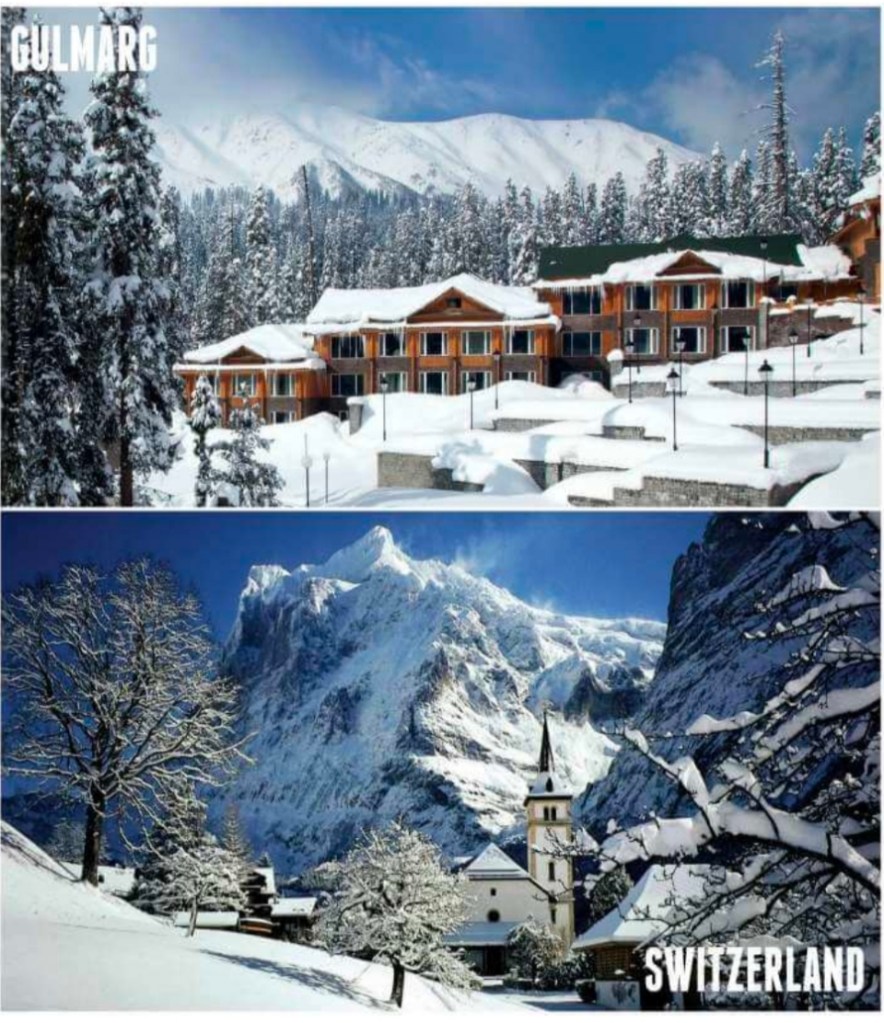
The scene of snow clad mountains at Gulmarg in Kashmir is quite similar to those in Switzerland. There’s no other place like Kashmir in the world! Kashmir is often referred as Paradise on earth.

Tulips in Srinagar will remind of you of Tulips in Amsterdam. If not the tulip fields of the Netherlands, you can still visit our own Tulip garden which is located in Srinagar. The best time to visit for the tulips is when they are in full bloom that is March-end and early April.

Hills of Alaska is quite similar to Auli of Uttarakhand. The Ski slopes of Uttarakhand and Sikkim in India are one of the best things to do.

Rolling hills in Scotland and Mandi in Himachal Pradesh, looks same.

Andaman and Nicobar Islands and Phi Phi Islands, Thailand. The Andaman and Nicobar islands of India, are as beautiful as the islands of Thailand. The Andamans are beautiful and have equally turquoise waters.

Valley of Flowers in Uttarakhand is in the same as that of Antelope Valley in USA.

Thar Desert in Jaisalmer and Sahara Desert in Morocco, Africa

Chitrakoot Falls in Chhattisgarh and Niagara Falls in Canada. In case you’ve been dreaming about visiting the Niagara Falls, you can visit Chitrakoot falls. The Chitrakote falls in the state of Chattisgarh, are the most beautiful falls in the monsoon – June to Sept. To see this waterfall, you don’t need to board a 16-hour long flight or make hole in your pocket.

Tea leaves at Munnar in Kerala and Boh Tea Plantation in Malaysia. The hill station in Munnar has around 50 tea gardens which have free entry. You can also visit the Tata Tea museum located on these hills. If you happen to be a tea lover too, then visiting a tea plantation should be on your list.

Alleppey in Kerala and Venice at Italy. The river is lined with trees and nature, seeing the sunrise from these boats will be the most beautiful experience.

The Bonneville Salt Flats of Utah vs The Rann of Kutch of Gujarat.

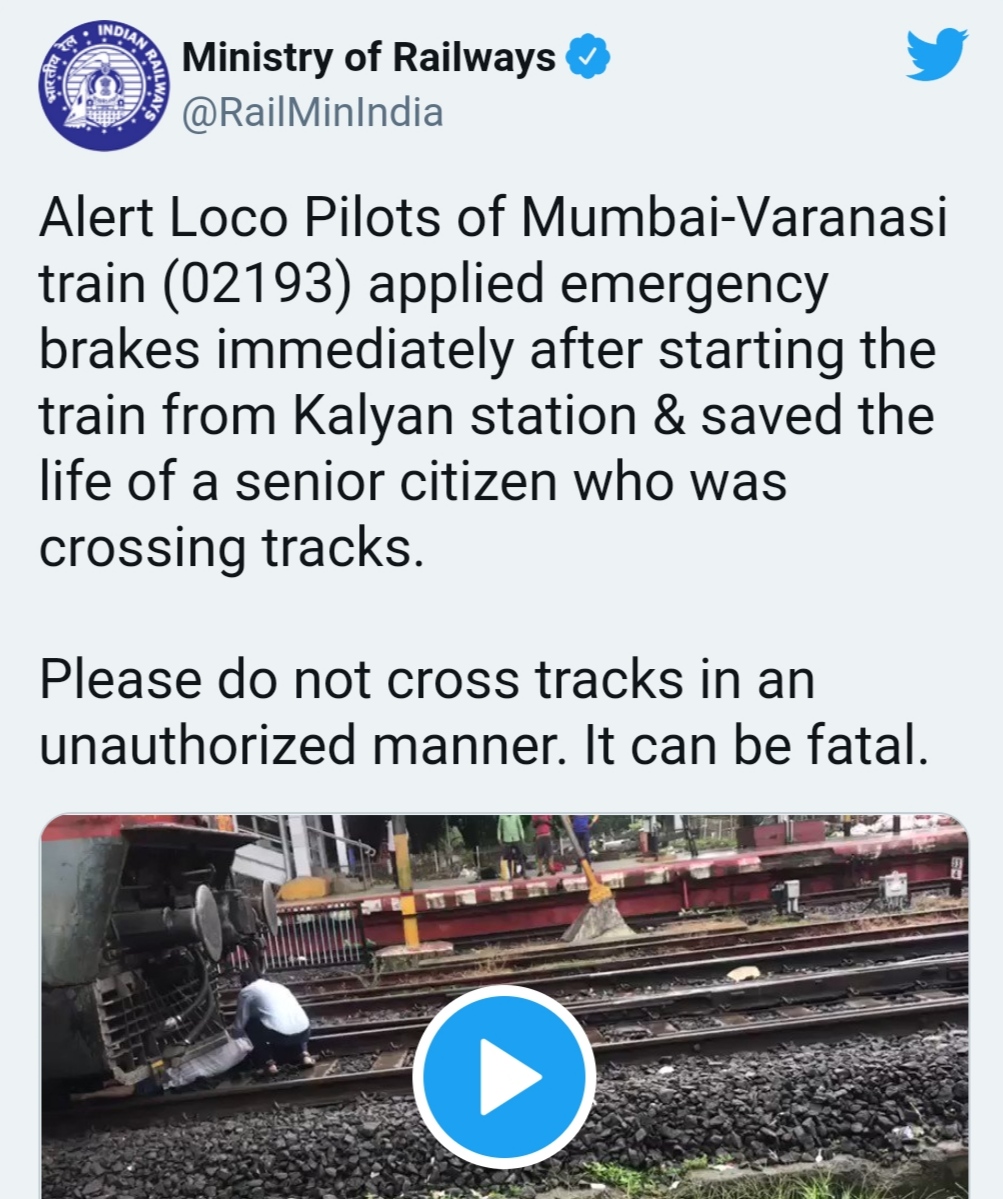
Loco pilots stopped Mumbai to Varanasi train midway to save elderly man.

In a shocking incident, an elderly man trying to cross rail tracks was saved by the quick action of loco pilots of a running train. A video of the railway staff rescuing the elderly man stuck between the tracks was shared on Twitter by the official Twitter handle of the Ministry of Railway. The incident took place near Kalyan station, Mumbai.

In above picture, we can see it.

“Alert Loco Pilots of Mumbai-Varanasi train (02193) applied emergency brakes immediately after starting the train from Kalyan station & saved the life of a senior citizen who was crossing tracks,” captioned alongside of the video. The picture shows the staff helping the man out from under the railway engine. The man came out without a scratch.

“Please do not cross tracks in an unauthorized manner. It can be fatal,” adds the caption.

Please be careful while crossing the railway tracks, we can get into grave danger if we are not alert.

The Pegasus Project – democracy and need for internet laws.

In a shocking revelation, the minister of Telecommunication, Government of India faced questions on the Project Pegasus report – a research on the pegasus spyware that has been developed by the Israeli NSO for “vetted government clients” only. It can breach all Windows, Mac, Android and iOS security checks upto iOS 14.6.

The Forbidden Stories group and the Amnesty International with the Wire and the Washington Post revealed that governments, politicians and journalists all over the world have been targeted with more than 300 people in India alone been tracked regularly using the spyware. Allegedly, only 10 out of these 300 people had mobiles with conclusive or clear presence of the software. These 300 people however include journalists, politicians, cabinet ministers and a sitting Supreme Court judge. These numbers and cases are similar in countries like Mexico, Morocco, Saudi Arabia, the UAE, Bahrain, Rwanda, Azerbaijan and Hungary.

Ultimate spyware' — How Pegasus is used for surveillance
The Pagasus is developed by Israeli NSO.

The first and foremost question ought to be raised against Israel and all governments that are using the spyware, for a spyware is not how a democracy should work in theory. After all, little is left of “democracy” in most nations in the last decade. The second question is why there is an absence of data protection laws in most countries including India, Pakistan and south Asian nations – that house a large part of humanity. The third question is to be raised against the government in India where an official allegedly replied to a question about the spyware by stating that all monitoring, interception and decryption is or shall be carried out as per a “due process of law” which is ironic because there are no such laws in India.

Now, back to the questions that Mr Ashwini Vaishnav, Minister of Telecommunication, India had to answer in the Parliament several hours ago. The minister out right refused any spyware quoting the Binoy Viswam vs RBI case in the supreme court where the WhatsApp Counsel refused any spyware involvement. However, this might actaully be true because the NSO has quite clearly used the term – “vetted governments”. So, speaking per se, no private contractor is involved. However, this conclusion is only one way of seeing things. The author recommends personal discretion and further research as the press conference against Pegasus took place only on the 18th of July 2021. The Minister also pointed out that the NSO uses data and using data should not be equated to surveillance. He also added that surveillance is not possible in a country like India with so many checks and balances.

The author has no opinion that supports or opposes the answers Mr Vaishnav presented today. However, just as a note – surveillance is always illegal in any democracy. It is illegal in the US and yet about 5 years ago, news of massive US surveillance across the globe was made public by leaked documents. Surveillance is almost always carried out by the Executive without intimating the legislature or the public. Many-a-times, even the ruling party is unaware of the realities of the state. What we as a democracy can do is to establish stronger laws against the process and establishing a more transparent mechanism to keep the executive in check.

Finally, this article is based only on the events that unfolded on the 18th of July 2021 and the immediate aftermath on the 19th of the same month. Let us await further investigations and reports to build any conclusive opinion about any institution. However, the need for stronger privacy laws is important anyways, irrespective of the type of state one lives in – especially in a democracy.

Afghanistan – A tragedy that has no saving

The President of the USA, Joe Biden chose to play the card that the presidents before him had put on the game – the complete withdrawal of armed personnel from Afghanistan. This would mean an end to about 20 years of war in the country that had pitched the NATO and the US against a radical Islamic militant group to a supposed war on terrorism.

The Taliban controlled about 90% of all Afghanistan before 2001. It even had embassies established in Pakistan and Saudi Arabia – the only two countries to give recognition to the government. It was after the 9-11 attacks that it suddenly became an enemy to every state on the planet that supported USA. The US and its NATO allies invaded the Afghanistan that was already torn between the Taliban led groups and the democratic rebels. 20 years have passed since then. From young adults born after 2001 to a now estranged prince of the British royal family, a lot of people fought in Afghanistan. The results were visible with the Taliban clearly on the loss. But, the results were never conclusive. And now, when the US and the NATO would finally withdraw from a war that never reached a conclusion, Taliban has all good reasons to take back what it owned for a brief period of time.

Afghan politics has become highly broken – factions that want peace but not the loss of a theologically driven Taliban government and many more of people wanting a democracy – the government promised in the first Afghan republic in the late 1960s. For the present state of a mujahideen within the once flourishing nation has always been there, but the present state of catastrophe is a result of the Soviet-American rivalry. It was due to the establishment of the Afghan Socialist state that the mujahideen and the Soviet-Afghan war erupted and it was because of obvious and many-a-times accepted training by the Pakistani(Parvez Musharaff, the Army general of Pakistan and later President of Pakistan accepted on a TV show that the Taliban and Lashkar were heroes to him and his people) and American forces (American newspapers have routinely praised not just Taliban but also the infamous Osama Bin Laden during the war) that the logistics, tactics and power of these mujahideen forces reached to a point where they could establish an emirate that spanned most of Afghanistan.

Afghanistan - Wikipedia
Is there any redemption for Afghanistan?

The return of Taliban will not only usher a new era of repression for the Afghans – especially women, children and the now diminished minorities, but also to the neighbouring nations of India, Iran and Central Asia – where the rise of Taliban may lead to new found difficulties in security and trade. The radical Islamists founded the Indian mujahideen as a cause to create a similar situation in India a couple of decades ago. The specific case of India is being raised here because it has strong cultural and economic interests in Afghanistan. The Chabahar port in Iran is India’s strongest option against China’s CPEC and the Gwadar port. Other than this, with an unfortunate history of militancy and extra state actors in North Western India, to have a neighbour ruled by groups of similar ideologies is dangerous for it. India should find ways to support Kabul militarily, for the statements made by Pakistan Prime Minister where he expressed his inadequacy in pressuring Taliban for a ceasefire leaves no neighbour but India to hold the hands of a now weaker government at Kabul. However, India has so far refused to be involved militarily, let alone be involved now, when it could end being the only player in the game.

Afghanistan looks grim. So does its future. The case is unlike ISIS. Common people had supported the Taliban insurgency. And the opium rich state an fund the group for years once it comes to power. Afghanistan looks like a lost cause, with no friends to support it in the problem that should have the highest priority to be solved – the problem of insurgency.

INDIA’S FAMOUS DESTINATIONS AND FLAVORS

  • LUCKNOW

Gulnaar Kebabs: The Gulnaar Kebab is delight for those who enjoys eating food. The chicken perfectly blended with tomatoes and spices, bawarchis (chefs) consider garnishing the kababs with the petals of roses is of the most aesthetic way of plating.

Lakhnavi Biryani: `Bhuna’ rice is what really considered as Biryani, before the preparation, the rice is needed to be fried properly before cooking with the mutton. Hence, the name briyani differentiates it from the pulao.

Nargisi Kofta: The hard-boiled egg is considered as the main ingredient in Nargisi Kofta, enfolded in mince and deep fried, and half of the dish resembles as eye. The eggs which are selected are slimmer rather to round to get the perfect shape!

Shami Kebab: Made with mincemeat this kebab is consider as a non-vegetarian dish.   These Kebabs are shaped in round patties with lots of spicy surprise. The mouth melting and extremely soft kebab will leave you stunned with its texture.

  • HYDERABAD

Firni: Firni is severed as dessert in Hyderabad, made with boiled rice, or vermicelli cooked in milk and adding sugar in it to get the sweet flavour; it is flavoured with cardamom, raisins, saffron, cashews, pistachios, or almonds.

Hyderabadi Biryani: Biryani is must to Hyderabadi’s people in their culture. Pakki briyani and Katchi briyani are main types of briyani in Hyderabadi culture. The method for the preparation of katchi briyani is done with katchi Yakhni method i.e., with raw gravy, in which the meat is marinated in curd and cooked only by its dum. In Pakki Biryani, meat is cooked with all the spices mixed in it and then the rice is boiled with the gravy, with the aroma of mace, sealed is vessel with ittar and kewra in it.

Hyderabadi Haleem:  The Haleem dish is cooked in low flame on firewood in Bhatti for about 12 hours. It is a type of food that we make in liquid for a long time composed of meat, with lentils and wheat which makes in into a thick paste.

Sheer Korma:  Sheer Korma is a dish made during the festive season, it is a kind of pudding prepared by Muslims on Eid. Vermicelli are fried in clarified butter. Then milk (sheer) is added to vermicelli is allowed to cook further till the milk gets thick in texture, and sugar and dates are added on top with other dry fruits to make it attractive.

  • KOLKATA

Rasogolla: Rasogolla are dumplings of chena (an Indian cottage cheese) which has given round shape and make with semolina dough. The dumplings are added in the sugar syrup which gives it a sweet taste.

Mistidoi: A dessert typically a sweetened curd liked by all over India.  

Shingara: It is Bengali version of India favourite snack Samosa. It can be either baked or fried, stuffing made with potatoes, peas and cauliflower etc. non-vegetarian and swap this stuffing with mincemeat. Shingara with tea is mostly like snack in Bengal during evening.  

Phuchka:  As golgappa all over famous in North India the phuckha is little, larger in size when compared to golgappa. With crispy texture when compared to  rest-of-India variant. The filling is mostly done with  potato and matar.

RTI ACT and Investigative Journalism.

Just like citizens, the RTI act has enabled lot many journalists in the country to investigate regarding their concerned issues. RTI act over the years has become an important weapon for journalists to divulge hidden and lesser known information. RTI act has become so crucial and an “everyday thing” for some journalists that they have build their entire career out of it.

Some of the famous cases where RTI act has helped journalists in their investigation procedure are:

1) Chhatrapati Shivaji Memorial Project by journalist Mr. Vishwas Waghmode:

Mr. Waghmode, a journalist at the time in The Indian Express investigated the controversial Chhatrapati Shivaji Memorial project. According to him, the initial cost quoted by the contractor was Rs.3826 crores which was supposed to be the lowest bid as opposed to the government’s bid which was Rs.2500 crores. The government in order to resolve this issue set up a committee led by the chief secretary in order to renegotiate the cost which successfully got the cost down to the government’s estimate of Rs.2500 crores. Mr.Waghmode in connection with this case stated that the rules do not allow renegotiation but rather they are supposed to issue fresh tenders. He further added that the opposition was alleging the government had reduced the height of the statue in order to reduce the cost which the government vehemently denied.

In order to have the “genuine information”, he took the help of RTI act. Mr. Waghmode discovered and revealed how the government had in reality decreased the height of the statue and the horse by 7.5m. But in order to show that the height of the statue was not reduced, they had instead increased the height of the sword by 7.5m. He further revealed that since the sword was straight, the amount of money required to build the sword was quite less when compared to the reduction in height and that in turn helped them reduce the cost by a substantial amount.

RESULT:

When all of this came into the public eye, the State Government could not justify why the height of the sword was increased and was in deep shame.

2) HONORARY DOCTORATE SCAM by Shyamlal Yadav.

When we talk about investigative journalism in India, we can never ignore this name, that is, Shyamlal Yadav. In 2018, Mr. Shyamlal Yadav in The Indian Express published a series of investigative reports on how India has emerged as one of the biggest markets for “predatory” publishers of substandard research journals.


On February 6, 2018, The Indian Express scrutinised over 500 RTI applications filed over 470 higher educational institutions to find that monitoring authorities, and hundreds of politicians and bureaucrats were awarded such degrees between 1997 and 2017.

The list for instance included former director of IISC, who received 18 honorary doctorates from public universities between 2006 and 2012 when he was chairman of NAAC’s EC. The list also had several UGC chairmen who had such degrees during their tenure.


RESULT:
Rules were made by higher authorities in 2019 after the investigative report via RTI files whereby NAAC officials, family weren’t allowed to accept honorary doctorates from institutions under their watch. RTI was used to dig out crucial facts in this case.

3) Discontinuation of LIC policies by Shyamlal Yadav

Shyamlal Yadav got information through RTI from Life Insurance Corporation (LIC) that there were 59 million insurance policies those were lapsed permanently due to discontinuance of premium. And the premium deposited since then had become LIC property. Despite many efforts LIC did not provide the info on total money deposited against those policies till the date they lapsed. As a result, Indian Express published the story about the discontinuation.


RESULT:


Within 25 days of publication of the story, LIC issued fresh
advertisements regarding renewal of policies.

4) Streams of Filth by Shyamlal Yadav:

This was an investigation by Shyamlal Yadav regarding water pollution in India that took over one year. About 39 RTI applications regarding expenses by Government on water projects were filed.
It came into notice that large amount of money was spent by Government for water purification projects but there was little effect on nation’s lifelines.
The story was published in The Indian Express and was selected by UNESCO as one of the 20 best Investigative pieces in the world.


RESULT:
Central Pollution Control Board said the rivers of India are not just polluted but severely toxic.