Modi can be judged on his government’s five year performance which are follows to read:
Ayushman Bharat: The health insurance scheme launched on September 23, 2018, has already benefited 10 lakh poor patients and could be an electoral game-changer. More than 500 million Indians who could not afford medical treatment for non-communicable illnesses like cancer and heart disease now have access to free healthcare.
The Insolvency and Bankruptcy Code: The legislation, enacted in December 2016, is the silver bullet to tackle India’s chronic problem of non-performing assets. Banks have begun to recover debts that had seemingly turned irretrievably bad. “Phone banking” has ground to a halt.
Sanitation: The Swachh Bharat Mission has built toilets at an unprecedented pace. Since October 2014, over 92 million toilets have been constructed, covering nearly 500 million households in one of the world’s largest operations of its kind. Cultural habits, however, mean that open-air defecation remains endemic. Many newly-built toilets lack sewage facilities; others are being used as storage rooms. Nonetheless, a beginning has been made.
Digital transfer of subsidies: This has cut out most (though not all) middlemen who routinely siphoned off large chunks of benefits due to the poor. Rajiv Gandhi, the then Prime Minister, had famously said in December 1985, while addressing the 100th anniversary of the foundation of the Congress, that only 15 paise out of every rupee in subsidies reaches the poor. With digitised transfers that figure has probably risen to 75 paise.
Free LPG cylinders: Under the Ujjwala Yojana scheme, women in villages now have access to cooking gas. This has both health and economic benefits. Over 60 million free LPG connections have been given with nearly 50 per cent going to SC/ST households.
PM Narendra Modi listed out the big decisions taken by the government in the last eight months. PM Modi said that the aim of government was to perform better as well as faster.
Here are the big achievements of the Government in the last eight months which PM Modi quoted at the Summit:
All farmers covered under the PM Kisan Yojana
Ensuring pension to farmers, laborers, shopkeepers
Ministry of Jal Shakti constituted to end silos on important subject like water
Special fund of Rs. 25,000 crore for completing housing projects for the middle class
Regularising unauthorized colonies which benefits 40 lakh people of Delhi
Law related to triple talaq
Law for strict punishment against child abuse
Law empowering transgender persons
Chit fund scheme fraud prevention law
National Medical Commission Act
Historical reduction in corporate tax
Strict law to prevent road accidents
Appointment of Chief of Defence Staff
Delivery of next generation fighter plane to the country
Bodo Peace Accord
Brue-Reang Permanent Settlement
Formation of Trust for a grand Ram Temple
Decision to revoke article-370
Decision to make Jammu, Kashmir and Ladakh Union Territories
Martial arts and stunts are a treat to look at, and no one can tell me otherwise. In motion entertainment, this form of action is rapidly gaining an enthusiastic audience, thus steadily becoming mainstream. Even the basic moves, when exhibited accurately, looks tough but tempting altogether. Speaking of martial arts, the names and visuals that used to pop up in our mind would have been Karate, Tae Kwan Do or MMA. But, recent times, many indigenous forms are getting recognition, some more than others. It won’t be surprising if you have heard of Kalaripayattu, or Kalari (native to Kerala) or Gatka (native to Punjab). But, do you know about Lathi Khela? If not, how about we find out!
Origin and history
Lathi khela is a form of Bengali martial arts, and the practitioners and experts are termed as lathials. The origin of this art form can be traced back to ancient South-East Asia, and was said to be practised by the then inhabitants of the region. The etymology of lathi khela can be described using two words, lathi, the Bengali means stick, and khela, which is translated to game. So, this whole word sums up to mean ‘game of sticks’. To this date, this form is practised, mainly in eastern parts of India and Bangladesh.
Lathi, or stick, the integral part of this art, is produced from male bamboo. This makes the lathi flexible and strong. The usual length of lathi is 2 to 2.5 metres. Sometimes, these lathis are also bounded by iron ring(s).
In earlier days, hiring lathials for security and protection was seen as a sign of status. Hence, it was a common practice in rich farmers and important personalities. Lathials were also sent to collect taxes, mostly forcefully, by the zamindars.
Mock fights, one on one, or in a group were also fought for entertainment. They were termed as Nori Bari and Baoi Jhak respectively. Many other styles of art forms that used sticks as fighting weapons are unambiguously classified as stick martial arts.
A distinguished name in the field of lathi khela is Pulin Behari Das. He was a capable lathial and also trained young individuals in stick welding, swordplay and wrestling. Infact, he founded the Bangiya Byayam Samiti, an akhada, in 1928 for the same purpose. He also single handedly founded the Dhaka Anushilan Samiti, and taught hundreds of youth to wield lathi against the British firearms. The training made the lathi a formidable weapon and the lathials of Bengal were said to be dreaded even by the British, so was their agility and strength in wielding their weapons.
Present scenario
In present times, lathi khela is treated more as a sport than a defense technique. And, sadly, both spectators and students learning lathi khela are decreasing at a steady rate. A veteran in the field of lathi khela, Kaushik Mazumder feels that they might be the last generation to see lathi khela in all its former glory. He pointed out that attempts to keep this art form alive are being made, but it is not working very well due to lack of interest and students who learn this. Another occurrence that solidifies this fact is that until 1989, Kushtia, Bangladesh used to organize an annual lathi khela tournament, which was graced by teams from all over the country. But due to decline in demand, this event is now organized once in three years. In India, lathi khela is practiced at an organizational level only in Bharat Sevashram Sangha. And demonstrations have become far and rare, mostly at regional ceremonies.
With appropriate interest and culturing, this art form can be revived to a new glory. At present, lathi khela needs recognition and acceptance in the masses. Let’s hope and help lathi khela get its due in near future.
KERALA: The god’s own country is one of the major tourist attraction as well as the best honeymoon destination in India. The land of God, Kerala is believed to be a gift of the Arabian Sea. The pride of Kerala are Gorgeous and Exotic Beaches , Breathtaking hill Stations,Enchanting waterfalls, Beautiful lagoons, Meandering rivers and Amazing natural scenarios. These colors are made Kerala as a land of beauty and paradise on earth. Kerala is also famous for its Ayurvedic treatments, high mountains, gorges and deep-cut valley, lush and evergreen rain forest and coconuts water and oil and foods items. Kerala houseboats are first and best preference of the tourist to enjoy their moments in beautiful lakes of Kerala. The Idukki dam is the first Indian arch dam in Periyar river Kerala and the largest arch dam in Asia. Shopping, museums and markets are also best way to explore Kerala.
Reasons to visit KERELA
Beaches: Sea, Sand and Sun are the gifts given by the god, which makes Kerala the land of most delightful beaches in the world. Kerala Backwaters offers a series of beaches that are perfect for a relaxing time with your love one. Some of the best beaches in Kerala are Kovalam, Cherai, Varkala, Kappad, Muzhappilangad and Bekal. Watch the sunset along with the blue water beaches of Kerala is the best way to end your day and start a romantic night.
Natural beauty: Kerala the land of beauty is describes as the favourite child of nature, and famous for its breath-taking natural beauty. Major attraction are includes long coconuts tree, the blue mountain and rivers makes Kerala one of the greenest places ever seen. The beautiful milky falls of water splashing through the rocks should not be miss. Other attraction are Vembanad lake India’s longest lake, Sasthamkotta lake.
Hill Stations: There are many hill stations in Kerala which offers the best spectacular views of the nature. Munnar one of best hill destination in kerala and one of the famous hill station in India. The other beautiful hill stations are Ponmudi,Nelliampathi, Ponmudi and Wayanad Hill Station. These hill stations of Western ghats are one of the best place for trekking in India .
Wildlife: The Land of God, Kerala has a rich culture in Flora and Fauna. Kerala is the only state in India where highest number of Indian Elephants are found. The best place for wild animals are Silent Valley,Periyar national park and Tiger Reserve,which is situated high in the ranges of the western ghat.
Cuisines: After the enjoyments, foods are the next thing in mind. Kerala has a rich and unique flavor of foods like sea food , malayali cuisines and banana dishes. Kerala is famous for its spices and its spicy recipes of vegetarian and non vegetation food. Best cuisine of Kerala is Meen curry – Kerala style fish curry made in fried coconut.
Mountains of tea:It’s the plant behind another beverage that gives the area around the hill station town of Munnar, in east Kerala, its famously vibrant shade of green. In this part of the Western Ghats mountain region, the steep hillsides are covered with about 60,000 acres of tea plantations — an industry begun by the British, who established the plantations in the late 19th century.
Procrastination is the act of casually delaying decisions or activities. For example, if you need to complete a project, completely end up spending time on the internet even you remember you should be working, that indicates that you’re procrastinating. Procrastination is often pernicious to people’s capacity to triumphantly achieve their goals. Procrastination normally means disregarding an unpleasant, yet likely more significant task, in the inclination of one that is more delightful or more manageable. Etymologically, “procrastination” is derived from the Latin verb procrastinate — to put off until tomorrow. People usually believe that procrastination is solely a topic of the willpower, yet in certainty, the condition is far more complicated than that.
When challenged with a choice to perform or a responsibility to complete, we ordinarily rely on our stability in order to force ourselves to accept tasks fulfilled. Moreover, our impulse, which is based on the expectation of achieving some award for our struggles, can increase our self-control, and get it more possible that we will get everything done appropriately. However, there are also various demotivating circumstances that we can endure, which have an adverse impact than our urge, signifying that they make us more inclined to procrastinate. For example, stress, fear of failure, and other invalidating troubles can cause us to dawdle carelessly. Procrastinators oftentimes put off preparing things, drop them to the extremely end moment, or seldom also waste their time gazing at the wall. Nonetheless, be mindful, procrastination is not a metonym for flagging. It’s a great plan to begin applying the term procrastination rather than applying the word’s negligence or setting something off. It gives a much more precise representation of your state. Simply addressing the correct title to your dilemma, then you start working on it.
How to stop procrastinating? Focus on performing, not withdrawing. Pen down the duties that you require to finish, and specify a time for performing them Switch off your email and social media, and withdraw lying anywhere near a television while you work. The personal concept is one important aspect, it helps you recognize your abilities and priorities, and by building one, you will nevermore think failed in what is it that you desire to do with your life. There are various apps created to assist you to be extra established, use that. If you accomplish a tough assignment on time, reward yourself with a gift. Acquiring new ways is one of the essential details of individual improvement. If we form a manner of creating something, its implementation needs more limited rational energy to do it. Acquiring new practices is, hence, quite significant. So overcome your procrastination to reach greater heights of success.
The phrase is an expression of harmony & unity between dissimilar individuals or groups. It means “unity without uniformity and diversity without fragmentation.” The idea and related phrase is very old and dates back to ancient times in both Western and Eastern Old World cultures.
The country located in South Asia is the second-most populous country in the world. It is bounded by the Indian Ocean on the South, the Arabian Sea on the Southwest & Bay of Bengal on the southeast. Pakistan, China, Bangladesh, Myanmar, Nepal & Bhutan being the countries around it.
The country is an absolute example to portray the concept of unity in diversity. Housing all the geographical varieties like sea, oceans, mountains, forest, desert, hills & plateaus. People of different caste, creed, religion reside here. A variety of dialects are spoken & so are the residing communities like The Hindus, The Buddhists, The Sikhs, The Jains, The Muslims & The Christians & tribals like the Garo, the Khasi, the Koles, the Nagas & the Bheels.
The sense of unity struck people’s minds, in the period of crisis. Thus, during the British colonial system, the Indians established a sort of unity to fight against their persecution & begin a struggle for freedom. The National anthem ‘Vande Mataram’ & the non-obedient civil disobedience act ‘Dandi March’ are some instances that instilled a sense of patriotism among the citizens thus had a wide influence over the freedom fighters then. A type of unity was also cited during the reign of Chandragupta, Ashok, the Mughals & the Pathans.
Thus the concept should be maintained at any cost. The Central Government must face the secessionists with an iron hand. The Government should do away with the laws that create discrimination & differences among different religious groups & linguistic communities. In this connection, a uniform code of rule & conduct should be encouraged.
A range of selection of dressing sense & food habits can be observed as one moves from one place to the other. For instance, the traditional dhoti worn by males in Northern India is draped in some way while in South India, especially in Tamil Nadu & Karnataka is worn as a “Lungi.” Similarly, women drape sarees in different styles varying with the states. Like, Mekhela Chador from Assam, Nauvari from Maharashtra, Kappullu from Andhra Pradesh & Athepourey from West Bengal. On the other hand, the Tribal community possesses their peculiar forms of dress & customs.
Being healthy or chubby is a particular individual’s personal choice. But is it good for your health? Not really because obesity causes a lot of problems for your body. Obesity is a complex syndrome involving an excessive volume of body fat. It is a medical problem that doubles your danger of other ailments and health problems, such as heart condition, diabetes, high blood pressure, etc. Although there are hereditary, behavioral, metabolic, and hormonal impacts on body mass, obesity occurs while you take in added calories than you burn throughout the exercise and usual daily activities. The body accumulates these extra calories as fat. People with obesity might consume more calories even after they are full, feel starved sooner, or eat more due to tension or worry.
Diseases such as Respiratory Disorders: People with obesity have decreased lung function. They have a larger chance of having respiratory infections. Liver Disease: Obesity is the cause of fatty liver and non-alcoholic fatty liver disease. Fatty liver disease can create scarring of the liver, occurring in worsened liver capacity, and this can lead to liver cirrhosis and liver failure. Stroke: Obesity puts pressure on your entire circulatory system. This pressure raises your risk of stroke. Obesity can lead to other stroke risk circumstances such as heart disease, hypertension, etc. Sleep apnea: People with obesity are more likely to have sleep apnea, a possibly serious ailment in which breathing frequently stops and starts during sleep. Liquid calorie: People can drink many calories without feeling full, especially calories from alcohol. Other high-calorie beverages, such as soda drinks, can contribute to significant weight increase. Unhealthy diet: A diet that’s huge in calories, lacking in fruits and vegetables, fast food loaded with high-calorie drinks, large servings contribute to weight gain, etc. Inactivity: If an individual has a stationary lifestyle, undoubtedly take in more calories every day than they burn through exercise and usual activities. Working on computers, tablets, and phone screens or involved in sitting activity for too long. The estimate of hours an individual spends sitting with electronics is associated with weight gain. Obesity can diminish the overall condition of living. The person may shun away from people and public places. People with obesity may even face prejudice and other problems such as Depression Disabilities, Lower work achievement, etc.
Obesity can be prevented by losing or maintaining a healthy weight by following certain measures.The intake of fruit and vegetable is 5 to 9 portions every day for adults. Loading your meal with protein and fiber-containing food can help keep calories moderate and decrease the chance of overeating. Avoid oily food and restrict sweets and alcohol. Eat three proper meals a day with restricted snacking.At least get 150 minutes of moderate-intensity exercise a week to prevent weight gain. Slightly intense physical activities include fast walking and swimming.WHO recommends weight training that involves all your major muscles at least two times per week.Adhering to a healthy-weight plan as much as possible increases your chances of long-term success.
Like Mr.Joseph Pilates quoted “Physical fitness is the first requisite of happiness.”
I will always cherish my visit to Mumbai, the city of dreams, and a city after my heart. Known for beautiful places and some UNESCO heritage sites like Gateway of India, Elephanta Caves, Juhu Beach, Marine Drive, Chhatrapati Shivaji Maharaj Terminus, Galleries, Victoria and Art Deco buildings and Colaba Causeway, the iconic Crawford Market, Amazing Street food, and a lot more. The people of Mumbai are termed as “Mumbaikar”. Mumbai surrounded by the Arabian Sea was first known as Bombay which is located in a peninsular on the Western coast of Maharashtra state. Mumbai has tropical humidity, from March to May the weather is hot and dry, from June to November Mumbai has heavy rains, and from December to February, the temperature is cool.
Mumbai is the financial capital of India, making it one of the expensive cities in Asia. I think Mumbai is the best place to restart your life in India but you’ll have to work on your budget. For fitness freaks in the dawn to enjoying the nightlife, Marine Drive is the best place you will see in Mumbai. The soothing sound of waves helps you to unwind, well you can enjoy the beauty of the sea, but not relax as the emotion-struck couples engaged in PDA will make you gag, and believe me, it’s not at all romantic as you see in Bollywood films and speaking about movies. Mumbai is the base of the Bollywood industry with the largest producer of films, making Mumbai India’s largest entertainment capital, and who knows you may spot an actor in a diner or club. Acting and Drama hold special interest for Mumbaikars and one famous place is NCPA (National Center Of Performing Arts). People here are helpful and friendly and makes sure that you feel comfortable. Shopping buffs will love this place from Colaba Causeway to Bandra Linking road to Crawford Market for the street shopping. Each building has a history behind it, Be it Gateway of India or the Taj Hotel. Street food is one popular sensation of Mumbai. Mouthwatering Vada pav, Pani puri Falooda, Pav Bhaji, Ragda puri, Missal Pav, Snow Cones (Gola), Sev puri, to Chines food, and the list goes on. To budget-friendly eateries to posh Restaurants and Bars, Mumbai has it all. Some 5 Star hotels such as Trident, The Oberoi, Taj Mahal Hotel are just so classy.
Well, there are a lot more facts to know about, like Mumbai has a Coastline of about 150 Kilometers, Dharavi in Mumbai is the biggest slum in Asia, The famous network of Dabbawalas (lunchbox delivery system) that is only seen Mumbai, first bus service in India was started in Mumbai, etc. Even though Mumbai is a beautiful place, there are a lot of disadvantages too. The dense population has been causing a lot of damage to the environment like Land pollution, Air pollution, Water Pollution, Deforestation leading to drastic climate change. With proper care, awareness, and solution, we can restore its natural beauty. Mumbai will always remain my forever favorite. Even though there are problems within the city, I would say heaven is where your heart is.
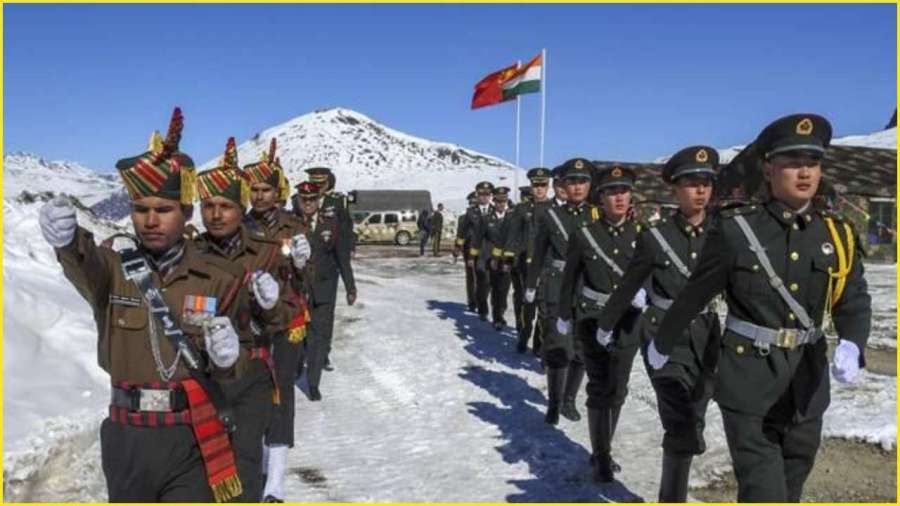
After a long period of worsening tensions on the contested Himalayan border, the countries India and China have surprised everyone by announcing that their troops are to quickly extricate.
A marathon meeting between Indian Foreign Minister S Jaishankar and his Chinese counterpart Wang Yi in Moscow has been followed by this announcement. It came despite the regular eloquence between the nuclear-armed neighbors, that had suggested increasing bitterness.
Earlier, in this week, China’s state-run Global Times had said Chinese troops would “quickly deal a heavy blow to Indian troops, and they will be all annihilated” if Delhi provoked a war.
India also had upped the ante, Defence Minister Rajnath Singh saying “there should be no doubt” about the country’s resolve to protect its territorial integrity.
The statements reflected the reality on the ground : a hostile face-off between troops.
In June they fought a deadly clash in Ladakh’s Galwan Valley with clubs and stones leaving 20 soldiers dead. Both countries still have a huge development in the region where they have overlapping territorial claims ; and overcoming their differences will not be easy.
‘Ice breaker’ envoy
Many observers, including Michael Kugelman, deputy director at the Wilson Center think-tank, believe that both countries were ready for a confrontation, but they also realised that a war even a limited one , was not an option.
It would have been catastrophic for both countries and the wider region. The economic stakes were too high to risk a war,” he said.
The fact that Mr Jaishankar served as ambassador in Beijing for many years and is known to share good relations with Chinese diplomats appears to have helped.
It did break the ice, Mr Kugelman says, adding that personal relations often play a role in crucial diplomatic negotiations.
India-China border dispute explained in 400 words Rivals race to build along a disputed frontier China and India face off on the roof of the world Weather, an unlikely factor, may have also played a role. The higher ridges of the Galwan Valley become inhospitable in winters.
Lieutenant General (retired) Vinod Bhatia, who served in the Indian army, says troops are used to operating in harsh conditions, but “given a chance, both armies would want to avoid that”.
Reports also suggest that Indian troops recently occupied some ridges overlooking Chinese posts. Neither country has officially confirmed the reports.
“India may have used this advantage as a bargaining chip,” Lt-Gen Bhatia adds.
Both countries also have many other crises to deal with. India’s Covid-19 caseload continues to rise at an alarming rate and its economy is suffering. Any armed confrontation would affect the country’s ability to overcome these issues.
China, meanwhile, has tensions with the US and a host of other countries to deal with, as well as global condemnation of its controversial security law in Hong Kong.
How soon could peace be restored?
Yun Sun, director of the China Programme at the Stimson Center think-tank in Washington, says the joint declaration lacks details.
Firstly, it doesn’t mention the Line of Actual Control (LAC) – the de facto boundary separating the countries.
“Several points along the LAC are contentious where troops are still stationed, so there is no clarity on the resolution of these issues,” she says. De-escalation takes time, says Lt-Gen Bhatia, and it will take longer in the current scenario.
“The area is too big and it will take time for commanders to come to an understanding. The military-level talks will happen when tensions are still high and emotions are raw,” he says.
Both countries want to maintain the status quo. And that is tricky, says Ms Yun, because the two sides define the status quo differently.
“Chinese troops have gone deep into the territory India claims, and there is no clarity if they will vacate those positions.”
What caused the escalation will also determine how quickly disengagement can happen. A major factor cited as a source of tension is a new road that connects Indian army stations in the region to a forward air base.
But Ms Yun believes the road can’t be the only source because its construction took 20 years and “it wasn’t a secret”. She believes many factors, including India’s controversial decision to revoke a law that gave special status to the region and Washington’s improving relations with Delhi, played a role.
“Beijing felt punishing India will give a warning to Delhi and Washington at the same time. But what they did not calculate was that India will refuse to back down,” she says.
China has been in diplomatic confrontation with a number of countries since US officials accused it of not controlling the coronavirus outbreak effectively So, they became more aggressive, she says, adding that this was reflected in the statements of Beijing officials in recent days. Aggression has been a key factor in China’s foreign policy – particularly in recent months. And Chinese state media often remind the country’s neighbours of its superior military might.
This happened during the stand-off with India as well – but only in the past few days.
Officials in Delhi and Beijing were largely restrained in their comments in June and July, even after the Galwan clash that left the Indian soldiers dead.
Mr Kugleman says this was because they didn’t want to undo PM Narendra Modi and Chinese President Xi Jinping’s efforts in improving relations. The two have met 18 times since Mr Modi came to power in 2014.
“But it all came undone in recent days, and now it will be interesting to see how China and India sell the announcement to their people,” he says.
Ms Yun says China will find it tricky to reverse the rhetoric because “it can’t come across as weak or bullied by India”.
Resolving these core issues, including unsettled disputes going back decades, along the LAC that stretches for 3,440km (2,100 miles), will not be resolved in a few days.
“So, it’s a good start,” Mr Kugleman says. “Talks are better than no talks, but we just have to be cautiously optimistic.”
COVID-19 is on a roll across the whole country. With an alarming increase in the number of cases per day, Central and State governments are employing all possible measures so as to curb the spread of this virus, and parallely, to restore normalcy in the life of the general public. Amongst all the people fighting against COVID, directly or other-wise, one name stands out, K.K. Shailaja, Health and Social Welfare Minister of Kerala. With her critical thinking, timely actions and reasonable yet effective techniques to identify and contain the spread of the virus, K.K.Shailaja had flattened Kerala’s case growth curve at the time where there was an exponential increase in the number of cases across the country.
Life At A Glance
K.K. Shailaja, also known as Shailaja Teacher hails from Kannur district of Kerala and was born on 20th November, 1956. She completed her Bachelor in Science (B.Sc.) from Pazhassi Raja N.S.S College, Mattanur and achieved a degree in Bachelors in Education (B.Ed) from Visvesvarayya College in 1980. Then, she was in service for seven years as a Science teacher at Shivapuram High School, Kannur. She retired in 2004 to pursue a full fledged political career.
Students Federation of India (SFI) paved the entry of K.K. Shailaja in the politics. She represented Koothuparamba and Peravoor constituencies in Kerala Legislative Assembly in the years 1996 and 2006 respectively. She is a CPI (M) Central Committee Member and also the Janadhipathya Mahila Association State Secretary and also its Joint Secretary in the Central Committee. In Pinarayi Vijayan government, she is serving as minister of Health and Social Welfare.
Apart from all these, she is the secretary of All India Mahila Association. She had graced the Chief Editor’s post of ‘Sthree Sabdam’ and also has authored two books, ‘Indian Varthamanam Sthreesamoohavum’ and ‘China- Rashtram, Rashteeyam,Kazhchakal’.
Tackling The Crisis
K.K. Shailaja has established a model structure for COVID containment by stringently implementing and following guidelines regarding testing and treatment. These included a strict contact-and-trace program, rapidly equipping for the patients by setting aside 2 hospitals and 500 beds in medical colleges per district, and planned diagnosis on the basis of symptoms and vulnerability. She kept a transparent process by having daily press briefings to inform the masses about the prevailing situations and the measures taken. She also had taken care of the appropriate arrangements for the migrants, those who were stuck in Kerala during the lock-down. Widespread rapid testing has also been done by the Kerala government. In an interview, she had revealed that being vigilant and proactive had helped to hold down the number of cases in the initial phase.
The surge in number of the cases due to the influx of migrant citizens returning in the state is being taken care of. On the same page, measures are being taken so that medical professionals can be provided with some rest. Psychological and emotional counselling is also being provided by the government, over phone, for the elder people,individuals under home quarantine and those who are in need of it.
She has also tackled the 2018 Nipah virus outbreak in Kerala with fast diagnosis and equipped medical response. She was widely lauded for her extremely efficient manner and management.
Applauds and Accolades
K.K Shailaja has been widely recognized, nationally and internationally, for her contribution in handling the COVID crisis in Kerala. Most recently, she has won the title of ‘Top Thinker’, which has been bestowed by the British Magazine ‘Prospect’. She has achieved this title by defeating Jacinda Ardern, Prime Minister of New Zealand. Apart from that, she had also been invited by the UN to take part in a panel discussion on June 23rd, 2020.BBC news has featured her in the list of Asian women Corona fighters, The Guardian and Vogue had also featured and mentioned her in their print media.
With online shopping, you have the luxury of being able to shop the world from the comfort of your home (or wherever you are) with internet connection. Furthermore, your purchases aren’t limited, and you can switch between different websites within a click.In terms of offline shopping, it takes more effort than just waking up and logging onto your laptop. With this method, you put in more effort which takes up money (petrol costs/public transport) and time (getting ready/travel time).Due to the increasing noise of technology and online shopping, we at times forget to appreciate the fun offline shopping offers! Right from groceries to accessories, we find everything online.Online shopping is on the rise, which is leaving brick and mortar stores struggling to keep up with the loss of salesWhen comparing two different ways of shopping most people do not even think about the difference, they do both and not even realize it.
In today’s society people shop while at work, after work and on the weekends, whenever time permits. Stop and think how can I get more time in the day for family or just myself? The best way to figure that out with all the recourses we have is to go into a store and spend time looking through racks and waiting in endless lines to just purchase something. I compared going into a store verses online shopping; to see which one will save you time and money. There are many reasons for choosing to go into a store to purchase items needed.For instance, having someone assist you in finding what you need. For the draw backing for in-store shopping is; you do spend hours looking for the right product or in the lines trying to just purchase it. Or listening to all the people around you and all the additional noises you hear in stores. Not to mention stores have set hours on when you can shop and when you can not, this is something which can change with a sign on the door. Online shopping has been growing since businesses put the first online store on the web, now you can shop from anywhere around the world and have it shipped to you directly.
Comparing the product against other online store competitors; making it easier to find the best price on the web. You can research the product and make sure this is what you need before buying it. The internet is a twenty-four hour shopping center, you can shop at whatever time you want and wherever you have time for it, making it more convenient to use online shopping. Using it can create more time for the things you would like to do. The negative side of online shopping is you have to wait until the product is shipped to you. The shipping and handling charge is increased for more expedited shipping.
Here are a couple of reasons why we think offline shopping is incomparable:
1. The happiness of offline shopping and spending time with loved once Wasn’t shopping supposed to be a ‘feel good’ activity? Do you remember the satisfaction you felt while shopping from a brick and mortar store? That feeling has no match. Online shopping is overshadowing the tiny perks of traditional shopping. Instead of trying on the dresses, clicking a selfie, and taking your best friend’s suggestion, we check the products on the internet and imagine how it would look on us. Where is the delight in it?
2. No need to wait for the delivery In offline shopping, you look around for dresses, pick the ones you like, try them on, buy the best ones and leave feeling content with the purchases made. Whereas when shopping online, you browse through the dresses, add the ones you like to the cart, contemplate if they would look good on you, purchase it and wait for it to be delivered home. Basically you do not get the pleasure of walking home with shopping bags in online shopping.
3. You can actually experience the product People who shop online will agree that sometimes the product they received was either too big or too small for them. Sometimes the colour of the dress in the product image is slightly different from the one that’s been delivered. When you purchase products from an offline store, you can be sure of the size, color, defects, etc. Online shopping can at times be disappointing, but not offline shopping.
4. Personalized recommendation from sales staff Don’t you love it when a sales representative picks a few dresses or tops saying how they would look fabulous on you? And we cannot forget the times when we really needed a suggestion from sales representatives and they have been kind enough to ensure you have a comfortable shopping experience. Right from the size of the dress to understanding your fashion preferences, you need a human to suggest the right outfit, shoe, or accessory.
5. No need to keep looking for discounts While purchasing online, we often feel the need of waiting for a day or two more… because just in case the prices drop. Due to the changing prices, we never know the real cost of the fabric. Thank God, there is no sudden fall in the cost at an offline store. You can be assured that you have received the best and sensible deal!
6. Can’t rely on online for immediate purchase needs Your school friends have planned a reunion tomorrow and you are eager to attend it. But, you do not have the right outfit for the get-together! Of course, you are meeting these guys after years and you want to look your best. So, can you rely on an online shopping website during such a time? No! But, you can go to a store and purchase a beautiful dress.
Since then the rural unemployment rate has been on the rise to stand at 8.37% for the week ended August 9 and further to 8.86% in the week ended August 16.Compared with a week earlier, the employment rate and labour participating rate (LPR) also increased to 38.4% and 42.2% from 37.09% and 40.62%, respectively, the Centre for Monitoring Indian Economy (CMIE) said.“There is a big increase in rural India in both employment and unemployment rates. This reflects increased agricultural activities,” CMIE’s managing director and CEO Mahesh Vyas said.Buoyed by hectic sowing activity and jobs offered under rural employment guarantee scheme, MG-NREGS, the unemployment rate in rural India steadily plummeted to 6.34% for the week ended July 12 from 17.92% for the week ended May 31, but it again headed north to 7.10% for the week ended July 19 and further to 7.66% in the very next week; but fell to 6.47% in the week ended August 2.In urban India, the unemployment rate has been steadily decelerating from 25.14% for the week ended May 31 to 8.73% for the week ended August 2; but since then the graph is on the rise to 9.31% for the week ended August 9 and further to 9.61% for the week ended August 16.India’s unemployment rate was a tad higher at 24.3% for the week ended May 24 compared to 24% in the preceding week or the average unemployment rate of 24.2% in the past eight weeks of the lockdown. The unemployment rate stood at 8.8% in March.“A combined factor of demand and supply, lack of opportunities in rural India, crop seasons coming to an end will increase the unemployment scenario in the short to medium term. The micro-lockdowns imposed by stated to curb the spread of covid-19 are having their impact as well,” said K.R. Shyam Sundar, a labour economist and professor at XLRI Jamshedpur.“The economic adjustments via scheme jobs like national employment guarantee scheme will not be able to solve employment problems. Because works provided through those schemes has a wage and skill mismatch for many workers who had returned,” explained Sundar.
Non-governmental Organizations (NGOs) play an important role in the economic development of developing countries. They provide services to society through welfare works for community development, assistance in national disasters, sustainable system development, and popular movements. They take numerable for actions developing our society. NGOs take up and execute projects to promote welfare of the community they work with. They work to address various concerns and issues prevailing within the society. NGOs are not-for-profit bodies which means they do not have any commercial interest. NGOs are run on donations made by individuals, corporate and institutions. They engage in fundraising activities to raise money for carrying out the work they do. Ever since independence, NGOs have played a crucial role in helping the needy in India, providing aid to the distressed and elevating the socio-economic status of millions in the country.
NGOs which have revolutionised Healthcare in India:
1.CRY: Child Rights and You
CRY works towards several causes for children, one of them being malnutrition. It introduced kitchen gardens in anganwadis in Chhattisgarh to provide fresh and healthy food to children. This not only came as a boon to the underprivileged children but also accelerated the anganwadi workers in the same direction. This noble initiative of CRY has helped to see a decrease in the number of malnourished children by about 9-10%.
2.Smile Foundation
Inspired by the philosophy of Peter Senge, the founder of ‘Society for Organisational Learning’, a group of young corporate professionals founded this in 2002. They began working from scratch to bring about a difference in the lives of underprivileged families and communities. Since urban slum dwellers lack the education to be aware of diseases and healthcare, they do not approach hospitals for checkups out of risking a day’s wages. Smile has a two-fold approach to tackle this problem. They first bring quality healthcare services within easy access of the needy. The second step is to promote healthcare awareness and encourage the poor to seek help.
3. Goonj
Goonj has several campaigns, one of them being ‘Share a Bite to your Heart’s Delight.’ It is a venture to encourage people to contribute daily essentials like rice, pulses and so on to the less fortunate. This is an innovative step towards solving the problem of food shortage and thus nutrition among the poor. Goonj has also taken considerable effort towards detaching the stigma associated with menstruation. It has helped college girls speak more boldly and openly about the issue and also involved many Rajasthani women in their menstrual hygiene initiative.
4. HelpAge India
A leading charity working for the disadvantaged elderly of India, has been active for over four decades. It has one of the largest mobile healthcare programs across India, providing free healthcare services to destitute elders. HelpAge India also works towards providing palliative care to end-stage cancer patients. Pairing with several credible and competent hospitals, the organisation helps the poor elderly who cannot afford expensive medication for cancer. HelpAge India has received several awards for his commendable contribution to society. It holds the Chairman’s Challenge Award, Times Social Impact Award and NGO Leadership & Excellence Award among several others.
The large Indian subcontinent was very different from what it is today. From colonial rule to gaining independence and consolidation of states, India had to go through many challenges and changes. One major change which broke not only the country but also millions of hearts was the Partition.
During the British rule, India was divided into provinces, areas of the country which were directly under the administration of the British, and Princely states, territories which were ruled by kings or princes who accepted the supremacy of the British and agreed to rule according to them.
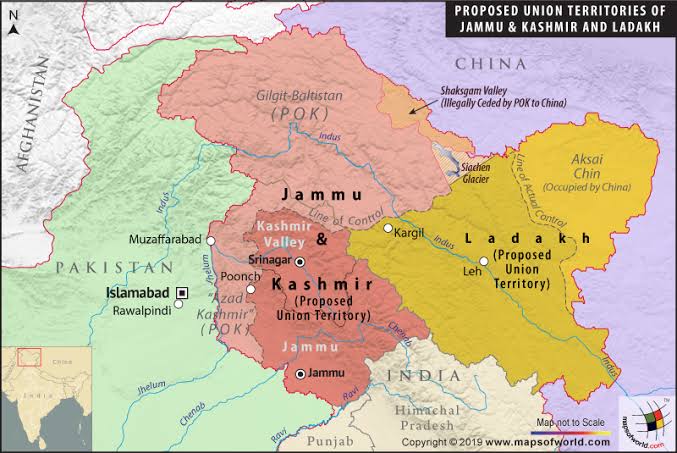
Jammu and Kashmir was a princely state during the colonial rule. This area of 2,22,441 square kilometres is now Jammu and Kashmir and Ladakh (parts of India), Azad Jammu and Kashmir and Gilgit-Baltistan (under the control of Pakistan), and Xinjiang and Tibet (administered by China).
Religious History
Jammu and Kashmir is rich in terms of its religious history. It is associated with Buddhism, Shaivism (now a part of Hinduism) and Islam, three of the majorly followed religions in the world. At first, Hinduism was popularly followed in this area. However, when Ashoka assumed the throne of this kingdom, Buddhism was introduced here. Under his reign, grand stupas as well as temples dedicated to Lord Shiva were built, which shows harmonious existence of the two religions. It was through Kashmiri Buddhist missionaries that Buddhism became widely followed in Tibet and known in China. The corruption, heavy taxation and constant fighting under the Lohara dynasty gave way to foreign invasions. A Tibetan Buddhist took the throne from a Turkish-Mongol chief and, due to political reasons, converted into Islam.
Eventually, Islam replaced Hinduism as the dominant religion in Kashmir. Rulers of Jammu and Kashmir treated all of their subjects equally, irrespective of the religion they followed, with the exception of a few who imposed taxes on the non-Muslims and favoured the ones who followed Islam.
After Mughal rule in Kashmir, Sikhs took over. Initially, their rule was oppressive and they introduced many anti-Muslim measures but later, the Sikh rulers became more considerate towards farmers. The status of Muslim subjects did not change.
Today, it is a home of multiple religions with Buddhism, Islam, Sikhism and Hinduism still dominating the area.
British Raj and Independence
The Sikh ruler of Jammu and Kashmir, Gulab Singh, won the trust of British and sided with them. The loyalty of the Sikhs proved favourable for the British, especially during the revolt of 1857. However, the Princely state never became a true state because its residents did not connect with each other or the rulers. When the colonial rule ended, the British left the decision of whether the Princely States should unite with India or Pakistan, or become independent states with the rulers of these states. This threatened the existence of the already-partitioned country.
Maharaja Hari Singh, the monarch of J&K at the time, was yet to make a decision regarding accession of Jammu and Kashmir. When invaded by Pakistan, J&K needed the help of the Indian army to defend themselves. The Maharaja had to sign the Instrument of Accession to get assistance from India with special conditions. These conditions were translated into Article 370 which gave special status to the state.
However, Article 370 was removed from the Indian Constitution in 2019. Further, the state has been divided into Jammu & Kashmir and Ladakh which are now recognised as union territories.
Article by – Shishir Tripathi Intern at Hariyali Foundation In collaboration with Educational News
When an individual studies economics during the higher studies, they are told about different types of goods including the normal goods, inferior goods, luxurious goods and the essential goods. Energy is required by every organism to survive on the planet earth. Energy is gained in various forms like heat energy from consuming food. Whether a person is rich or poor, tall or short, fat or skinny, or just any other person and all other organisms need food and making it as an essential commodity required by all.
After a tiring day at the office, after an exhausting day with scorching sun on the farm, after a day with extra classes in the school, after a day with endless house chores, every other person of different age groups performing different roles in the economy need food at the end of the day. A Thali with 2 Chapattis and veggie, some pulse and rice will make the day of such an individual after a tiring day.
Fine, but the question arises that whether the availability of food is there for every person in the country? Is there any family or a person who sleeps without food? Does every family which is affording food is using it for filling their tummies or a part of food is wasted too in a country like India? Let’s move ahead to get answers to these questions.
India has been placed at 103 out of 119 countries surveyed for the World Global Hunger Index (GHI) by two credible international NGOs based on the indicators of undernourishment and under-5 child wasting, child stunting and child mortality. Its score is 31.1 in the GHI, among the worst in the world, and below close neighbourers Bangladesh and Nepal in the SAARC region.
At least 20 crore Indians go to bed hungry daily.
Yes, a country with a lot of resources, vegetation, a country which is amongst the biggest exporters of food grains faces the problem of hunger for its 20 – 25 million population. A person who didn’t had food for days from him; one can understand that what pain is. When one takes a fast, they know that how body agonizes without water and food for the whole day. So staying hungry for days is so bad and tremendous.
According to a Report, India wastes INR 244 Crore worth of Food per Day. At the same time, one should notice that approximately 20 million people go hungry in nation where food is wasted in such a high quantity every day. In every Indian wedding, food is the most important part and the most wasted too! In India, statistics related to food wastage at weddings have been quite shocking, given the fact that it is the same country where countless number of people have to survive without the basic necessity of two meals a day. Around 100,000 weddings and social events are held in India every day. Food wasted each day at weddings and family functions in the metro cities alone would be enough to feed the vast slum population sleeping hungry at night without food. About one-fifth of the food served at weddings and social gatherings is discarded. The prodigious waste that follows has horrified many in a country where food prices are skyrocketing and tens of millions of young children are malnourished.
About 58 per cent of people in the country are food insecure, says the findings of the National Nutritional Survey (NNS) 2011. The country has enough food to feed its people but that poor cannot afford even two-square meals a day.
No government scheme will work unless and until the people who have food on their table will realize the actual demand of food from their stomach and their tongue. Those who fill their bellies till esophagus at the table or the silly ones who just don’t know that what food they like and waste a whole plate at the function, they must try to know the importance of food and stop wasting it.
Stop food wastage, give it to a hungry person and the be the reason for someone’s filled tummy.
The HSTDV is an unmanned scramjet demonstration aircraft for hypersonic speed flight. It is being developed as a carrier vehicle for hypersonic and long-range cruise missiles, and will have multiple civilian applications including the launching of small satellites at low cost. The HSTDV program is run by the Indian Defence Research and Development Organisation. India is pushing ahead with the development of ground and flight test hardware as part of an ambitious plan for a hypersonic cruise missile.
The Defense Research and Development Laboratory’s Hypersonic Technology Demonstrator Vehicle (HSTDV) is intended to attain autonomous scramjet flight for 20 seconds, using a solid rocket launch booster. The research will also inform India’s interest in reusable launch vehicles. The eventual target is to reach Mach 6 at an altitude of 32.5 km (20 miles).
India is pushing ahead with the development of ground and flight test hardware as part of an ambitious plan for a hypersonic cruise missile. The Defense Research and Development Laboratory’s Hypersonic Technology Demonstrator Vehicle (HSTDV) is intended to attain autonomous scramjet flight for 20 seconds, using a solid rocket launch booster. The research will also inform India’s interest in reusable launch vehicles. The eventual target is to reach Mach 6 at an altitude of 32.5 km (20 miles).
Initial flight testing is aimed at validating the aerodynamics of the air vehicle, as well as its thermal properties and scramjet engine performance. A mock-up of the HSTDV was shown at the Aero India exhibition in Bangalore in February (see photo), and S. Panneerselvam, the DRDL’s project director, says engineers aim to begin flight testing a full-scale air-breathing model powered by a 1,300-lb.-thrust scramjet engine in near future.
Future strike: When when ready for test and subsequent use, the hypersonic missiles will considerably augment India’s arsenal, putting it along a a handful of countries that have such weapons. Besides the velocity of over five times the speed of sound (Mach 5), the manoeuvring capability of hypersonic missiles makes maximum very effective offensive weapons capable of defeating enemy missile defence and tracking systems.A Hypersonic missile’s potency is the speed at which it travels, enabling it to have a quick reaction time considered invaluable for both defence and offence.
India has been working on making BrahMos – a supersonic cruise missile – hypersonic and the scramjet will help in the endeavour too. Developed jointly with Russia, the BrahMos now files at Mach 2.8 speed.
Low cost sat launches Further, on the civilian side, the HSTDV can total satellites at low cost. However, its ability to do so will be restricted. Experts believe that such a vehicle using scramjet can only push satellites into LEO (LOW EARTH ORBIT), and the air breathing engines will not find oxygen at higher altitudes.
According to ISRO, at present, satellites are launched by multistage satellite launch vehicles that can be used only once (expendable). these launch vehicles carry oxidizer along with the fuel for combustion to produce thrust. large vehicles design for one time use are expensive and their efficiency is low because they can carry only 2-4 % of their lift off mass to orbit.
Nearly 70% of the propellant (fuel oxidizer combination) carried by today’s launch vehicles consists of oxidizers. Therefore, the next generation launch vehicles must use a propulsion system which can utilise the atmospheric oxygen during their flight through the atmosphere which will considerably reduced the total propellant and required to place a satellite in orbit. Also, if those vehicles are made reusable, the cost of launching satellites will further come down significantly. Thus, the future reusable launch vehicle concept along with air breathing propulsion is an exciting candidate offering routine access to space at a far lower cost.
A- Sat Capabilities
A Hypersonic vehicle/missile also has the potential to augment India’s anti satellite (A-Sat) capabilities. The country, on March 27 2019, successful be conducted an A-Sat missile test in an operation codenamed ‘Mission Shakti’, making it only the fourth country after the US China and Russia to demonstrate such a capability.



 Eduindex
You must be logged in to post a comment.