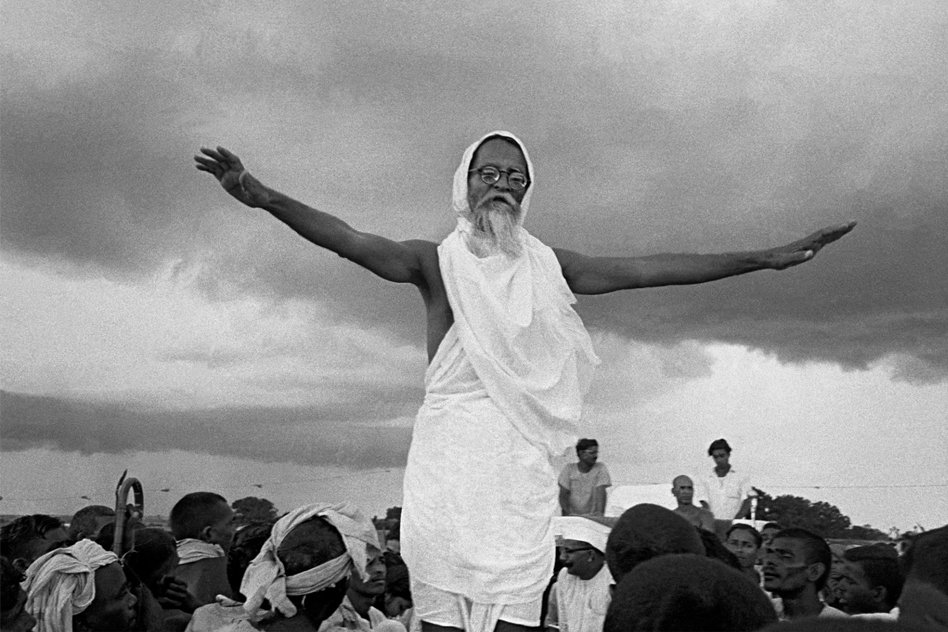
Vinoba Bhave was born in Gagode village, Raigad, Maharashtra. A keen follower of Mahatma Gandhi, Vinoba Bhave took part in the freedom struggle and started the Bhoodan movement in 1951. He was an avid social reformer throughout his life. Vinoba Bhave, a humble spiritual leader, the first non-violent resister to the Britishers and reformer of Independent India started what we know as the Bhoodan movement – a landmark in Indian history where its mission was to persuade wealthy landowners to willingly give a small share of their land to the landless people .About four years later after india gained independence, Vinoba Bhave carried out a unique movement of his own. He travelled across all of India to convince the wealthy land-owners or land-lords to share a small area of their land with their poor and downtrodden neighbours with the condition that they can’t sell the land. Over a span of 20 years, a total of 4 million acres of land was shared across the country through this movement. Bhoodan literally means a donation of land. As implied by the name, in this movement, landlords voluntarily give up land to be distributed to landless labourers, who would then cultivate the land..
How it started
Bhoodan or Land Gift movement began with Acharya Vinoba Bhave in 1951 in Telangana. An inspirational icon, Vinoba Bhave’s work & dedication impacted people all across the country. He vowed to life-long celibacy as well as selfless service for others when he was as young as 10 years old. As it is said about him, “Perhaps none of Gandhi’s followers have created so many worshippers of Truth & Non-violence, so many genuine workers as has Vinoba Bhave.” It all began on April 18th 1951, which we now know as the historic day this movement began. Vinoba Bhave stepped into the Nalgonda district, which was the epicenter of communist activity in the region. He stayed at Pochampalli, a village with about 700 families who have him a hearty welcome. He visited the ‘untouchables’ or Harijan colony, where they asked for 80 acres of land for 40 families. As documented in history, while the discussion was going on, Ram Chandra Reddy who was the local landlord, got up and exclaimed, “I will give you 100 acres for these people.” This made Vinoba come up with an idea, that this may have the solution for possibly resolving land issues across the country. Soon, this movement led to become the Gramdan or village-gift movement and went through many levels of allied programmes and initiatives. In October 1951 rose a demand for fifty million acres of land for the landless in the whole of India by 1957, thus turning a small goal into a mass-scale movement. The success lasted till 1957, post which it slowly faded.
Outcomes
It gained a lot of success, especially in Northern India in UP and Bihar. Over 4.5million acres of land in India was given as a donation by 1957. The core belief of land being a gift of earth which belonged to everyone made its way into minds of everyone. With time, many problems seeped into the movement later such as slow progress, bribery, donating bogus land, greed to get more land or incorrect implementation in some regions. The movement soon failed due to increasing misuse of a voluntary movement for self-serving purposes by a few.
To conclude taking an overall view it cannot be gainsaid that the Bhoodan – Gramdan Movement, despite all its real & apparent limitations, it would ever be deemed as a glorious attempt for a peaceful & non-violent solution of the basic land problem of Indian society & through it for a non-violent reconstruction of the Sarvodaya socio-economic-politico order of universal relevance & significance
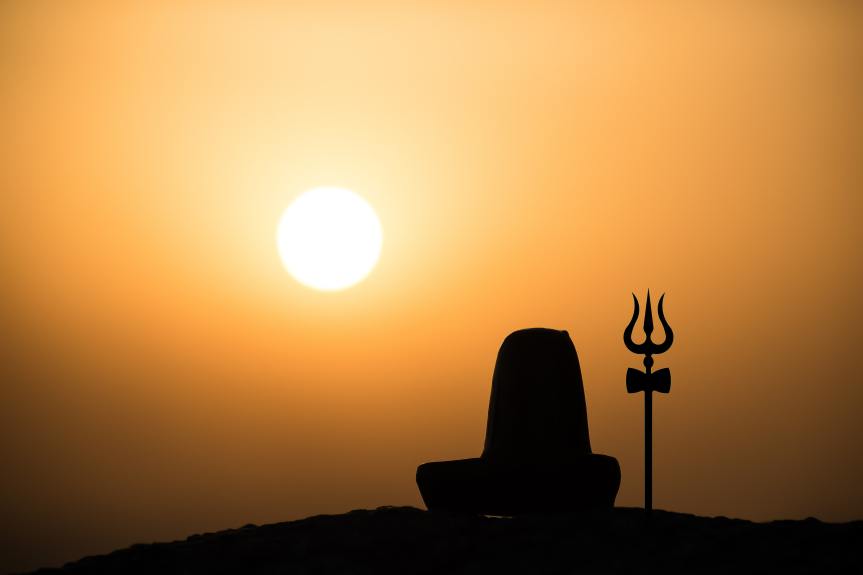
Hindus all around the world observe the night of Maha Shivratri today on the 1st of March 2022. Maha Shivratri (“The Great Night of Shiva”) is celebrated every year on Chaturdashi Tithi during Krishna Paksha in the month of Magha according to the South Indian calendar, or on 13/14 night of Krishna Paksha in Phalguna of the North Indian Hindu calendar. It is said to be the day Lord Shiva performs his heavenly dance (“Tandav“) of creation, preservation, and destruction. According to other legends, it is also the night Lord Shiva married Mata Parvati. So it is considered to be the night of union of Shiva and Shakti – the embodiment of love, power, and oneness. Devotees worship and pray to Lord Shiva, perform all-day fasting, and maintain an all-night vigil on this day. Some visit Shiva temples or go on pilgrimage to Jyotirlingams, the holiest of Shiva temples.
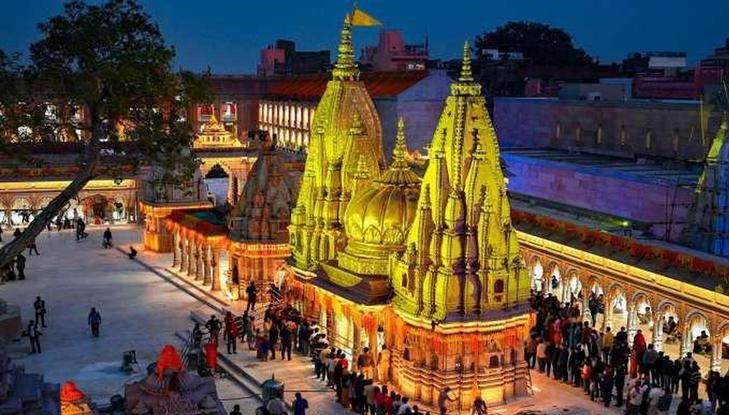
Kashi Vishwanath Temple Source: Republic World
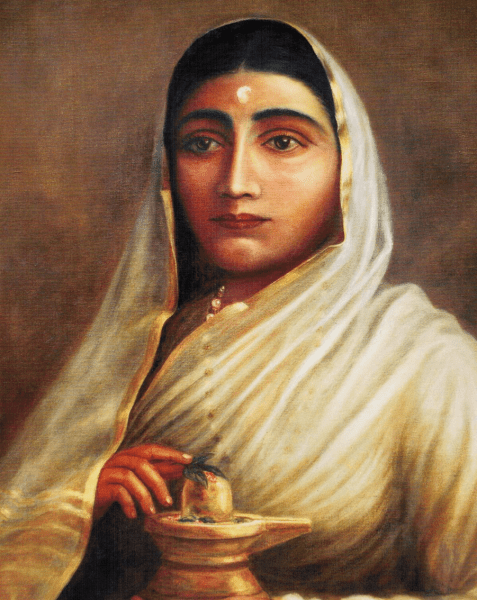
The Kashi Vishwanath temple in Varanasi, Uttar Pradesh is one of the sites of the 12 Jyotirlingams across India. This holy temple is one of the most important places of worship in the Hindu religion, with Vishveshvara or Vishvanath, the Jyotirlinga of Shiva residing inside the temple. The history of this sacred place of worship, however, is one of a cycle of destruction and plunder and re-construction. The original temple was destructed at the hands of Qutb al-Din Aibak in 1194 CE, re-constructed in 1230, and then again destroyed by the Mughal Emperor Aurangzeb in 1669 CE, building the Gyanvapi mosque in its place. It was a great and virtuous queen by the name of Ahilyabai Holkar who re-built the present-day Kashi Vishwanath temple beside the mosque. The story of this little-known noble queen is truly magnificent.
Ahilyabai was born on 31 May 1725 to Mankoji Rao Shinde, the Patil or Chief of Chondi village, Ahmednagar in present-day Maharashtra. Ahilyabai was not born into royal lineage but was married to Khanderao Holkar, after the Lord of the Malwa territory, Malhar Rao Holkar, became impressed by the young girl’s reverence and strong character. She became a widow at 29 when her husband died in the battle of Kumbher in 1754. It was her father-in-law, Malhar Rao Holkar, who prevented Ahilyabai from committing Sati after her husband’s death. Tragedy struck Ahilyabai again when her father-in-law, who was her greatest pillar of support passed away in 1766. This led to Ahilyabai’s only son Male Rao Holkar ascending the throne under her regency. He also died a few months later in 1767 which resulted in Ahilyabai becoming the ruler of Indore on 11 December 1767, despite some objections from the kingdom. She proved all those who opposed her wrong when she protected her kingdom from invaders who wanted to plunder Malwa, barely a year into her rule. She was a learned politician, cautioning the Maratha Peshawa against the British in a letter in 1772, comparing the British embrace to a bear-hug.
During her 30-year rule, she transformed Indore from a tiny village to a prosperous city. She constructed numerous forts and roads in Malwa, sponsored festivals, and donated to many Hindu temples. She built dozens of temples, ghats, wells, tanks, and rest-houses stretching from the Himalayas in the north to the pilgrimage centers in the south. It was in 1780 that Ahilyabai re-constructed the present-day Kashi Vishwanath Temple adjacent to the mosque. The noble queen also beautified various holy sites including Gaya, Somnath, Ayodhya, Mathura, Haridwar, Kanchi, Avanti, Dwarka, Badrinarayan, Rameshwar, and Jaganathpuri as recorded by the Bharatiya Sanskritikosh.
Maheshwar, her capital was a center of literary, artistic, musical, and industrial achievement. She established a textile industry in the city and gained supporters like the Marathi poet Moropant, Shahir Anantaphandi, and Sanskrit scholar, Khushali Ram. Historians write of her kind rule, encouraging all within her realm and her kingdom to do their best.
She was 70 when she died in 1795 and was succeeded by her commander-in-chief and nephew, Tukoji Rao Holkar. As a tribute to her, Indore international airport has been named Devi Ahilyabai Holkar Airport. Similarly, Indore university has been renamed Devi Ahilya Vishwavidyalaya. A commemorative stamp was also issued in her honor in 1996. On 13 December 2021, India’s Prime Minister Narendra Modi inaugurated the Kashi Vishwanath Corridor Project in Varanasi, restoring an array of temples to their past glory. On this day, let us remember the great queen of Malwa and her invaluable contribution to our nation. The legacy of the great queen of Malwa lives on.
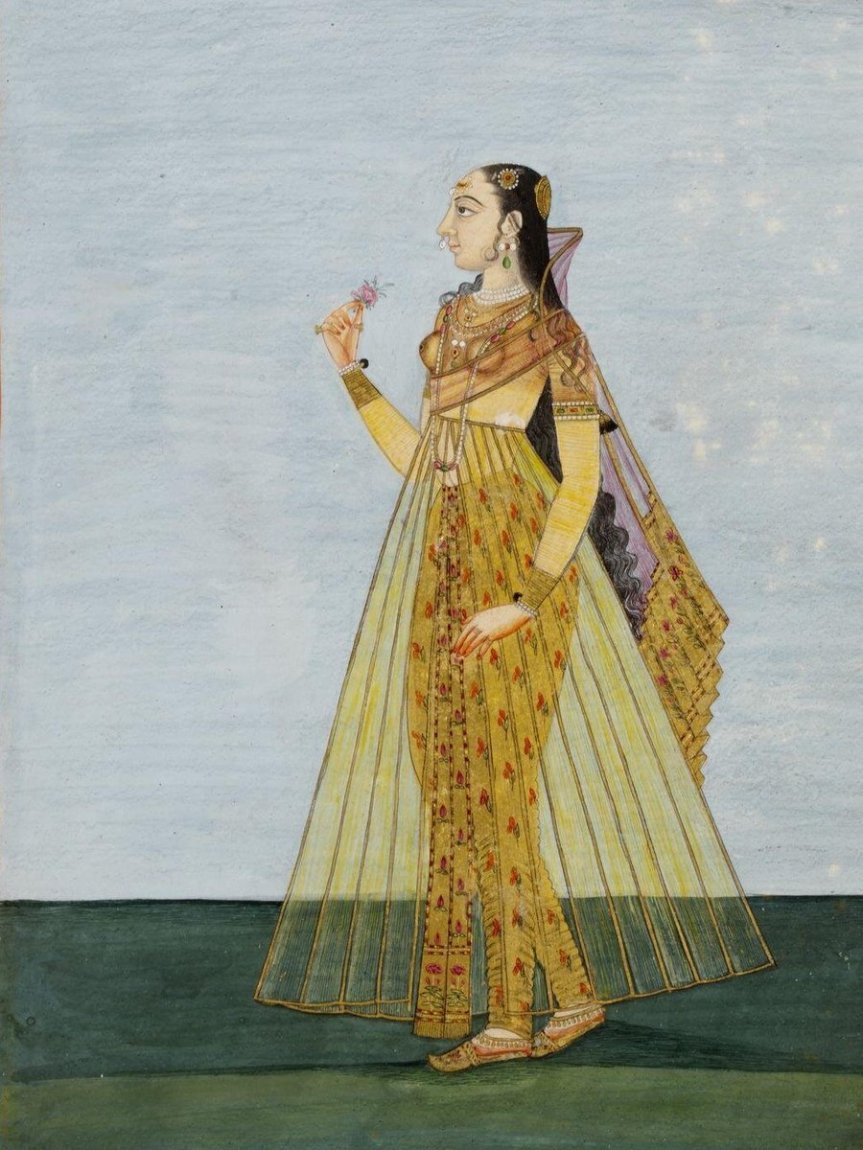
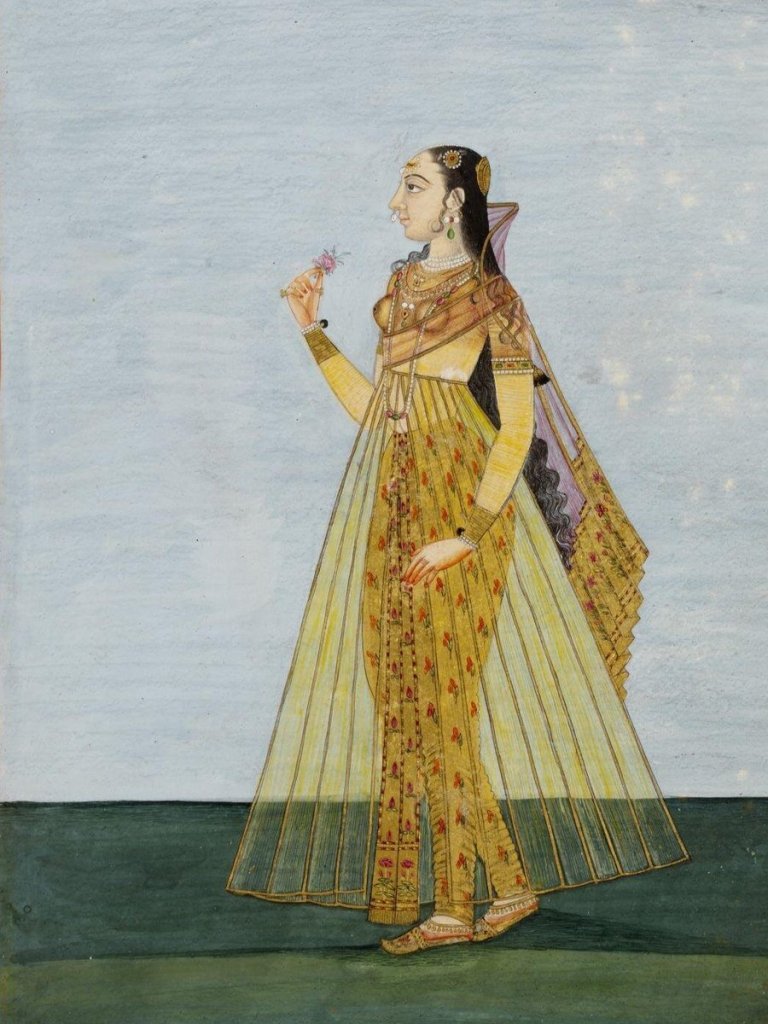
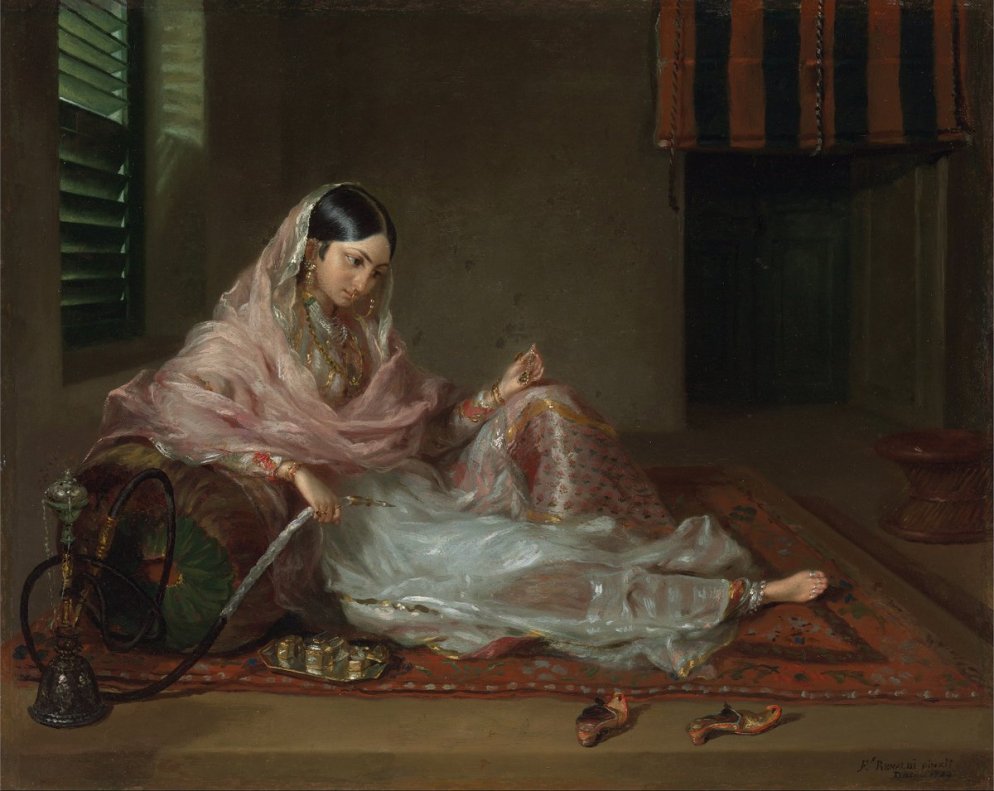
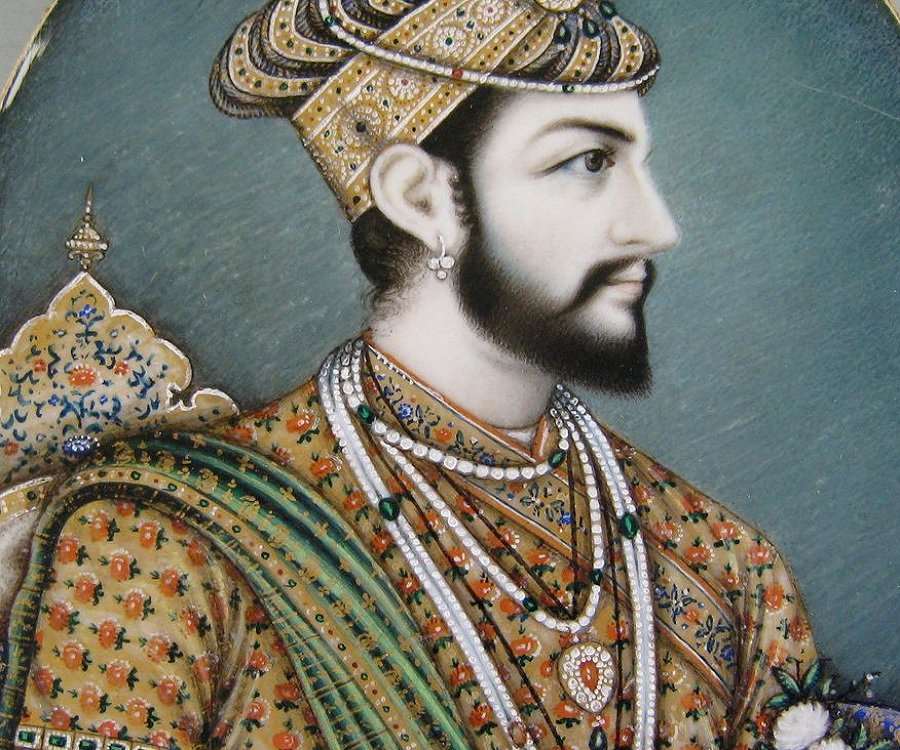
A portrait illustrating how Transparent Muslins were
Introduction
Muslin today has come to mean almost any lightweight, gauzy, mostly inexpensive, machine-milled cotton cloth. The word has lost all connection to the handwoven fabric that once came exclusively from Bengal. Cotton, stated the historian Fernand Braudel, was first used by the ancient civilizations on the Indus, while the art of weaving itself has been traced back to much earlier times. This head start perhaps was why ancient India became proficient in making cotton textiles. They became a staple export commodity to the Roman Empire, and they expanded in volume in the Middle Ages with the growth of the “maritime Silk Road” in the Indian Ocean.
Historic Background
Muslin a brand name of pre-colonial Bengal textile, especially of Dhaka origins. Muslin was manufactured in the city of Dhaka and in some surrounding stations, by local skill with locally produced cotton and attained world-wide fame as the Dhaka Muslin. The origin of the word Muslin is obscure; some say that the word was derived from Mosul, an old trade centre in Iraq, while others think that Muslin was connected with Musulipattam, sometime headquarters of European trading companies in southern India. Muslin is not a Persian word, nor Sanskrit, nor Bengali, so it is very likely that the name Muslin was given by the Europeans to cotton cloth imported by them from Mosul, and through Mosul from other eastern countries, and when they saw the fine cotton goods of Dhaka, they gave the same name to Dhaka fabrics. That the name Muslin was given by the Europeans admits of little doubt, because not only Dhaka cotton textiles, but cotton goods imported by the Europeans from other parts of India like Gujrat, Golconda, etc were also called Muslin.
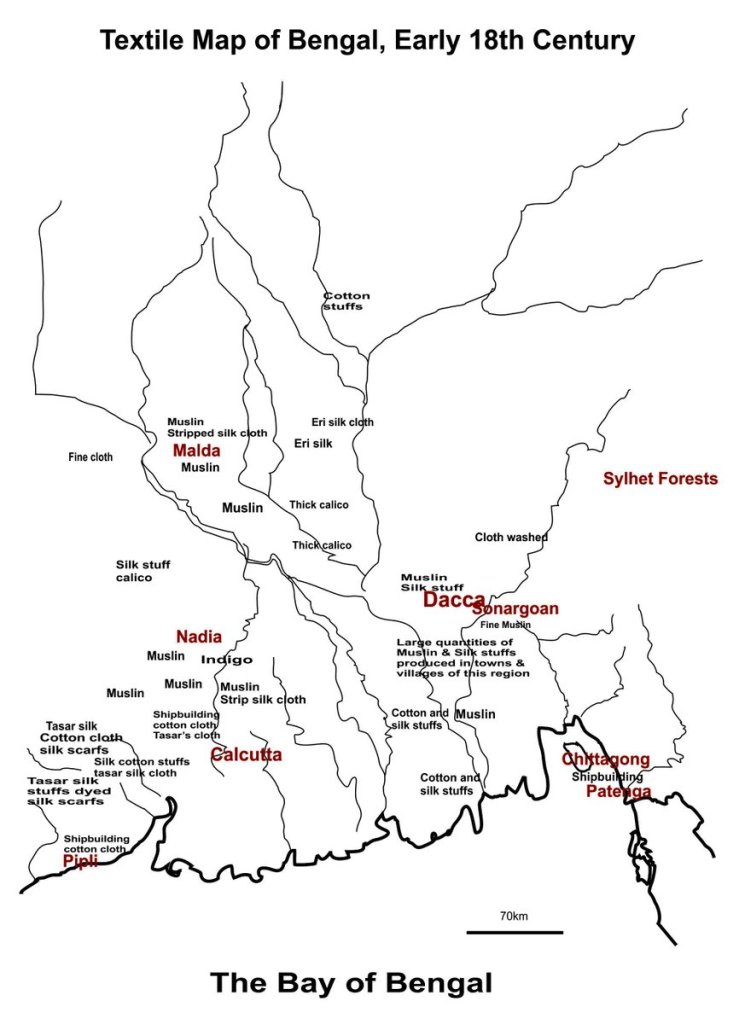
The route connecting the Hubs of Muslin Industry in Bengal
How Muslins Were Made
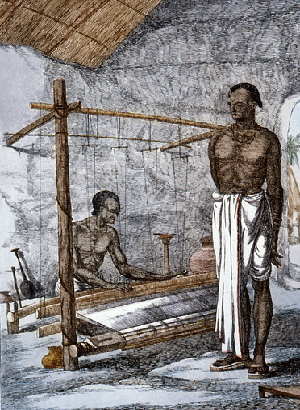
The textile industry of Bengal is very old. Bengal cotton fabrics were exported to the Roman and the Chinese empires and they are mentioned in Ptolemy’s Geography and the Periplus of the Erythraean Sea, and by the ancient Chinese travellers. But Dhaka Muslin became famous and attracted foreign and transmarine buyers after the establishment of the Mughal capital at Dhaka. The Muslin industry of Dhaka received patronage from the Mughal emperors and the Mughal nobility. A huge quantity of the finest sort of Muslin was procured for the use of the Mughal emperors, provincial governors and high officers and nobles. In the great 1851 Exhibition of London, Dhaka Muslin occupied a prominent place, attracted a large number of visitors and the British Press spoke very highly of the marvelous Muslin fabrics of Dhaka. Weavers in Dhaka, Bangladesh, used to make this incredibly fine cloth using a method called the discontinuous weft technique. This technique required the weaver to work two layers of weft – one as fine as spider’s silk to hold the cloth together and the other forming the pattern. Each pattern motif was worked individually, using fine bamboo sticks to interlace the pattern threads with the warp threads.
Weaving of Muslins under the supervision of royal official( Painting, in 1800s)
Types And Variations
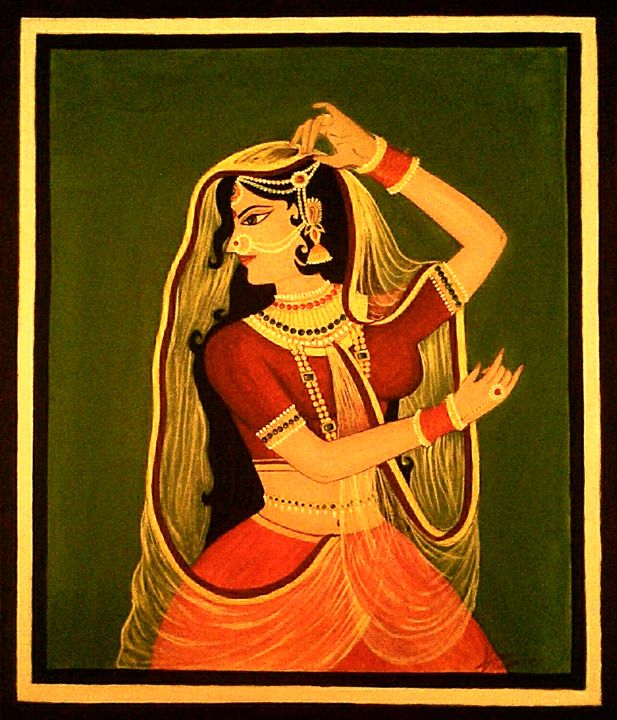
The finest sort of Muslin was made of phuti cotton, which was grown in certain localities on the banks of the Brahmaputra and his branches. The other kinds of cotton called bairait and desee were inferior and were produced in different parts of Dhaka and neighbouring areas; they were used for manufacturing slightly inferior and coarse clothes.The productions of Dhaka weavers consisted of fabrics of varying quality, ranging from the finest texture used by the highly aristocratic people, the emperor, viziers, nawabs and so on, down to the coarse thick wrapper used by the poor people. Muslins were designated by names denoting either fineness or transparency of texture, or the place of manufacture or the uses to which they were applied as articles of dress. Names thus derived were Malmal (the finest sort), Jhuna (used by native dancers), Rang (of transparent and net-like texture), Abirawan (fancifully compared with running water), Khasa (special quality, fine or elegant), Shabnam (morning dew) Alaballee (very fine), Tanzib (adorning the body), Nayansukh (pleasing to the eye), Buddankhas (a special sort of cloth), Seerbund (used for turbans), Kumees (used for making shirts), Doorea (striped), Charkona (chequered cloth), Jamdanee (figured cloth). The finest sort of Muslin was called Malmal, sometimes mentioned as Malmal Shahi or Malmal Khas by foreign travellers. It was costly, and the weavers spent a long time, sometimes six months, to make a piece of this sort. It was used by emperors, nawabs etc. Muslins procured for emperors were called Malbus Khas and those procured for nawabs were called Sarkar-i-Ala. The Mughal government appointed an officer, Darogah or Darogah-i-Malbus Khas to supervise the manufacture of Muslins meant for the emperor or a nawab.
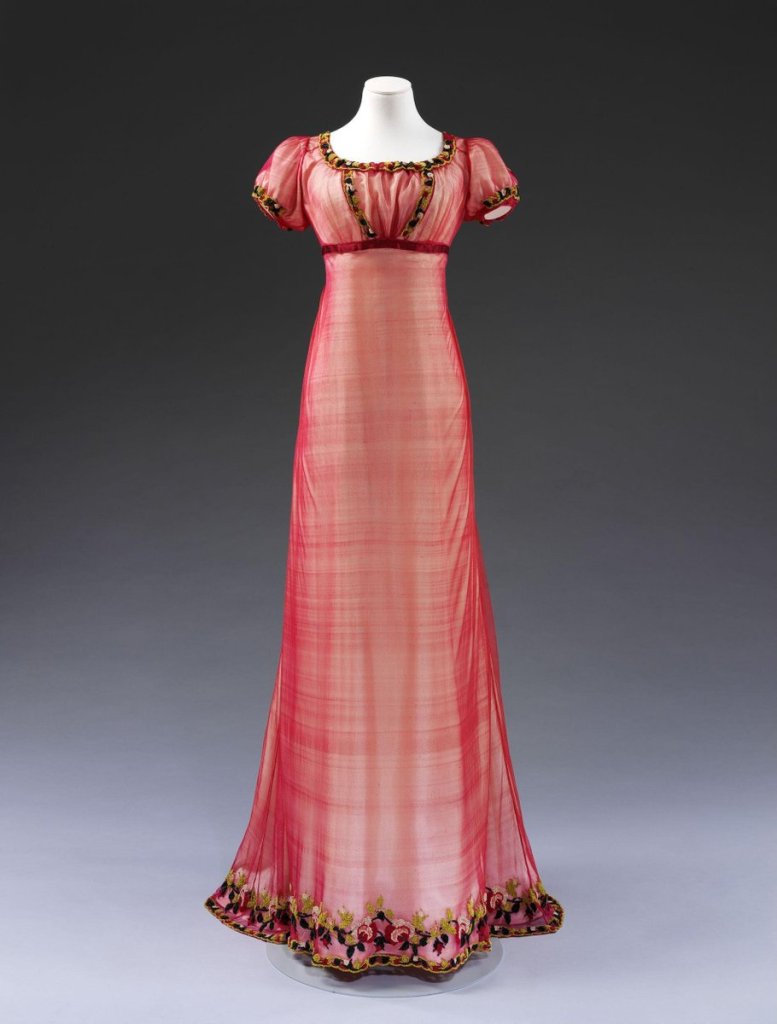
A real Muslin dress exported to England from colonized India
Areas of Production
Weaving was prevalent in the Dhaka district in almost every village, but some places became famous for manufacturing superior quality of Muslins. These places were Dhaka, Sonargaon , Dhamrai, Teetbady, Junglebary and Bajitpur.
Why It Was So Exclusive
The finest of Muslins were honoured with evocative names conjured up by imperial poets, such as “baft-hawa”, literally “woven air”. These high-end muslins were said to be as light and soft as the wind. According to one traveller, they were so fluid you could pull a bolt – a length of 300ft, or 91m, through the centre of a ring. Another wrote that you could fit a piece of 60ft, or 18m, into a pocket match-box. Dhaka muslin was also more than a little transparent.
Muslins were adored by the elites
How The Industry Was Lost
Unfortunately, during the period of the East India Company, European manufacturers all but destroyed the industry by flooding the market with factory produced muslin equivalents. Through a combination of punitive taxes on locally produced textiles and the dissolution of local and influential patrons, Jamdani muslin became uneconomical to produce and the skills were almost lost.
Conclusion
Thankfully, there are organisations in Bangladesh today that are encouraging local weavers to continue to practice their craft. Coupled with the UNESCO listing of Jamdani muslin on its Representative List of the Intangible Cultural Heritage of Humanity, there is more impetus to continuing production, albeit on a very small scale. With the proliferation of mass produced and synthetic fabrics on the market today, it is important that these historical techniques aren’t lost forever. No factory can ever emulate the quality arising out of a skilled artisan. Their skills are part of our textile heritage and it’s wonderful they are being recognised and preserved.
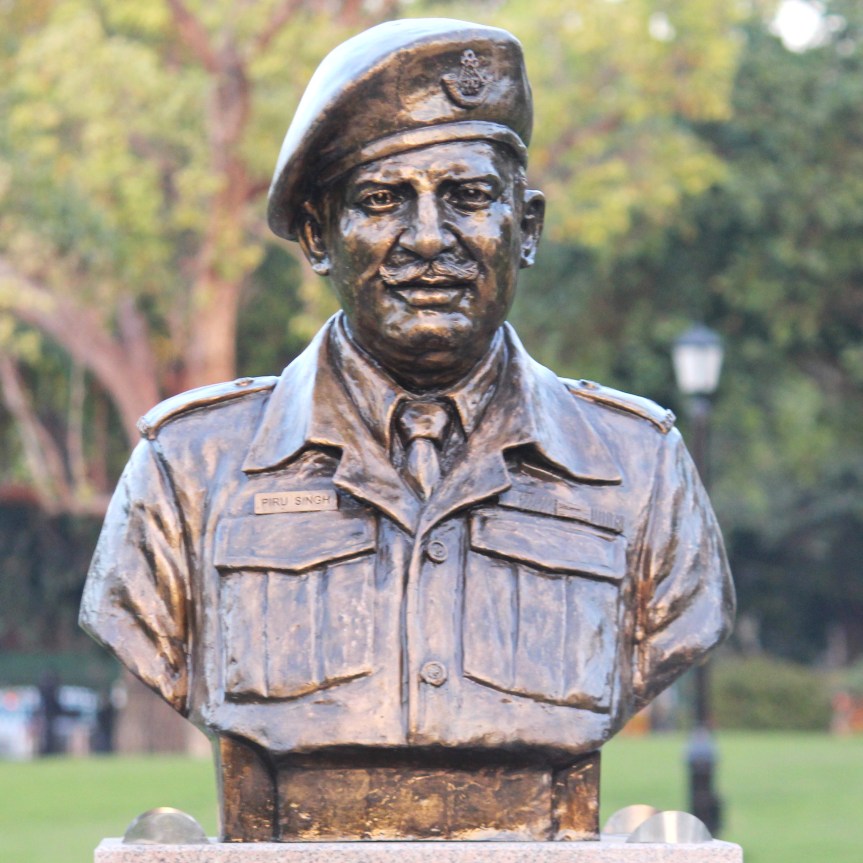
The credo of Indian Military Academy – ‘ The safety, honour, and welfare of your country comes first, always and every time. The honour, comfort and safety of the man you command comes next. Your own ease, comfort & safety comes last, always and every time.’ – is a mantra that every Indian soldier lives by. The commitment of a soldier to his duty and his sheer determination to fulfill it is something that sets him apart from the rest of the crowd. Company Havildar Major Piru Singh, the hero of battle of Darapari, was no different.
Early Life
Piru Singh was born on 20th May 1918, in Rampura village, Churu, Rajasthan.He came from an agricultural family of the warrior clan of the Rajputs. His father Lal Singh and mother Tarawati Kanwar (Jarav Devi) had seven children – three boys and four girls – with Singh being the youngest. Even as a young boy, he loved outdoor life and had an aversion to restricted environments. Singh discontinued schooling at a young age. The rest of his childhood was spent helping his father in his farm. Right from his younger days he had an inclination to join the army. Despite being rejected twice, Singh never gave up and eventually got selected on his third attempt. He joined the British Indian Army coincidentally on his 18th birthday on 20th May 1936.
On joining, Singh was initially assigned to the 10th Battalion of the 1st Punjab Regiment at Jhelum. After completion of his training, he was transferred to the 5th Battalion of the same regiment on 1st May 1937. Surprisingly, the boy who despised school and had no interest in studies had transformed into a committed soldier who took serious interest in education. He cleared the Indian Army Class Certificate of Education and a series of other army examinations and got promoted to the rank of lance Naik within a brief span. He served on the North-West Frontier during his tenure with the 5th Battalion of the 1st Punjab regiment. It took less than a year before he was promoted from Lance Naik to the rank of Naik. In September 1941, he was posted to the Punjab Regiment Centre at Jhelum, as an instructor.
Singh was also a wonderful sportsman and represented his regiment in basketball, hockey and cross-country running at the inter-regimental and national level championships. In February 1942, he was promoted to Havildar and later to the rank of Company Havildar Major in May 1945. Until October 1945, he served the army as an instructor. He was deployed to Japan as part of the British Commonwealth Occupation Force after the Second World War, where he served until September 1947. By the time he returned from Japan, India had been partitioned and therefore the Indian army had undergone reorganization. Consequently CHM Piru Singh was transferred to the 6th Battalion of the Rajputana Rifles Regiment.
Battle of Darapari : Background
It was during this time around that the tensions between India and Pakistan were escalating, over the control of the princely state of Jammu & Kashmir. Eventually in October 1947, war broke out between the two countries.The Spring of 1948 was utilised, by the Indian Army, to rid the Kashmir valley of the infiltrators. General Thimayya, General Officer commanding Sri division, decided to launch the offensive with the main thrust along the Uri-Domel road by 161 Infantry Brigade under Brigadier L.P Sen. 163 Infantry Brigade under Brigadier Harbaksh Singh was detailed to carry out a divisionary operation towards Tithwal from Handwara. To deal with the enemy forces around the Bagh area, the Poonch Brigade was assigned to carry out a battalion operation towards Bagh. In the third week of May, Dogarpur, Trehagam and Chokibal were captured and on 22nd May, Tithwal sector was captured by the Indian forces.
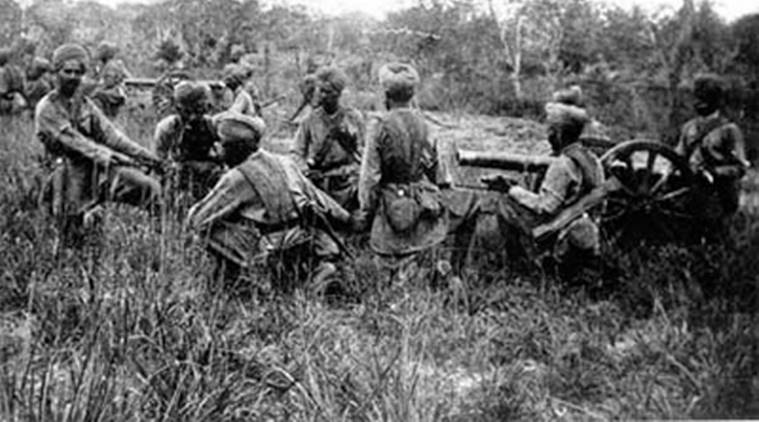
Source: Wikimedia Commons
Pakistan, enraged by the setback in the Tithwal sector, launched repeated counter attacks and recaptured the village of Tithwal in the hills of Jammu and Kashmir. The Pakistani raiders launched offensive strikes in this region and captured a ring contour on the 8th of July 1948. The enemy pushed to seize control over the positions across the river Kishanganga and the Indian Army was forced to vacate their forward positions across the river. In the wake of this setback , in order to strengthen the advance on the Tithwal sector, Piru Singh’s unit – the 6th Battalion of Rajputana Rifles – was moved from Uri to Tithwal and was assigned to the 163rd Brigade. The unit took position on the Tithwal bridge.
The attacks commenced on the 11th of July. The operation went on for four days till the 15th of July. However, according to the reconnaissance report, the Pakistanis were still in command of two strategically important positions. The capture of these two positions was essential for making any further advancement. The task of securing these two features was assigned to the 6th Rajputana Rifles. Two companies – Charlie ( C ) and Delta ( D ) – were assigned to the operation. The C company was in charge of securing the second position after the D company had captured the first.
Battle of Darapari : The Day of Action
The D Company, of which CHM Piru Singh was a part, was sent to capture the Darapari feature in Tithwal sector. Darapari is a hill feature located at an altitude of over 11000 feet. The path leading to the position held by the Pakistanis had deep ravines on either side and was just about one meter wide. According to the intelligence reports received, the battalion was told that the enemy had not had enough time to dig-in intensively and hence could be dislodged without much struggle. This however proved to be inaccurate. The narrow path through which the battalion was advancing was overlooked by five hidden Pakistani bunkers ,which gave the defending troops a clear advantage in terms of position. The time constraints restricted the battalion from having a proper reconnaissance of the enemy position. In order to take advantage of the darkness, the attack to secure Darapari was planned to take place after the moon had set and was launched at 01.30 a.m on the 18th of July. As the attack advanced, the company was subjected to heavy shelling and within a matter of about half an hour, the casualty count had reached to a whooping 51. The platoon commander Subedar Bhika Singh was hit. A sinking feeling of panic had swept over them and there was absolute chaos amidst the rest of the team. It was then that Piru Singh rose to the occasion and took charge of the team and led his platoon with a determination that not even the raging bullets from the rival MMG posts could waver.
The enemy medium machine guns had been sited to cover all possible approaches. The platoon led by Singh was met with heavy firing from both flanks and a volley of grenades from the bunkers. Neither the murderous firing nor the fact that half of his platoon was either dead or wounded, could falter him. With the battle cry of ‘Raja Ramachandra ki Jai’, he rushed forward to crush the MMG post which was playing havoc with his troops. His exceptional leadership motivated the rest of the crew to follow their leader ferociously. With the curtain of grenades tearing through him, wounding him at several places, he continued to advance. He rushed to the MMG which was causing the maximum destruction and bayoneted the men on guard and occupied the post.
By this time the rest of his men were either dead or wounded and he was the sole survivor of his company. Alone and injured, but with a never-say-die attitude, Singh inched forward to achieve the objective assigned. While advancing towards the second MMG post, a grenade was thrown at him, which wounded him in the face. Neither the blood dripping from his face nor an empty reserve of ammunition could kill his spirits. He crawled out of the trench, hurling grenades at the next enemy post and then jumped to the next trench bayonetting two Pakistani soldiers to death. As Singh emerged out of the trench to attack the third bunker, he was hit in the head by a bullet. Just before he succumbed to his injuries, he had managed to throw a grenade into the enemy trench, which did a perfect job of wiping off the enemies. CHM Piru Singh had thus bravely and selflessly completed his mission before he closed his eyes for the final time.
Source: Wikimedia Commons
Param Vir Chakra
His act of bravery was witnessed by the commander of the C company, who was directing fire in support of the D company. Inspired by Singh’s actions the rest of the company put up a ferocious fight and Darapari was captured against death defying odds.
CHM Piru Singh was awarded the Param Vir Chakra for his single-handed bravery, exceptional leadership and extreme devotion to duty, posthumously. In remembrance of this brave soldier, his unit – 6 Rajputana Rifles – commemorates the Battle of Darapari every year.
Every soldier has a story buried under his gravestone and Piru Singh’s is that of his extreme courage, supreme sacrifice, exemplary leadership and above all his unconditional love for his motherland.
Param Vir Chakra is India’s highest gallantry award.From Major Somnath Sharma to Captain Vikram Batra, 21 brave hearts of the Indian Armed Forces have so far received the prestigious Param Vir Chakra award. When Major Somnath Sharma, the first recipient of this award, laid down his life while defending his motherland, this award actually did not exist. It was later, when India became a republic in 1950, that the award was introduced, but with effect from 15th August 1947.
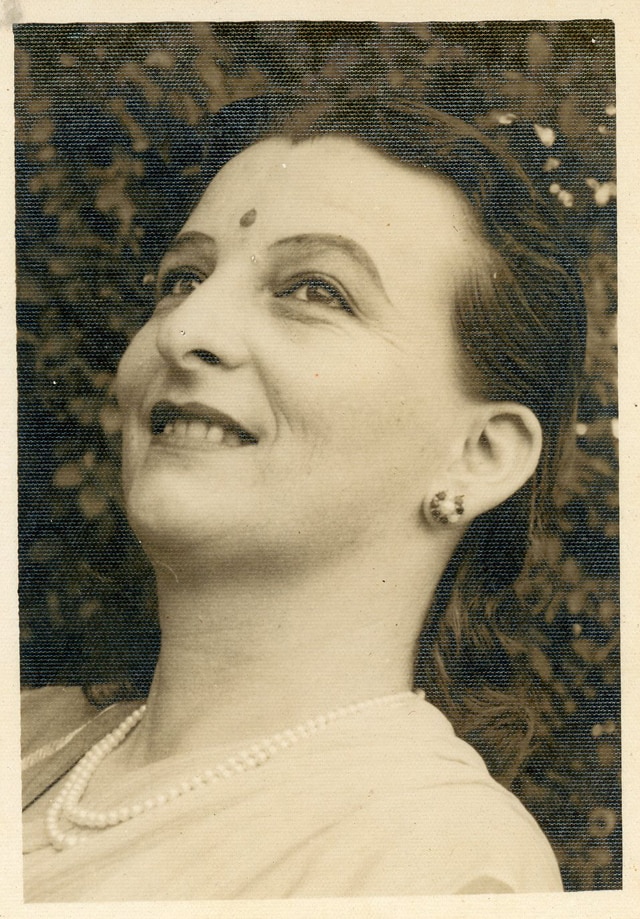
I’m sure most of you might have heard about this award, but what many are unaware of is that India’s highest military decoration was designed by a Swiss-born woman Eve Yvonne Maday de Maros aka Savitri Bhai Khanolkar.
Image source: dnaindia.com
Life as Eve Yvonne Maday de Maros
Eve was born in Neuchatel, Switzerland, to a Hungarian father Andre de Maday and a Russian mother Marthe Hentzelt, on the 20th of July 1913. She was raised by her father, after her mother’s death. She spent her early childhood in Geneva. As a child, she loved nature and liked being outdoors.
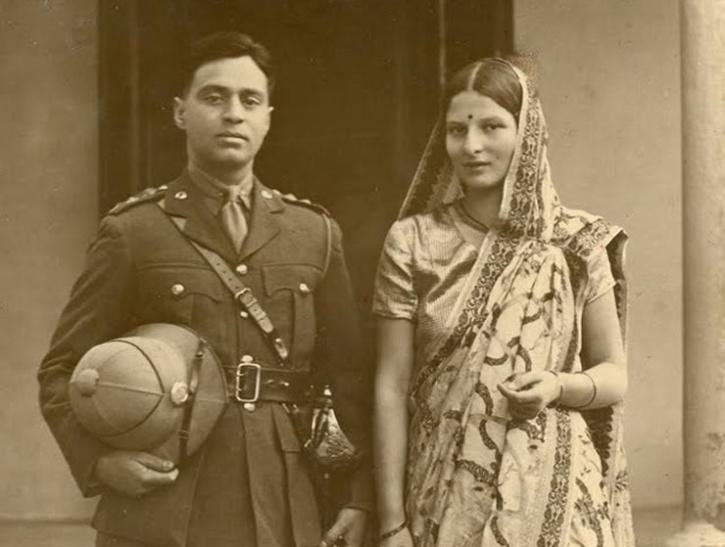
A turning point in her life was when in the winter of 1929, on a skiing holiday, she met Vikram Ramji Khanolkar, a young Indian Army cadet. Vikram, at that time was undergoing training at the Royal Military Academy, Sandhurst and was holidaying in Switzerland during a team break. The meeting was just the beginning of what later blossomed into a cross country love story. Neither Vikram’s age nor her father’s disapproval stopped her from pursuing her love. She moved to India a few years later and got married to the love of her life in 1932. She converted to Hinduism and adopted the name Savitri Bhai Khanolkar after moving to India.
Life as Savitri Khanolkar
Savitri Khanolkar was a European lady with an Indian soul. She loved everything about India and its culture, which made her cross-cultural transition rather smooth and comfortable. She picked up Hindi, Marathi and Sanskrit within a couple of years and could converse fluently in all the three. She was keenly interested in India’s history and culture and devoted herself to learning more about the country’s mythology, traditions and religious scriptures. She was a talented artist and made a series of paintings depicting the various ideals and principles of Vedanta and Hindu philosophy. She also wrote two books – ‘Sanskrit Dictionary of Names’ and ‘Saints of Maharashtra.’ Those who knew her personally described her as a warm and compassionate person with a great passion for the Hindu philosophy.
Maj General Vikram Khanolkar and Savitri Khanolkar | Image Source: indiatimes.com
Designer of Param Vir Chakra
After India became independent in 1947, especially in the light of the Indo-Pak war that had broken out, there was a pressing need to create new military honours and awards for independent India. Adjutant General Major General Hira Lal Atal had been assigned this responsibility. Major Atal hardly needed to think twice before choosing Savitri Bhai for the task. Her passion for Indian culture and Vedanta philosophy, talent as an artist and her in-depth knowledge of the country’s ancient history and traditions made her an ideal candidate for the job. Her military association as an army wife was an added bonus. She was asked to design the Indian equivalent of the British Victoria Cross – the Param Vir Chakra.
Param Vir Chakra : Design Inspiration
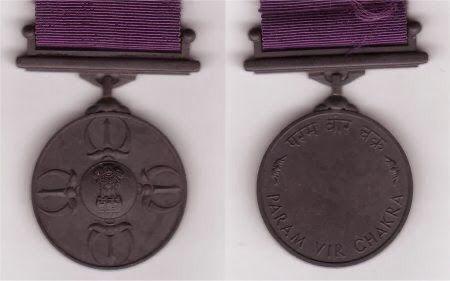
Savitri Bhai took inspiration from India’s ancient puranic literature and legends to design the Param Vir Chakra medal.She selected Indra’s weapon, the Vajra, which was made from the bones of Maharshi Dadhichi for the design. Maharshi Dadhichi was known for the ultimate sacrifice that he had made by giving up his body and thereby enabling the Gods to fashion the deadly weapon Vajra from his bones. The presence of Vajra in the medal is symbolic of the power and the selfless sacrifices of our legendary war heroes.
The final design consisted of the National emblem embossed in the centre, surrounded by four replicas of the double Vajra imprinted on the medal face and the rear side had the words ‘Param Vir Chakra’ inscribed both in English and Hindi, separated by Lotus flowers.The medal was cast in bronze and held by a purple ribbon.
Apart from the Param Vir Chakra, she also designed other gallantry medals including Ashok Chakra, Maha Vir Chakra, Kirti Chakra, Vir Chakra and Shaurya Chakra.
Coincidentally, the first PVC recipient turned out to be Savitri Bhai’s future son-in-law’s brother, Major Somnath Sharma.
Image Source : twitter
Later life
During the course of her life, Savitri Bhai always found time to engage in social work. She was a follower of Sri Ramakrishna and she immersed herself in numerous social activities through Ramakrishna Mission. She also worked for the welfare of Jawans and their families and refugees who had been displaced during partition. She lost her husband to a heart attack in 1952, after which she found solace in spirituality and retired to Ramakrishna Math.
The life of Savitri Bhai Khanolkar was truly a remarkable one. Be it joining the North India Flying Club or learning Indian classical dance and music or attending Patna university, she enjoyed every bit of her life as an Indian woman. She passed away on 26th November 1990, after leading a full life.
Chitrakoot, “the hill of many wonders, nestles peacefully in the northern spurs of the Vindhyas, a place of tranquil forest glades and quiet rivers and streams where calm and repose are all- pervading. This loveliest of Nature’s gifts is also hallowed ground, blessed by the gods and sanctified by the faith of pilgrims. For Chitrakoot’s spiritual legacy stretches back to legendary ages: it was in these deep forests that Rama and Sita spent eleven of their fourteen years of exile: here, that the great sage Atri and Sati Anusuya meditated; and here where the principal trinity of the Hindu pantheon, Brahma, Vishnu and Mahesh took their incarnations. Sufferers and seekers, poets and visionaries, princes and noblemen have, through the ages, sought and found solace in Chitrakoot, drawn inspiration from its sublime natural beauty, gained spiritual strength from its serene temples and, in turn, become part of the hallowed legend that is Chitra koot.
PLACES TO VISIT
RAMGHAT
The ghats that line the banks of the river Mandakini reveal a constantly moving and changing kaleidoscope of religious activity. Here, amidst the chanting of hymns and the sweet fragrance of incense, holy men in saffron robes sit in silent meditation or offer the solace of their wisdom to the countless pilgrims who converge here. With the very first rays of dawn that gleam upon the river, Ramghat stirs into life as the devout of all ages take the ritual, purifying dip in the waters and invoke the blessings of the gods. The activity builds up in a crescendo of colour and spontaneous expressions of faith through the day, past high noon, gently diminishing as the setting sun picks out the bright colours of flower petals floating down the river, while the evening ‘arti’ lends its melodious cadences to the deepening dusk.
KAMADGIRI
Kamadgiri, the original Chitrakoot, is a place of prime religious significance. A forested hill, it is skirted all along its base by a chain of temples and is venerated today, as the holy embodiment of Rama. The Bharat Milap temple is located here, marking the spot where Bharat is said to have met Rama to persuade him to return to the throne of Ayodhya. Many are the faithful who perform the ritual circuit (parikrama) of the sacred hill, to ask for a boon or a blessing.
SATI ANUSUYA
Sati Anusuya is located further upstream, set amidst thick forests that resound to the melody of birdsong all day. It was here that Atri Muni, his wife Anusuya, and their three sons (who were the three incarnations of Brahma, Vishnu and Mahesh), are said to have meditated. The Mandakini is believed to have been created by Anusuya through her meditation. Sati Anusuya lies about 16 km. from the town and can be reached by road.
SPHATIK SHILA
A few kilometers beyond Janaki Kund is again a densely forested area on the banks of the Mandakini. One can climb up to the boulder which bears the impression of Rama’s footprint and where Sita was pecked at, by Jayant in the form of a crow. There are large fish in the river here, easily visible in the pellucid water and a few temples.
HANUMAN DHARA
Located on a rock-face several hundred feet up a steep hillside is a spring, said to have been created by Rama to assuage Hanuman when the latter returned after setting Lanka afire. A couple of temples commemorate this spot which offers a panoramic view of Chitrakoot. There is an open, paved area here in the shade of a massive peepal tree, a lovely halting place after the long climb up.
ALSO VISIT: Janaki Kund, Gupt-Godavari, Deep Daan, Bharat Koop and Bharat Milap.
Sivasagar was the capital of the mighty Ahoms, who ruled Assam for more than six hundred years till the advent of British. The town, dedicated to Lord Shiva- its name literally meaning “the ocean of Shiva” is strewn with tell-tale ruins of a powerful empire. The most remarkable landscape of the town is the 280 years old Sivasagar tank comprising 129 good acres. Although situated within the heart of the town, the water level of the lake is above the level of town. On its bank are three temples- the Shivadol, the Vishnudol and the Devidol- all three built by Queen Madamika, wife of Shiva Singha in the year 1734. The Shivadol is believed to be the highest Shiva temple in Assam.
PLACES TO EXPLORE
RANG GHAR
Rang Ghar also known as “Colosseum of the East” the towering and expansive Rang Ghar stands tall in Sivasagar. The two storied oval shaped amphitheater was constructed by Ahom King Swargadeo Pramatta Singha (1744-1751) in the 18th Century and served as a pavilion from where royal and dignitaries watched various sports and games like buffalo-fight, cock-fight, wrestling and races, etc held in the Rupshi Pathar- the vast field in front of it.
KARENG GHAR AND TALATAL GHAR
A seven storied palace having three storeys underground known as Talatal Ghar and upper storeys known as Kareng Ghar built by Swargadeo Rudra Singha (1696-1714) stand majestically at 4 kms away from Sivasagar town. A well planned brick-wall compound, which housed the royal court and offices, as well as the strategic military headquarters of the Ahom Kingdom. It also had two underground tunnels from Talatal Ghar connecting Dikhow River and Gargaon Palace which were subsequently closed by East India Company.
GARGAON PALACE
Gargaon, the principal towns of Ahoms, built by the XV the king, Suklengmung in 1549, lies 13 kms east of Sivasagar. The old Palace was destroyed and the present seven palace was rebuilt around 1762 by King Rajeswar Singha.
NAMDANG STONE BRIDGE
The bridge, a cut out from a single rock over the Namdang river, 12 kms from Sivasagar town was constructed by workmen brought from Bengal during the reign of Swargodeo Rudra Singha in 1703. Today, the National Highway 37 passes over the bridge.
JOYSAGAR TANK
Considered as the largest man-made in India, the Joysagar Tank is an example if human excellence. Encompassing an area of about 318 acres, the tank was built by Swargadeo Rudra Singha (1696_1714) in the memory of his mother “Joymoti Kunwari” who was tortured to death by their enemies because she would not reveal her husband’s where-abouts, who later ascended the Ahom throne as Gadadhar Singha.
GAURISAGAR TANK AND TEMPLE
The Gaurisagar tank was built by Queen Phuleswari Devi (1722-1791) and was dedicated to Goddess Durga. It is 150 acres under water and on its banks stand the Devidol, Sivadol and the Vishnudol temples. Gaurisagar is only 12 kms from Sivasagar.
PANIDEHING BIRD SANCTUARY
A rich wetland Eco-system of 33.93 sq. km situated on the southern bank of river Brahmaputra in the Sivasagar district. This bird sanctuary is a paradise of migratory and resident birds; so far 165 species of birds have been identified and recorded.
ALSO VISIT: Rudrasagar Tank and Temple, Ajan Pir Dargah Sarif, Ramkhapith Devaloy and Pahugarh.
“History and law are two sides of a polished mirror”. As we read it, that is there any relation of history with the law, then suddenly it strikes our mind that these two are different subjects because in India students mostly take topics in relation with the subjects they are studying. But when we think beyond, the subject we get to know that history and law are interrelated. Laws are influenced by events in history. The events which have happened before and what their outcomes were and what things can be changed for the better. In taking all these points in mind, laws are made. We take a lesson from our history to make laws.
History is also related to law. As we read the incidents in our history, they are somehow related to the laws which existed at those times. The British laws which are still followed now from our history are Indian penal code,1860; the transfer of property act, 1882; the foreigner’s act, 1946; Income tax act, 1961; Indian evidence act,1872; Indian police act,1861; etc.
The goods and the bads all somehow share a relationship with the laws and rules. The movements which changed the life of many countries also took place because of the heinous laws in countries like the French revolution, the American civil war, the National movements in India, and many more. All are related to laws that became unbearable torture on the victims. One can study the connection between law and history in comparative law. Comparison of laws of different time scales can be done. Law is a process that makes the public civilized, abides by norms that are set by society from time to time. Hence, the law is continuity in search of humanity and civility.
Now the question that arises is: “Which part of history is relevant in today’s time“? According to my, contemporary history is most important in the present time. Contemporary history includes the span of historical events starting from 1945. These events are most relevant to the present time scenario. Many historians describe the early modern period as the time frame between 1500 and 1800. This period mainly follows the late middle-age period. Further, it is marked by the initial European colonies, the beginning of recognizable nation-states as well as the rise of strong centralized government.
Contemporary history helps in strengthening the cultural identity of a nation. This is because when we learn about the cultural heritage of our race or religion, we engulf ourselves in an abundance of information, which often depicts the decisions our ancestors made or the traditions that have been carried down the generations. These define who we are and why we exist in our society.
History well told is beautiful. Many of the historians who most appeal to the general reading public, know the importance of dramatic and skillful writing as well as of accuracy. History is very important because it helps us to understand the present. If we will listen to what history has to say, we can come to a sound understanding of the past that will tell us much about the problems we now face. If we refuse to listen to history, we will find ourselves fabricating a past that reinforces our understanding of current problems.
To conclude, George Mosse once said, “What man is, the only history tells.” History is interlinked with law. With truly reading, one can have a holistic view of the idea of the concept. In my view, contemporary history is more relevant in today’s time. The study of it is still relevant albeit the uncertainty of today’s world. As the saying goes, “With age comes wisdom“, is a true reminder of the experience one gains with the passage of times (which is history).
“History and law are two sides of a polished mirror”. As we read it, that is there any relation of history with the law, then suddenly it strikes our mind that these two are different subjects because in India students mostly take topics in relation with the subjects they are studying. But when we think beyond, the subject we get to know that history and law are interrelated. Laws are influenced by events in history. The events which have happened before and what their outcomes were and what things can be changed for the better. In taking all these points in mind, laws are made. We take a lesson from our history to make laws.
History is also related to law. As we read the incidents in our history, they are somehow related to the laws which existed at those times. The British laws which are still followed now from our history are Indian penal code,1860; the transfer of property act, 1882; the foreigner’s act, 1946; Income tax act, 1961; Indian evidence act,1872; Indian police act,1861; etc.
The goods and the bads all somehow share a relationship with the laws and rules. The movements which changed the life of many countries also took place because of the heinous laws in countries like the French revolution, the American civil war, the National movements in India, and many more. All are related to laws that became unbearable torture on the victims. One can study the connection between law and history in comparative law. Comparison of laws of different time scales can be done. Law is a process that makes the public civilized, abides by norms that are set by society from time to time. Hence, the law is continuity in search of humanity and civility.
Now the question that arises is: “Which part of history is relevant in today’s time“? According to my, contemporary history is most important in the present time. Contemporary history includes the span of historical events starting from 1945. These events are most relevant to the present time scenario. Many historians describe the early modern period as the time frame between 1500 and 1800. This period mainly follows the late middle-age period. Further, it is marked by the initial European colonies, the beginning of recognizable nation-states as well as the rise of strong centralized government.
Contemporary history helps in strengthening the cultural identity of a nation. This is because when we learn about the cultural heritage of our race or religion, we engulf ourselves in an abundance of information, which often depicts the decisions our ancestors made or the traditions that have been carried down the generations. These define who we are and why we exist in our society.
History well told is beautiful. Many of the historians who most appeal to the general reading public, know the importance of dramatic and skillful writing as well as of accuracy. History is very important because it helps us to understand the present. If we will listen to what history has to say, we can come to a sound understanding of the past that will tell us much about the problems we now face. If we refuse to listen to history, we will find ourselves fabricating a past that reinforces our understanding of current problems.
To conclude, George Mosse once said, “What man is, the only history tells.” History is interlinked with law. With truly reading, one can have a holistic view of the idea of the concept. In my view, contemporary history is more relevant in today’s time. The study of it is still relevant albeit the uncertainty of today’s world. As the saying goes, “With age comes wisdom“, is a true reminder of the experience one gains with the passage of times (which is history).
Revolt of 1857 Before 1857 in 100years of a journey of Mughal emperor is ruled 1757 to set up own dynasty which was long time India and in 1857 British came that was partly they have owned and fight to rule in India and establish east India company which was named by the British. That was the “Revolt” after 1857 started and the modern history began the Mughal emperor became a pensioner of EIC.
In the background, 1757 war Plassey between Mughals and Nawab of Bengal for policies because of British was intervened for east India company by sending the governor leadership of Robert Clive control to seize indirect and French allies which broken by Captain John Munro after that they confirmed that British will go ruled in India.
1765- Treaty of Allahabad When the British have proved that they are going to rule in India they changed the policies of East India Company and the Rights to collect the Revenue of Bengal, Bihar and Orissa which was called Deewani by the states for a collection that they won in fights and the Nizamat in Bangal which given states that maintain their Law and orders and then it became Dual system of Government this reason made the biggest Revolt of 1857. And the Mughal emperor was shah Alam became a pensioner if east India company that fixed amount given by the British which was 260000 the impact of symbolic importance he has power but the time changed that he got a yearly pensioners system of Diwani is taken charge by East India company they made different policies in revenue changes.
New land revenue settlements.
Growth of intermediary.
Eviction of peasants from their lands.
Intervention in Tribal regions.
Destruction of domestic handcraft and promotion of British goods.
That became the experiment that some has to succeed some are not successful but ultimately the situation has come in front of East India company has to appoint new post for their money collection(Tax) because they are not sufficient to handle the work and other became middle class came in the area to give money called money lenders. Imposed different taxes that are become reason farmers faced many problems inland. The new market also establishes by the British command east India company India became the manufacturer for raw material in the market because they have given rights to take charge and command EIC whatever the market in India like cotton manufacture mills handicraft that tribal made by them all are produced in Britain. This is the only marketing and manufacture India and the production is over the business of profit is now British in hand only one thing comes in mind of drainage of wealth they pay tax to the British government.
These are all the reasons that British pay money for tax and money for their government to east India company this become main benefits of permission given but they also send money to Britain so especially pay tax. Military Revolt on 29 march 1857 behind reason become revolt because of British they invented the Enfield rifle and they use kind of grease they made of pig or cow that military refuse to use that greased cartridges. 10th may all regiment was also denied and they killed British army officers because they are large in number so they were more powerful on them and run away to Delhi on 11 May came from Meerut they induce in these all problem and movement were started they went to bahadur shah Zafar lead them. That they have their army and army chief bakht khan who was more than 84 years old he told bahadur shah that this is the biggest opportunity for us to make a change they are ready to lead them and they become symbolic. There were many revolts began by different states Lucknow on 4th June begum Hazrat mahal (w/o Nawab Wajid Ali Shah) Brijis Qadir.
SUPPRESSION OF “REVOLT” On 21th September Delhi Hudson B.S Zafar was arrested and sent to Rangoon and his son were killed in 1852. In Lucknow send Halov Outram to control them but they cannot control but after that Collin Campbell send to kill them and then Begum Hazrat Mahal went to Nepal and Lucknow get occupied by the British and the Kanpur revolt is over won by Campbell tatyatope hanged by them and nana sahib went to Nepal in 1857 revolt has over by east India company. The reason behind the revolt
Politocal- Doctrine of laps.
socio-Religious – Christianzation of India, Religious disabilities Act 1856.
Economic- Drain of wealth
And India in 18th century 1757 – 1764 British kingdom established by the struggle for succession. In 1803 Aurangzeb son MD muazzam shah Alam(65yr old) fight the British won get emperor and he adopted tolerance policies with Hindu kings but those who found them struggle they try to induce the end the make friendly relationship. There are many Mughal emperors and Hindu samaras who ruled between this time. But the British kingdom was the last that occupied India. The democracy of India is the big challenge that faced the third freedom of the nation. The Indian national movement was an organised mass movement and affected both internal and external. It led to the formation of the Indian national congress in 1885. Struggles of the country have broken the people of India by socio-Cultural, and Economic factors that led to the rise of Nationalism. Tilak was the first leader who leads this movement. The British colonial authorities called it “The father of the Indian unrest”. He was also given a title name “Lokmanaya” as a leader and an independence activist Mahatma Gandhi called him “The Maker of Modern India”. Indian National Congress Tilak encouraged the swadeshi movement and the Boycott movement. The movement consisted of any Indian produce goods. there was a gap which had to be filled by the production of those goods in India itself. Dadabhai Naroji formed the East India Association in 1867 and Surendranath Banerjee founded Indian National Association in 1876. Seventy- two Indian delegates met in Bombay in 1885 and founded the Indian National Congress. The demands of education, awareness about the rights, freedom of speech reform and expansion of the legislative council’s development of modern capitalist industries in India. The national movement in (1858- 1905) Procrastination by Qween Victoria announced that now east India company will not intertwine in India British has only the power by parliament it changed the whole democracy. growth of nationalism in this index administration. It was British rule and its direct and indirect consequences that provided the material, moral and intellectual conditions for developing a national movement in India. British is the only reason for policies for their backwardness. The first session will be held in Pune, but it’s changed for a reason and held in Bombay in Gokul das Sanskrit school and the second session Kolkatta by Dadabhai Naroji has been three-time 1886, 1893 and 1906. Total 434 delegates are standing Community and the third session in madras (1887) formed by Badruddin Tyabin. He is the third president of the Indian national congress. He declared that he had denounced all communal Muslims and bring them into the party and introduced resolution no XII at the Allahabad congress.
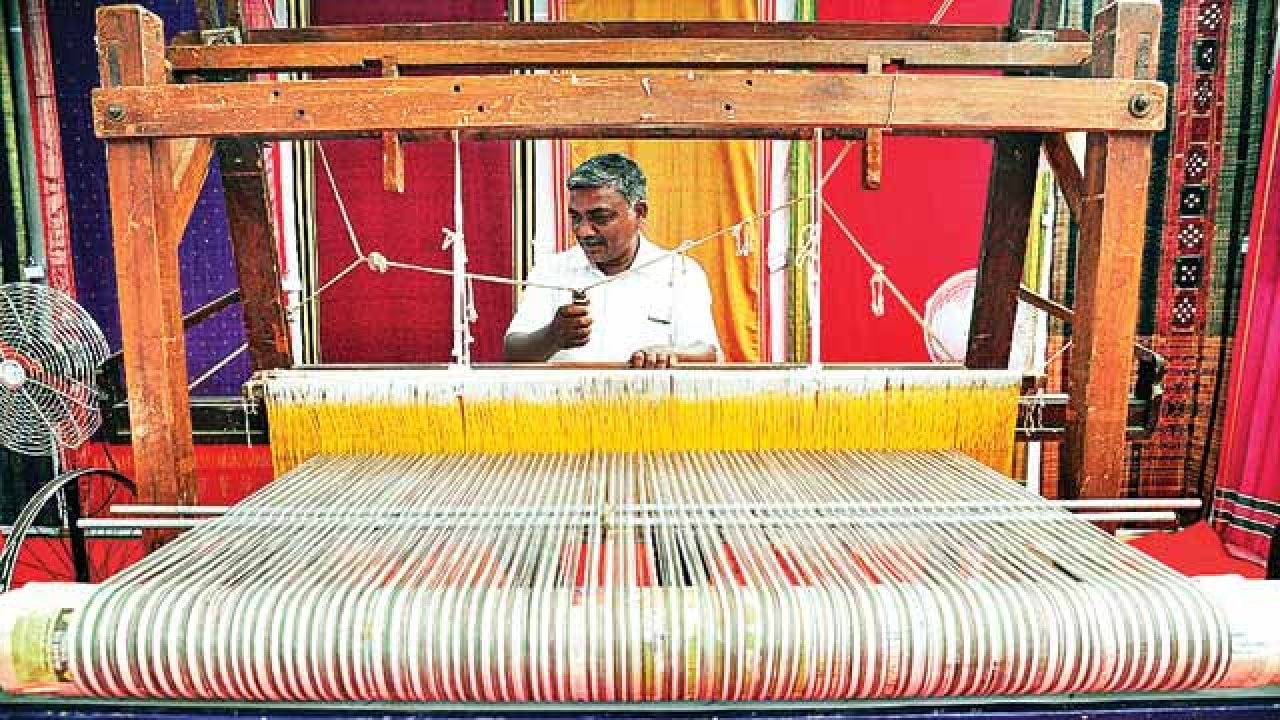
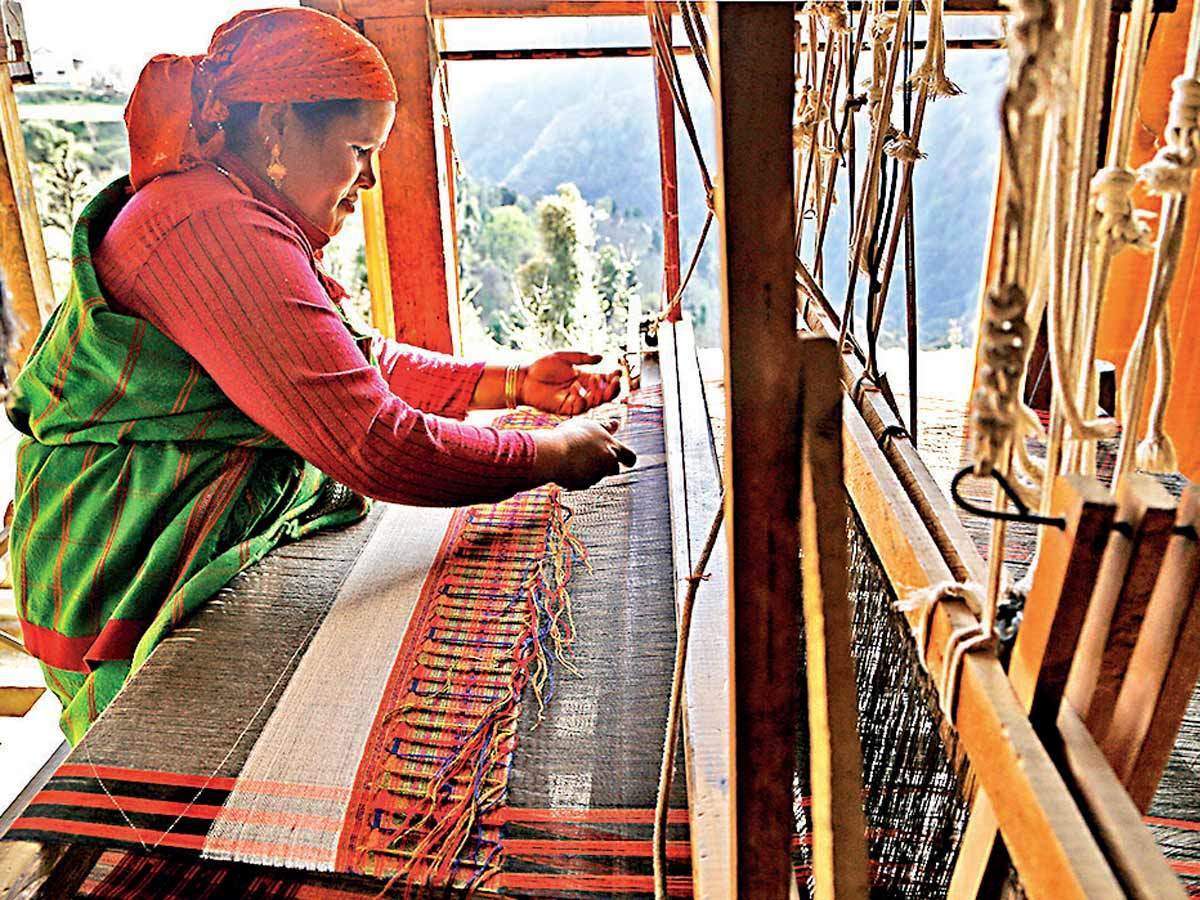
Indian handloom industry saw a reduction in 30% of its trade in the year 2020. This means that the already struggling industry will see further cut in costs. There is an urgent need to innovate new ways to market the goods it produces. The modern state of India still has one of the largest employed workforce in the textile sector, and a large part of it is the handloom industry – which is mostly worked in by the artisans who are either poor or are working hard to preserve their traditional way of manufacturing clothes and designs. For India presents a rainbow in manufacturing methods – right from the famous Benarasi Saree to the now almost extinct methods of making silk and woolen garments in the remote hills of Ladakh and Kashmir.
Cotton has been cultivated in the Indian subcontinent for over 3000 years. And that is probably also the age of a rich tradition of fabric making. With the advent of the bronze age through the influx of Greco-Roman, Mongol, Iranian, Vedic and Afghan cultures into the modern age of Mughals, Marathas, British and later the republic of India and her neighbours – the Indian textile industry has seen a plethora of changes and demand.
From dhotis and sarees to kurtas and Salwars – India has seen a plethora of changes in its clothing culture.
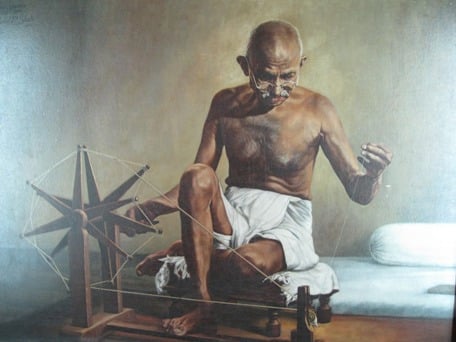
Handloom has a great symbolic importance to India. For it was the first Industry that stood as a symbol of self-reliance during the British Raj resistance period, a rhetoric the current Indian Prime Minister used in his Atmanirbhar Bharat campaign. After all, if it were not for Indian fabric – the famed Muslins and Pashminas and Indian spices – the British would have had to search for other reasons to come and settle in a land so very far away from their motherland.
Gandhi used handloom as a symbol of self reliance
7th August marks the National Handloom day – a day dedicated to an industry that is rapidly finding itself in a stage where only the ones who are super-nationalist and the rich opting for it. Handloom products are often costly than the cheap produce of the machines that invaded the textile industry 200 years ago, effectively ushering in the Industrial Revolution in the 17th century England.
Back to India, here is a list of some famous Indian handloom industries and the cities in which they are concentrated.
Varanasi – The famed Banaras Silk sari is the prized possession of many north Indian women as that is the standard sari of the bride in marriages in households that can afford them. And yet, the Benarasi artists are increasingly been replaced by machines that are producing cheaper saris though with reduced finesse. To add to it is the Zamdani works on cotton fabric, quite endemic to the city.
Jaipur – Jaipur and its handloom industry have the royal family of Jaipur as its patrons. There are establishments and shops that were opened by the last Rajmata of the city, Gayatri Deviji to promote local industries. To add to that is the already existing tradition of Bandhni, Zari and Patti works.
Surat – One of the oldest textile industries that were spotted and used by the local rulers and the British alike. The silk industry in Surat is one of the largest of its kind in the country.
Kota – The tuition capital of the country is also home to the Kota Doria, Gotta Patti and the Kota weave artisans.
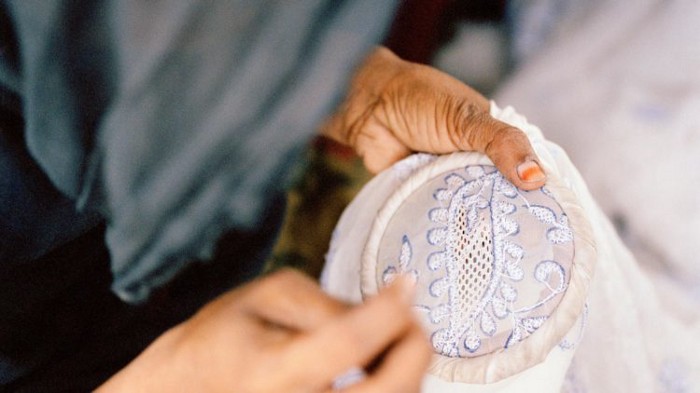
Lucknow – The city has an industry that keeps alive the times when nawabs ruled over the city of Lucknow, the then capital of the Awadh state. Most famous of its local weaves is the Chikankari work.
Bhadohi – The small town is only 40km from Varanasi and has been the centre of Indo-Persian carpet work since the era of the Mughal Emperor Akbar and has the largest carpet making industry in the country.
Well, there are many more of such cities and villages when one researches about them. Many of the ingenious art forms that are involved in making clothes are dying with less than 50 families left that carry forward the tradition. The sad part – machines cannot replicate that finesse. Such is the case of the wool and silk industry in the Gharwal and Kashmir valleys.
After the pandemic or even during it, let us and our government support this remnant of our history, our art, our tradition and a symbol of first instance of our modern industrial self reliance.
A certain king Sudarshan had three sons – neither of them willing to take responsibility or learn anything. The dejected king went to a scholar named Vishnu Sharma who used animals as characters to weave five treatises – sets of interwoven stories – “The Loss of Friends”, “The Winning of Friends”, “Of Crows and Owls”, “Loss of Gains” and “Imprudence” – that taught the princes about politics, life, justice etc. and came to be known as the Panchatantra.
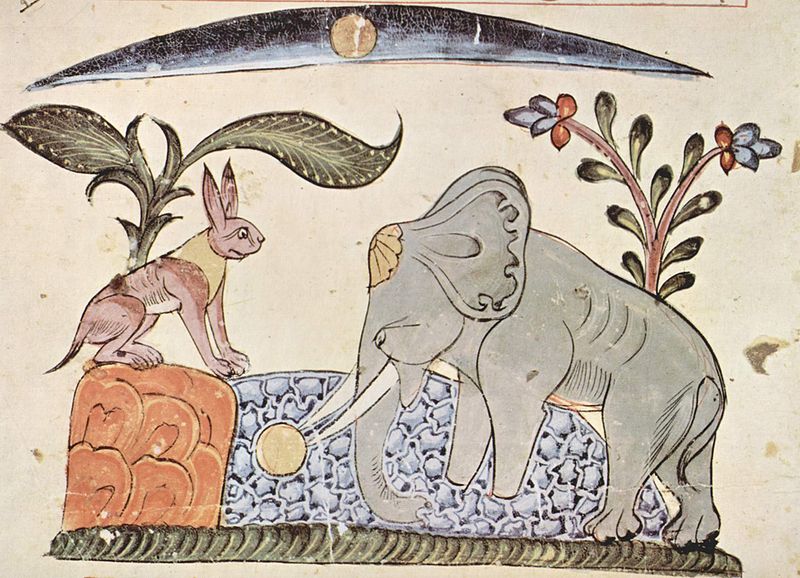
Panchatantra to this day remains the most published, circulated and translated non-religious text in human history. The Arabs carried the book to their lands to be translated as Kalīlah wa Dimnah in the 7th century. By that time, it already existed in Sanskrit, Persian, Greek and the local Indian languages like Pali and Prakrit. By the 17th century, it existed in French, Italian, German, Chez, English and Slavic languages as well.
Ibn al-Muqaffa, the scholar who translated the book in Arabic.
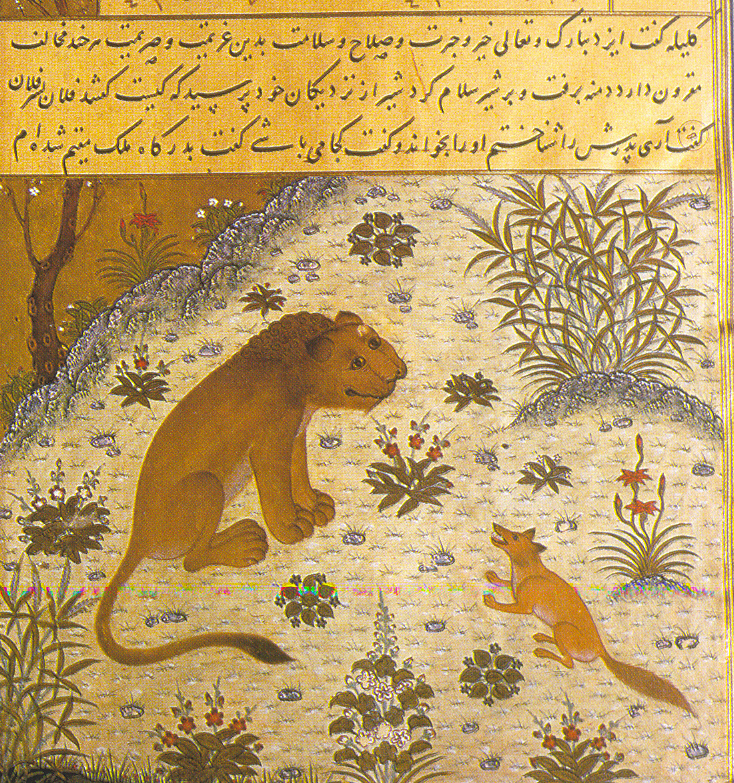
The Persian Panchatantra
The Aesop Fables of Greece carries a similar taste in story telling – simple and straightforward stories with talking animals often holding the traits identified with humans. But weirdly enough, that is a more famous set of stories in the modern day despite all the historic achievements the Panchatantra holds.
In the modern day, when society is increasingly pushing itself and its members – including kids and adults into its new evolving definitions of justice, crime and conduct – Panchatantra offers a freshness of simplicity despite being 2500 years in age and in lore.
Travelling is the part of human life. Travelling give knowledge, inner peace, change of mind. India has a glorious history of past. All around India we can see the footprint of history. They are the great tourist attraction of India. Delhi & Agra is the main tourist attraction in the case of historical tourist places as there are many monuments ,construction are situated here. Let’s talk about some of them ––
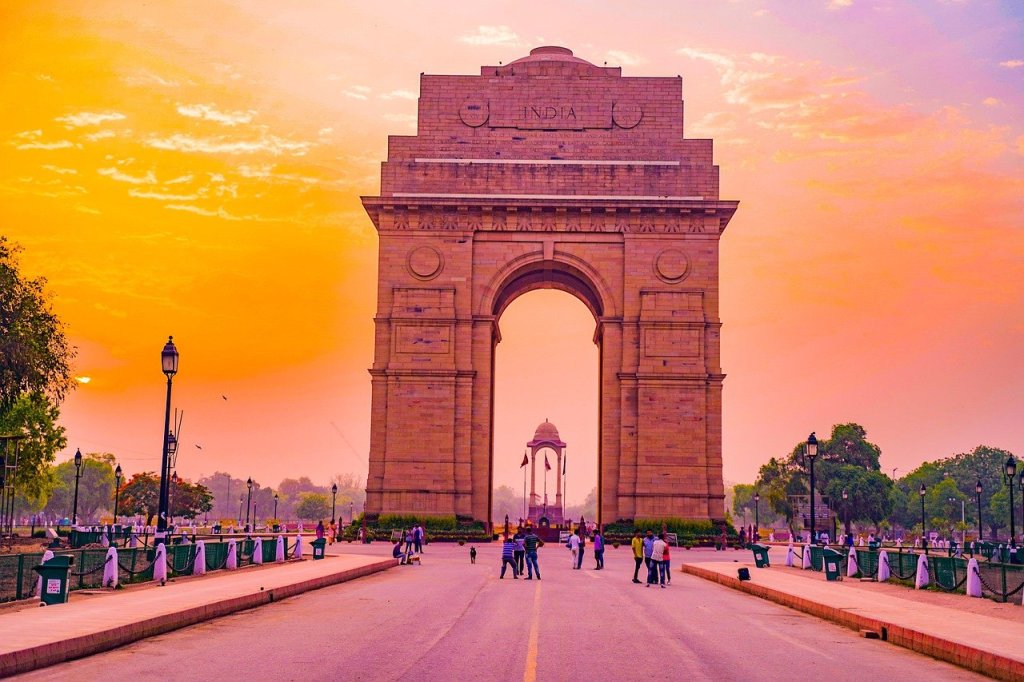
1.India Gate: It is situated in Rajpath in New Delhi , the capital of India . It is the symbol of the capital of India, Delhi. The designer of India Gate was Sir Edwin Lutyens. It was constructed on 12th February on 1931.It is a 42m tall war Memorial. India Gate of constructed in the memory of the 70000 British Indian Army soldiers who sacrificed their life during the first world war and in the third Anglo Afghan war. There is a ritual that in every Republic Day Prime Minister of India will visit the gate ‘Amar Jawan Jyoti’ canopy is also the part of India Gate.
India Gate
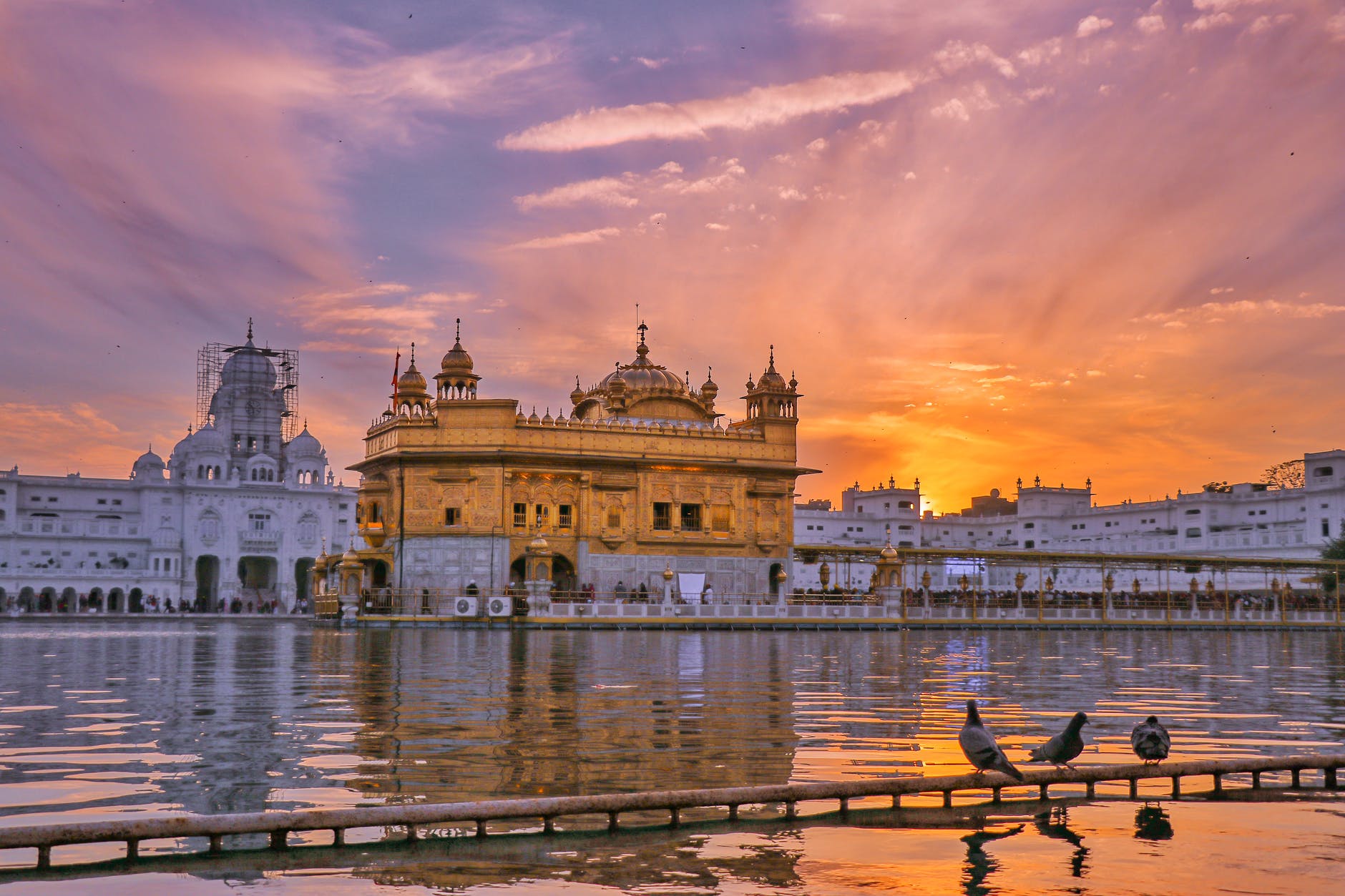
2.Golden temple: It is situated in Amritsar in Punjab. It is a pilgrimage tourist place. Its construction was completed in the year of 1604. It’s another name is Harmandir Sahib (which mean abode of God). It is very remarkable shrine with the concepts of purity, virtual reality and spirituality for not only Sikhs but also for other religions. Guru Arjan contributed a copy of Adi-Granth in 1604 in Golden temple. There is an artificial pool called Sarovar as a source of holy water. It is acknowledged as UNESCO World Heritage site.
Golden temple
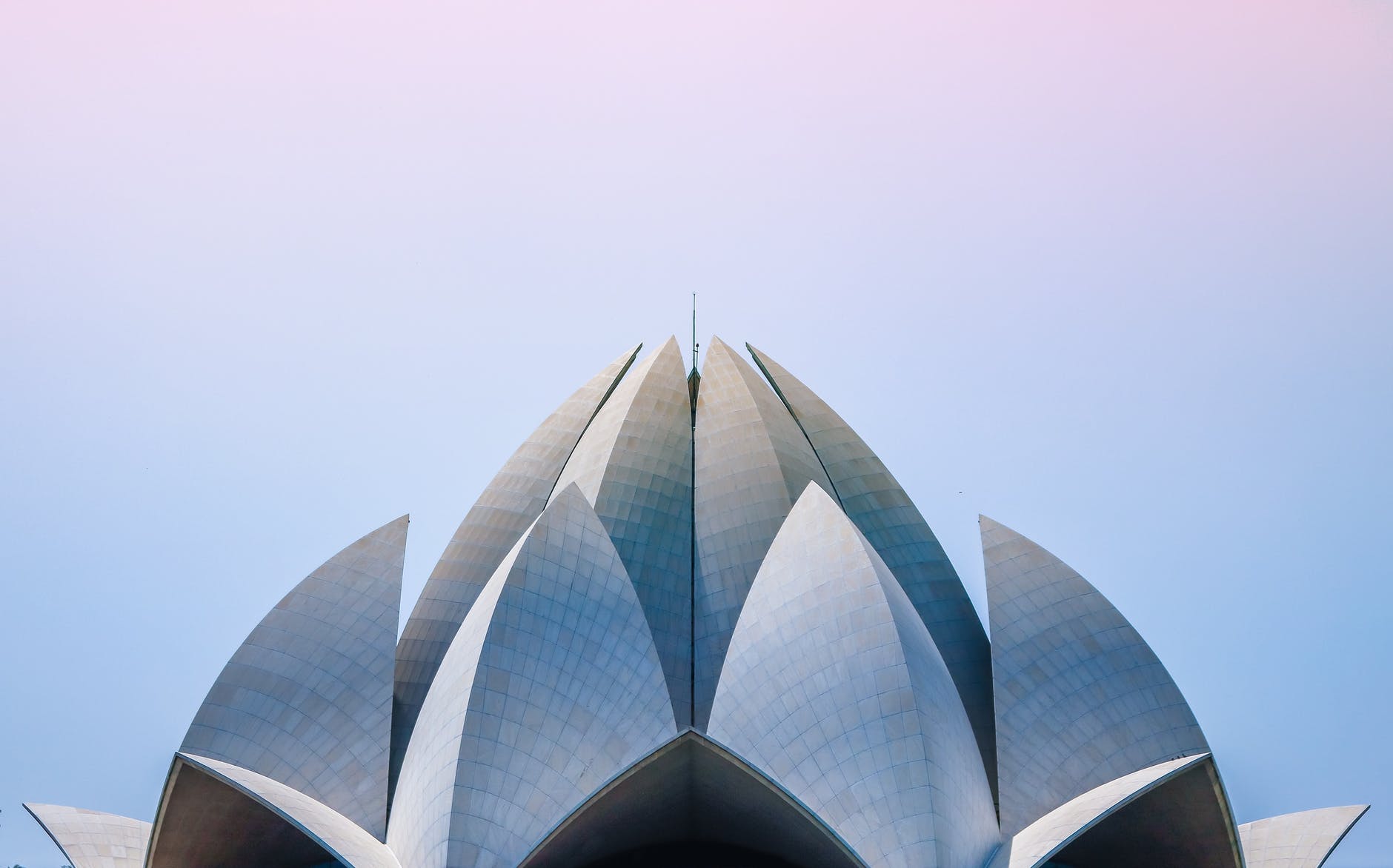
3.The Lotus Temple: It is situated in New Delhi in India. It is a worship house. This construction was completed in 13th November in the year of 1986. It was made by architect Fariborz Sahba. It is a huge construction with the model of lotus flower. It was devoted to worship of Bahai Faith. Its unique structure of blooming lotus flower attract lots of visitors from all around the world.
The Lotus Temple
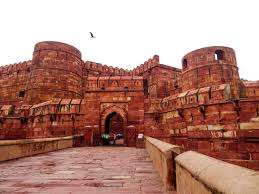
4.Agra Fort: it is situated in Agra of Uttar Pradesh. It is acknowledged as the UNESCO World Heritage site. It is also called Red Fort of Agra. The whole construction was made by red sandstone. This was constructed by Mughal emperor of India, Akbar in the year of 1565 to 1573. It was made when Akbar came Agra and made Agra the capital of his ruling region. It is also the sign of Indian rebellion in the year of 1857.
Agra Fort
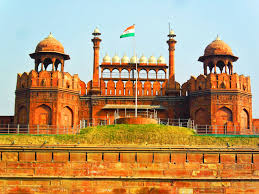
5.Red Fort: It is situated in Old Delhi in India. Its other name is Lal Qila. It is also acknowledged as UNESCO World Heritage site. It was made by Mughal emperor Shah Jahan in the year of 1573. The architect of these construction was Ustad Ahmad lahori. It was the main abode of Emperor Shah Jahan .It is significant for the shifting of the capital from Agra to Delhi. It is a ritual that in the Independence Day of India (15th August) Prime Minister will host the national flag in Red Fort.
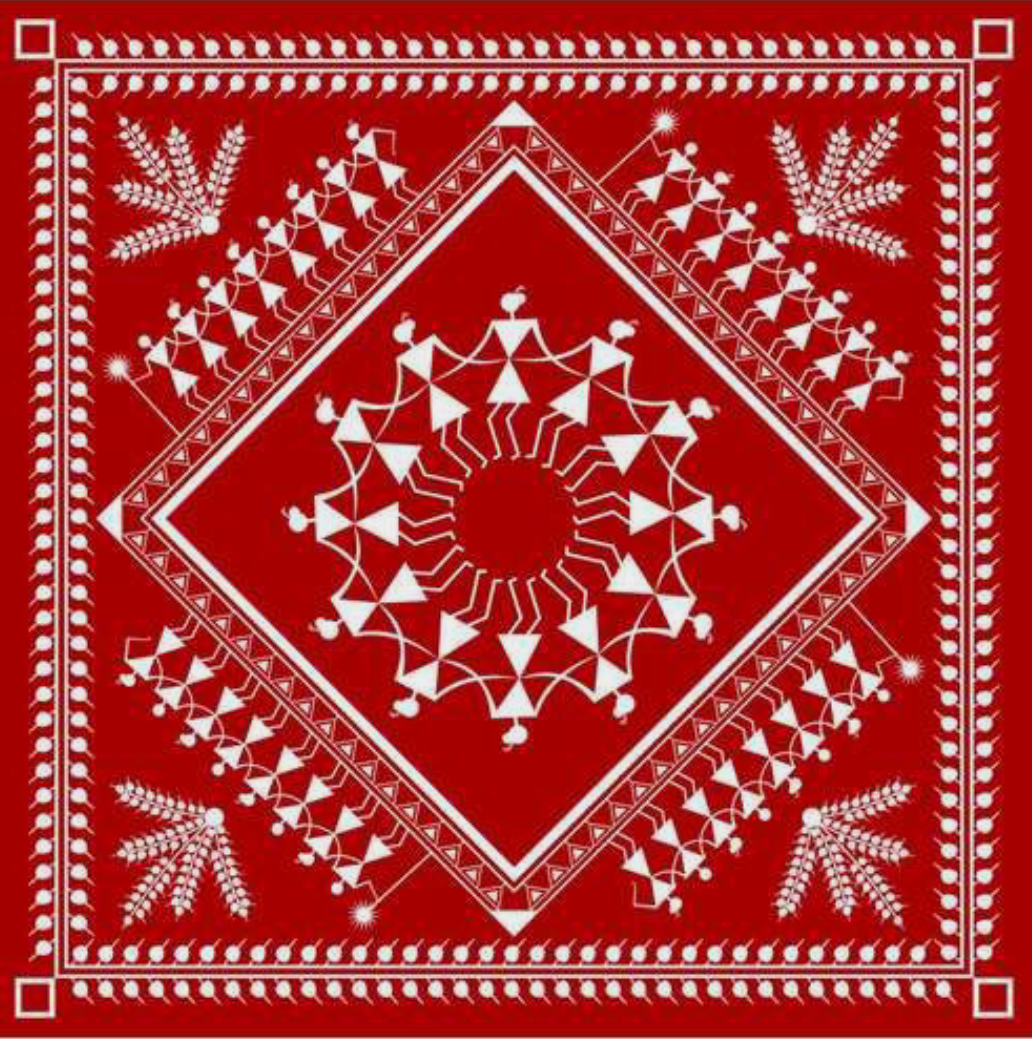
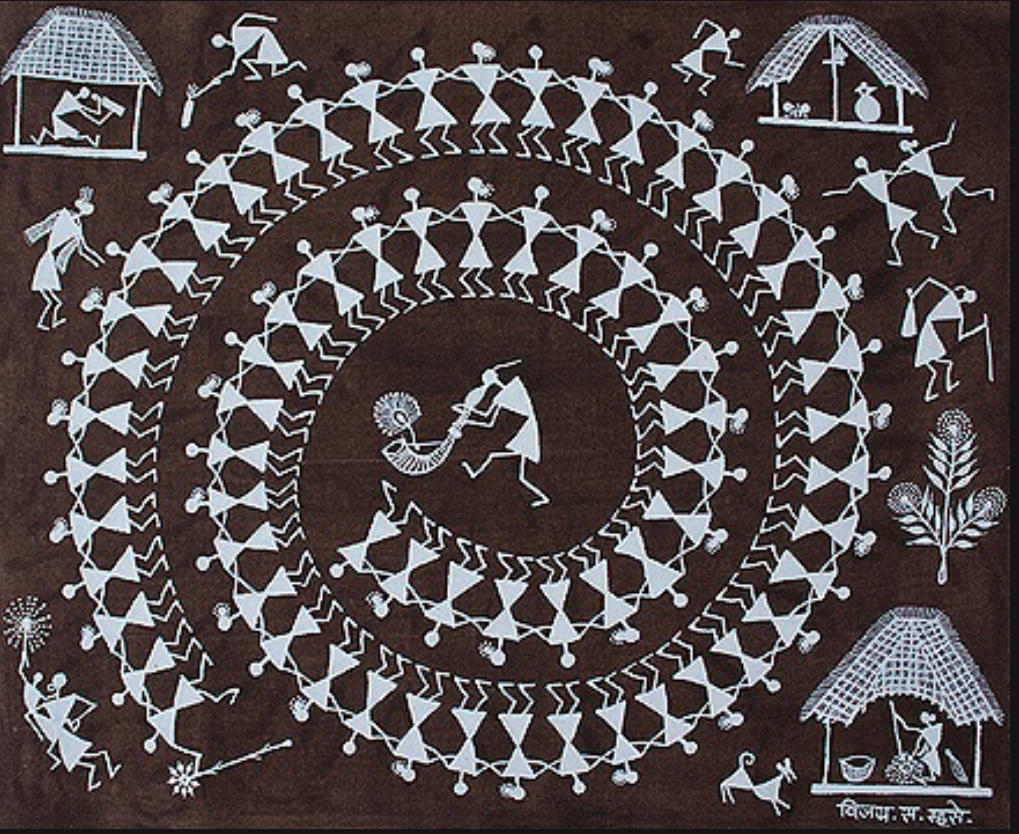
Warlis or Varlis are an indigenous tribes or adivasis living in the mountainous as well as coastal areas on the Maharastra-Gujarat border and surrounding areas. They have their own animistic beliefs, life, customs and traditions. As a result of acculturation, they have adopted many Hindu beliefs. Their extremely rudimentary Wall paintings use a very basic graphic vocabulary a circle, or triangle and a square. Their paintings were monosyllabic. The circle and the triangle come from the observation of nature, the circle representing the sun and the moon, the triangle derived from mountains and pointed trees. Only the square seems to be a different logic and seems to be a human invention, indicating a sacred enclosure or a piece of land.
The ritual paintings are usually done inside their huts. The walls are made of a mixture of branches, earth and cow dung making a red ochre background for wall paintings. Warlis use only white in their paintings. The white pigment used by them is a mixture of rice paste and water with gum as a binding. As the brush, they use a bamboo stick chewed at the end to make it as supple as a paintbrush. The wall paintings are done only on special occasions such as weddings or harvests. Warli art is the cultural intellectual property of the tribal community. Today, there is an urgent need for preserving this traditional knowledge in tribal communities across the globe. Now, Warli painting is registered with a geographical indication under the intellectual property rights act. With the use of technology and the concept of social entrepreneurship, tribals established the Warli Art Foundation, a non-profit company dedicated to Warli art and related activities.
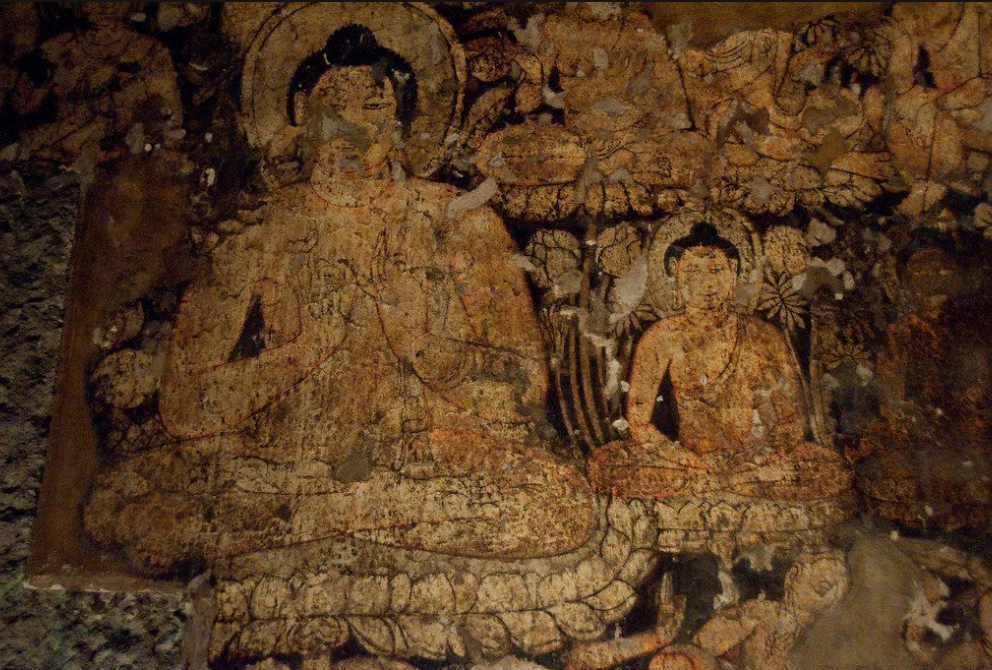
• Cave paintings in India
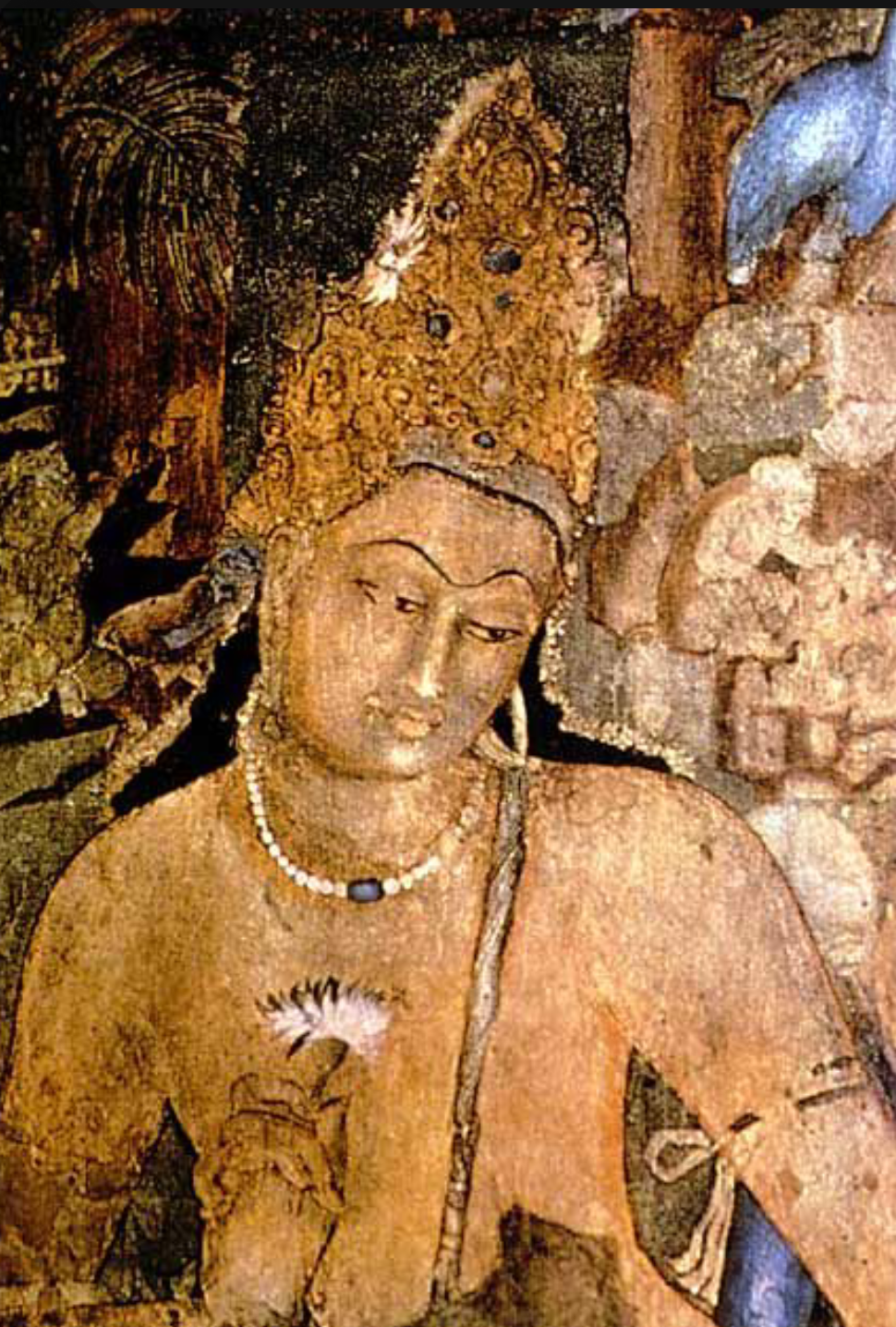
Almost all early painting in India survives in caves, as very few buildings from ancient India survive. The history of cave paintings in India or rock art range from drawings and paintings from prehistoric times – beginning around 30000 BCE in the caves of Central India, typified by those at the Bhimbetka rock shelters – to elaborate frescoes at sites such as the rock cut artificial caves at Ajanta and Ellora, prevalent as late as the 8th – 10th century CE. The frescoes of Ajanta are paintings in the Ajanta caves, which are situated near Aurangabad in Maharashtra. The caves are carved out of large rocks. Inside many of the caves are frescoes. Frescoes are paintings which are done on wet plaster in which colours become fixed on the walls and ceilings at Ajanta.
The paintings reflect different phases of Indian culture from Jain tirthankar Mahaveer’s birth to his Nirvana in the 8th century AD. The frescoes have degraded slightly due to the effect of flash photography. Photography here is not banned. The paintings depict themes of court life, feasting, processions, men and women at work, festivals and various natural scenes including animals and birds and flowers. The artists used shading to give a three-dimensional effect.
Similarly, beautiful frescoes have been found at the Bagh caves, 150 km away to the North of Ajanta. Though the themes in these paintings are both secular and religious, they do depict some aspects of Buddhist life and rituals. One of the most famous paintings show a procession of elephants. Another depicts a dancer and women musicians. These have been influenced by the Ajanta style of painting. These frescoes show a strong resemblance to the frescoes of Sigriya in Sri Lanka.
Raja Ram Mohan Roy and Swami Vivekananda are two of the most important thinkers of the Indian political thought. Their works have, for centuries, provided a foundation that helps to study the Indian society from two different perspectives. While Ram Mohan Roy was more of a modern thinker who believed that social reform is possible only by following the west, Swami Vivekananda on the other hand was a conservative who believed change must not be inflicted by others but rather should come from within.
Roy, who is often called ‘father of modern India’ and the inaugurator of enlightenment and liberal reforms, was critically against the ideal Hindu worship, evident in his major work ‘Tuhfat-ul Muwahhiddin’. He believed the traditional practices like purity and impurity, hardships, auspiciousness and in-auspiciousness, and beliefs to be corrupt and irrational as they deprived the people of comforts and lead them to self-destruction.
According to Roy, an ideal society would be the one where there is emancipation of people and this could be possible on when the monopoly of the orthodox Brahmins over the sacred texts were undermined. In other words, religious reformation was a pre-requisite for an ideal society as religious reforms also meant social reformation and political modernisation.
In terms of economic and political thought, Ram Mohan Roy’s attitude portrays ambivalence between liberal capitalists and feudal aristocratic values and also between colonial and post-colonial societies. Roy advocated for the liberating and growth promoting forces on the basis of which he supported the British rule in India. His economic ideas were mainly shaped due to measures like the permanent settlement of 1793 and the agency houses of private British trade with India. According to him the settlement was advantageous to the British rulers and the Indian landlords. Though he was also aware of the injustice the system bought to the ryots and peasants who were exploited by these zamindars, for whom he pleaded the British government to follow the standards of justice, he was nevertheless criticised for not giving due importance to these exploited classes.
In contrast Vivekananda valued the power and effectiveness of organization but was wary of its tyrannical rule. Moreover, he wanted change to come from below that is from the people themselves and not inflicted by enthusiasts who had little understandings of the problem concerned. He believed social reform could be extremely sensitive in nature and thus required careful handling. In terms of political thought, he believed social reforms would leave lasting effects only when founded on popular will and not when it was affected through state legislation. Therefore, he was also against the tyrannical rule of the British. Although he is believed to have supported injustices against women, he also provided progressive solutions for their upliftment. For this upliftment, he considered education to be an important tool which would ultimately create great personalities among women just as it had in the case of men.
The two thinkers have quite differing views. While one favored British rule and believed social reform will come about only with the help of modern education, the other opposed such a rule and believed it to be ineffective.








 Eduindex
You must be logged in to post a comment.