SALIENT FEATURES OF INDIAN SOCIETY

Indian society is known for its ability of tolerance and acceptance, and social cohesion making it unique in sustaining its culture. The importance of fraternity enshrined in the Preamble of the constitution makes it a duty of every citizen.
Indian society is extensively diverse in cultural and regional aspects and it is pertinent that it is posited in each individual the realization of ideas and objectives in the Preamble concerning every other individual.
India from ancient times has thrived to create a nationality that is neither governed by universalism nor by exclusivity to its interest groups. The multi-cultural conundrum is a salient feature of Indian society that has been a boon and a bane over the history of the country.

SALIENT FEATURES OF INDIA:
• Multi-Ethnic Society
• Multi-Lingual Society
• Multi-Class Society
• Patriarchal Society
• Unity In Diversity
• Tribes
• Family
• Kinship System
• Balance between spiritualism and materialism
• Balance between Individualism and collectivism
• Co-existence of traditionalism and modernity

The multi-ethnic Indian society
Multi-ethnicity is a major salient feature of Indian society. An ethnic group or ethnicity is a category of people who identify with each other, usually based on a common language or dialect, history, society, culture, or nation.
A society with the co-existence of a wide variety of racial groups is a Multi-ethnic society. India is home to almost multiple racial profiles like Nordic, Dinaric, Proto-Australoid, Mongolian, etc.
Multilingualism- salient feature of Indian society
India is home to many native languages, and it is also common that people to speak and understand more than one language or dialect, which can entail the use of different scripts as well.
India’s 2011 census documents that 121 languages are spoken as mother tongues, which is defined as the first lan¬guage a person learns and uses.
Of these languages, the Constitution of India recognizes twenty-two of them as official or “scheduled” languages. Articles 344(1) and 351 of the Constitution of India, titled the Eighth Schedule, recognize the following languages as official languages of the states of India:
• Assamese, Bengali, Bodo, Dogri, Gujarati, Hindi, Kannada, Kashmiri, Konkani, Maithili, Malayalam, Manipuri, Marathi, Nepali, Oriya, Punjabi, Sanskrit, Santhali, Sindhi, Tamil, Telugu, and Urdu.
Six languages also hold the title of classical languages (Kannada, Malayalam, Odia, Sanskrit, Tamil, and Telugu), which are determined to have a history of recorded use for more than 1,500 years and a rich body of literature.
Multi-religious society
India is a cradle of world religions whose ancestors have preached and practiced almost all major religions of the world giving rise to worldly beliefs, practices, rites, rituals, ceremonies, and institutions.
The co-existence of all the religions and variety of faiths has been a shining example of religious pluralism and tolerance.
• The principle of secularism despite several conflicts and riots has been upheld by our citizens time and again.
• Indian Constitution has rightly reflected the idea of multi religions. It states that “every citizen has a right to freely practice, preach, profess and propagate any religion or faith”.
• A secular state has been defined as a “state in which all religions and citizens irrespective of their faith would be treated impartially”.
• Apart from the major religions, several tribal religions are coexisting in Indian society.
UNITY IN DIVERSITY:
“Unity in Diversity” is a phrase implying unity among people with diverse cultural, religious, and other demographic differences. It denotes the sense of oneness and we-ness .In India, people of different religions have continued to respect the ideals and values of people of other religions, and hence, India has always stood up as an integrated nation ready to put its arms around everybody in this world.
Salient features of Indian Society, Diversity of India

Indian society is very unique and diverse. We have a lot of cultures, communities, religions, languages, etc

India is a plural society, characterized by its unity and diversity. A grand combination different cultures, religions and languages of the people belonging to different castes and communities has upheld its unity. This combination of different culture and ethnicities is what that has made India unique from other countries. Different events such as the foreign invasions, immigration from other parts of the world, and the existence of diverse languages, cultures and religions have made India’s culture open- minded , on the one hand, and a unique continuing and living culture, with its specificity and historicity, on the other. Not only we have diversity in racial compositions, religious and linguistic distinction but also in patterns of living, life styles, land tenure systems, occupational pursuits, inheritance and succession law, and practices and rites related to birth, marriage death etc. 

Post-Independent India is a nation united against several odds and obstacles. India is a secular state. It has one Constitution providing guarantees for people belonging to diverse regions, religions, cultures and languages. It covers people belonging to all socioeconomic strata. The Article 15 of the Indian Constitution talks about Prohibition of discrimination on grounds of religion, race, caste, sex or place of birth. Our Indian Constitution itself safeguards and protects the rights of every individual irrespective of their religion, race, caste sex or place of birth. It gives everyone opportunity and treats everyone equally.

DIFFERENT FEATURES OF INDIAN SOCIETY

MULTI RELIGIOUS SOCIETY

India consists of people from many different religions. Hinduism, Islam, Christianity, Buddhism, Jainism, Sikhism are some major religion in India, However there are other different religions as well. Hinduism is the most dominant religion in India.

As per the census 2021, there are approx. 110 crore people follow Hinduism in India. The Hindus are most numerous in 29 States/UTs except in Manipur, Arunachal Pradesh, Mizoram, Lakshadweep, Nagaland, Meghalaya, Jammu & Kashmir, and Punjab.

Approx.  20 crores of people are Muslims In India. The Muslims professing Islam are in majority in Lakshadweep and Jammu & Kashmir.

In 2021 approx. 3.20 Crores people are Christians in India. Christianity has emerged as the major religion in three North-eastern states, namely, Nagaland, Mizoram, and Meghalaya. 

In 2021 approx. 2.4 Crores people follow Sikhism in India.

In 2021 approx. 10 million or 1 Crore people are followers of Buddhism in India and In 2022 approx. 5 million or 50 Lakh people follow Jainism in India.

MULTI RACIAL SOCIETY

Race is a group of people with a set of distinctive physical features such as skin colour, type of nose, form of hair, etc. India is a country of people with different racial groups. The latest racial classification of the Indian people based on researches in this field has been given by B.S. Guha (1952). He has identified six racial types (1) the Negrito, (2) the Proto Australoid, (3) the Mongoloid, (4) the Mediterranean, (5) the Western Brachycephals, and (6) the Nordic.

MULTI LINGUAL SOCIETY

According to the latest analysis of a census more than 19,500 languages or dialects are spoken as mother tongue in India.

There are 121 languages which are spoken by 10,000 or more people in India, which has a population of 121 crore. Only 22 languages are listed in Schedule VIII of the Indian Constitution. The 96.71 per cent population in the country have one of the 22 scheduled languages as their mother tongue and the remaining 3.29 per cent is accounted for other languages. Not all these languages are, however, equally widespread. Many of them are tribal speeches and these are spoken by less than one percent of the total population so here we can clearly see see that in India there is a great deal of linguistic diversity as there are so many people of different languages and dialects.

MULTI CASTE SYSTEM

The term caste is generally used in two senses: sometimes in the sense of Varna and sometimes in the sense of Jati. In India, caste system is very much prevalent. The Varna system is basically a four fold system in the Hindu society based on their functional criteria, the four divisions are Brahmins, which is on the top of this system followed by kshatriya, Vaishyas and then shudra with their functions as learning or teaching, defense, trade and manual labour. We find castes among the Muslim, Christian, Sikh as well as other communities. One must have heard of the hierarchy of Shaikh, Saiyed, Mughal, Pathan among the Muslim. Similarly, caste consciousness among the Christian in India is not unknown. Since a vast majority of Christians in India are converted from Hindu fold, the converts have carried the caste system into Christianity. Among the Sikh again we have so many castes including Jat Sikh and Majahabi Sikh (lower castes).

In addition to the above described major forms of diversity, we have diversity of many other sorts like settlement patterns – tribal, rural, urban; marriage and kinship patterns along religious and regional lines; cultural patterns reflecting regional variations, and so on.

Some other of the salient features applicable to Indian Society are:

  1. Unity In Diversity
  2. Patriarchal Society
  3. Tribes
  4. Family
  5. Kinship System
  6. Balance between spiritualism and materialism
  7. Co-existence of traditionalism and modernity

India is a very diverse country and because of its unique feature it always attracts people from all parts of the world.

.

ROLE OF FAMILY,SOCIETY AND EDUCATIONAL INSTITUTIONS IN INCULCATIONG VALUES

Family, society, and educational institutions play a very major role in building one’s character or personality. These institutions impart value to an individual and help them become a better person in society. One learns what one listens. Young children very much learn what they see around them. If they see good they learn good and if they see bad they will learn that as well. The role of family is important because an individual lives there and learns from there, society influences an individual’s behaviour and educational institutions are where an individual learns. Now we’ll see how these factors help in inculcating values in an individual.

ROLE OF FAMILY

Family is a place where one grows, and learns the most. Just like the saying charity begins at home similarly an individual’s education starts from home. It is like a foundation where values are built. Values like respecting elders, honesty, justice, respect for both genders all taught at home. If within a family there are differences or if the home environment is not healthy then this also affects the individual. The values practised by the other members of the family also shapes the child’s attitude towards other people or towards the society. Values like love, care, protection all these start from family. If a child experiences love, care, comfort then he/she will have a positive attitude toward others and will behave the same with others and will inspire others as well. Family’s environment will help a child to socialise and progress in the society.

The system of joint family that is the presence of elder family members also has a great influence on an individual. It helps in developing social and moral values. They learn human values and respecting elders and this will help in eradicating negative mental tendencies when they are among elders. In a family an individual not only learns about values but also about their customs and culture and enhancing one’s culture proudly is also a very good value. The attitude of one family member towards another also affects individual behaviour. For example if child see his father not respecting his mother then he may feel that this is how it is supposed to be and he may also do the same thing with his wife but if he sees his father respecting her mother, giving her importance which she deserves the he will also treat his wife in respective manner so it is very important for a family to not just inculcate good values to the younger generation but they themselves should have good value so the future generation could learn from them.

The values that are taught in the family helps a child to learn, grow and progress in the society. Family values enhance a child’s personality and character and help them in becoming a better human being.

ROLE OF SOCIETY

When we grow older our social world also expands, now not only family but we become a part of society. Society also plays an important role in inculcating values. When a child grows it goes outside to make friends and share each other’s thoughts. Society also shapes an individual’s character. Societies follow certain traditions and customs and being a part of the society, we are also a part of these customs and traditions. These customs and traditions are being followed from generations and these are based on values such as loyalty, courage, love and brotherhood. We celebrate different festivals together which portray love and happiness and we not only celebrate festivals of one tradition or religion, but being part of such a diverse country we get to enjoy festivals and customs of different religions which shows mutual respect towards each other and toward different individuals in a society. Religion is a very important social institution in our Indian society and these religions are embedded with cultural values. Society creates social order, the diversity present in our society teaches mutual love, respect and inculcates a variety of values and holistic development of individuals. The social influence and the urge to become an inspiring personality in a society helps in developing good values in an individual. The great inspiring personalities, influencer leaders and celebrities also have a great influence in society. Young individuals learn and get inspired by them so it is also an important job for these powerful personalities to set a good example for the younger generation.

ROLE OF EDUCATIONAL INSTITUTIONS

Apart from home, a child spends most of his/her time at school. The first formal place of socialisation and the first and foremost important value that it teaches is discipline. The educational institutions have a proper disciplined environment. In an educational institution, the day starts with the prayer which teaches gratitude. Different school activities inculcate different values such as teamwork, sportsmanship spirit, competitiveness, etc. Different programs of Community work help in inculcating values like empathy, care, unity, etc. Peer groups also play an important role, students often get feedback about their behaviour from their fellow classmates or friends. Teachers also act as role models for the students, when a teacher asks students to behave in a certain manner then they tend to take it more seriously as compared to any family member or friend. The reward and punishment system also helps as children behave in a good manner for rewards and to protect their self esteem from getting punished. Every school or educational institution has their philosophy or motto and these help in inculcation of good values.

“Intelligence plus character, that is the true goal of education”. – Martin Luther King

Value is something that is not restricted to a certain age or gender or place. It is something which is lifelong, it can be learned at any age and be practiced throughout one’s life. Good values build one character and make an individual a better human being . A man with good values is respected everywhere in the society so it is very important to inculcate good values in life. There are different characters in an individual life that add to his/her character and personality. The influence of family, society and educational institutions have the strongest influence upon an individual and thus it affects in developing an individual personality whether positively or negatively.  

Sources: diyethics.forumias.com

Education – passionate studies |5 simple ways

Education is an essential thing in our daily life. According to the growth of society, education must be provided to every citizen. The new world is mysterious, all things that exist had to be known to every people education ensures that. So whatever we want to be we should know about that.

Findings of great peoples, Technological know-how, awareness of the environment, History, etc are the main components of education. An educated person must show good character they were intelligent and efficient. They can build up our economy in a good manner

Nowadays students are struggling with exam results. They were worried about the marks they got. Parents also wanted marks from children. However, studying with understanding makes a perfect education. There are a few tips for good studies.

1. Awareness Of The Chapters

The student must have a correct idea of the chapters including the basic needs. It will increase our energy to study new things.

2. Making The Day For Studies

Mornings are a good time for making good decisions they may whisper through our ears for an entire day. Put a goal for the day in the mornings and we will begin to work toward that.

3. Visualization

When we were teaching or studying, try to imagine the concepts as well it will lead to an incredible memory of the topics.

4. Setting Our Mind

Setting our minds before studies is the best way to attain knowledge. When we think that we are free from anything, nothing can disturb us from our goals. Set our minds to study and make differences

5. Concluding Sentences

When we are willing to study a paragraph, make the important keywords from that. It will help you to study shortly and easily .

The Bhoodan movement-  A Bloodless Revolution

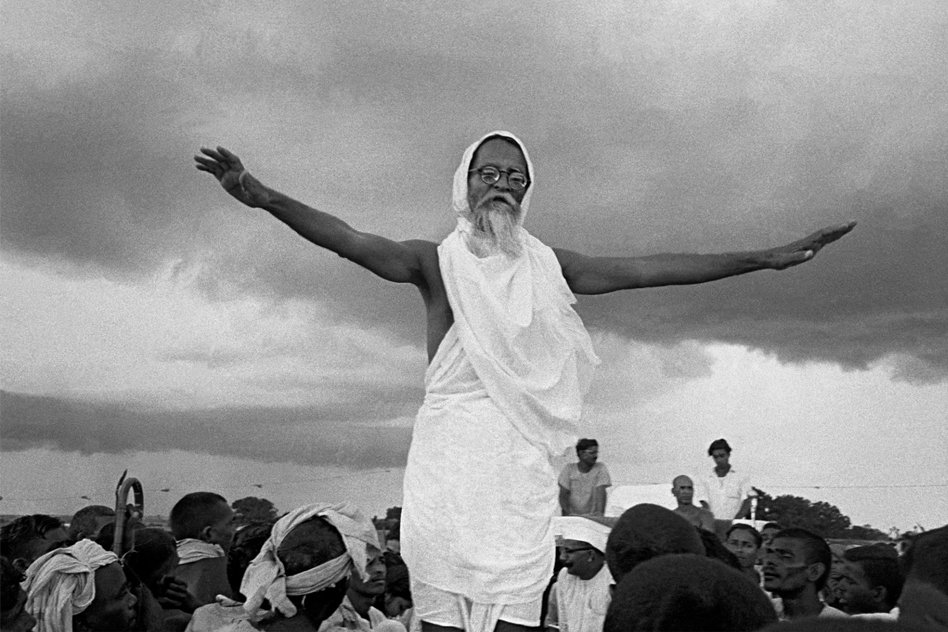
Vinoba Bhave was born in Gagode village, Raigad, Maharashtra. A keen follower of Mahatma Gandhi, Vinoba Bhave took part in the freedom struggle and started the Bhoodan movement in 1951. He was an avid social reformer throughout his life. Vinoba Bhave, a humble spiritual leader, the first non-violent resister to the Britishers and reformer of Independent India started what we know as the Bhoodan movement – a landmark in Indian history where its mission was to persuade wealthy landowners to willingly give a small share of their land to the landless people .About four years later after india gained independence, Vinoba Bhave carried out a unique movement of his own. He travelled across all of India to convince the wealthy land-owners or land-lords to share a small area of their land with their poor and downtrodden neighbours with the condition that they can’t sell the land. Over a span of 20 years, a total of 4 million acres of land was shared across the country through this movement. Bhoodan literally means a donation of land. As implied by the name, in this movement, landlords voluntarily give up land to be distributed to landless labourers, who would then cultivate the land..

How it started

Bhoodan or Land Gift movement began with Acharya Vinoba Bhave in 1951 in Telangana. An inspirational icon, Vinoba Bhave’s work & dedication impacted people all across the country. He vowed to life-long celibacy as well as selfless service for others when he was as young as 10 years old. As it is said about him, “Perhaps none of Gandhi’s followers have created so many worshippers of Truth & Non-violence, so many genuine workers as has Vinoba Bhave.” It all began on April 18th 1951, which we now know as the historic day this movement began. Vinoba Bhave stepped into the Nalgonda district, which was the epicenter of communist activity in the region. He stayed at Pochampalli, a village with about 700 families who have him a hearty welcome. He visited the ‘untouchables’ or Harijan colony, where they asked for 80 acres of land for 40 families. As documented in history, while the discussion was going on, Ram Chandra Reddy who was the local landlord, got up and exclaimed, “I will give you 100 acres for these people.” This made Vinoba come up with an idea, that this may have the solution for possibly resolving land issues across the country. Soon, this movement led to become the Gramdan or village-gift movement and went through many levels of allied programmes and initiatives. In October 1951 rose a demand for fifty million acres of land for the landless in the whole of India by 1957, thus turning a small goal into a mass-scale movement. The success lasted till 1957, post which it slowly faded.

Outcomes

It gained a lot of success, especially in Northern India in UP and Bihar. Over 4.5million acres of land in India was given as a donation by 1957. The core belief of land being a gift of earth which belonged to everyone made its way into minds of everyone. With time, many problems seeped into the movement later such as slow progress, bribery, donating bogus land, greed to get more land or incorrect implementation in some regions. The movement soon failed due to increasing misuse of a voluntary movement for self-serving purposes by a few.

To conclude taking an overall view it cannot be gainsaid that the Bhoodan – Gramdan Movement, despite all its real & apparent limitations, it would ever be deemed as a glorious attempt for a peaceful & non-violent solution of the basic land problem of Indian society & through it for a non-violent reconstruction of the Sarvodaya socio-economic-politico order of universal relevance & significance

https://thelogicalindian.com/story-feed/get-inspired/vinoba-bhaves-bhoodan-movement/

Impact of Feminism and Women Empowerment on Indian Society

Feminism came up into being and became operative after India gained freedom in 1947. The Constitution of India then conceded right to equality, religious freedom and freedom from gender or religious discrimination. To provide health, welfare, education and employment to women, a seven five year plans were brought up by the government. The sixth five year plan even declared women “partners in development”.

Although the Indian government has tried their best to terminate inequality in workforce yet women fail to receive equal treatment. However, AIIMS nurses professed gender inequity in Nursing Officers enrollment, providing 80 percent posts to female candidates and remaining to male. Indian women winning international beauty pageants have also demonstrated in the form of pride of nation, such growth have provided considerable sexually self governed and independent women and more authority over their own bodies but some differ in opinion considering that this only portrays female bodies as mere commodities having purpose only to serve man’s desires. Headway is being made in enrollment of female students and teachers in schools, by now the female literacy rate has increased handsomely and great efforts are still being made so that female may receive education in par with male students.

In order to protect the rights of women and in wake to feminism and women empowerment different bills have been passed and various policies have been made by the government, some of them are as follows:

  • In 1986, the National Policy on Education (NPE) was made in India and a program known as Mahila Samakhya was set afloat, the aim is to promote a sense of knowledge to take control of their own lives, learn to demand information and realize their true potential. In 2019, DRDO has launched scholarship programmes absolutely for girls.In Haryana now girls are provided passport along with graduation degree.
  • The Sexual Harassment of Women at Workplace (Prevention, Prohibition and Redressal) Act 2013, is an act of legislature to protect women from any sort of sexual harassment at workplace.
  • The Protection of Women from Domestic Violence Act 2005 is a parliamentary act of India which seeks to protect women from domestic violence.
  • In 1992, the Parliament passed the 73rd Constitutional Amendment Act in which it was ensured that in all offices of election, one-third of the total seats would be reserved for the women. This was applicable in both urban as well as rural areas.
  • During 1991-2000, a national Plan of Action for the Girl Child was brought up to make sure the development, survival and protection of girl child. The terminal aim of the plan was to enhance the future for the girl child.
  • In 2001, a National Policy for the Empowerment of Women was made by the Department of Women & Child Development in the Ministry of Human Resource Development. The policy aimed at the empowerment, advancement and growth of women in various political, social, cultural and political field, by generating awareness among all.
  • In 1992, a National Commission was brought up by the government in order to monitor and examine various matters with regard to the legal and constitutional defences provided for women and also modify the existing codification whenever needed.

Today women are treated equal to men and offered equal opportunities. They are also excelling in their work and in various fields they are even ahead of men, still in many parts of India regardless whether urban or rural region, women are still battling against numerous brutal crimes.

Dhakis of West Bengal: Where They Come From and Where They Go

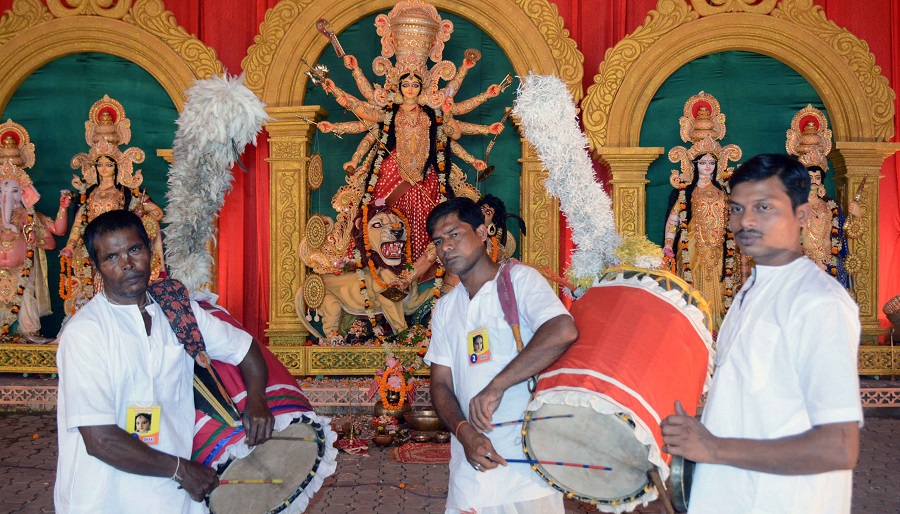
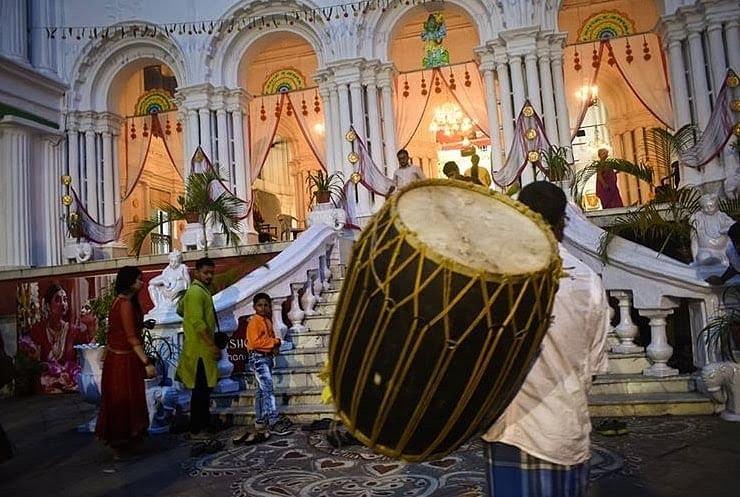
Dhakis playing dhaks in a Durga Puja pandal

Introduction

India is a country of rich cultural diversity and the essence of festivity for each Indian state is unique on its own. The main festival of the Indian state of West Bengal is Durga Puja, which is held during the auspicious Aashwin Durga Navtras in the months of September-October. During the festival the Mother Goddess is welcomed to her home on Earth with 9 long days of celebrations and joy. As a ritual of the festivity both her arrival and departure are rung by hundreds of thousands of “Dhaks” played by the professional drummers, locally called as “Dhakis”.

Dhak at a Puja Bari

What “Dhaks” Are: How They Are Made

The word “Dhak” comes from the Austric word “Dhaka” included in the Sanskrit language. The word later became a part of the Bengali script. The dhak is a big membranophone instrument that originally belongs to South Asia. The dhak has become an integral aspect of the widely loved Bengali festival of Durga Puja, other Bengali rituals and festivities. It would have no festive aura if not for the maddening rhythm of the dhak. The dhak is beaten with two sticks loudly to infuse the frenzied beats into the listeners. These beats are enough to raise the spirits and conjure up the feel of the Durga Puja. Without the instrument, the heavily celebrated festival would have felt sombre.

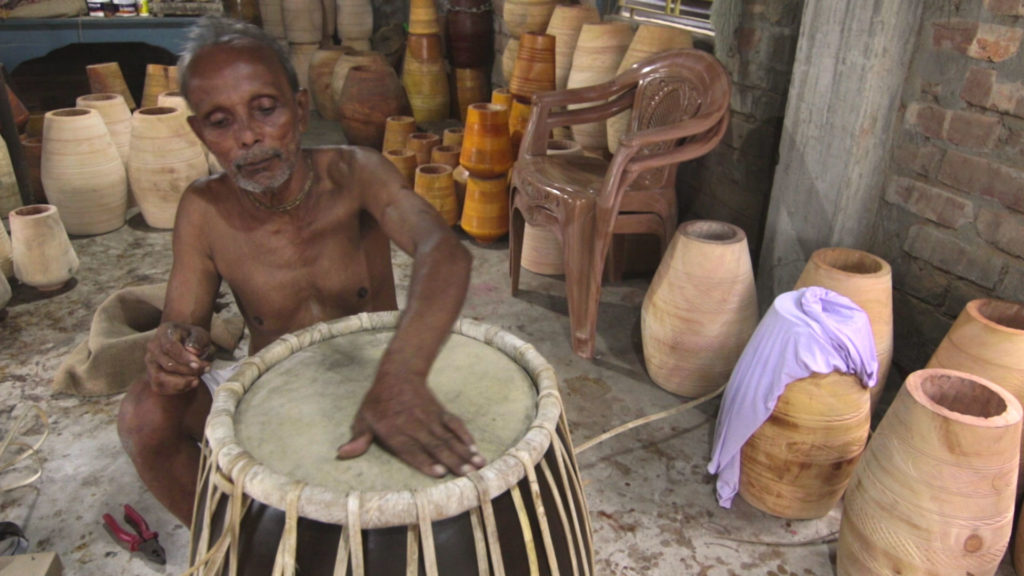
The sound of the dhak depends on a lot of factors like the shape. The shape varies from almost cylindrical to barrel-like. On one hand, the outer portion of the wood is shaved off and carved to create the barrel shaped instrument. On the other hand, the inner side of it is made to be absolutely hollow.The two ends of the dhak are wrapped up with goat skin on the top and calf skin at the bottom. It is said that using these two types of hides bring out the perfect sound texture of the dhak. The manner of stretching the skin over the mouth of the dhak and lacing it is also an important factor in the kind of sound that will be produced. The more the strings on the side of the dhak are pulled the higher the pitch of the dhak gets. The two sticks that are used to beat the dhak are carefully chiseled and formed out of thin cane or bamboo. Because of the drying session of the wooden structure and the intricate handwork and decoration, it takes around one month to reach the perfection in making the instrument.

Making of Dhaks

Who “Dhakis” Are: The Heritage follows

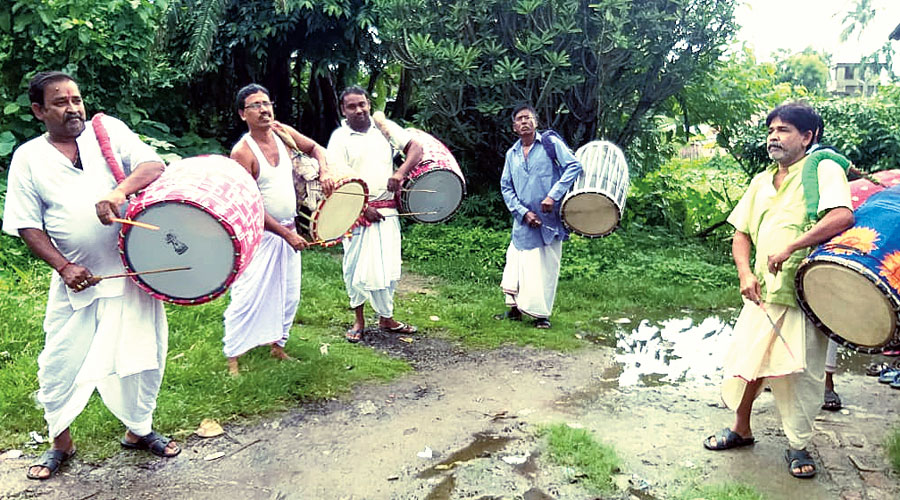
‘‘Dhakis’’ are integral to almost all festivities in Bengal but the art of playing the huge barrel-shaped membranophone instrument is considered as a staple of Bengal’s most celebrated Durga Puja. Most of the ‘dhakis’ or men who play the ‘dhak’ hail from humble rural backgrounds of Murshidabad, Hooghly, Malda, Bankura and Purulia districts of the state. Just like playing any other instrument that is highly associated with a centuries-old cultural heritage, the art of playing dhak, or the business of dhakis are often found to be ancestral and moving in the families since ages. The art of playing such instrument is considered as a living witness, bearing the tradition of the state of West Bengal. The art of playing dhak is passed on from one generation to the next though this art is gradually dying out and losing its focus. One of the reasons for this is the uncertain informal nature of this profession. They still teach the children to play the dhak is to preserve the culture and heritage.

Each part of Durga Puja rituals has a different and unique tune and beat of the dhak right from the arrival of the idols till their immersion. It is played when the idol enters the pandal and even when it exits the pandal on the last day of puja, Dashami. In fact, it is the deafening sound of the dhak that fills the air of immense celebration during the ‘Sandhya Arati’ on Ashtami. This ceremony is absolutely incomplete without the beats of the dhak. Along with that, the ‘Dhunuchi Nach’ is also an essential part where the dhak provides the musical rhythm to which people dance with the ‘dhunuchi’. Another popular tradition is the ‘Dhaker Lorai’ or ‘Fight between Dhaks’ where the grandeur is revealed the best when dhakis play in groups. It is usually a fascinating experience for the audience to see the feathered drums being played by the dhakis dancing to the music produced. Finally, on Dashami, the majestic beats of the dhak helps lift the air of sadness and gloom during the vermilion ritual and ultimately, the immersion.

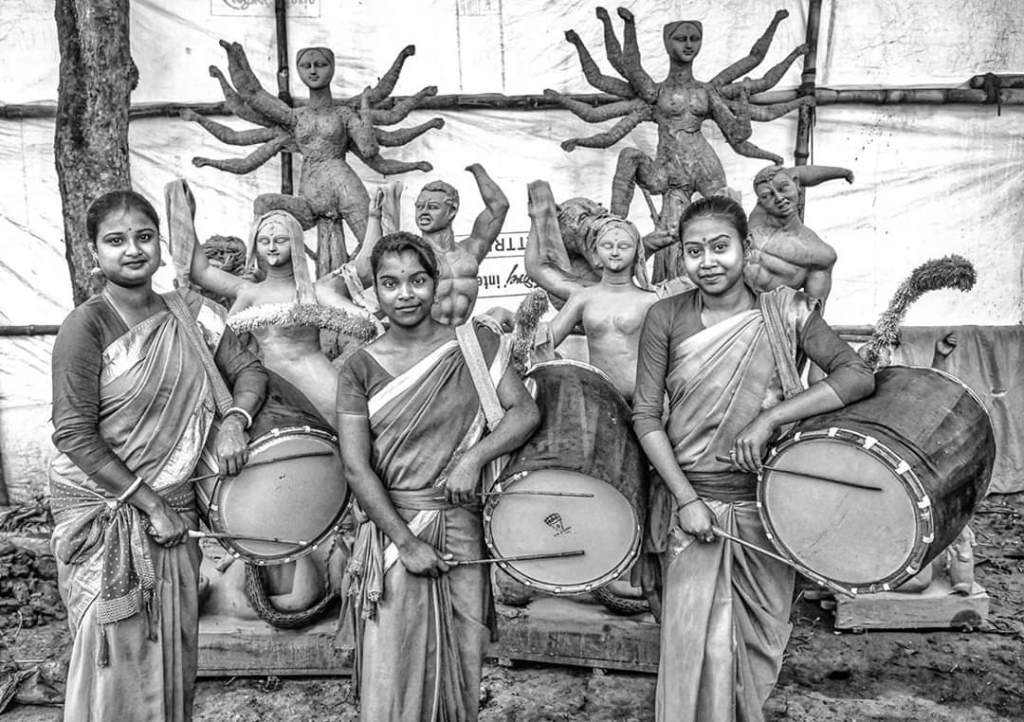
Female artists too have now taken up the responsibility to revive the age old art of playing the dhak. In such a male-dominated profession where carrying the dhak is a major issue, women have proved themselves to be no less than their male counterparts. Teams of women dhakis are finding fame and getting established slowly in their fields.

Dhakis of Bengal

COVID-19 and The Livelihood of Dhakis

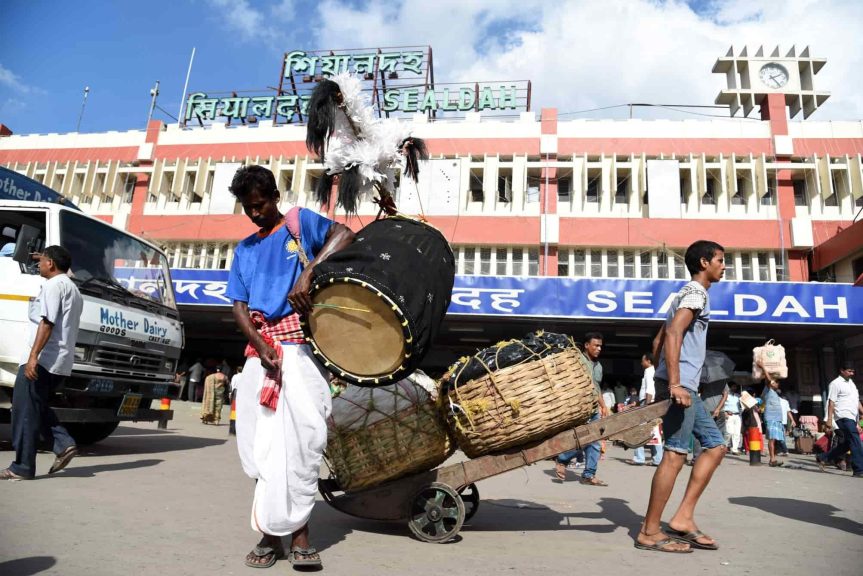
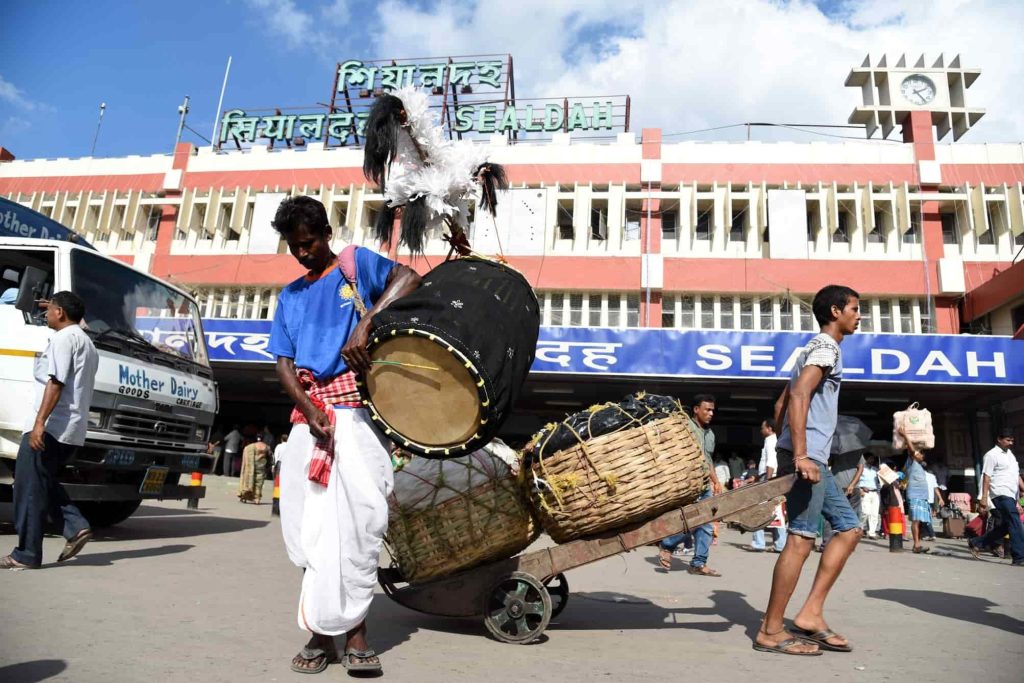
The Impact The drop in the number of Durga Pujas in and outside Bengal amid the novel coronavirus outbreak has taken the rhythm out of the lives of many dhakis (traditional drummers) who look forward to this festive season as their main source of earnings in the year. Every year, the dhakis from different districts and villages of Bengal use to appear at Sealdah station premises before Durga puja. The dhakis used to play the drums in front of Sealdah station every year before puja. From there, various puja committees used to take them in the puja pandals to play the ‘dhak’. But for the past two years the situation is very different, as Puja Committees and Organizers are tight in budget and have to follow a lot of restrictions . Moreover, thousands of dhakis from Bengal districts like East Burdwan, Birbhum, Purulia, Bankura and Hooghly would in other years travel to states such as Assam, Maharashtra, Delhi, Uttar Pradesh to perform at Durga Puja pandals and get higher pay than what they would have got in their home state. But, COVID-19 has restricted that option too for these drummers in past years.

Dhakis at Sealdah station, Kolkata

Where Are They At Now: How We Can Help

Acknowledging the fact that, playing dhak couldn’t be considered as a stable profession and is more inclined to be an occasional source of performing art and earning money, most of the dhakis are often associated with other rural jobs like farming, weaving, fishing to support their livelihood. During Pandemic, the dhakis hope that though they could not travel outside Bengal, they were still lucky if they got calls from Bengal puja organisers. When budgets are low, organisers play recorded beats of the dhaki in pandals. However, several organisers in Bengal have decided to go ahead with dhakis to add the traditional fervour to festivities with the state government offering a dole of Rs 50,000 to each puja committee.

A group of Women Dhakis in front of Goddess Durga idols

Conclusion

Just like of everyday’s, MachhBhaat, Bengal ’s essence of festivity is incomplete without the rhythmic beats of Dhaks. Along with everyone one of us, they are also looking forward for a better situation in the upcoming years, while we can celebrate together the joys of life without fearing for the safety of our health . With the constant effort of the Government and the citizens together , hope we are going to reach that phase very soon.

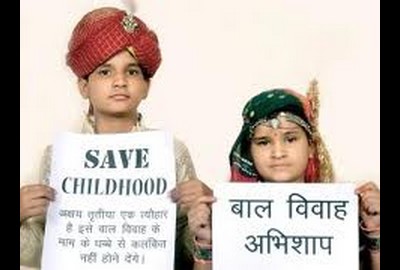
Child Marriage in India: The Problem and The Cure

Child Marriage in India

Introduction

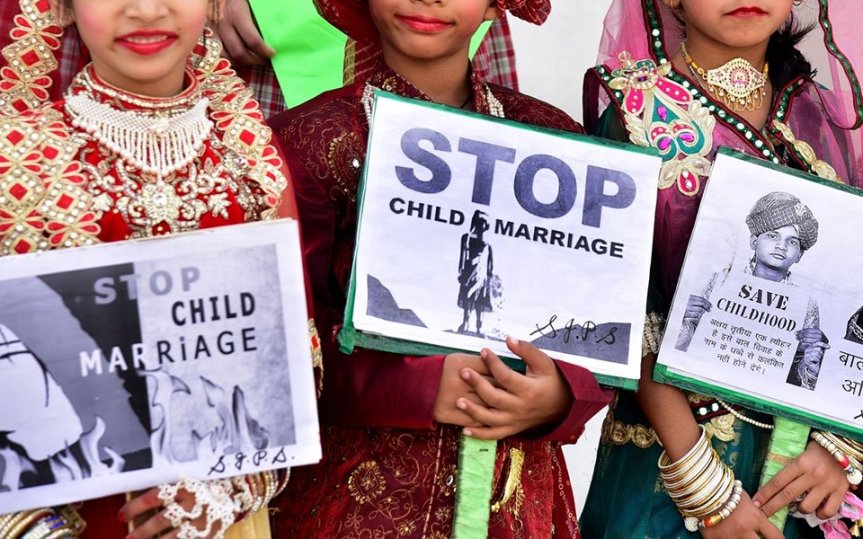
Our country India has always been known to the world for its diverse cultural enrichments. But, the legacies from our past beliefs also bore with it some evil practices to the society that we are still dealing with. And one of those practices is the child marriage. The seeds of the problem are still buried so deep in the society and the mind of its people, that it stands alone as a huge socio-cultural challenge till today.

Historic Background

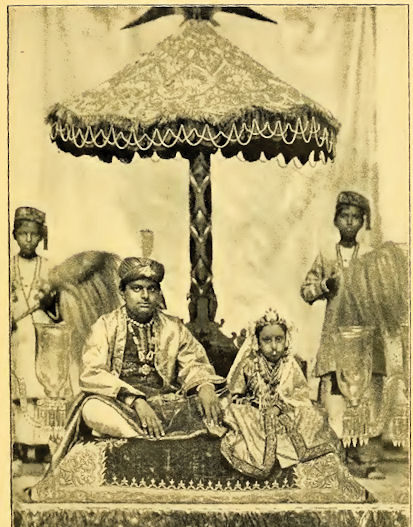
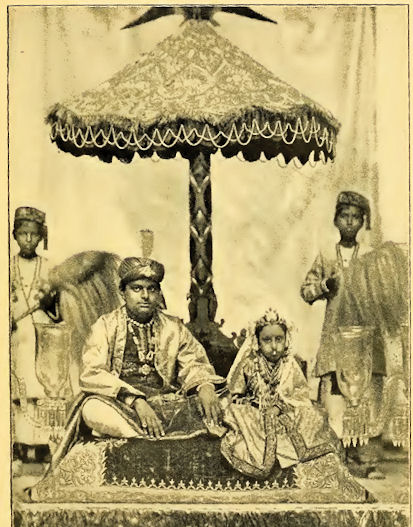
The Vedic history of India dated back to from 200 BC to 700 AD, scribes the marriage as a freedom of choosing desired partner for both men and women. But, with the formation of Government and political modification due to multiple invasions in Medieval India, the women lost their rights to education and choosing their partner and rather were subjected to obey rules and the code of behaviour. Though, age at which the girl was to be married differed and it was rare for girls younger than 12 to be married in antiquity however it became increasingly common for girls as young as six or eight to be married as young brides or “Valika Vadhu”. The parents decided on the marriages of their children at a very early age although the daughter stayed with her parents until she attained the age of puberty. Reaching to which she was bid off to her in-laws through ‘Gehna’ ceremony, in Rajasthan. While in Bengal, this practice was known as ‘Koulinya Pratha’ where a girl child was often married off to an old ‘Kulin Brahmin’ which later on led her to be ‘Sati’ after his husband’s death.

Laws against Child Marriage

The Child Marriage problem in India was first addressed during the British Era. The Child Marriage Restraint act was established in 1929 and come to force in 1930, which defined the minimum ages of marriage for men and women as 18 and 14 years respectively. However, after India’s independence, the minimum age of marriage for women was increased to 15 years. In 1978, the ages of both men and women were revised again to 21 and 18 years. In 2006, the Prohibition of Child Marriage Act came in force, though it was Inapplicable to the Muslim community. Recently in December 2021, Union Cabinet approved to raise the minimum age of marriage for women to 21 years.

The plea is getting stronger.

The Situation in Current Times and the Consequences

Though there are active laws against Child Marriage, but this practice is still ghostly being performed in various parts of India. According to a survey by UNICEF in 1998, the Child Marriage rate in India is 47%, while by UN reports it to be 30% in 2005. Jharkhand has been found to hold the highest rate while Kerala possess the lowest rate in India. Rural Child Marriage cases were found 3 times higher than Urban ares in India in 2009. The consequences of the evil practice, leave many young women shattered for their entire life. Child Marriages have reported a large number of non-consensual marital rapes, physical abuse and domestic violence, low rates of women literary, deaths during childbirth and post natal problems of both underage mothers and newborns.

Our Take: Fighting for a Social Cause

In this modern Era, India is emerging fast as an United country, with largely powered new age youths. And the present generation can give a tremendous change from the society. The situation is already getting better with more to children and giving equal opportunity to both in order to eradicate the practice completely citizens showing their responsibility male and female children. Bachao,Beti Padhao” movement The Government’s “Beti has stirred up the thoughts of young Indian people With many small initiatives, in every state, for a better future. the idea of going along with everyone with equal opportunities are being accepted by Indian parents for marrying their sons and daughters age. The priorities are being given to qualify for a good education and career build up at a matured before getting married.

The youths’ take is most important.

Conclusion

The citizens are the pillars of society and the future lies on the hand responsibility to work together to effort gets counted when we should try our best to improve of every citizen. It is our make our society even better and free from any evil practices. Every work together for a larger cause. more for a better India. The progress so far is appreciable and we

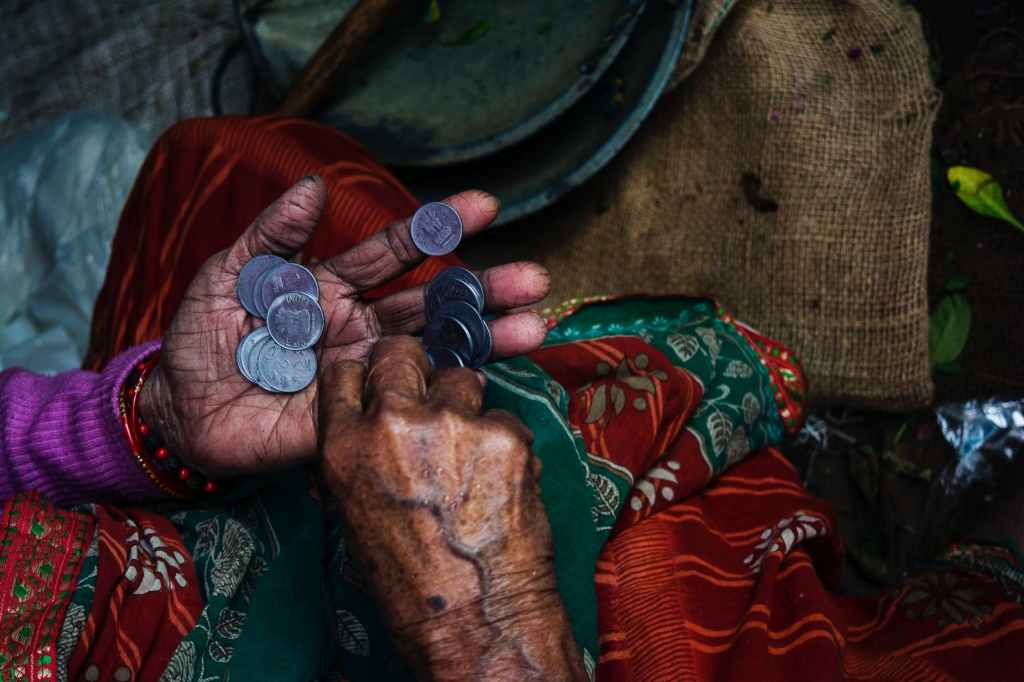
The problem of poverty in India

In India, poverty is presently estimated by fixing a poverty line based on a differentiated calorie-norm. This means that the level of poverty depends upon the capacity of a person to purchase food and a person who can buy specific amount of food to cross the poverty line margin for nutrients and calorie intake is above the poverty line. Whereas, the person who cannot buy enough food to meet the required nutrition value of calories and carbohydrates is below the poverty line. This level is not the correct parameter to check the level of poverty.

A task force of the Planning Commission in 1979 defined the poverty line as that per capita expenditure at which the average per capita per day calorie intake was 2400 calories in rural areas and 2100 calories in urban areas. Average per capita expenditures incurred by that population group in each State which consumed these quantities of calories, as per the 1973-74 survey of NSSO, were used as the poverty lines.

The debate on the extent of poverty in India has been a matter of global interest in the recent years. The primary reason for the global interest in the debate is that the levels of poverty in India and China have come to exert significant influence over the trends in world poverty itself.

Within India too, there has been growing contestation around poverty estimates, particularly in the period of economic reforms. First, there are persistent disagreements among economists on whether the rate of poverty decline after economic reforms was slower than in the preceding period. Secondly, the shift to targeted, rather than universal, welfare schemes has witnessed the use of poverty estimates to decide on the number of households eligible to access these schemes. The report of the Expert Group on the estimation of poverty, chaired by Suresh Tendulkar, is the latest input to the “Great Indian Poverty Debate.”

It is to be noted here that many subsidies and programs are launched by the government but these additional increments do not reach the actual people that are in need of them. Instead it is sent back to the businessman and thus a lot of profit is earned on these subsidized goods. Thus, to lower the level of poverty in India, schemes have to be launched in order to directly benefit the people in need.

The Hindu states that, “A final issue with the report, of much long-term consequence, relates to the wisdom of abandoning the calorie norm. It is indeed true that the levels of calorie intakes are not well correlated with nutritional outcomes. However, abandoning the calorie norm altogether and taking solace from the fortuitous fact that calorie intakes appear adequate at the new poverty lines is an arbitrary proposition. It is unclear whether there is any basis, theoretical or empirical, for this relationship to hold true across time.”

the Tendulkar Committee has pitched for a policy position that is stranded between the harsh realities of poverty in India and the fiscal conservativeness of a neo-liberal framework. The real challenge lies in preserving the positives from the report, and strongly persisting with the demand for a universal social security system.

– Ananya Kaushal

Social Evils that prevail in India

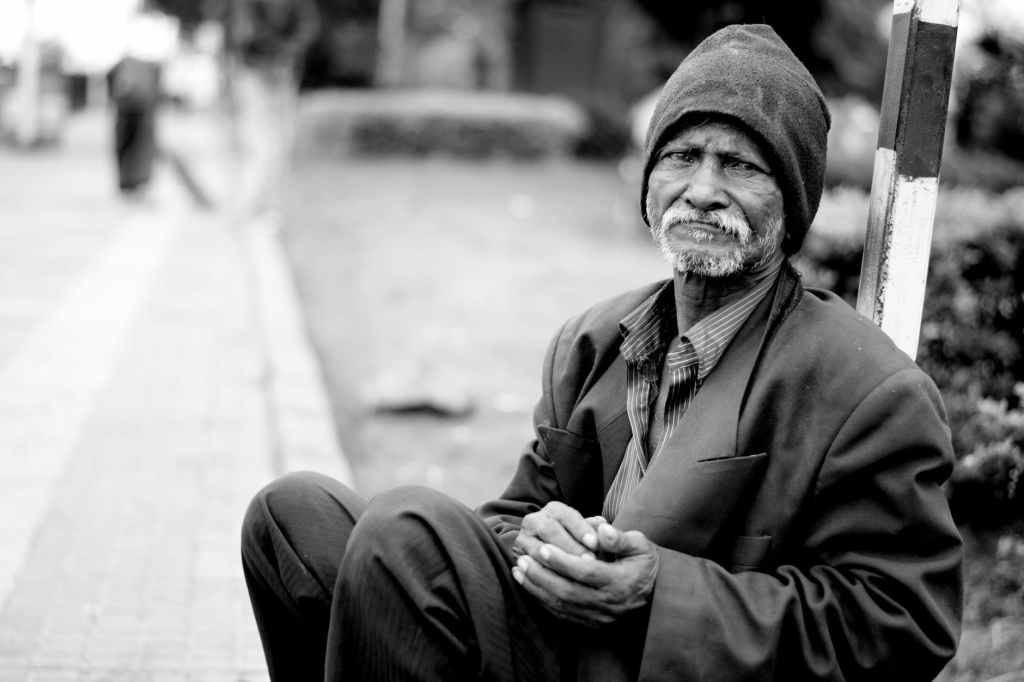
Photo by Nothing Ahead on Pexels.com

India is a country which is known for its diverse heritage and mesmerizing culture. However, it also has some unavoidable rigid belief systems or evils which, if not reformed, can be really harmful for the Indian society. Such social evils can also be harmful for the growth and progress of the society.

Social evils can be defined as the toxic beliefs due to which the societal progress is hindered. Such evils can be born out of sheer ignorance or blind faith in religion or culture or both. These evils are not only harmful for the believers themselves but for the society as a whole.

There have been several personalities who, in order to bring reforms in the society, tackled and attempted to remove the practices of some rigid belief systems which, in turn, brought reforms in the society.

Here are some evils that either prevailed or still prevail in India due to the stiff nature of the society:

The Caste system:

The caste system has its roots in the ancient Indian society where the common folks were divided into four categories on the basis of their skills and abilities. Those categories consisted of Brahmin, Kshatriya, Vaishya and Shudra.

But as the time passed, this system became so rigid that the people belonging to the higher castes were seen as superior to those of the lower castes. Brahmins were known to be next to God and were respected by almost everybody. On the other hand, the Shudras were discriminated and were considered as ‘Untouchables’. Although the Indian Constitution has outlawed the practice of Untouchability, it still exists in some parts of the Indian Society.

The Dowry system:

The word ‘dowry’ means payment (of property or money) from the bride’s parents to the groom or his family at the time of marriage. This stems from the belief that a daughter is a liability for her parents and for her bright future she has to be married off to a decent groom. In order to get a good marriage prospect, the bride’s family starts saving money as soon as the daughter is born. This puts an unimaginable of amount of burden on the bride’s family.

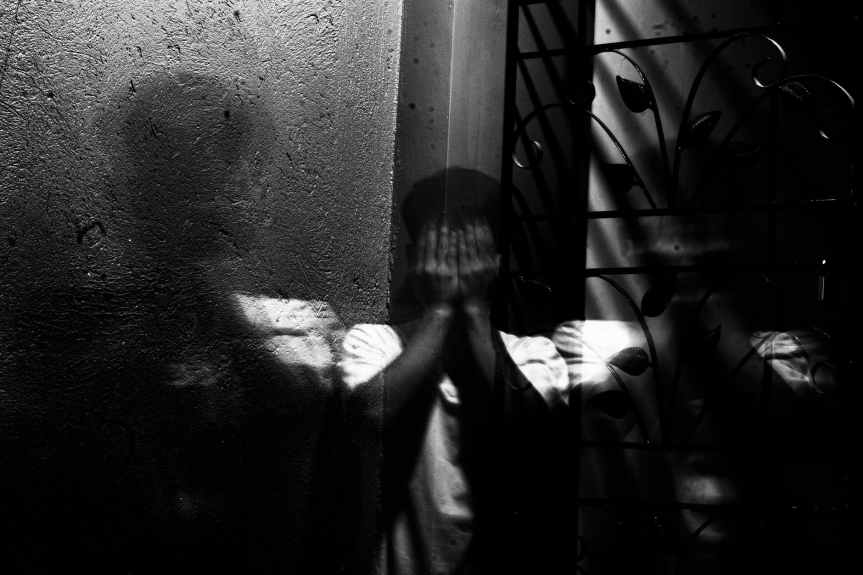
This system has also made many Indian women victims of the atrocious crimes by the groom and his family. There have been many cases where crimes against women were committed by their husbands or their in-laws. In such cases, women had to go through unimaginable physical and emotional abuse.

Although we have laws in the constitution against the practice of the Dowry System, it is still practised in some of India. The government is taking measures to eradicate this system by bringing in policies to educate and the girls and parents of the country. They have also started schemes to aware the parents about the negative outcomes of the Dowry system.

Female Infanticide:

Female infanticide is the intentional and deliberate killing of a baby girl once she is born due to the preference for a baby boy. Even though this is an illegal practice, people in some parts of India still practice it. According to a census in 2001, there are only 933 females to every 1000 men. Another census in the year 2011 showed a decline in the Child Sex Ratio (CSR) where there were only 918 females to every 1000 men.

Female infanticide is more prevalent than male infanticide in south Asian countries like India and China due to cultural reasons. In the Indian Society, some families kill their new born daughters to avoid the burden of paying Dowry to the groom or his family. For families with several daughters, it can be a huge financial burden and hence, killing the baby girl seems like an easier option to them.

The Indian government has tried to take several initiatives to tackle and eradicate this issue. In several Indian states, the government took the responsibility of educating the girl child which, in turn, freed the parents from their financial burden.

These are some of the dreadful evils in the Indian society which need to be tackled and solved so that a better and more reformed society can be created. However, there are more such evils like Poverty, superstitions and corruption. These issues have become pretty common in the Indian Society.

With the years passing by, these issues have risen instead of coming to an end. Therefore, proper action must be taken by the government and the society to change the mindset of the existing society.

WHY ARE INDIANS AFRAID OF DIVORCE?

PROLOGUE TO THE THOUGHT

Our general public has been man centric and man-driven for quite a while. It gives men the opportunity to be their own lords yet denies ladies the equivalent. Culture completely concurs with men continually ruling and ladies continually being ruled. A man can stop a marriage at whatever point he wishes to, however society questions and derides her if a lady wishes to do likewise. It in a real sense anticipates that women should endure quietly, even get suffocated yet not get a separation.

SOCIETY’S PERSPECTIVE

Tragically a man needn’t bother with authorization for anything, while a lady needs it for everything. We gladly declare that we are instructed and making the world a superior spot to live. We yell trademarks about opportunity for ladies as loud as possible yet, actually, neglect to walk the discussion. It plainly draws out the false reverence of our general public. We gladly announce ourselves to be ‘present day. ‘For what reason can’t a lady decide to carry on with her own life according to her own preferences? We forcefully go against abusive behavior at home and the customary traditionalist mentality about ladies. In any case, do we really follow it at our homes?

They say ‘Good cause starts at home. Be that as it may, shockingly, separate is as yet a no-no in our general public. We show our kids that marriage is a sacrosanct establishment. Yet, that doesn’t imply that it is a declaration of joy. For what reason wouldn’t we be able to comprehend if marriage as an establishment isn’t working any longer? Most families consider separation to be the apocalypse. They don’t attempt to put themselves in the spot of individuals who are in that despondent marriage. Separation can have a good implication. Assuming a dead relationship is finished, it doesn’t mean everything is broken. All things considered, it is a new beginning. On the off chance that the two players arrive at a shared agreement that separation is the best hotel for them to be content in their particular lives, for what reason do individuals have an issue?

WHY IS DIVORCE VIEWED AS A SOCIAL STIGMA?

Another misinterpretation is that assuming individuals get separated, they become fierce foes to one another. In our country, ladies can’t consider leave a relationship rapidly. This is on the grounds that they are ladies. Society regularly fails to remember that before ladies, they are people. In the event that a man has the option to be the expert of his own life, then, at that point so does a lady. Much of the time, because of family pressure, ladies can’t tolerate upping for themselves and move out of a poisonous relationship.

We need to comprehend that solitary the spouse and the wife go through detachment after separate. The detachment doesn’t happen among youngsters and guardians. The guardians’ condition with their youngsters stays as before. It is only that the guardians play out their obligations independently. Subsequently, the two players improve life. Created nations like the USA are substantially more OK with separate. They comprehend the issue and backing the reason. In the event that we can take on their dressing sense and style of food, for what reason wouldn’t we be able to accept their expansive mindedness?

Marriage can give a conviction that all is good, yet separate from gives another desire to have a glad existence. Likewise, being a solitary parent is any day better than displaying a poisonous relationship. We need to comprehend that separation is surely not the most exceedingly terrible thing for youngsters, but rather undesirable everyday life is. It can likewise empower the two accomplices to fill in life once they feel glad intellectually.

POSITION OF LAW

The Seventy-First Law Commission Report of 1978 methodicallly contended the meaning of defining which perceived unrecoverable breakdown of marriage as a firm ground for separate. As per this, great separation law has twofold articles. Right off the bat to safeguard, and not subvert, the soundness of the relationship. Then, if the couple, through shared agreement, concludes that their marriage has hopelessly separated, then, at that point they ought to be liberated of it. This should be finished with complete equity and the base harshness.

TOWARDS THE END

A few cases have offered strong help to this contention. Henceforth it plainly addresses a social reality. Society has changed drastically, thus has our manner of thinking towards marriage. In this way, if a marriage has gotten suffocating and broken past all prospects of fix, then, at that point it should be finished.

Separation, in India, is as yet a sociocultural disgrace. Separation rates for Indian people are 0.3 percent and 0.2 percent, separately. Incidentally, this is in spite of that spousal viciousness is the most normal type of aggressive behavior at home in India. Thus, separation ought to be viewed as an answer and the way to independence from a poisonous relationship. It ought to positively not be a social shame.

Eventually, advancement is reflected in one’s thoughts.

Affordable places to visit in india

India the land of culture, heritage, devotion and beauty. There are many beautiful places to visit in India and we cannot talk about all places in this article. So, here are 4 affordable places to visit. If you are travel lover then this is great for you all.

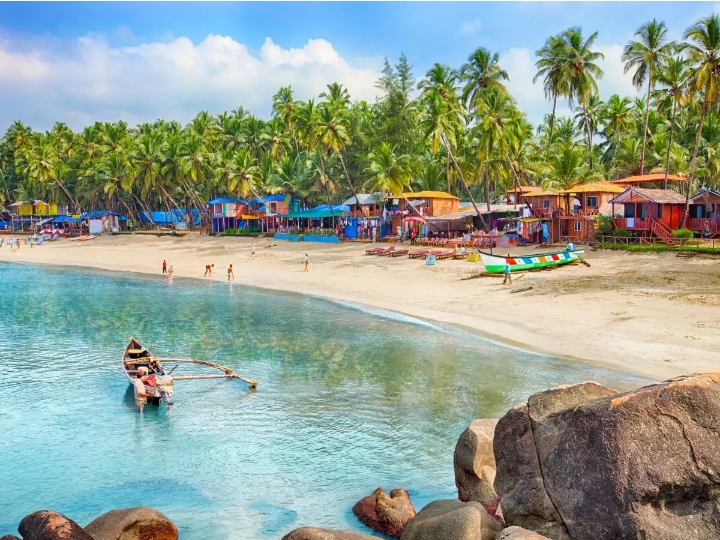
1) Goa

Goa is one of the cheapest country to visit. Alcohol is also very cheap here. You can have unlimited fun and crazy party all night and can even return with full pocket. The best time of the year to visit is October to March. Must visit places to visit is Calangute Beach, Fort Aguada, Dudhsagar falls, Anjuna beach. Goa is also known for its cruise and its water sports. You can check many websites for price. Average 4 days/ 3 Nights will cost you around 12,000 per adult on twin sharing with many amenities.

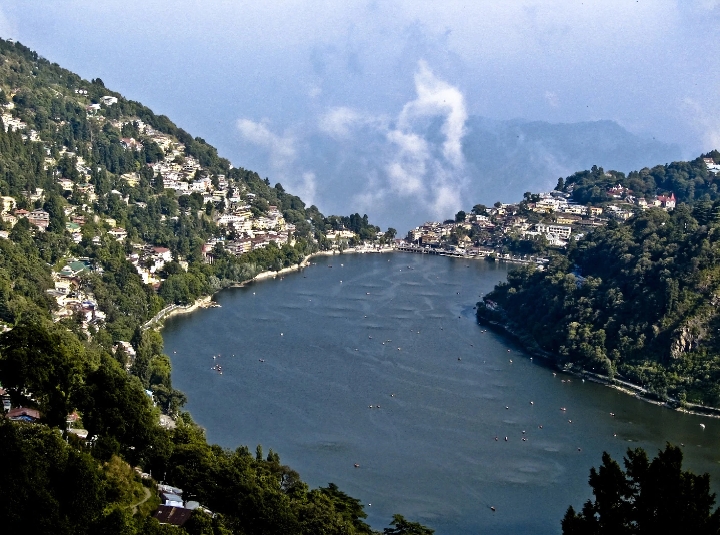
2) Nainital, uttarakhand

Nainital is famous for its misty lakes and mountains. Nainital is very beautiful hill station. It is also known for its cheap hotels and meals. You can do boating here at barely any cost. The area of interest lies in its name which it has gotten from the eye shaped Lake the Naini Lake thus due to this eye shaped Lake it’s called Nainital. Must visit places include Naini Lake, Tiffin top, Snow view point, Mall road, Eco cave gardens and High Altitude zoo. Average 3 days/ 2 Nights will cost you around 4,500 Rs per adult on twin sharing with other amenities as well. It can be seen that how much affordable is this place. Best time to visit is throughout the year.

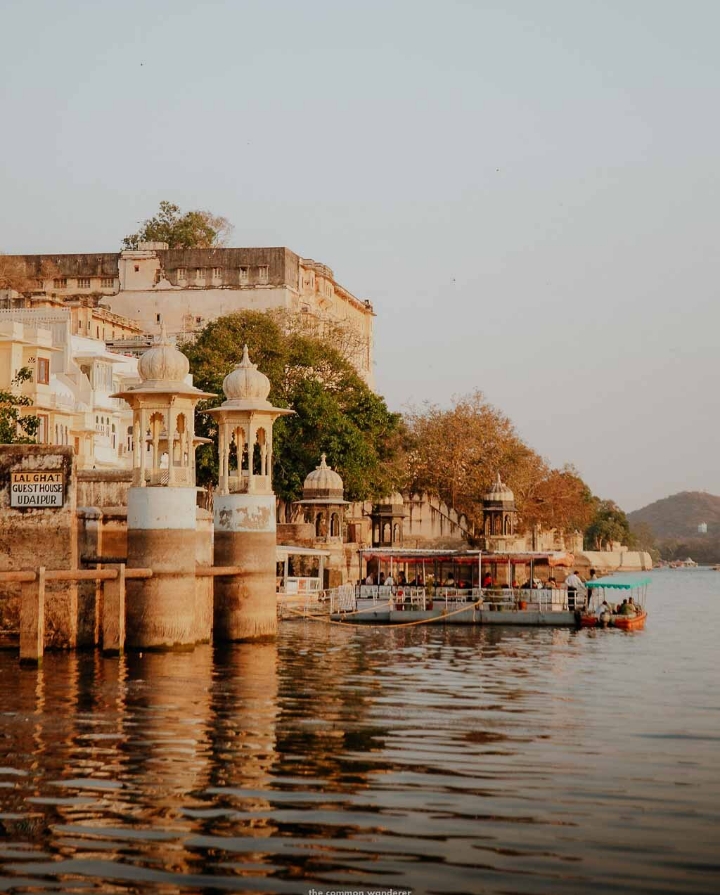
3) Udaipur, Rajasthan

Udaipur also know as city of lakes. It is also called as Venice of East. It is also termed as jewel. It has abundance of natural beauty, awesome architecture and breathtaking temples. Must visit places include Lake pichola, City Palace, Fateh Sagar Lake, Jaisamand Lake, Sajjangarh palace, Jagdish temple. In addition to this it cost very less on average 6 days/ 5 night stay cost you around 17,700 INR per adult on twin sharing. Best time to visit is from October to March.

4) Darjeeling, West Bengal

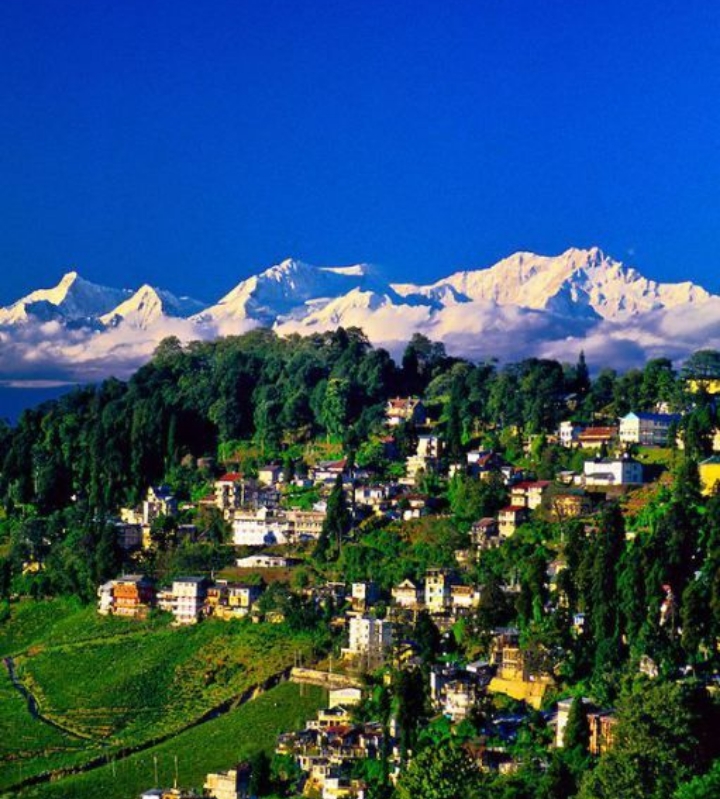
Darjeeling also know as Queen of Himalayas, has jaw dropping and mesmerizing sunrises, the breathtaking beauty of the hills, the charm of past and all those beautiful smile of beautiful people. It is one of the most appealing hill station. And all chai lovers it offers best quality chai. Hotels and lodges are at reasonable price and it’s also cheap. Must visit places include Darjeeling Himalayan railway, Tiger hill, Batasia loop, Himalayan mounteering institute, Darjeeling ropeway and Nightingale park. Average 4 days/ 5 nights will cost around 8,375 Rs per adult on twin sharing. Best time to visit is from February to March and September to December.

So these are the places that have jaw dropping and breathtaking beauty. Apart from this they are also very affordable and hence you can easily visit with low money in your pocket. You can even check rates on different websites and there you may can get offers too. Hope you all like it.

Dowry Continues To Remain A Menace In Indian Society

Despite the fact that dowry has been banned in India since 1961, a research found that it is still being given on a regular basis, with over 95% of weddings including the exchange of money.

Dowry is correctly represented as a societal evil since it is the practise of paying and accepting articles of worth (such as clothes, jewellery, furniture, cash, and other items) between two households. Typically, the bride’s family is obligated to pay these items to the groom’s family.

The World Bank carried out the study, which examined almost 40,000 marriages that occurred between 1960 and 2008 in 17 Indian states that account for 96% of the nation’s population.

Researchers calculated “net dowry” to study the difference as to what was paid by the bride’s family to the groom’s family and vice versa, and the results revealed that, in the vast majority of instances, it was the bride’s family who paid more compared to the groom’s family, rather than the other way around.

According to the estimated amount confessed by families, a groom’s family spends Rs. 5,000 on presents to the bride’s family on average. The bride’s family, on the other hand, pays about Rs. 32,000 on presents and other monetary contributions to the groom’s family, taking the net dowry to roughly Rs. 27,000.

It has also been noticed that the dowry value is typically 14 percent of the annual income and includes a significant portion of the family’s savings.

While much has started to change since 2008, experts think the tendency of dowry is still highly prominent in India, since the notion is quite widespread in all major religious groups, with Christians and Sikhs exhibiting a “dramatic increase in dowry.”

Dowry inflation was seen in certain states, including Kerala, Haryana, Punjab, and Gujarat, with Kerala having the highest average dowry in recent years. On the other side, average dowry decreased in states such as Orissa, Tamil Nadu, Maharashtra, and West Bengal.

This venom affects people of all castes and socioeconomic classes. Neither the husband’s nor the wife’s educational background protects them from dowry harassment. Currently, dowry-related fatalities in Kerala have been documented, with the majority of victims coming from the upper strata of society. The culprits come from well-educated and wealthy families, and the victims are also well-educated. If this is the situation of women in a culture that was matriarchal a few decades earlier and claims of high social indicators in women empowerment, it’s anybody’s imagination how it will be in many Indian states that have numerous social indicators that are much worse than those of war-torn Syria or Sub-Saharan Africa. According to the NCRB study, Uttar Pradesh and Bihar top the list of dowry-related deaths, accounting for roughly 30 percent.

It is time to reform these retrograde societal standards in 2021. Receiving dowry should be considered a societal shame, and all generations should be taught. Young people should also make a stand. Women should explicitly refuse to pay dowry as part of a marriage , and men should also refuse to accept it in any way. Why should brides’ parents be obliged to give pricey “gifts” that are essentially a dowry by another name? 

The wider background for dowry is women’s low labor-force participation and, as a result, their lack of financial independence. Women should be encouraged to work and earn their own money.

Discrimination is present in all parts of life. To combat gender inequality, States should examine gender-disaggregated statistics across the life cycle — birth, early childhood, schooling, nourishment, employment, healthcare access, and so on. Teachers and textbooks shape students’ views and values. Children should be routinely educated on the fundamental ideal of gender equality.

Should commercial surrogacy be banned in India?

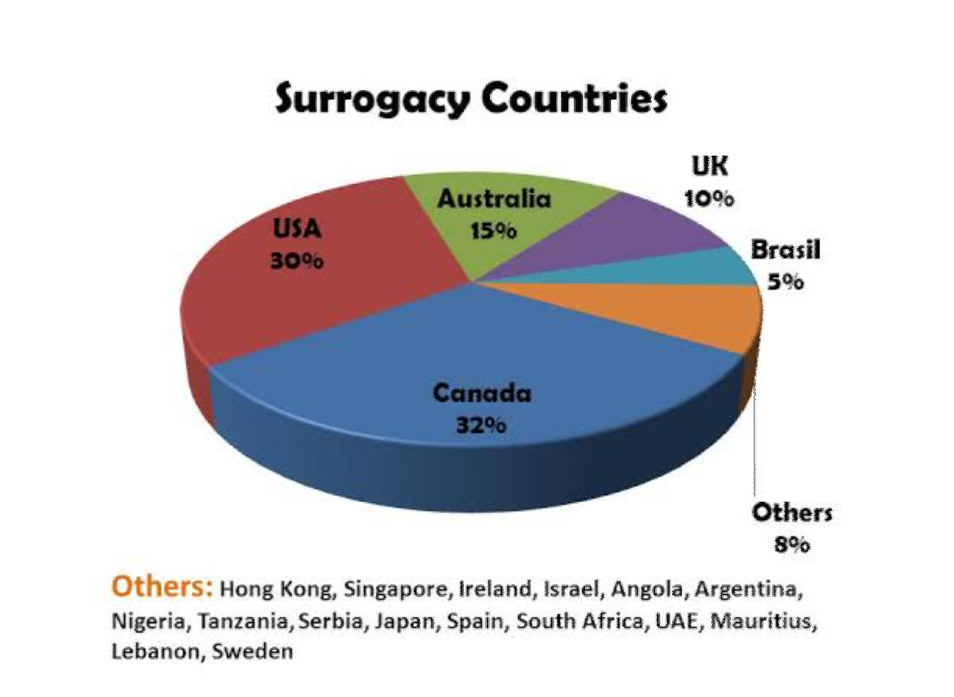
Commercial surrogacy is the process by which an individual or couple pays a fee to a woman in exchange for her carrying and delivering a baby. At birth the child, homo-sexual couples, and single people who wish to be parents are the most common types of people who seek surrogate mothers.

Commercial surrogacy has been legal in India from 2002 onwards but due to unethical practices, a bill has been approved by the Union Cabinet in August 2016. This one lapsed when Parliament adjourned without taking the measure for a vote.

The new proposal came in 2019 that is to ban commercial surrogacy. The Indian minister of health has called the 2019 bill a “need of the hour” citing a rough estimate that between 2000 to 3000 unregulated clinics currently operate in the country. Under the new law anyone who performs or promotes this would be punished with up to 10 year of imprisonment and a fine up to one million rupees. The surrogacy bill’s provision restricting surrogacy to married heterosexual couples within strict age ranges also discriminates against members of L G B T community, older couples and unmarried people who might seek to have a child. The bill goes against the principles of equality provided under Article 14 of the Indian constitution.

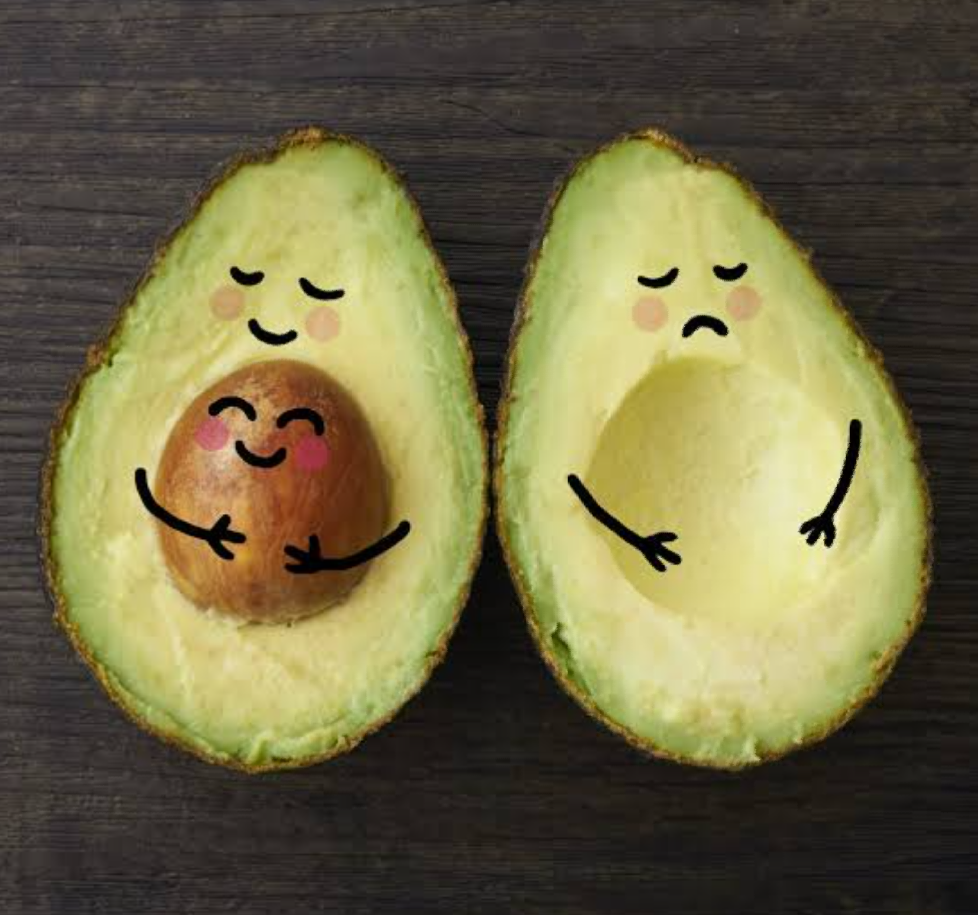
Regulation, not ban, is needed. The commercial surrogacy in India needs a regulation and stricter rules that could ensure good care and pay to the woman alone and not agents or others. Good clinical facilities for the surrogate mother and a healthy environment where she could stay safely before and after delivery could lessen exploitation. There is no provision in the law about the custody of the child if the couple later refuse to accept it if the child is mentally challenged or born with a defect. People who hire surrogates have a need to do so due to medical reasons. It is not their choice. Regulation on this practice is very much needed and must be done to close loopholes due to which exploitation of surrogate mothers is taking place.

Indian society is yet to progress so much as to accept surrogate motherhood. The woman who rents her womb even if for the cause of humanity towards an unfortunate couple will never be accepted in society when she goes back to her normal life. People will look down on her and she may probably not be able to find a husband, if she was unmarried at the time of surrogacy. We need to be broad-minded and accept these women and respect their choice of renting their wombs.

Giving women a safe and free environment for surrogacy can help in curbing the evils attached and the industry could do well along with giving good money to such poor women so that they can make their lives better as well as give prosperity to their families.

Thank you for reading. Have a nice day!

Staying single forever by choice

A relatively large number of people in Western societies are single; that is, they are not involved in any romantic relationship. That actually couldn’t be further from the truth, however. There’s so much value in being single that people often overlook, when we should be embracing and appreciating it instead. When you’re not legally bound to another person, you have the freedom to learn, grow, and explore, without any of the guilt associated with taking time for selfcare. And the payoff there is that if you do decide you’d like to pair off with someone, you know exactly who you are and what you want.

More specifically, men were more likely than women to indicate that they were single in order to be free to flirt around, and because they were not into family making; while women were more likely to indicate that they were single in order to avoid getting hurt, and because they have considered themselves not to be desirable as mates. Older people were more likely to indicate that they were single in order to be free to do what they have wanted. 

I think it is the right of the individual whether men or women to be in a relationship or to do marriage.The society do not have a right on this take .Everyone makes their own opinions that now a days women gets freedom and misuse this by making these types of decisions .But why everyone women do according to this society want them to do,it’s her choice .As it is famously said that “ALL FINGERS ARE NOT SAME”,so why we think every girl wants to marry in future ,it’s her choice and priority what to do in future.The society thinks its not safe for a women to live single in the society as anyone can take advantage of this status of her.

Maybe, counterintuitively, women are the ones who are especially likely to want to live alone. In our cultural imaginations, men are supposed to be the rugged individualists, the solo explorers, and the swaggering cowboys. But maybe, in fact, they are the ones pining for a live-in partner.

In a heartwarming essay from the upcoming book, Single by Choice, sports journalist Sharda Ugra recounts a scene from more than 10 years ago. A male friend, upon walking into her Delhi apartment (where she lived alone), asked astonished, “Who did all this?”“What provoked this question perhaps, was its sheer normalcy,” Ugra writes. And possibly the assumption that unmarried women lead dark, forlorn, depressing lives. But the writer goes on to remind us that singlehood is, in fact, a normal experience.